



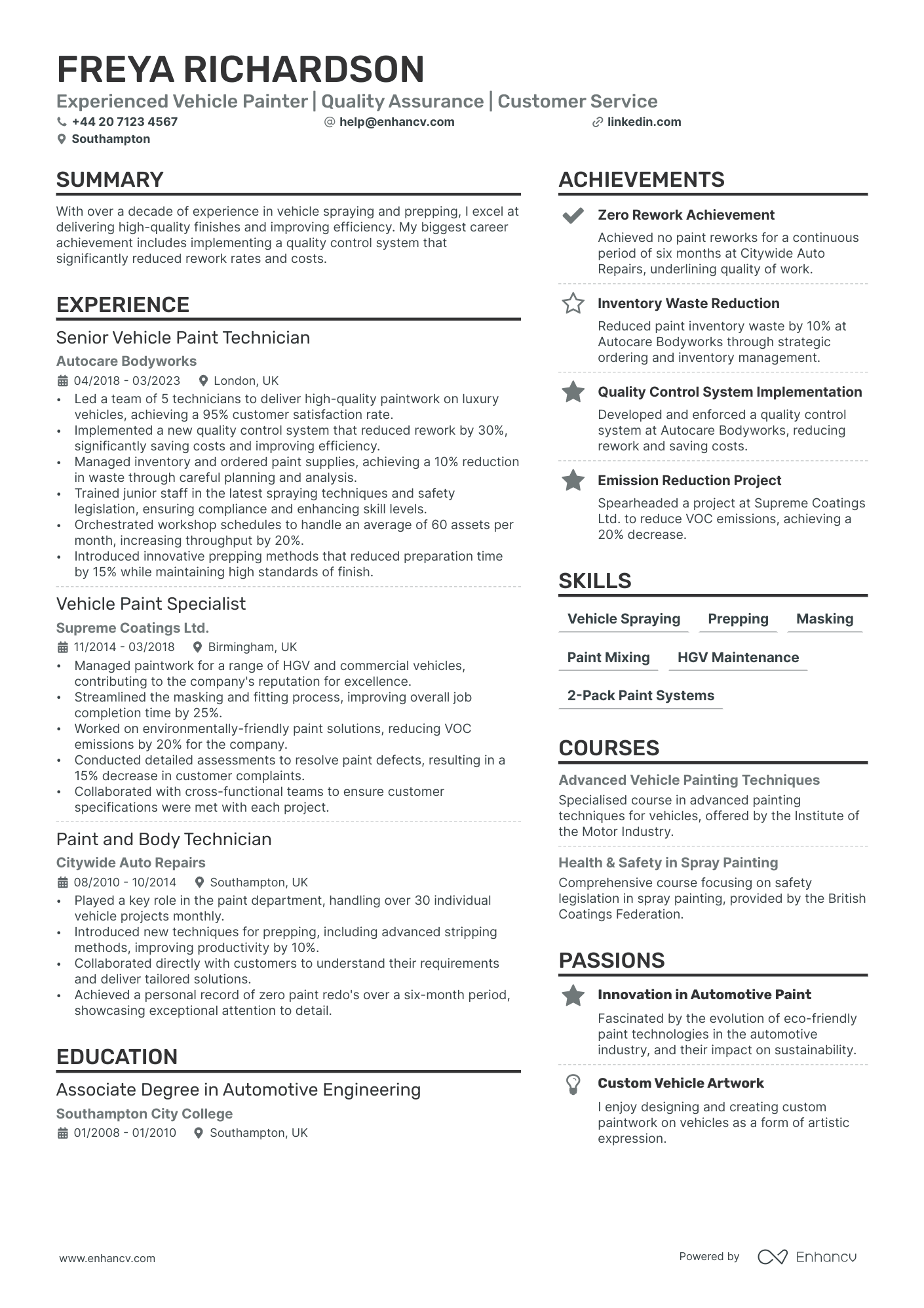
Most painter CVs read like a shopping list. Emulsion, gloss, masking tape, then a line that says "hard-working and reliable" and nothing a foreman can actually check.
The ones that get a call name the surfaces they prep, the finishes they can hit, and the cards they hold. If you want the groundwork first, start with how to write a CV, then build the trade detail on top.

Key takeaways
- Lead with your trade skills. Painter hiring turns on paint mixing, surface prep, masking, and a clean finish, so put them where they are seen first.
- Decide which painter you are. Decorating and vehicle spray refinishing want different CVs, so mirror the advert you are answering.
- Name your cards. A CSCS card, any spray or working-at-height tickets, and an NVQ belong near the top.
- Prove the finish with numbers. Rooms turned around, square metres sprayed, a snagging list cleared before handover.
- Painter work is on-site, so put your location and how far you will travel in the header.
- Keep it to two pages, reverse chronological, sent as a PDF unless the advert asks for Word.
Top skills for your painter CV
Painter adverts are specific, and the same trade skills keep coming up. Across UK painter postings in the last ~30 days on Enhancv's internal job feed, paint mixing, decorating, and masking recur most often, with vehicle spray painting close behind.
That last skill tells you something. "Painter" in the UK feed splits into two worlds, decorating and vehicle spray refinishing, and the strongest CV is the one that matches the world in the advert rather than hedging between them.
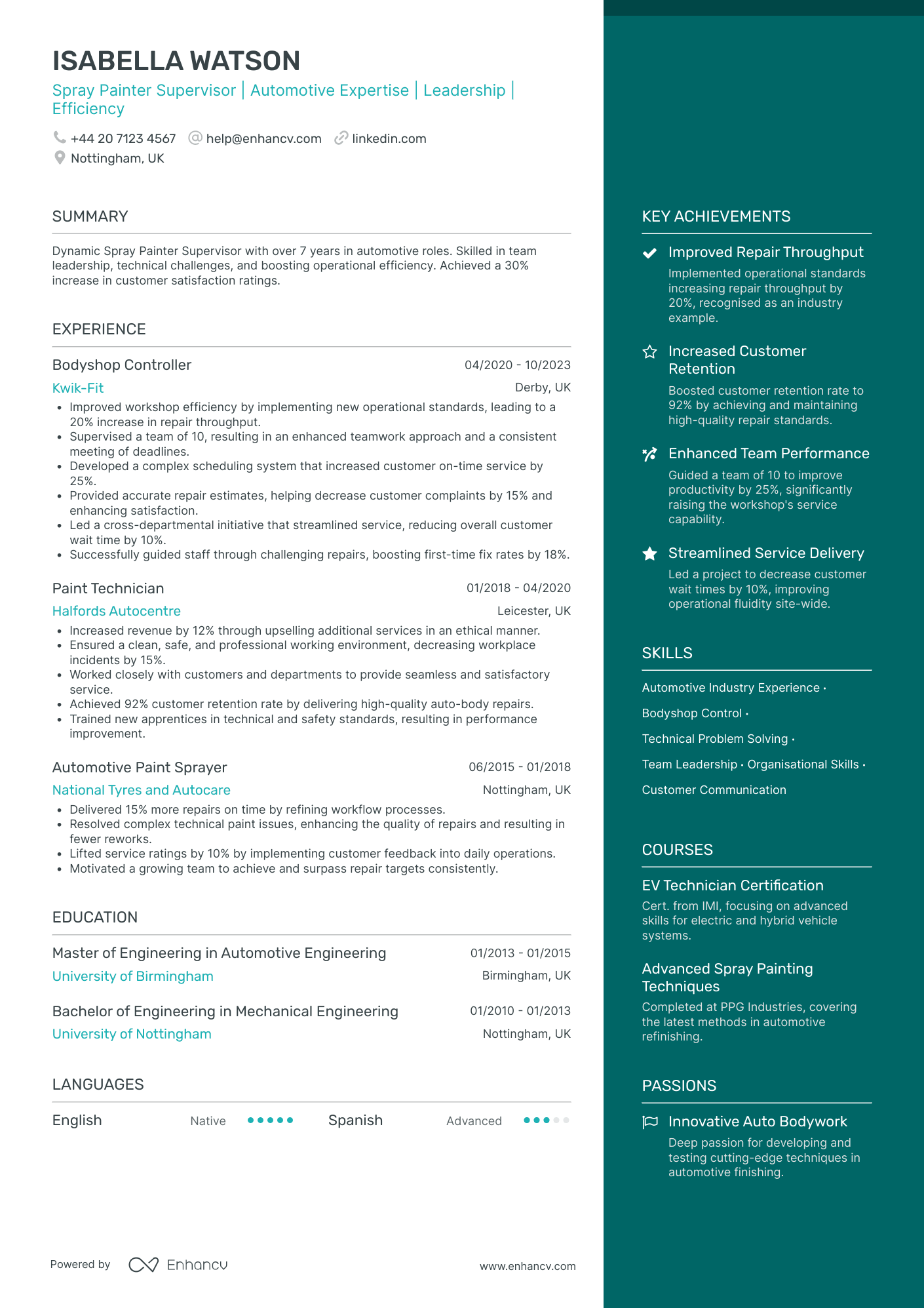
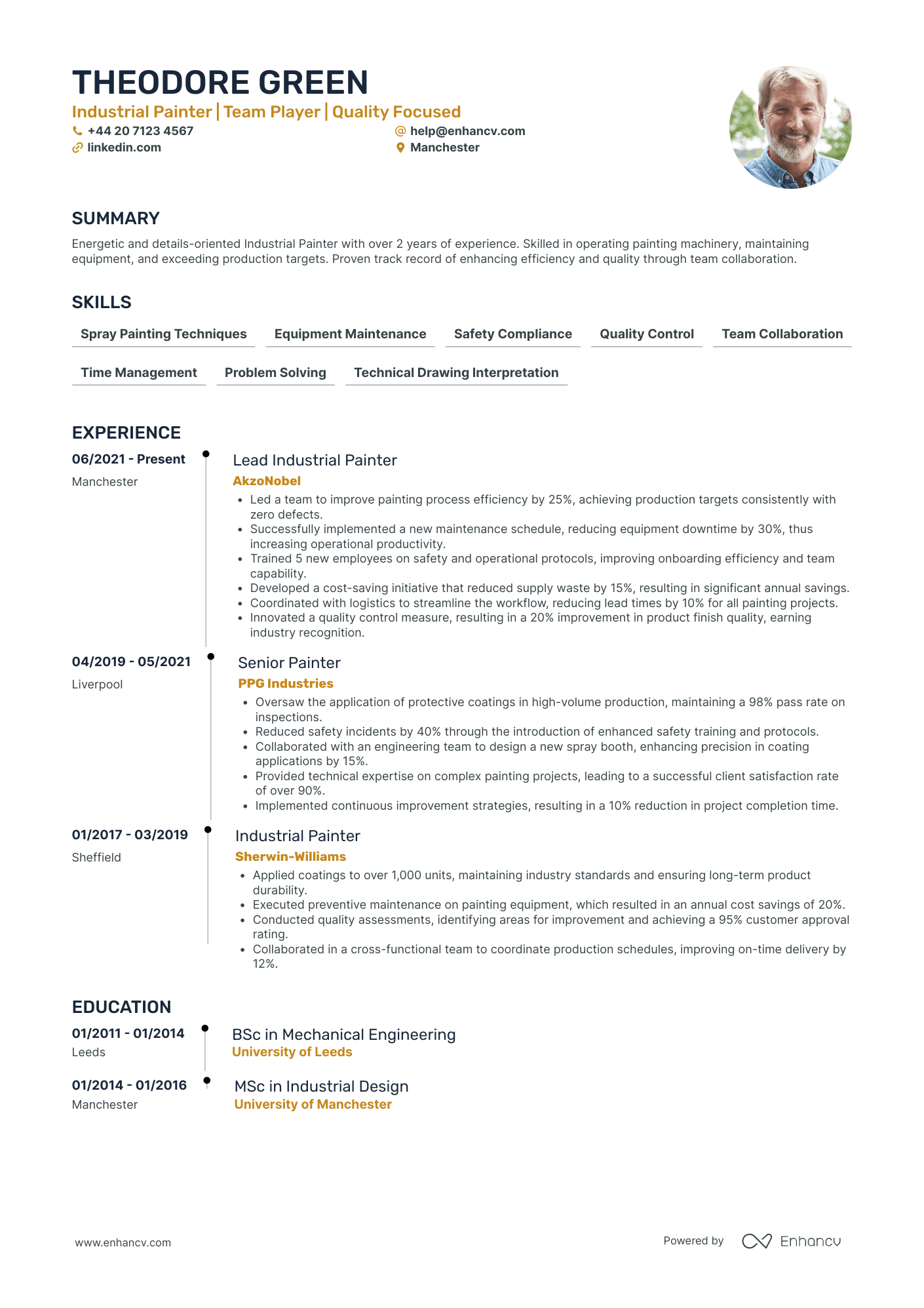
A decorating CV leans on preparation, filling, cutting in, and hanging paper, all to a domestic or commercial standard. A refinishing CV leans on panel prep, flatting, masking, booth work, and colour matching from a code. If you can do both, put the advert's world first and keep the other as a second string, because a recruiter reads the top third and stops.
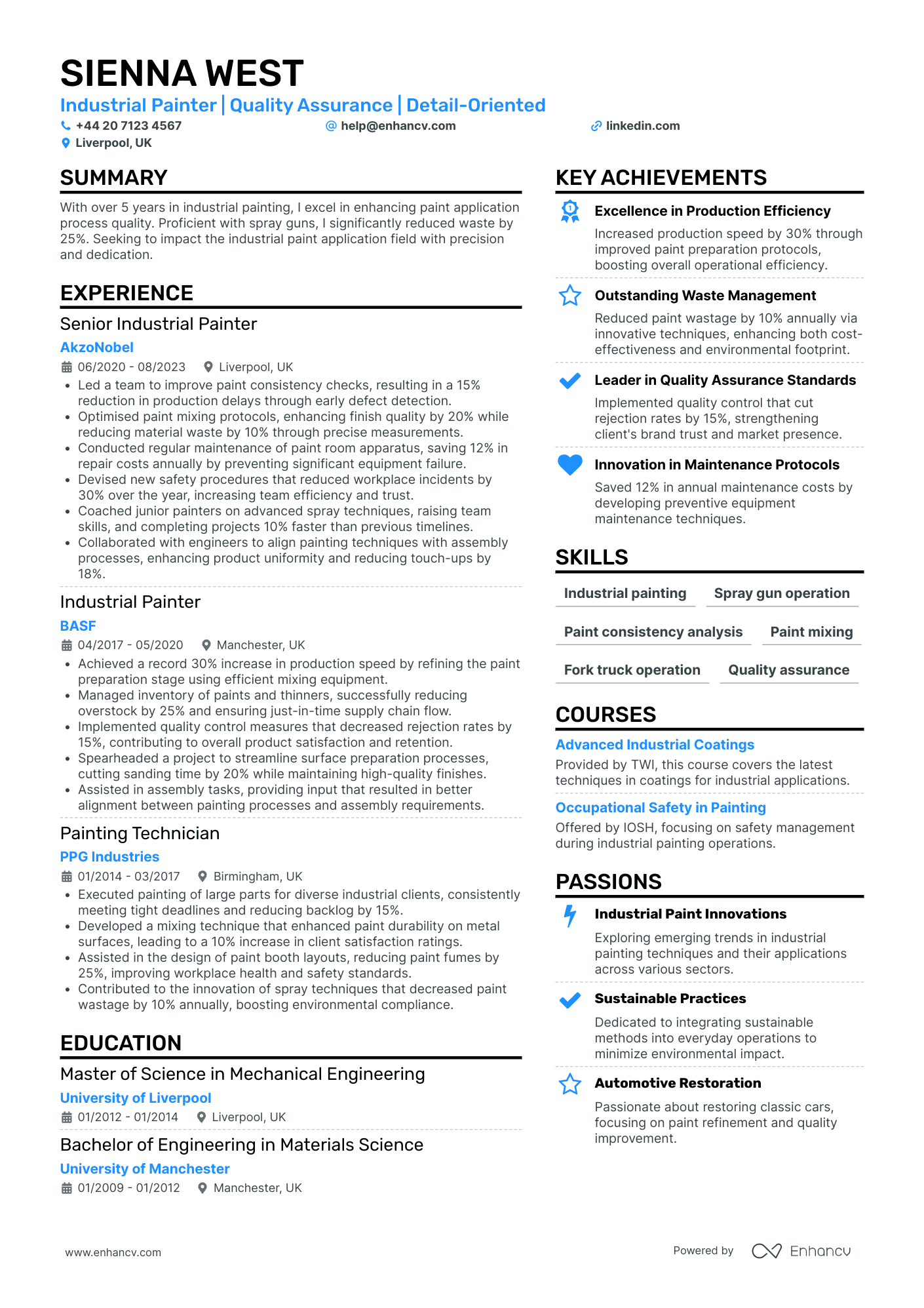
List your trade tasks in the words the adverts use, because these hard skills carry more weight than any adjective. Surface preparation, paint mixing and colour matching, masking and protection, brush, roller, and spray application, minor damage repairs, and a clean, snag-free finish are the ones a foreman scans for first.
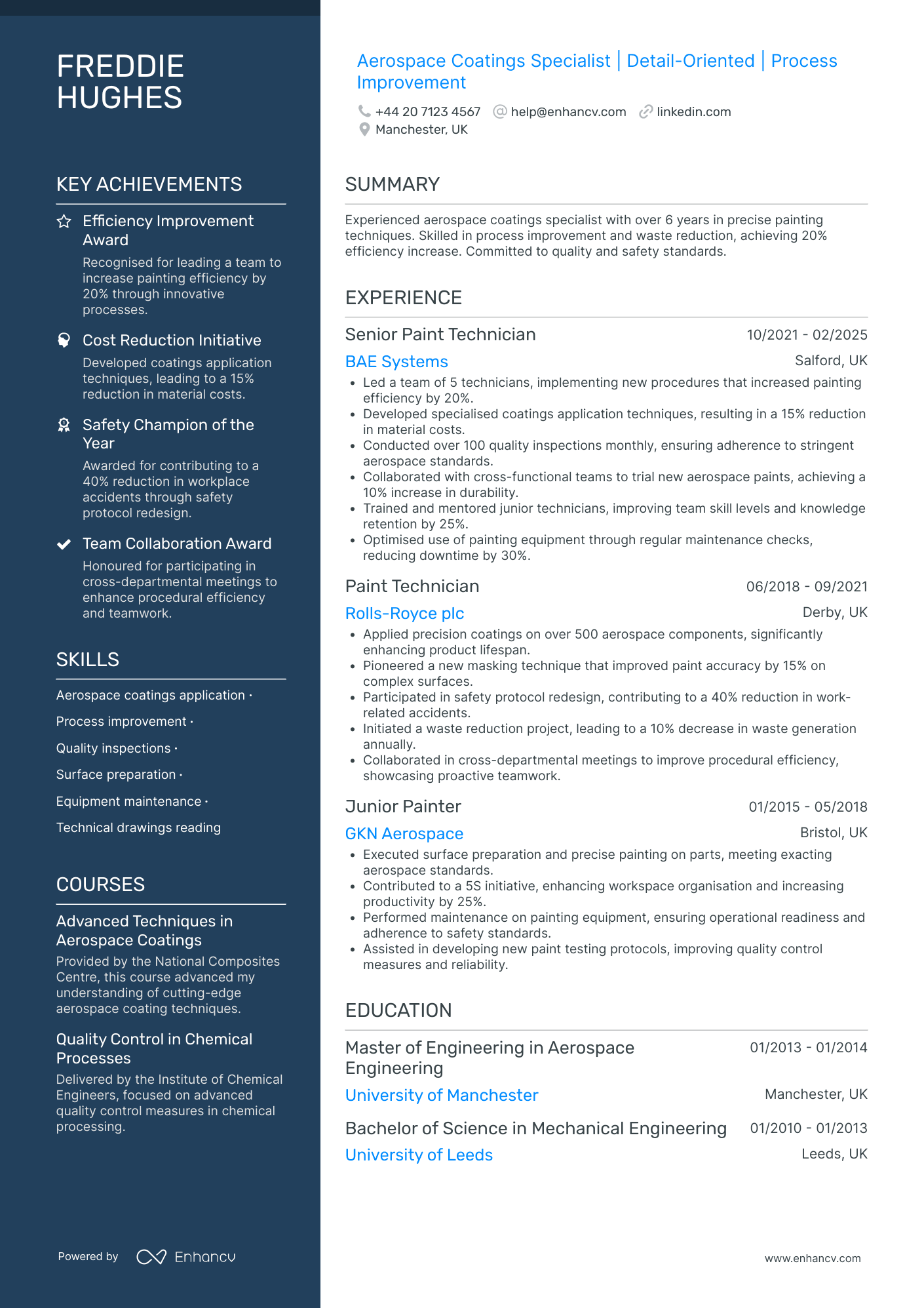
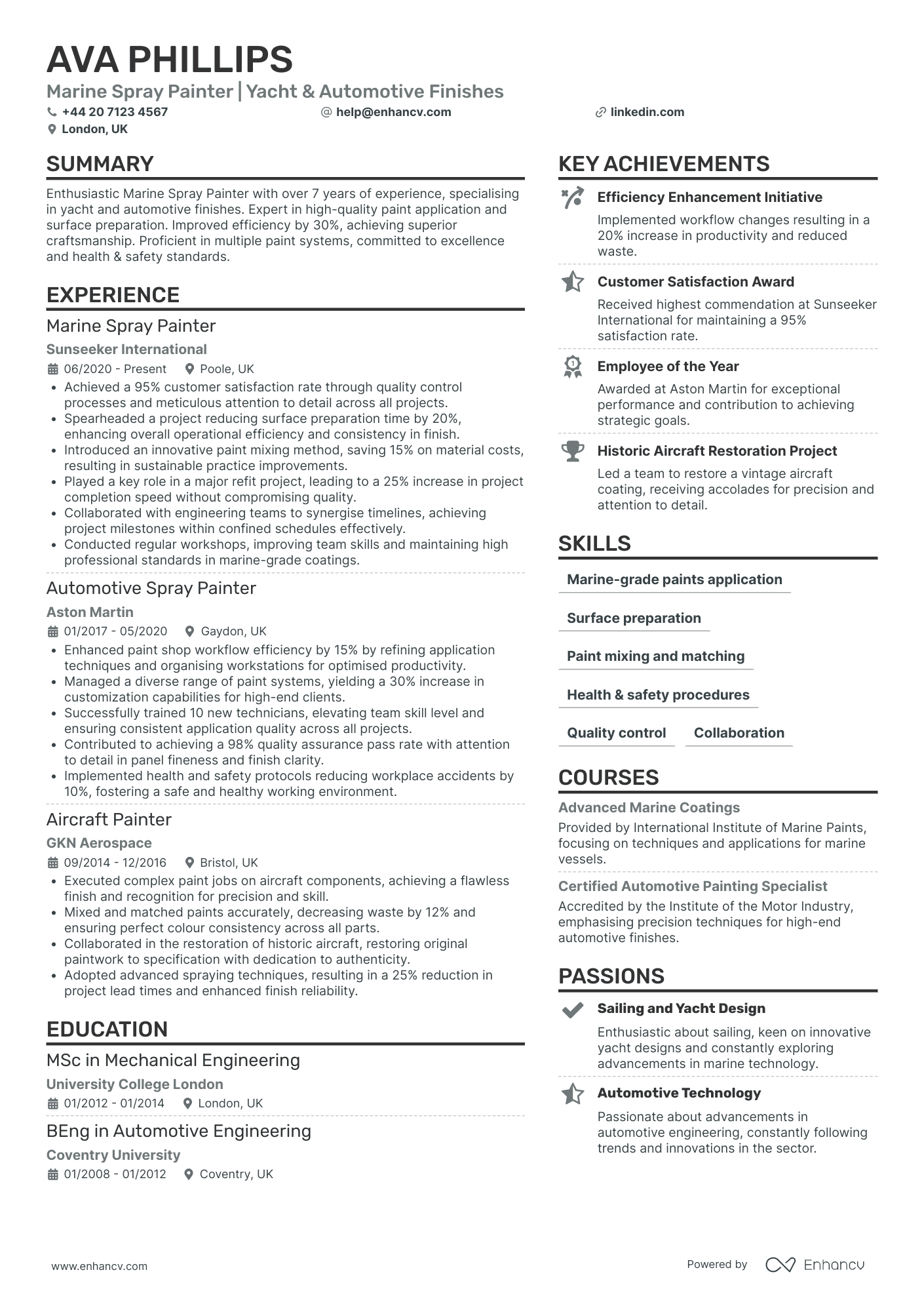
Evidence beats a bare list. Rather than the word "masking", write that you protected fixtures, floors, and glazing on a live commercial floor with no damage. Rather than "spraying", name the kit and the finish, airless on ceilings or two-pack in a booth to a colour-matched panel.
The soft skills that matter here are the checkable kind. Attention to detail, reliability, time management, and communicating clearly with a site team or a homeowner, each proved in a bullet rather than just claimed.
If the "six skills of painting" framing sent you here, it maps straight onto a CV: preparation, masking, mixing, application, finishing, and making good. Show all six across your experience and the skills section takes care of itself.
List only what you can stand behind. If you have sprayed two-pack, say so. If you have not, leave it off rather than get caught out on day one, which is the whole point of an honest skills section.
Top skills for your painter CV:
Surface preparation
Paint mixing and colour matching
Masking and protection
Brush, roller, and spray application
Decorating
Vehicle spray painting
Minor damage repairs
Snagging and making good
Attention to detail
Reliability
Time management
Communication
Working to a brief
What the UK painter market looks like
Knowing what employers ask for shapes what you put first. You do not need a survey to write a good CV, but a quick read of where the demand sits stops you guessing. Here is what the UK painter postings show.
| What | UK painter roles |
|---|---|
| Where the work happens | On-site. All 47 UK painter postings in the last ~30 days were on-site (Enhancv's internal job feed). |
| Experience level asked for | Mostly mid-level, with entry-level the next largest group and lead roles rare. |
| Most-listed skills | Paint mixing, decorating, and masking, with vehicle spray painting close behind. |
Two things in that table should shape the CV.
Painter work is almost entirely on-site, so a recruiter needs to know you can reliably get to the job. Put your town and a travel radius in the header, and add a driving licence and your own transport if you have them, since jobs move between sites.
Most of the openings sit at mid-level, with a solid run of entry-level roles behind them and lead positions rare. If you are early on, that middle band is where a well-built CV moves you, so aim it there rather than at a foreman's job.
On pay, there is no single honest figure to quote. Day rates swing with your specialism, your region, and whether you are employed or self-employed, so leave money off the CV and settle it at interview.
Formatting your painter CV
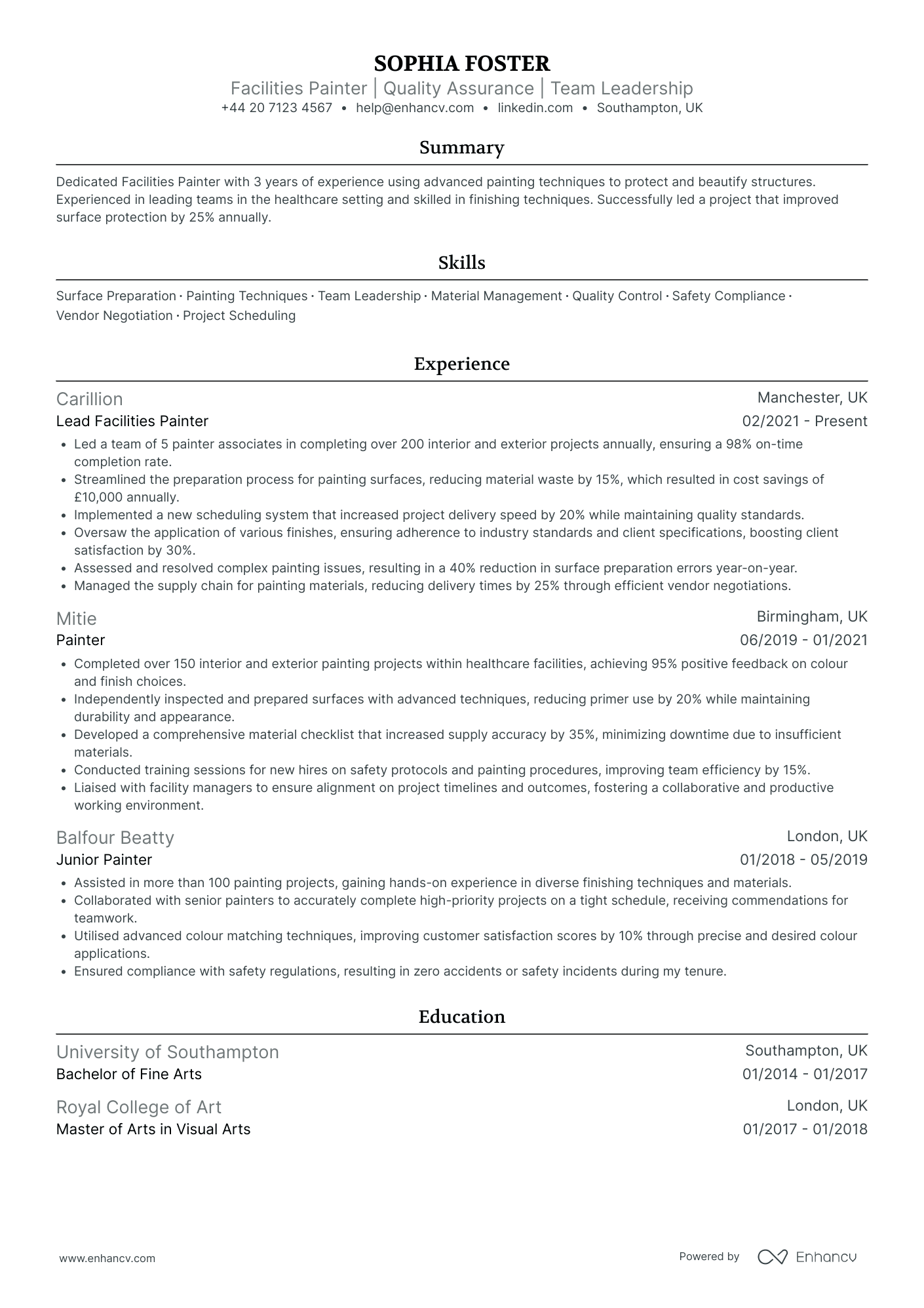
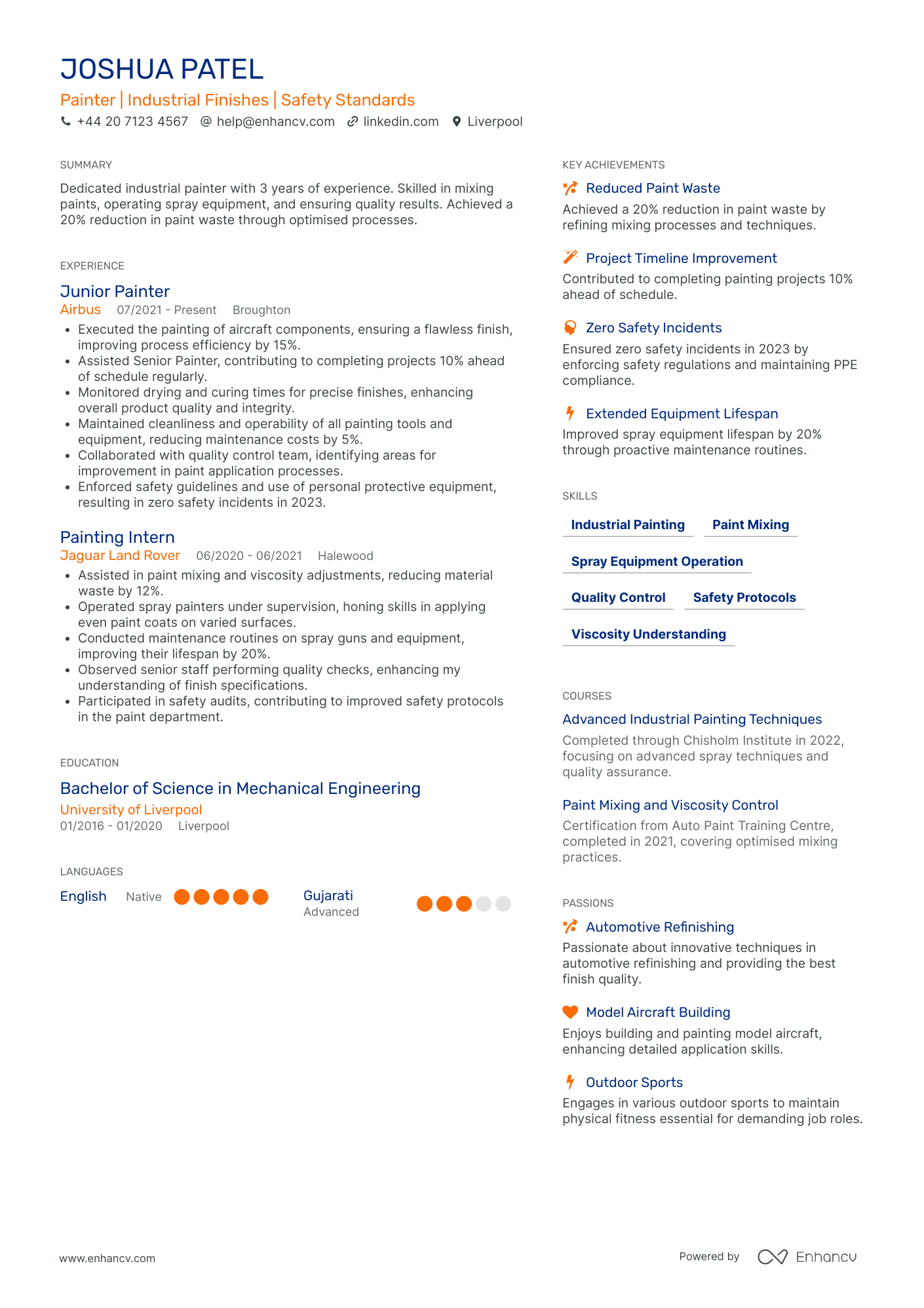
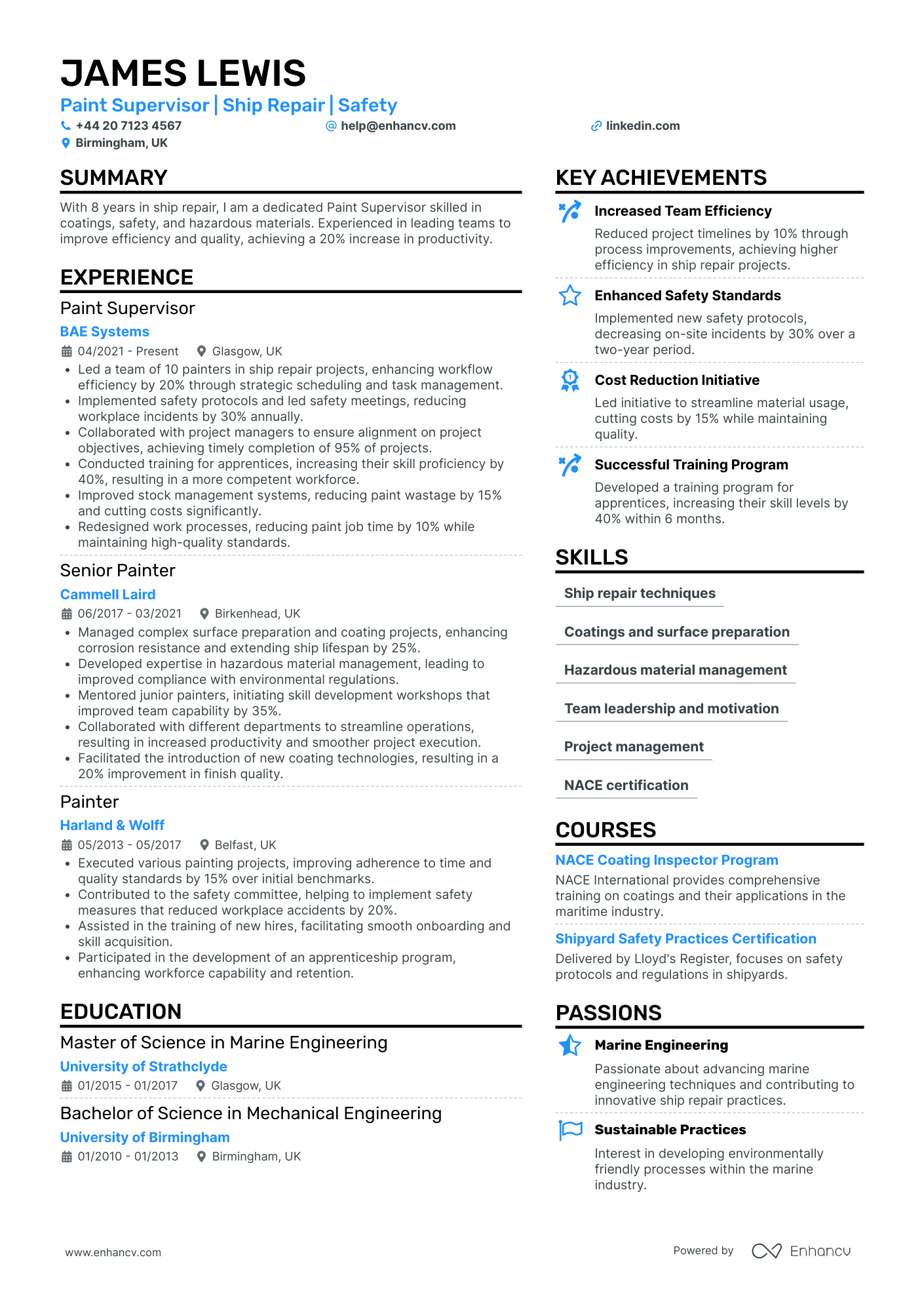
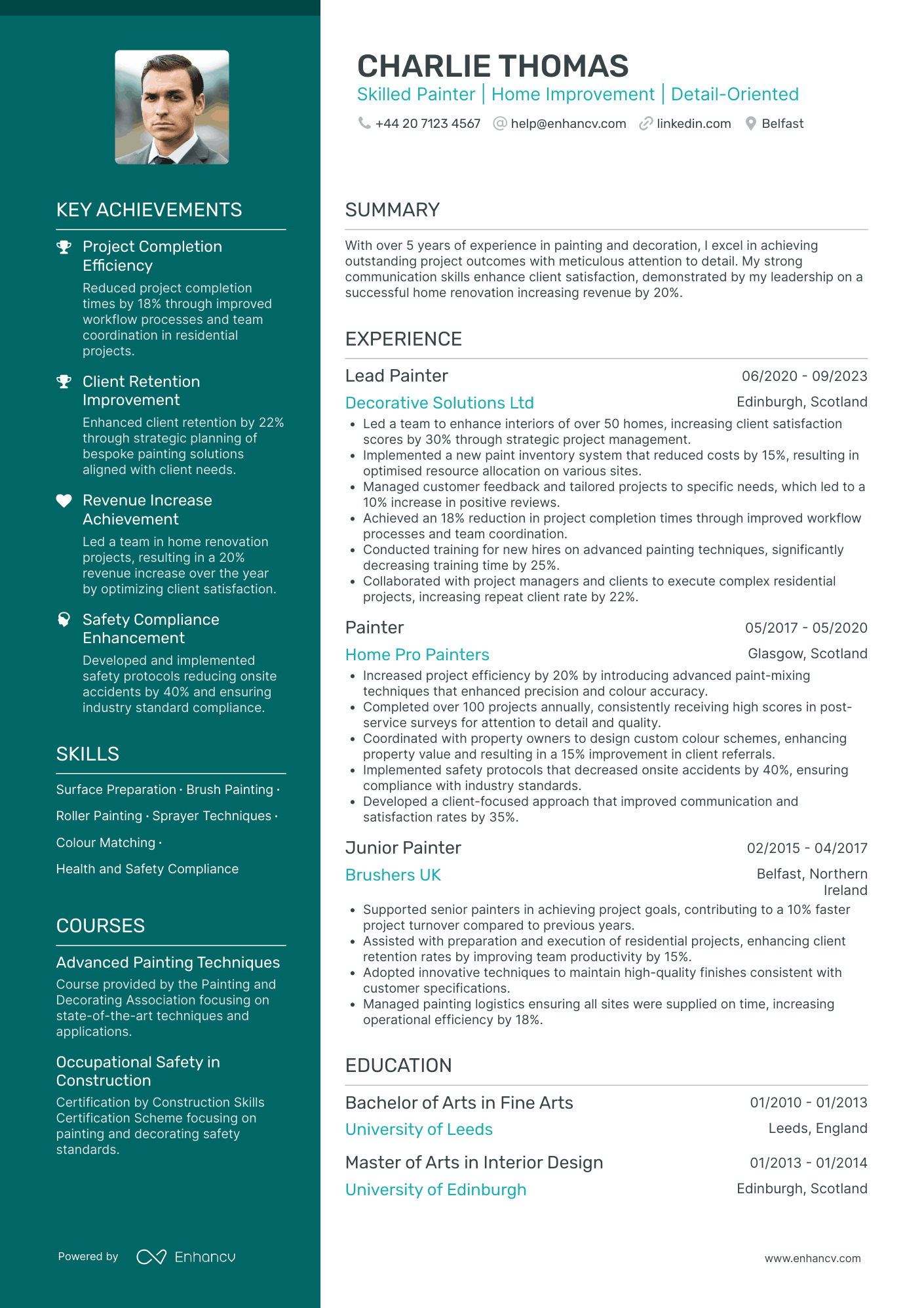
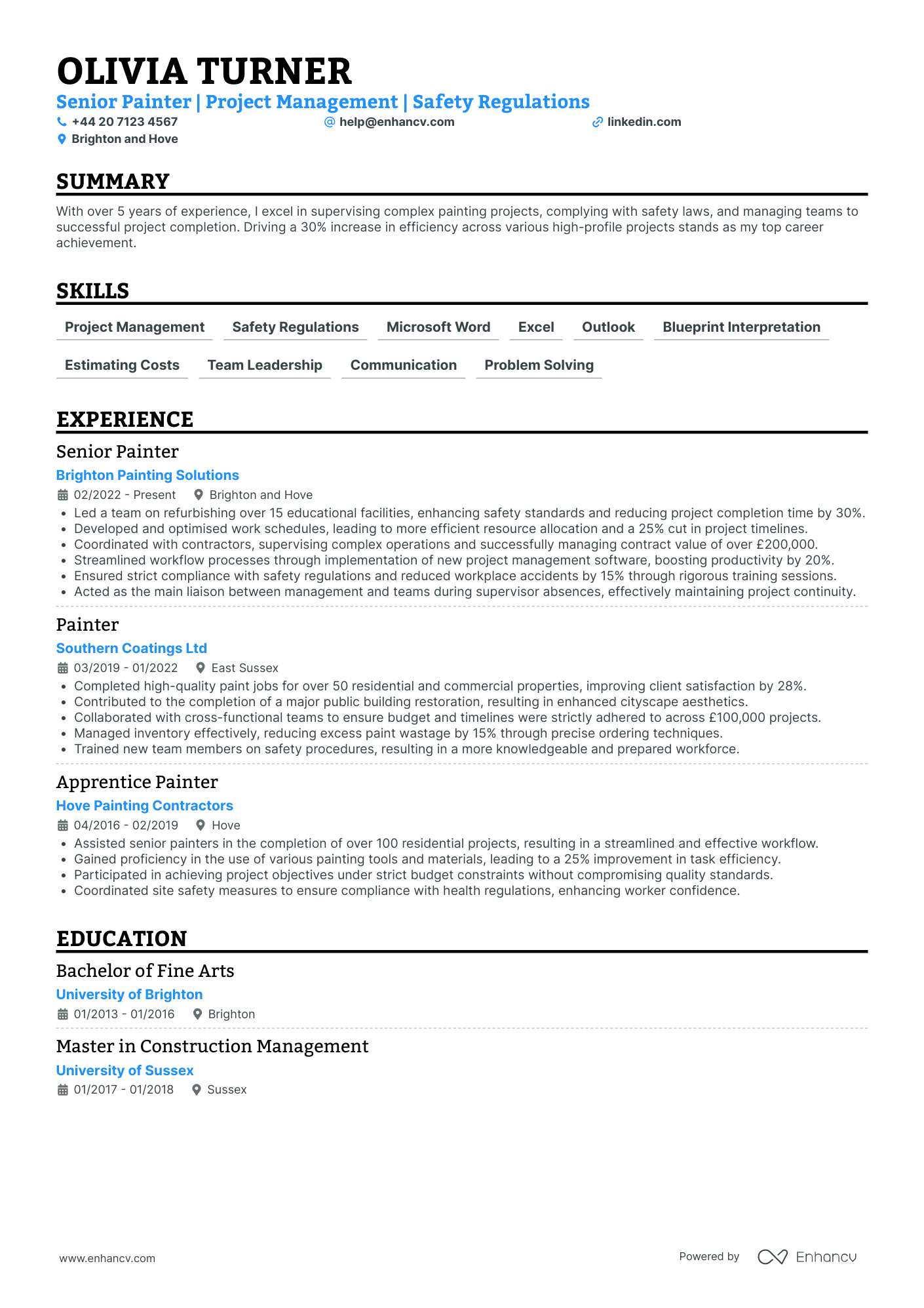
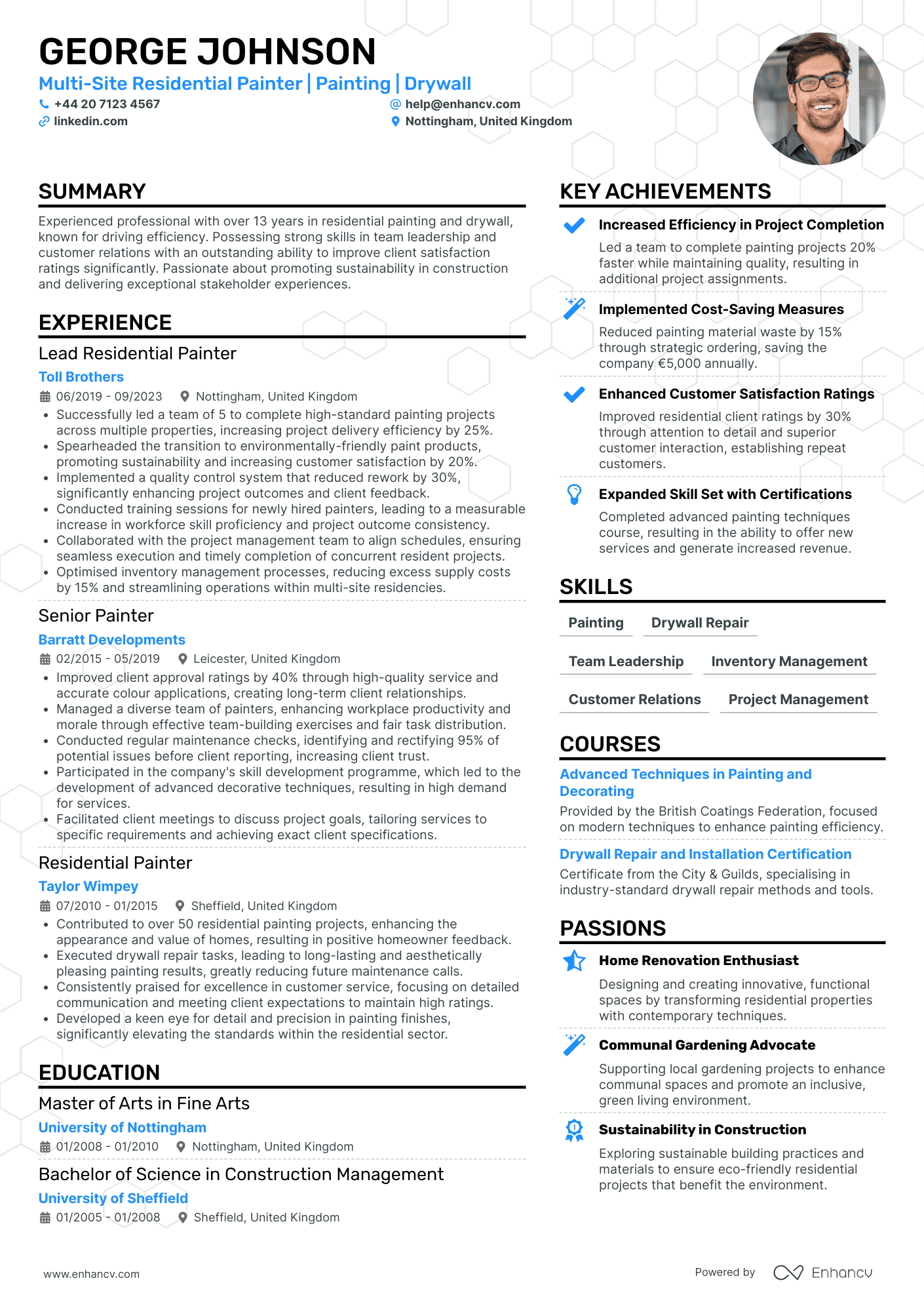
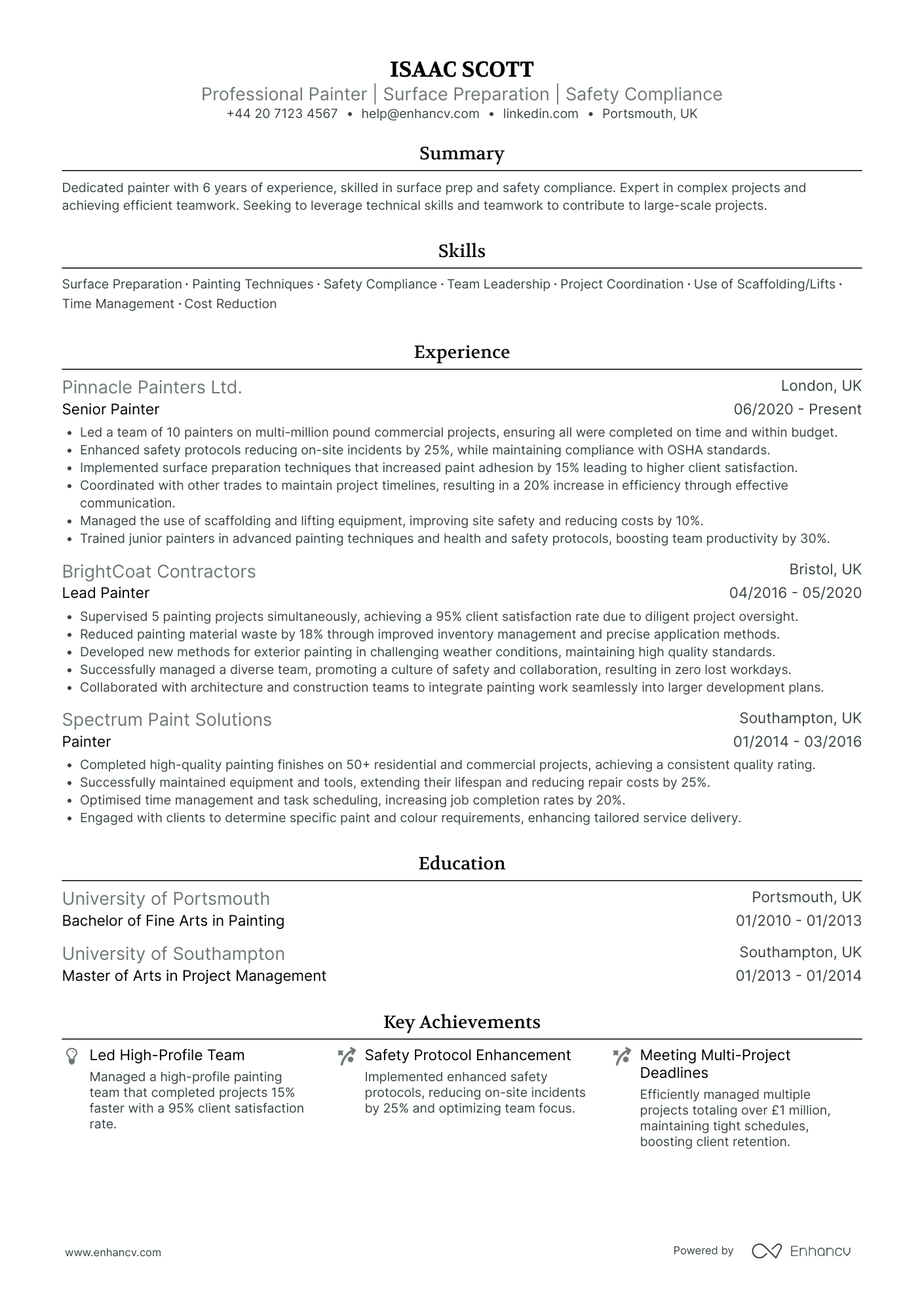
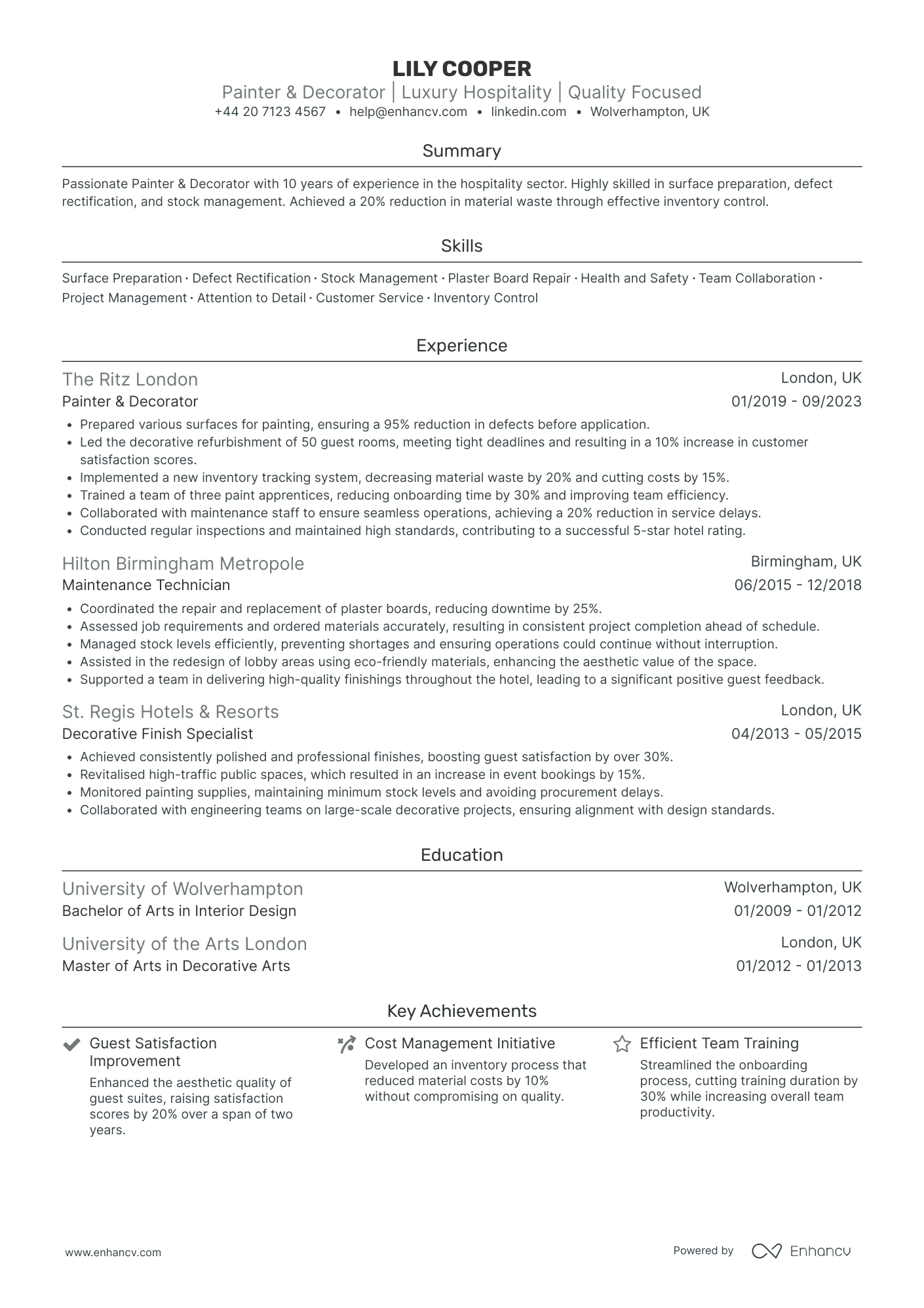
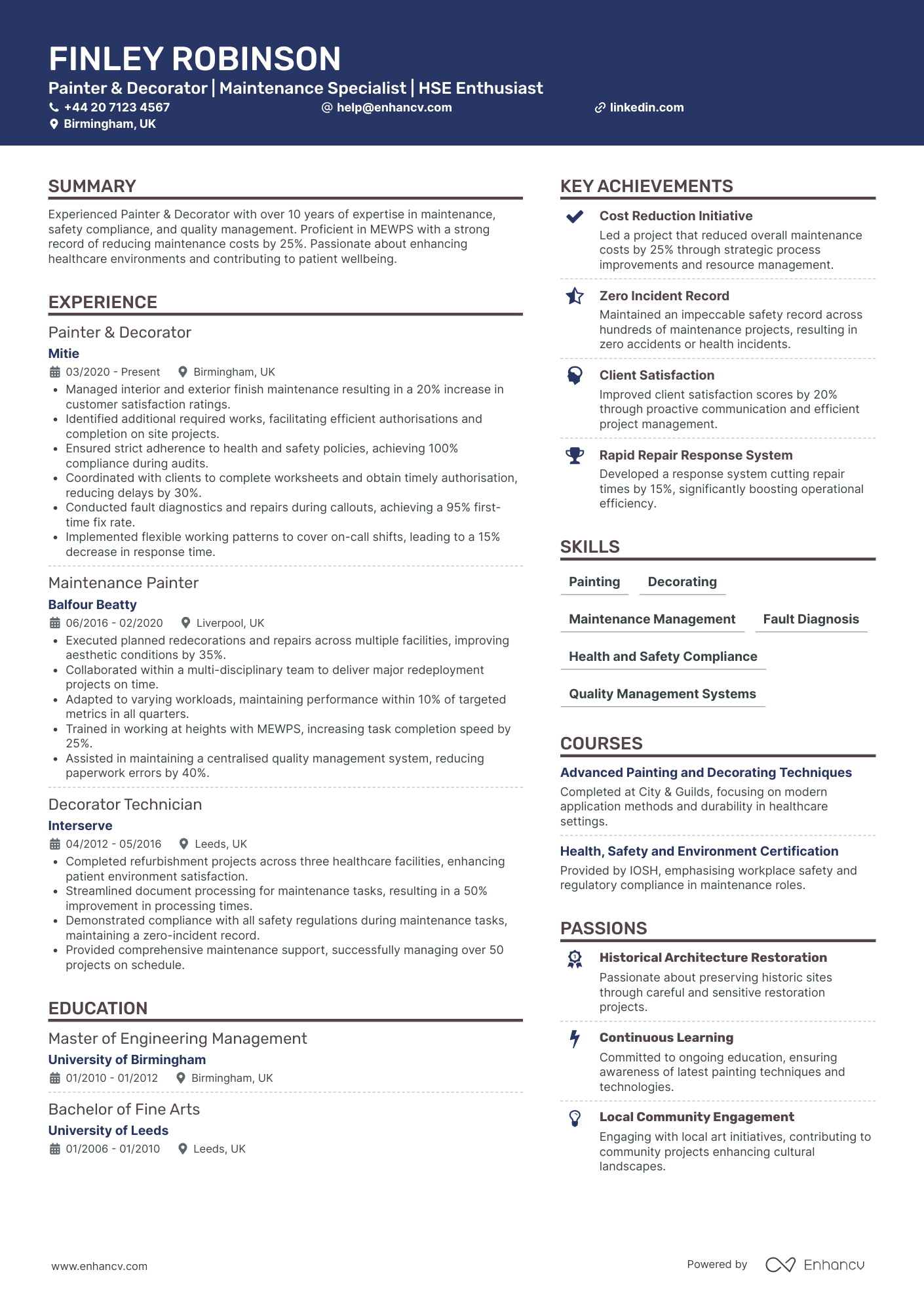
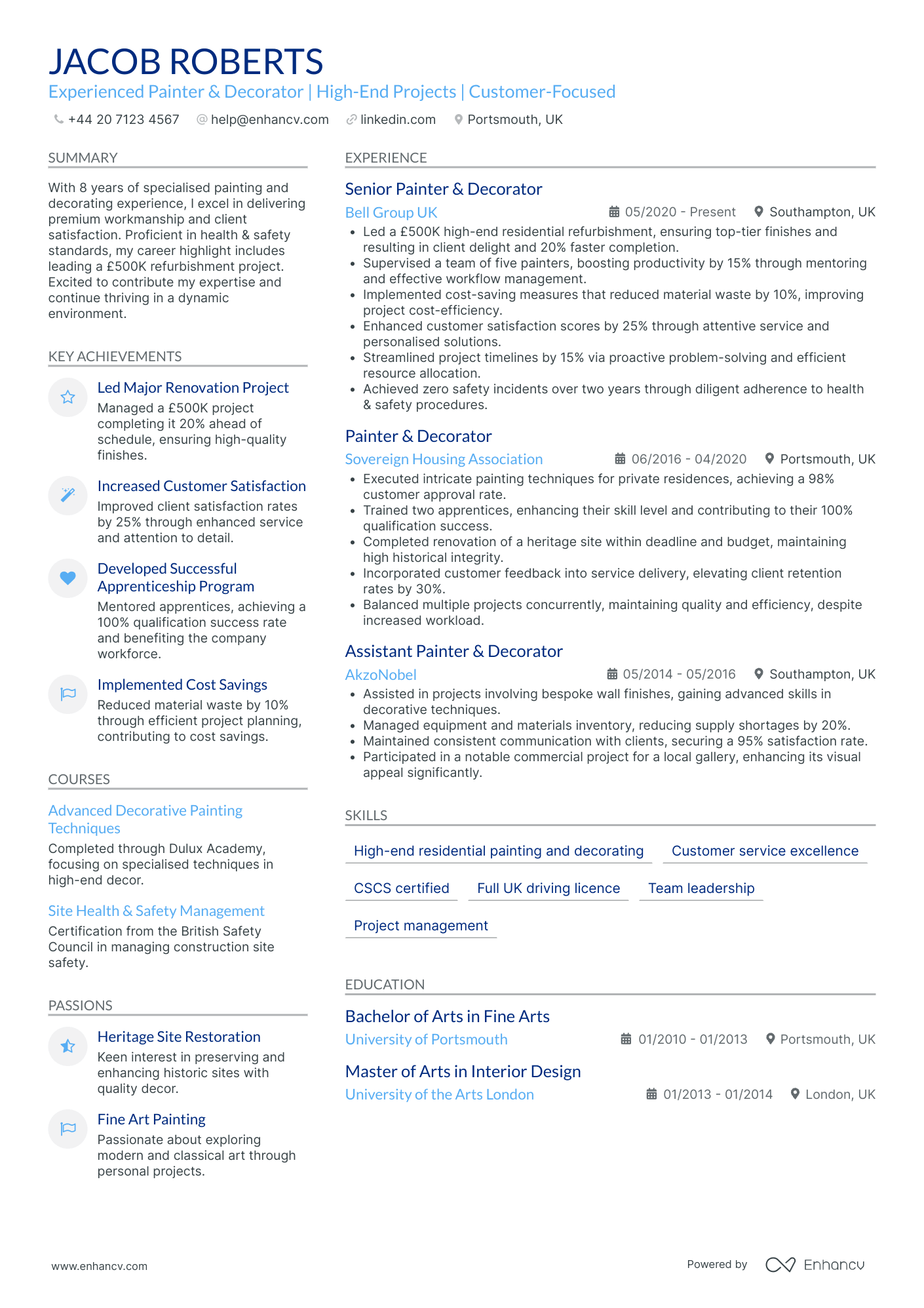
Use a skills-led structure if your work history is patchy or you are moving between trades, so your finishes and cards come before the timeline. With a steady run of jobs behind you, switch to reverse chronological.
Keep it to two pages, one column, plain headings, and a readable font. Site managers skim between jobs and will not hunt for the detail.
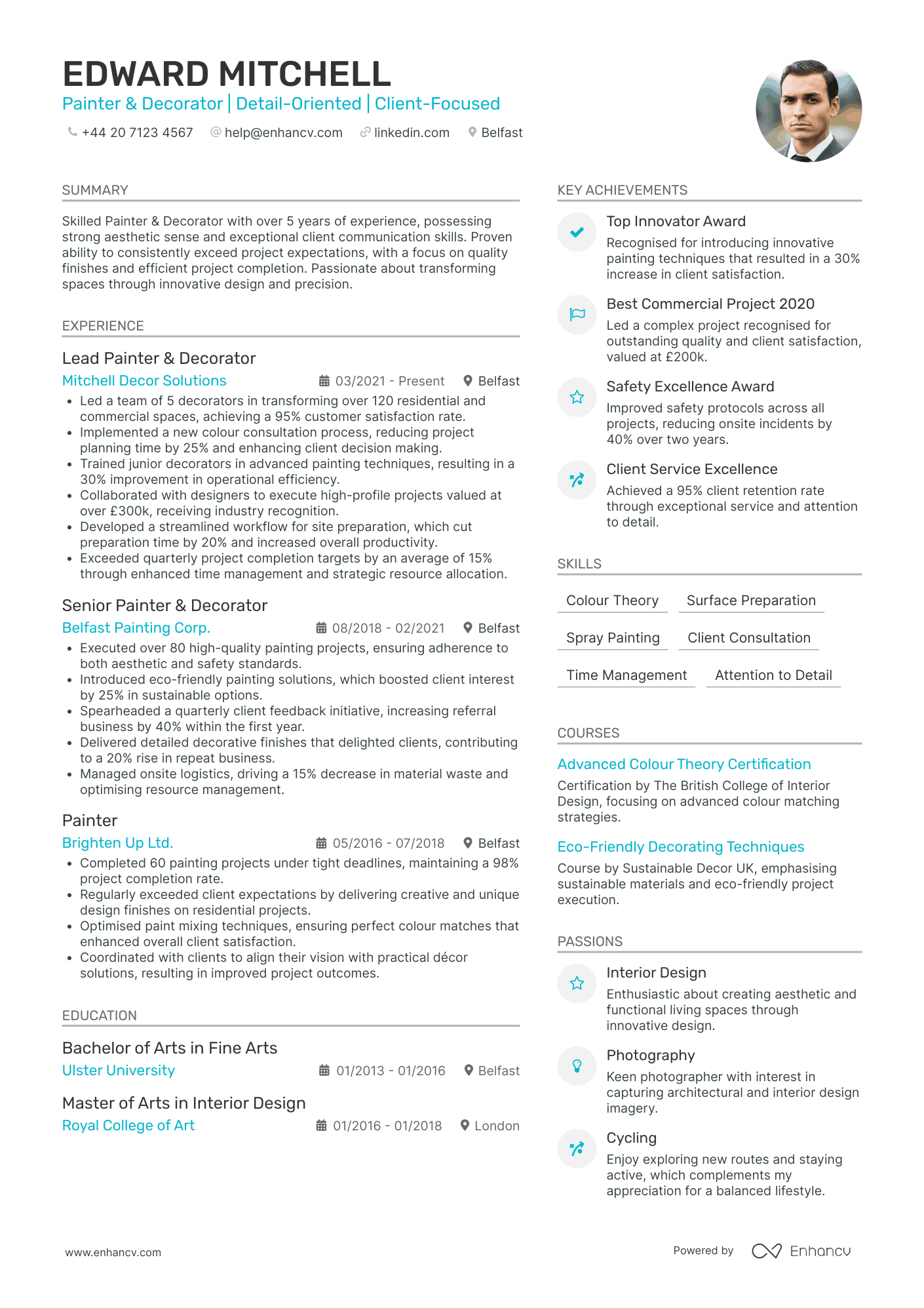
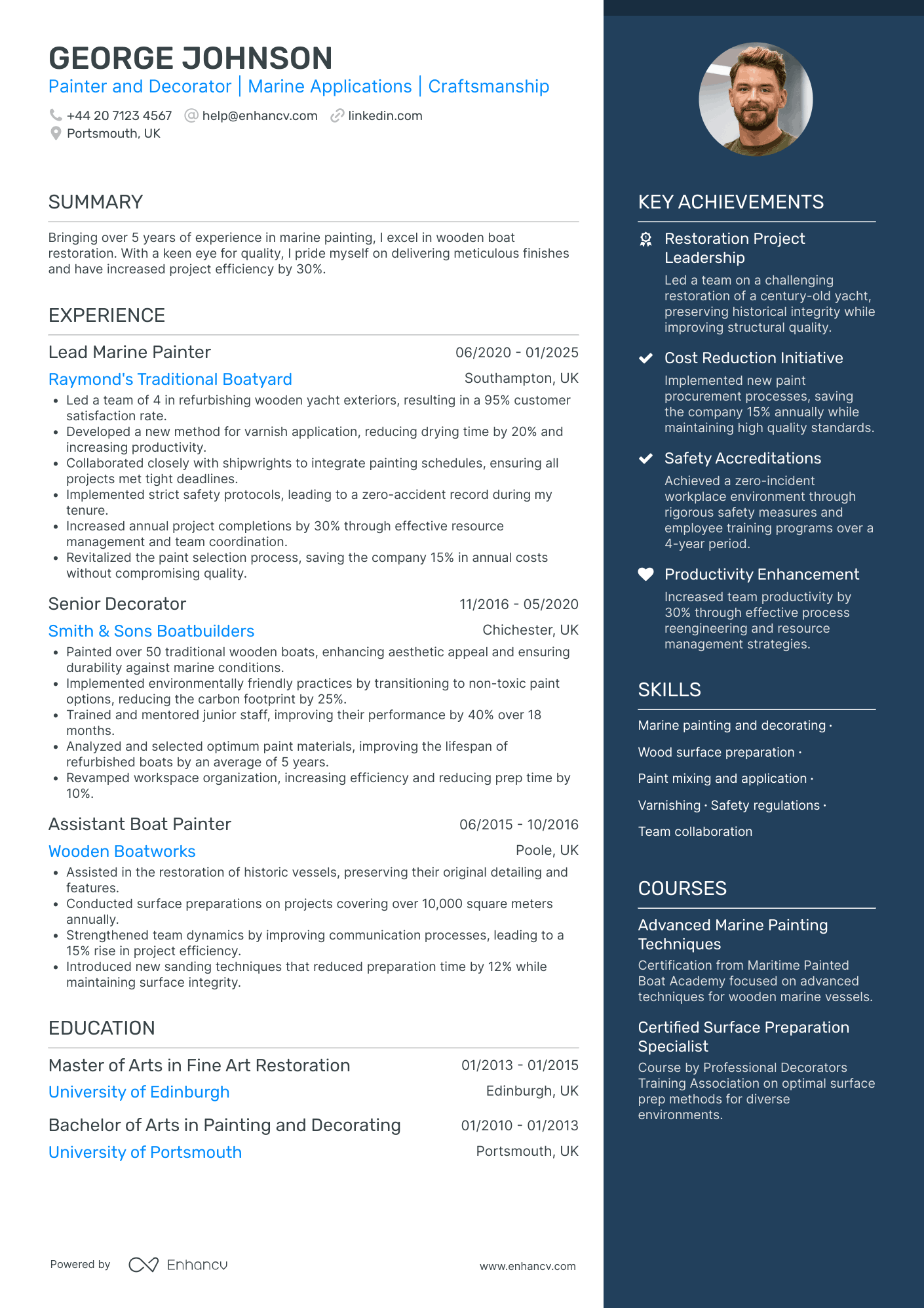
The running order that suits a painter is header, a short personal statement, skills, experience, then cards and training. In the header put your name, "Painter and Decorator" or "Vehicle Spray Painter", your town, a phone number, and a driving licence if you hold one. Skip the photo and the date of birth, since UK employers do not need them.
Send a PDF for direct applications so the layout holds on a phone. Keep a Word copy for agencies, which place a lot of trade work and drop CVs into their own template. If the advert names a format, follow it.
Trade CVs still pass through applicant tracking software on the bigger contractors, so keep the layout clean and the headings standard. Build from a tested layout rather than a blank page, since Enhancv's CV templates export to a clean PDF.
Is your CV good enough?
Drop your CV here or choose a file. PDF & DOCX only. Max 2MB file size.
Writing your painter personal statement
Three or four sentences at the top: what you paint, how long you have done it, the cards you hold, and where you work. Keep it concrete. See more personal statement examples if the opening line will not come.
There is a simple order that works. Trade and years, then your strongest finish or specialism, then a card or ticket, then your patch and what you are after. Four facts a foreman can act on beat four adjectives every time.
Skip the adjective soup. "Reliable, hard-working painter with a keen eye for detail" sits on every other CV and tells a foreman nothing he can check.
Lead with evidence instead:
Painter CV personal statement example
Time-served painter and decorator with eight years across domestic and commercial sites, from full-house repaints to office refurbishments. CSCS card holder, confident with spray, brush, and roller, and known for leaving a snag-free finish. Based in Leeds and happy to travel across West Yorkshire, looking for a steady position with a busy contractor.
Painter CV personal statement to avoid
Hard-working and passionate painter looking for a new opportunity to use my skills. Reliable team player with attention to detail and a positive attitude. Willing to learn and take on any challenge.
The weak version is interchangeable. Swap "painter" for any trade and it still reads the same, which is exactly why it gets skimmed past. Name your years, your cards, your finishes, and your patch, and the recruiter can picture you on the job.
Rewrite the statement for the advert in front of you. If the job is domestic decorating, lead with repaints, wallpaper, and a tidy finish in occupied homes. If it is refinishing, lead with booth work, colour matching, and turnaround. The same painter can have two openers, and the tailored one always reads as the better fit.
When a painter's CV crosses my desk, I look for two things fast: which kind of painter you are, and whether you can prove a clean finish. A line like "sprayed 40 panels a shift to a colour-matched finish with no reworks" tells me more than a row of adjectives ever will. Name your cards, name your substrates, and put one real number next to each job. A time-served painter who shows the finish beats a polished CV with nothing behind it.
The Enhancv team
Writing your painter experience section
Paid, subcontract, or agency, write every entry the same way: a dated heading, the site or client, then bullets that lead with a strong action verb and end in a result. See work experience on a CV for the mechanics.
Painting is more measurable than it feels. Rooms turned around in a day, square metres sprayed, a defects list cleared before handover, a repeat client who asked for you by name. Those are your achievements.
Self-employed and subcontract work counts, and it does not need a company behind it. Give it a heading like "Self-employed Painter and Decorator", a date range, and the type of work you took on, whether that was landlord repaints, new-build snagging, or private jobs. If there is a gap between runs of work, a one-line note on a course, a family reason, or a quiet stretch is better than a hole a recruiter has to guess at.
Tailor each application: pull the exact tasks from the advert, a spray booth, a particular finish, a type of substrate, and mirror them where they are true of you. Enhancv's CV tailoring feature reads the advert and suggests the matching edits, which beats rewriting from scratch each time.
- Repaint 3 to 4 domestic rooms a day to a snag-free finish, from preparation and filling through to two-coat emulsion and gloss
- Prep and spray kitchen units and commercial joinery in the booth, mixing and colour-matching to the client's reference
- Mask, protect, and set up each site so communal areas stay clean, with zero paint-damage complaints across two years
- Requested by name by three regular landlords for repeat refurbishment work

Numbers a painter can put on a CV
Rooms or units completed per day or week. Square metres prepped or sprayed. Panels refinished a shift. Snagging or defects cleared before handover. Sites or contracts covered in a year. Repeat clients or landlords who request you. Any of these turns a duty into an achievement, and one real figure per job is plenty.

PRO TIP
Mirror the advert's exact wording. If it says "two-pack", "intumescent", "airless spray", or "making good", use those terms where they are true of you. Trade adverts and the software behind them match on the specific word, not a synonym.
Writing a painter CV with little experience
Plenty of painters start with a mix of cash jobs, a bit of labouring, and a course rather than a clean run of employed roles. That is normal, and the CV can still land the interview.
Lead skills-first, and write up the work you have done in trade language. A summer helping a relative decorate rental flats is preparation, masking, and two-coat emulsion, so give it a dated entry with the tasks and rough hours rather than burying it. See how others handle a first job CV if you are stuck on the layout.
Count the course and the card. "NVQ Level 2 Painting and Decorating in progress" or "CSCS card held" tells an employer you are on the path and safe to have on site.
Labouring, warehouse, and general site work all carry transferable proof: turning up on time, following a method, and keeping a work area clean and safe. Name those where a painter advert asks for them, because a foreman would rather train a reliable starter than chase a no-show.
One good reference does a lot of work early on. A site manager, a tutor, or a tradesperson you have grafted for can vouch that you turn up and finish clean, which is most of what a first employer is checking. Line one up and note that references are available, rather than padding the page with filler sections.
Cards, qualifications, and training for a painter CV
You do not need a degree to paint, but cards and tickets open doors, especially on commercial sites. List them where you have them, even in progress.
The ones employers look for: a CSCS card, an NVQ or Diploma Level 2 or 3 in Painting and Decorating, and any spray, PASMA, or working-at-height tickets. Put them in your education section or a short training block.
The CSCS card is the one most commercial sites gate on, so lead with it and give the type and expiry. A spray booth or two-pack ticket matters for refinishing work, and an asbestos awareness or first aid course is worth listing where you have it, since older buildings and site rules make both relevant.
If you came up through an apprenticeship, say so and date it like a job. And name any certificates you hold, since a card number saves the employer a phone call.
Conclusion
Lead with the trade skills employers actually list, match the CV to the painter you are, and prove the finish with numbers rather than adjectives.
Pair it with a short cover letter that says which sites you have worked and how far you will travel, and a thin work history starts to read like a safe hire.
Author's take - The Enhancv team
When a painter's CV crosses my desk, I look for two things fast: which kind of painter you are, and whether you can prove a clean finish. A line like "sprayed 40 panels a shift to a colour-matched finish with no reworks" tells me more than a row of adjectives ever will. Name your cards, name your substrates, and put one real number next to each job. A time-served painter who shows the finish beats a polished CV with nothing behind it.