



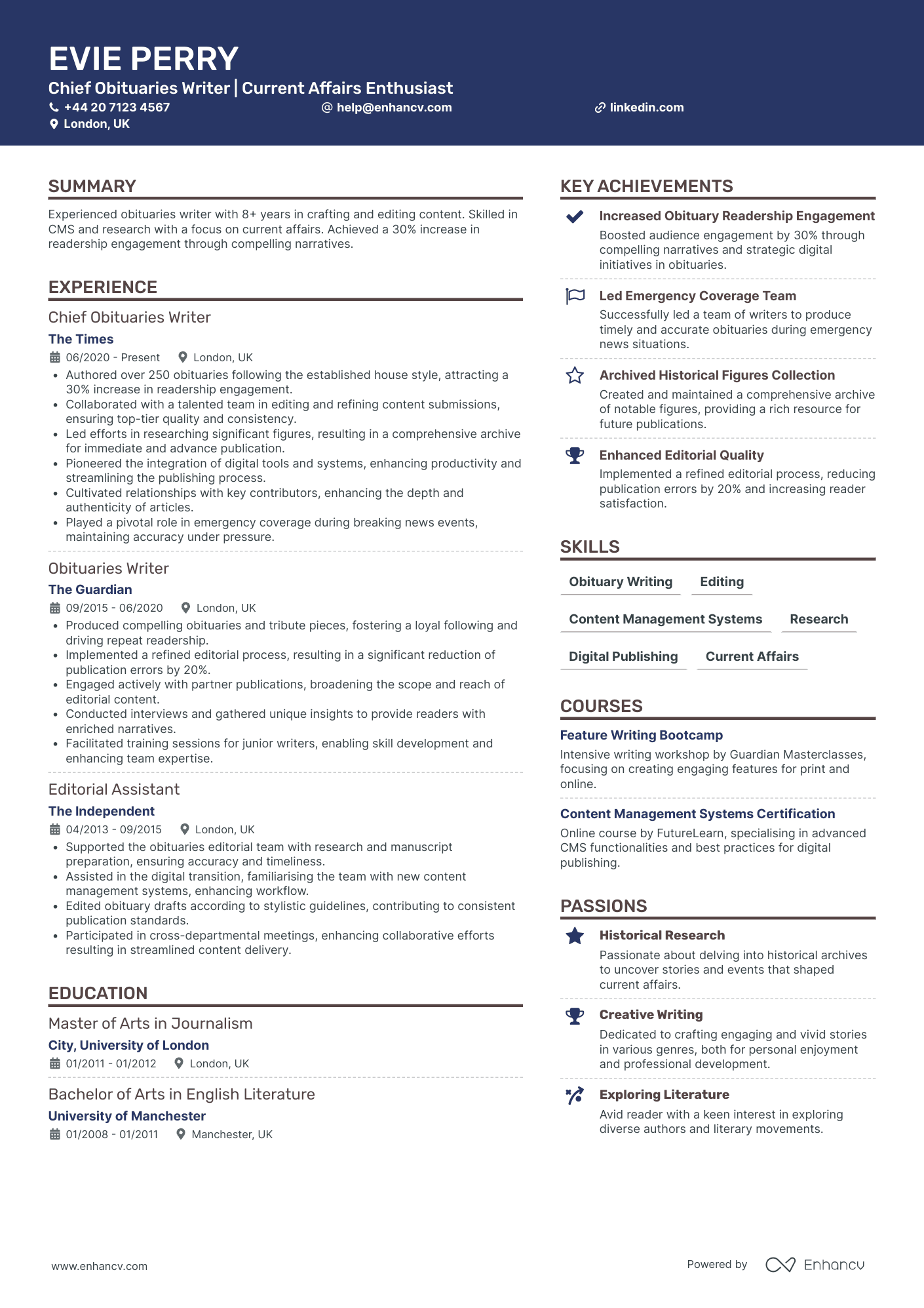
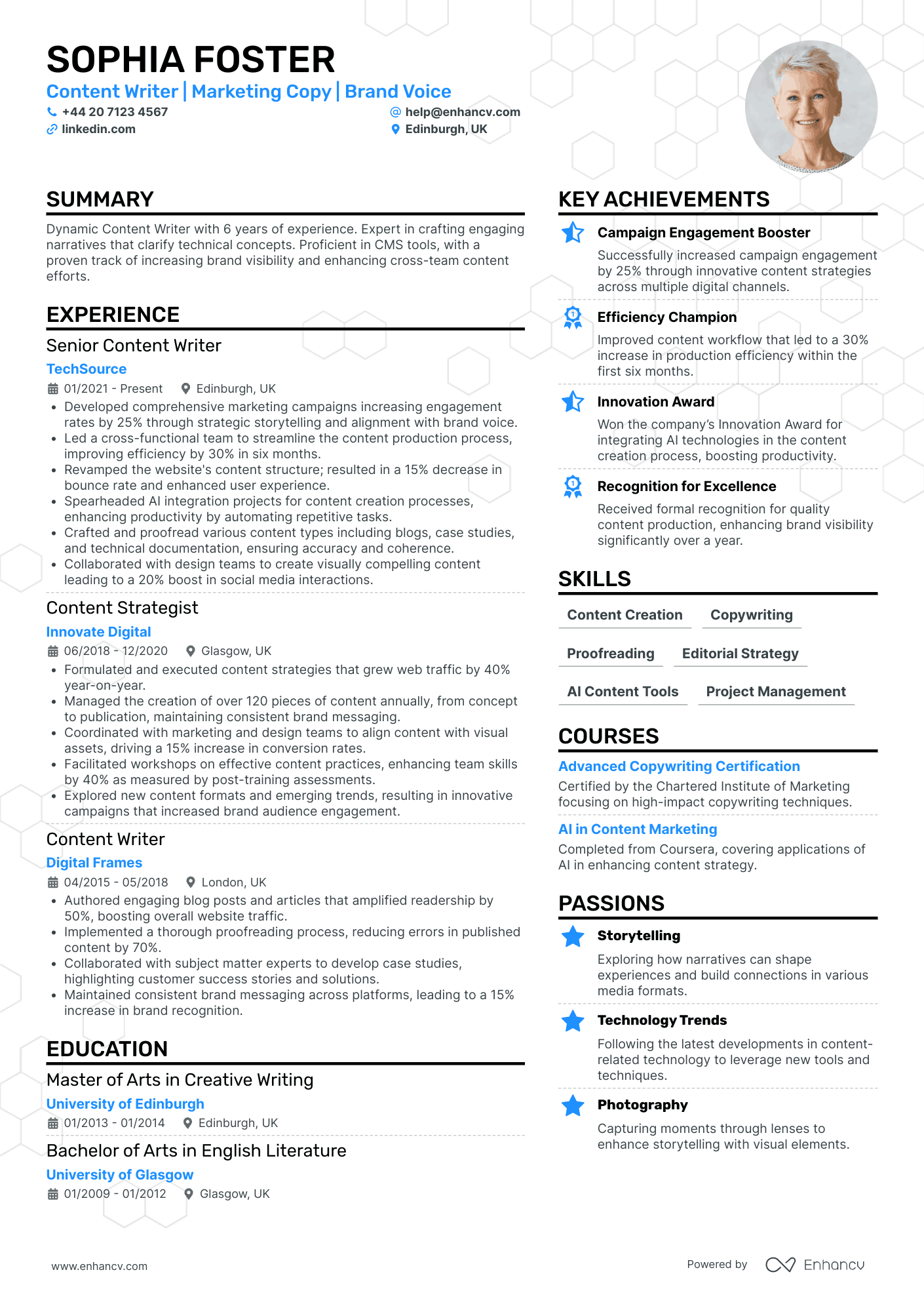
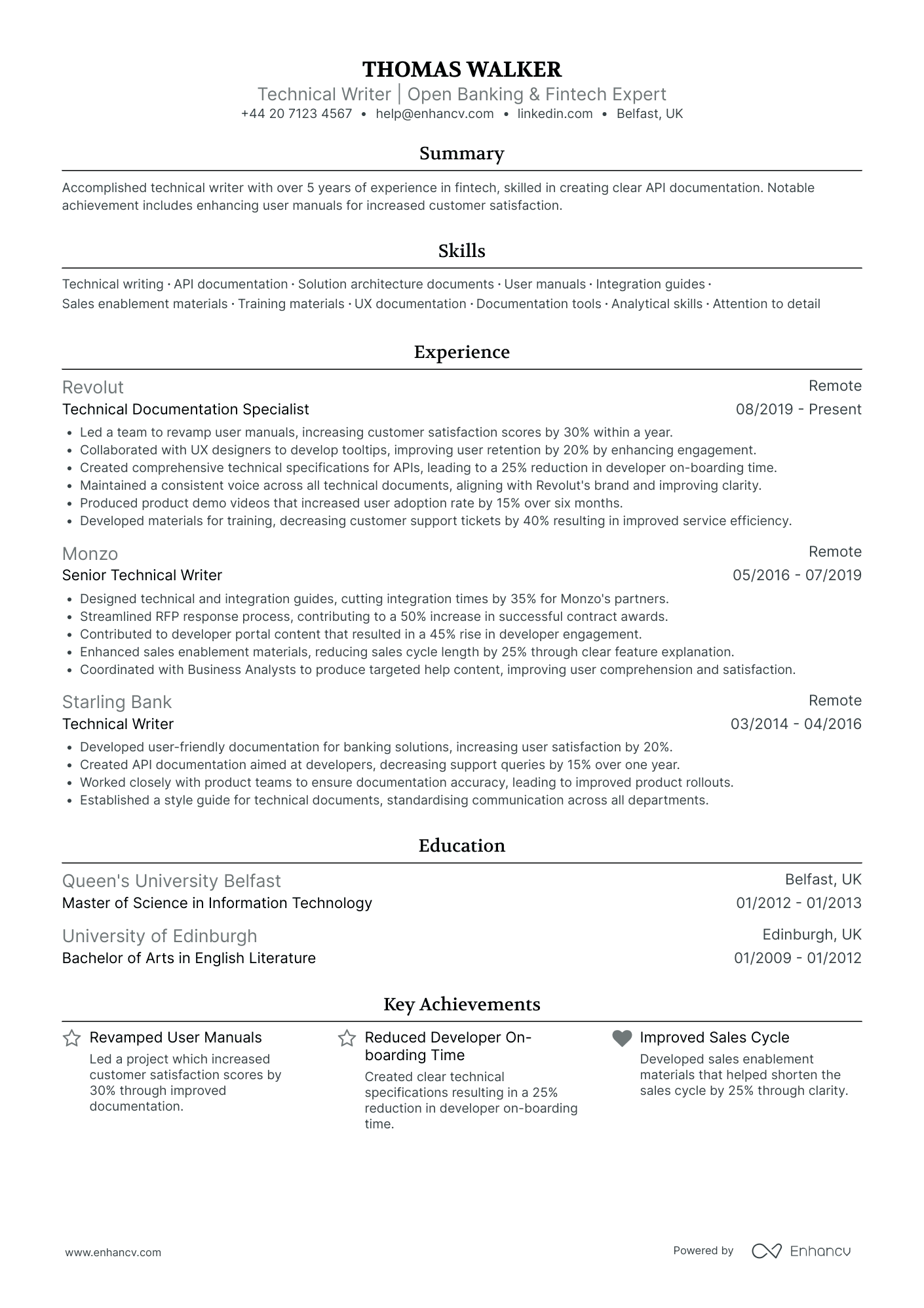
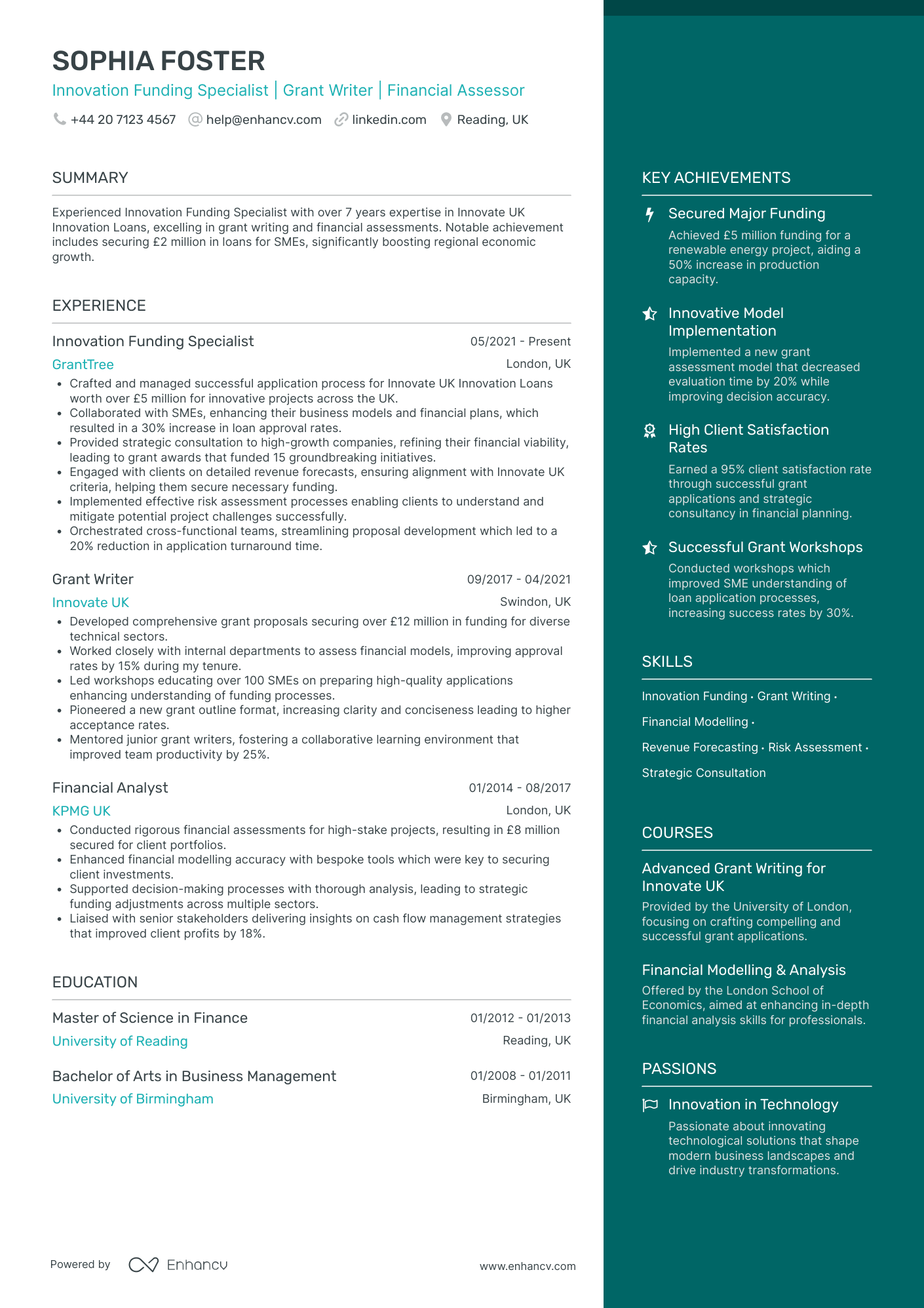
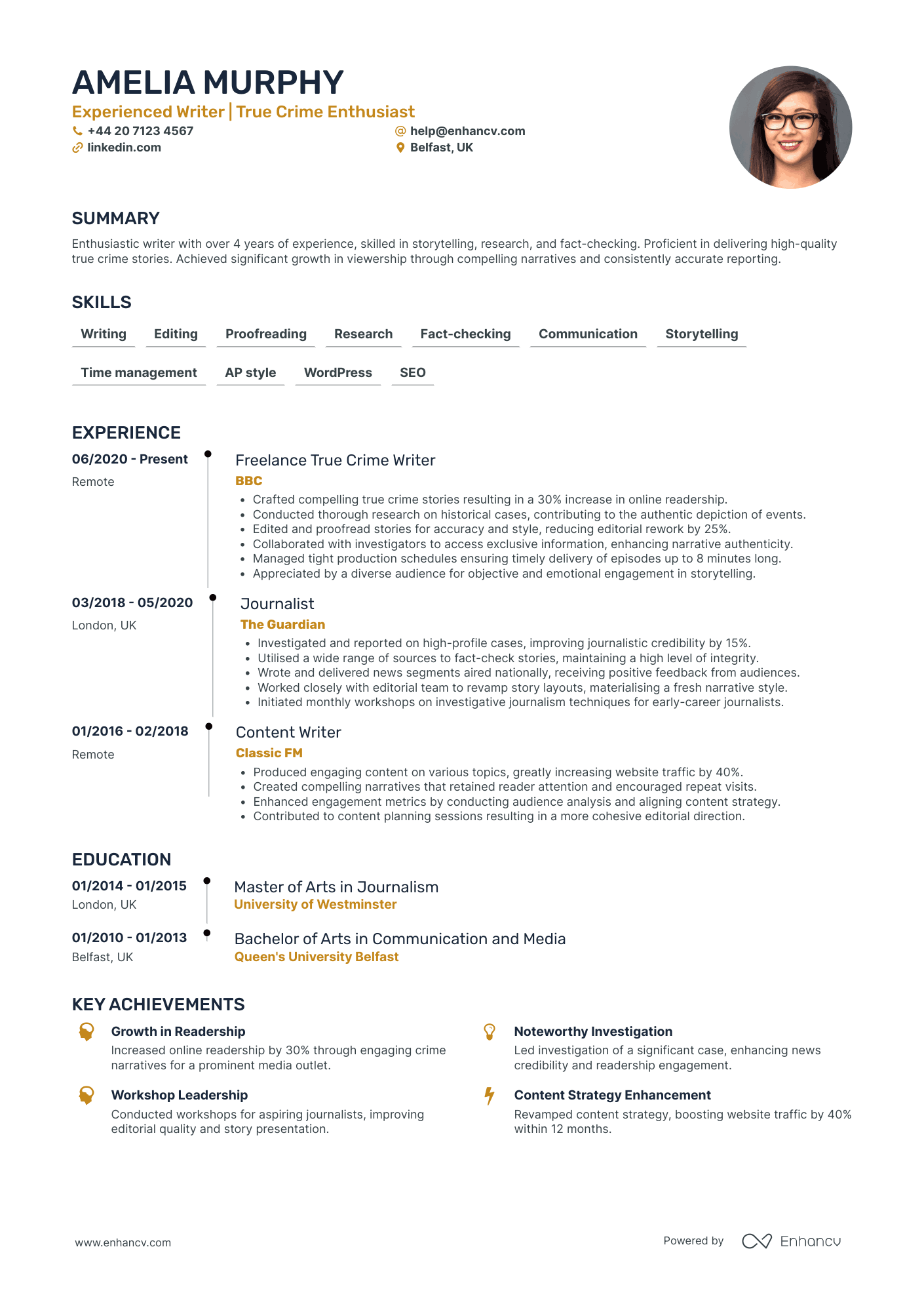
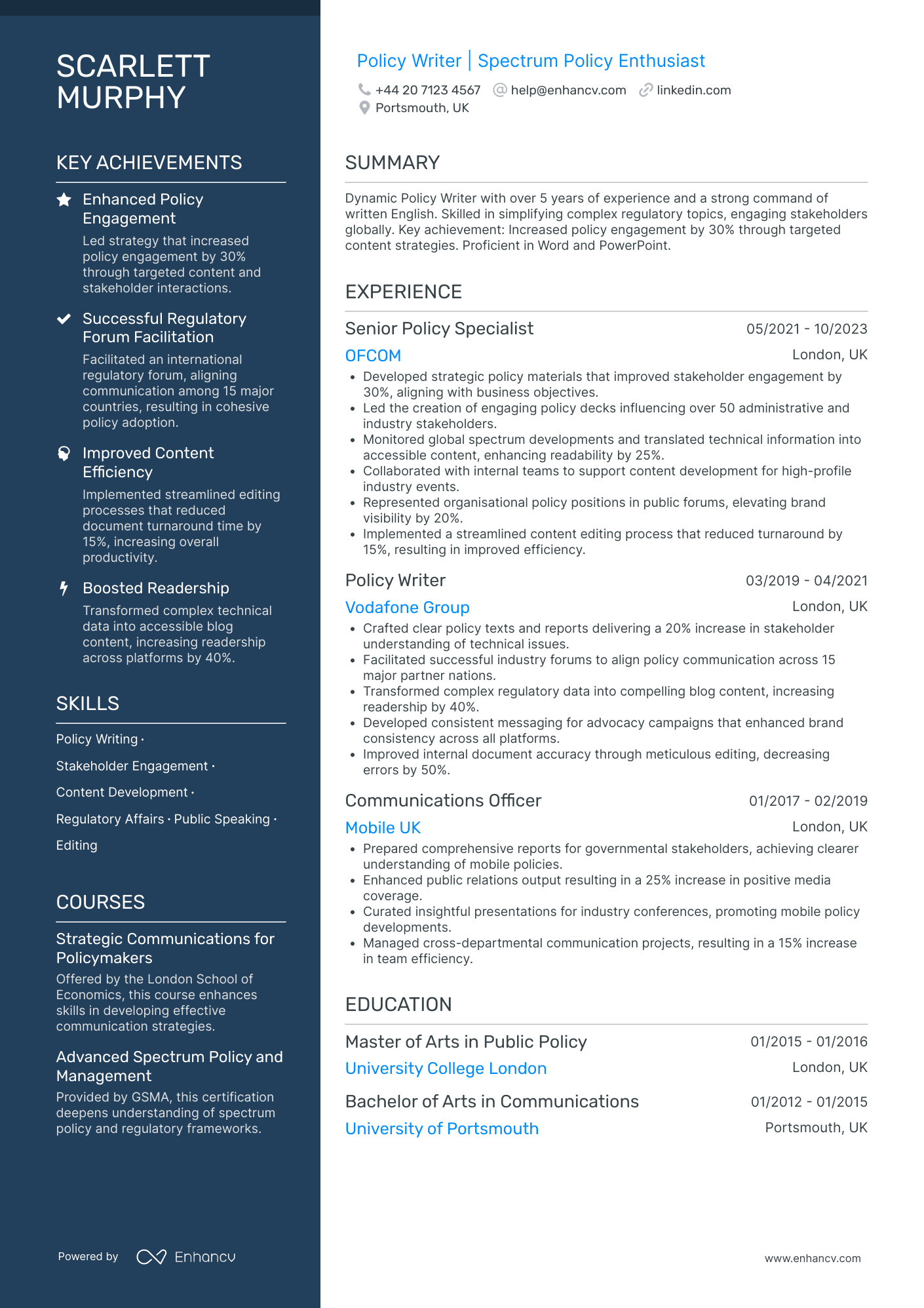
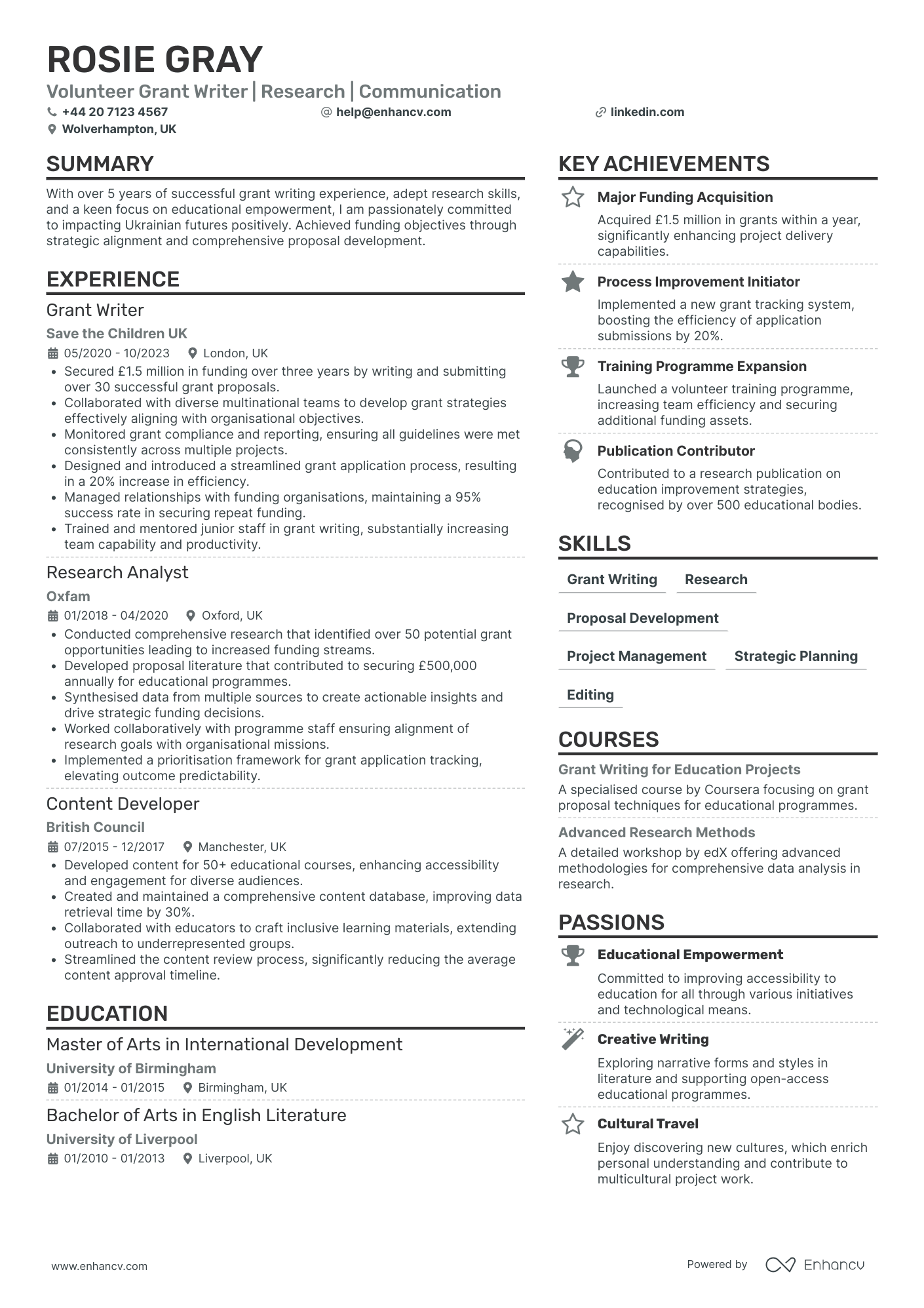
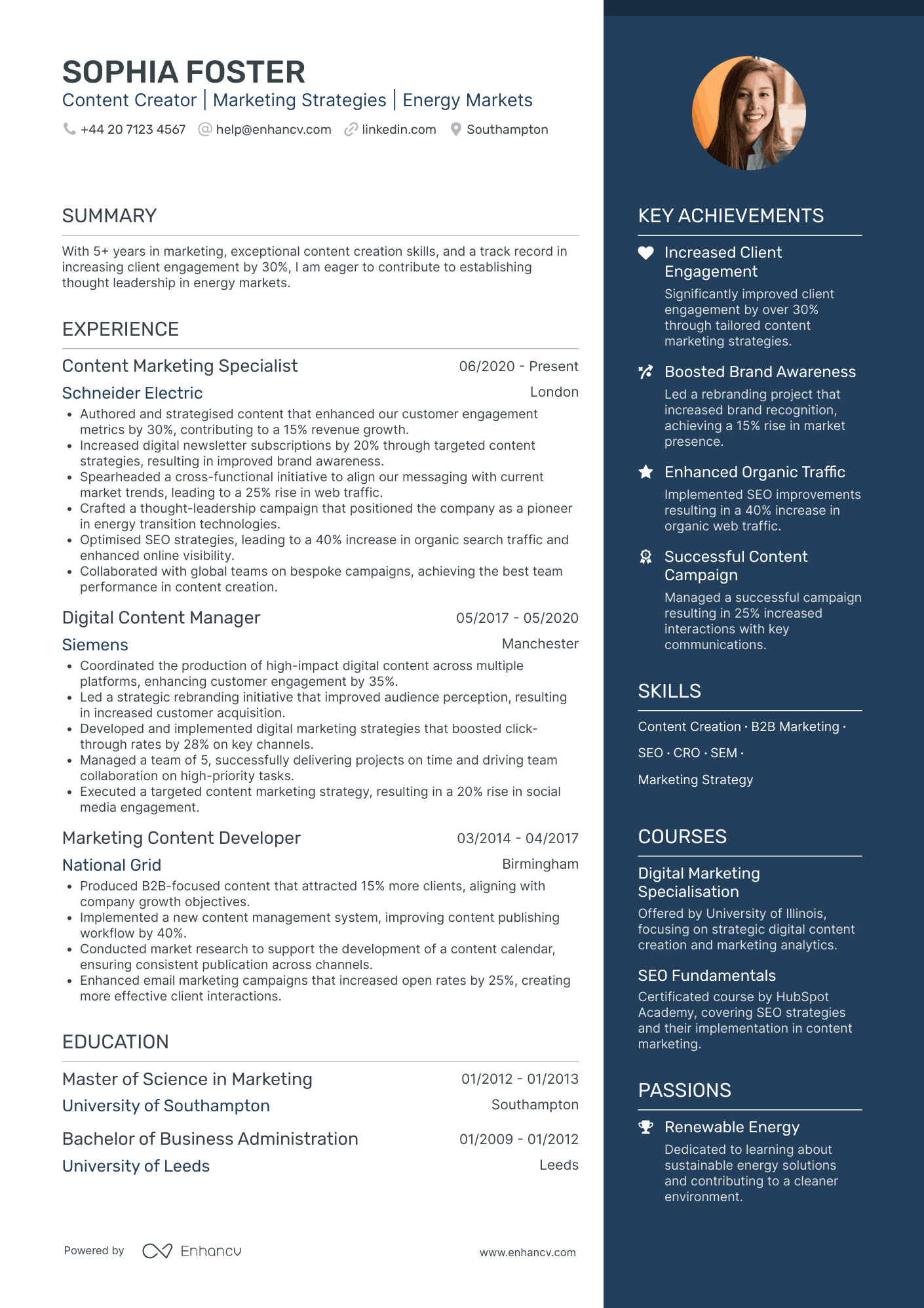
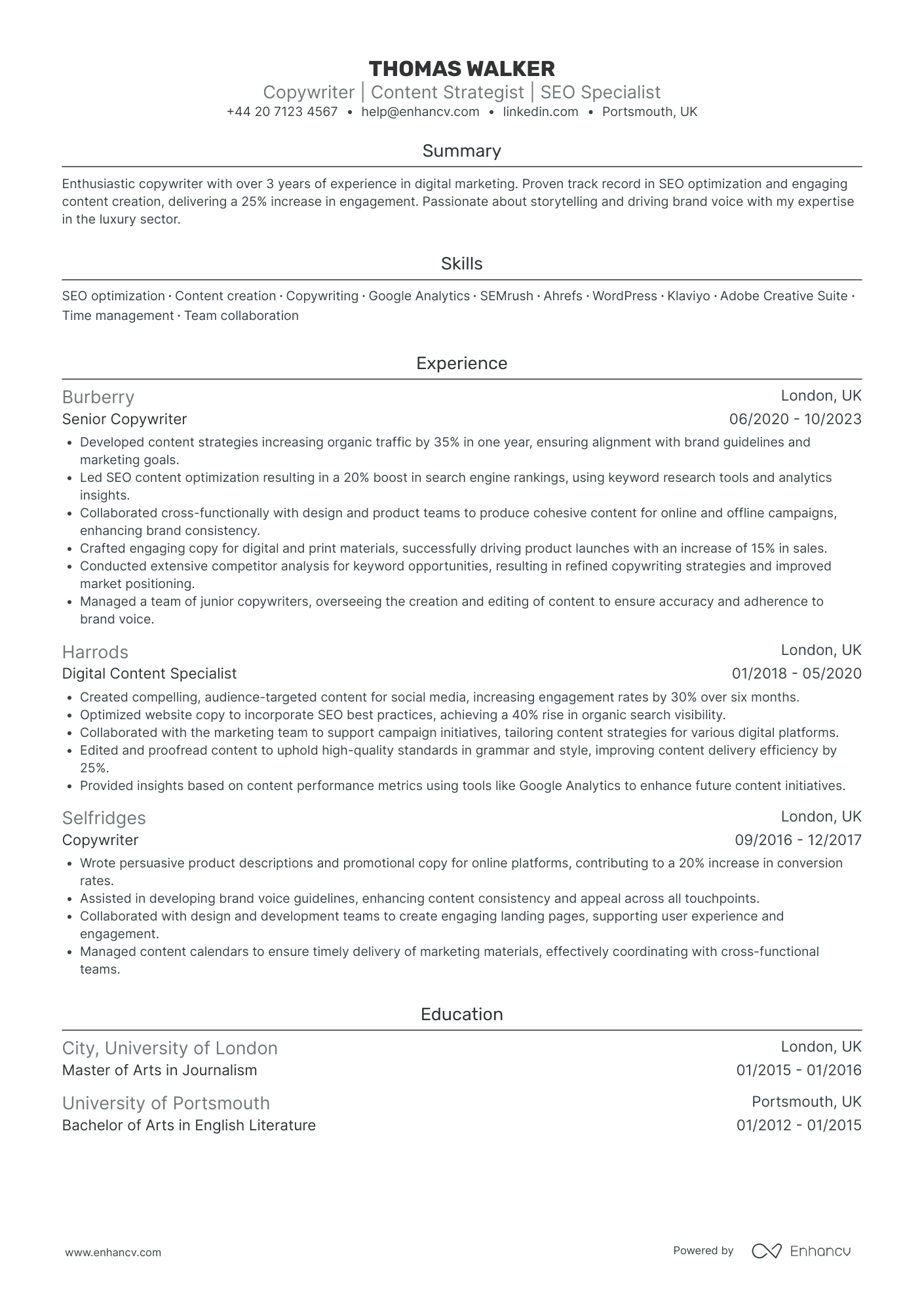
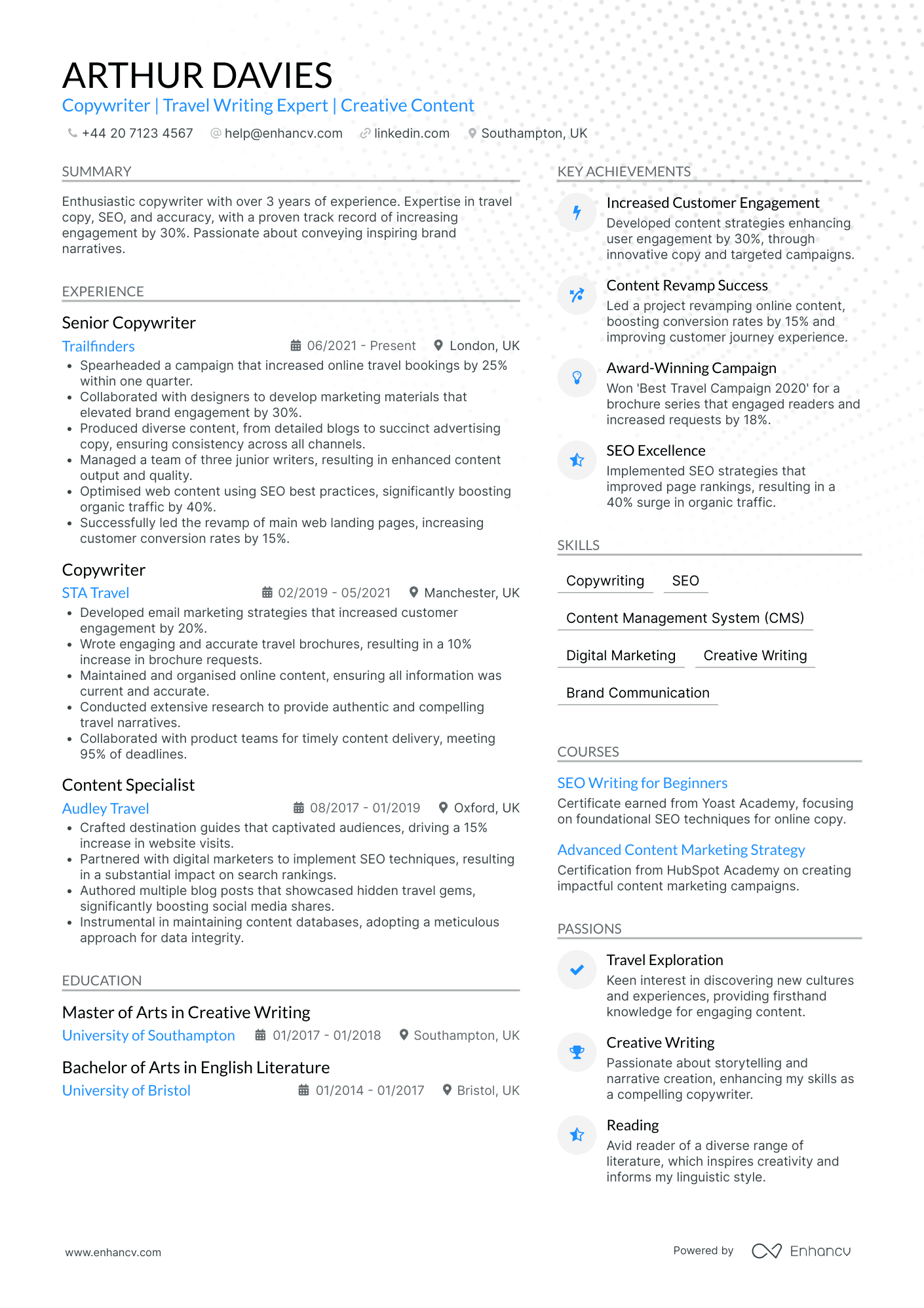
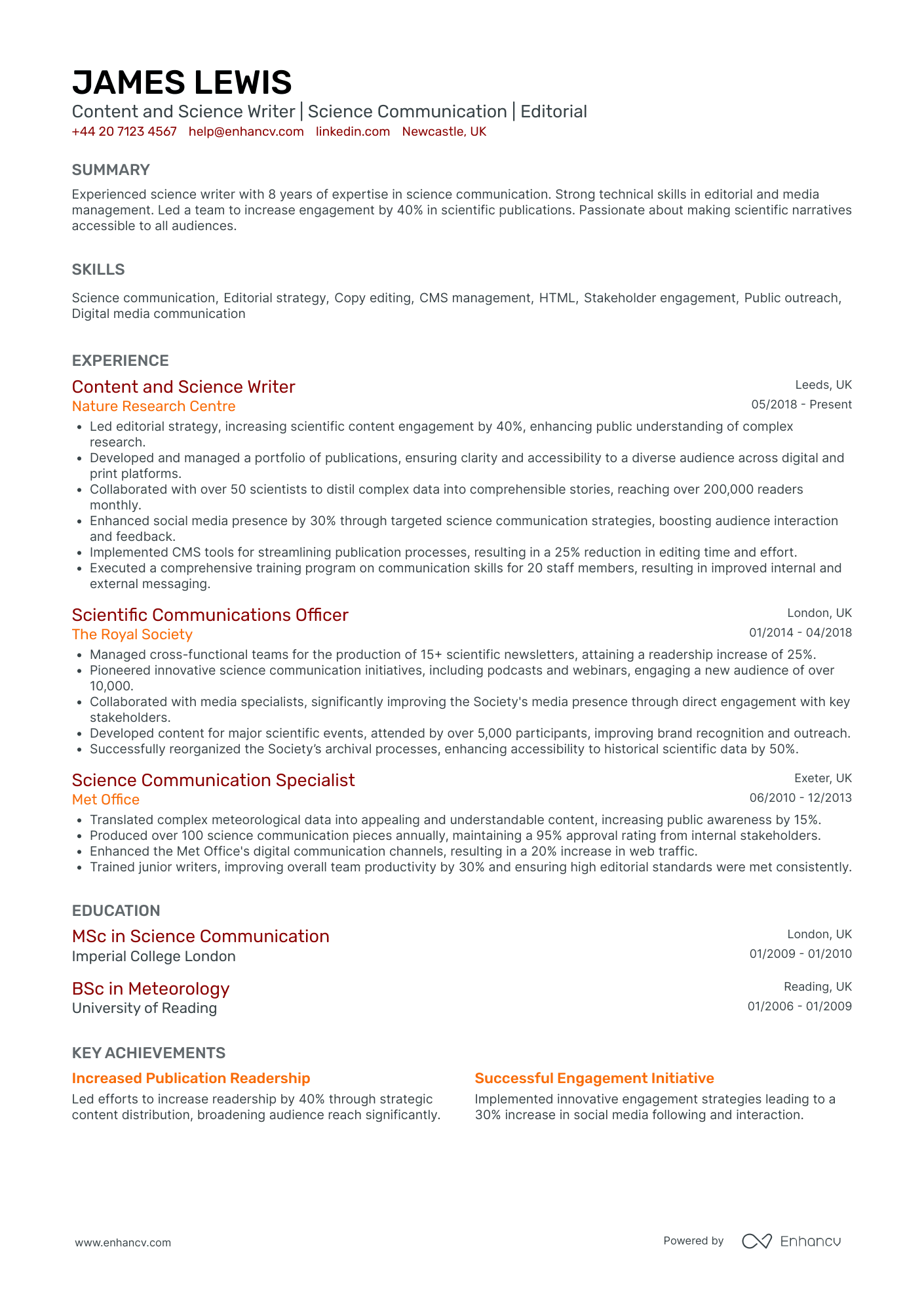
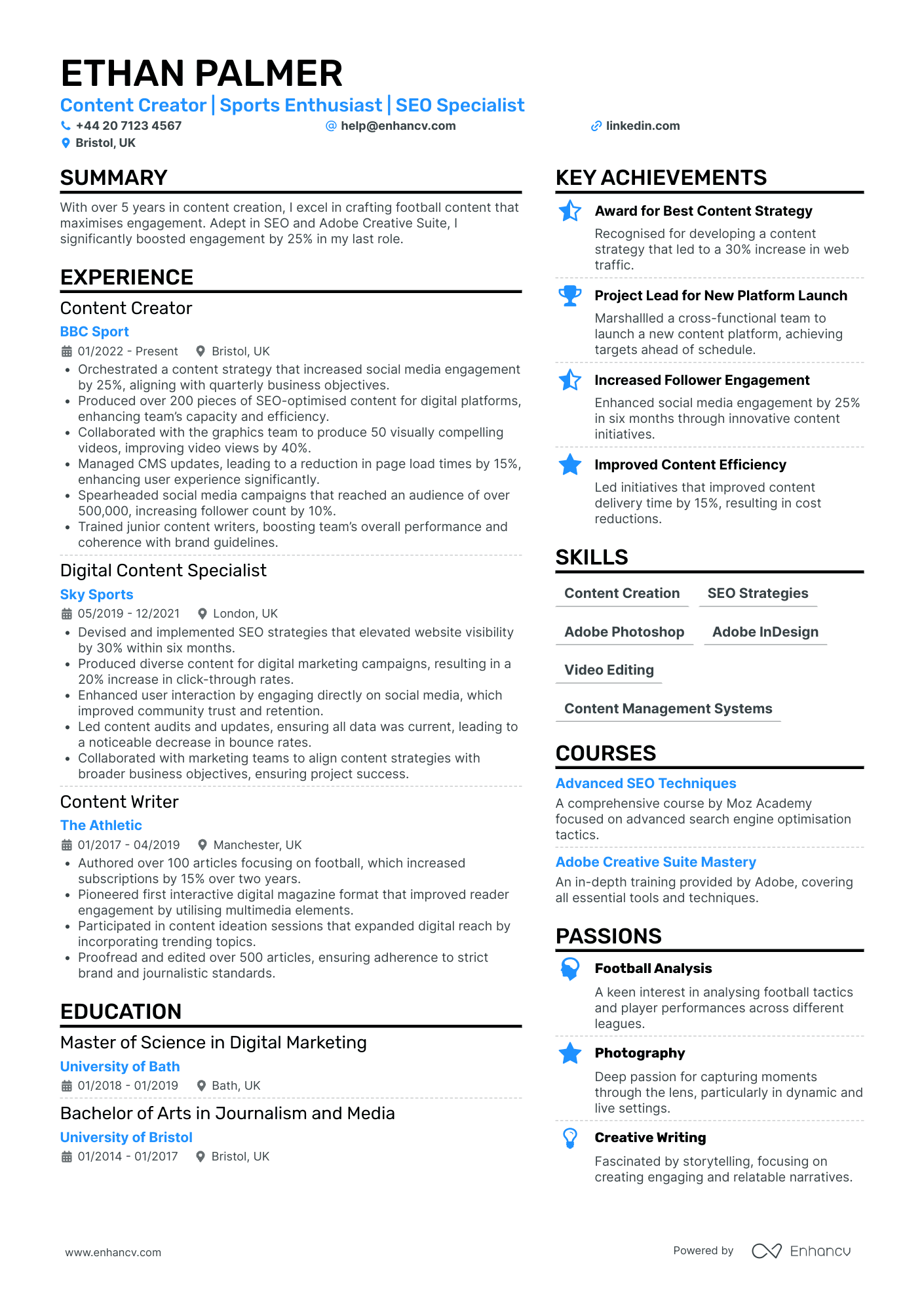
Every writer's CV I open this quarter makes the same move. It lists the writing instead of showing it: "excellent written communication", "strong storytelling", "a keen eye for detail", and not one link to a single published piece.
A writer gets hired on the work, not the adjectives. So the real job of the CV is to get an editor or hiring manager to click through to your samples, and then to back up what those samples promise. Build it to do exactly that.

Key takeaways
- Lead with a portfolio link in the header. It is the first thing an editor checks and the reason they keep reading.
- Curate three to six samples that match the job, not your entire back catalogue.
- Quantify what your writing did: traffic, rankings, open rates, published bylines, and word counts delivered to deadline.
- Name your niche and tools in the words the advert uses, whether that is SEO content, technical documentation, or medical copy.
- Open with a short personal statement built on your niche, your strongest credit, and one measurable result.
- Two pages, reverse chronological, sent as a PDF unless the advert asks otherwise.
Building your writing portfolio and samples
Your portfolio is the CV. Everything else is the context that makes someone want to open it.
Host your samples somewhere you control and can update: a simple personal site, a Clippings.me or Contently page, or a single tidy PDF for pieces you cannot link publicly. Put that one link in your CV header, right next to your email, so no one has to hunt for it.
Curate, do not dump. Three to six pieces that match the role beat a link to everything you have ever written. A medical writing role wants regulatory or clinical samples, a content role wants articles that rank, and a copy role wants short, sharp brand work.
For each sample, add one line of context: where it ran, what you were briefed to do, and what it achieved. "Explainer series for a fintech client, 40,000 words, top three for its main keyword" tells an editor far more than the headline alone.
A strong sample set proves four things at a glance:
- Range within your niche, not a scatter across every subject you have ever touched.
- That you can hit a brief and a house style, not only write in your own voice.
- Real bylines and named clients wherever you are allowed to name them.
- Results sitting next to the work: traffic, rankings, open rates, or reach.
If a piece is ghostwritten, behind a paywall, or under NDA, say so in a few words and describe your role. Editors understand the constraint, and honesty about it reads better than a dead link. For the mechanics of the document itself, see how to write a CV.
The order inside the portfolio matters as much as the pieces. Put your single strongest, most relevant sample first, because a busy editor may open only one link. Follow it with pieces that widen the picture: a different format, a different client, a result you are proud of.
Keep the portfolio itself readable. A clean index page with a title, a one-line description, and a thumbnail for each piece lets someone scan your range in seconds, which is exactly the skill the job is testing.
Refresh it before every serious application. A portfolio whose newest piece is two years old raises the quiet question of what you have been writing since, so swap in recent work and retire anything you would no longer put your name to.
One habit separates writers who get called back: they keep a running file of every published piece, its link, and its result, updated the week it goes live. Building the portfolio then takes minutes instead of a panicked afternoon, and no strong sample slips through the cracks.

PRO TIP
Tailor the samples to the advert, not just the personal statement. If the role is fintech copy, move your two strongest fintech pieces to the top of the portfolio and reorder the rest. The first two links are the ones that actually get clicked.
What to put on a writer's CV
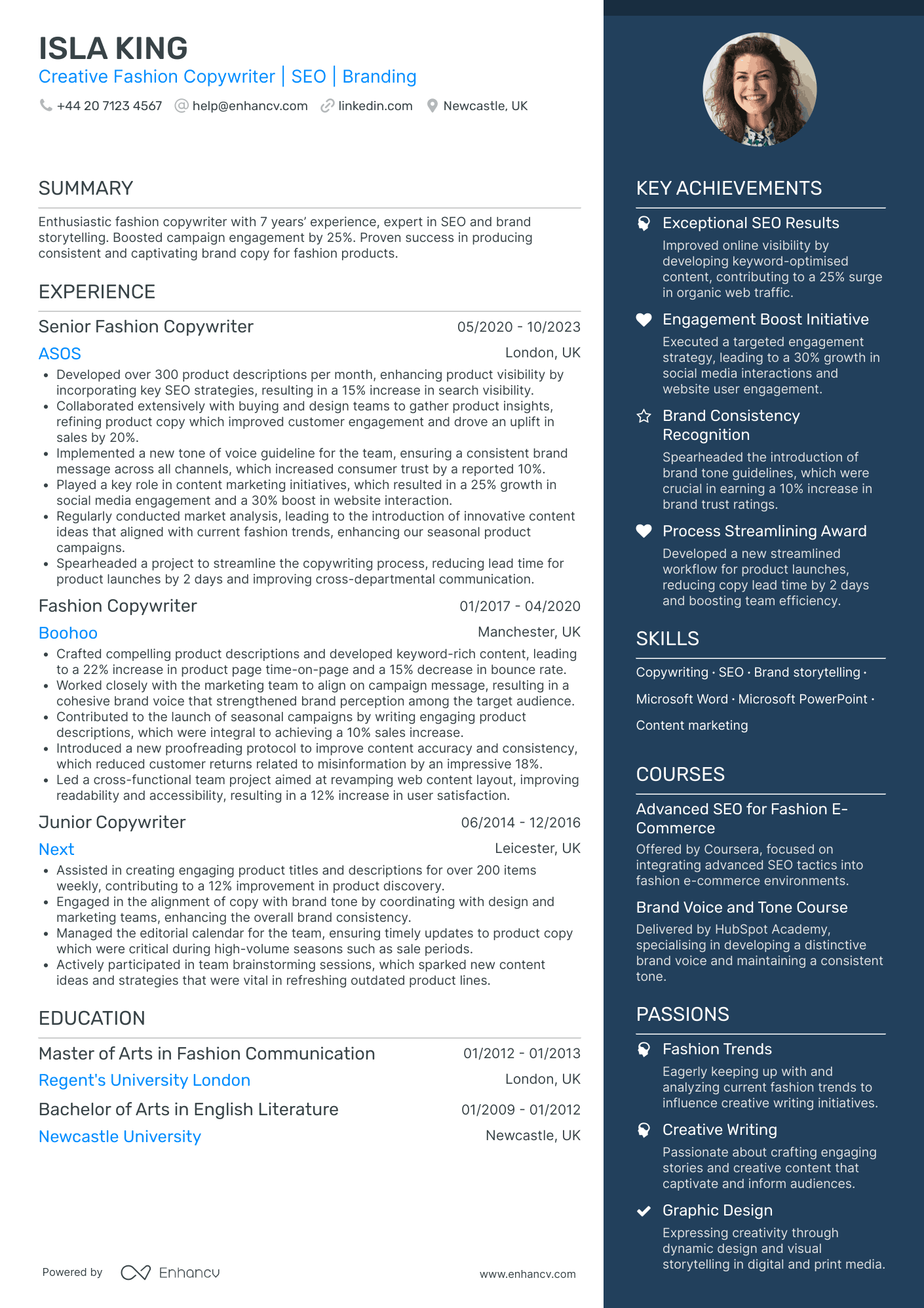
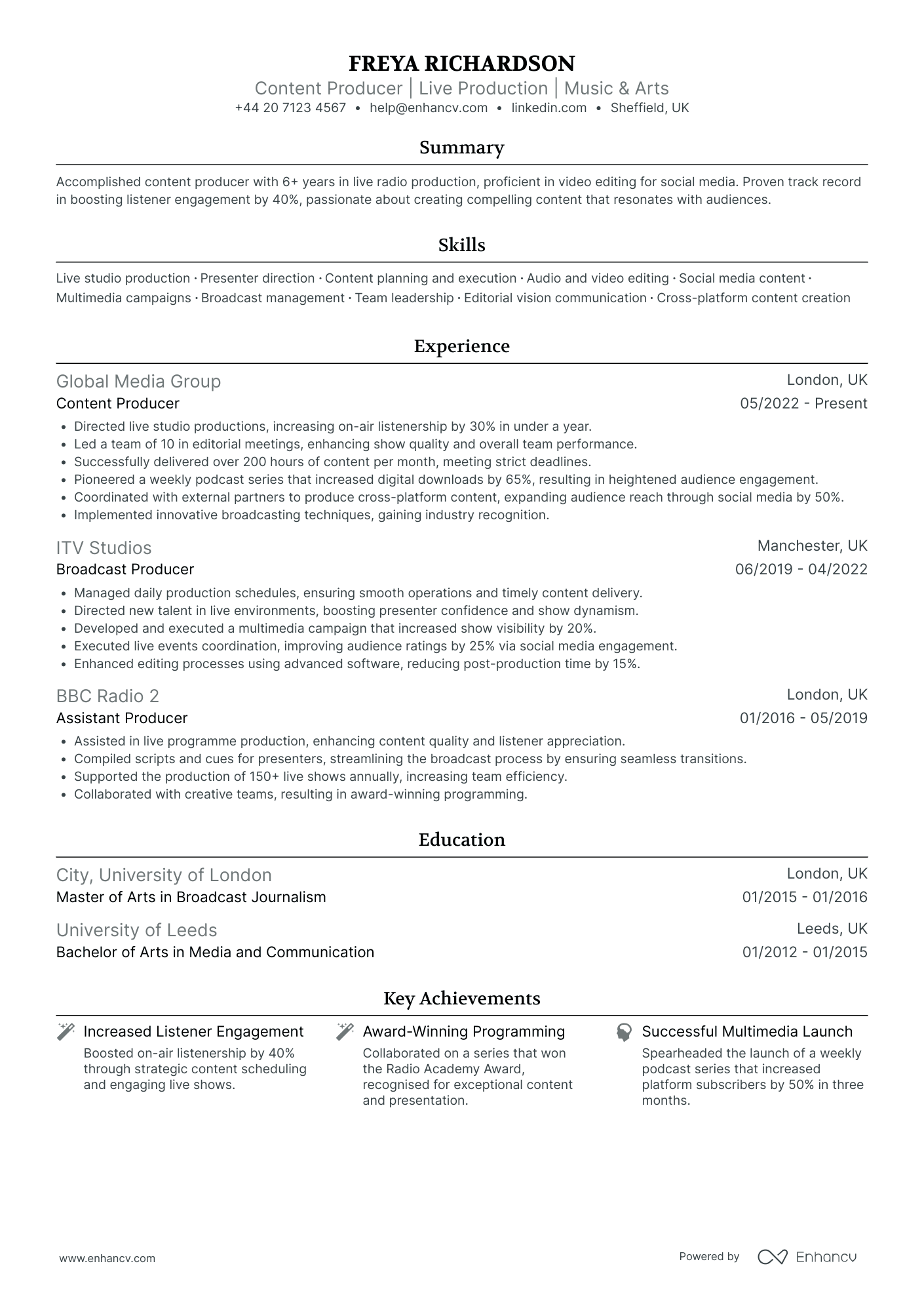
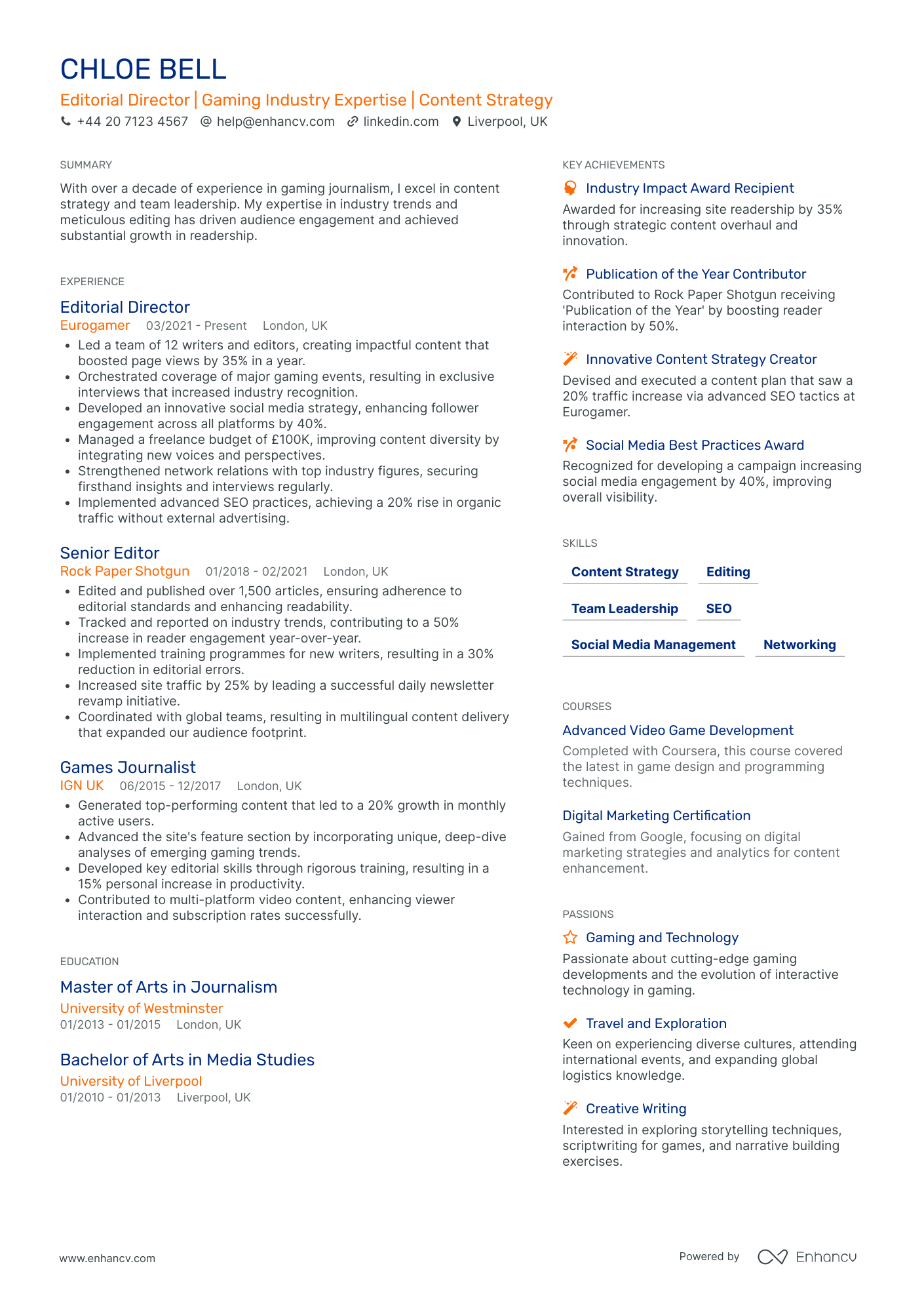
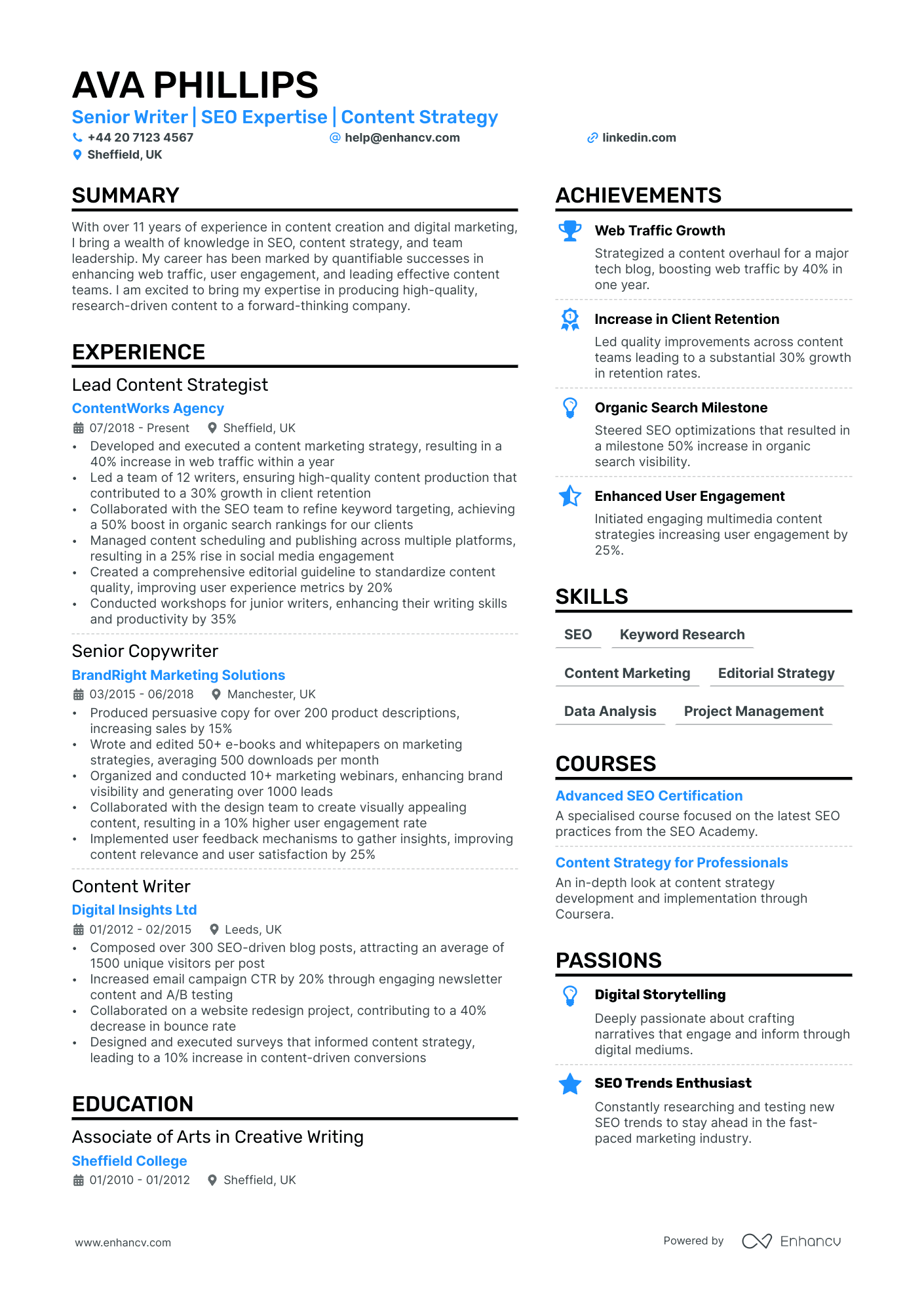
After the portfolio link, a writer's CV carries the same core sections as any other, in an order that puts the work first.
- A header with your name, your niche in a few words, your location, and the portfolio link.
- A short personal statement naming your niche, your strongest credit, and one measurable result.
- An experience section built on bylines, clients, and outcomes, in reverse chronological order.
- A skills section that uses the words the advert uses.
- Education, plus any relevant training or certifications.
Two extra sections earn their place for writers specifically: a short list of notable bylines or clients, and the tools you work in, from your CMS to your style guide. Both are checkable, which is the whole point.
Name the tools plainly and only where you use them well. WordPress, Contentful, Google Analytics, Ahrefs or Semrush, a house or AP style guide, and the odd bit of HTML all tell a content employer you can work inside their setup on day one.
Leave off the generic hobbies and the "references available on request" line. If you want an extra section to work for you, a tight list of hobbies and interests that feed your writing, like running a niche newsletter, does far more than a stock list of pastimes.

Match the sample set to the niche
Content and SEO roles want ranking articles with traffic figures. Copywriting roles want short brand and campaign work. Technical and medical writing roles want documentation, regulatory, or clinical pieces that show accuracy under rules. Journalism wants published, edited bylines. Screenwriting wants a polished script or two and a logline. Lead with whatever the advert is buying.
The UK writing market at a glance
"Writer" is not one job. Knowing where your niche sits decides which samples and which words you lead with.
| What | UK writer roles |
|---|---|
| The main niches | SEO and content writing, copywriting, technical and medical writing, journalism, and screenwriting. Each has its own conventions and its own idea of a strong sample. |
| Where the work sits | In-house, agency, and freelance, often side by side across one career. Content and copywriting roles are frequently remote or hybrid. |
| What gets you shortlisted | Relevant published samples first, then a clear niche match, then measurable results sitting next to the work. |
| Pay | Varies widely by niche, seniority, and whether you are employed or freelance. No single reliable figure covers the whole field, so research the specific role before you name a rate. |
Two things follow from this. Match your samples and your personal statement to one clear niche rather than presenting as a jack of all trades, and mirror the exact terms the advert uses, whether that is "content writer", "technical author", or "medical writer".
Writing your personal statement
Three or four sentences at the top: your niche, your strongest credit, one measurable result, and the role you want. End it with your portfolio link. See more personal statement examples if the opening line will not come.
Skip the adjective soup. "Passionate, creative wordsmith with a flair for storytelling" is the line on every other CV, and it gives an editor nothing to check.
Each of those four elements does a job. The niche tells the reader you are a fit, the credit borrows the authority of a name they know, the number proves you deliver, and the closing link sends them straight to the work. Miss any one and the statement gets vaguer.
Lead with evidence instead:
Writer CV personal statement example
SEO content writer with six years turning technical fintech and SaaS subjects into articles that rank. Grew one client blog from 12,000 to 40,000 monthly organic sessions in a year, with bylines in two industry titles. Looking to bring research-led, search-aware writing to a senior content role. Portfolio at yourname.com.
The version that gets skimmed past
A passionate and creative wordsmith with a flair for storytelling and a keen eye for detail. Able to produce engaging content across a wide variety of formats and industries. A dedicated team player who thrives in fast-paced environments and always goes the extra mile.
When we read a writer's CV, the first thing we do is look for the link. If the samples are one click away and they match the brief, the CV has already done most of its job. Everything above the portfolio, the personal statement, the credits, the numbers, is there to make us want to click. The writers who understand that stop describing their writing and start pointing at it.
Writing your experience section
Write each role as a dated heading followed by bullets that show what you produced and what it did. Lead every bullet with a strong action verb, and put the result where the eye lands.
Writing is more measurable than most writers admit. Traffic, rankings, open and click rates, pieces shipped to deadline, word counts, readership, and editing rounds saved are all achievements you can stand behind.
Freelance work belongs here too. Give it a single dated heading, name the clients you can, and treat the strongest projects as bullets in their own right rather than hiding them under "various clients".
Tailor each application to the advert, mirroring its language where it is true of you. Enhancv's CV tailoring feature reads the job ad and suggests the keywords and samples to foreground, which saves rewriting from scratch each time. For the fundamentals, see work experience on a CV.
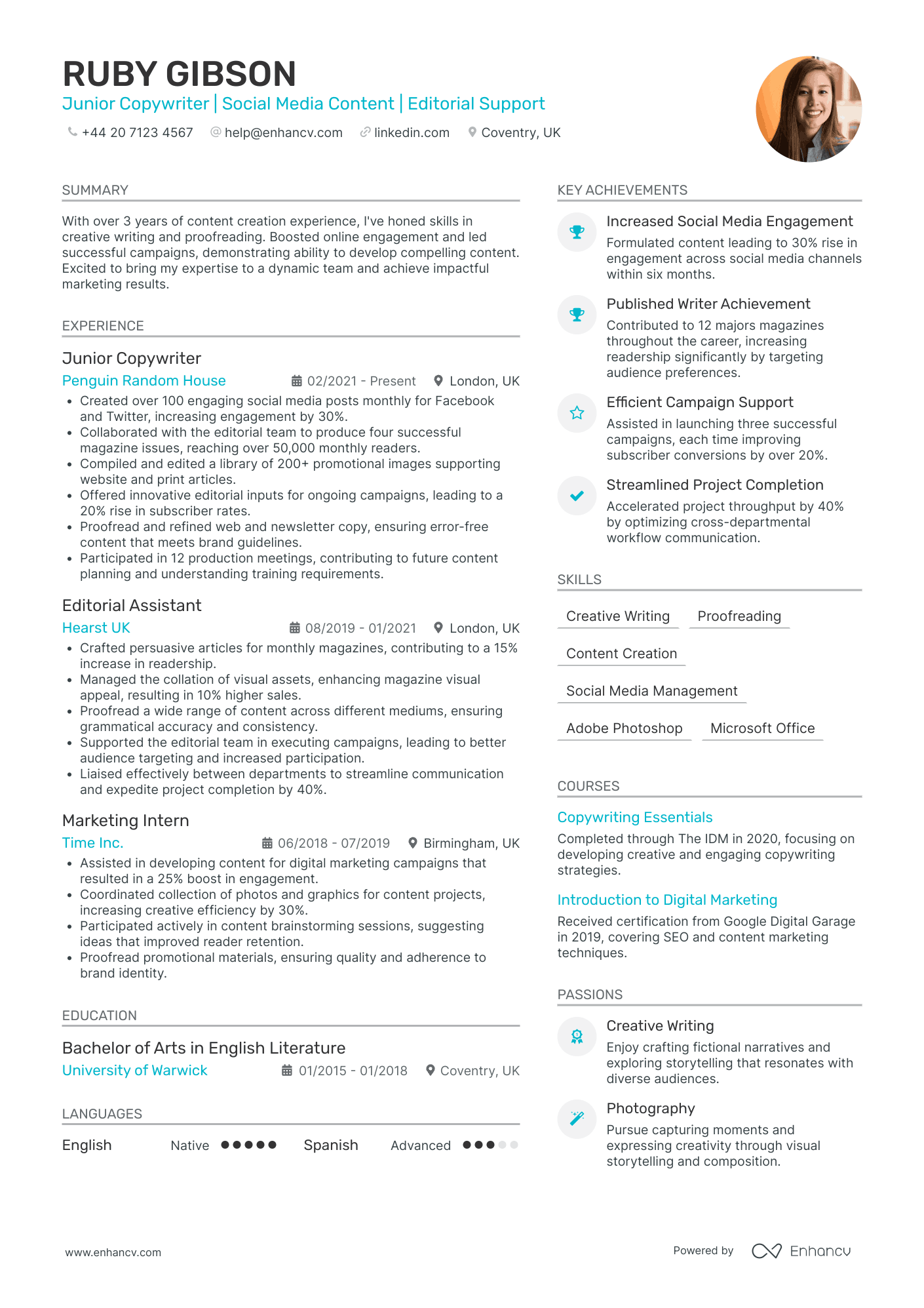
- Write and edit 12 to 15 long-form articles a month for SaaS and fintech clients, owning each piece from keyword brief to final upload in WordPress
- Grew a client blog from 12,000 to 40,000 monthly organic sessions in a year by rebuilding the content plan around search intent
- Cut average editing rounds from three to one by introducing a house style guide and a pre-submission checklist
- Published bylined features in two industry titles, one of which was syndicated to a partner newsletter of 30,000 readers
- Wrote website, email, and campaign copy for 20 plus small business clients across retail, hospitality, and professional services
- Lifted one client's email open rate from 18 to 29 percent by rewriting subject lines and tightening the first line of each send
- Managed the full brief-to-invoice process solo, keeping a 100 percent on-time delivery record across three years
Skills for a writer's CV
List the skills the adverts actually name, in their words. For most writing roles that means a mix of craft, tools, and process: SEO writing, editing, research, content strategy, and the CMS and style guides you work in. Those are your hard skills.
The soft skills that matter for writers are the checkable ones: hitting deadlines, taking an edit without ego, and adapting your tone to a brand. Prove each in a bullet rather than listing it as a claim.
List only what you can evidence with a sample or a result. A skill you cannot point to is a line an interviewer will happily test.
Group the list so it reads fast. A short row of tools, a short row of writing types, and a couple of process skills beat a wall of 20 keywords that no one believes. If the advert repeats a term, use that exact term, since it is often the one the tracking software is scanning for. For more on getting that match right, see how to tailor your CV.
Top skills for your writer CV:
SEO writing
Copywriting
Editing and proofreading
Research
Content strategy
CMS (WordPress)
Style guides (house and AP)
Technical writing
Clear communication
Meeting deadlines
Adapting tone
Collaboration
Taking feedback
Formatting your writer's CV
Keep it to two pages, one column, standard headings, and a readable font. A writer's CV that is hard to read undercuts the whole pitch.
Use reverse chronological order once you have relevant credits. If you are moving between niches or just starting out, a skills-led structure lets the portfolio and skills lead instead.
Send a PDF so your layout and hyperlinks hold, and keep a Word copy for agencies that reformat into their own template. Make the portfolio link a real, clickable hyperlink, not plain text a reader has to retype. Many applications pass through tracking software first, so keep the structure clean for an ATS-friendly CV. Build it from a tested layout rather than a blank page: Enhancv's CV templates export to a clean PDF.
Writing a writer's CV with no experience
No paid clips yet is a normal starting point, and it is fixable faster in writing than in almost any other field. The work is the qualification, so create some.
Build a small body of self-published work: a blog, a Substack, a Medium column, or guest posts on sites in your target niche. Student journalism, society newsletters, and volunteer writing for a charity all count, and all give you a dated, linkable credit.
Write two or three spec pieces aimed squarely at the kind of role you want, then treat them as your lead samples. An editor cares that the writing is good and on-brief, not that someone has paid for it yet.
Use a skills-led structure, lead with the portfolio, and give any volunteering a dated entry like a job. For the wider approach, see these first job CV examples.
PRO TIP
Pitch to publish, not just to practise. Two accepted guest posts on real sites in your niche give you dated bylines, a working relationship, and proof you can meet an outside editor's brief, all of which read far stronger than the same two pieces sitting only on your own blog.
Conclusion
Lead with the portfolio, curate ruthlessly, and put a measurable result next to every piece of work.
Do that and the CV stops describing a writer and starts proving one, which is the only thing an editor was ever going to click for.
Author's take - the Enhancv team
When we read a writer's CV, the first thing we do is look for the link. If the samples are one click away and they match the brief, the CV has already done most of its job. Everything above the portfolio, the personal statement, the credits, the numbers, is there to make us want to click. The writers who understand that stop describing their writing and start pointing at it.