



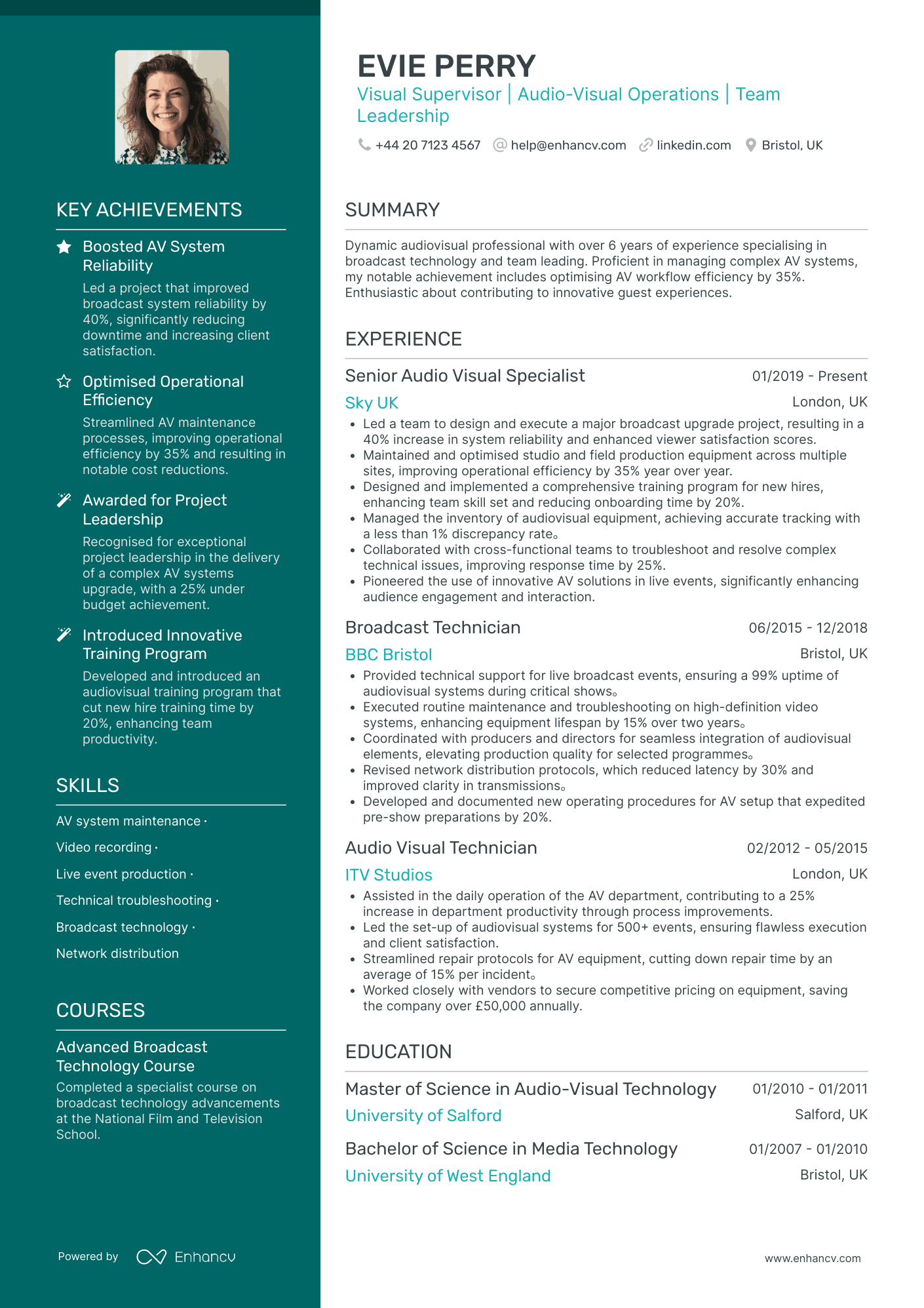
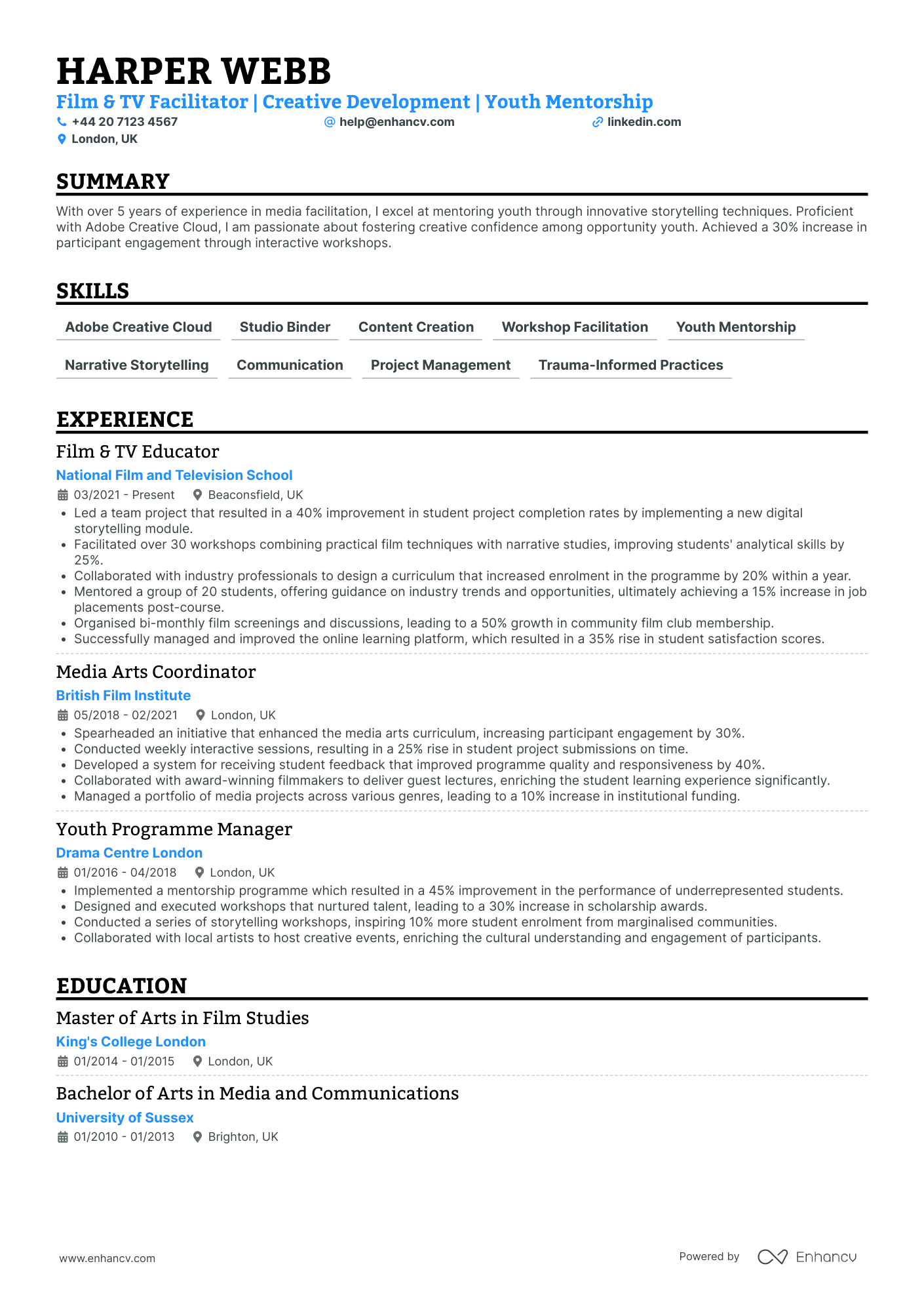
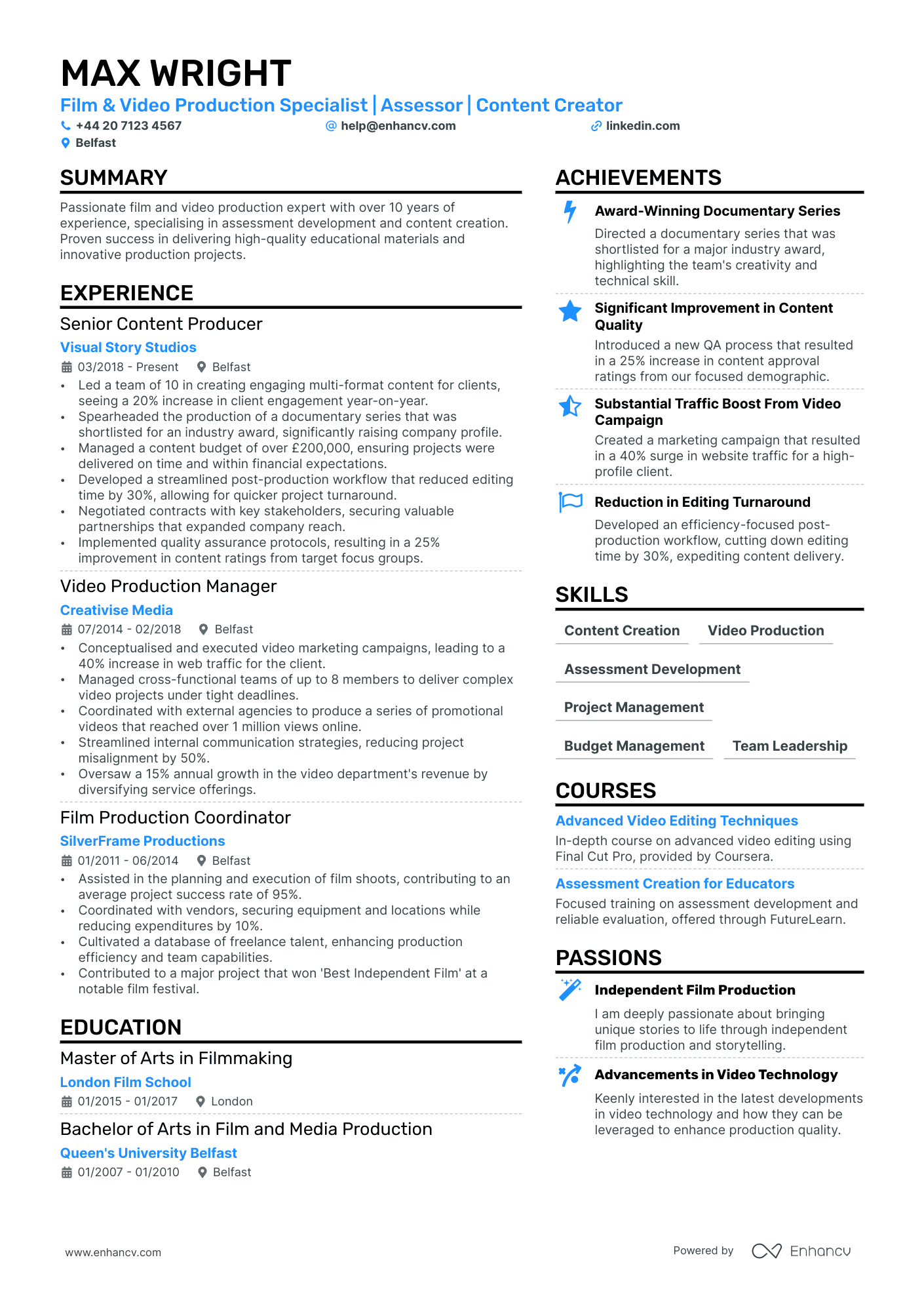
Most first film CVs read like a wish list. Keen, passionate, a fast learner, and not one line a line producer can actually check.
Film hires on proof. A short you finished, a set you turned up to, a showreel someone can open in one click. Put that proof at the top and a thin CV starts to read like a credible first hire, which is exactly what runner and trainee adverts want. If you need the basics first, here is how to write a CV before you shape one for film.

Key takeaways
- No credits yet is normal in film. Lead with finished projects, a showreel link, and a willingness to work up from runner.
- Film work follows the production, so put your base, how far you will travel, and a driving licence near the top.
- Name the department you are aiming for and the kit you can genuinely use, in the words the advert uses.
- Open with a short personal statement built on one real project and where you want to head next.
- Keep it to one page while your credits are thin, sent as a PDF unless the advert asks for a Word file.
- Link a showreel or an online portfolio. In film, evidence you can point to beats any adjective.
Writing a film CV with no experience
Film is a word-of-mouth industry that still runs on entry roles. Runners, trainees, and production assistants get hired on attitude, reliability, and a bit of proof that you understand a set, not on a long list of credits.
So your first CV carries its weight differently. Lead with a skills-led structure: personal statement, then projects and skills, then education, with any paid work history lower down.
The CV gets you the first day. What gets you the second is turning up early, staying quiet on set, and being the runner who already made the tea before anyone asked. Film runs on rehires, so build the CV to open the door and let your conduct keep it open.
Mine everything you have actually shot, crewed, or organised. It is almost always more than you think:
- Student, graduation, or self-funded short films, in any role from runner to editor.
- Drama society, music videos, or YouTube and social content you shot and cut yourself.
- Work experience or a few days of runner shifts on a local production or at a studio.
- Festival, theatre, or live-events crewing, where call times, kit, and health and safety all transfer.
Write those in film language. "Ran a six-person crew on a five-minute graduation short, from call sheets to the final DaVinci Resolve export" is a production credit that happened at film school.
Give each project a dated entry like a job, with your role, the format, the runtime, and what you actually handled. A short entry that reads "Runner, three-day music video, indie label" carries more weight than a paragraph about your love of cinema. Treating volunteering on a CV and unpaid shorts as real experience is standard here, not padding.
Do not hide the fact that a project was student or self-funded. Everyone on a first CV started there, and a director reading your CV cares far more about whether you can be trusted with a call time and a box of expensive kit than about the budget you worked to.
One link moves a no-credit CV to the top of the pile: a showreel or portfolio URL in the header. Casting a first hire is a risk, and footage someone can watch takes the risk away. Keep the reel short, lead with your strongest 20 seconds, and label which role was yours on each clip.
Then chase the roles that exist. Runner registers, student and graduate schemes, local production companies, and crewing groups all list entry work, and a CV that is ready to send the moment a shoot comes up beats a perfect one that arrives a day late. A skills-based CV is the right starting format, and our first-job CV examples show the same logic outside film.

PRO TIP
Adverts for runners and trainees name a department: camera, lighting, art, production, or post. Pick one, aim your CV at it, and use its language. A CV that reads "camera trainee, comfortable with clapperboard, batteries, and cable runs" beats a generic "hard-working film graduate" every time.
What the UK film market looks like
A quick read of the market before you write. Here is what a month of UK film adverts actually showed.
| What | UK film roles |
|---|---|
| What we looked at | 39 UK postings with "film" in the title, last ~30 days (Enhancv's internal job feed) |
| Where the work happens | Split between on-site and hybrid, with remote roles rare |
| How pay showed up | Listed on only a minority of these postings, so no single reliable figure to quote |
| How to read this | A "film" title net is broad and the sample is small, so treat it as a rough signal, not a precise map |
Two things here should shape your CV.
Film work happens wherever the production is: on location, in a studio, on-set. A recruiter needs to see you can get there, so put your base and travel radius in the header and mention a driving licence if you have one.
And because pay is rarely posted and contracts are short, nobody expects a straight line into the industry. That is why the no-credit route above is realistic rather than wishful. Show initiative and real footage, and a first CV competes.
Two practical lines earn their place near the top: your availability and your right to work in the UK. Short shoots get crewed quickly, and a producer who can see you are free and cleared to work will call you before the CV that makes them ask.
Formatting your film CV
While your credits are thin, use a skills-led structure so projects and skills come before a short work history. Once you have a run of credits, switch to a reverse chronological crew CV grouped by production.
Keep the format simple: one column, standard headings, a readable font. Crewing decisions get made fast, often off a phone between setups.
One page is plenty while you are starting out, and how long a CV should be only stretches to two once you have credits worth the space. List productions the way the industry reads them: production title, format, your role, and the company or director.
Put your contact details, base, and showreel link in the header so nobody has to hunt for them. A working phone number and a reel that opens in one click are the two things a busy production coordinator wants first, and burying them below the fold costs you calls.
Send a PDF for direct applications so the layout holds, and keep a Word copy for agencies that reformat into their own template. Many applications still pass through tracking software, so a clean, ATS-friendly layout matters even in a creative field. Save the file under your name and role, not "CV final v3", so it is easy to find in a crowded inbox.
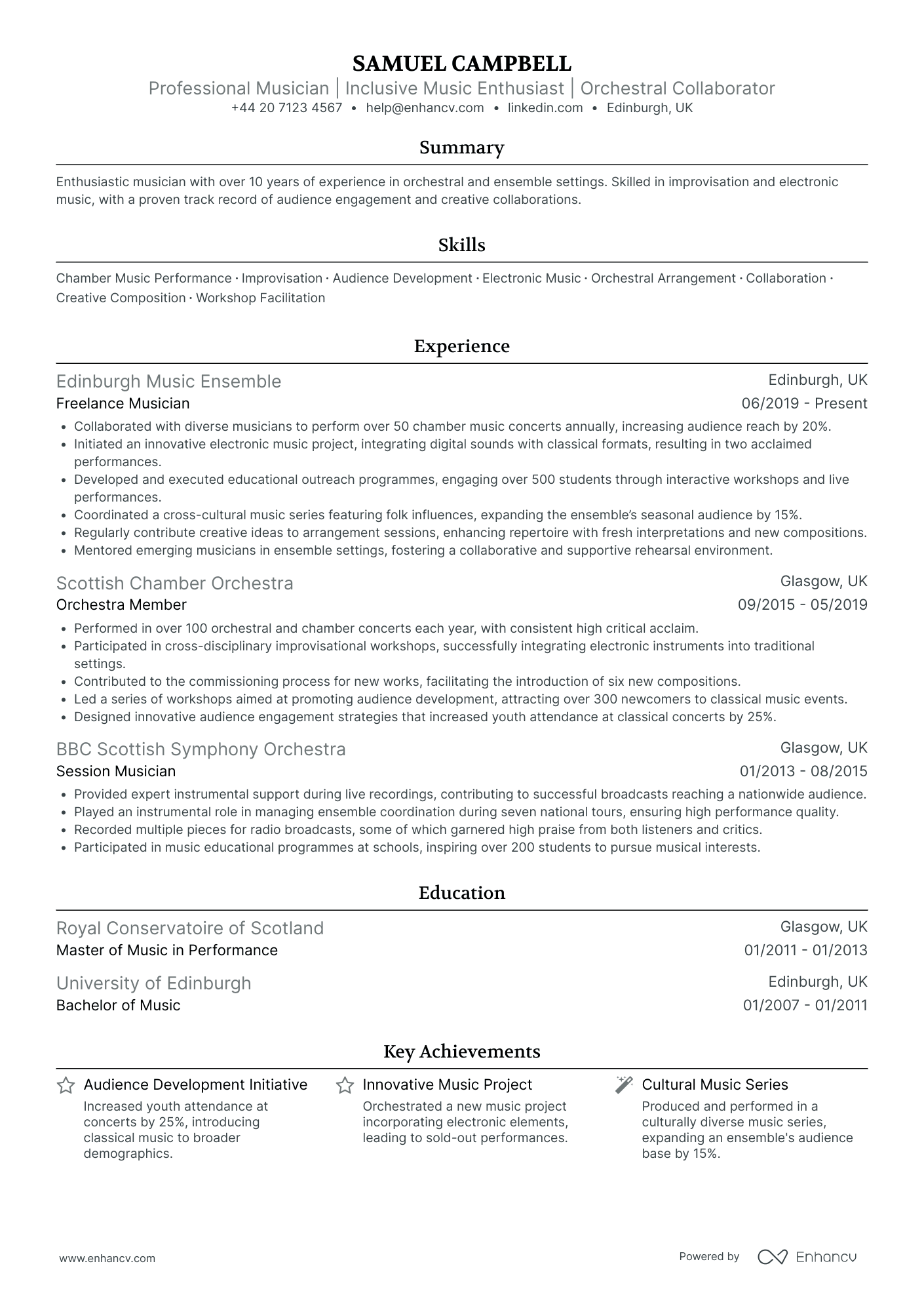
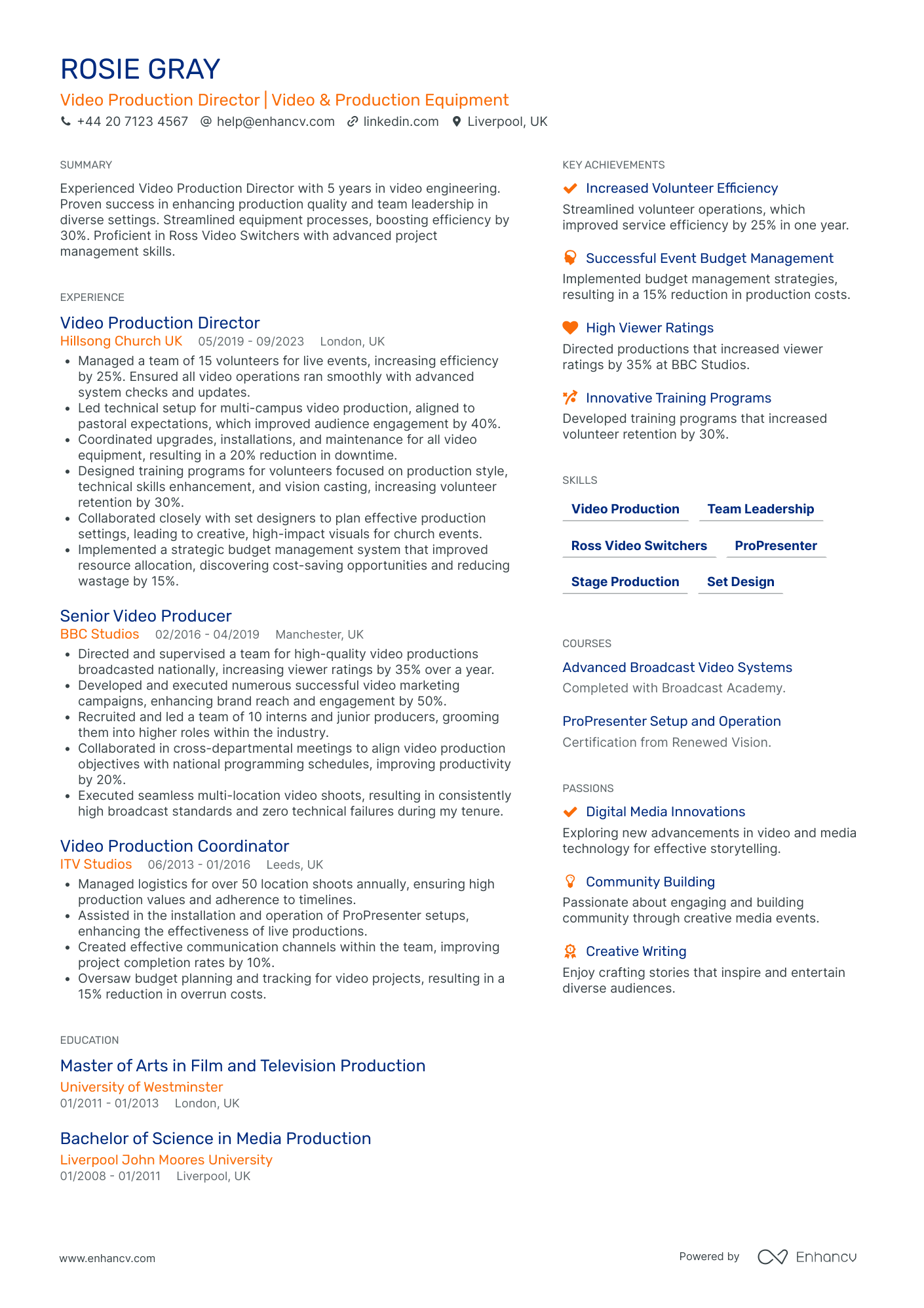
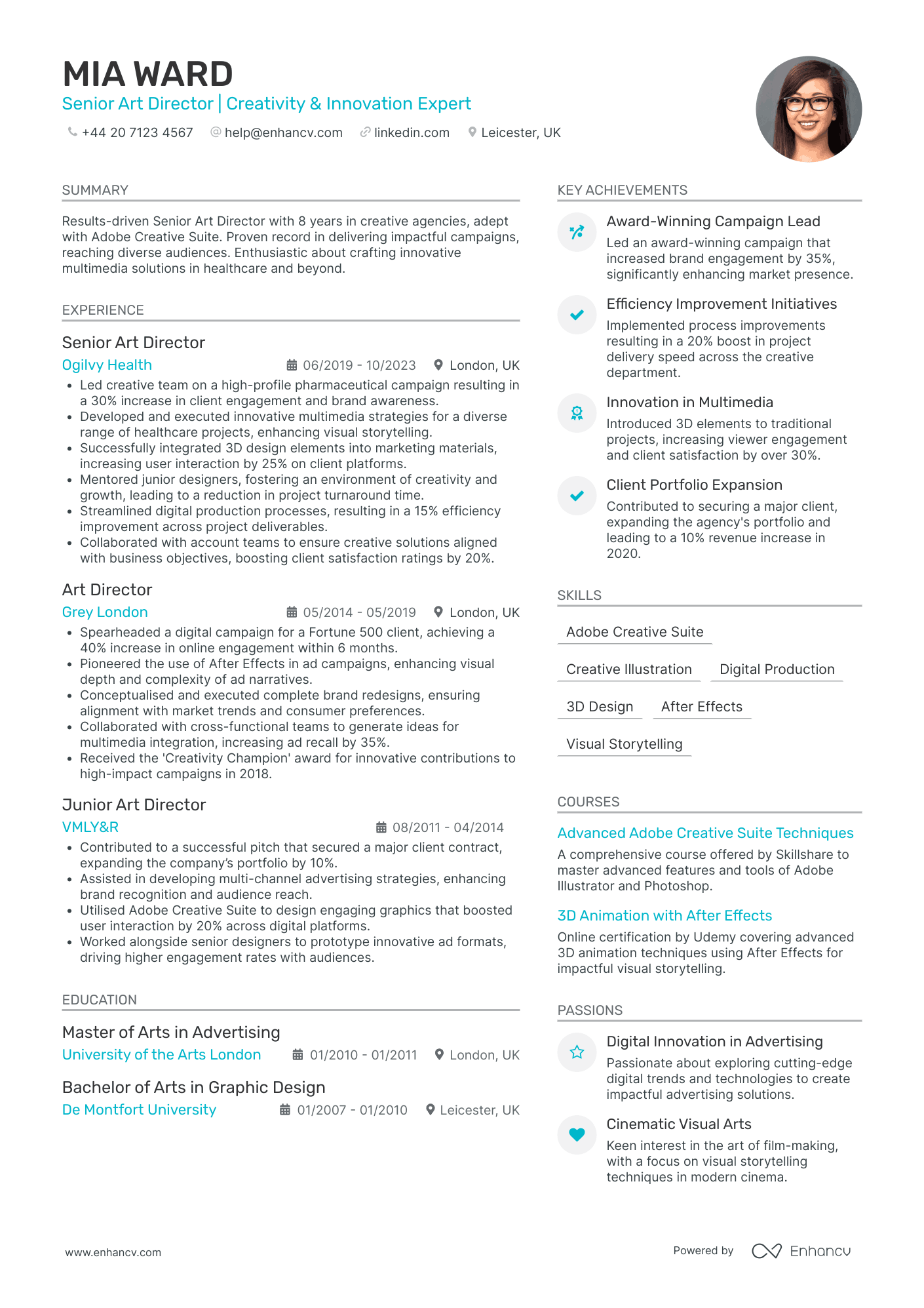
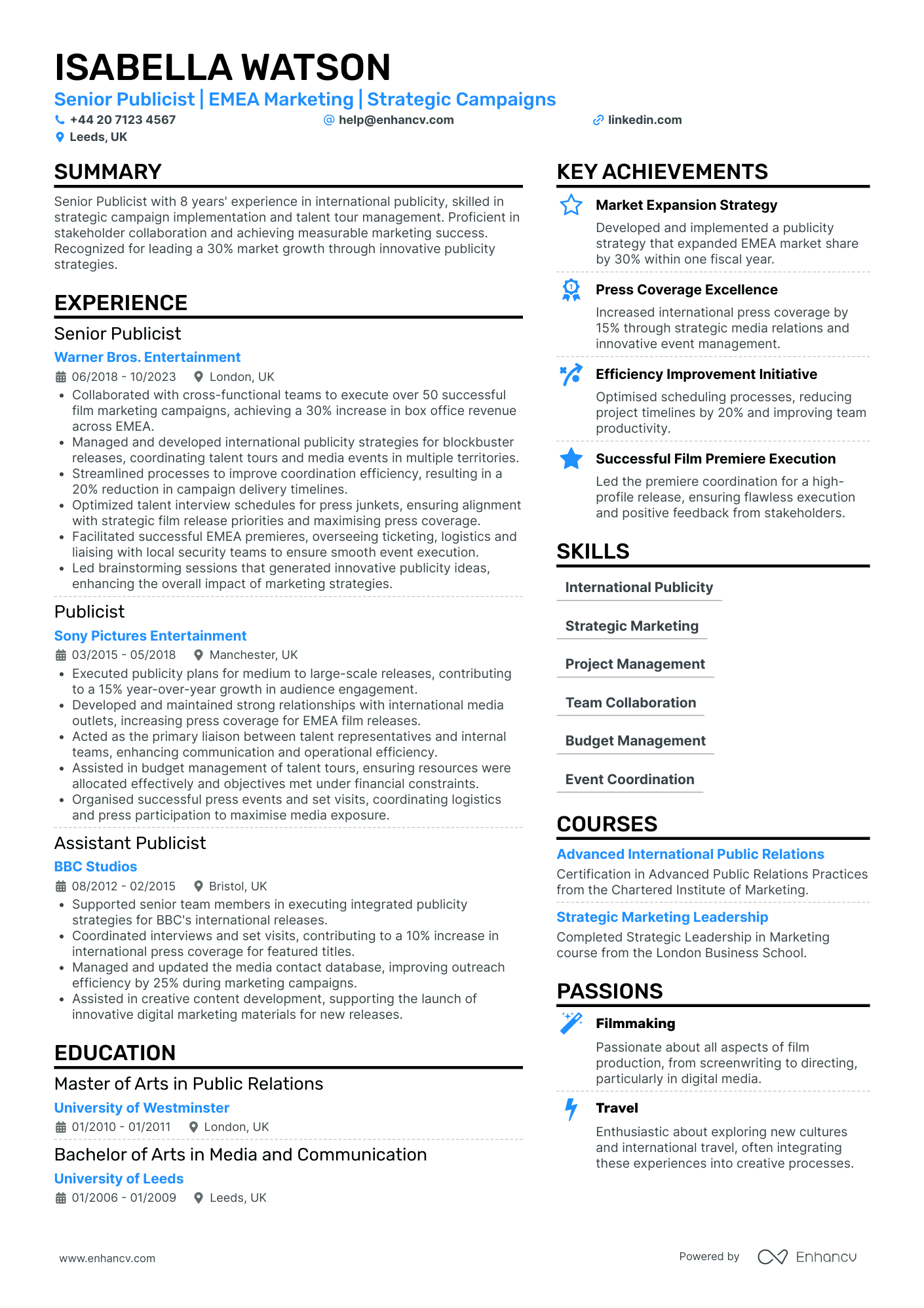
Build it from a tested layout rather than a blank page. Enhancv's CV templates export to a clean PDF and leave room for a showreel link in the header.
Writing your film CV personal statement
Three or four sentences at the top: who you are, the department you are aiming for, one real project, and where you want to go next. Keep it concrete. There are more personal statement examples if the opening line will not come.
Skip the adjective soup every other CV opens with. "Passionate, creative, hard-working film graduate" tells a recruiter nothing they can picture or check, and it is the exact line they have already read forty times today.
Lead with evidence instead. Swap each adjective for the thing that earned it: not "reliable", but "turned up for every one of eight shoot days". Not "team player", but "took direction from three different heads of department without a hitch". The specifics do the persuading.
Here is the difference on the page:
Film CV personal statement example (no experience)
Film graduate and reliable set runner with three completed short films to my name, credited on camera and edit. Comfortable with call sheets, kit prep, and long shoot days, and trained in on-set first aid. Looking to join a production company as a runner and work towards a camera department role. Showreel and full crew CV available on request, based in Manchester and happy to travel.
When a film CV lands with no professional credits, I am reading for one thing: proof you have actually been on a set and understood it. A line like "ran the desk and cable management for a two-day live shoot" tells me more than any string of adjectives. Name the project, your role, and what you handled. Then give me a showreel link. A candidate with real footage and a bit of set sense beats a polished CV with nothing to watch.
Building your film experience section
Paid, unpaid, or your own project, write every entry the same way: a dated heading with the production and your role, then bullets that show what you did and how it turned out. Start each bullet with an action verb. For the mechanics, see work experience on a CV.
Film work is more measurable than it feels. Crew size, shoot days, budget, runtime, festival selections, turnaround on an edit. Those specifics are your CV achievements, and they read as competence.
Lead each bullet with what you were responsible for, not what the production was about. "Managed media and daily backups" is your job. "A gritty urban drama" is the logline, and it belongs nowhere near your bullets.
- Supported a 6-person crew across an 8-day shoot, prepping kit, managing cable runs, and keeping the set clean and safe
- Loaded and labelled media daily and backed up 400GB of rushes to two drives, with zero footage lost across the shoot
- Ran call sheets and coordinated three cast members' schedules, keeping every shoot day on time
- Cut a 90-second teaser in DaVinci Resolve that the director used to secure two festival submissions
Tailor every application to the advert: pull the department, kit, and format it names and mirror them where they are true of you. If the role is in the camera department, the camera work moves to the top and the runner shifts move down. Enhancv's CV tailoring feature reads the advert and suggests the matching edits, which saves rewriting from scratch for every job.
Skills to put on a film CV
Film skills split cleanly into the craft and the conduct, and both belong on the CV in plain words. Your hard skills are the ones you can operate: camera and lens basics, lighting and grip, sound recording, editing in Premiere Pro, Avid, or DaVinci Resolve, continuity, and running call sheets. List them in the words the adverts use.
The soft skills matter just as much on a set that runs on trust: reliability, clear communication, staying calm through a twelve-hour day, and taking direction without fuss. Prove each in a bullet rather than claiming it.
Name the kit and software at the level a producer will trust. "Operated a Blackmagic Pocket on a student shoot" tells them exactly what you can do, where "proficient in cameras" tells them nothing. The same goes for editing suites, sound recorders, and lighting.
List only what you can stand behind. If you have run a camera, say so. If you have only watched, put it under training rather than skills, and keep the list to the key skills for the role instead of everything you have ever touched.
Top skills for your film CV:
Camera and lens operation
Lighting and grip
Sound recording
Editing (Premiere Pro, Avid, DaVinci Resolve)
Continuity
Call sheets and scheduling
On-set health and safety
Showreel and portfolio
Reliability
Communication
Teamwork
Composure under pressure
Attention to detail
Taking direction
Education, training, and film school
You do not need a film degree to get on a set, which is why the no-credit route works. What helps is anything that shows craft and safety, so put it in your education section even where it is in progress.
Name a degree or HND in film, media, or production if you have one, with your classification. If you are still studying, say so and give the expected date. Productions hire students for holiday shoots and placements all the time, so a course in progress is a selling point, not a gap.
Short courses count too: camera, editing software, on-set first aid, and manual handling all reassure a production you will be safe and useful on day one. If you hold a full driving licence or your own basic kit, note it here as well, because both quietly widen the jobs you can take.
Industry training bodies such as ScreenSkills run recognised courses, and any certificate you hold saves a producer a question. Above all, keep pointing back to the work. A course means more when there is footage to show for it.
Conclusion
Lead with finished projects and a showreel, name the department and kit you can actually handle, and keep the format clean and travel-ready.
Pair the CV with a short cover letter that says why film and why this production, and a first application starts to look like a safe hire.

Author's take - the Enhancv team
When a film CV lands with no professional credits, I am reading for one thing: proof you have actually been on a set and understood it. A line like "ran the desk and cable management for a two-day live shoot" tells me more than any string of adjectives. Name the project, your role, and what you handled. Then give me a showreel link. A candidate with real footage and a bit of set sense beats a polished CV with nothing to watch.