



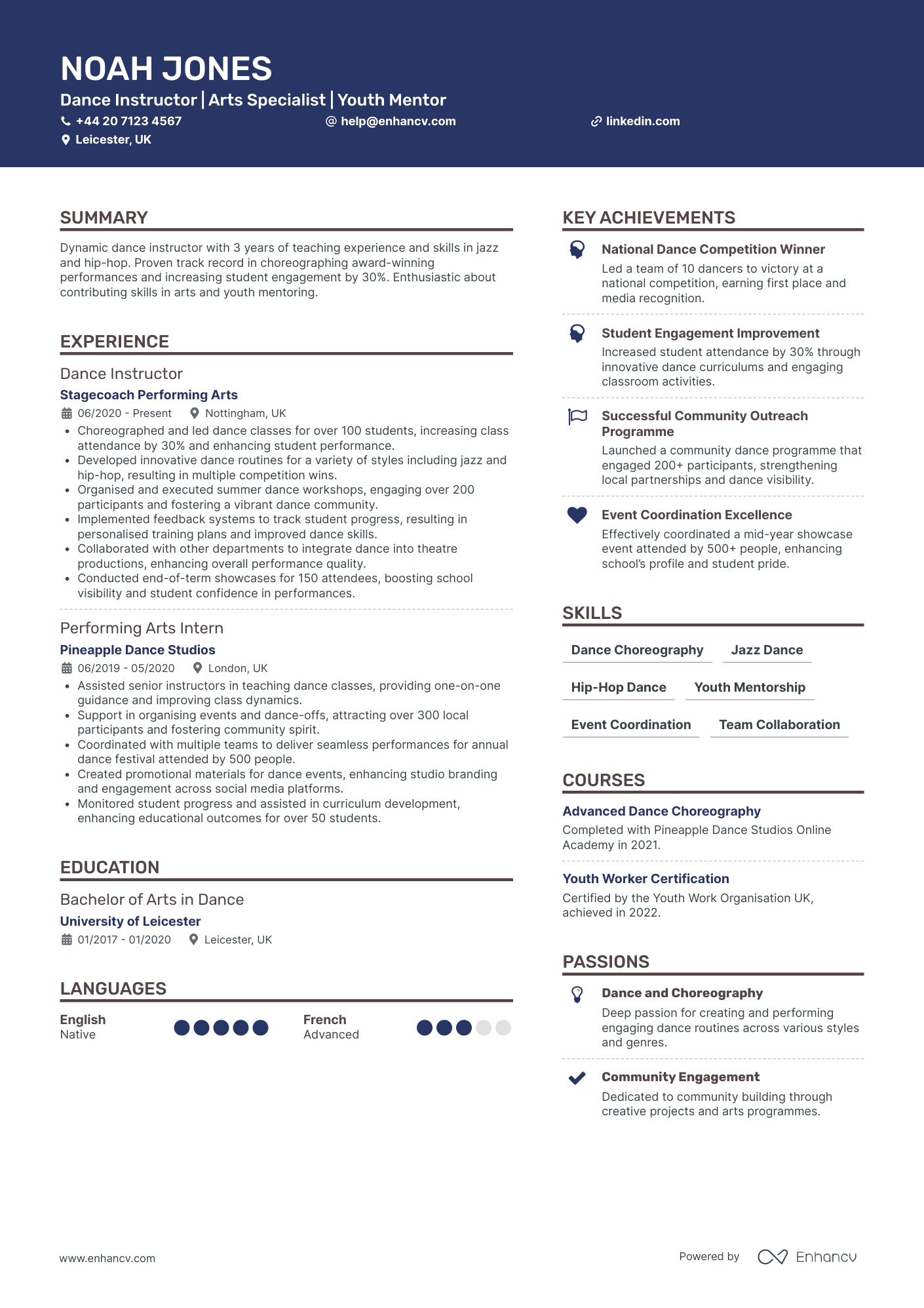
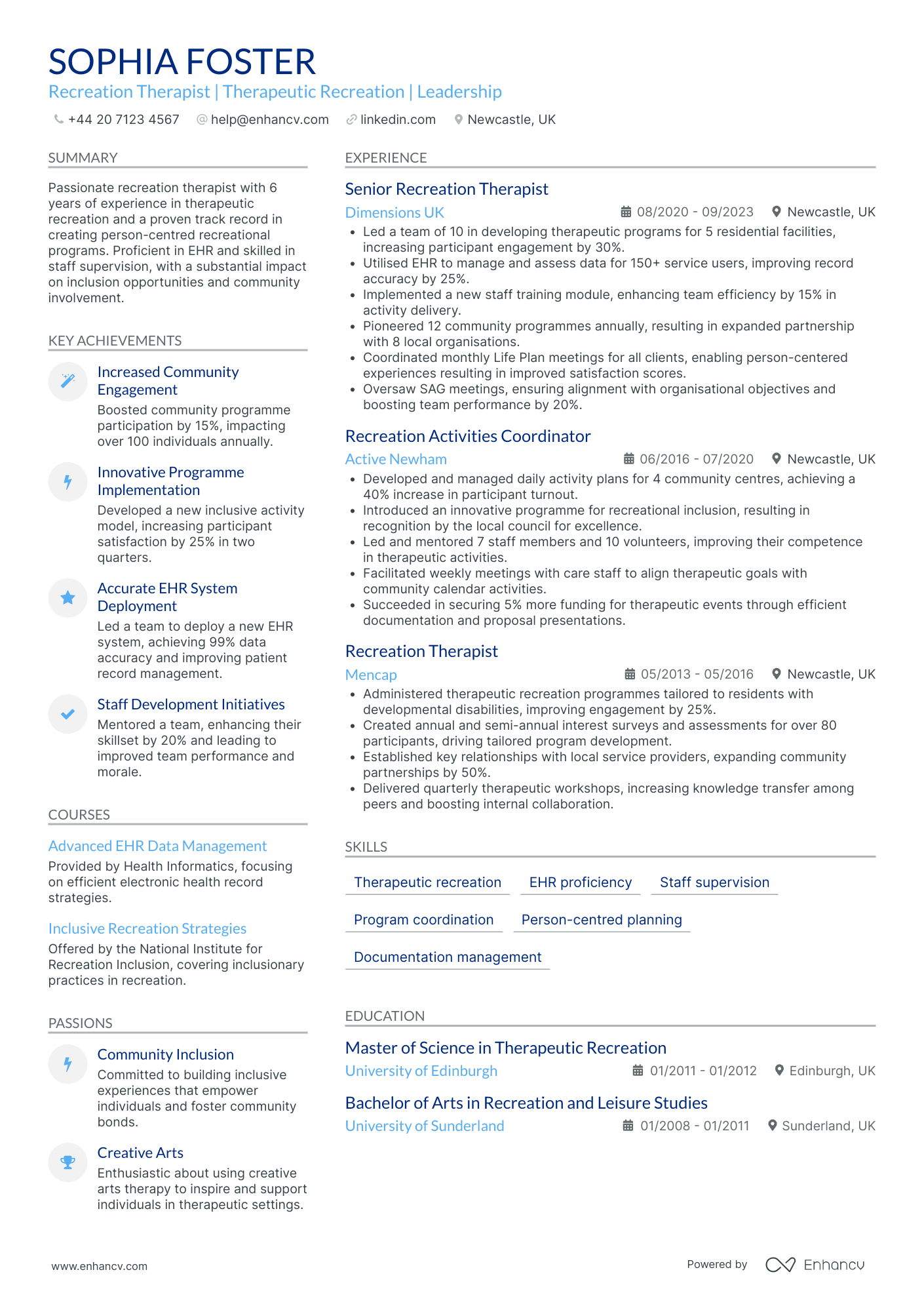
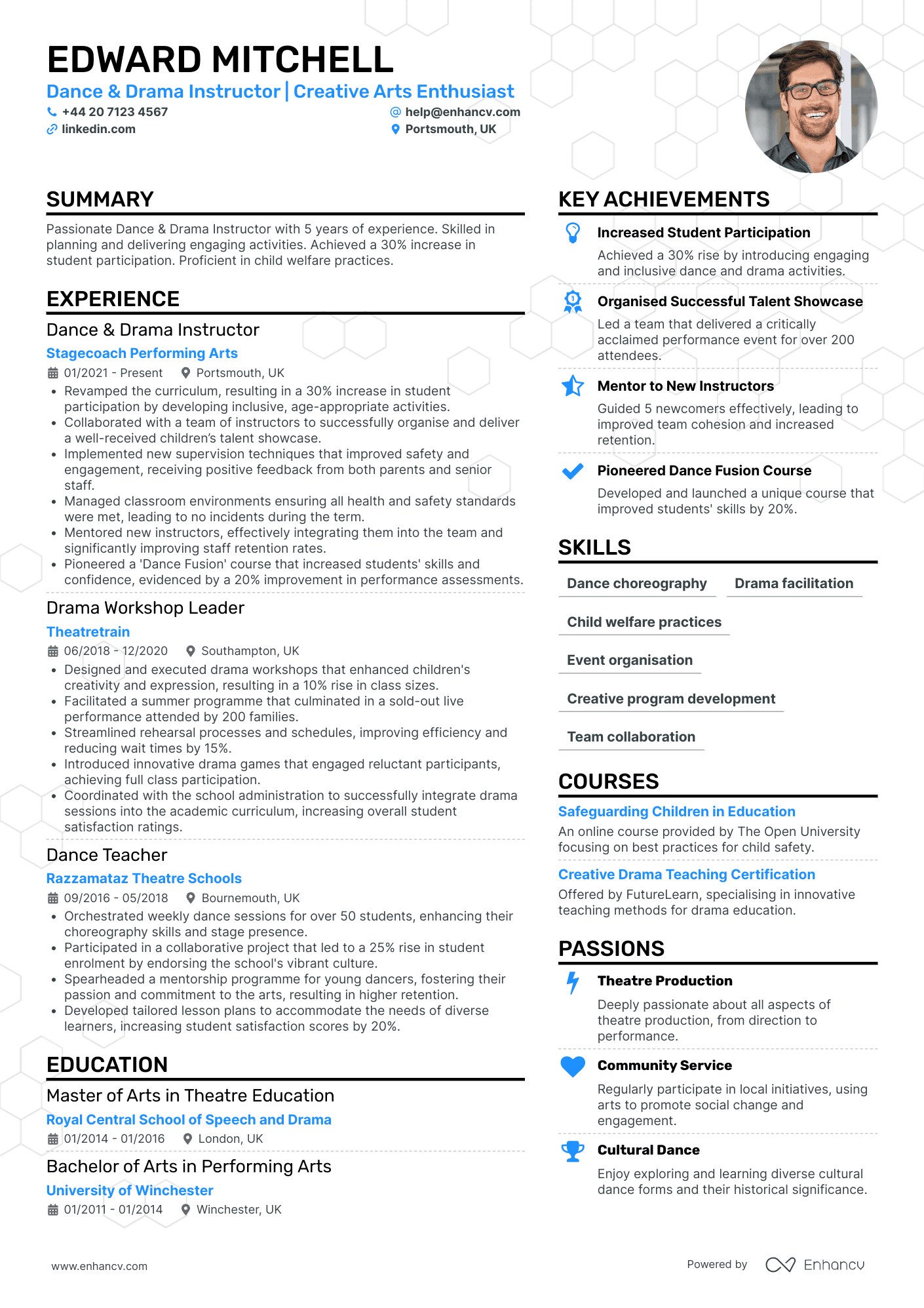
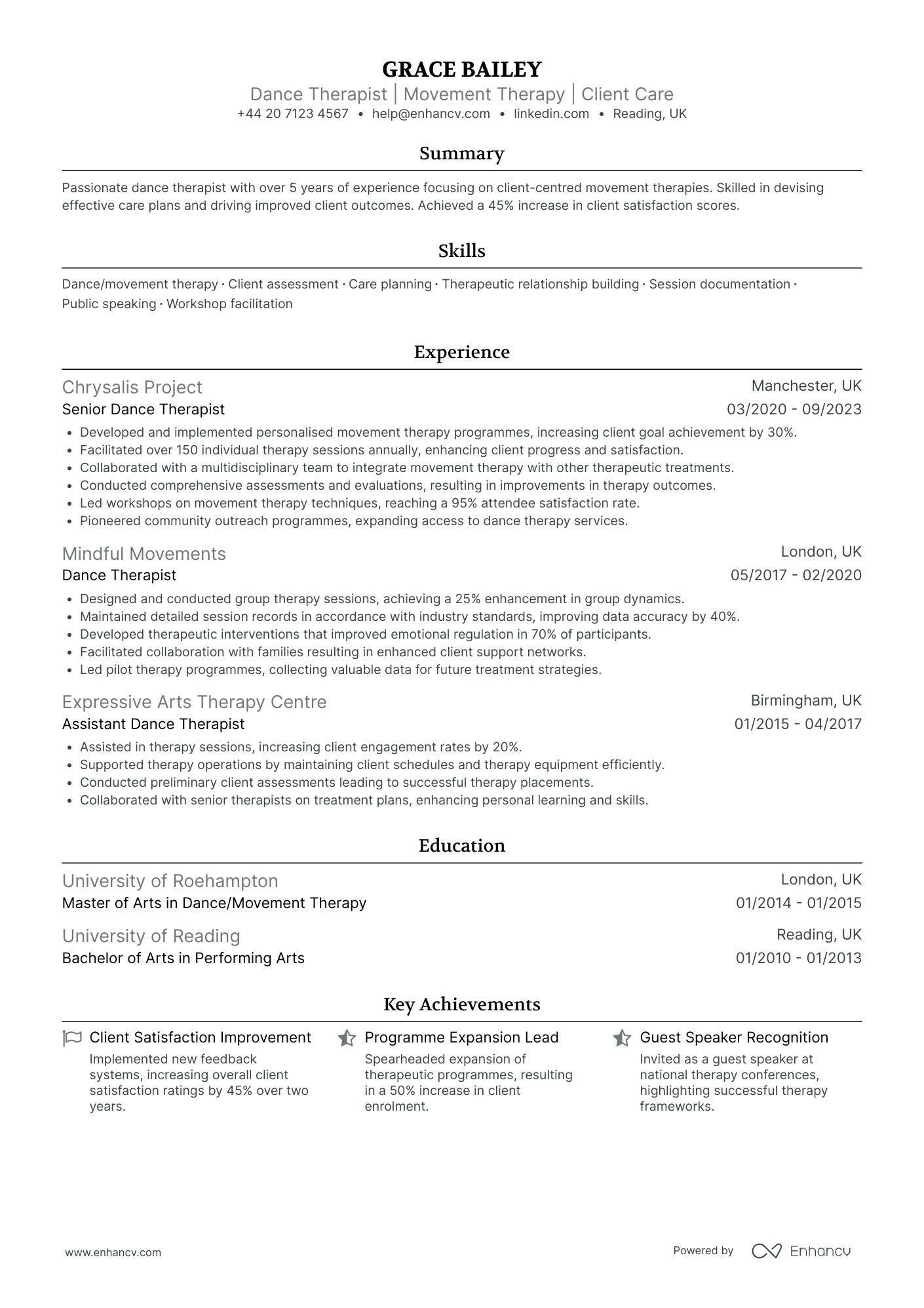
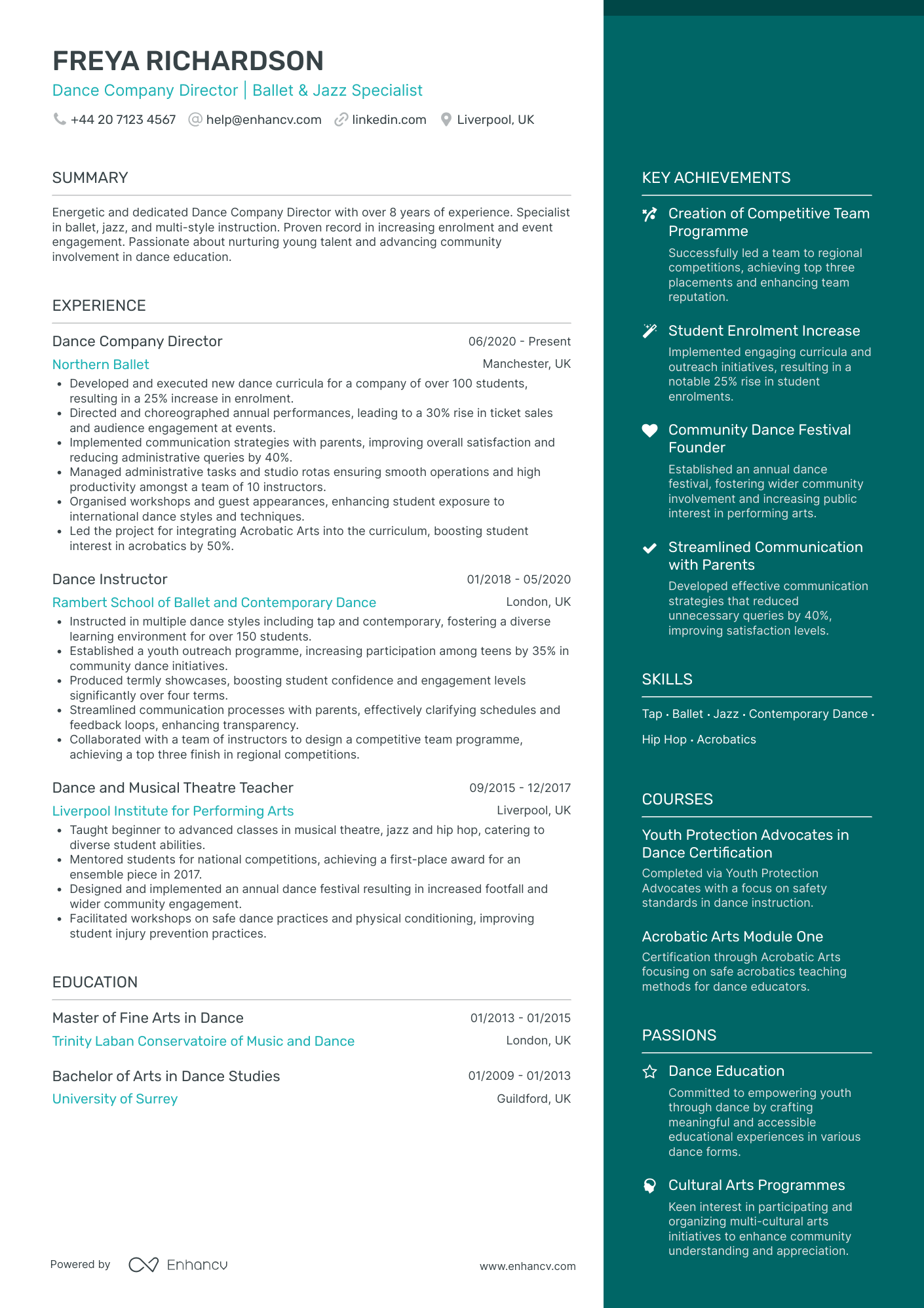
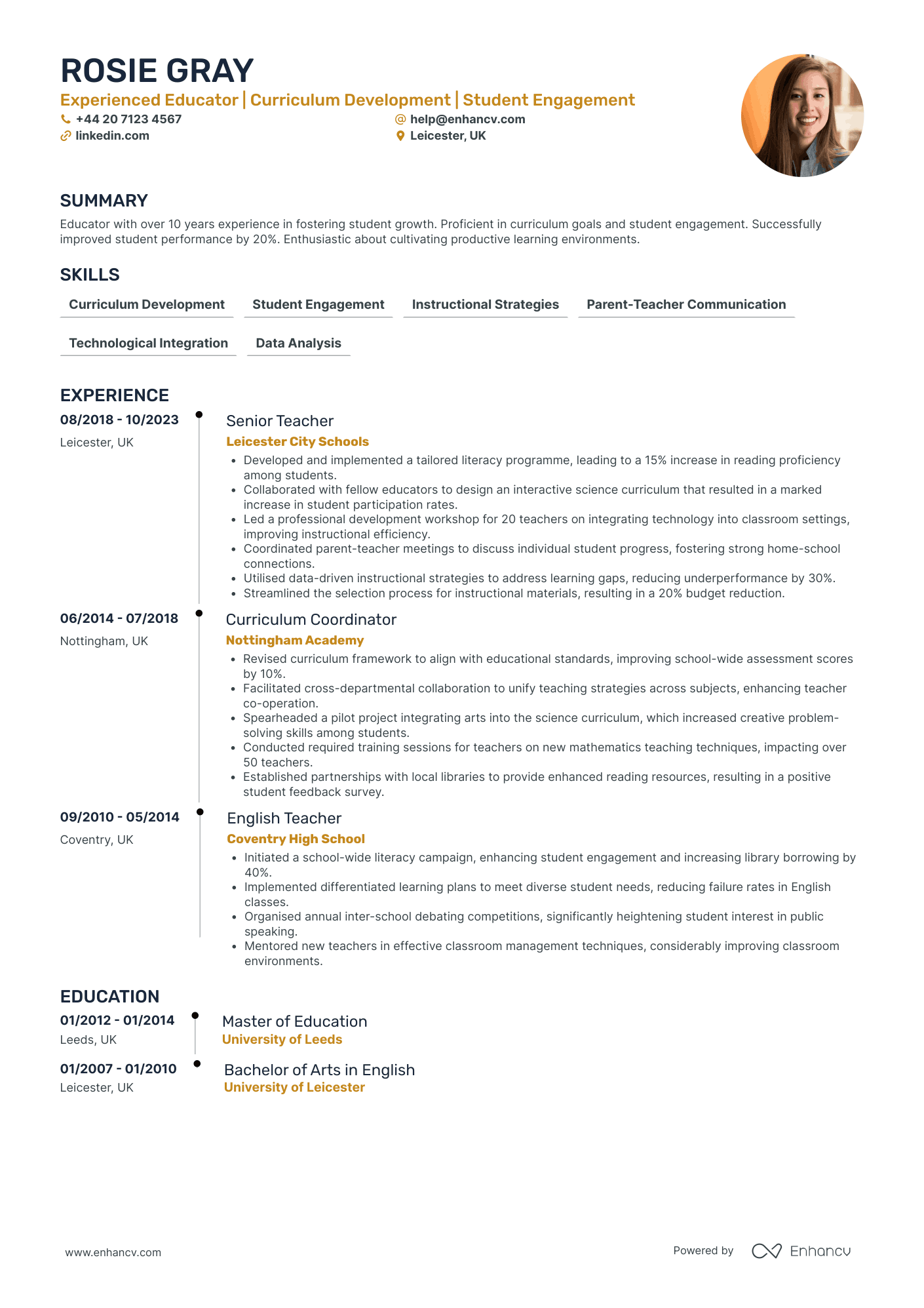
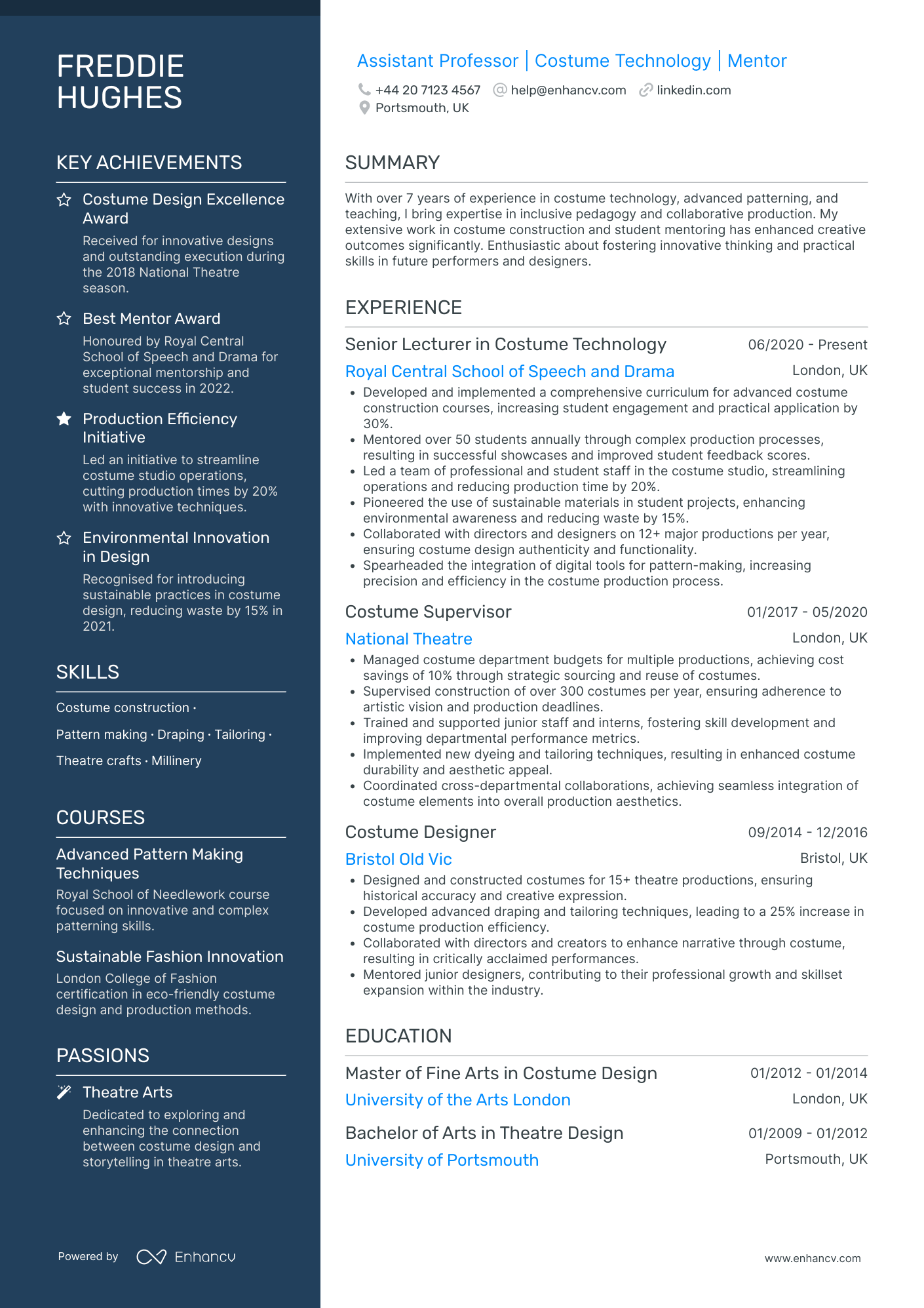
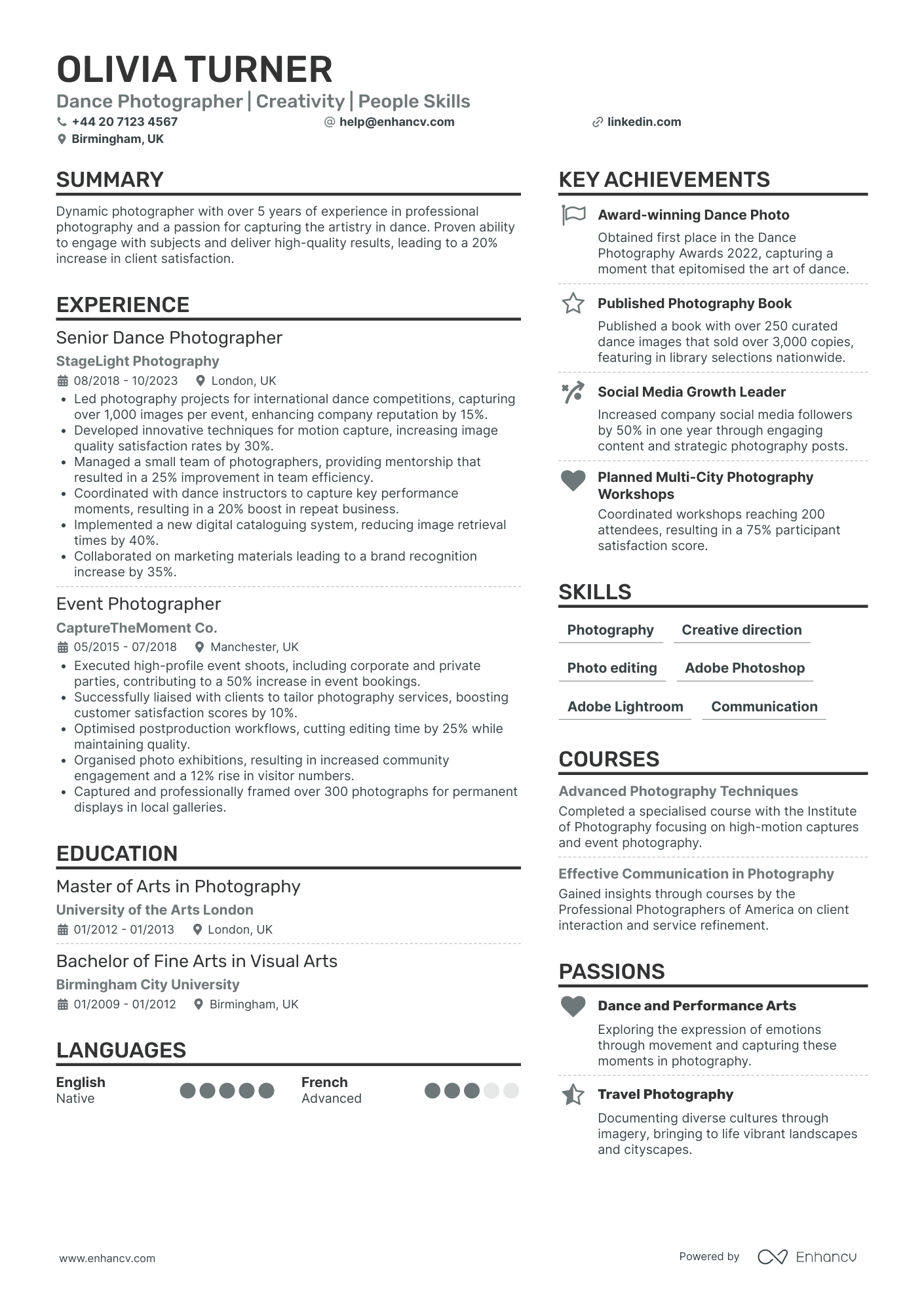
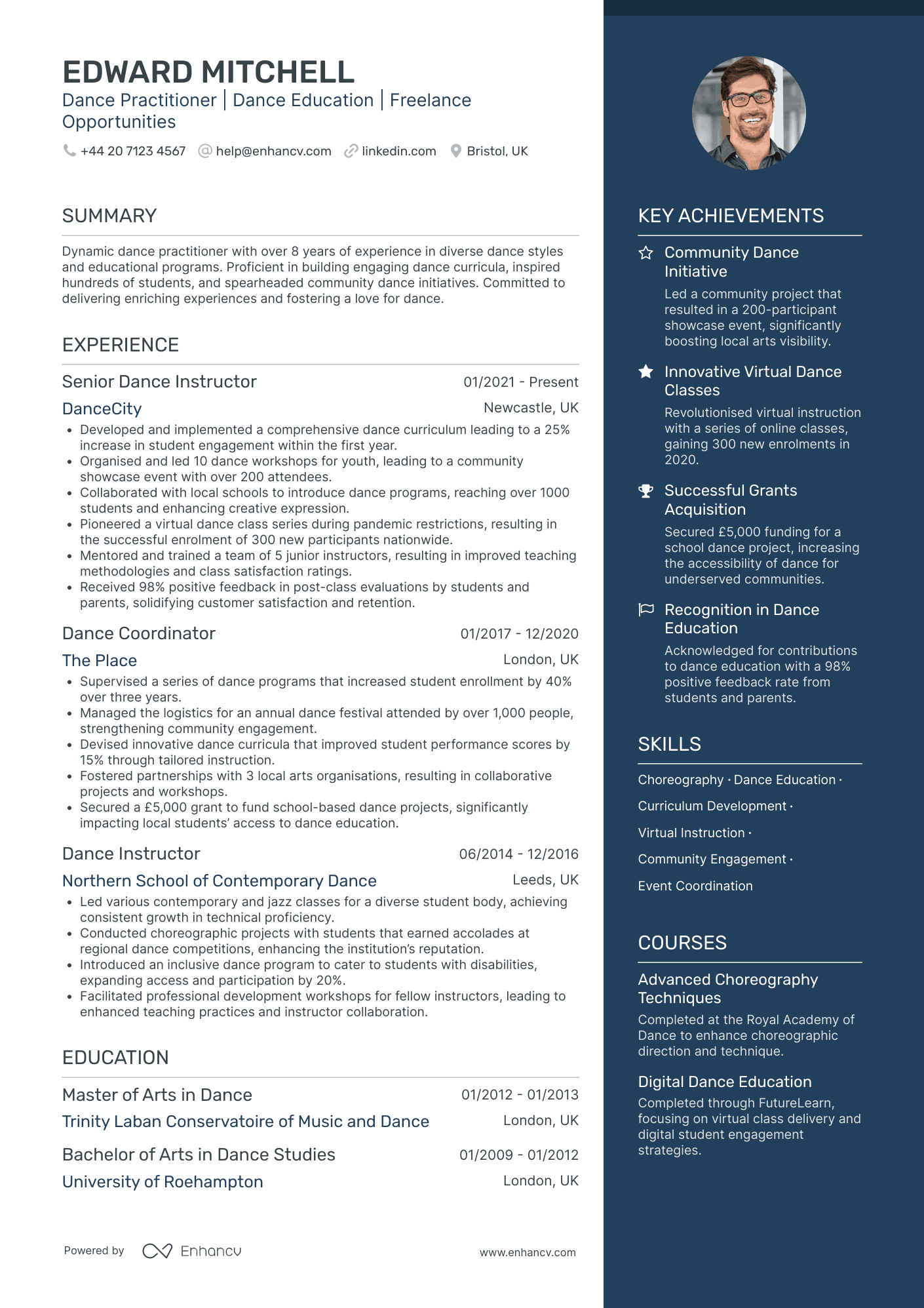
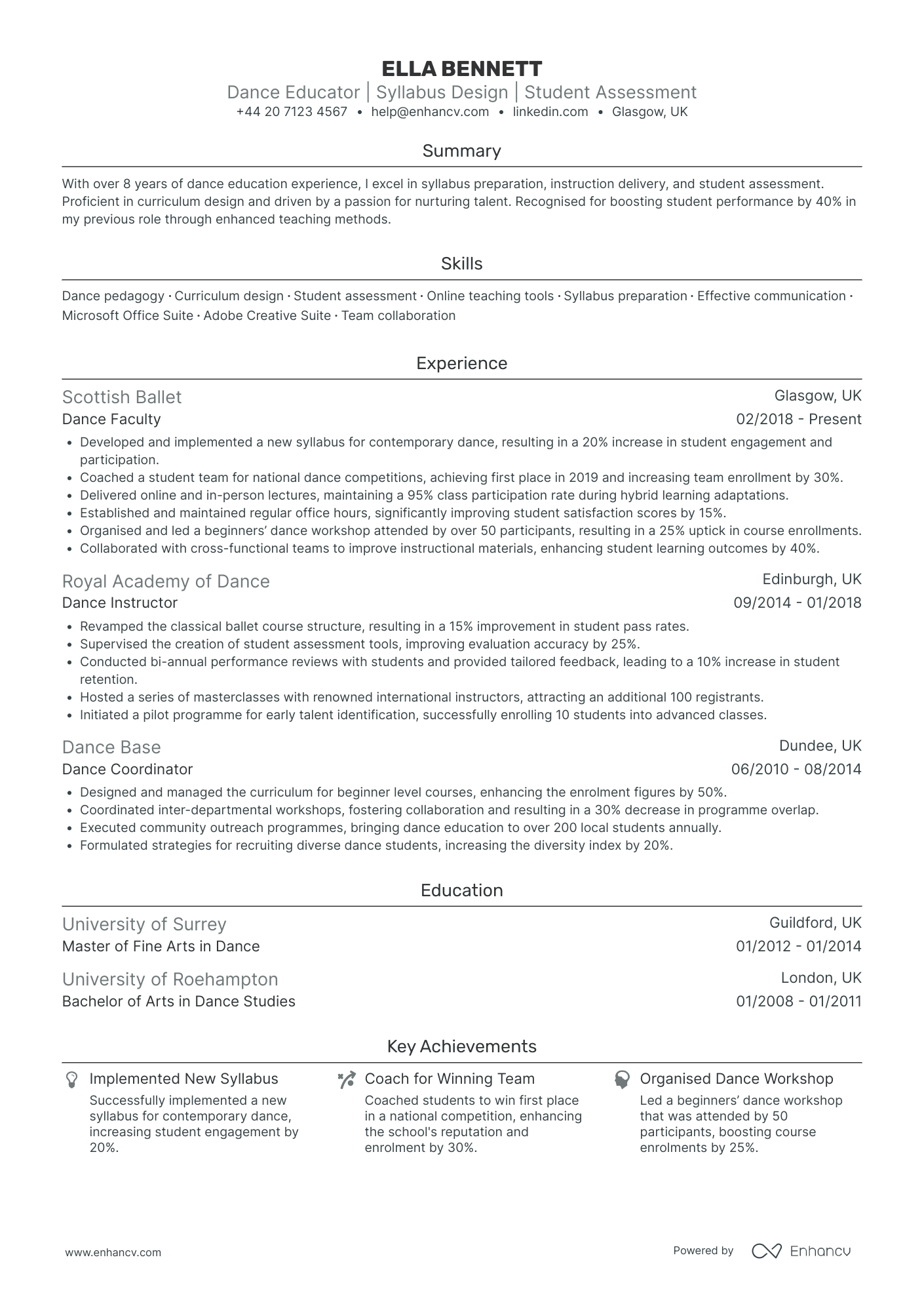
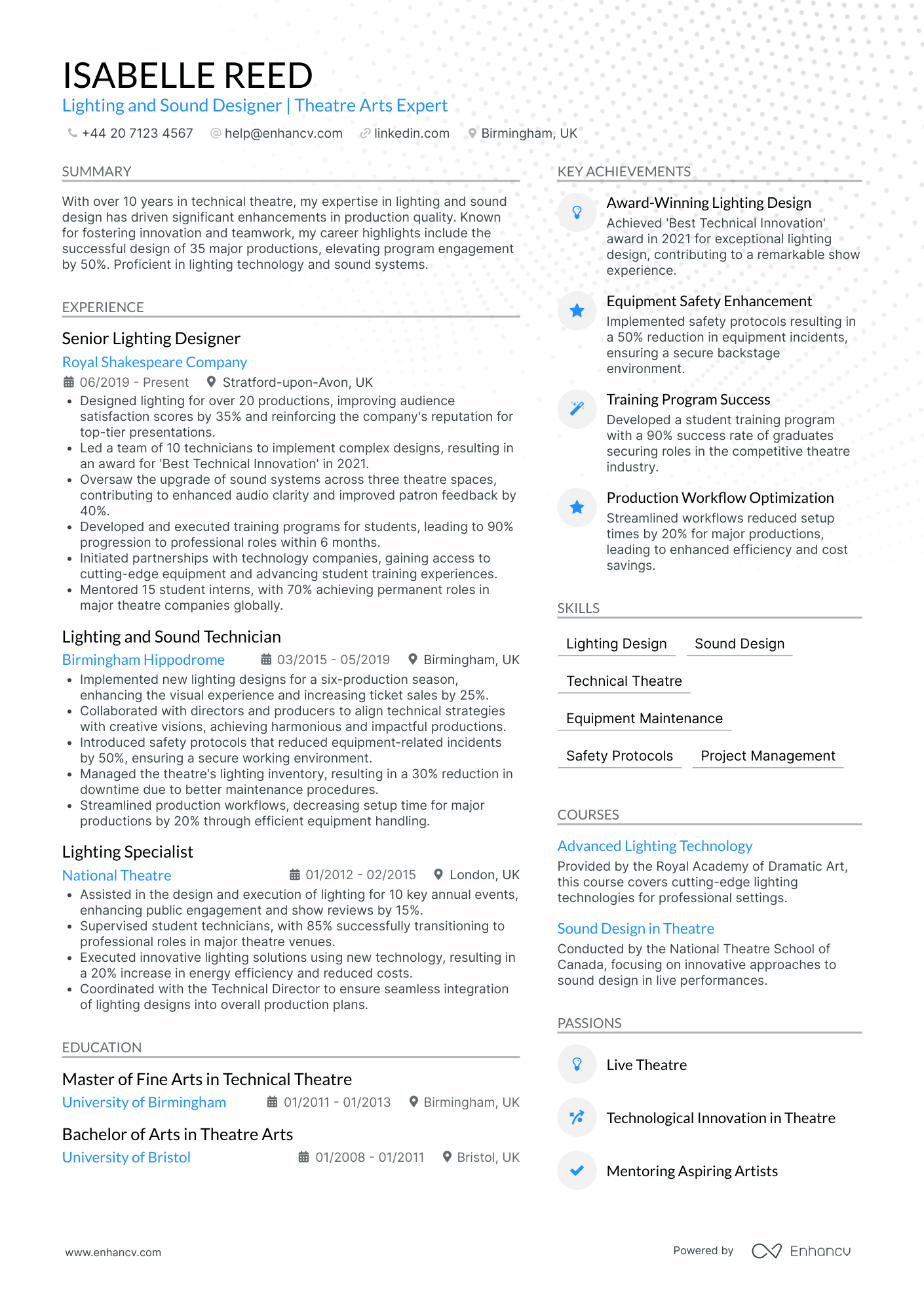
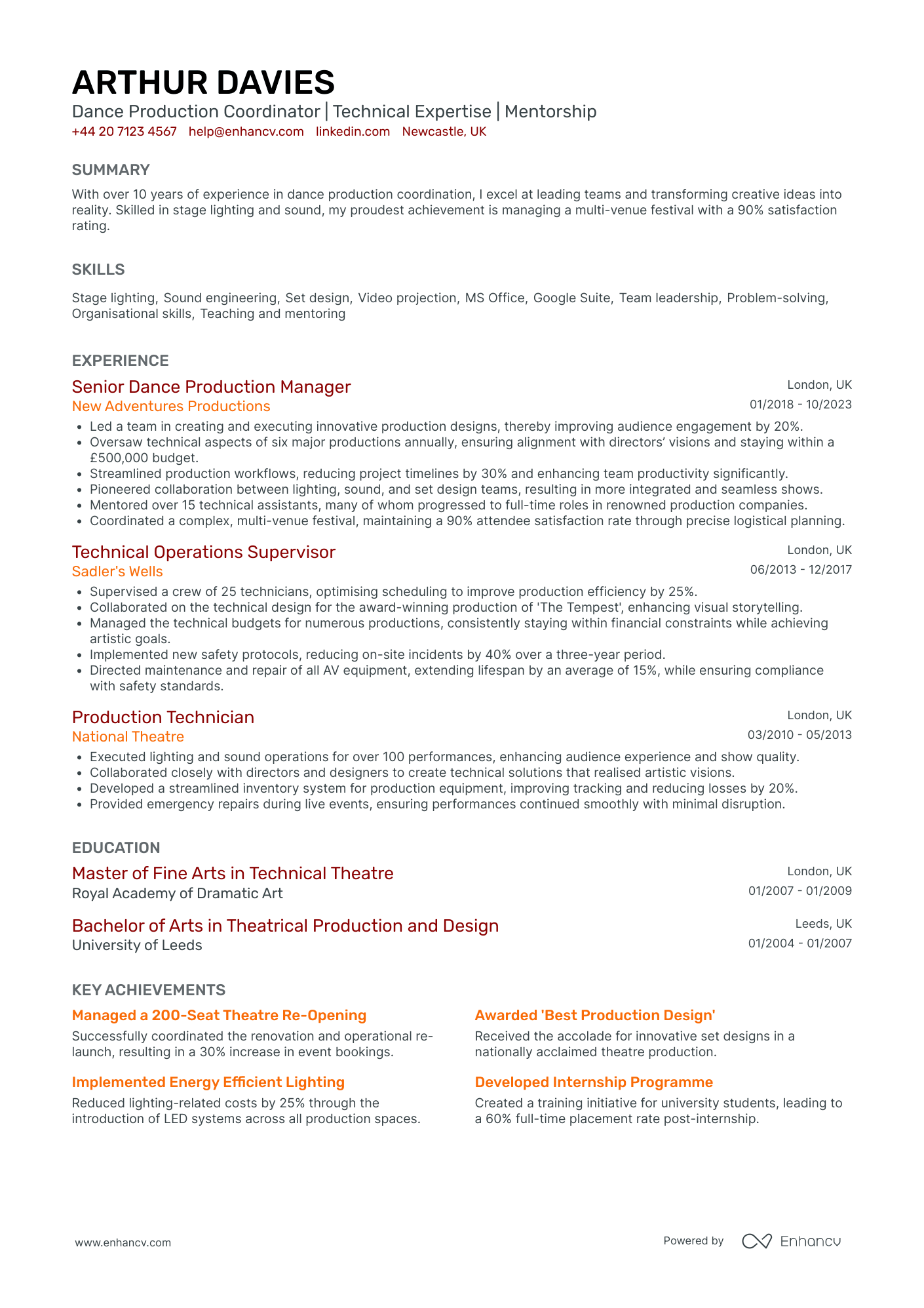
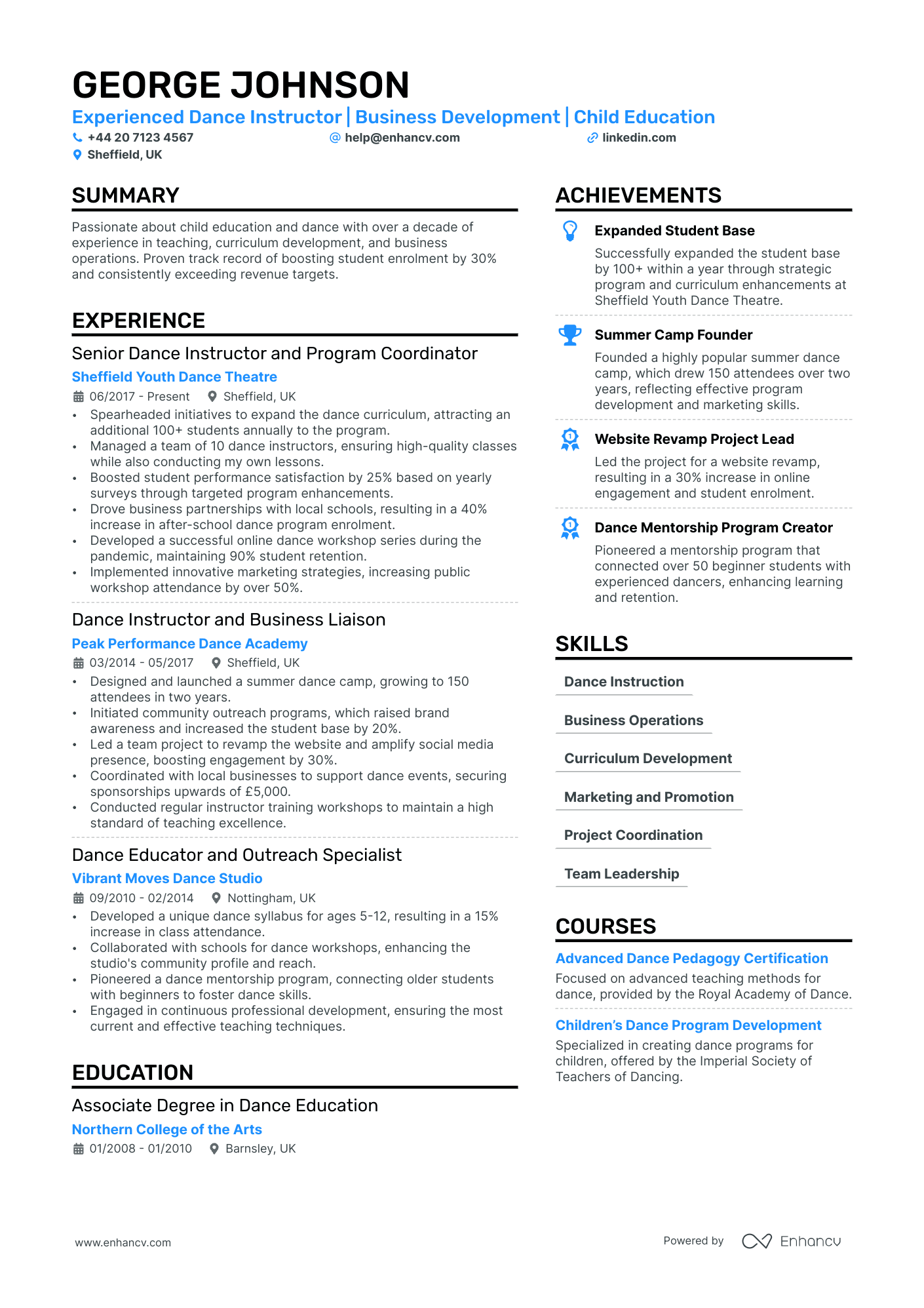
Most dance CVs read like a class timetable. Styles trained, teachers listed, grades passed, and nothing that shows a director what you actually do on stage.
Casting rarely hires from the CV alone. It hires from what the CV points to: your showreel, your credits, and the range you can prove. Get the portfolio right and the CV becomes the map that gets a panel to it. If you want the fundamentals first, see how to write a CV.

Key takeaways
- Lead with the portfolio. Your showreel and credits do more than any list of grades.
- Dance is on-site work. Put your base, willingness to tour, and availability near the top.
- Name real credits in the industry's order: production, company or choreographer, venue, role, and year.
- Match the styles and technique to the casting brief, and only list what you can perform on the day.
- Keep it to one or two pages, reverse chronological by credit, sent as a PDF with a live showreel link.
- Back your training with the specifics a panel checks: technique, physical skills, and any RAD or ISTD grades.
Building your dance performance portfolio
For a dancer, the portfolio is the audition before the audition. It is the first thing a director opens, and it decides whether your CV earns a second look.
Build it around proof of performance, not promise. A panel wants to see how you move, the roles you have carried, and the range you can switch between under pressure.
A strong dance portfolio holds a few core pieces:
- A showreel of 60 to 90 seconds, cut tightest first, opening on your strongest few seconds of movement.
- One or two longer clips of complete pieces, for panels who want to see stamina, phrasing, and how you finish.
- Production photographs that show line and stage presence, each credited to the photographer.
- A credits list: production, company or choreographer, venue, your role, and the year.
- A short technical profile: height, playing range, styles, pointe, partnering, and any special skills such as aerial, tap, or acro.

How a panel watches your reel
A reviewer rarely watches to the end. They open the reel, judge your first movement, and scrub forward to check range. That is why the opening ten seconds carry the audition, and why a reel that leads with your strongest style beats one arranged in career order. Cut ruthlessly, and make every second earn its place.
Order the reel the way a panel reads it, strongest movement first, because most reviewers decide inside the first fifteen seconds.
Be as selective with the credits list as with the reel. A director does not need every showcase you have ever danced in. They need the roles that match the work they are casting, laid out so the standard is obvious at a glance.
Photographs earn their place when they show something the reel cannot freeze: a clean line, a held balance, a moment of stage presence under real lights. One strong production shot beats a gallery of studio selfies.
Keep the technical profile honest and current. Height, playing range, and dress or shoe sizes save a wardrobe department a phone call, and an accurate list of styles saves you an audition you were never right for.
Host the whole thing somewhere that loads instantly and holds its quality: a personal site, a Vimeo or YouTube channel, or a dedicated portfolio page. Avoid anything a viewer has to download before they can watch.
Then link it from the CV in one clean line near your name, not buried at the foot of page two. A recruiter should reach your reel in a single click, and every credit on the page should be checkable against it.

PRO TIP
Casting briefs name the styles and skills they need. If a brief asks for commercial jazz and partnering, lead your showreel with commercial jazz and partnering, and cut anything that dilutes it. A tailored 60-second reel beats a four-minute career retrospective.
Skills to put on your dance CV
Dance skills split into groups, and a panel reads each one differently.
Your technical skills are the styles and disciplines you can perform: ballet, contemporary, jazz, commercial, tap, pointe, partnering, and improvisation. List them in the words a casting brief uses, and only claim what you can do cold in an audition. These are the hard skills a director scans for first.
Underneath sit the physical skills that training builds. The GCSE and A-level dance syllabus names eleven of them: posture, alignment, balance, coordination, control, flexibility, mobility, strength, stamina, extension, and isolation. You will not list all eleven, but they are the vocabulary a choreographer thinks in, so borrow it when you describe your range.
The human skills matter just as much and are harder to fake inside a company: discipline, resilience, and the ability to take a correction and apply it in the very next run. Prove those soft skills in a credit rather than claiming them in a list.
The way to evidence any dance skill is to attach it to a room. "Fast repertoire pick-up" means little on its own. "Learned three pieces in a two-week rehearsal block" shows it. Let the credits carry the technical claims, and keep the skills section as a scannable index a panel can match against the brief.
Top skills for your dance CV:
Ballet technique
Contemporary and modern
Jazz and commercial
Tap
Pointe work
Partnering and lifts
Improvisation
Choreography
Repertoire pick-up
Musicality and timing
Discipline
Resilience
Collaboration
Adaptability
Stage presence
Coachability
What the UK dance market looks like
Two things about how UK dance is hired should shape your CV. Here is what the adverts actually ask for.
| What | UK dance roles |
|---|---|
| Where the work happens | Almost entirely on-site (most of 39 UK dance postings in the last ~30 days, Enhancv's internal job feed) |
| Experience level asked for | Mostly mid and entry level, with a smaller band of lead and senior roles |
| What recurs in the adverts | Safeguarding leads, reflecting how much UK dance hiring sits in teaching, youth, and community settings |
| The pay question | Rates vary widely by contract, company, and touring, so confirm pay per role rather than from a single figure |
Dance is on-site by nature. Rehearsals, companies, and shows all happen in a room, so a panel needs to see where you are based and how far you will travel or tour. Put your location and availability in the header.
The sample also skews toward teaching, youth, and community dance rather than company performance alone. That is why safeguarding recurs across the adverts, and why a teaching or workshop credit can widen the roles you reach.
The practical read for your CV: if you can teach as well as perform, say so near the top, and name any DBS check or safeguarding training you hold. It opens a whole band of work that pure performance credits do not.
Formatting your dance CV
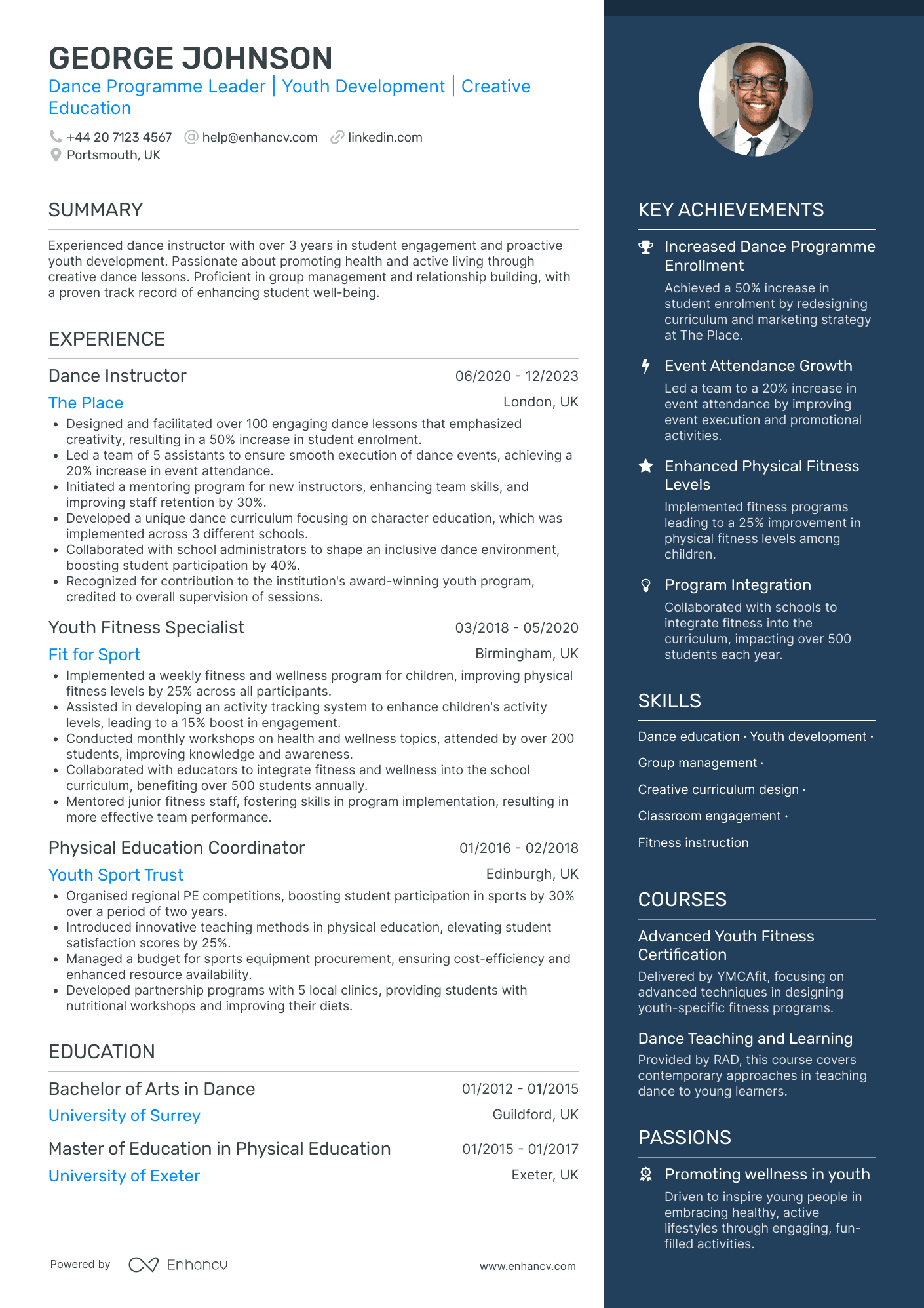
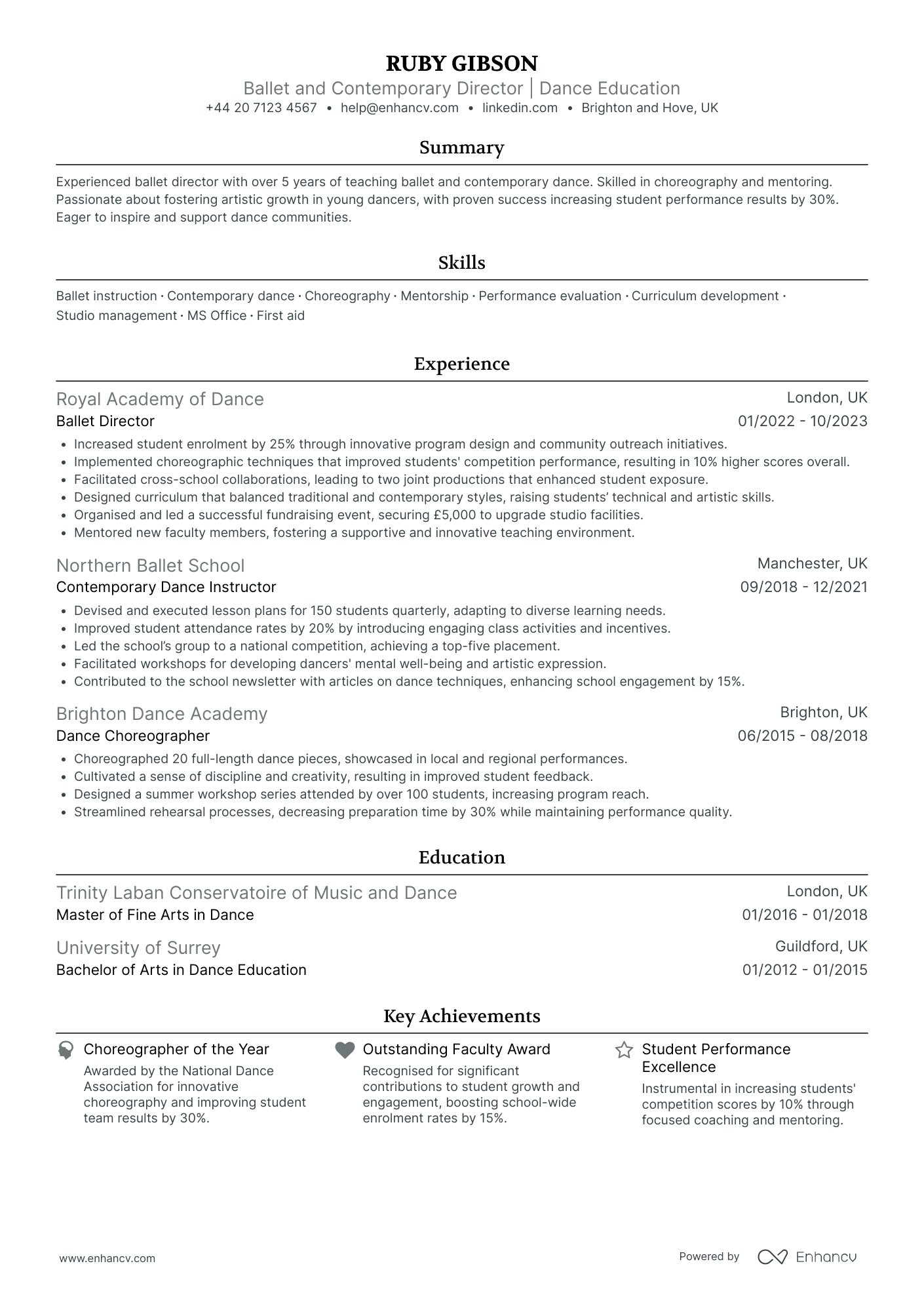
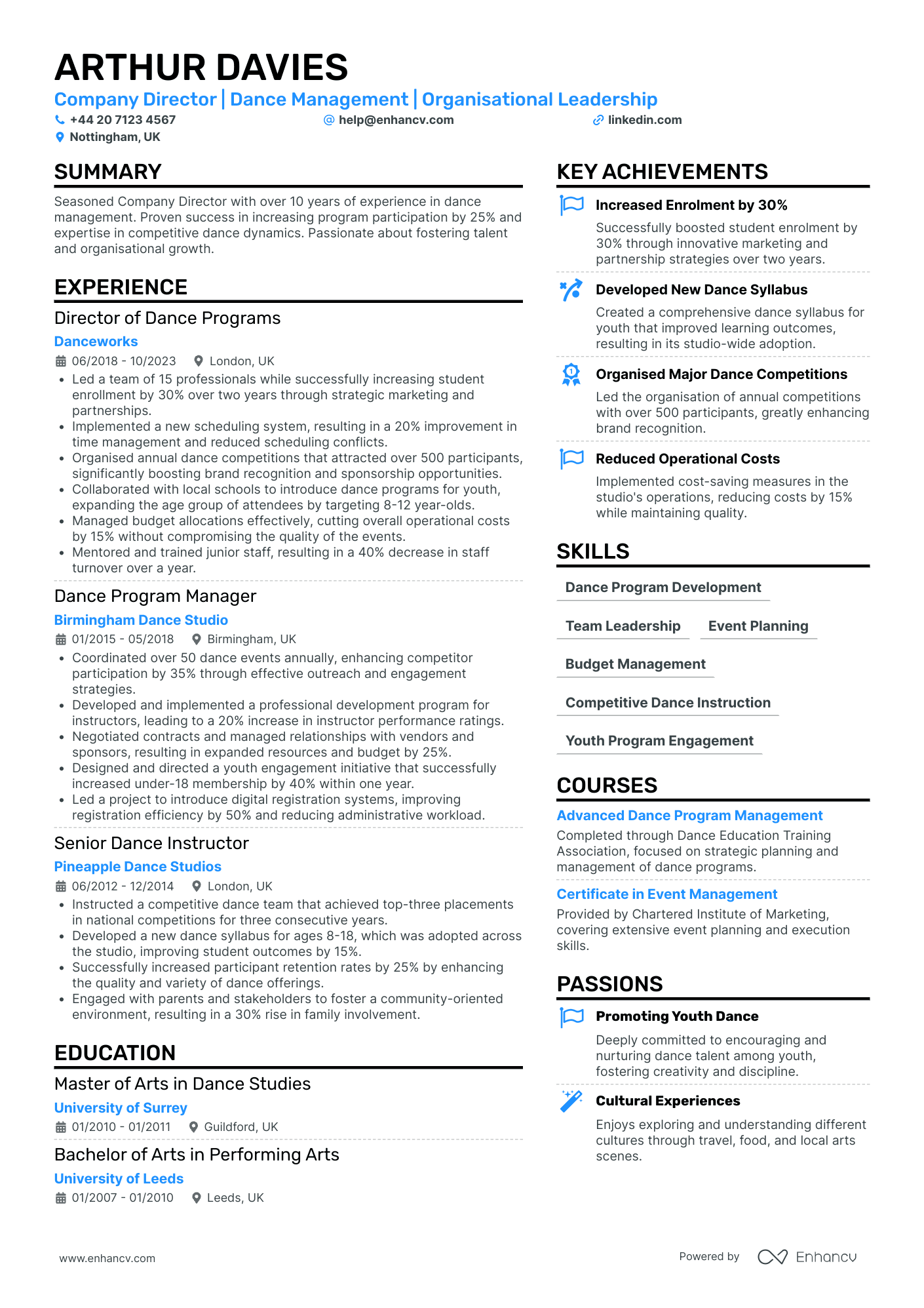
Keep a performance CV short. One page for most dancers, two pages only if you have a long credit list. A panel skims it beside your reel, not instead of it.
Lead with a header that carries your name, base, height and playing range, contact, and one link to your showreel. Then a short personal statement, credits in reverse chronological order, training, and skills.
Send it as a PDF so the layout holds on any device, and make the showreel link live and clickable. Keep a Word copy for agents who reformat CVs into their own template.
Build it from a tested layout rather than a blank page. Enhancv's CV templates export to a clean PDF with the header and links intact.
Writing your dance personal statement
Three or four sentences at the top: who you are as a dancer, your strongest styles, a credit that proves them, and what you are looking for now. See more personal statement examples if the opening line will not come.
Skip the adjective reel. "Passionate, versatile, dedicated dancer" tells a panel nothing they cannot read from your showreel in two seconds.
Name the styles you lead with, one credit that proves them, and where you want to go next. A panel should finish those few sentences knowing what kind of dancer they are about to watch.
Lead with a credit and a range instead:
Dance CV personal statement example
Contemporary and commercial dancer with four years of professional stage and screen credits, including ensemble work on a national touring production and two music videos. Strong in floor work, partnering, and fast pick-up of repertoire, trained to Advanced 2 in ballet through the RAD. Seeking company and commercial contracts across the UK, available to tour.
What to avoid
Passionate and versatile dancer who has loved dance since the age of three and is dedicated, hard-working, and always willing to learn. Looking for any opportunity to perform and grow as an artist.
When we read a dancer's CV, we are really deciding whether to open the reel. The statements that earn that click name a real credit in the first line: a production, a company, a role. "Trained in ballet, tap, and jazz since childhood" gets skimmed past. "Ensemble in a national tour of a named show" gets the reel opened. Put the proof where the eye lands first, and let the training support it rather than lead it.
Writing your dance experience section
For dancers, the experience section is a credits list, and it follows the industry's own order: production, company or choreographer, venue, your role, and the dates. For the mechanics, see work experience on a CV.
Lead each entry with the role and the production, not the duties. A panel reads credits, not job descriptions.
Where you can, show scale and standard. Audience size, tour length, the number of performances, or the calibre of the company all tell a reviewer what you can handle. Those are your CV achievements, and covers, swings, and understudy tracks count too, so name them.
Short contracts are normal in dance, so do not apologise for a page of them. Date each run honestly, group a busy season under one company where it reads cleaner, and let the volume of work speak for your reliability.
Tailor the order to the brief. Pull the styles and skills the casting call names and move the matching credits to the top. Enhancv's CV tailoring feature reads the brief and suggests which credits and skills to bring forward, so you are not rebuilding the CV before every audition.
- Perform in a 12-strong ensemble across a 40-date national tour, playing venues of up to 1,400 seats
- Learned and retained three full pieces in a two-week rehearsal block, covering two principal tracks as first understudy
- Partner in two lifted sequences per show, holding clean technique across eight shows a week
- Lead the company warm-up on tour dates, helping keep the ensemble injury-free through the run
Training and education on a dance CV
Training carries real weight in dance, so give it a clear block, but keep it under your credits once you are working.
List your conservatoire or school, the years, and the qualification: a BA in dance, a diploma, or a foundation course. Name your principal teachers where they are known in your field. Put it in your education section so a panel can find it fast.
Grades still matter to many panels. Include RAD or ISTD levels, any pointe or teaching certificates, and current training you keep up. List only what you hold or are working towards, and mark anything in progress as such.
Ongoing training is worth naming, not hiding. Weekly company class, a summer intensive, or a masterclass with a known choreographer all tell a panel you are still sharpening, which is exactly what a company wants from a dancer between contracts.
Writing a dance CV with no experience
A first dance CV, whether you are leaving college, auditioning for a conservatoire, or applying to a youth company, carries its weight through training and range rather than professional credits.
Lead with a skills-led structure: personal statement, then technique and styles, then training, with any performance last.
Count every performance that happened, even unpaid. School and college shows, competition placings, festival and eisteddfod appearances, showcases, and student choreography are all credits when you date them and name the role. A strong first CV reads full because it treats these seriously.
A parent or student building a CV for a child follows the same rule at a smaller scale: grades, schools, and any show or competition, kept honest and age-appropriate. Keep it to one page, put a recent photo and the child's playing range at the top, and let the training and grades carry it.
One honest line lifts a beginner's CV above a stack of them: the training you are on now and the level you are working towards. It shows a panel where you are heading, not just where you have been.
PRO TIP
No professional credits yet? Film one clean piece in a studio and make it your reel. A well-shot 45 seconds of you dancing full-out tells a panel more than a page of grades, and it gives your CV something real to link to.
Conclusion
Lead with the portfolio, point the CV straight at your showreel, and write your credits in the industry's own order.
Match the styles to the brief, keep the format clean and on-site-friendly, and let real performance do the talking. That is the CV that gets a panel to press play.
Author's take - the Enhancv team
When we read a dancer's CV, we are really deciding whether to open the reel. The statements that earn that click name a real credit in the first line: a production, a company, a role. "Trained in ballet, tap, and jazz since childhood" gets skimmed past. "Ensemble in a national tour of a named show" gets the reel opened. Put the proof where the eye lands first, and let the training support it rather than lead it.