



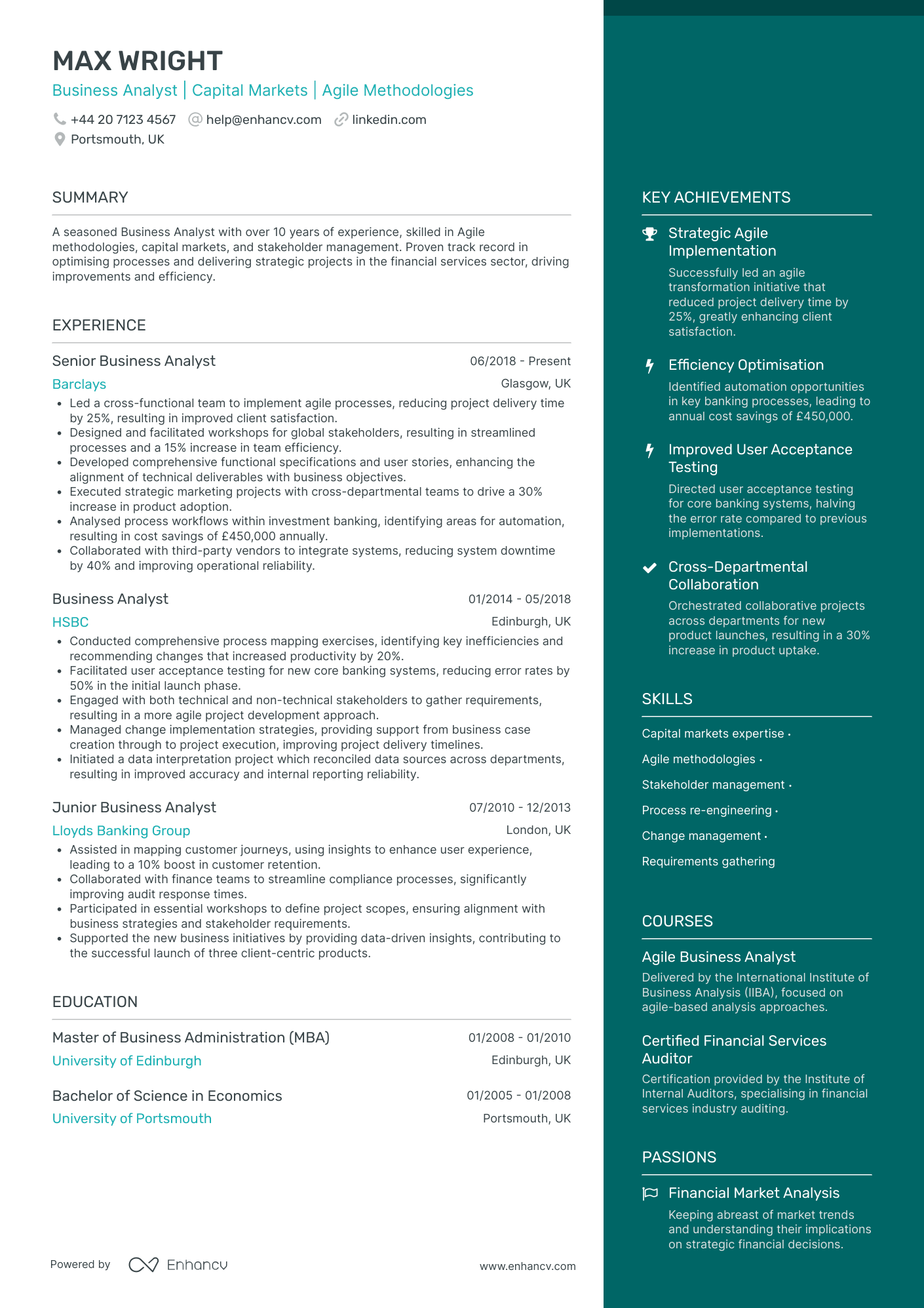
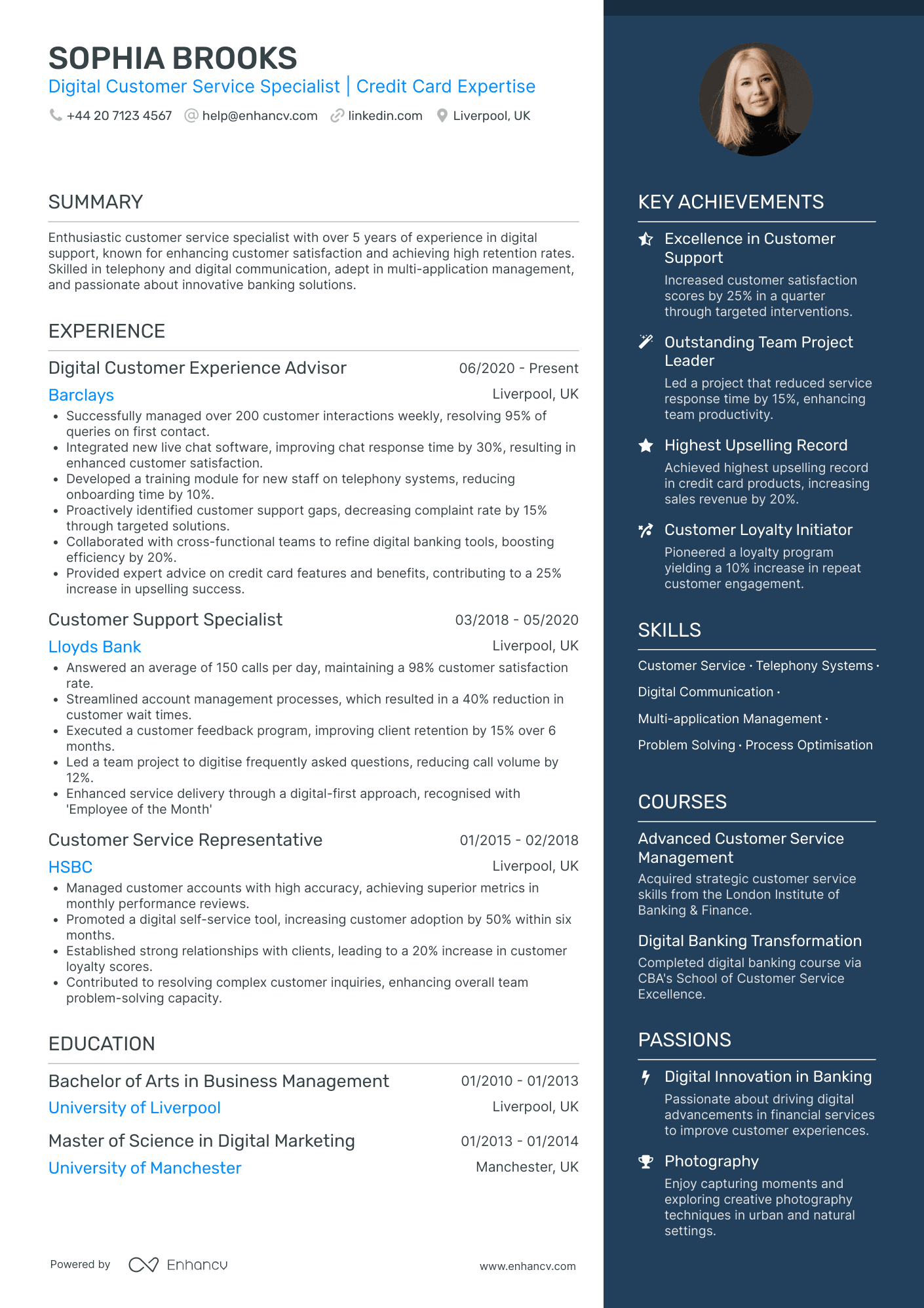
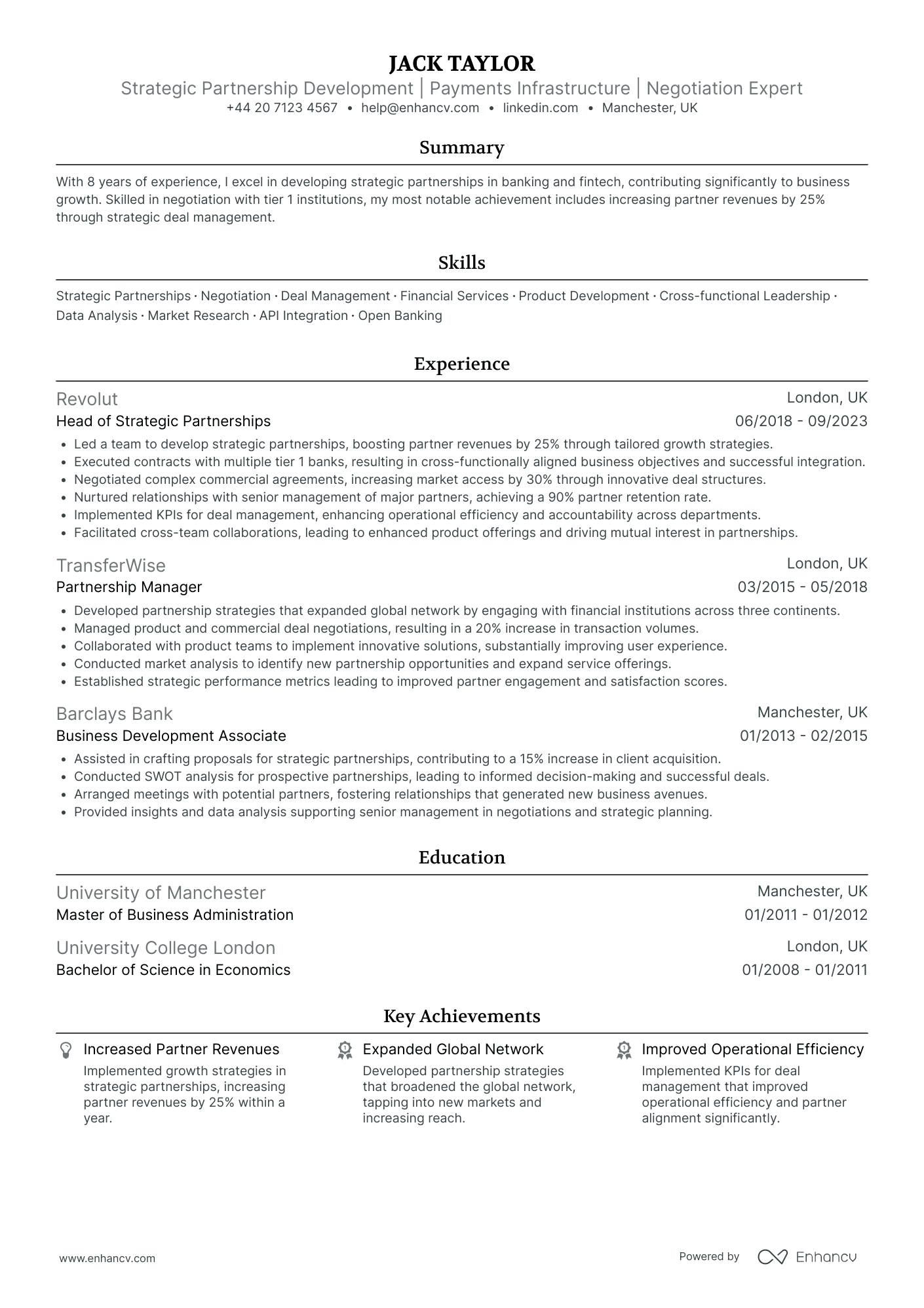
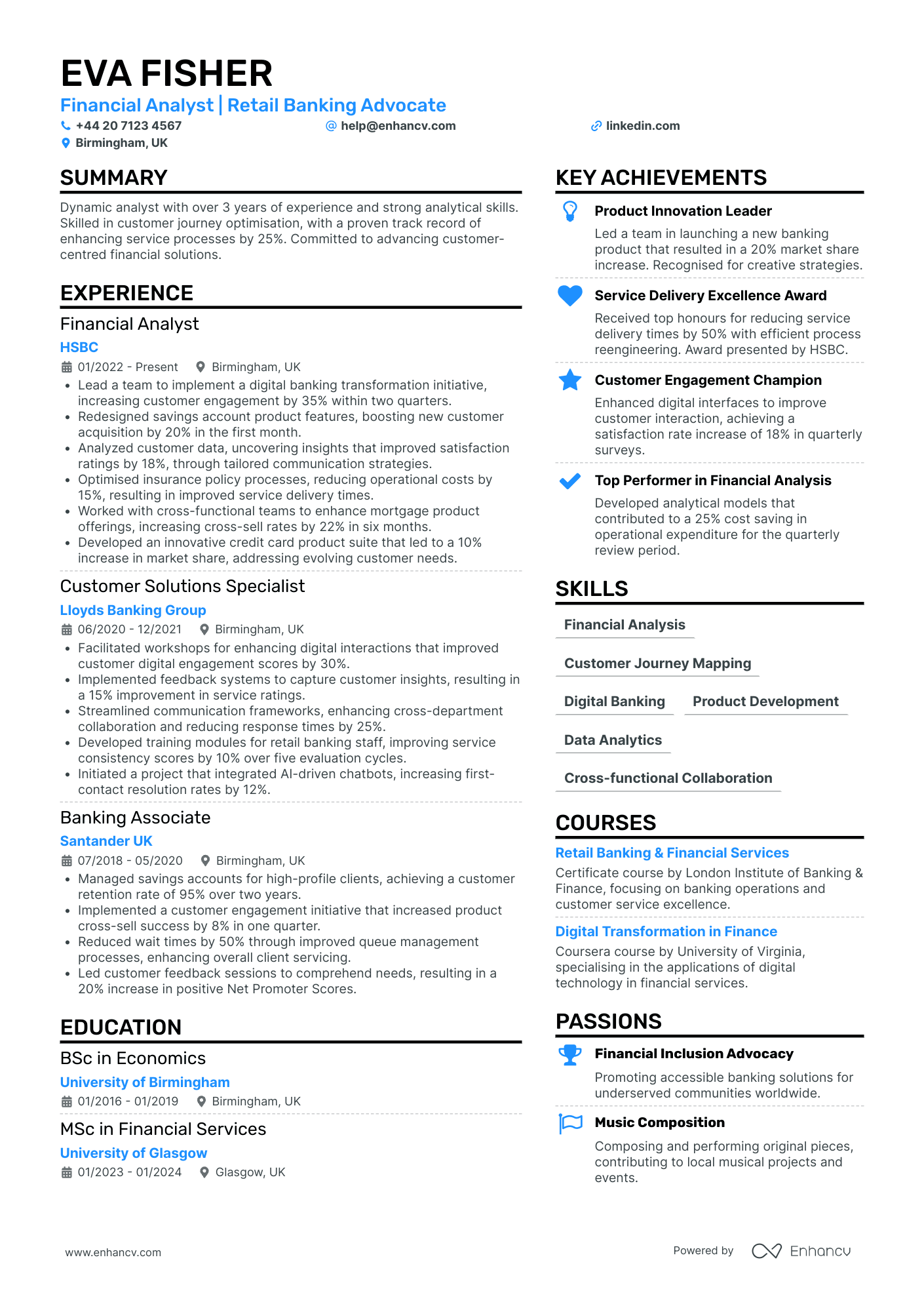
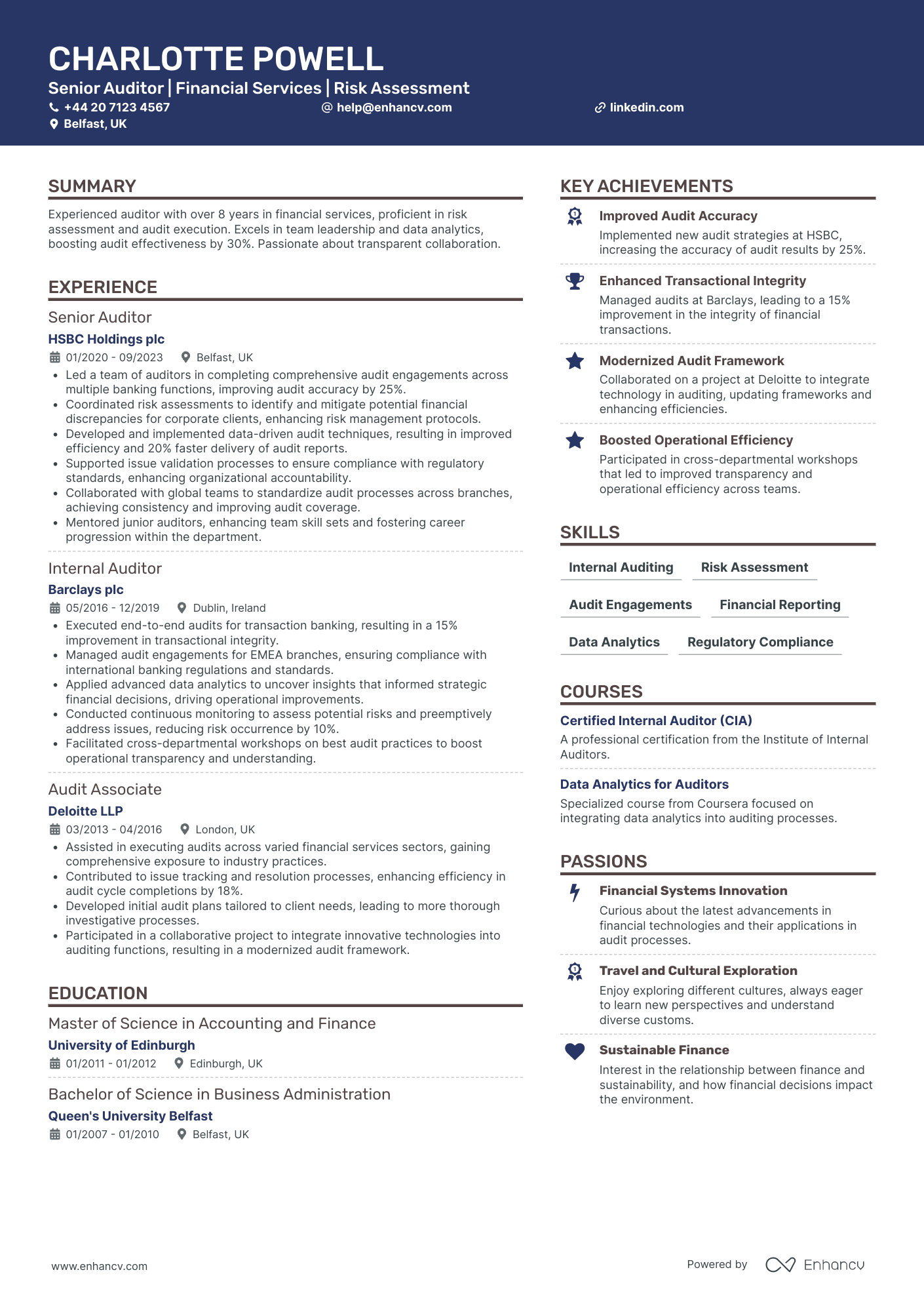
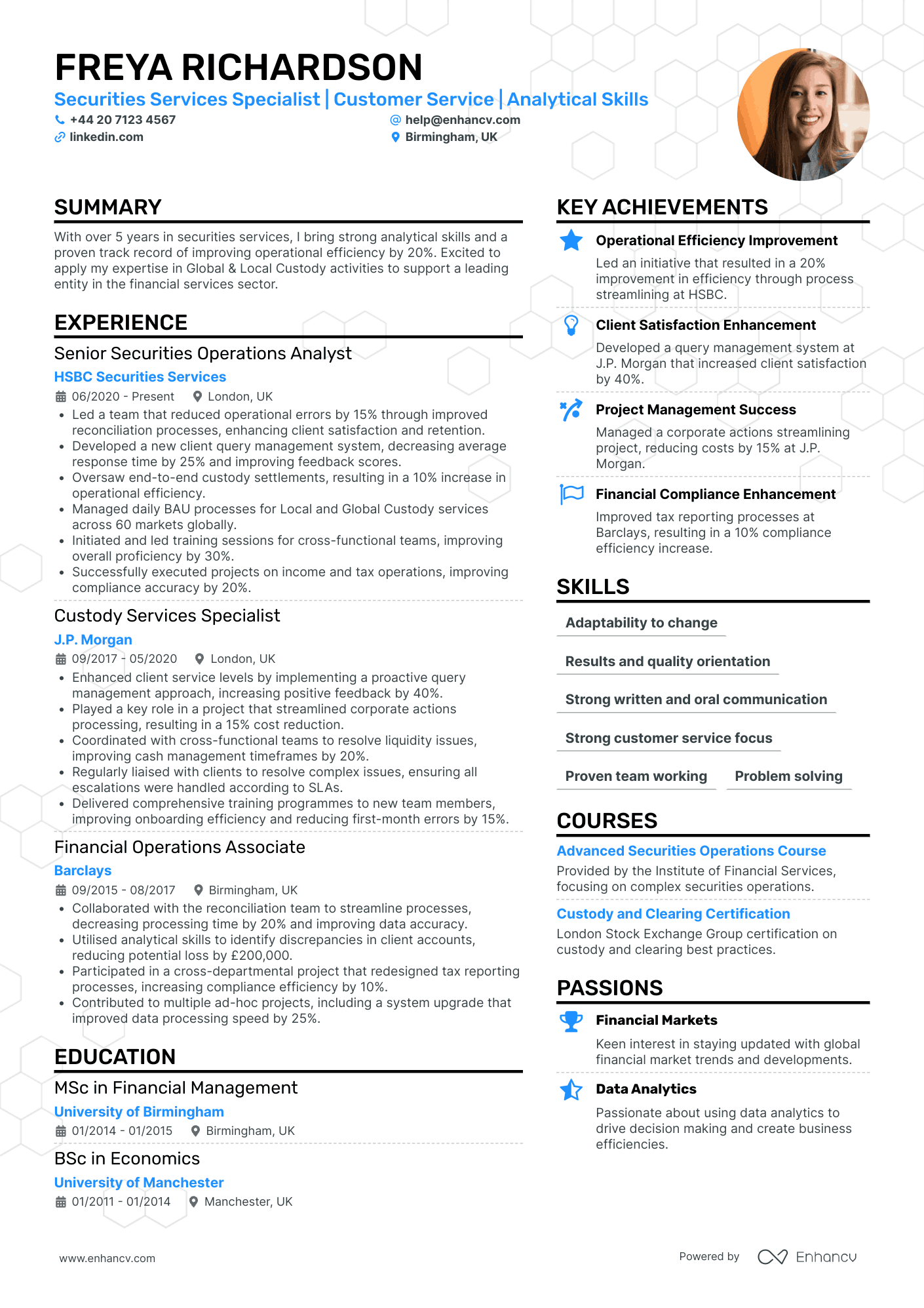
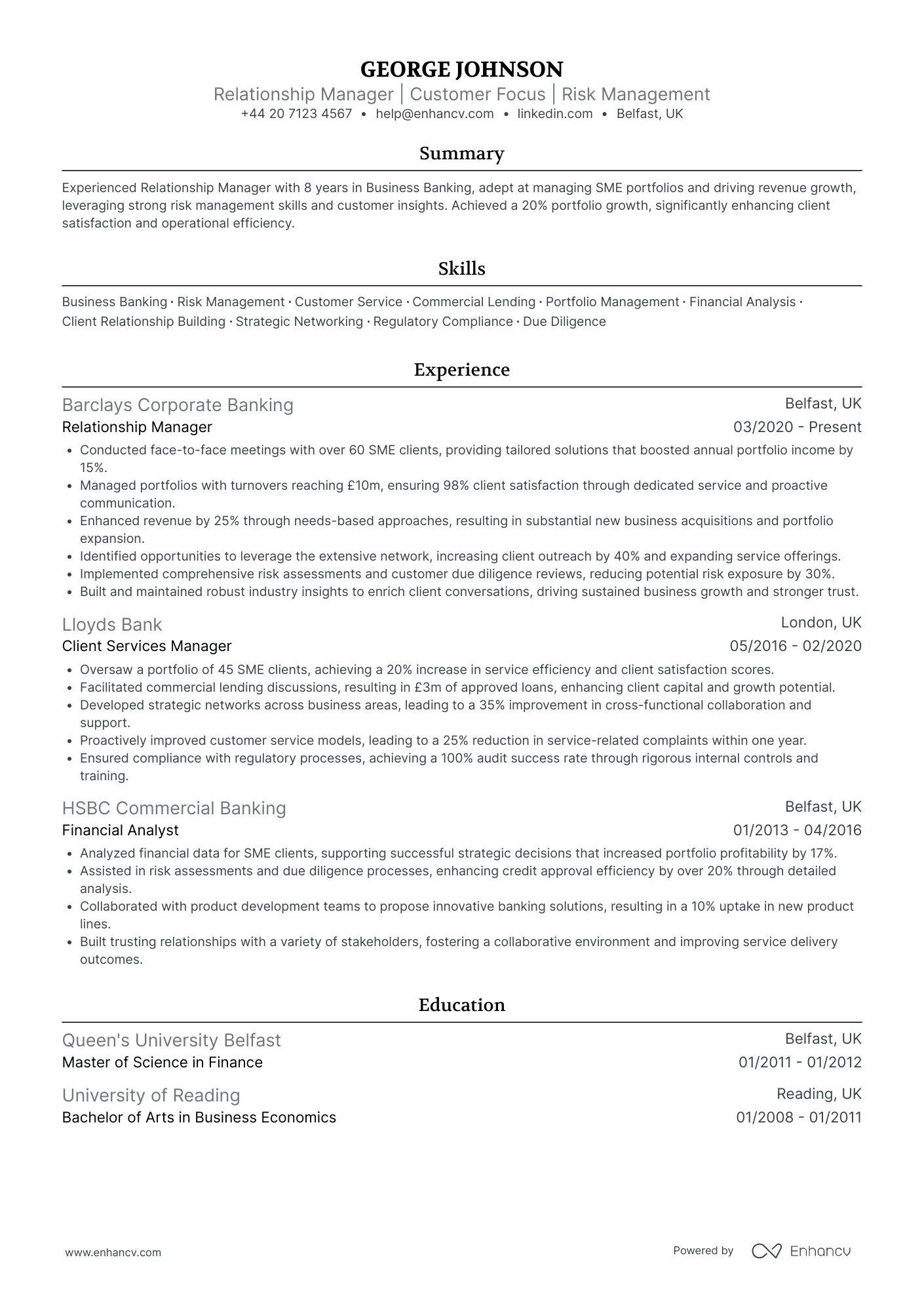
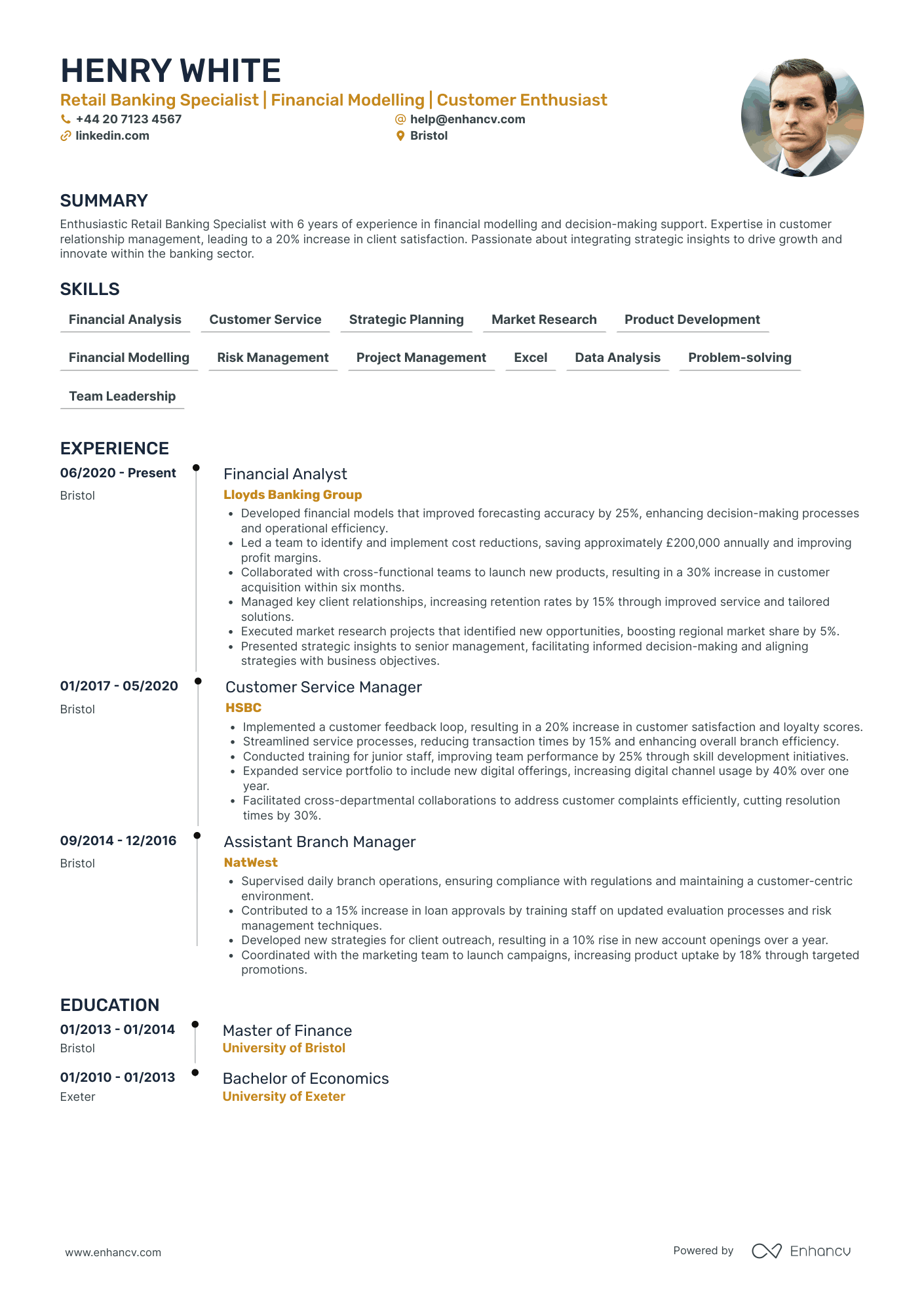
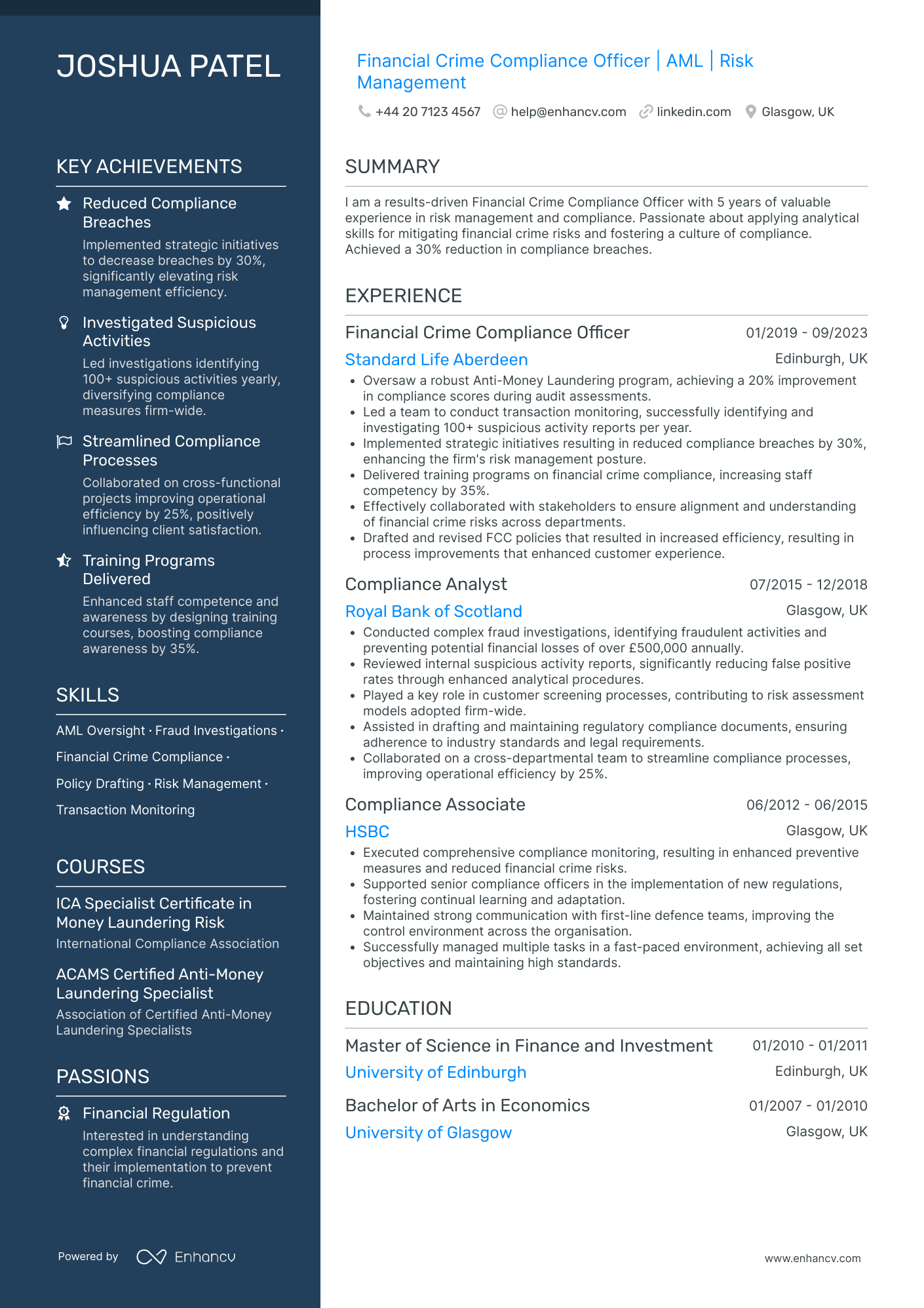
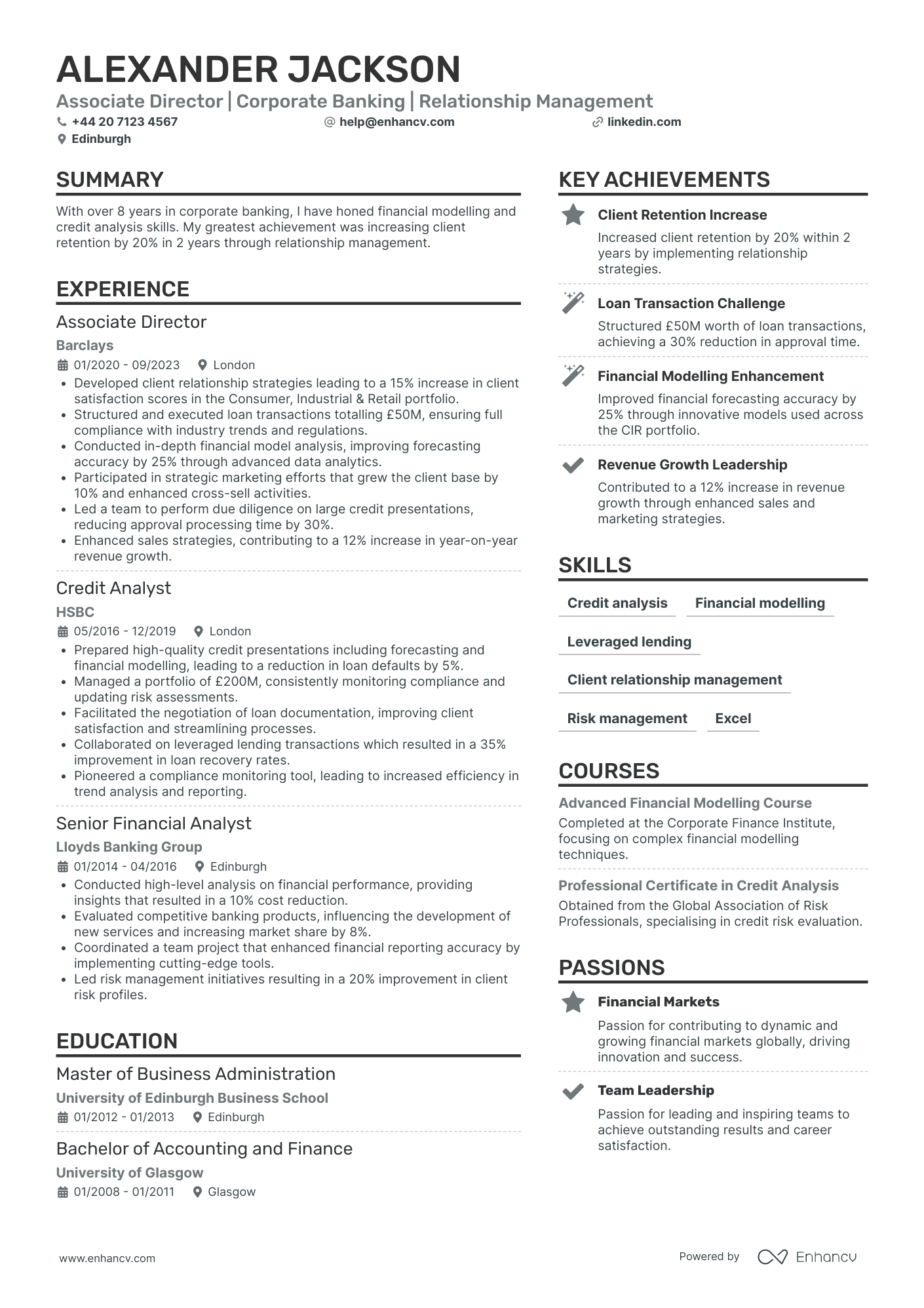
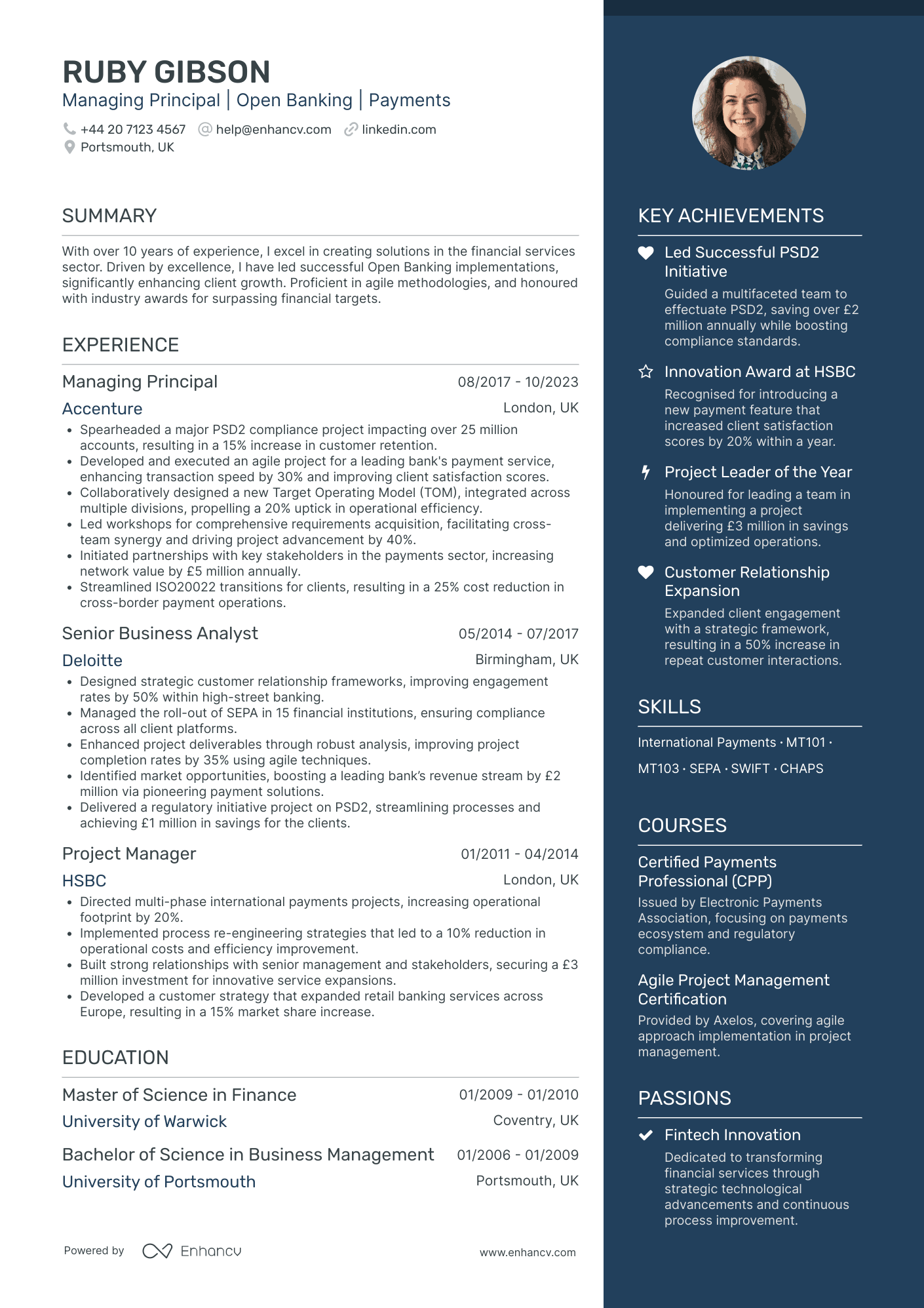
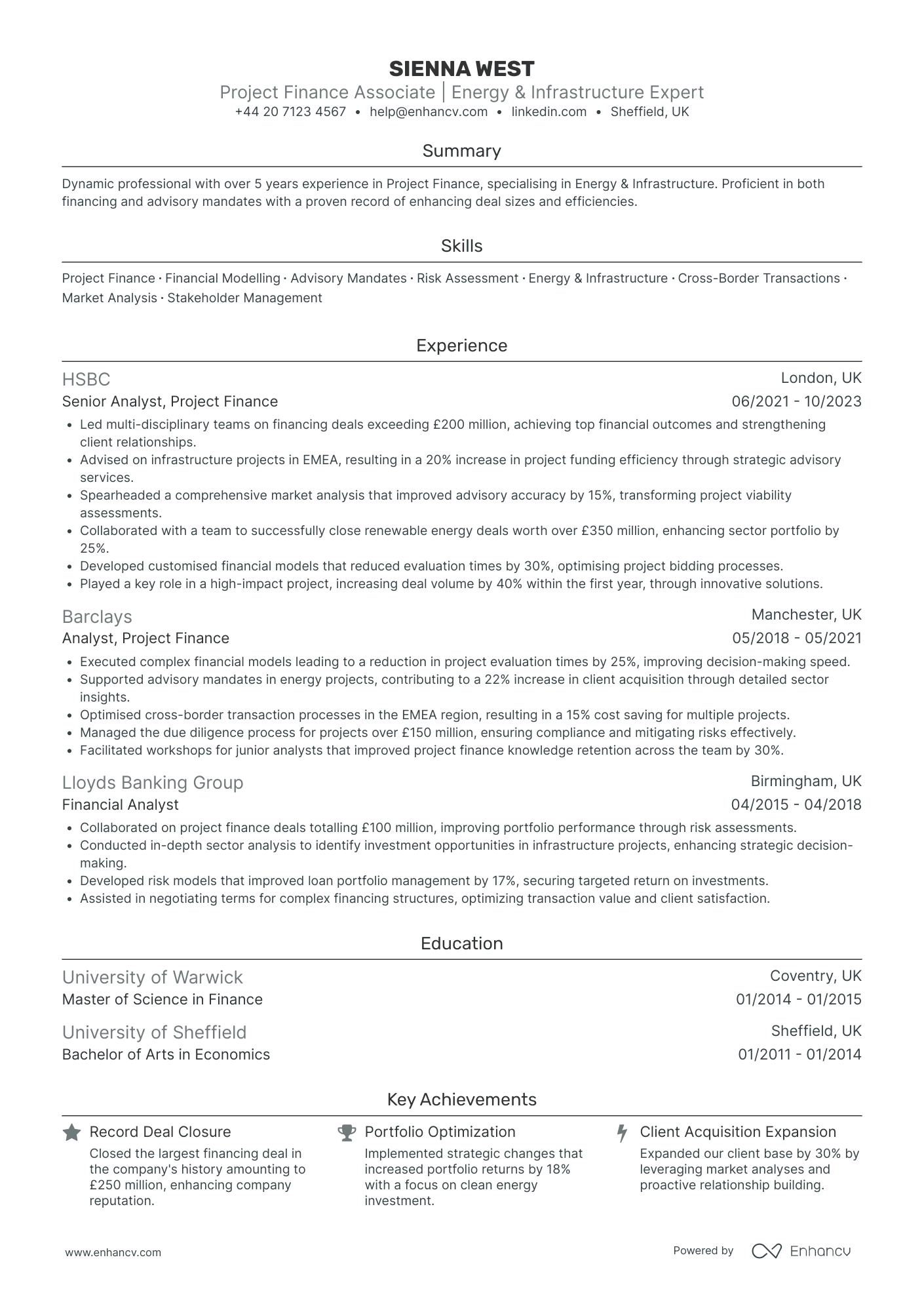
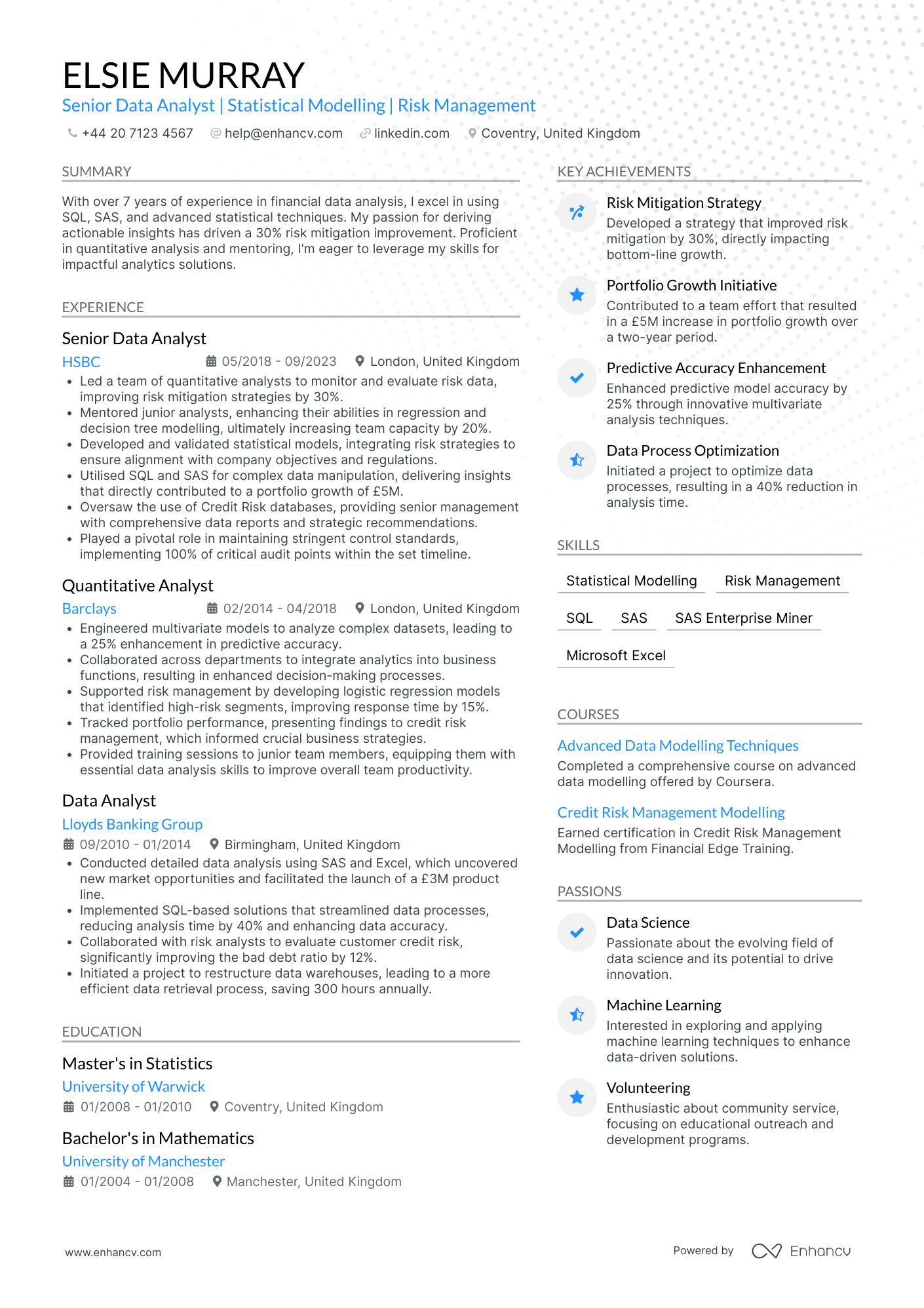
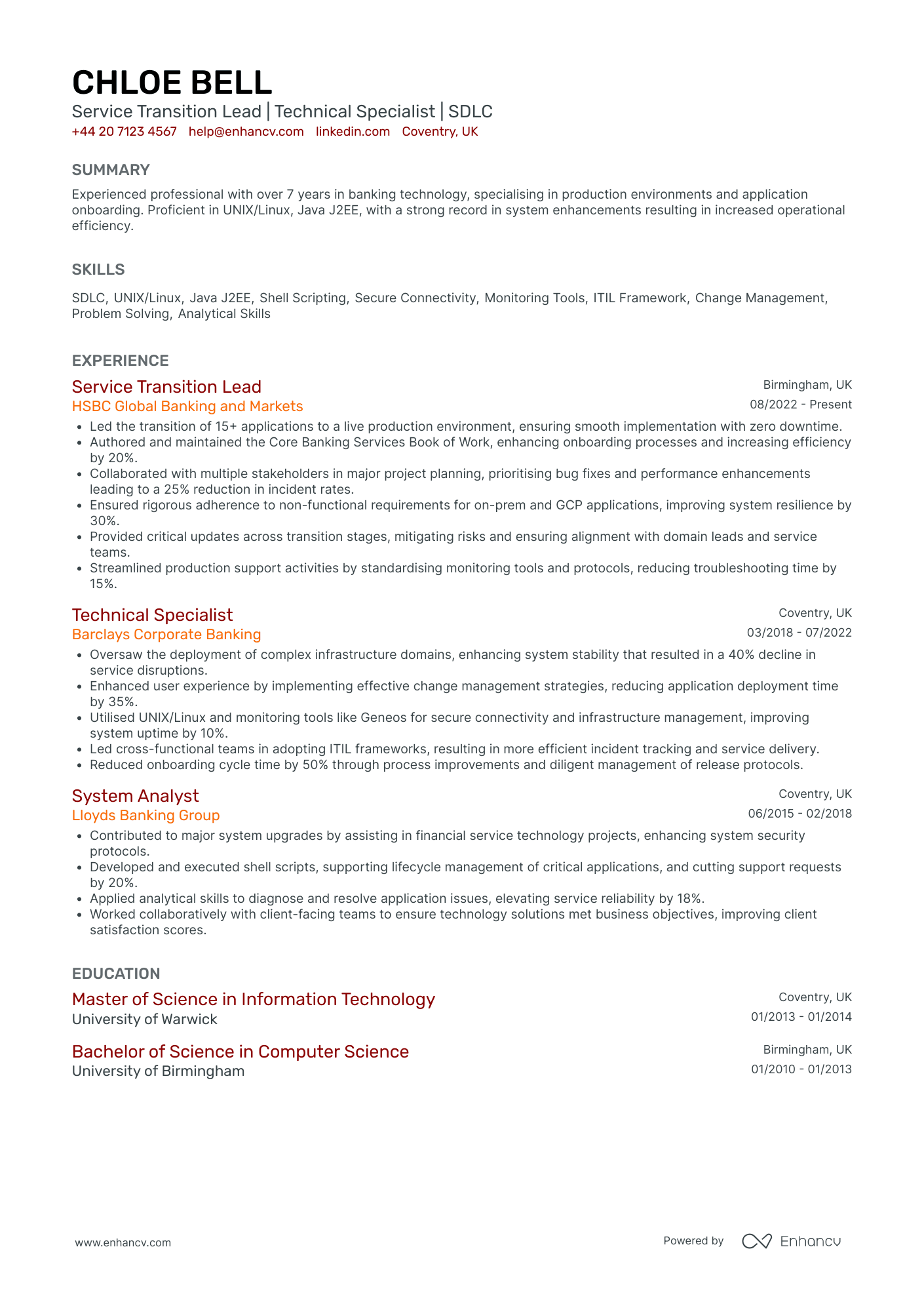
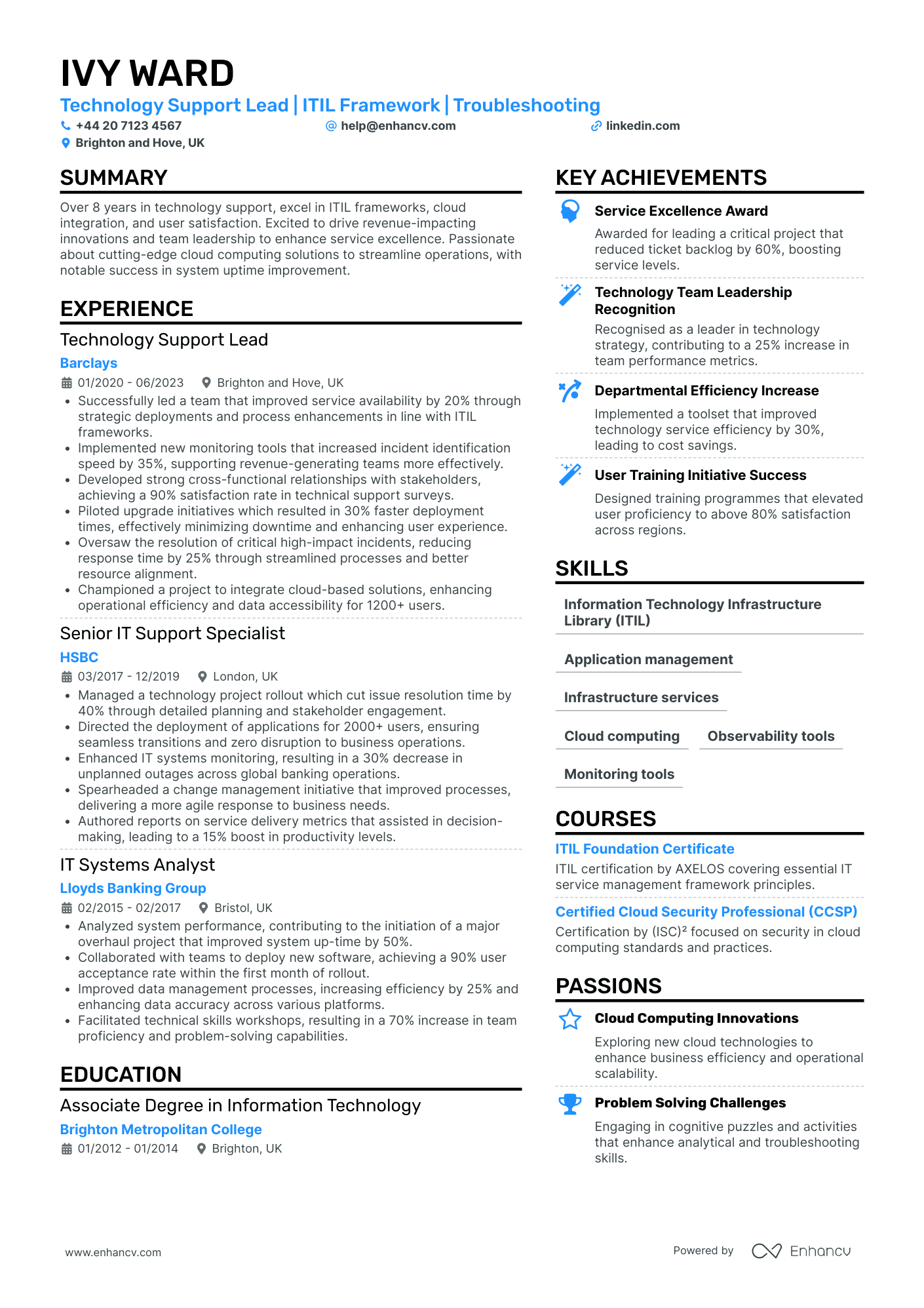
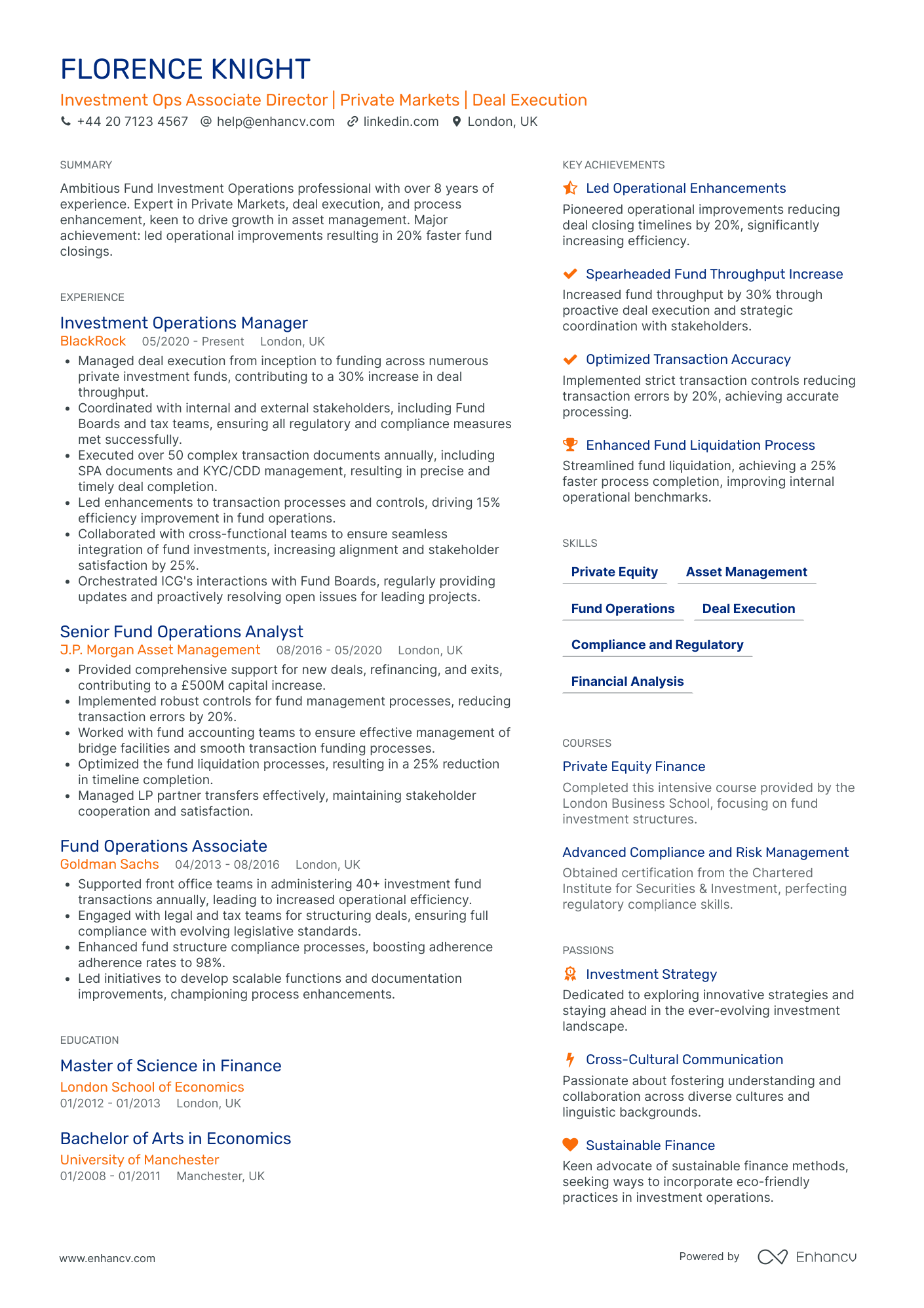
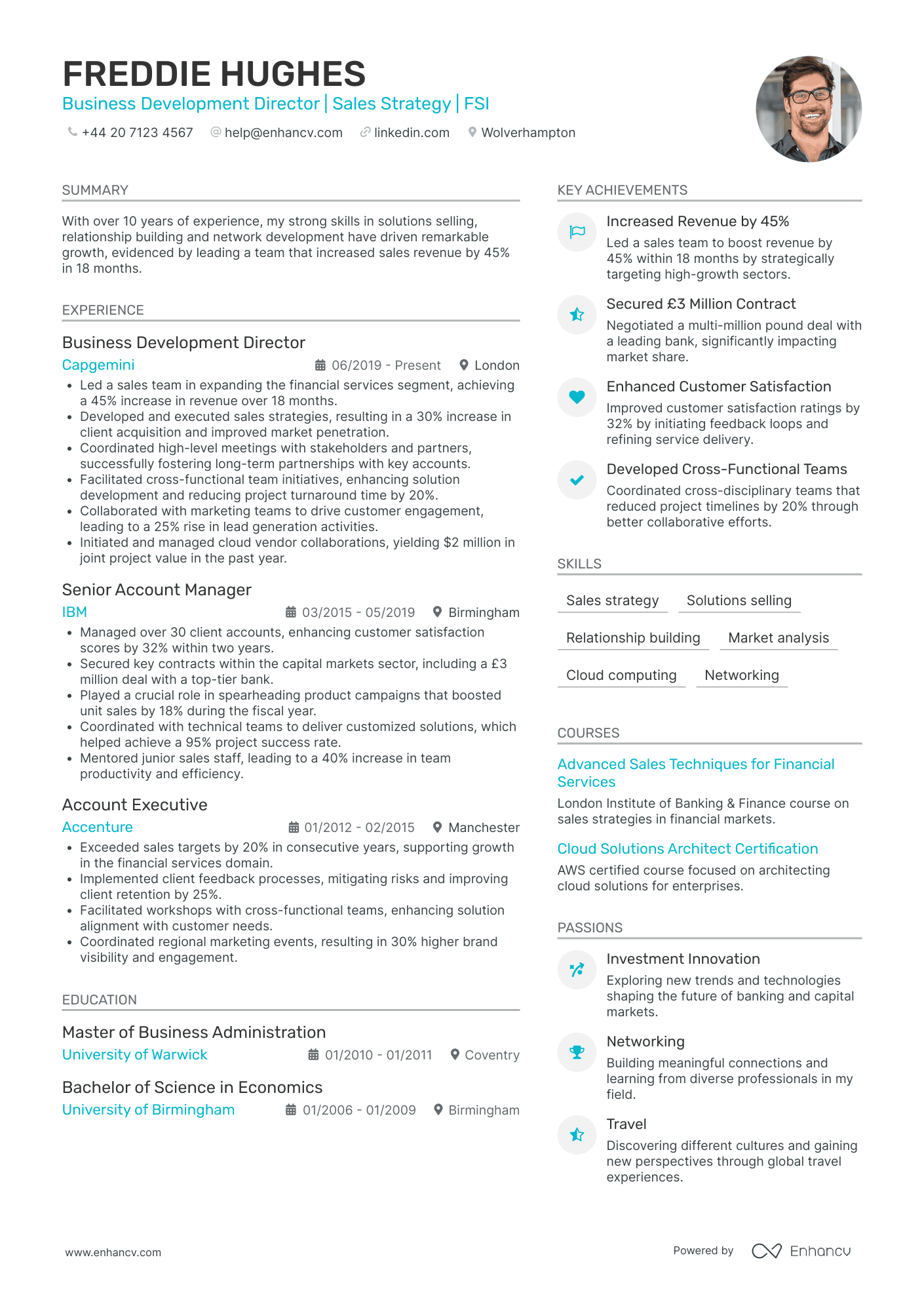
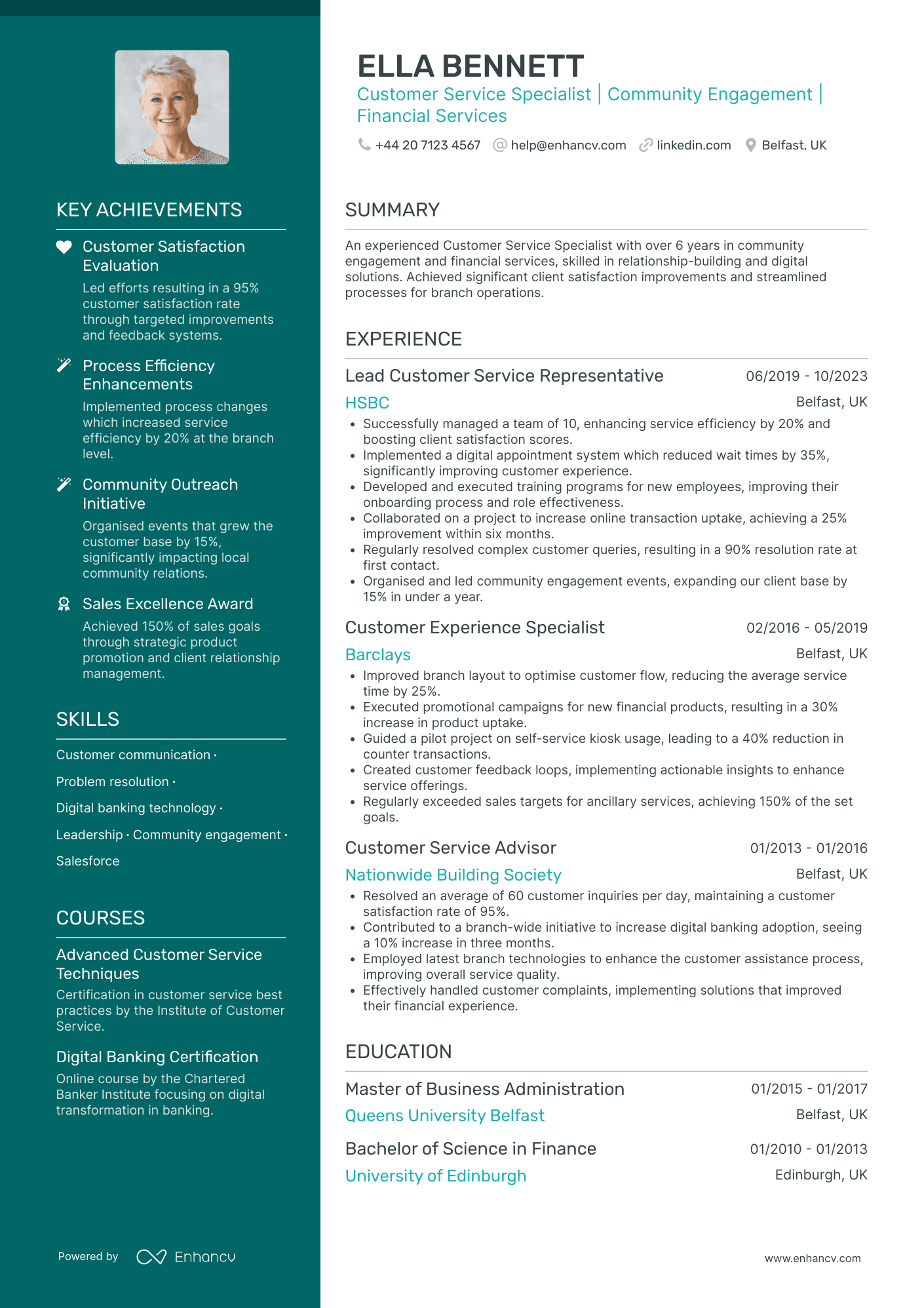
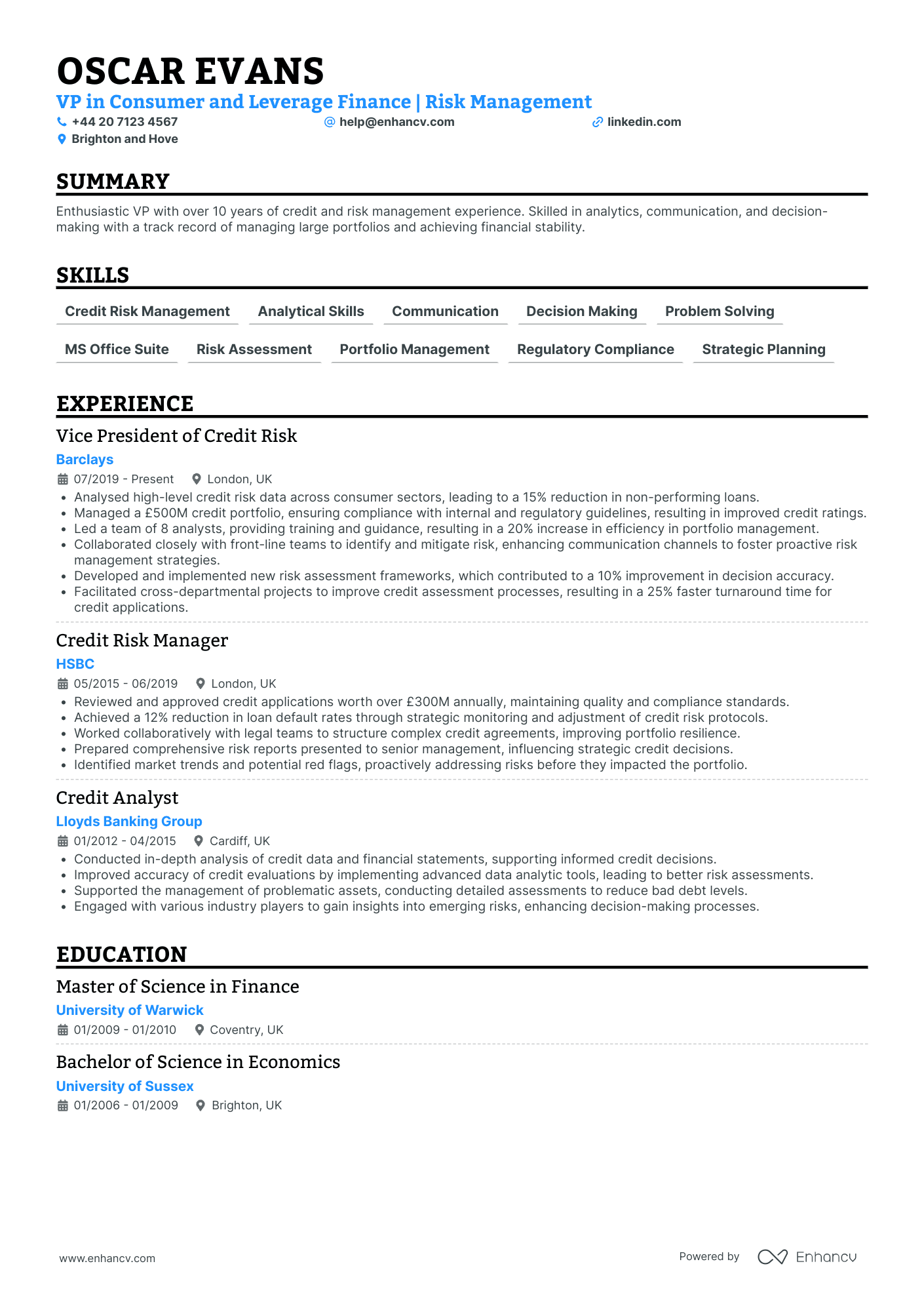
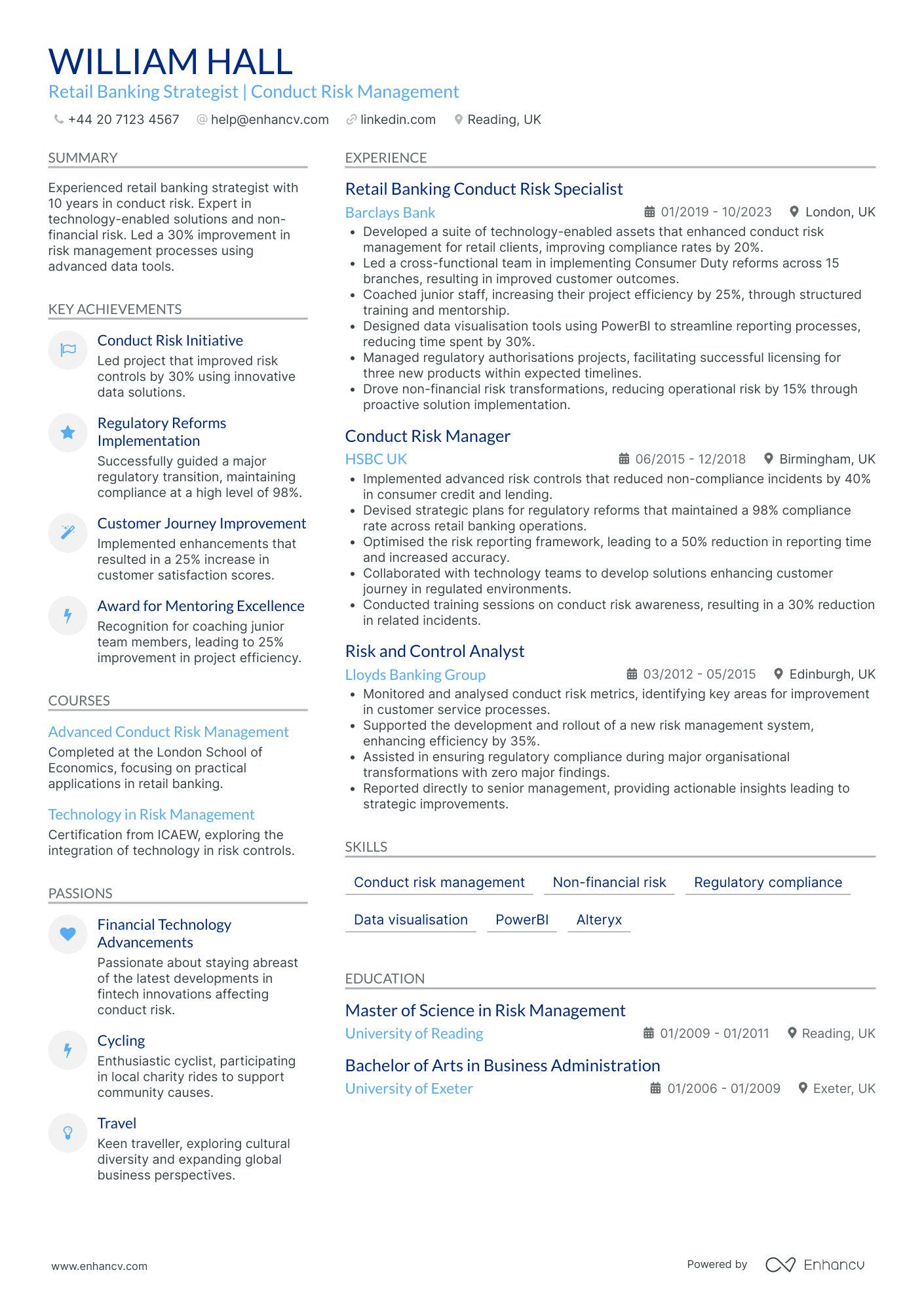
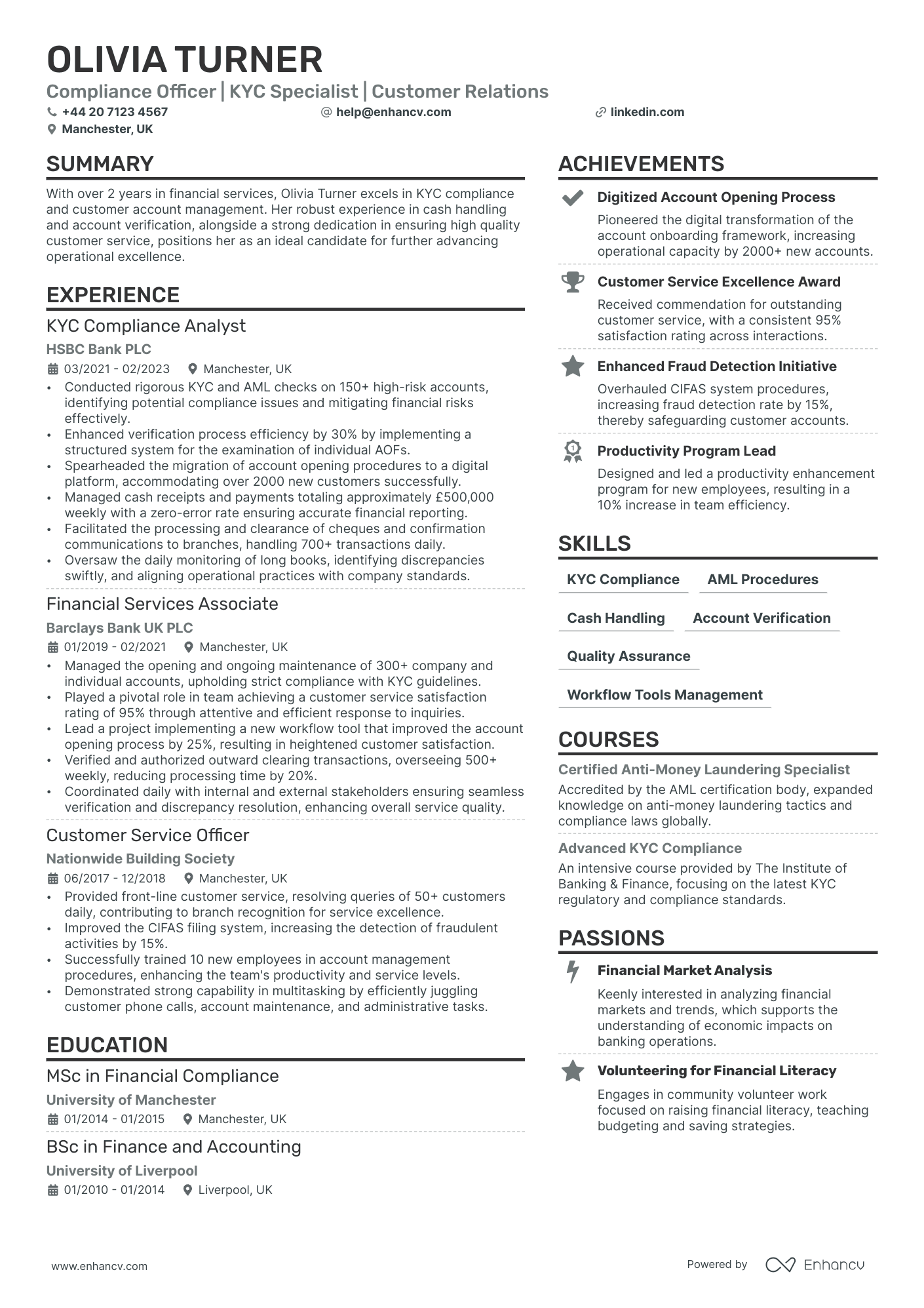
Most banking CVs read like the job advert copied out with a name added at the top. The ones that get shortlisted lead with numbers: money managed, risk reduced, deals closed, targets beaten.
Investment banking sharpens that rule to a point. An analyst screener spends seconds on each CV and looks for evidence you can handle a live deal and the hours around it. Retail, corporate, and commercial banking reward the same discipline, just with different numbers, and the fundamentals of how to write a CV apply to all of them.

Key takeaways
- Lead with quantified results: money managed, risk cut, deals closed, targets beaten. One real number beats a paragraph of adjectives.
- For investment banking, show deal exposure, financial modelling, and that you can work at pace under pressure.
- Banking is mostly on-site, so put your location near the top and make it easy to place you.
- Name the risk and compliance terms employers screen for: regulatory compliance, KYC, AML, and risk management.
- Two pages for an established career, one page for a graduate. Reverse chronological, sent as a PDF unless the advert asks for Word.
- List your degree classification and any banking qualifications (CFA, IMC, ACA, ACCA), even ones in progress.
Writing an investment banking CV
Investment banking is the hardest banking CV to get right, so start here even if you are aiming at another division. The bar it sets makes every other banking CV easier.
Front office recruiters in M&A, equity and debt capital markets, and leveraged finance screen for three things: a strong academic record, evidence of deal or transaction exposure, and proof you can work long hours without dropping the detail.
Lead with a short deal or project line where you have one. "Supported a £120m acquisition, building the operating model and comparable company analysis" tells a screener more than a paragraph about your interest in markets.
If you have not worked on live deals yet, the equivalents still count: a valuation project from a spring week, a stock pitch from an investment society, a modelling test you passed, a dissertation on a real transaction. Give each one a dated entry and a result.
Where you have real transaction exposure, group it into a short deal sheet near the top: the deal type, the sector, the approximate value, and what you personally built or ran. Three sharp deal lines outperform a full page of responsibilities, because they show a screener the exact work an analyst does.
Name the technical work in the language the desk uses: financial modelling, DCF and comparable company valuation, LBO models, three-statement models, due diligence, and pitch book preparation. A vague "financial analysis" reads as no analysis.
Not every banking CV is front office, and the strongest middle and back office CVs do not pretend to be. Risk, compliance, operations, product control, and technology roles reward precision over deal glamour, so foreground controls built, exceptions cleared, audits passed, and processes automated. Speak to the desk you actually want.
Target the division. An M&A CV should foreground modelling and deal process, while a markets CV should foreground products, risk, and commercial awareness. One generic banking CV sent to every desk beats none, but a tailored one beats both.
Keep a graduate investment banking CV to a single page. Recruiters expect it at analyst level, and a second page usually signals padding rather than substance.

PRO TIP
Investment banking screeners read the education section first, especially for analyst roles. Put your degree classification, university, and a strong A-level record near the top while you are early in your career. Move education below experience once you have two or more years on a desk.
What the UK banking market looks like
Knowing where the roles sit shapes what you put near the top of the CV. Here is what UK banking adverts actually ask for.
| What | UK banking roles |
|---|---|
| Where the work happens | On-site 66%, hybrid 33%, remote 1% (across 332 UK banking postings in the last ~30 days, Enhancv's internal job feed) |
| Experience level asked for | Entry 39% · lead 27% · mid 26% · senior and executive 8% |
| Most-listed skills | Customer service, risk management, stakeholder management, project management, Excel |
Two numbers should change your CV. Banking work is overwhelmingly on-site, so a recruiter needs to see where you are based and that you can get to the office, whether that is Canary Wharf, the City, or a regional hub. Put your location in the header.
And roughly four in ten postings are pitched at entry level, which is why a well-built graduate CV is realistic rather than wishful. Customer service, risk management, and stakeholder management are the skills that recur most often in UK banking postings, so mirror the ones you can prove.
The mix also tells you the field is broad. Only a slice of these roles are front office investment banking, and the rest sit across retail, business, and corporate banking, plus risk, operations, and compliance. Read each advert for its own division rather than assuming every banking role wants the same CV.
Top skills for your banking CV
The banking job feed is clear on what recurs. Customer service, risk management, and stakeholder management show up most often in UK banking postings, followed by project management, Excel, and regulatory compliance. Those are your hard skills, listed in the words the adverts use.
Investment banking narrows the list. Financial modelling, valuation, and advanced Excel do the heavy lifting, with PowerPoint for pitch books close behind. Build the skills section of a CV against the division you are targeting rather than a generic banking blur.
The soft skills that matter in banking are checkable ones: communication with clients and stakeholders, attention to detail under time pressure, and commercial awareness. Prove each in a bullet rather than claiming it in a list.
The difference is concrete. "Excellent communication skills" is a claim a screener ignores, while "presented the weekly risk position to the desk head and three portfolio managers" is the same skill with evidence attached. List only what you can stand behind, and keep anything you are still learning under training rather than skills.
Top skills for your banking CV:
Financial modelling
Valuation (DCF and comparables)
Advanced Excel
Risk management
Regulatory compliance (KYC, AML)
Financial analysis
PowerPoint and pitch decks
Data and reporting
Stakeholder management
Communication
Attention to detail
Commercial awareness
Working under pressure
Teamwork
Formatting your banking CV
Use a reverse chronological structure for most banking roles, with your most recent role first. It is what recruiters and screening software expect.
Keep an experienced banking CV to two pages and a graduate one to a single page. Bankers skim, so use clear headings, a readable font, and plenty of white space. The CV format should never fight the content.
Send a PDF for direct applications so the layout holds, and keep a Word copy for recruitment agencies that reformat CVs into their own template. If the advert names a file type, follow it.
Keep the header conservative. Your name, phone number, a professional email address, city, and a LinkedIn URL are enough. UK banking CVs do not carry a photo, a date of birth, or a marital status, and adding them dates the CV instantly.
Banking applications almost always pass through screening software, so keep the layout clean and the headings standard for an ATS-friendly CV. Avoid tables, text boxes, and columns for the core content, since these are the elements that parse badly. Build it from a tested layout rather than a blank page: Enhancv's CV templates export to a PDF that parses cleanly.
Writing your banking personal statement
Three or four sentences at the top: who you are, your strongest quantified result, the division you are targeting, and why this employer. See more CV personal statement examples if the opening line is stuck.
Skip the adjective soup. "Motivated, hard-working, and passionate about finance" tells a recruiter nothing they can check.
For an experienced banker, the statement should read differently: your years in the sector, the products or clients you know, one headline result, and the move you are making next. The graduate version leans on academics and projects, while the experienced version leans on track record, but both live or die on a single concrete proof point.
Lead with evidence:
Investment banking CV personal statement example
Penultimate-year economics undergraduate on track for a First, with spring week experience at a bulge bracket bank and a stock pitch that won a university investment competition. Built three-statement and DCF models for a mock M&A mandate and a live equity pitch. Looking to bring strong modelling, commercial awareness, and a high tolerance for detail to a summer analyst role in M&A.
Now the version that gets deleted:
What to avoid
A motivated and passionate finance graduate seeking a challenging and rewarding role in a dynamic banking environment where I can utilise my skills, grow professionally, and add value to a forward-thinking organisation.
When I read a banking personal statement, I skip the adjectives and look for one number and one specific thing you actually did. A line like "built the operating model for a £120m acquisition" or "cut reconciliation errors by a third across a £40m portfolio" tells me you understand the work. Save the ambition for the interview and spend the four sentences on proof.
The Enhancv team
Writing your banking experience section
Write every entry the same way: a dated heading, then bullets that open with a verb and close with a result. For the mechanics, see work experience on a CV.
Banking is one of the easier fields to quantify, so use that. Money managed, risk reduced, deals closed, clients retained, errors cut, hours saved. Those numbers are your CV achievements, and they carry more weight than any responsibility list.
Watch the gap between a duty and an achievement. "Responsible for month-end reconciliations" describes a task, while "cleared a 200-item reconciliation backlog and cut month-end close by two days" describes a result. Every bullet should aim for the second version.
Use the strong verbs banking recruiters respond to (built, modelled, structured, hedged, reconciled, advised, reduced) and put the number at the end so it lands. If a bullet has no number, ask whether it belongs on the CV at all.
Tailor each application by pulling the terms from the advert and mirroring the ones that are true of you. Enhancv's CV tailoring feature reads the job ad and suggests the matching edits, which saves rewriting from scratch for every desk.
- Manage a portfolio of 18 mid-market clients worth £240m in lending, retaining every account through two refinancing cycles
- Build financial models and credit papers for new facilities, supporting £85m of approved lending in the last year
- Cut month-end reporting time by 30% by rebuilding the portfolio dashboard in Excel
- Partner with risk and compliance on KYC and AML reviews, clearing a backlog of 40 cases ahead of a regulatory deadline
PRO TIP
Banking adverts list specifics, not soft-skill clouds. Mirror the exact terms you can back: "financial modelling", "credit analysis", "KYC", "AML", "regulatory compliance", and "stakeholder management". If you have done it, name it the way the advert does.
Qualifications and certifications for a banking CV
Banking still screens hard on academics, especially early on. Put your degree, classification, and university in the education section, and add strong A-levels while you are within a few years of graduating.
Professional qualifications signal commitment and, in some roles, are expected. The CFA (or Level I passed), the CISI Investment Management Certificate (IMC), and the ACA or ACCA all belong on the CV where you hold them, even at "in progress". Listing certificates on a CV saves the employer a question.
Regulated roles add their own requirements. Anything covered by the Senior Managers and Certification Regime, or a role needing FCA approval, should show the relevant status clearly, and mortgage or advice roles often expect a specific qualification such as CeMAP. Name the ones the advert asks for.
Only claim what you can evidence. A qualification in progress is fine, but a claimed pass you cannot back is the fastest way off the shortlist. If you are still deciding what counts, this guide to qualifications on a CV covers the ranking.
Breaking into banking with little experience
Around four in ten UK banking postings are entry level, so a thin work history is normal rather than fatal. Lead with a skills-based structure: personal statement, then skills, projects, and education, with any part-time work lower down.
Mine your record for banking-relevant evidence. A spring week or internship, a finance or investment society, a modelling course, a dissertation on a real company, a numbers-heavy part-time job. Each shows something a desk cares about.
Write those like roles, with dates and results. A stock pitch that beat a benchmark or a society you grew to 60 members is first-job CV material, not filler.
Timing matters as much as content in graduate banking. Spring weeks open in the autumn of your first or second year, summer internships convert to graduate offers, and most full-time analyst places are filled from that intern pool. A CV that names the specific programme and intake shows you understand the pipeline.
One line lifts a graduate CV: a target division and why. "Targeting a summer analyst role in leveraged finance" tells a recruiter you have done the homework most applicants skip.
Conclusion
Lead with quantified results, name the technical and compliance work in the desk's own language, and match the CV to the division you want.
Pair it with a short cover letter that says why this bank and why now, and a strong banking CV turns a seconds-long screen into an interview.

Author's take - the Enhancv team
When I read a banking personal statement, I skip the adjectives and look for one number and one specific thing you actually did. A line like "built the operating model for a £120m acquisition" or "cut reconciliation errors by a third across a £40m portfolio" tells me you understand the work. Save the ambition for the interview and spend the four sentences on proof.