



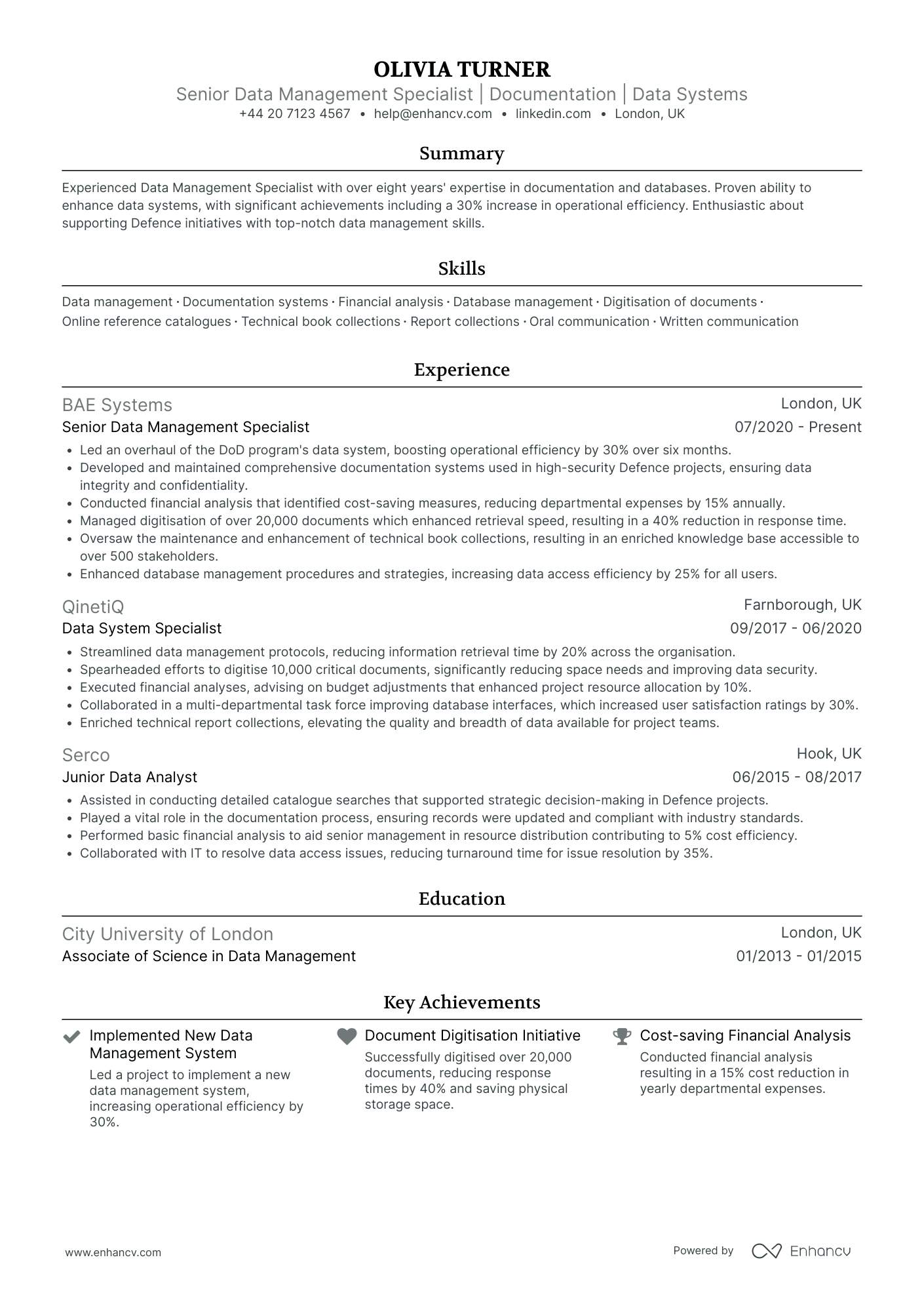
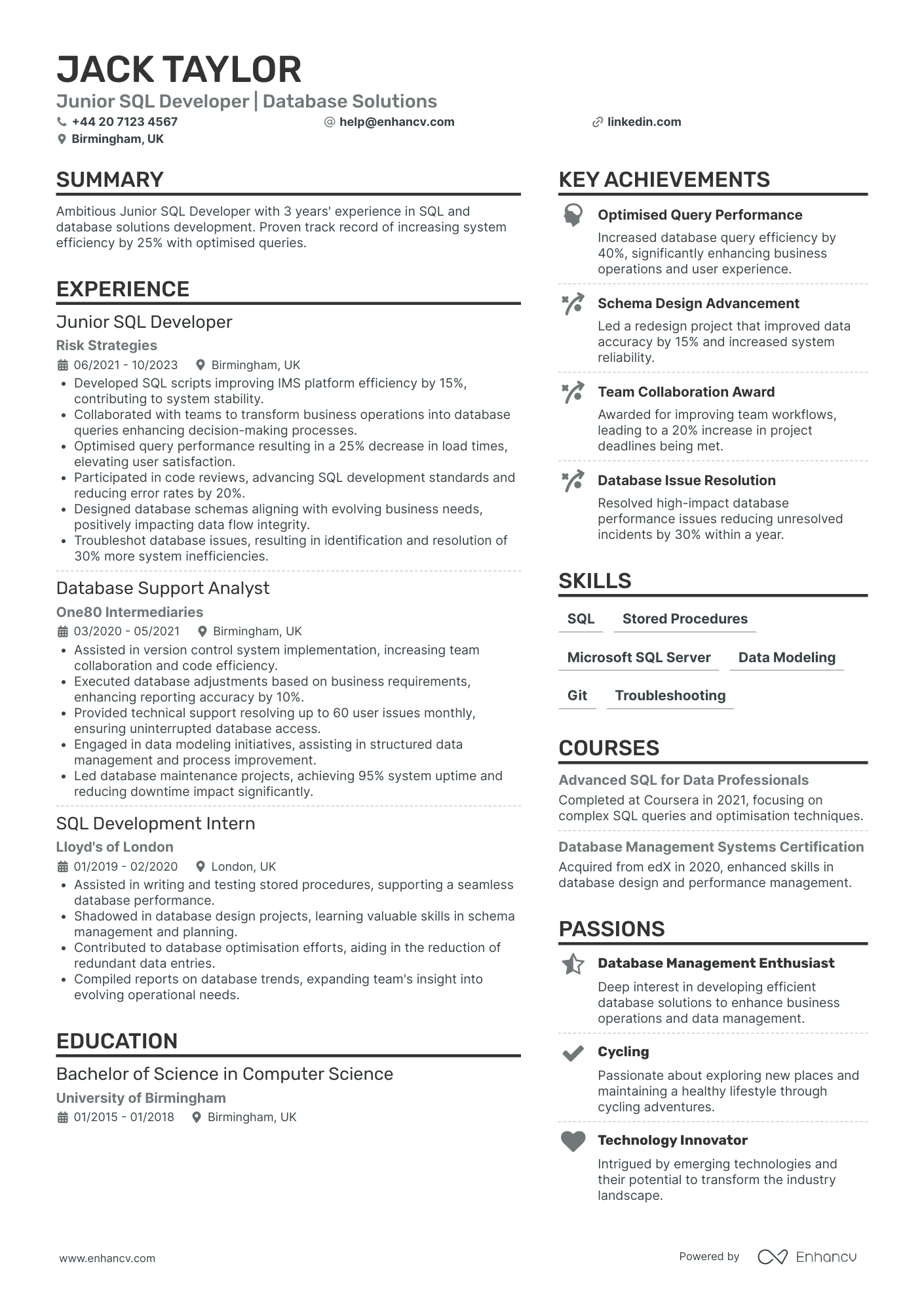
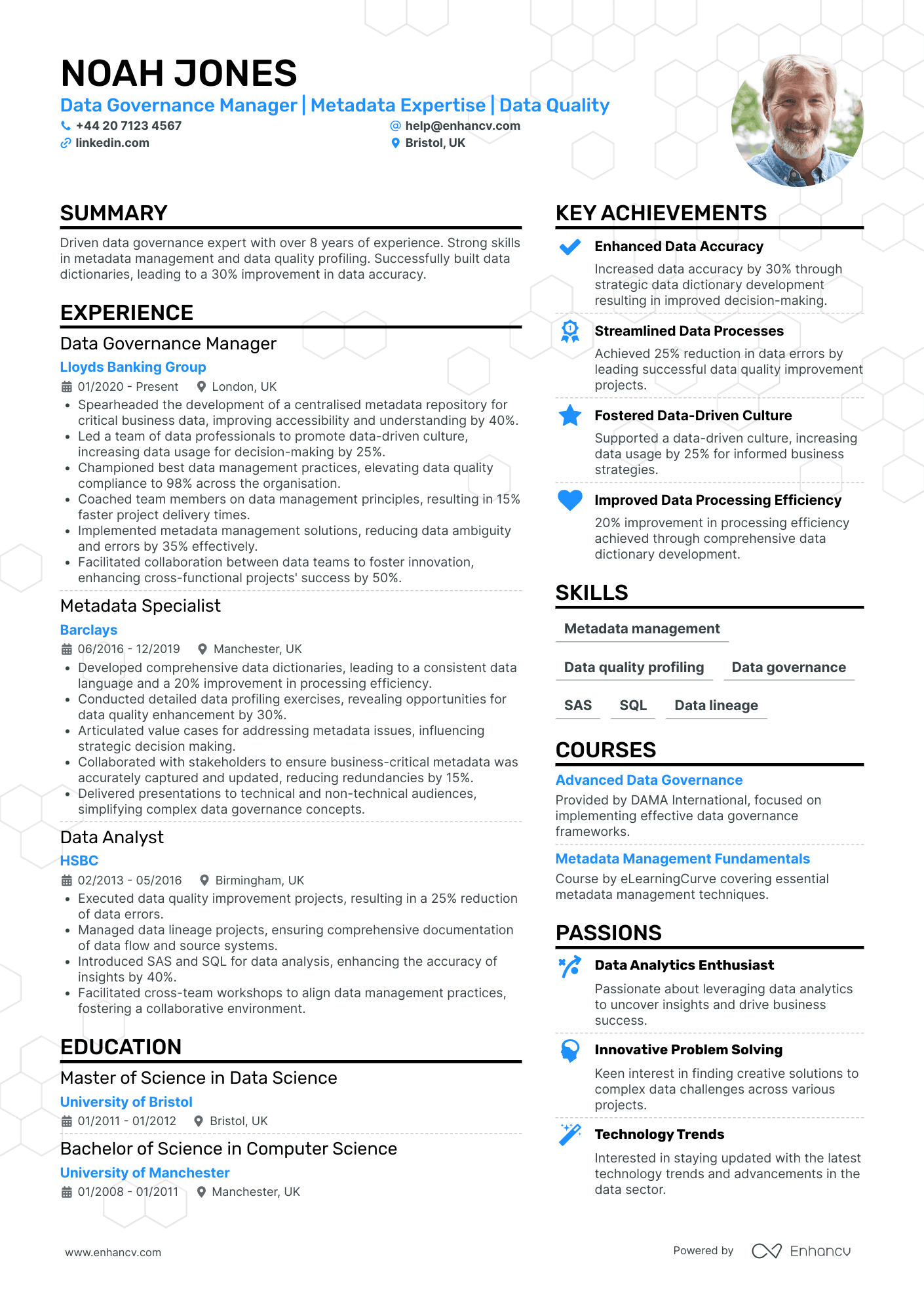
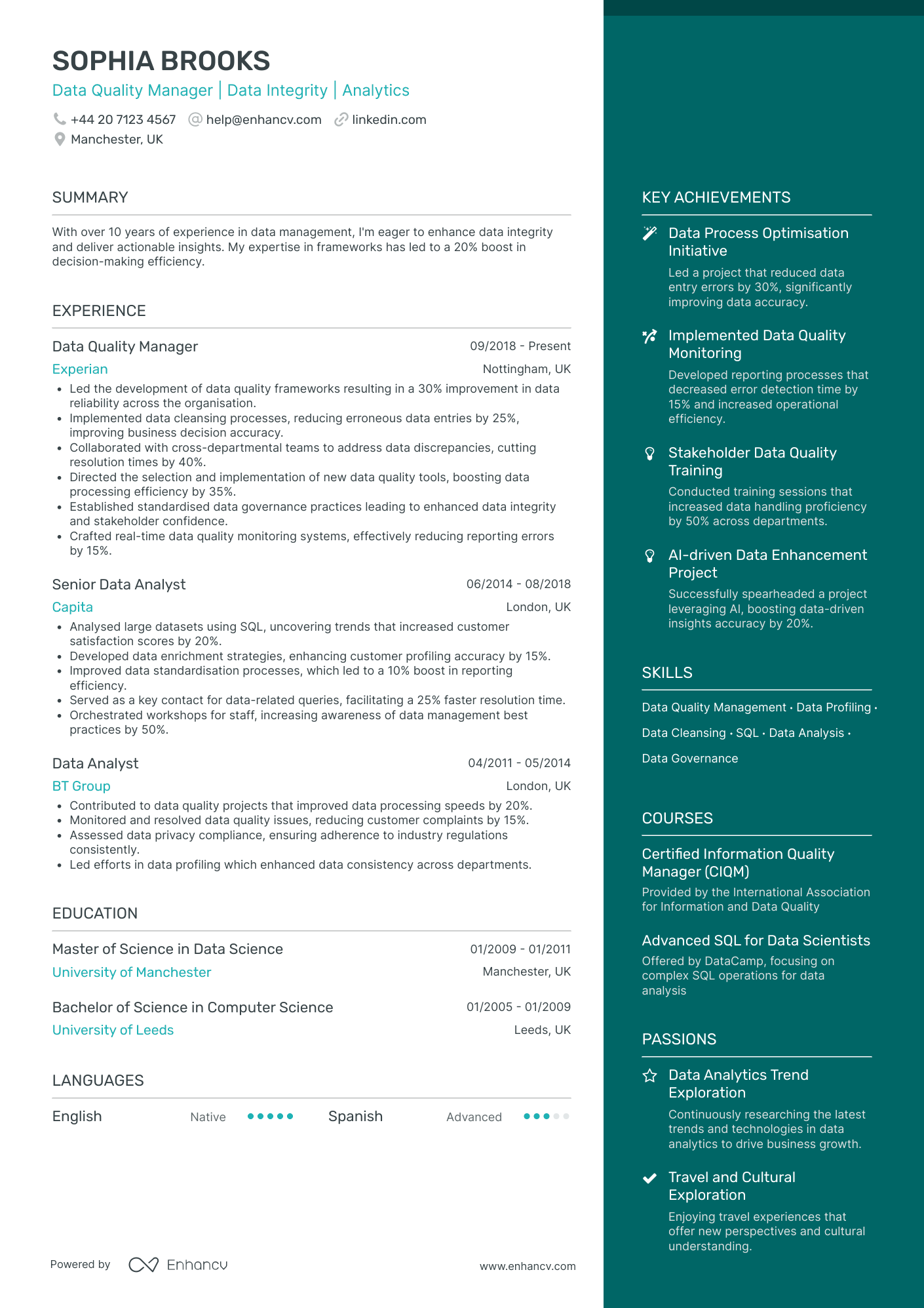
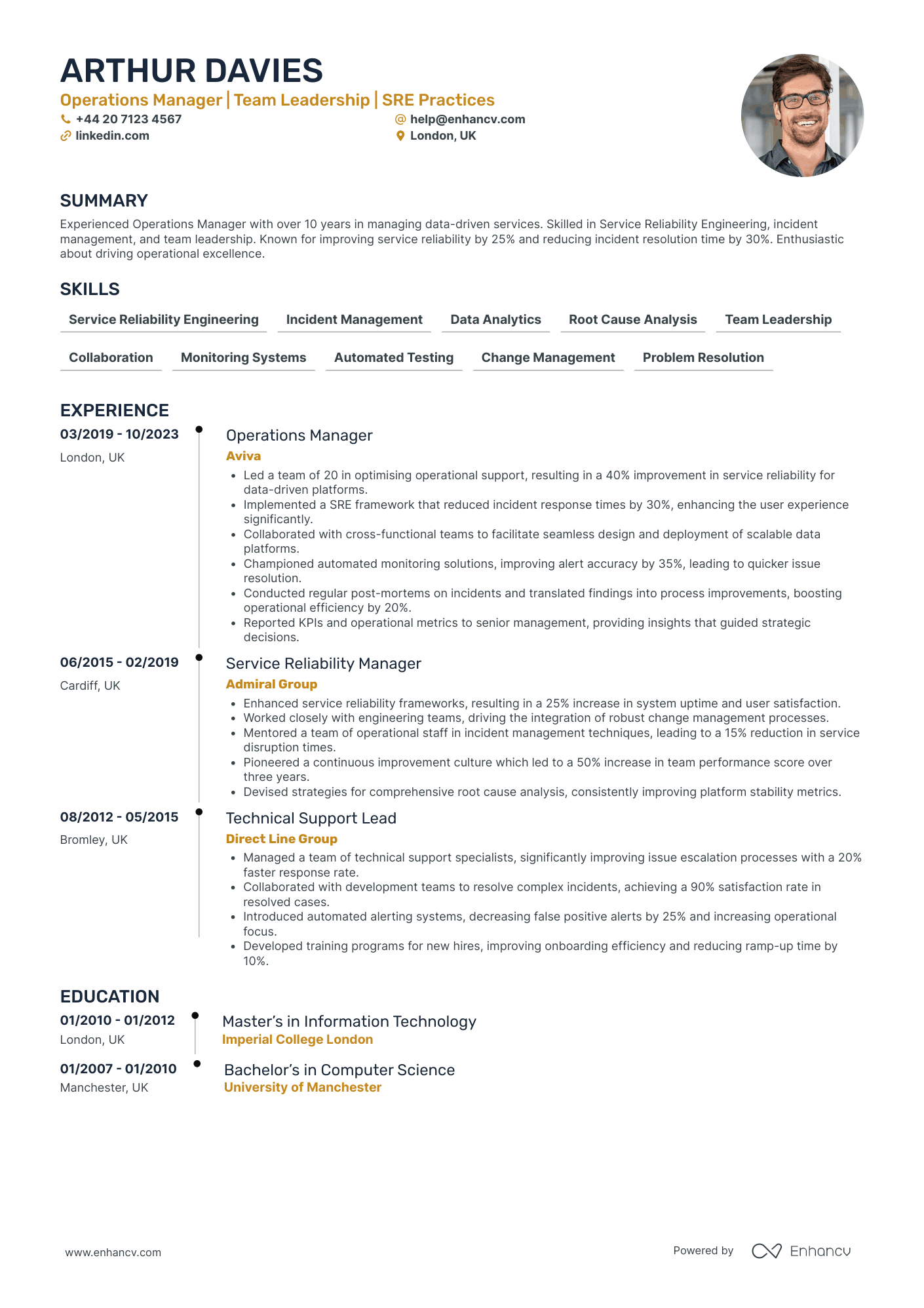
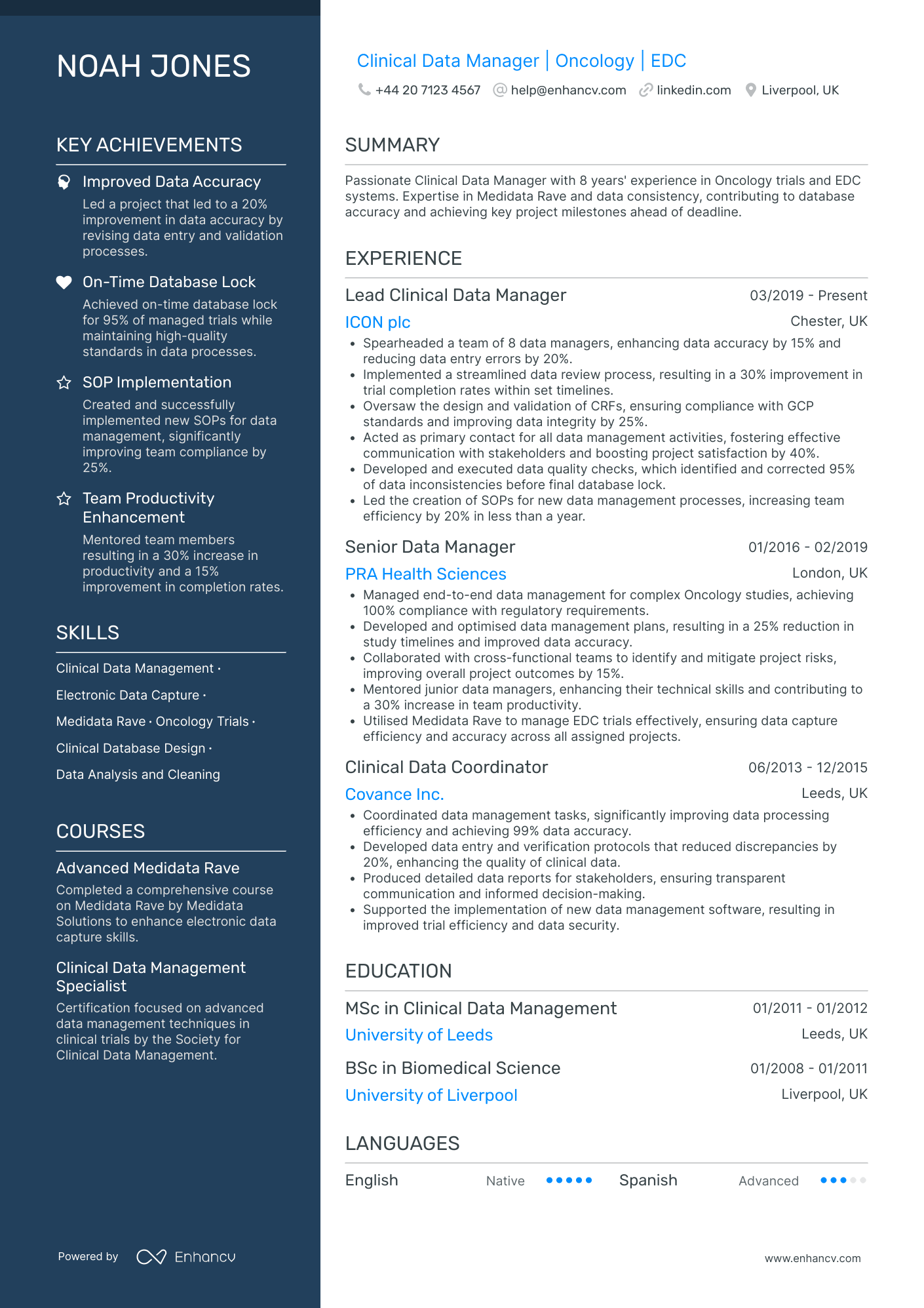
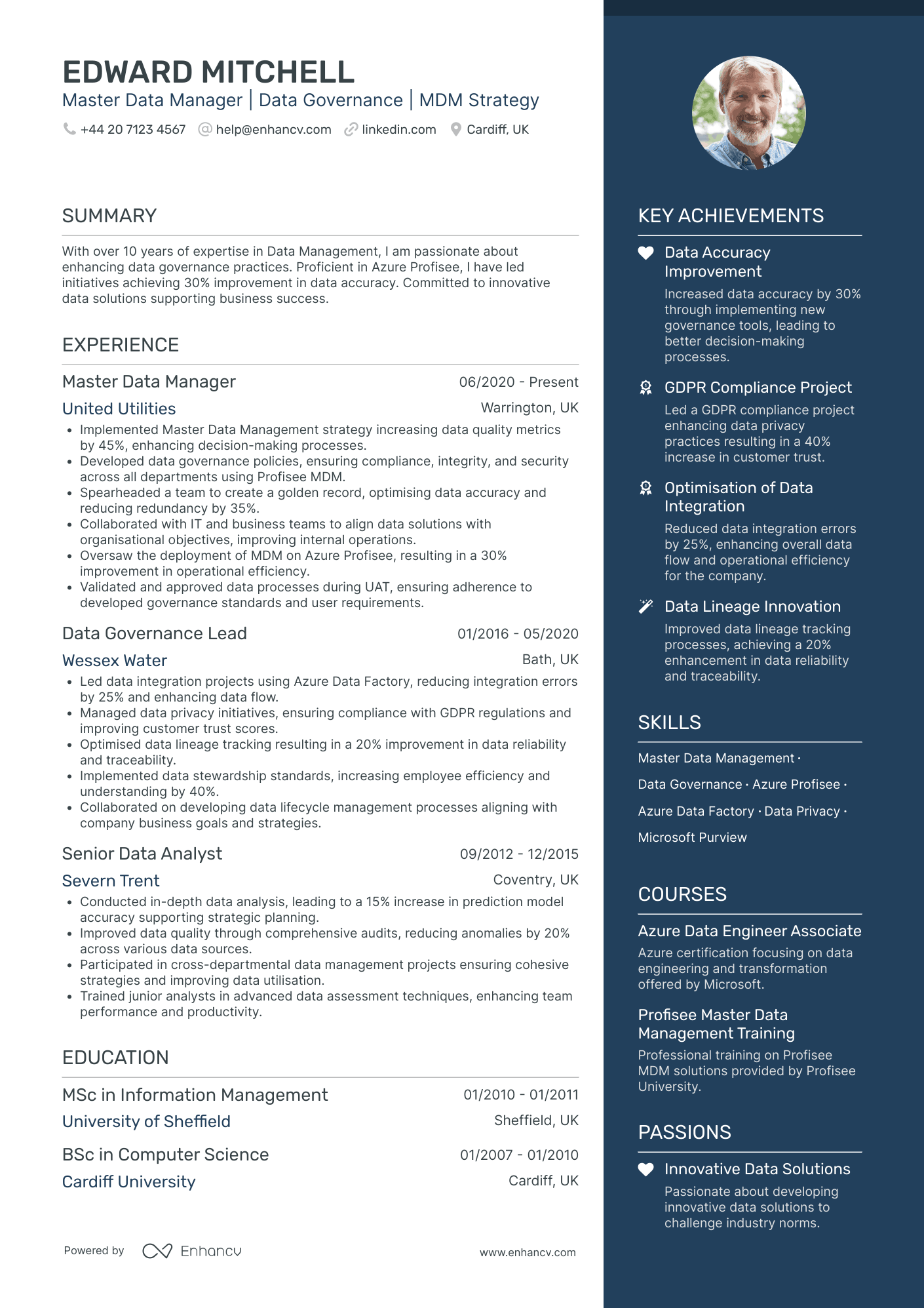
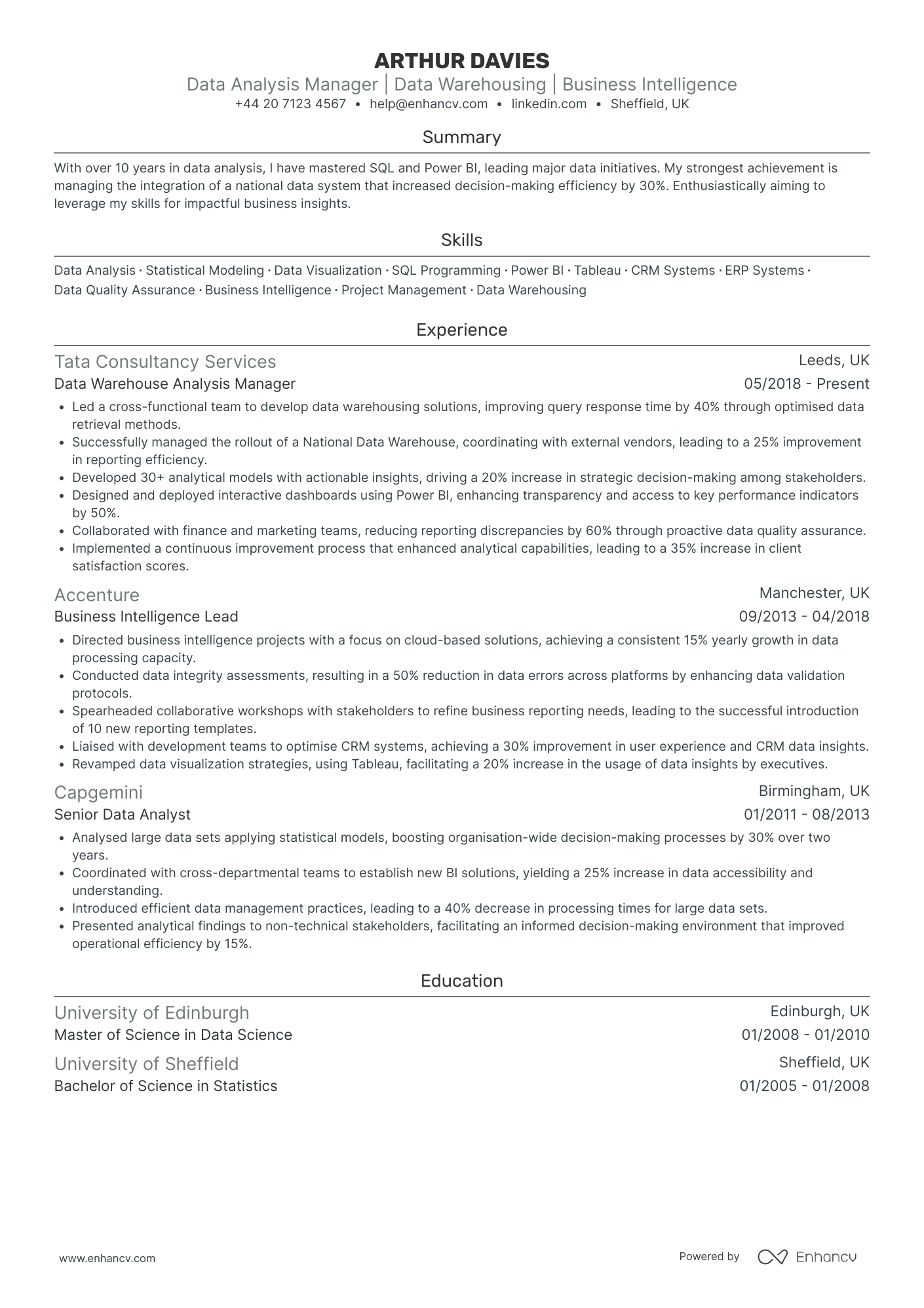
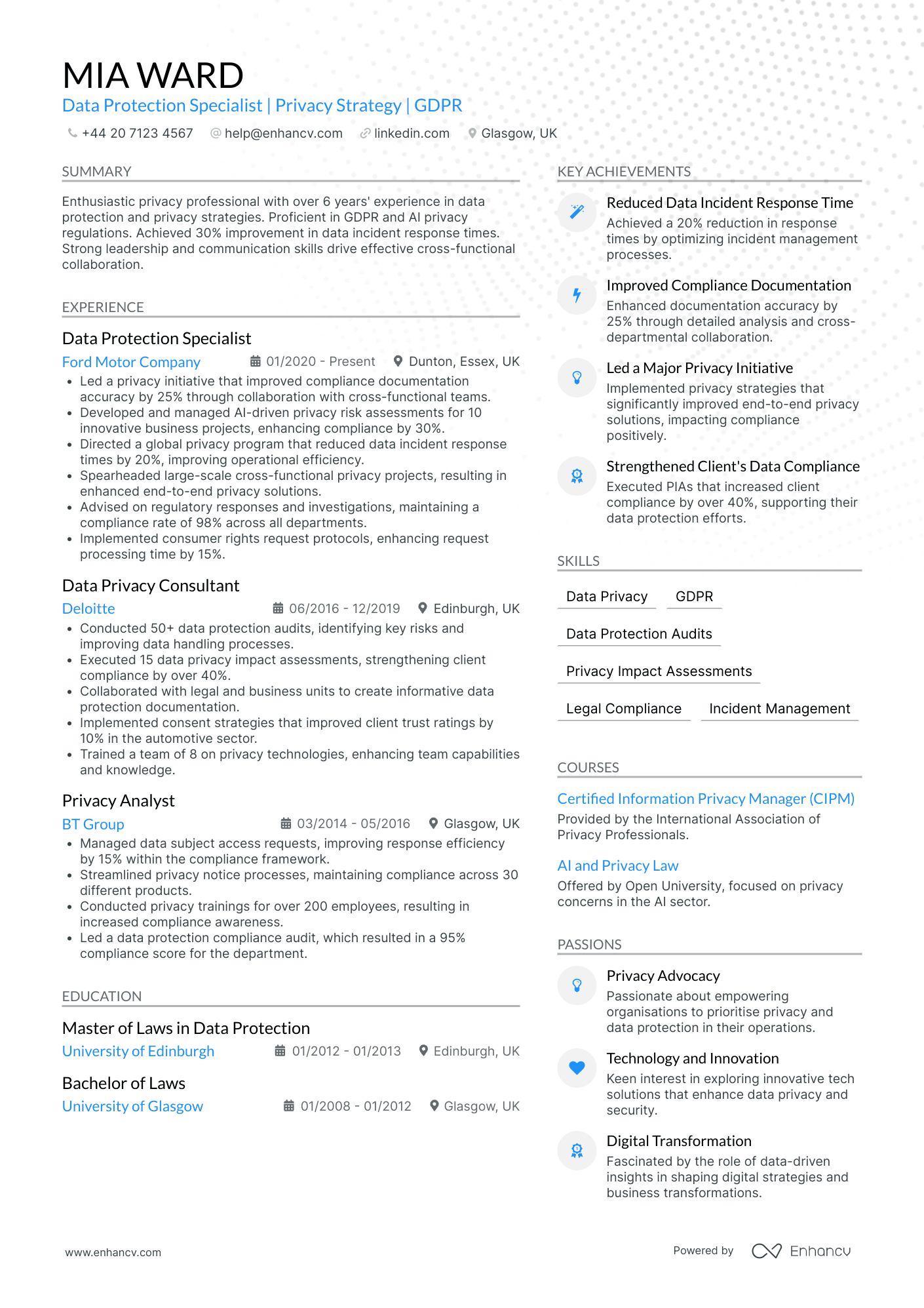
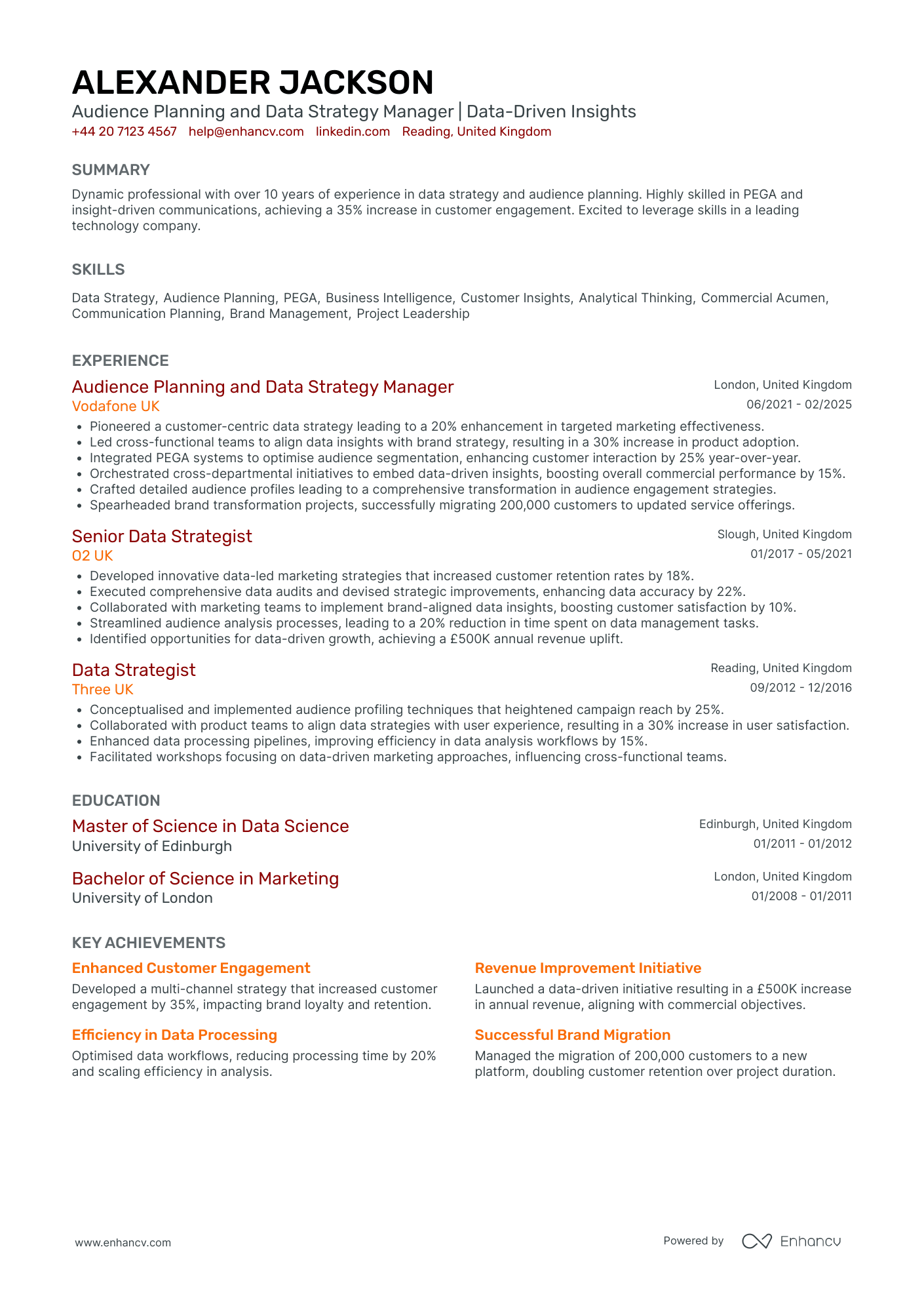
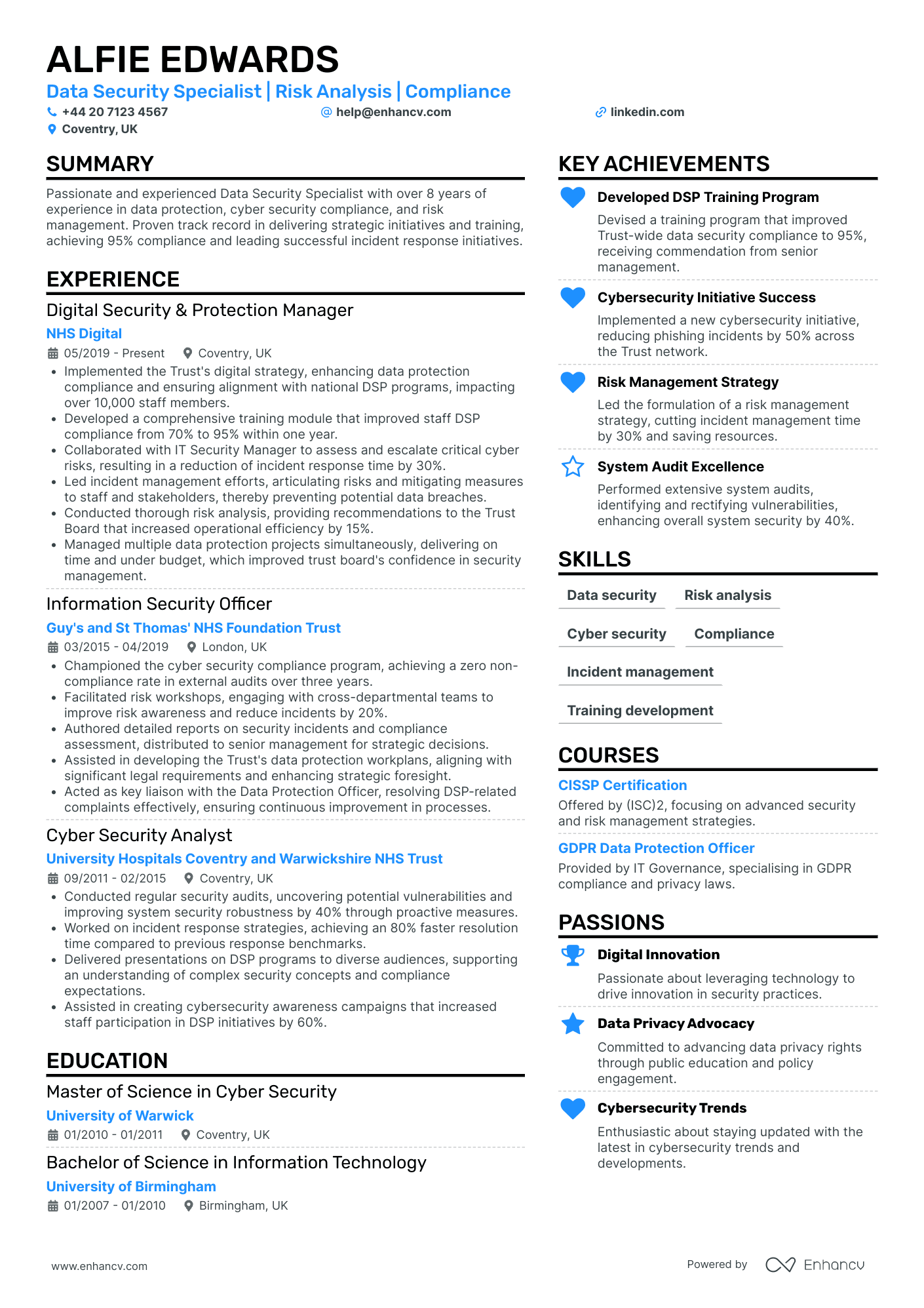
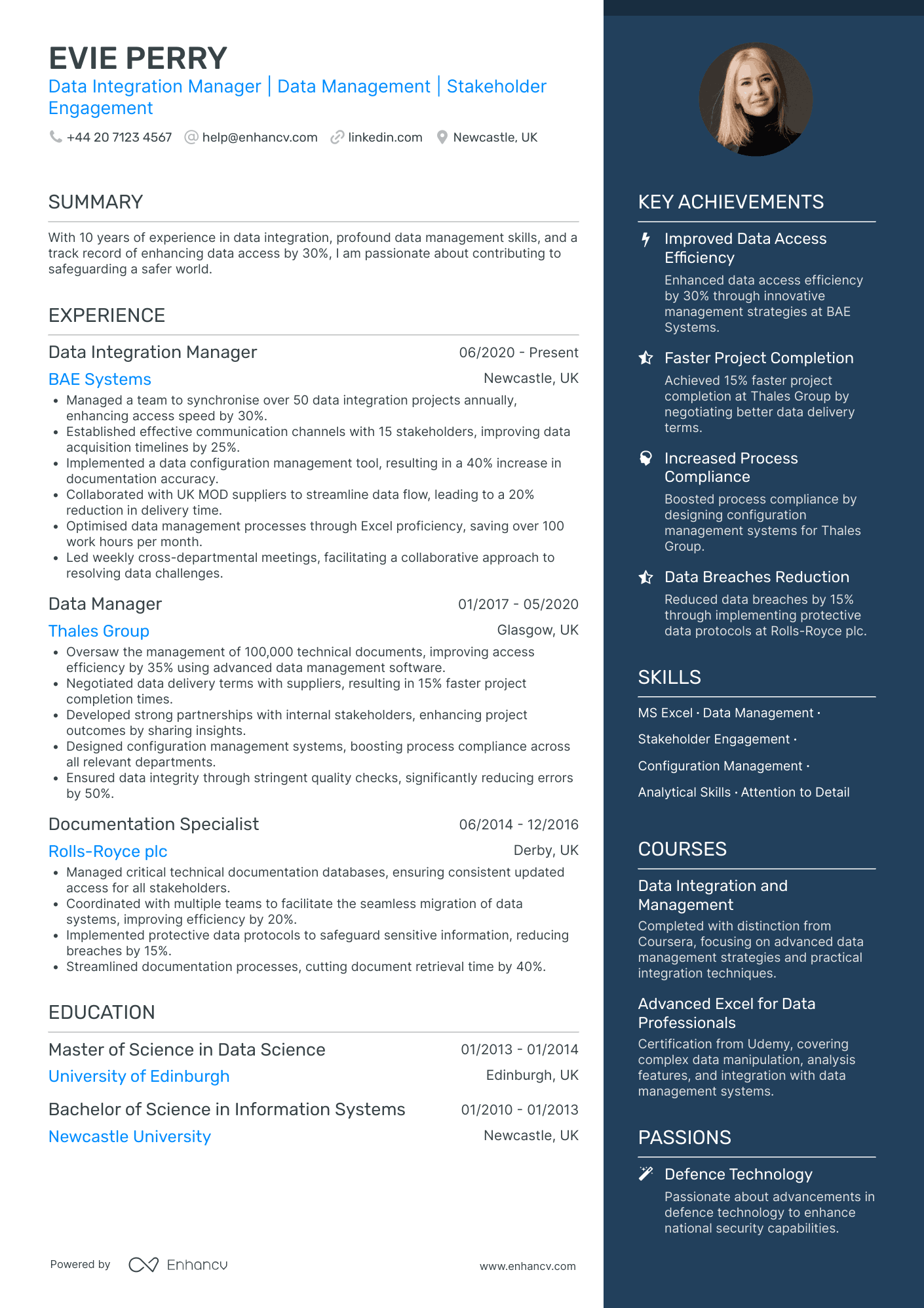
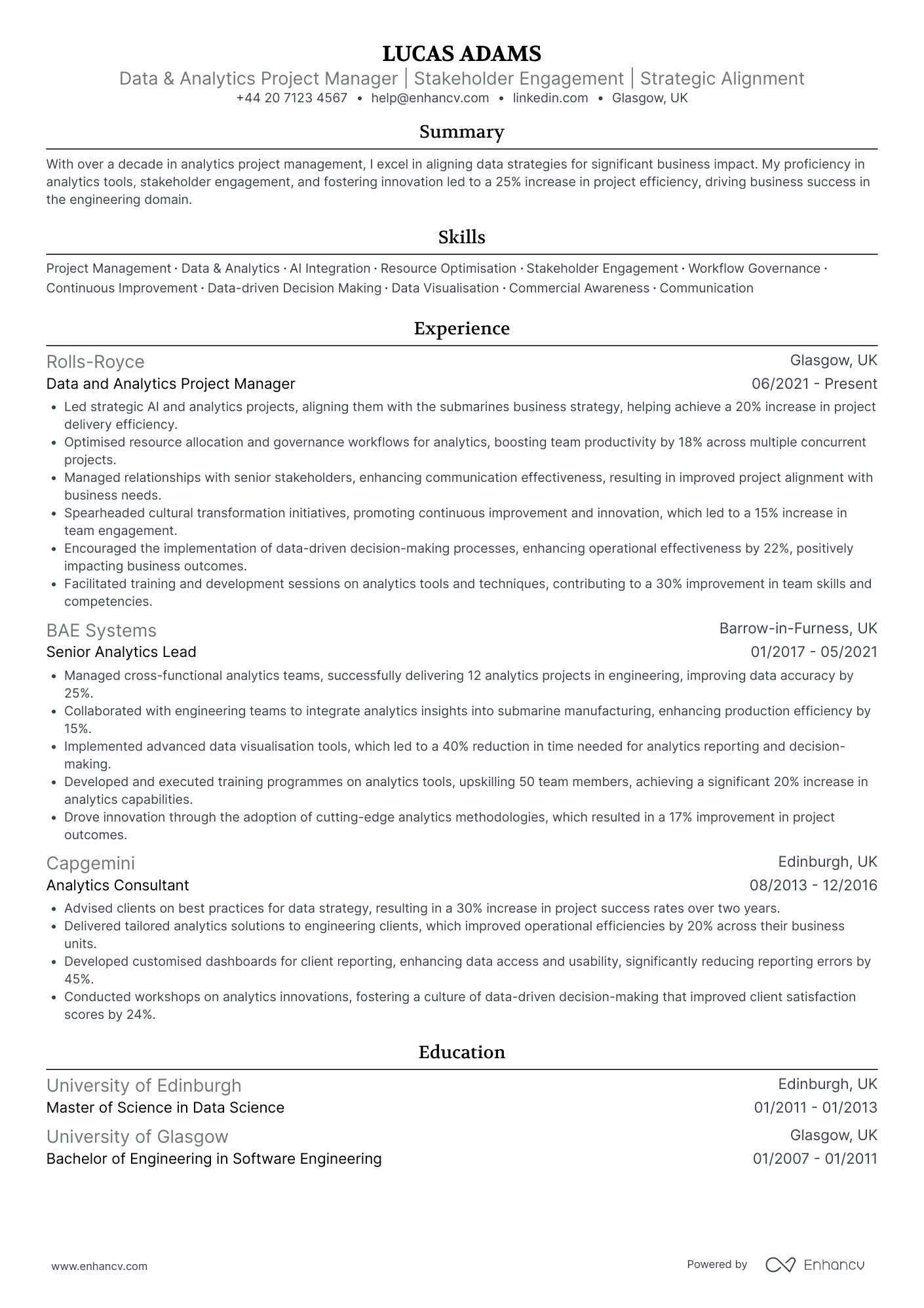
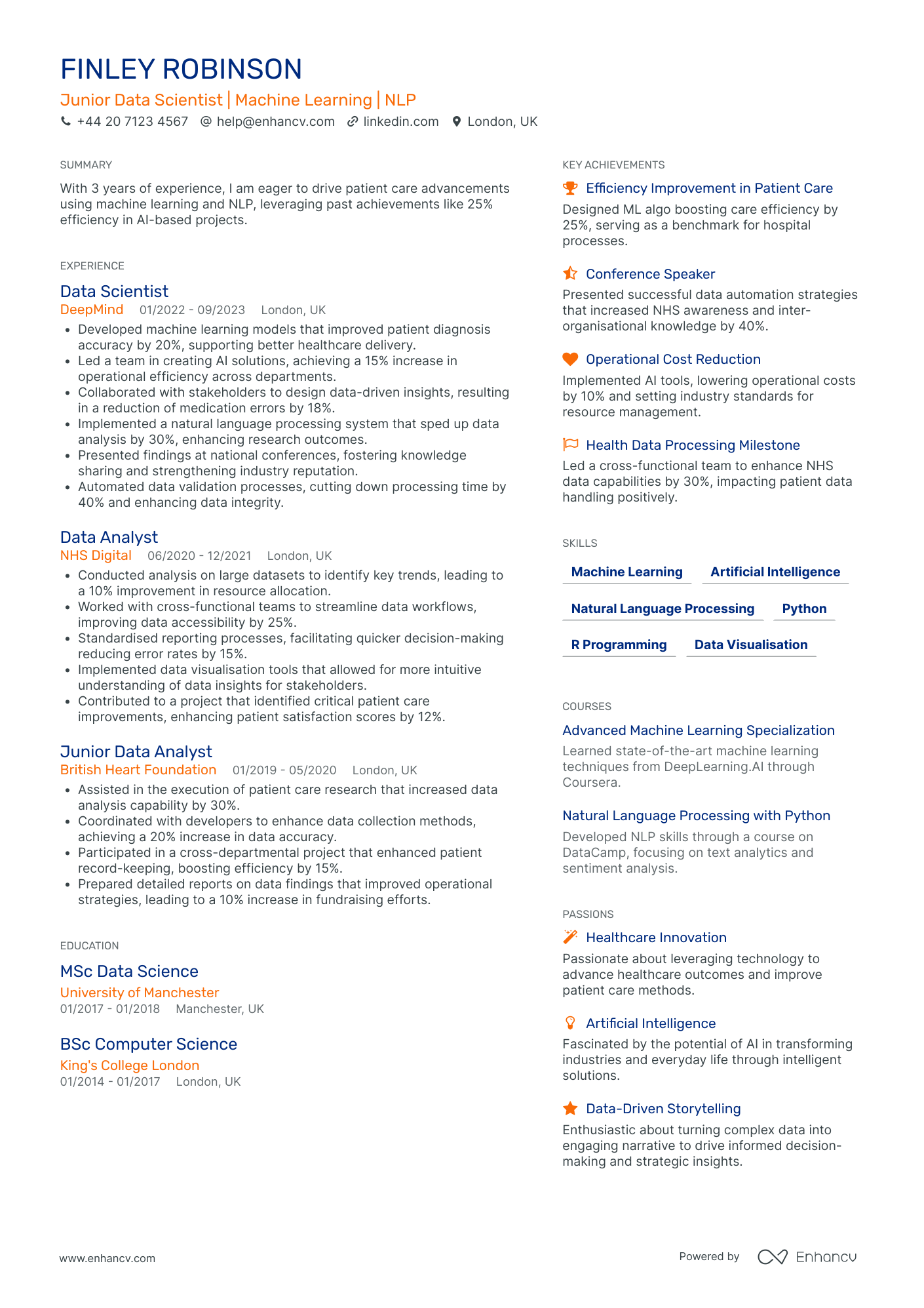
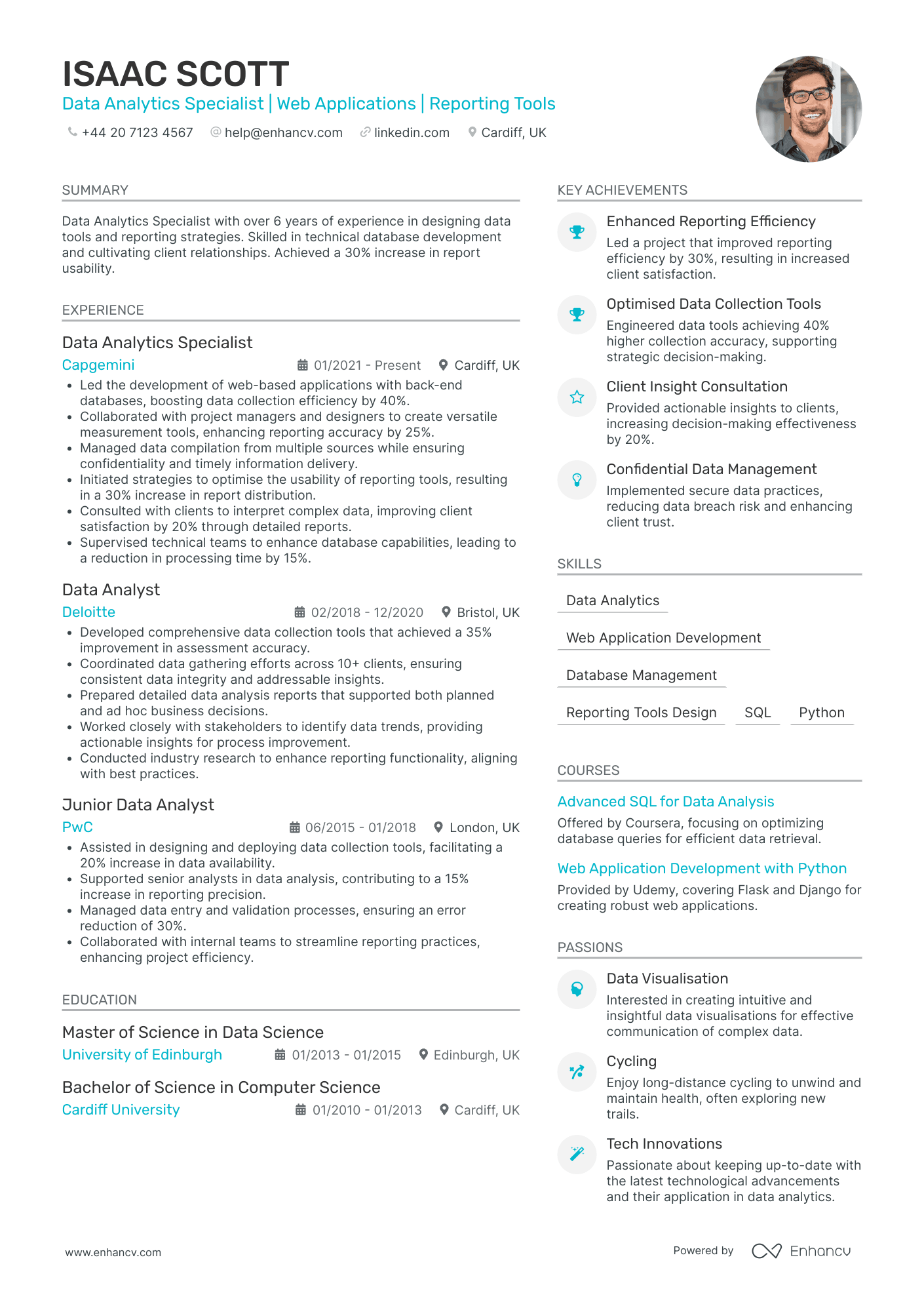
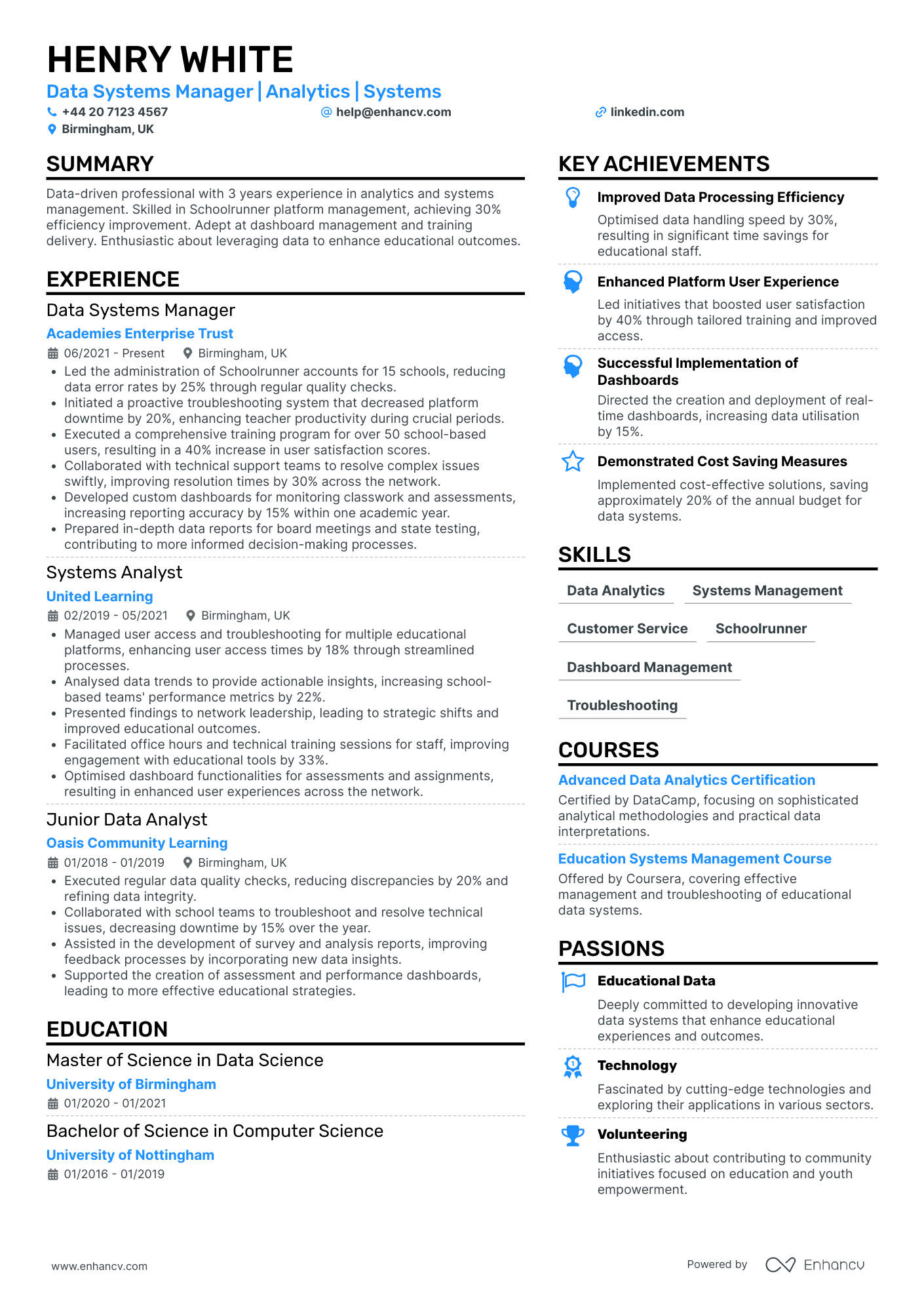
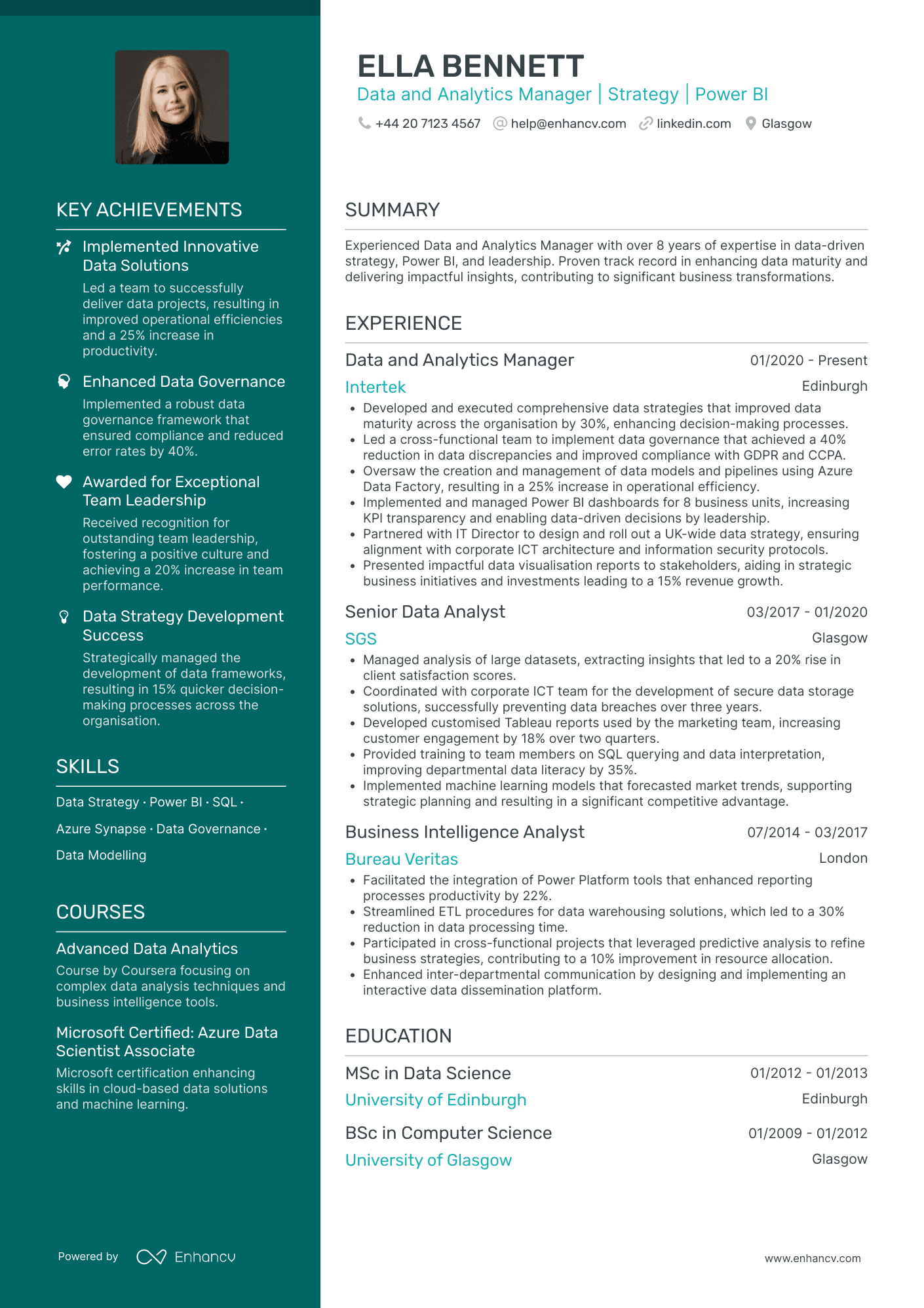
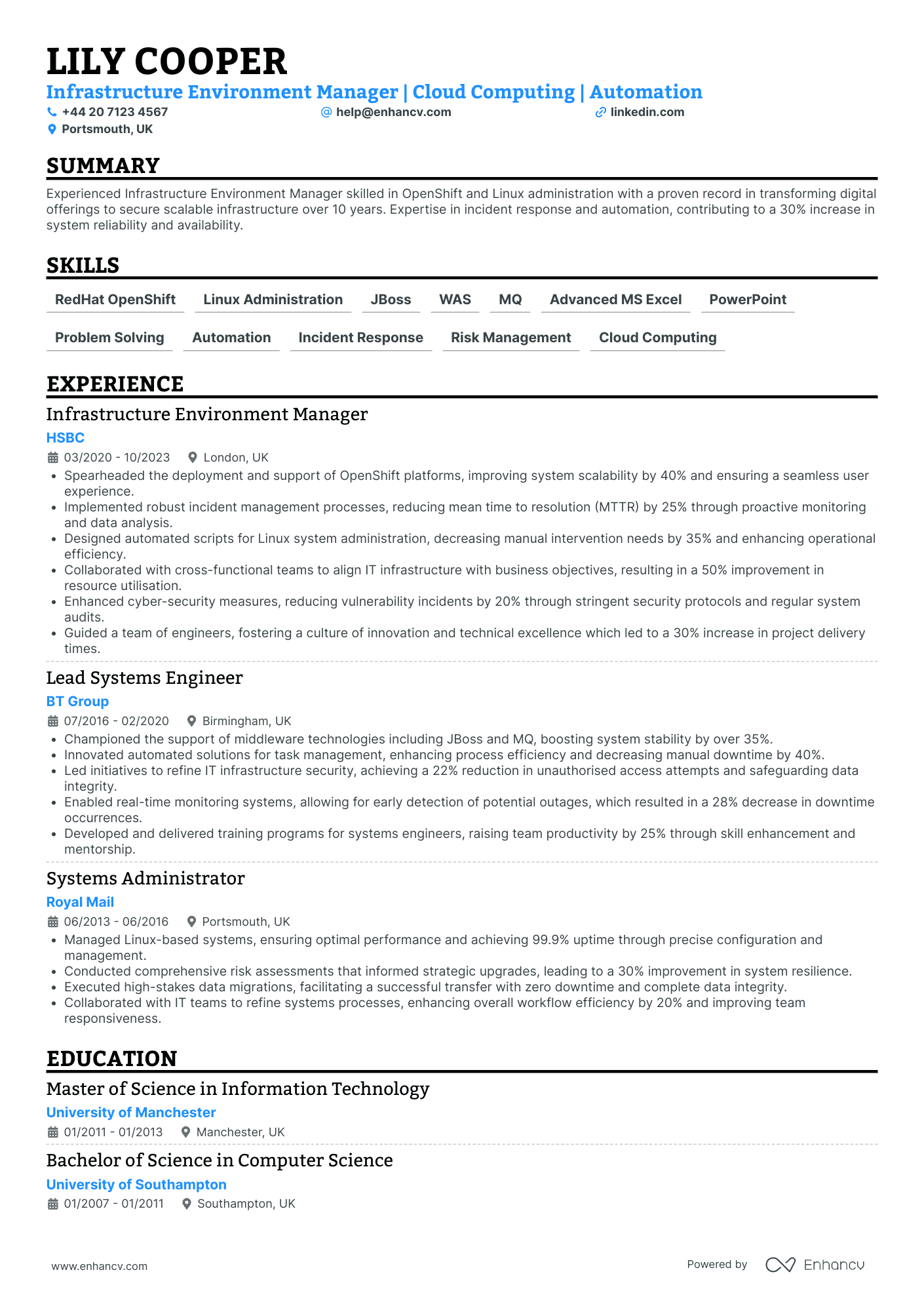
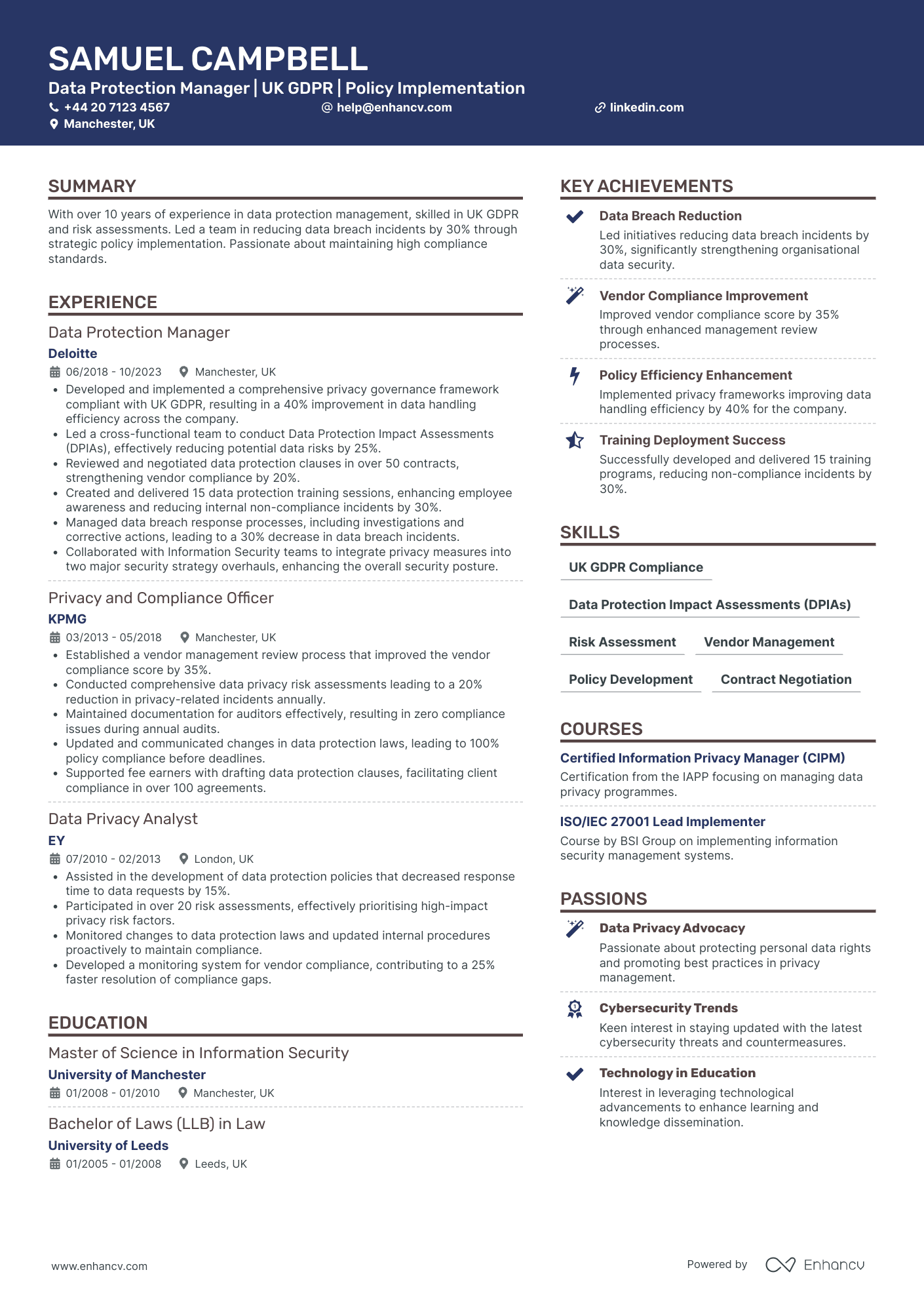
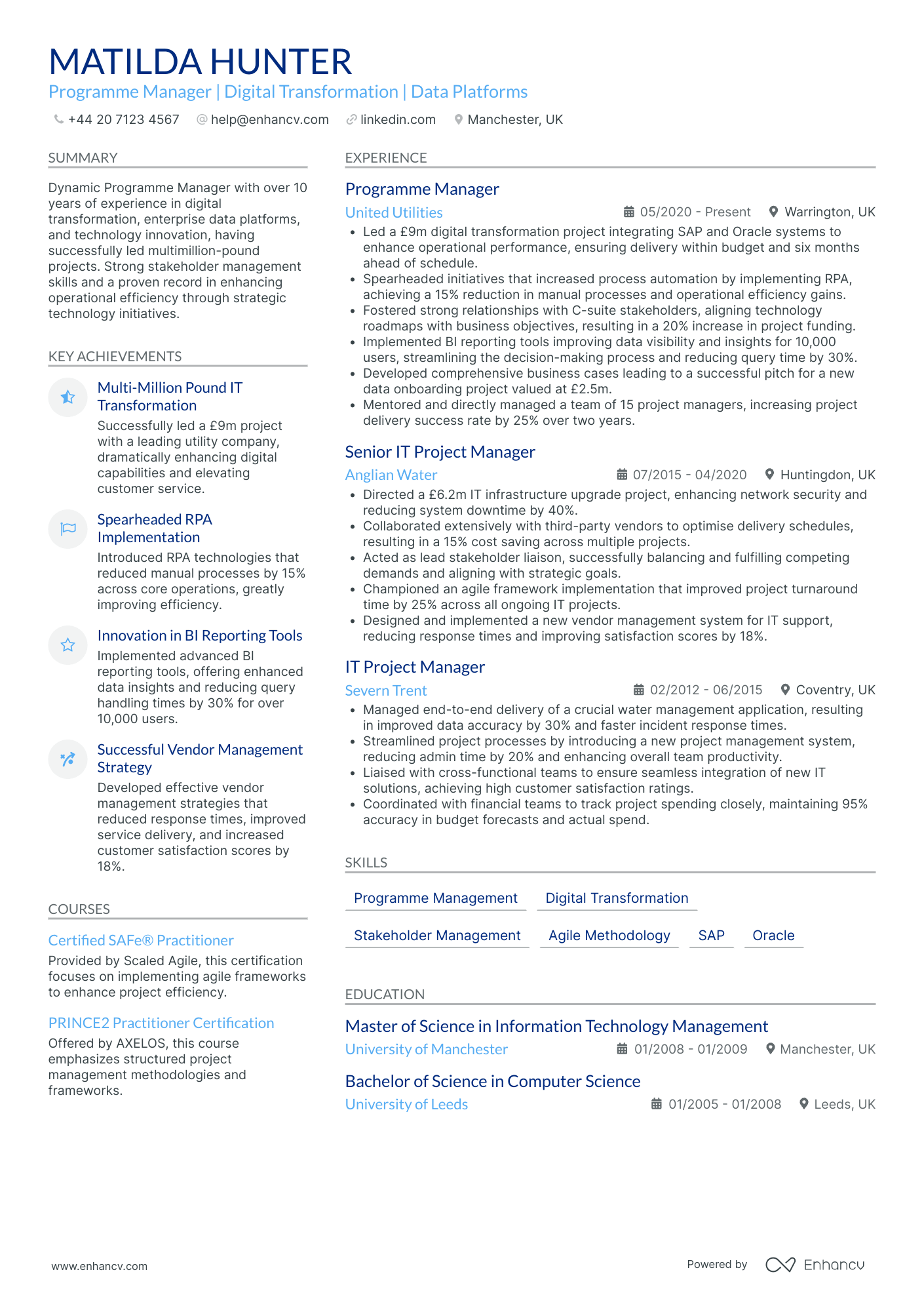
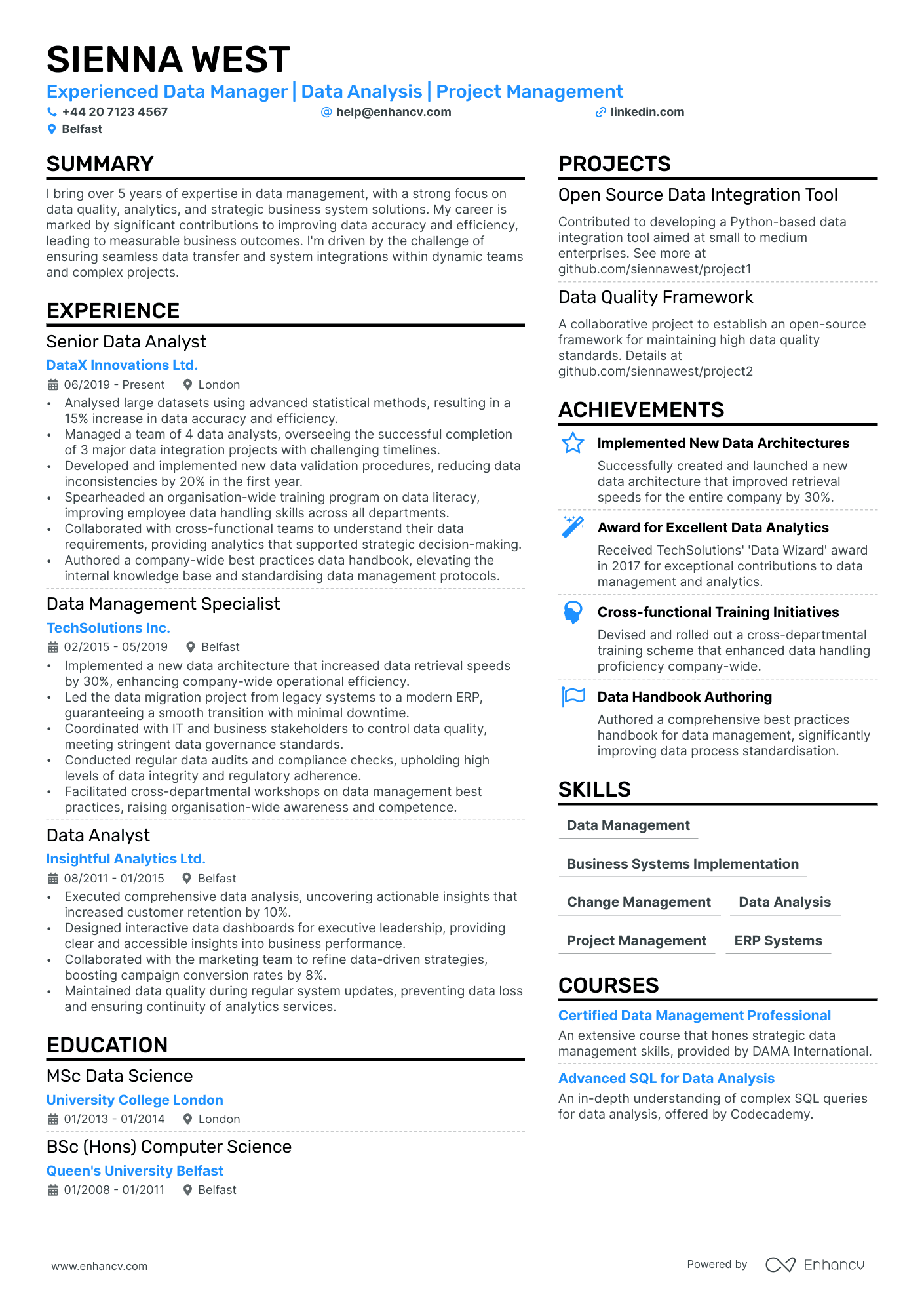
The data manager CVs that get shortlisted lead with an outcome, not a toolkit. A governance framework adopted across three teams. A data quality score pushed from the low 80s to the high 90s. A month-end report that once took five days and now takes one.
Most do the opposite. They stack SQL, Power BI, and Excel at the top, list every pipeline they have ever touched, and leave the actual managing of people, of standards, of risk almost invisible. If you want the fundamentals before the role-specific detail, start with how to write a CV, then come back for the parts that make a data manager stand out from the field.

Key takeaways
- Lead with outcomes you owned: data quality lifted, a governance policy adopted, a reporting cycle shortened, risk or cost cut.
- Sort the format first. Two pages, reverse chronological, one column, sent as a PDF unless the advert asks for Word.
- Name the stack in the advert's own words: SQL, data governance, data visualisation, and the BI tools you actually run.
- Show the management, not only the analysis. Teams led, standards set, stakeholders kept aligned.
- Open with a short personal statement built on one concrete result a recruiter can picture.
- Keep certifications and data-specific training visible next to your education.
Formatting your data manager CV
Sort the format before you write a single bullet. A data manager is a role with a track record, so use a reverse chronological structure that puts your most recent post first and lets your progression speak.
Keep it to two pages. One column, standard headings, a clean readable font. Hiring managers for data roles skim for scope and numbers before they read a word of prose, so make the scope easy to find.
Reach for a CV format that leads with a short personal statement, then experience, then skills and certifications. A skills-led layout only earns its place if you are moving into data management from an analyst seat and your job history does not yet show the leadership.
Get the running order of your CV sections right, because it decides what a recruiter reads in the first ten seconds. For an experienced data manager that means header, personal statement, experience, skills, then education and certifications. Keep the header itself lean: name, job title, city, phone, email, and a LinkedIn URL. No photo, no full postal address, no date of birth.
Data manager applications almost always pass through tracking software before a human sees them, so keep the layout ATS-friendly: real headings, no text boxes, no skills buried inside a graphic. A parser that cannot read your governance experience cannot rank it.
Small design choices carry weight here. Tidy margins and a professional font signal the same care you will bring to a data catalogue. Save the colour for one accent, not the whole page. If a dashboard, a published report, or a GitHub profile shows your work, add a single labelled link in the header rather than pasting the URL into the body.

PRO TIP
Name your BI and database tools exactly as the advert does. If it says "Power BI", do not write "MS Power BI" or "PowerBI". An ATS matches strings, and a hiring manager reads the exact match as fluency. The same goes for "SQL Server", "Snowflake", "dbt", and "Tableau".
Word or PDF, and choosing a template
Send a PDF for any direct application. It holds your layout on every screen, and a data manager CV with a broken table or a shifted column undercuts the whole pitch.
Keep a Word copy for recruitment agencies, which handle a large share of senior data roles and often reformat your CV into their own house template. If the advert names a file type, follow it to the letter.
Build from a tested layout rather than a blank document. Enhancv's CV templates export to a clean, ATS-parsable PDF and keep your headings where a parser expects them, which saves you fighting margins the night before a deadline.
Resist the instinct to build your CV like a report. Data managers reach for multi-column tables and side panels because they live in them all day, yet those are the exact structures an ATS reads out of order or drops entirely. Keep your skills and dates in plain text, not in a grid.
Whichever template you choose, keep it single-column and restrained. The content is your evidence, and the template only has to stay out of its way.
Is your resume good enough?
Drop your CV here or choose a file. PDF & DOCX only. Max 2MB file size.
What data manager adverts ask for
Before you tailor, look at what the role actually repeats. Across a recent, roughly 30-day read of data manager postings on Enhancv's internal job feed, a small sample rather than a full market survey, the same skills and expectations keep surfacing.
Treat the table below as a checklist for your own CV, not a ranking of the market. Where a row is true of you, make sure the language appears in your skills section and, better still, inside a bullet that proves it.
Two rows are worth acting on directly. Because the work splits between on-site and hybrid, state your city and whether you are open to hybrid or remote in the header, so a recruiter is not left guessing. And because governance keeps recurring across levels, make sure at least one experience bullet shows you setting or enforcing a standard, not only building reports to one.
| What | UK data manager postings |
|---|---|
| Skills that recur most | Data analysis and SQL surface most often, followed by data management and data visualisation |
| Governance expectations | Data governance and data integrity appear across mid-level and lead roles alike |
| Everyday tooling | Project management and Excel sit alongside the specialist data stack |
| Where the work happens | A mix of on-site and hybrid, with fully remote roles less common |
| Typical seniority | Mostly mid-level posts, with a solid share pitched at lead |
Top skills for your data manager CV
Your hard skills are the specialist, checkable ones: SQL, data modelling, data governance, ETL and pipeline tooling, and whichever BI tool you genuinely run. List them in the words the adverts use, and only the ones you can defend in an interview.
The soft skills that matter for a data manager are the management ones, and they need proof: stakeholder communication, prioritisation across competing requests, and leading a small team through a migration without the reporting falling over.
Do not let the skills section become a word cloud. Split it into a named stack, covering databases, BI, and languages, and a short line of leadership strengths, each one echoed by an achievement lower down.
Evidence each skill rather than listing it. "Data governance" means little on its own, but "wrote the data governance policy three teams now work to" is a claim a recruiter can trust. Attach the skill to the outcome it produced, and it stops being a keyword.
If you are strong on the technical side, an analytical skills line helps, but a data manager is judged on leadership as much as on tooling. Show both, and mirror the exact keywords the advert uses so the ATS and the hiring manager see the match.
Top skills for your data manager CV:
SQL
Data analysis
Data modelling
Data governance
Data visualisation (Power BI, Tableau)
ETL and pipelines
Data quality and integrity
Advanced Excel
Stakeholder management
Team leadership
Prioritisation
Communication
Problem solving
Writing your data manager personal statement
Three or four sentences at the top: who you are, the scope you have managed, one result worth remembering, and the kind of role you want next. Keep it concrete and skip the adjectives.
The weak version reads like a horoscope. "Highly motivated and detail-oriented data professional passionate about turning data into insight" tells a recruiter nothing they can check.
Match the statement to the specific advert. A regulated employer will care about data governance and integrity, while a fast-moving product team will care about BI delivery and speed. Pull the two priorities the advert leans on hardest and make sure both appear in these opening lines.
Lead with evidence instead. See more personal statement examples if the opening line is not landing.
Data manager personal statement example
Data manager with seven years across financial services, leading a team of five analysts and owning data quality for a 40-table reporting warehouse. Introduced a data governance framework that cut reconciliation errors by a third and moved month-end reporting from five days to one. Looking to take ownership of data standards and BI delivery for a mid-sized fintech in Manchester.
When I read a data manager CV, I skip the tools list and look for scope. How much data, how many people, whose decisions depended on it. A line like "owned data quality for a 40-table warehouse used by three business units" tells me more than a row of logos ever will. Name what you were responsible for, then attach one number to it. That is the difference between someone who queries data and someone who manages it.
Writing your data manager experience section
Write each role as a dated heading, then bullets that pair an action with an outcome. Lead every bullet with a strong verb and, wherever you can, a number. For the mechanics, see work experience on a CV.
Data management is more measurable than most fields, so quantify without apology: rows migrated, uptime held, a quality score raised, hours of manual reporting removed, a team grown. Those are your CV achievements, and they beat any adjective.
Give your current role four to six bullets and taper the older ones. A data manager with ten years behind them does not need six lines on a first analyst job, so compress the early roles to a line or two that show the trajectory and free the page for recent, senior work. Where an earlier role built a skill you still lead on, keep the one bullet that proves it and drop the rest.
Watch the gap between a duty and an achievement. "Responsible for data quality" describes a job description, while "raised data accuracy from 82% to 99% by automating validation across 40 tables" describes what you did with it. Lead with strong action verbs and let the number finish the sentence.
Tailor every application. Pull the exact tools and responsibilities from the advert and mirror them where they are true of you. Enhancv's CV tailoring reads the job ad and flags the matching skills and phrasing, which saves rewriting from scratch each time.
- Own data quality and governance for a 40-table reporting warehouse used by three business units, holding accuracy above 99% through automated validation
- Lead a team of five analysts, setting standards, reviewing SQL, and running the roadmap for BI delivery in Power BI
- Introduced a data governance framework and data dictionary that cut month-end reconciliation errors by 34% and shortened the close from five days to one
- Migrated legacy reporting from spreadsheets to a governed Snowflake pipeline, removing around 20 hours of manual work each week
PRO TIP
Recruiters scan a data manager CV for two things before anything else: the size of the data you owned and the number of people you led. Put both in your top role's first two bullets, not buried at the bottom of the page.
Education and certifications for a data manager CV
A numerate degree helps but rarely decides it. List your education cleanly, most recent first, and keep it short once you have a few years behind you.
Certifications carry more weight in data than in most fields. A recognised qualification such as a cloud data credential, a Power BI or Tableau certification, or the Certified Data Management Professional (CDMP) signals current, specialist knowledge.
Most data managers come from a numerate or technical background, often computer science, statistics, mathematics, economics, or information systems. If your degree is in something else, do not worry about it. A few years of owning real data outweighs the subject on the certificate, so keep the entry brief and let your experience carry the case.
Put certificates in a dedicated block near your education, with the awarding body and the year. If one is in progress, say so. It shows you are still building depth. For a manager, a certification in a governance or cloud data standard reads as a commitment to keeping the whole team current, not just yourself.
Stepping up from analyst to data manager
Plenty of first-time data managers come from an analyst or engineer seat, with the technical depth already there and the management still to prove. The CV has to bridge that gap without overclaiming.
Find the management you have already done, even without the title. Owning a data model the whole team relied on, mentoring a junior analyst, setting the standard for how reports were built, or running a migration end to end all count. Write them up as leadership, because that is what they are.
A combination CV works well here. It lets a strong skills and projects block carry the technical weight while your experience shows the responsibility creeping upward. Then make the case for the step up in your personal statement, naming the scope you are ready to own next.
Conclusion
Lead with the data you owned and the people you led, quantify the outcomes, and get the format right before you polish the prose.
Pair the CV with a short cover letter that names the result you are proudest of, and you give a hiring manager an easy reason to shortlist you.

Author's take - The Enhancv team
When I read a data manager CV, I skip the tools list and look for scope. How much data, how many people, whose decisions depended on it. A line like "owned data quality for a 40-table warehouse used by three business units" tells me more than a row of logos ever will. Name what you were responsible for, then attach one number to it. That is the difference between someone who queries data and someone who manages it.