



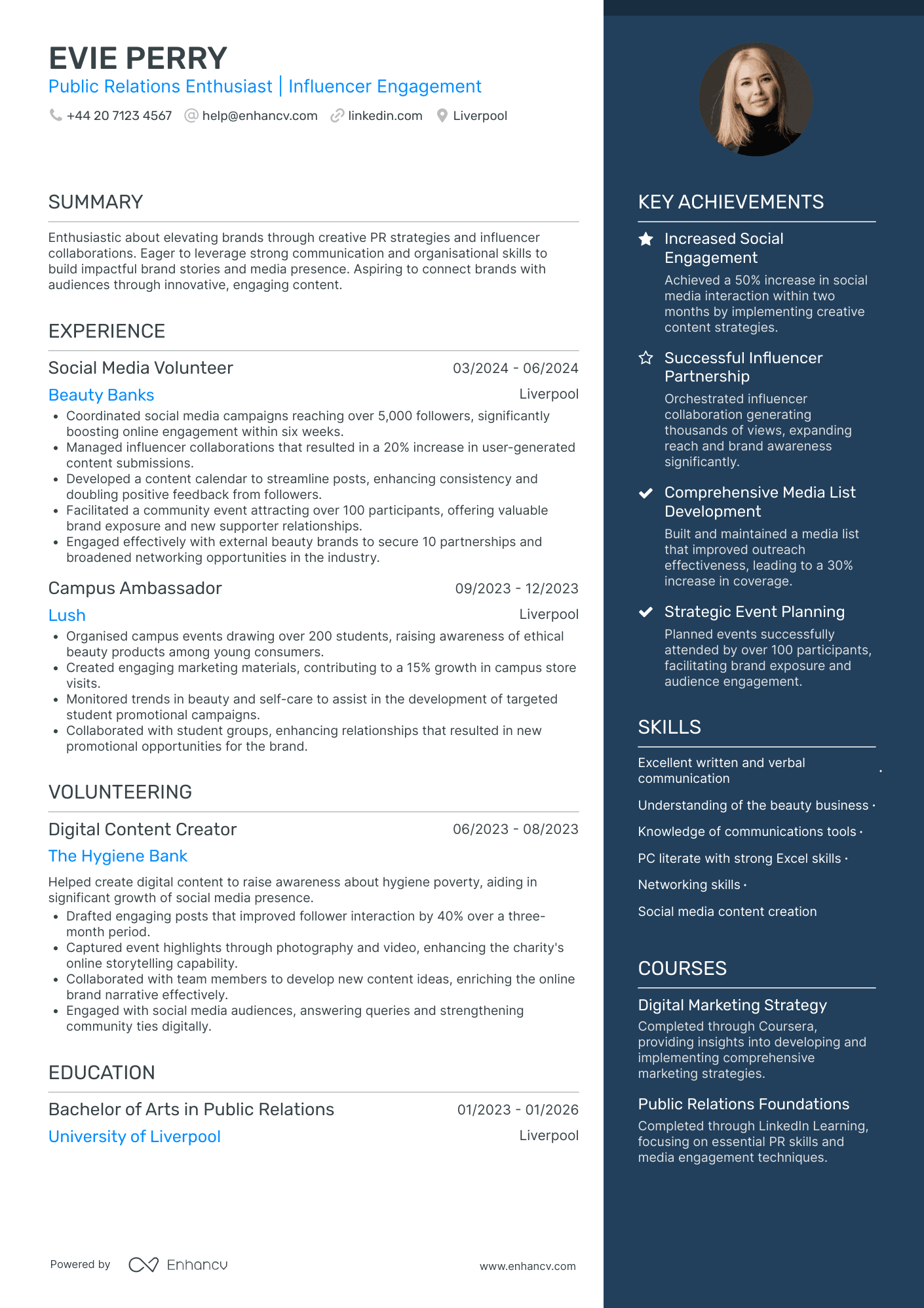
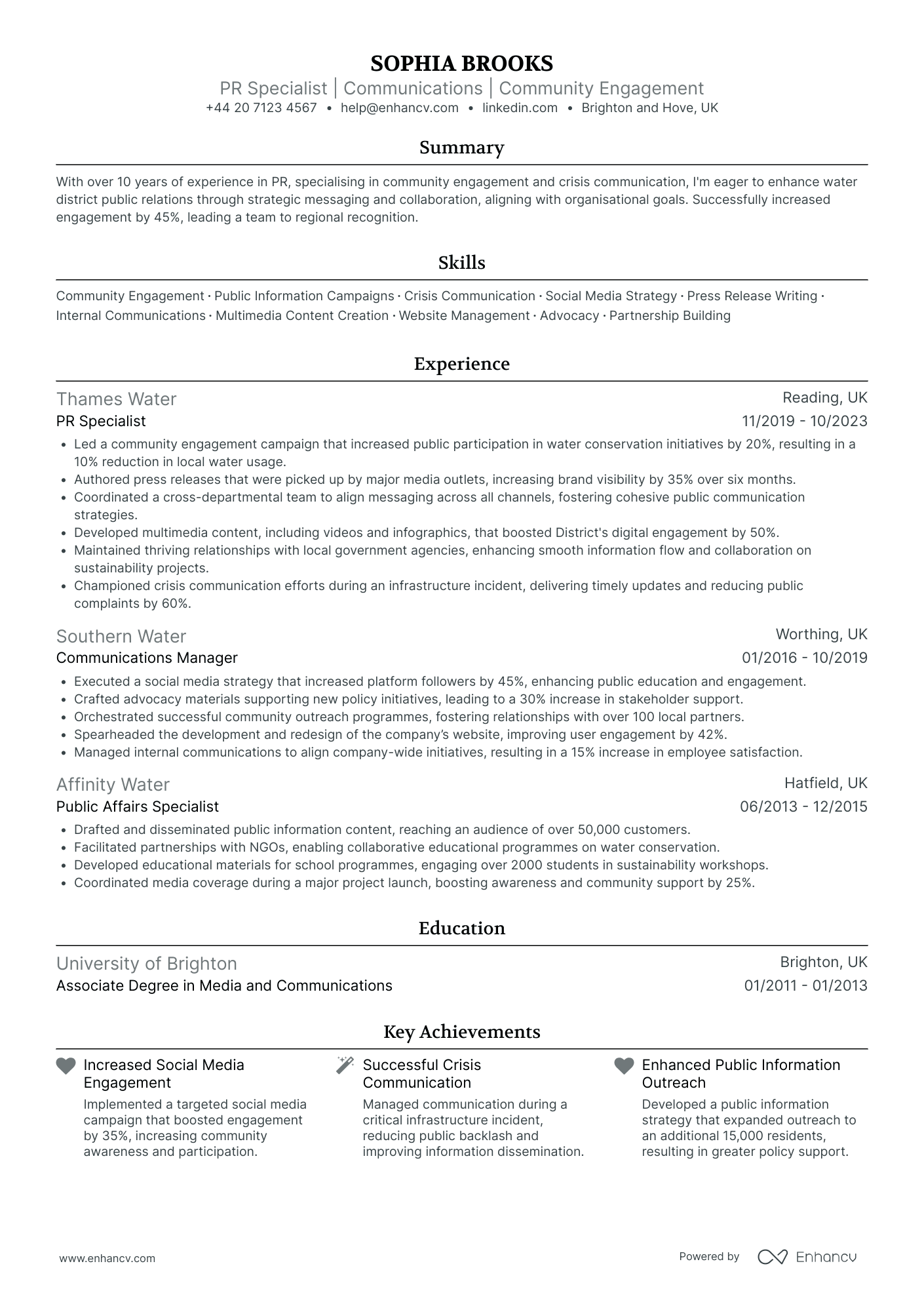
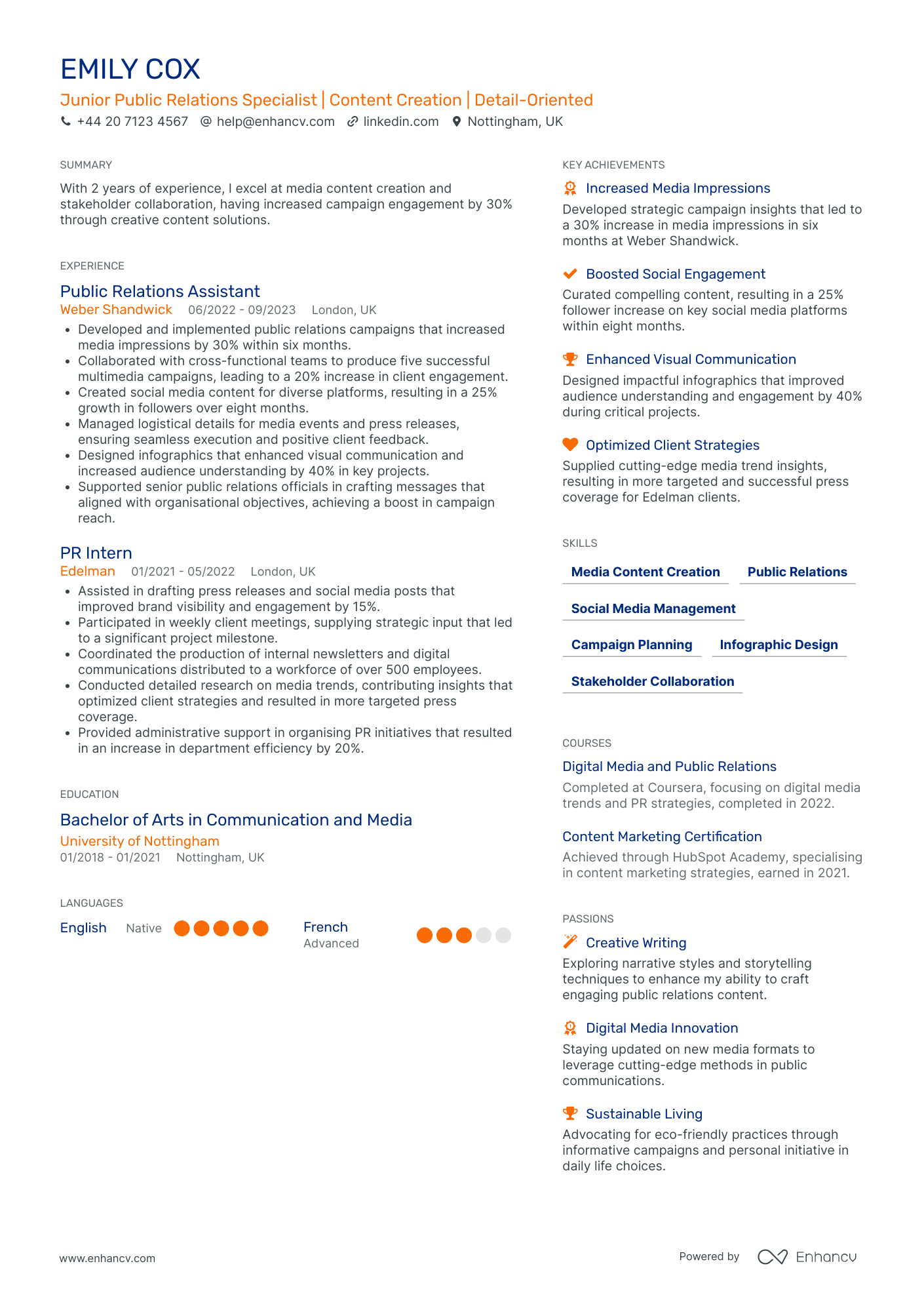
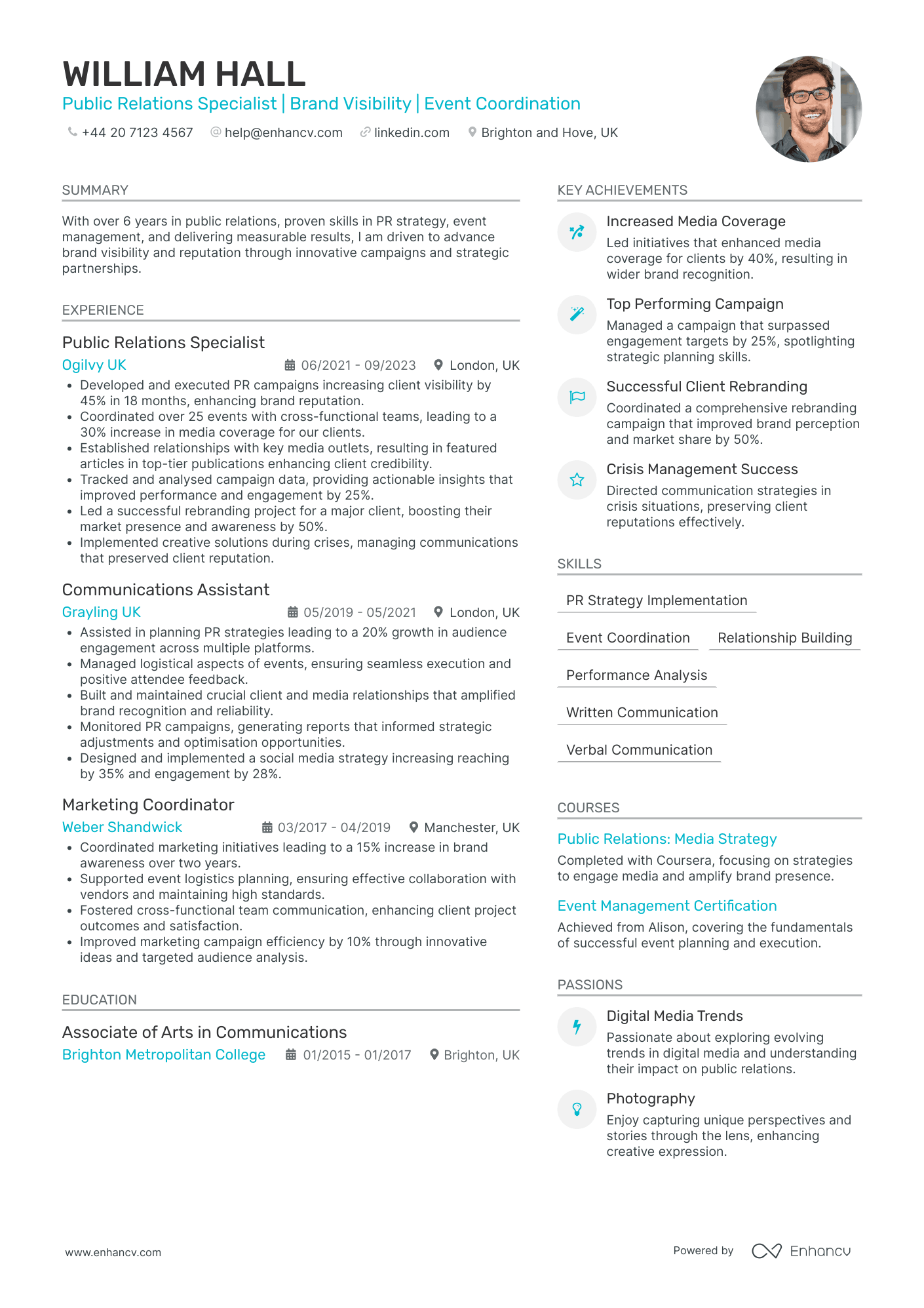
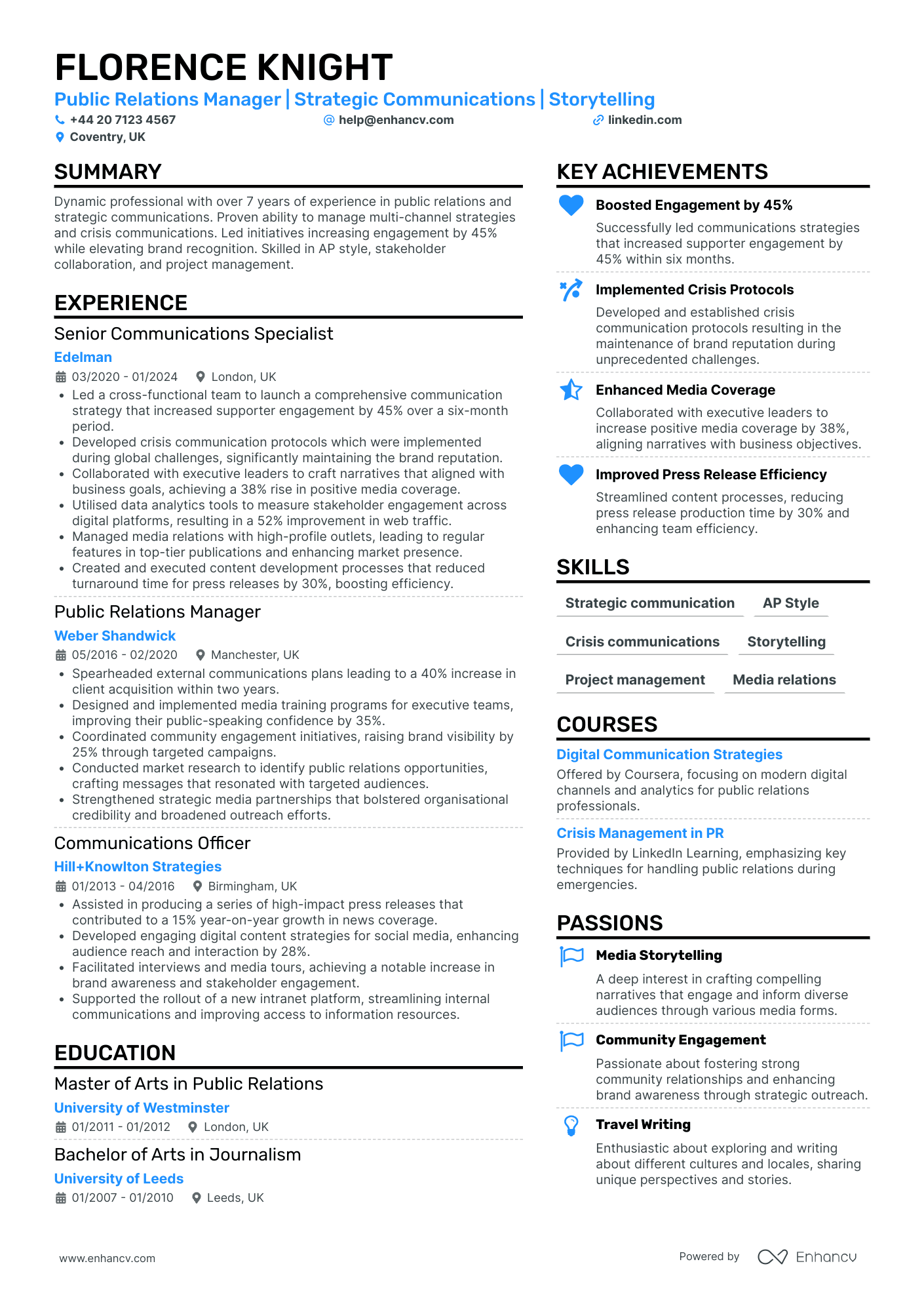
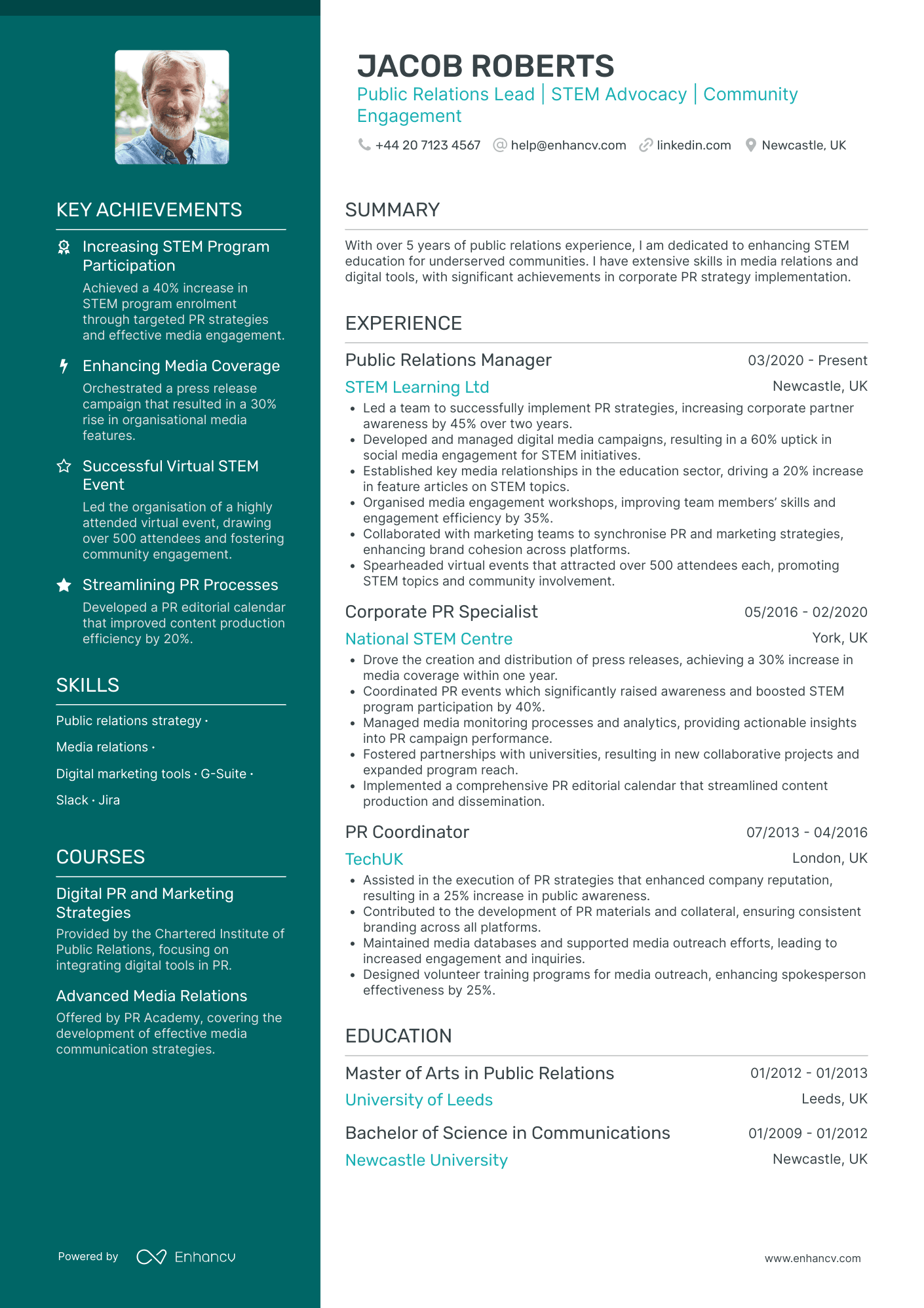
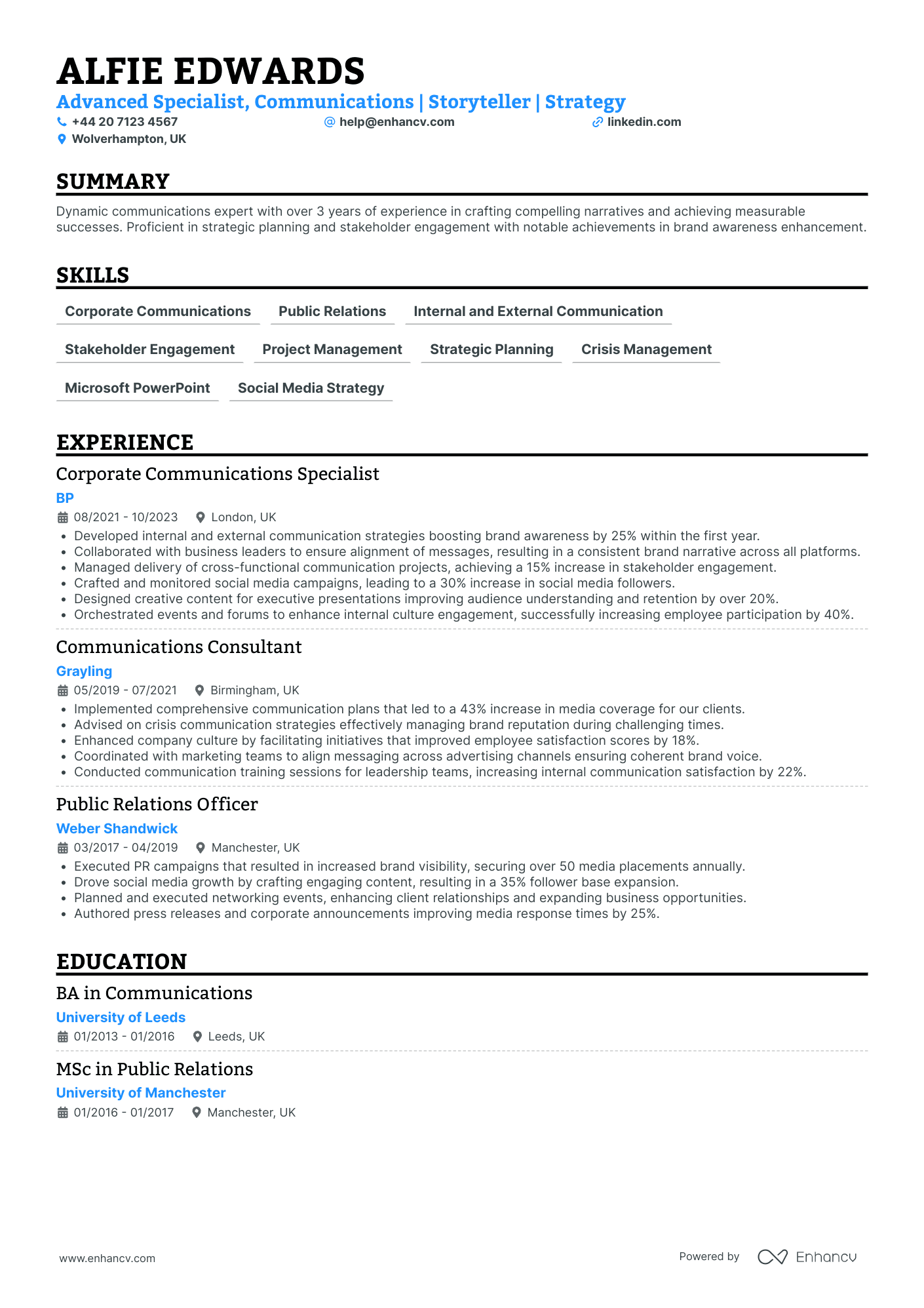
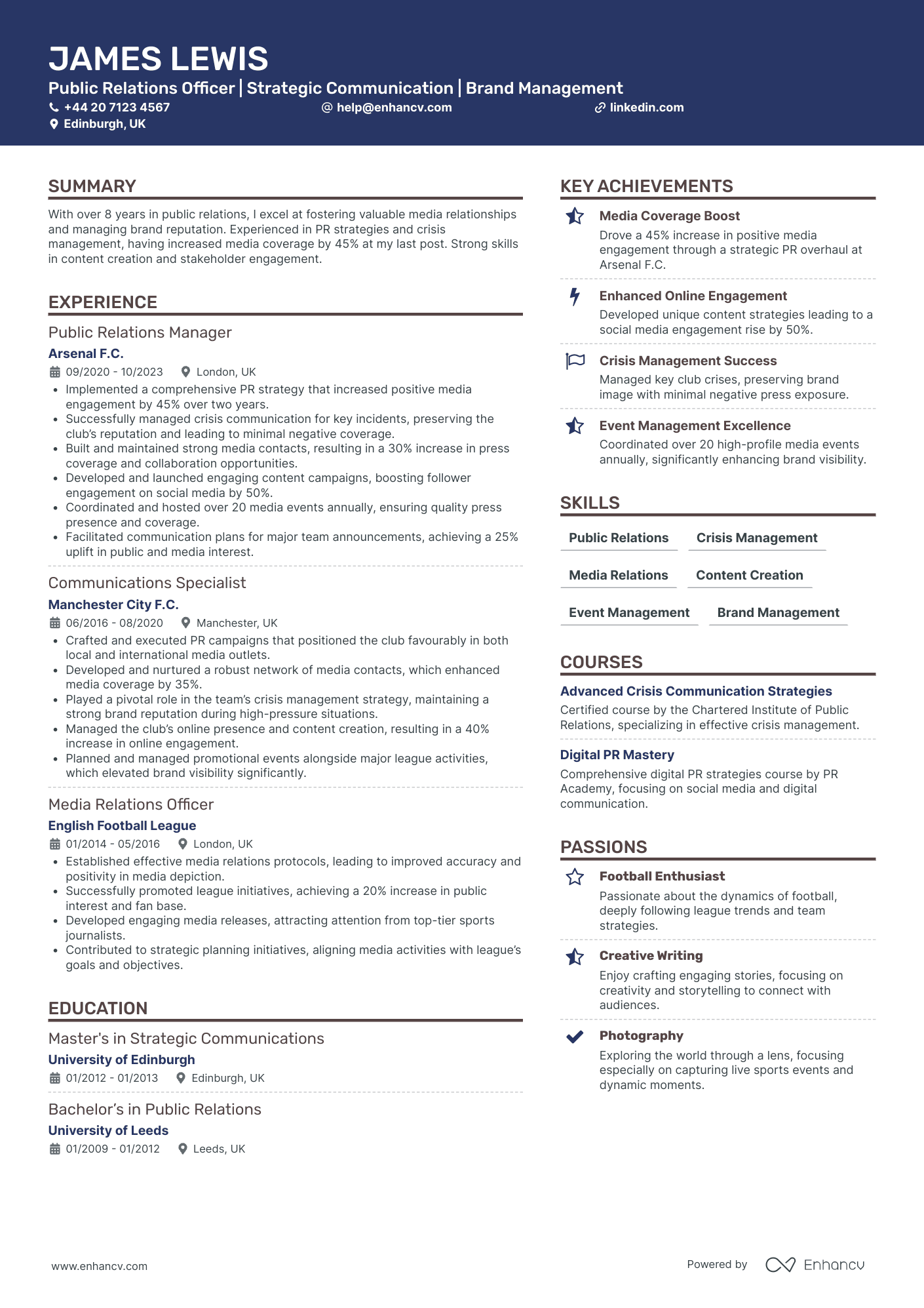
Most public relations CVs list campaigns like a status report and forget the one thing a recruiter is hunting for: what actually got covered. They want proof the phone rang, the headline landed, and the client stayed happy.
The strongest PR CVs read like a tight pitch. They lead with results a hiring manager can picture, name the media relationships that matter, and put the format to work so nothing gets buried. If you want the fundamentals first, start with how to write a CV, then come back for the PR specifics.

Key takeaways
- Lead with coverage and results, not a list of campaigns. One placed story beats five lines of duties.
- Send a PDF so your layout holds, and keep a Word copy for agencies that ask for one.
- Two pages, reverse chronological, clean headings. PR recruiters skim fast.
- Name the media relationships and tools you actually use: media databases, press office systems, social scheduling, and AI drafting tools.
- Link to a coverage portfolio or clippings folder, and put that link in your header.
- Open with a short personal statement built on one measurable win rather than adjectives.
Formatting your public relations CV
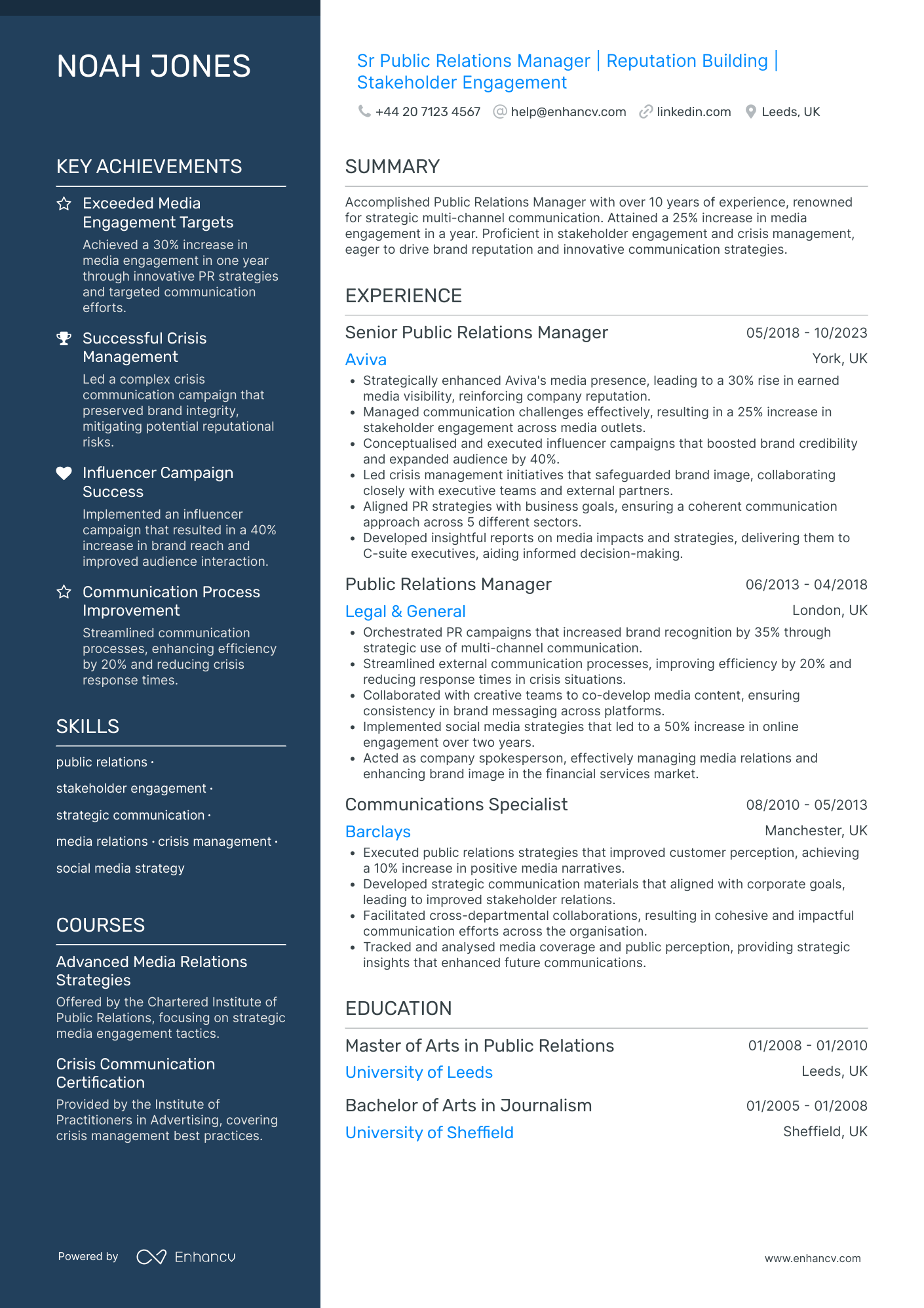
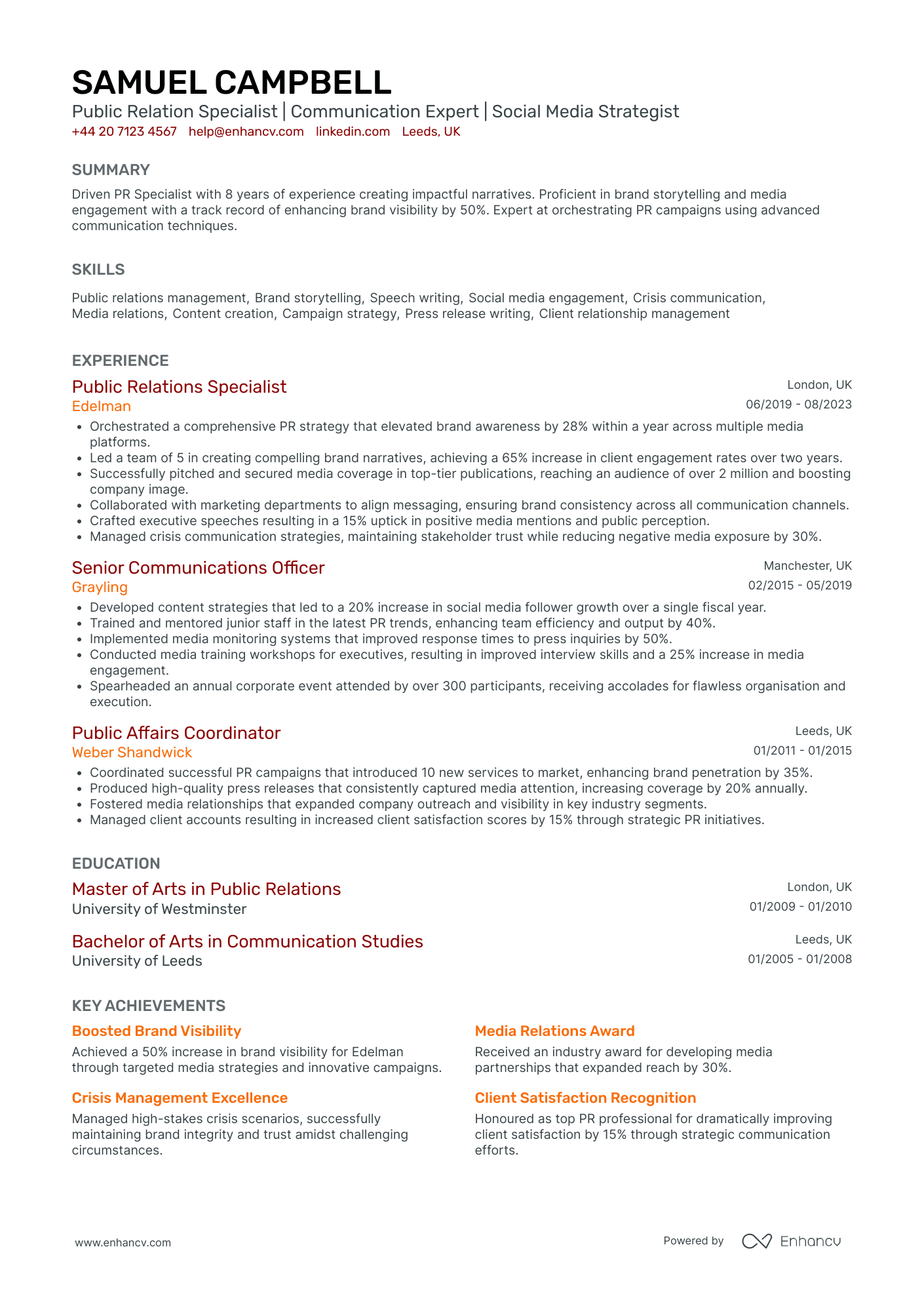
For most PR professionals, use a reverse chronological CV so your most recent coverage and accounts sit at the top where a recruiter looks first. If you are early in the field, flip to a skills-led order so your output and abilities come before a thin work history.
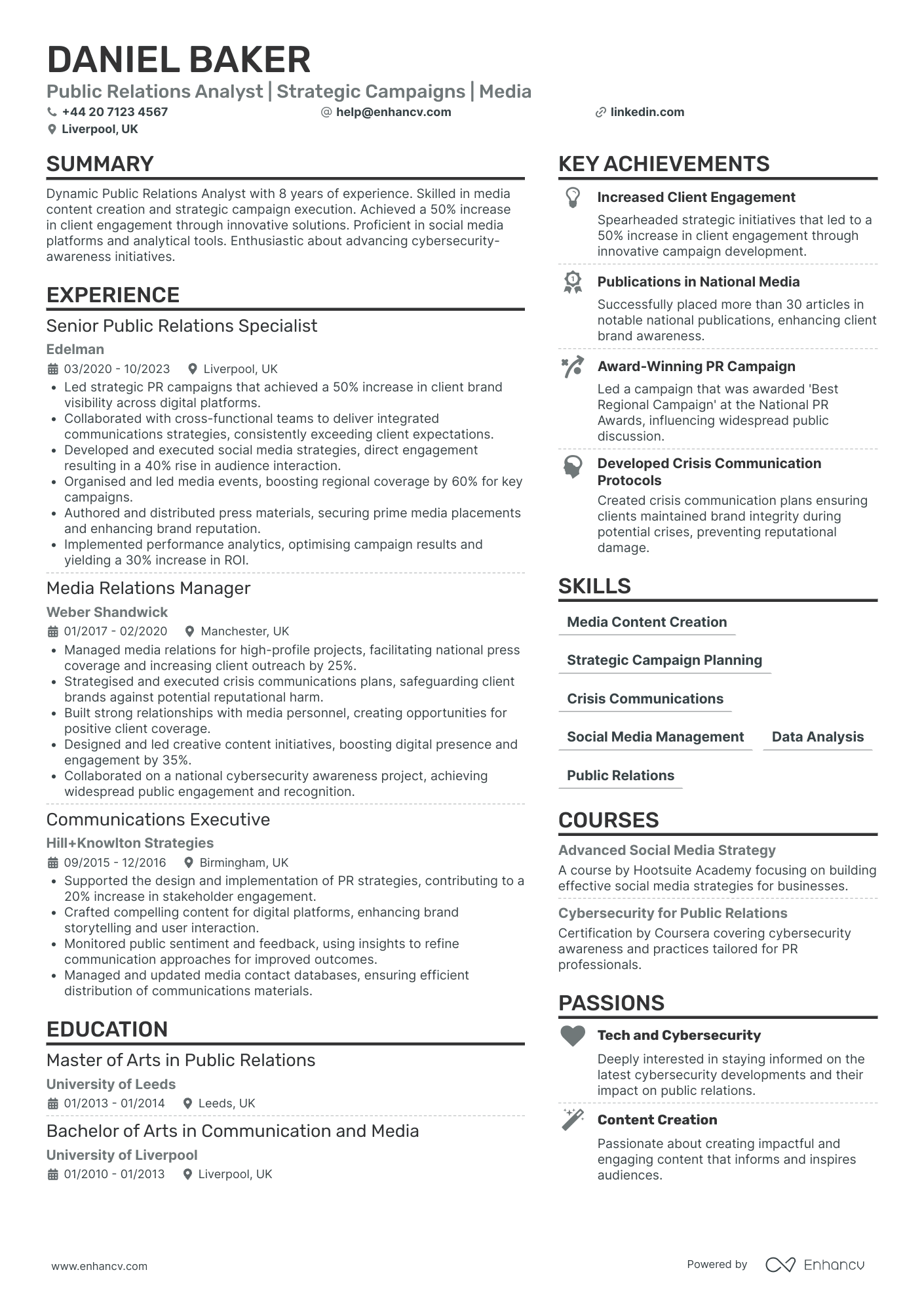
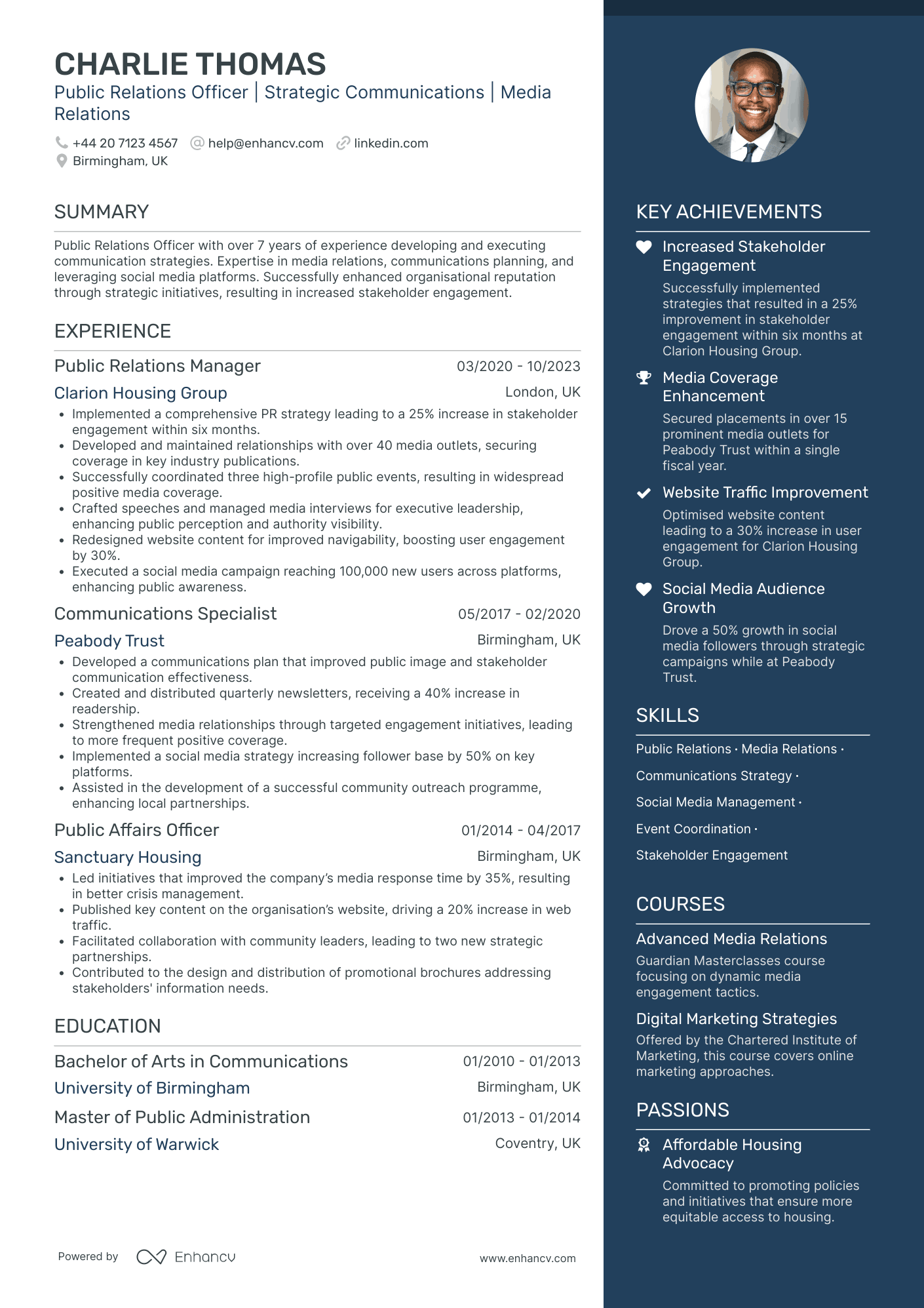
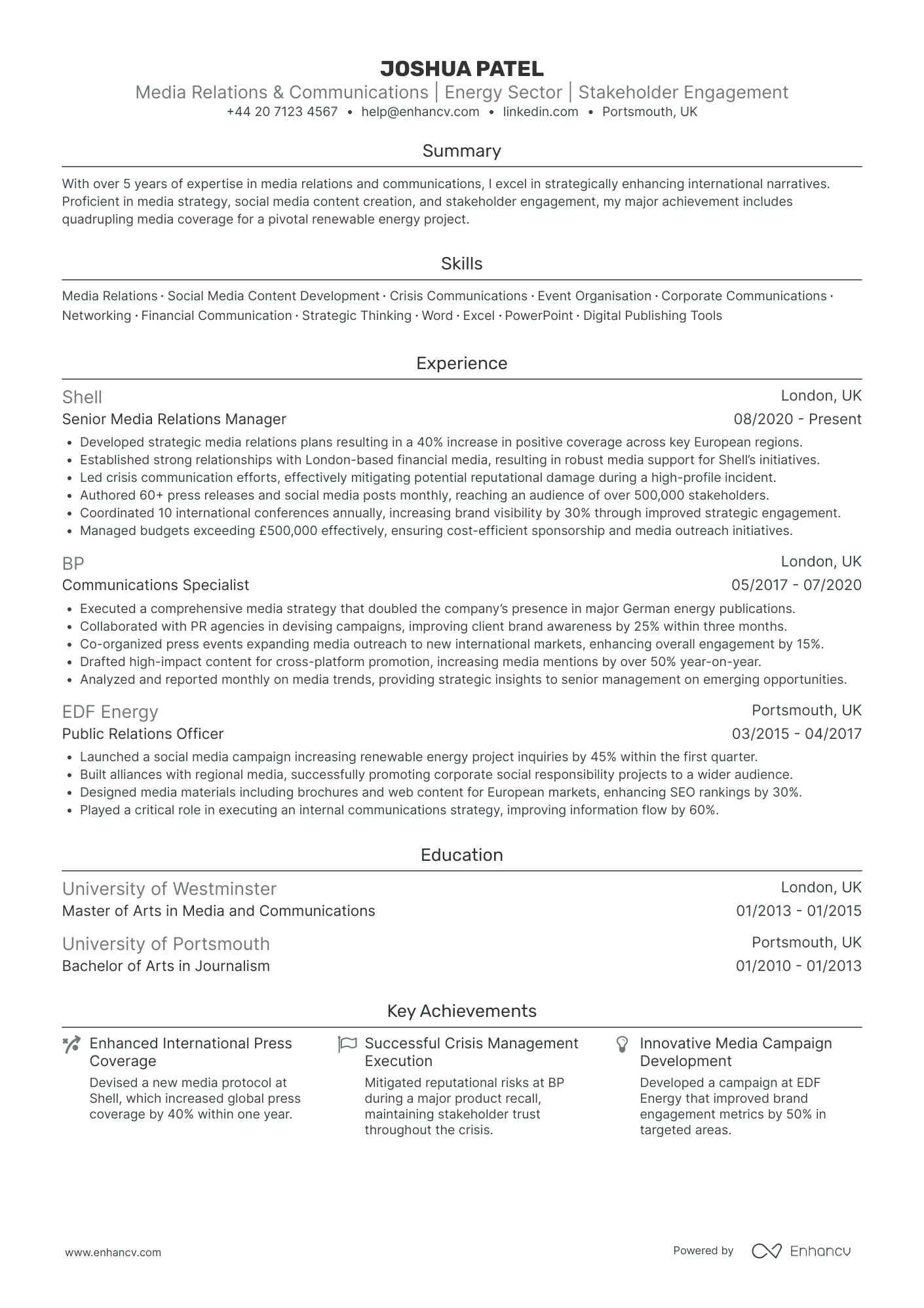
Keep it to two pages, one column, standard headings, and a readable font. A PR recruiter scanning a stack of applications will not dig for your best result, so surface it. Anything past two pages usually means you are listing tasks rather than choosing your strongest proof.
Choose a clean, professional CV font and a simple CV layout with clear white space. Communications is a craft of presentation, and a cluttered CV quietly undercuts your own pitch. Left-aligned text, consistent spacing, and one accent colour are plenty.
Send a PDF for direct applications so the formatting holds on any screen. Keep a Word copy for recruitment agencies, which place a large share of agency-side PR roles and often reformat CVs into their own template. If the advert names a file type, follow it.
Many PR applications pass through tracking software before a human sees them, so keep the structure simple and the headings standard for an ATS-friendly CV. Avoid burying key detail in headers, footers, or text boxes, which some systems read poorly.
Put your coverage or portfolio link in the header, next to your email and LinkedIn, where a recruiter can reach it in one click. That single link often does more work than a paragraph of description, so make it easy to find and make sure it opens.

PRO TIP
Name the CV file the way you would want a busy editor to find it later: firstname-surname-pr-cv.pdf, not cv-final-v4.pdf. It is a small signal that you think about how your content lands on the other side.
Choosing a public relations CV template
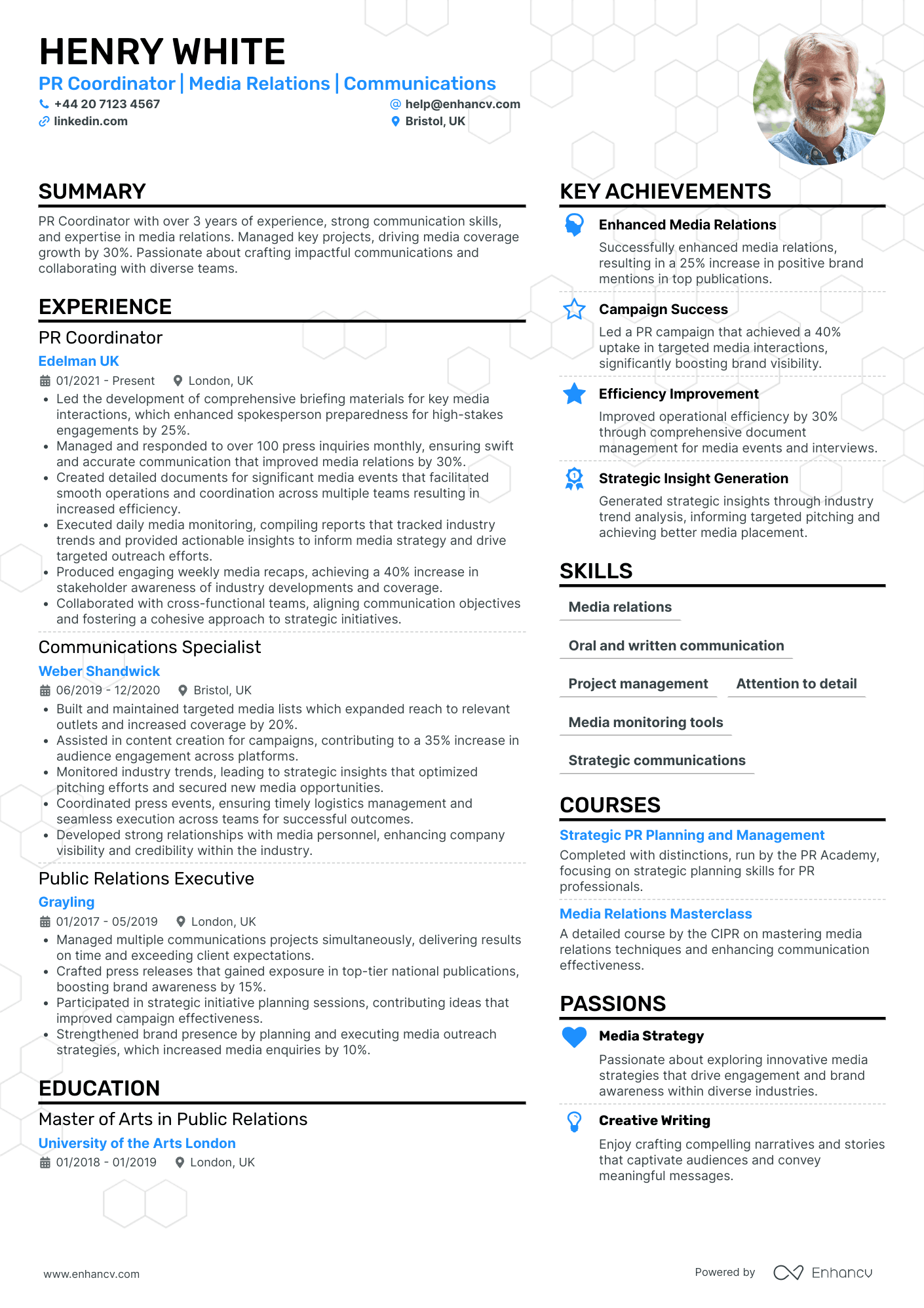
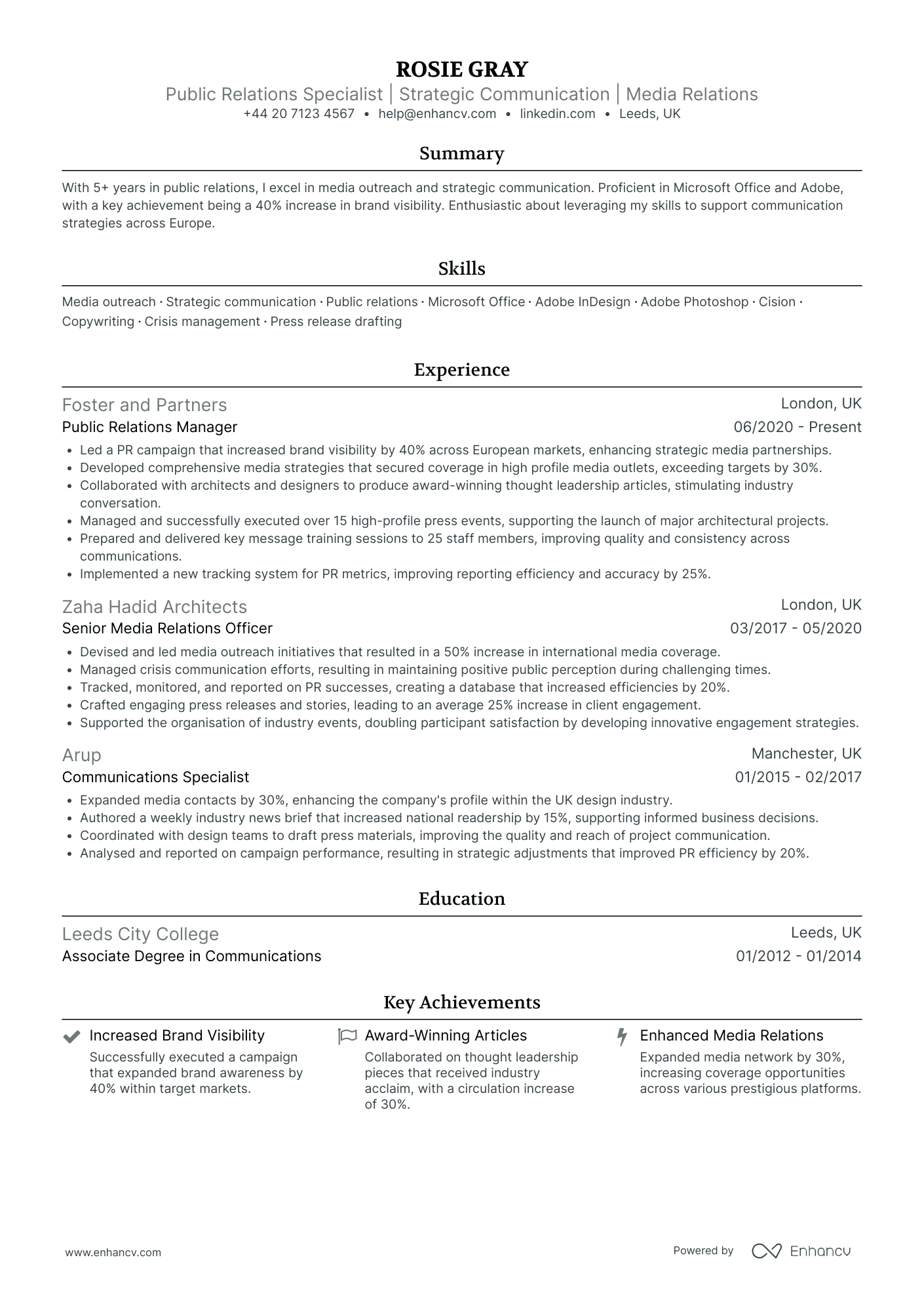
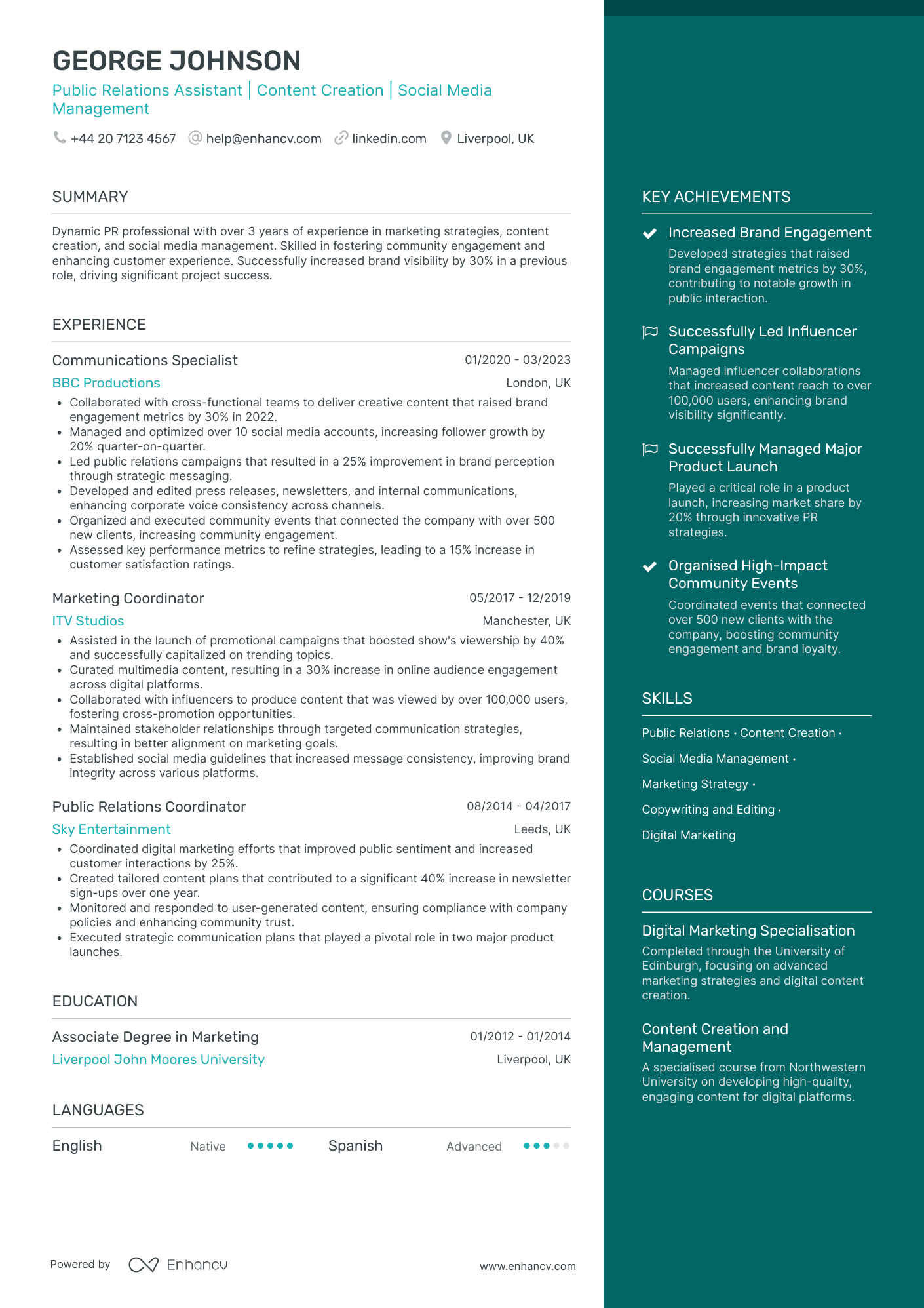
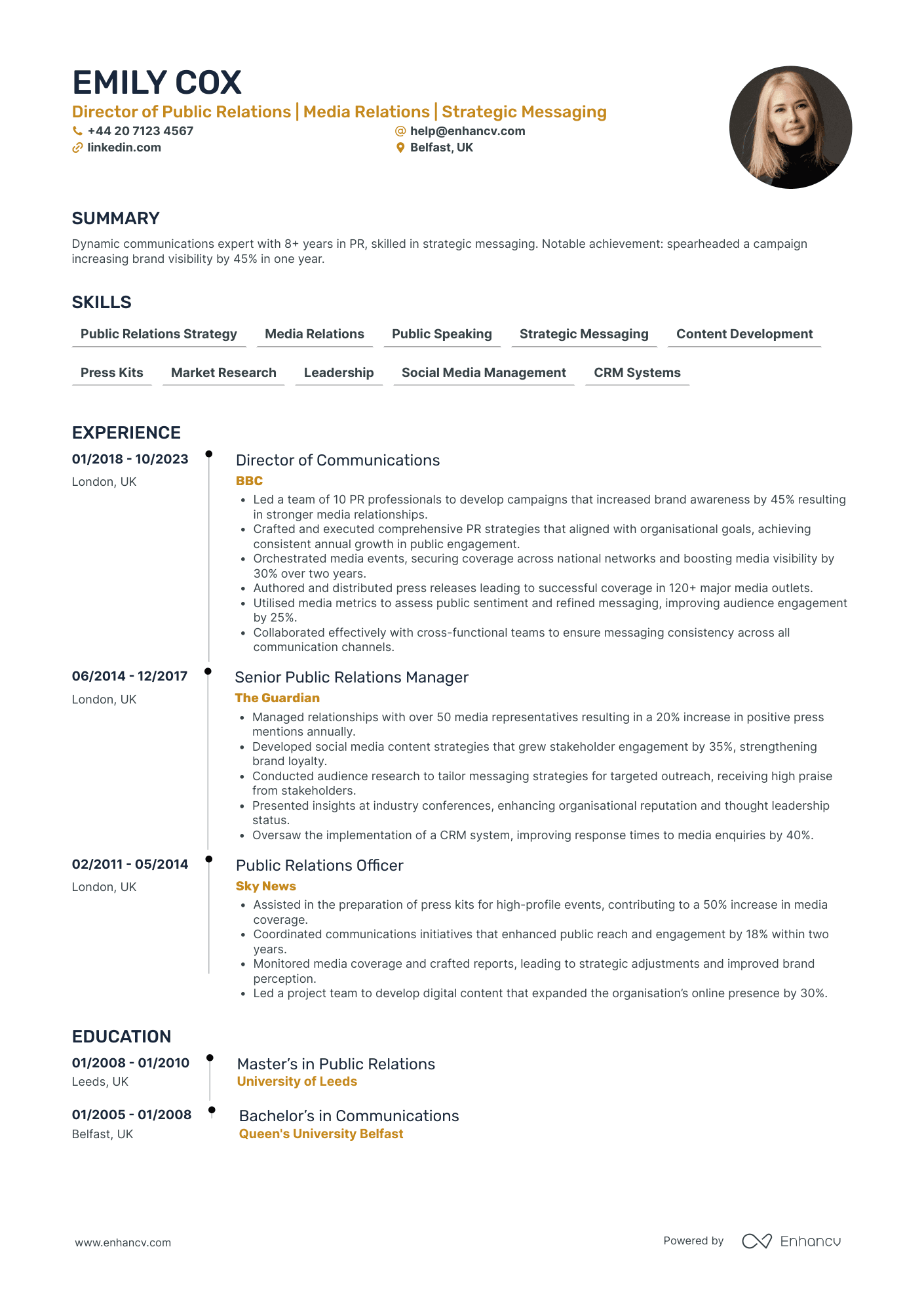
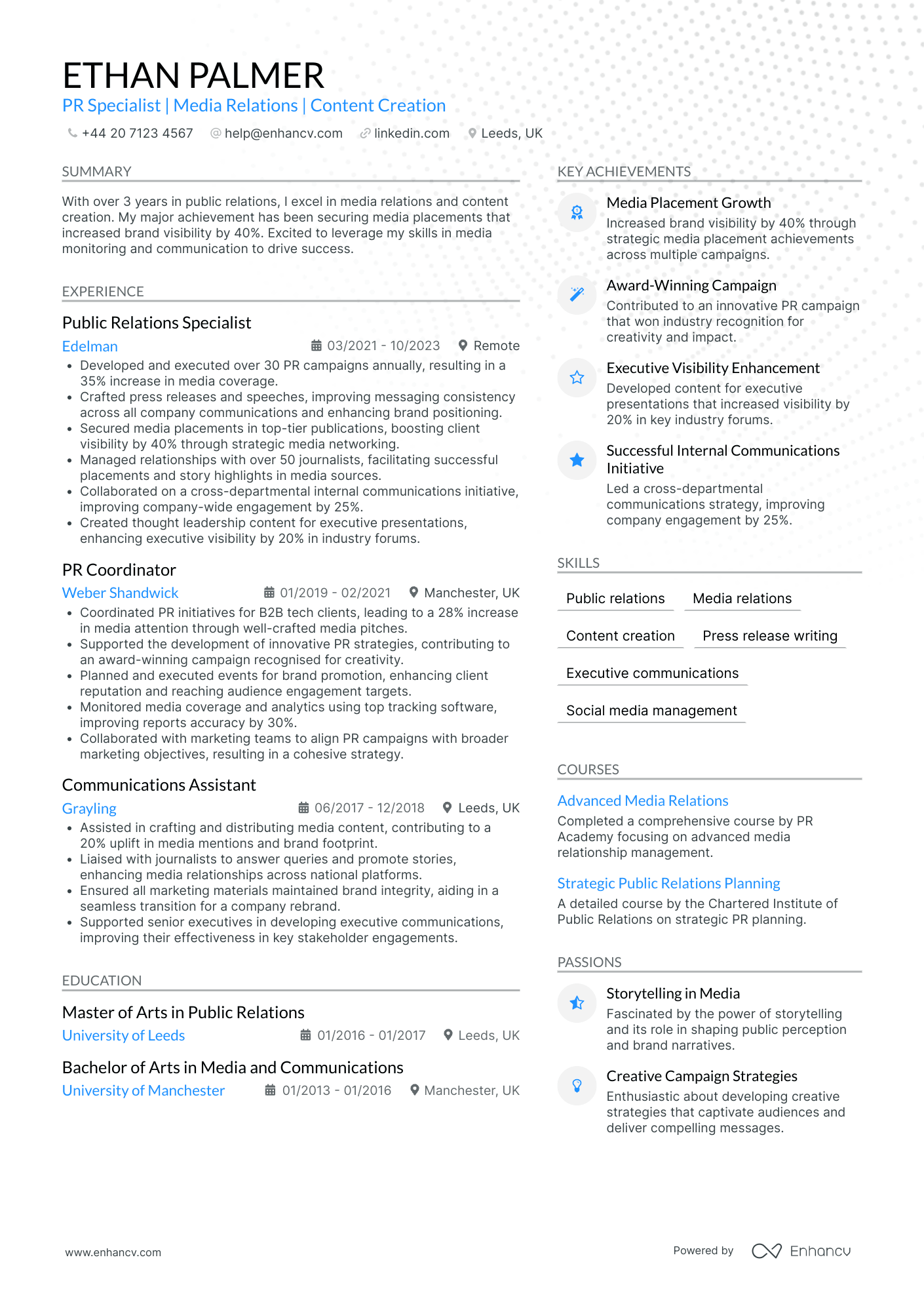
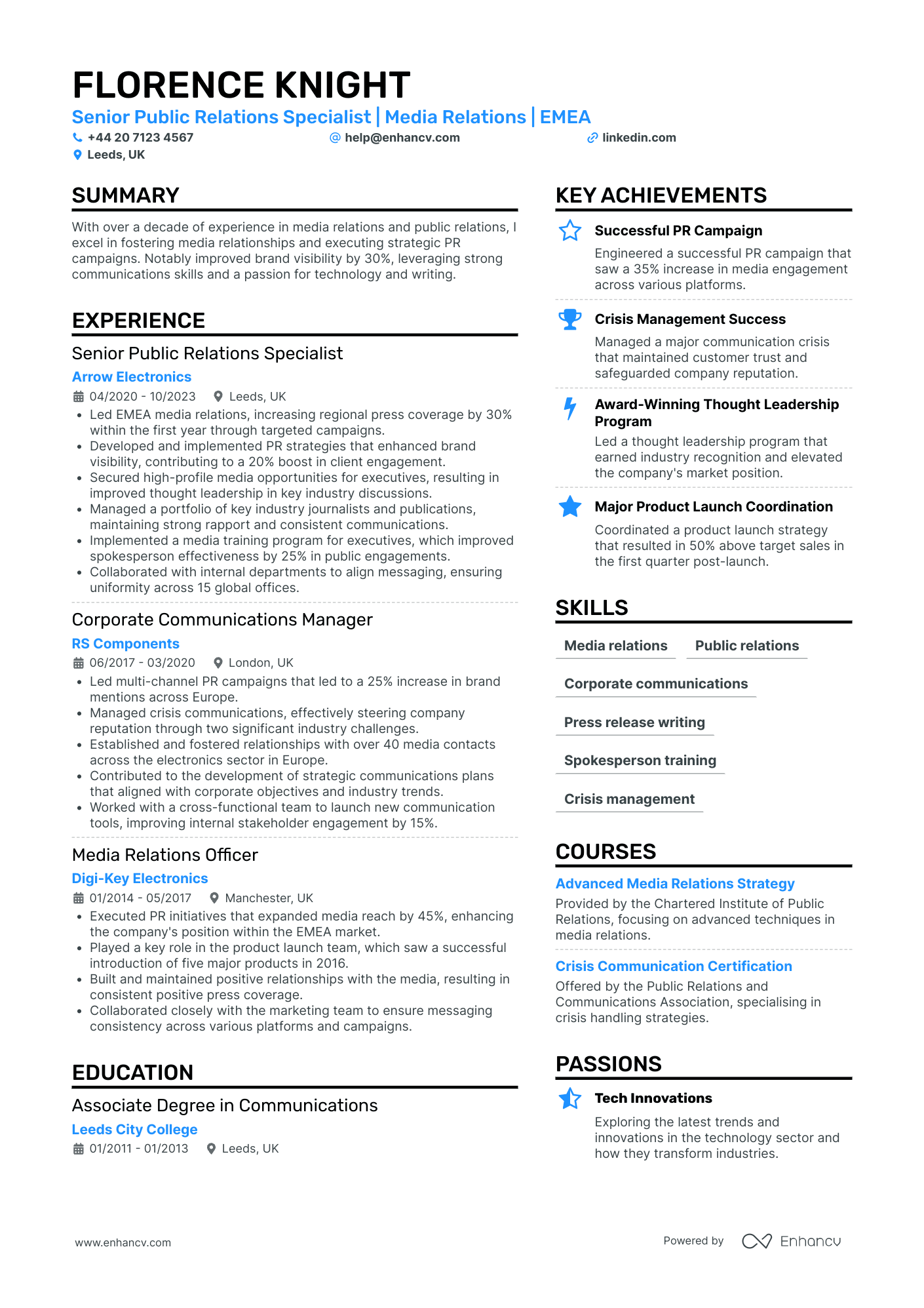
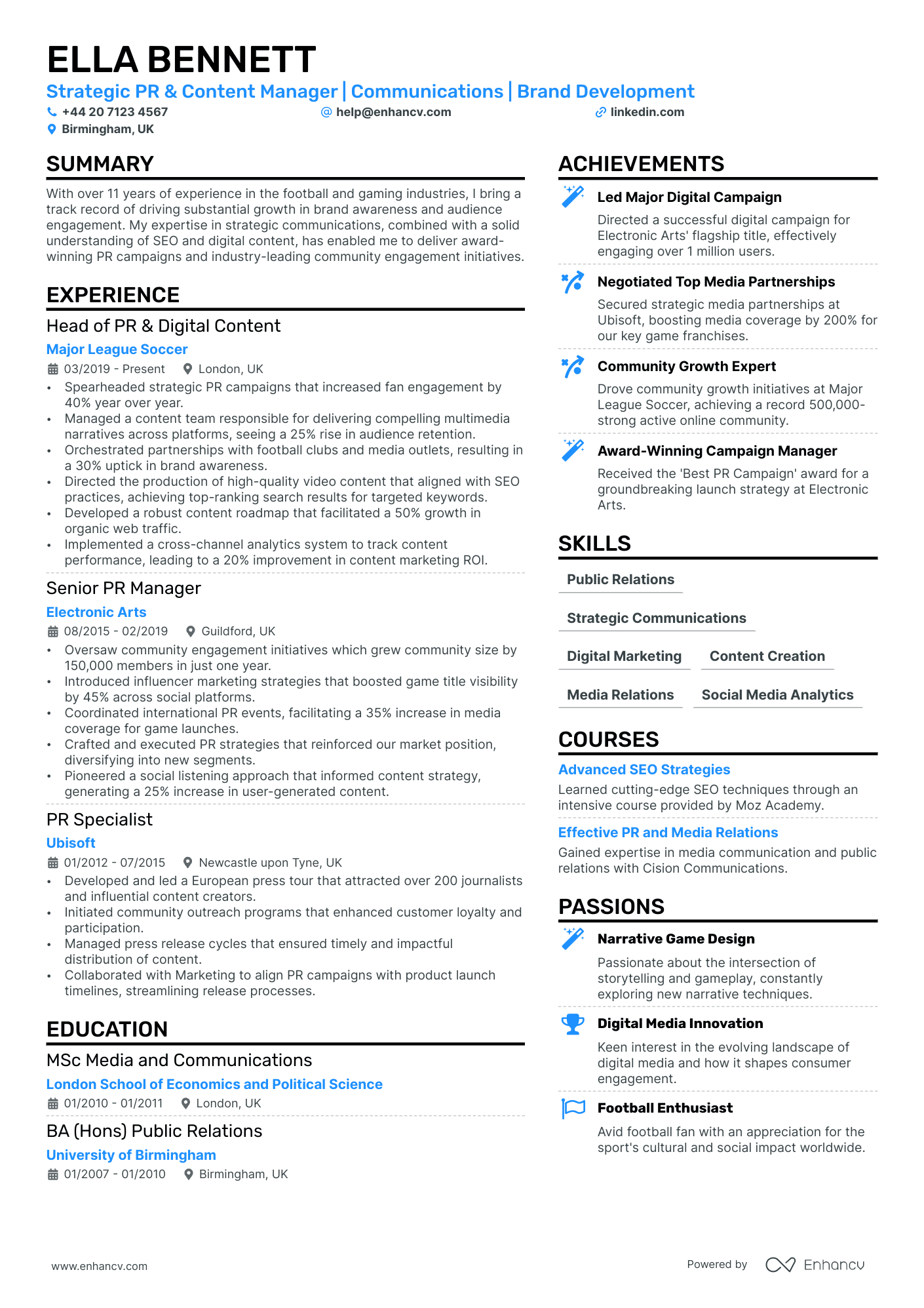
A PR CV template needs to do one job the generic ones skip: give you room to show coverage. Pick a structure with a clear space for a short selected coverage or key results block near the top, not just experience, skills, and education.
A single-column template usually reads best for PR. It keeps the recruiter moving down the page in one line of sight, and it parses more cleanly through tracking software than a two-column design with sidebars.
Resist the urge to over-design. A subtle template signals you understand presentation, while a busy one signals you are hiding a thin story behind graphics. Save the creative flourish for your portfolio, and let the CV stay quietly confident.
Build it from a tested layout rather than a blank page. Enhancv's CV templates export to a clean PDF and keep your headings and spacing consistent, which matters when your CV is itself a sample of how you present a story.
What UK public relations employers look for
Before you write a line, it helps to know what a PR recruiter is scanning for. Here is what the role tends to ask for and how it should shape your CV.
| What | What UK PR roles ask for |
|---|---|
| Skills that recur in adverts | Media relations, editing, social media, storytelling, and thought leadership come up again and again, with AI drafting tools now appearing too (Enhancv's internal job feed, UK public relations roles, last ~30 days). |
| How the work runs | Roles split across agency, in-house, and hybrid setups, so name your base and show you can flex between fast agency teams and longer in-house programmes. |
| What proof looks like | Coverage secured, campaign reach, share of voice, media lists built, and spokespeople placed. Concrete numbers beat adjectives every time. |
| Pay | PR salaries vary widely by agency, in-house team, region, and seniority, so read the individual advert rather than trusting a single headline figure. |
Two things there should shape every line of your CV.
First, mirror the language of the advert. If it asks for media relations and crisis communications, use those exact terms where they are true of you, and list your hard skills in the words the recruiter used.
Second, prove the soft skills instead of claiming them. "Storytelling" means nothing on its own, so pair it with a placed feature. The soft skills that matter in PR are real and checkable, and your skills section should read like evidence, not a wishlist.
AI now belongs on the list too. Recruiters increasingly want to see that you use drafting and monitoring tools to work faster, not to replace judgement. A short, honest note on the tools you use for research, media monitoring, or first drafts reads as current rather than gimmicky.
Top skills for your public relations CV:
Media relations
Press release and copywriting
Media database tools (Cision, Roxhill)
Social media management
Campaign measurement and reporting
Thought leadership content
Digital and SEO PR
AI drafting tools
Storytelling
News sense
Relationship building
Written communication
Attention to detail
Building your public relations portfolio
PR is one of the few CV-writing situations where a portfolio genuinely moves the needle. Your work has been published, so show it.
Pull together your best coverage in one place: links to placed articles, broadcast clips, campaign case studies, and a line or two on the result each one drove. A simple online folder, a one-page personal site, or a tidy PDF all work. What matters is that a recruiter can open it in seconds.
Reference it twice. Put the link in your header, and add a short selected coverage block near the top that names three or four standout hits with the outlet and the outcome.
A strong case study is short and specific: the brief, what you did, the coverage or reach it earned, and the result the client cared about. Two or three of those, presented cleanly, prove more than a decade of job titles.
Do not just list mastheads. "Featured in The Guardian" is a claim, while "placed a founder op-ed in The Guardian that drove a 20% spike in demo requests" is proof. That is how you sell yourself on a CV without a single adjective.
Writing your public relations personal statement
Three or four sentences at the top: who you are, the sector or beat you know, one measurable win, and the kind of role you want next. Keep it concrete. See more personal statement examples if the opening line will not come.
Skip the adjective soup every other PR CV opens with. "Passionate, driven, results-focused communicator" tells a recruiter nothing they can check, and they have read it a hundred times this week.
Lead with a result instead:
Public relations personal statement example
Senior PR account manager with seven years across consumer tech and B2B, and a habit of turning product launches into national coverage. Secured more than 40 pieces in tier-one titles last year, including The Guardian and TechCrunch, and grew one client's share of voice by a third. Looking to lead integrated campaigns for a challenger-brand agency in Manchester.
Public relations personal statement to avoid
A passionate and hard-working communications professional with excellent written and verbal skills and a proven ability to think outside the box. A highly motivated team player seeking a challenging PR role in a dynamic and forward-thinking company.
When we read a PR personal statement, we skip the adjectives and hunt for one line of proof. "Secured coverage in The Times and doubled a client's inbound enquiries" tells us more than a paragraph about being passionate and driven. Name the outlet, the result, and the sector you know. Do that, and a recruiter can picture you in the role by the third sentence.
The Enhancv team
Writing your public relations experience section
Write each role the same way: a dated heading, then bullets that lead with a strong verb and end on a result. Words like secured, placed, pitched, grew, and launched carry a PR bullet far better than responsible for. For the mechanics, see work experience on a CV.
PR is more measurable than most people admit. Coverage volume, tier of outlet, reach, share of voice, media lists built, and business outcomes like enquiries or sign-ups are all fair game, and they are your real CV achievements.
Tailor each application by pulling the priorities from the advert and mirroring them where they are true of you. Enhancv's CV tailoring feature reads the ad and suggests the matching edits, which saves rewriting your whole history for every role. For the manual method, here is how to tailor your CV.
- Secured more than 60 pieces of national and trade coverage across a year for three consumer clients, including features in The Telegraph and BBC Online
- Grew one client's share of voice from 12% to 28% in a competitive category through a proactive comment and data-story programme
- Built and maintained a media list of 200-plus journalists, lifting average pitch response rates to roughly one in four
- Ran a rapid-response press office during a product recall, keeping coverage neutral to positive across 30 inbound media enquiries
PRO TIP
PR results are easy to prove once you stop reaching for advertising value equivalent (AVE). Lead with coverage volume, tier of outlet, reach, and share of voice, then close on the business outcome the client cared about. If a campaign moved a number, that number belongs in the bullet.
Education and professional development
PR hires on results more than on any single degree, but qualifications still earn their place. List your degree with its classification, and keep your education section tighter as your experience grows.
Communications, journalism, English, and marketing degrees all read naturally for the field, though plenty of strong PR people come from unrelated subjects. If that is you, let the experience section carry the weight.
Professional development signals commitment to the craft. A CIPR or PRCA qualification, a diploma, or a short course in crisis communications, digital PR, or media law all belong here. Adding relevant qualifications on a CV shows you take the profession seriously, especially early on.
Keep this section factual and brief. Name the body, the qualification, and the year, and skip long descriptions of what each course covered. A recruiter mainly wants to see that you are keeping current with a fast-changing field, from measurement standards to the way AI tools now sit inside the newsroom and the press office.
Writing a public relations CV with no experience
Breaking into PR is a chicken-and-egg problem: everyone wants coverage on your CV before they will let you earn any. The way in is to prove you can already do the work in miniature.
Use a skills-led structure so your abilities and any real output come before a thin job history. Then mine your life for genuine PR evidence, because it is usually there:
- Running social media or press for a student society, sports club, or local charity.
- Writing for a student newspaper, blog, or community newsletter.
- An internship or work placement at an agency or in-house team.
- Freelance copywriting, event promotion, or campaign work for a small business.
Write those with the same numbers you would use in a paid role: followers grown, an article published, an event that filled the room. One placed piece or a measurable audience is a real PR result. See more CV examples for a first job for the wider structure.
If you have done comms for a cause, give it a dated entry like a job. Volunteering on a CV counts as experience here, not filler, as long as you show what it achieved.
Conclusion
Lead with the coverage you earned, prove your skills with real results, and keep the format clean enough that your best hit is impossible to miss.
Pair the CV with a short, sharp cover letter that pitches one story about why you and this employer fit, and you turn a stack of campaigns into an interview.

Author's take - The Enhancv team
When we read a PR personal statement, we skip the adjectives and hunt for one line of proof. "Secured coverage in The Times and doubled a client's inbound enquiries" tells us more than a paragraph about being passionate and driven. Name the outlet, the result, and the sector you know. Do that, and a recruiter can picture you in the role by the third sentence.