



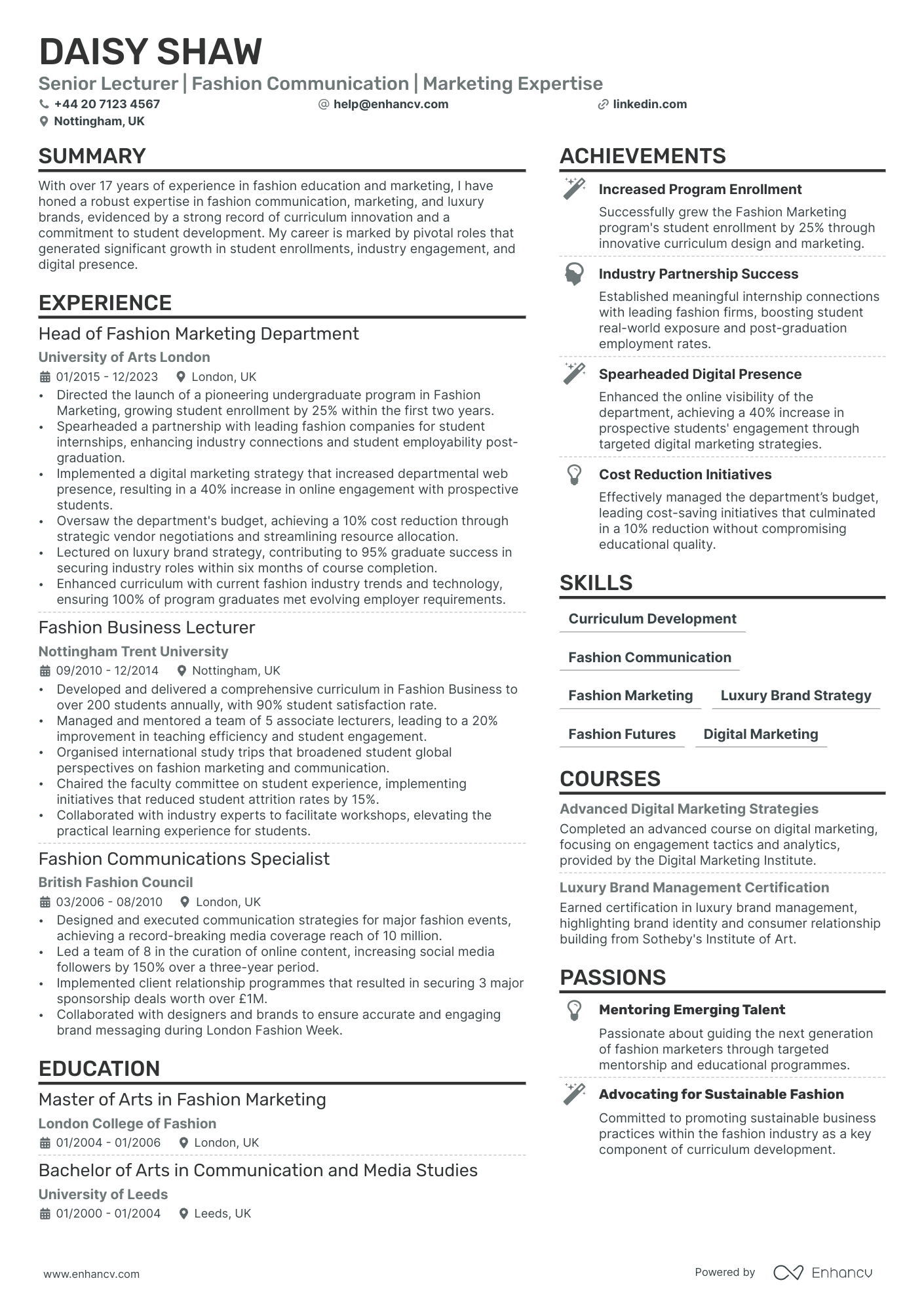
You've been told you need a season at a fashion house before anyone will read your CV. That myth keeps talented graduates out of a field that rewards proof over pedigree.
The fashion marketing CVs that get shortlisted lead with a portfolio, a few real campaign numbers, and the digital skills brands hire for. Everything else on the page is decoration.

Key takeaways
- No paid experience is normal for a first fashion marketing role. Lead with a portfolio, coursework campaigns, and the digital skills brands screen for.
- Put a live portfolio or campaign link in your header. A fashion marketing CV without one reads as unfinished.
- Name the channels and tools employers list: Instagram, TikTok, Meta and TikTok Ads, Google Analytics, email platforms, and Adobe Creative Cloud.
- Open with a short personal statement built on one real project, a measurable result, and the kind of brand you want to work for.
- Quantify what you can: reach, engagement rate, follower growth, click-throughs, and any sales a campaign moved.
- Keep it to two pages, reverse chronological once you have roles, and send a PDF unless the advert asks for a Word file.
Writing a fashion marketing CV with no experience
Fashion marketing is friendlier to newcomers than its reputation suggests. Brands hire people who understand an audience and can make it move, and most of that can be shown before you have held the job title.
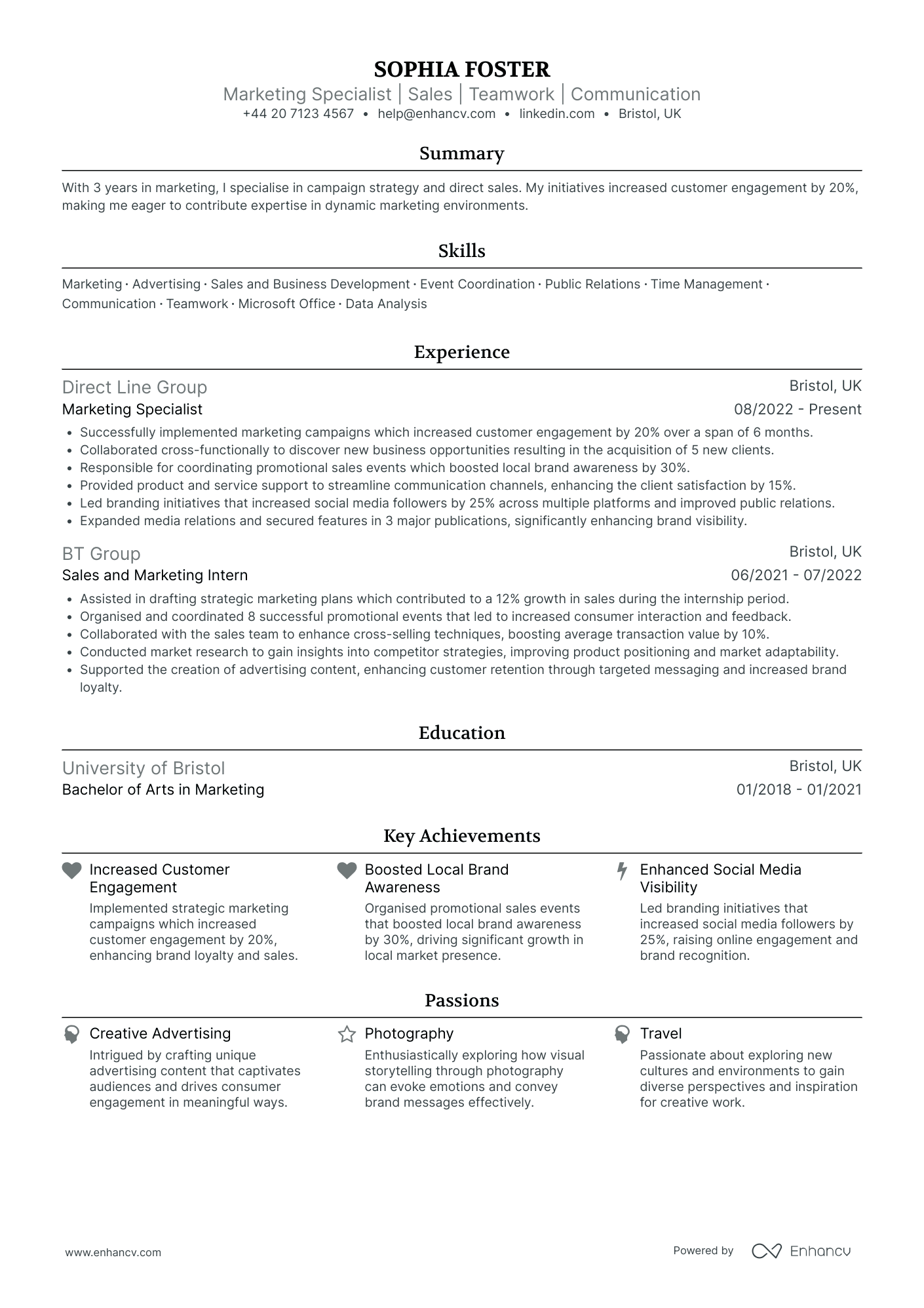
So your first CV carries its weight differently. Use a skills-led structure: personal statement, then portfolio and projects, then skills, then education, with any retail or hospitality work further down.
The reason that order works is simple. A junior fashion marketing recruiter has a stack of CVs from people with no title yet, so the tiebreaker is who can prove they have already done the work in miniature. Front-load that proof and the reader never has to dig for it.
Mine your life for real marketing evidence. For most students and graduates it is already there:
- University live briefs, competition entries, and a dissertation campaign you can talk through.
- Running social accounts for a society, a small label, or your own Depop or Vinted store.
- Retail or visual merchandising, where you already know the customer and the product.
- Freelance content, styling, photography, or event and pop-up work.
- A personal account or newsletter that built a genuine following in a niche you care about.
Write each one in marketing language, with a number attached. "Grew a student fashion society's Instagram from 300 to 2,400 followers in one term" is a fashion marketing bullet that happened at university.
Retail is worth a second look here. Time on a shop floor teaches you how a customer picks up a product, what a window display does to footfall, and how a promotion lands, and all of that is marketing insight if you frame it as such.
If you have volunteered on a campaign or a charity shop's socials, give it a dated entry like a job. Volunteering on a CV counts as experience for this role, not filler.
One thing moves a no-experience CV to the top of the pile faster than any bullet: a link to a portfolio or a campaign that shows the result. It turns a claim into something a recruiter can click and check.
Top skills for your fashion marketing CV
Read a dozen live fashion marketing adverts and the same demands repeat. Social content, paid social, analytics, campaign planning, and copywriting come up again and again, usually alongside the creative tools.
Those are your hard skills, and they belong on the page in the words the adverts use. If a brief asks for "paid social", write "paid social", not "digital advertising".
The soft skills that matter here are real and checkable. Commercial awareness, creativity, and trend sense separate a marketer from a content hobbyist, so prove each one in a bullet rather than listing it as an adjective.
Evidence each skill where you claim it. "Google Analytics" on its own is a keyword, while "used Google Analytics to move budget to the two posts driving most traffic" is a skill a recruiter believes. The list below is the shortlist worth building your CV around, drawn from how junior fashion marketing roles are actually written.
Top skills for your fashion marketing CV:
Social media marketing
Content creation (photo and short-form video)
Paid social (Meta and TikTok Ads)
Email marketing
Google Analytics
SEO
Influencer and PR outreach
Campaign planning
Copywriting
Adobe Creative Cloud
Commercial awareness
Creativity
Trend awareness
Communication
Collaboration
What fashion marketing employers look for
Fashion marketing sits between the creative and the commercial, and the good adverts want proof of both. A CV that shows only pretty content reads as a hobby, and one that shows only spreadsheets reads as generic marketing, so the strongest applications hold the two together. Here is what recruiters in the field tend to screen for, and how to answer each on the CV.
| What employers look for | How to show it on your CV |
|---|---|
| A portfolio of real work | Link to campaigns, content, or live briefs in your header, each with your role and the result attached. |
| Digital and social fluency | Name the channels and tools you have used, from TikTok and Instagram to Meta Ads and Google Analytics. |
| Commercial awareness | Tie a campaign to a business outcome: sales, sign-ups, footfall, or cost per click. |
| Measurable results | Quantify reach, engagement rate, follower growth, and conversion, even on small projects. |
| Brand and trend sense | Reference the brands whose marketing you admire and, in an interview, why it works. |
Building your fashion marketing portfolio
The portfolio is the part of a fashion marketing application that experience cannot fake, and the part a thin CV leans on hardest. It is where a recruiter sees taste, judgement, and whether your numbers are real.
Include three to five pieces, no more. Each should carry a one-line brief, your specific role, and the outcome. A social campaign, a short-form video that performed, a lookbook, an email flow, or a university live brief all qualify.
Where it lives matters less than that it opens fast. A Behance page, a simple personal site, a clean PDF, or a shared Notion page all work. Put the link in your CV header and reference a specific piece in your bullets so the two documents talk to each other.
Coursework counts if you present it like real work. Frame a live brief by the brand, the objective, and what you delivered, and it reads as a project rather than an assignment.
Show range without sprawl. One paid-social example, one organic content piece, and one piece of writing prove more than five variations on the same campaign, because they map to the different things the job will ask of you.
Keep the numbers honest and visible. A campaign that reached 4,000 people and lifted engagement by a few points is a real result worth stating plainly, and an inflated figure a recruiter can smell does more damage than a modest one.

What to put in a fashion marketing portfolio
A short-form video or social campaign with its reach and engagement. One paid-social example with the budget and result. A piece of brand or product copy. A live brief or competition entry, framed by objective and outcome. One page of results, so the numbers are not buried in the visuals.
Writing your fashion marketing personal statement
Three or four sentences at the top: who you are, the kind of brand you want to work for, one real project with a result, and where you are headed. See more personal statement examples if the opening line is not coming.
Avoid the adjective soup every other CV opens with. A weak statement reads "A passionate and creative fashion graduate seeking an exciting opportunity to grow in a dynamic marketing team." It names no project, no channel, and no result, so a recruiter learns nothing they can verify.
Name the brand type you are aiming at, too. "A fashion marketing role" is vague, while "a junior role with a sustainable fashion brand" tells the reader you have thought about where you fit, which is half the interest a good statement earns.
Lead with evidence instead:
Fashion marketing CV personal statement example (no experience)
Fashion marketing graduate with a 2:1 in Fashion Communication and hands-on experience running social for a student label, growing its Instagram from 300 to 2,400 followers in one term. Comfortable across TikTok, Meta Ads, and Google Analytics, with a portfolio of three live-brief campaigns. Looking to bring content and community skills to a junior marketing role with a sustainable fashion brand.
When we read a fashion marketing CV with no agency experience, the first thing we look for is a link. A portfolio that opens in one click and shows a campaign, the brief behind it, and one honest number tells us more than any list of adjectives. Then we want to see that you understand the brand, not just the aesthetic. A candidate who can say "I grew this account and here is what I learned" beats a polished CV with nothing to click through to.
Writing your fashion marketing experience section
Whether the work was paid, freelance, or a university project, write each entry the same way: a dated heading, then bullets that show what you did and what changed. Lead every bullet with an action verb.
Fashion marketing is unusually measurable, so use that. Follower growth, engagement rate, click-throughs, cost per click, and any sales lift are your CV achievements, and they carry more weight than a paragraph of responsibilities.
When a number is small, give it context rather than hiding it. "Grew a niche account from 300 to 2,400 followers" is honest and specific, and specificity is what a recruiter trusts. A vague "managed social media accounts" tells them nothing about whether you were any good at it.
If you do not have a paid role yet, the same rules apply to a project entry. Give your dissertation campaign or a live brief a dated heading, then write bullets about the objective, what you produced, and how it performed, exactly as you would for a job.
Tailor each application to the advert, mirroring the channels and metrics it names where they are true of you. Enhancv's CV tailoring feature reads the ad and suggests the matching edits, which saves rewriting from scratch for every brand.
- Plan and shoot weekly TikTok and Instagram content for two independent labels, growing their combined following by 3,100 in six months
- Run Meta and TikTok ad sets on a 400 pound monthly budget, cutting cost per click by 22% through audience testing
- Write product and email copy that lifted newsletter click-through from 1.8% to 3.4%
- Track performance in Google Analytics and a weekly report, reallocating spend to the content that converts

PRO TIP
Fashion marketing adverts name specific channels, tools, and metrics, not vague creativity. Mirror the ones you can back: "paid social", "TikTok", "Meta Ads", "Google Analytics", "engagement rate", "cost per click". If you have used it, name it exactly as the advert does.
Formatting your fashion marketing CV
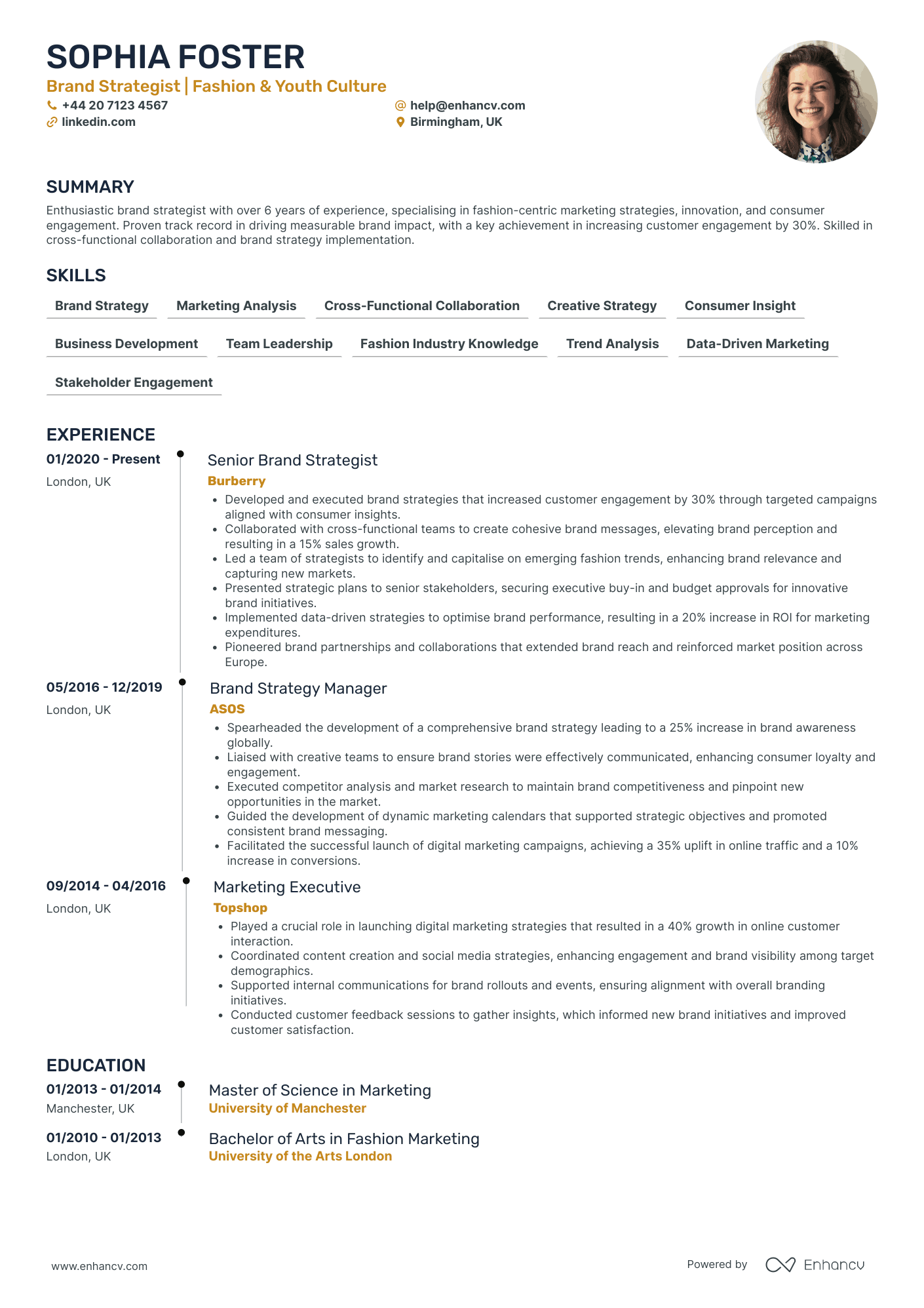
While your history is thin, keep the skills-led order so the portfolio and projects come before a short work history. Once you have marketing roles behind you, switch to reverse chronological.
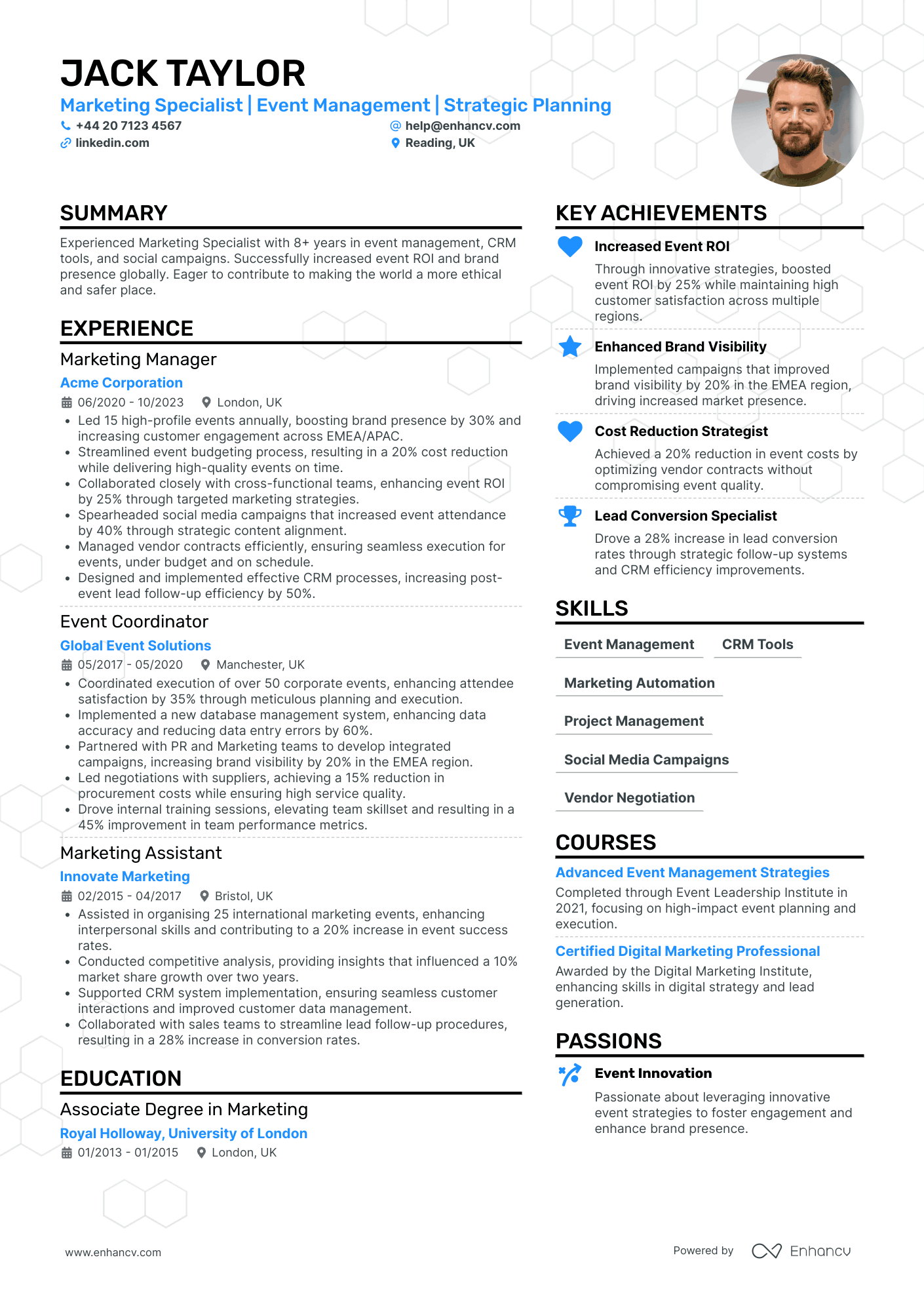
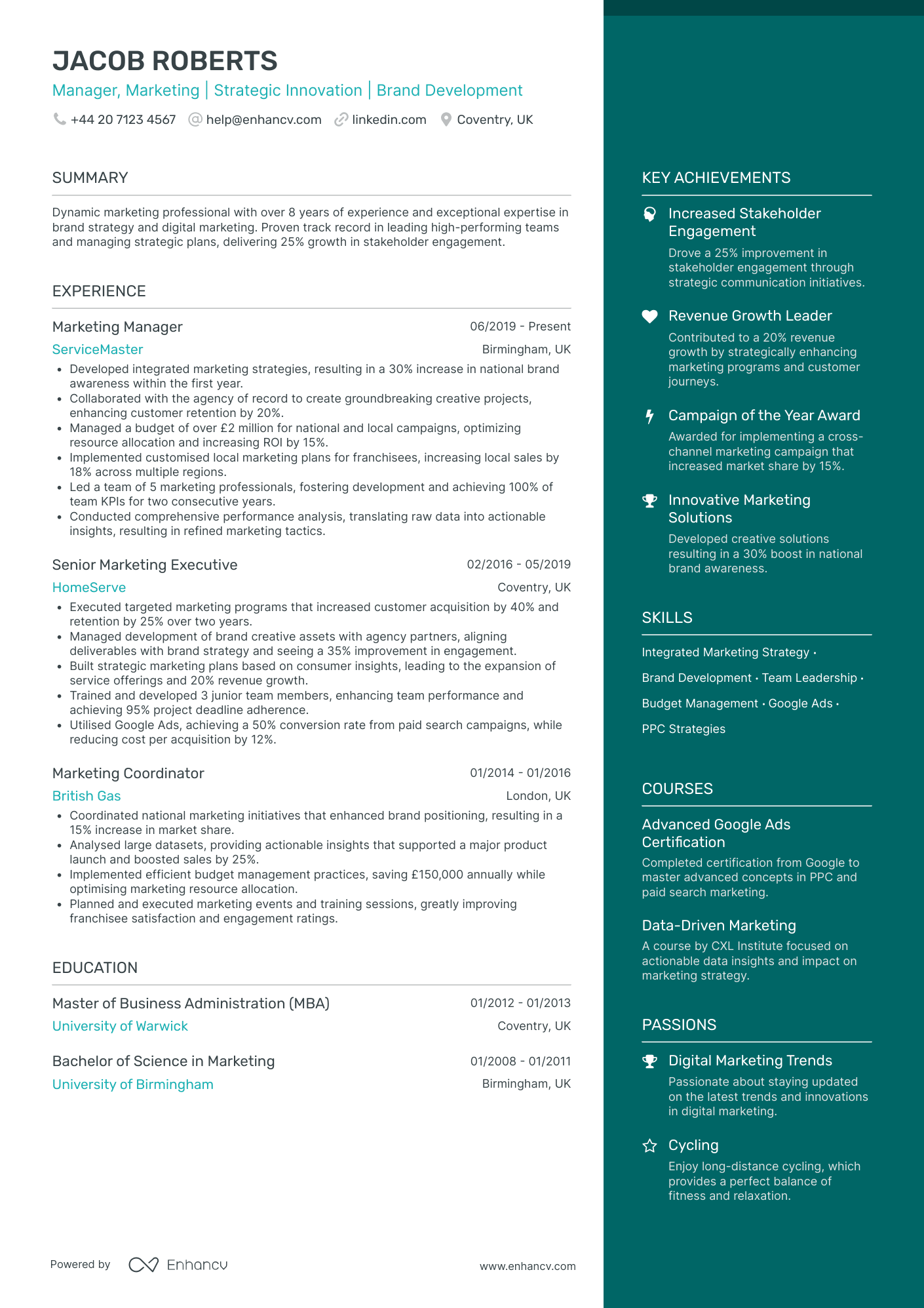
Keep it to two pages, one column, standard headings, and a readable font. A creative field earns a light touch of design, but the layout still has to parse cleanly, so keep it ATS-friendly.
Put the portfolio link in the header, near your name and location, where a recruiter looks first. Do not bury it at the bottom next to your references, and check that the link works from a phone, since a fair share of first screens happen on one.
Section order does the heavy lifting on a first CV. Personal statement, then a portfolio or projects block, then skills, then education, then any work history keeps the strongest material in the top half of page one, which is as far as many recruiters read before deciding.
Send a PDF for direct applications so the layout holds, and keep a Word copy for agencies that reformat CVs into their own template. If the advert names a file type, follow it. Build it from a tested layout rather than a blank page, since Enhancv's CV templates export to a clean PDF.
Education and courses for a fashion marketing CV
A degree in fashion, marketing, or communication helps, but plenty of good marketers arrive from other subjects. List your classification and pull out the relevant modules, live briefs, and any dissertation that doubled as a campaign in your education section.
Short courses close the gap fast on a first CV and signal you are already learning the tools. A Google Analytics certification, Meta or TikTok's own marketing courses, a HubSpot content qualification, or a CIM award all read well.
List them where you hold them, even "in progress", and link out to any certificates you can show. For a career changer, this section does a lot of the convincing.
Do not pad it. Two or three relevant courses that map to the tools in the advert beat a long list of half-finished ones, and a recruiter reads the short, targeted version as focus rather than gaps.
Conclusion
Lead with a portfolio and real results, name the channels and tools brands actually ask for, and keep the format clean enough to survive an ATS.
Remember what the reader is really deciding. They are not asking whether you have done the job before, they are asking whether you will be good at it, and a portfolio plus honest numbers answers that better than a job title would.
Pair the CV with a short cover letter that says why this brand, and a no-experience application starts to look like a credible first hire.
Author's take - The Enhancv team
When we read a fashion marketing CV with no agency experience, the first thing we look for is a link. A portfolio that opens in one click and shows a campaign, the brief behind it, and one honest number tells us more than any list of adjectives. Then we want to see that you understand the brand, not just the aesthetic. A candidate who can say "I grew this account and here is what I learned" beats a polished CV with nothing to click through to.