


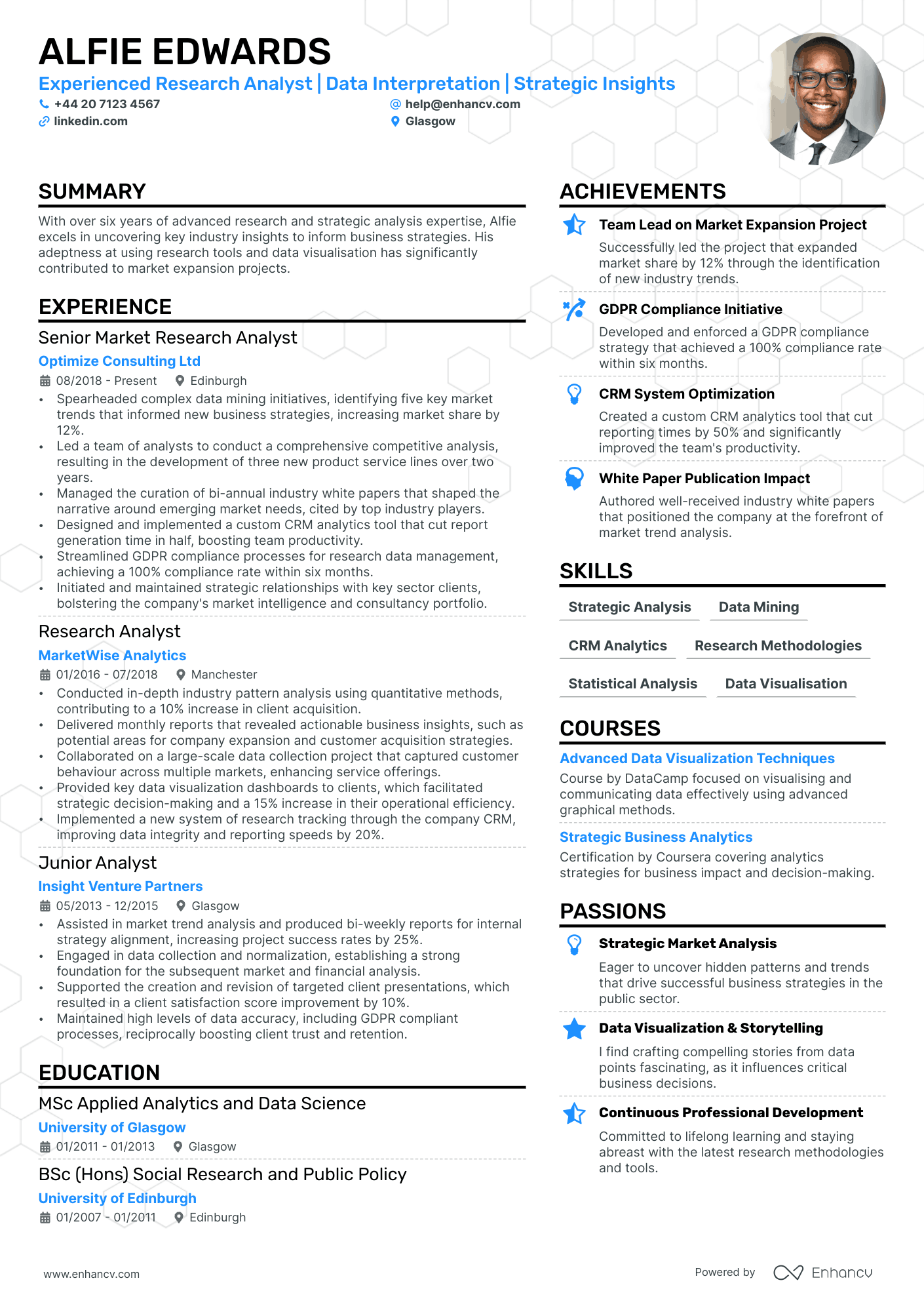
Most researcher CVs fail on format before anyone reads a word of the research. An academic panel wants a long-form CV with a full publication list. A company hiring a user or data researcher wants two tight pages that lead with impact.
That single choice, which CV the reader expects, shapes everything else on the page. Get it right and the work speaks for itself. Get it wrong and strong research reads like a filing error.

Key takeaways
- Pick the format first. A long-form academic CV for universities and fellowships, a tight two-page CV for industry research roles.
- Lead with methods and findings. Data analysis, Python, and machine learning recur most in UK postings, so name the ones true of you near the top.
- Quantify every study. A method only matters when you attach the finding or the decision it moved.
- Make publications and outputs easy to spot, in a consistent citation style, most recent first.
- UK researcher roles skew senior and are mostly on-site or hybrid, so put your location and level of experience up top.
- Send a PDF unless the advert or the portal asks for something else.
Formatting your researcher CV
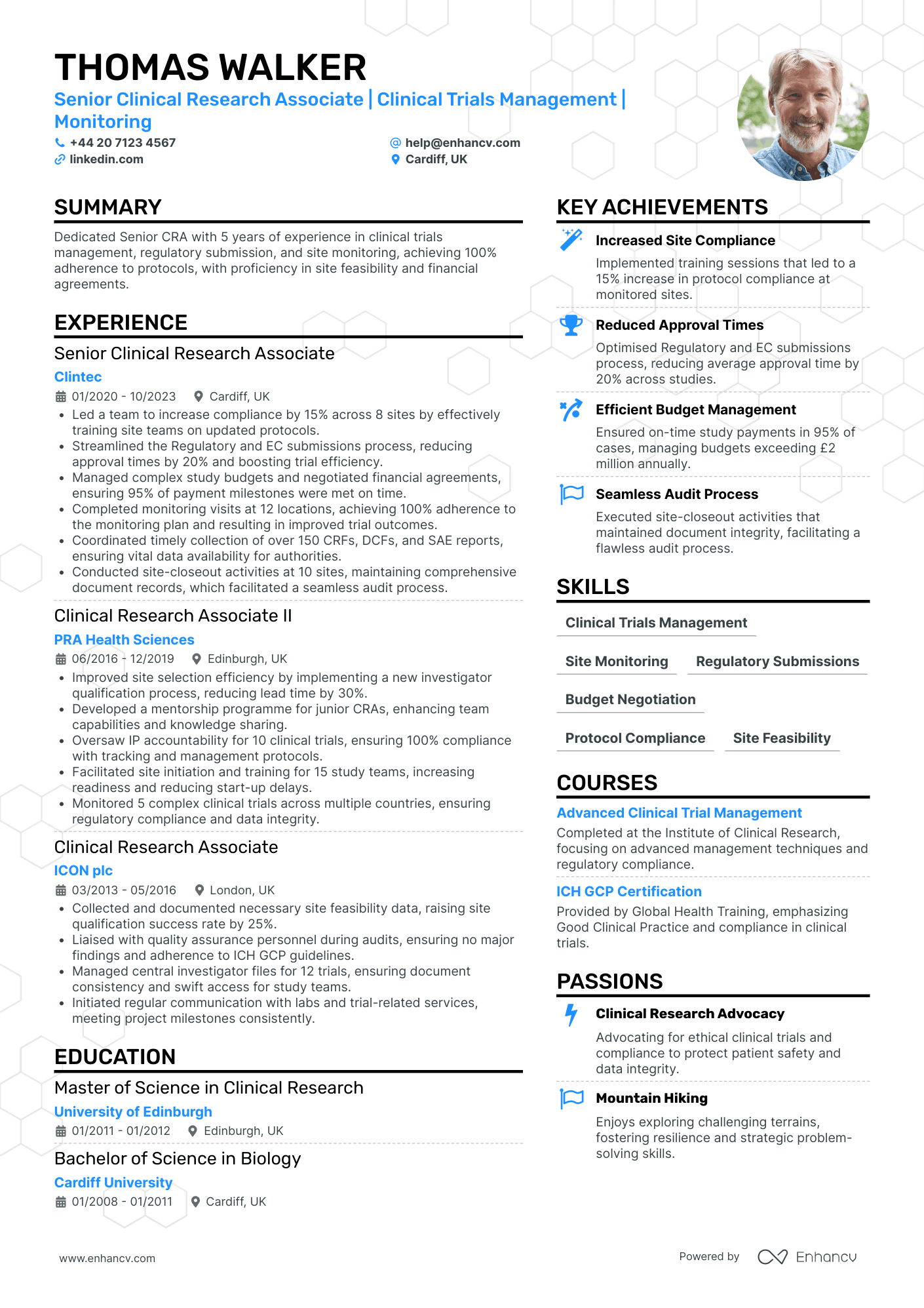
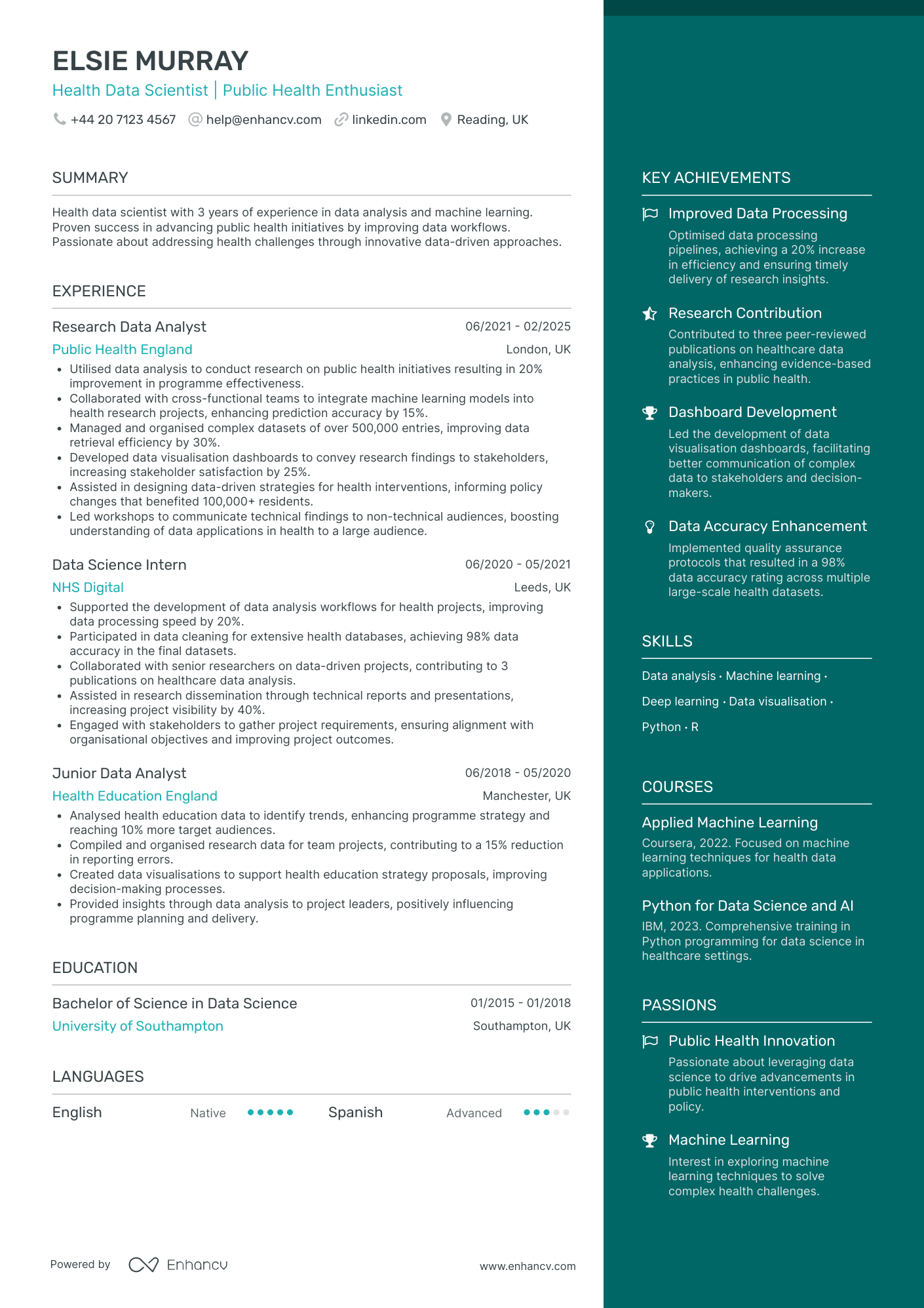
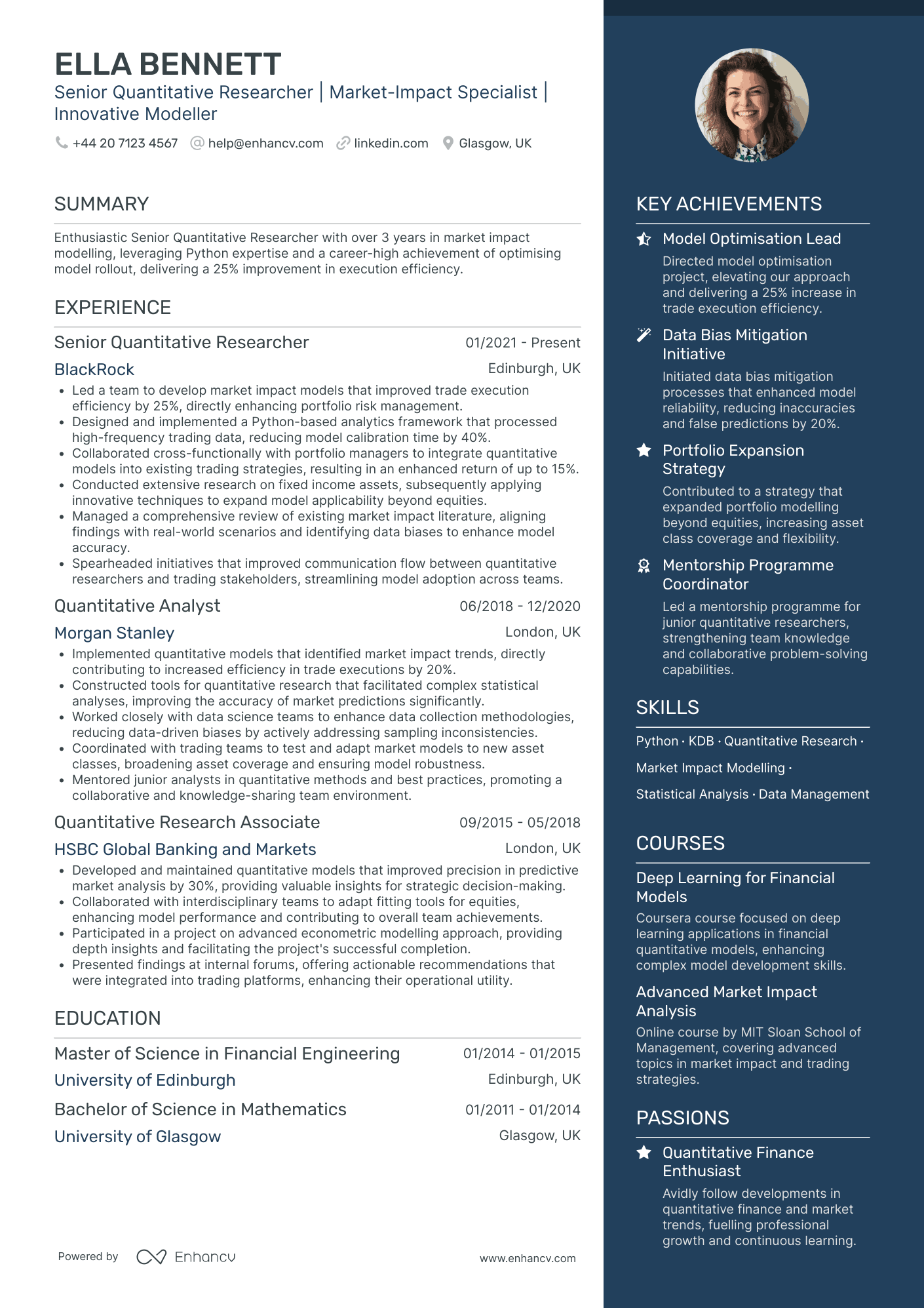
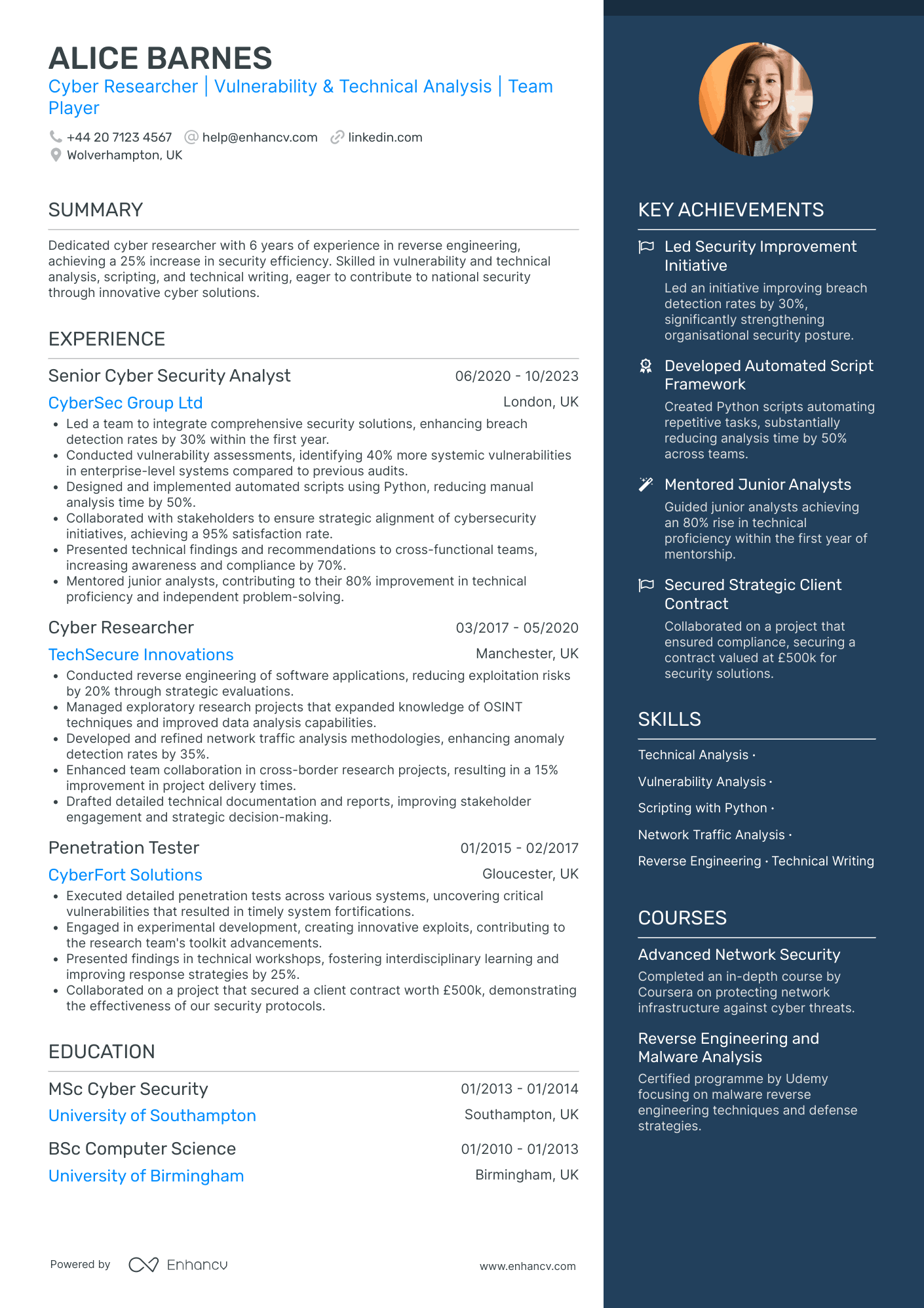
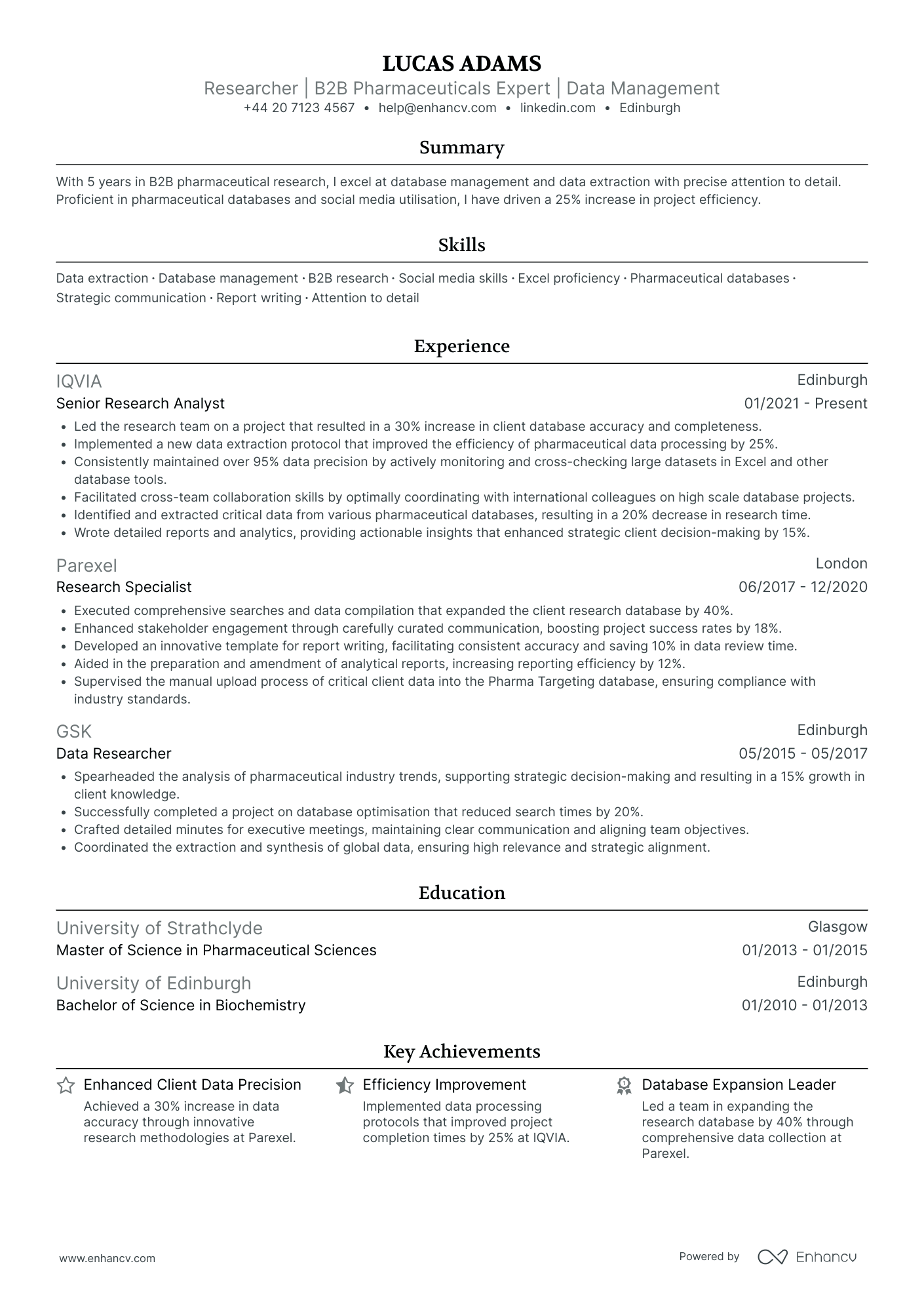
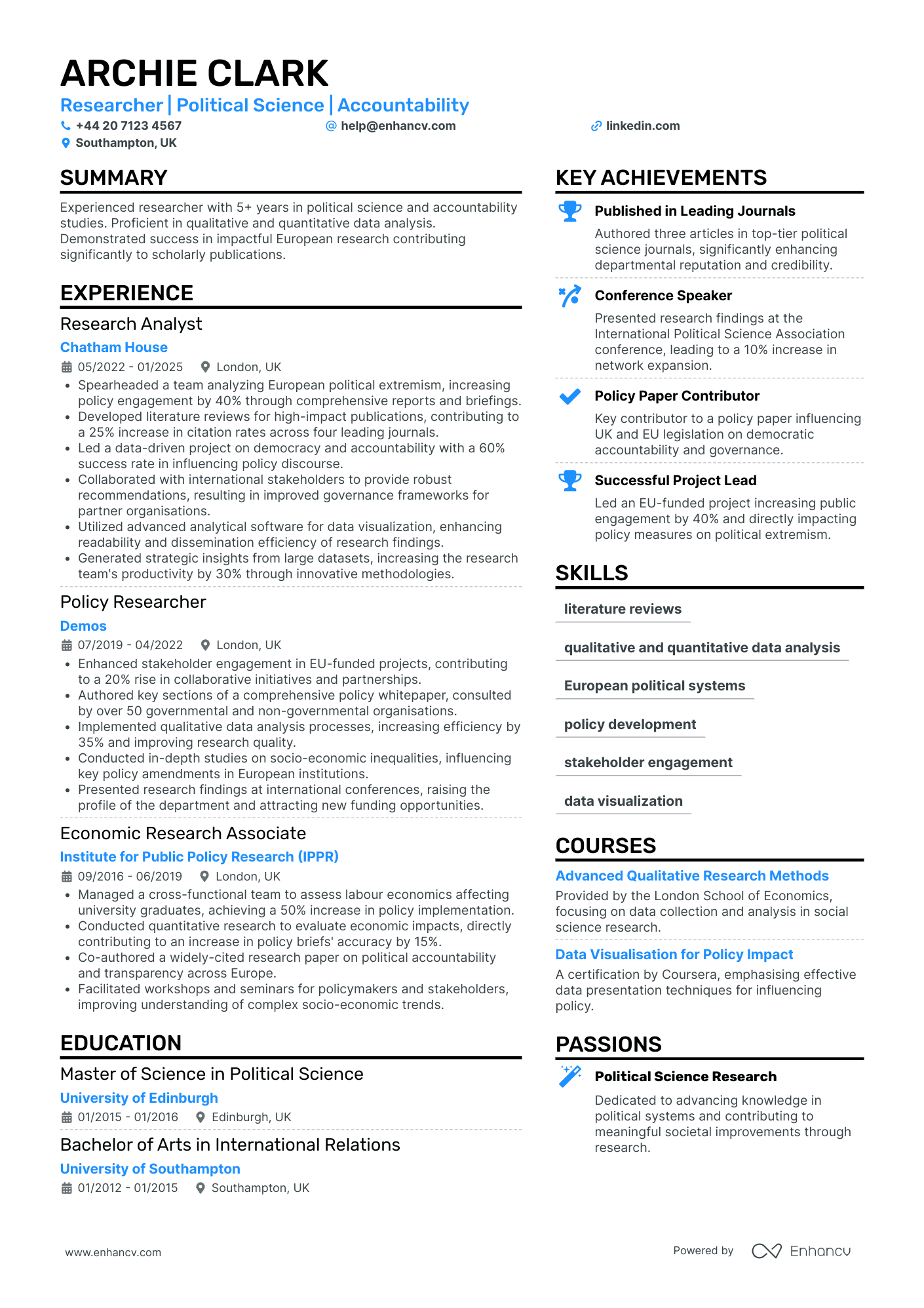
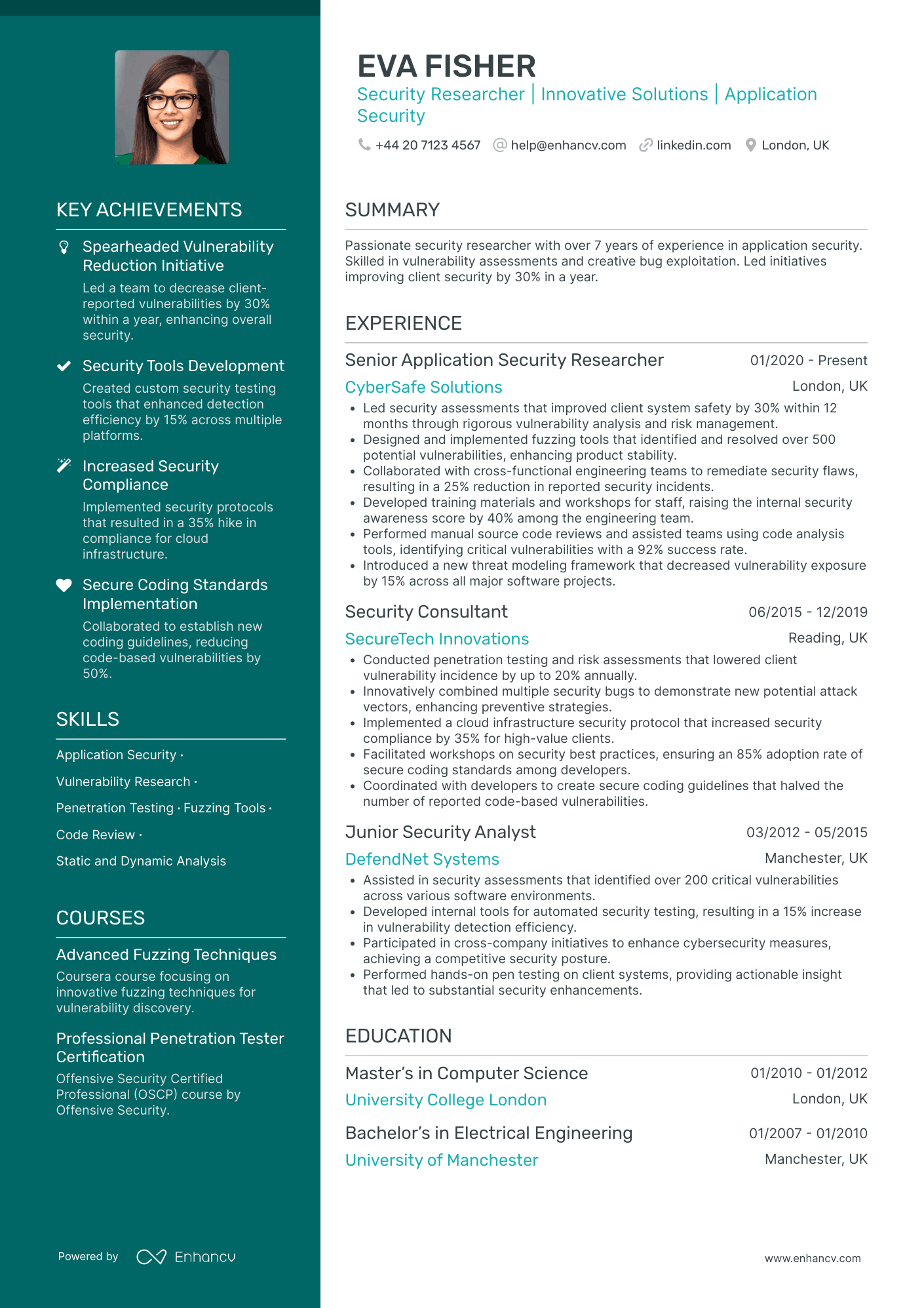
Before you write a line, decide which CV the reader expects. A researcher applying for a postdoc, a lectureship, or a fellowship needs an academic CV, which runs as long as the evidence demands and leads with publications. A researcher applying to a company, an agency, or a think tank needs a standard CV format, two tight pages with achievements first.
Send the wrong one and the mismatch shows in seconds. This section covers the standard two-page CV. The academic long-form CV gets its own section below.
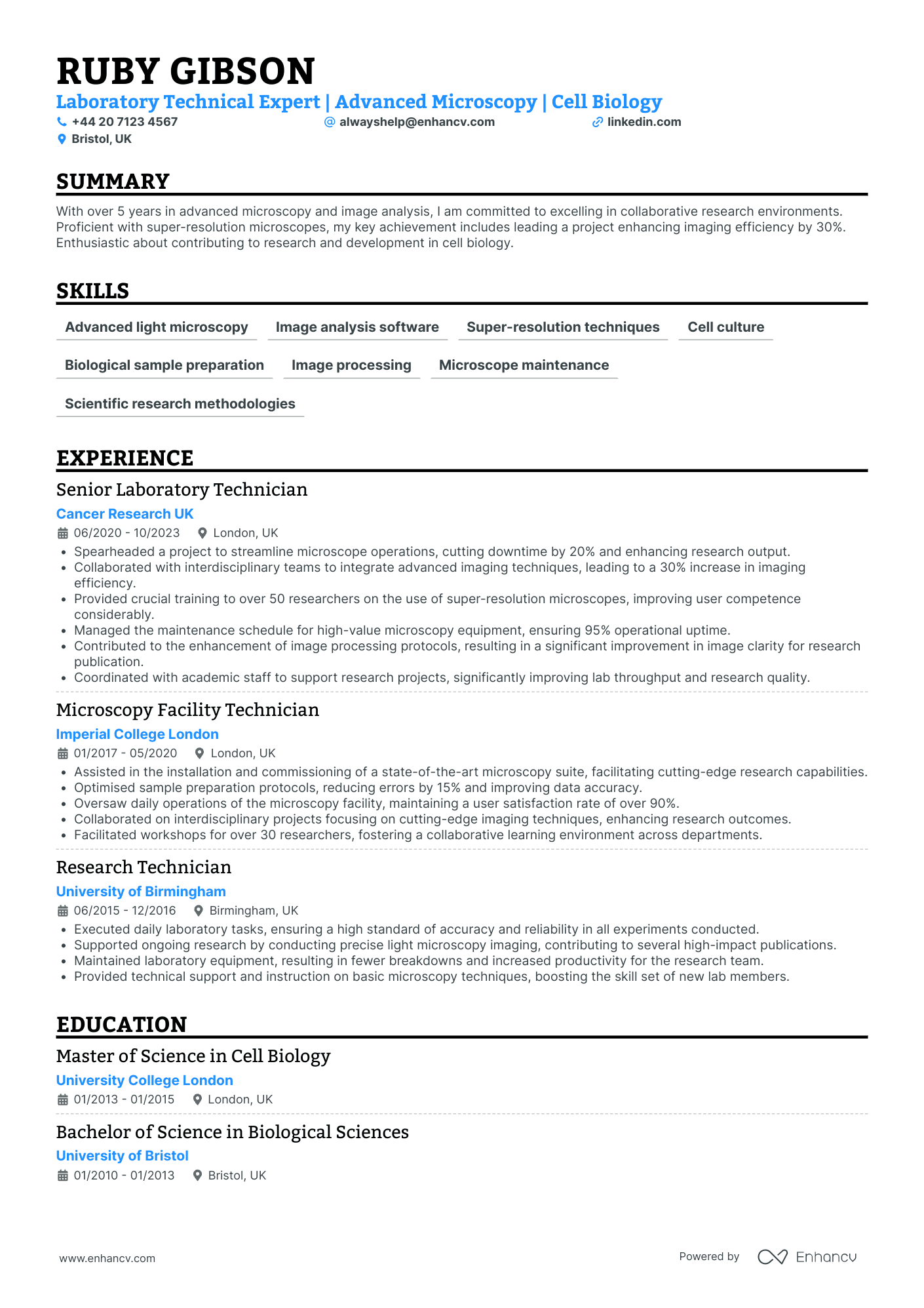
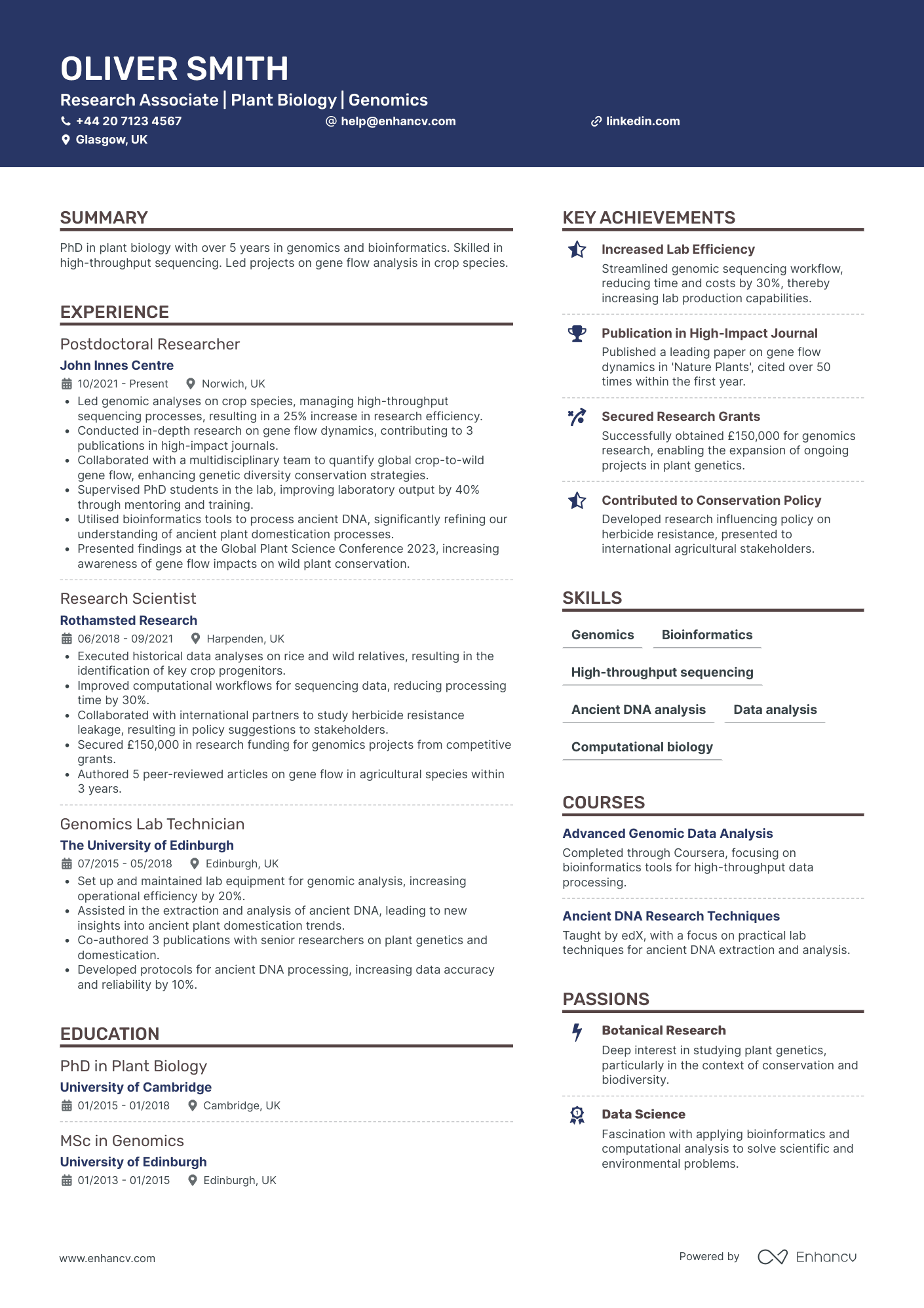
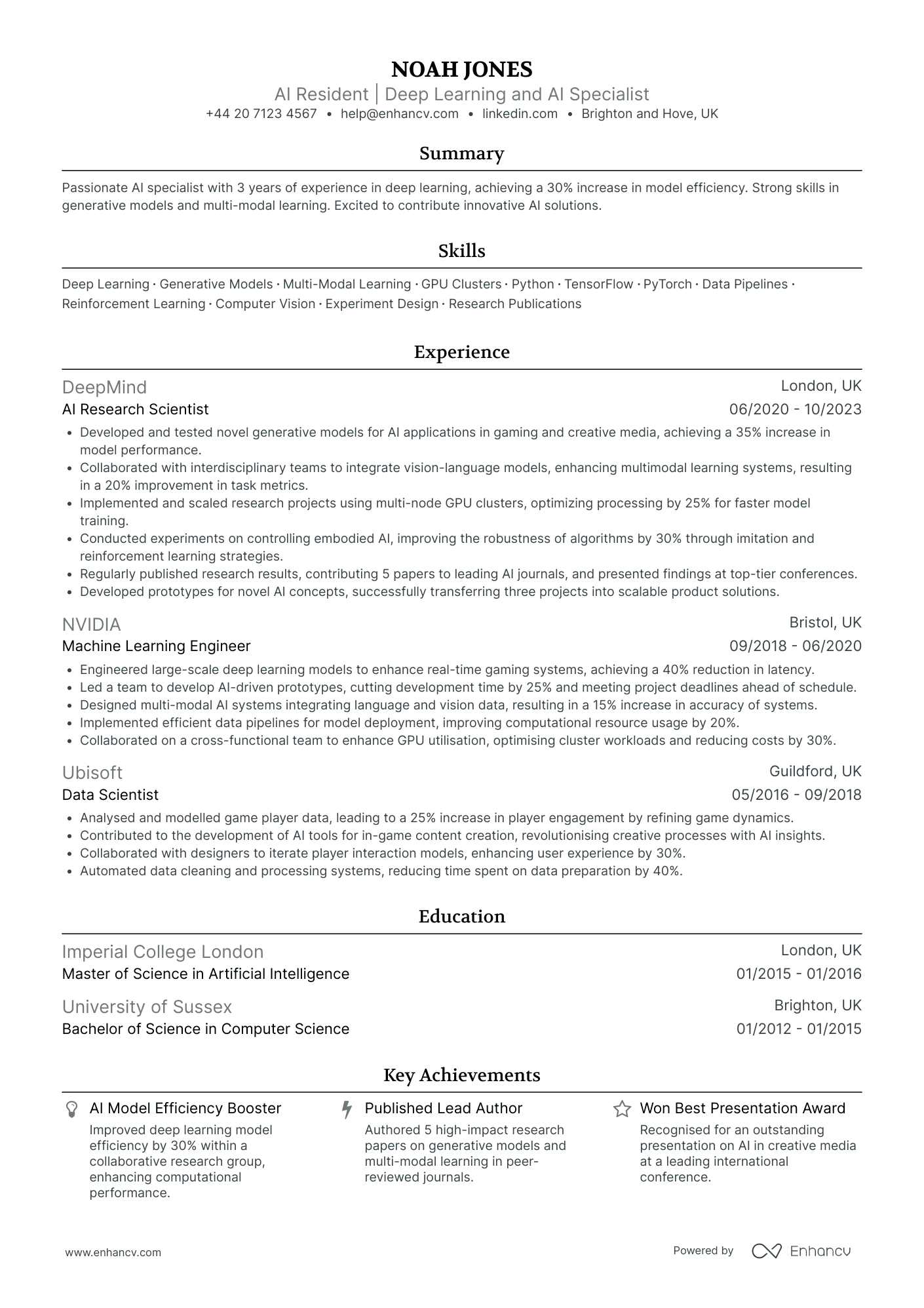
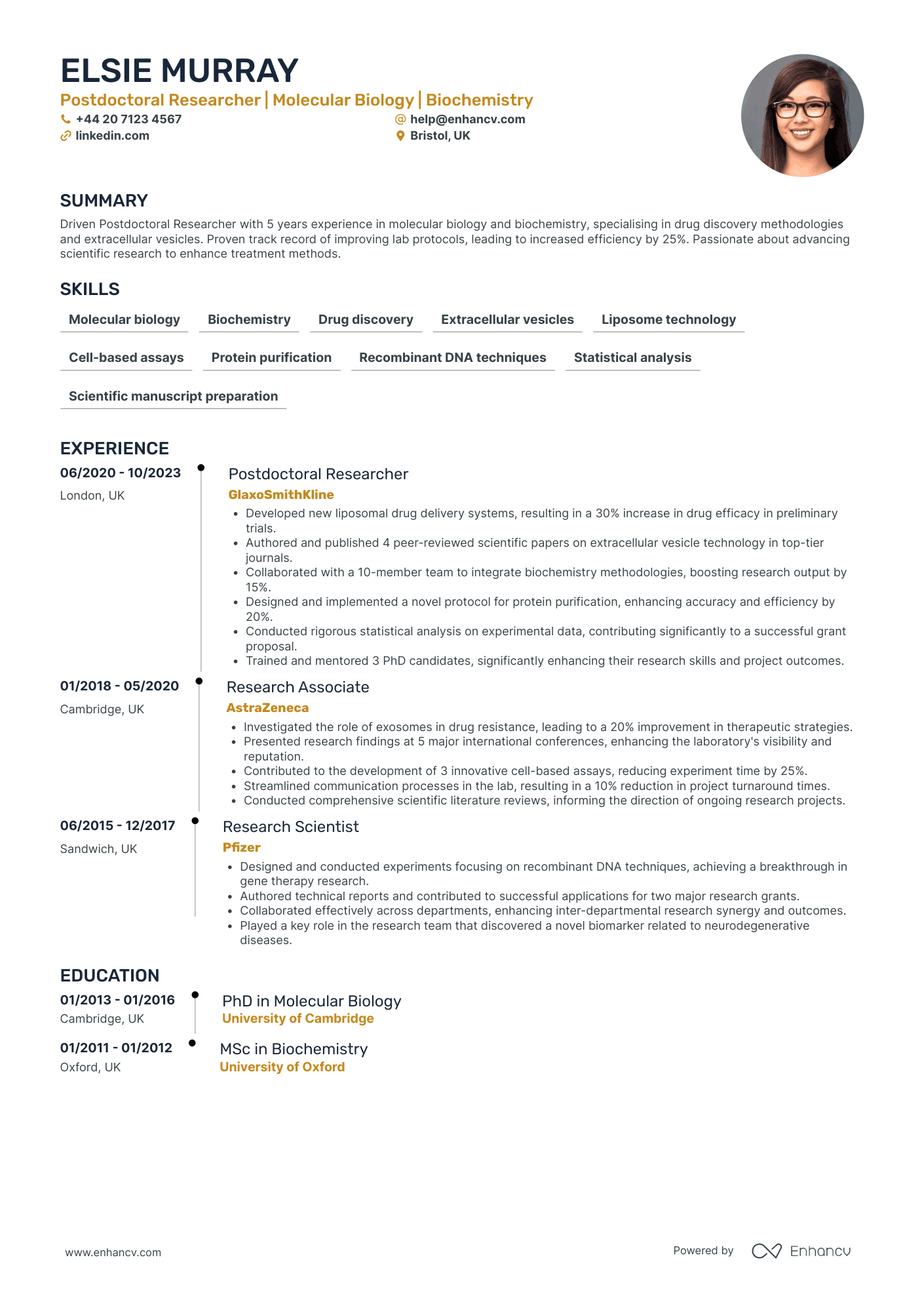
For an industry researcher role, keep it to two pages, one column, standard headings, and a readable font. Hiring managers skim for evidence of rigour and impact, and design flourishes only slow that down.
Order it in reverse chronological order, most recent role first, unless you are early enough in your career that a skills-led structure serves you better.
Send a PDF for direct applications so tables, symbols, and citation formatting hold their shape. Keep a Word copy for agencies and university portals that reformat into their own template. If the advert names a file type, follow it.
Industry research applications often pass through tracking software first, so keep the layout clean and the headings standard for an ATS-friendly CV. Build it from a tested structure rather than a blank page, and Enhancv's CV templates export to a clean PDF that parses.
One caveat researchers forget: an academic CV and an ATS almost never meet. University and research-council portals are read by people, so a long-form CV is fine there. Save the two-page, keyword-aligned version for company job boards, where software screens first.
Whichever format you send, pair it with a short cover letter that names the post and the one project that makes you right for it. For academic roles that is often a full cover letter or research statement, so check what the advert asks for.
Is your resume good enough?
Drop your CV here or choose a file. PDF & DOCX only. Max 2MB file size.
The academic CV format
The academic CV breaks the two-page rule on purpose. For a postdoc, a lectureship, or a fellowship, the reader expects a full record of your scholarship, and that can run to four, six, or more pages as your career grows.
Lead with the sections a hiring committee scans for, and let your strongest evidence sit near the top rather than buried on page five.
Put publications where they can be found in seconds. List them in a consistent citation style, most recent first, and make your own name easy to spot in each entry. Separate peer-reviewed articles from book chapters, preprints, and work under review, and never blur the line between published and forthcoming.
Grants and funding earn their own section. Naming the funder, the amount awarded, and your role on the bid tells a committee you can win money, which is often what the post is really about.
Quantify teaching and supervision the same way. Modules taught, students supervised to completion, and cohort sizes turn a list of duties into evidence of range.
Link a profile so the record is verifiable. An ORCID, a Google Scholar page, or an institutional profile in your header lets a committee check your citations and outputs without emailing you for a list.
Keep one master academic CV with everything on it, then cut a tailored version for each application. A fellowship panel and a teaching-focused department want different things at the top.

What goes in an academic CV, in order
- Research interests or personal statement. Three or four lines on your field and where your work is heading.
- Education. Degrees with classifications, your PhD thesis title, and your supervisor.
- Research experience. Posts, fellowships, and projects, with your contribution to each.
- Publications. Peer-reviewed first, then chapters, preprints, and work under review.
- Grants and funding. Funder, amount, and your role on the bid.
- Conferences and teaching. Talks given, modules taught, students supervised.
- Service and references. Peer review, committees, and named referees.
What the UK researcher market looks like
Knowing the market shapes the CV. Here is what UK employers are asking for, and who they are hiring.
| What | UK researcher roles |
|---|---|
| Where the work happens | On-site 52%, hybrid 46%, remote 2% (52, 46, and 2 of 100 UK postings in the last ~30 days, Enhancv's internal job feed) |
| Experience level asked for | Lead 44% · mid 27% · entry 14% · senior 14% · executive 1% |
| Most-listed skills | Data analysis 35%, Python 32%, machine learning 25%, qualitative research 22%, quantitative research 19% |
Two things in that table should shape how you write.
Most researcher work is on-site or hybrid, so a recruiter needs to place you. Put your town, and whether you can commute or relocate, in the header, especially for the university towns and city clusters where these roles concentrate.
And the level skews senior. Lead and senior postings together outnumber entry and mid roles, which is why independent research, published or shipped, and evidence that you owned a study end to end matter more here than a long methods list.
The skills column tells you the field has split. Data analysis, Python, and machine learning sit next to qualitative and quantitative research, because "researcher" now covers academic, data, and user research in almost the same breath. Name the methods that match the specific role, not a generic spread.
Pay is the one figure worth not guessing at. Researcher salaries stretch from published university pay spines to open-market industry bands, so what any single advert pays depends heavily on sector and seniority. Pitch your CV at the level your record supports, and let the work justify it.
Top skills for your researcher CV
Researcher adverts ask for two things at once: the methods you use and the judgement to choose the right one. The job feed shows the mix plainly.
Across 100 UK researcher postings in the last ~30 days on Enhancv's internal job feed, data analysis leads at 35%, Python at 32%, and machine learning at 25%, with qualitative and quantitative research close behind at 22% and 19%. Name the ones genuinely true of you, in the words the adverts use.
Split them the way a reader expects. Your hard skills are the concrete methods and tools: statistical software, programming languages, research design, and the analysis techniques you have actually run.
Your soft skills decide whether the research lands: framing a question, managing stakeholders, and writing up a result so a non-specialist can act on it. Prove each in a bullet rather than asserting it.
List only what you can defend in an interview or a viva. If you have run it, name it. If you are still learning it, keep it honest and put it under methods you are developing rather than core skills.
Top skills for your researcher CV:
Data analysis
Python
Machine learning
Quantitative research methods
Qualitative research methods
User research
Statistical analysis (R, SPSS)
Academic writing and publications
Stakeholder management
Communication
Critical thinking
Collaboration
Attention to detail
Writing your researcher personal statement
Three or four sentences at the top: your field, your methods, one result you are known for, and the kind of research you want to do next. See more personal statement examples if the opening line will not come.
Skip the phrase every other CV opens with. "Highly motivated researcher with a passion for discovery" tells a panel nothing they can check, and they have read it a hundred times this week.
Lead with a specific project and its outcome instead:
Researcher CV personal statement example
Mixed-methods researcher with six years studying digital health behaviour, combining Python-based analysis with in-depth qualitative interviews. Led a longitudinal study of 1,200 participants that produced three peer-reviewed papers and shaped an NHS pilot on remote monitoring. Comfortable owning a project from research design and funding bid through to publication and stakeholder briefing. Looking to bring that mix of rigour and applied impact to a senior research role in a health-focused team.
The researcher CVs that get interviews are not the ones with the longest methods list. They are the ones where the work led somewhere: a paper, a policy change, a product decision, a number a supervisor or a client cared about. When we review these CVs, we look past the techniques to the contribution, what you found and what changed because you found it. Name the study, name the outcome, and make your role in it unmistakable. That is what separates a researcher from a research assistant who never got the credit.
Writing your researcher experience section
Write each role as a dated heading followed by bullets that name the question, the method, and the result. Lead every bullet with a strong verb, and end as many as you can with an outcome. For the mechanics, see work experience on a CV.
The trap in research is describing the method and forgetting the finding. "Conducted 30 user interviews" is a task. "Ran 30 user interviews that reshaped the onboarding flow and cut drop-off by 22%" is a CV achievement. Reach for the second every time.
Tailor each application: pull the methods and focus areas from the advert and mirror the ones genuinely true of you. Enhancv's CV tailoring feature reads the job ad and suggests the matching edits, which saves rewriting from scratch for every posting.
- Designed and led a mixed-methods study of 1,200 participants on digital health adherence, combining Python-based analysis with 40 semi-structured interviews
- Published three peer-reviewed papers as lead author and presented findings at two international conferences
- Won a £180,000 research council grant as co-investigator, writing the methods and impact sections of the bid
- Supervised four PhD students to completion and mentored two research assistants on quantitative methods
- Built statistical models in R and Python that identified three predictors of treatment drop-off across a 5,000-record dataset
- Cleaned and linked messy administrative data from four NHS trusts into a single analysis-ready cohort
- Translated findings into a plain-English briefing that a non-academic policy team used to redesign a patient pathway

PRO TIP
Researcher adverts name specific methods, not vague competencies. Mirror the ones you can back with a study: "thematic analysis", "regression modelling", "A/B testing", "systematic review", "grounded theory". If it is on your CV, be ready to walk a panel through the design decisions behind it.
Education and qualifications for a researcher CV
Most UK researcher roles expect a strong academic record, and many name a masters or PhD in a relevant field. List yours with the classification and, for a PhD, your thesis title and supervisor. See how to structure education on a CV if you are unsure where it belongs.
Where education sits depends on the format. On an academic CV it goes near the top. On a two-page industry CV, move it below your experience once you have a few years of research behind you.
Certifications and training carry weight when they map to the methods employers list. A recognised course in statistics, a software certification, or research-ethics and governance training signals you can work to the standards the role requires.
Name the certificates and qualifications you hold, and any in progress. Recent, dated learning tells a recruiter you have kept your methods current in a field that moves quickly.
Conclusion
Start by choosing the right format: a long-form academic CV for university and fellowship applications, a tight two-page CV for industry research roles.
Then lead with the methods employers search for, prove each with a study that ended in a finding someone acted on, and keep your publications and outcomes easy to spot. That is the researcher CV that gets interviews in 2026.
Author's take - the Enhancv team
The researcher CVs that get interviews are not the ones with the longest methods list. They are the ones where the work led somewhere: a paper, a policy change, a product decision, a number a supervisor or a client cared about. When we review these CVs, we look past the techniques to the contribution, what you found and what changed because you found it. Name the study, name the outcome, and make your role in it unmistakable. That is what separates a researcher from a research assistant who never got the credit.