



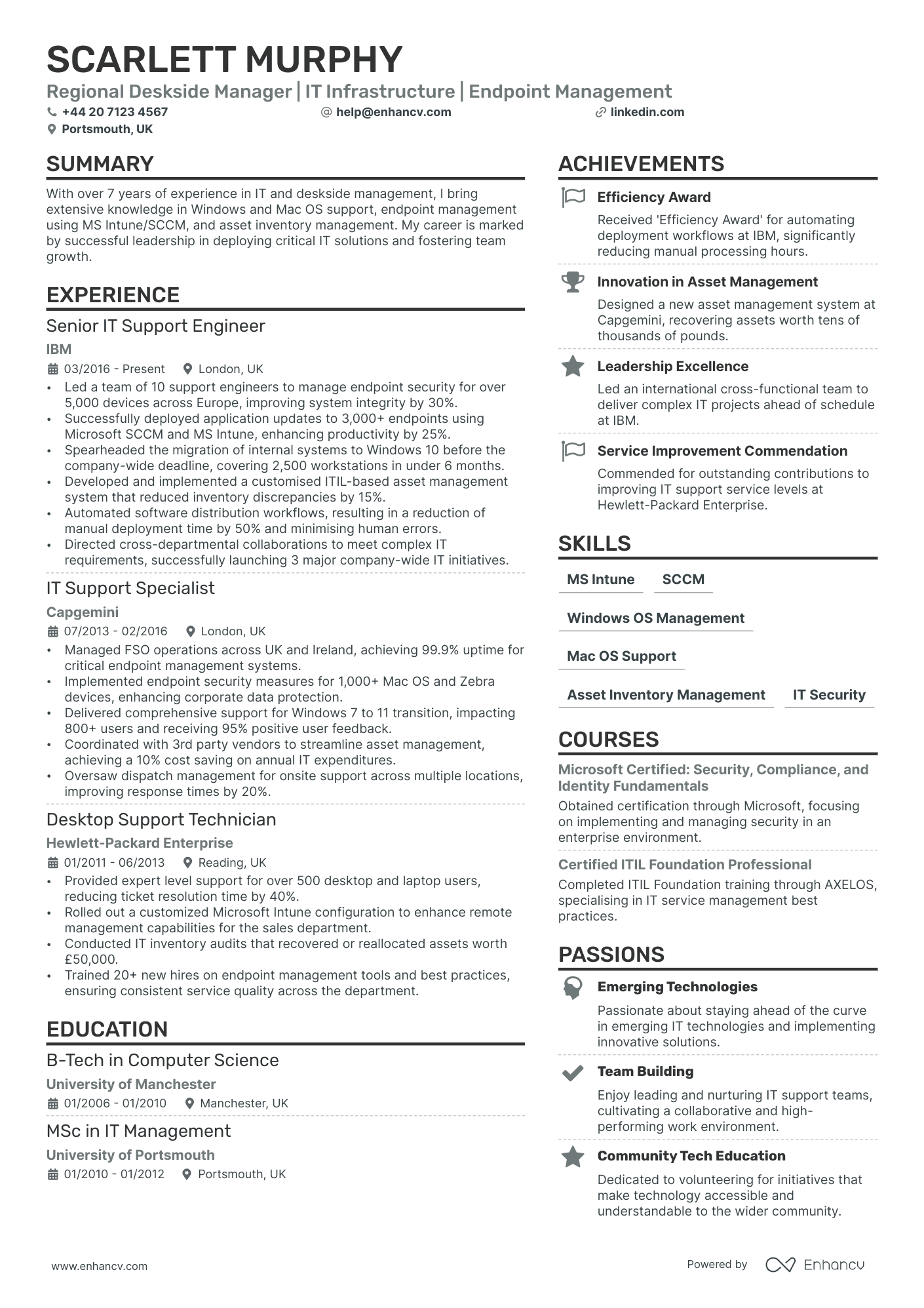
Consulting firms screen for structured thinking before they screen for anything else, and your CV is the first evidence of it. A reader at McKinsey, Bain, or BCG spends seconds deciding whether your bullets prove impact or just describe activity.
The consultant CVs that get interviews are ruthlessly formatted and relentlessly quantified. One page or two, every bullet anchored to a number, and a structure a partner can skim between meetings. Get the format right first, because at the top firms the format is part of the test. If you want the fundamentals underneath it, start with how to write a CV.

Key takeaways
- Lead with format. Top consulting firms read a clean structure as a proxy for how you think.
- One page for early career, two once you have real experience. Reverse chronological, single column, standard headings.
- Every experience bullet needs a number. Lead with the result, not the task.
- Mirror the firm's language: project management, stakeholder management, and the tools each advert names.
- Send a PDF unless the firm portal or advert asks for a Word file.
- Open with a tight personal statement: who you are, your strongest proof, and the practice area you want.
Formatting your consultant CV the McKinsey way
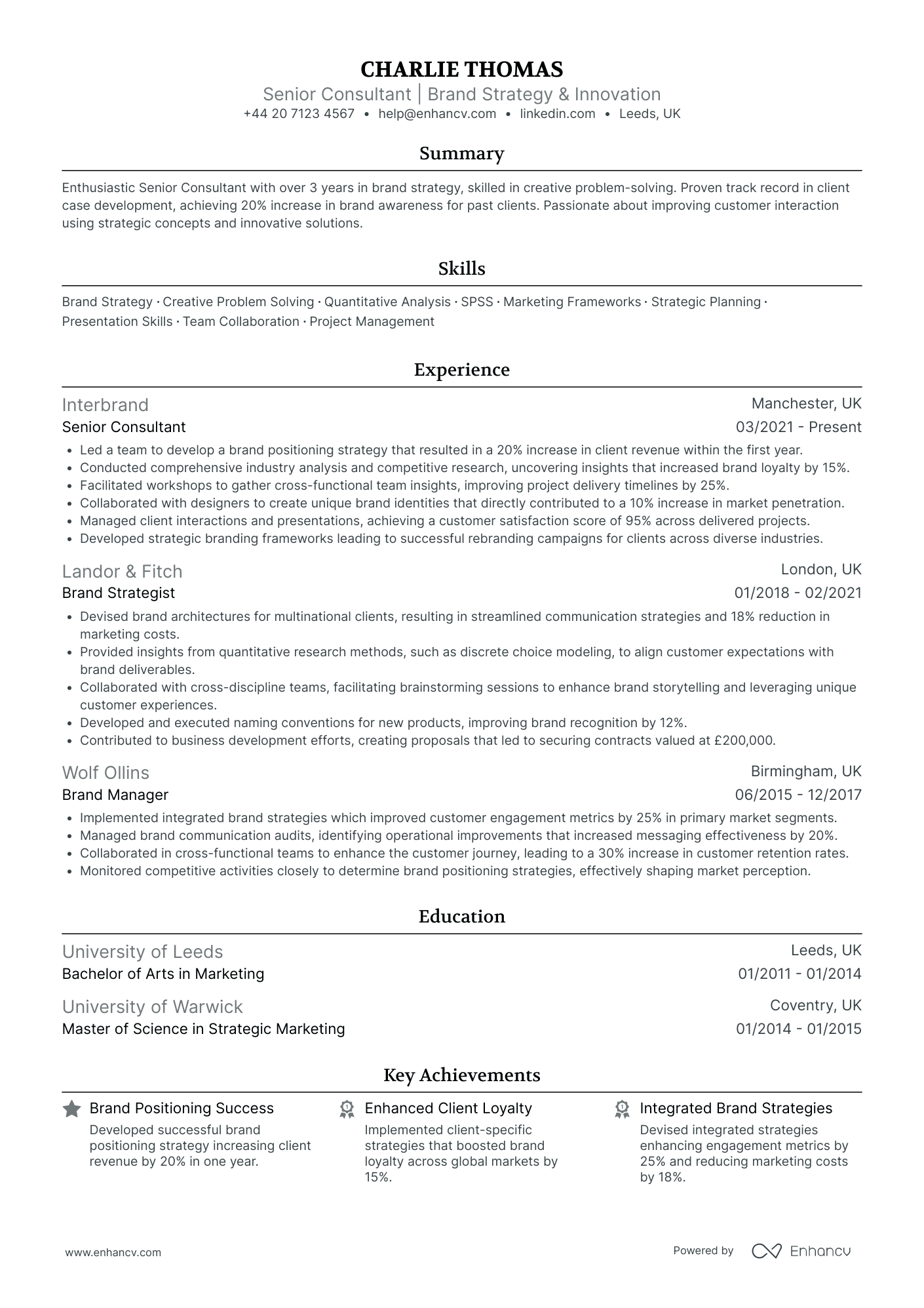
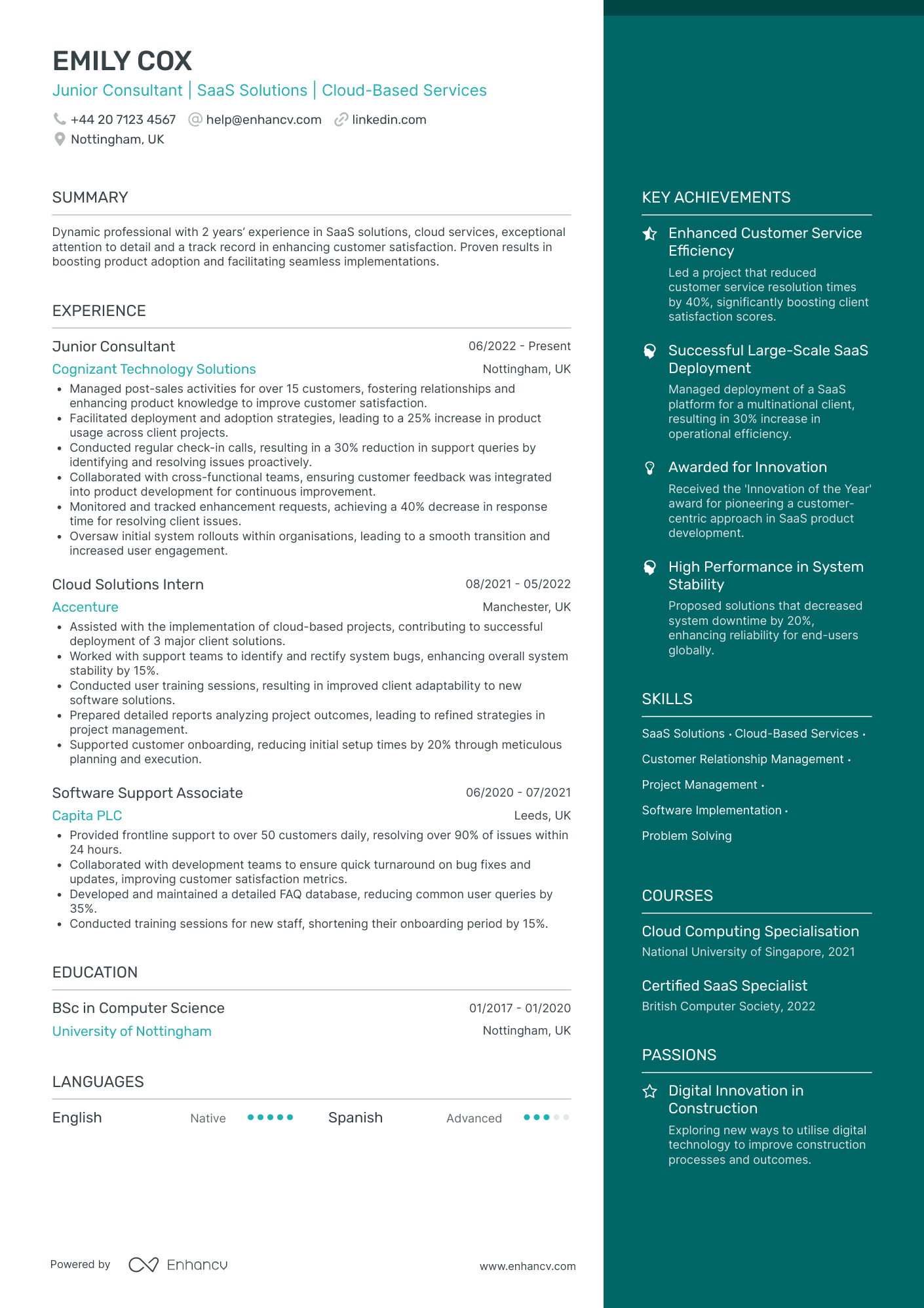
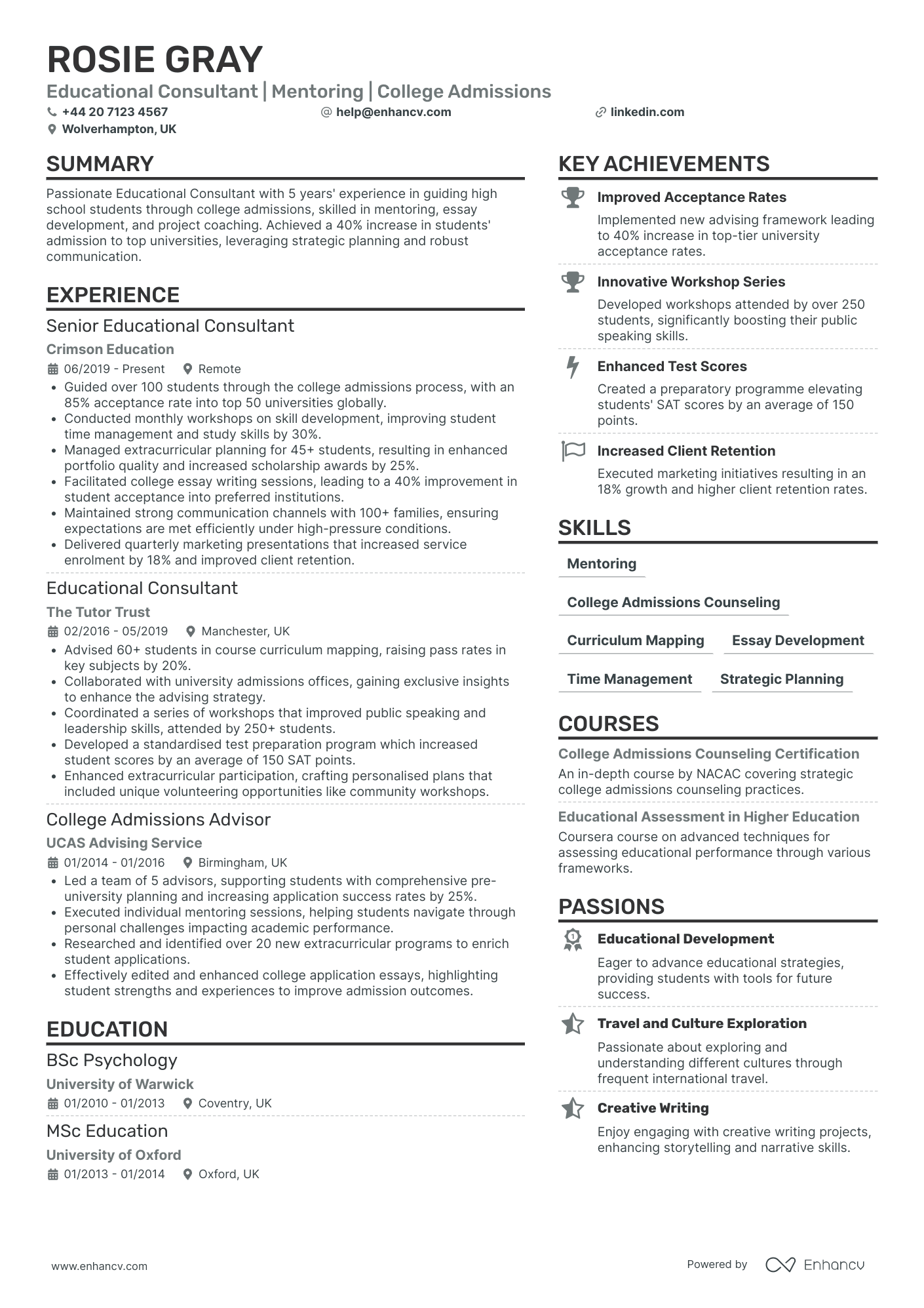
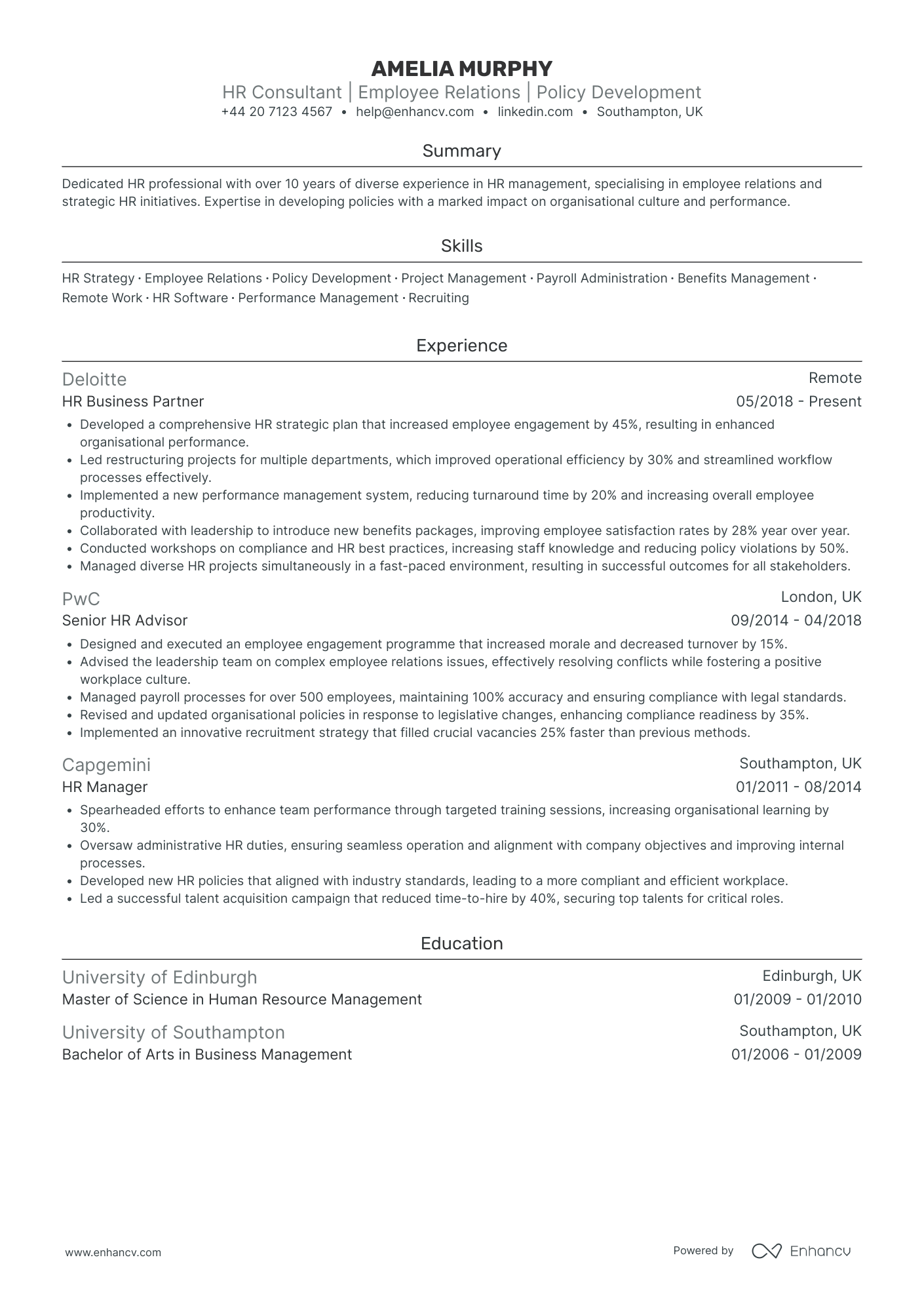
A McKinsey, Bain, or BCG CV looks almost boring, and that is the point. One or two pages, a single column, standard headings, and enough white space to read at a glance.
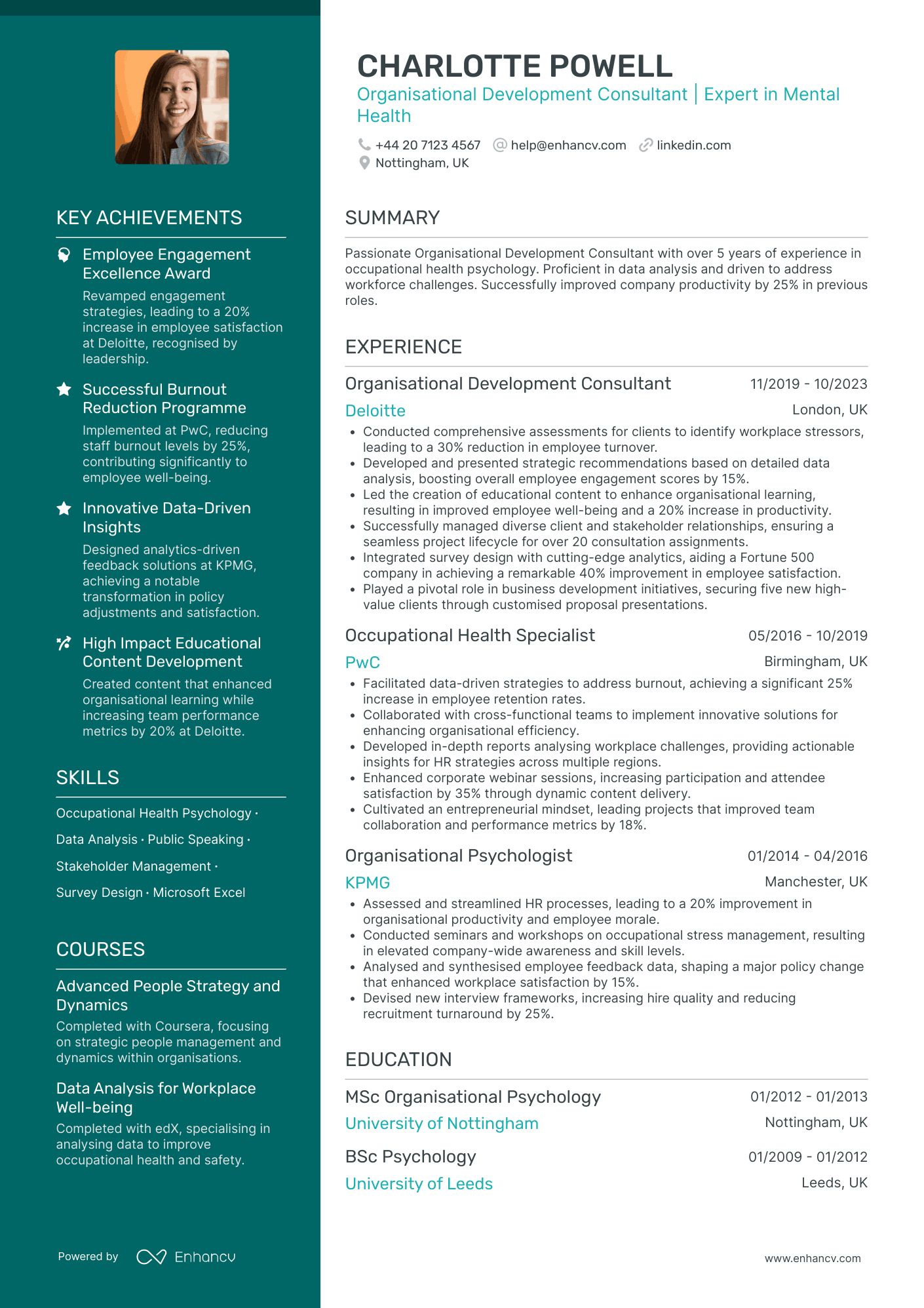
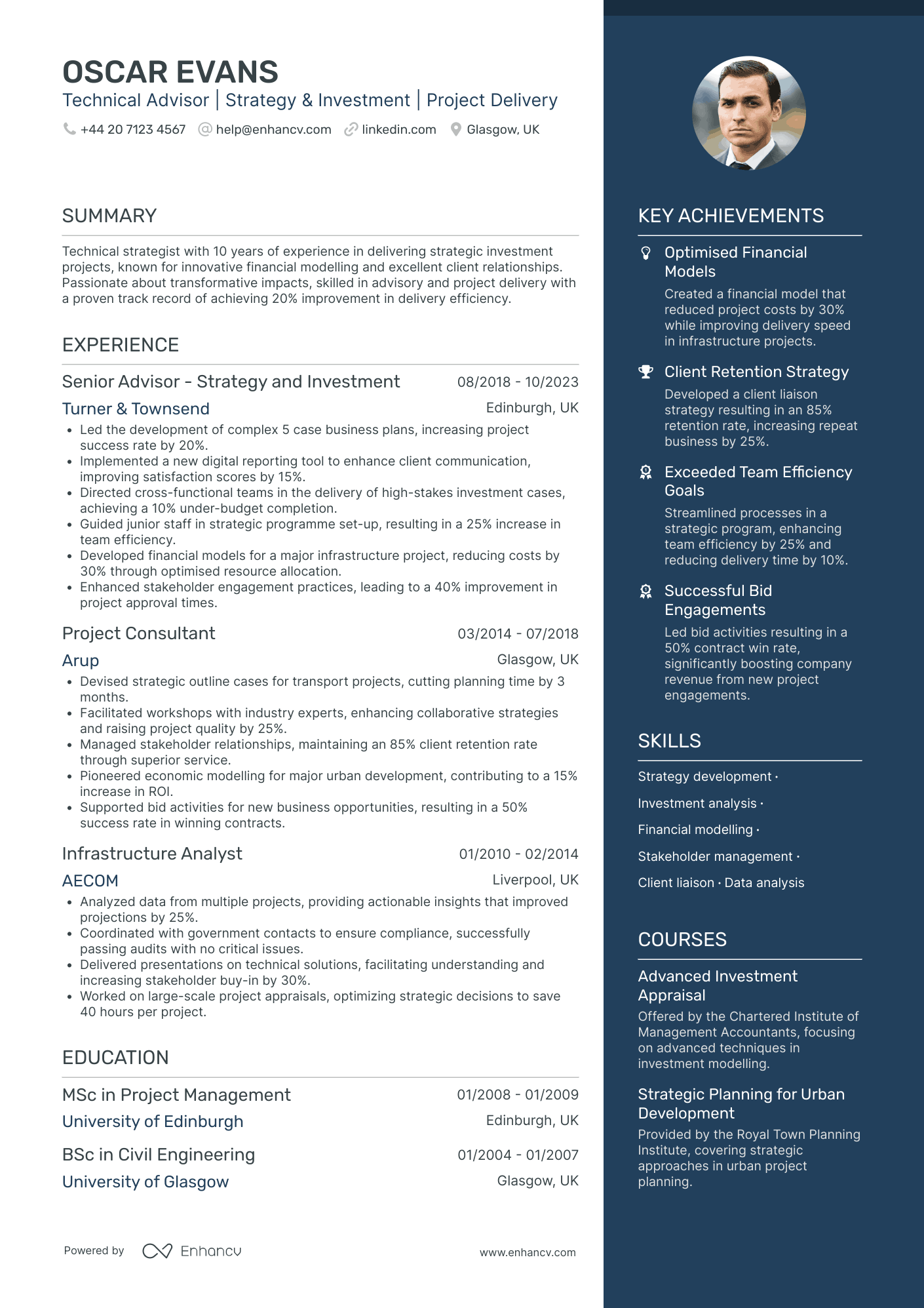
The content does the work, not the design. No photo, no skills bars, no colour blocks. Partners read hundreds of these, so anything that slows the skim counts against you.
The top firms are open about what they screen for: evidence of leadership, quantitative problem solving, and personal impact. Every formatting choice should make those three easier to spot, not harder.
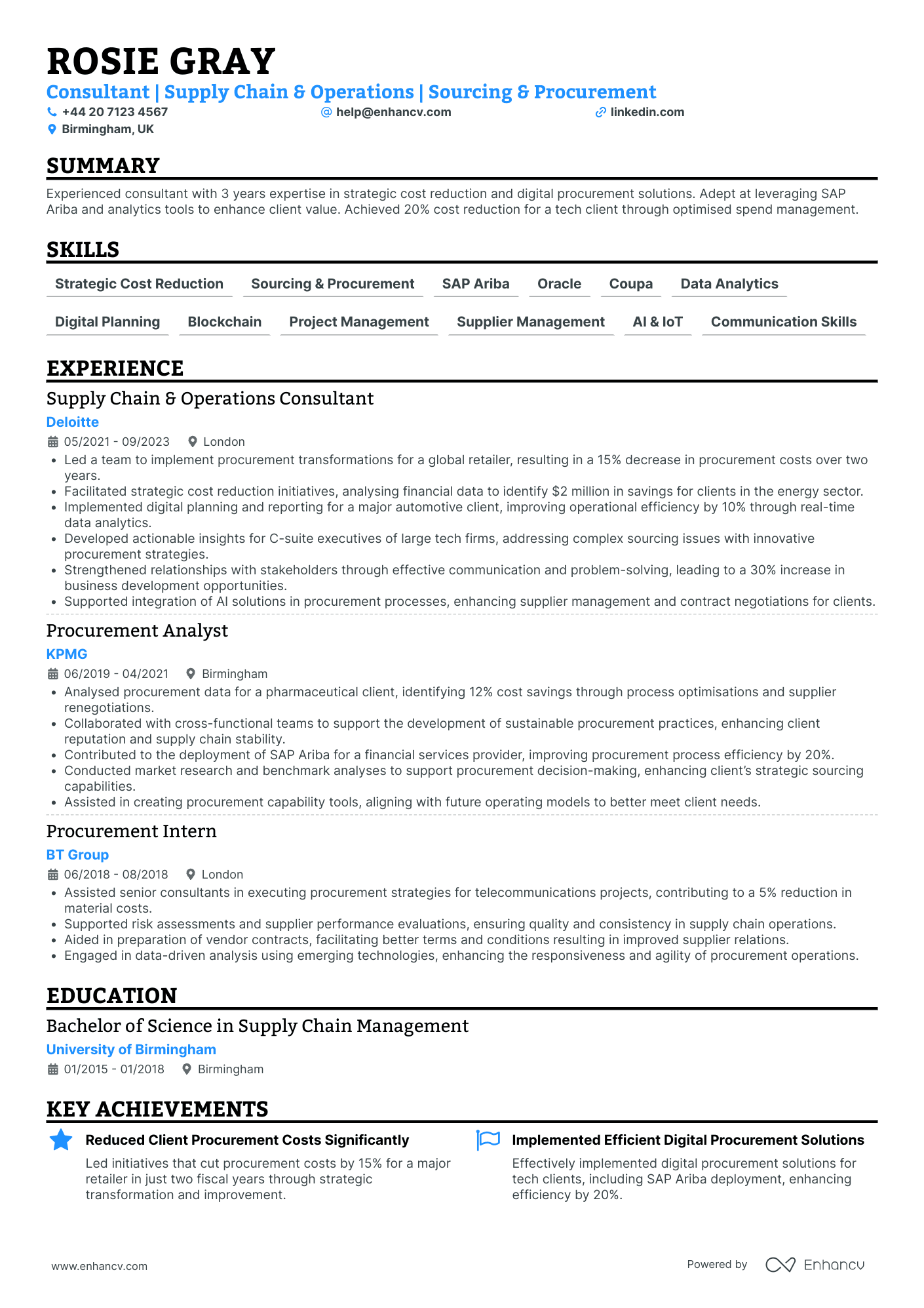
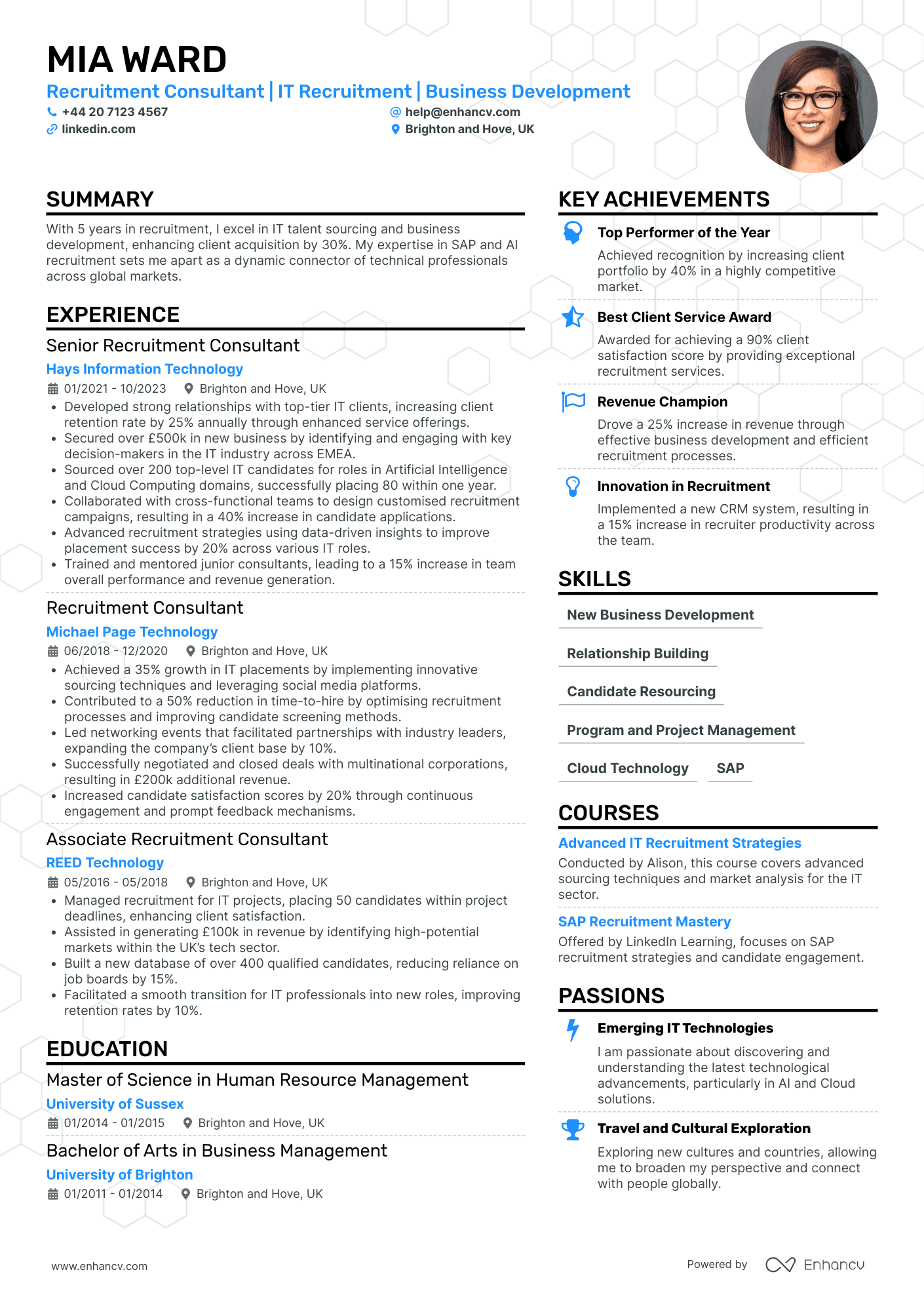
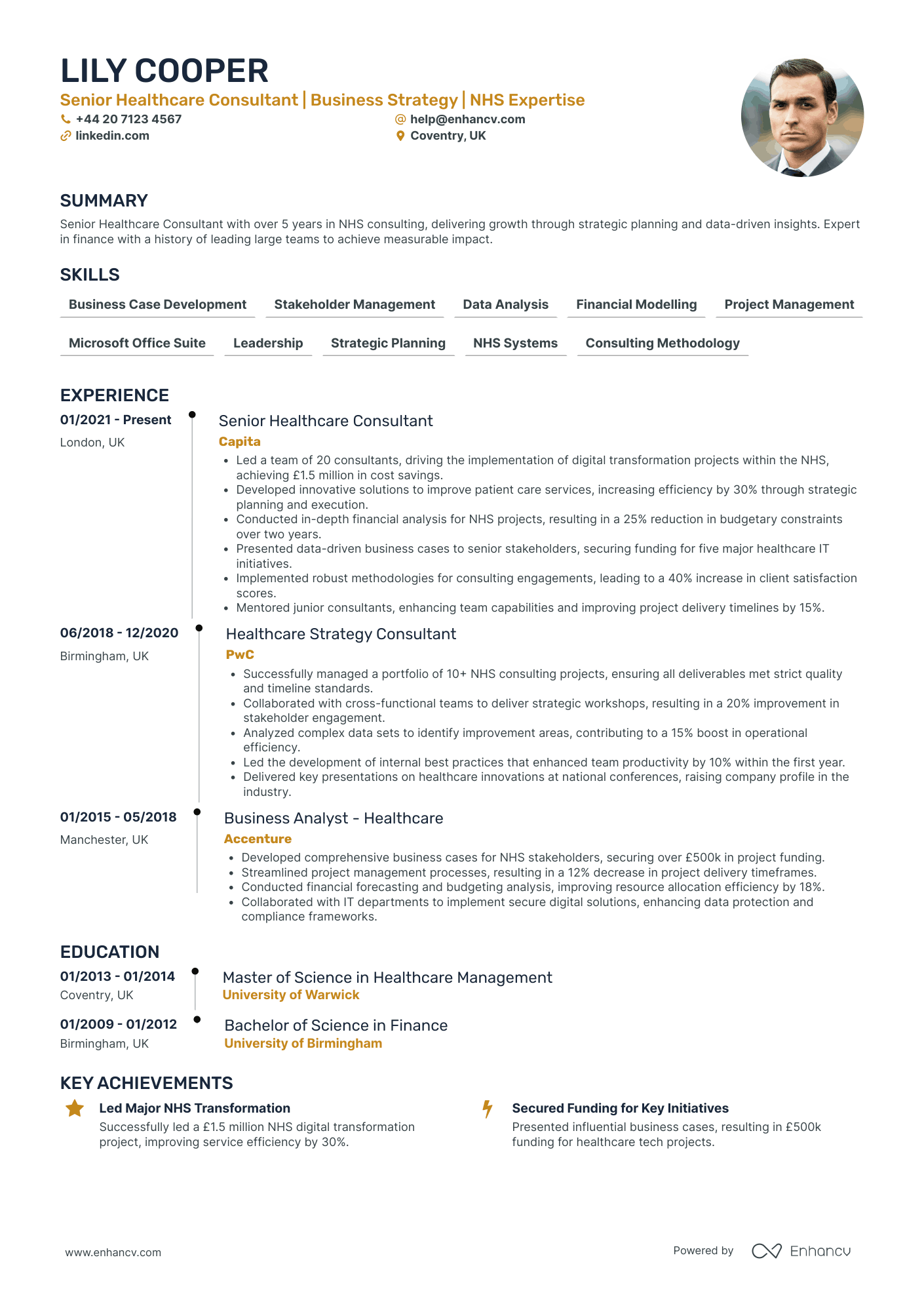
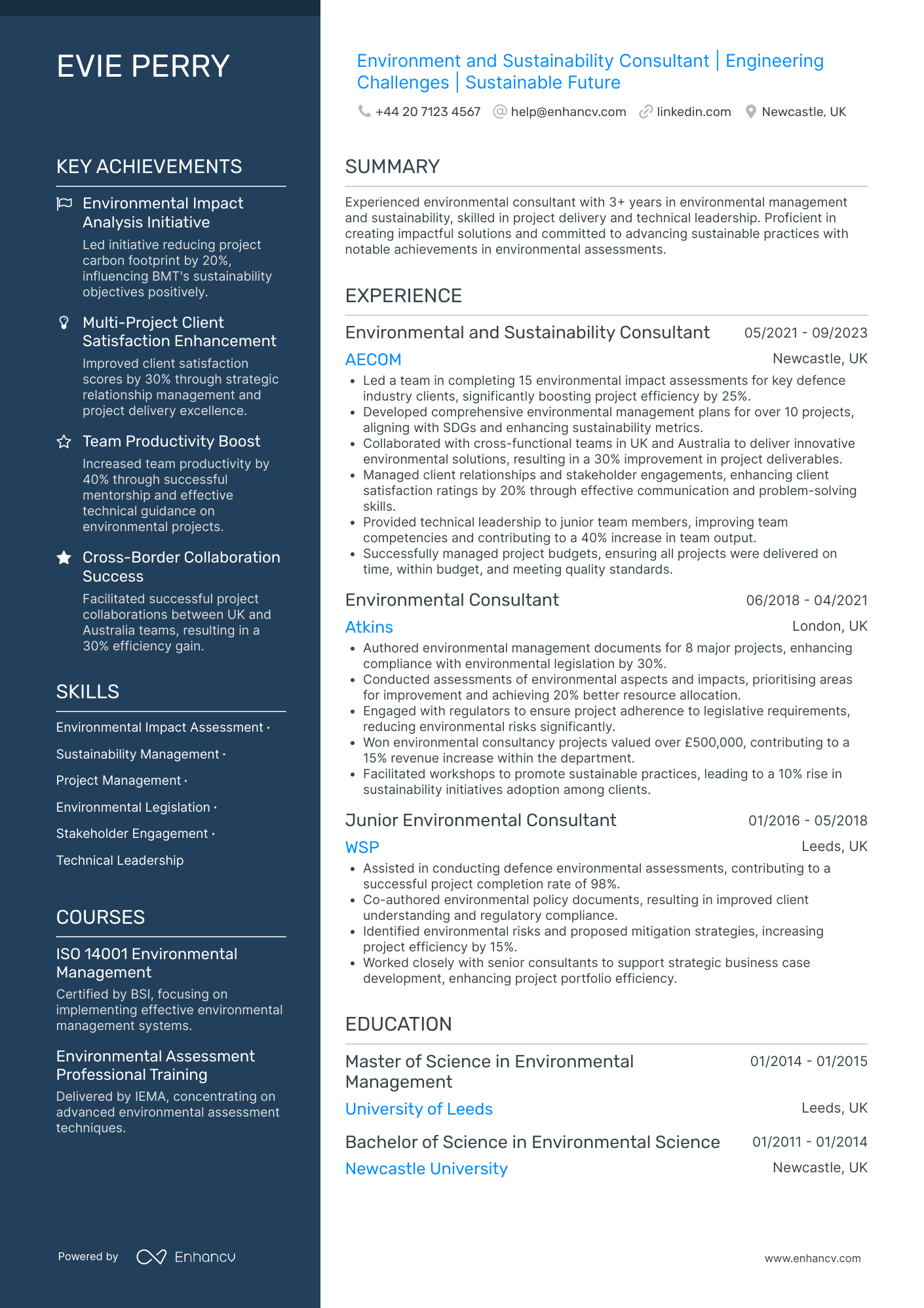
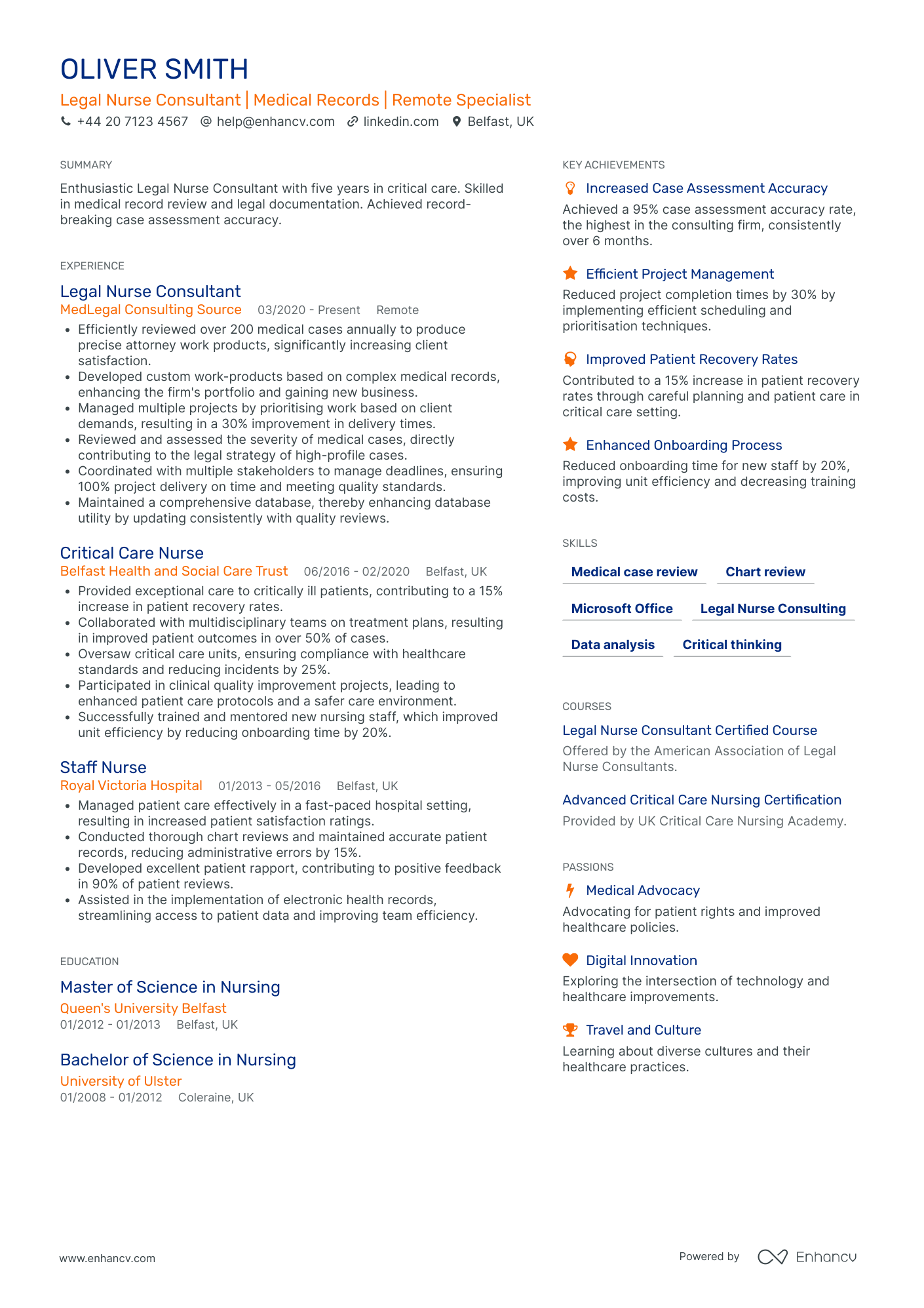
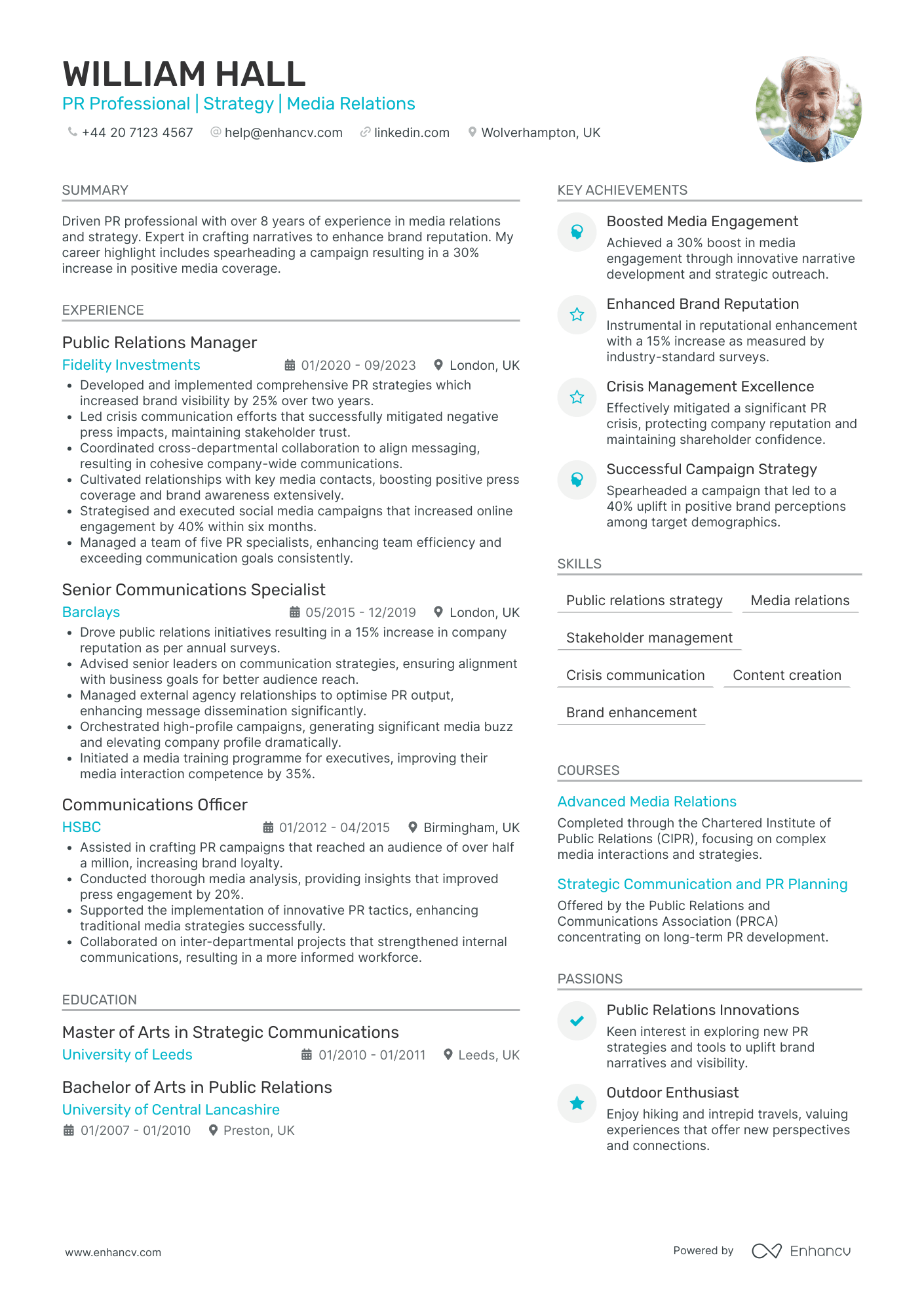
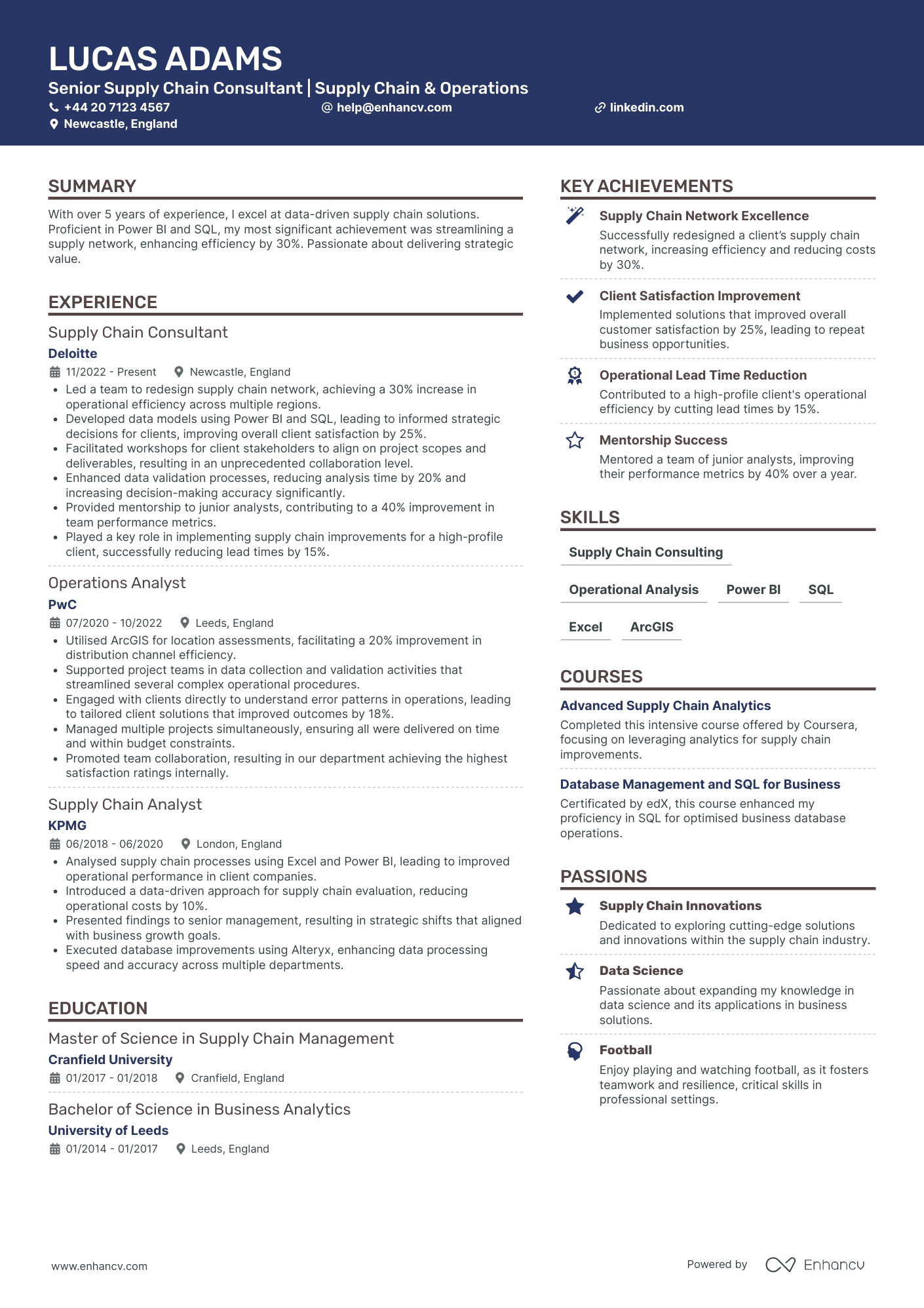
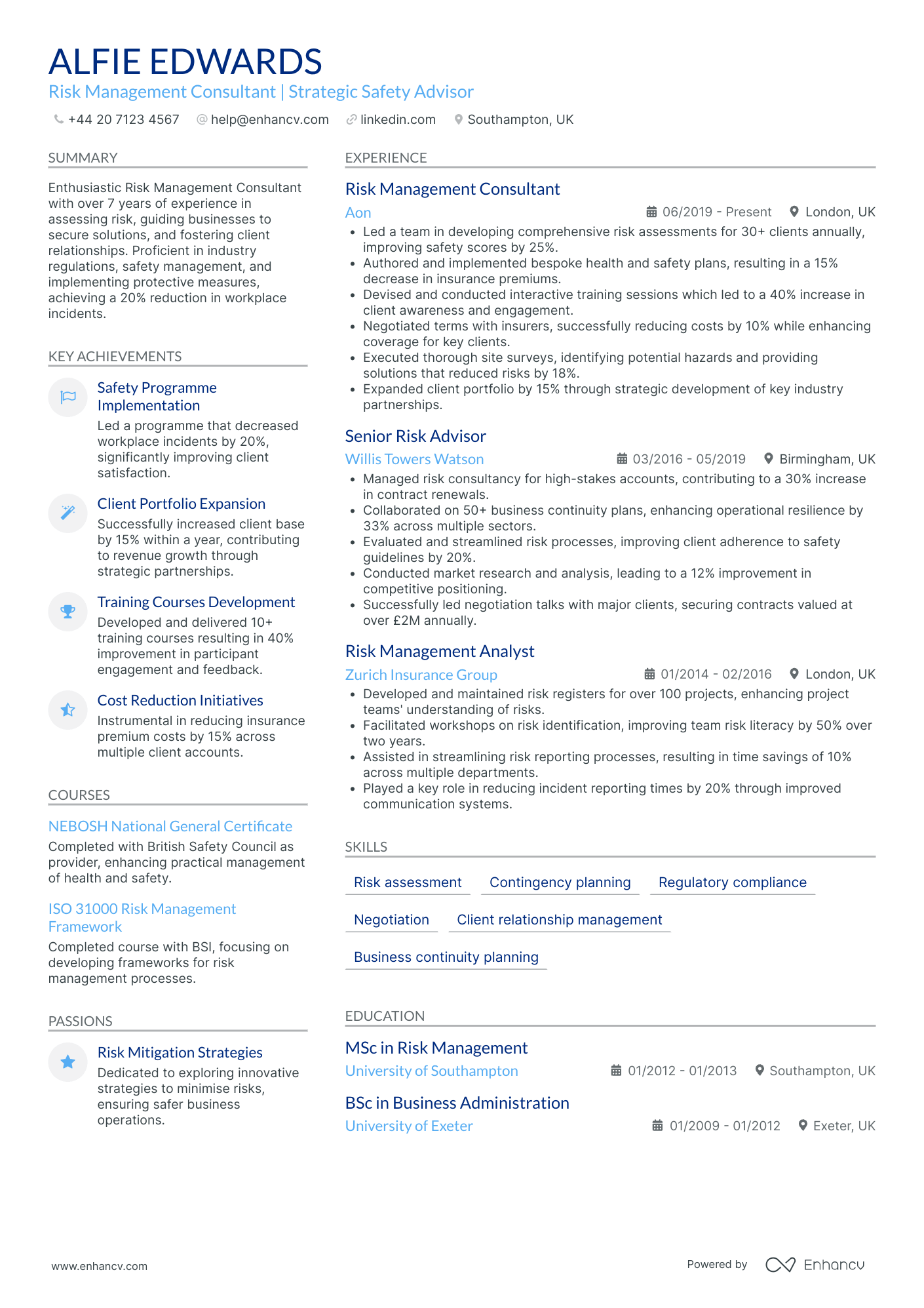
Use a reverse chronological structure: personal statement, experience, education, then skills and extras. Put dates on the right, employer and title on the left, and three to five bullets under each role.
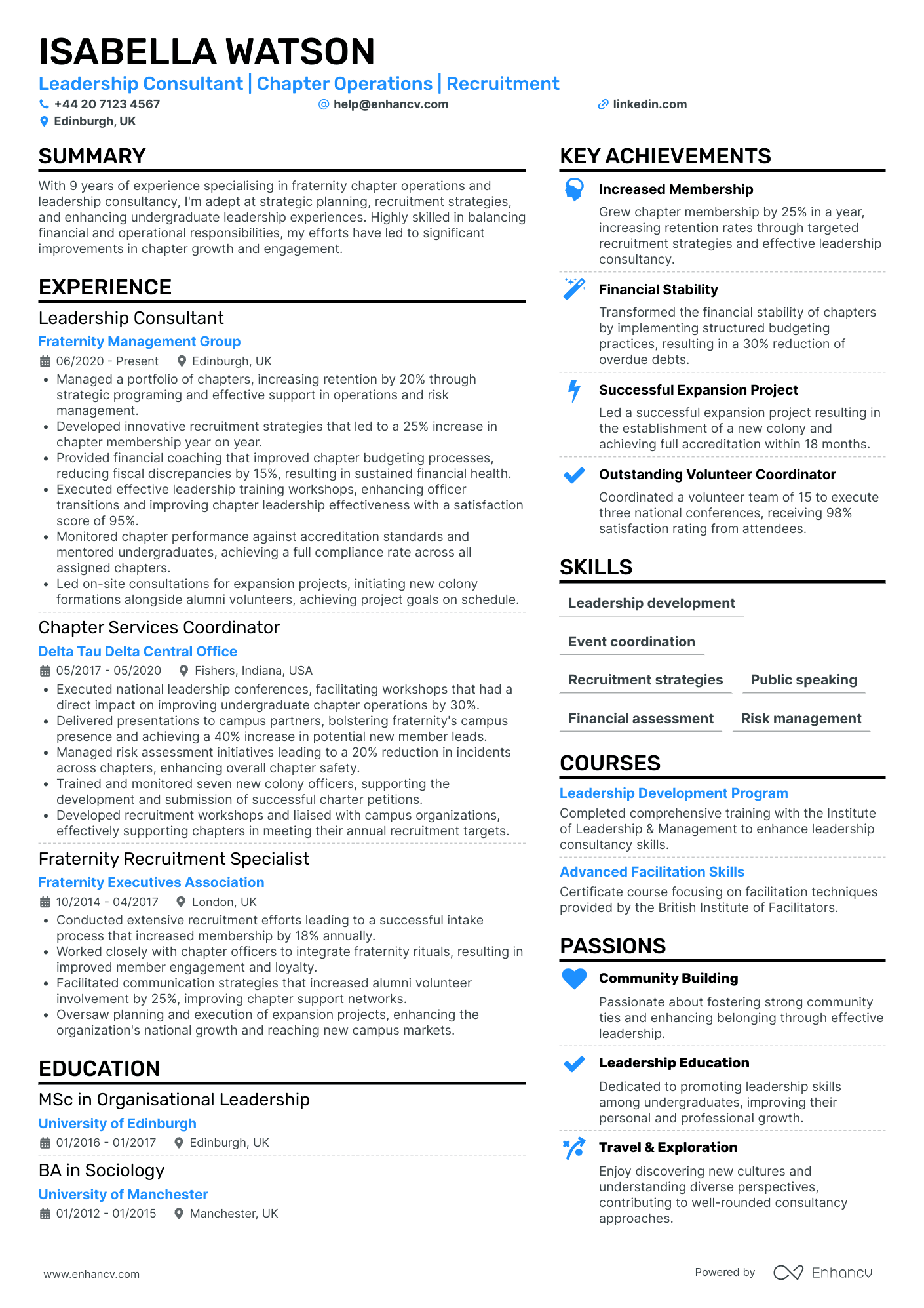
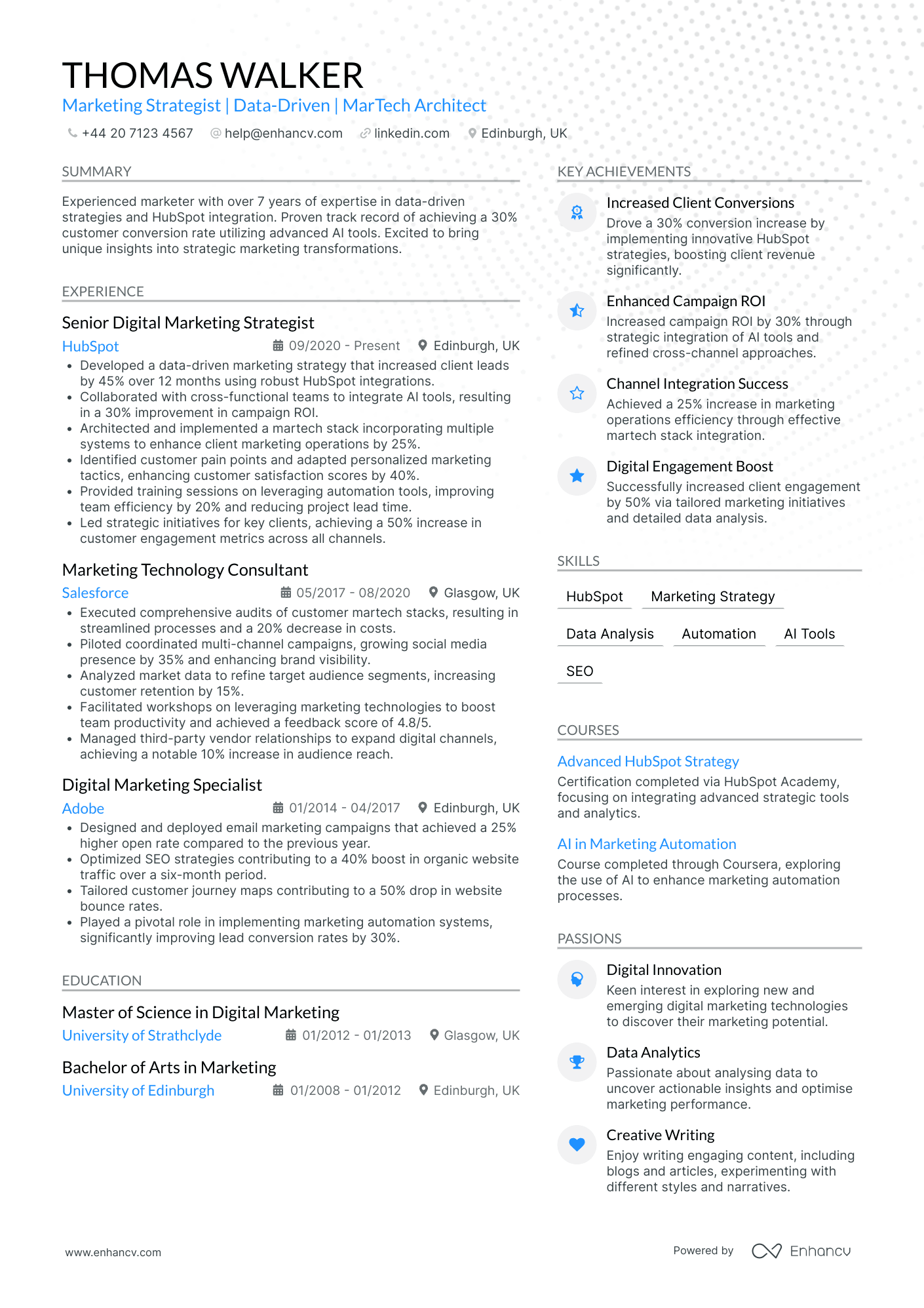
Match the format to the firm. MBB and boutique strategy houses reward the plainest possible layout. A Big Four or an innovation consultancy will tolerate a little more structure, though never at the expense of a clean skim.
Length is simple. One page if you have under roughly five years of experience, two pages once you have more. UK reviewers expect two at most, so a longer CV reads as an inability to prioritise. Check how long a CV should be if you are on the edge.
Keep the layout conservative: a readable font at 10 to 12 point, and margins no tighter than 1.5 cm. Consistent formatting of dates and headings signals the attention to detail the job demands.
Your header stays lean: name, phone, email, a LinkedIn URL, your city, and a note that you are open to travel. Skip the photo, the date of birth, and the full postal address, none of which a consulting firm wants and all of which waste a line.
Cut everything that does not earn its space. No "references available on request", no career objective that repeats your personal statement, no icons or clip art. A consultant CV is an exercise in prioritisation, and a reviewer notices when you have done it well.
Send a PDF for direct applications so the layout holds on any screen. Some firm portals and graduate schemes ask for a Word file, so keep one ready and follow whatever the advert names.
Most large firms filter applications through tracking software first, so keep the structure clean and the headings standard for an ATS-friendly CV. Build it from a tested layout rather than a blank page: Enhancv's CV templates export to a clean PDF that parses cleanly.

The consultant CV structure, top to bottom
- Header - name, phone, email, LinkedIn, city, and willingness to travel. No photo.
- Personal statement - three or four sentences carrying one hard number.
- Experience - reverse chronological, three to five quantified bullets per role.
- Education - degree, classification, and university, kept near the top while experience is thin.
- Skills and extras - the tools and methods the advert names, plus languages and certifications.

PRO TIP
Consultants call it the rule of three: group your points into threes so they are easy to follow and hard to forget. Apply it to the CV itself. Three to five bullets per role, with your three strongest achievements first, mirrors the structured communication firms hire for.
Is your resume good enough?
Drop your CV here or choose a file. PDF & DOCX only. Max 2MB file size.
What the UK consultant market looks like
Knowing the market shapes what you put first. Here is where the work sits and what firms ask for most.
| What | UK consultant roles |
|---|---|
| Where the work happens | Hybrid 52% and on-site 44%, with about 4% fully remote (3,036 UK consultant postings in the last ~30 days, Enhancv's internal job feed) |
| Experience level asked for | Mid 30% · lead 26% · senior 25% · entry 18% |
| Most-listed skills | Project management, stakeholder management, Agile, data analysis, risk management |
Two things in that table should shape your CV.
Consulting is a hybrid and on-site profession, so a firm needs to see you can be in the room with a client. Put your location and willingness to travel in the header rather than burying them.
And the skills that recur are structural, not soft. Project management, stakeholder management, and Agile show up again and again in UK consultant postings on Enhancv's internal job feed, so name them where they are true of you and back each with a result.
The seniority mix matters as well. Most postings sit at mid, lead, and senior level, so firms are buying demonstrated impact rather than raw potential. Lead your CV with your most recent, most quantified engagements, and keep older or junior roles to a line or two.
Writing your consultant personal statement
Three or four sentences at the top: who you are, your single strongest proof, and the kind of consulting you want to do. See more personal statement examples if the opening line is hard.
Lead with a number, not an adjective. "Strategic, analytical, results-driven" tells a partner nothing they can check.
Tailor the last sentence to the firm. A boutique wants to see you know its niche, and a Big Four practice wants breadth. One line naming the practice area shows you applied to them, not to everyone.
Consultant CV personal statement example
Management consultant with six years advising retail and consumer clients on pricing and margin. Led a pricing review for a £120m retailer that lifted gross margin by 3.2 points in nine months. Comfortable owning the client relationship and the analysis behind it. Looking to bring commercial rigour to a strategy role in a mid-market consultancy.
What to avoid
Highly motivated and results-driven consultant with a passion for delivering value and driving change. Excellent communication skills and a proven track record of success across a wide range of projects and stakeholders at all levels.
The first names a client, a number, and a focus. The second could belong to anyone in any industry, which is exactly why a reviewer skips it.
Writing your consultant experience section
This is where a consulting CV is won. Each role gets a dated heading, then bullets that lead with the result and the number behind it. For the mechanics, see work experience on a CV.
Build every bullet the same way: the action you took, the method, and the measurable outcome. Start with a strong action verb and end on the impact.
Quantify anything a client would care about: revenue, cost, time, and adoption. "Ran analysis" is invisible. "Built a cost model that cut procurement spend by £2.4m" gets read. Those are your CV achievements.
Apply the "so what" test to every line. If a bullet does not answer why the work mattered to the client or the firm, it is a duty, not an achievement, and it should be rewritten until the outcome leads.
Order the bullets the way a consultant orders a slide: the headline result first, the supporting detail after. A reviewer who reads only the top bullet of each role should still come away with your strongest three achievements.
Consulting work is more measurable than it feels. There is almost always a number in the size of the client, the scope of the team, the length of the engagement, the money saved or made, or the percentage a metric moved. Find the one that best proves the point and put it in the bullet.
Then tailor each application. Pull the practice area and the tools from the advert and mirror the ones that are genuinely yours, so both the reviewer and the tracking software see the match. Enhancv's CV tailoring feature reads the advert and suggests the edits, which saves rewriting from scratch each time.
- Led a pricing and margin review for a £120m retail client, delivering a 3.2 point gross-margin uplift within nine months
- Built the cost model behind a supply-chain redesign that removed £2.4m of annual procurement spend across 40 suppliers
- Ran the stakeholder workstream for a post-merger integration, aligning three leadership teams on one operating model in 12 weeks
- Managed a team of four analysts and presented findings directly to the client's C-suite every fortnight
Turn a duty into an achievement
- Weak: Responsible for supporting client projects and preparing reports. Strong: Owned the analysis for three client projects, cutting report turnaround from five days to two.
- Weak: Worked with stakeholders to improve processes. Strong: Aligned six department heads on a new process that removed £400k of duplicated spend.
- Weak: Helped with data analysis and modelling. Strong: Built the demand model that underpinned a £15m investment case approved by the board.
PRO TIP
No exact number to hand? Estimate the scale and be honest about it. "Cut reporting time by roughly a day a week" or "advised a client team of around 200" beats a vague claim, as long as you can defend the figure in interview.
When I read a consultant CV, I skip the adjectives and hunt for numbers. One line like "cut procurement spend by £2.4m across 40 suppliers" tells me more than a paragraph about being results-driven. Name the client situation, what you did, and the measurable result. Structure it in threes, lead with the outcome, and let the format stay boring. At the top firms, a CV a partner can skim in thirty seconds and still trust is the whole game.
Top skills for your consultant CV
UK consultant adverts repeat the same demands, and they are structural. The skills that matter here are project management, stakeholder management, data analysis, and risk management, listed in the words the adverts use. Those are your hard skills.
The soft skills that count are checkable ones: leadership, communication, and problem solving. Prove each in a bullet rather than claiming it in a list.
List only what you can defend in a case interview. If you have used a tool or a method on a live engagement, name it. If you have not, leave it off.
Evidence beats enumeration. Rather than a long list, weave the top four or five skills into your experience bullets, then keep a short, scannable skills block for the tracking software. A recruiter believes a skill they can see in a result.
Top skills for your consultant CV:
Project management
Stakeholder management
Data analysis
Agile delivery
Risk management
Financial modelling
Process improvement
Python and Excel
Structured thinking
Communication
Leadership
Problem solving
Client management
Education and certifications for a consultant CV
For consulting, education carries more weight than in most fields, especially early on. List your degree, classification, and university, and keep strong academics visible near the top while your experience is thin. See how to present education on a CV.
Include your classification, since a First or a 2:1 matters to graduate schemes, and any quantitative modules or a strong A-level record if you are a recent graduate.
Certifications signal specialism. Name relevant ones such as PRINCE2, an Agile or Scrum certification, or a CFA level where the role calls for it, and list any qualifications in progress. A short line of certificates saves the reviewer a question.
Consulting also values what you did outside the classroom. A society you led, a case competition you placed in, or a venture you ran shows the initiative firms look for, so give it a short line where it is genuinely impressive.
Breaking into consulting with limited experience
Nearly one in five UK consultant postings is pitched at entry level, so a thin CV is not a dead end. It just has to lead with different proof.
Put education and a skills-led structure first, then translate what you have done into consulting language. A dissertation is a research project with a methodology and a finding. A part-time job is stakeholder management under a deadline. A society role is leadership with a measurable result.
Case competitions, internships, and voluntary analysis for a local business all count as engagements. Give them dated entries with the same impact-first bullets a senior consultant would use.
One line signals intent: a relevant module, a certification in progress, or a completed case-interview course. It tells a firm you understand the work and are already moving toward it.
Should you use AI to write your consultant CV?
You can, and a first draft is a fine use of it. What AI cannot do is know which £2.4m saving or nine-month turnaround belongs on the page. That judgement comes from you.
The failure mode is obvious to a reviewer: generic bullets full of "synergies" and "value-add" with no number attached. AI is good at structure and phrasing, weak at proof.
There is a second angle worth naming. Firms increasingly hire for AI literacy, and 318 UK consultant postings tagged AI as a wanted skill in the last ~30 days on Enhancv's internal job feed. Using AI well and showing it on your CV reads better than pretending you did not.
Use it to tighten and reorder, then add the specifics only you have. Run the result against the advert for the keywords that matter, and check every bullet still names a real result before you send it.
Conclusion
Format first, then proof. A clean, skimmable structure gets you read, and quantified bullets get you the interview.
Pair the CV with a short cover letter that names the firm and the practice area, and you turn a strong CV into a strong application.
Author's take - The Enhancv team
When I read a consultant CV, I skip the adjectives and hunt for numbers. One line like "cut procurement spend by £2.4m across 40 suppliers" tells me more than a paragraph about being results-driven. Name the client situation, what you did, and the measurable result. Structure it in threes, lead with the outcome, and let the format stay boring. At the top firms, a CV a partner can skim in thirty seconds and still trust is the whole game.