



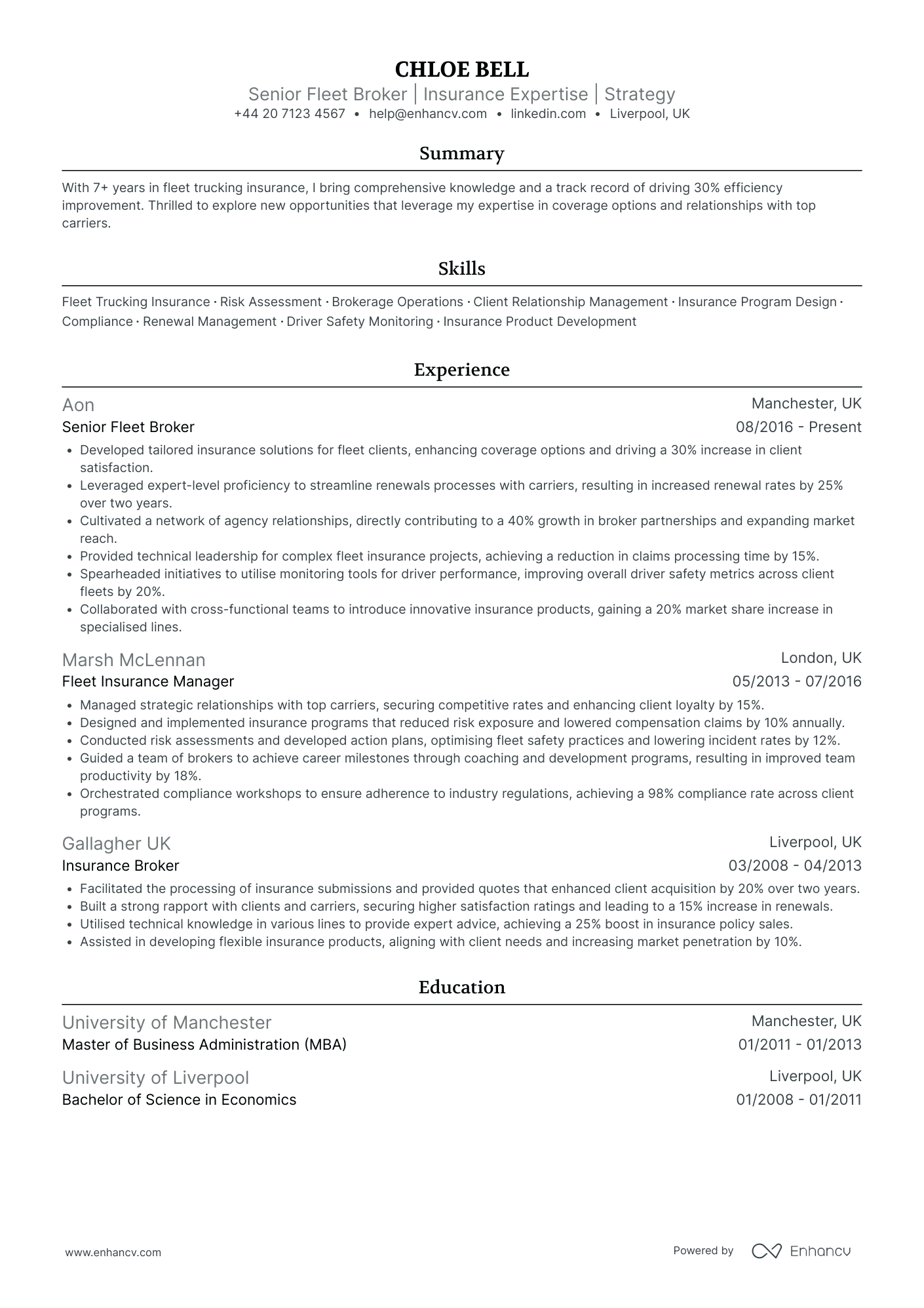
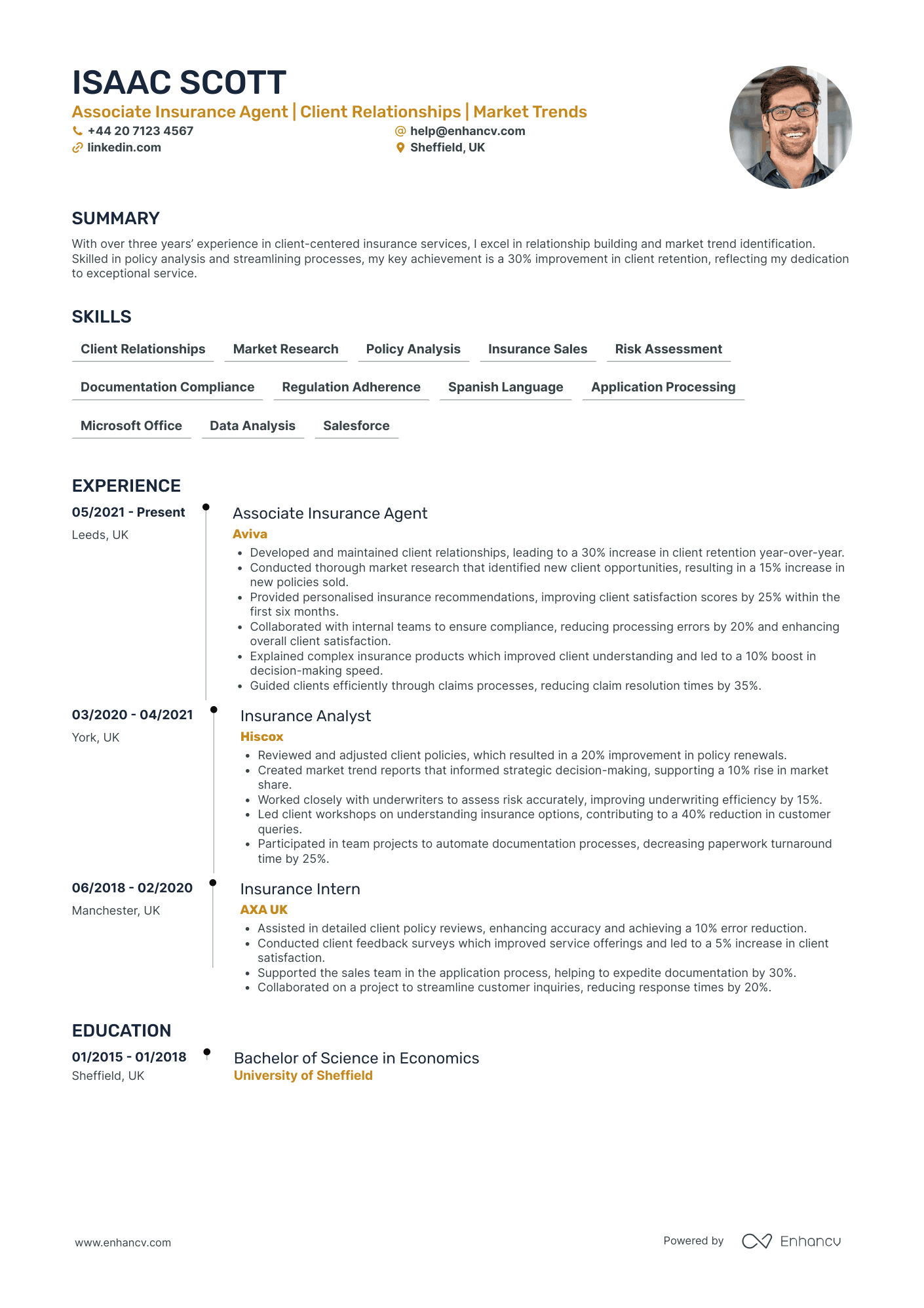
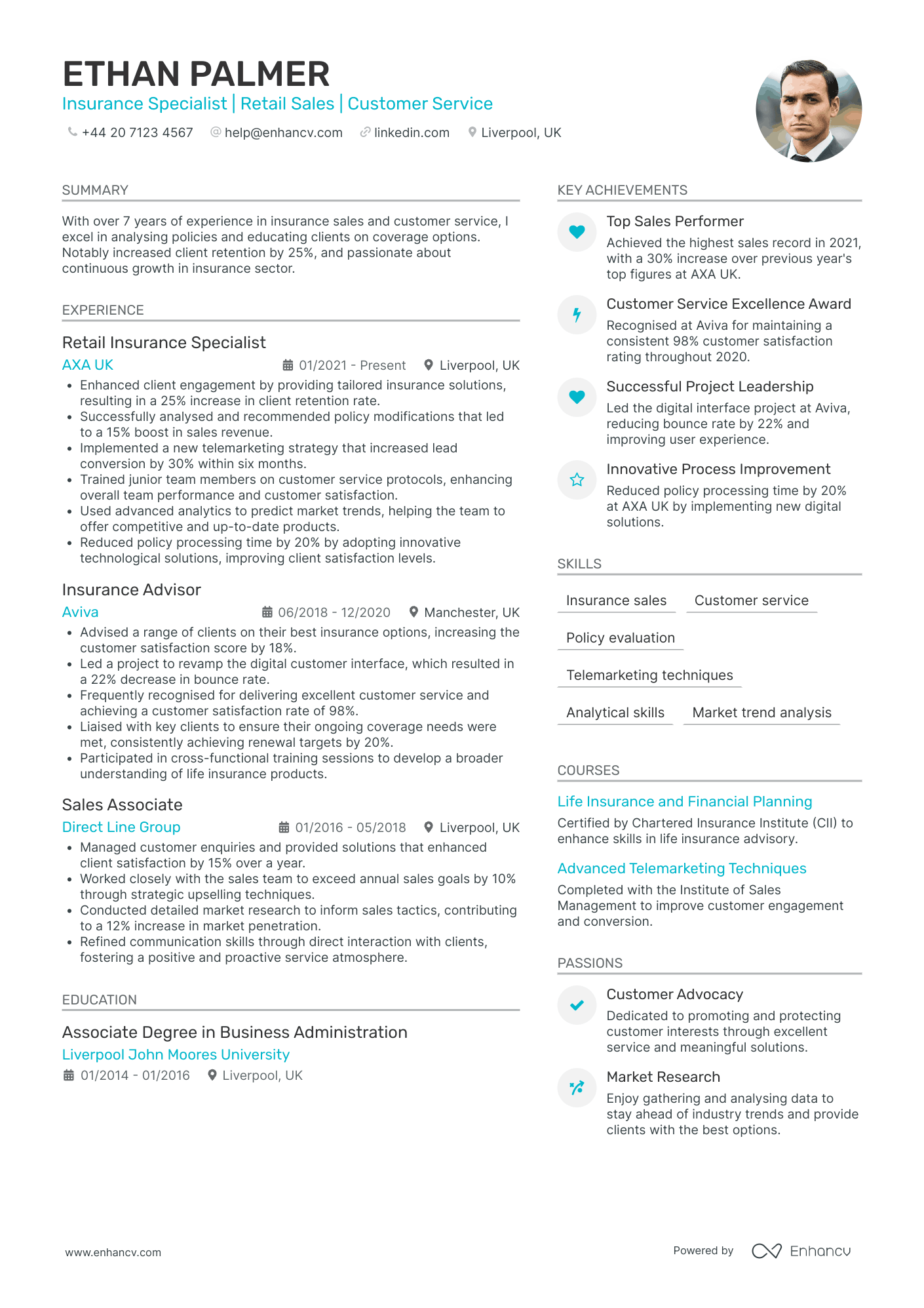
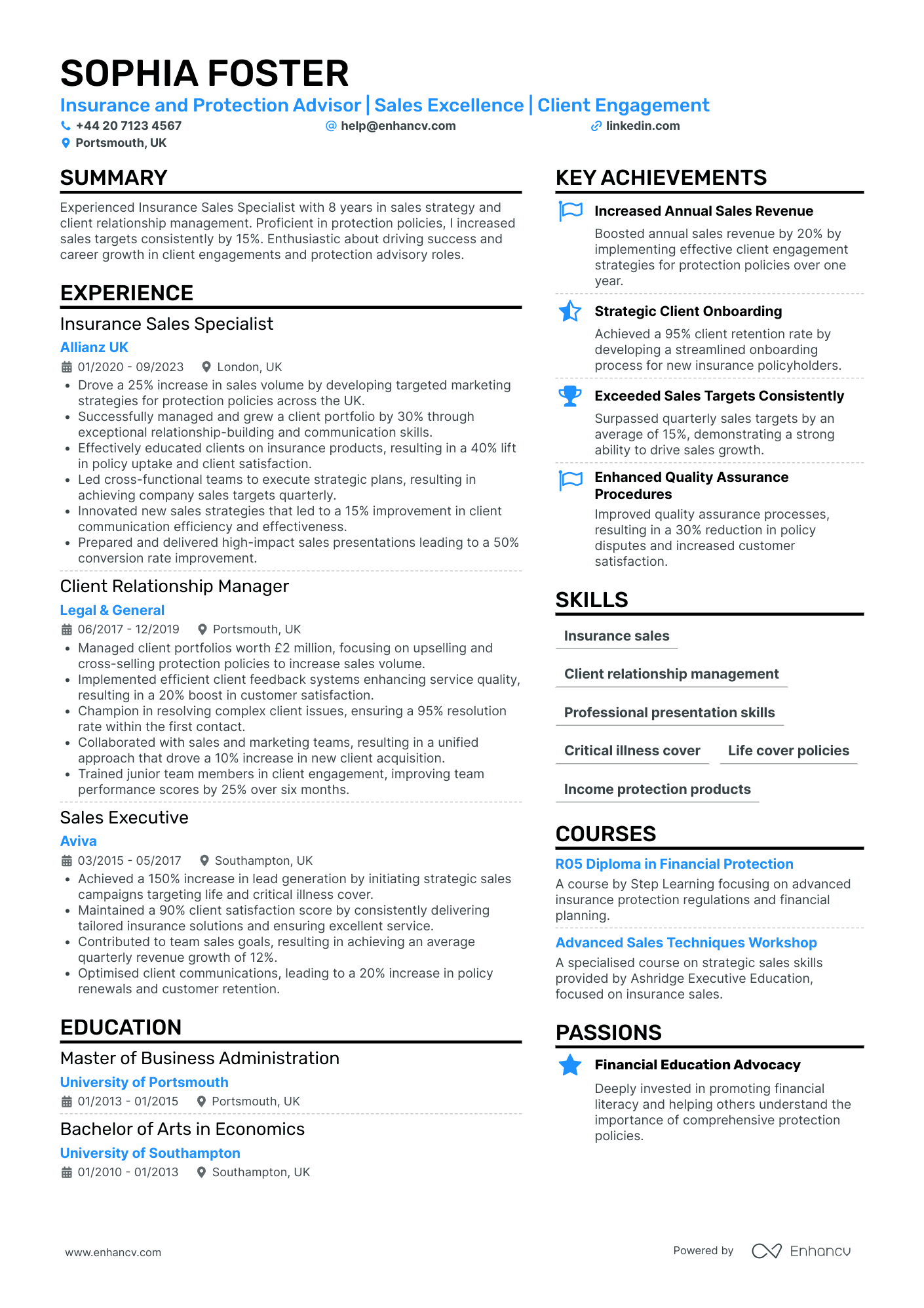
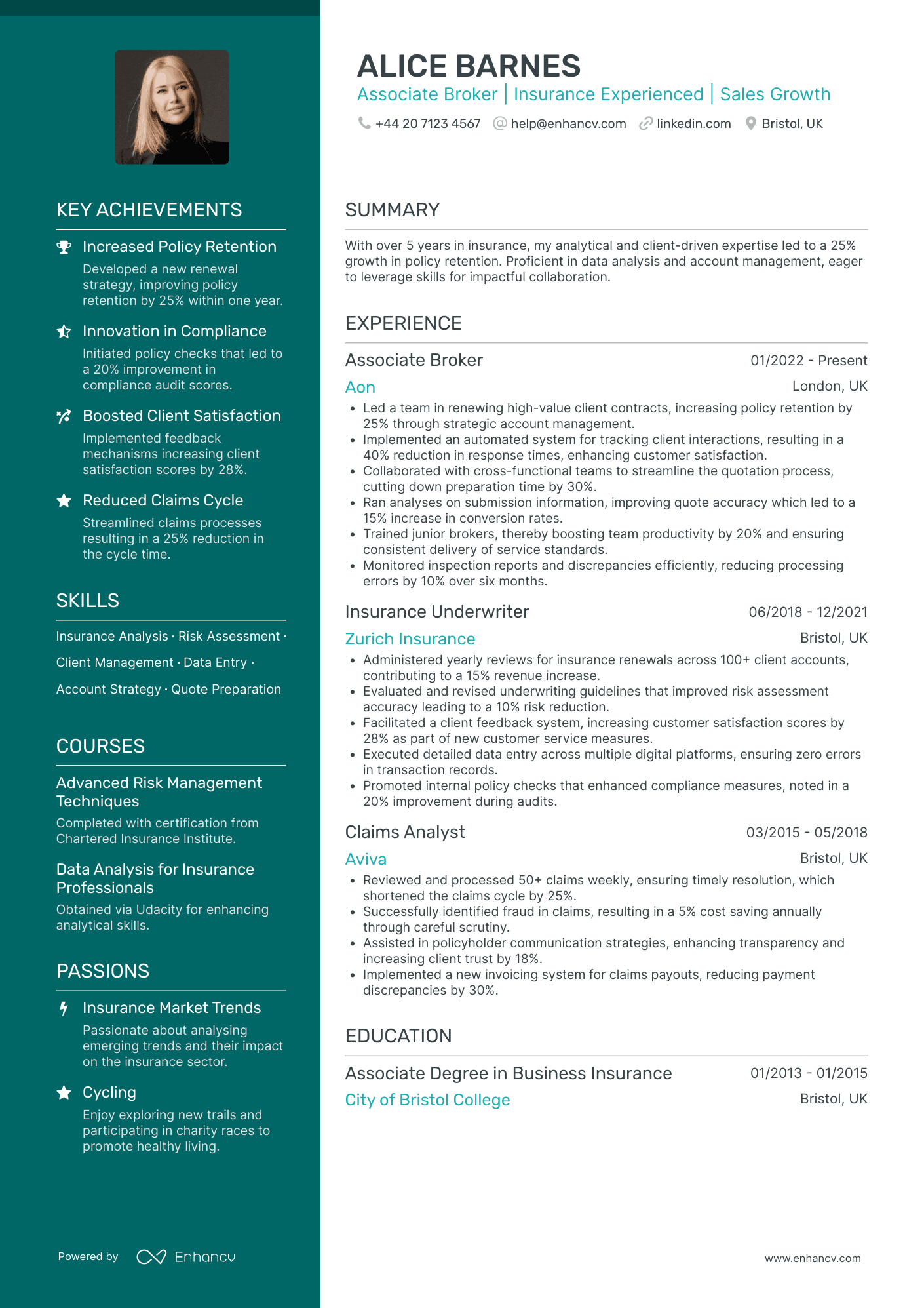
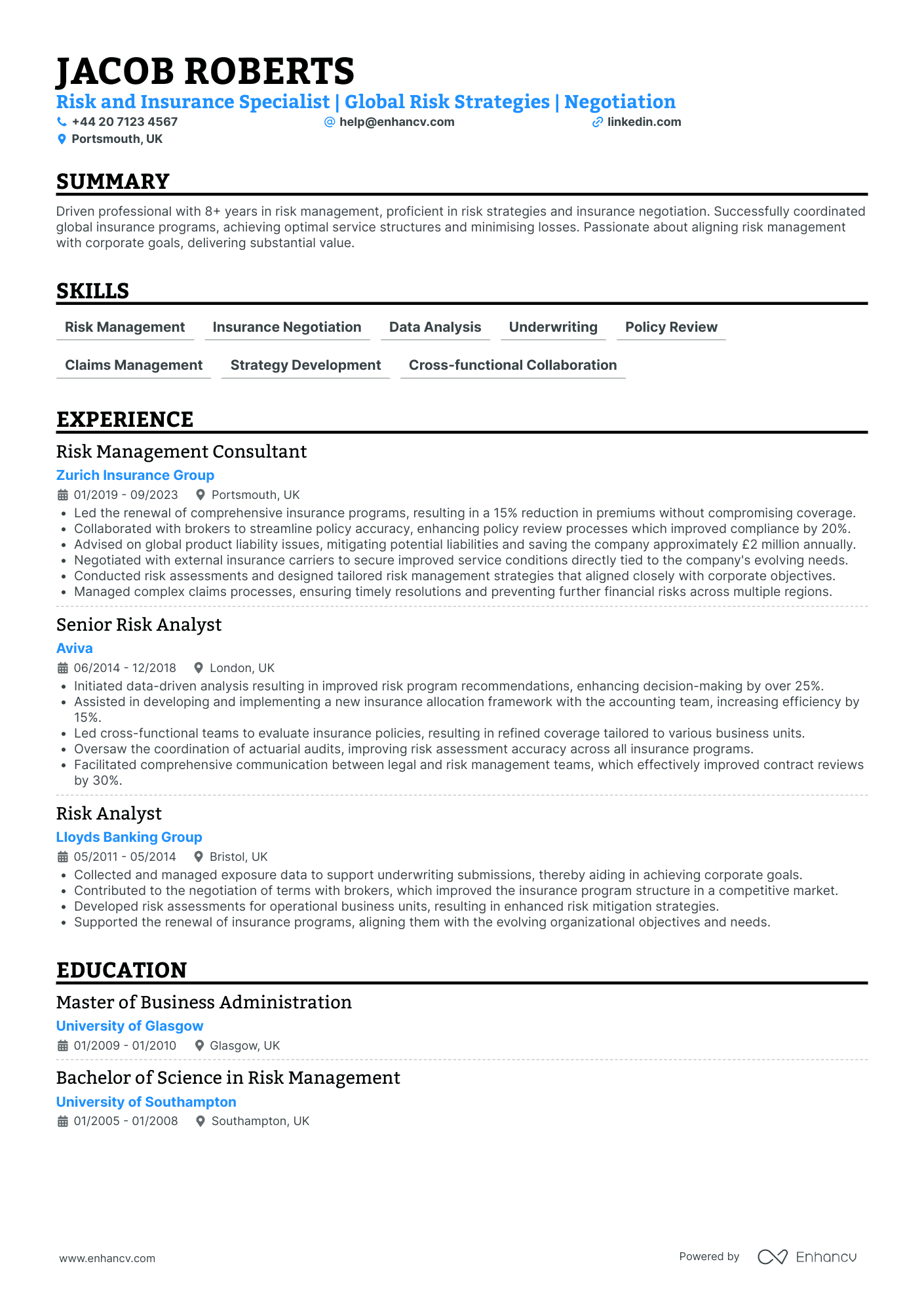
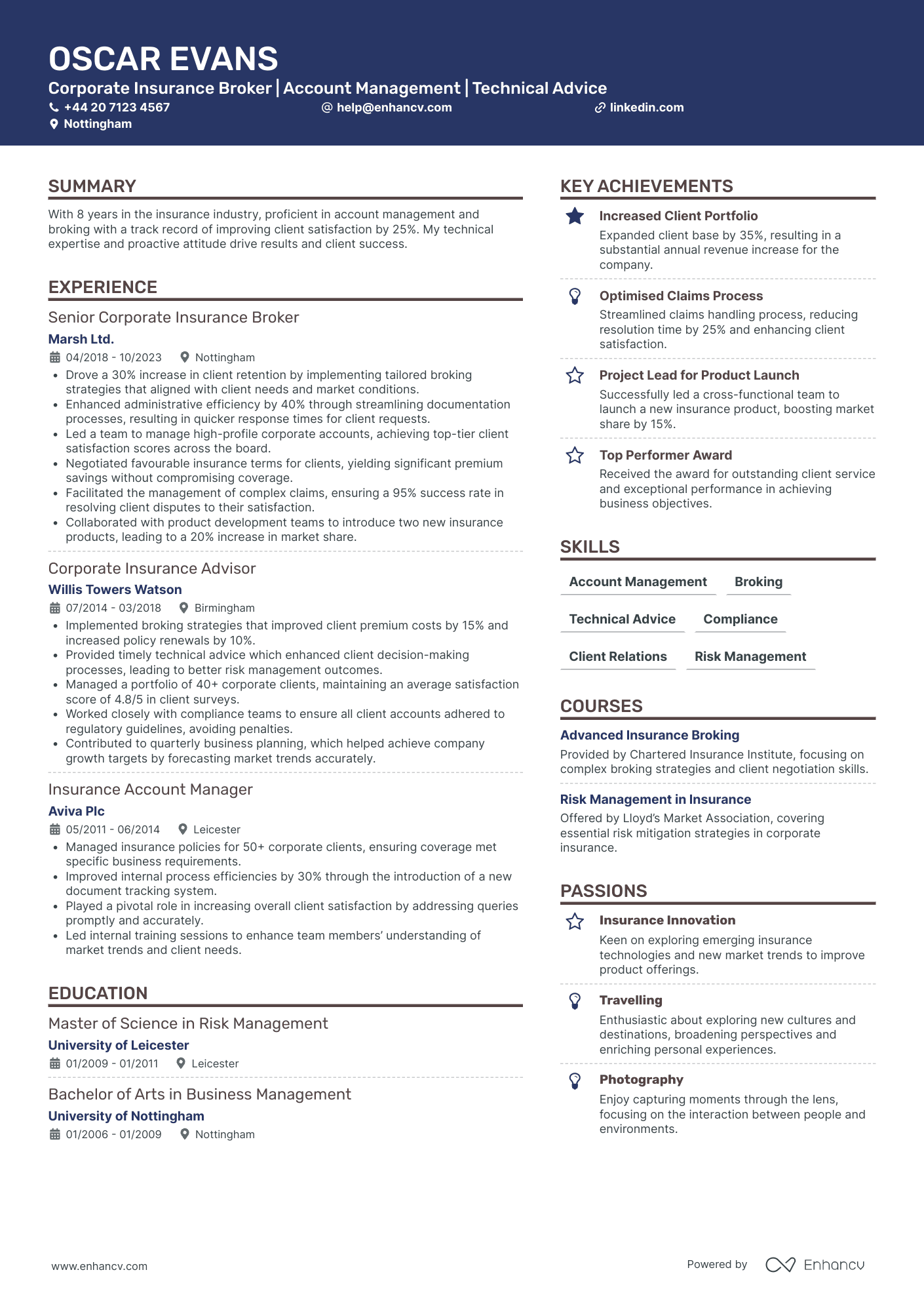
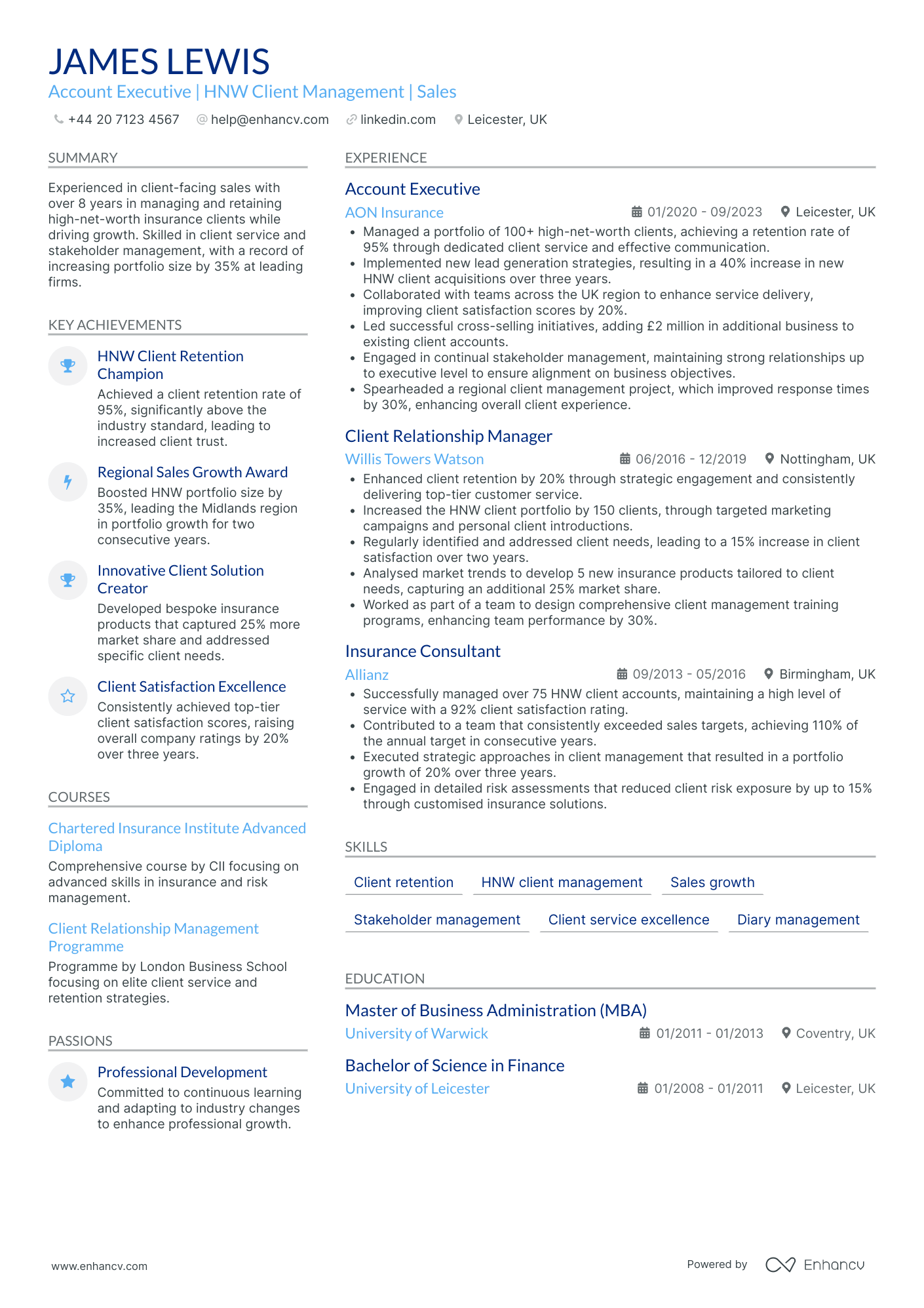
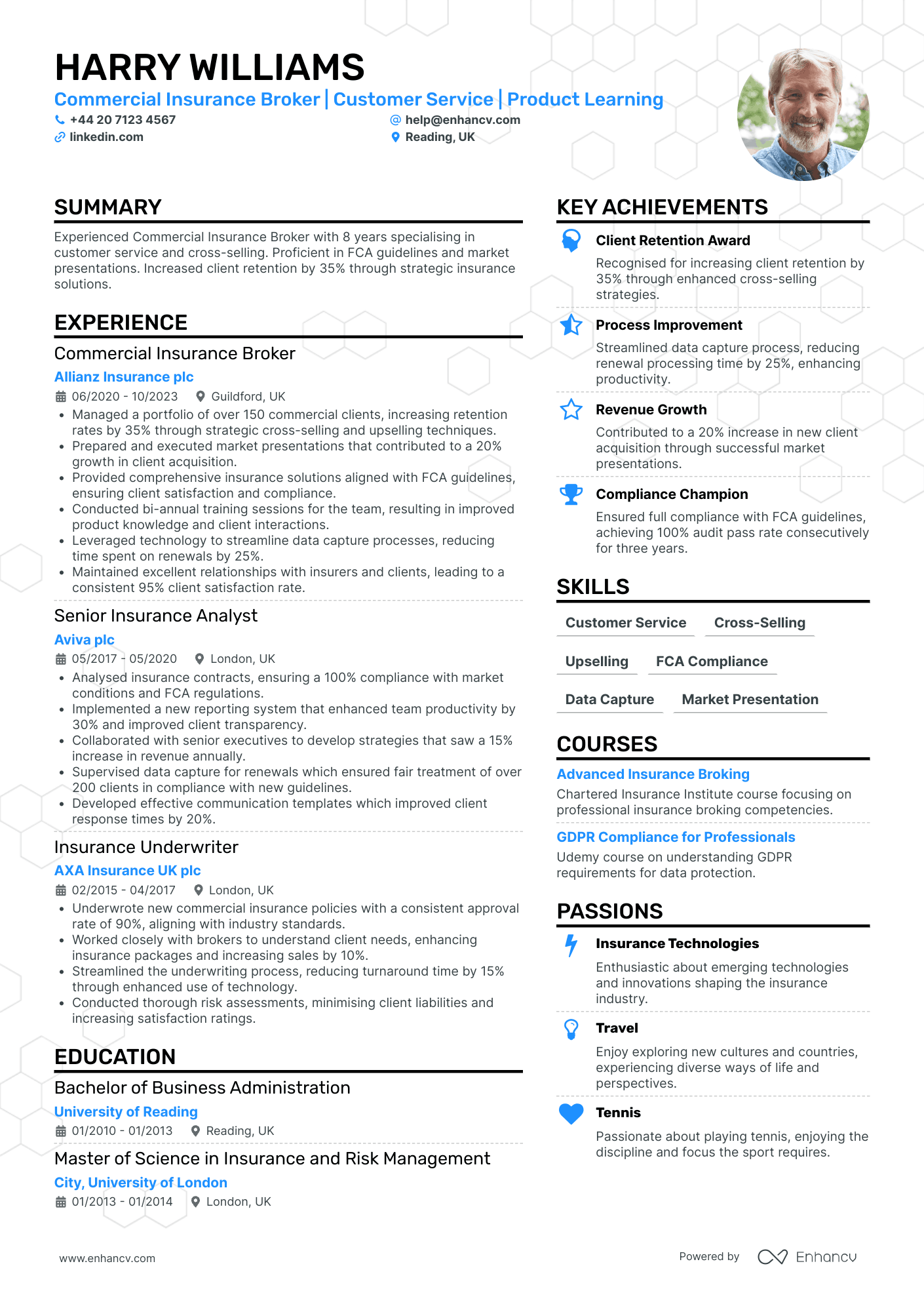
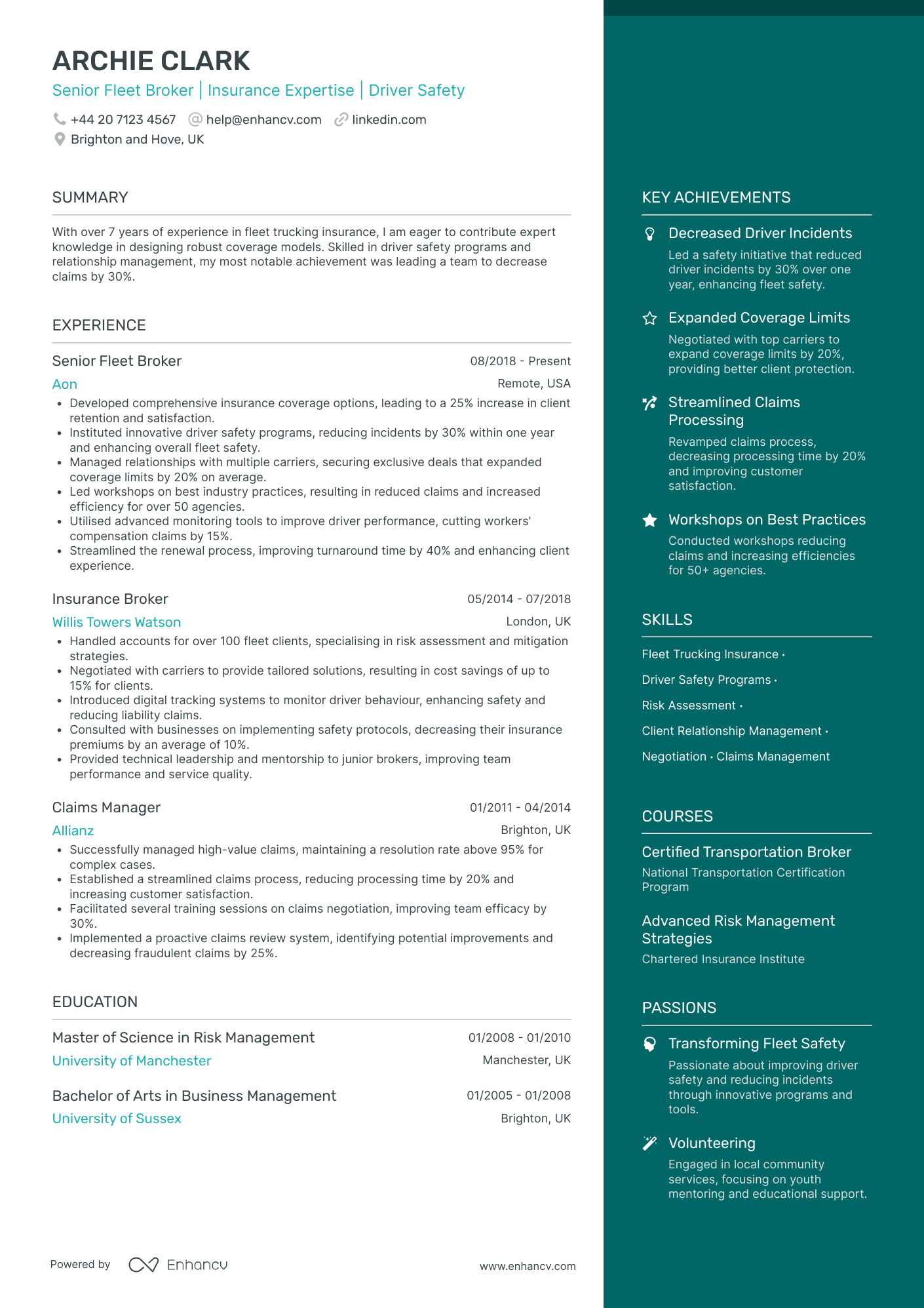
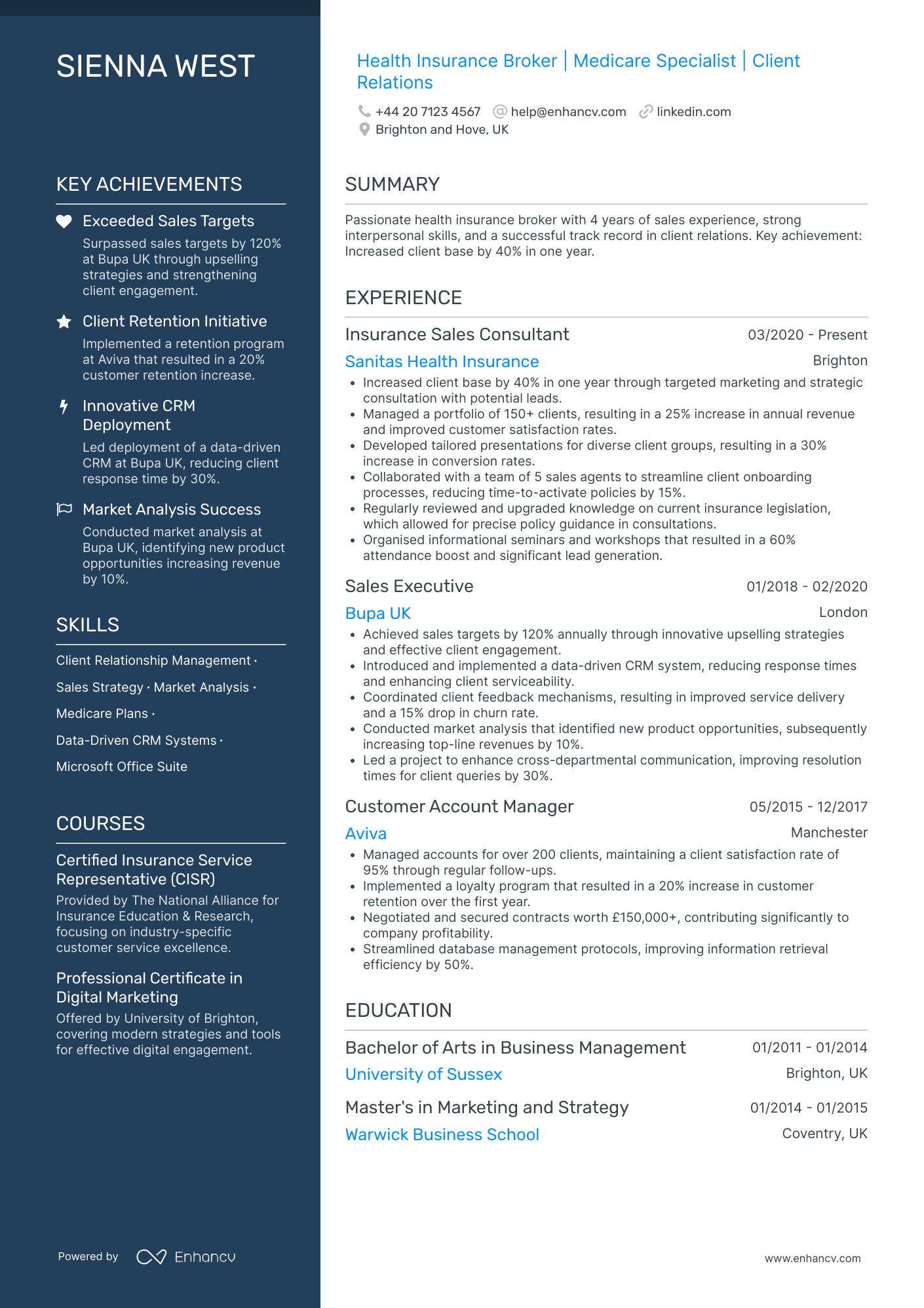
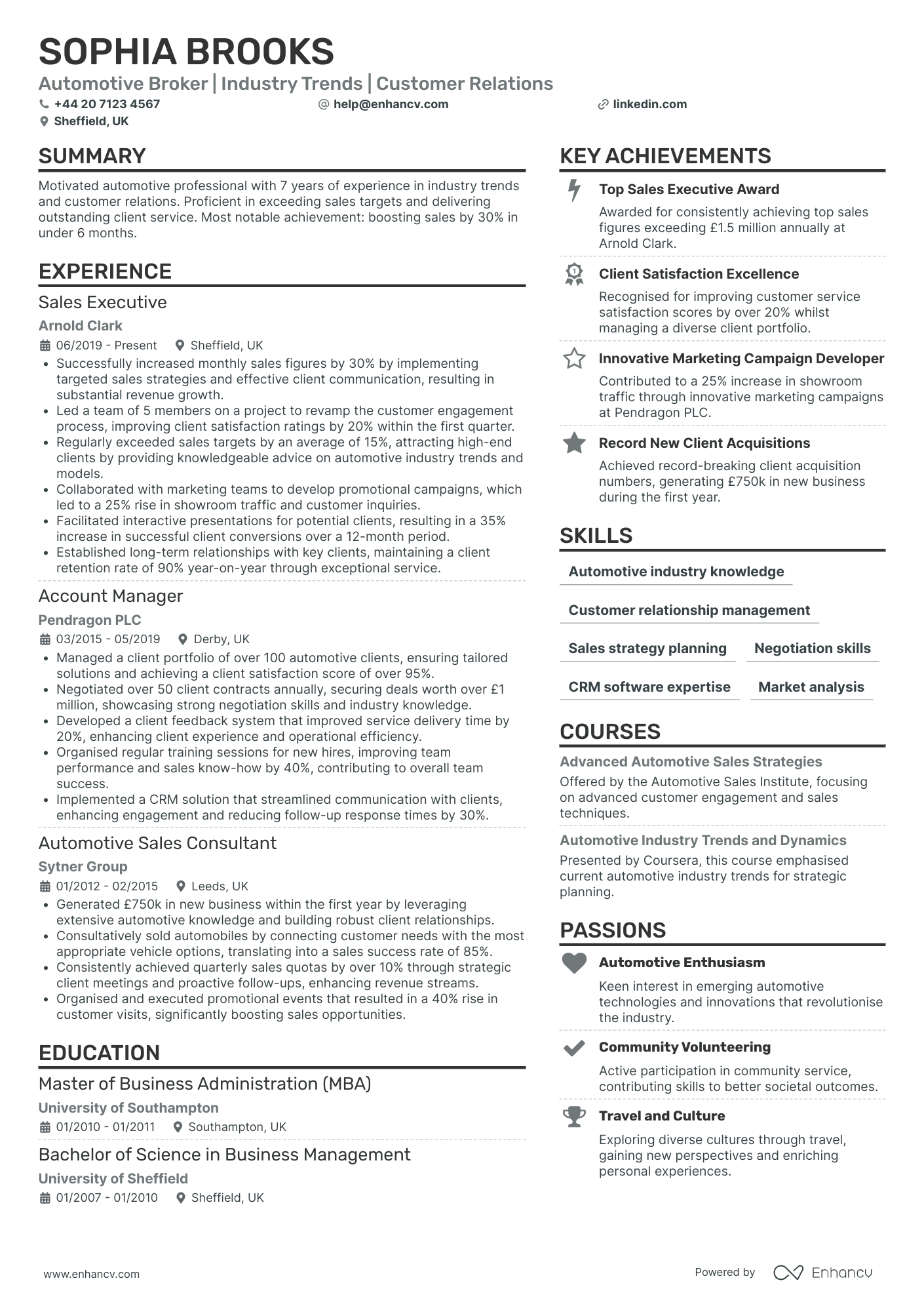
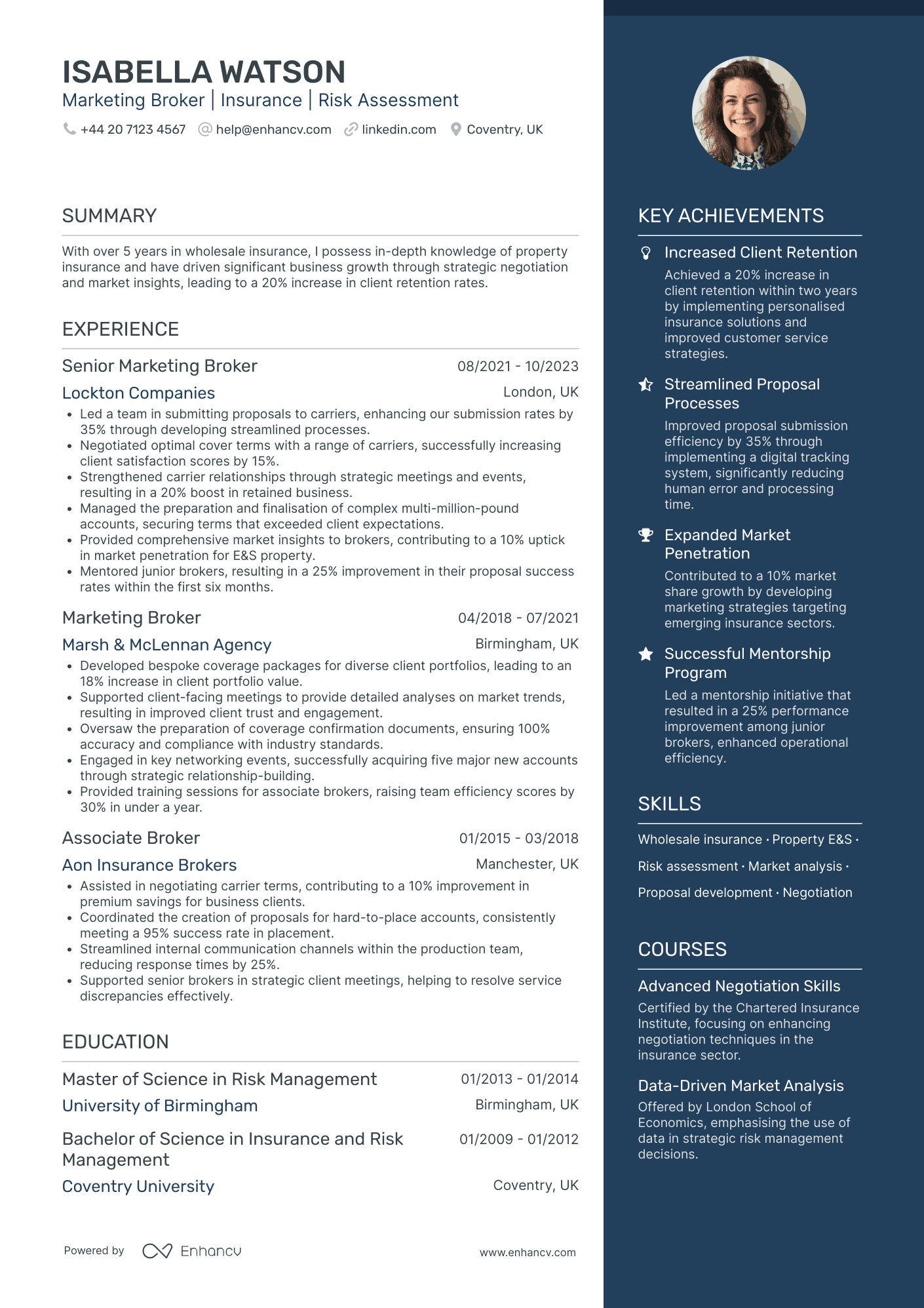
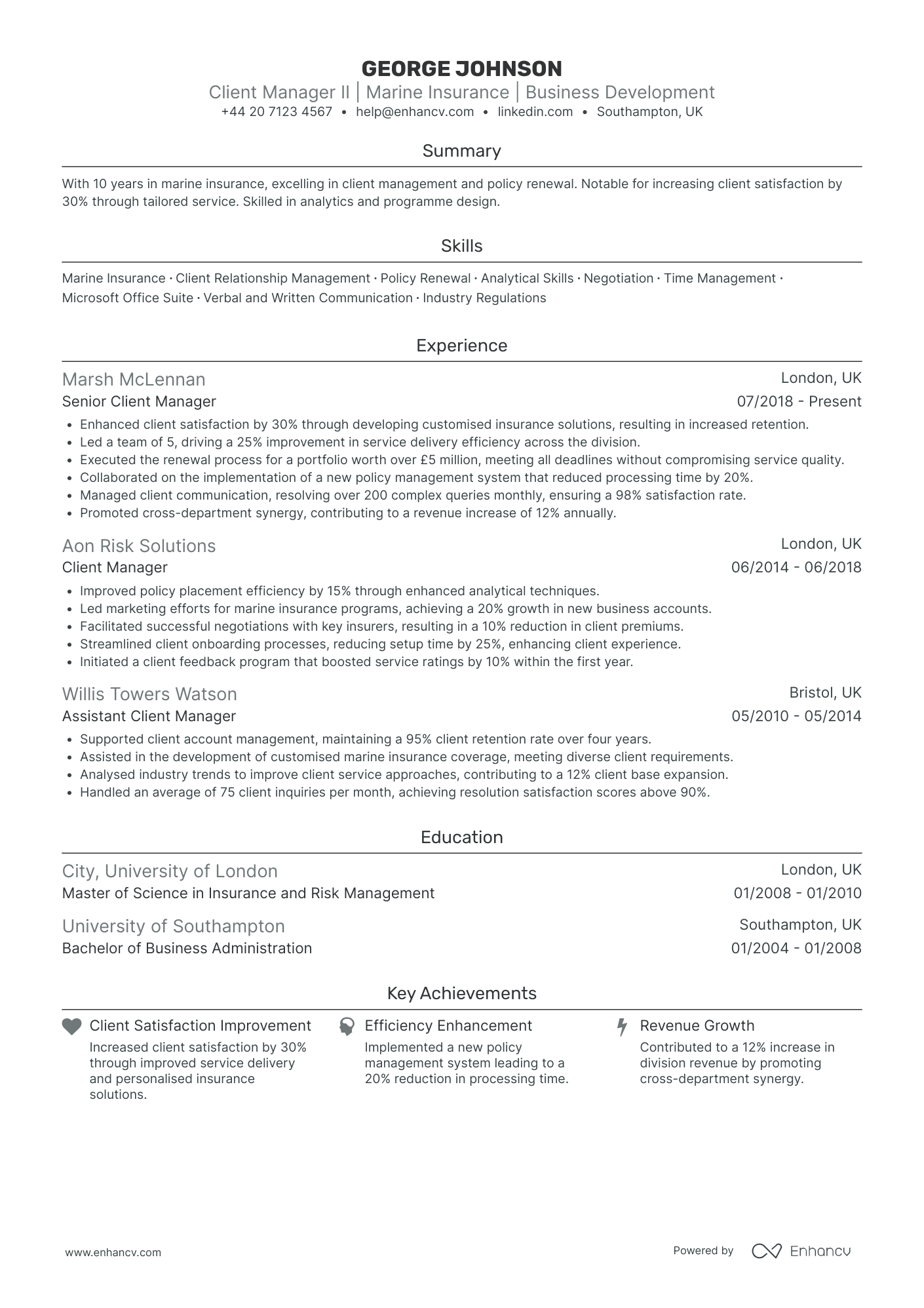
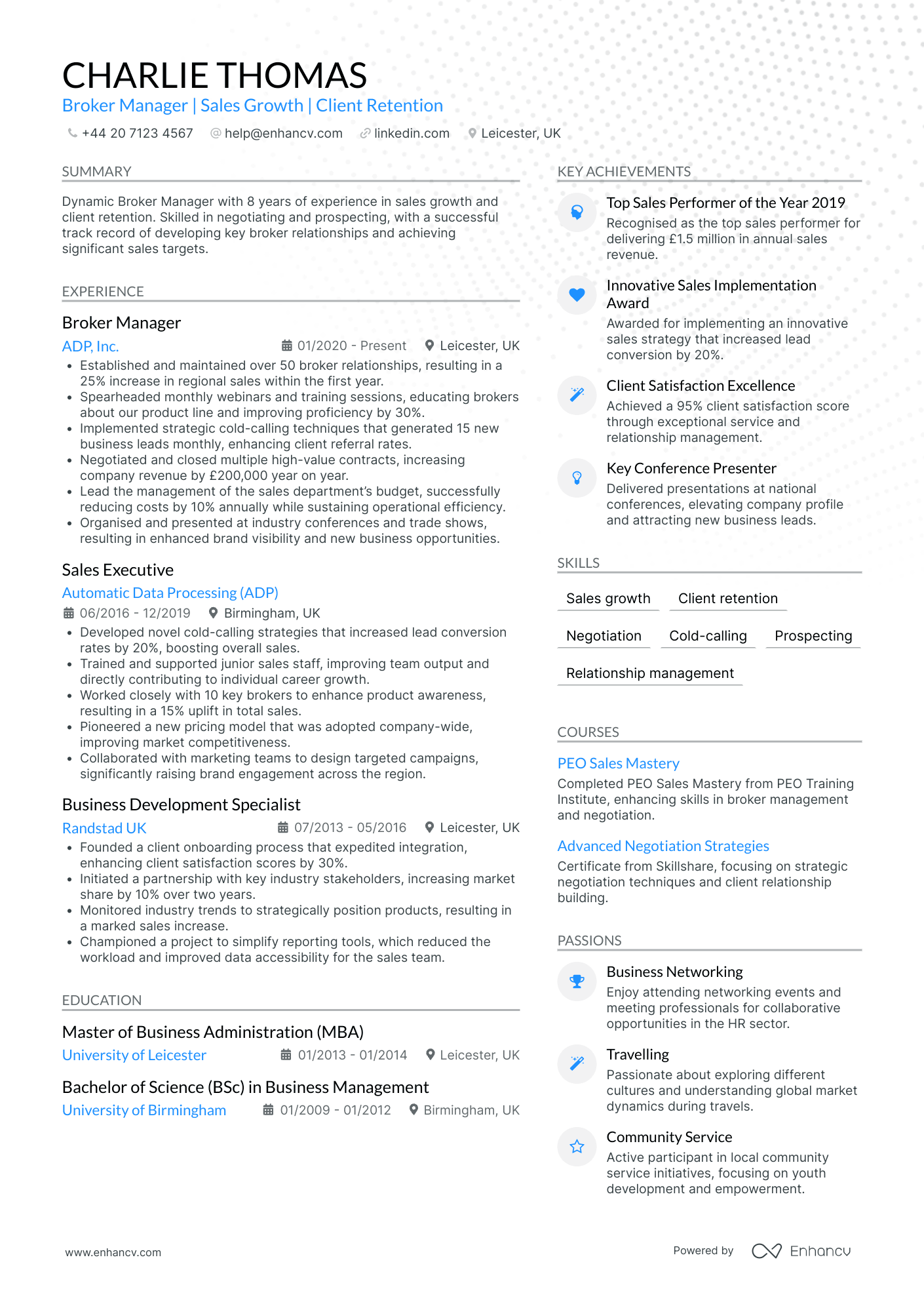
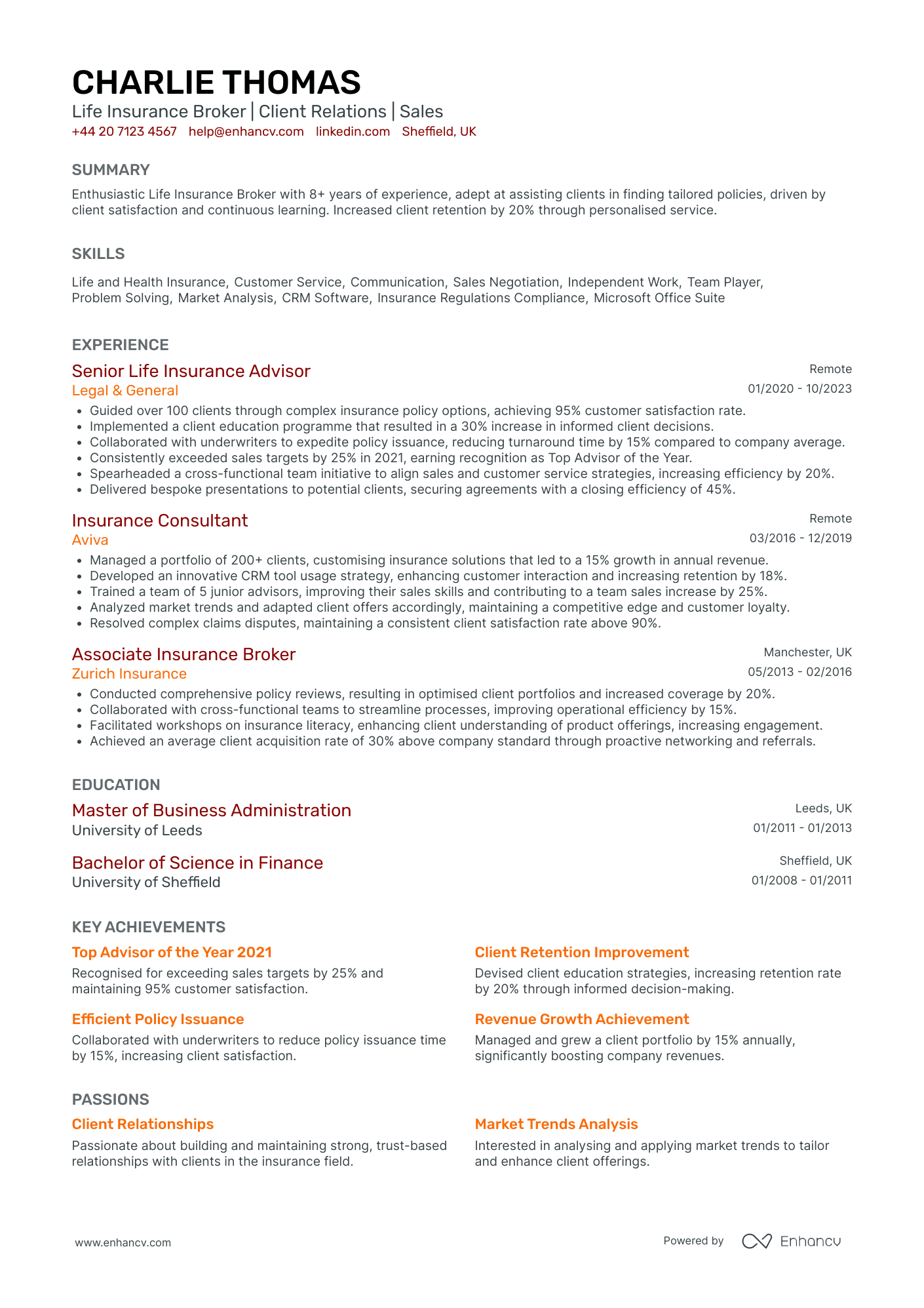
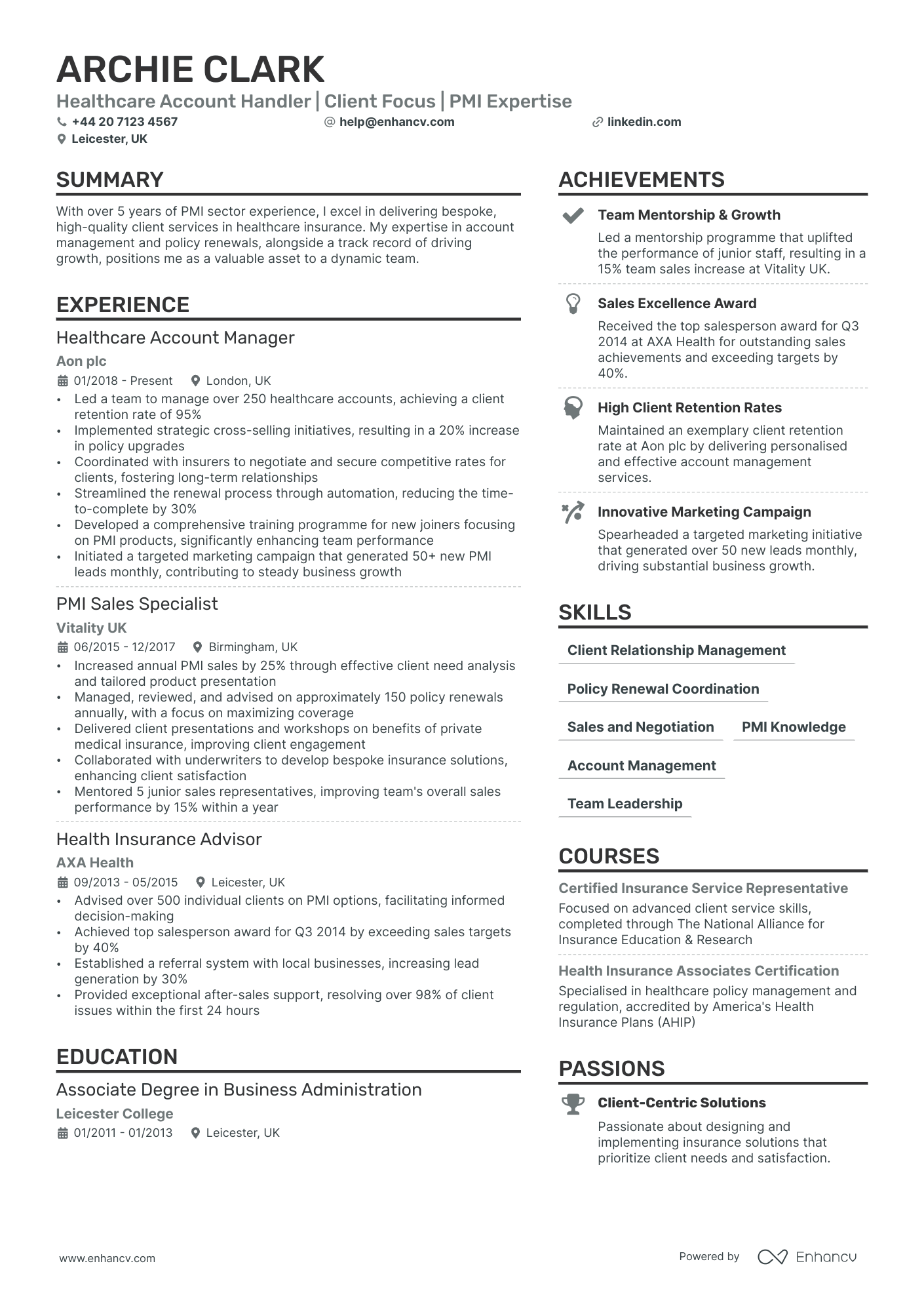
Most insurance broker CVs read like a policy schedule. A list of classes handled, a couple of system names, and nothing that tells a hiring manager whether you can actually win an account and keep it on the books.
The brokers who get interviews prove two things fast: that they place risk profitably and that their clients renew. Get the fundamentals right first with a clear guide on how to write a CV, then build the page around your book, your retention, and the lines you know best.

Key takeaways
- Lead with the classes of business you place and the systems you use. A hiring manager wants to see Acturis, commercial or personal lines, and the risks you handle before anything else.
- Prove you can win and keep business: new business written, gross written premium handled, renewal retention, and cross-sell rate.
- Name your CII progress. A Cert CII, Diploma, or work towards ACII signals a broker who takes the profession seriously.
- Open with a short personal statement built on your specialism, one book or premium figure, and a retention number.
- Mirror the advert's exact terms: commercial lines, personal lines, professional indemnity, mid-term adjustments, and renewals.
- Two pages, reverse chronological, sent as a PDF unless the advert asks for a Word file.
Top skills for your insurance broker CV
An insurance broker CV lives or dies on two questions a recruiter checks first: can you place a risk with the right market, and can you hold on to the client once it is bound. Your skills section is where you answer both, in the words the advert uses.
Keep the list tight. Eight to ten hard skills and five or six soft skills is plenty, and every one should be defensible. A sprawling list of thirty generic competencies reads as filler and hides the two or three that would have won you the interview.
Split them the way employers read them. Your hard skills are the technical broking competencies you can evidence, so list them in the exact terms the job description uses: risk assessment, commercial or personal lines placement, renewals, and negotiating terms with underwriters.
Soft skills carry real weight in broking, because an account is won on trust and kept on service. The soft skills that count here are checkable ones: relationship building, negotiation, and the ability to explain cover in plain English to a client who is buying on price.
Match the emphasis to your desk. A commercial broker leads with property, liability, and professional indemnity placement, a personal lines broker with high-volume quoting and cross-selling, and a specialist with the niche they know. The advert tells you which words to promote to the top of the list.
Top skills for your insurance broker CV:
Risk assessment and placement
Commercial and personal lines broking
Acturis and broking systems
Quoting and negotiating with underwriters
Renewals and mid-term adjustments
New business development and cross-selling
FCA compliance and Consumer Duty
Client and policy administration
Relationship building
Negotiation
Clear communication
Attention to detail
Commercial judgement
Resilience under deadlines
Do not stop at listing them. A skills section only works when the experience below it backs every claim you have made above it.
Take renewals. "Skilled in renewals" proves nothing. "Renewed a £2.4m commercial book at 93% retention through a hardening market" proves all of it.
Do the same for placement, negotiation, and cross-selling. Name the system, name the premium or client volume, and name the outcome. One backed claim outweighs a column of unproven adjectives.
Recruiters at brokerages read a skills list against the desk they need to cover. If you claim professional indemnity or mid-market experience, they expect to see the premium band, the markets you place with, and a retention figure beneath it. List only what you can stand behind, and move anything aspirational into a training-in-progress line instead.
Where you can, put the skill in the context of a client rather than a system. "Talked a manufacturer through a mid-term increase in cover after a site expansion and retained the account" shows negotiation, technical knowledge, and outcome in a single line. That is the standard every skill on the page should aim for.

PRO TIP
Broking adverts name the desk, not a soft-skill cloud. Mirror the exact terms you can back: "commercial lines", "personal lines", "professional indemnity", "mid-term adjustments", "new business", "renewals". Name the systems and the markets you actually place with, so a hiring manager can picture you covering the desk from day one.
What UK employers look for in an insurance broker
Knowing what a brokerage screens for tells you what to put near the top of the CV. Five things do most of the work, and every one belongs on page one.
| What employers look for | How to show it on your CV |
|---|---|
| Lines of business | Whether you place commercial, personal, or specialist lines like professional indemnity, and the premium sizes you handle |
| Broking systems | Acturis or the broking system the firm runs, plus any rating, quoting, or Excel-based tools you use daily |
| Regulatory standing | That you work within FCA rules and Consumer Duty, with a clean file and compliant demands-and-needs records |
| Qualification | Your CII progress, from Cert CII through the Diploma and towards the ACII, listed with the awarding body and year |
| Proof it works | New business won, gross written premium handled, renewal retention, and cross-sell rate near the top of the page |
Two of those shape the CV more than the rest.
Broking is a numbers job, so a hiring manager wants to see a book they can weigh. Put your gross written premium, client count, and retention where they are visible without scrolling.
And the desk matters. A commercial brokerage reads a personal lines CV differently from a mid-market one, so name the lines you place before you list the tasks you do. Make it easy to slot you onto the desk they are hiring for.
Writing your insurance broker personal statement
Three or four sentences at the top: your desk, your qualification, the book you run, and one number that proves you keep it. Keep it concrete. For more openings, see these personal statement examples.
Skip the adjective soup. "Enthusiastic, hardworking and customer-focused" sits on half the CVs in the pile and tells a recruiter nothing they can check.
Pitch the statement to the desk you are applying for. A personal lines broker leads with volume, conversion, and cross-sell, while a commercial broker leads with premium handled, retention, and the classes they place. Both close with the kind of brokerage they want to join.
Lead with evidence instead.
Insurance broker CV personal statement example
Dip CII-qualified commercial broker with seven years placing SME and mid-market risks across property, liability, and professional indemnity. Manage a £2.4m GWP book on Acturis with 93% renewal retention and 18% year-on-year new business growth. Looking to bring disciplined account management to a growing commercial brokerage in the West Midlands.
What to avoid
Enthusiastic and hardworking insurance professional with excellent communication skills and a real passion for delivering great customer service. A natural team player who thrives in a fast-paced environment and is seeking a challenging new role to progress my career and add value to a forward-thinking company.
When we read an insurance broker CV, the first thing we look for is proof you can win a risk and keep it on the books. That means your classes of business, one premium or book figure, and a retention number, all before the fold. A line like "grew a £2.4m commercial book with 93% retention" tells us more than a paragraph about being a team player. A real number and a named class of business beat a polished summary with nothing behind it every time.
Writing your insurance broker experience section
Write every role the same way: a dated heading, then bullets that lead with a verb and land on a result. For the mechanics, see work experience on a CV.
Broking is measurable even where it feels like relationship work. Gross written premium, client numbers, retention, conversion, new business won, and cross-sell ratios are all CV achievements a hiring manager can weigh.
Show progression as well as results. Moving from personal lines to commercial, or from account handler to account executive, tells a hiring manager you have grown into bigger risks and more responsibility. Order your roles so that story reads top to bottom.
Tailor each application. Pull the desk and the regulatory keywords from the advert and mirror them where they are true of you. Enhancv's CV tailoring feature reads the advert and suggests the matching edits, which saves rewriting from scratch each time.
- Place and renew a £2.4m GWP commercial book across property, liability, and professional indemnity for 180 SME clients on Acturis
- Grew the book by 18% over two years through structured renewal reviews and referral-led cross-selling
- Negotiate terms with a panel of 15 underwriters, lifting average renewal retention from 88% to 93%
- Handle mid-term adjustments and claims queries end to end, keeping a clean FCA file-check record across two audits
- Managed 40 to 50 motor and home quotes a day, converting 34% of new enquiries into bound policies
- Cross-sold home, legal expenses, and breakdown cover, lifting average policies per client from 1.3 to 1.7
- Passed the Certificate in Insurance (Cert CII) while working full time and moved onto the commercial desk in 2021
- Resolved complaints within service targets and held a 4.8 out of 5 customer satisfaction score
PRO TIP
Every bullet should answer "so what?". "Handled renewals" is a duty. "Renewed a £2.4m book at 93% retention through a hard market" is an outcome. If a bullet has no premium, no client volume, and no result, either add one or cut it.
Formatting your insurance broker CV
Use a reverse chronological structure once you have broking roles behind you, so your current desk, systems, and results sit at the top. Lead with a skills-led layout only if you are moving into broking for the first time.
Keep it to two pages, one column, standard headings, and a readable font. Hiring managers at brokerages skim fast, and a CV padded with every class you have ever touched buries the numbers that matter.
Send a PDF for direct applications so the layout holds, and keep a Word copy for recruitment agencies that reformat CVs into their own template. If the advert names a file type, follow it.
Applications often pass through tracking software, so keep the layout clean and the headings standard for an ATS-friendly CV. Build from a tested layout rather than a blank page, and Enhancv's CV templates export to a clean PDF.
Keep the CV header simple and professional: name, town, phone, and email. You do not need a photo for a UK broking role, and a clear header leaves more of page one for the book and the retention figures that move a decision.
CII qualifications and FCA requirements for brokers
Broking is a regulated profession, so a UK employer wants to see where you sit on the qualification ladder and that you understand the rules you work under. Get both onto page one.
The recognised route runs through the Chartered Insurance Institute: the Certificate in Insurance (Cert CII) as the entry standard, the Diploma in Insurance (Dip CII) as the mid-career mark, and the Advanced Diploma (ACII) that leads to chartered status. Name where you are on that ladder, with the awarding body and the year.
If you are working towards a qualification, say so. "Diploma in Insurance, three of five units passed" tells an employer you are on the path and worth backing. List any certificates and continuing professional development in a dedicated block, and keep your qualifications on your CV near the top rather than buried at the bottom.
Show that you know the regulatory frame too. A short note that you broke within FCA rules and Consumer Duty, kept clean demands-and-needs records, and passed file checks quietly answers the question every compliance manager asks before an interview.
Tailoring your CV to commercial, personal, and specialist lines
"Insurance broker" covers very different desks, and a CV that does not name yours makes the reader guess. Reweight the page to the role you want.
For a commercial role, lead with the classes you place, your premium band, and retention. Property, liability, professional indemnity, and mid-market packages are the words a commercial hiring manager scans for first.
For a personal lines role, lead with volume and conversion. Motor, home, and add-on cover like legal expenses and breakdown, plus your quote-to-bind rate and cross-sell ratio, are what a high-volume desk values.
For a specialist desk, name the niche and prove depth. A life or health and protection broker leads with the products advised on and the compliance standard held, while a marine, cyber, or professional indemnity broker leads with the markets they place with. Whatever the line, mirror the advert's language and let one strong number carry the claim.
Conclusion
Lead with the lines you place, prove your book with real numbers, and put your CII progress and retention where a recruiter sees them first.
Pair the CV with a short cover letter that says why this brokerage and this desk, and you turn a list of classes into a case for an interview.
Read it back once from the hiring manager's chair. If the desk, one premium figure, and a retention number are all visible without scrolling, the CV is doing its job. If they are not, move them up before you send it.

Author's take - The Enhancv team
When we read an insurance broker CV, the first thing we look for is proof you can win a risk and keep it on the books. That means your classes of business, one premium or book figure, and a retention number, all before the fold. A line like "grew a £2.4m commercial book with 93% retention" tells us more than a paragraph about being a team player. A real number and a named class of business beat a polished summary with nothing behind it every time.