



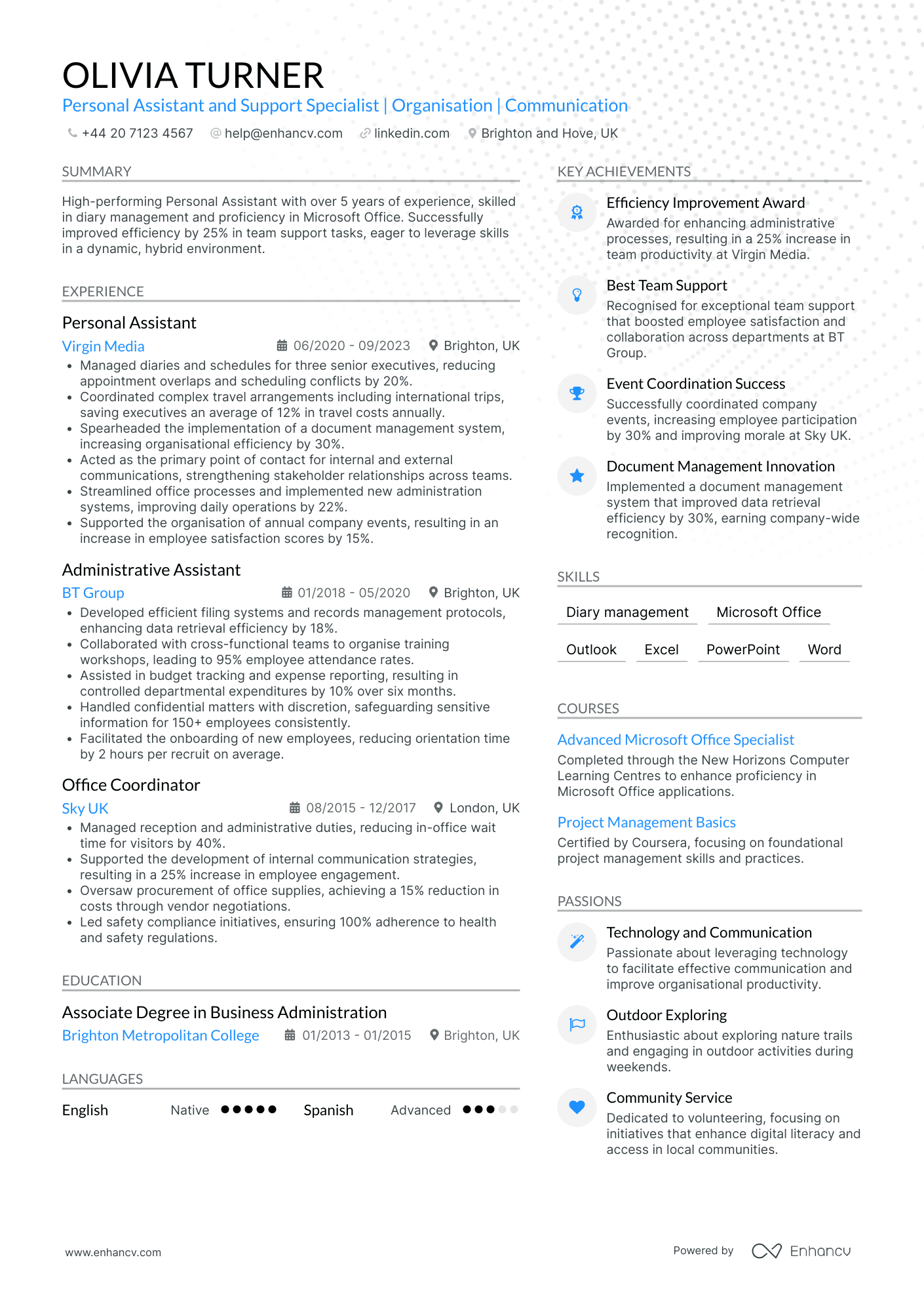
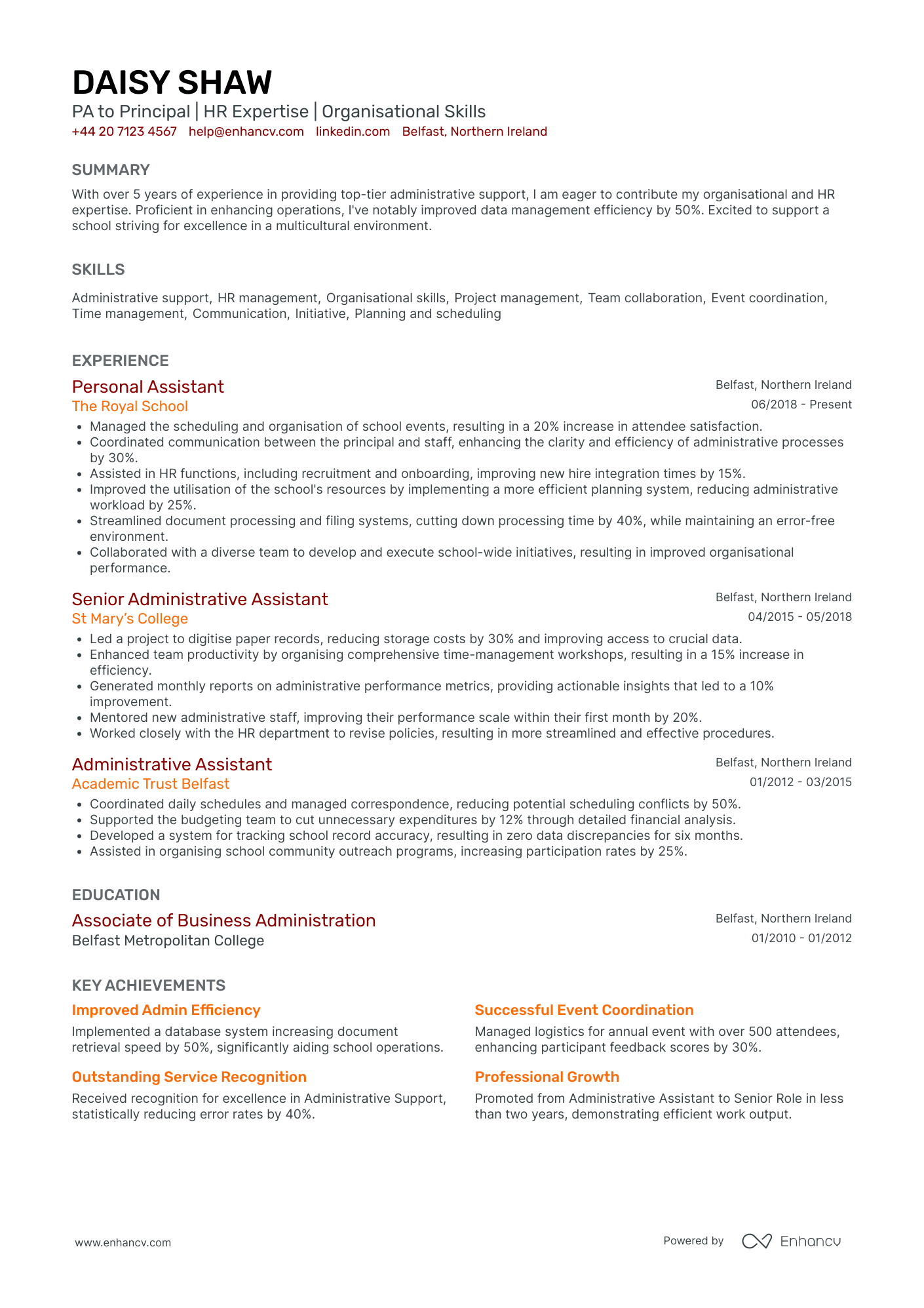
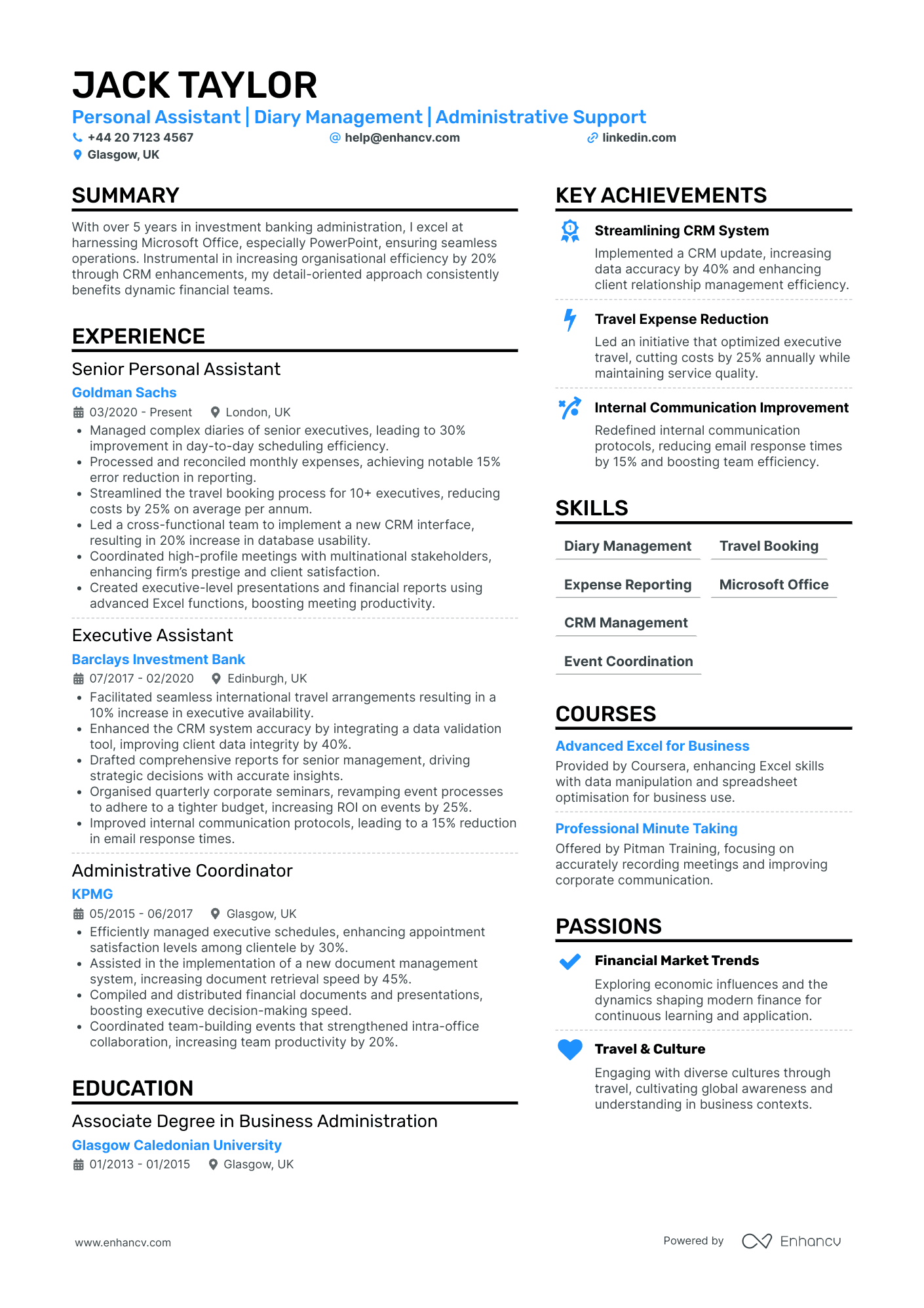
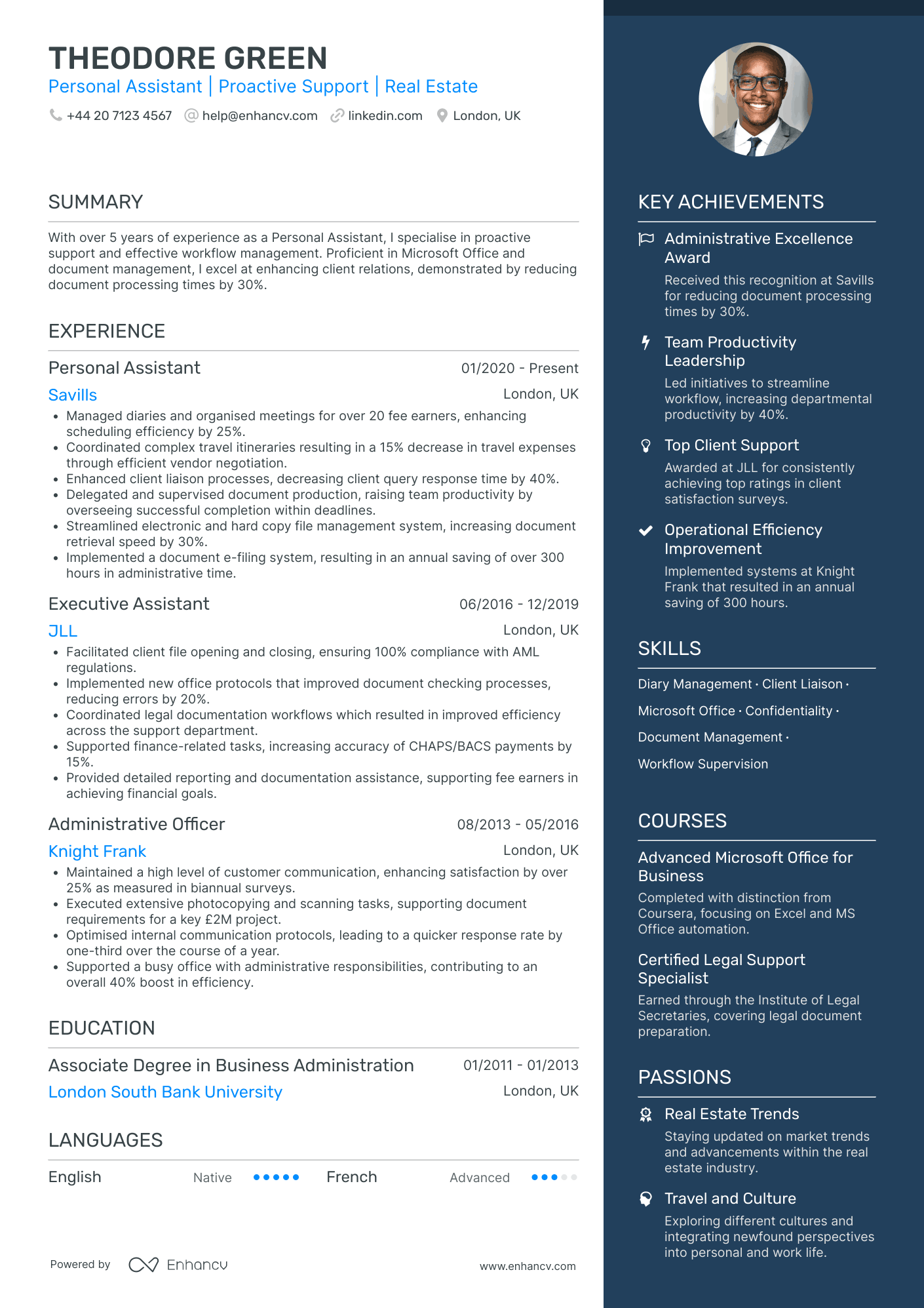
Most personal assistant CVs list the duties and hope the reader joins the dots. Diary management, inbox, travel, expenses, all lined up in a tidy column that could belong to any PA in the country.
The ones that get called show the judgement behind the admin: the trip rebooked overnight, the diary clash caught before it became a problem, the confidential file nobody else could be trusted with. That is what separates a PA a director keeps from one they replace.

Key takeaways
- Lead with skills. A PA is hired on organisation, discretion, and judgement, so put those first and prove each with a concrete example.
- The top three every advert wants are diary and inbox management, communication, and discretion. Name them, then back them.
- "Personal assistant" covers two different jobs in the UK: the office or executive PA, and the care-sector support PA. Decide which you are and write the whole CV to it.
- Quantify the invisible work: diaries and inboxes run, executives supported, budgets handled, and time saved.
- Two pages, reverse chronological, sent as a PDF unless the advert asks for a Word file.
- Open with a short personal statement built on the person you support and one concrete result.
Top skills for your personal assistant CV
Ask what the top three skills for a PA are and the honest answer is organisation, communication, and discretion. Everything else on a strong PA CV hangs off those three.
Organisation is the job itself. You run a diary, an inbox, and a travel schedule for someone who has no time to run their own. Prove it with scale, not adjectives. "Managed the diary and inbox for a director fielding 200 emails a day" beats "highly organised" every time.
Communication is you speaking for someone more senior. You draft on their behalf, guard their time, and hold the line with people who outrank you. Show a moment you did exactly that.
Discretion is why they hand you the board pack, the salary review, and the file nobody else sees. You cannot put a number on it, so evidence it instead. "Handled confidential board and HR documents" says more than "trustworthy" ever could.
Those are your headline hard skills and soft skills working together. The hard ones are the tools of the trade: diary and inbox systems, travel booking, minute-taking, expenses, and the software you live in. The soft ones are the judgement a director is really buying.
Name the software specifically, because a PA lives in it all day. Outlook and Google Calendar, Excel, Teams and Zoom, and expense tools like Concur or SAP are the ones adverts check for. A recruiter reads "advanced Excel and Concur" as someone who will not need hand-holding in week one.
And prove the soft skills, do not just list them. Anyone can type "excellent communicator". Far fewer can write "drafted board-level correspondence and briefing notes on behalf of the CEO", which shows the same skill doing real work. Every soft skill on your CV should have a bullet somewhere that earns it.
One warning before you copy a skills list wholesale. If you are applying for a care-sector or direct-payment PA role rather than an office one, the skills flip completely. Employers there screen for safeguarding, moving and handling, first aid, and person-centred support, and you should mirror those exact terms. Treat the list below as the office and executive version.
List only what you can stand behind. A director will test any skill you claim within your first fortnight, so keep the section honest and back each line with a bullet further down the CV.
Top skills for your personal assistant CV:
Diary and calendar management
Inbox and email management
Travel and itinerary planning
Meeting coordination and minute-taking
Expense and budget management
Document and records management
MS Office and Google Workspace
Event and project coordination
Discretion and confidentiality
Organisation
Communication
Proactivity and anticipation
Attention to detail
Adaptability

PRO TIP
Read the advert and steal its vocabulary. If it says "gatekeeping", "inbox triage", "complex diary management", or "board-level support", use those exact phrases where they are true of you. A PA CV is scanned fast, and mirroring the wording is the quickest way to look like the person they already pictured.
What the UK personal assistant market looks like
Knowing the market shapes the CV. Here is what the role pays and what employers actually ask for.
| What | UK personal assistant roles |
|---|---|
| Typical pay | £28,000 to £60,000 a year (National Careers Service, gov.uk) |
| Where the work happens | On-site 83% (170 of 204 UK postings in the last ~30 days, Enhancv's internal job feed) |
| Experience level asked for | Entry 82% · mid 15% · senior 3% |
| Most-listed skills in the feed | Moving and handling, adult and child safeguarding, first aid, and person-centred support |
That last row surprises people, so it is worth explaining. Search "personal assistant" on a UK job feed and two very different jobs come back under one title.
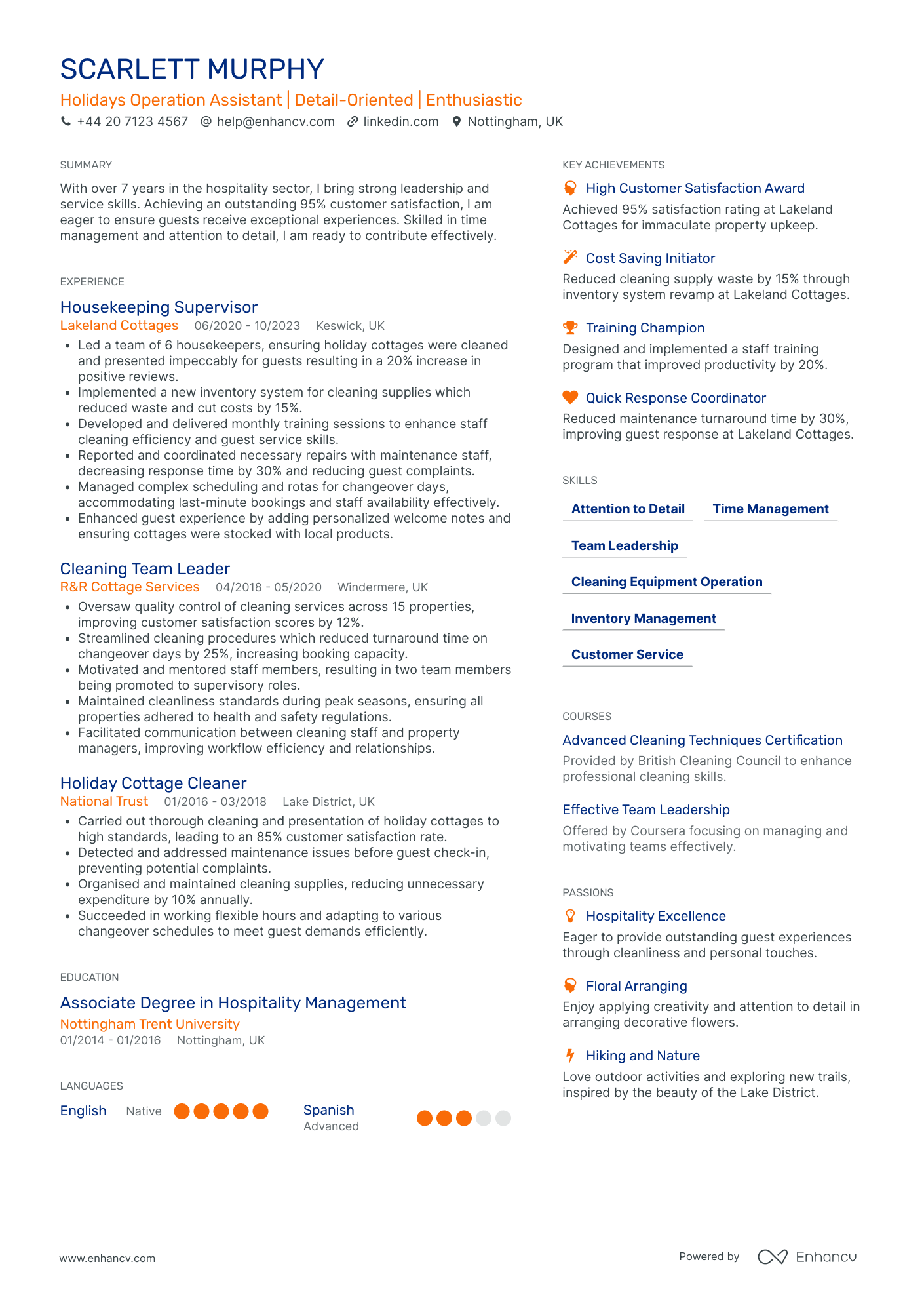
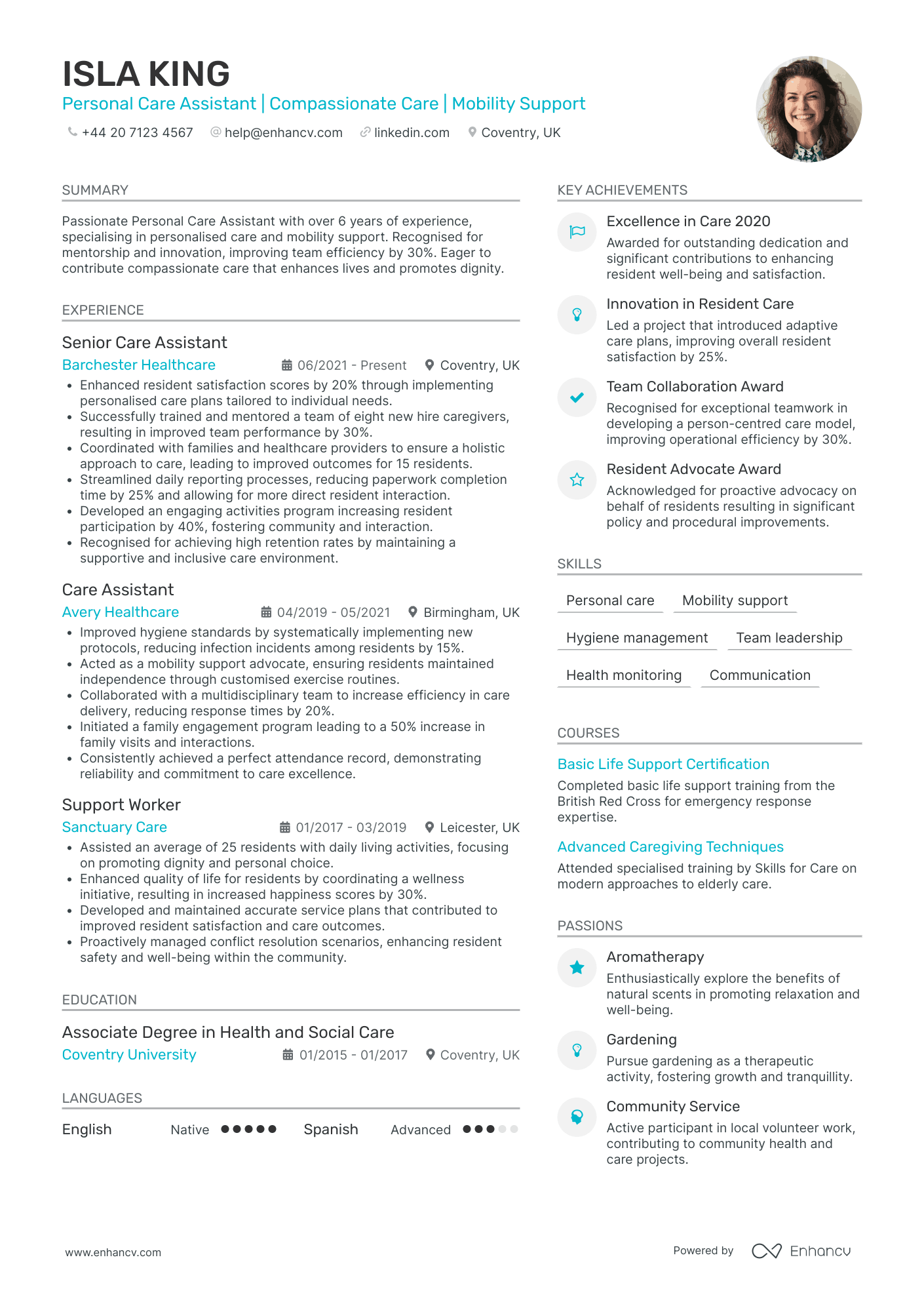
One is the office or executive PA who runs a leader's diary and inbox. The other is the care-sector or direct-payment PA who supports a disabled or older person day to day. The care roles show up in volume, which is why moving and handling, safeguarding, and first aid top the most-listed skills rather than diary management.
For you, that means one thing above all: decide which PA you are before you write a word, and mirror the language of that half of the market. A care CV that reads like an office CV, or the reverse, gets filtered out fast.
Two other numbers matter. The work is overwhelmingly on-site at 83%, so put your town and a sense of your commute in the header, because a leader who needs you at their desk will check. And 82% of postings are pitched at entry level, which makes the no-experience route further down realistic rather than wishful.
The pay range is wide for a reason. A junior office PA and an executive assistant to a FTSE board sit at opposite ends of the same job title, so read the salary as a signal of which end an advert is aiming at and pitch your CV to match.
Formatting your personal assistant CV
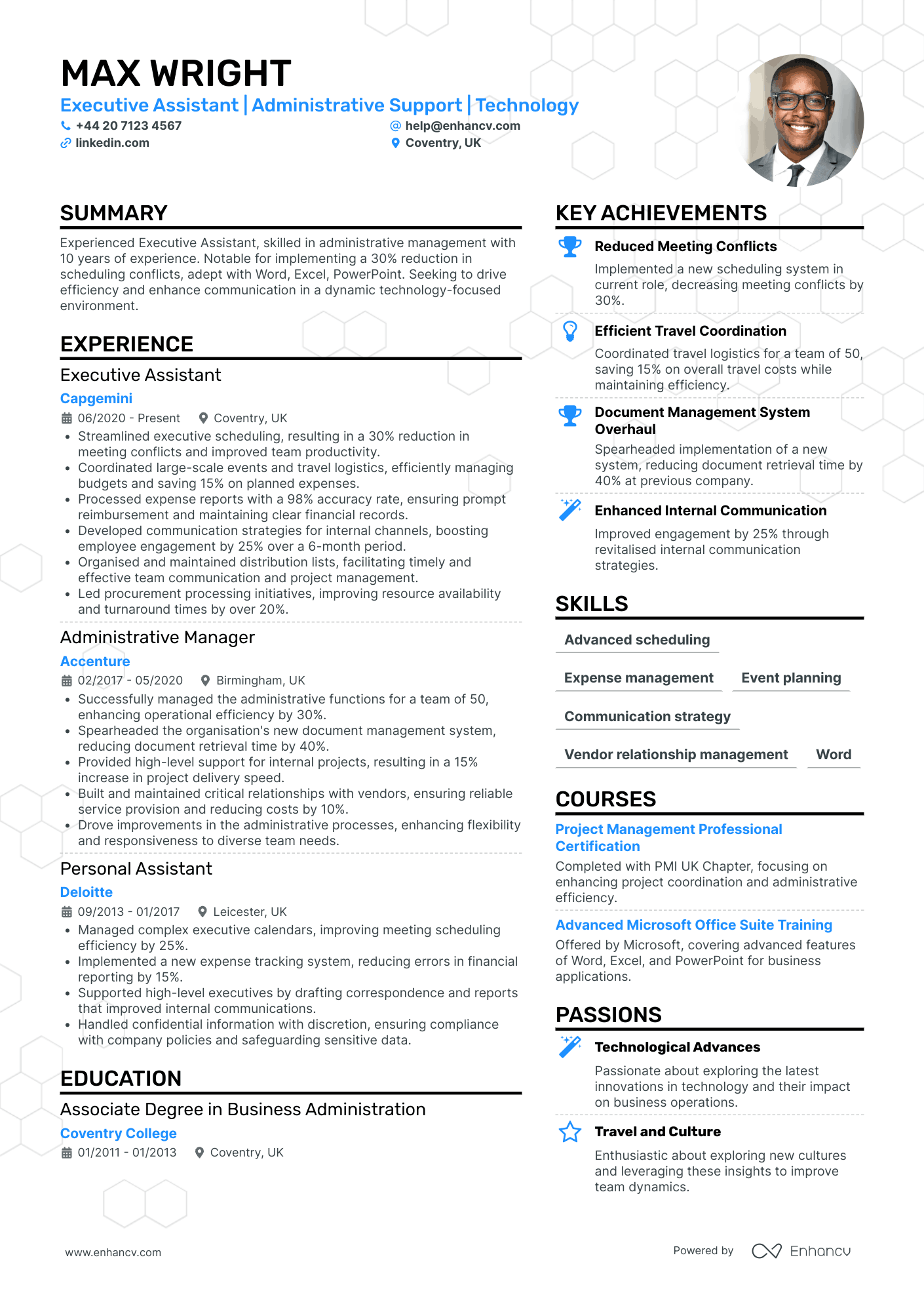
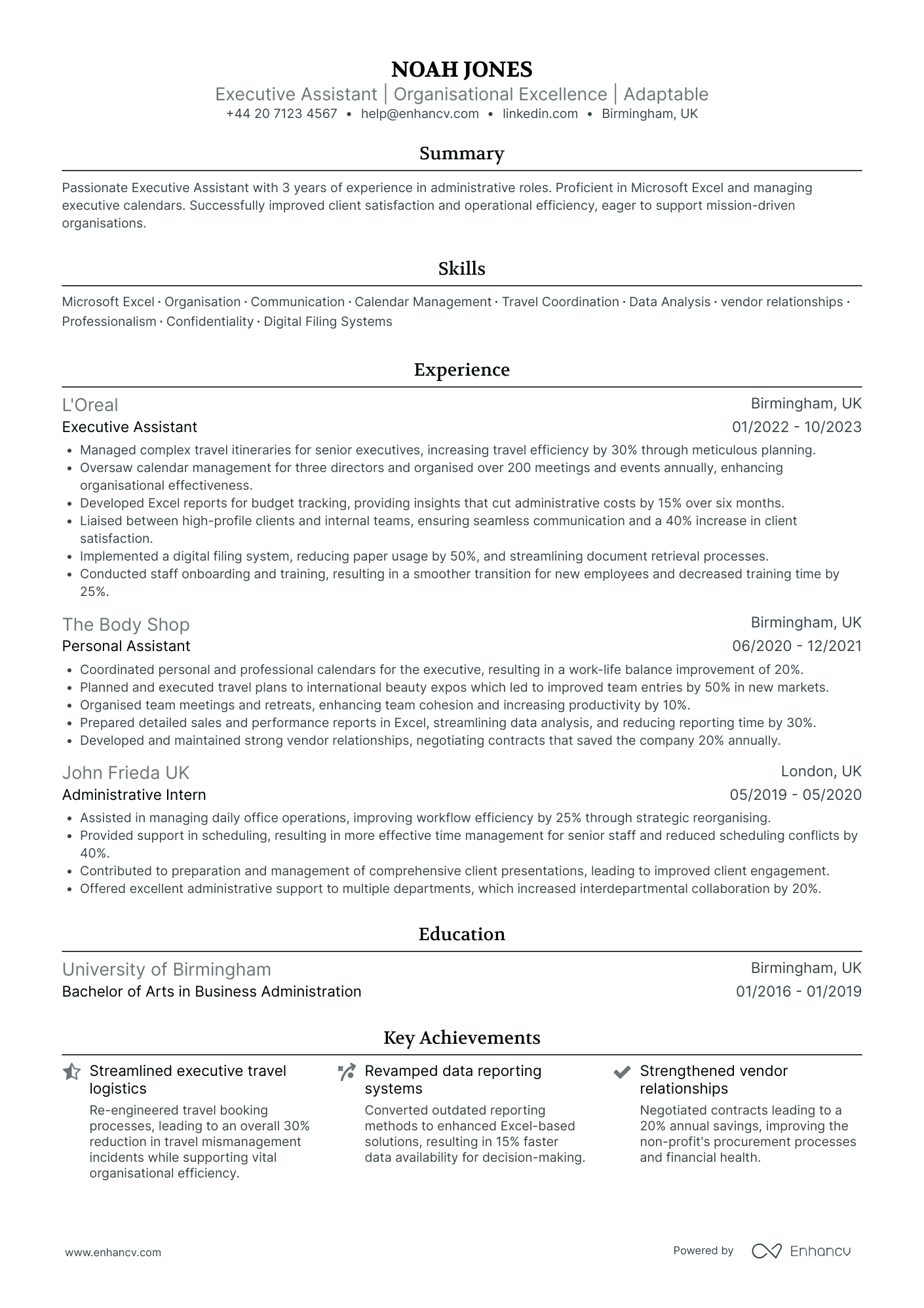
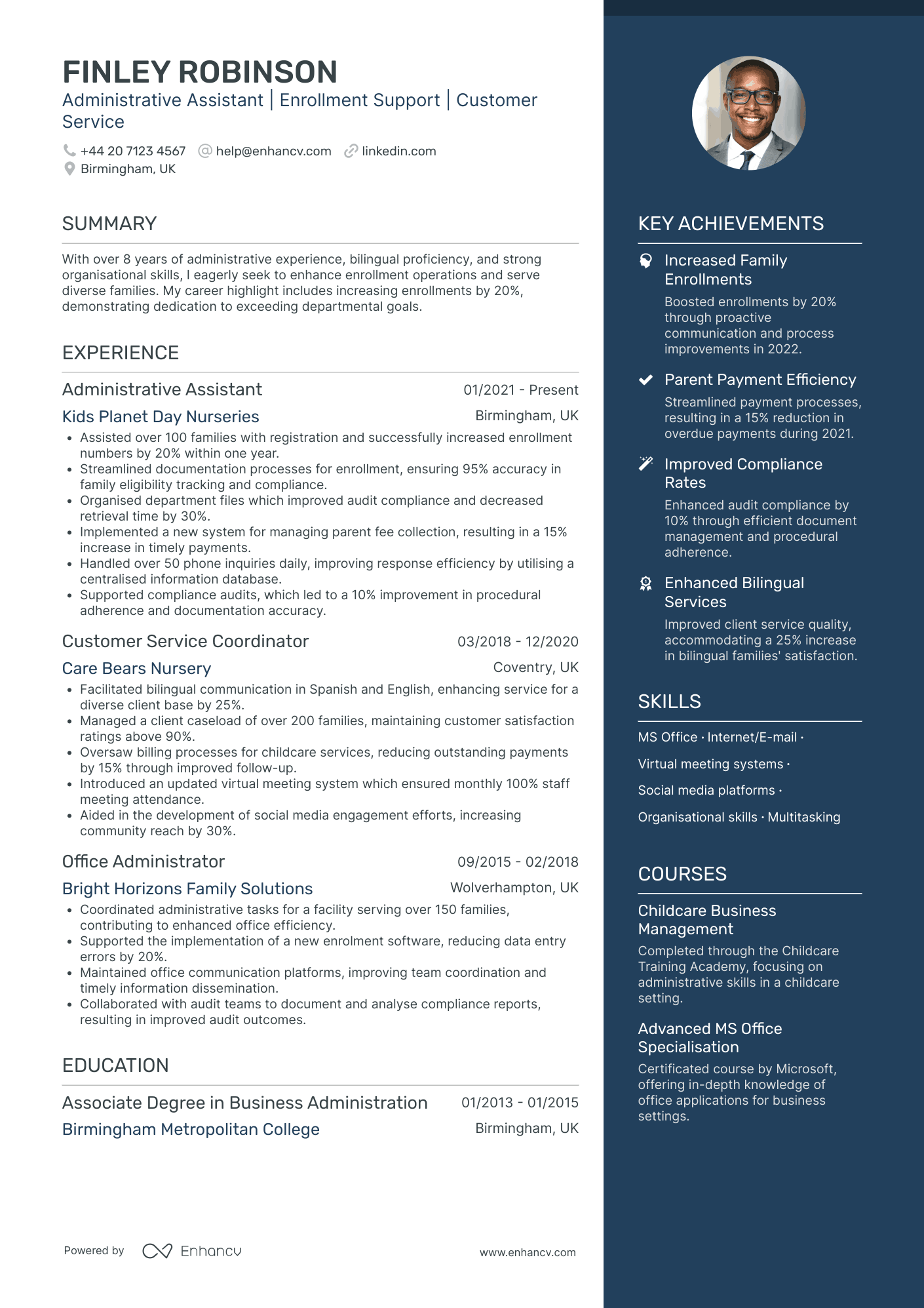
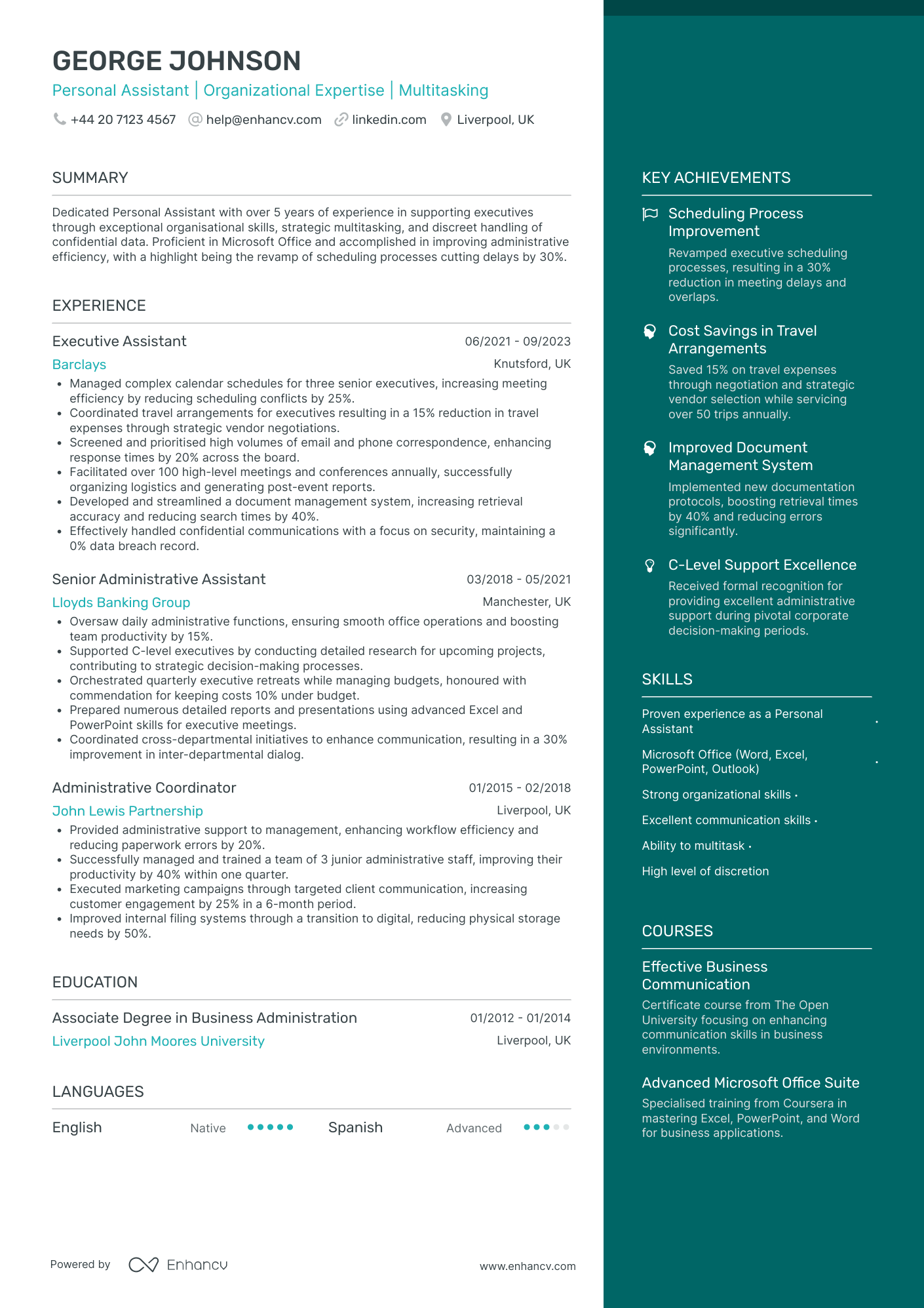
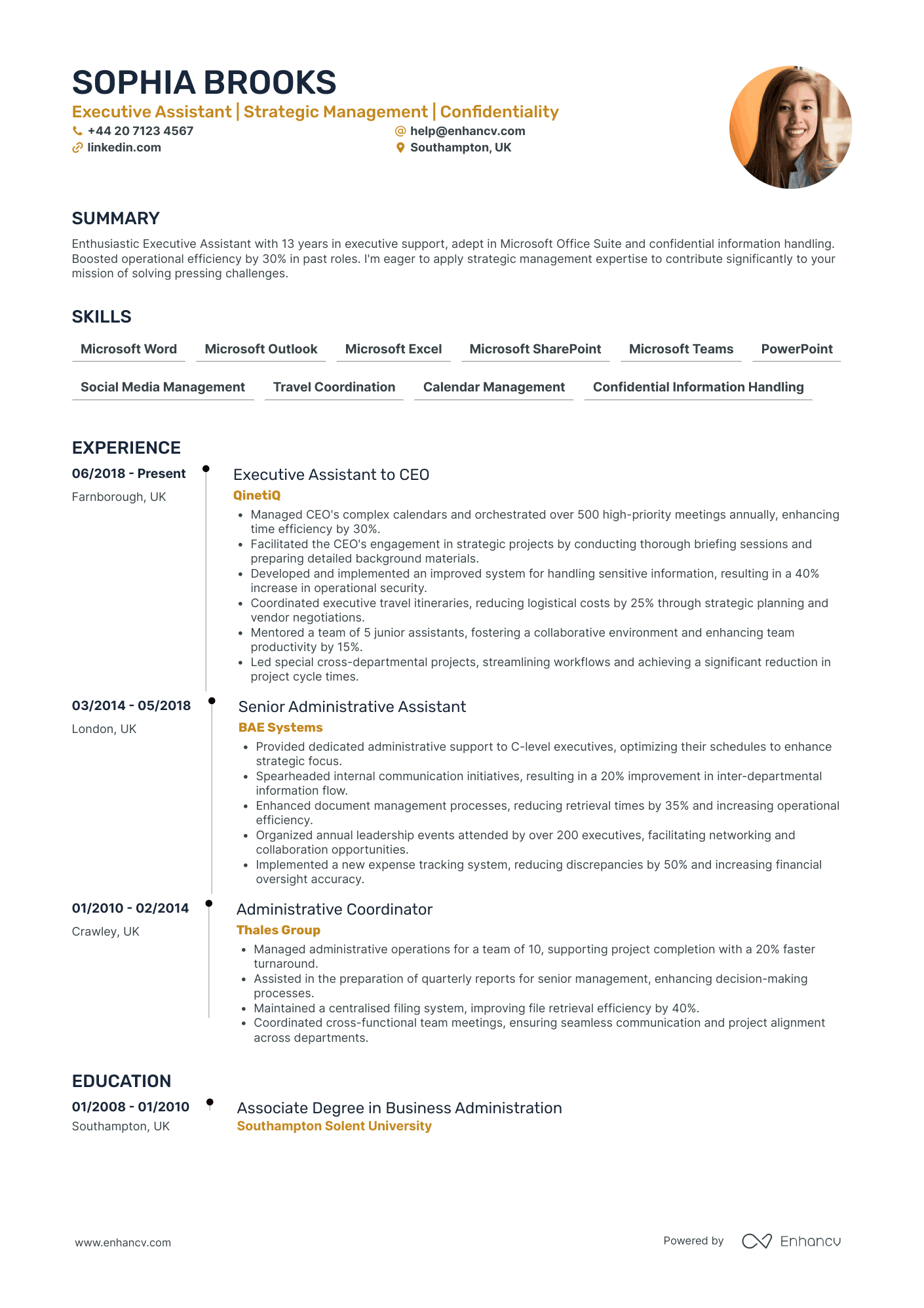
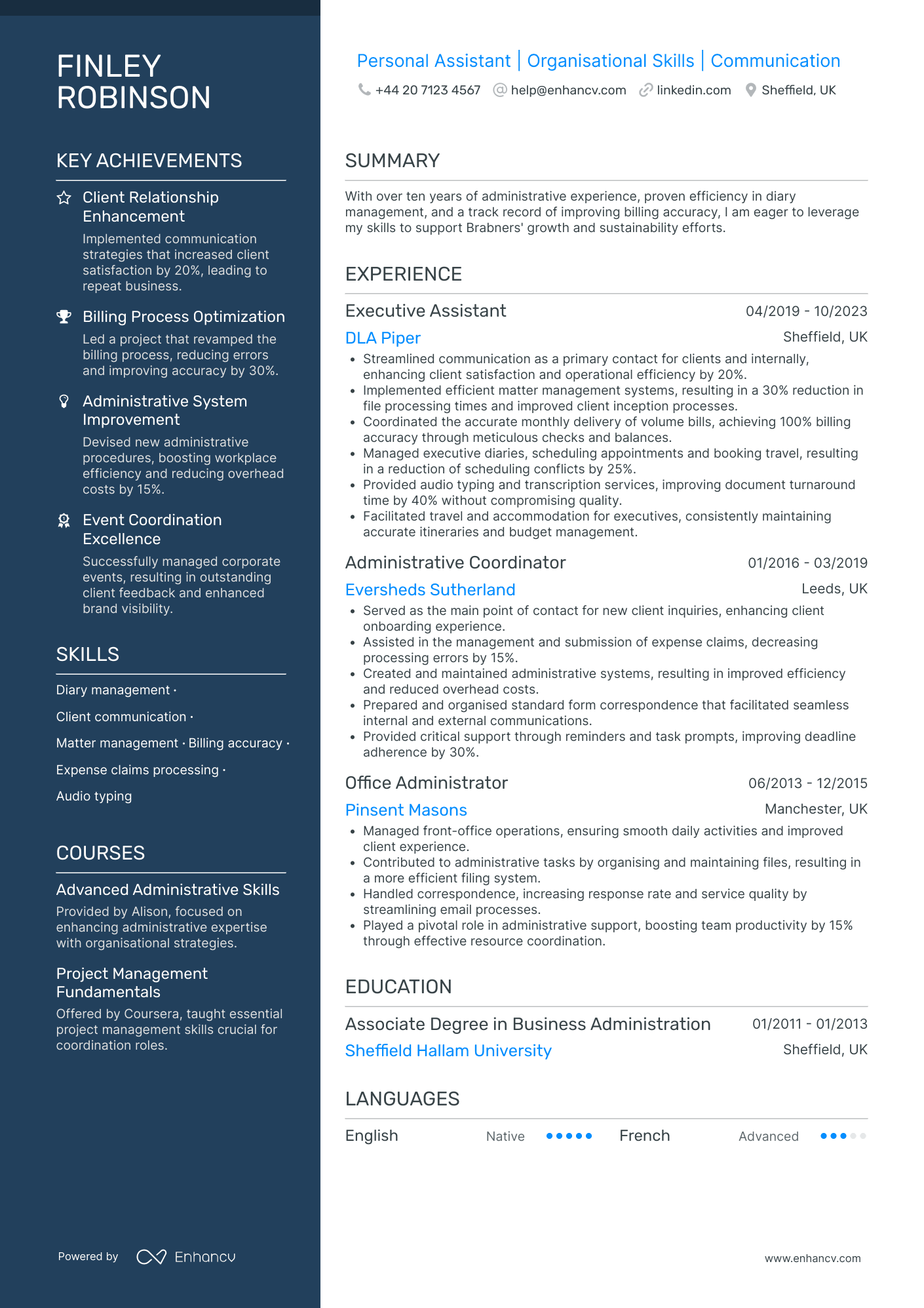
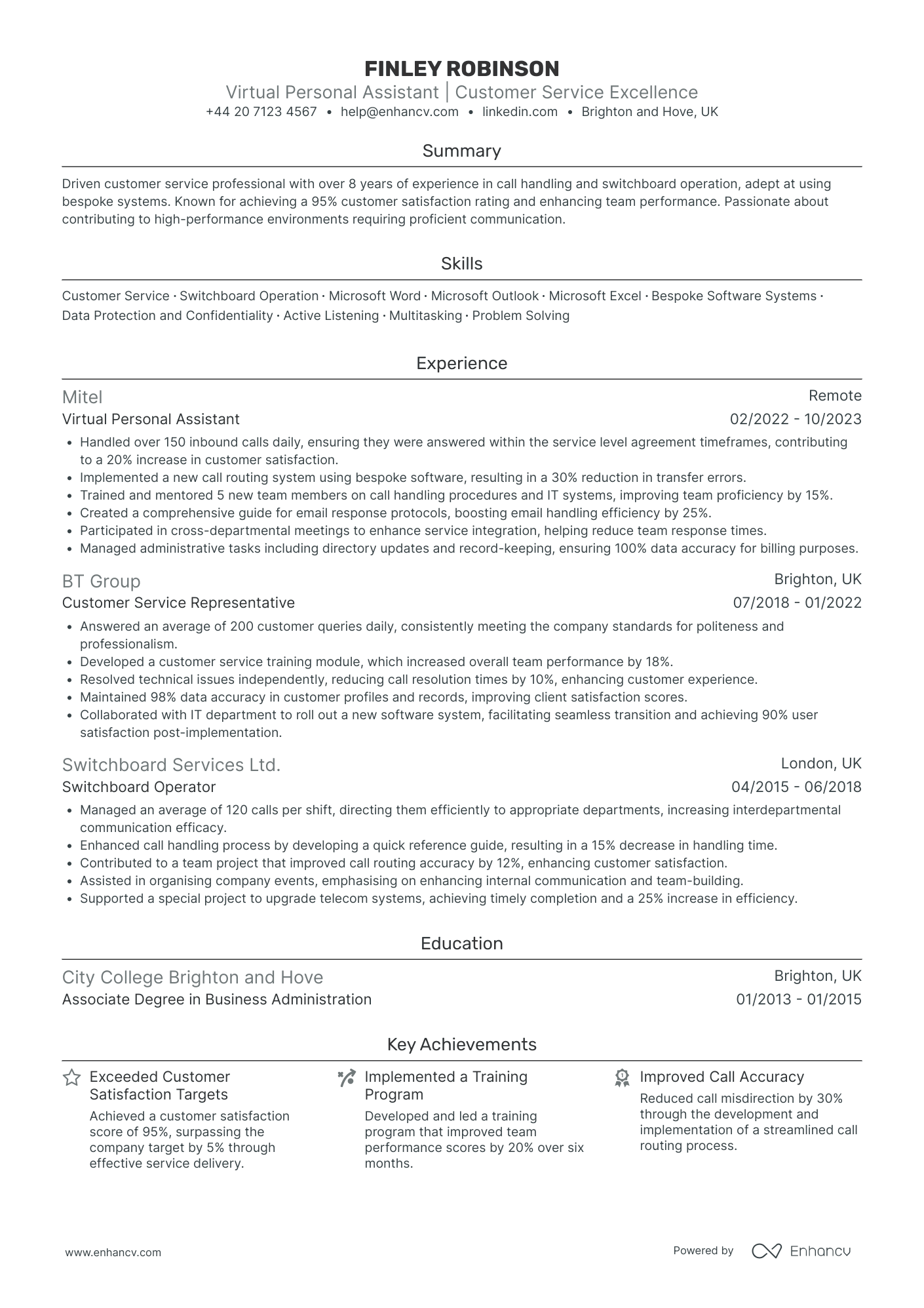
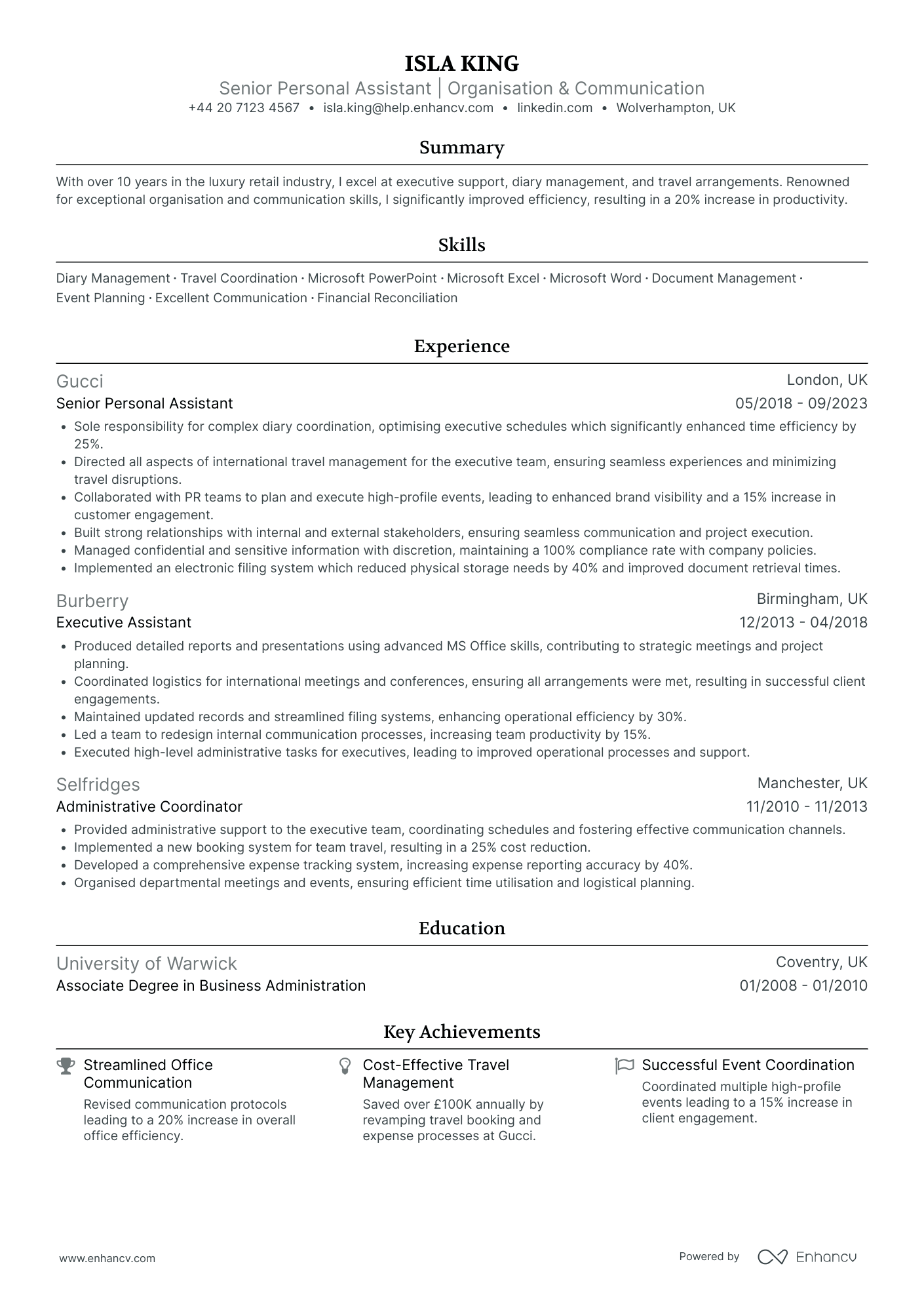
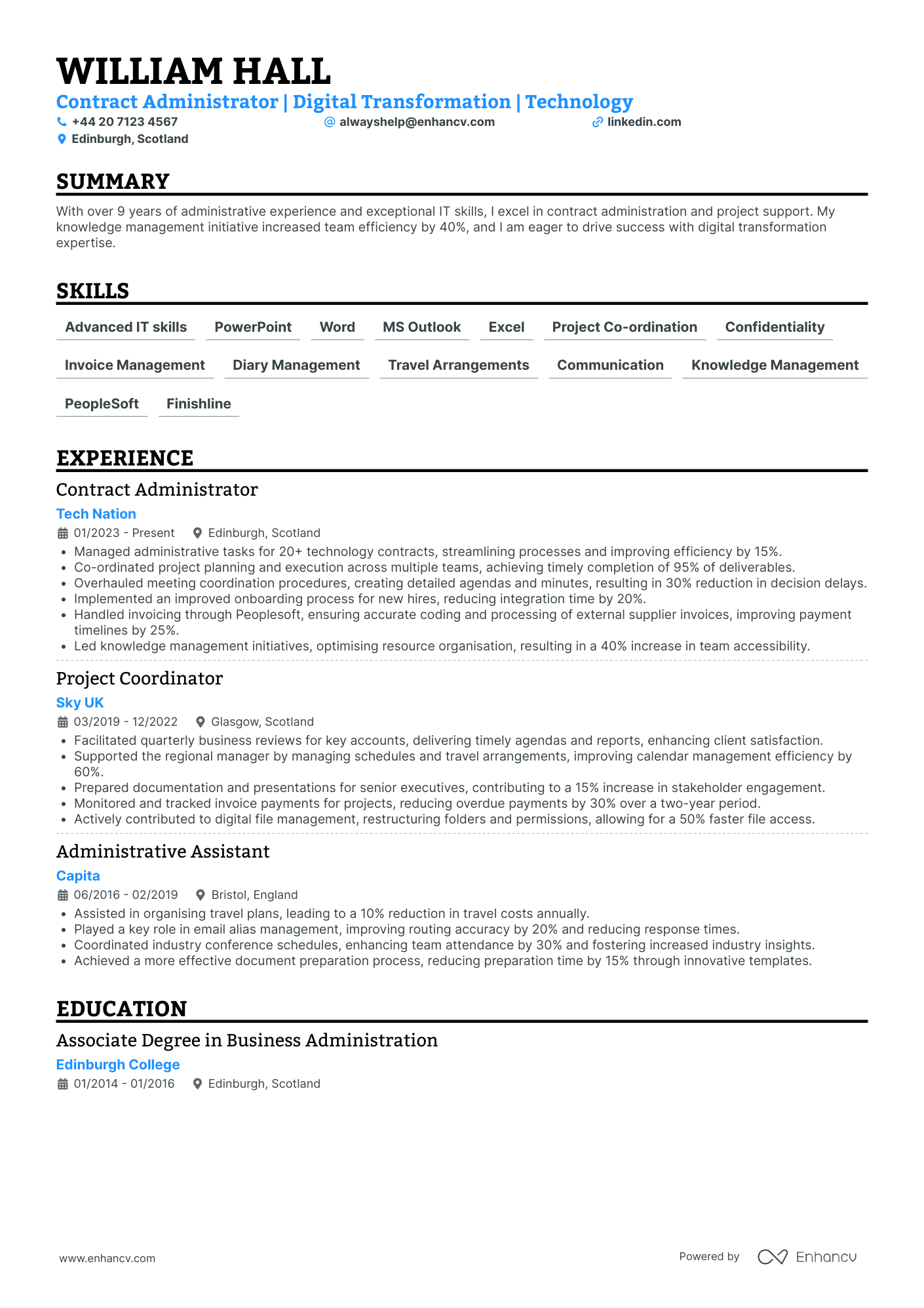
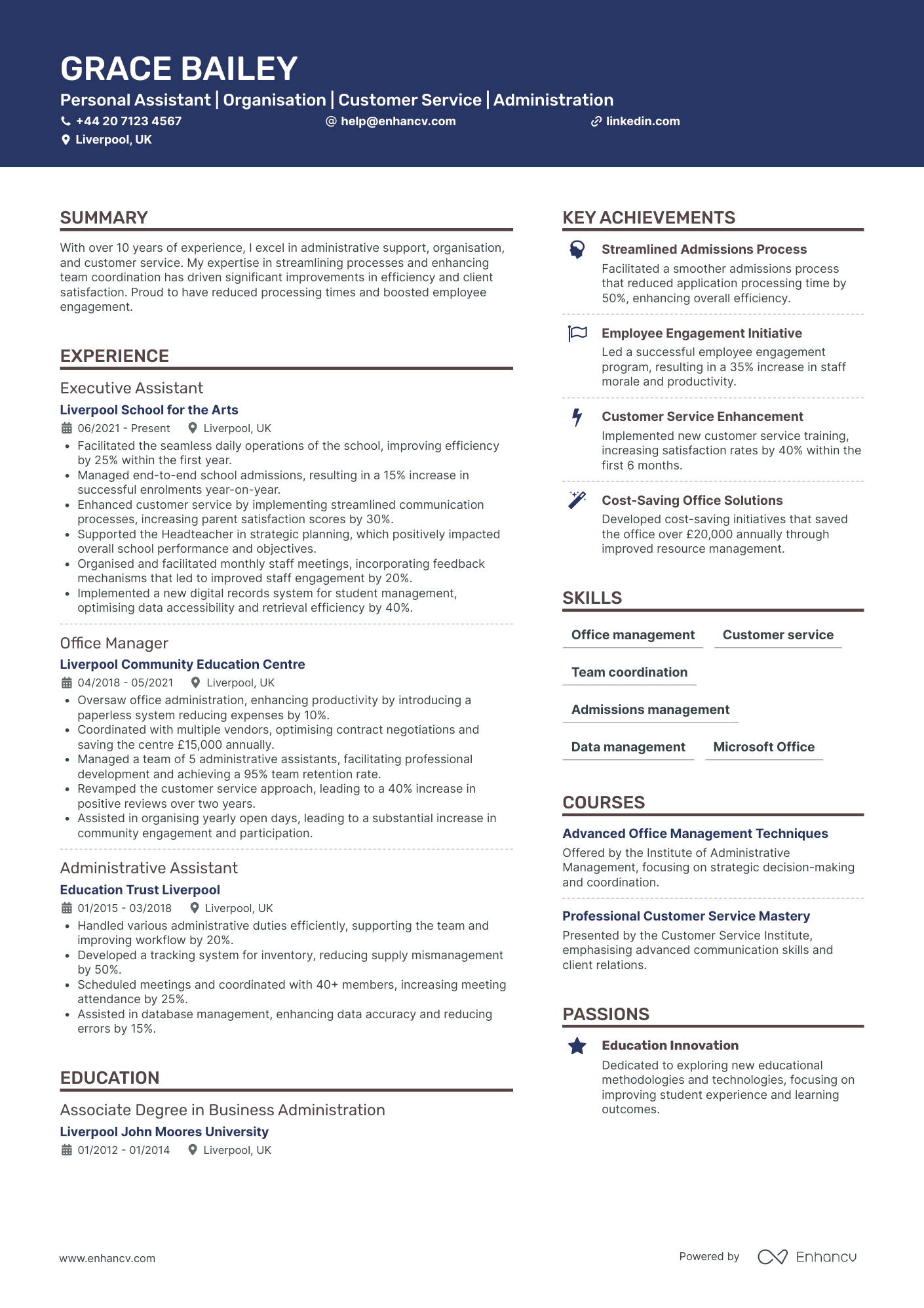
Use a reverse chronological structure once you have PA roles behind you, so your progression and the calibre of people you have supported lead the page. If you are starting out, use a skills-led structure so organisation and discretion come before a thin history.
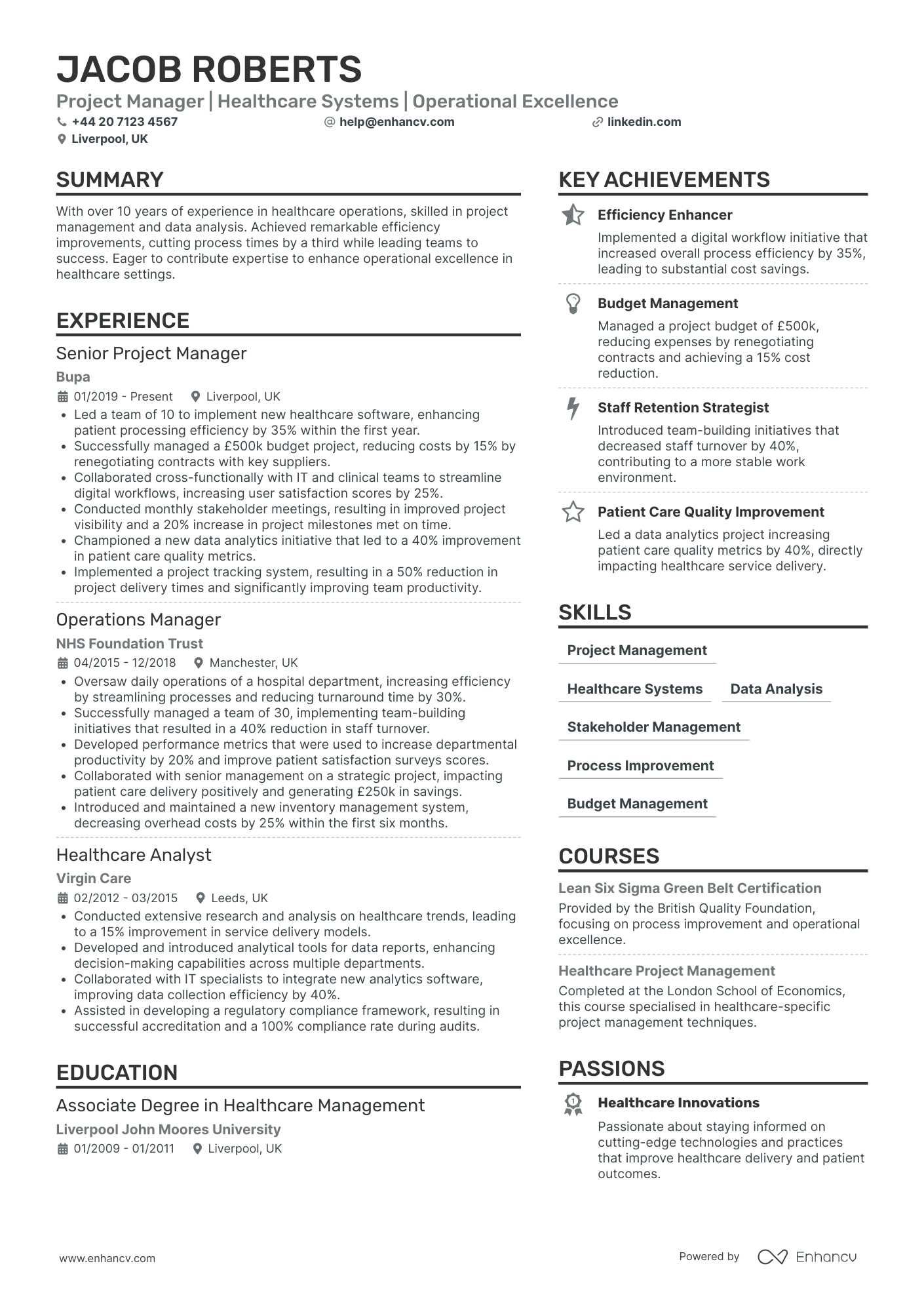
Keep it to two pages, one column, standard headings, and a clean, readable font. The irony of a cluttered PA CV is not lost on a hiring manager, so let the layout prove you can bring order to a page.
Send a PDF for direct applications so the formatting holds on any screen. Keep a Word copy for recruitment agencies, which place a large share of PA roles and reformat CVs into their own template. If the advert names a file type, follow it.
PA applications often pass through tracking software before a human sees them, so keep the layout clean and the headings standard for an ATS-friendly CV. Build it from a tested layout rather than a blank page. Enhancv's CV templates export to a clean PDF that reads well in print and on screen.
Writing your personal assistant personal statement
Three or four sentences at the top: who you support, the value you take off their plate, and one result that proves it. This is your personal statement, and for a PA it is where you show you can be trusted at close range.
Name the level you operate at. Supporting a CEO answerable to a board is a different job from supporting a small team, and the reader wants to know within a line which one you have done.
Lead with evidence, not the adjective soup every other PA CV opens with. "Reliable, organised and hard-working" tells a hiring manager nothing they can check.
Personal assistant CV personal statement example (executive PA)
Executive PA with eight years supporting C-suite leaders in professional services. I manage complex diaries across time zones, screen a 150-email daily inbox, and coordinate international travel for a CEO and two directors. Rebuilt the meeting and approvals workflow to save roughly 10 hours of leadership time a week. Looking to bring calm, discreet support to a fast-moving founder or executive team in London.
That works because it names the people supported and backs the claim with time saved. Now the version that fills most PA inboxes:
Personal assistant personal statement to avoid
Hard-working and highly organised personal assistant with excellent communication skills and strong attention to detail. A confident multitasker and team player, passionate about supporting busy executives and delivering results in a fast-paced environment.
When we read a PA personal statement, we are looking for the person you support and the pressure you take off them, not a string of adjectives. "Ran the diary and inbox for a CEO fielding 200 emails a day" tells us in one line that you can hold the role. The best PAs are trusted with the things nobody else sees, so lead with a result only someone inside that trust could claim.
Writing your personal assistant experience section
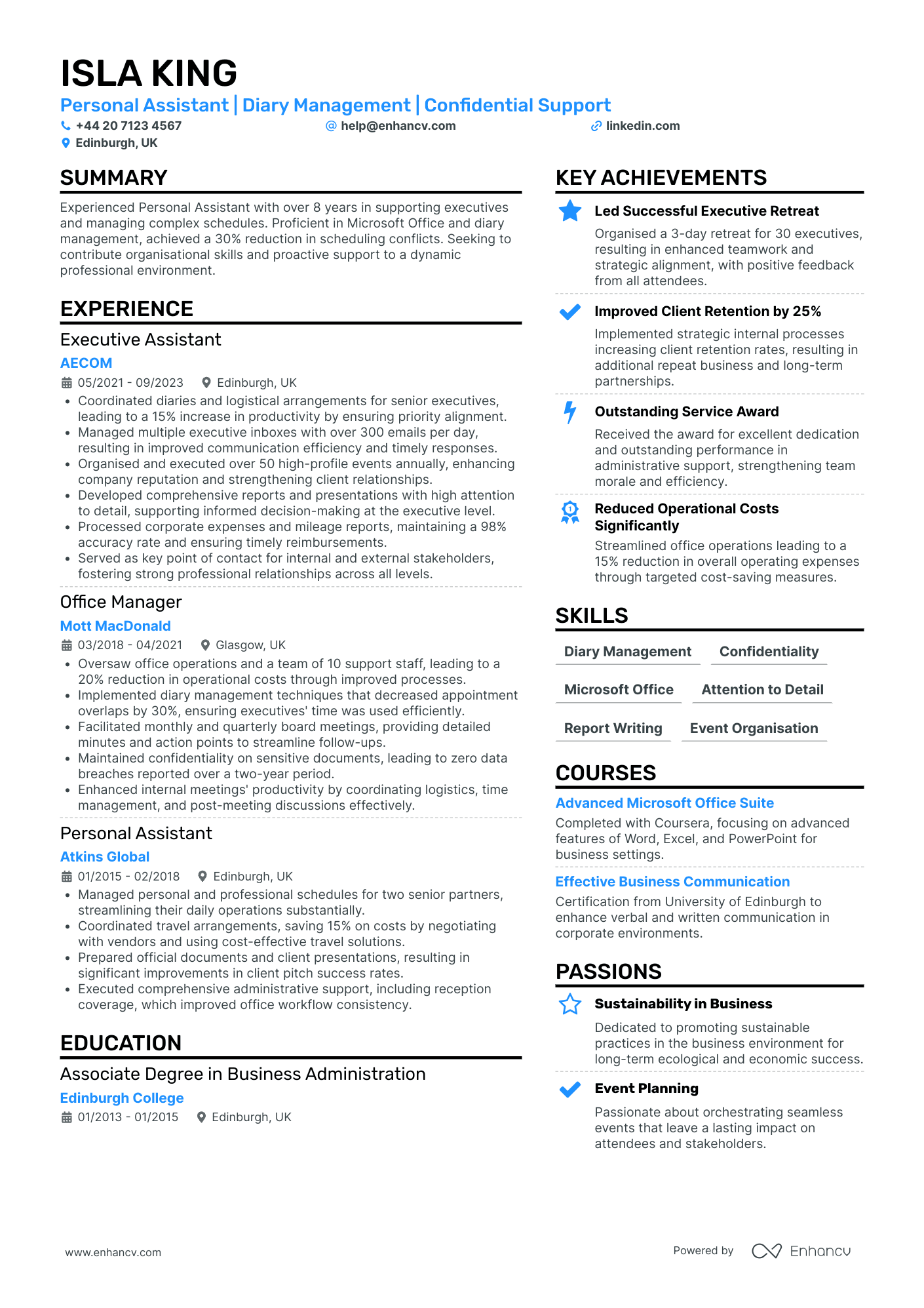
Each role gets a dated heading, a one-line note on who you supported and the size of the operation, then bullets that lead with a verb and land on a number. For the mechanics, see work experience on a CV.
The hard part of a PA CV is that your best work is invisible by design. Nobody sees the crisis you headed off. So make it visible by counting it: diaries and inboxes run, executives supported, attendees at the events you owned, and budgets you held.
Separate the routine from the achievement. "Managed the CEO's diary" is a duty, while "protected 12 hours of focus time a week by restructuring how the CEO's diary was booked" is an achievement. The second one shows judgement, and judgement is what gets you shortlisted.
Show the relationships too, not only the tasks. A PA role is built on trust, so a line like "became the main point of contact between the CEO and the board" signals that senior people relied on you, which is exactly what the next employer wants to see.
Tailor each application to the advert, pulling its language and priorities into the roles where they are true of you. Enhancv's CV tailoring feature reads the ad and flags which duties to lead with, so you are not rewriting the whole CV for every approach.
- Manage the diary, inbox, and travel for a CEO and two directors, screening 150+ emails a day and protecting 12 hours of focus time each week
- Coordinate UK and international travel, itineraries, and visas for a leadership team of five, with zero missed connections in two years
- Plan quarterly board meetings and two annual offsites for up to 40 attendees, owning logistics, papers, and a £30k budget
- Rebuilt the expense and approvals process, cutting reimbursement turnaround from three weeks to five days
- Act as gatekeeper and first point of contact for the executive team, handling confidential HR and board documents with full discretion
PRO TIP
Name the calibre of the people you supported, not just the tasks. "PA to the CEO of a 300-person business" carries more weight than "provided administrative support", because the reader judges a PA by the level of trust the last leader placed in them.
Education and qualifications for a personal assistant CV
You rarely need a degree to work as a PA, so keep education short and let your experience carry the CV. A line per qualification is plenty for most applicants.
What does help is anything that signals administrative rigour. GCSEs including English and maths, A-levels, a business administration or secretarial qualification, or an NVQ in business and administration all belong here where you have them.
Software fluency is worth its own mention, because a PA lives in these tools all day. Name the ones the advert lists, from Outlook and Excel to Google Workspace, and add scheduling or expense systems like Concur if you know them.
List any certificates that fit the role, such as shorthand, minute-taking, or a recognised PA and administrator course. Skip the ones that will not move a hiring manager.
If you are targeting a care-sector PA role instead, this section carries more weight. Safeguarding training, moving and handling, first aid, and a current DBS check belong here, listed even where they are in progress, because those employers screen for them directly.
Personal assistant CV with no experience
With 82% of postings pitched at entry level, a first PA CV is a realistic move rather than a long shot. The trick is to prove you already do the work under a different job title.
Lead with a skills-led structure: personal statement, then skills and any relevant experience, with your work history below. It puts organisation and discretion in front of a thinner timeline.
Mine your history for real PA evidence, because it is almost always there:
- Reception, admin, or office coordination: diary booking, phone handling, and managing a busy front desk.
- Customer service or retail: juggling priorities, handling difficult conversations, and working to a process under pressure.
- Team or project support: minute-taking, organising meetings, chasing actions, and keeping documents in order.
- Running things outside work: organising events, managing budgets, or coordinating a group or committee.
Write those in PA language. "Booked and managed the manager's diary and screened calls at a busy dental practice" is a PA bullet that happened at a reception desk.
One line lifts a no-experience CV: a short course in minute-taking or business administration, even in progress, signals you are already moving towards the role. For the fundamentals, see how to write a first job CV.
Conclusion
Decide which kind of PA you are, lead with organisation, communication, and discretion, and prove each one with a result rather than an adjective.
Keep the layout as tidy as the work you do, and pair the CV with a short cover letter that says why this leader and this team. That combination turns a strong CV into a real conversation.

Author's take - the Enhancv team
When we read a PA personal statement, we are looking for the person you support and the pressure you take off them, not a string of adjectives. "Ran the diary and inbox for a CEO fielding 200 emails a day" tells us in one line that you can hold the role. The best PAs are trusted with the things nobody else sees, so lead with a result only someone inside that trust could claim.