



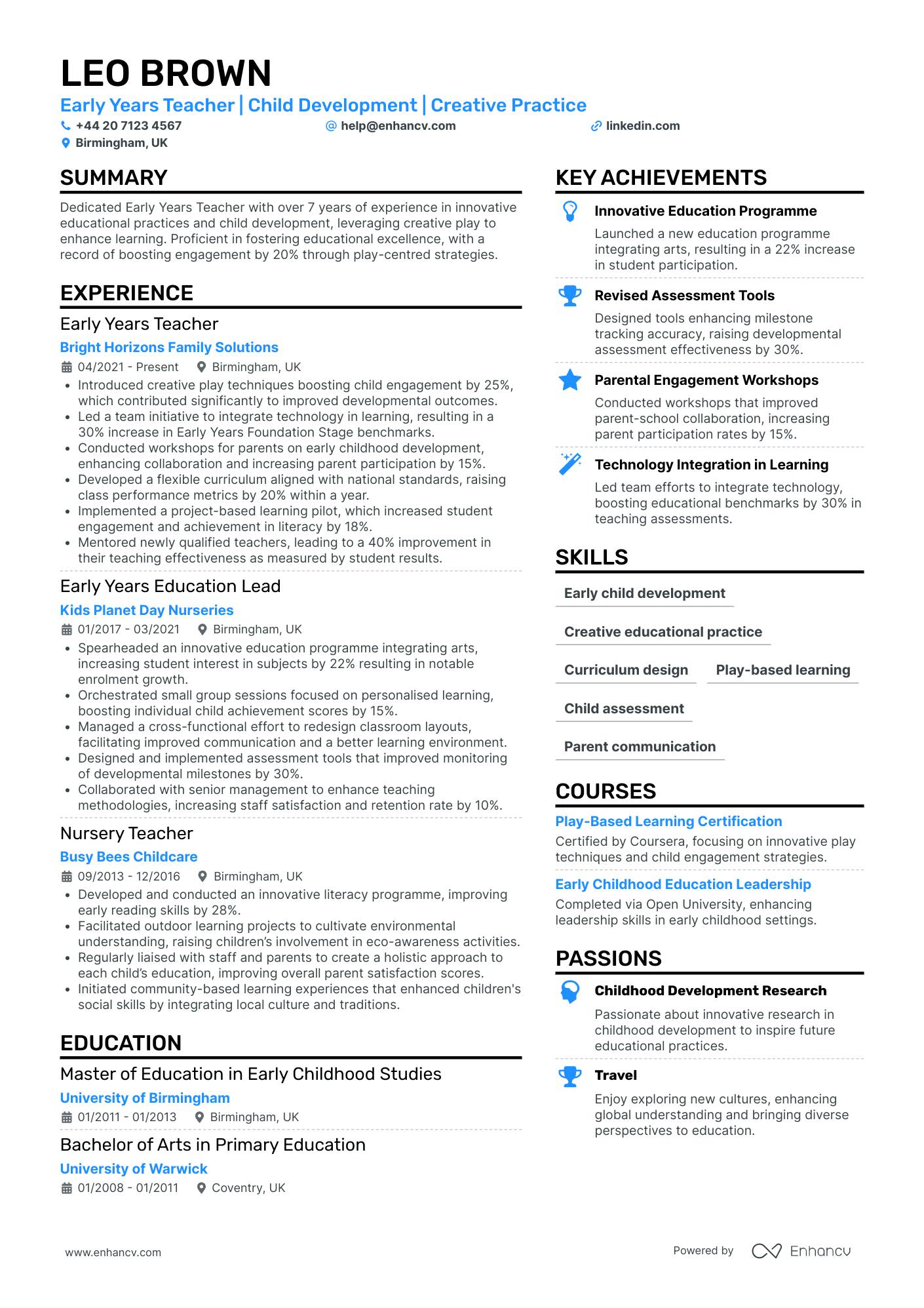
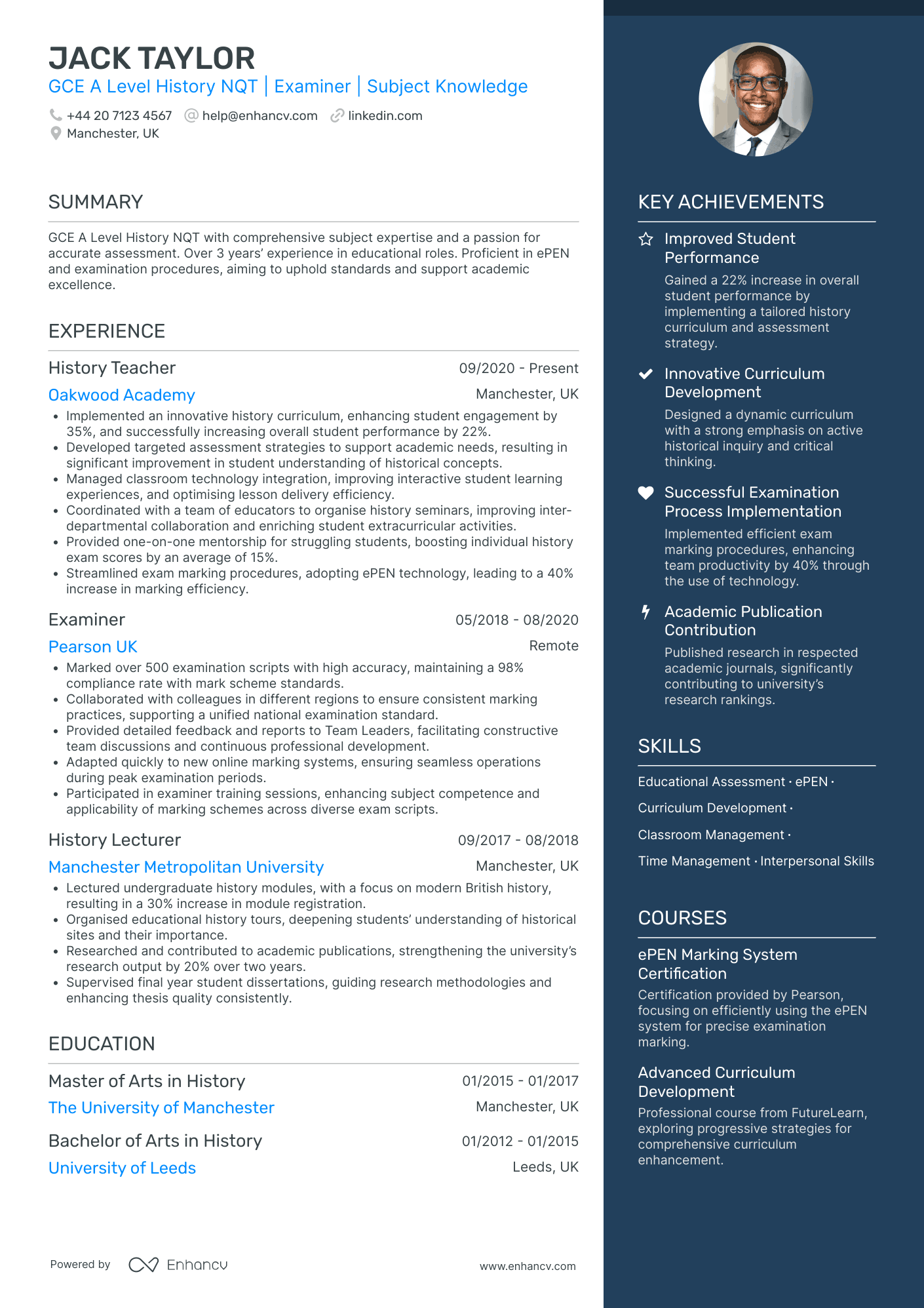
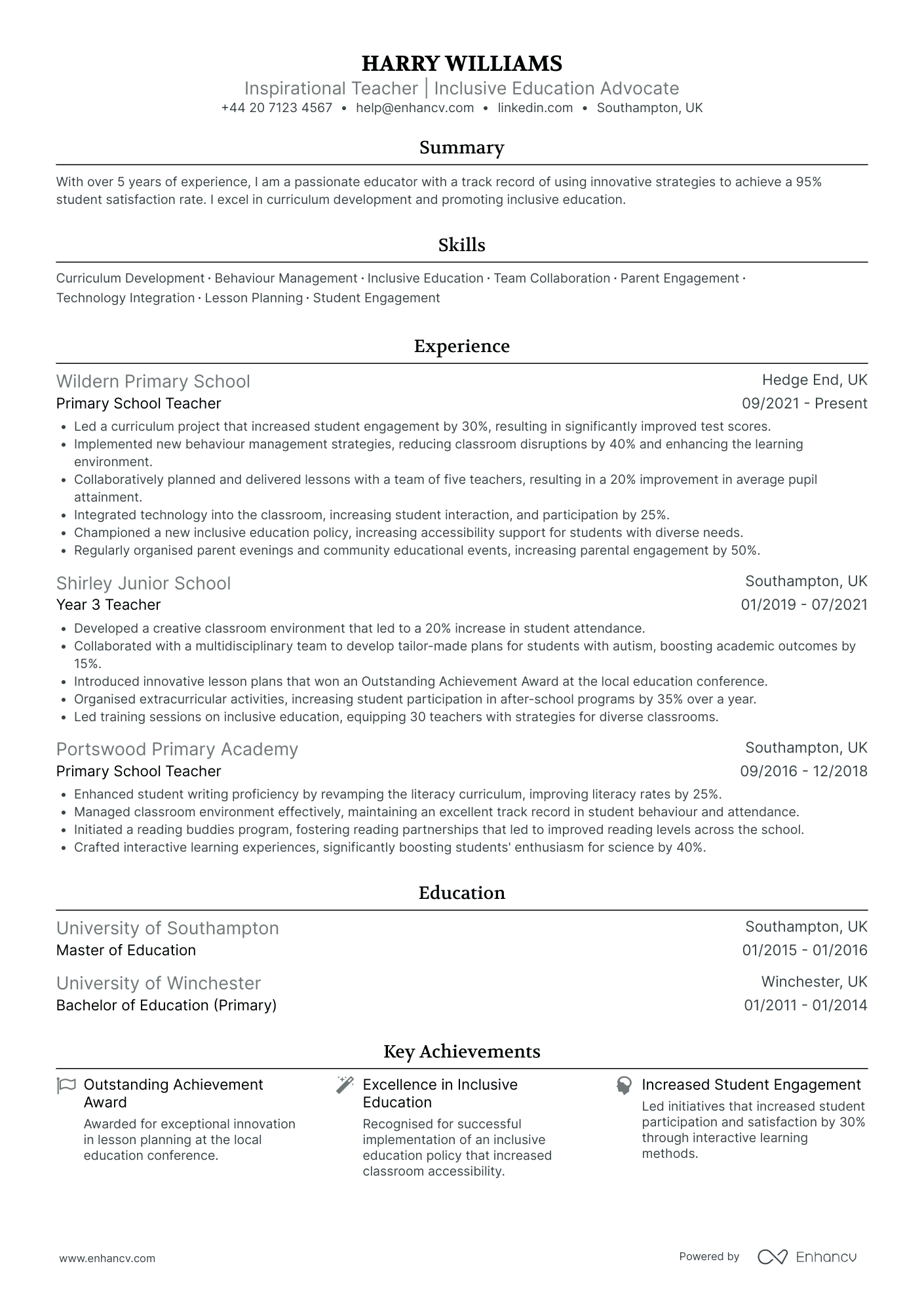
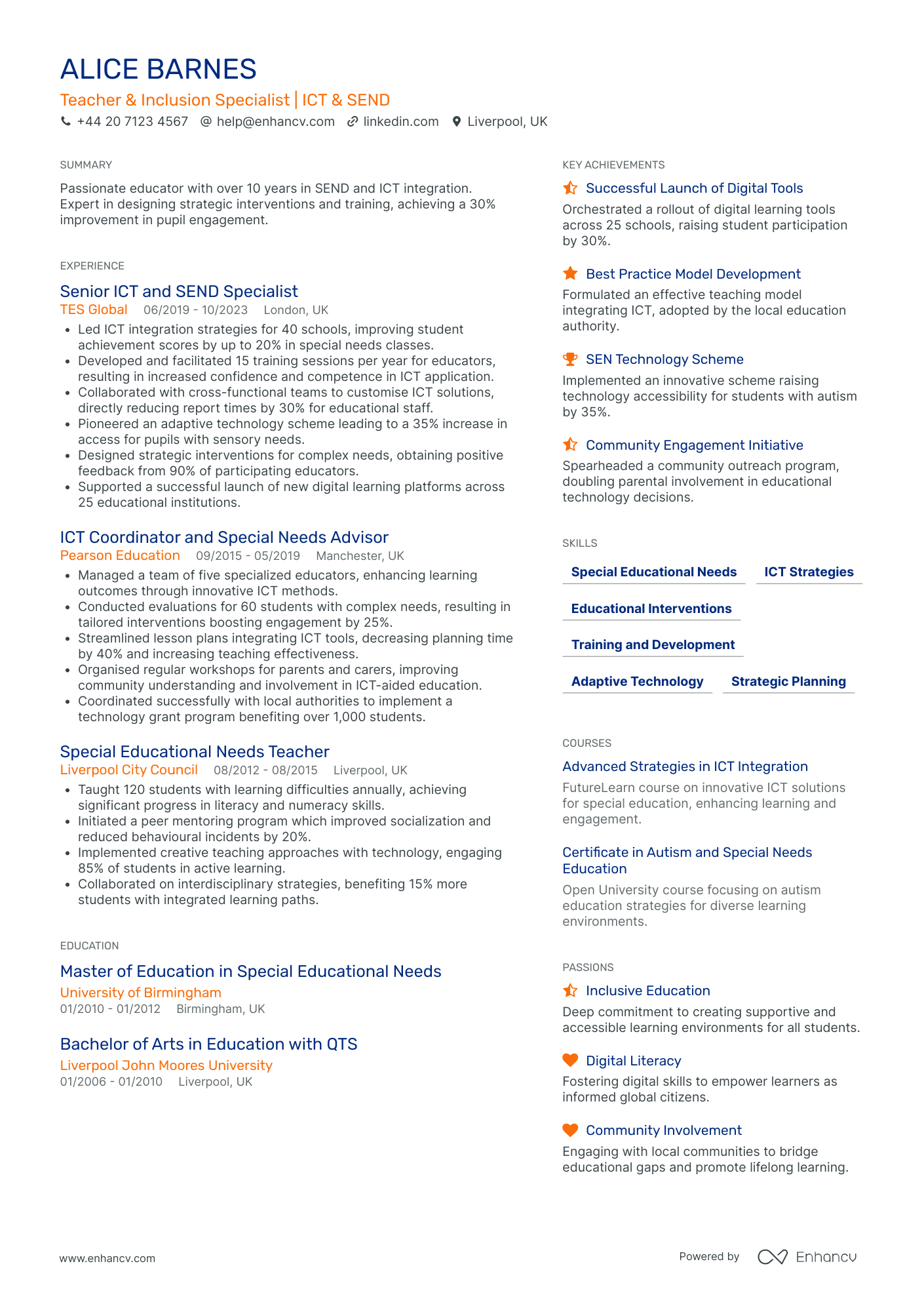
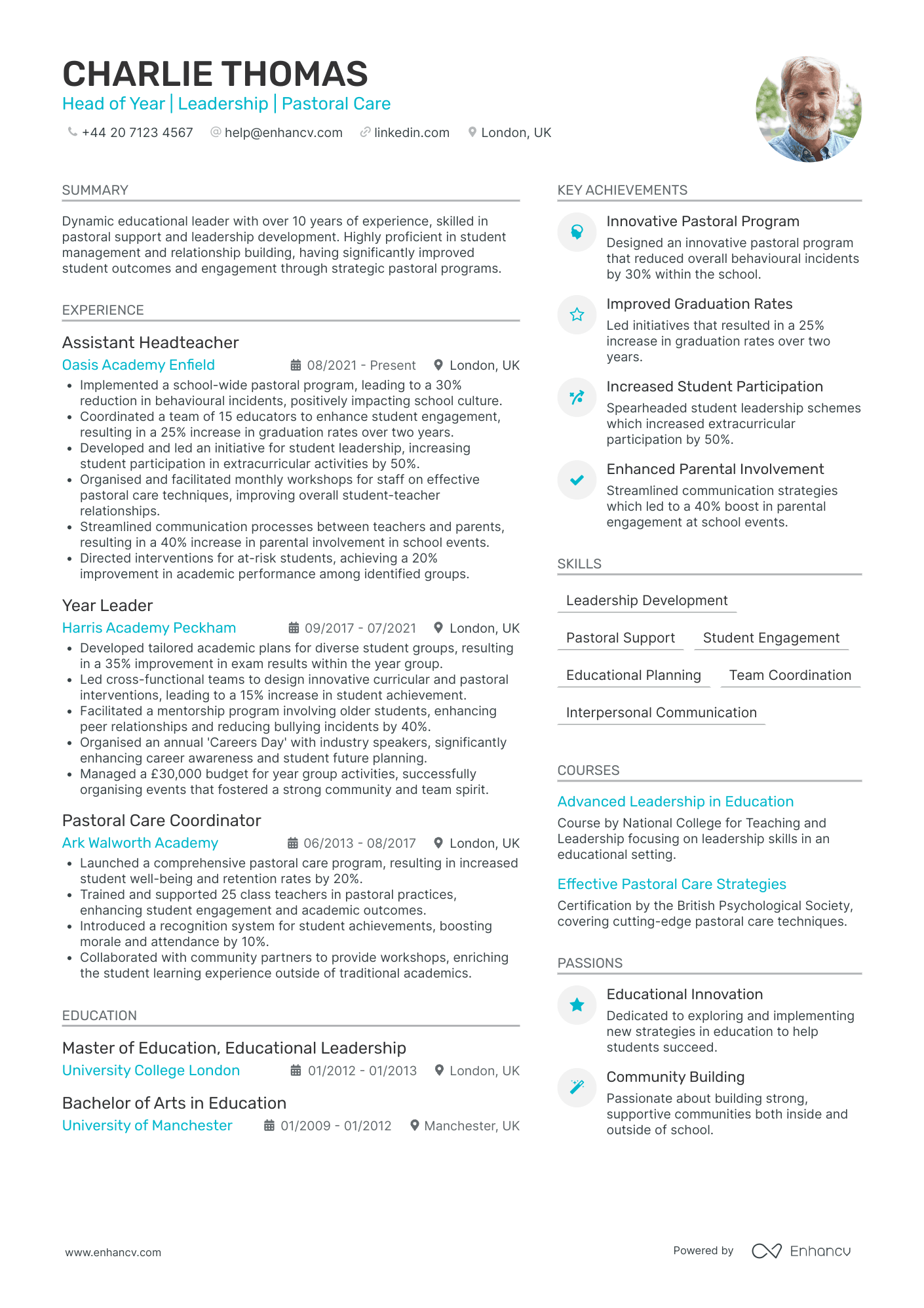
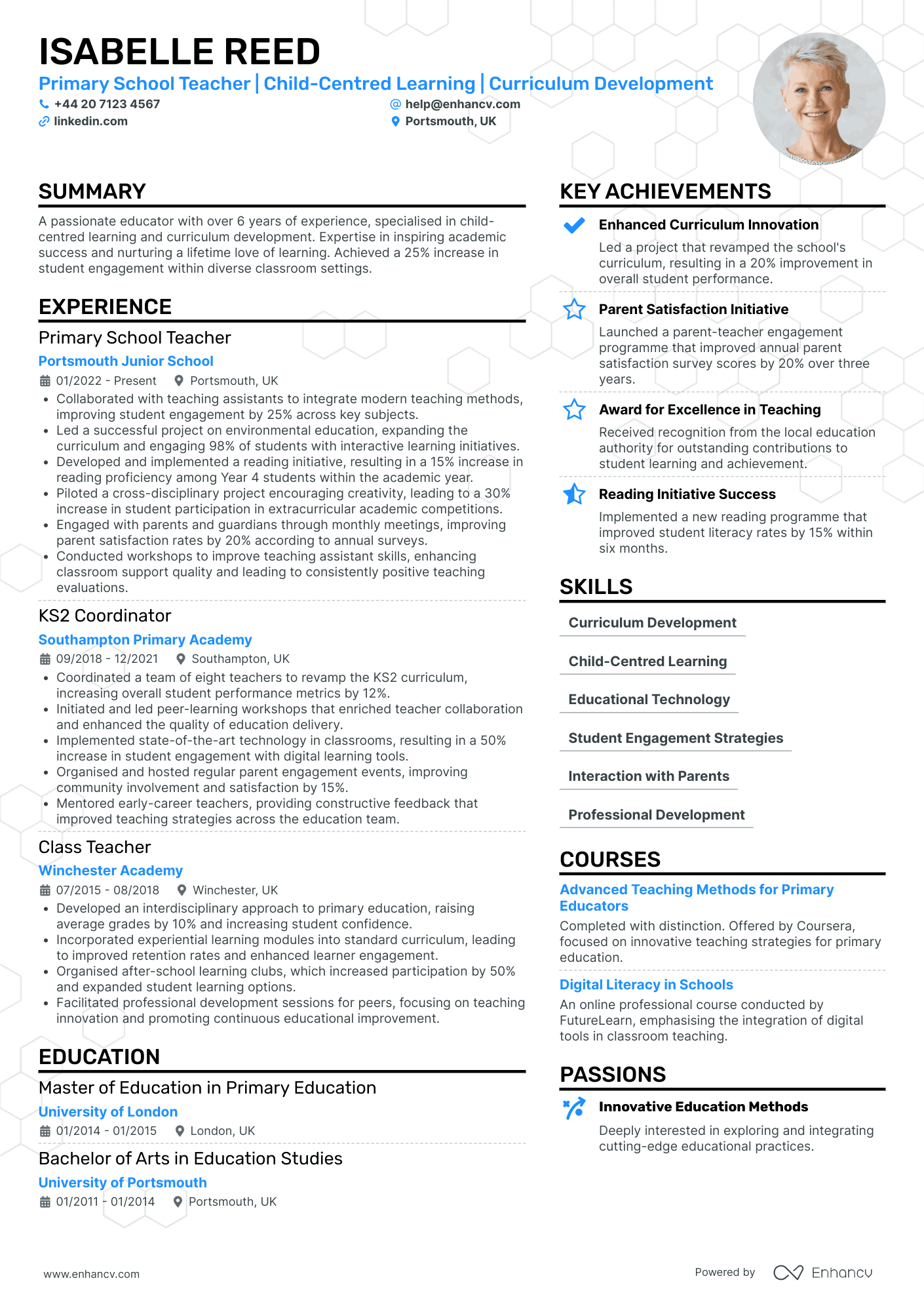
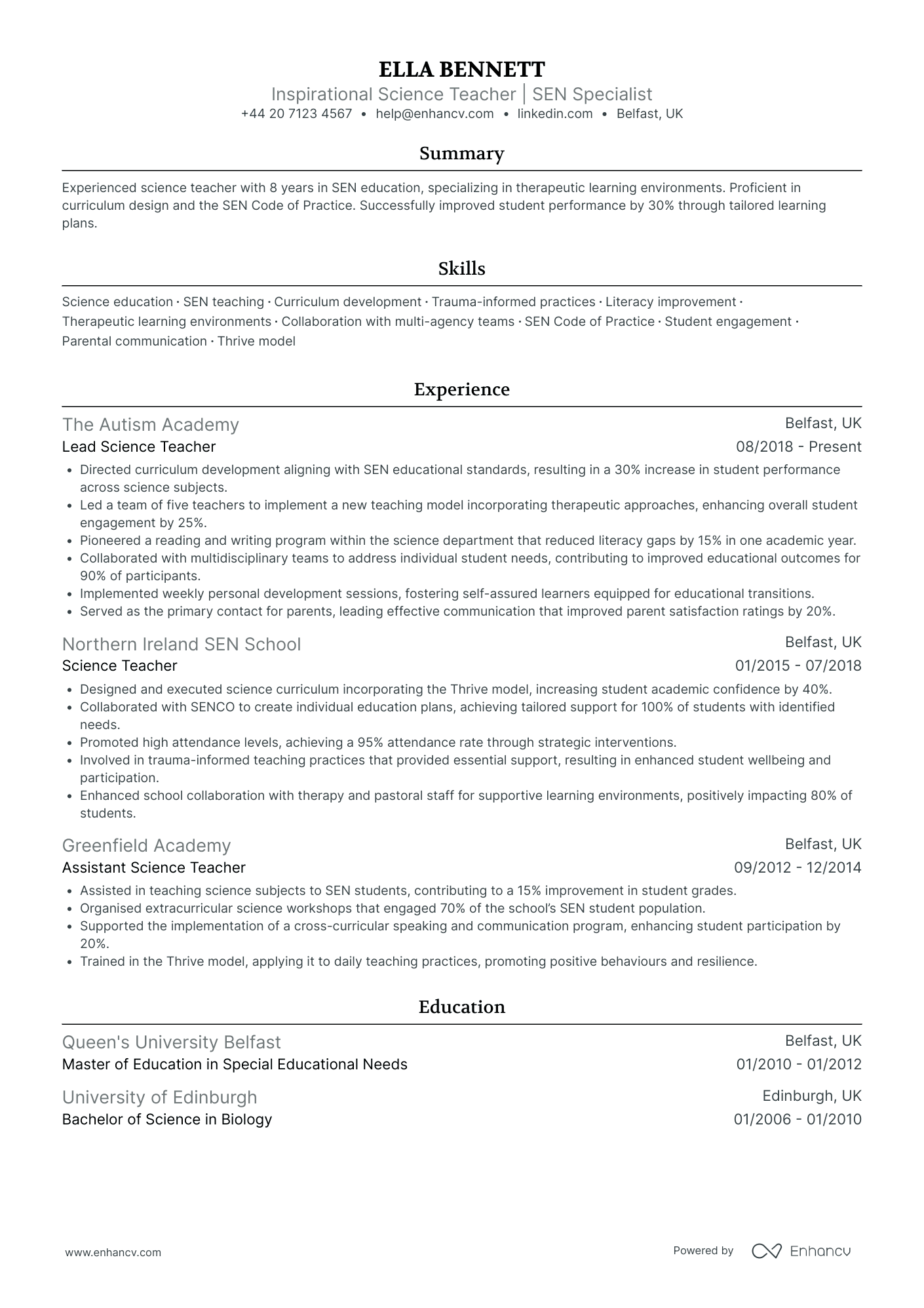
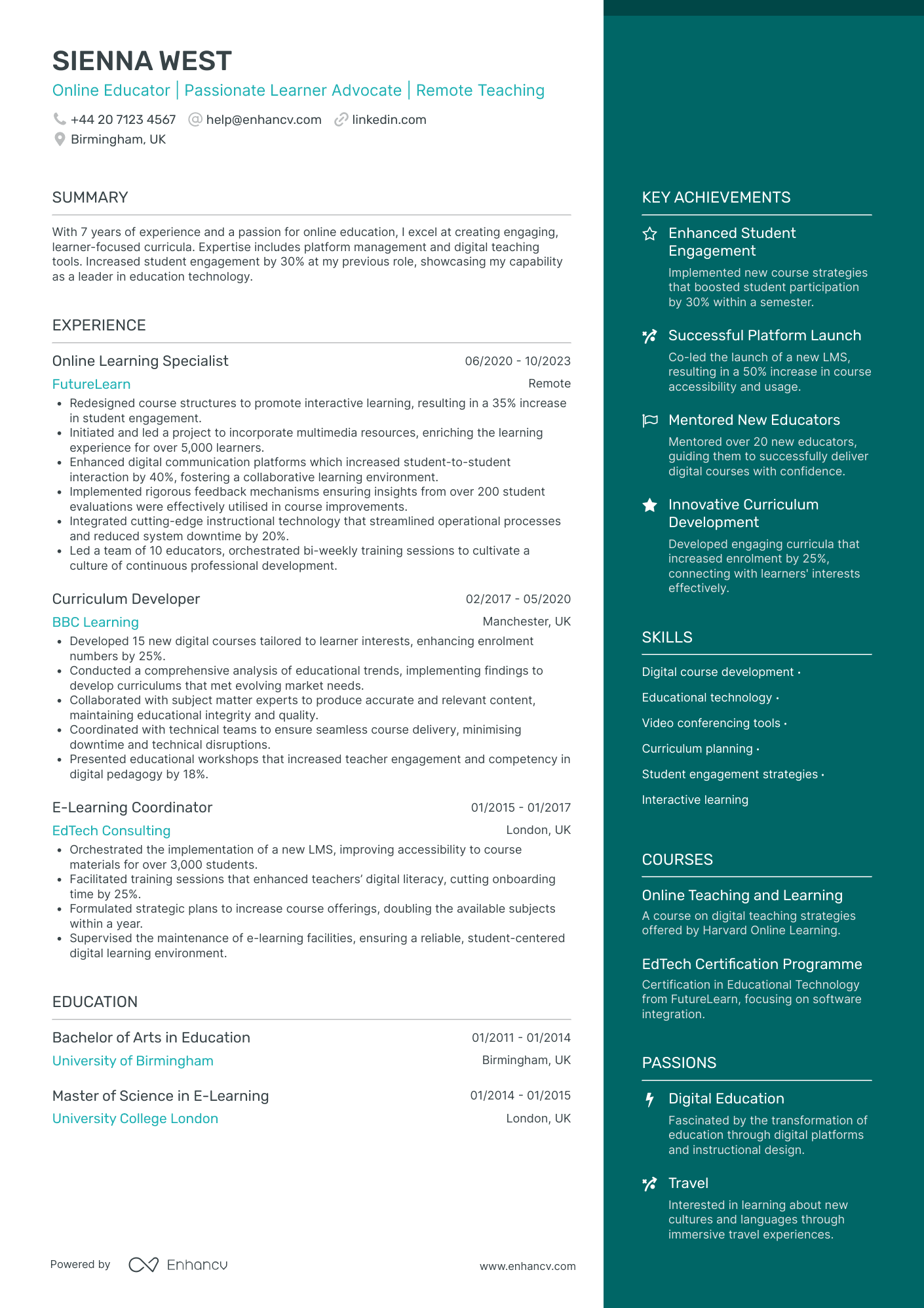
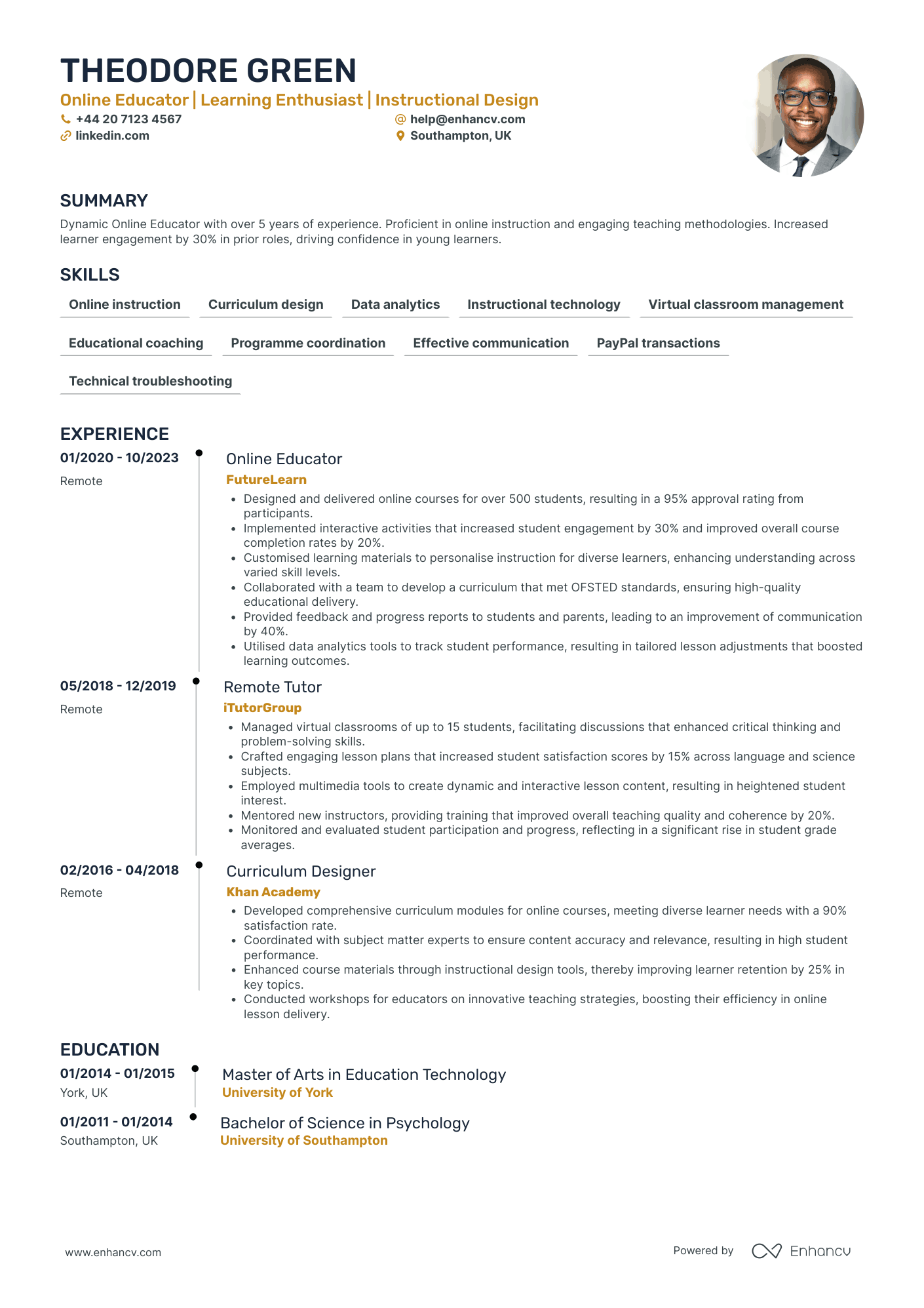
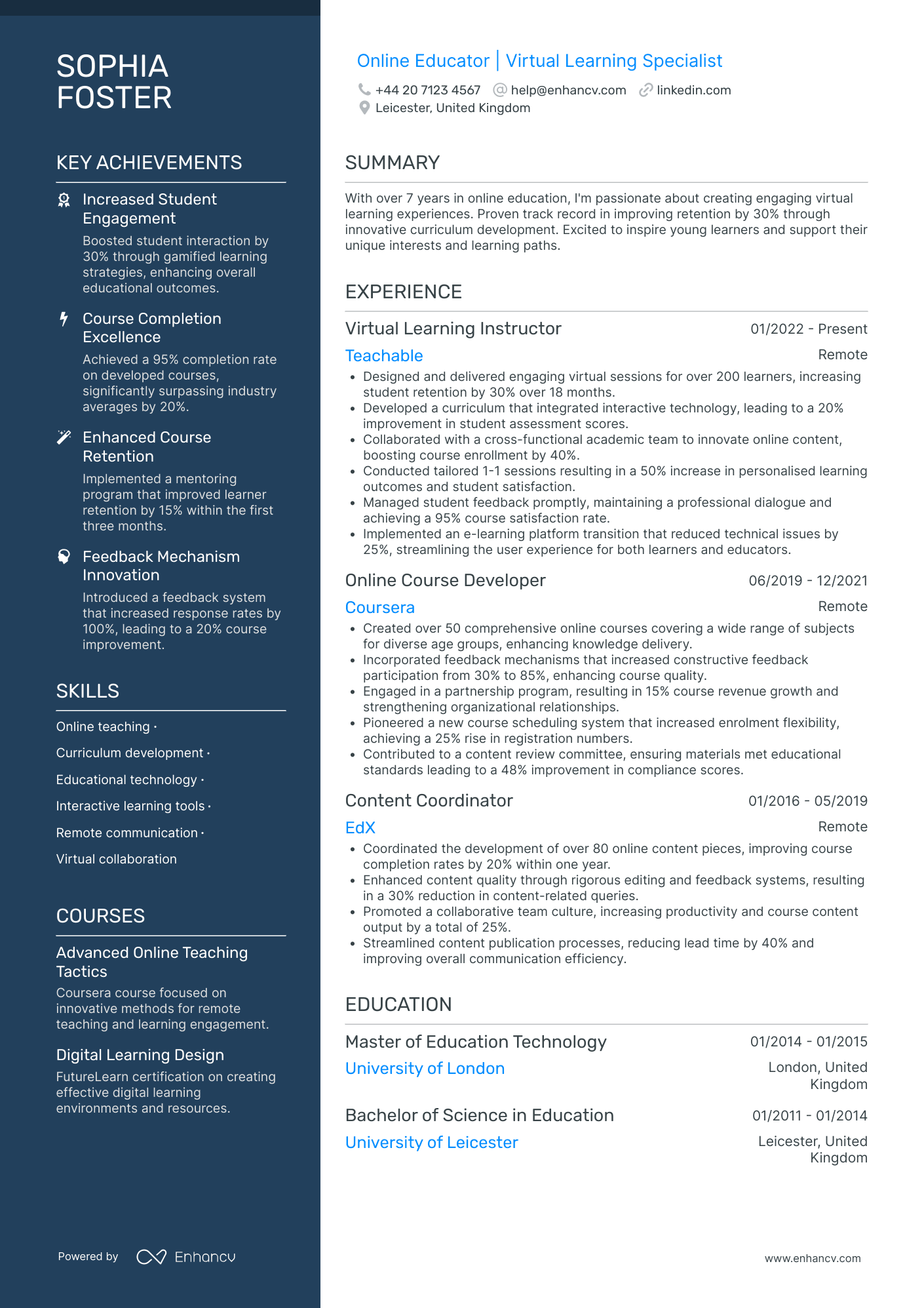
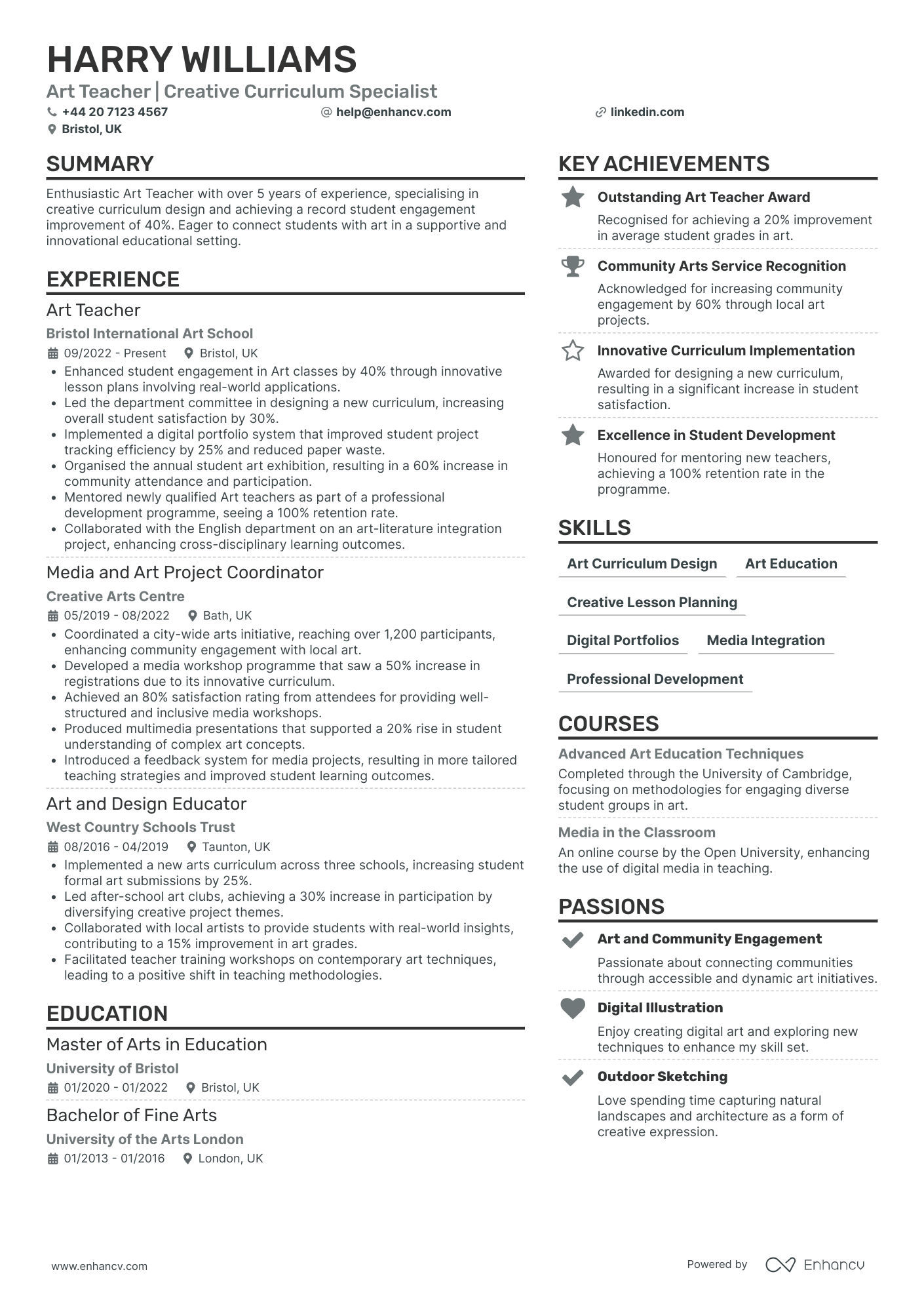
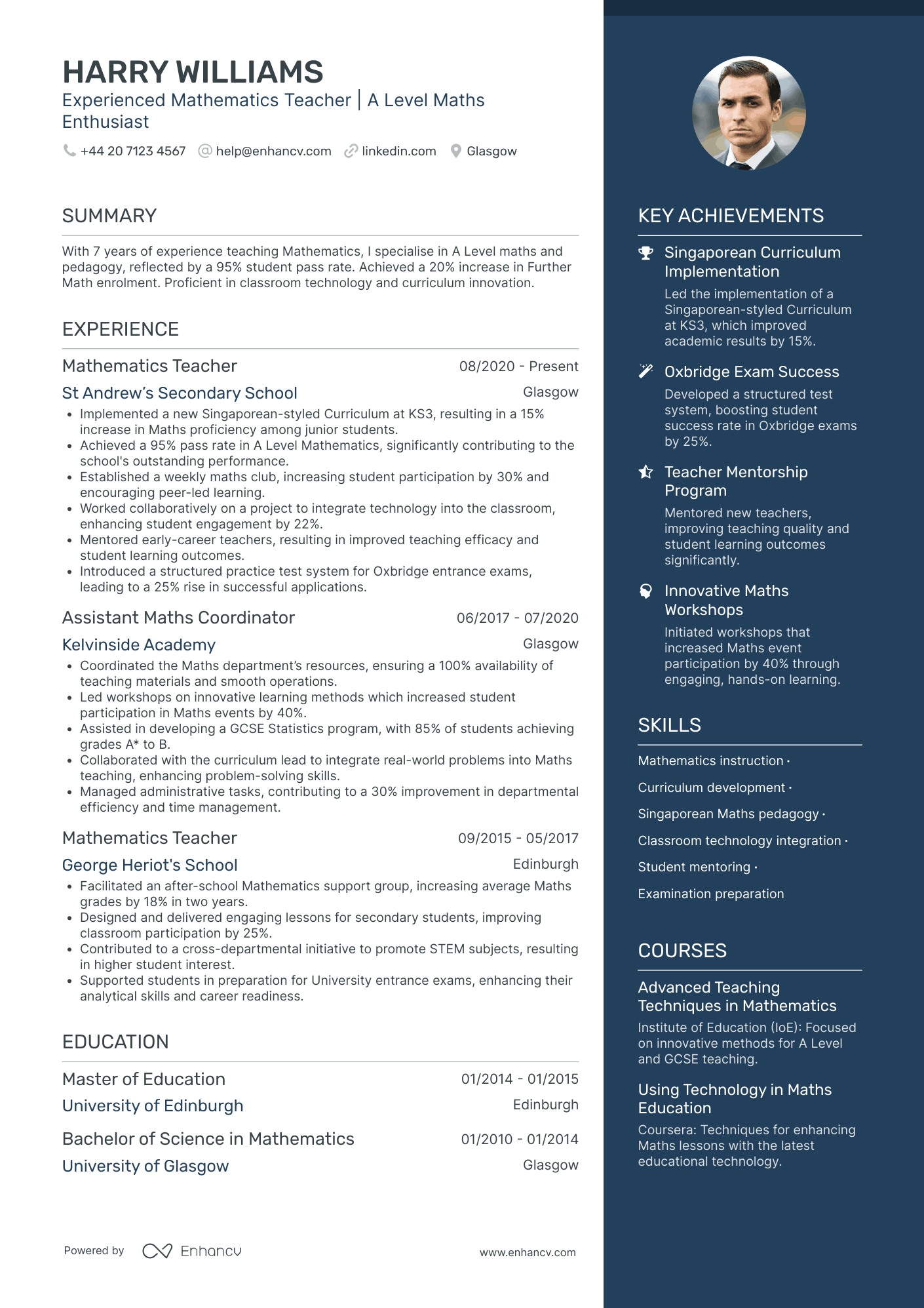
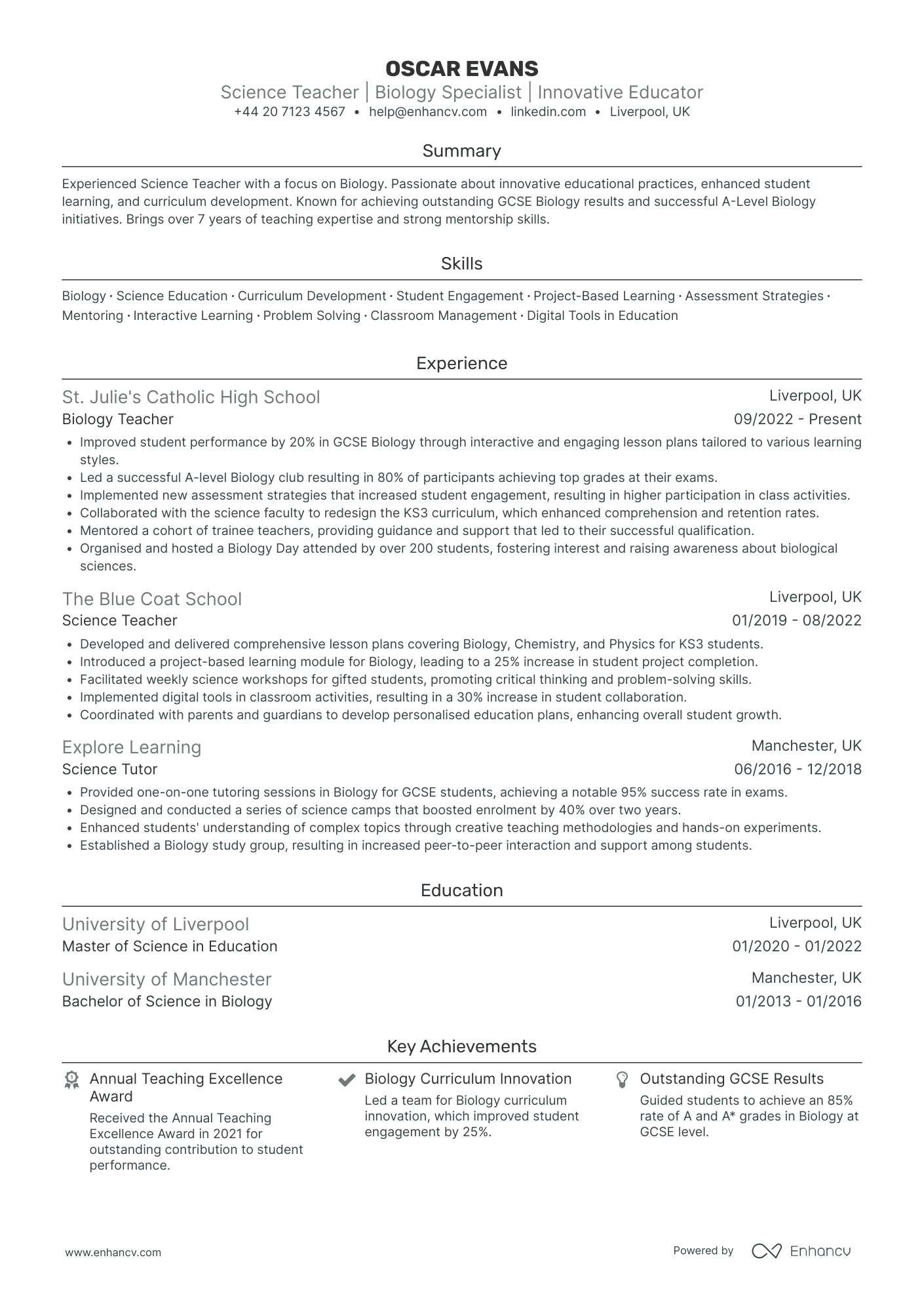
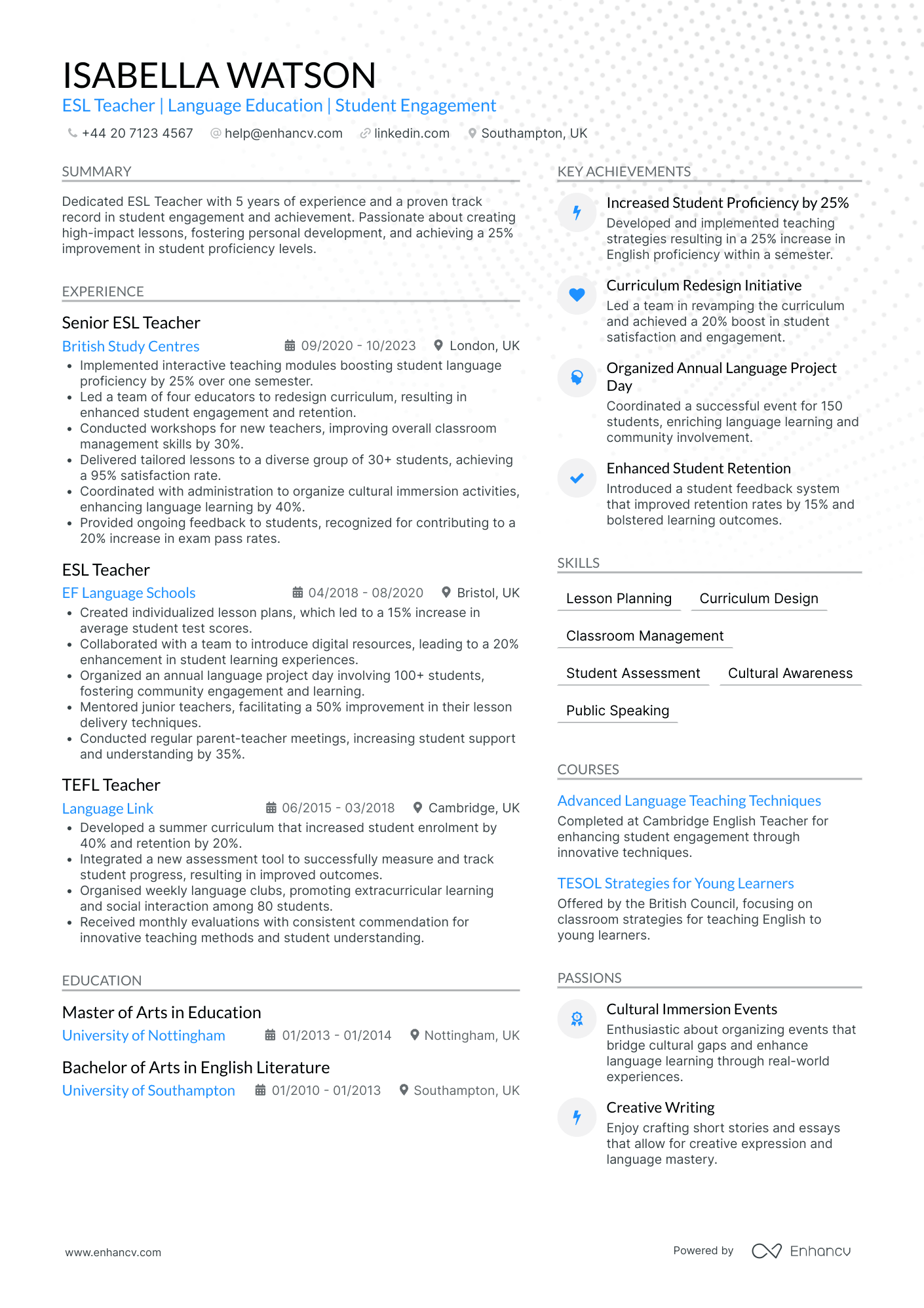
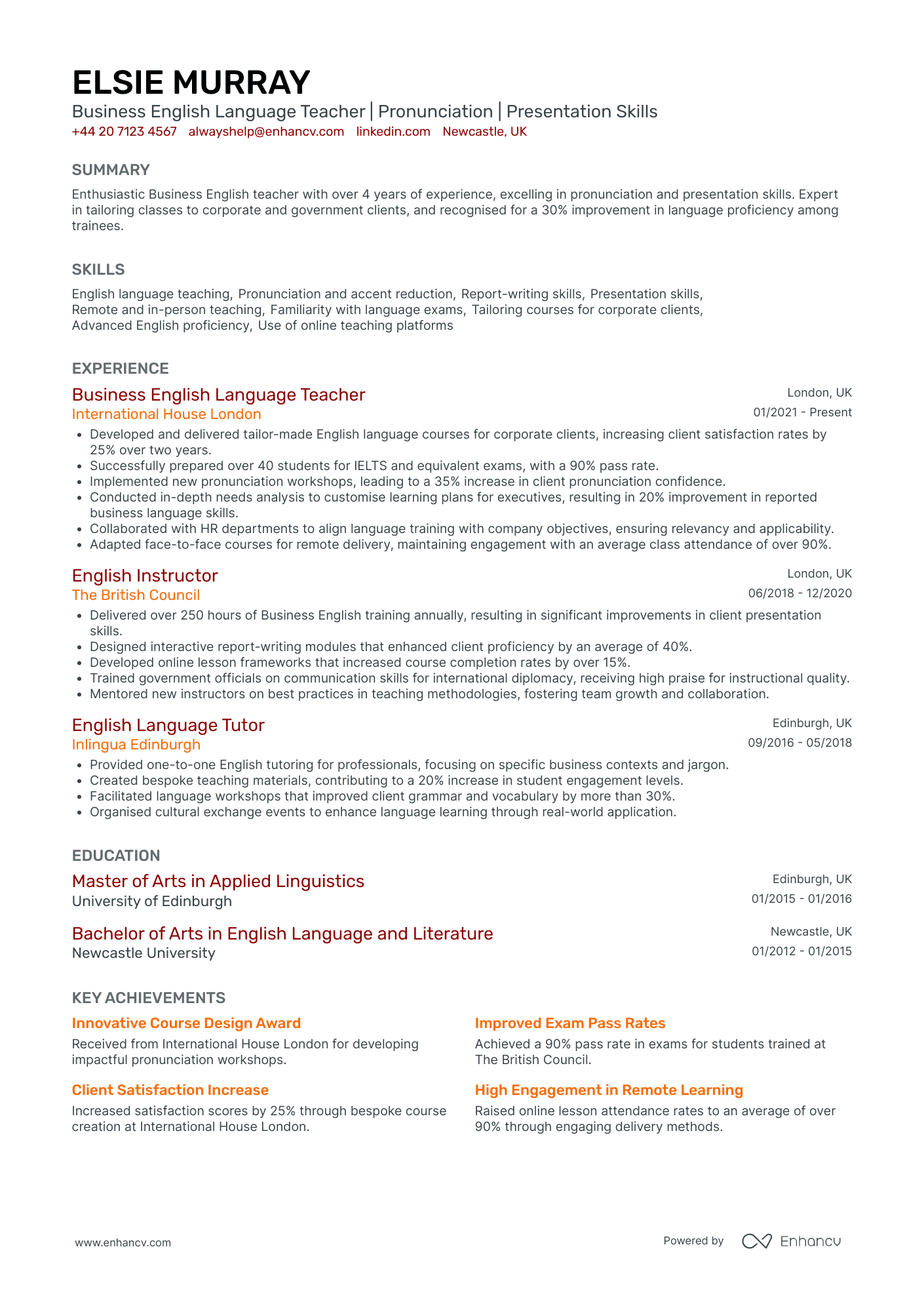
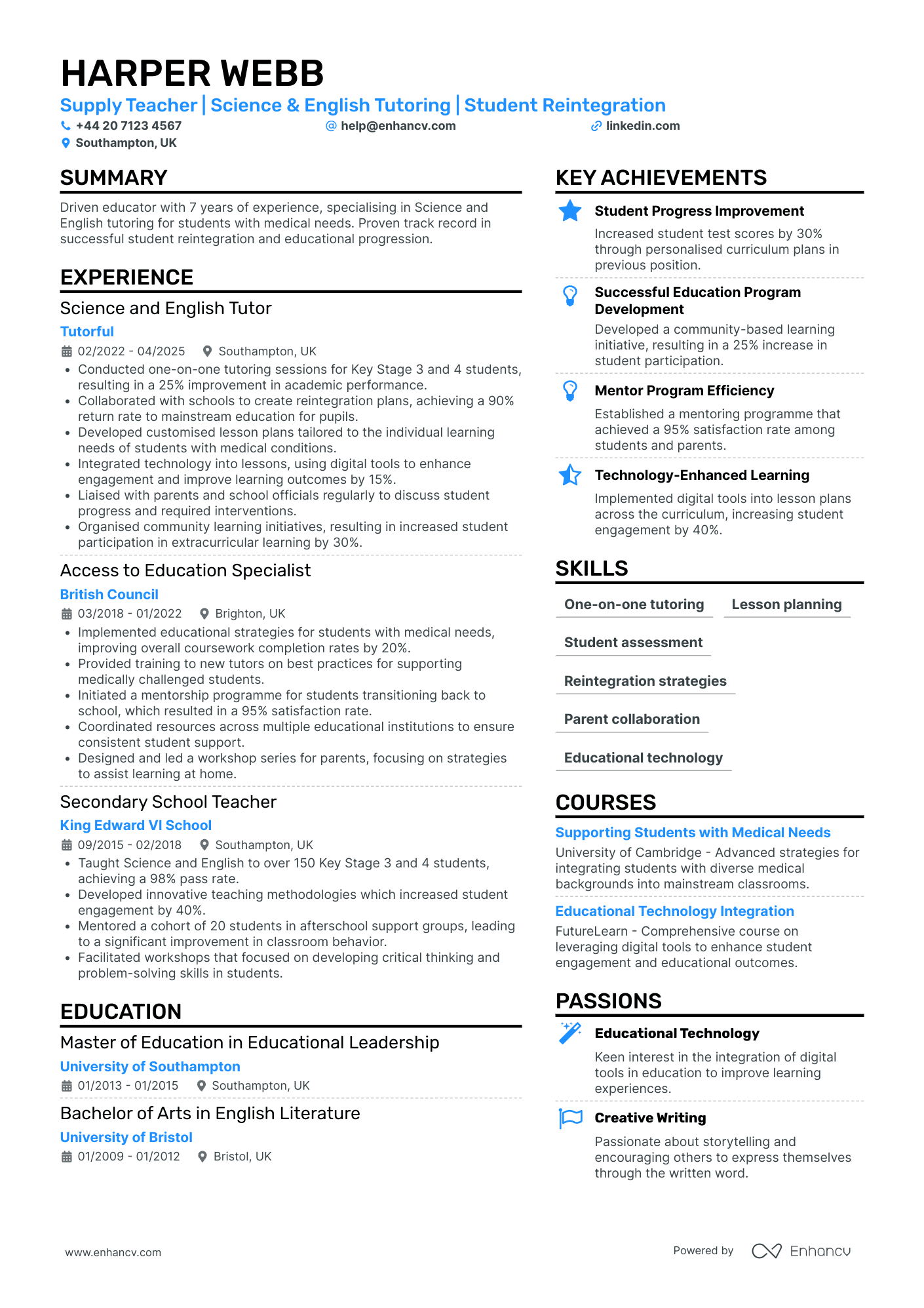
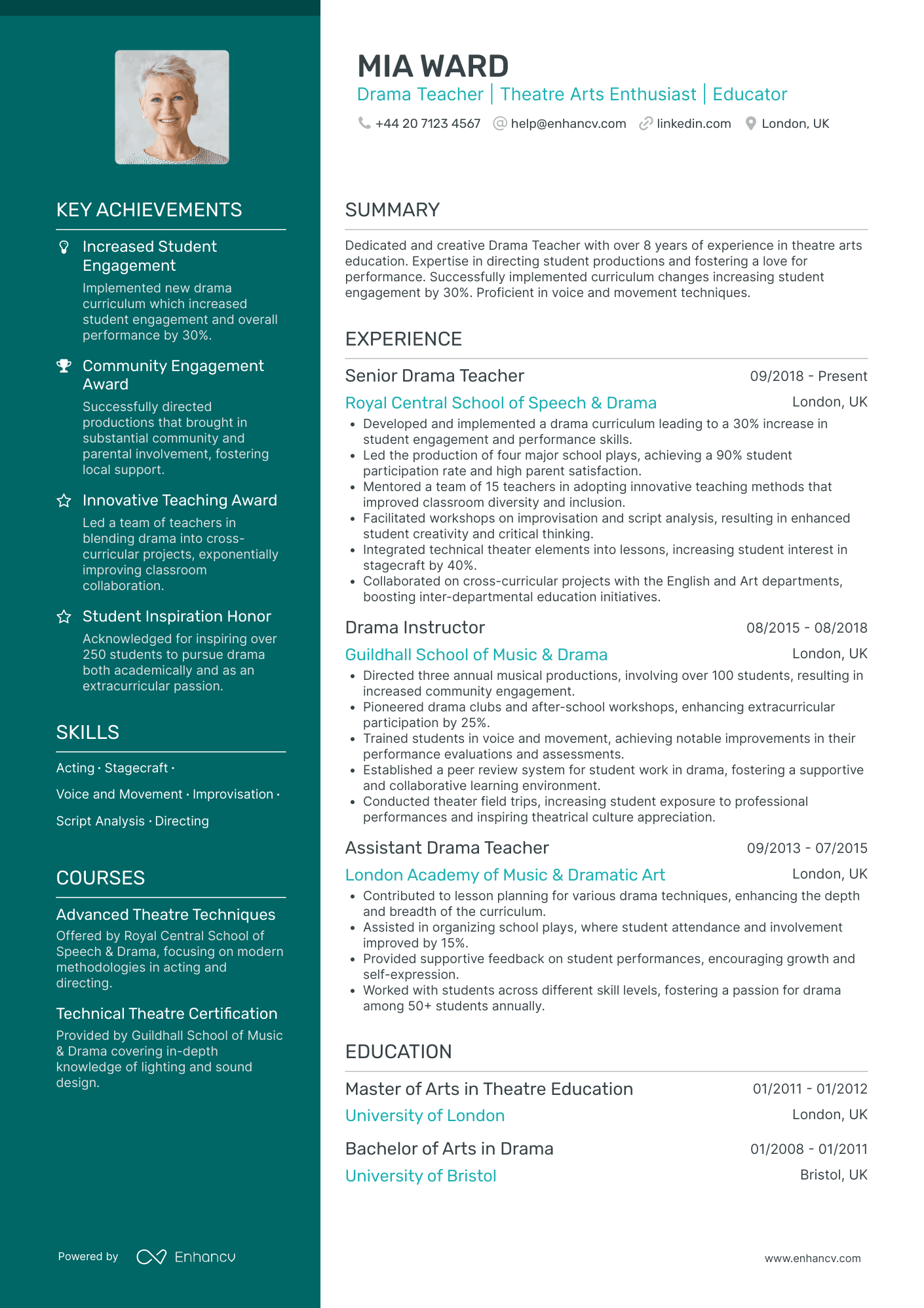
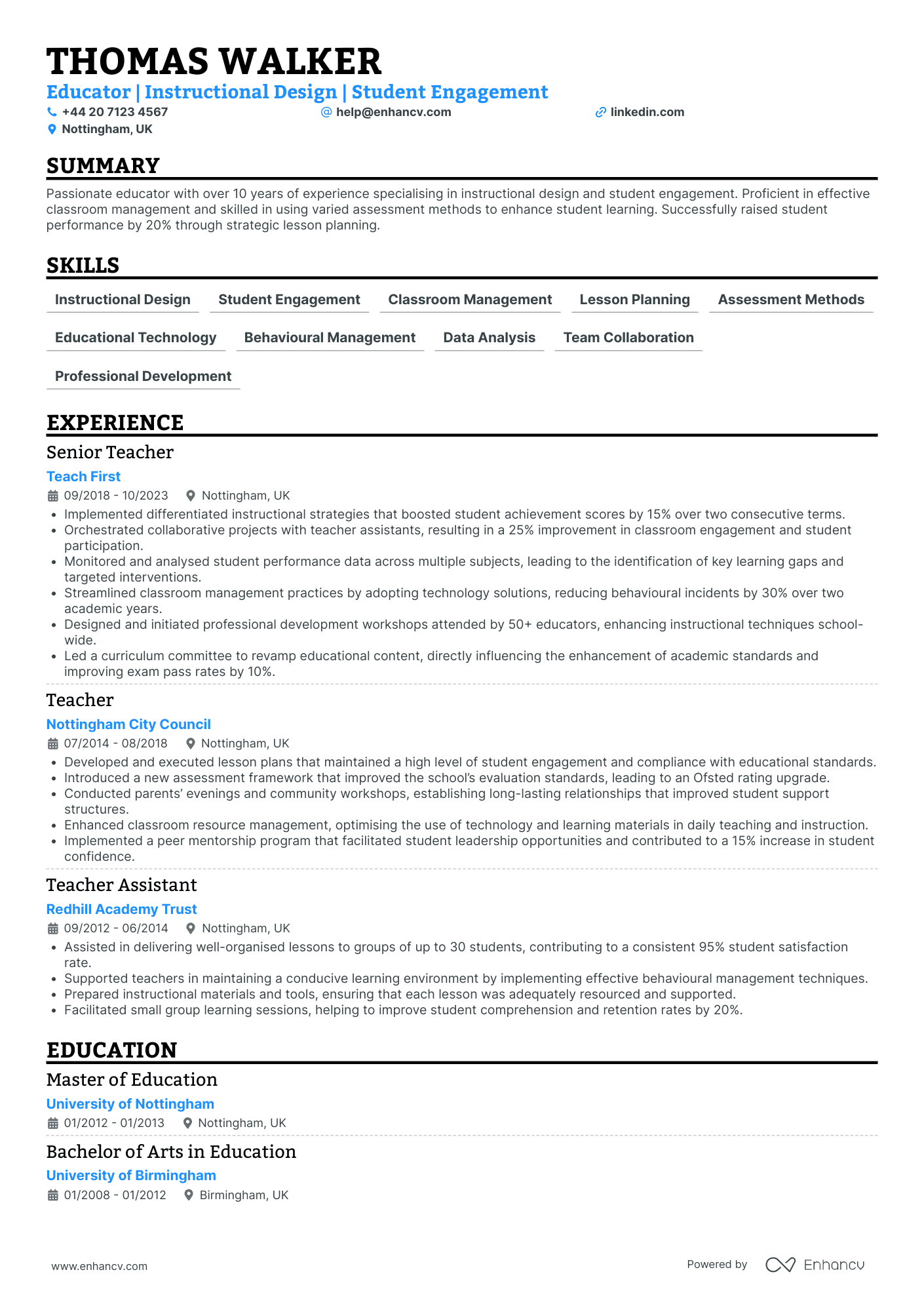
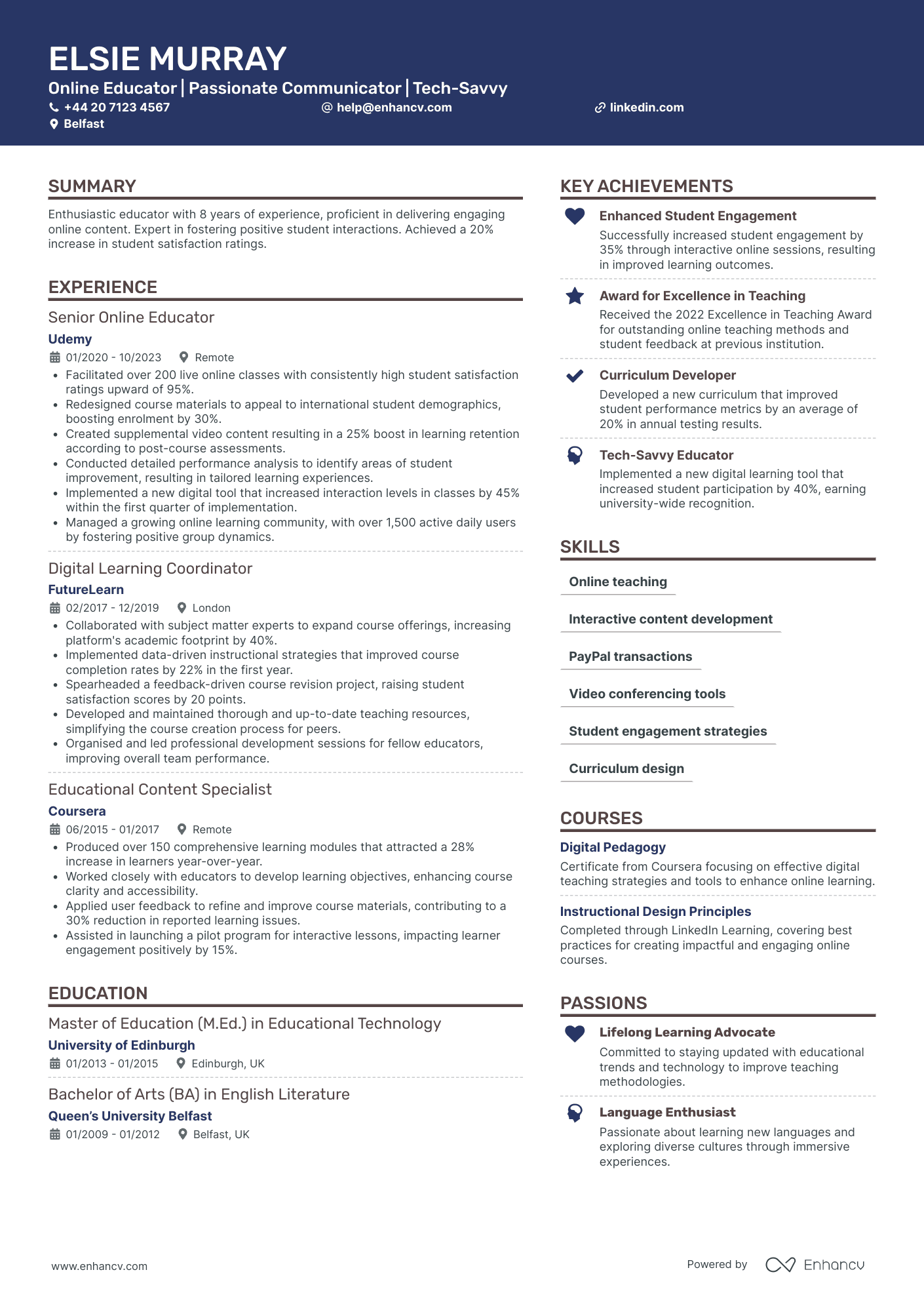
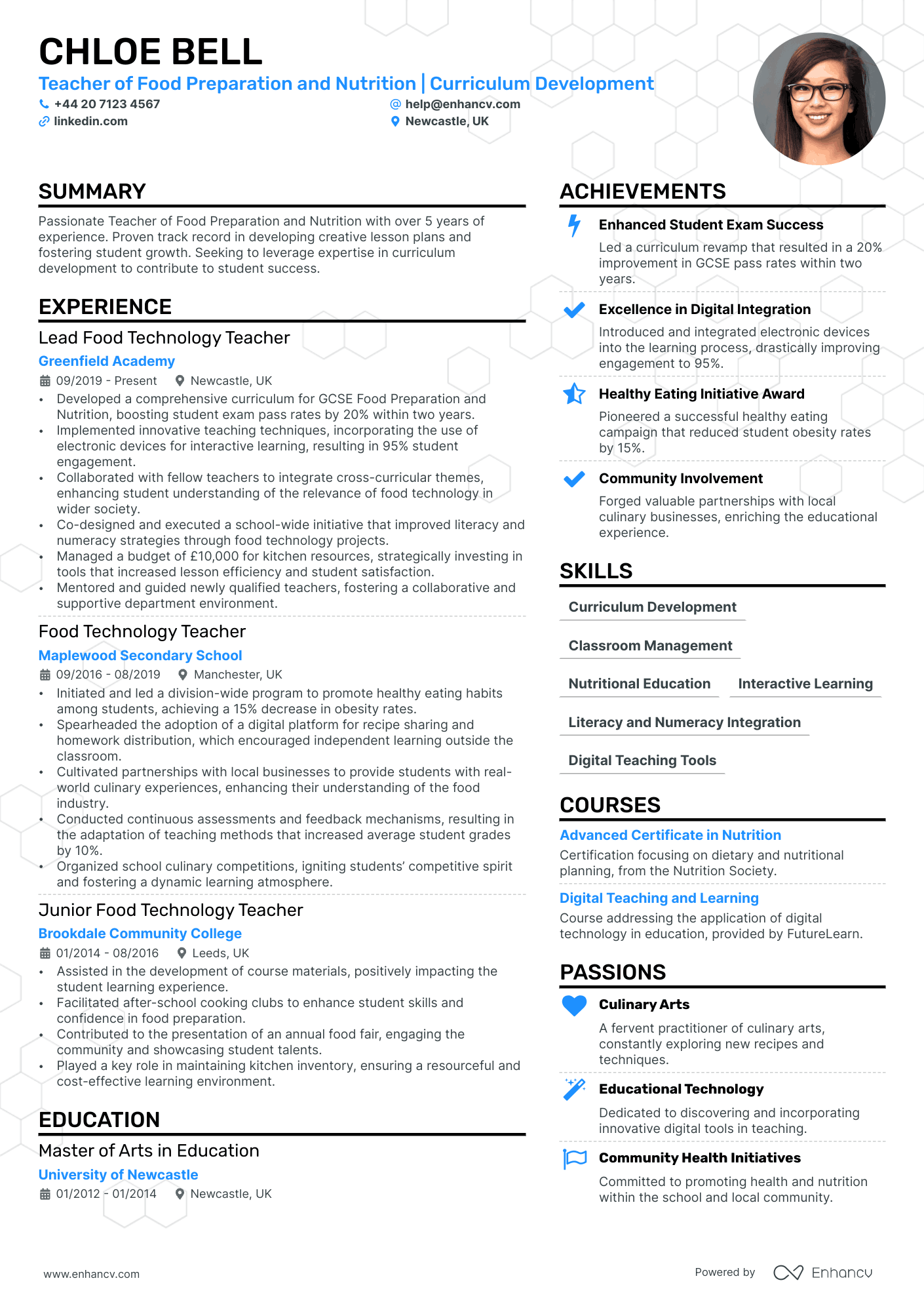
Most teacher CVs read like the person specification pasted into bullet form. A headteacher shortlisting for September works through a stack of them in one sitting, and the ones that earn an interview are almost always the ones that are easiest to scan.
Format is where that scan is won or lost. Get the structure, length, and file type right and your evidence lands cleanly. Get them wrong and a strong candidate reads like hard work. If you want the basics first, start with how to write a CV.

Key takeaways
- Lead with your QTS status, phase, and subject in the header. A head should be able to place you in ten seconds.
- Two pages, reverse chronological, one clean column, sent as a PDF unless the advert asks for a Word file.
- Open with a personal statement that names your key stage, your subject, and one measurable result.
- Mirror the words schools actually use: curriculum development, classroom management, and safeguarding.
- Quantify your impact with attainment, progress, and cohort numbers rather than a list of duties.
- Put QTS, your degree classification, and safeguarding training near the top, and keep your DBS status on the CV.
Formatting your teacher CV
Use reverse chronological order as your default. It is what UK schools expect, and it lets a head see your current role, your phase, and your most recent results first.
Switch to a skills-based CV only when you are changing phase, returning after a career break, or moving in from another sector. In that case, lead with skills and training, then place your history lower down.
Keep it to two pages. Trainees and early career teachers can run shorter, but once you have placements and a class of your own, two pages is the UK norm and a third page rarely helps. If you are unsure, see how long a CV should be.
Use one clean column, standard headings, and a readable font. A clear CV layout matters far more here than any design flourish, and UK teacher CVs do not carry a photo.
Put your name, location, professional email, and QTS status in the header so a head can place you before they reach your personal statement. A shared or informal email address costs you nothing to fix and quietly undermines everything below it.
Send a PDF for direct and speculative applications so the layout holds on any device. Keep a Word copy for supply agencies, which reformat CVs into their own template. If a school's advert or application portal names a file type, follow it exactly.
Many state schools recruit through a standard application form rather than a CV, so a polished CV matters most for supply work, independent and international schools, academies that accept them, and speculative approaches. Where a form is required, your CV is still the master document you copy from.
Keep the layout clean and the headings standard so it stays ATS-friendly, since agencies and larger trusts often screen with tracking software before a human sees it. Build it from a proven layout rather than a blank page. Enhancv's CV templates export to a clean PDF and keep your headings where a head expects them.
Primary and secondary CVs follow the same rules with a different emphasis. Primary leads with breadth across the curriculum and whole-class results, while secondary leads with your subject, the key stages you have taught, and exam outcomes.

PRO TIP
Put QTS status, your phase, and your subject in the top third of page one. A head skimming forty CVs for a September start decides whether to keep reading before they scroll. Do not bury your registration in the education section at the bottom.
Is your resume good enough?
Drop your CV here or choose a file. PDF & DOCX only. Max 2MB file size.
What your teacher CV should include
A UK teacher CV is clean, two pages, and built around what a school screens for. Five parts do the work:
- A CV header with your name, location, contact details, and QTS status.
- A personal statement naming your phase, your subject, and one result.
- A key skills section written in the language schools use.
- Teaching experience with dated roles, placements, and quantified impact.
- Education and training: your degree and classification, your route to QTS, and safeguarding.
Those are the five things a head looks for first. How you order the sections in a CV should put the ones that qualify you highest, and for a trainee or an early career teacher that often means education and training come before a thin work history.
Everything else supports these rather than competing with them. Form tutoring, subject or phase leadership, clubs, trips, and continuing professional development all belong on the CV, but they earn their place by backing the five essentials, not by crowding them out.
Keep the header lean. Your town and a professional email are enough, and there is no need for a full postal address, your date of birth, your age, or marital status. None of them help a head decide, and leaving them off gives you more room for the evidence that does.
What the UK teaching market looks like
Knowing what schools ask for shapes what your CV leads with. Here is what UK teacher postings show right now.
| What | UK teacher roles |
|---|---|
| Where the work happens | On-site, around 96% (688 of 715 UK teacher postings in the last ~30 days, Enhancv's internal job feed) |
| Experience level asked for | Mid 63% · entry 23% · senior 12% |
| Most-listed skills | Curriculum development, classroom management, safeguarding, professional development, student assessment |
| Pay | No verified figure to cite here. Check the current national pay scale for your nation, phase, and experience |
Two of these numbers should shape your CV.
Teaching is almost entirely on-site, so a school needs to see you can be in the building every day. Put your location near the top, and for primary or supply roles mention whether you drive.
Most postings sit at mid-career level, so lead with the impact you have already had on attainment and behaviour rather than your training on its own. Curriculum development, classroom management, and safeguarding recur most often across postings, so name them where they are genuinely true of you.
We could not verify a current pay figure to cite here, so check the latest national pay scale for your nation and phase before you raise salary in an application.
Writing your teacher personal statement
Three or four sentences at the top: who you are, your phase and subject, your strongest result, and the school or setting you are aiming for. A personal statement is the first thing a human reads, so make every line checkable.
Avoid the adjective soup every other CV opens with. 'Passionate, dedicated, and hard-working' tells a head nothing they can verify about your teaching.
Tailor the last line to the school in front of you. A secondary statement leads with subject and exam outcomes, while a primary one leads with breadth across the curriculum and whole-class progress. Lead with evidence in both:
Teacher CV personal statement example
Qualified secondary Maths teacher with QTS and five years across two 11-18 comprehensives, raising higher-tier GCSE pass rates from 68% to 81% over three years. Form tutor and KS4 coordinator, trained in safeguarding to Level 3 and in adaptive teaching for EAL and SEND pupils. Looking to bring consistent, data-informed teaching to a Maths department in a Bristol secondary school.
What to avoid
A passionate, hard-working, and enthusiastic teacher who loves working with children and is dedicated to helping every pupil reach their full potential. A strong team player with excellent communication skills, now looking for a new and exciting challenge in a forward-thinking school.
When we read a teacher's personal statement, we look for the phase, the subject, and one result in the first line. 'Passionate about education' says nothing a hundred other applicants have not already said. 'Raised Year 11 attainment eight points in two years' tells a head what you will do in their classrooms. Name the key stage, name the subject, and open with the change you made, then let the rest of the CV back it up.
Writing your teaching experience section
Write each role the same way: a dated heading, then bullets that show what you did and what changed. Lead each bullet with a verb, current role first. For the mechanics, see work experience on a CV.
Teaching is measurable even when it does not feel like it: attainment gains, progress scores, phonics or reading data, behaviour and attendance, cohorts taught, and clubs run. Those numbers are your CV achievements, and they beat a list of responsibilities every time.
Name your wider contribution too. Form tutoring, a TLR, subject or phase leadership, and running trips or interventions all show a head you do more than deliver lessons, so give each a bullet with a result attached.
Give each school a line of context a head outside your area would not otherwise know: the phase and rough size, whether it is a comprehensive, faith, grammar, or special school, and the intake if it is relevant to what you achieved. Turning around reading in a large intake with high pupil premium reads very differently from the same number in a small selective setting.
Trainees and early career teachers should write up placements exactly like jobs, with the school, the key stage, and dated bullets. If you are near the start, our CV examples for a first job show how to make limited experience read with weight.
Tailor every application to the school and the person specification, mirroring the keywords of the advert where they are genuinely true of you. Enhancv's CV tailoring feature reads the advert and suggests the matching edits, which saves rewriting from scratch for each post.
- Teach a mixed-ability class of 30 pupils across the full primary curriculum, raising the proportion working at the expected standard in reading from 71% to 88% in two years
- Lead the whole-school phonics strategy, coaching six teaching assistants and lifting Year 1 phonics screening pass rates by 12 percentage points
- Act as deputy designated safeguarding lead, logging concerns on CPOMS and liaising with families and external agencies
- Plan and run a weekly STEM club for 25 pupils and coordinate the Year 4 residential for 60 children
PRO TIP
Schools measure progress, not just attainment. A line like 'moved my class from 71% to 88% at the expected standard' lands harder than 'responsible for raising standards'. Pull the exact metric your phase uses, whether that is phonics screening, key stage progress, or GCSE grades.
Skills for your teacher CV
Read a dozen live teaching adverts and the same demands repeat. Curriculum development, classroom management, safeguarding, assessment, and adaptive teaching come up again and again, so list your hard skills in the words the adverts use.
The people asking what words best describe a teacher are usually reaching for adjectives. Skip them. A head cannot verify 'passionate' or 'dedicated', but they can verify a bullet that shows you planned a curriculum or turned around a tough class. Choose your key skills to match the person specification, then prove each one in your experience.
The soft skills that matter here are real and checkable: communication with parents and colleagues, patience, collaboration across a department, and the organisation to plan, mark, and report at once. List only what your bullets can back, and place skills near the top when you are training or changing phase and just after your statement once you have classroom results.
Weight the list to your phase. A primary CV shows breadth: phonics, the core subjects, foundation subjects, and whole-class assessment. A secondary CV shows depth in your subject and the key stages and exam boards you have taught, plus any second subject you can cover. Name the frameworks and systems you actually use, from your assessment approach to the platforms you plan and report on, so a head can picture you in their setting.
Top skills for your teacher CV:
Curriculum development
Curriculum design
Classroom and behaviour management
Safeguarding (KCSIE)
Student assessment and marking
Differentiation and adaptive teaching
Lesson planning
EdTech and digital learning tools
Communication
Patience
Collaboration
Adaptability
Organisation
Resilience
Education and qualifications for teachers
Your education section carries more weight on a teacher CV than in most fields, because a school has to confirm you are qualified to be in front of a class. Put QTS status first, then your route to it.
List your degree and classification, your teacher training (PGCE, PGDE, School Direct, or an equivalent route), and QTS with the year you gained it. Add your Early Career Teacher progress if you are still within induction. See how to present qualifications on a CV if the order is not obvious.
Safeguarding training and a current DBS check belong on the CV too. They are a baseline expectation for the role, and naming the CPD and certificates you hold, from subject specialisms to SEND or pastoral training, saves a head a question.
If you trained or taught overseas, state your QTS position plainly, whether you hold it, have applied through a recognised route, or are awaiting assessment. A head will not chase an ambiguous line, so spell out where you stand and add the equivalent qualifications and the country you gained them in.
Conclusion
Lead with your QTS status, phase, and subject, quantify the difference you have made to pupils, and keep the format clean, two pages, and easy to scan.
Pair the CV with a short cover letter that says why this school, and you give a head every reason to shortlist you for interview.

Author's take - The Enhancv team
When we read a teacher's personal statement, we look for the phase, the subject, and one result in the first line. 'Passionate about education' says nothing a hundred other applicants have not already said. 'Raised Year 11 attainment eight points in two years' tells a head what you will do in their classrooms. Name the key stage, name the subject, and open with the change you made, then let the rest of the CV back it up.