



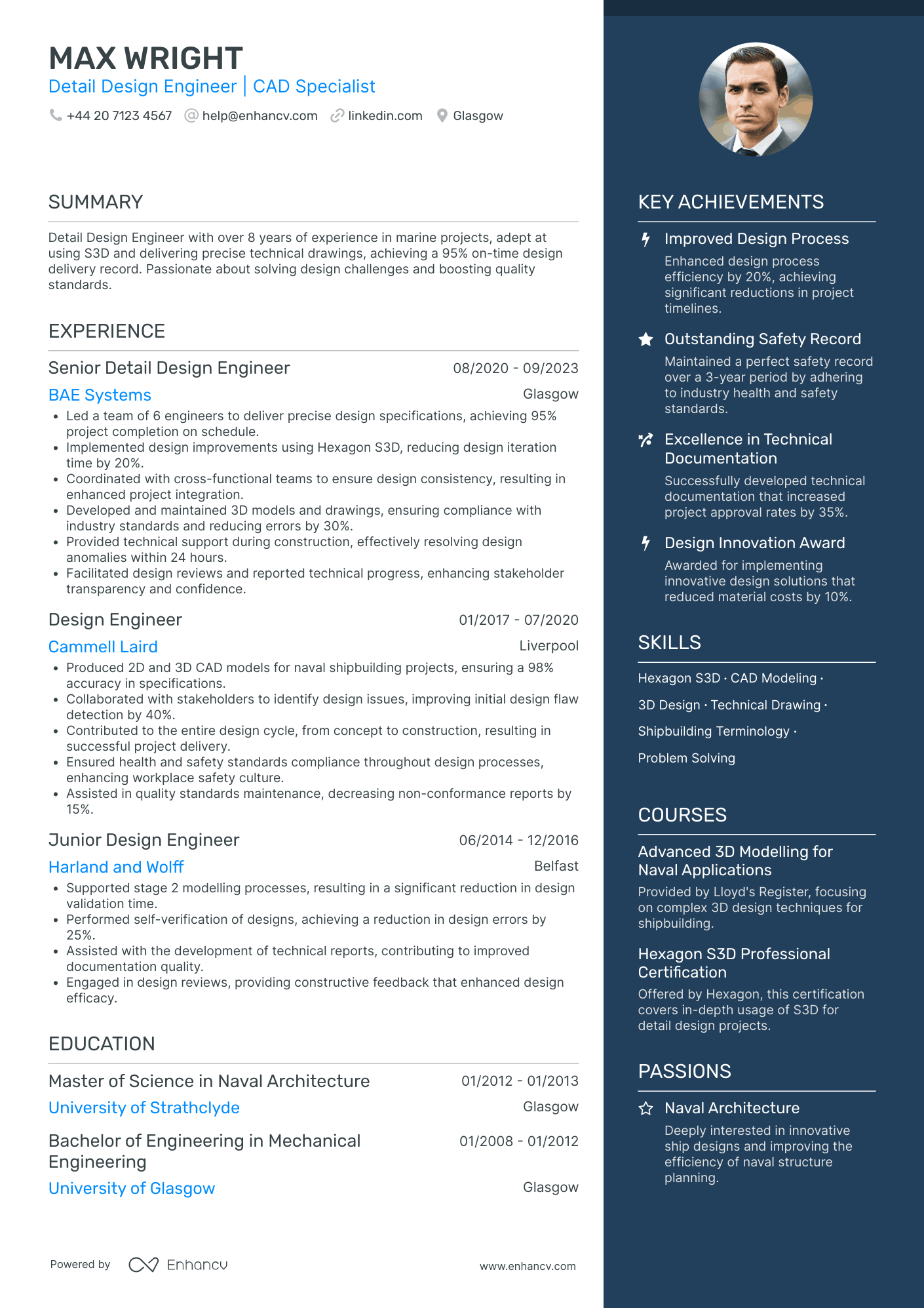
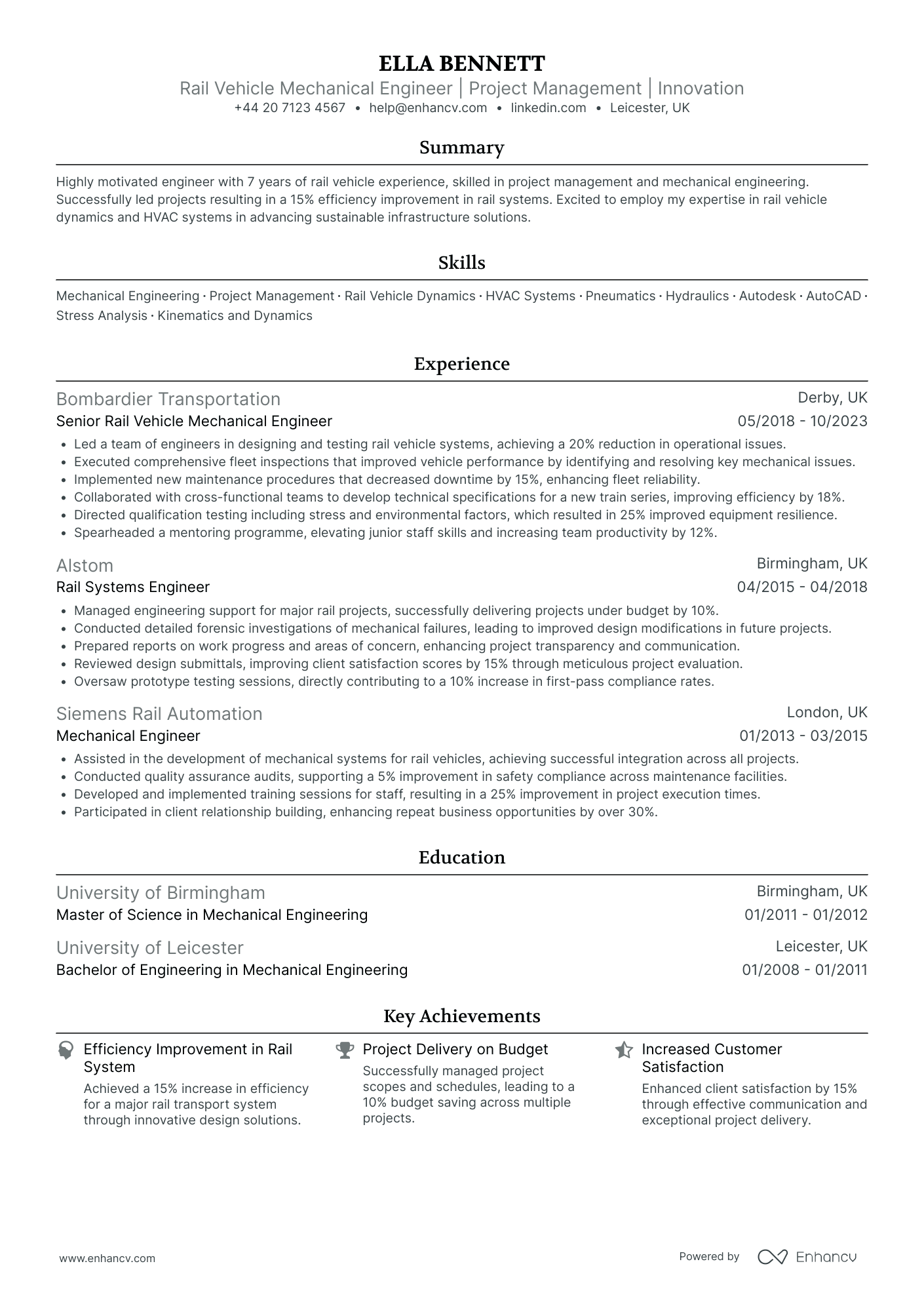
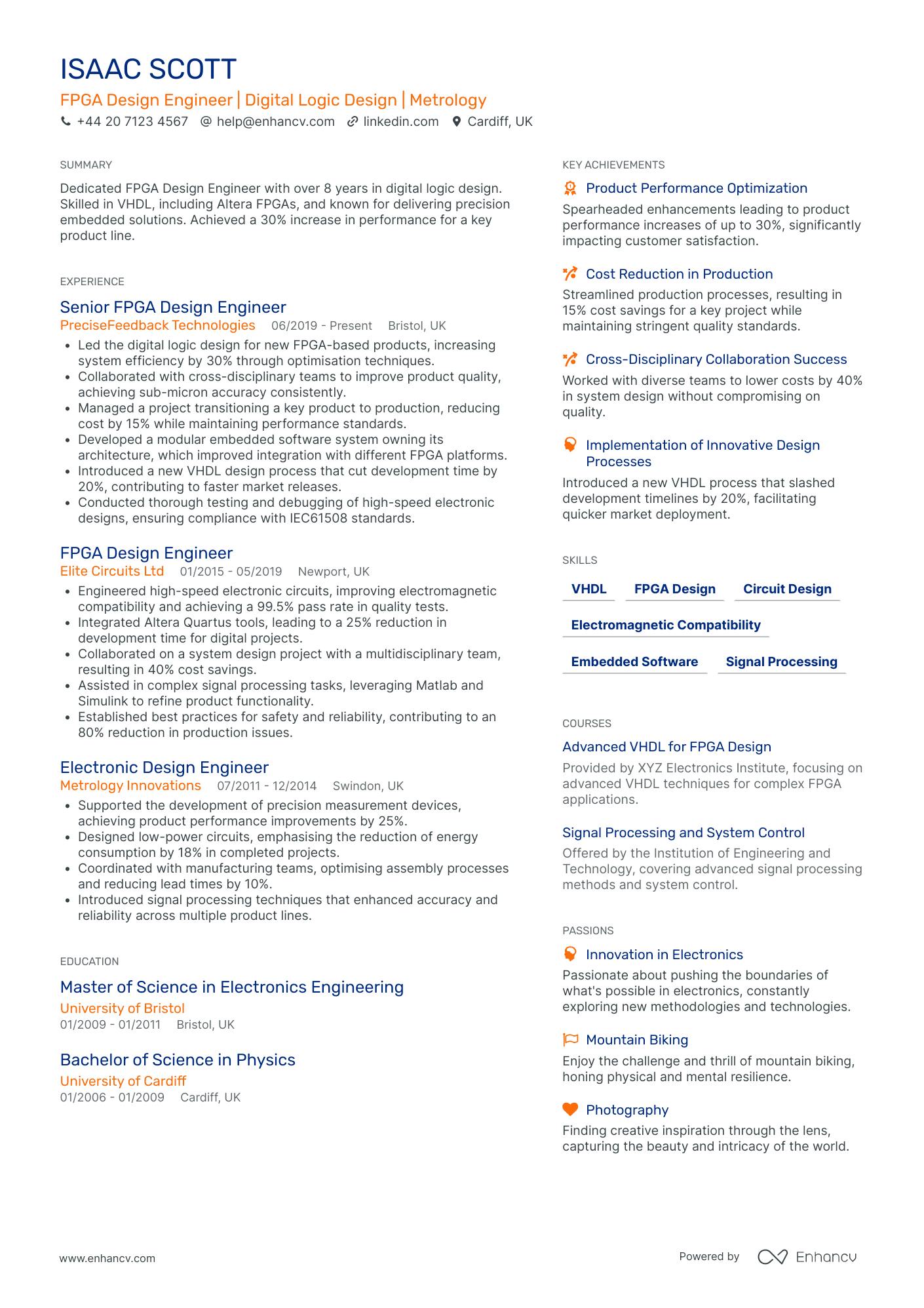
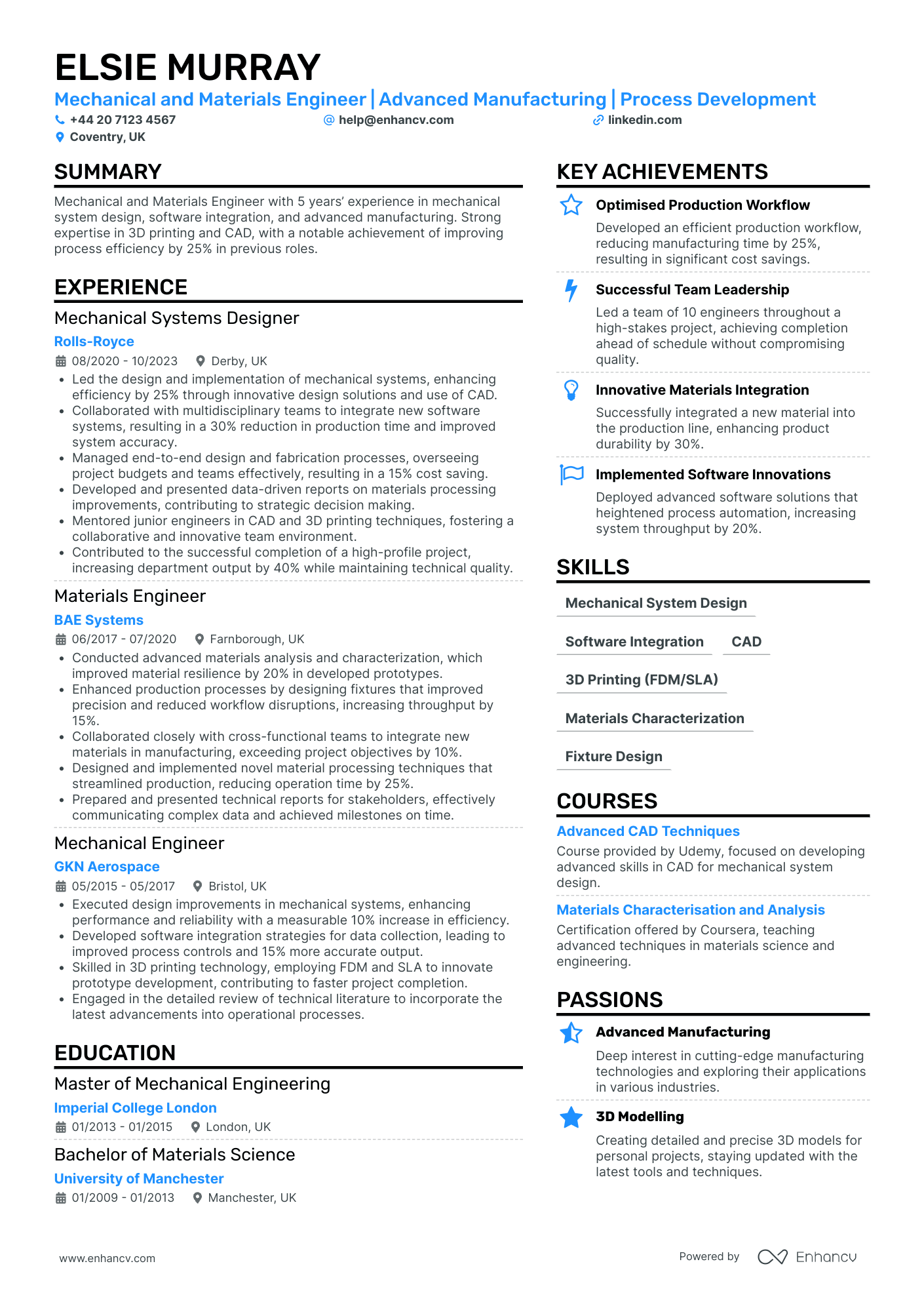
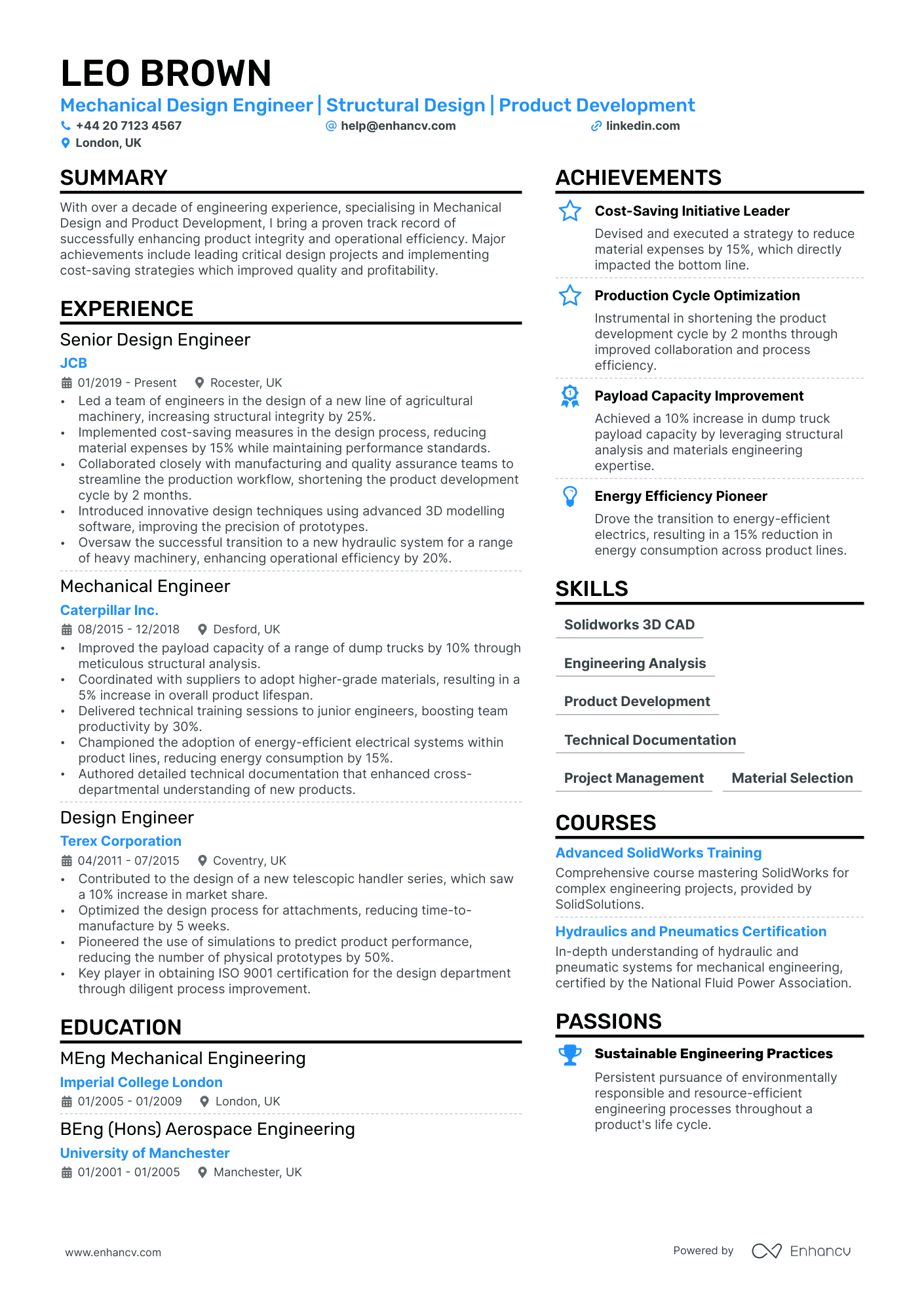
The last mechanical design engineer CV that held our attention opened with a number, a tolerance held across a full drawing pack, not a paragraph about being a passionate problem-solver. Most CVs for this role do the opposite. They reword the job advert into bullets, so a recruiter cannot tell a graduate apart from a design lead with ten years of released drawings behind them.
The ones that get shortlisted prove the work with figures and a layout a parser can read cleanly. For a design engineer the format carries unusual weight, because your application almost always passes through tracking software before a human opens it, so that is where the real gains sit and where this starts. The fundamentals of how to write a CV still apply on top.

Key takeaways
- Format decides the first pass. Build from a clean, single-column, ATS-readable layout rather than a blank page, because a cluttered CV hides your best drawings.
- Two pages, reverse chronological once you have real projects behind you, exported as a PDF unless the advert asks for a Word file.
- Quantify what a design engineer can measure: tolerances held, parts released, cost designed out, weight saved, and lead time cut.
- Name your tools and standards exactly, from SolidWorks, Inventor, and AutoCAD to Revit, GD&T, and the relevant BS EN or ISO codes.
- State your engineering status: degree classification, IMechE membership, and CEng or IEng where you hold it or are working towards it.
- UK design roles are split between on-site and hybrid, so put your location and any willingness to travel near the top.
Formatting your mechanical design engineer CV
Format is where most mechanical design engineer CVs are won or lost, so start here. A recruiter spends seconds on the first pass, and a busy layout buries the drawings and results that should earn you the interview.
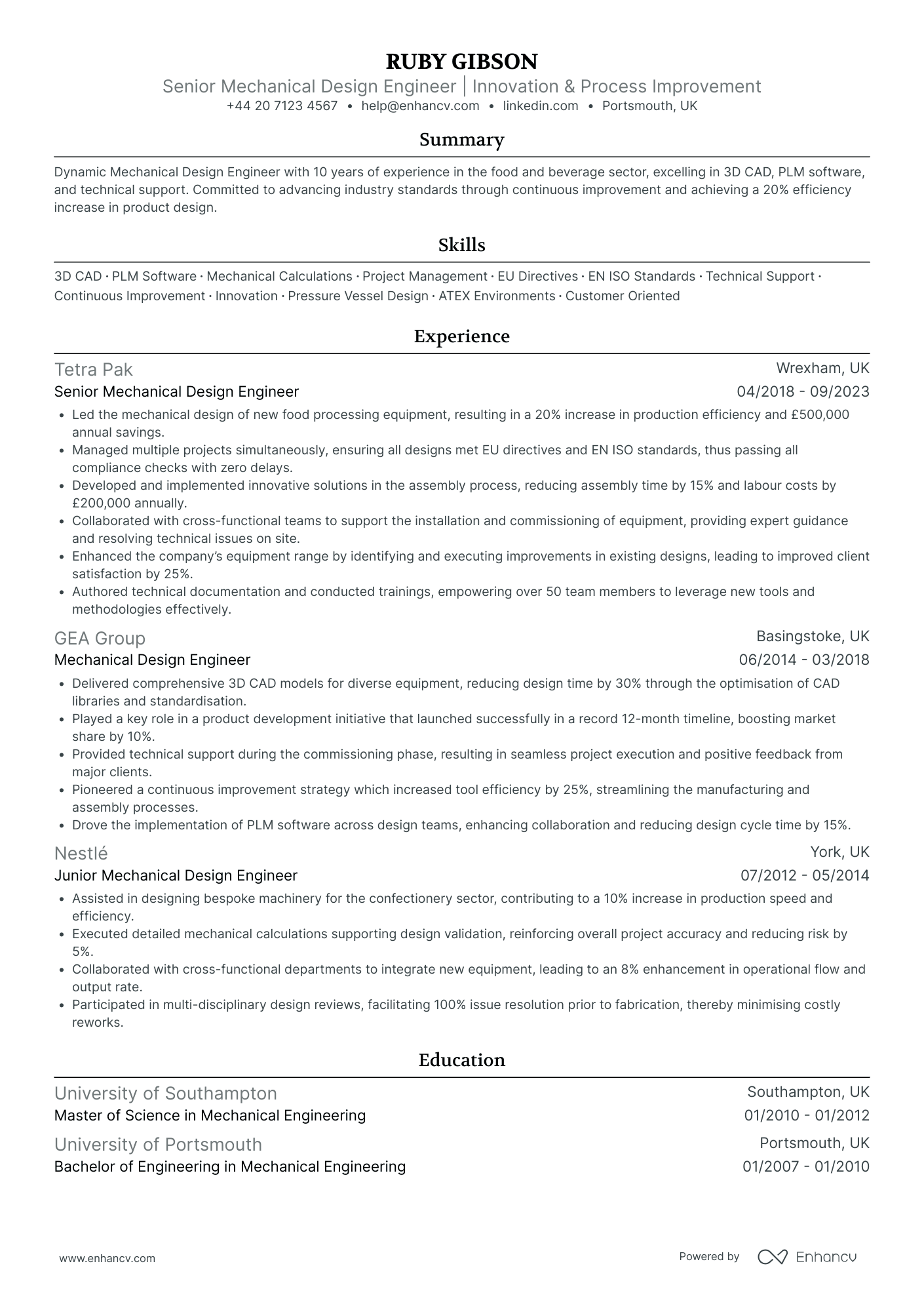
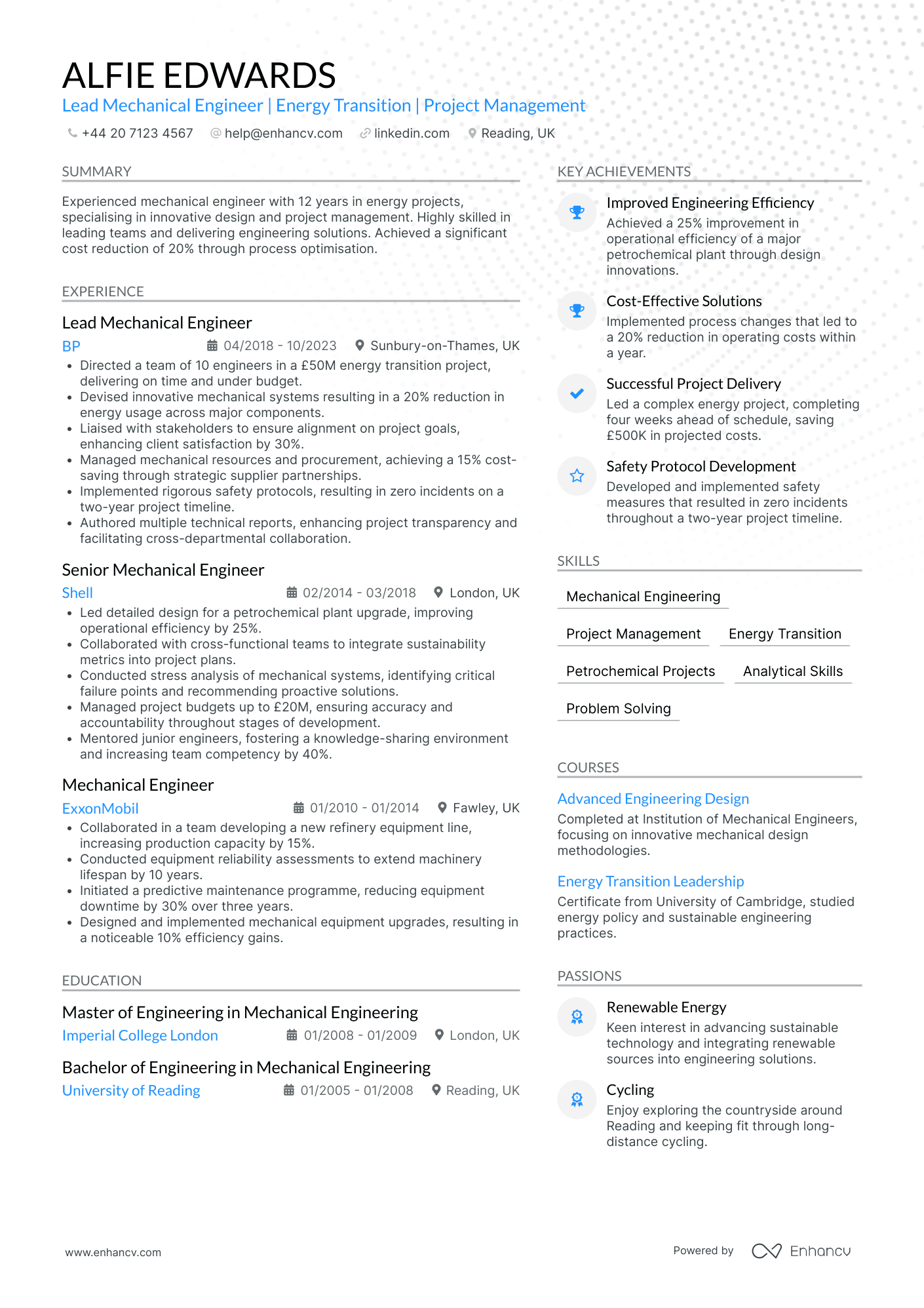
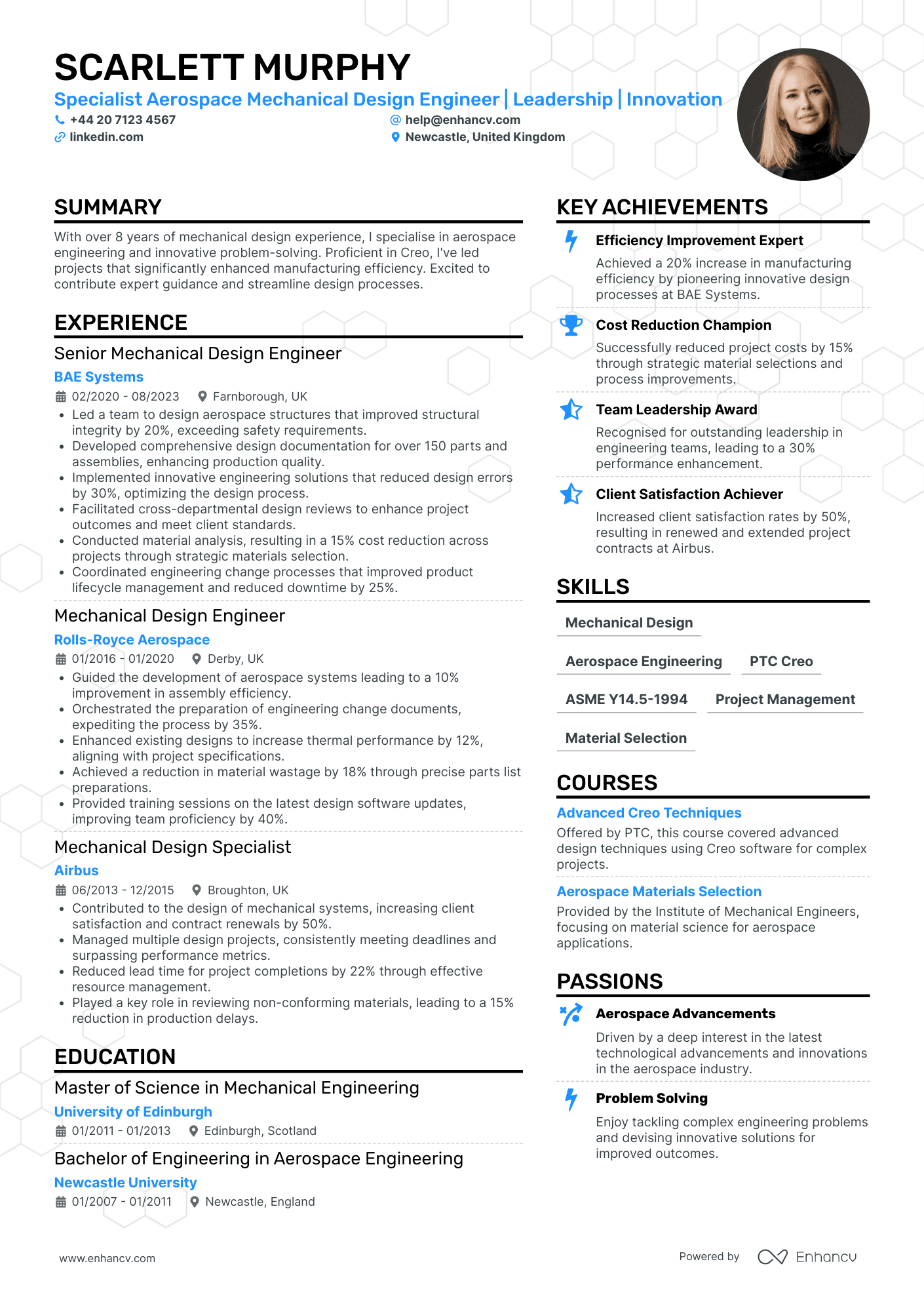
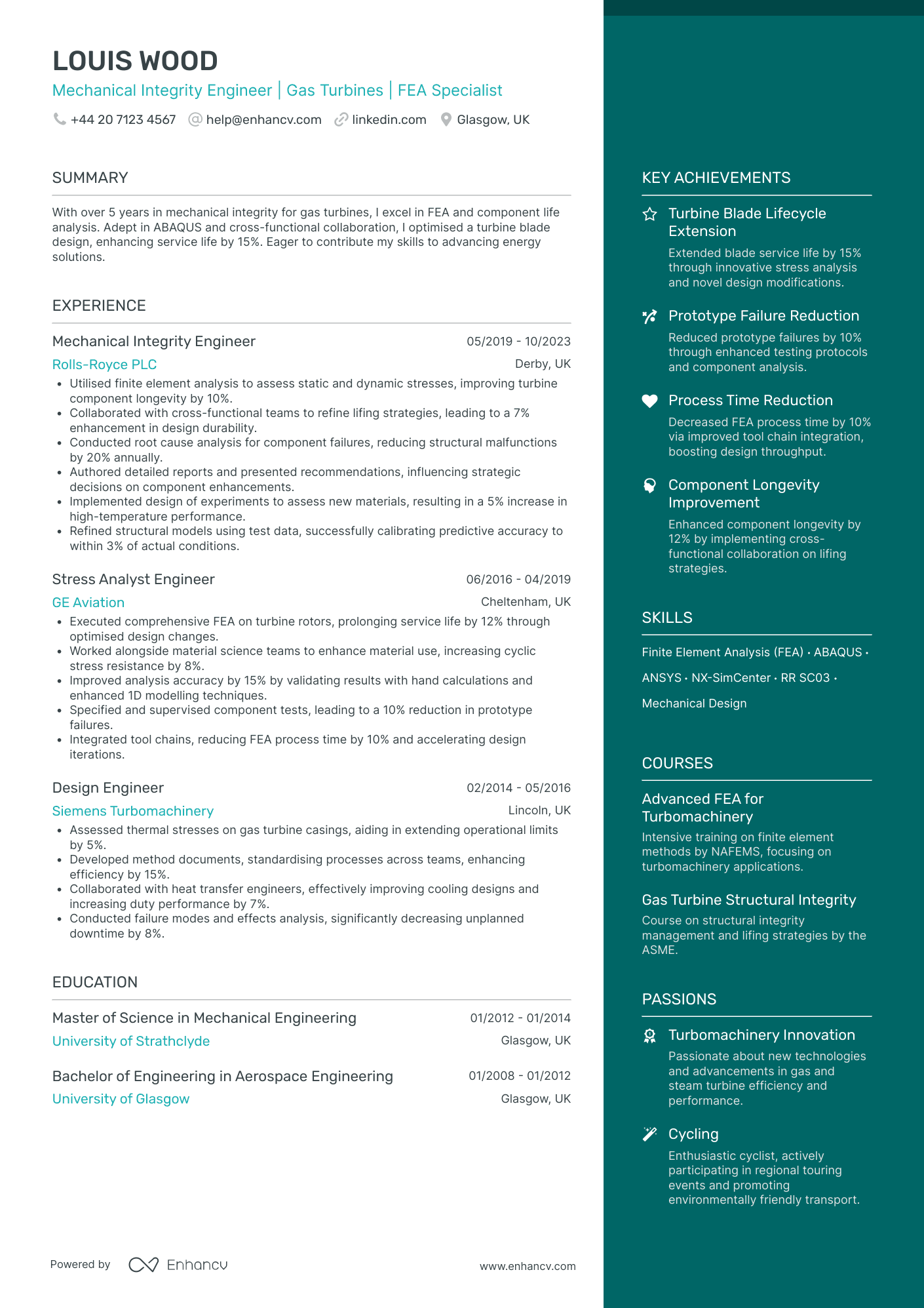
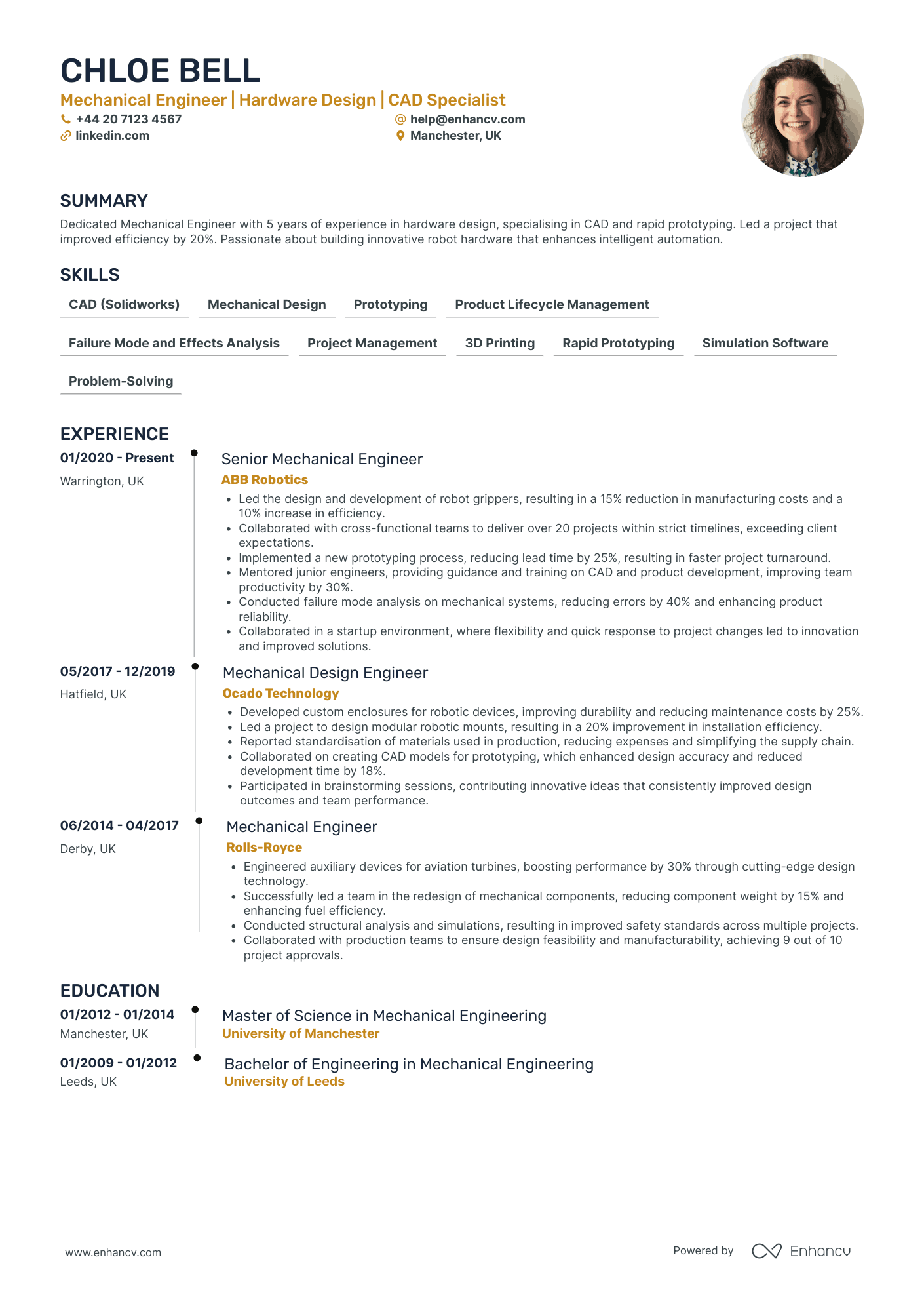
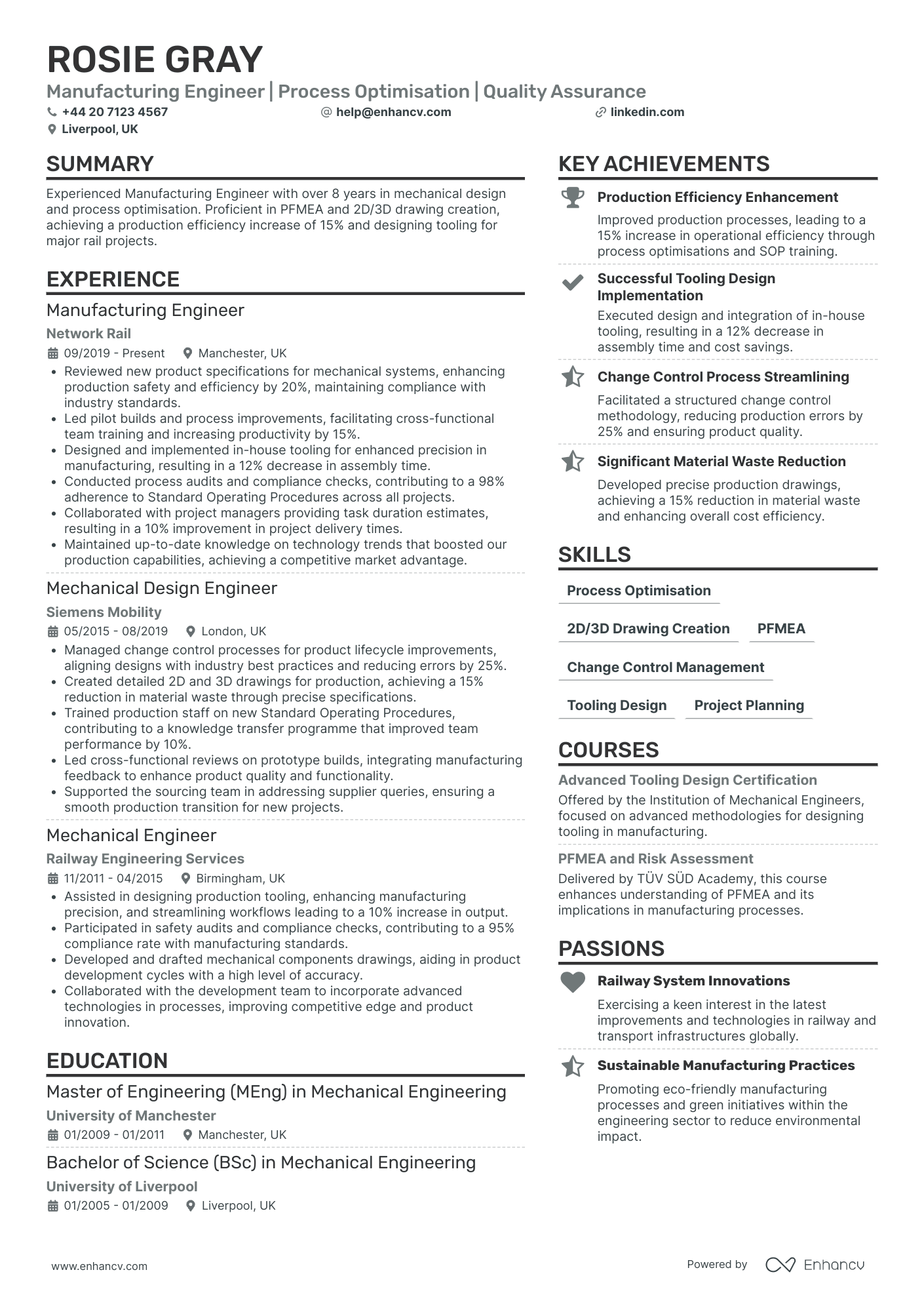
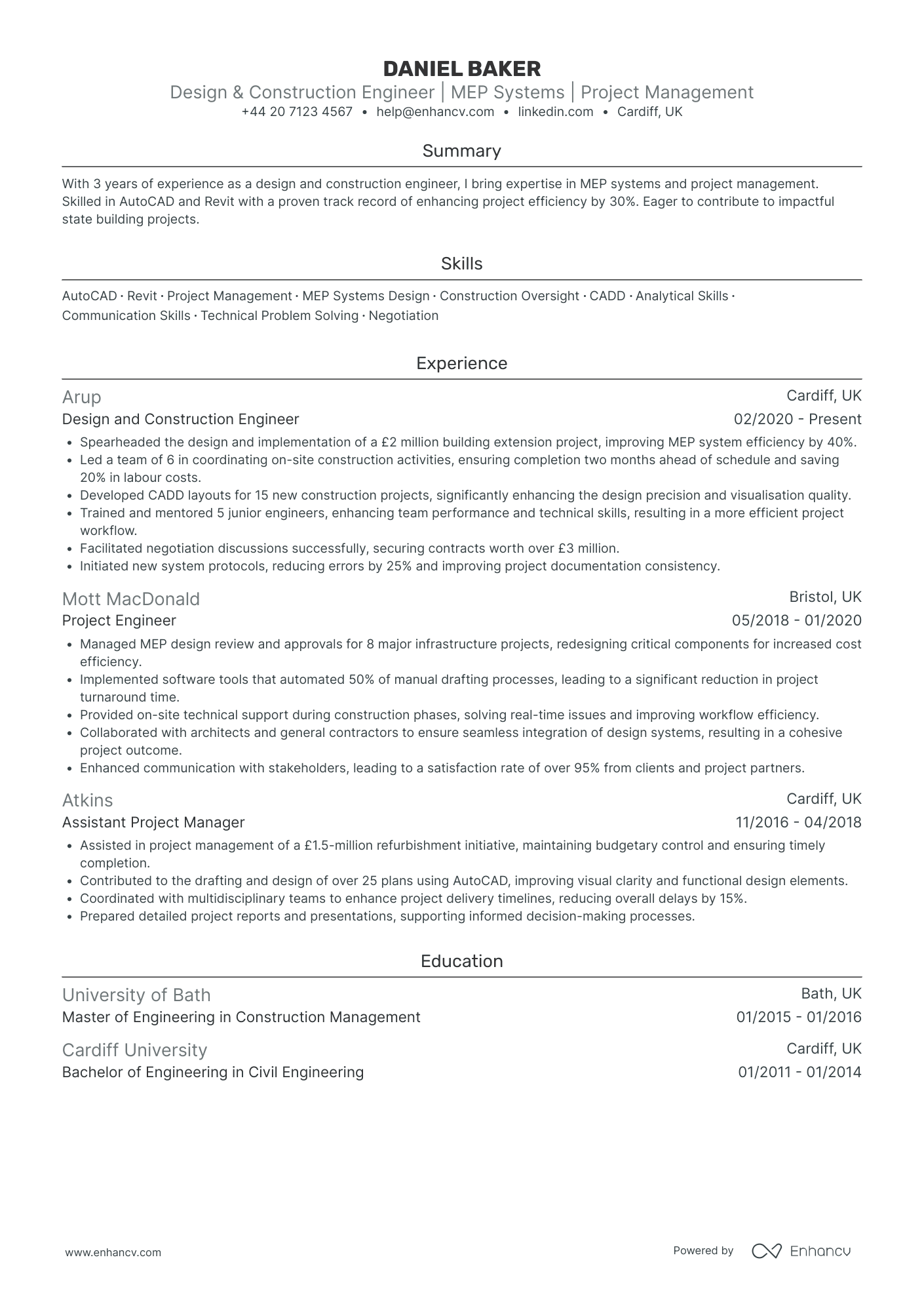
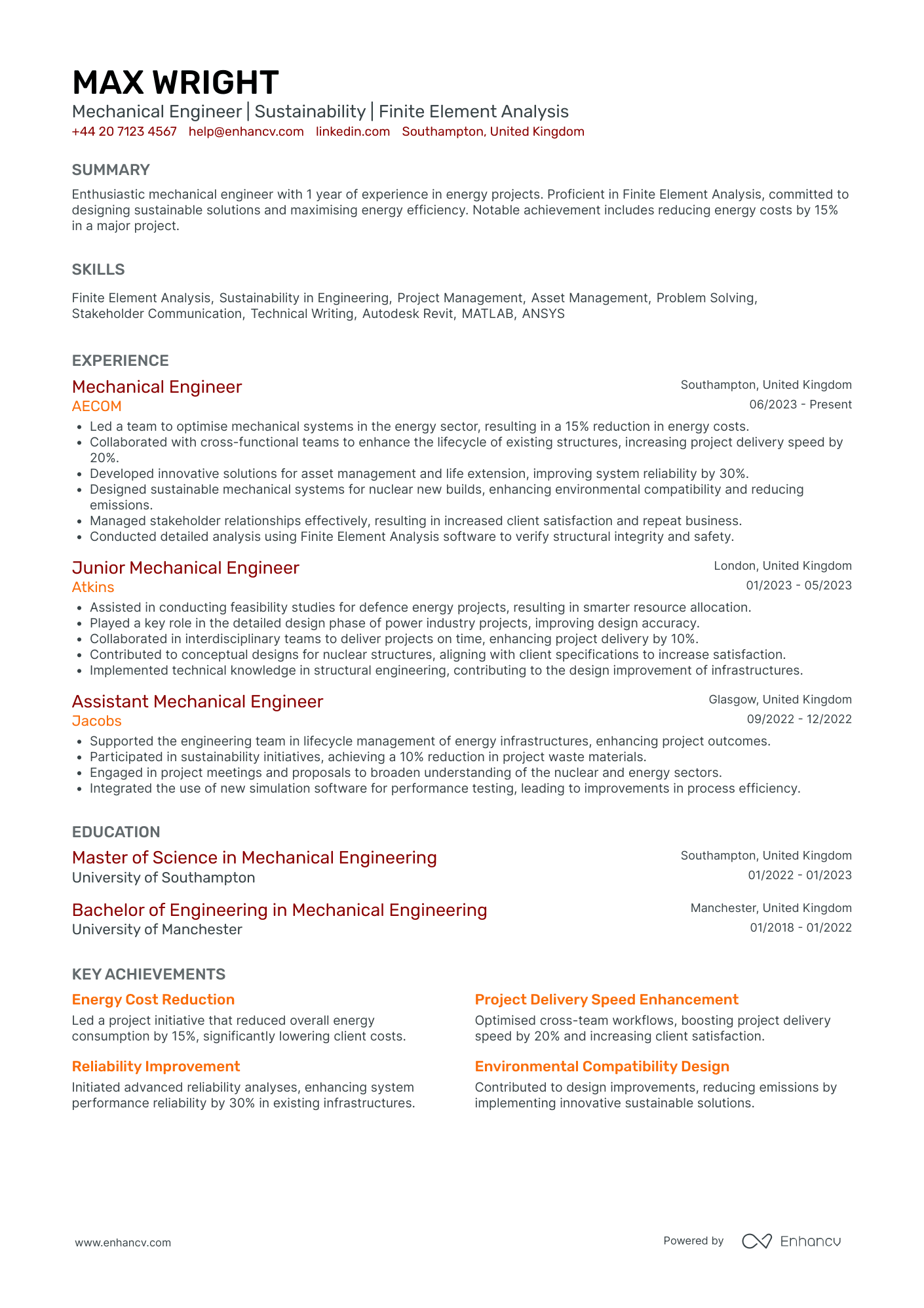
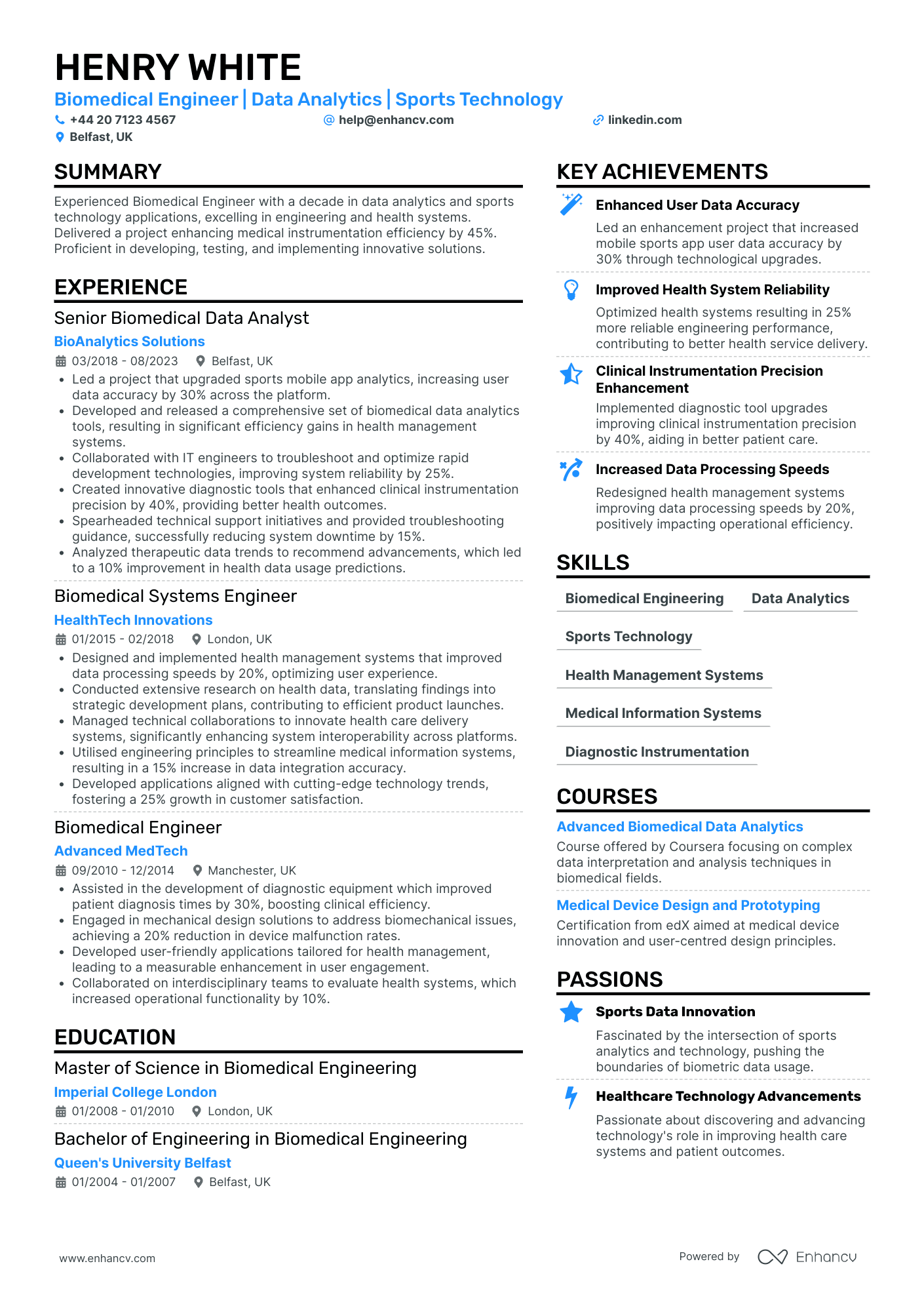
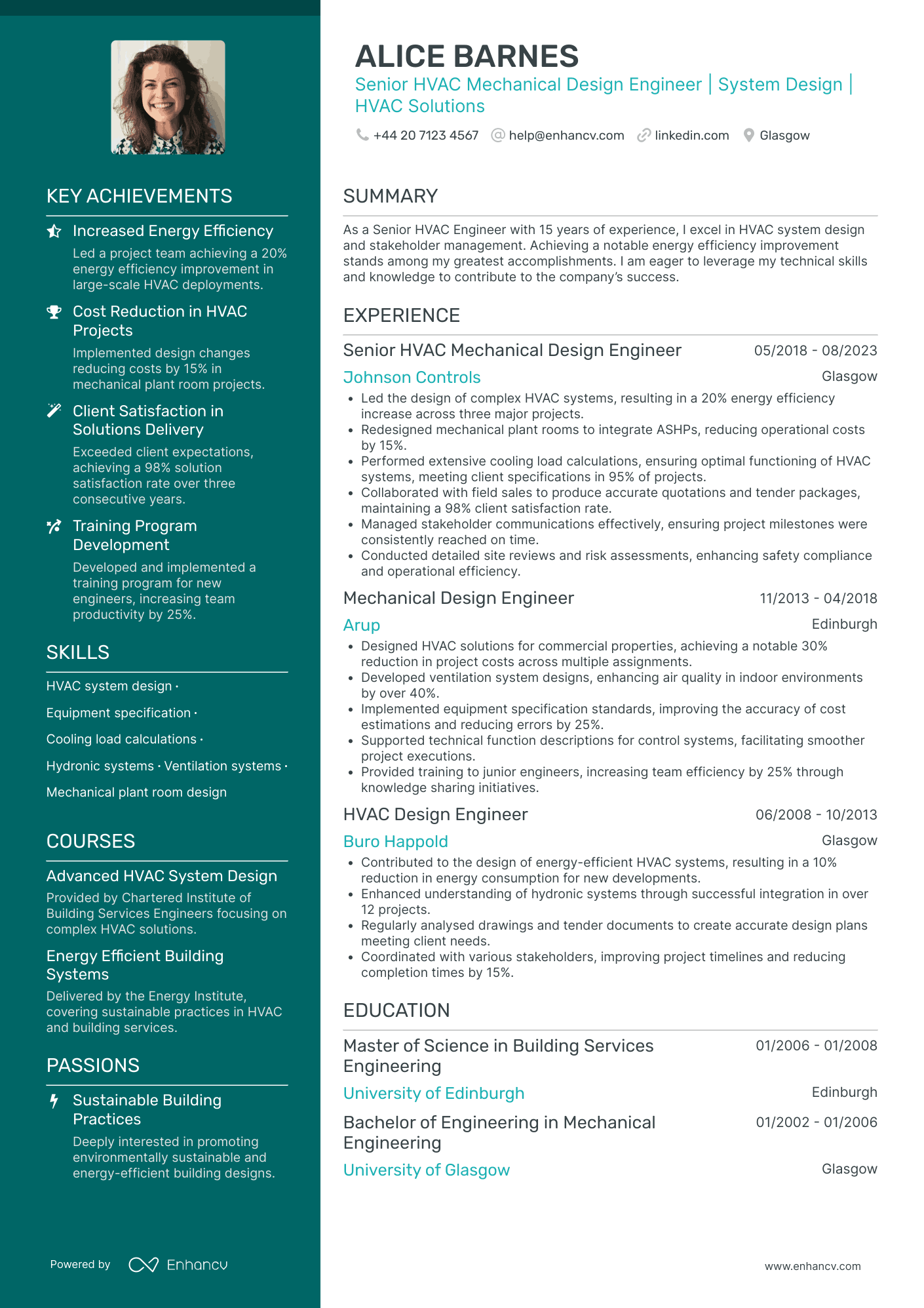
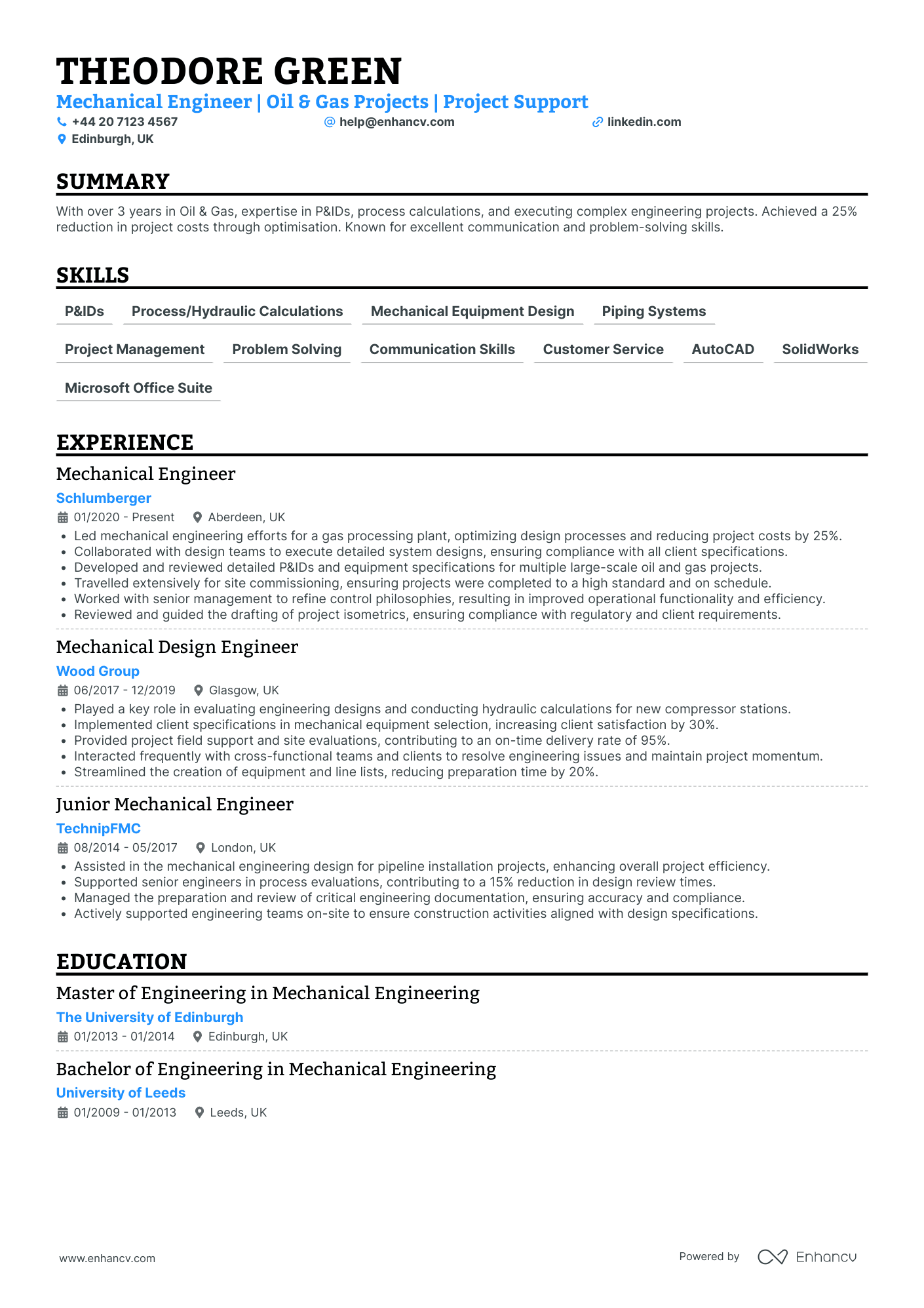
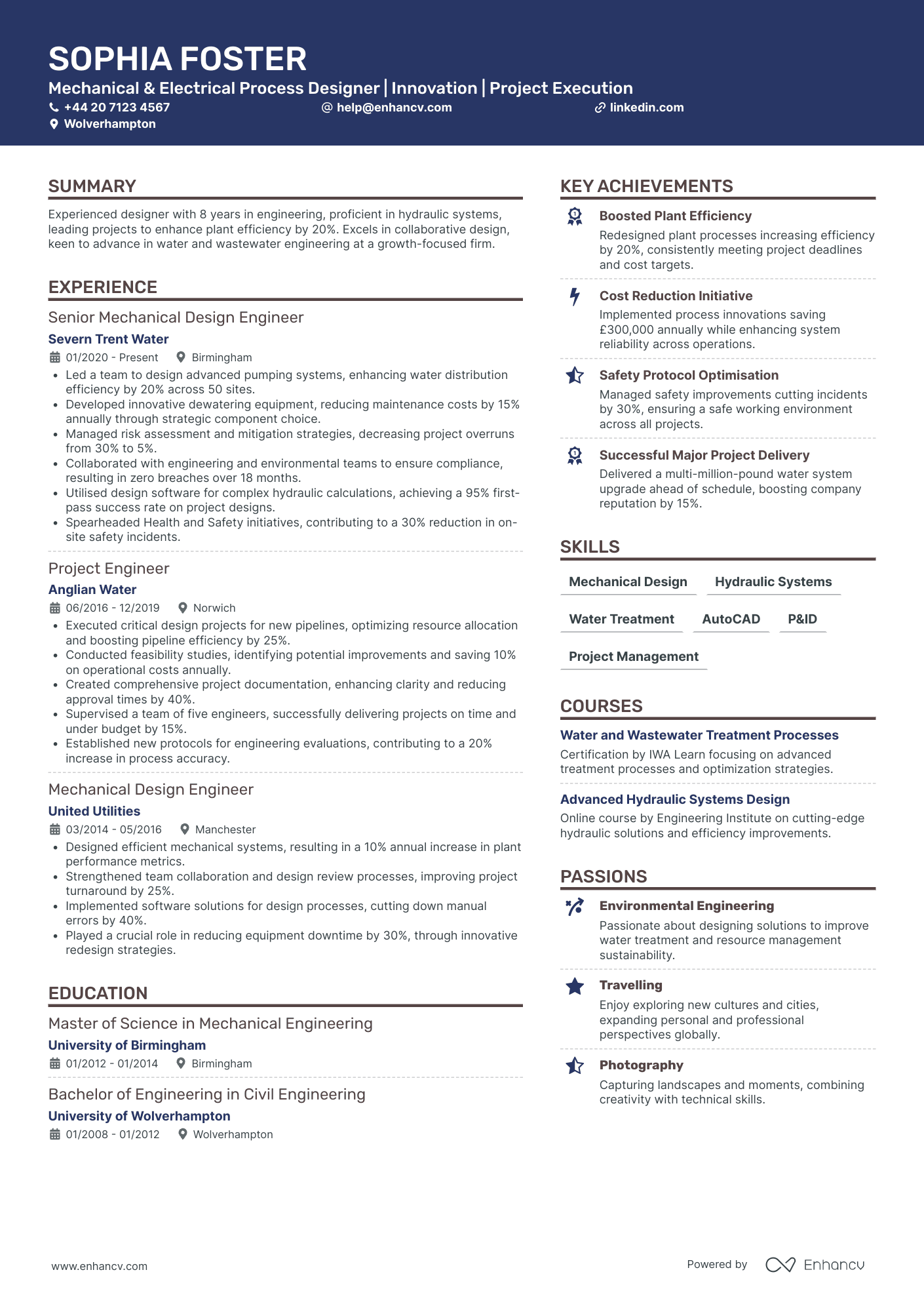
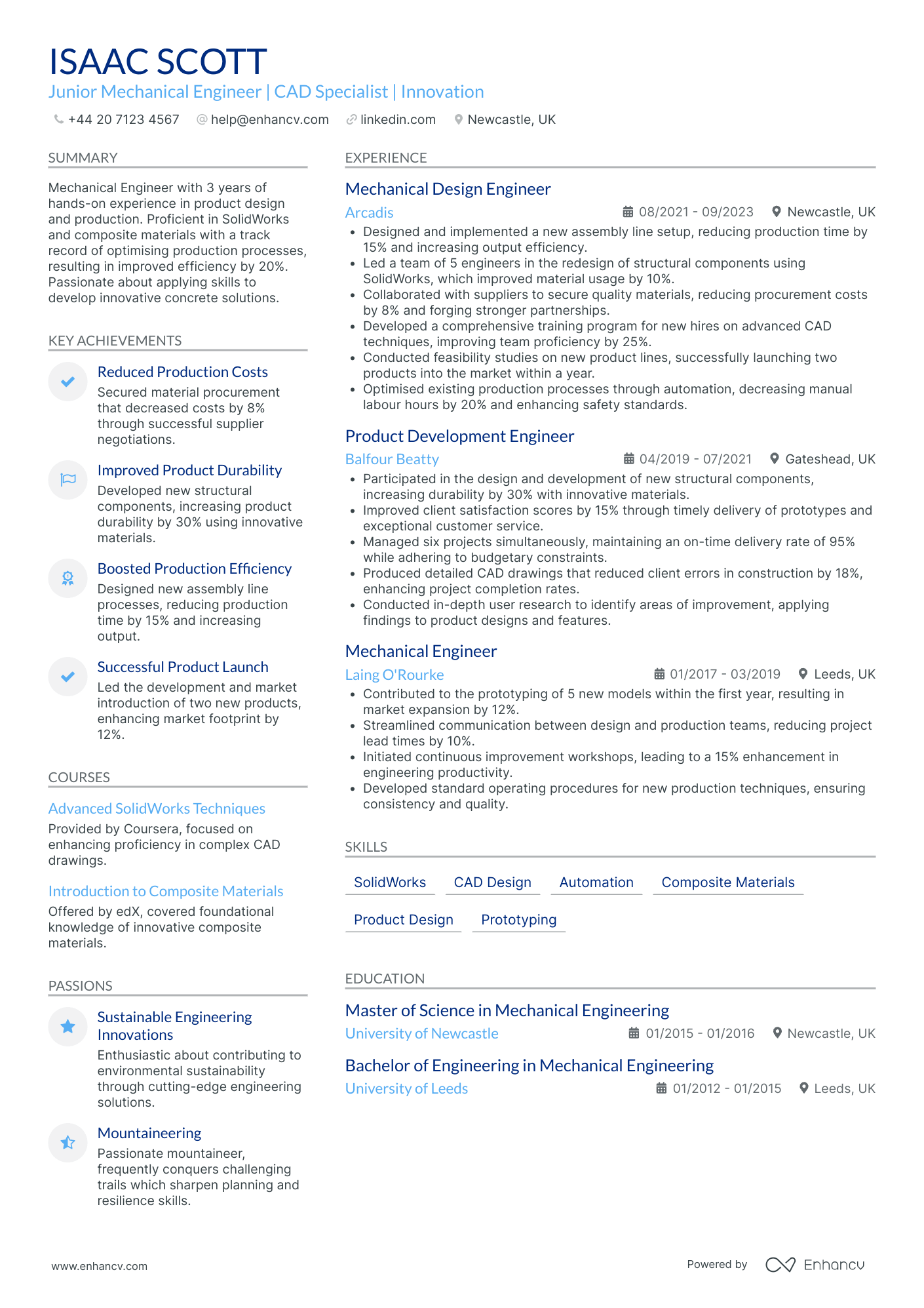
Use a clean, single-column CV layout with standard headings, a readable font at 10 to 11 point, and real white space. Two-column designs can look sharp, but they confuse some parsers, and design applications nearly always pass through tracking software before a person sees them.
Go reverse chronological once you have roles to show, listing your most recent position first and working back. It is the strongest of the standard CV formats for an experienced design engineer, because it puts your latest and most senior design work in front of the reader straight away.
Keep it to two pages. A recent graduate can hold it to one, but a design engineer with several projects behind them needs two, and a third page rarely earns its place.
Put a tight header at the top: your name, a one-line title such as 'Mechanical Design Engineer, CEng MIMechE', your location, phone, and email. Recruiters read the header first to check where you are based and whether you can reach the site, so do not make them hunt for it.
Send a PDF for direct applications so the layout holds on any screen. Keep a Word copy for recruitment agencies, which place a large share of engineering roles and reformat CVs into their own template. If the advert names a file type, follow it exactly.
Whatever you send, keep it ATS-friendly. Avoid text inside images, do not build your work history in a table, and write every tool and standard name out in full. The parser reads plain text, so give it plain text and it will index SolidWorks, Revit, and GD&T cleanly.
Name the file properly too. FirstnameLastname_Mechanical_Design_Engineer_CV.pdf tells a recruiter exactly what they have downloaded, while CV_final_v3.pdf tells them you were careless. Small signals like that add up on a technical application.
Before you send it, run the finished file through a checker to catch the layout issues an ATS trips on.
Is your resume good enough?
Drop your CV here or choose a file. PDF & DOCX only. Max 2MB file size.
Choosing a mechanical design engineer CV template
A template saves you from formatting a CV by hand, but not every template survives an ATS. Pick one built for parsing, not just for looks.
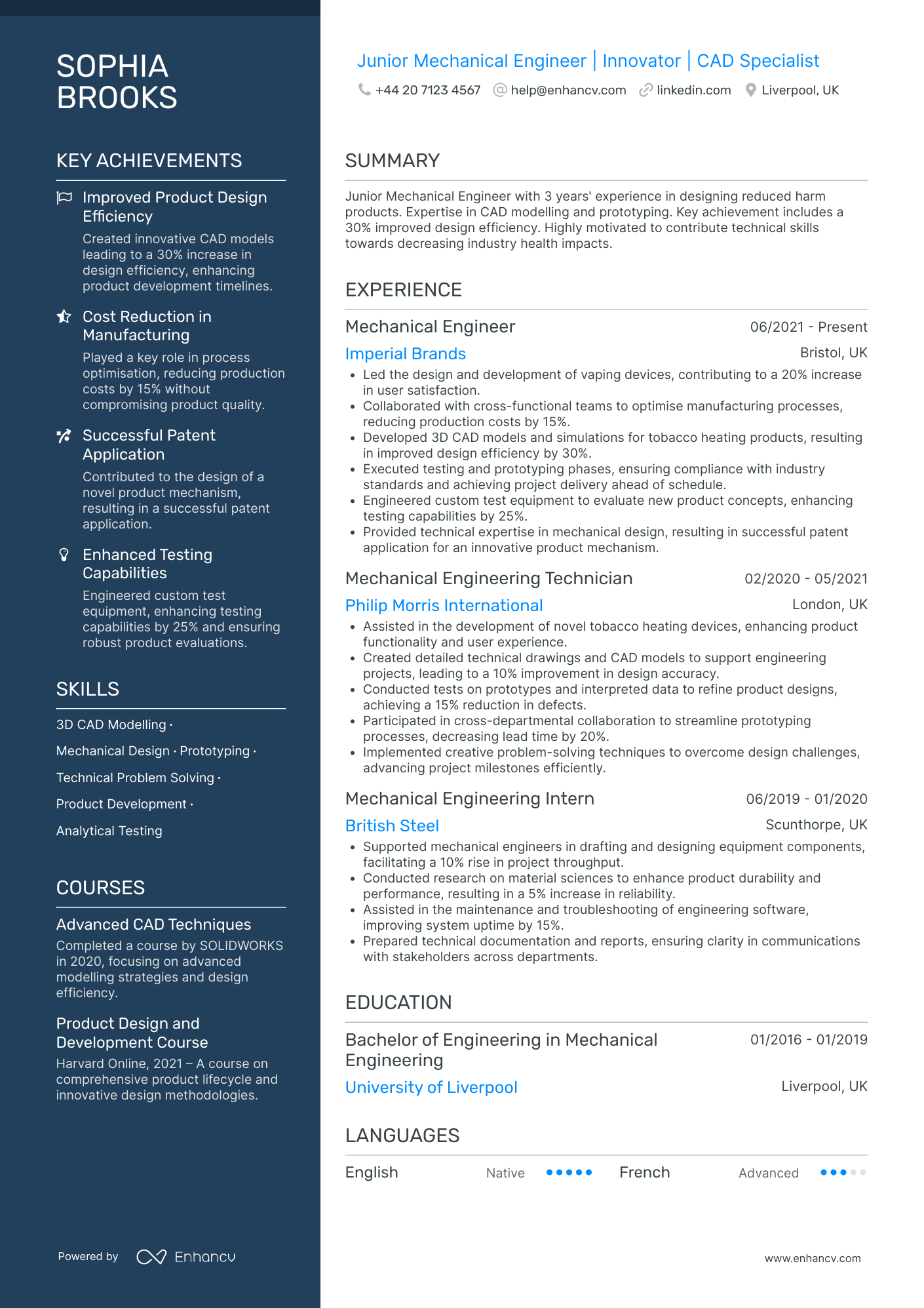
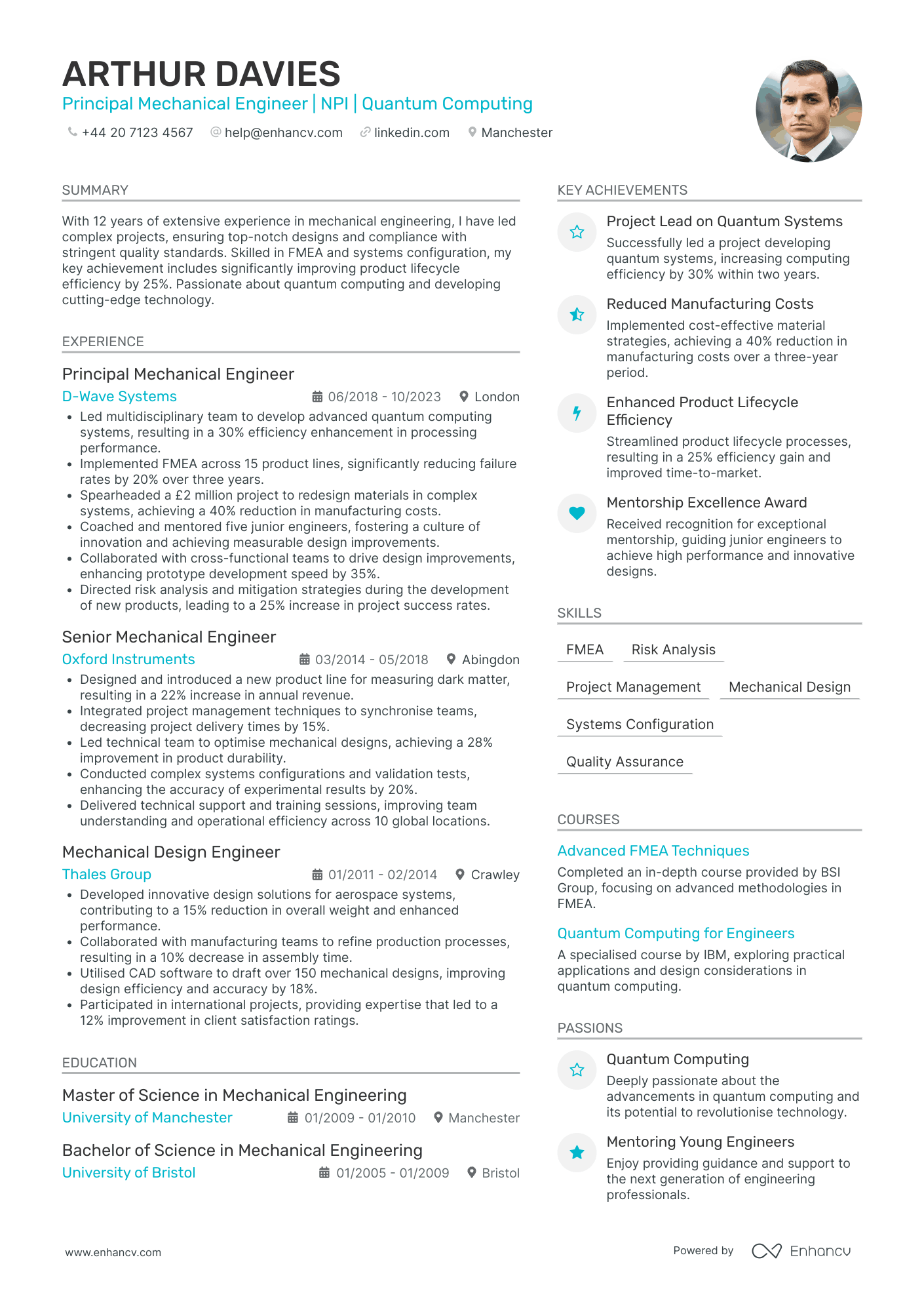
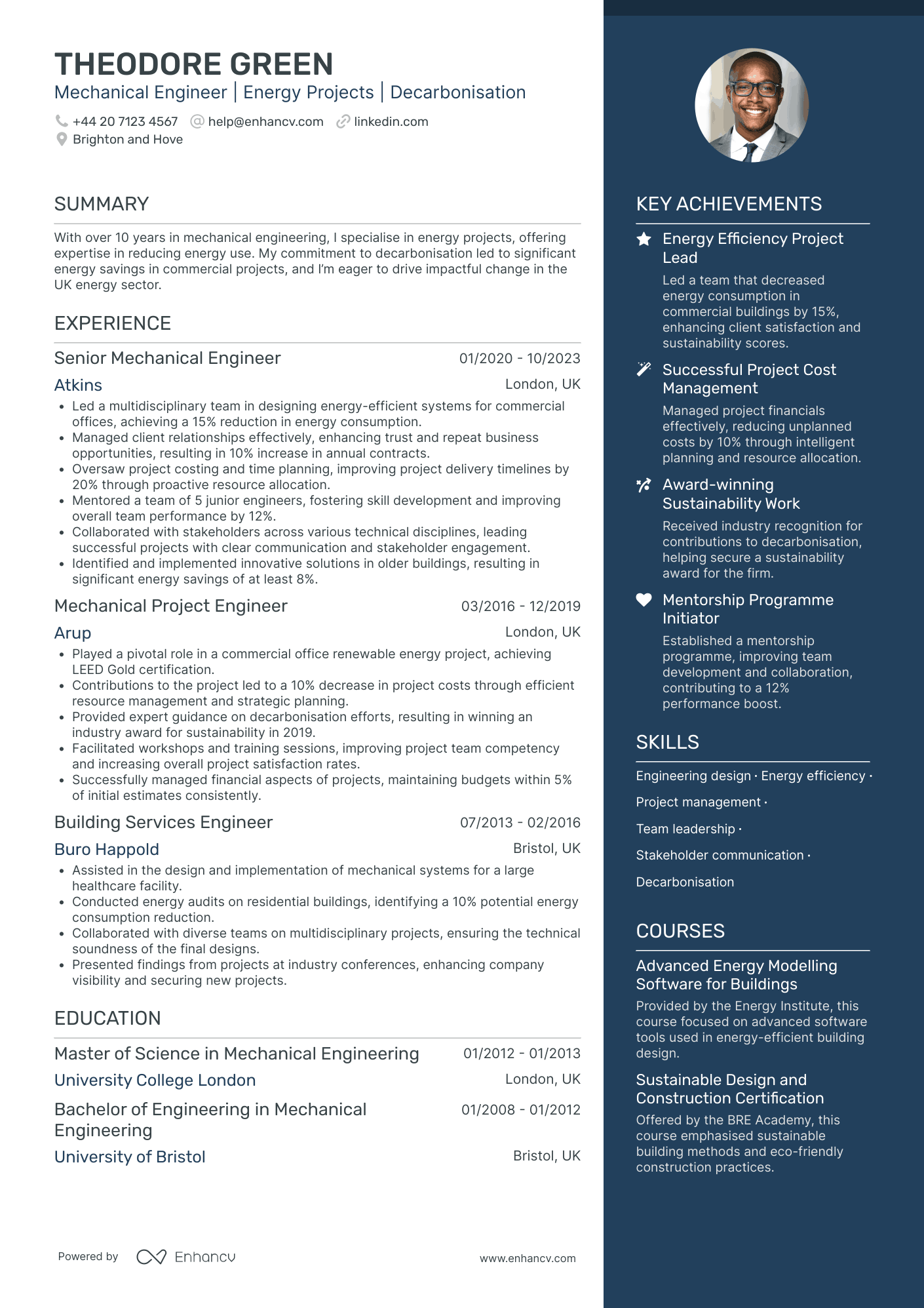
Avoid the heavily designed templates aimed at creative roles. Graphics, sidebars stuffed with skill bars, and floating text boxes often scramble when a parser reads them, and the ratings they show ('SolidWorks: 90%') mean nothing to a hiring engineer. A design engineer CV should look ordered and technical, not decorative.
A free Word template is fine for a first draft, and plenty of UK job seekers start with a free CV template in Word or Google Docs. Just check that the headings are real text and the structure is a single clean column before you commit to it.
If you would rather not fight the formatting, Enhancv's CV templates export to a clean, ATS-ready PDF and keep your tool and standard names machine-readable. Building from a tested layout means you spend your time on the content, which is the part that actually gets you the interview.
What the UK mechanical design engineer market looks like
Knowing what employers ask for tells you what to put near the top. Here is where the work happens and what the adverts repeat.
| What | UK mechanical design engineer roles |
|---|---|
| Where the work happens | Split between on-site and hybrid (39 on-site and 22 hybrid of 61 UK postings in the last ~30 days, Enhancv's internal job feed) |
| Experience level asked for | Mostly mid and senior (33 mid and 20 senior of 61), with a handful of lead briefs and almost no entry-level roles (last ~30 days) |
| Most-listed skills | Mechanical design, project management, mechanical engineering, CAD, and Revit |
Two things in that table should shape your CV.
The work is split between on-site and hybrid, so a recruiter needs to see you can reach the site when the design work calls for it. Put your location and any willingness to travel in the header, and mention a driving licence if the role covers more than one site.
The roles also skew mid and senior, with entry-level briefs rare. Employers are hiring for ownership, so show the parts you took from concept to sign-off, the design reviews you ran, and the manufacturing calls you made, rather than the tasks you were handed.
One more signal sits in the skills row. Adverts name specific tools, so list SolidWorks, Revit, or Inventor by name rather than a vague 'CAD', because that is the exact string a recruiter and the ATS both search for.
Writing your mechanical design engineer personal statement
Three or four sentences at the top: who you are, your design specialism, one hard result, and the role you want next. Keep it concrete, and see more personal statement examples if the opening line will not come.
Skip the adjective soup. 'Hard-working, detail-oriented team player' tells a hiring manager nothing they can check, and it opens half the CVs on their desk.
Lead with evidence instead, a named result and the tools behind it:
Mechanical design engineer CV personal statement example (experienced)
Chartered mechanical design engineer with seven years designing machined and sheet-metal assemblies for industrial equipment. Took a flagship product from concept to production in SolidWorks, designing out 14% of unit cost and releasing more than 200 drawings to BS 8888 and GD&T. Comfortable running FEA in ANSYS, owning design reviews, and coordinating suppliers through to first-article inspection. Looking to bring hands-on detailing and design for manufacture to a senior design role in the North West.
The version to avoid
Passionate and hard-working mechanical design engineer with excellent problem-solving skills and strong attention to detail. Proficient in a range of CAD software. A motivated team player looking for an exciting opportunity to develop within a forward-thinking engineering company.
The second version names no project, no number, and no software a recruiter can search for. 'A range of CAD software' should be SolidWorks, Creo, or Inventor by name, and every adjective in it is a claim nobody can verify.
If you are early in your career, the same rule holds, you just draw the evidence from your degree and projects. 'Graduate mechanical design engineer with a 2:1 BEng from Loughborough, whose final-year project modelled and tested a composite drone chassis in SolidWorks and ANSYS' beats a paragraph of ambition every time.
When we review a mechanical design engineer CV, the first thing we look for is a number attached to a design decision. 'Redesigned the housing' tells us nothing. 'Redesigned the housing and took 14% out of unit cost' tells us you understand what the business actually paid you to do. Name the CAD tools, name the standards you drew to, and put a figure on the outcome. That combination beats a page of adjectives every time.
Writing your mechanical design engineer experience section
Write each role the same way: a dated heading with the employer, then bullets that show what you designed and what changed. Lead every bullet with a verb, and treat this as the core of your work experience on a CV.
Design work is measurable, so quantify it. Tolerances held, parts released, cost designed out, weight saved, and lead time cut are your CV achievements, not the fact that you attended design reviews.
Tailor each application to the advert, pulling the tools and standards it names and mirroring the ones that are true of you. Enhancv's CV tailoring feature reads the job description and suggests the matching edits, which saves rewriting the CV from scratch for every role. For the manual version, learn how to tailor your CV to each brief.
- Designed machined and sheet-metal assemblies in SolidWorks for industrial control systems, releasing more than 60 production drawings a year to GD&T and BS 8888
- Cut unit cost by 14% on a flagship assembly through design for manufacture, consolidating a 22-part bracket into a single pressing
- Ran FEA in ANSYS on a load-bearing frame, taking 3.2 kg out of the structure while holding the safety factor above 2.5
- Owned the design package from concept through prototype to sign-off, closing design reviews with zero outstanding non-conformances
- Coordinated suppliers and the shop floor to reach first-article inspection two weeks ahead of programme on a new product line
- Mentored two graduate engineers and standardised the team's CAD template library, cutting drawing setup time by about a day per project

PRO TIP
Mirror the advert's exact terms. If it asks for 'GD&T', write 'GD&T', not 'geometric tolerancing'. If it names SolidWorks or Revit, do not list 'CAD' and hope. Recruiters and the ATS both search for the specific string, so match it wherever it is genuinely true of you.
Skills to put on a mechanical design engineer CV
Read a dozen live adverts and the same demands repeat. Across UK mechanical design engineer postings on Enhancv's internal job feed in the last ~30 days, mechanical design, project management, and mechanical engineering recur most often, alongside CAD, Revit, and SolidWorks.
Those are your hard skills, and they belong in the words the adverts use. List the tools by name rather than a vague 'CAD', and put the skills section of a CV where a skimming recruiter will find it fast.
The soft skills that count here are checkable: communication, problem-solving, teamwork, and the stakeholder management design work always demands. Prove each one in an experience bullet rather than just claiming it.
List only what you can stand behind in an interview. If you have detailed live production drawings in a tool, say so. If you have only touched it at university, keep it honest and keep it lower down.
Top skills for your mechanical design engineer CV:
Mechanical design (SolidWorks, Inventor, AutoCAD)
3D modelling and detailing
GD&T and technical drawings (BS 8888)
Finite element analysis (FEA)
Revit and BIM coordination
Design for manufacture and assembly (DFM/DFA)
Tolerance stack-up analysis
BS EN and ISO standards
Project management
Stakeholder management
Communication
Problem-solving
Attention to detail
Education, qualifications, and chartership
List your degree with its classification, for example a 2:1 BEng or MEng in Mechanical Engineering or Product Design Engineering, and put your strongest technical modules or final-year design project underneath if you are early in your career. This is your education section, and for a graduate it does real work.
Engineering status carries weight in the UK, so name it clearly. IMechE membership, and Incorporated Engineer (IEng) or Chartered Engineer (CEng) status where you hold it, tell an employer your competence has been assessed independently rather than self-declared.
If you are working towards CEng, say so, because 'CEng (working towards)' signals the path and the intent. List qualifications such as a relevant MSc, a CSWP or other CAD accreditation, and any BIM or safety training where they match the role.
Keep any short courses and certificates in a tidy block below education, and drop the ones that no longer add anything. A recruiter wants the accreditations that prove competence, not a list of every webinar you have ever attended.
Junior mechanical design engineer CV with no experience
A junior CV carries its weight differently. Lead with your degree, your final-year and group design projects, and any placement or lab work, then let a thin employment history sit lower down. These are the same moves behind any strong first job CV.
Treat academic and personal projects like jobs. A Formula Student suspension upright, a CAD model taken to a working prototype, or a heat-transfer simulation all show applied design, so give each a dated heading with the tools used, your role, and the result.
A year in industry or a summer placement is your strongest card, so write it up in full with quantified bullets. Even a non-engineering job proves reliability and teamwork, which a graduate scheme still wants to see.
Name the software you learned on. SolidWorks, AutoCAD, Inventor, and ANSYS from coursework are real skills, and a link to a small portfolio of your CAD models or renders gives a hiring engineer something concrete to open when your work history is short.
Conclusion
Get the format right first, then prove every claim with a number and name your tools, standards, and engineering status exactly as the advert does.
Pair the CV with a short cover letter that explains why this role and this employer, and a clean technical CV turns into interviews.

Author's take - the Enhancv team
When we review a mechanical design engineer CV, the first thing we look for is a number attached to a design decision. 'Redesigned the housing' tells us nothing. 'Redesigned the housing and took 14% out of unit cost' tells us you understand what the business actually paid you to do. Name the CAD tools, name the standards you drew to, and put a figure on the outcome. That combination beats a page of adjectives every time.