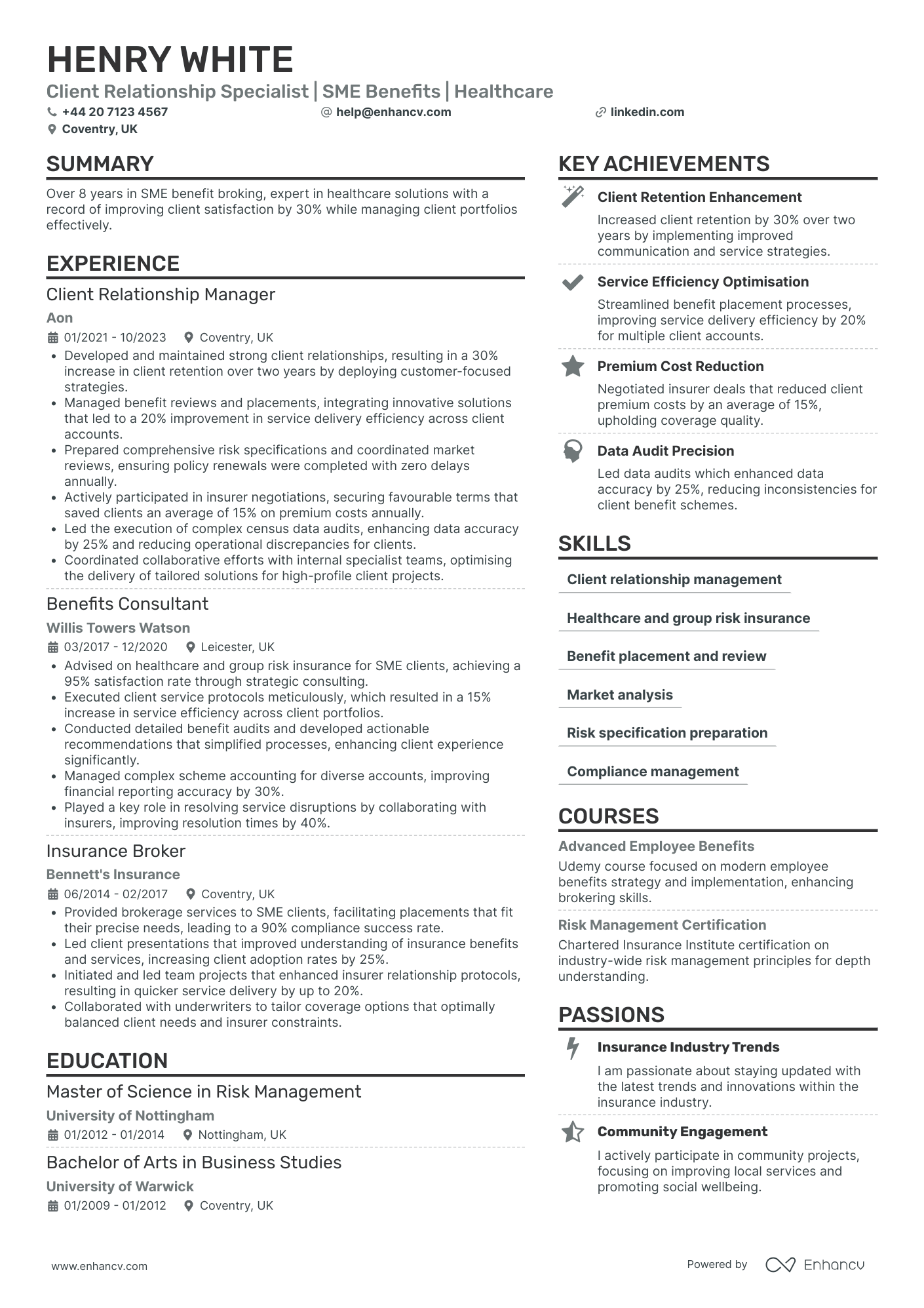
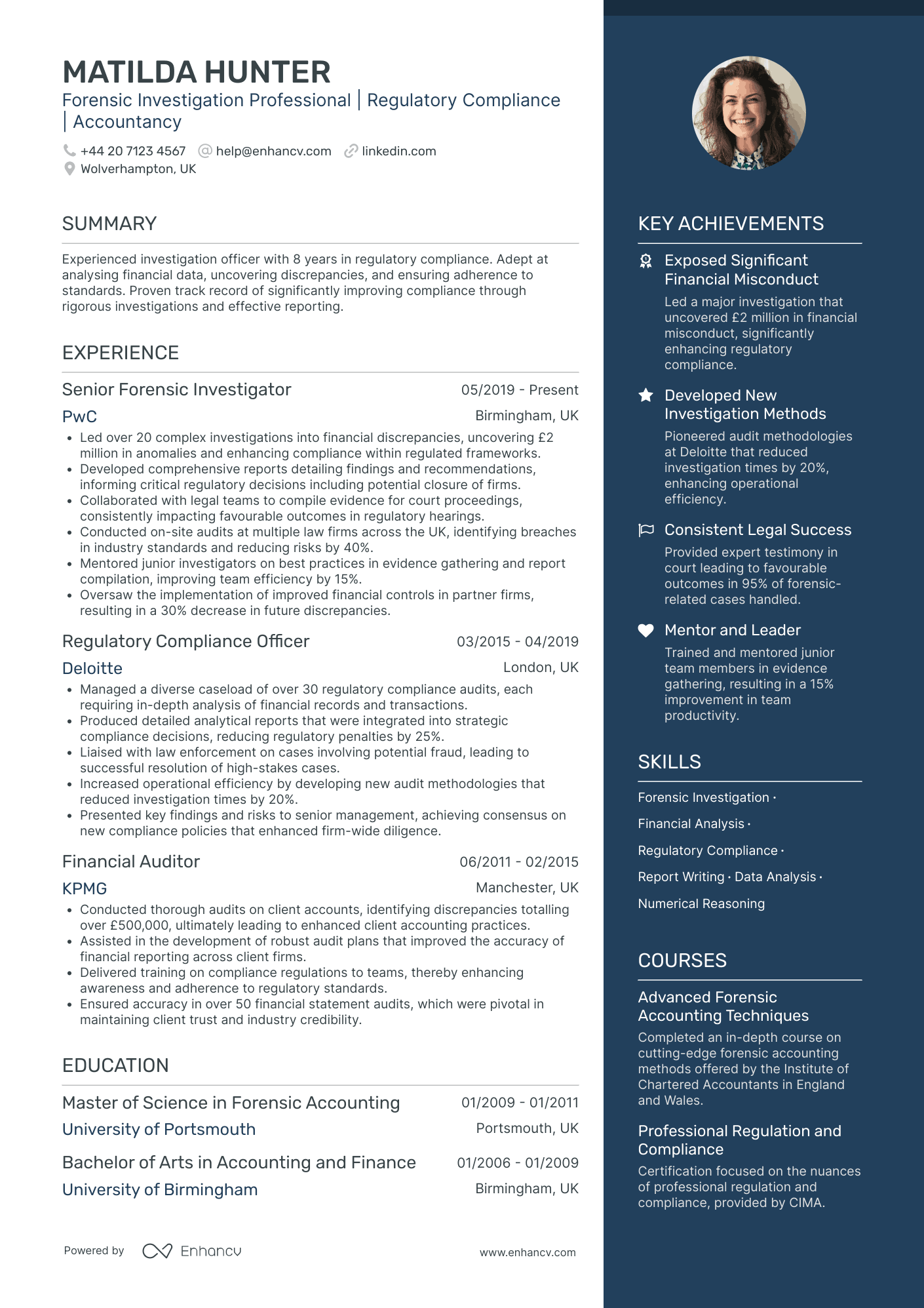
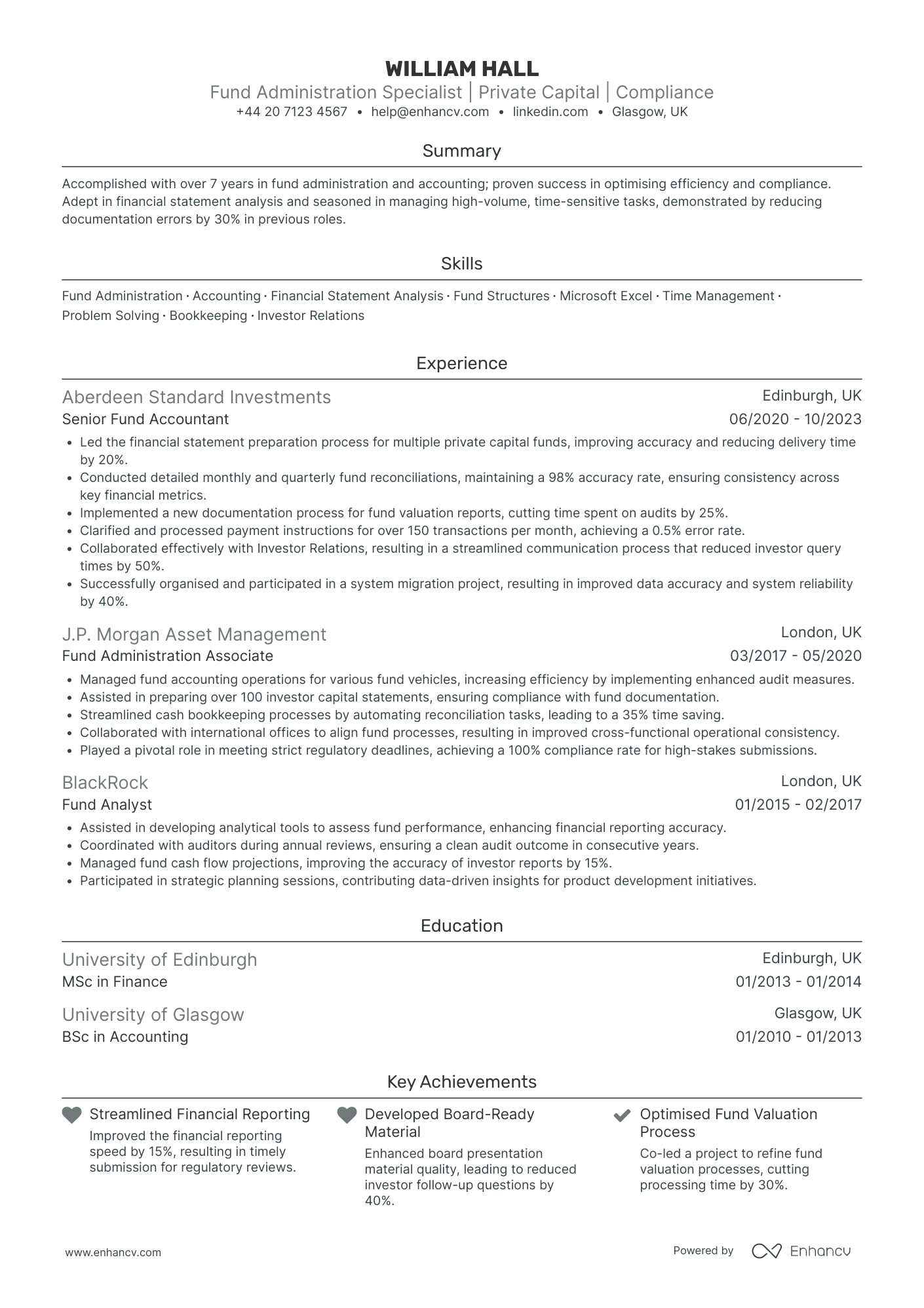
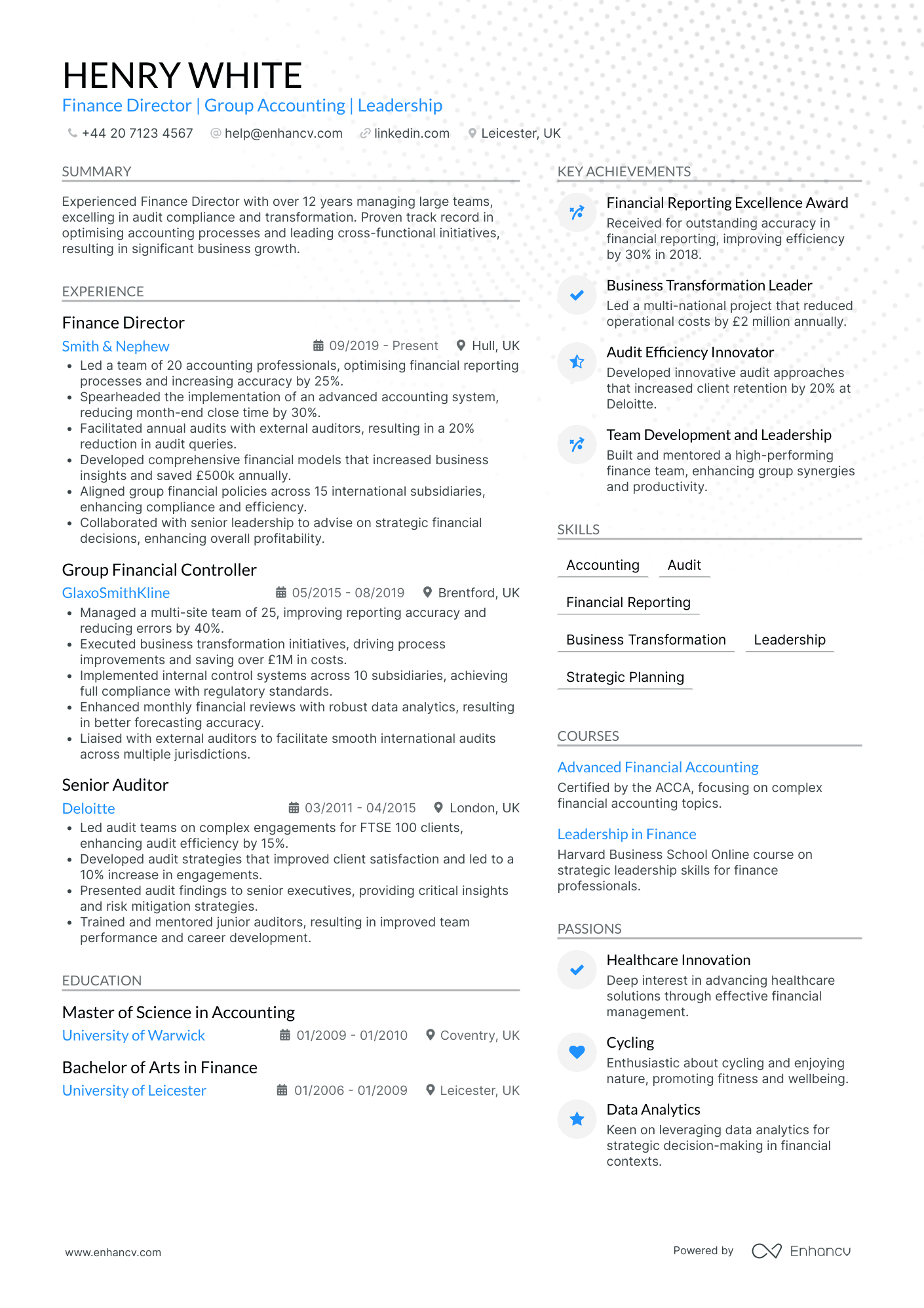
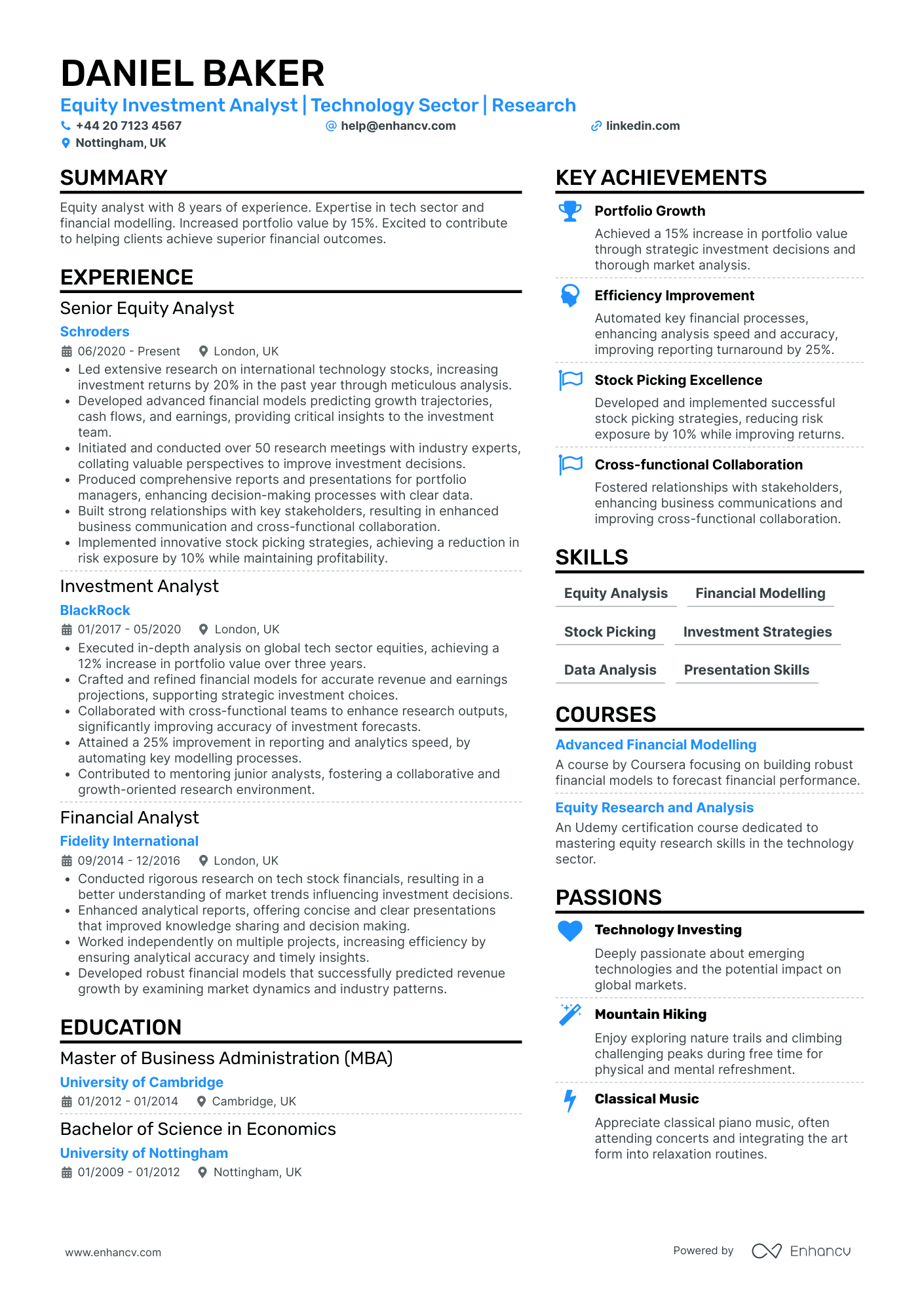
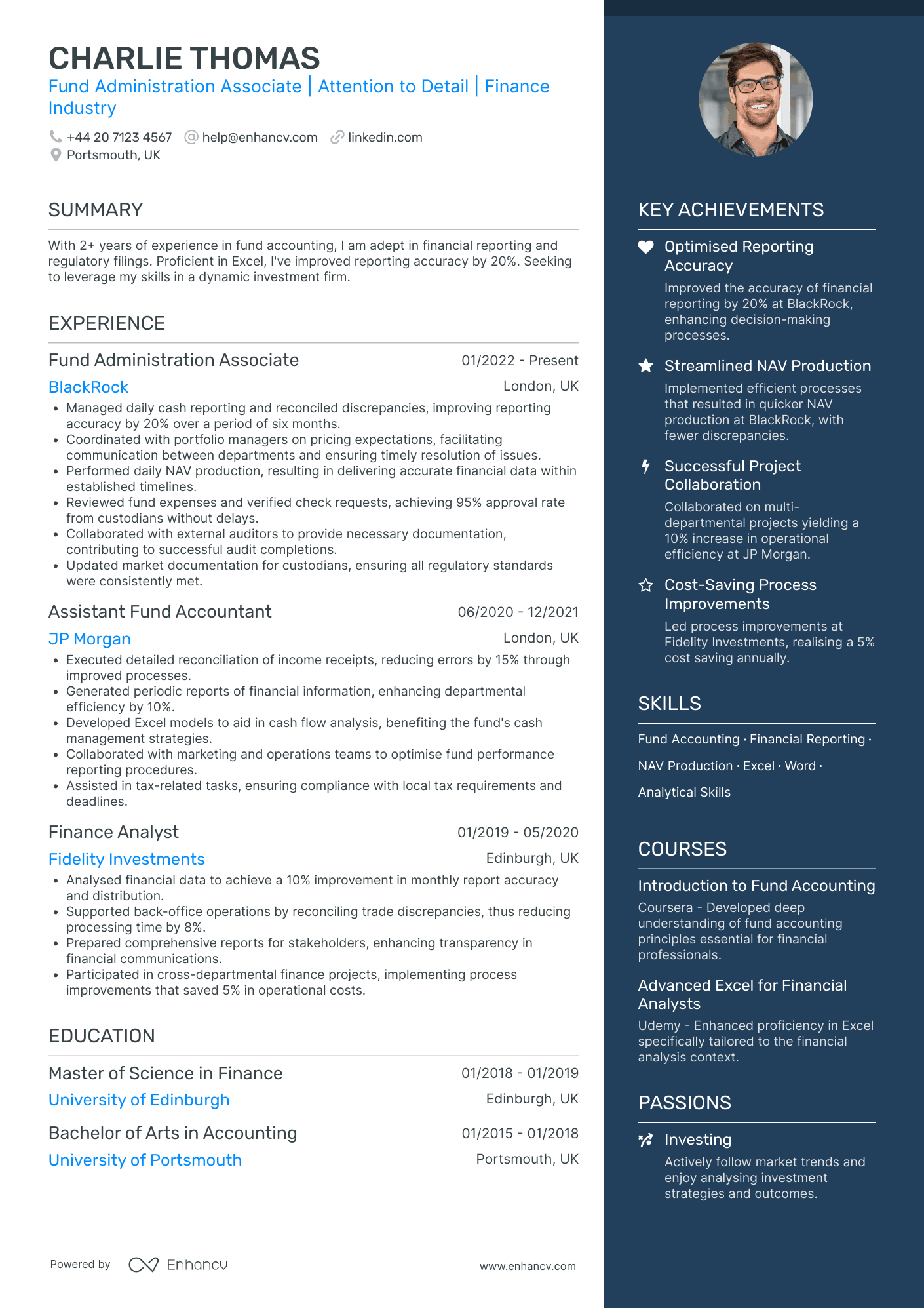
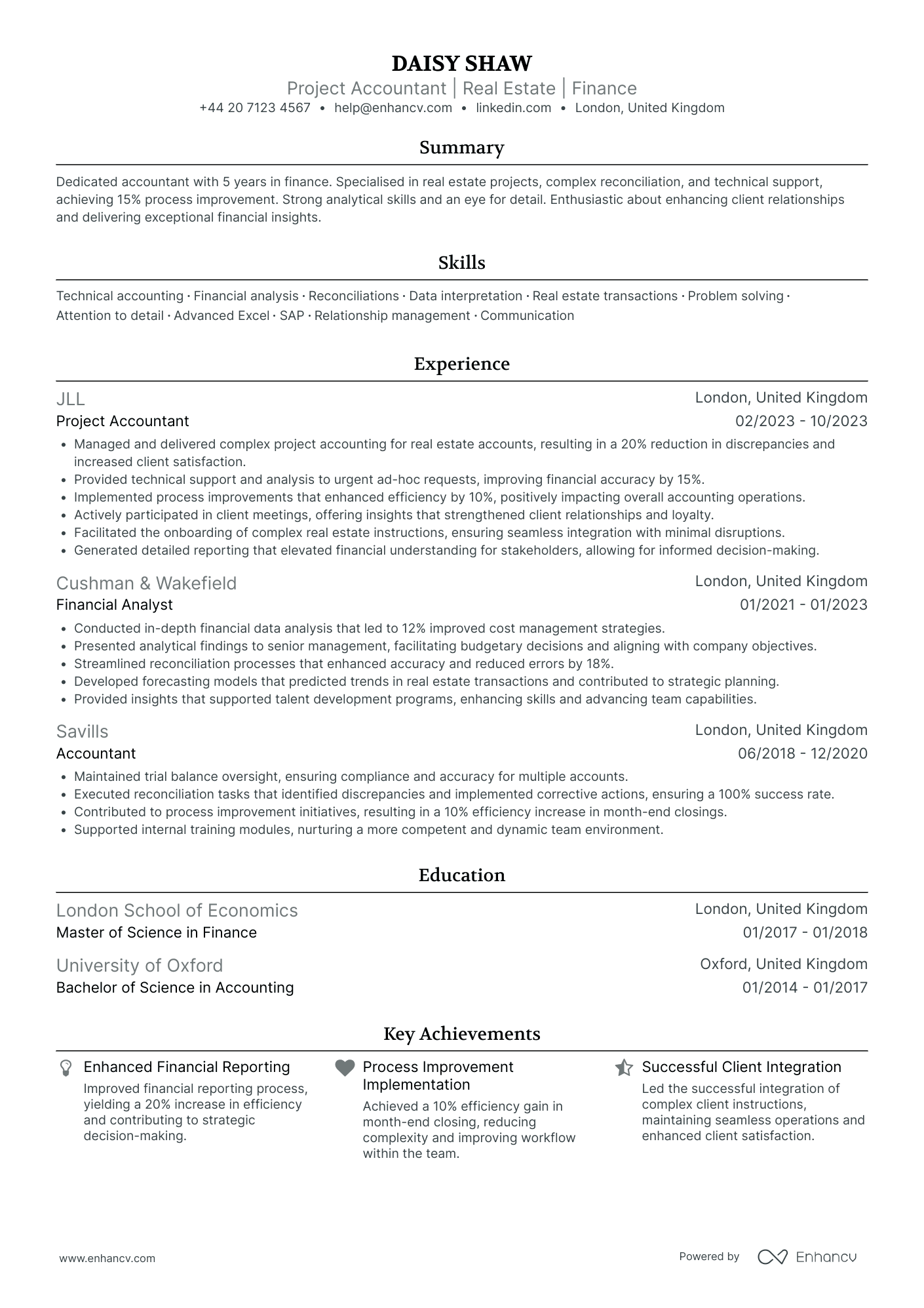
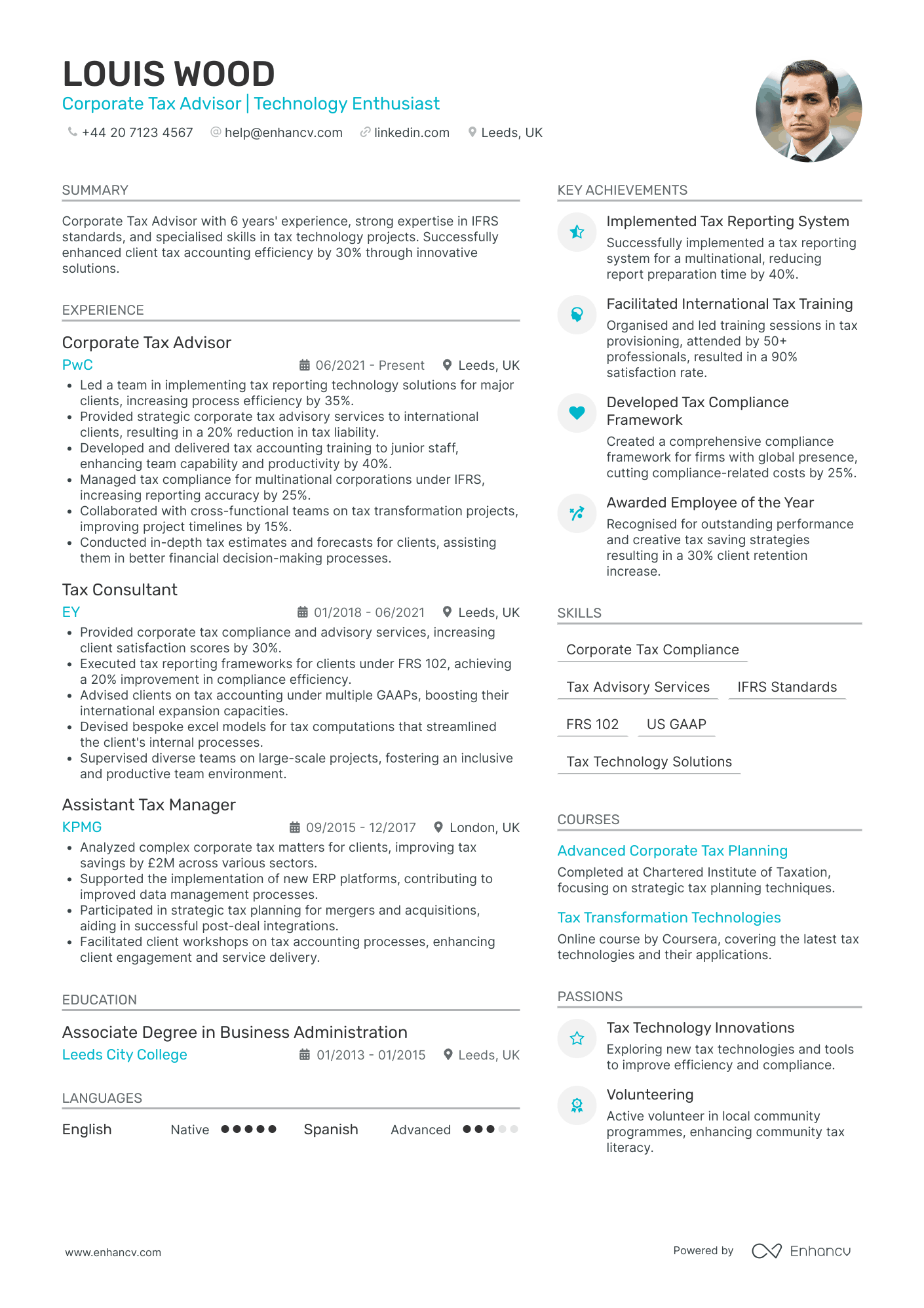
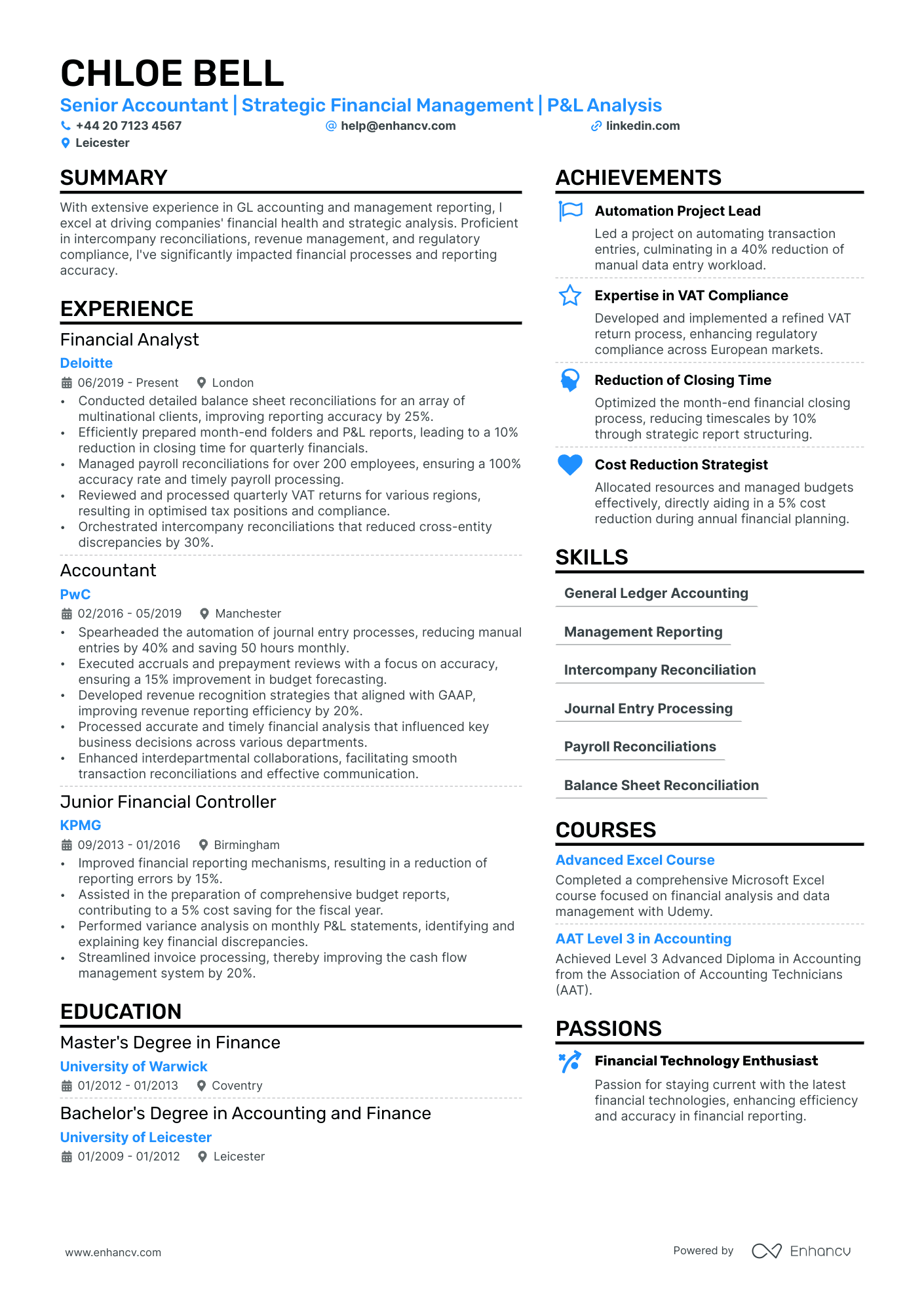
Most accounting CVs read like a job description with a name typed at the top. A list of duties, a couple of systems, the odd qualification, and nothing a hiring manager can actually measure.
The ones that win interviews do the opposite. They lead with the skills employers screen for and prove each with a number: a reconciliation cleared, a reporting cycle shortened, an audit signed off clean. Get the fundamentals of how to write a CV right first, then make every line on the page earn its place.

Key takeaways
- Lead with the skills accountants are screened on: financial reporting, Excel, and financial analysis, each backed by a number.
- UK accounting work is mostly onsite or hybrid, so put your location and right-to-work status near the top.
- State your qualification and its stage clearly: AAT, ACCA, ACA, or CIMA, part-qualified or fully chartered.
- Quantify everything. Value reconciled, days saved on close, variances explained, errors caught.
- Two pages, reverse chronological, sent as a PDF unless the advert asks for a Word file.
- Mirror the exact standards and software the advert lists: IFRS, SAP, advanced Excel, whichever you genuinely know.
Top skills for your accounting CV
A finance recruiter asks one thing first: can this person do the numbers and be trusted with them. The skills section answers that, which is why it carries more weight on an accounting CV than almost anywhere else, and why it leads here.
Answer the "five basic accounting skills" question head on. Financial reporting, double-entry bookkeeping, reconciliations, financial analysis, and confident spreadsheet work are the core an employer assumes you have. List them, then prove them.
Across 110 UK accounting postings in the last ~30 days on Enhancv's internal job feed, financial reporting, Excel, and financial analysis are the skills that recur most often. Mirror the ones you can back with real evidence.
Your hard skills are the technical, checkable ones: the standards you report under (IFRS, UK GAAP), the systems you run (SAP, Excel, Xero), and the processes you own (month-end close, audit, reconciliations). List them in the words the advert uses.
Your soft skills matter more than accountants like to admit. Stakeholder management came up again and again in those postings, because a management accountant who cannot explain a variance to a non-finance manager is only half the hire. Prove analytical skills and communication in a bullet rather than just claiming them.
Turn the soft skill into a moment. "Presented monthly board packs and translated the numbers for non-finance department heads" shows communication at work. "Coordinated the year-end audit across external auditors and three internal teams" shows stakeholder management doing something. A skill an employer can picture beats an adjective every time.
The way to make hard skills land is to attach each to proof. "IFRS" on its own is a keyword. "Prepared IFRS 15 revenue recognition schedules for a £40m contract portfolio" is a skill an interviewer can test. Do the same with Excel (name the functions and what you built), with SAP or Xero (name the module and the process), and with audit (name the standard and the outcome).
The "top five skills for a CV" question has a simple answer for accountants: pick the five the advert leans on, then order your evidence to match. If a role stresses management reporting and stakeholder communication, those lead. If it stresses statutory accounts and audit, those lead instead. The same CV should not go out unchanged for a practice job and an industry job.
One rule keeps the section honest: list only what you can defend in an interview. Used a system twice? That is exposure, not expertise. Your key skills for a CV should read as a promise you can keep.
Top skills for your accounting CV:
Financial reporting
Advanced Excel (PivotTables, lookups, Power Query)
Financial analysis
IFRS and UK GAAP
Reconciliations
Month-end and year-end close
Audit
SAP and ERP systems
Management accounts
Process improvement
Stakeholder management
Attention to detail
Communication
Problem-solving
Time management
What the UK accounting market looks like
Knowing what employers ask for shapes what you put first. Here is what the UK accounting market looks like right now.
| What | UK accounting roles |
|---|---|
| Where the work happens | Onsite 52% and hybrid 45%, with remote roles rare (57 and 50 of 110 UK postings in the last ~30 days, Enhancv's internal job feed) |
| Most-listed skills | Financial reporting, Excel, and financial analysis top the list, followed by IFRS, stakeholder management, and SAP |
| Experience level asked for | Mostly mid to senior and qualified roles, entry level about 12% (13 of 110) |
| Typical pay | Varies widely by qualification, sector, and region, so check a live salary benchmark for your specific role and location |
Two things follow for your CV.
Accounting work is still mostly onsite or hybrid, so a recruiter needs to see where you are based and that you can get to an office. Put your location and right-to-work status in the header.
And entry-level roles are the minority, so if you are early in your career, the qualifications and no-experience sections below matter more than a thin work history ever will.
Formatting your accounting CV
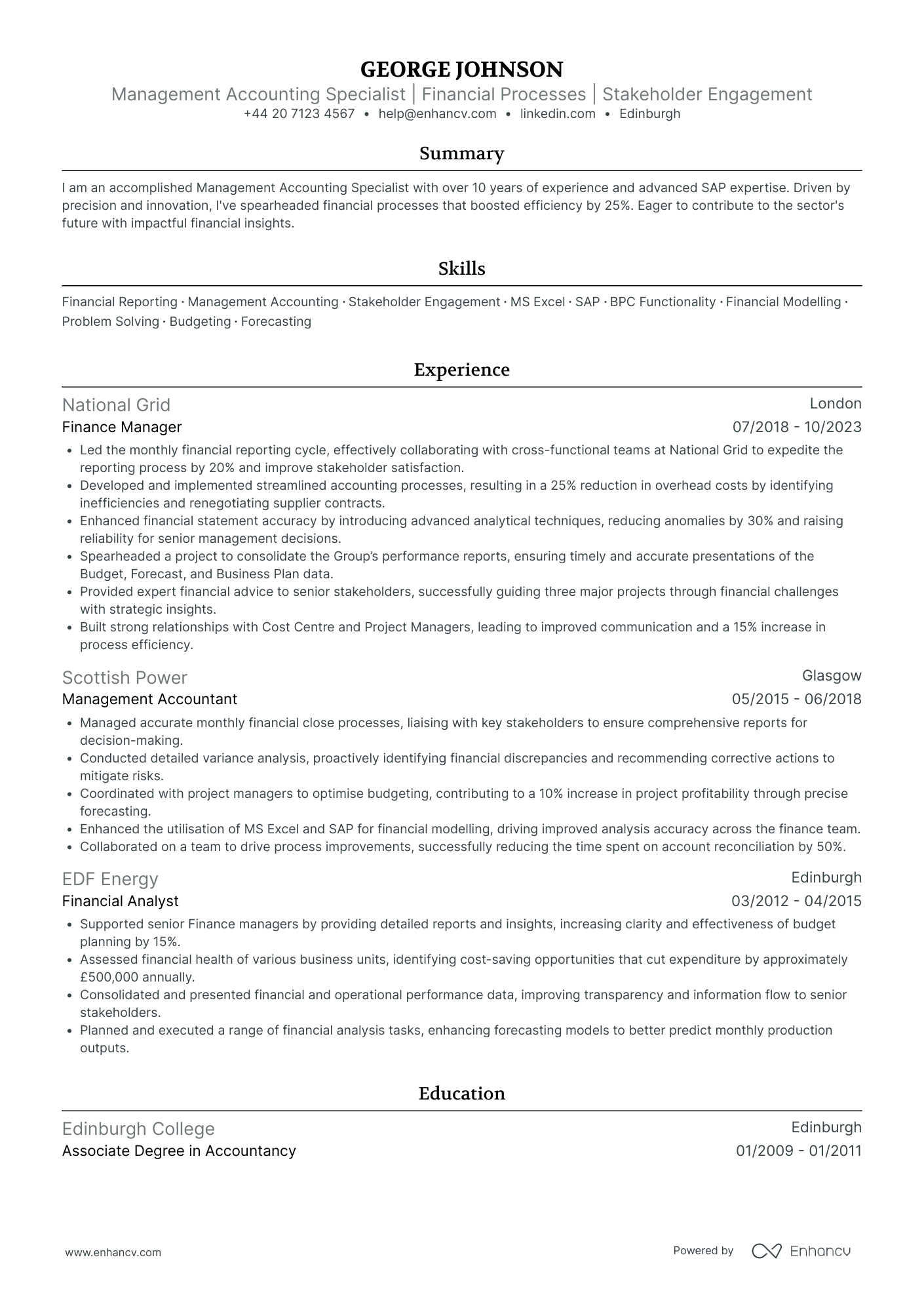
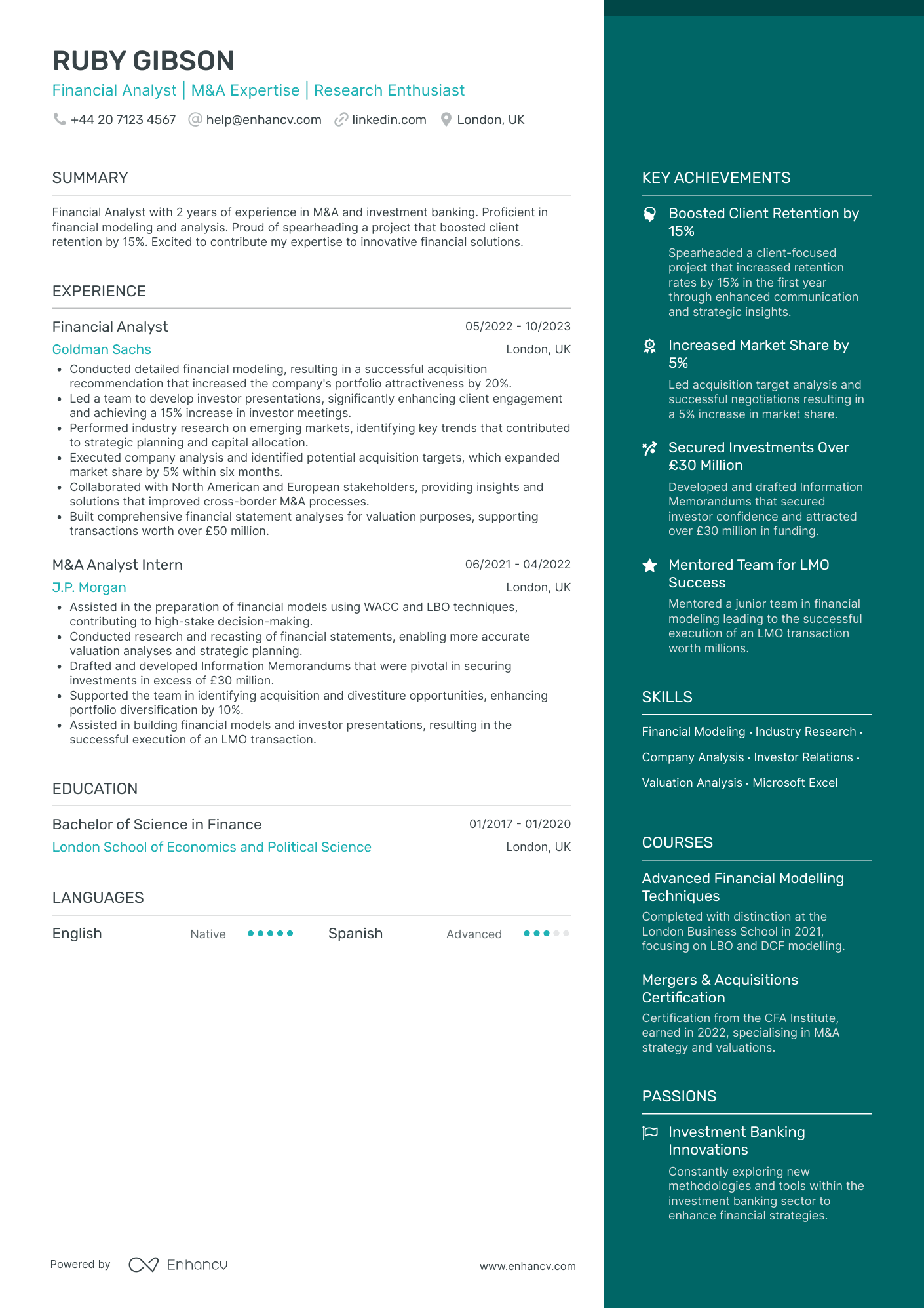
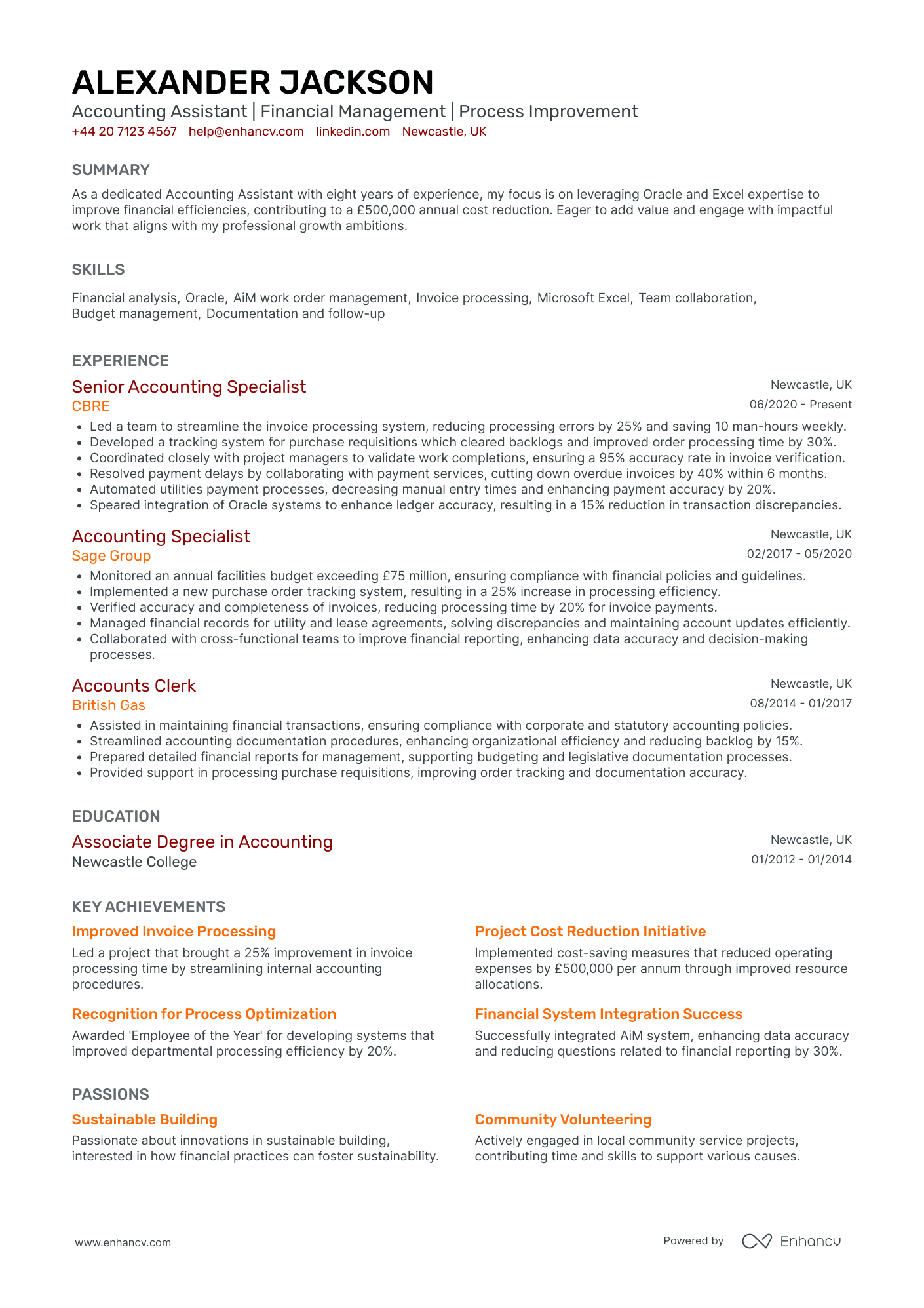
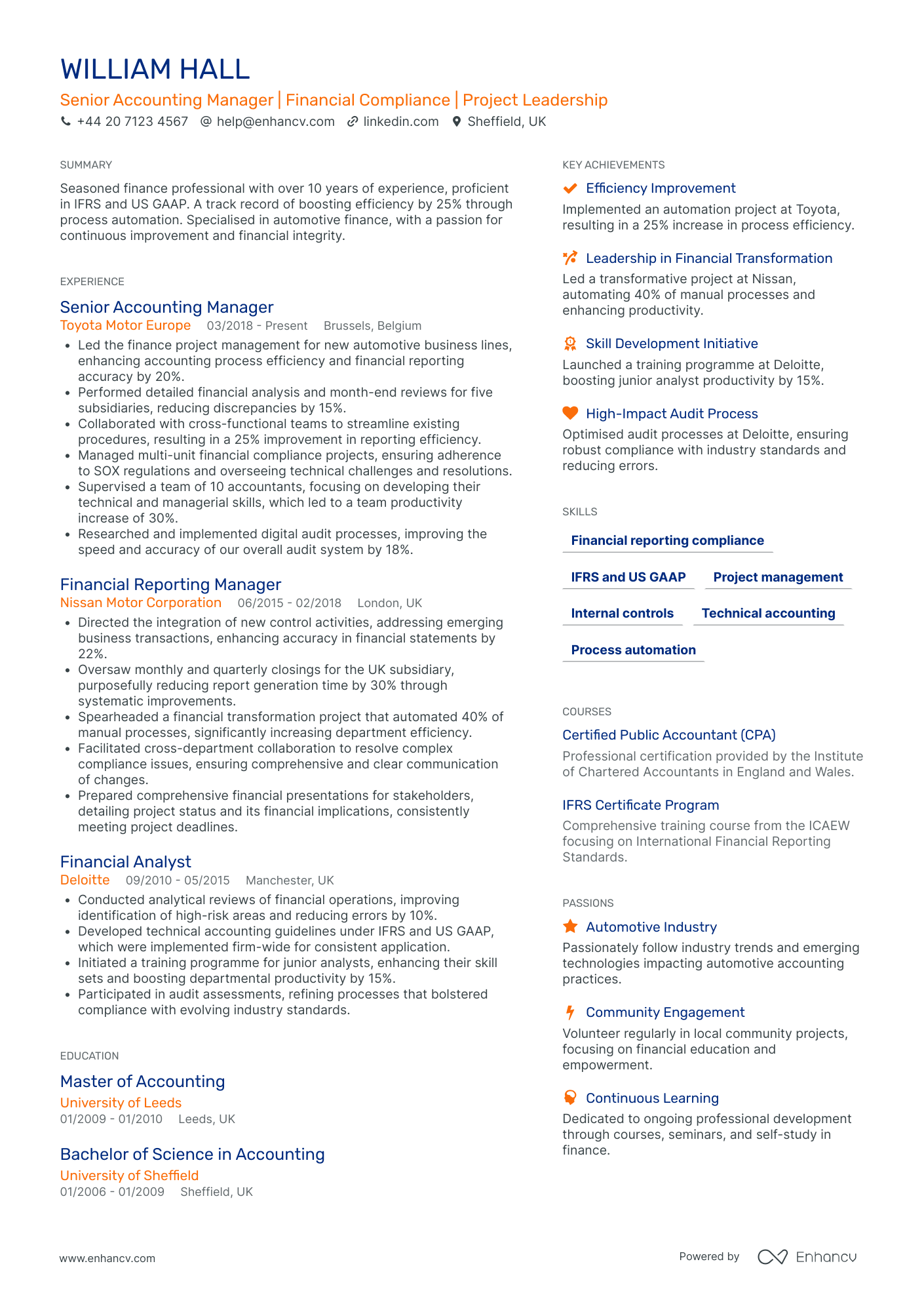
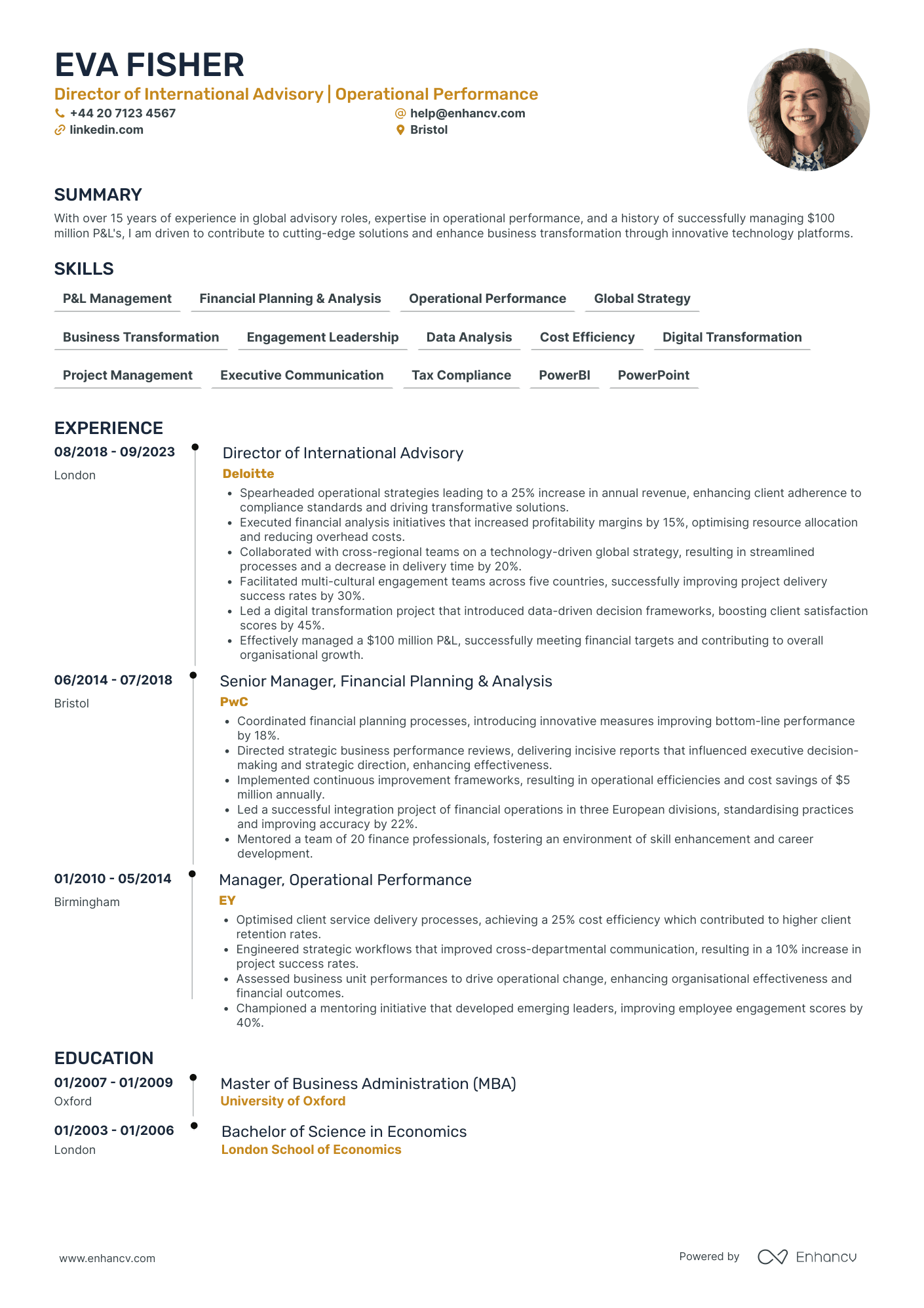
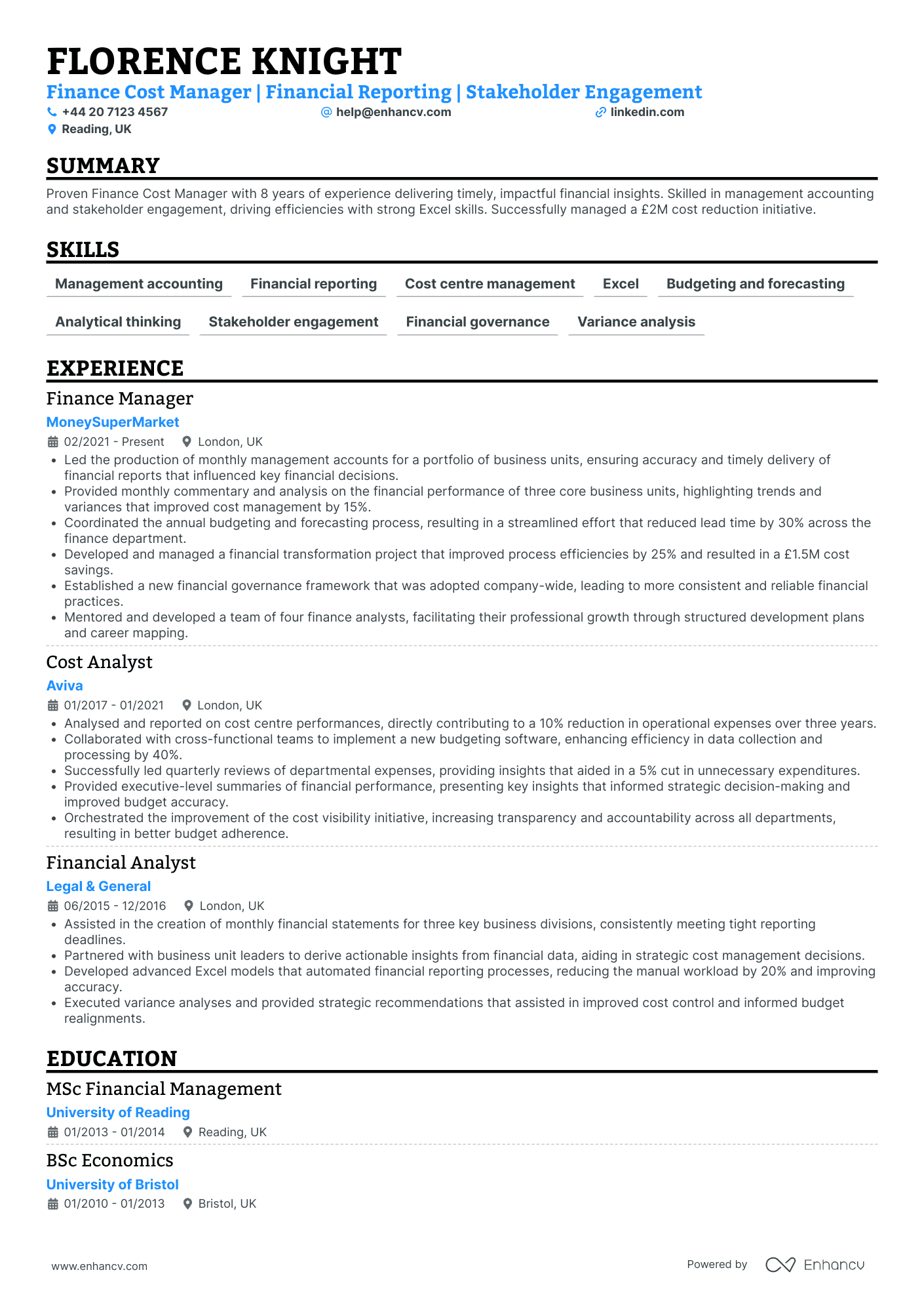
Use a reverse chronological format once you have accounting roles behind you. It puts your most recent and most relevant work first, which is exactly what a finance recruiter scans for.
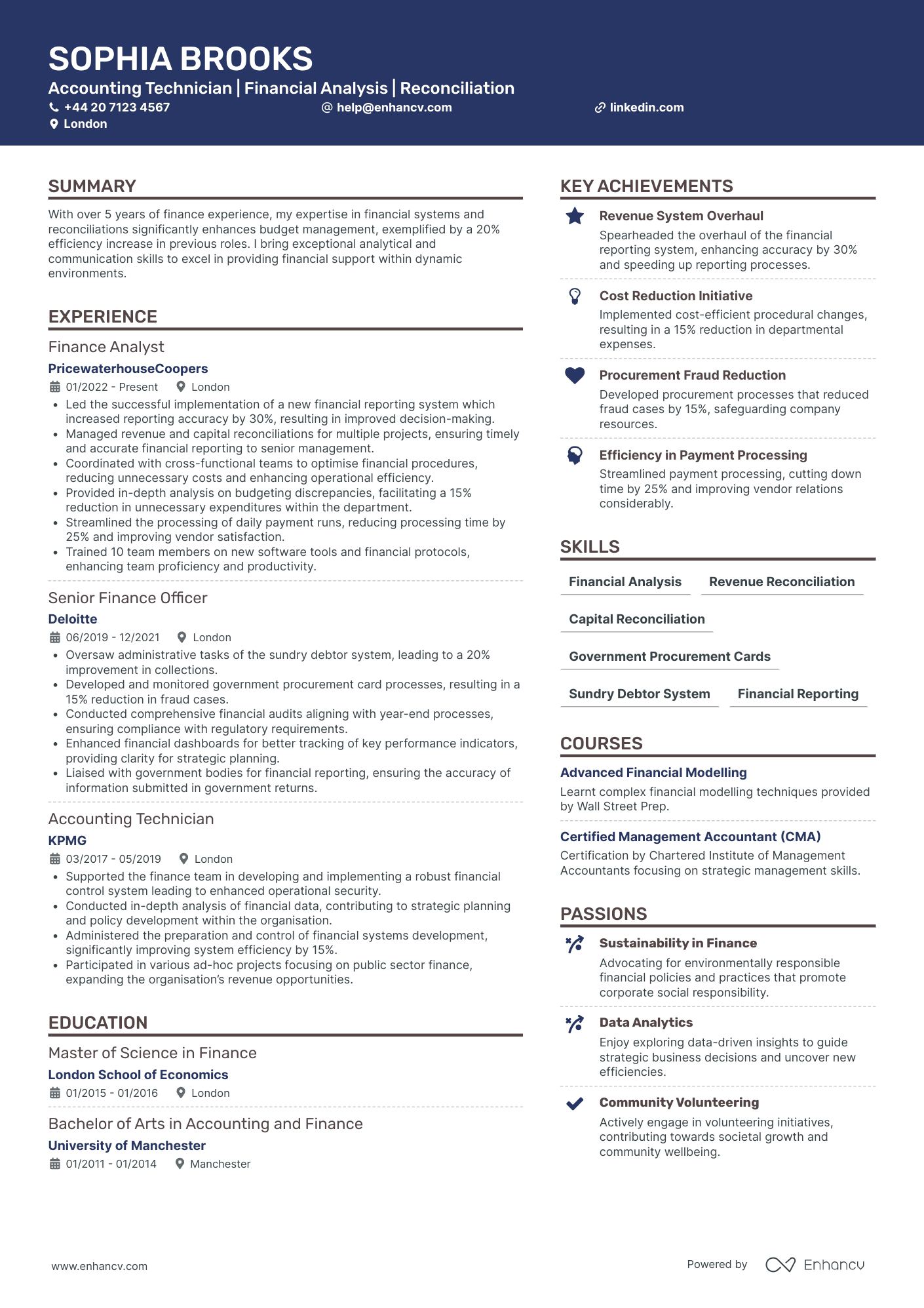
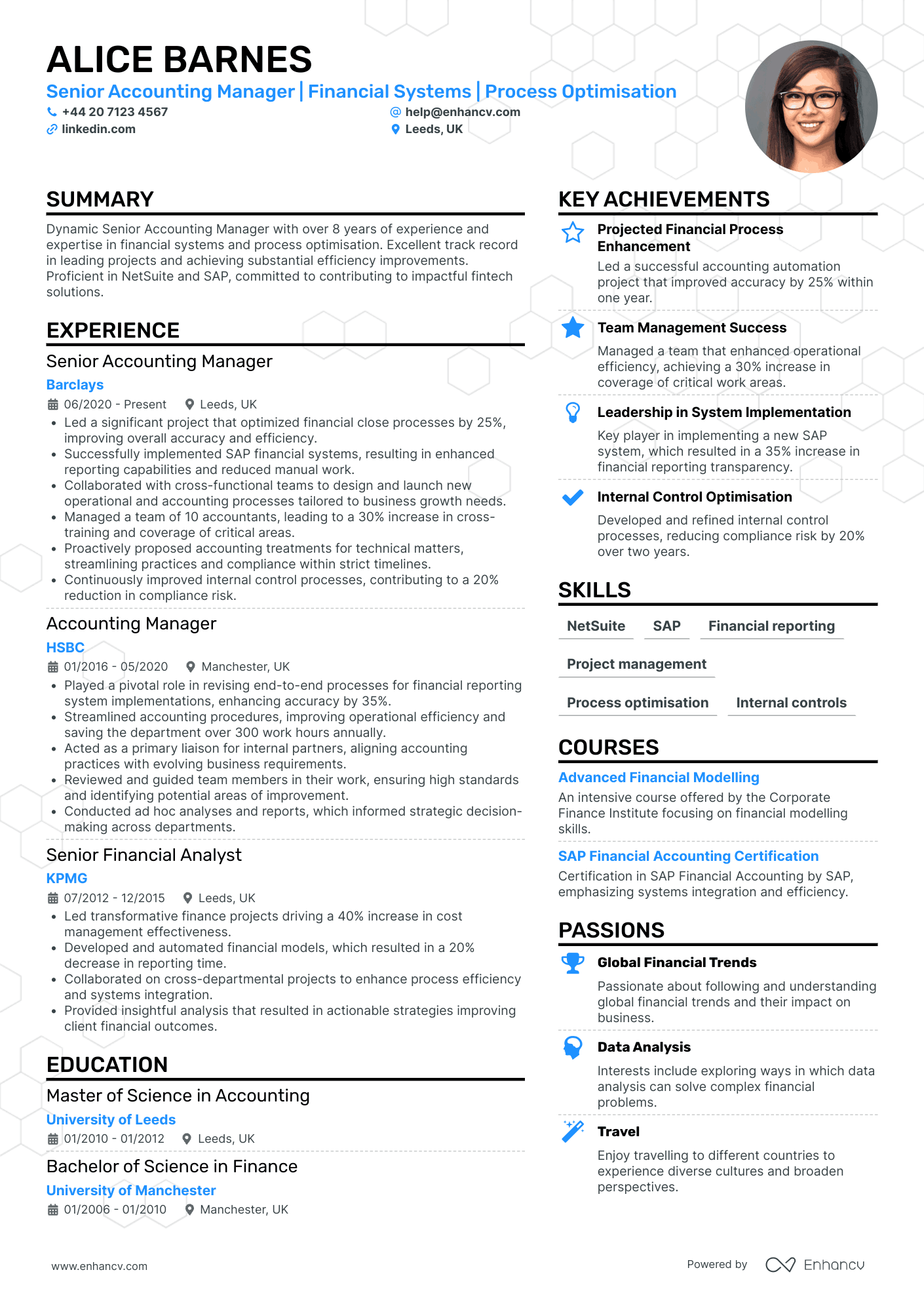
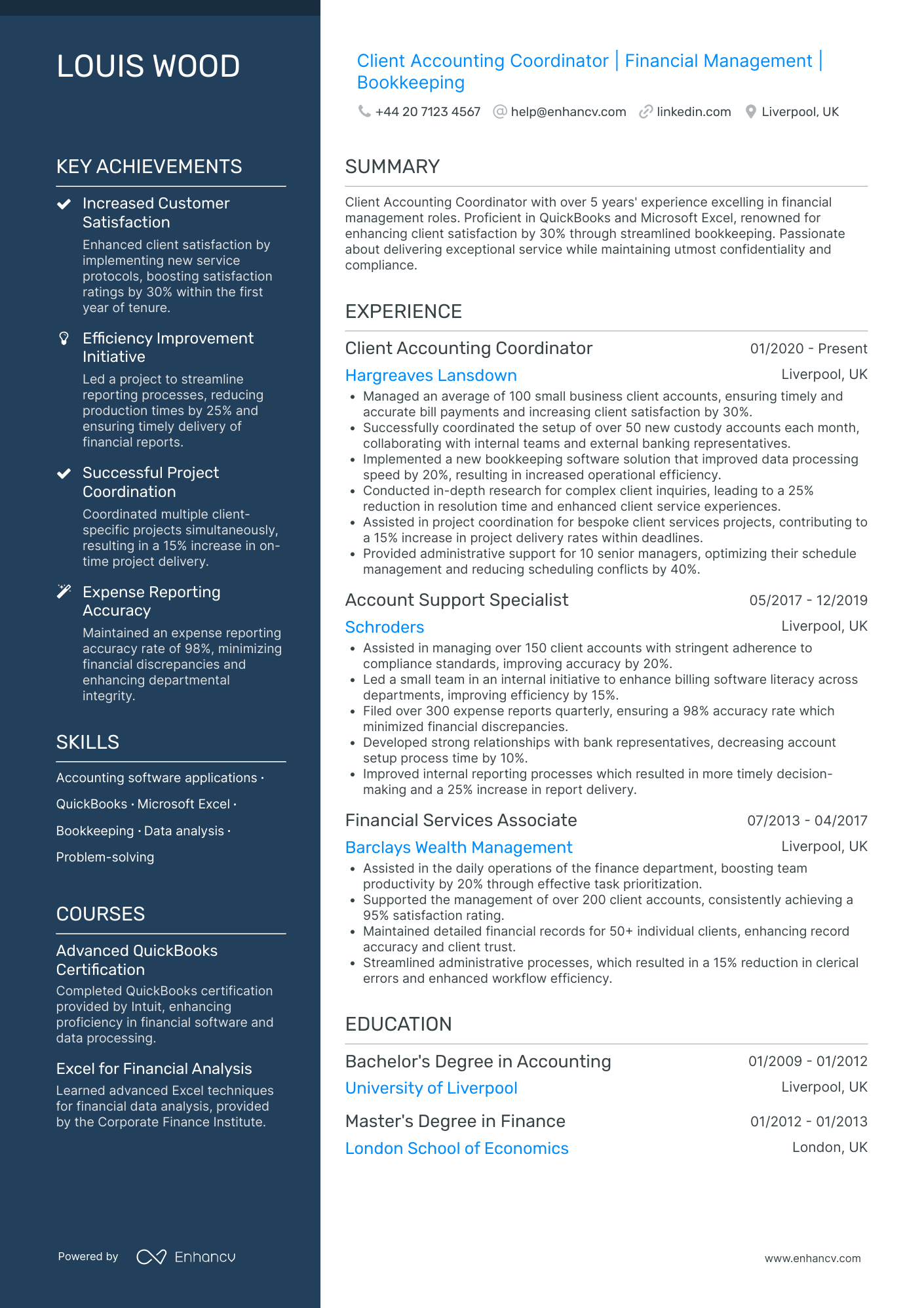
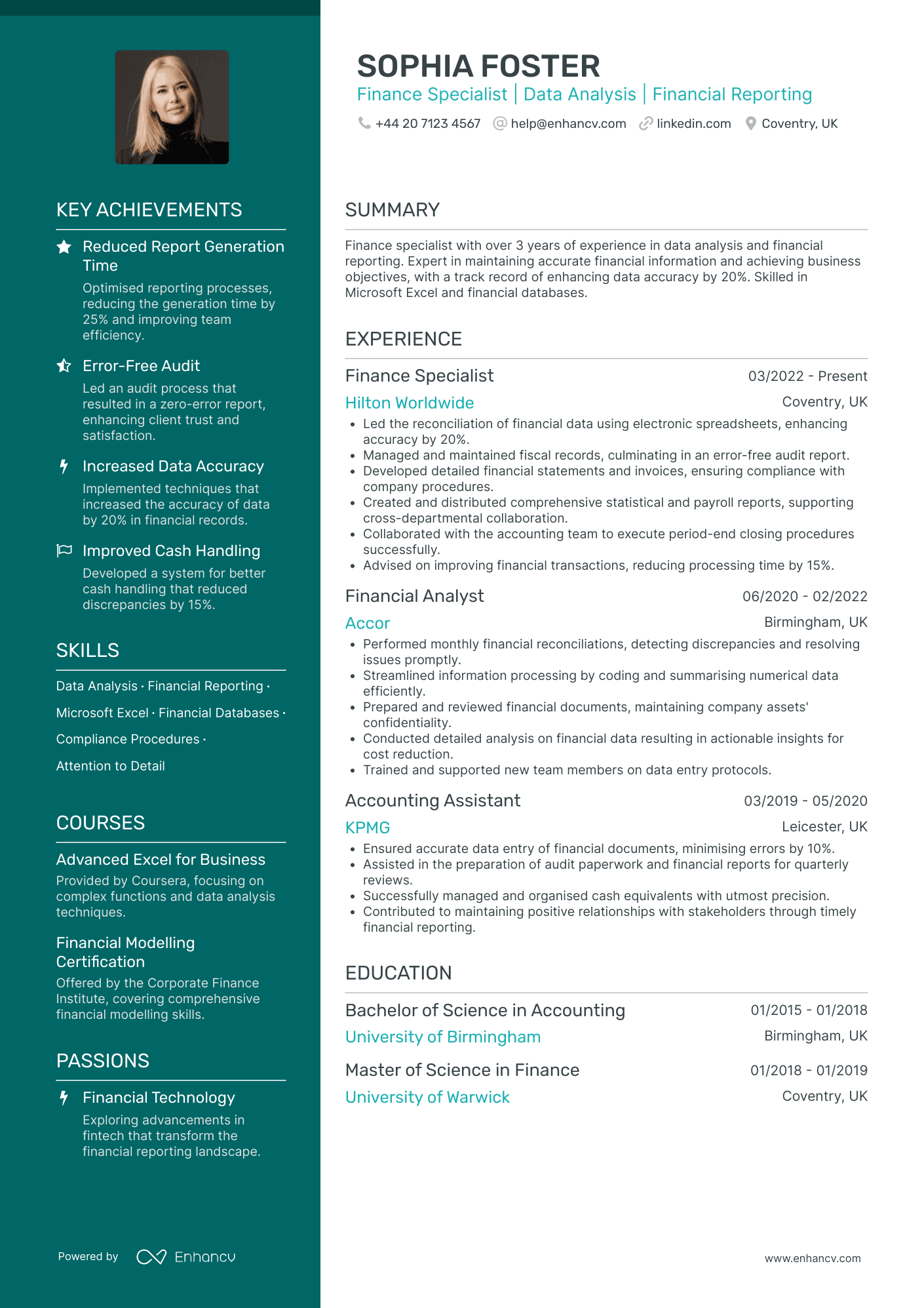
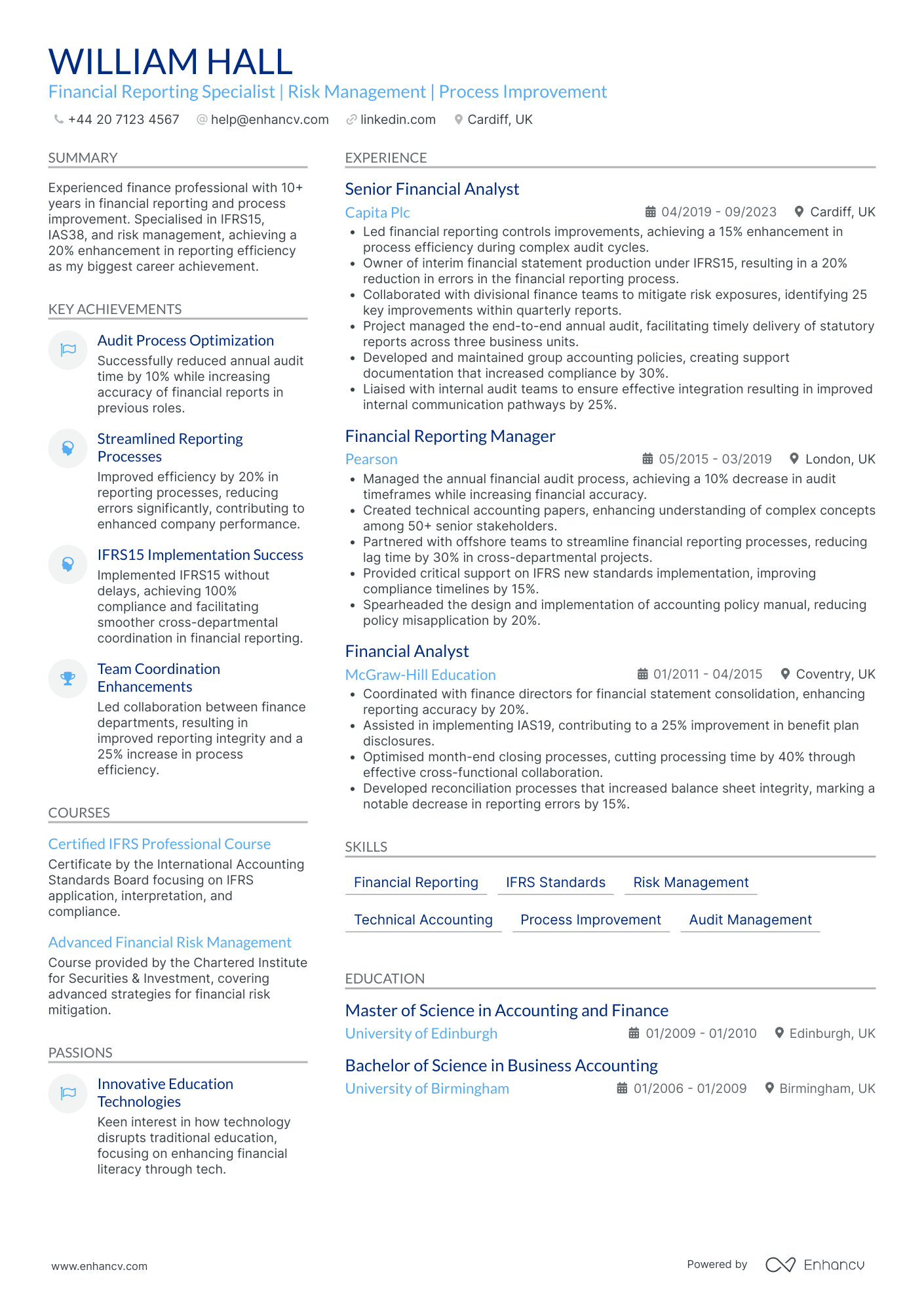
Keep it to two pages, one column, standard headings, and a clean, readable font. Finance managers skim in seconds, and a cluttered layout reads as poor attention to detail, which is close to fatal in this field.
Send a PDF for direct applications so your columns and figures hold their position. Keep a Word copy for recruitment agencies, which place a large share of accounting roles and reformat CVs into their own template. If the advert names a file type, follow it.
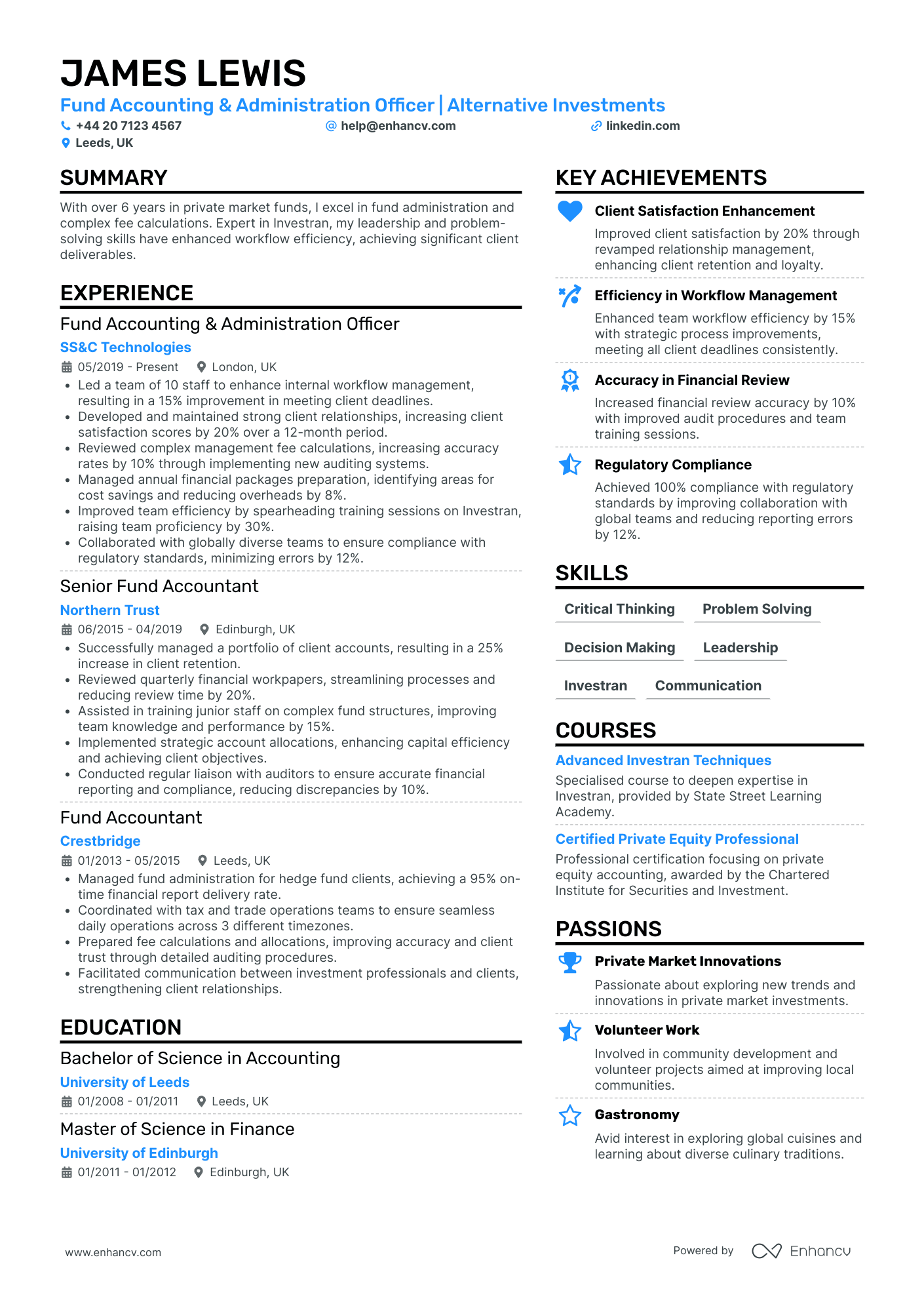
Order the sections to match how a finance recruiter reads. Header and personal statement, then qualifications, then skills, then experience, then education. Qualified accountants can move experience above skills once the roles speak for themselves. The point is that your ACCA or ACA status and your headline numbers should be visible without scrolling.
Accounting applications almost always pass through an ATS, so keep headings standard and let your numbers sit in plain text rather than inside images or charts. Build from a tested layout rather than a blank page: Enhancv's CV templates export to a clean, ATS-friendly PDF.
Writing your accounting personal statement
Three or four sentences at the top: who you are, your qualification and its stage, the area you specialise in, and one concrete result. Keep it specific. See more personal statement examples if the opening line will not come.
Skip the adjective soup. "Detail-oriented, hard-working team player" tells a recruiter nothing they can verify, and it is the exact phrasing on half the pile already.
Rewrite the statement for each application. A practice firm wants to see audit or tax exposure and client-facing work. An industry role wants your reporting cycle, the size of the numbers, and the systems you run. Keep the structure the same and swap the evidence to match the advert.
Lead with evidence instead:
Accounting CV personal statement example (part-qualified)
Part-qualified accountant (ACCA, two exams remaining) with three years in industry, currently running month-end close for a manufacturer with a £40m turnover. Rebuilt the reconciliations process to cut the close cycle from ten days to six, and reduced reporting errors to near zero. Looking to move into a management accountant role in the Manchester area where I can own the reporting cycle end to end.
What to avoid
A hard-working and detail-oriented finance professional who is passionate about numbers and thrives both independently and as part of a team. Seeking a challenging accounting position in a dynamic company to utilise my skills and grow my career.
When we review an accounting CV, the personal statement decides whether we keep reading. The ones that work name a real number in the first two lines: a close cut from ten days to six, a £2m reconciliation cleared, a clean audit. The ones that do not open with the same recycled adjectives every other applicant uses. Your qualification tells us your level. Your numbers tell us you can do the job. Lead with both.
Writing your accounting experience section
Whether the role is in practice or industry, write each entry the same way: a dated heading, then bullets that show what you did and what changed as a result. Lead every bullet with an action verb. For the mechanics, see work experience on a CV.
Accounting is one of the easiest fields to quantify, so there is no excuse for duty-listing. Value reconciled, days shaved off the close, variances explained, audit adjustments avoided, cost saved. Those numbers are your CV achievements.
Watch the difference a number makes. "Responsible for accounts payable and supplier reconciliations" is a duty anyone could copy. "Cleared a £250k aged-creditor backlog and cut supplier query resolution from five days to one" is the same job, written as a result. The second version is what gets shortlisted.
Structure matters by sector. In practice, group work by client type or engagement and lead with audit, tax, or advisory depending on the role. In industry, lead with the reporting and month-end cycle you own and the size of the numbers you handle. Either way, give context in the heading, then let the bullets carry the outcomes.
Tailor each application: pull the standards, systems, and duties from the advert and mirror them where they are true of you. Enhancv's CV tailoring feature reads the job ad and suggests the matching edits, which beats rewriting from scratch for every role.
- Own the monthly management accounts for three cost centres worth £18m in combined turnover, reporting to the Financial Controller
- Rebuilt the balance sheet reconciliations process and cut the month-end close from ten working days to six
- Prepared IFRS-compliant reporting packs and reduced audit adjustments by 90% year on year
- Built automated Excel and Power Query models that saved roughly eight hours of manual reporting each month
- Presented monthly variance analysis to non-finance heads and flagged a £120k overspend early enough to correct it

PRO TIP
Accounting adverts name specific standards and systems, not generic buzzwords. Mirror the exact ones you know: "IFRS 15", "SAP FICO", "advanced Excel", "VAT returns". If the advert says Xero and you know Xero, write Xero.
Qualifications and certifications UK accounting employers check
UK accounting is a qualification-led field, so state yours clearly and early. Name the body and the stage: AAT Level 4, part-qualified ACCA (and how many exams remain), ACA, CIMA, or fully chartered.
If you are studying, say so. "ACCA, F1 to F6 passed, studying for F7" tells an employer exactly where you are and that you are progressing. Put it in your education section or a dedicated qualifications block near the top.
Match the qualification to the path you want. ACA and audit-heavy ACCA routes read naturally for practice and statutory roles. CIMA signals a management-accounting and commercial track. AAT is the recognised entry route and stands on its own for bookkeeping and assistant roles. Whichever you hold, spell out the acronym once so a non-specialist recruiter is not left guessing.
Add the practical qualifications that back your day-to-day work: advanced Excel, specific ERP systems, and any tax or audit certificates you hold. A degree helps, but for most accounting roles the professional qualification carries more weight than the class of your degree.
Writing an accounting CV with no experience
Entry-level accounting roles are a minority of the market, so a first CV has to work harder. Lead with a skills-led structure: personal statement, qualifications and study progress, skills, then any experience.
Mine everything for real evidence. A finance or accounting degree, an AAT qualification, a placement year, treasurer of a society, a part-time bookkeeping job, or a spreadsheet you built for a family business all count. See CV examples for a first job for the structure.
Numbers still apply, even small ones. "Managed a £4,000 society budget and reconciled it monthly with zero discrepancies" is an accounting bullet that happened at university. "Built a cash-flow tracker in Excel that flagged a £600 shortfall before it hit" is another. Small figures done accurately signal exactly what employers train juniors to do.
Put your study progress where it cannot be missed and treat it as your strongest asset. An employer hiring at entry level expects to train you, so what they are buying is trajectory. "AAT Level 3 complete, studying towards Level 4" or "ACCA registered, first two exams booked" does more for a fresher CV than any amount of padded prose. Add your qualification in progress, and a thin work history stops being the headline.
Can ChatGPT write your accounting CV?
ChatGPT can draft a serviceable first pass, and it is genuinely useful for getting past a blank page or rewording a clumsy bullet. Treat it as a starting point, not a finished CV.
Left alone, it invents plausible numbers, misses UK conventions, and produces the same generic phrasing thousands of other applicants are pasting in this month. An accountant of all people should never submit figures they cannot defend.
Use it to draft, then do the work only you can do: swap in your real numbers, mirror the exact standards and systems from the advert, and cut anything you could not explain in an interview. The judgement stays yours.
Conclusion
Lead with the skills accounting employers screen for, prove each one with a number, and state your qualification and its stage up front.
Keep the format clean and the figures defensible, then pair the CV with a short cover letter that connects your numbers to the role. That is how an accounting CV turns a list of duties into an interview.

Author's take - The Enhancv team
When we review an accounting CV, the personal statement decides whether we keep reading. The ones that work name a real number in the first two lines: a close cut from ten days to six, a £2m reconciliation cleared, a clean audit. The ones that do not open with the same recycled adjectives every other applicant uses. Your qualification tells us your level. Your numbers tell us you can do the job. Lead with both.