



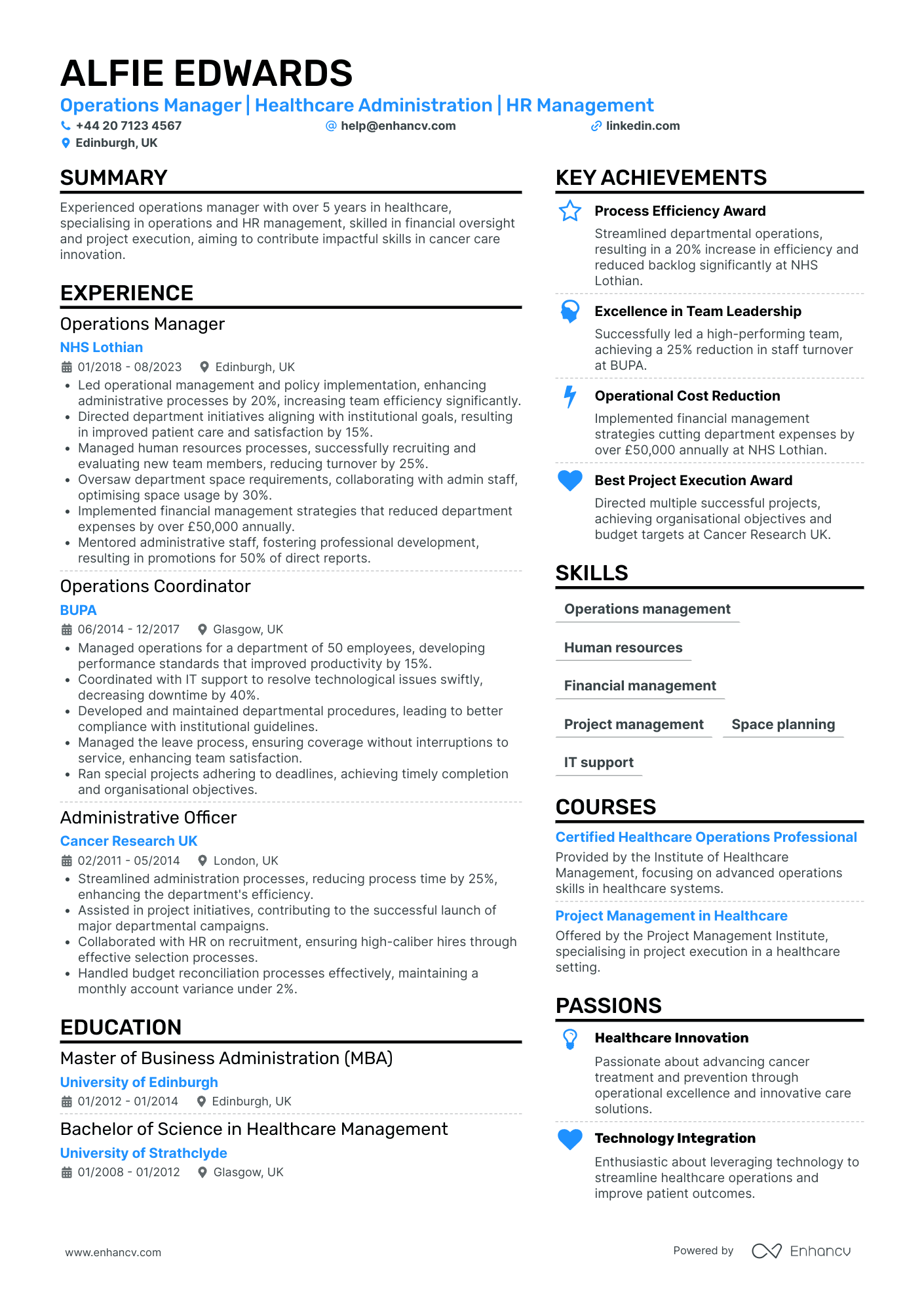
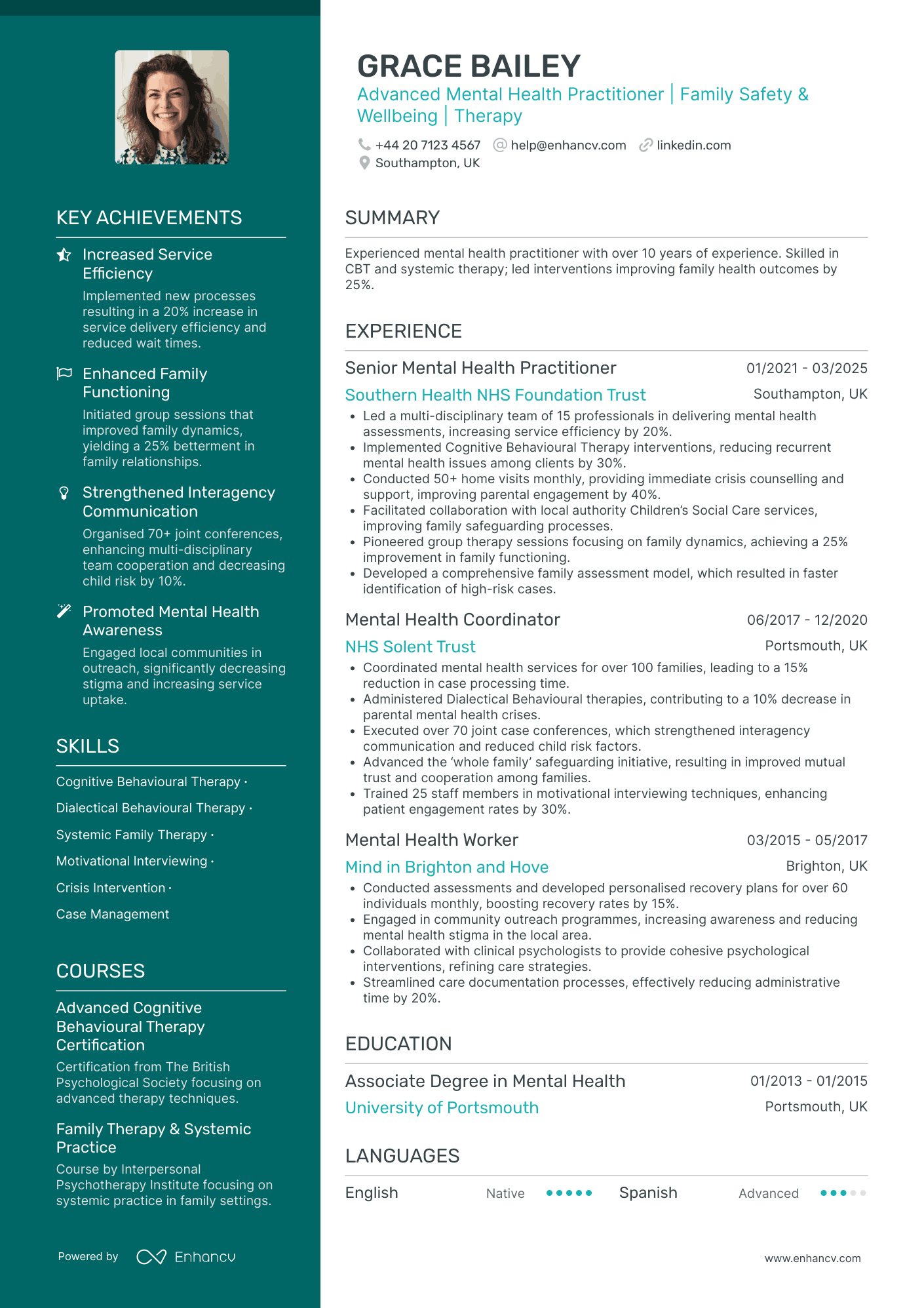
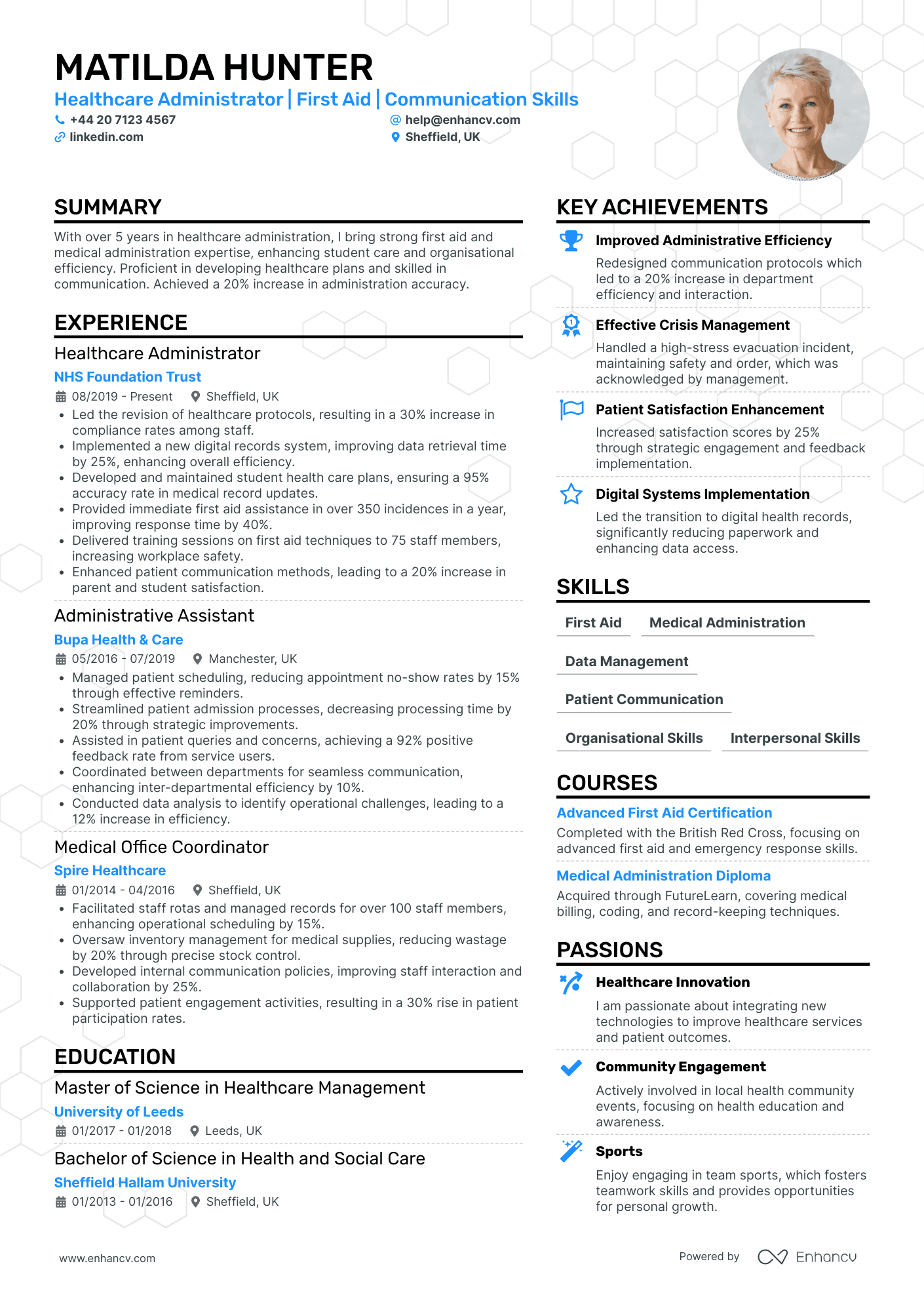
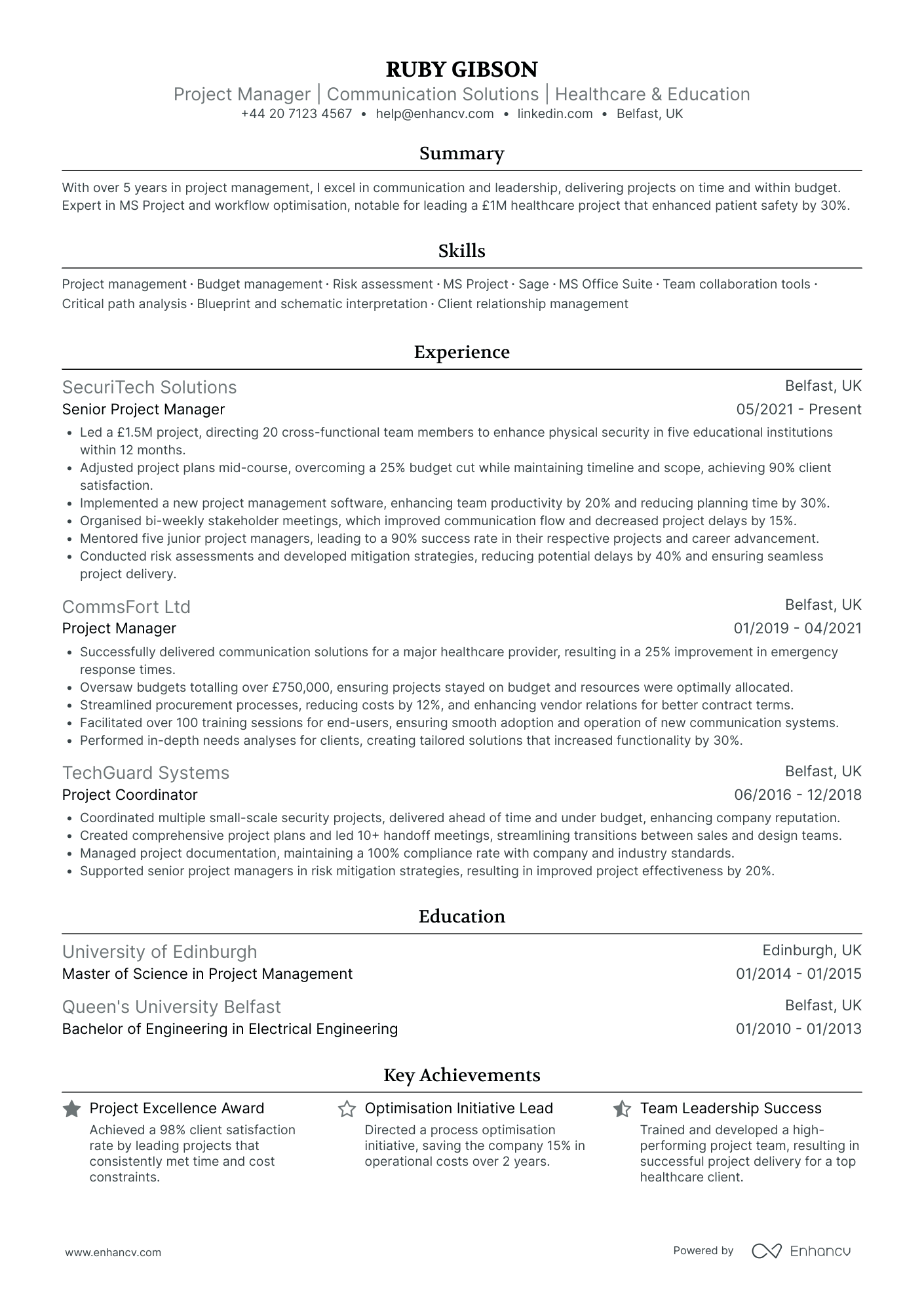
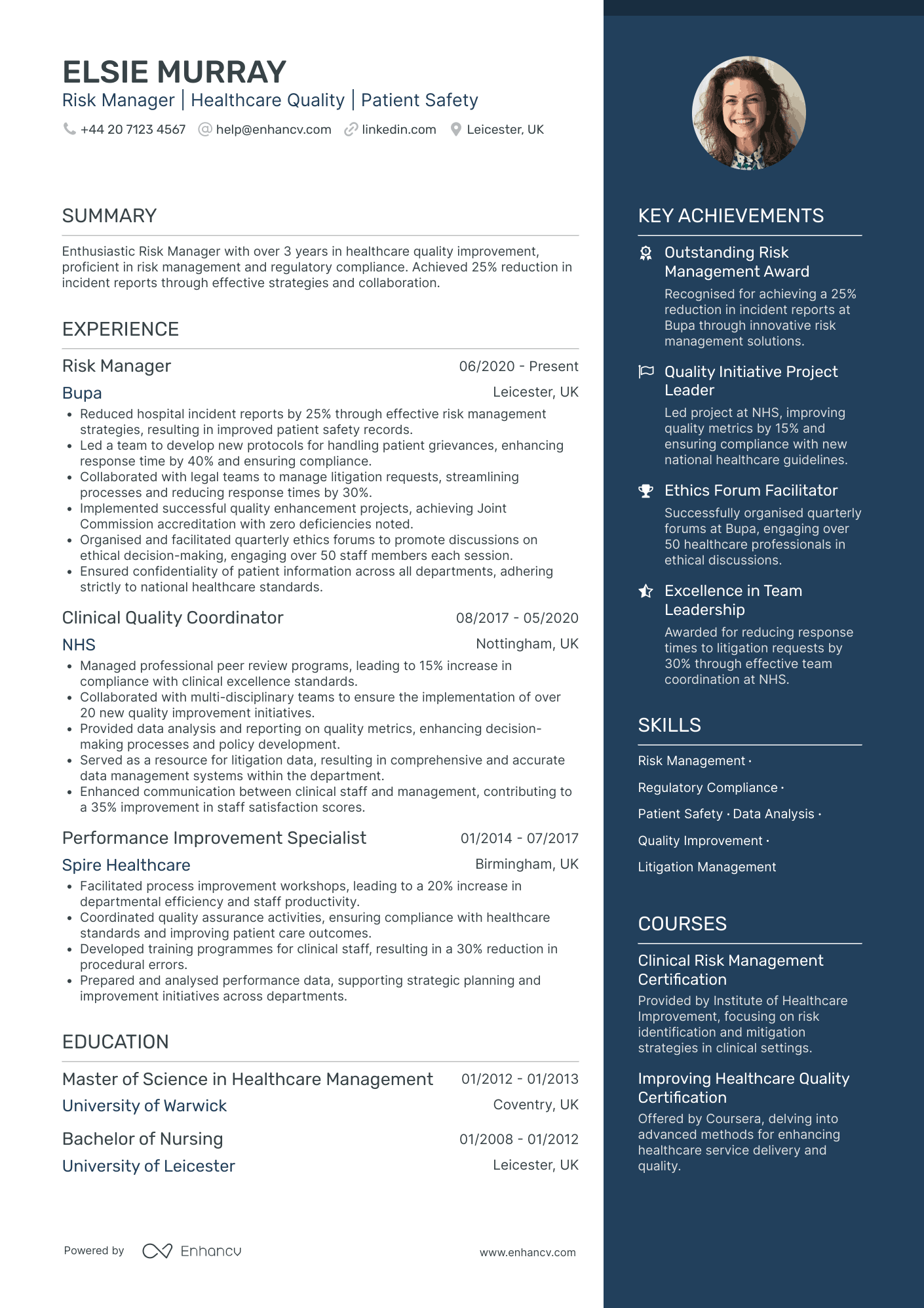
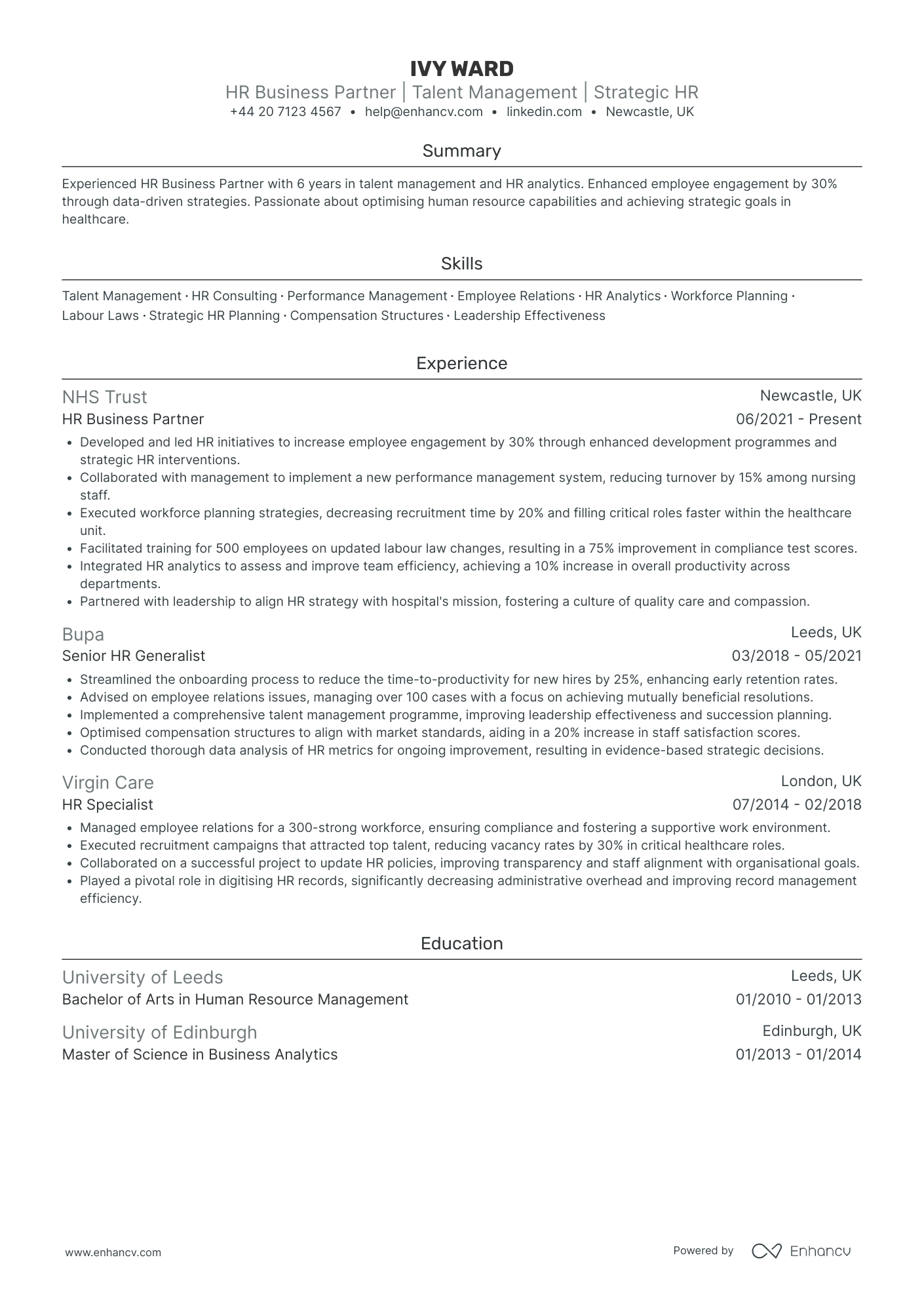
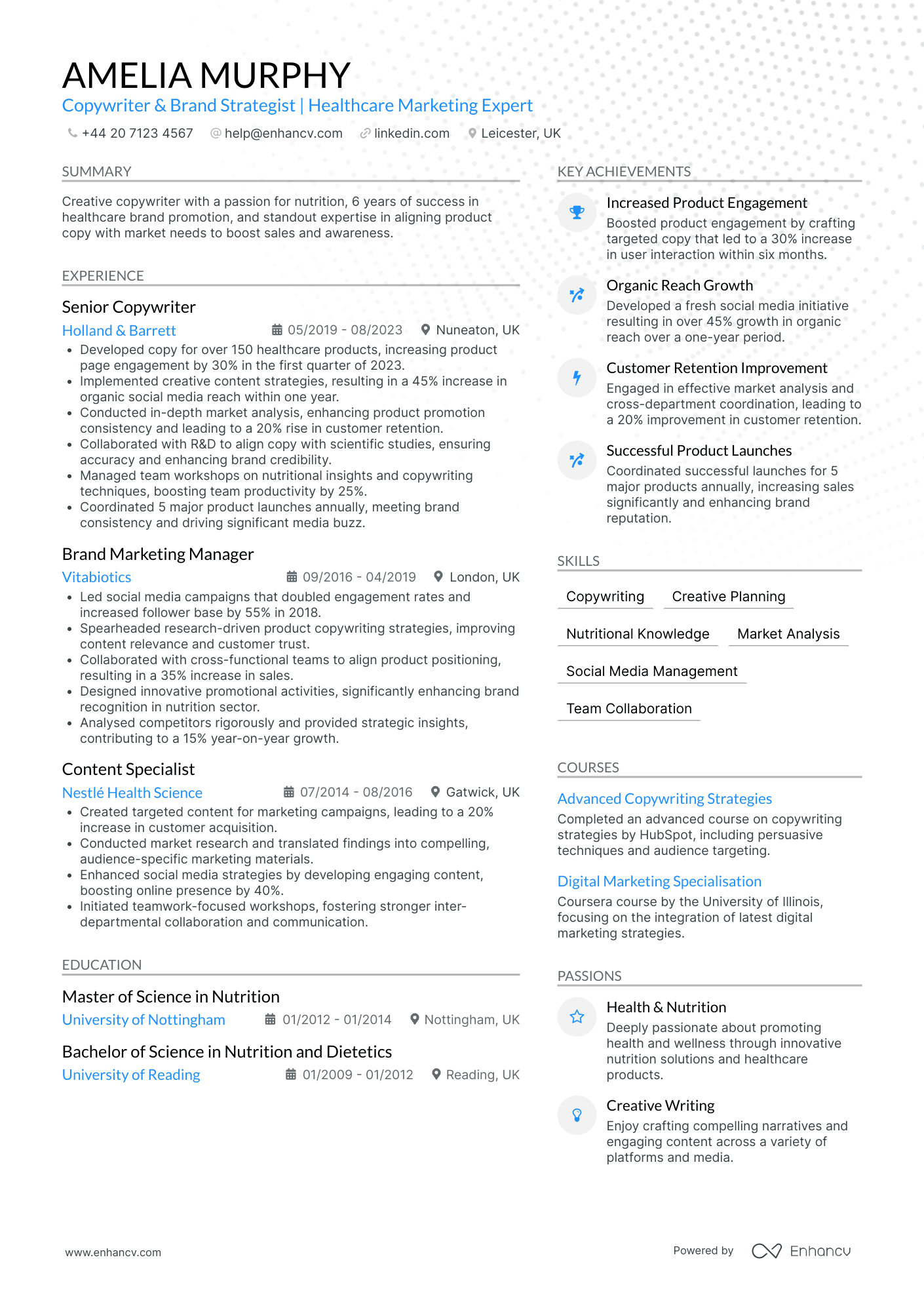
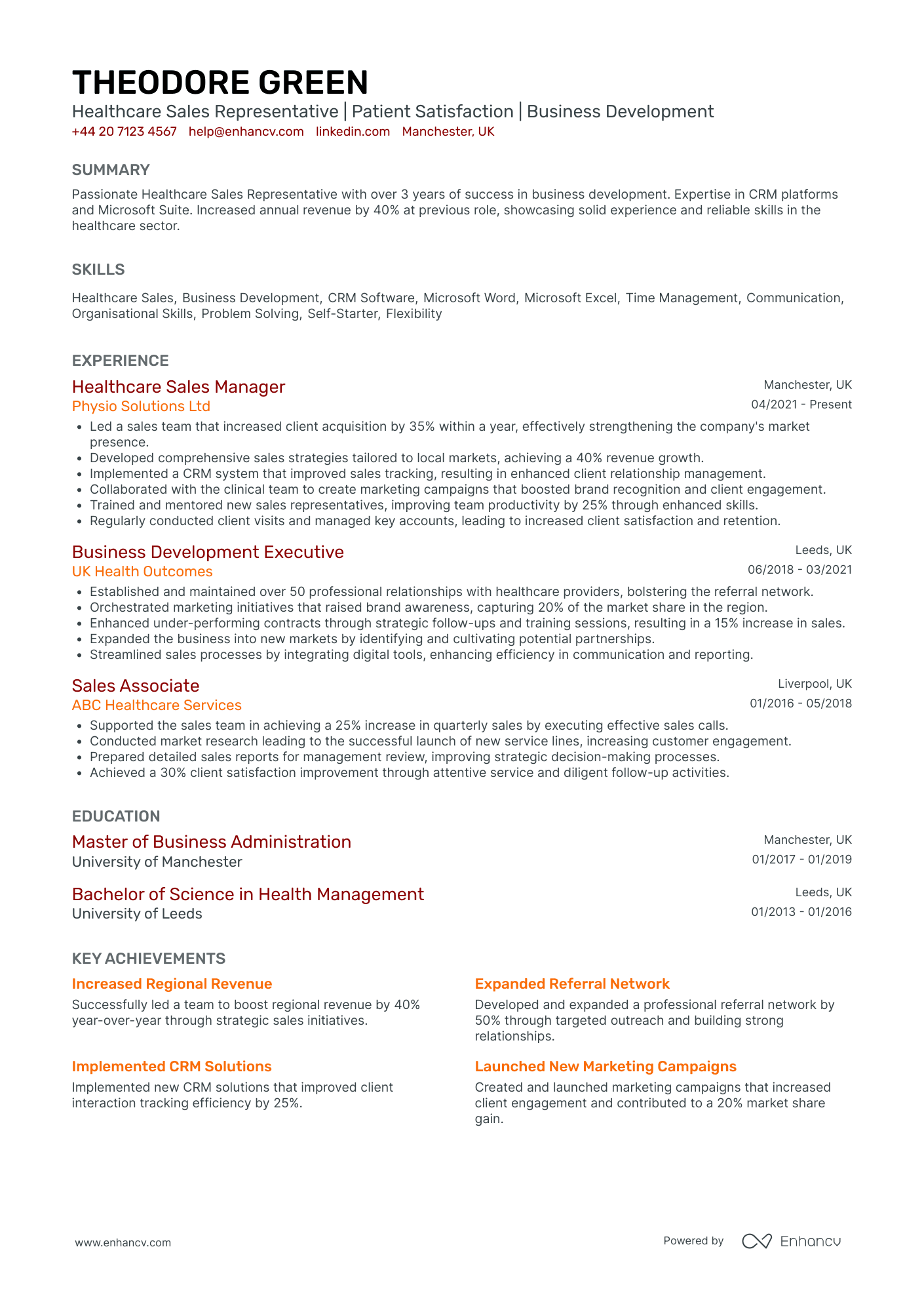
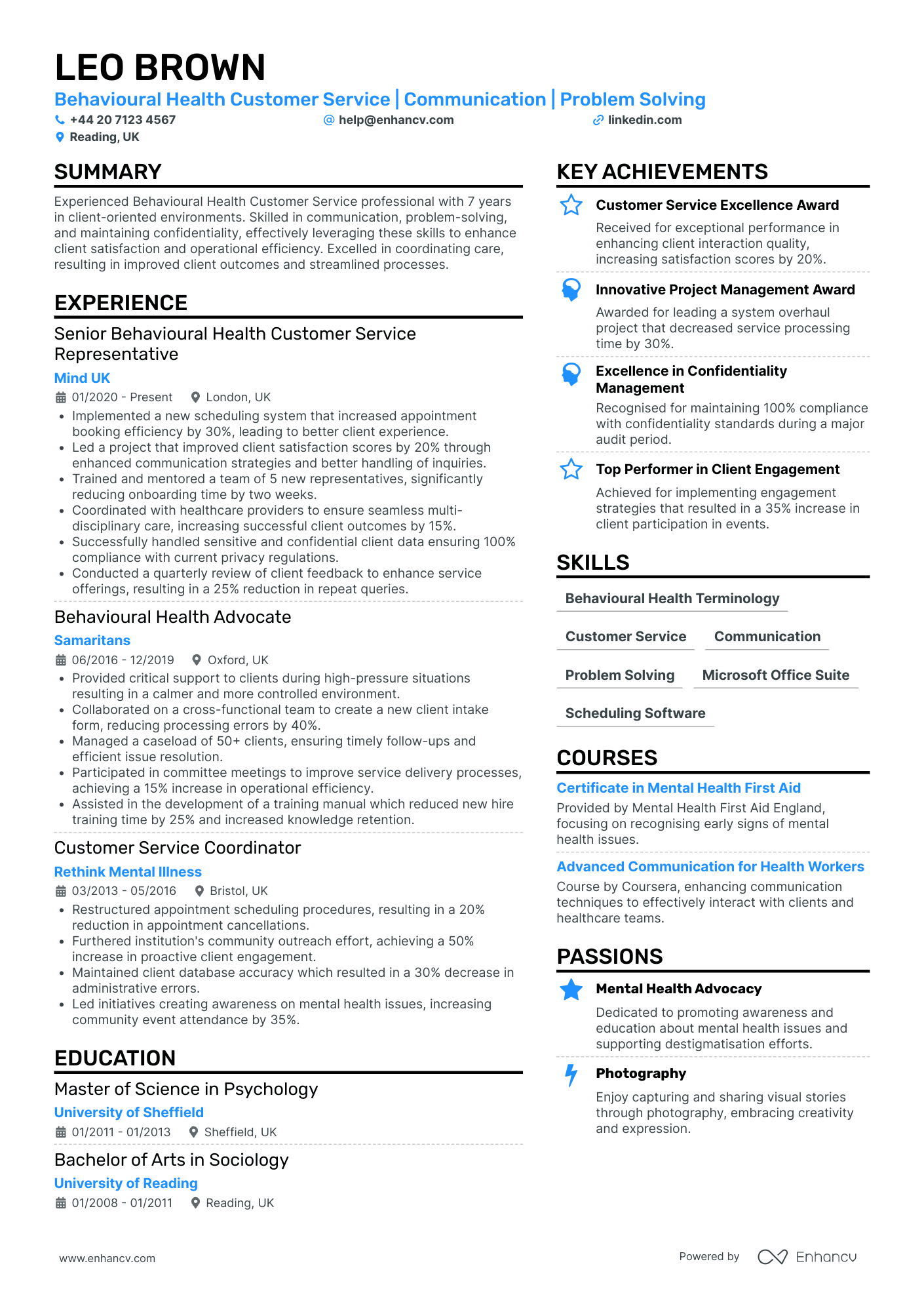
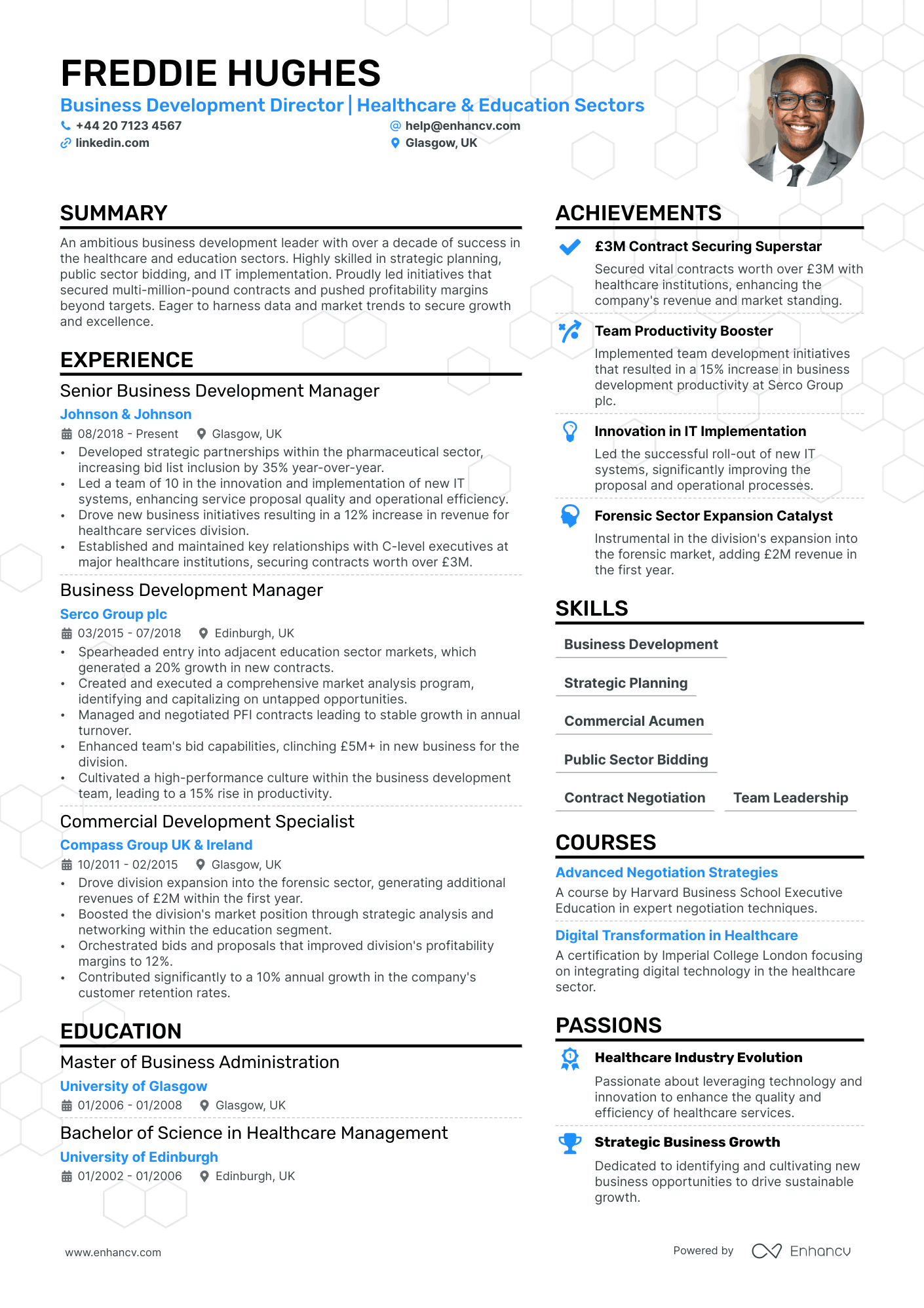
Most healthcare CVs are let down by their layout, not their content. The evidence is usually there, buried under cramped margins, a two-column design an NHS system struggles to read, and a personal statement that says nothing a recruiter can check.
Healthcare hiring rewards clarity. A ward manager or an NHS recruiter skims for proof that you are safe, qualified, and ready to start, so the format has to surface that proof in seconds rather than hide it.

Key takeaways
- Lead with format: two pages, reverse chronological, one column, and sent as a PDF unless the advert asks for Word.
- Many NHS roles are filled through an online application form, not a CV, so build your evidence once and reuse it against the person specification.
- Most UK healthcare work is on-site, so put your location near the top of the CV.
- Name your registration and mandatory training in full: an NMC or HCPC pin, a DBS check, safeguarding, and moving and handling.
- Open with a short personal statement built on evidence, not on adjectives like caring and hard-working.
- Mirror the exact skills and clinical terms the advert uses, and only claim what you can back up.
Formatting your healthcare CV
Start with structure, because it decides whether anything else gets read. If you have healthcare roles behind you, use a reverse chronological order so your most recent post sits at the top. If you are new to the field, a skills-led structure puts training and transferable care first.
Keep it to two pages, one column, standard headings, and a readable font. Clinical managers and recruiters skim between shifts, so a clean CV layout beats a busy one every time.
Order the sections the way a healthcare reader scans: header, personal statement, then registration and training, experience, skills, and education. A newly qualified applicant can lift training and skills above experience, but everyone should keep the registration and DBS details high, because that is the first thing the reader checks.
Your header earns its place. Put your name, your town, a phone number, and a professional email, and add your NMC or HCPC pin next to your title if you hold one. Skip the date of birth, the marital status, and the photo, none of which a UK healthcare employer needs and any of which can complicate fair recruitment.
Send a PDF for direct applications so the formatting holds on any screen. Keep a Word copy for recruitment agencies, which place a large share of healthcare roles and reformat CVs into their own template. If the advert names a file type, follow it exactly.
One healthcare-specific wrinkle: a lot of NHS vacancies are filled through an online application form on NHS Jobs or Trac, not through a CV at all. Your CV still does the work for private providers, GP practices, care groups, agencies, and speculative applications, and the evidence you gather for it feeds straight into any form.
Healthcare applications almost always pass through tracking software, so keep the layout parser-friendly. Standard headings, no text hidden in headers or footers, and no key detail trapped inside a graphic or a column keep your CV ATS-friendly. Build it from a tested layout rather than a blank page: Enhancv's CV templates export to a clean PDF that reads well on screen and through a parser.

PRO TIP
Before you write a line, open the person specification and split it into essential and desirable criteria. Every essential criterion needs a matching line on your CV or application, ideally in the same words the specification uses. That single habit does more for a healthcare application than any design choice.
Is your resume good enough?
Drop your CV here or choose a file. PDF & DOCX only. Max 2MB file size.
What the UK healthcare market looks like
Knowing how the market behaves tells you what to put near the top of the CV. Here is what UK healthcare postings actually ask for.
| What | UK healthcare roles |
|---|---|
| Where the work happens | Mostly on-site (250 of 348 UK healthcare postings, about 72%, in the last ~30 days on Enhancv's internal job feed) |
| Experience level asked for | Entry level is the largest band at about 39%, then mid at 29%, lead at 22%, and senior at 9% |
| Skills that recur most | Project management, stakeholder management, and data analysis, followed by patient care, safeguarding, and vital-signs measurement |
| What that tells you | The healthcare label spans clinical and non-clinical roles, so mirror the exact skills in the advert you are answering |
Two things here should shape your CV.
Healthcare work is overwhelmingly on-site, so a recruiter needs to see that you can reliably get to the ward, clinic, or client. Put your town near the top, and mention a driving licence if the role is community-based.
The recurring skills look broad because the healthcare label covers everyone from a ward assistant to a service manager. Project Management, Stakeholder Management, and Data Analysis are the skills that recur most often in UK healthcare postings, which reflects how many co-ordination and service roles sit inside the sector. Read your target advert and mirror its language rather than this whole list.
Pay for NHS roles follows the Agenda for Change bands, so check the band quoted on the advert and match your evidence to that level of responsibility.
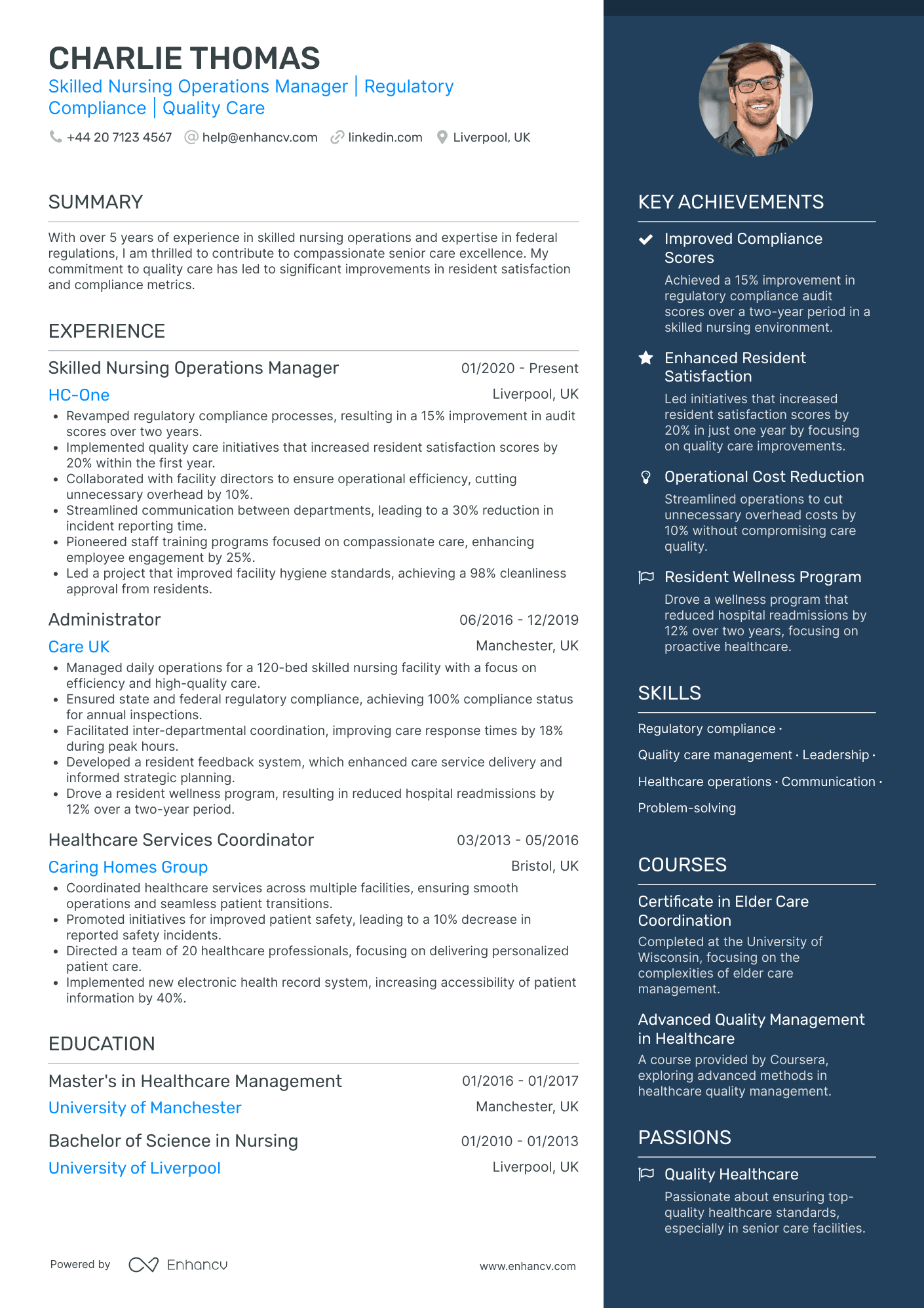
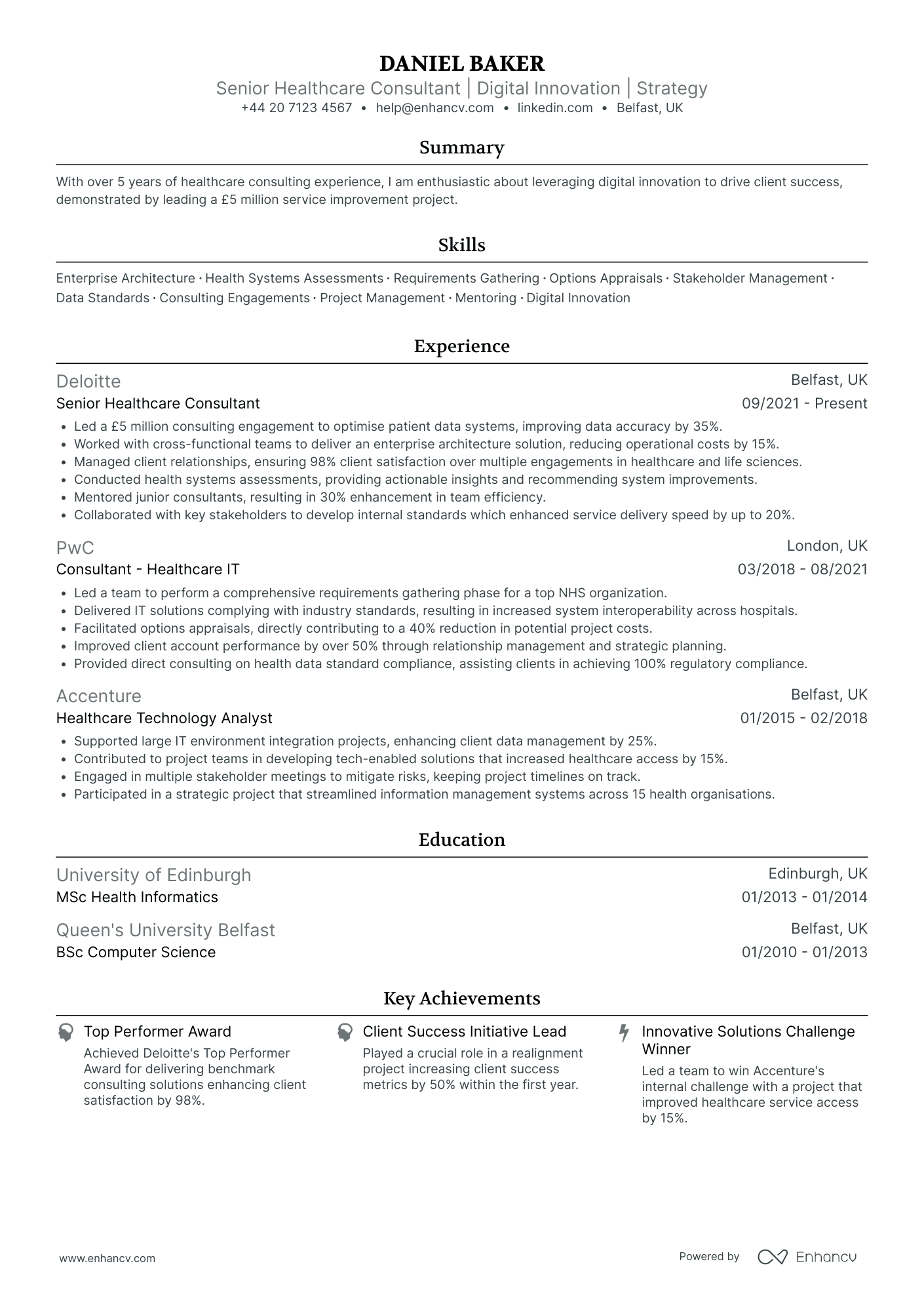
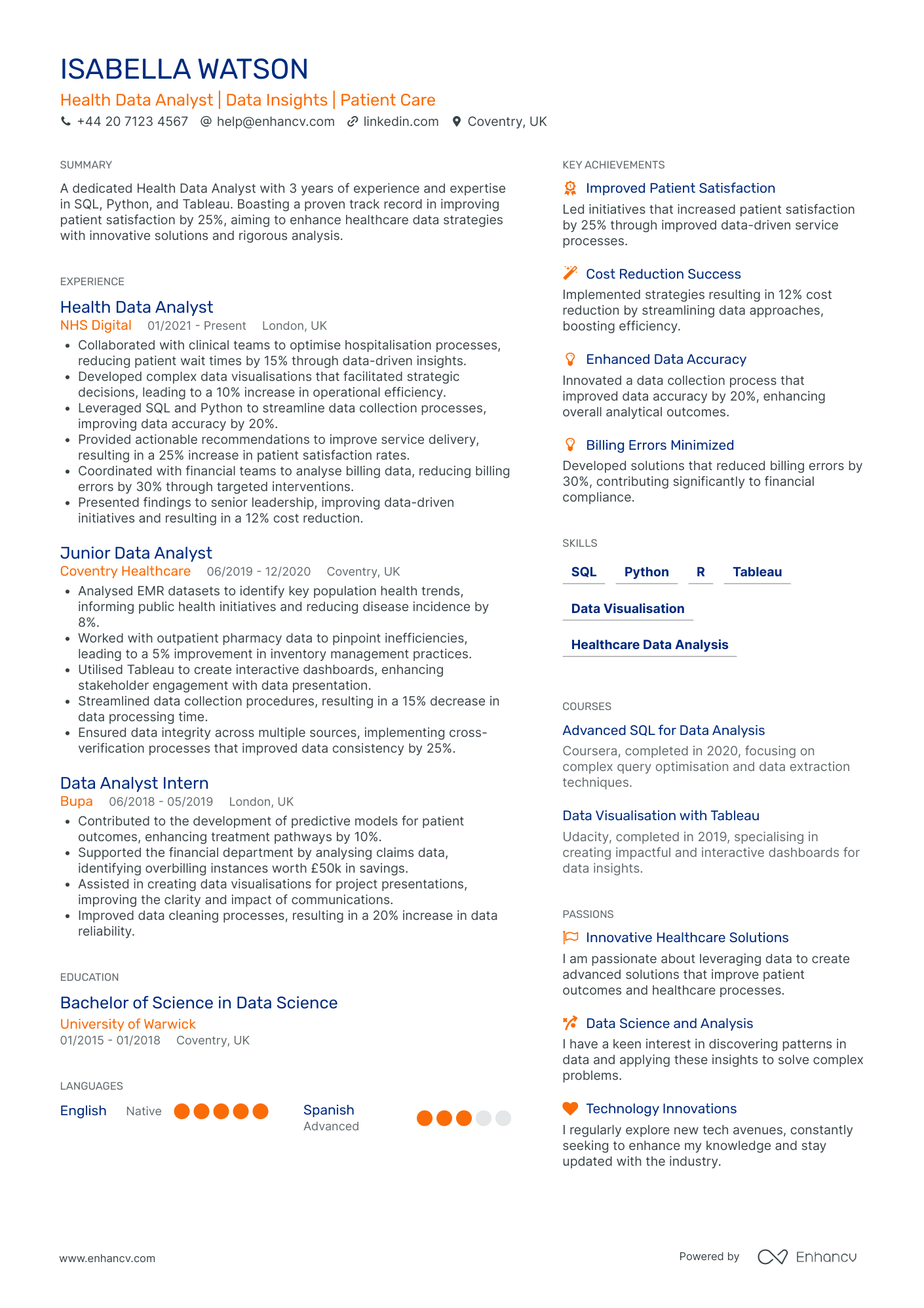
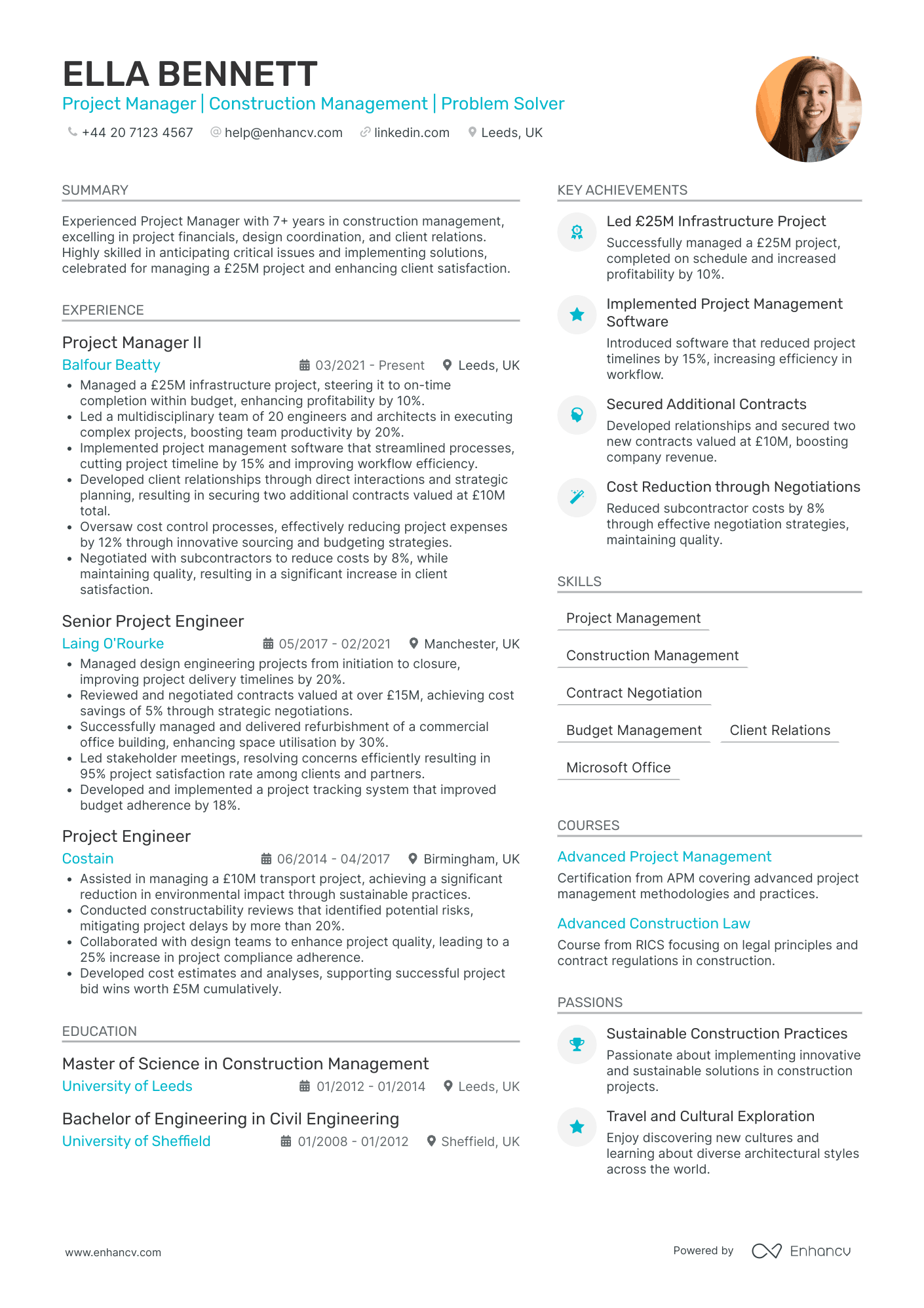
Choosing an NHS healthcare CV template
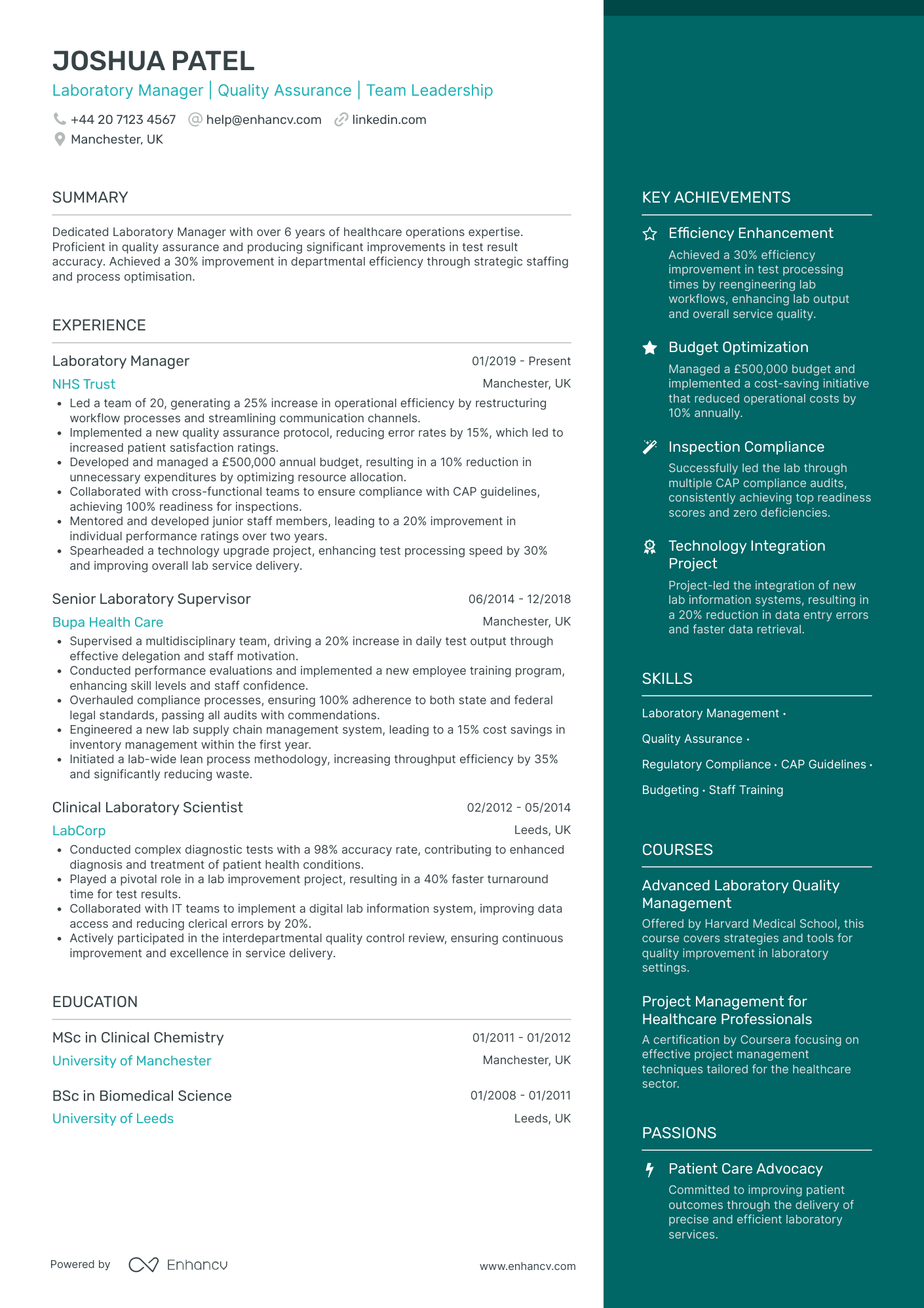
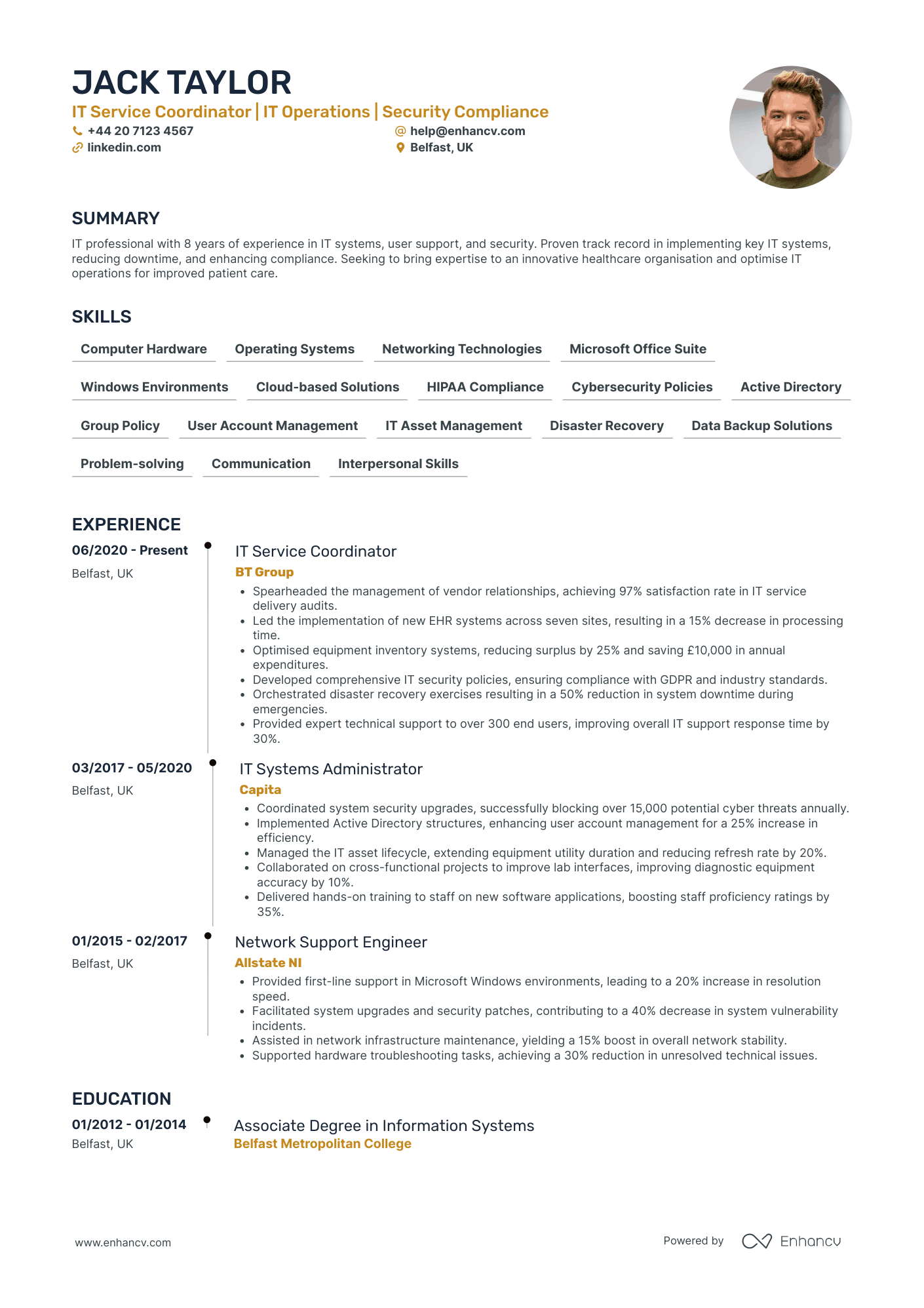
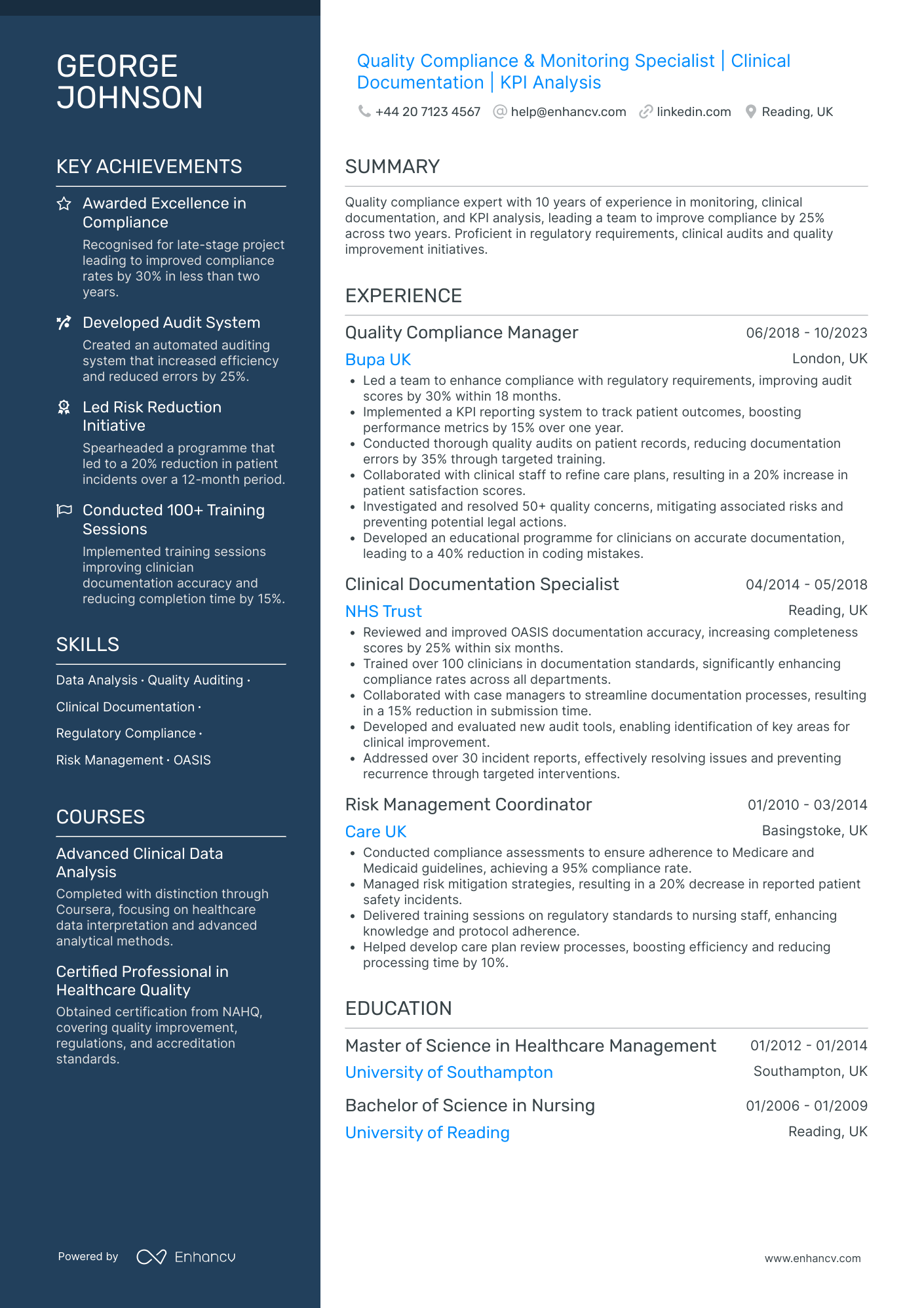
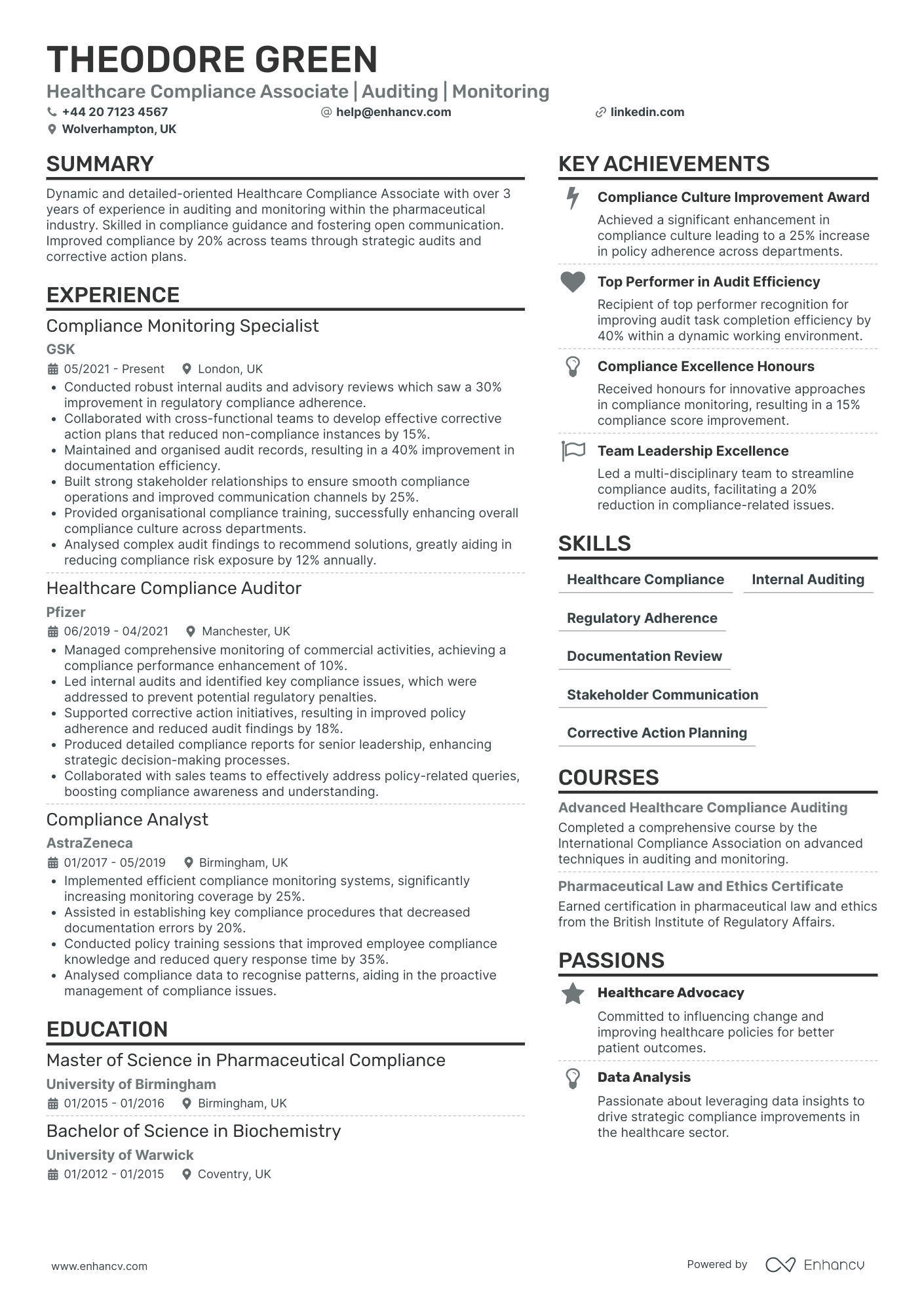
Pick a single-column template with clear section headings and plenty of white space. Save the colour blocks, sidebars, and icons for industries that reward them, because a healthcare recruiter is reading for content and a tracking system is reading for structure.
The same template should stretch across the sector. A healthcare assistant, a staff nurse, and a healthcare service coordinator can all use one clean layout, changing the personal statement, the skills, and the evidence to match the role rather than the design.
Remember the NHS Jobs distinction. Where a role uses an application form, your template choice matters less than how well your evidence maps to the person specification. Where you apply with a CV, a tidy CV template and a sensible CV structure do the quiet work of making you look organised before a word is read.
Writing your healthcare personal statement
Three or four sentences at the very top: who you are, your registration or key qualification, the clinical strengths you can prove, and the setting you want to work in. See more personal statement examples if the opening line is not coming.
Skip the adjective soup. "Caring, compassionate, and hard-working" sits on almost every healthcare CV and tells a recruiter nothing they can verify.
Pitch it at the band you are applying for. A support worker leads with values, exposure to care, and training in progress, while a band 5 or a service lead leads with registration, a specialism, and one result that shows the level they work at.
Lead with evidence a reader can picture instead:
Healthcare CV personal statement example
NMC-registered band 5 nurse with four years on a busy acute medical ward, experienced in medication administration, venepuncture, and mentoring student nurses. Led a double-check protocol that cut medication errors on the ward by 30% over a year. Looking to bring safe, patient-centred care to a surgical ward within [Trust name].
The healthcare CVs that get shortlisted answer one quiet question on every line: can we trust this person with a patient on day one? Name the ward or setting, the registration or training, and one measurable thing you changed. A recruiter can act on "reduced falls on my bay by tightening handover notes". They cannot act on "passionate about care". Specifics read as safety, and safety is what this sector hires for.
Writing your healthcare experience section
Whether the role was paid, bank, or voluntary, write each entry the same way: a dated heading, then bullets that show what you did and what changed. Lead each bullet with a verb, and see work experience on a CV for the mechanics.
Healthcare work is more measurable than it feels. Patients supported per shift, audit scores, infection rates, waiting times, complaints avoided, and records kept clean are all CV achievements once you attach a number.
Healthcare careers rarely run in a straight line, and that is fine. Bank shifts, agency placements, rotational posts, and a career break all belong here. Give bank and agency work a single dated entry that names the settings you covered, and treat a gap in employment as a plain fact with a one-line explanation rather than a hole you hope goes unnoticed.
Tailor every application by pulling the duties and clinical terms straight from the advert and mirroring the ones that are true of you. Enhancv's CV tailoring feature reads the advert and suggests the matching edits, which saves rewriting from a blank page each time.
- Support up to 18 patients per shift on a 28-bed acute medical ward with personal care, mobility, and mealtimes, working alongside registered nurses
- Record vital signs and escalate deteriorating patients using NEWS2, flagging three early sepsis cases in the last year
- Completed safeguarding, moving and handling, and basic life support training, and keep observations current in the digital care record
- Cut recorded pressure-ulcer incidents on the bay by 20% by tightening repositioning rounds, and praised by the ward sister for reliability
Skills for your healthcare CV
Read a dozen live healthcare adverts and the same demands repeat, split between clinical tasks and the co-ordination skills a modern service runs on. Put the hard skills in the words the advert uses, whether that is patient care and safeguarding or data analysis and stakeholder management.
The soft skills that matter are the checkable ones: communication, compassion, teamwork, and patience. Prove each in a bullet rather than listing it and hoping.
List only what you can stand behind. If you have been trained in a clinical task, name it exactly. If you are working towards it, put it under training in progress rather than skills.
A skills list on its own convinces no one. Keep the section short and let the experience bullets carry the proof, so a reader sees safeguarding named once and then sees you acting on it under a real role. That pairing is what separates a credible healthcare CV from a keyword-stuffed one.
Top skills for your healthcare CV:
Patient care
Safeguarding
Vital signs and blood pressure measurement
Clinical record keeping
Care planning
Data analysis and reporting
Project management
Stakeholder management
Communication
Compassion
Teamwork
Patience
Adaptability
Presentation skills
Education, training, and registration for a healthcare CV
This section carries more weight in healthcare than in most fields, because a lot of it is a legal requirement rather than a nice-to-have. Give it a clear block and keep it current.
Lead with any professional registration: an NMC pin for nurses and midwives, or HCPC registration for allied health professionals. For support roles, list the Care Certificate and any NVQ or Diploma in Health and Social Care, even where they are in progress.
Then list mandatory training and a current DBS check. Safeguarding, moving and handling, infection control, and basic life support all belong on the CV, and naming the certificates you hold in your education section saves the employer a question.
Show that your training is current, not historical. A registered professional can note the year of their last revalidation, and a support worker can date recent refreshers, because an employer wants to see that a certificate has not lapsed. Academic qualifications go here too, with the classification for a degree, but keep them brief once you have clinical roles to point to.
Writing a healthcare CV with no experience
Entry level is the largest band in the market data above, so a first healthcare CV is a realistic application rather than a long shot. Employers here hire on values and trainability, and provide much of the clinical training once you start.
Use a skills-led structure and mine your life for real care evidence. It is almost always there:
- Caring for a family member: personal care, medication reminders, hospital appointments, and managing a daily routine.
- Volunteering in a care home, hospice, hospital league of friends, or community group.
- Retail, hospitality, or reception work: patience under pressure, a duty of care, and following procedure.
- Any role with vulnerable people: SEN support, childcare, first aid, or lifeguarding.
Write it in healthcare language. "Supported my grandmother with daily personal care and medication for two years" is a healthcare bullet that happened at home. Give volunteering on a CV a dated entry with hours, the same as a job.
One line lifts a no-experience CV up the pile: "Care Certificate in progress" or "enrolled on an NVQ Level 2 in Health and Social Care". It shows you are already on the path. If this is your first application of any kind, these CV examples for a first job show the shape.
Conclusion
Get the format right first: two clean pages, standard headings, a PDF that any system can read, and your evidence mapped to the person specification. That is what turns a qualified healthcare worker into a shortlisted one.
Then lead with proof. Name your registration and training, quantify what you changed on a shift, and pair the CV with a short cover letter that says why this role and this setting.

Author's take - The Enhancv team
The healthcare CVs that get shortlisted answer one quiet question on every line: can we trust this person with a patient on day one? Name the ward or setting, the registration or training, and one measurable thing you changed. A recruiter can act on "reduced falls on my bay by tightening handover notes". They cannot act on "passionate about care". Specifics read as safety, and safety is what this sector hires for.