



Therapist is not one job, and a recruiter decides which one you mean in the first two lines. Occupational therapist, physiotherapist, psychotherapist, counsellor, or arts therapist each carries a different registration and a different reader.
Across 387 UK therapist postings in the last ~30 days on Enhancv's internal job feed, about 80% of roles are on-site and most sit at mid-level or above. So a strong therapist CV has to prove three things fast: a named discipline, current registration, and clinical judgement an employer can rely on from day one. If you want the fundamentals first, see how to write a CV.

Key takeaways
- Name your discipline and registration (HCPC, BACP, or your equivalent body) in the header and the first line of your personal statement, not buried on page two.
- Most therapist roles are on-site and pitched at mid-level or above, so lead with recent clinical experience and where you can reliably work.
- Two pages, reverse chronological, sent as a PDF unless the advert or NHS Jobs form asks for something else.
- Mirror the clinical language adverts use: clinical reasoning, evidence-based practice, patient assessment, and clinical supervision.
- Quantify caseloads, waiting times, outcome measures, and supervision, not just a list of duties.
- Keep the layout single-column and the headings standard so it parses through NHS and agency tracking systems.
Formatting your therapist CV
Most therapist postings sit at mid-level or above, so default to a reverse chronological structure that puts your most recent clinical role first. Save the skills-led order for a newly qualified CV with a thin work history.
Keep it to two pages. For an experienced therapist, one page cannot hold your caseload, settings, and registration, and a third page rarely earns its place, so CV length should land at two.
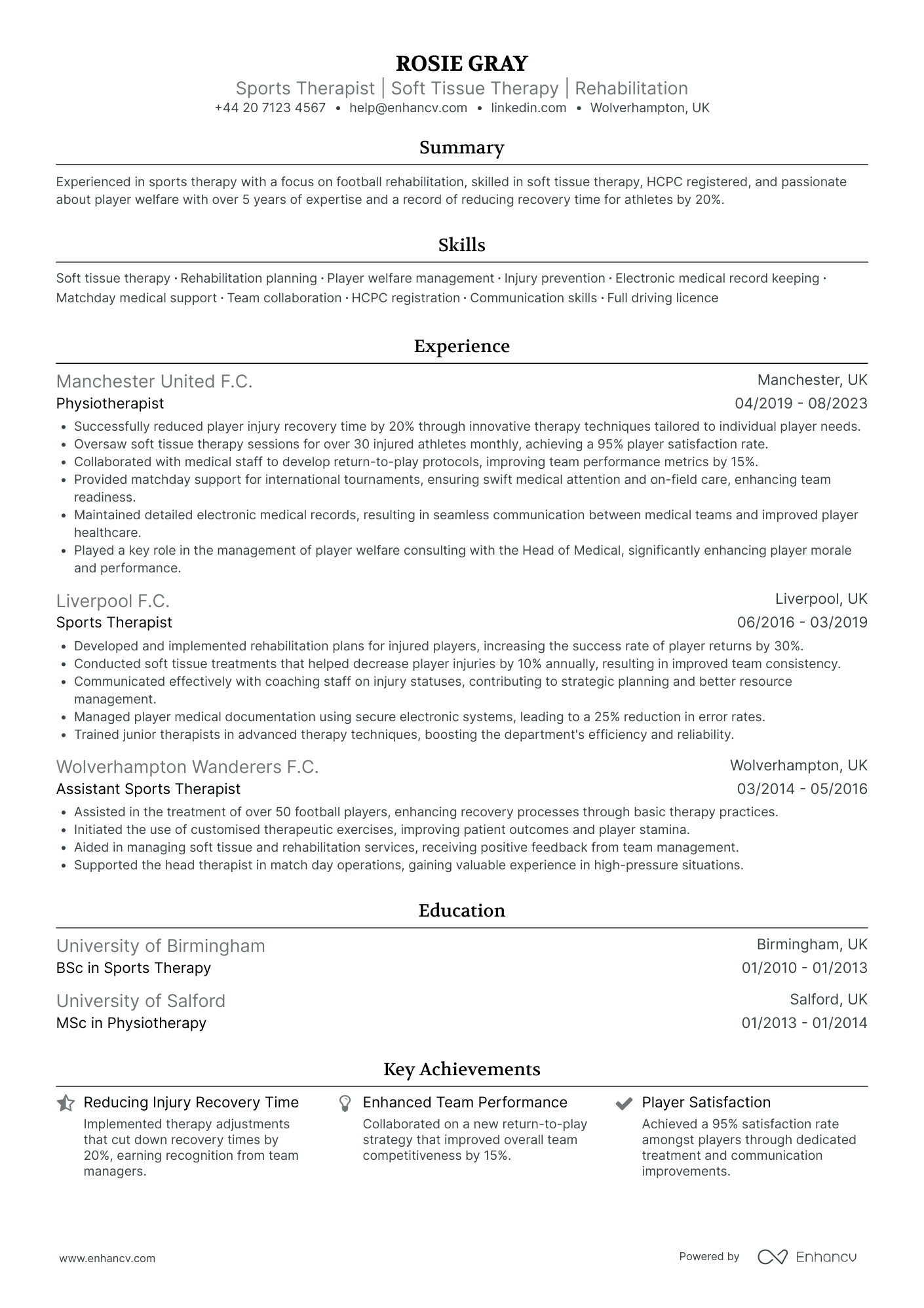
Use one column, standard section headings, and a readable font at 10 to 12 point with generous margins. A ward manager or clinical lead skims fast between sessions, and a clean CV format lets them find your registration and recent role in seconds.
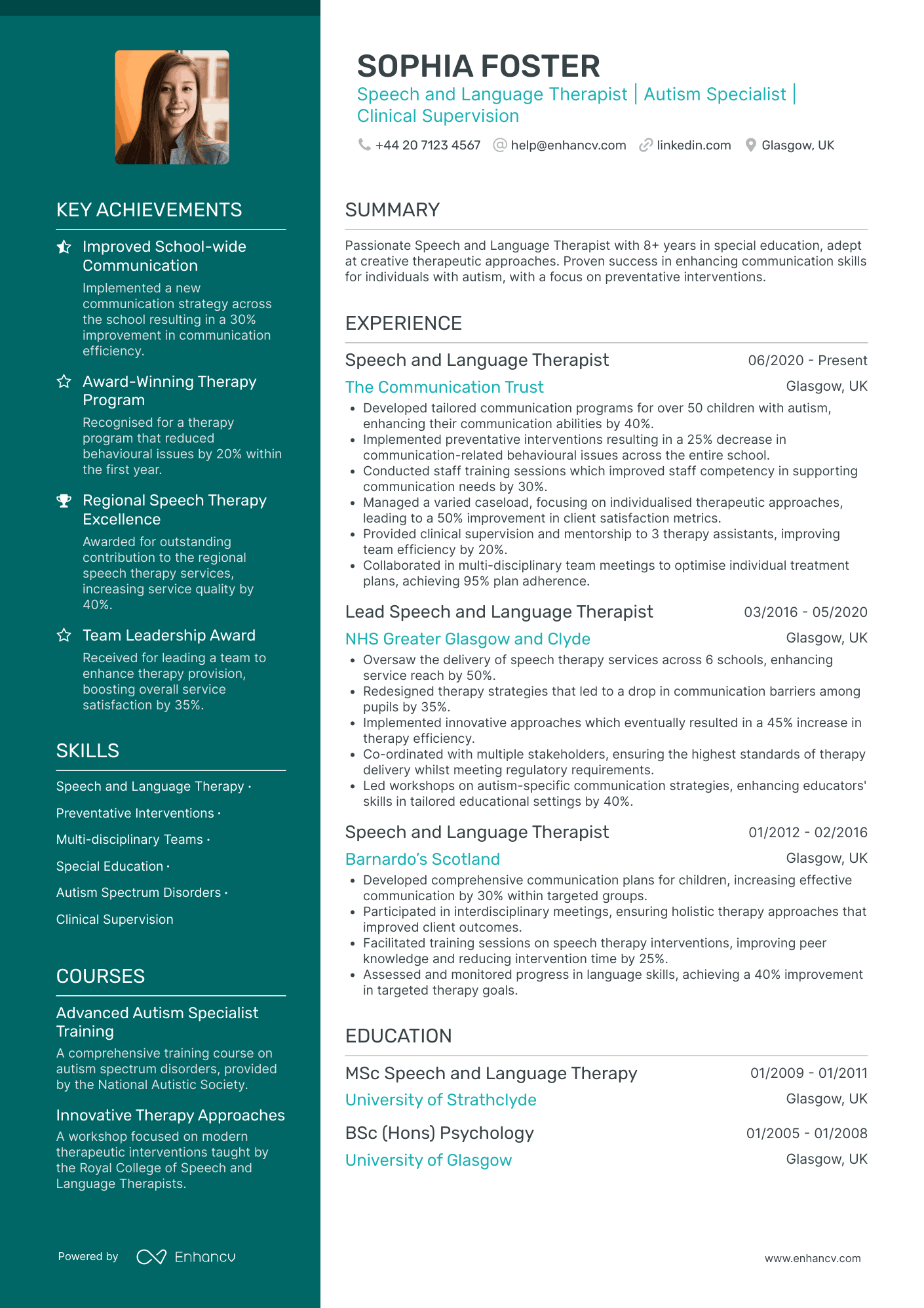
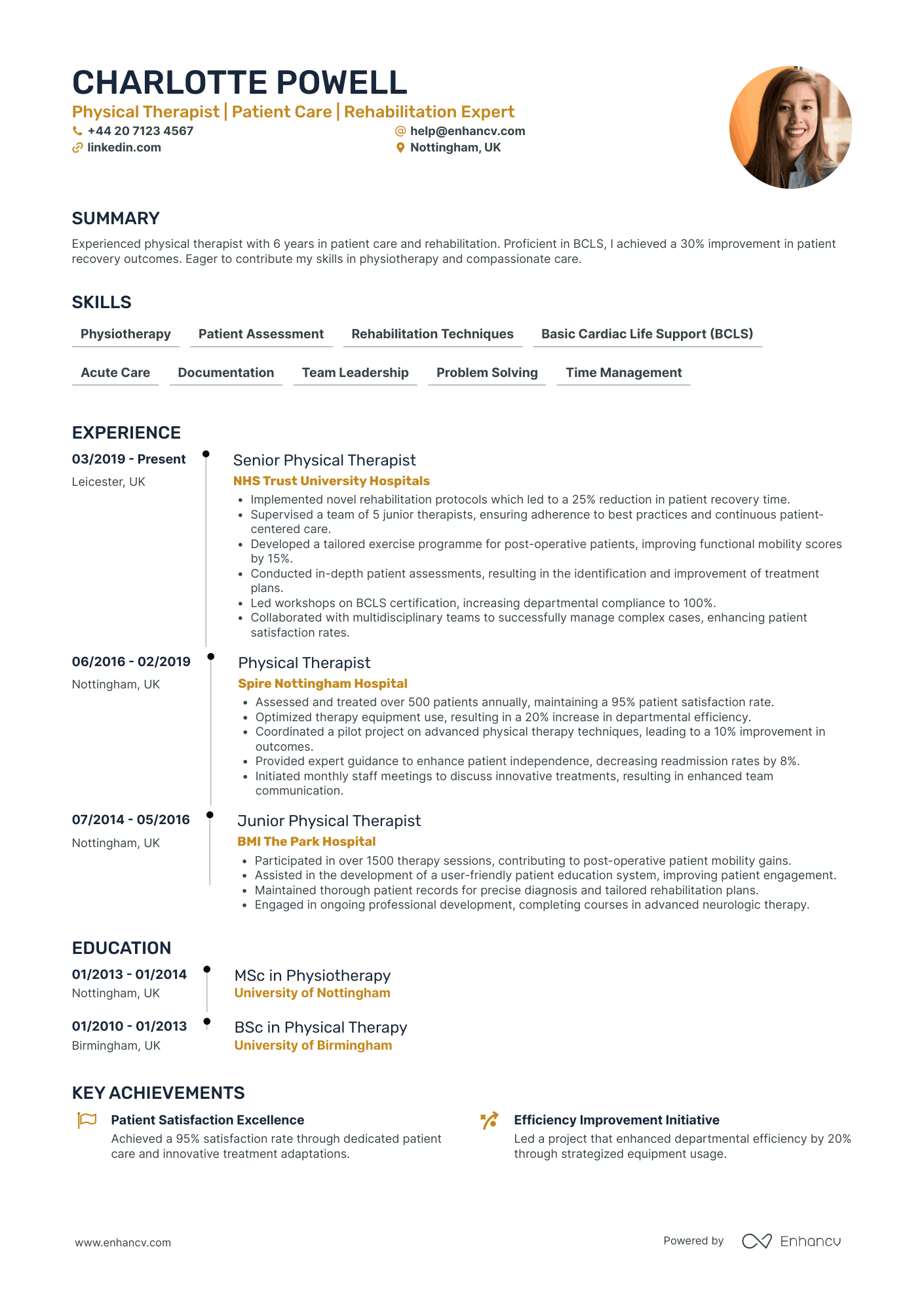
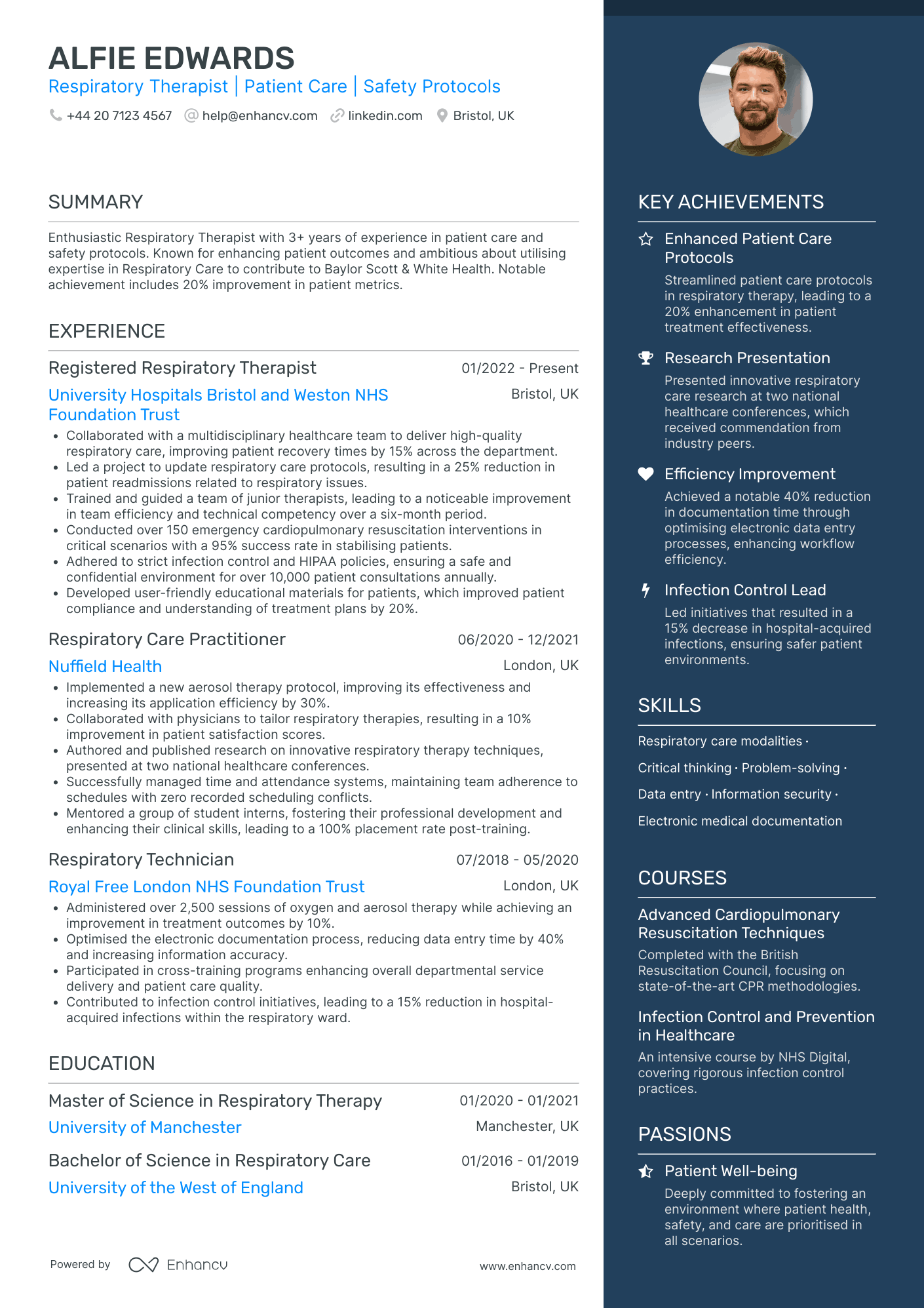
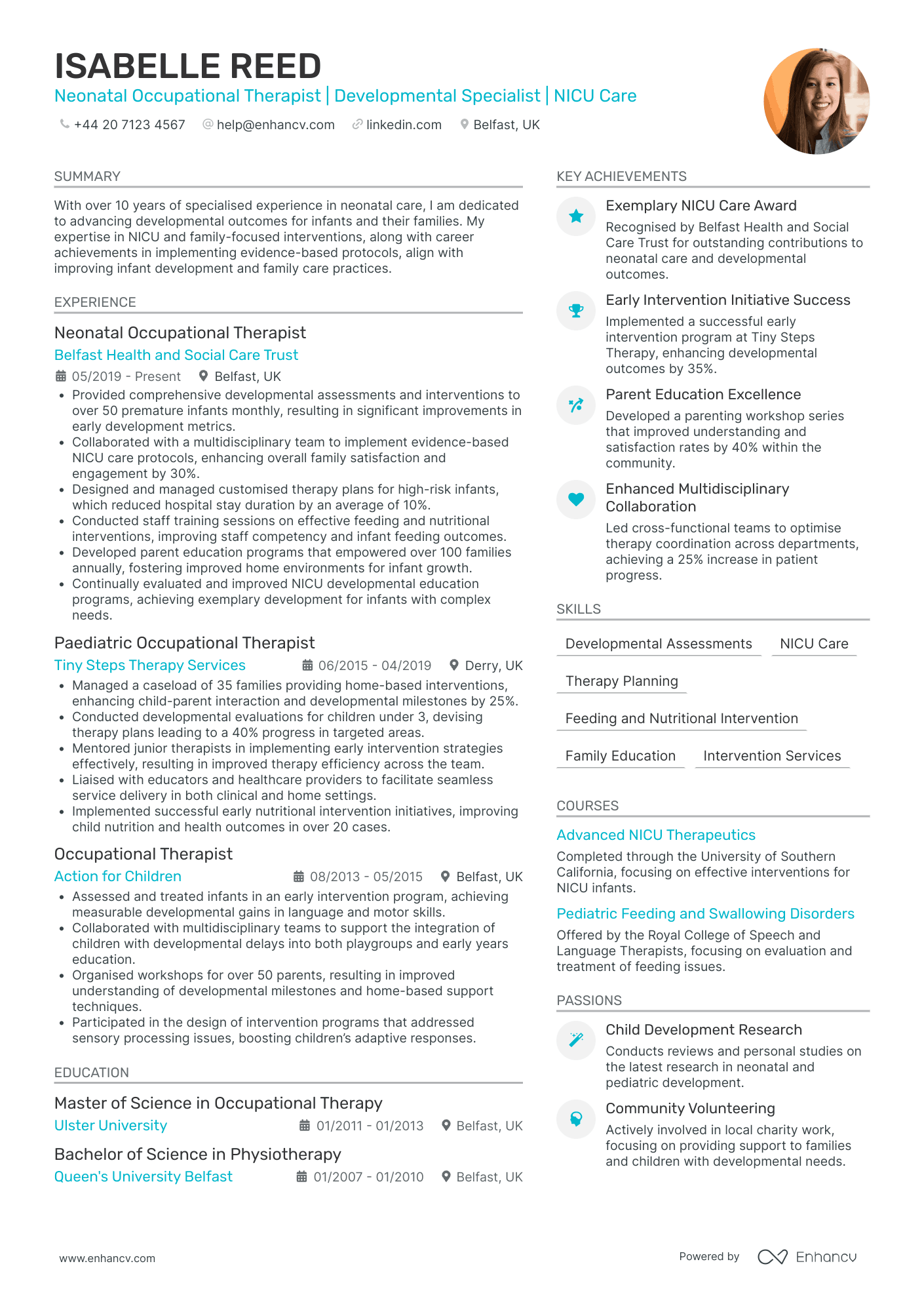
Skip the photo. UK therapist CVs do not need one, and a headshot only costs you space that a caseload figure would use better.
Send a PDF for direct applications so the layout holds on any screen. Keep a Word copy for recruitment agencies, which place a large share of locum and private therapist roles and reformat CVs into their own template.
Many NHS and public-sector therapist roles are applied for through NHS Jobs or a TRAC form, where you paste your supporting information into set fields. Keep a plain-text version of your experience and personal statement ready so it transfers without broken formatting.
Those forms and most trust inboxes run applications through tracking software, so keep the structure simple for an ATS-friendly CV. Avoid text boxes, tables, and headers that hide your registration number from the parser.
The header does more work on a therapist CV than on most. It is where a recruiter confirms you are the discipline and the registered professional the advert calls for, before they read a single bullet.

What belongs in a therapist CV header
Your name and the discipline as a job title ("HCPC-registered Occupational Therapist"), your regulator and registration number, a phone number and professional email, your town, and a driving status for community roles. That is enough for a recruiter to confirm you fit before the personal statement.
Choosing a therapist CV template
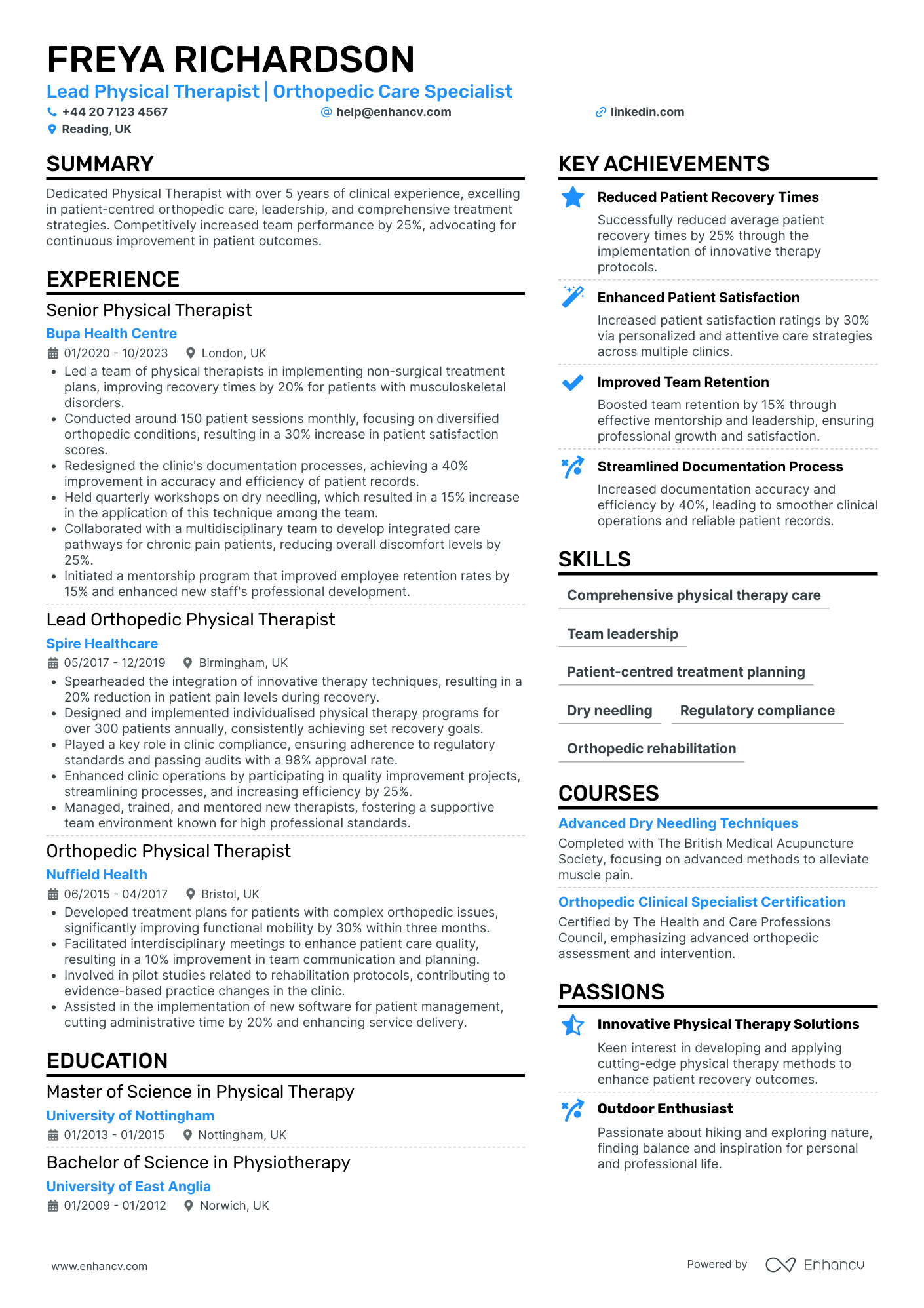
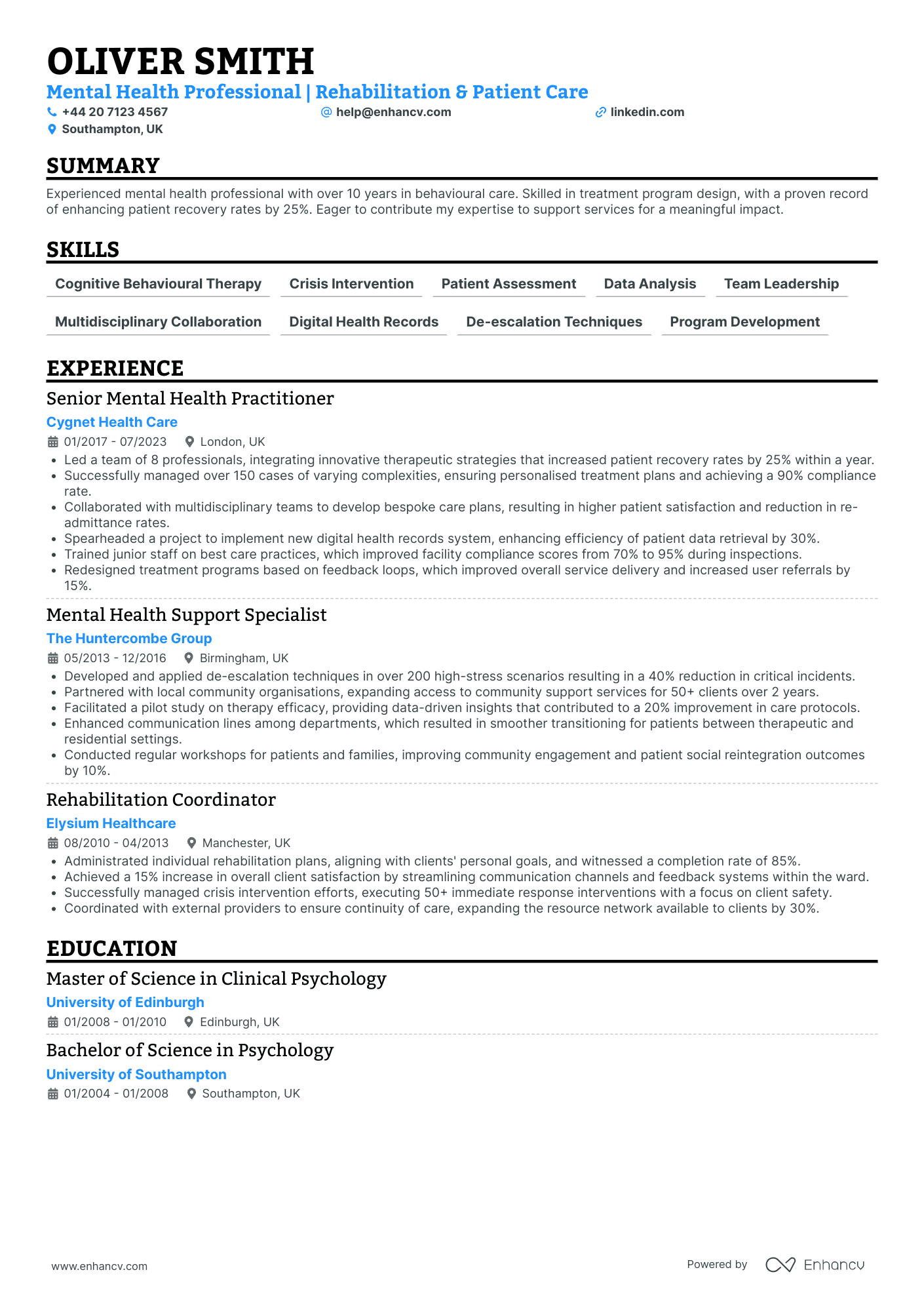
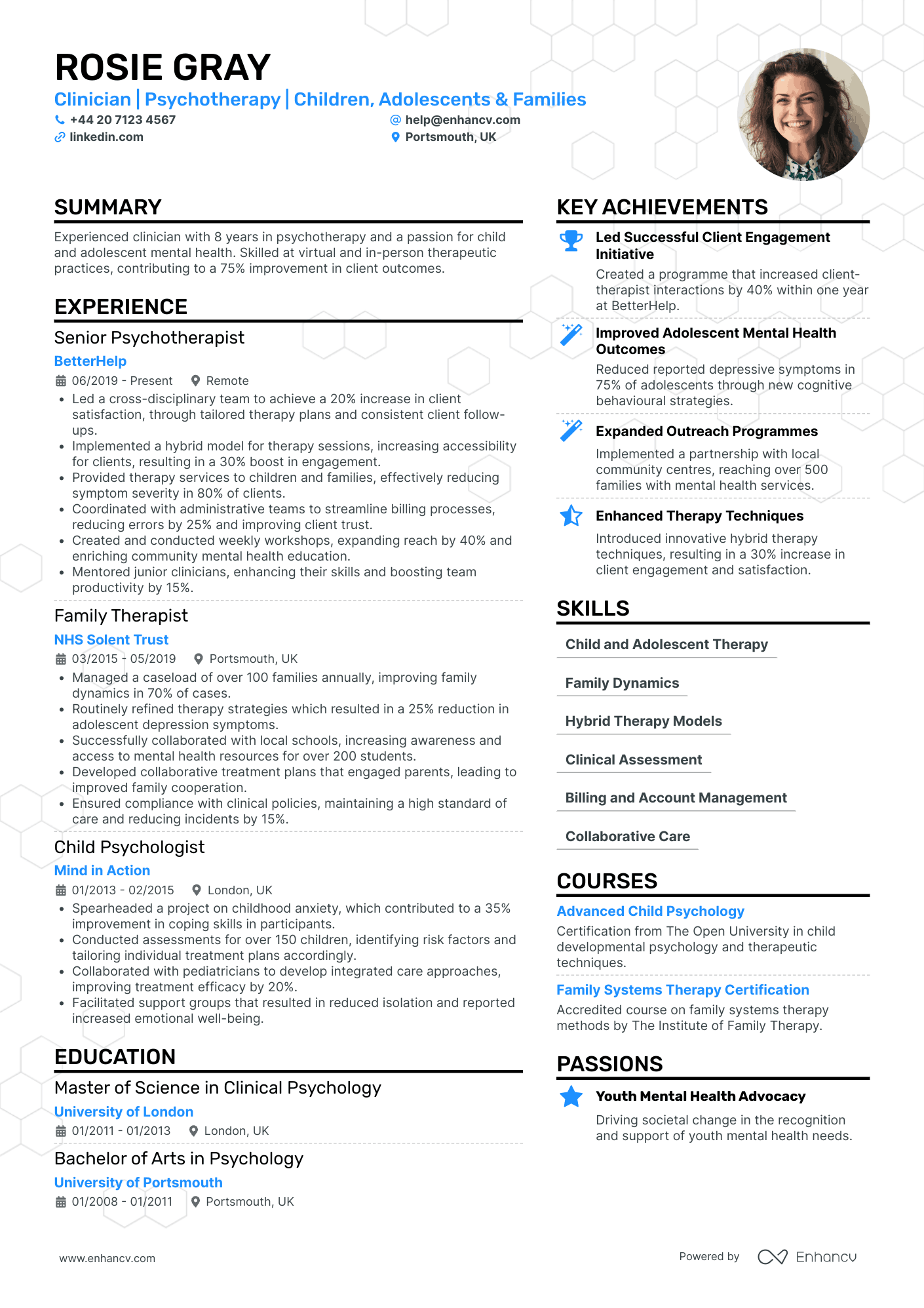
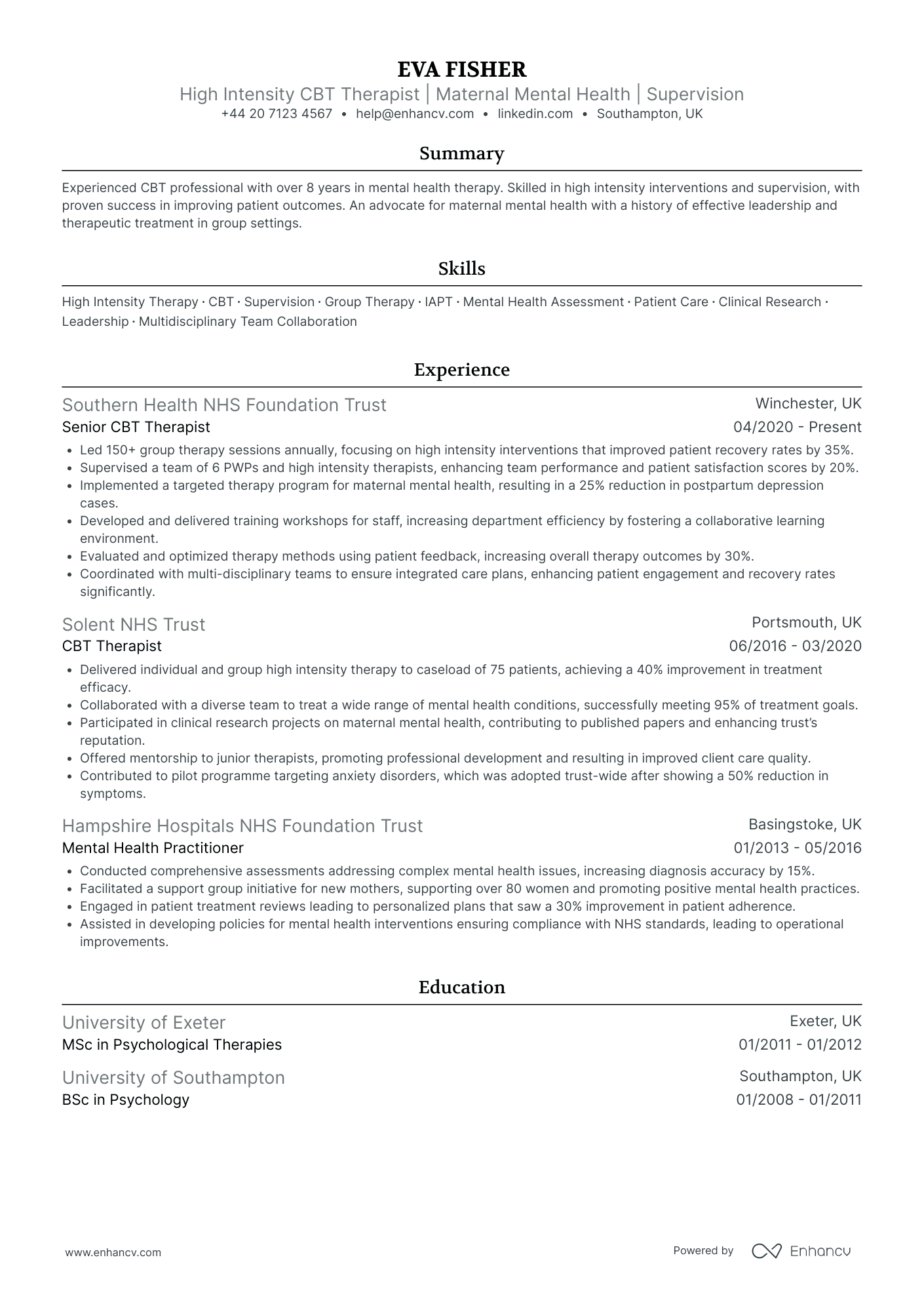
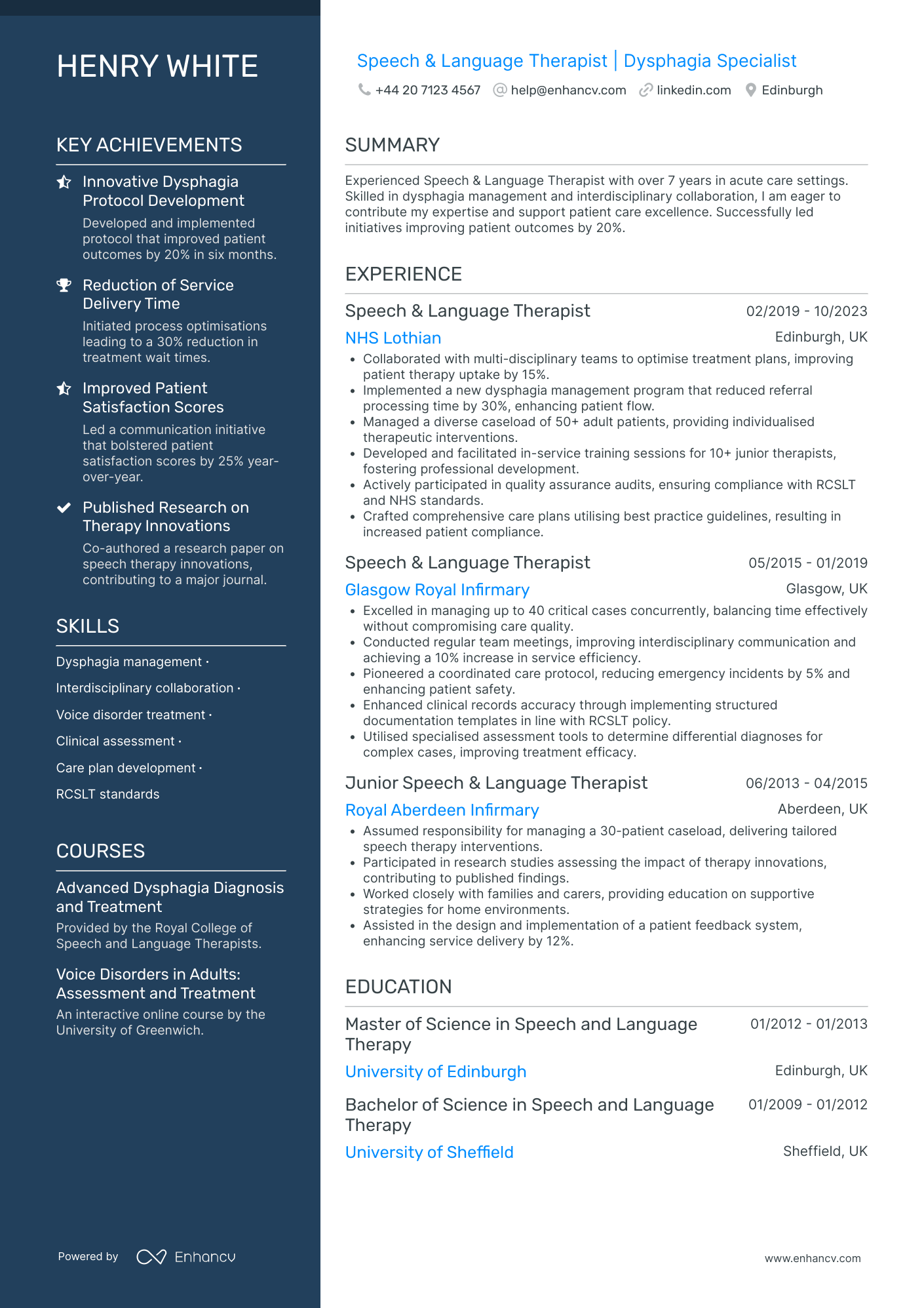
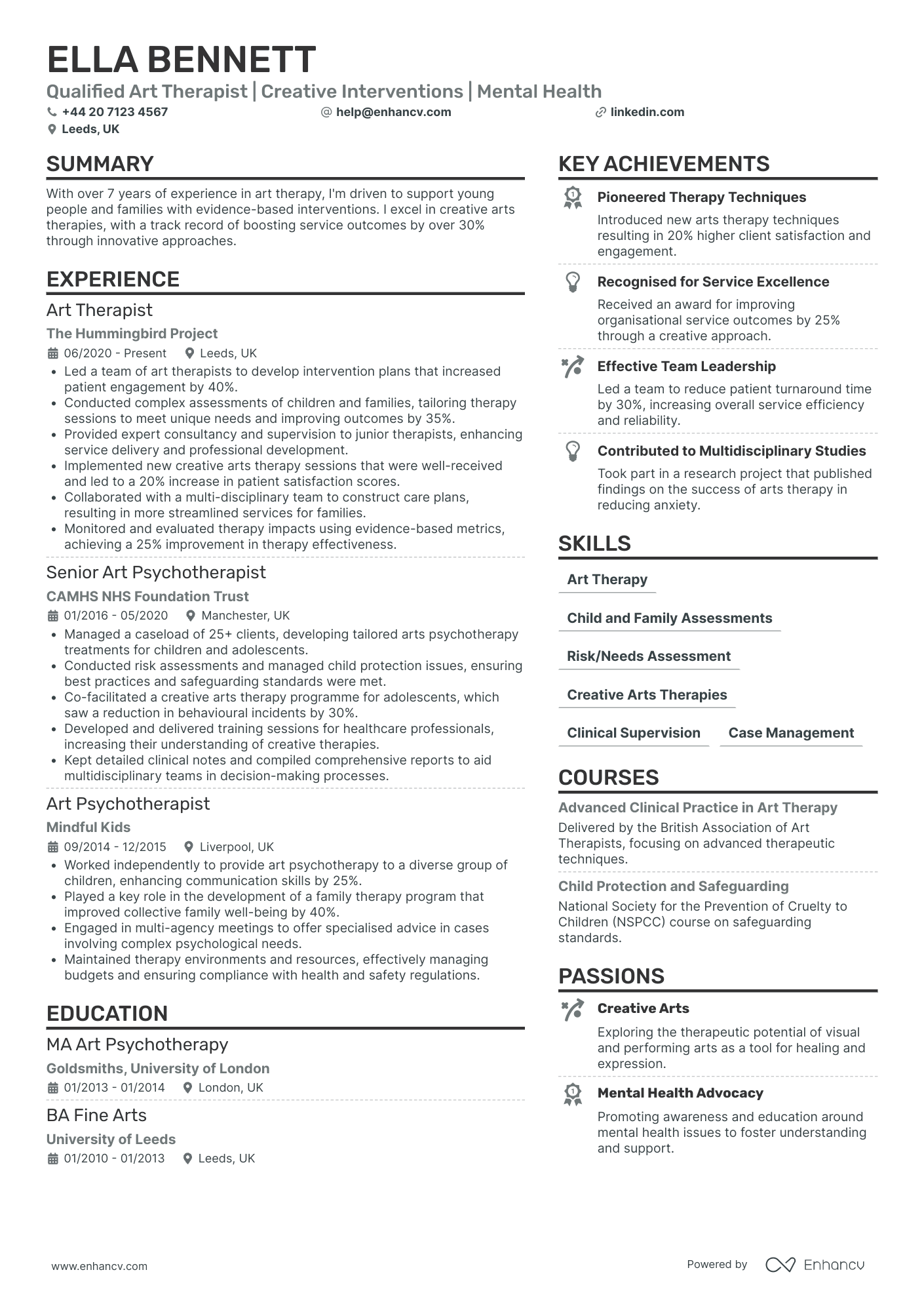
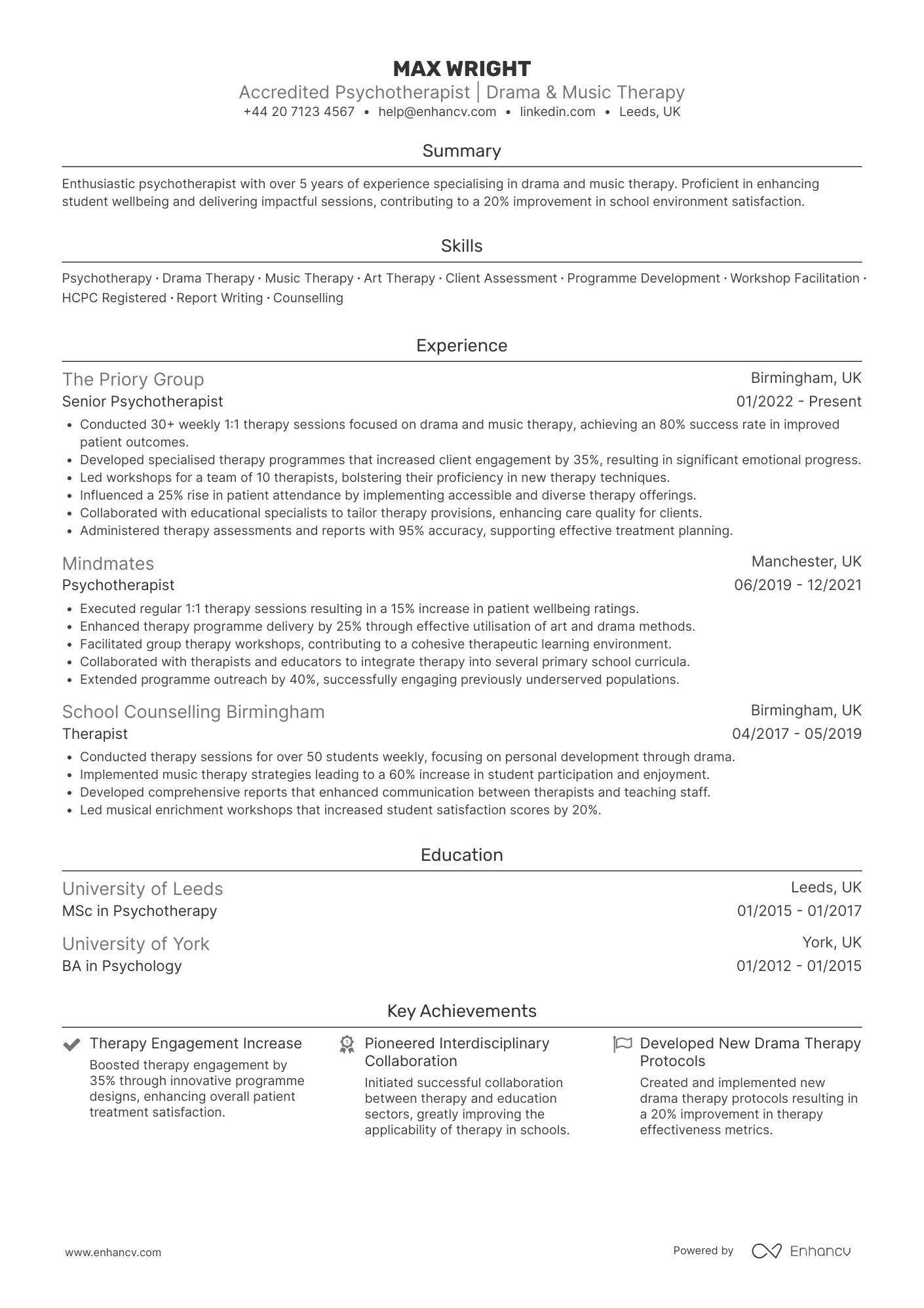
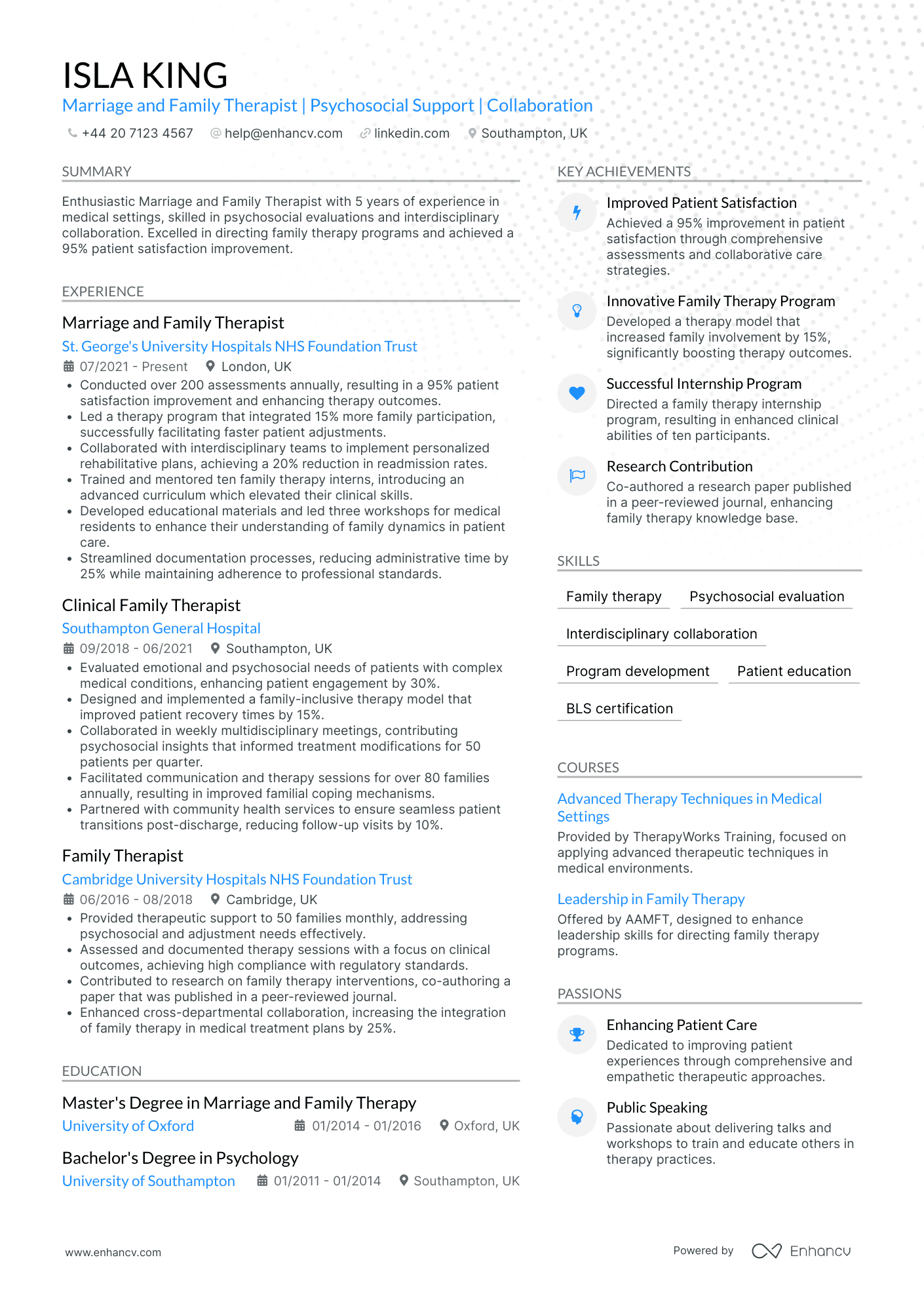
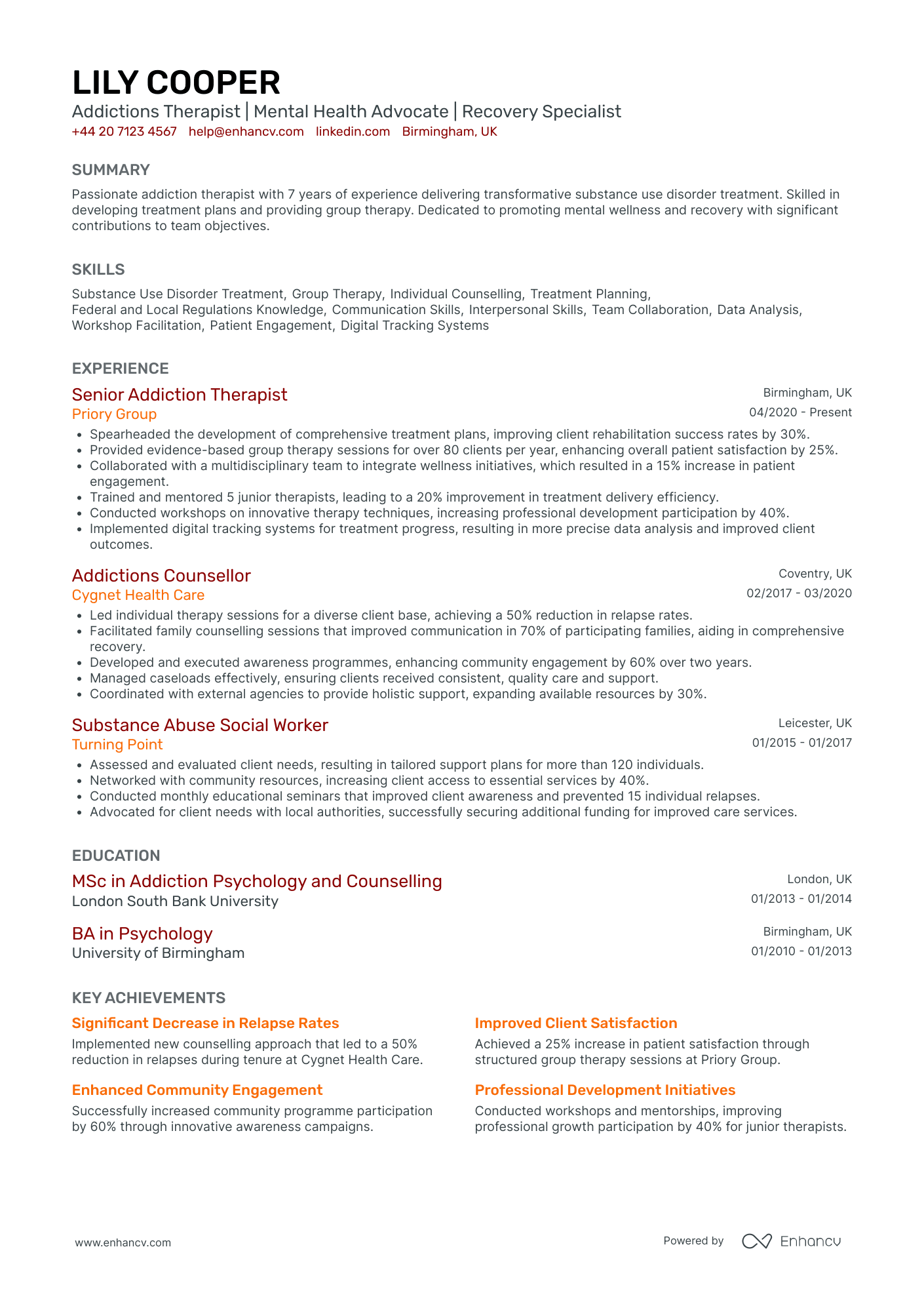
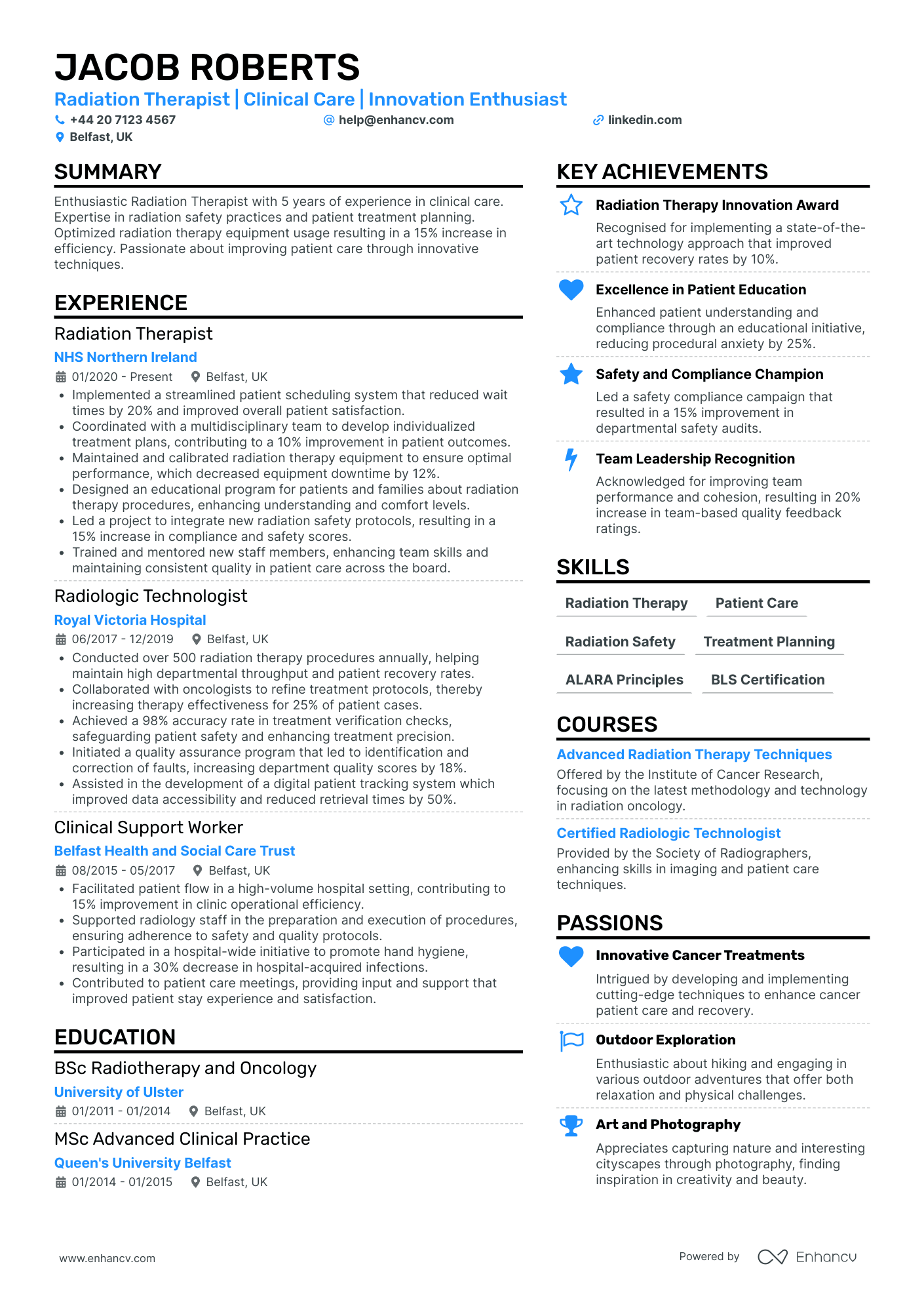
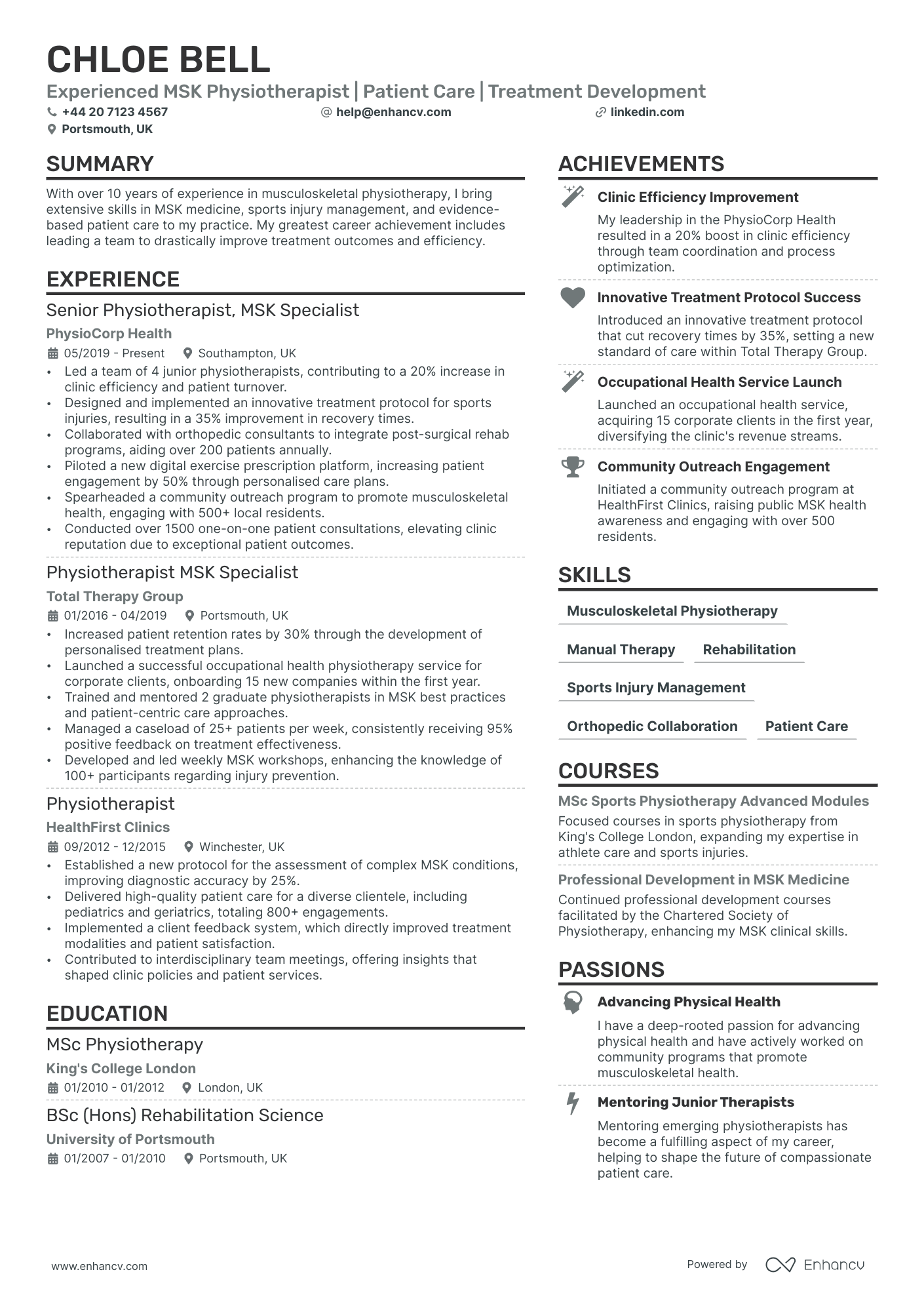
A therapist CV template earns its keep by keeping structure predictable, not by looking clever. A single-column layout parses cleanly and reads in the order a clinical recruiter expects.
Order the sections the way a therapist is assessed: header with registration, personal statement, clinical experience, skills, then qualifications and CPD. A newly qualified therapist can lift skills and placements above experience using a skills-based CV.
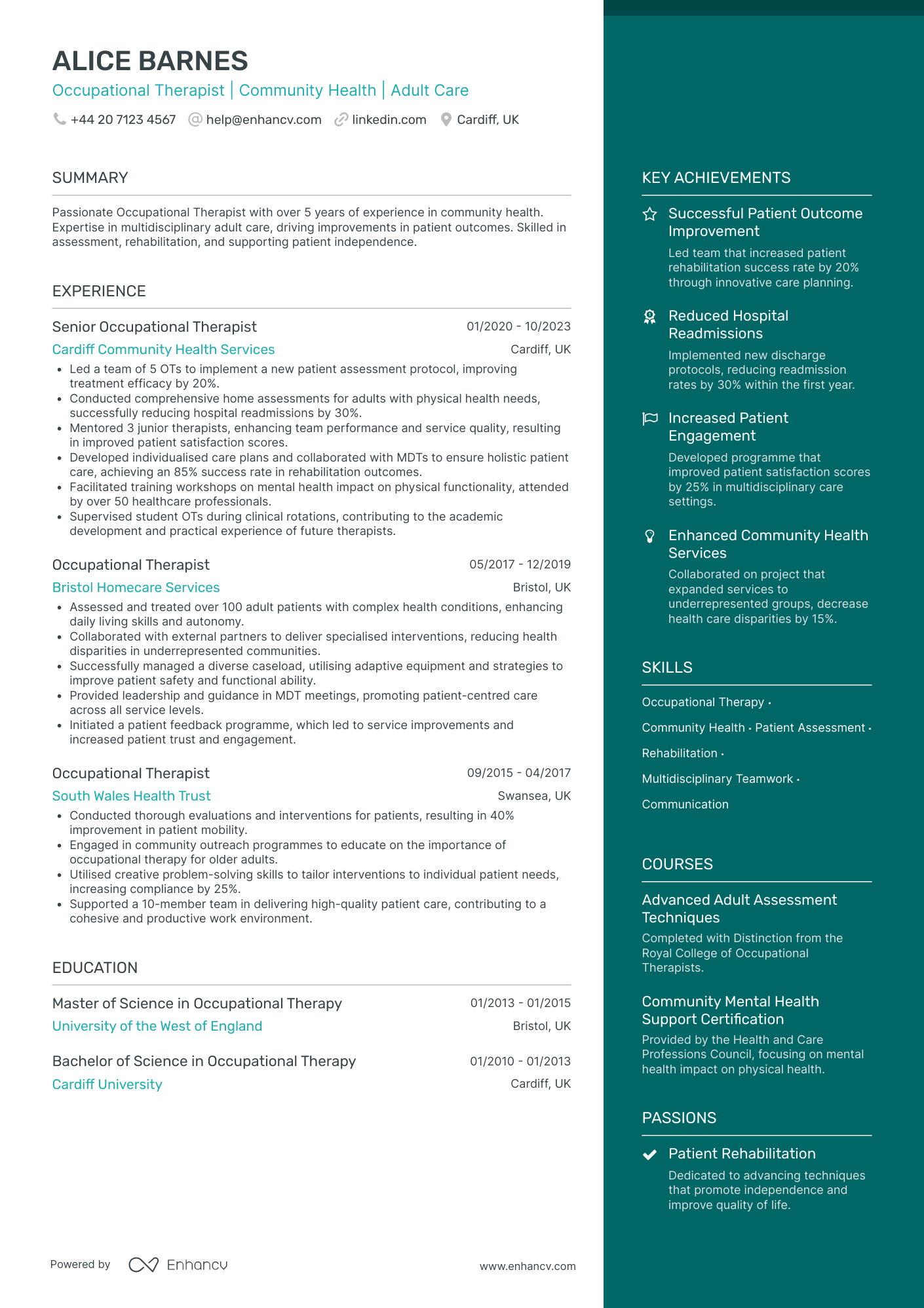
Adapt the same template to your discipline rather than hunting for a niche one. An occupational therapist leads with caseload and functional outcomes, a physiotherapist with clinical settings and rehabilitation results, and a counsellor or psychotherapist with modalities, client hours, and supervision. The frame stays the same, the evidence changes.
Be careful with free Word templates. The ones built on text boxes, columns, and tables often break when a tracking system or a colleague on a different Word version opens them, which scrambles the exact details you need read correctly.
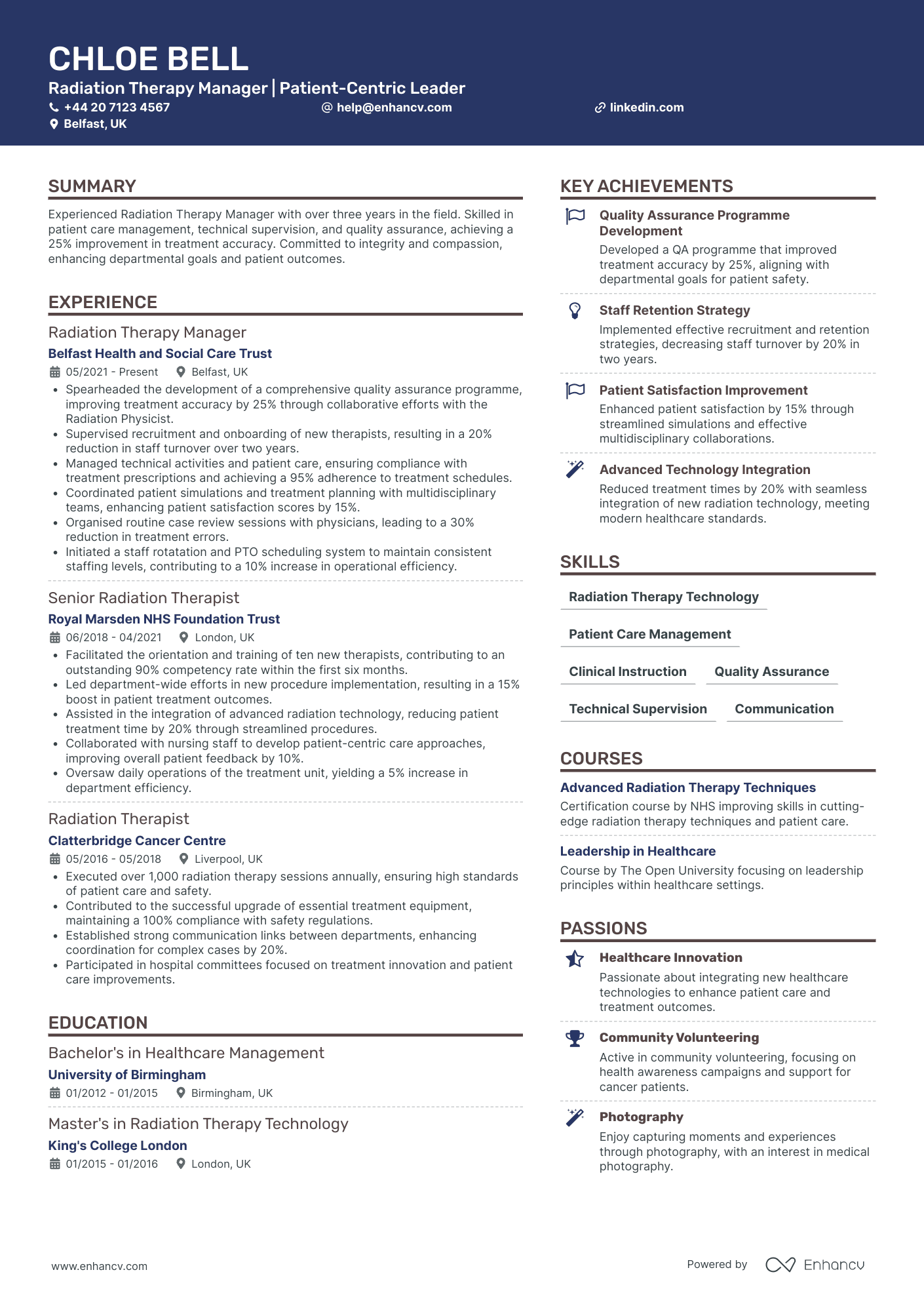
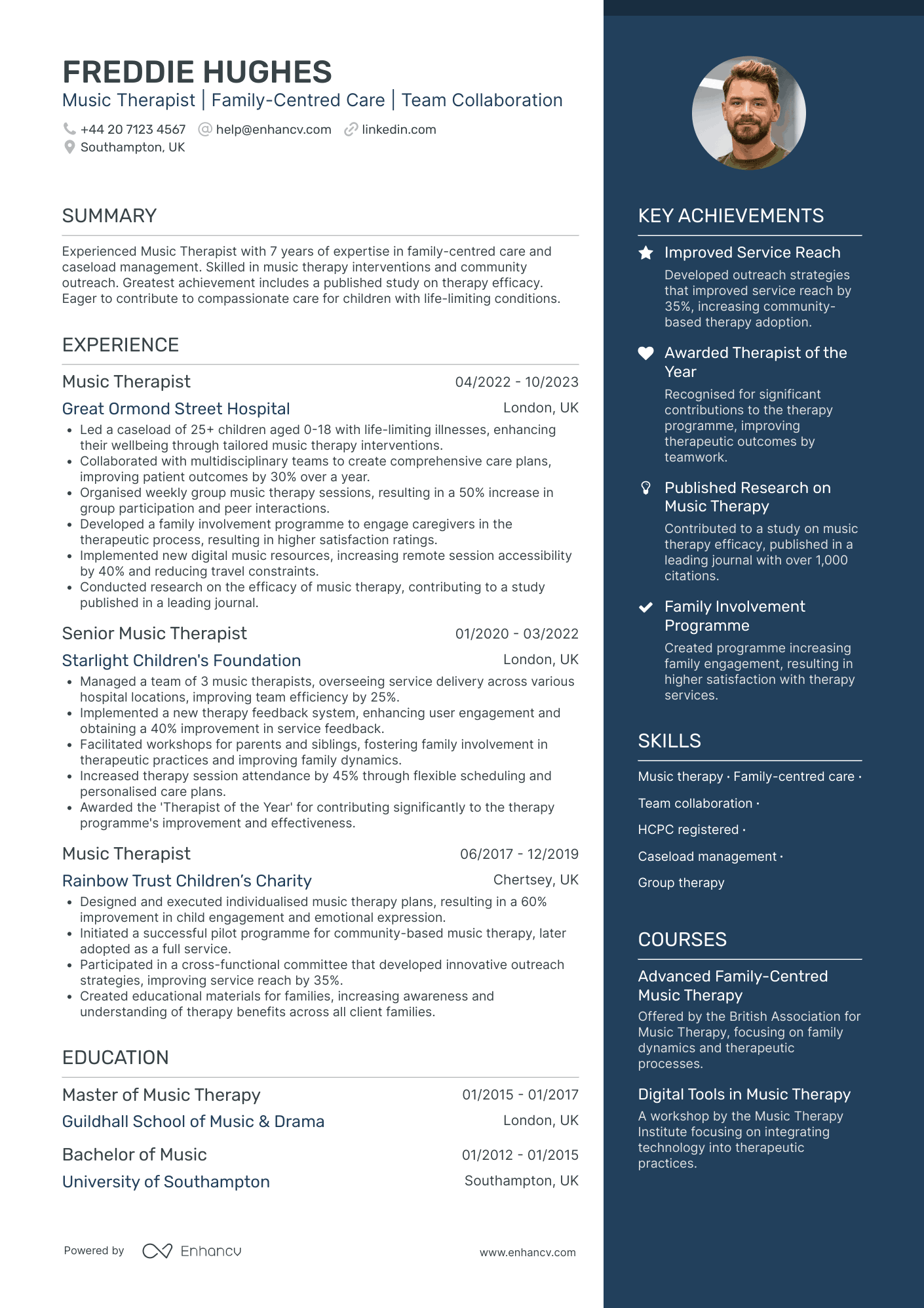
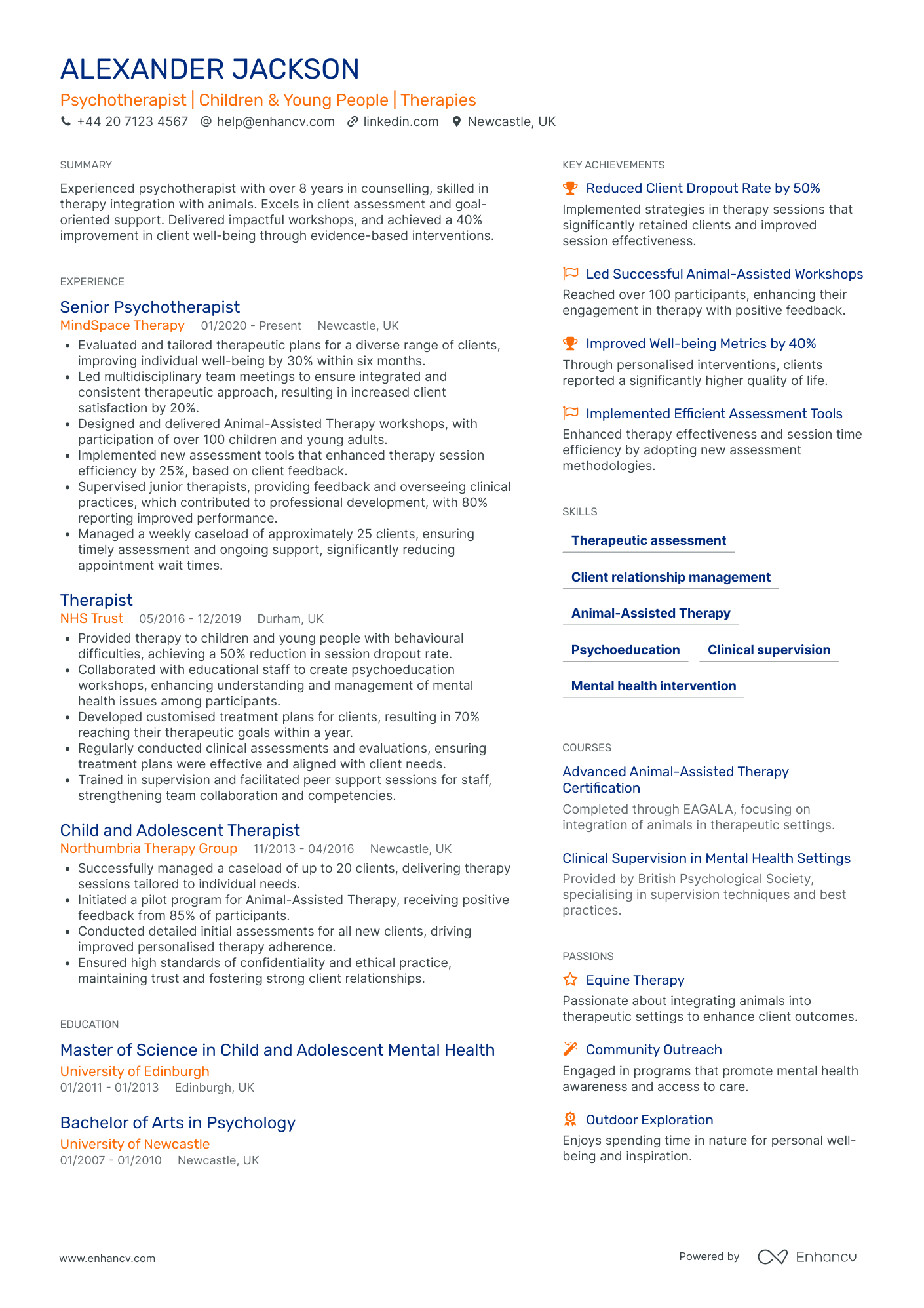
Two columns can look tidy on screen and still confuse a parser that reads left to right across both. If you use one, make sure your registration and job titles are not stranded in a narrow sidebar.
Build it from a structure that already parses cleanly rather than a blank page. Enhancv's CV templates export to a tidy single-column PDF, so your registration and caseload stay where you put them.
Is your resume good enough?
Drop your CV here or choose a file. PDF & DOCX only. Max 2MB file size.
What the UK therapist market looks like
Knowing what employers ask for shapes what your CV leads with. Here is what the UK therapist postings show right now.
| What | UK therapist roles |
|---|---|
| Where the work happens | On-site for about 80% of roles (309 of 387 UK postings in the last ~30 days, Enhancv's internal job feed) |
| Hybrid availability | Roughly 1 in 5 postings offer hybrid working (75 of 387), and fully remote is rare (3 of 387) |
| Experience level asked for | Mid 51% · lead 22% · senior 14% · entry 13% |
| Most-listed skills | Clinical reasoning, occupational therapy, evidence-based practice, clinical supervision, and patient assessment |
Two numbers should shape your CV. First, therapist work is overwhelmingly on-site, so a recruiter needs to see your base location and, for community roles, whether you drive.
Second, only about 13% of postings are pitched at entry level, so most adverts expect recent clinical experience and evidence of independent judgement. Lead with the caseload and settings you have handled, not a training wish list.
The skill demand tells you which words to mirror. Clinical reasoning tops the list, followed by discipline-specific practice, evidence-based practice, and supervision, so those belong in your experience bullets and not just a skills box.
Because "therapist" spans several professions, read each advert for the discipline it actually wants and match your language to it. A role that repeats "occupational therapy" and "functional assessment" is not screening for the same person as one built around "psychotherapy" and "clinical modalities".
Pay varies widely by discipline and setting, from NHS bands to private practice and locum rates, so anchor your expectations to the specific advert rather than a single headline figure.
Writing your therapist personal statement
Four sentences at the top: your discipline and registration, your years and settings, one or two clinical strengths, and one concrete result. Keep it specific, and see more personal statement examples if the opening line will not come.
Skip the adjective soup every other CV opens with. "Passionate, caring, and hardworking" tells a clinical recruiter nothing they can screen for.
Rewrite it for each application so the setting and specialism match the advert. The statement for a stroke rehabilitation post should read differently from the one for a paediatric or mental health role, even when the core experience is the same.
Lead with the discipline, the registration, and the evidence instead.
Therapist CV personal statement example (occupational therapist)
HCPC-registered occupational therapist with six years across acute and community rehabilitation, currently managing a caseload of 25 to 30 adults on stroke and falls pathways. Strong in clinical reasoning, functional assessment, and goal-based treatment planning, with a record of cutting average discharge delays on my ward by 20%. Looking to bring evidence-based practice and confident multidisciplinary working to a senior therapist role in a community NHS trust near Manchester.
What to avoid
Passionate and caring therapist with excellent communication skills and a strong work ethic. A dedicated team player who always goes the extra mile for clients and is looking for a new challenge in a rewarding role.
The same shape works for any discipline once you swap in the right registration and evidence. Here is the counselling version.
Therapist CV personal statement example (counsellor)
BACP-accredited counsellor with five years in primary care and third-sector settings, delivering short-term CBT and person-centred therapy to a weekly caseload of 18 clients. Experienced in risk assessment, structured clinical notes, and outcome monitoring with CORE and GAD-7, with a 90% treatment completion rate across the last year. Seeking a counsellor role in an NHS Talking Therapies service in the West Midlands.
Writing your therapist experience section
Write each role with a dated heading, then bullets that lead with a verb and land on an outcome. For the mechanics, see work experience on a CV.
Therapy is more measurable than it feels. Caseload size, waiting times, discharge rates, supervision load, and standardised outcome measures are all CV achievements a recruiter can weigh.
Show progression where you have it. Moving from a Band 5 to a Band 6 role, or taking on supervision and service development, tells a recruiter you grow into responsibility, so make the step visible in the dates and the duties.
Give each entry the setting and the client group, not just the job title. "Community mental health team, adults with complex needs" tells a recruiter more about your caseload than "therapist" ever will.
Quantify without breaching confidentiality. Caseload numbers, waiting-time changes, completion rates, and aggregate outcome scores are all safe to cite, and none of them names a patient.
Mirror the keywords the advert uses wherever they are true of you. Enhancv's CV tailoring feature reads the advert and suggests the wording to match, which saves rewriting each application from scratch.
- Manage a rolling caseload of 25 to 30 adults across neuro-rehabilitation, completing functional assessments and goal-based treatment plans
- Cut average waiting time for initial assessment from six weeks to four by redesigning the triage process with the multidisciplinary team
- Supervise two junior therapists and three students, signing off competencies and leading weekly clinical supervision
- Introduced standardised outcome measures that sharpened discharge reporting and evidenced a 15% gain in patient-reported function

PRO TIP
Therapist adverts name specific competencies, not vague qualities. Mirror the ones you can back: clinical reasoning, risk assessment, evidence-based practice, clinical supervision, and standardised outcome measures. If you have used a named framework or tool, write it exactly as the advert does.
When we read a therapist CV, the first thing we look for is the discipline and the registration, stated plainly in the top two lines. A recruiter screening for an HCPC-registered occupational therapist will not guess that is what you are. After that we want caseloads, outcome measures, and supervision, the real evidence of clinical judgement. Name the setting, quantify the work, and let the numbers carry the claim your adjectives cannot.
Skills for your therapist CV
Read a dozen live therapist adverts and the same demands repeat, and they are clinical, not generic. Clinical reasoning, occupational therapy, evidence-based practice, clinical supervision, and patient assessment are the skills that recur most often in UK therapist postings on Enhancv's internal job feed. List those hard skills in the words the adverts use.
Name the tools and frameworks your discipline runs on, because a recruiter reads those as proof rather than a claim. Standardised outcome measures, risk assessment protocols, and named models such as COPM, CORE, or a specific therapeutic modality carry more weight than the word "assessment" on its own.
The soft skills that matter here are checkable ones: communication, empathy, active listening, and reflective practice. Prove each in a bullet rather than only claiming it.
Show the soft skill through the situation, not the adjective. "De-escalated a distressed patient and adjusted the session plan on the spot" reads as real clinical composure, where "excellent interpersonal skills" reads as filler.
List only what you can stand behind in an interview or on placement. Keep the skills section tight, six to ten hard skills is plenty, and evidence anything you name in your experience.
Top skills for your therapist CV:
Clinical reasoning
Patient assessment
Evidence-based practice
Treatment planning
Clinical supervision
Risk assessment
Standardised outcome measures
Multidisciplinary team working
Communication
Empathy
Active listening
Resilience
Reflective practice
Qualifications and registration UK employers check
Registration is the first thing a therapist CV has to settle. Occupational therapists, physiotherapists, speech and language therapists, arts therapists, and practitioner psychologists must be HCPC-registered, and counsellors and psychotherapists are usually asked for BACP, UKCP, NCPS, or BABCP membership. Put the body and your registration number in the header.
List your degree and any post-registration training in your education section, with the qualifications that map to the role named in full.
If you are newly qualified, this section carries more weight, so give your practice placements the same treatment as a job. Name the settings, the client groups, and what you did under supervision, and mention a preceptorship if you have completed or started one.
Continuing professional development matters for a regulated profession, so name recent CPD, mandatory training, and specialist courses. Adding the certificates you hold saves the employer a question and signals you are keeping your registration current.
Conclusion
Name your discipline and registration up front, lead with recent clinical experience, and quantify the caseloads, outcomes, and supervision that prove your judgement.
Then tailor it to the discipline and setting each advert actually wants, so a recruiter never has to guess which therapist you are.
Pair the CV with a short cover letter that says why this setting, and you give a clinical recruiter every reason to shortlist you for an interview.
Author's take - The Enhancv team
When we read a therapist CV, the first thing we look for is the discipline and the registration, stated plainly in the top two lines. A recruiter screening for an HCPC-registered occupational therapist will not guess that is what you are. After that we want caseloads, outcome measures, and supervision, the real evidence of clinical judgement. Name the setting, quantify the work, and let the numbers carry the claim your adjectives cannot.