



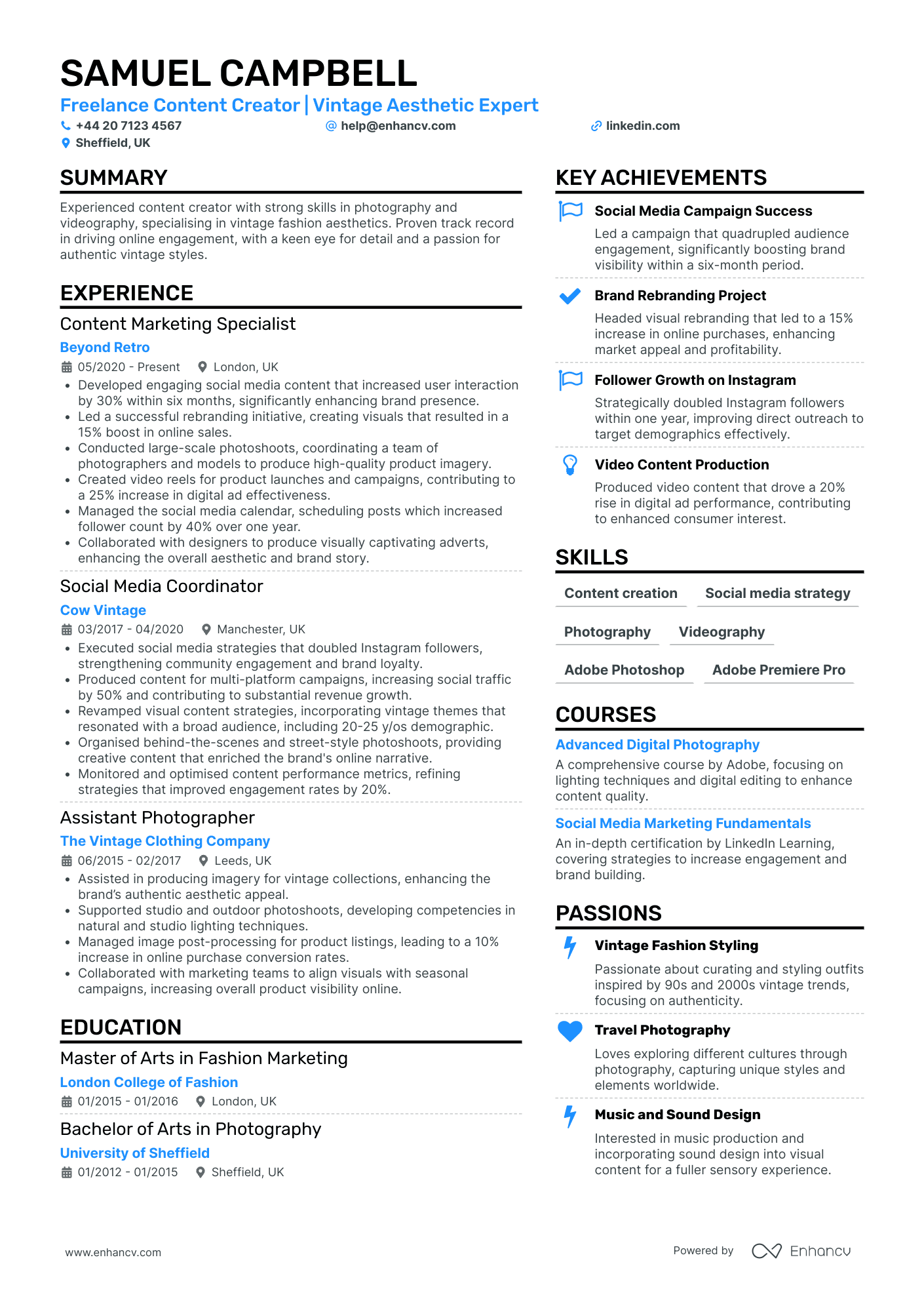
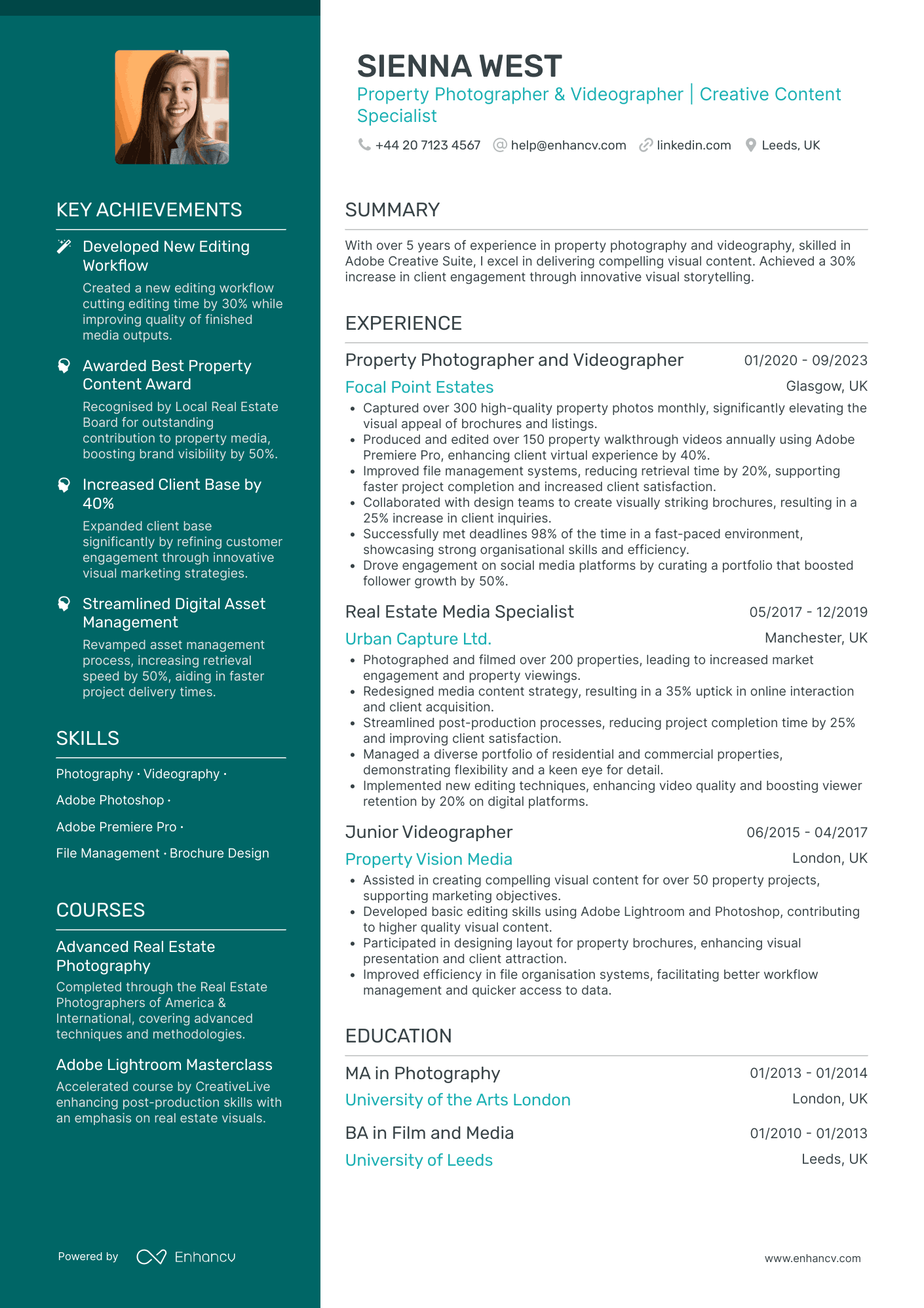
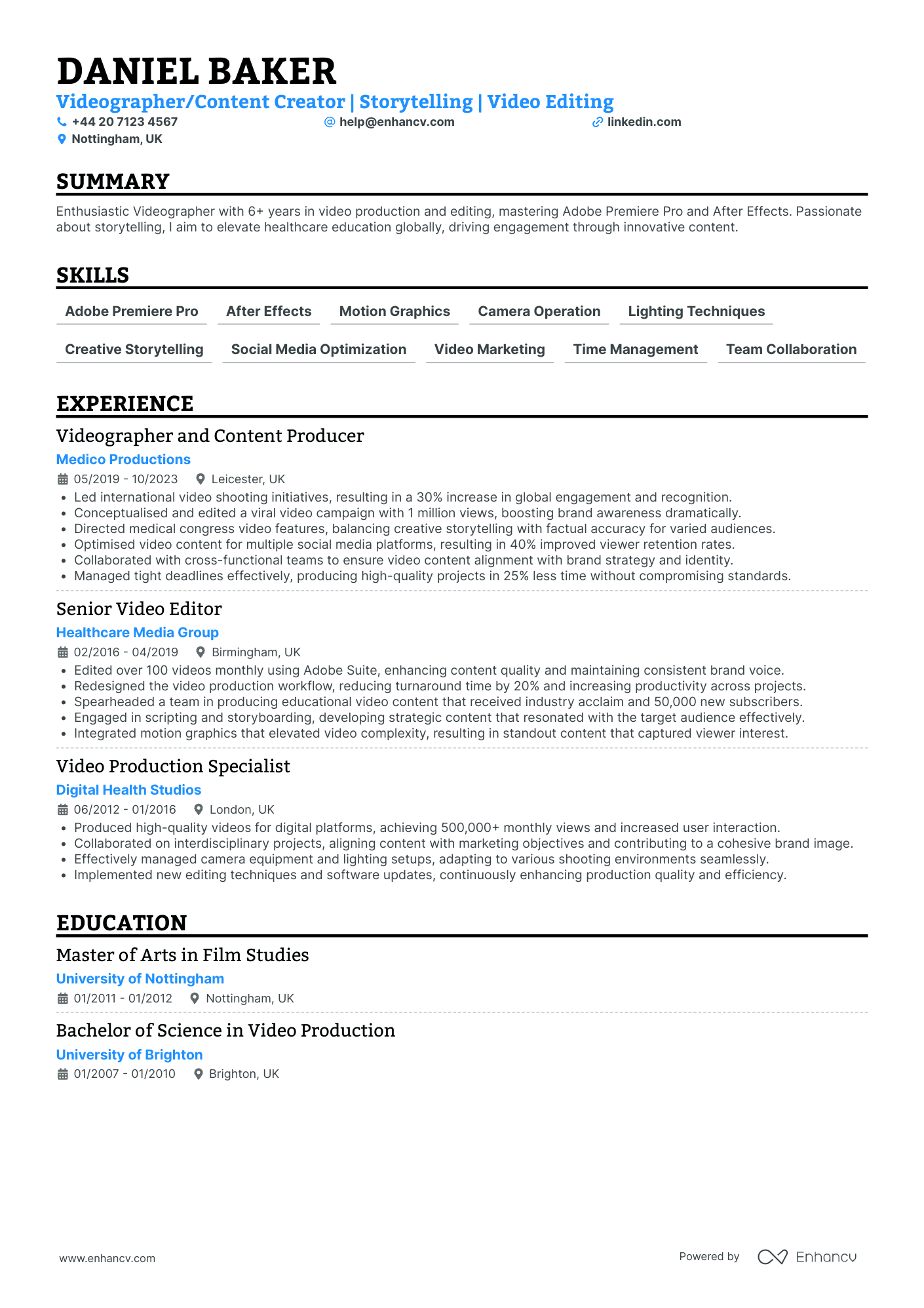
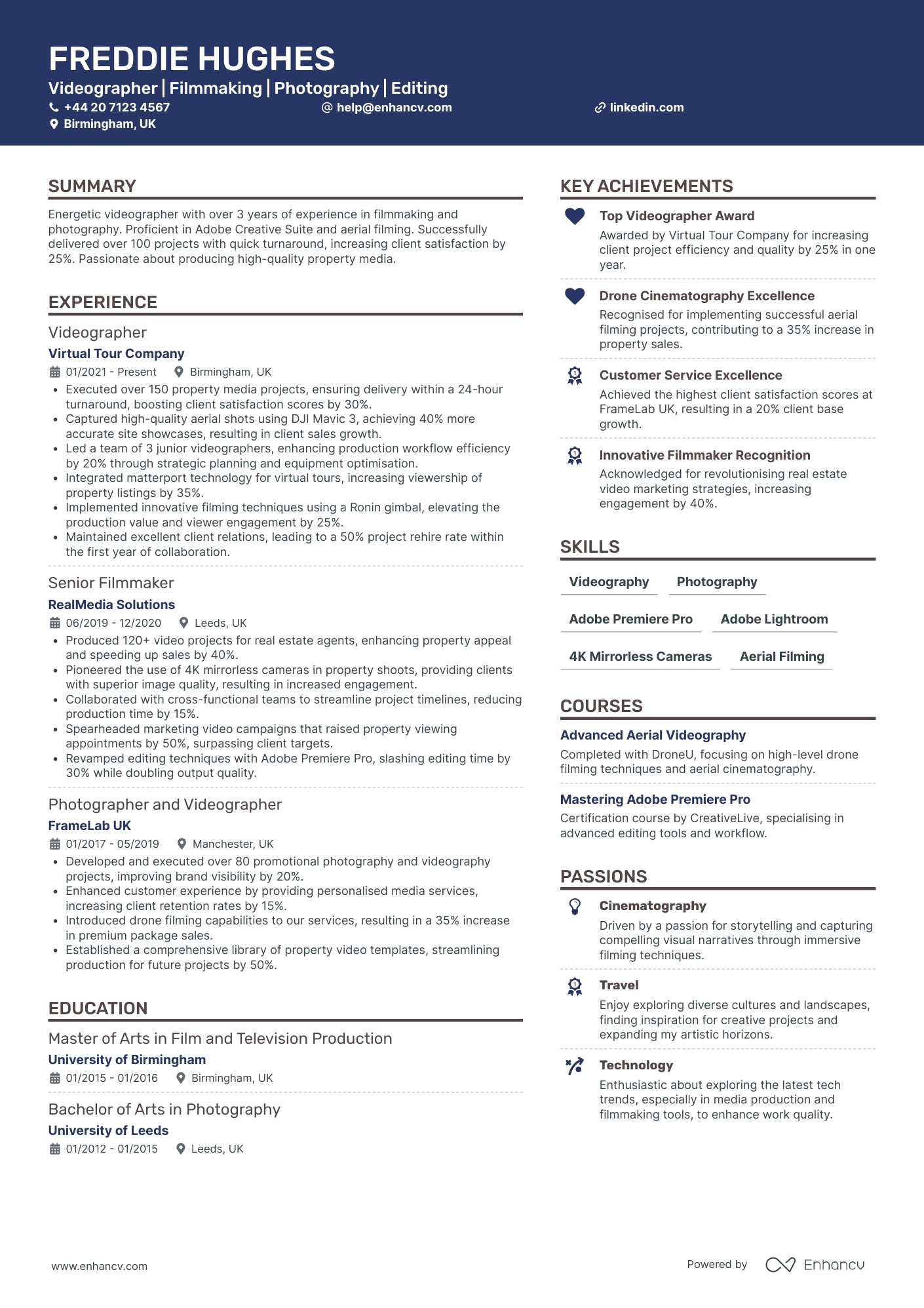
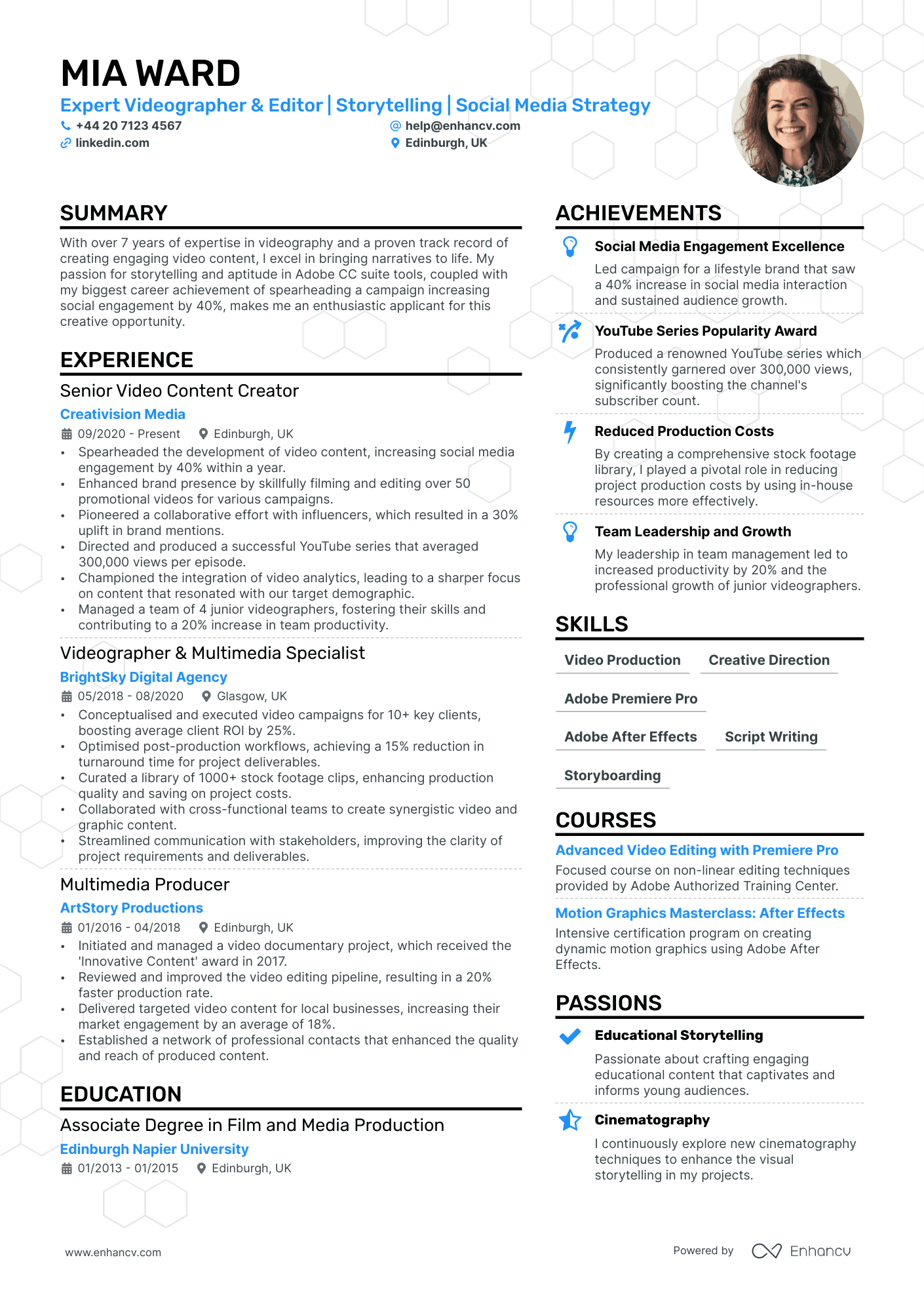
A videographer CV lives or dies on one link. Before anyone reads a word about you, they click the showreel, and the CV's only real job is to get them there fast and make them press play.
Most videographer CVs bury that link under a paragraph of adjectives and a list of every camera the applicant has ever touched. The ones that get work lead with the reel, name the clients and the formats, and prove the shoots actually shipped.

Key takeaways
- Your showreel is the CV. Put one clean, clearly labelled link in the header, not buried at the bottom.
- Keep the reel to 60 to 90 seconds of your strongest, most relevant work, and lead with the kind of job you want more of.
- List projects like a filmography: client, format, your exact role, and the result.
- Say whether you shot, lit, directed, recorded sound, and edited. "Shot and edited" is a different job to "second camera".
- Put your base, your own kit, and how far you will travel in the header, because much of the work is on location.
- Send a PDF unless the advert asks for a Word file, and keep the layout clean enough to survive tracking software.
Building the showreel and portfolio that get you hired
For a videographer, the showreel is the CV. Everything else on the page exists to get a hiring manager to click it, so the reel and the link to it earn the top of your CV.
Put one clean, clearly labelled link in the header. "Showreel" or "Portfolio", with a URL that opens on a phone, because that is where most people will watch it. A dead link or a login wall ends the application before it starts. If you want the fundamentals first, see how to write a CV.
Keep the reel short and sharp. Sixty to ninety seconds of your strongest, most relevant work beats a five-minute anthology of everything you have ever shot. Lead with the kind of work you want more of, because a reel that opens with weddings tells a brand you are a wedding videographer.
Cut more than one version. Applying for corporate and brand work, lead with interviews, product films, and clean motion graphics. Going for events, show pace, coverage, and sound. Two or three tailored cuts beat one generic reel.
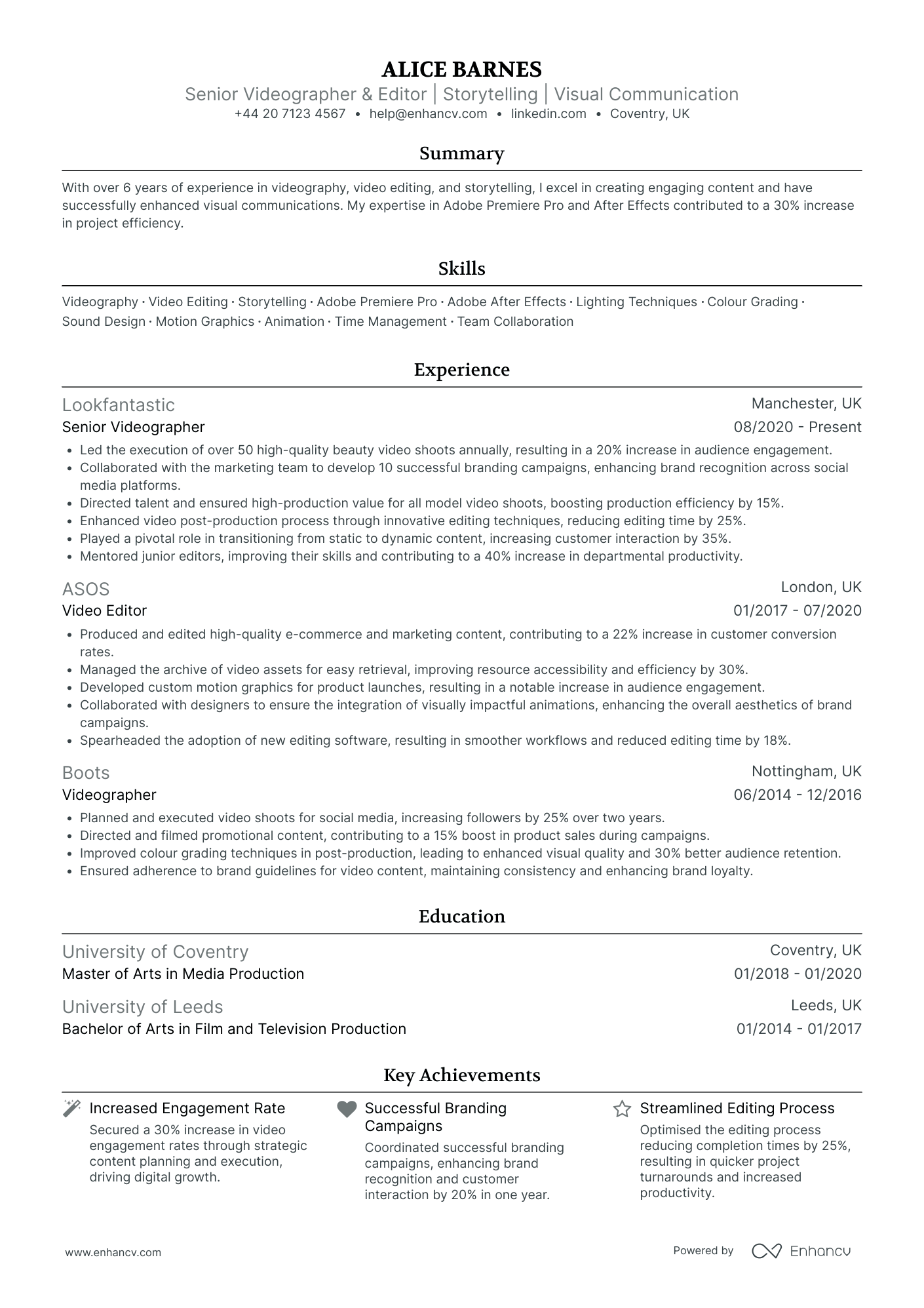
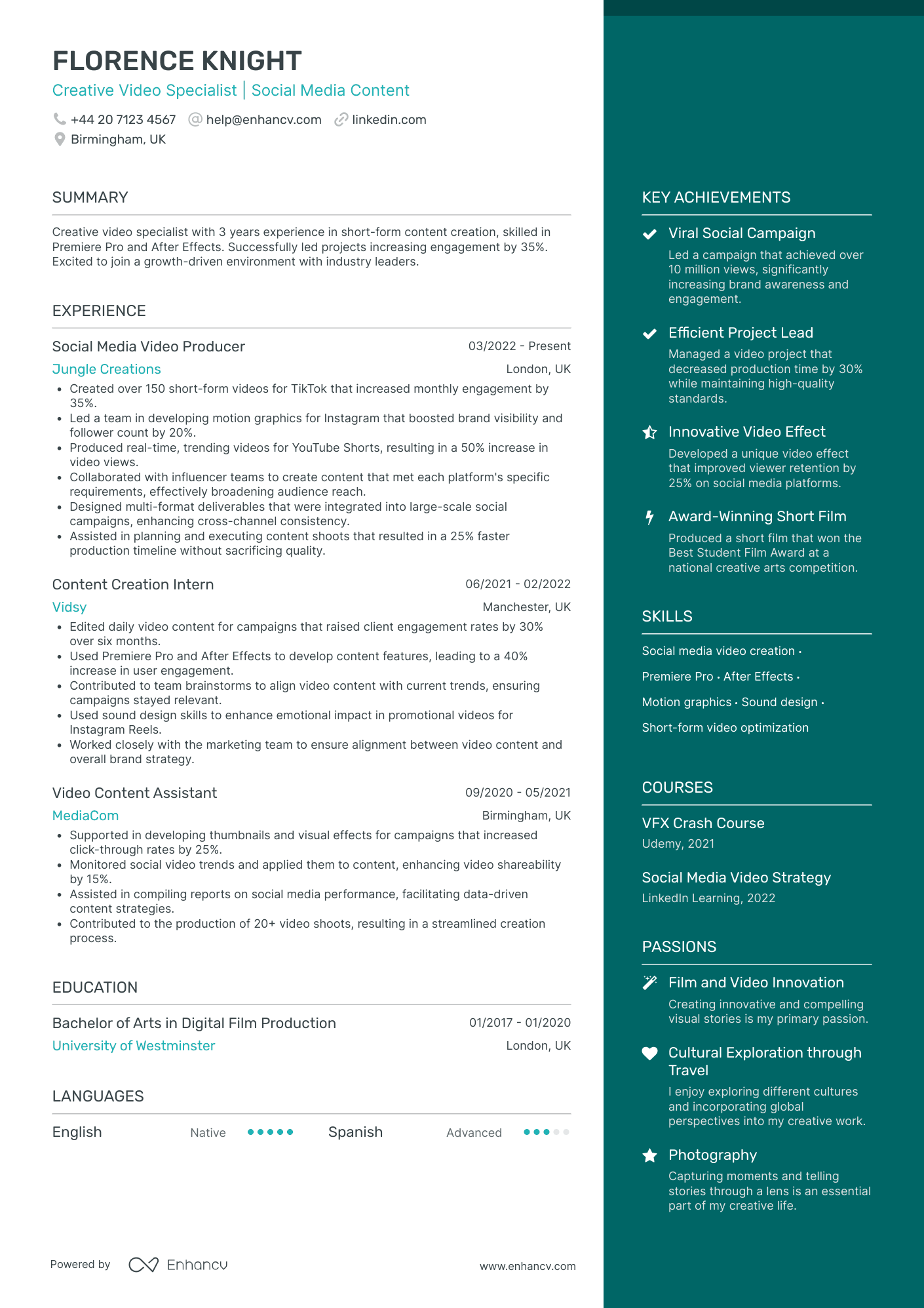
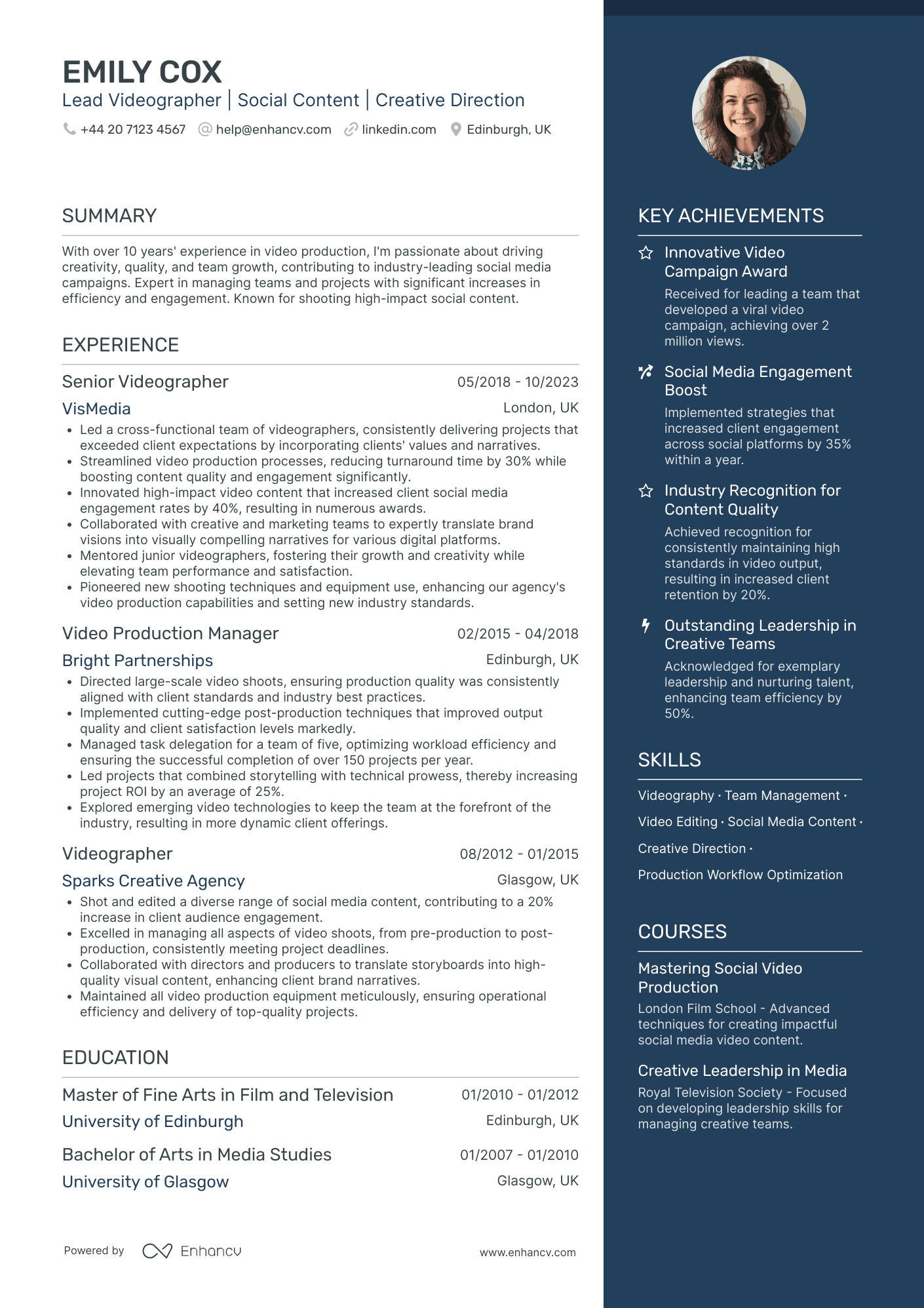
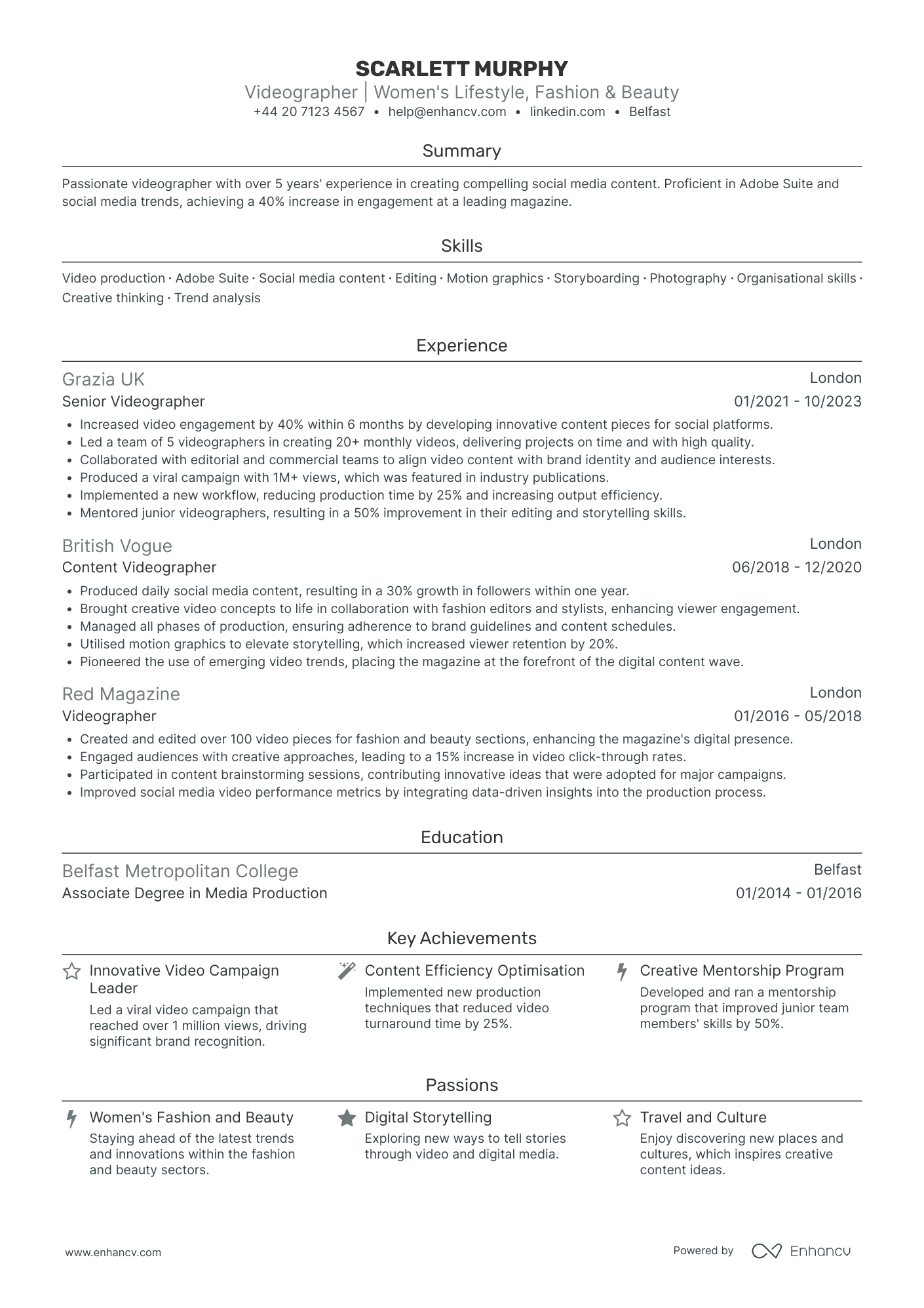
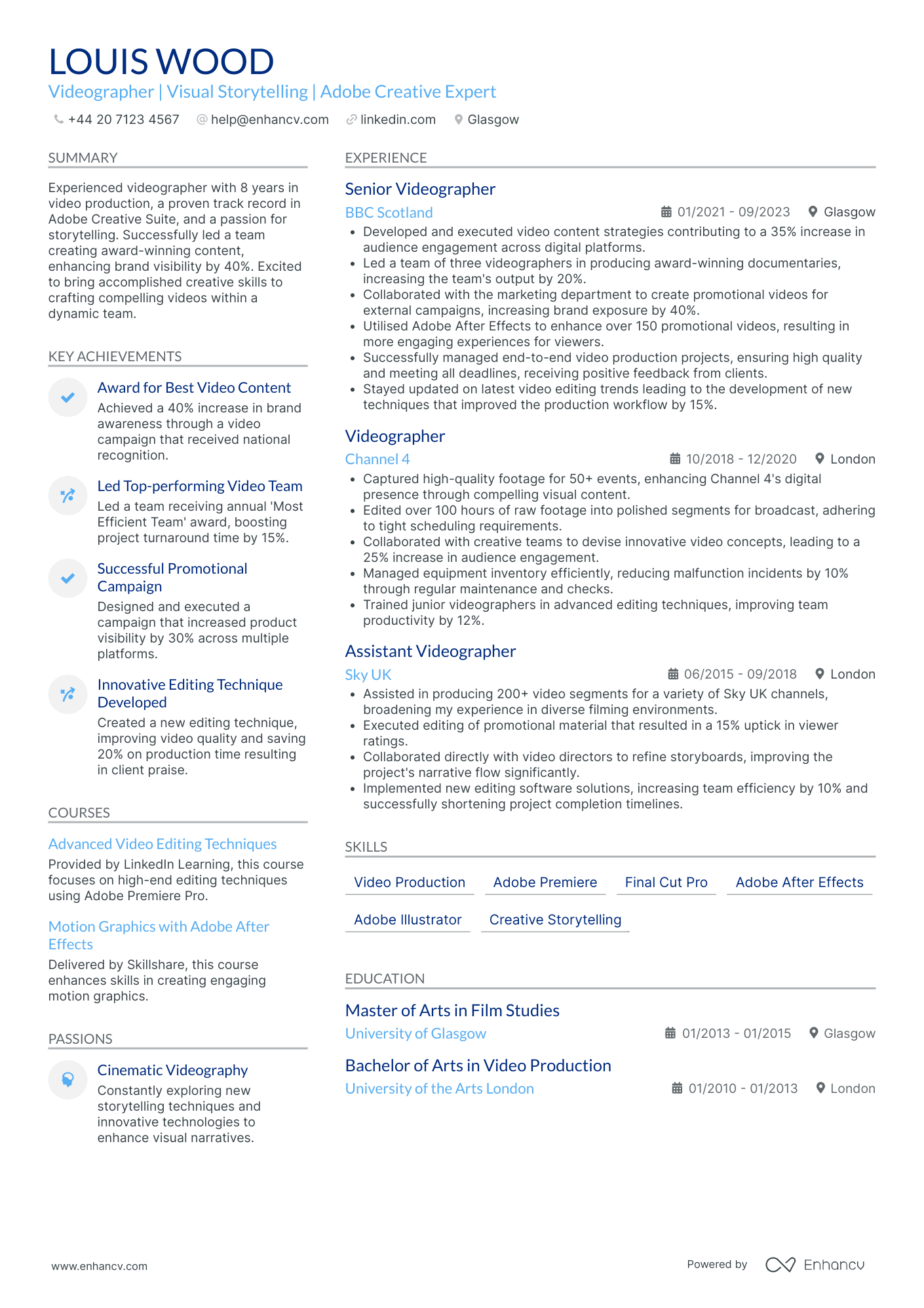
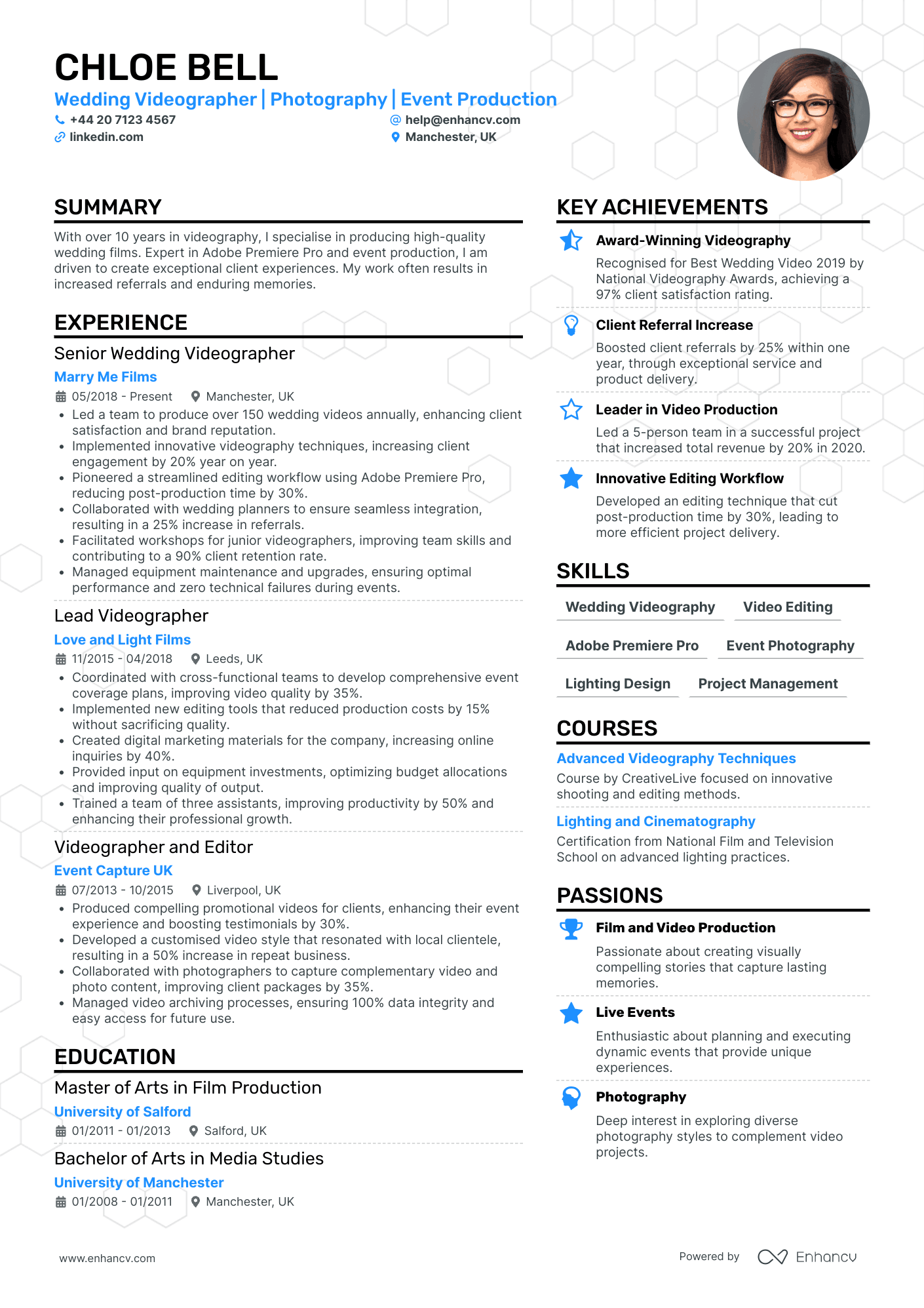
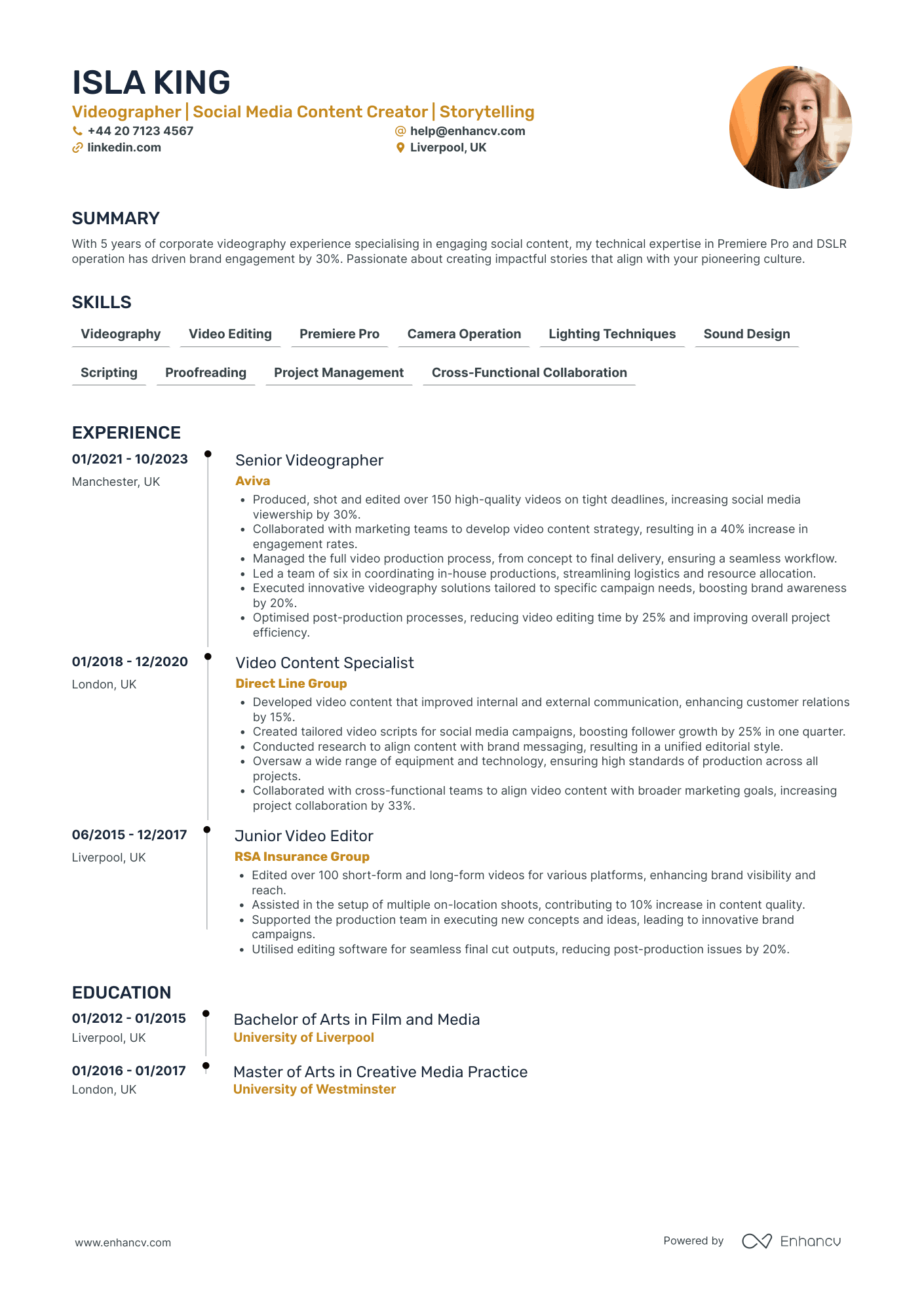
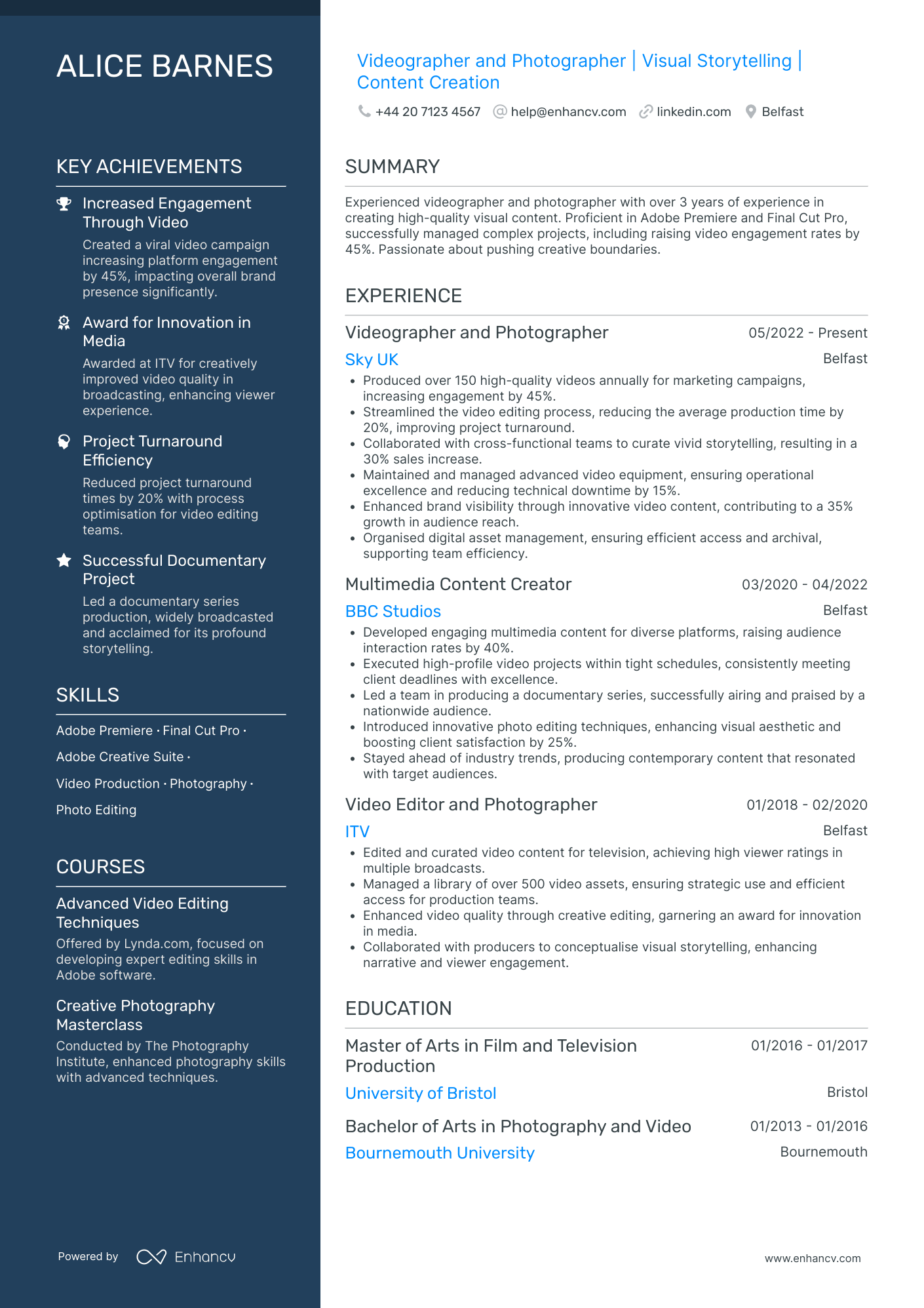
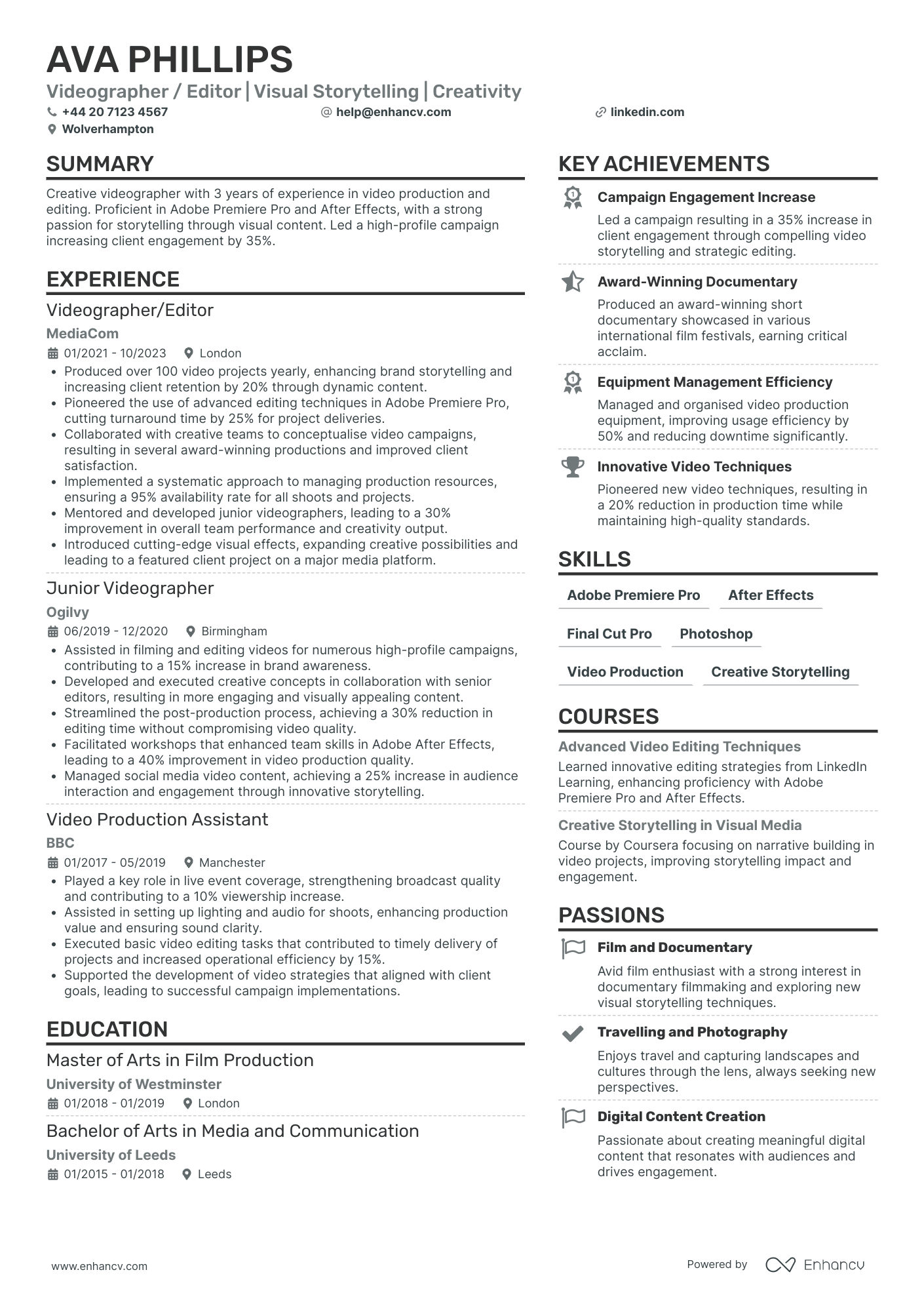
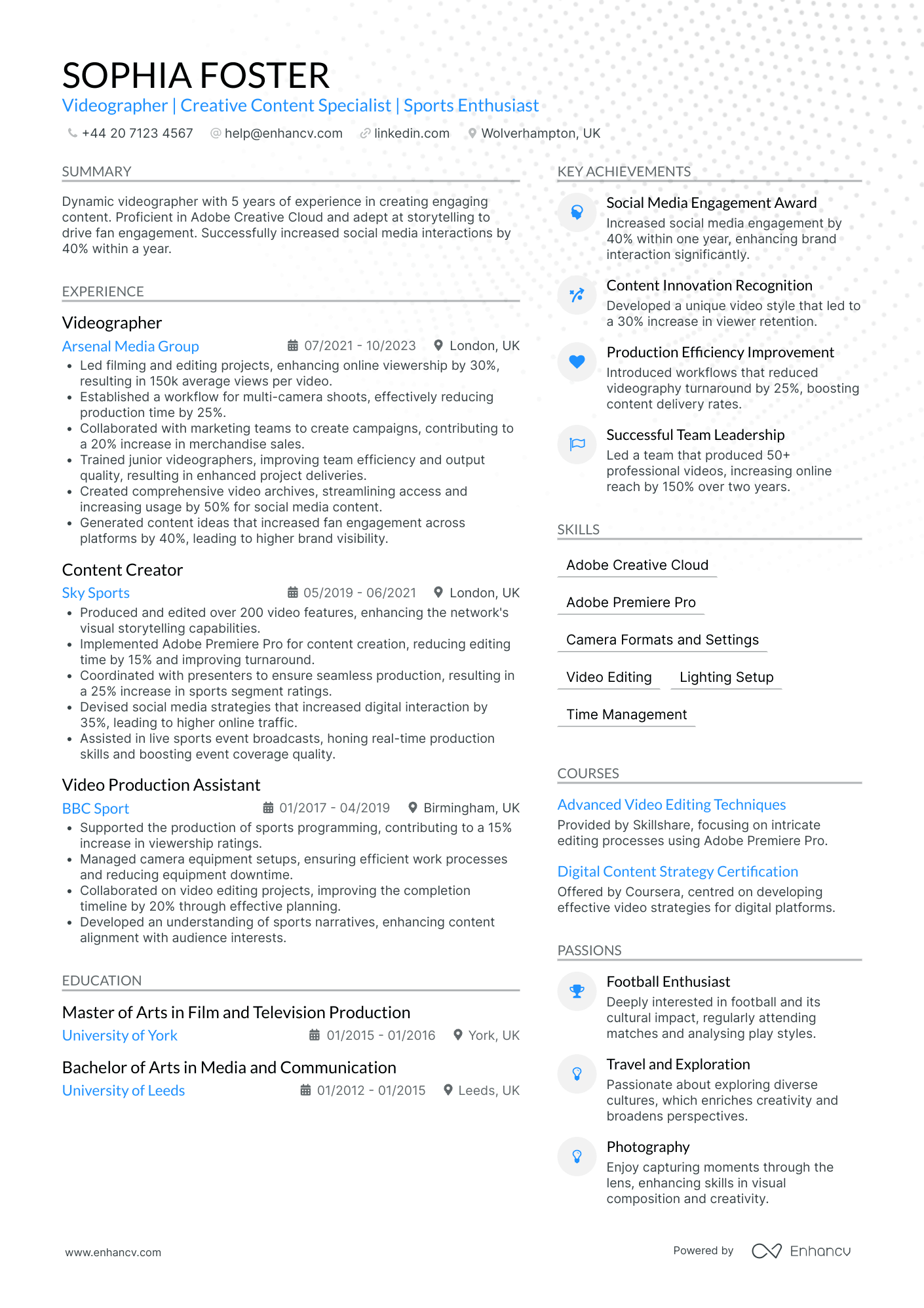
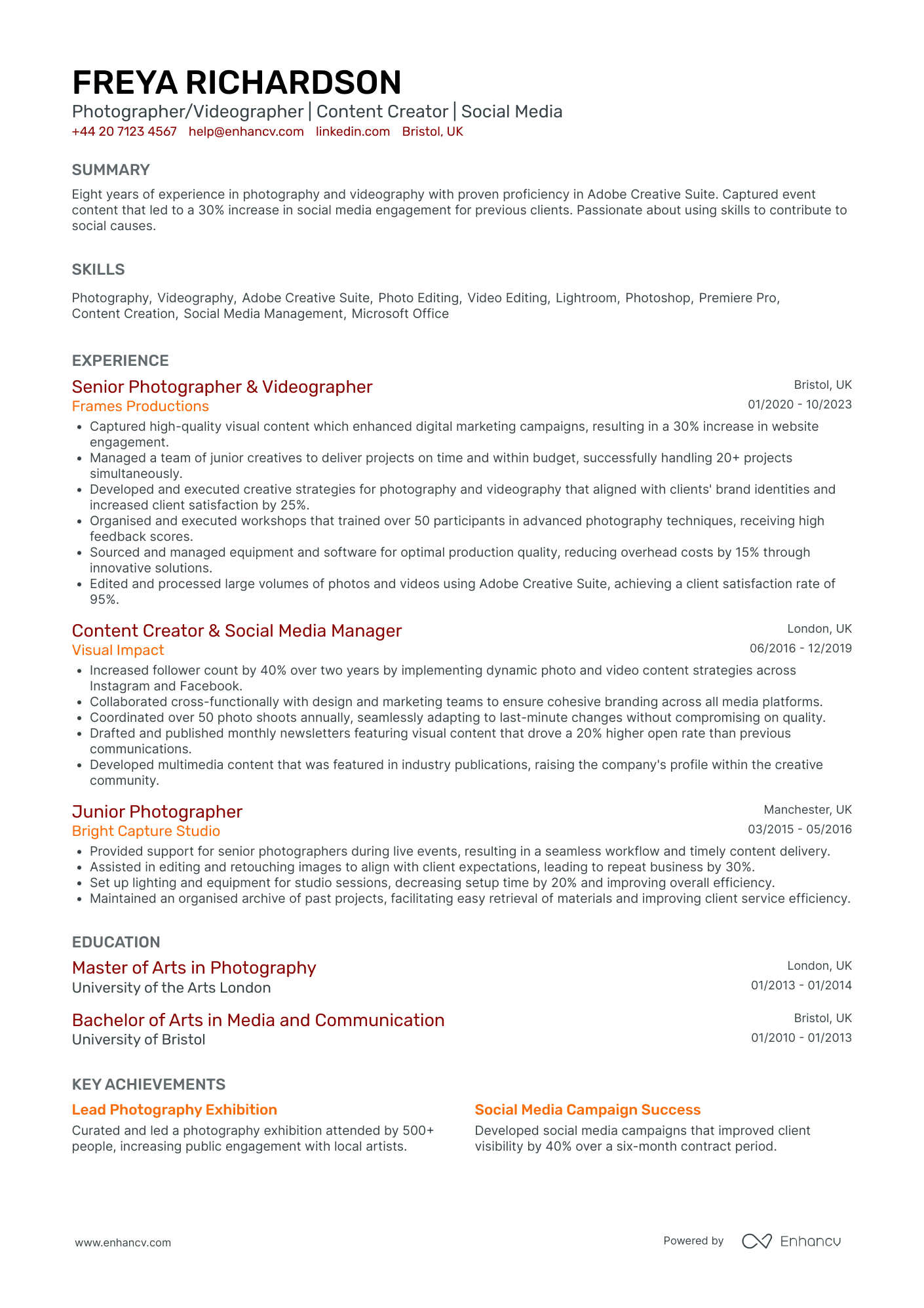
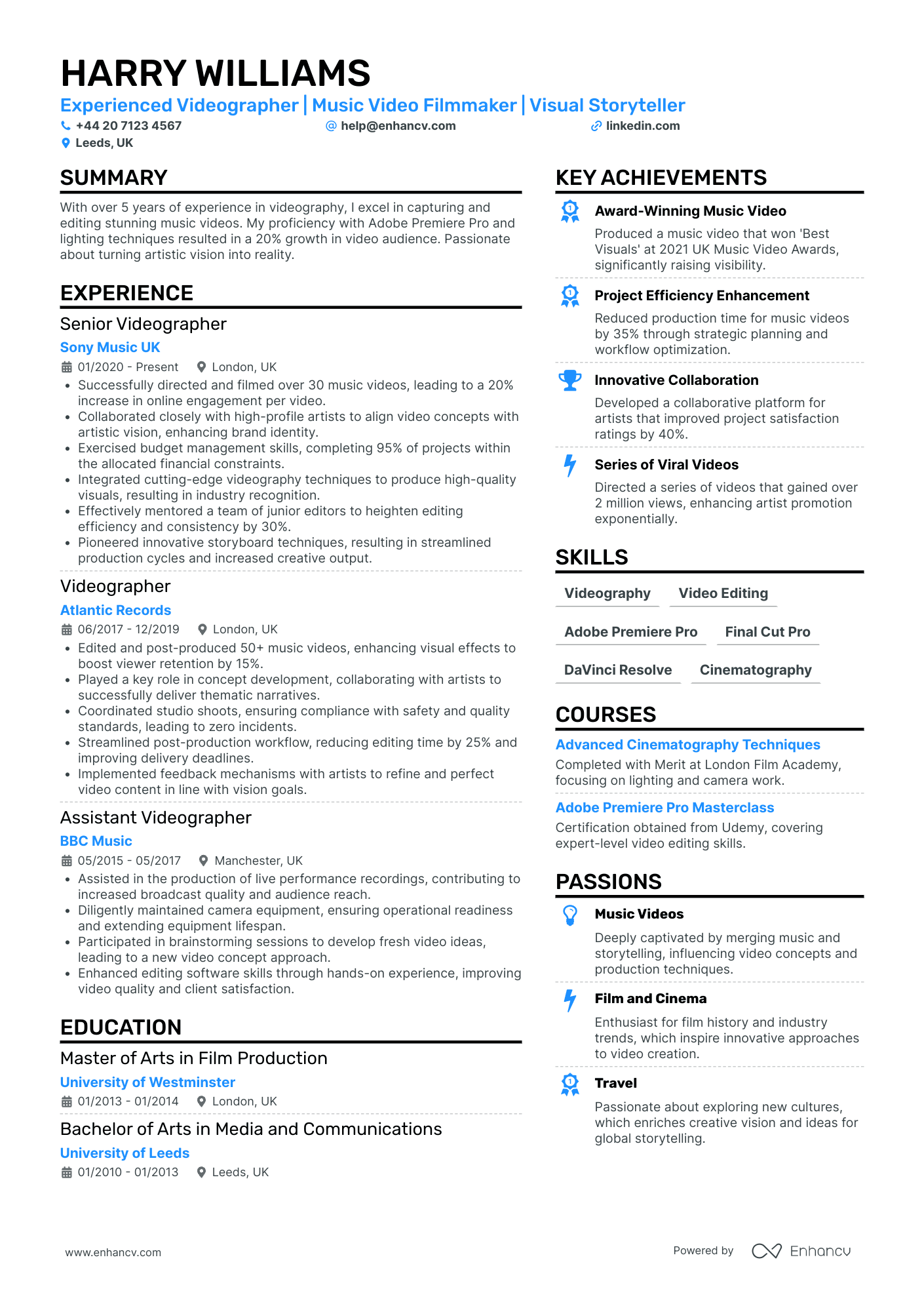
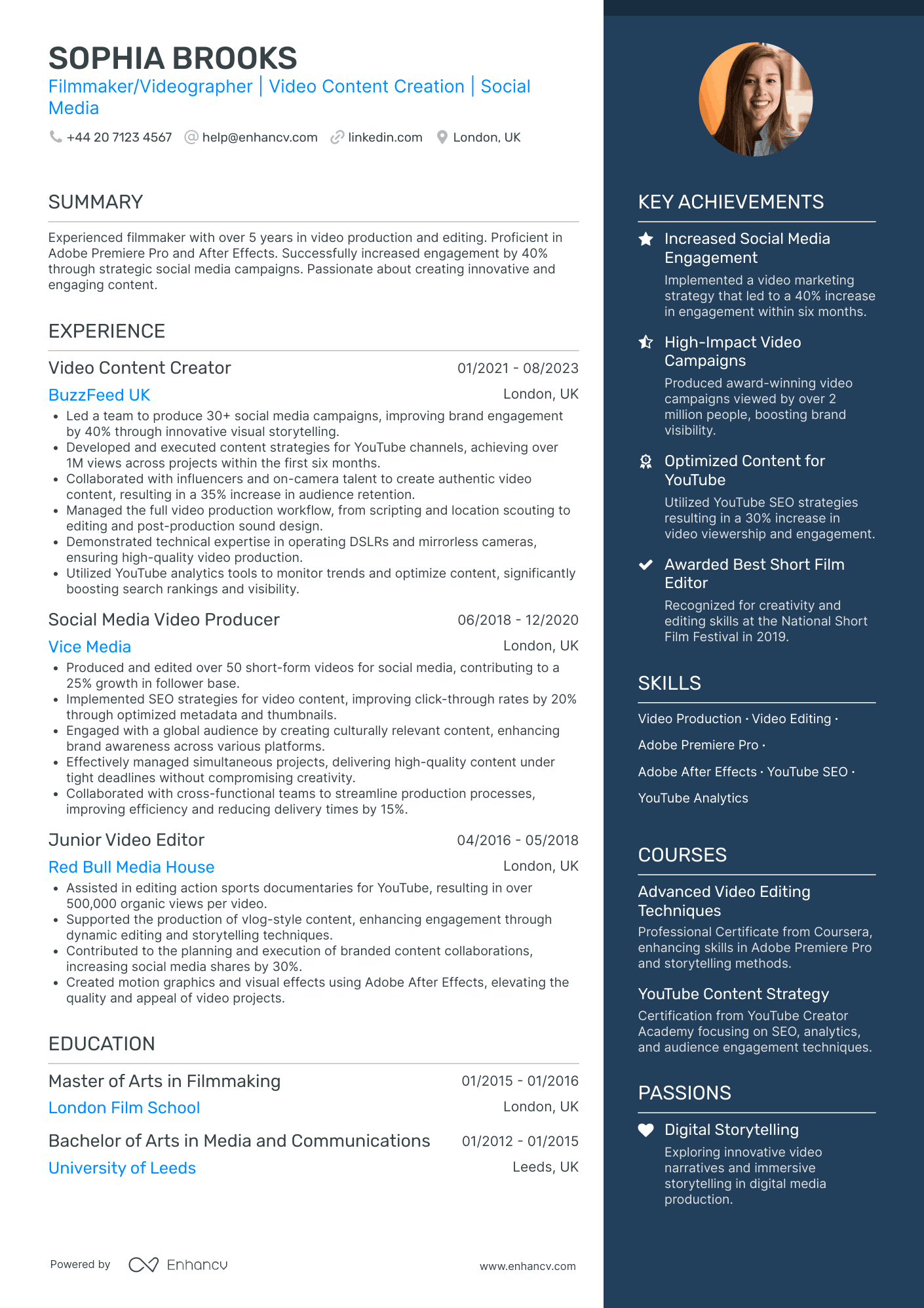
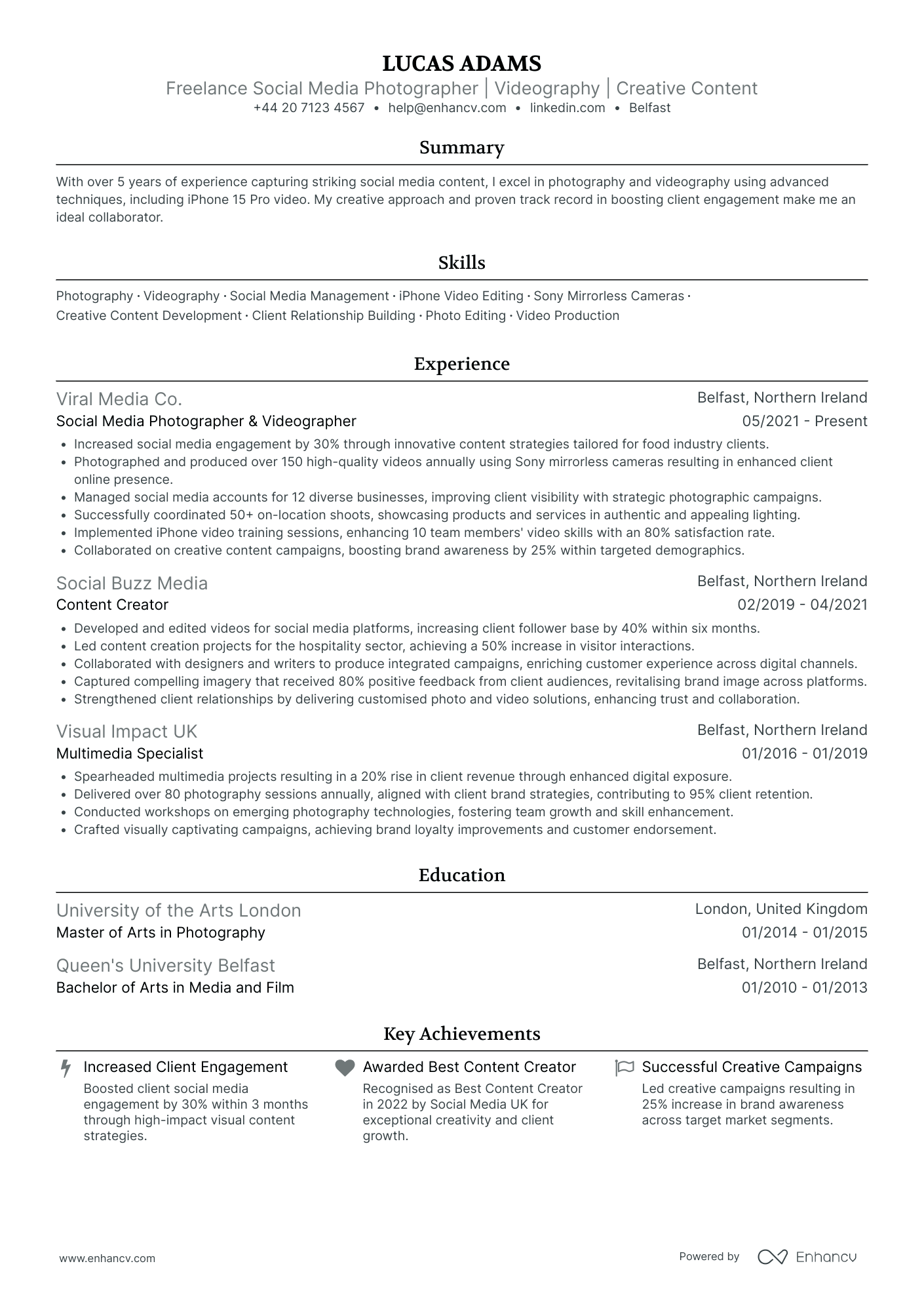
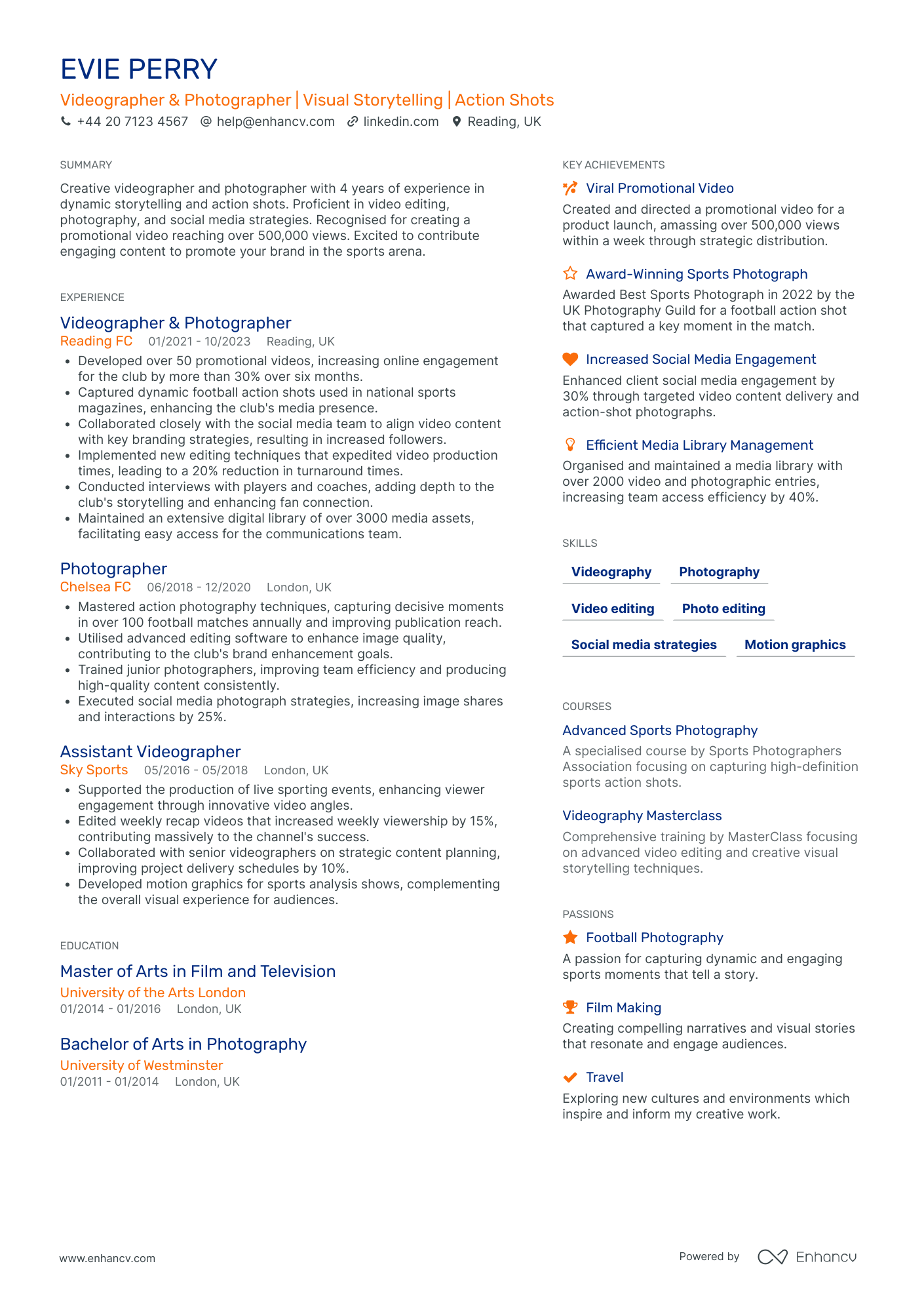
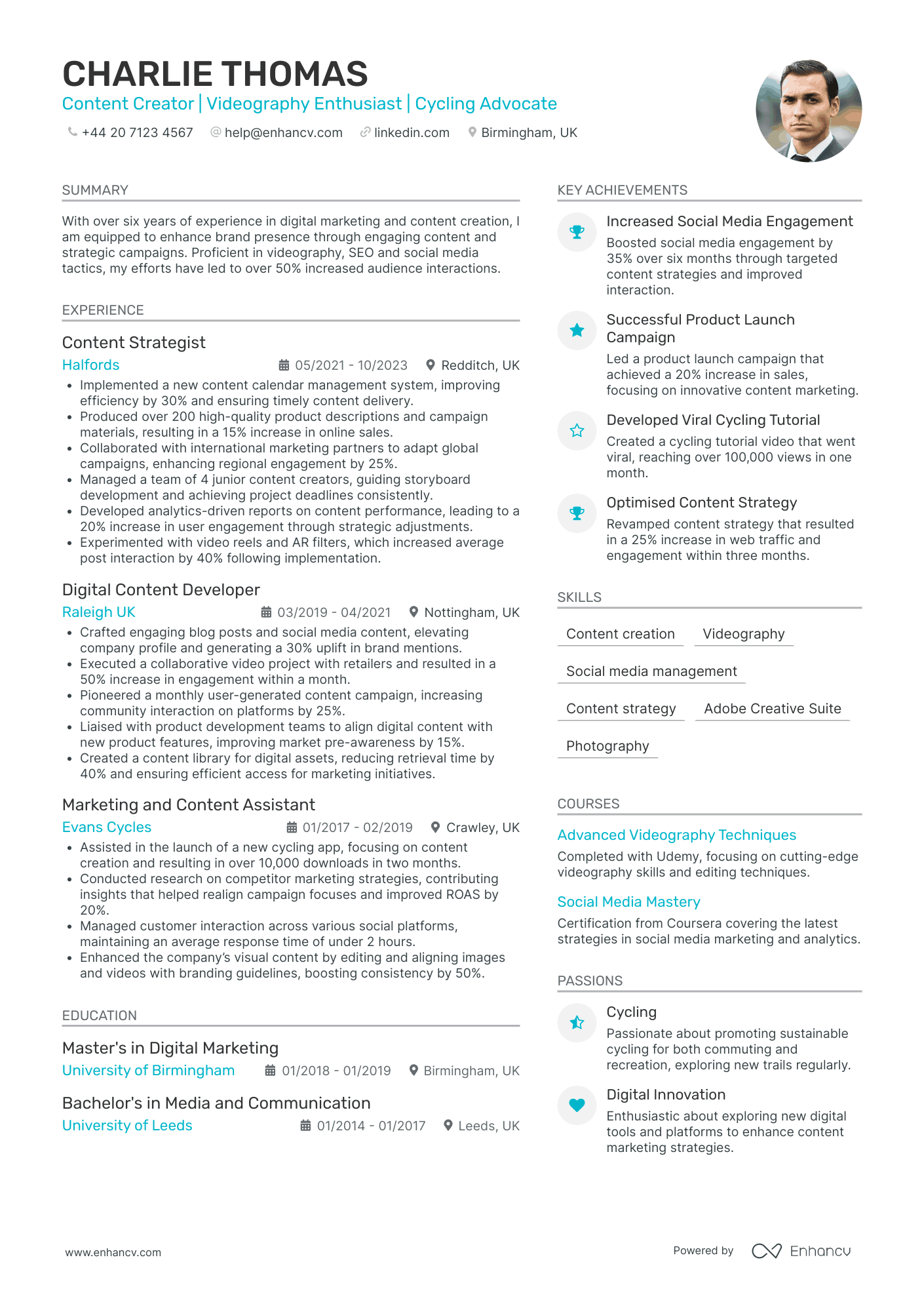
Back the reel with a short, scannable project list on the CV itself. Treat it like a filmography: the client or project, the format (brand film, music video, event, social campaign), your role, and the year. Keep it reverse chronological.
A clean project line reads like this: "Brand film for a Leeds fitness studio (2024), shot and edited solo, 40,000 views on Instagram in the first month." A client, a format, and a result in one line.
Name what you did end to end. Videographer roles often span the whole pipeline, so say whether you shot, lit, directed, recorded sound, and edited. A hiring manager needs to know which parts of the job are actually yours.
If your reel is still thin, group your work under one "Selected projects" heading rather than stretching three clips across half a page. Density reads as activity. A single self-shot film with a lot of white space around it reads as a gap. Self-shot content counts here: a channel you produce, a music video for a friend's band, event films done to build the reel. This is also where a first job CV earns its keep.
When a videographer CV lands in my inbox, the first thing I do is click the reel. If it opens on my phone, shows me the kind of work the job actually needs in the first thirty seconds, and the CV tells me what you shot rather than what you only assisted on, you are already ahead of most applicants. A wall of camera names and the word "passionate" does the opposite. Show me the work, tell me your exact role, and give me one number that proves it landed.
The Enhancv team

PRO TIP
Name the formats, kit, and software the advert uses. If a role wants a shooter who edits in Premiere Pro and DaVinci Resolve, or cuts vertical social first, and you genuinely do it, say so in the exact words. Videographer adverts are scanned for specifics, not adjectives.
How videographer work actually gets handed out
Understanding how the work is handed out changes what you put on the CV. Videographer hiring does not look like a standard office application.
| What | UK videographer work |
|---|---|
| How the work is structured | A mix of freelance day rates, short contracts, and some in-house roles. Many videographers piece together brand, event, and corporate work rather than one permanent seat. |
| How you win the next job | Your reel and word of mouth. A client who has seen you deliver a clean edit on deadline refers you before they read a CV. |
| Where roles are advertised | Creative job boards and agency mailouts, alongside general job sites and direct approaches from brands and studios. |
| What clients screen for | A relevant reel, the exact kit and software the job needs, reliable turnaround, and whether you can shoot and edit end to end. |
Two things follow for your CV.
Because much of the work happens on location or across a hybrid week, a hiring manager needs to see you can get there and are equipped. Put your base, how far you will travel, and whether you own kit and transport in the header.
And because the reel carries the most weight, your projects section earns more space than a list of adjectives ever will. Day rates swing widely by client, experience, and the size of the production, so do not anchor your expectations to a single figure you find online.
Formatting your videographer CV
While your reel is still building, use a skills-led structure so your projects and craft come before a short work history. Once you have a run of paid clients, switch to reverse chronological.
Keep it to one page early on, and two pages once your project list justifies it. Hiring managers and producers skim fast when they are booking against a shoot date.
Send a PDF so the layout holds on any device, and keep a Word copy for agencies that reformat CVs into their own template. If the advert names a file type, follow it.
Give the header more than a name and an email. A videographer CV works harder when it carries your base, your own kit, transport, and the showreel link, because those decide whether you can even be booked.
Applications increasingly pass through tracking software, so keep the headings standard and the layout clean for an ATS-friendly CV. Build it from a tested layout rather than a blank page: Enhancv's CV templates export to a clean PDF.
Writing your videographer personal statement
Three or four sentences at the top: who you are, the kind of work you do, the tools you own, and where you can work. Keep it concrete. See more personal statement examples if the opening line will not come.
Skip the adjective soup every other videographer CV opens with. "Passionate, creative, detail-oriented storyteller" tells a hiring manager nothing they can check.
Lead with real work instead:
Videographer CV personal statement example
Videographer with four years shooting and editing brand and event films for SME clients across the North West. Comfortable running a shoot solo, from lighting and sound to a colour-graded edit in Premiere Pro and After Effects. Showreel and full project list linked above. Based in Manchester with my own kit and transport, looking for a staff videographer role with an in-house content team.
What to avoid
A passionate and creative videographer with a keen eye for detail and a love of storytelling through the lens, seeking an exciting new opportunity in a dynamic and fast-paced media environment.
The first names the clients, the kit, and where you can work. The second could belong to anyone who owns a camera.
Writing your videographer experience section
Paid, freelance, or self-shot, write every entry the same way: a dated heading with the client or employer and your role, then bullets that show what you did and what happened. Lead each bullet with an action verb. For the mechanics, see work experience on a CV.
Video work is more measurable than it feels: views, watch time, turnaround, shoot days, budget, and the number of edits delivered. Those specifics are your CV achievements.
Tailor each application: pull the formats, kit, and software from the advert and mirror them where they are true of you. Enhancv's CV tailoring feature reads the advert and suggests the matching edits, which saves rewriting from scratch for every application.
- Shoot and edit 60 to 80 brand and product films a year for SME and retail clients, running each project solo from brief to final delivery
- Cut a product launch film that reached 120,000 views across the client's channels in a month, the brand's best-performing post that year
- Built a repeatable lighting, audio, and edit workflow in Premiere Pro that cut average turnaround from ten days to six
- Directed and colour-graded a six-part social campaign, delivering 24 vertical edits on a fixed budget and deadline
PRO TIP
One real number beats five lines about your creative vision. Views, watch time, turnaround, edits delivered, budget managed. If a shoot moved a client's numbers, put the figure in the bullet and let the result do the arguing.
Skills to put on a videographer CV
Read a dozen videographer adverts and the same demands repeat: camera operation, lighting, video editing in Premiere Pro, motion graphics in After Effects, and increasingly captioning for social. Those are your hard skills, listed in the words the adverts use.
The soft skills that matter here are checkable on a shoot: communication with clients and talent, organisation, and staying calm when a location or the light turns against you. Prove each in a bullet rather than claiming it.
List only what you can stand behind. If you shoot, grade, and cut, name the software. If you are still learning a tool, put it under training rather than skills.
Top skills for your videographer CV:
Camera operation
Lighting
Video production
Video editing (Premiere Pro)
Motion graphics (After Effects)
Colour grading
Sound recording
Captioning and subtitling
Communication
Organisation
Creativity
Problem-solving
Client management
Reliability
Education and training for a videographer CV
You do not need a film or media degree to work as a videographer, which is why a strong reel outperforms a transcript. What helps is any training that proves your craft and shows you are safe and reliable on a paid job.
List a relevant degree or diploma in your education section if you have one, then the practical proof clients care about. Software certifications, a colour grading module, and any on-set safety or first aid training all belong here, and so does naming the certificates you hold.
Short, specific courses count. A weekend on lighting, a DaVinci Resolve grading course, or an After Effects module signals you are sharpening the exact skills the job needs, the way the industry actually teaches them.
If you freelance, the practical details belong here too: a full driving licence, your own insured kit, and public liability cover. Those answer the questions a client asks before they book you, so put them where a busy reader will find them fast.
Conclusion
Lead with the reel, name the clients and formats, and keep the CV clean enough that the showreel link is the first thing anyone sees.
Pair it with a short cover letter that says what you shoot and who for, and you give a hiring manager every reason to press play.

Author's take - The Enhancv team
When a videographer CV lands in my inbox, the first thing I do is click the reel. If it opens on my phone, shows me the kind of work the job actually needs in the first thirty seconds, and the CV tells me what you shot rather than what you only assisted on, you are already ahead of most applicants. A wall of camera names and the word "passionate" does the opposite. Show me the work, tell me your exact role, and give me one number that proves it landed.