



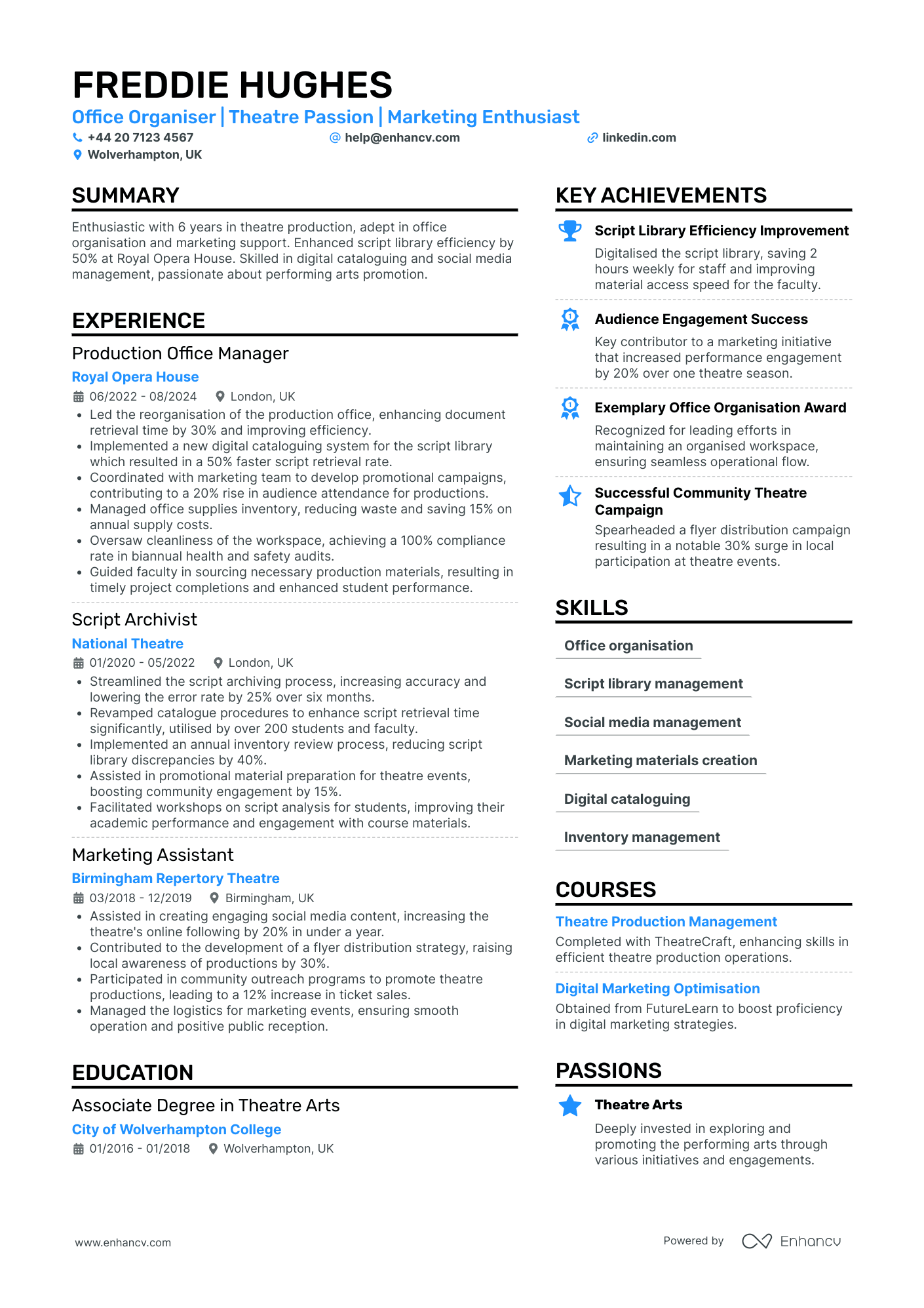
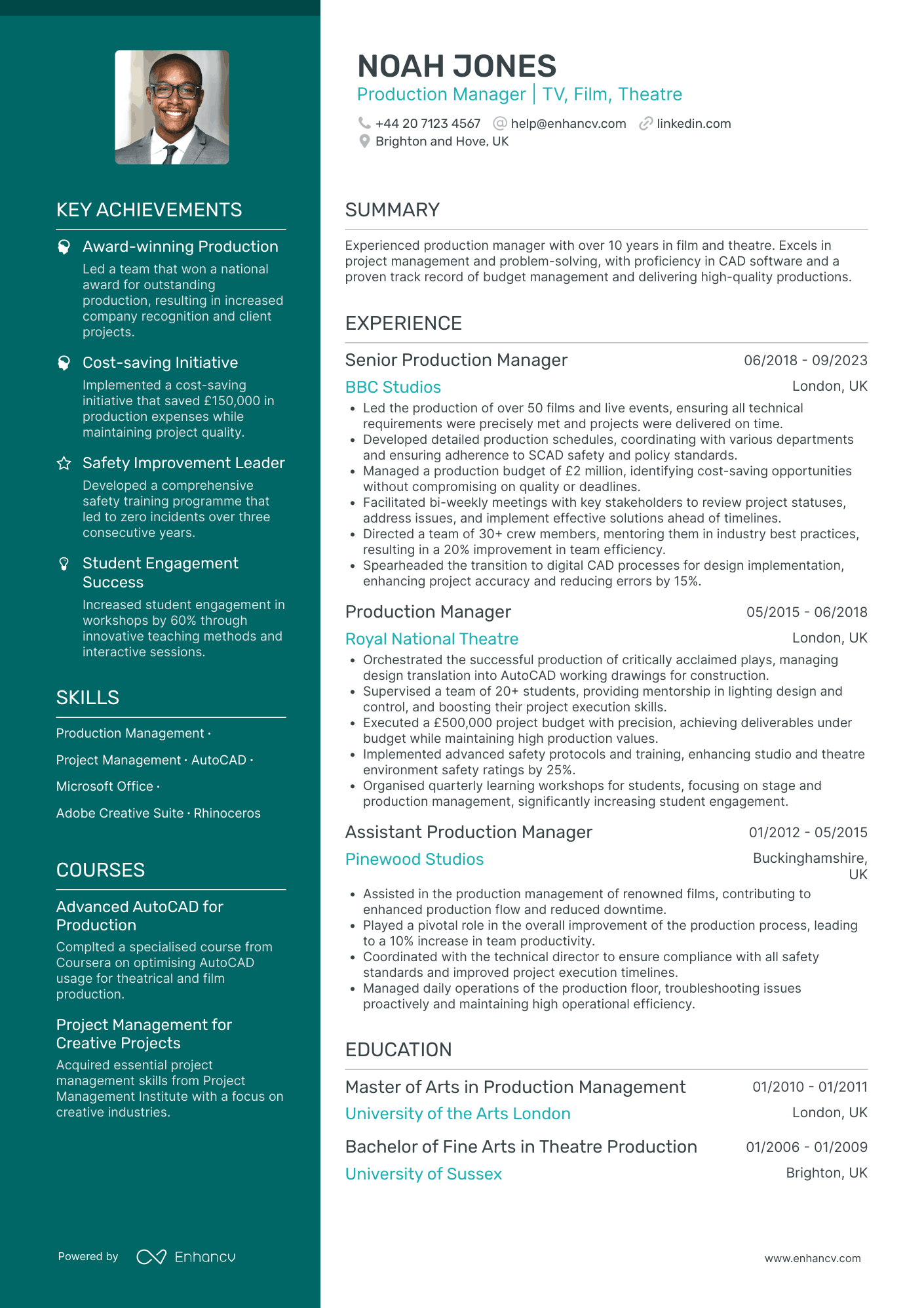
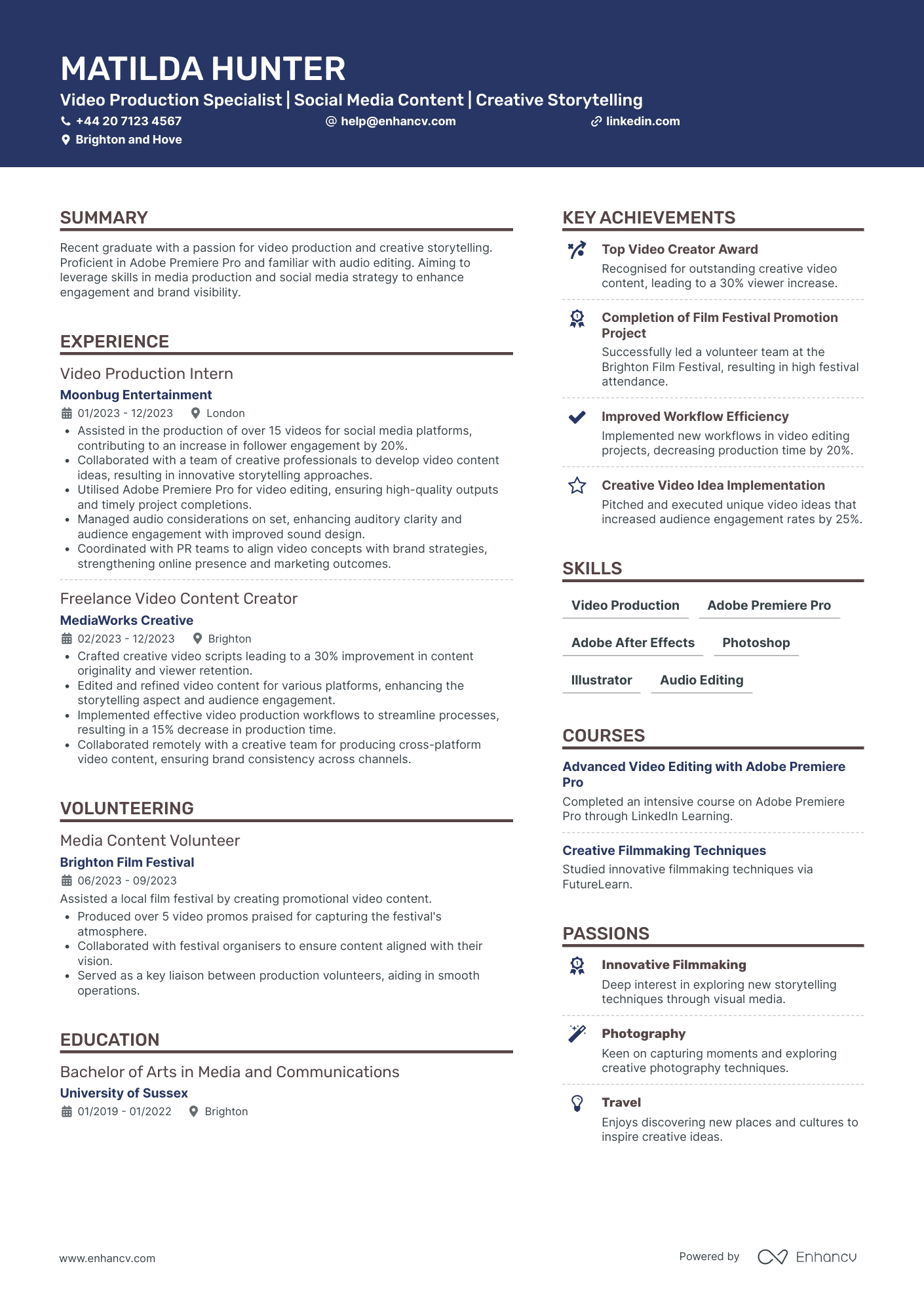
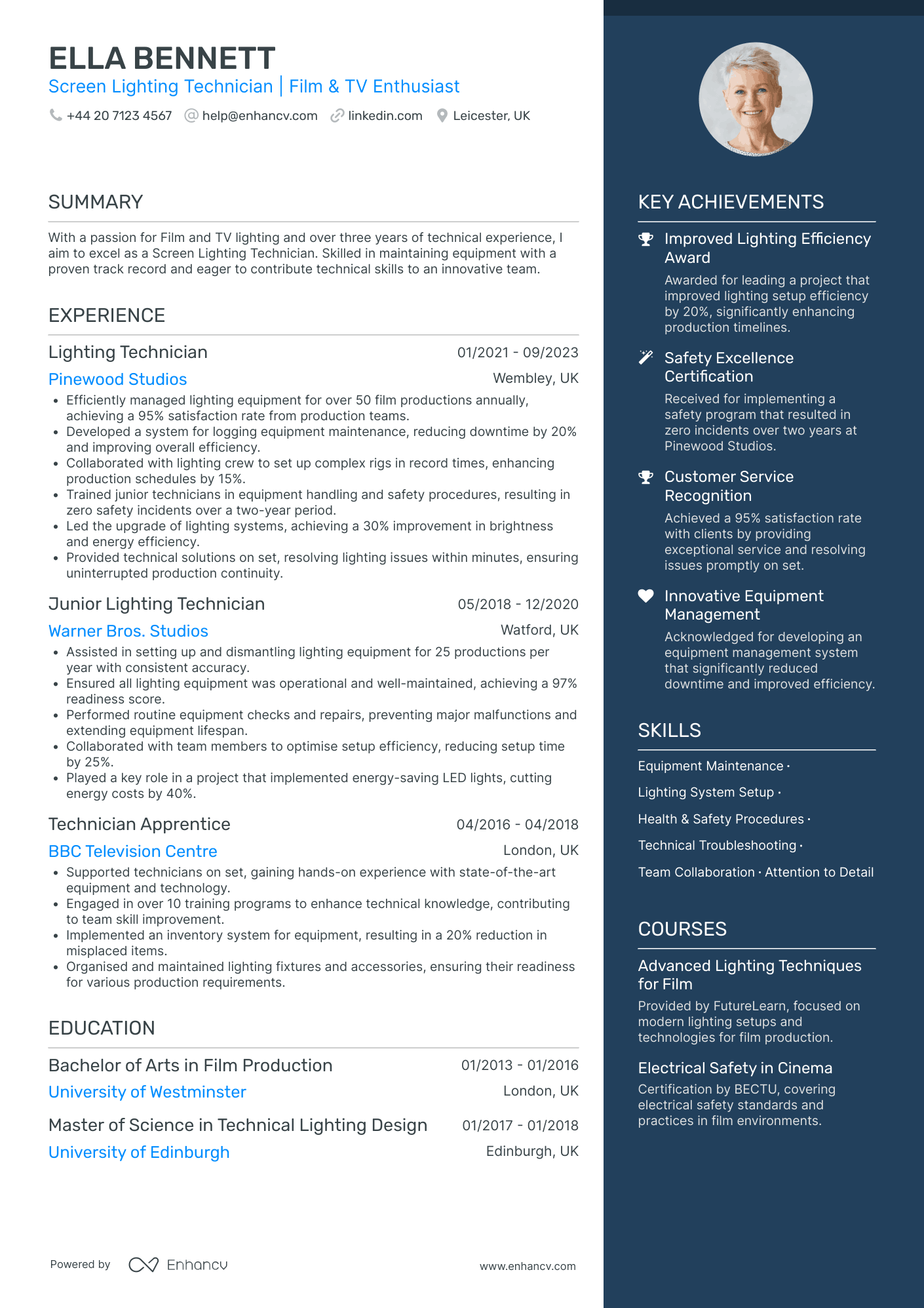
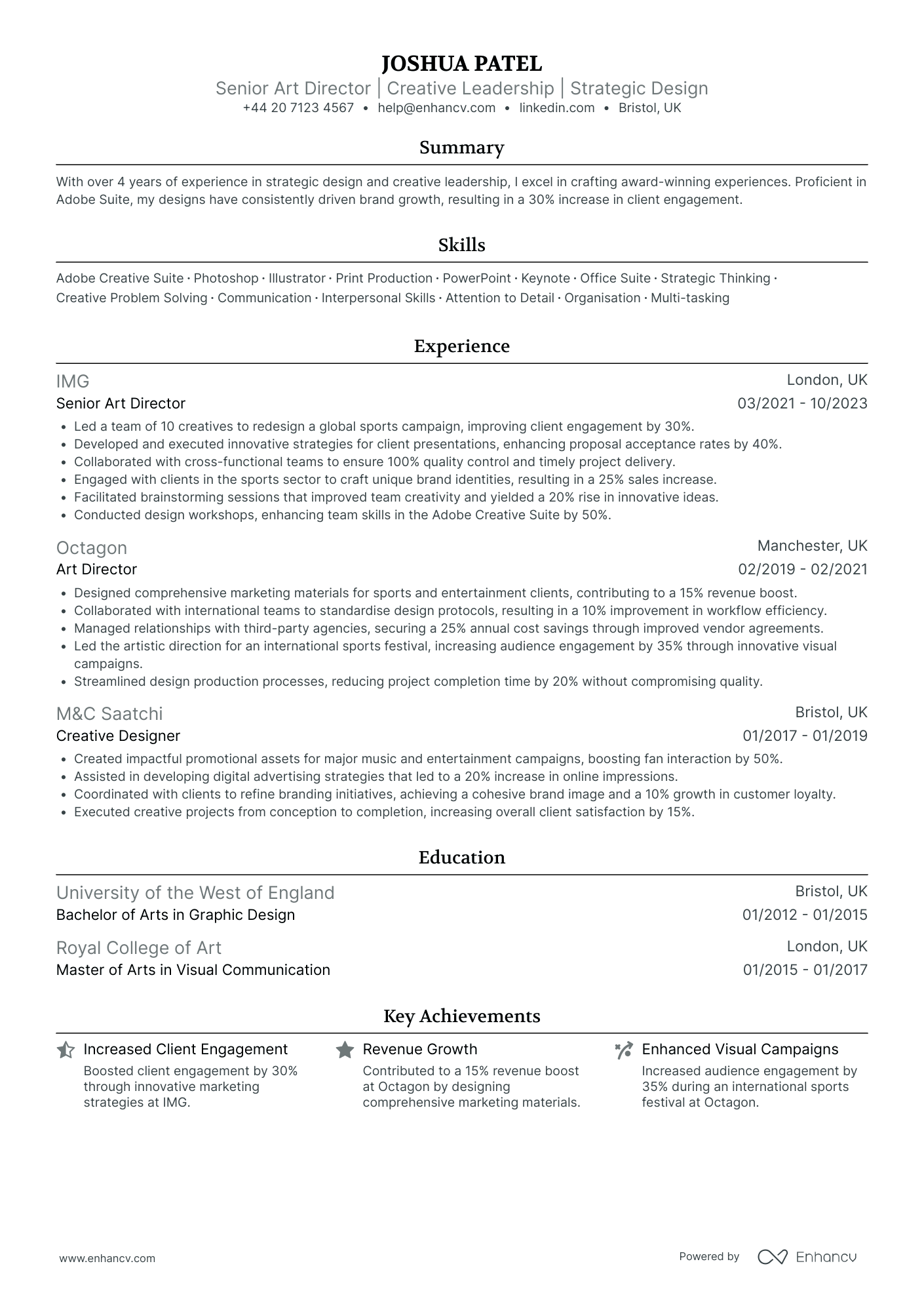
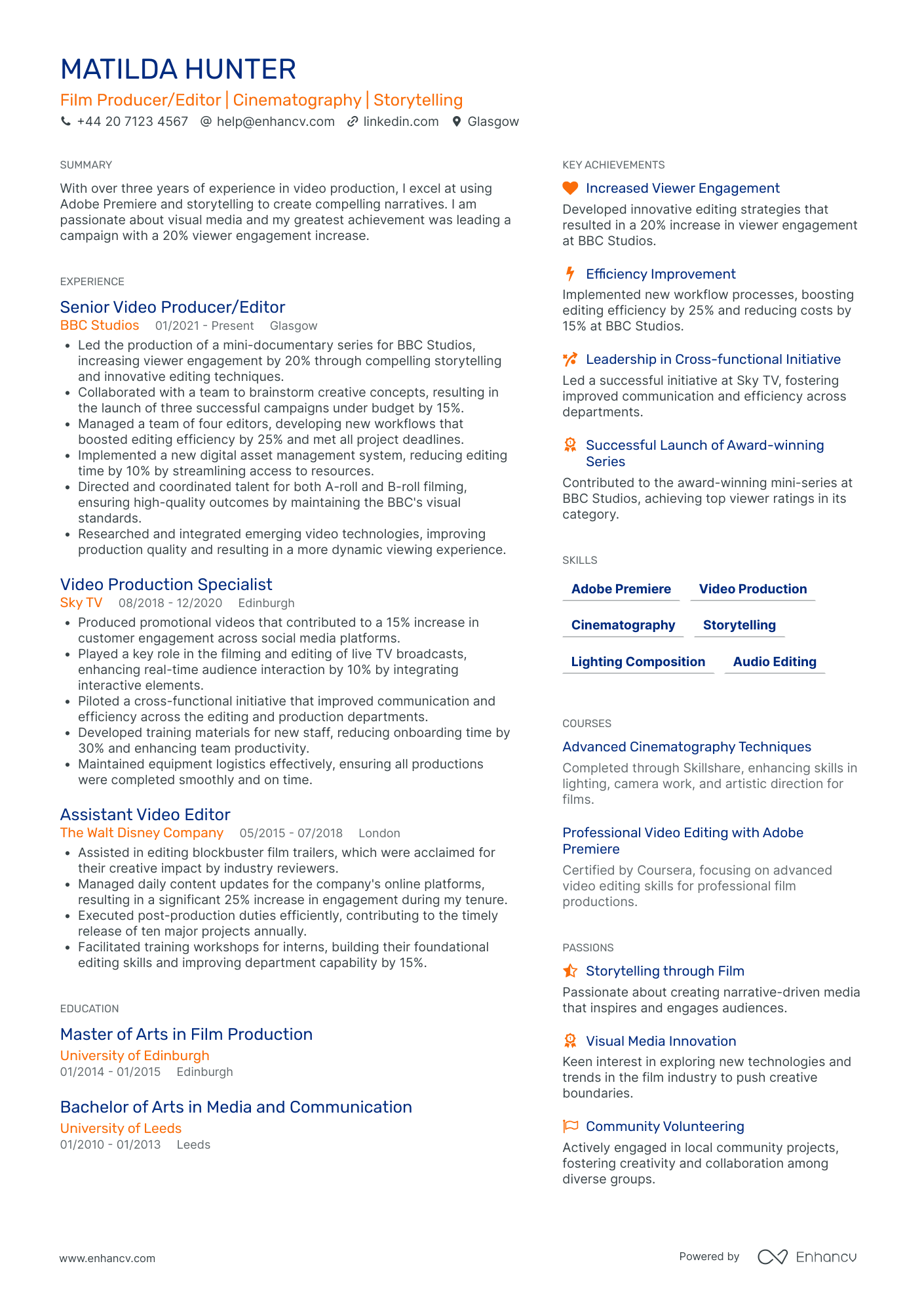
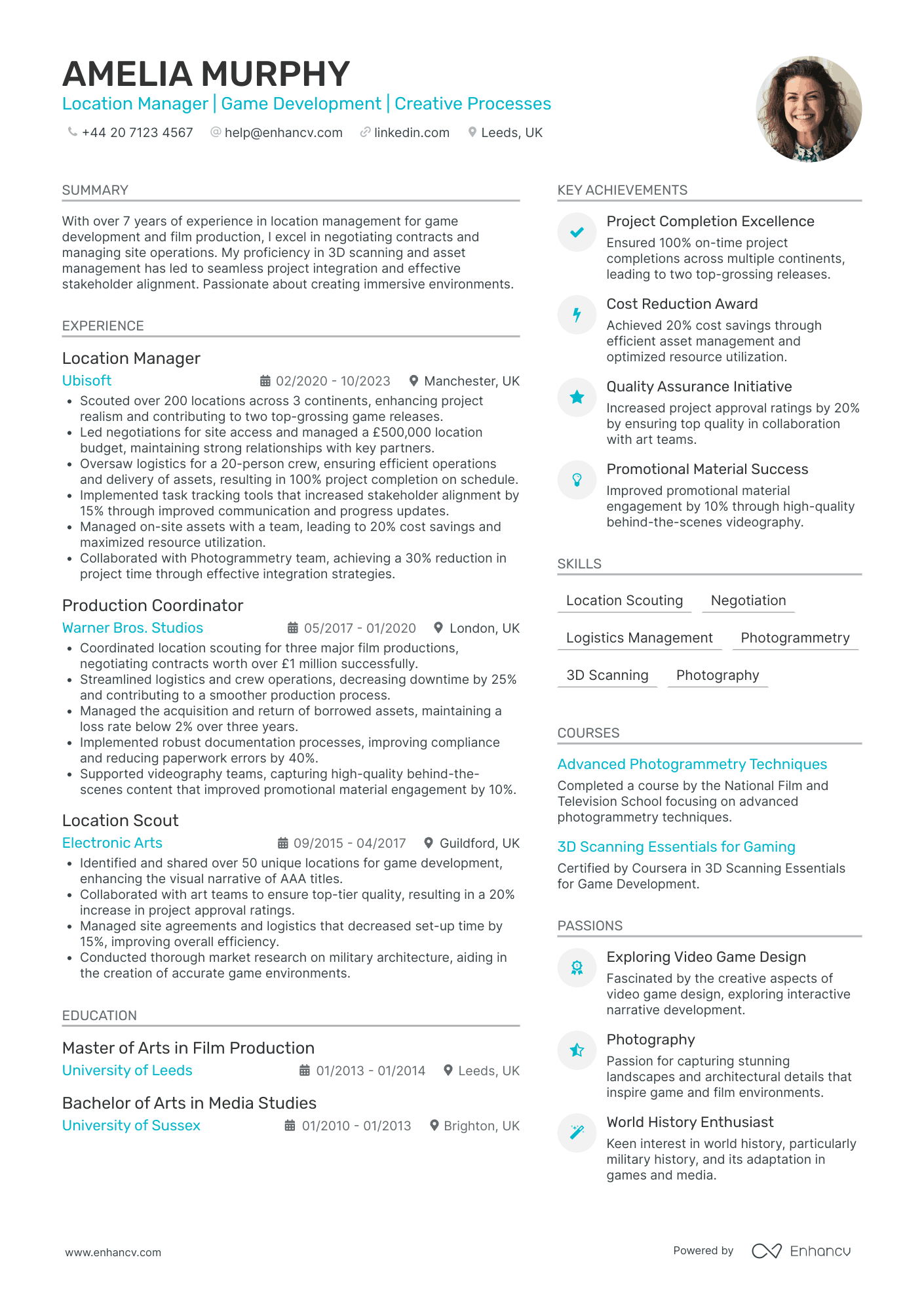
Nobody breaks into film production with a polished CV. They get in as a runner, on a favour, off the back of one short film and a reputation for turning up early and never dropping the kit.
Most first film CVs read like a media studies transcript: modules, software logos, and a line about being passionate about storytelling. The ones that get a call list real productions, the exact role played, and the crew who will vouch for you.

Key takeaways
- No credits yet is normal. Lead with a skills-led CV built on student films, self-shot projects, and any set you have been near.
- Film hiring runs on credits and references. Name the production, your exact role, the format, and who ran it.
- Put your location, driving licence, and availability near the top. Productions crew up fast and locally.
- Open with a short personal statement built on one real project and the department you want to work in.
- One page while you are starting out, sent as a PDF unless the production asks for a Word file.
- List practical tickets, not just software: first aid, a driving licence, manual handling, and any on-set safety training.
Writing a film production CV with no experience
Film is a credits industry. You get the next job on the strength of the last one, which is a problem when you have not had a first.
The classic UK entry point is the runner. It is unglamorous, it is often unpaid or day-rate, and it is still the route most producers and coordinators started on. Your first CV needs to make you look like a safe pair of hands for exactly that job.
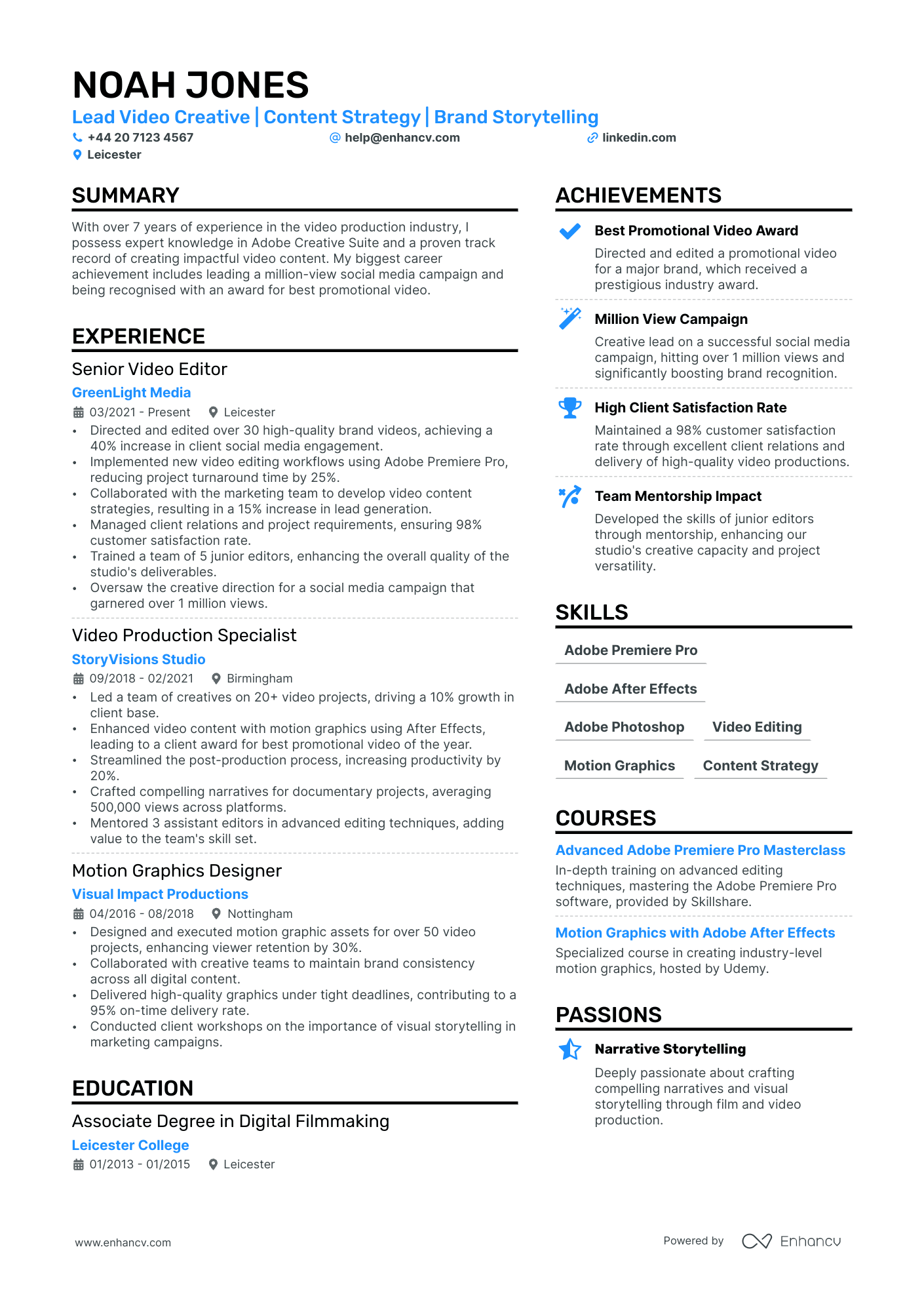
So your early CV carries its weight differently. Use a skills-led structure: personal statement, then a projects or credits section, then skills and training, with paid work history lower down. If you want the fundamentals first, see how to write a CV.
The trick is treating everything you have shot, crewed, or organised as a credit. It almost always exists:
- Student and short films: the role you did, the format, the runtime, and whether it screened anywhere.
- Self-shot content: music videos for a mate's band, event films, a channel you produce and edit.
- Runner, festival, or live-events work: long days, call times, kit, and keeping talent happy.
- Any job that proves you are reliable under pressure: hospitality, retail, warehouse, or stage crew.
Write those in production language. "Coordinated a six-person crew and the shooting schedule for a 10-minute graduate short, on time and on a £400 budget" is a production credit that happened at university.
Hospitality and events translate better than most graduates think. Working a busy service teaches call times, working to a run of orders, and staying pleasant when everything is behind. Say it in those terms and a line producer reads transferable set skills, not a stopgap job.
Give each project a dated entry like a job: production title, your role, the format, and the outcome. Volunteering on a CV and unpaid crew work both count as experience here, not filler. This is also where a first job CV earns its keep.
One line moves a no-credit CV up the pile: name the people. "Runner for a working DoP, reference available" or "assisted the production coordinator at a Leeds production company" tells a line producer you already know how a set behaves.
Keep a running record of every shoot, the role, the dates, and a contact who would vouch for you. Credits fade from memory fast, and the day someone asks for a reference is the wrong time to be reconstructing who ran the shoot.
When a CV crosses my desk with no paid credits, I am looking for one thing: evidence this person will not create problems on set. A line like "runner on three student shoots, trusted with the kit and the call sheet" tells me more than any showreel link. Name the production, the role, and who ran it. Then add the practical tickets, a driving licence, first aid, manual handling. Reliability plus a way to get to location beats a film degree with nothing shot behind it.
Building the credits and showreel that get you hired
In film production your portfolio is your credit list and, where the role is creative or camera-facing, your showreel. Both belong on the CV, worded so a busy line producer can scan them in seconds.
List credits like a filmography: production title, format (short, feature, commercial, or music video), your role, the production company or director, and the year. Keep it reverse chronological.
If you have a reel or a portfolio site, put one clean link near the top of the CV, not buried at the bottom. Label it plainly, "Showreel" or "Portfolio", with a URL that opens on a phone.
A clean credit line reads like this: "Second AC, 'Nightshift' (short drama, 2024), dir. A. Fletcher, screened at Leeds Film Festival." Everything a reader needs in one line, no padding.
Tailor the reel to the job. A camera assistant role wants focus pulls and lighting, a production role wants proof you kept a complicated shoot organised. Two minutes of your best work beats ten of everything.
If your credits are still few, group them under a single "Selected projects" heading rather than spreading three lines across half a page. Density reads as activity. White space around one short film reads as a gap.

PRO TIP
Name the formats and kit the advert uses. If a production is shooting on an ARRI Alexa or cutting in Avid, and you have genuinely touched it, say so in the exact words. Crewing adverts are scanned for specifics, not adjectives.
How the UK film production industry hires
Understanding how the work is handed out changes what you put on the CV. Film production hiring does not look like most graduate schemes.
| What | UK film production work |
|---|---|
| How the work is structured | Mostly freelance and project-based. You are crewed for a shoot, not hired into a permanent seat. |
| How you get the next job | Credits and word of mouth. A reference from a trusted crew member outweighs a polished CV. |
| Where roles are advertised | Industry crewing boards and production company mailouts, alongside general job sites. |
| What productions screen for | Reliability, availability, a driving licence, and the specific department skills the shoot needs. |
Two things follow for your CV.
Because the work is local and time-sensitive, a recruiter needs to see you can get to set. Put your base, a driving licence, and your availability in the header.
And because credits carry the most weight, the projects section earns more space than a list of adjectives ever will. Day rates swing widely by department, experience, and the size of the production, so do not anchor your expectations to a single figure you find online.
Formatting your film production CV
While your credits are thin, use a skills-led structure so your projects and training come before a short work history. Once you have a run of credits, switch to reverse chronological.
Keep it to one page early on, and two pages once your filmography justifies it. Line producers skim fast when they are crewing up against a start date.
Send a PDF so the layout holds on any device. Keep a Word copy for agencies and crewing services that reformat CVs into their own template. If the advert names a file type, follow it.
Give the header more than a name and an email. A film production CV works harder when it carries your base, a driving licence, transport, and your availability, because those decide whether you can even be crewed. Add your reel or portfolio link here too.
Applications increasingly pass through tracking software, so keep the headings standard and the layout clean for an ATS-friendly CV. Build it from a tested layout rather than a blank page: Enhancv's CV templates export to a clean PDF.
Writing your film production personal statement
Three or four sentences at the top: who you are, the department you want, one real project, and where you can work. Keep it concrete. See more personal statement examples if the opening line will not come.
Skip the adjective soup every other film CV opens with. "Passionate, creative, hard-working film graduate" tells a line producer nothing they can check.
Lead with a real credit instead:
Film production CV personal statement example (no experience)
Reliable film production graduate with three short films crewed as a runner and second AC, including a graduate drama that screened at a regional festival. Confident with call sheets, kit prep, and long shoot days, with a full UK driving licence and my own transport. Looking to join a production company in Manchester as a runner or production assistant.
What to avoid
A passionate and creative recent graduate with a lifelong love of film and a strong eye for storytelling, seeking an exciting opportunity to grow within the dynamic and fast-paced media industry.
The first names a festival, a role, and a licence. The second could belong to anyone who has watched a lot of films.
Writing your film production experience section
Paid, unpaid, or student, write every entry the same way: a dated heading with the production and your role, then bullets that show what you did and what happened. Lead each bullet with an action verb. For the mechanics, see work experience on a CV.
Production work is more measurable than it feels: crew size, budget, shoot days, locations, and turnaround. Those specifics are your CV achievements.
Tailor each application: pull the department, format, and kit from the advert and mirror them where they are true of you. Enhancv's CV tailoring feature reads the advert and suggests the matching edits, which saves rewriting from scratch for every crewing call.
- Ran a six-person crew's daily needs across a four-day shoot, from call sheets and kit collection to keeping cast fed and on schedule
- Coordinated three location moves in a single day, briefing the crew so setups held the 12-hour turnaround
- Managed a £500 props and catering budget, tracking every receipt for the production coordinator
- Trusted with camera kit collection and return, logged in and out with zero losses across the shoot
PRO TIP
Crewing adverts list the department and the kit, not soft-skill clouds. Mirror the ones you can back: "call sheets", "kit prep", "second AC", "DIT", "location management". If you have done it on a real shoot, name it the way the advert does.
Skills to put on a film production CV
Read a dozen crewing adverts and the same practical demands repeat. Scheduling and call sheets, budgeting, location and logistics, kit handling, editing software, and on-set health and safety come up again and again. Those are your hard skills, listed in the words the adverts use.
The soft skills that matter here are checkable on a set: communication, organisation, stamina, and staying calm when a shoot overruns. Prove each in a bullet rather than claiming it.
List only what you can stand behind. If you have run a schedule or cut a sequence, name it. If you are still learning a tool, put it under training rather than skills.
Top skills for your film production CV:
Production scheduling and call sheets
Budget tracking
Location and logistics
Camera and lighting kit handling
Editing (Premiere Pro, Avid, DaVinci Resolve)
Continuity and logging
On-set health and safety
Post-production coordination
Communication
Organisation
Problem-solving
Stamina
Teamwork
Discretion
Education and training for a film production CV
You do not need a film degree to work in production, which is why the no-credit route works. What helps is any training that proves you are safe and useful on set.
List a relevant degree or diploma if you have one, then the practical tickets productions actually ask about: a full driving licence, first aid, manual handling, and any on-set safety training. Put them in your education section or a short training block, and name any certificates you hold.
Short industry courses count too. A weekend on production coordination or a ScreenSkills module signals you are learning the craft the way the industry teaches it.
Put the practical tickets before the academic detail. A line producer scanning fast cares that you hold a driving licence and current first aid long before they read which modules you sat in your final year.
Conclusion
Lead with credits and real projects, name the people who will vouch for you, and keep the format clean and easy to crew from.
Pair the CV with a short cover letter that says which department you want and why, and you turn no credits into a credible first application.

Author's take - The Enhancv team
When a CV crosses my desk with no paid credits, I am looking for one thing: evidence this person will not create problems on set. A line like "runner on three student shoots, trusted with the kit and the call sheet" tells me more than any showreel link. Name the production, the role, and who ran it. Then add the practical tickets, a driving licence, first aid, manual handling. Reliability plus a way to get to location beats a film degree with nothing shot behind it.