



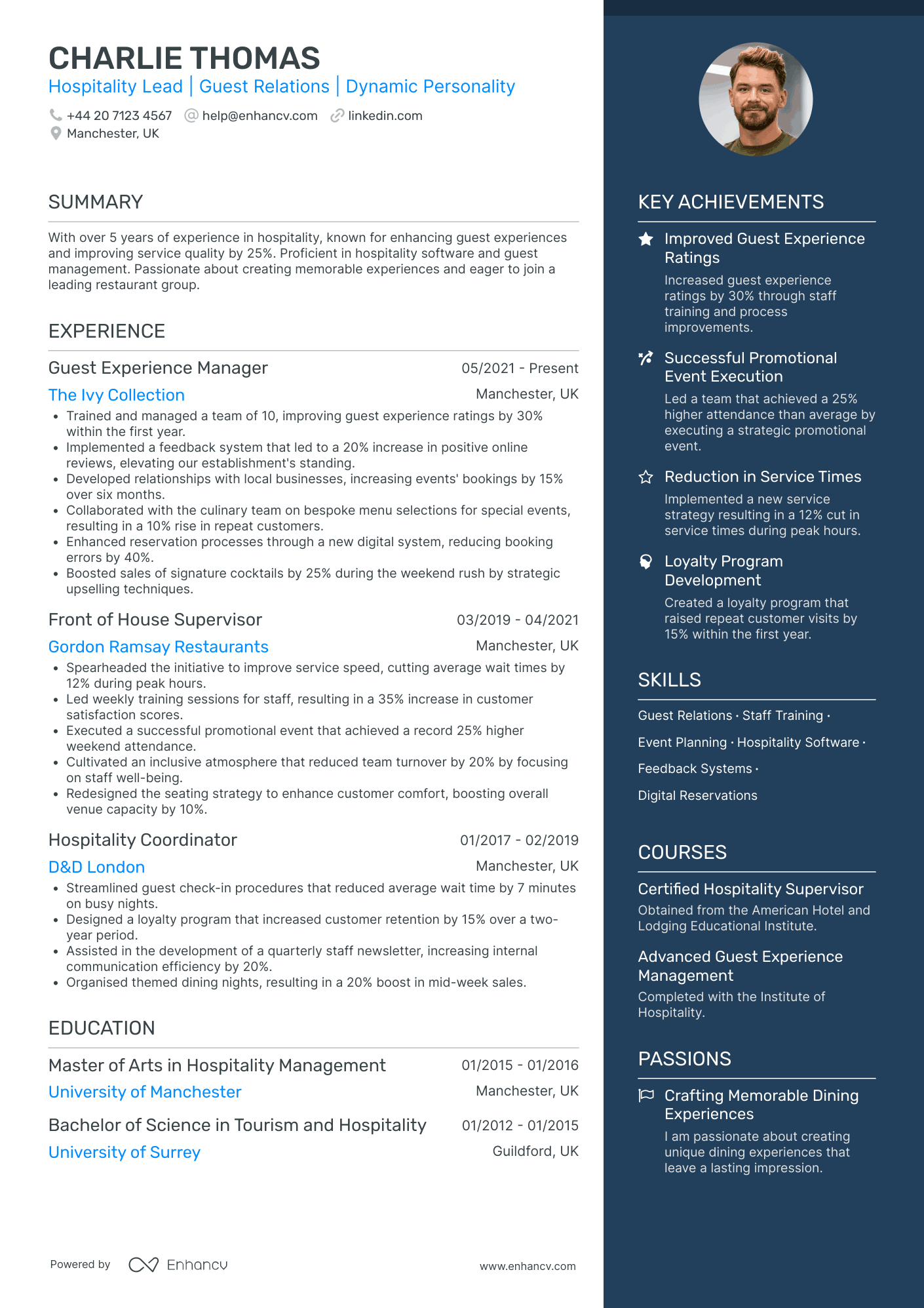
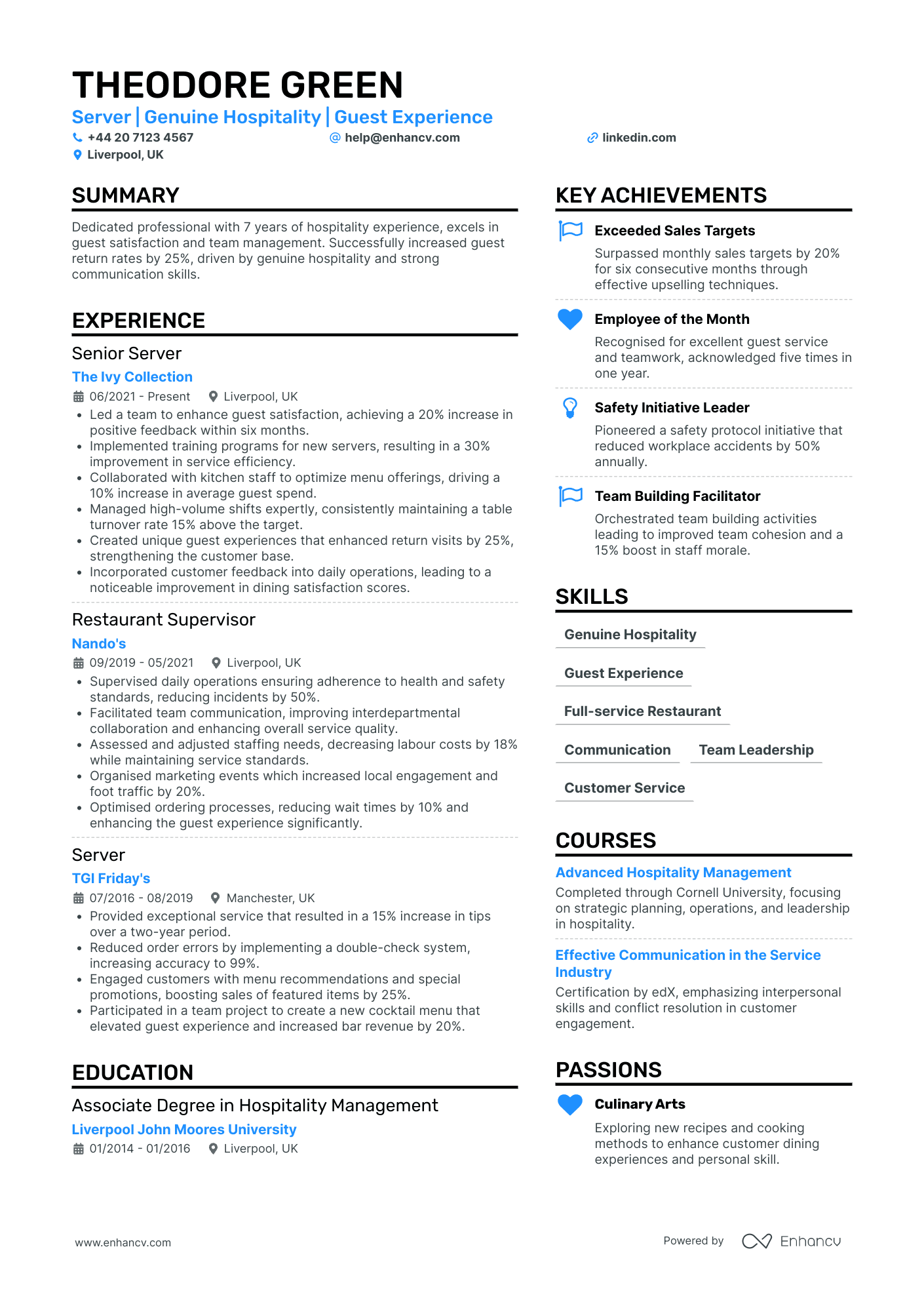
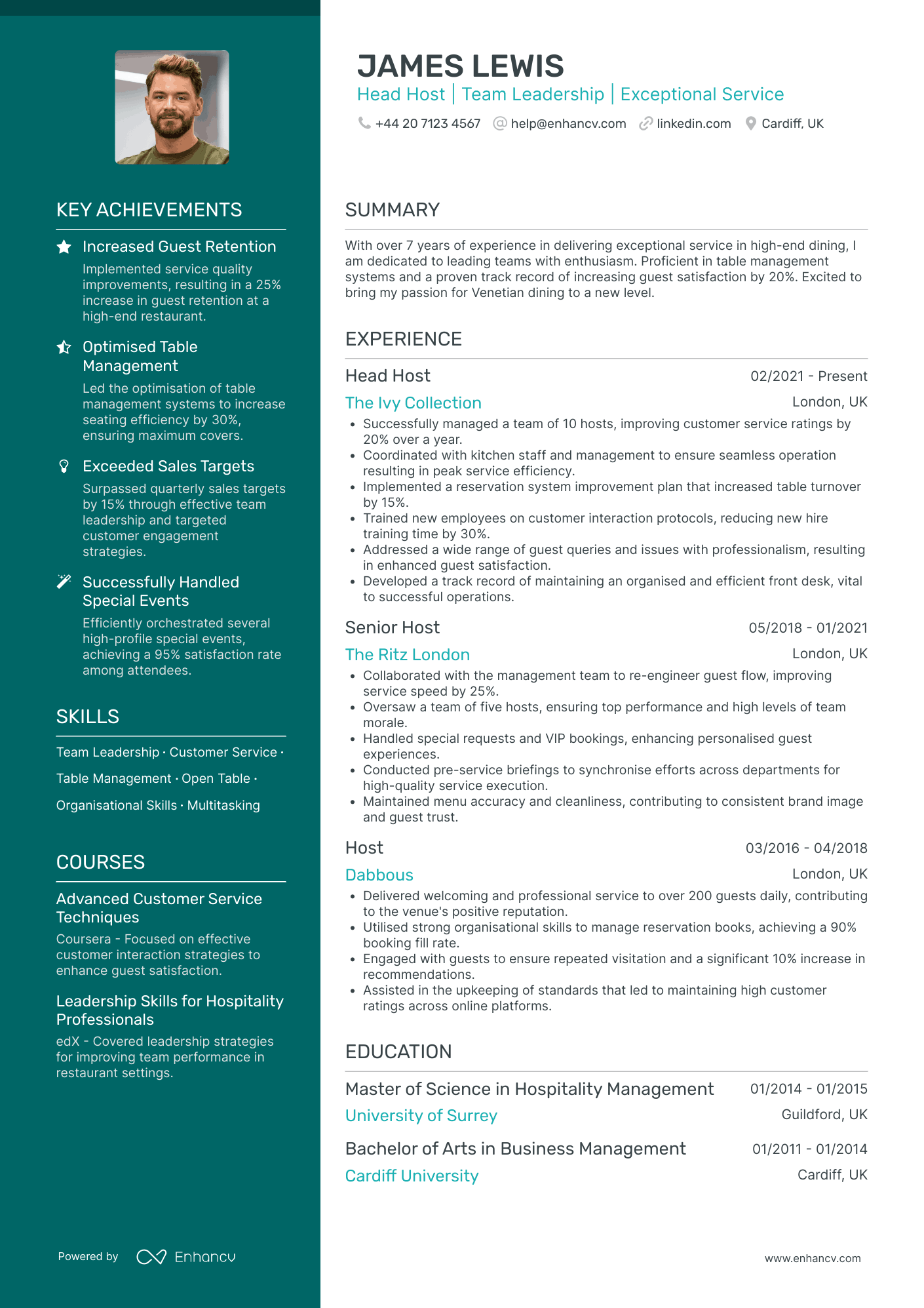
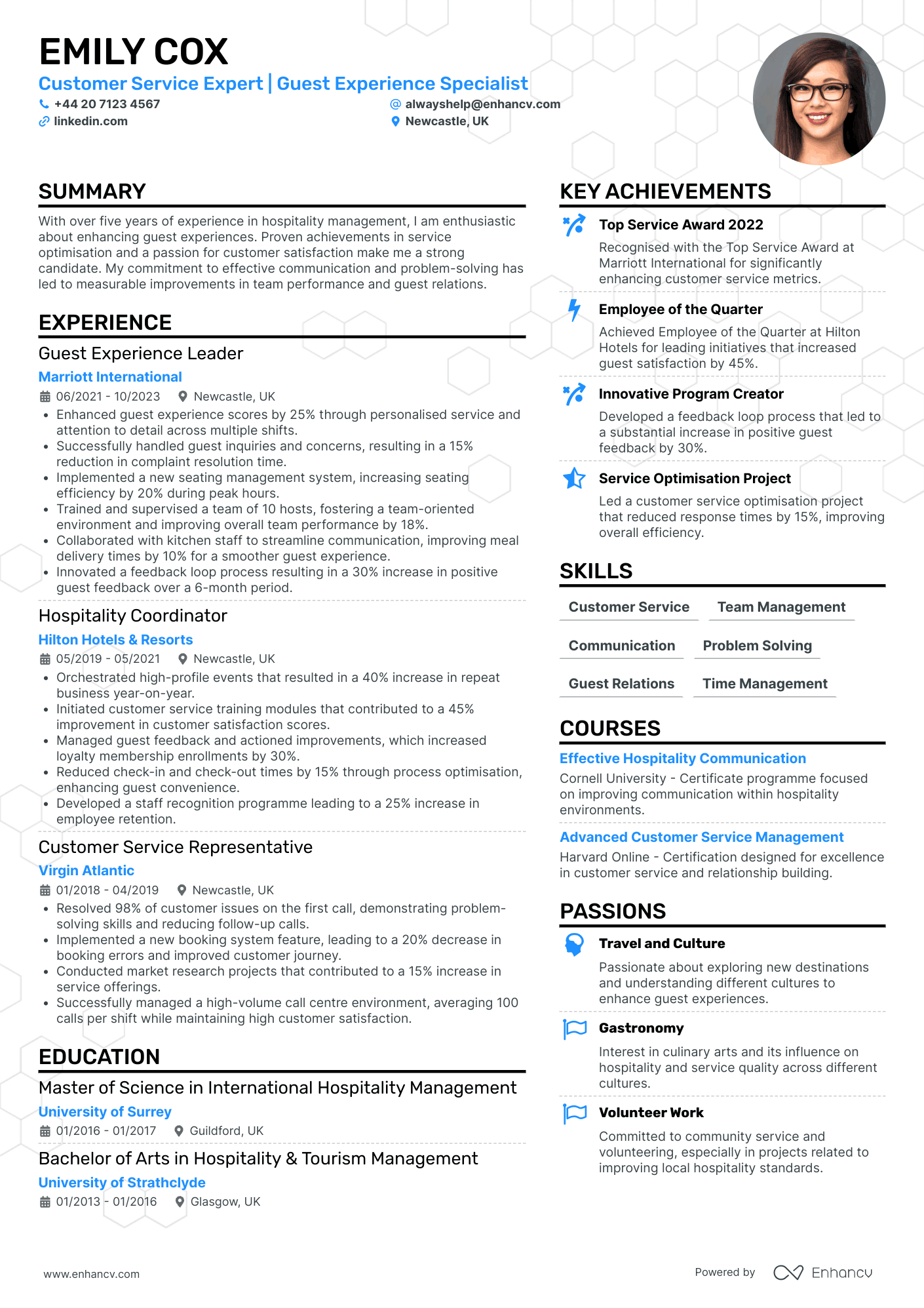
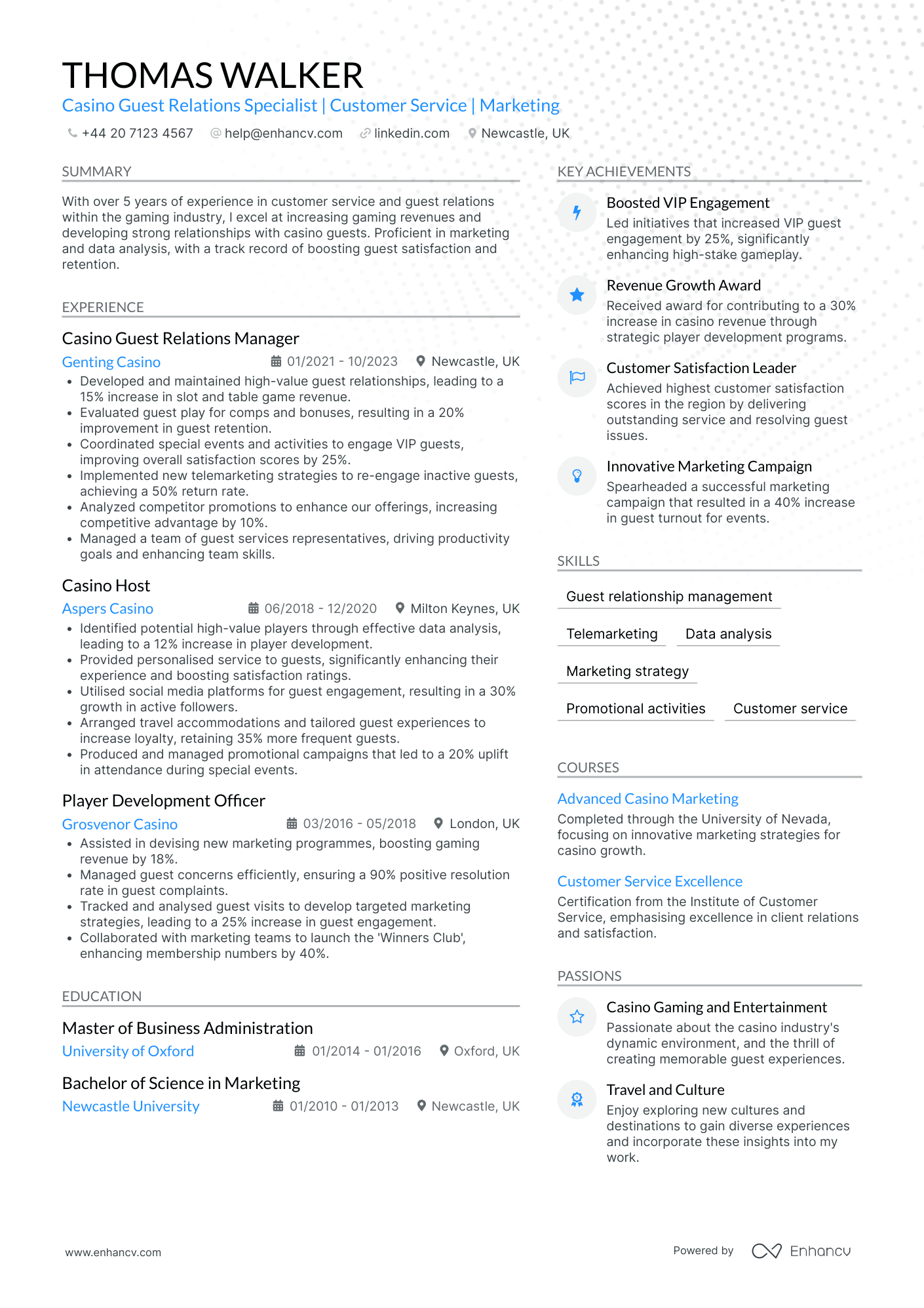
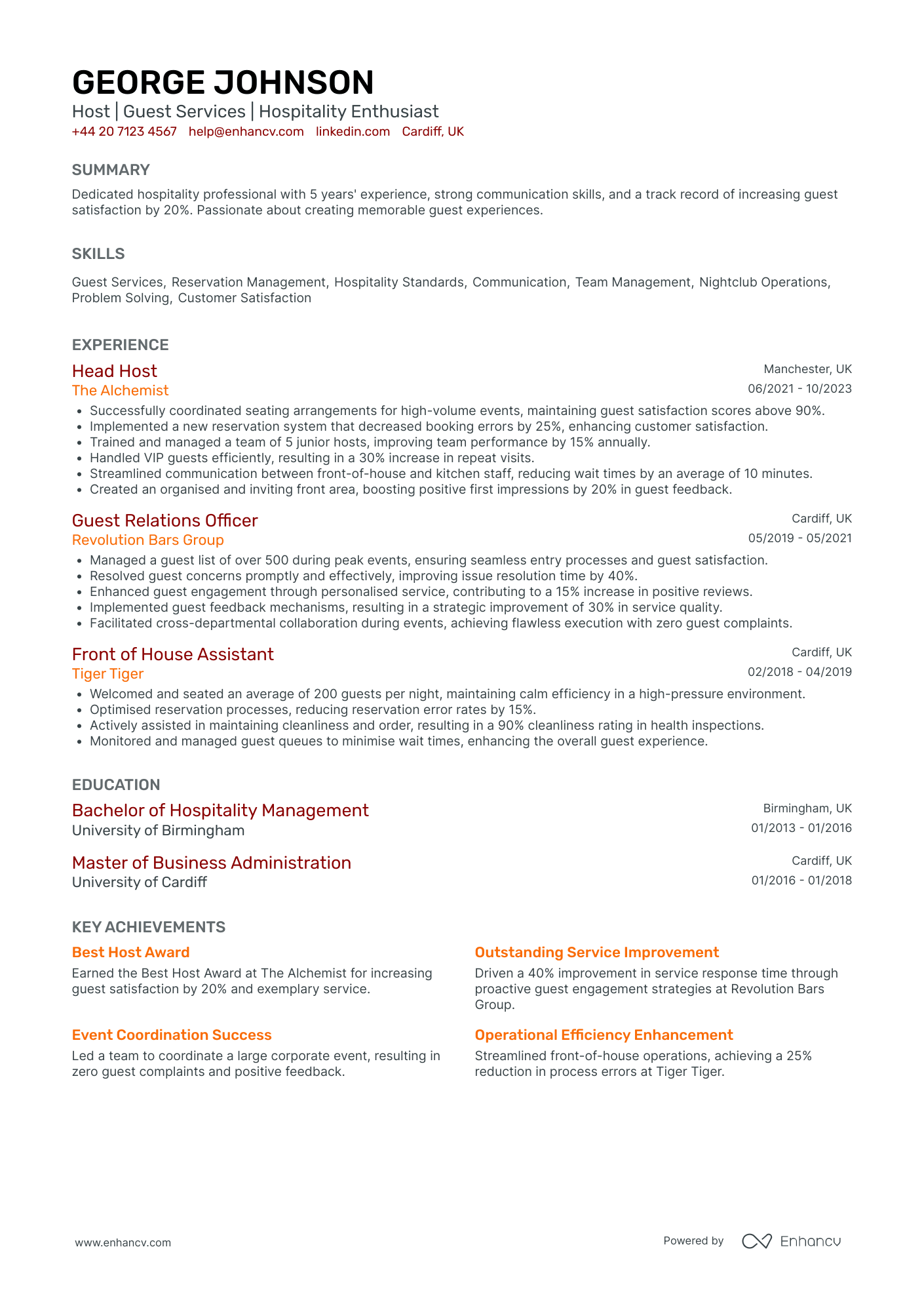
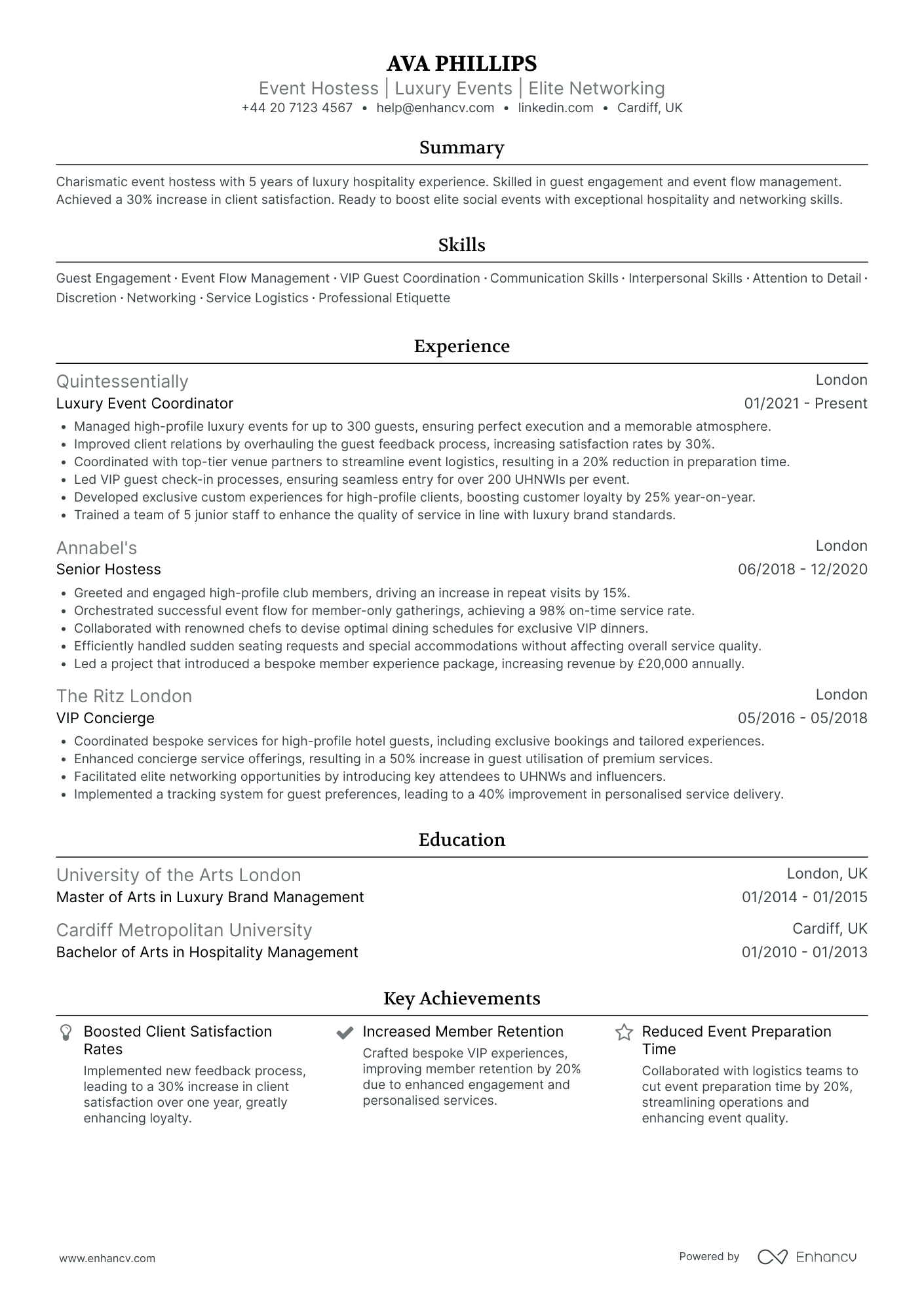
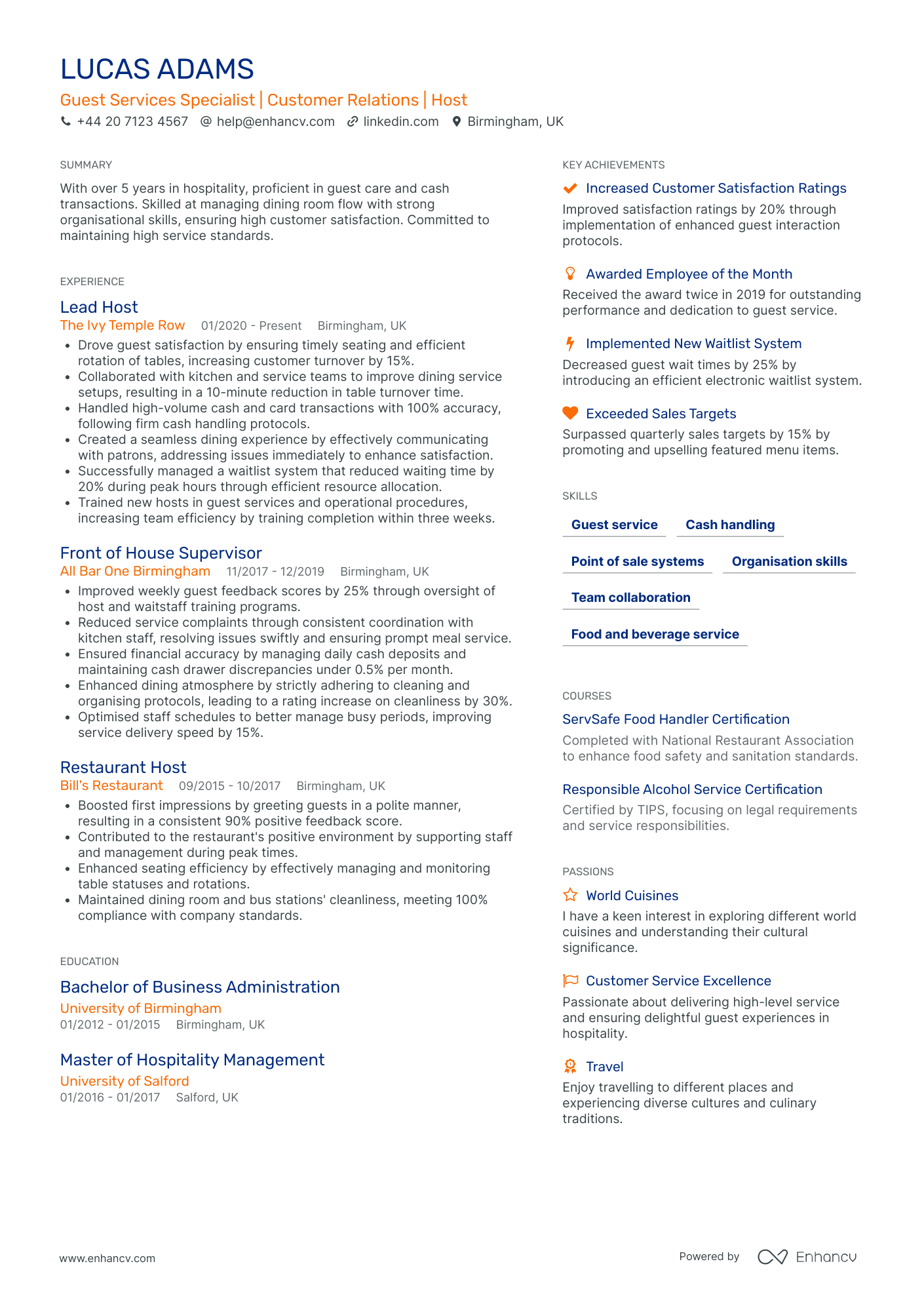
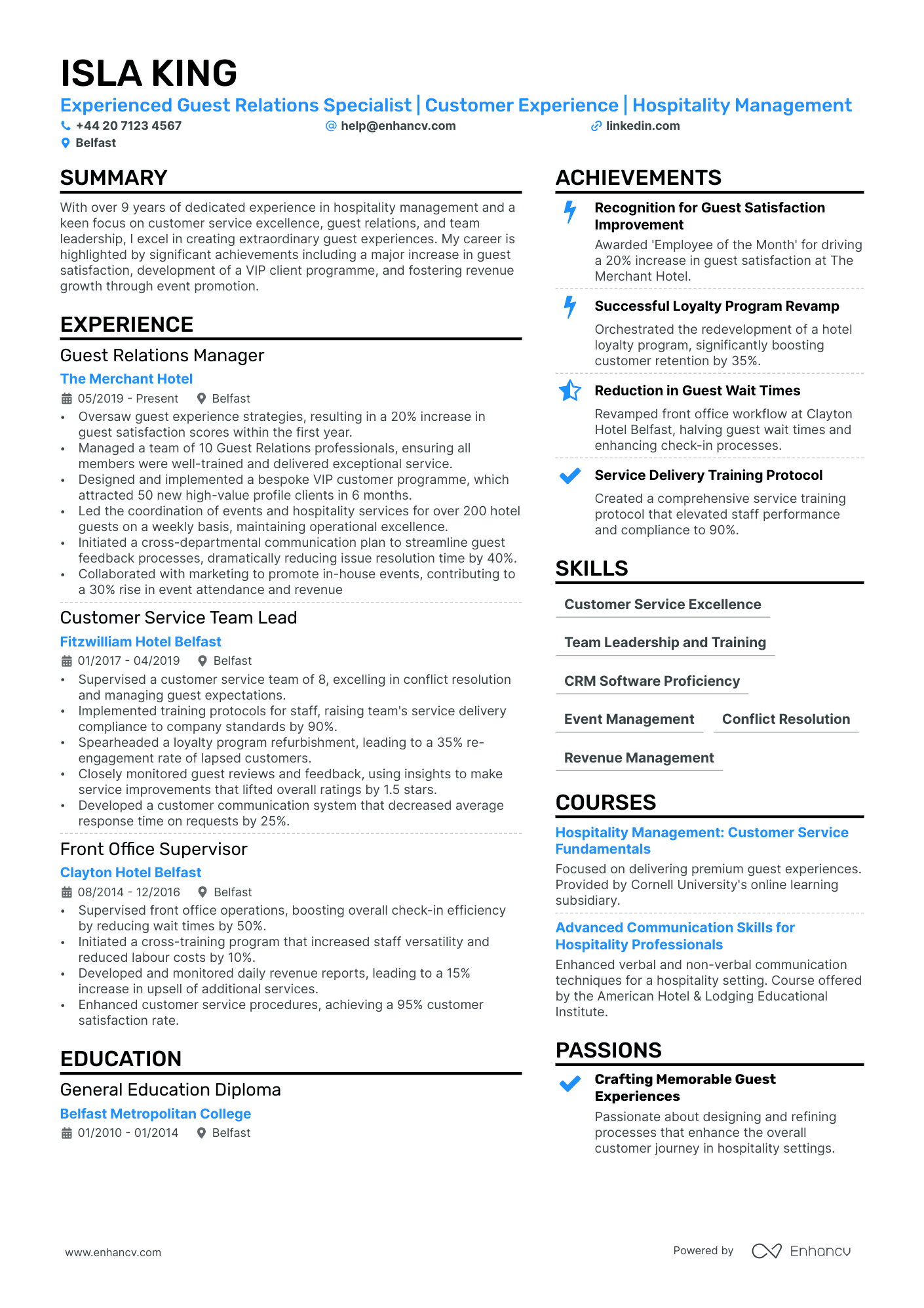
Most hostess CVs read like the job description copied into bullet form: greeted guests, managed the waitlist, answered the phone. A restaurant manager skimming twenty of them between covers cannot tell one applicant from the next.
The ones that earn a callback do two things. They prove you keep a busy front-of-house calm, and they are formatted so a manager can read them on a phone in under a minute. Get the format right first, because even a brilliant hostess never reaches the interview if the layout buries them.

Key takeaways
- Get the format right first. One page, one column, a PDF, and standard headings a manager can skim between covers.
- Hostess work is on-site and front-of-house, so put your location, availability, and shift flexibility near the top.
- Name the tools venues actually list: OpenTable, reservation systems, food hygiene, and menu knowledge.
- Open your personal statement with one concrete moment from a real service, not a stack of adjectives.
- No hospitality experience is fine. Lead with customer-facing transferable skills and food-safety training in progress.
- Quantify the room you have run: covers per shift, guests seated, waitlist times, and tables turned.
Formatting your hostess CV
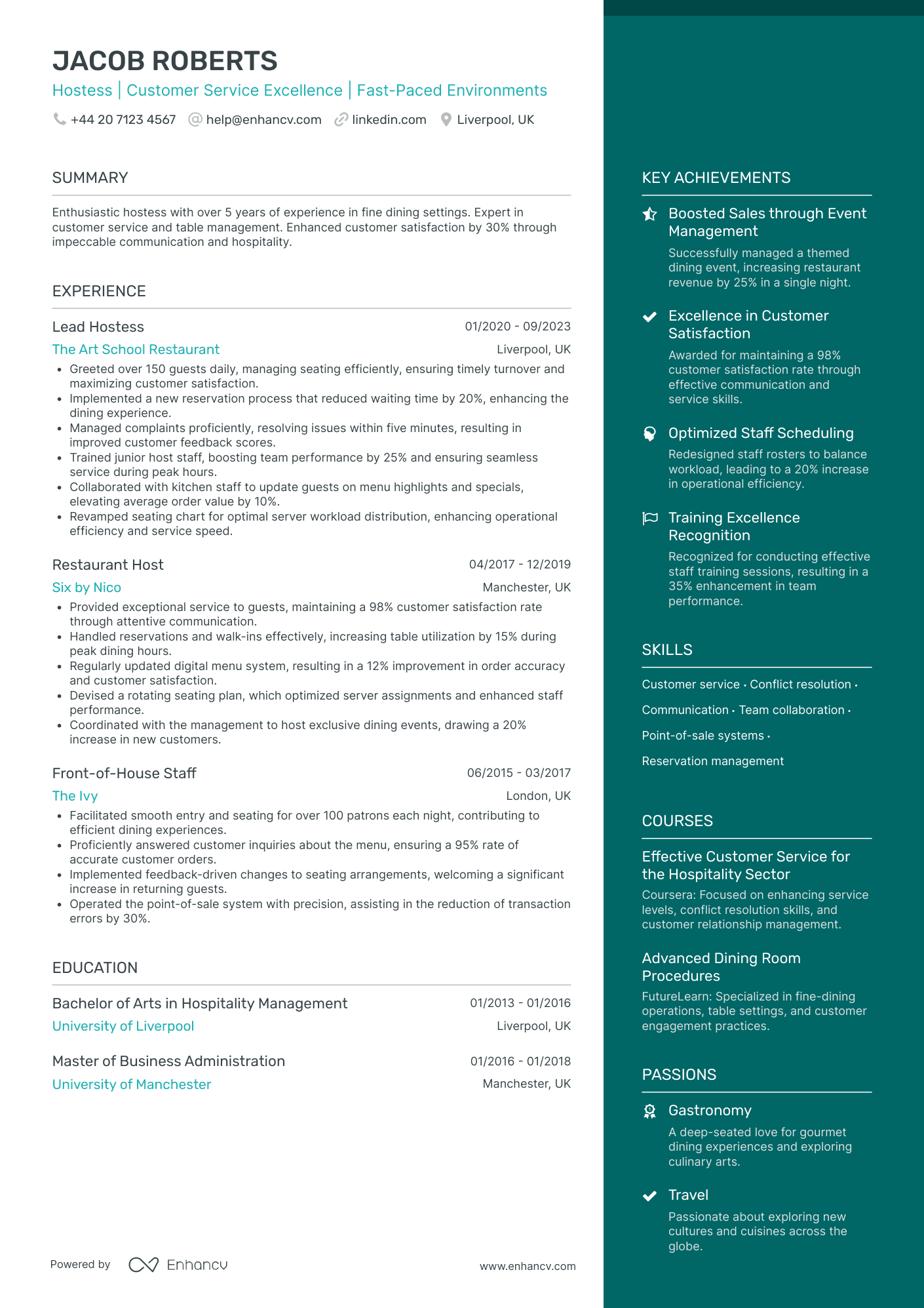
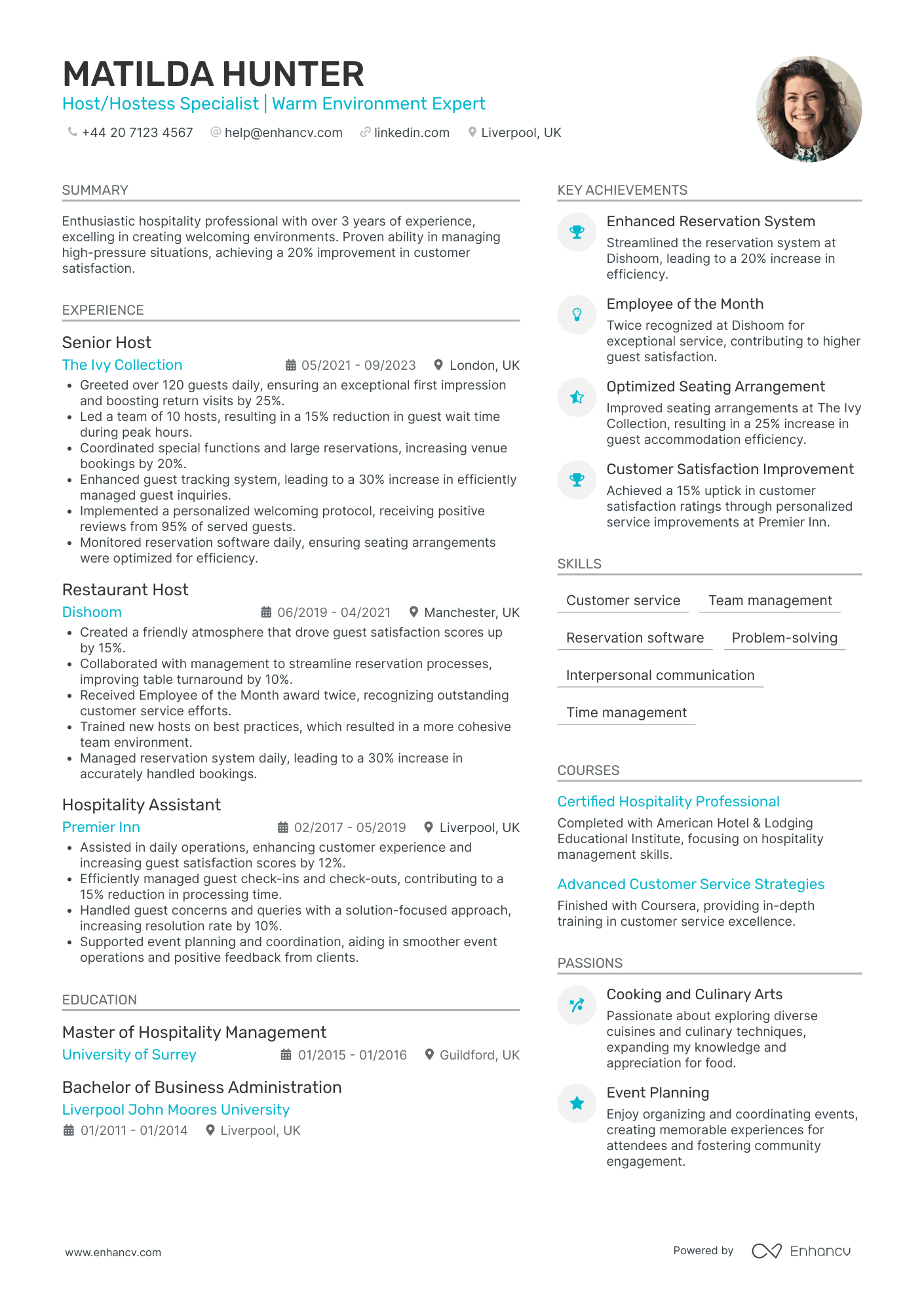
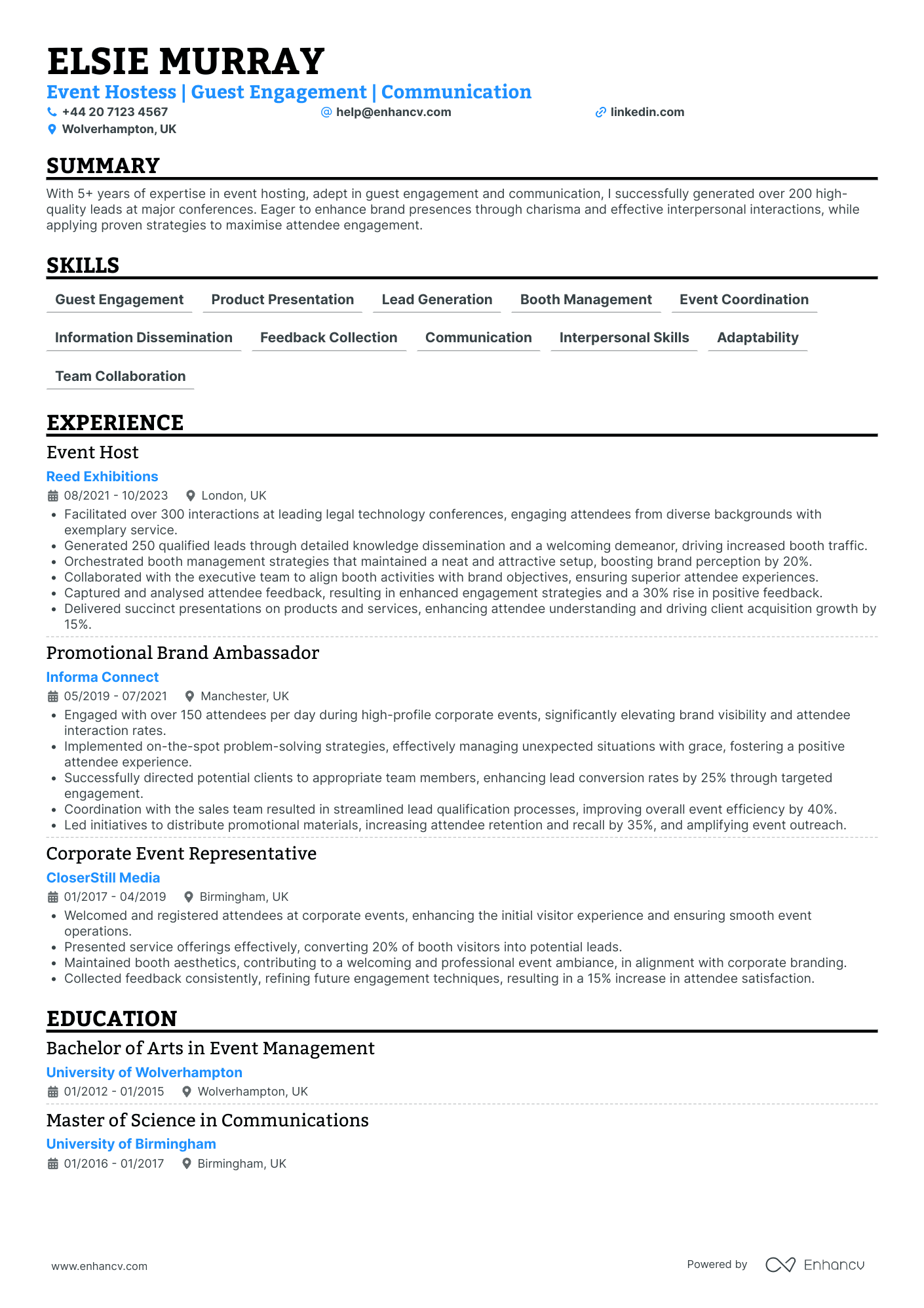
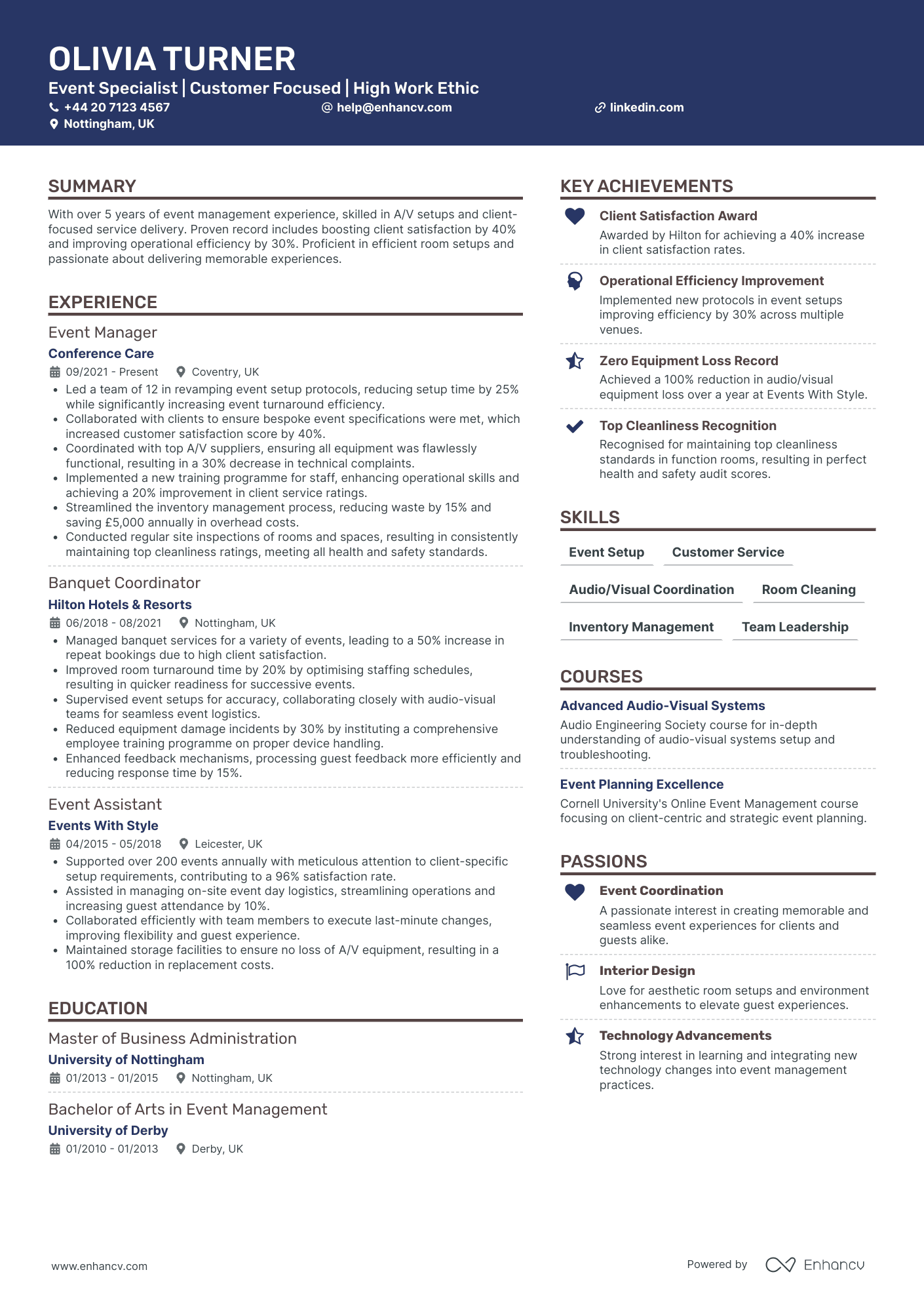
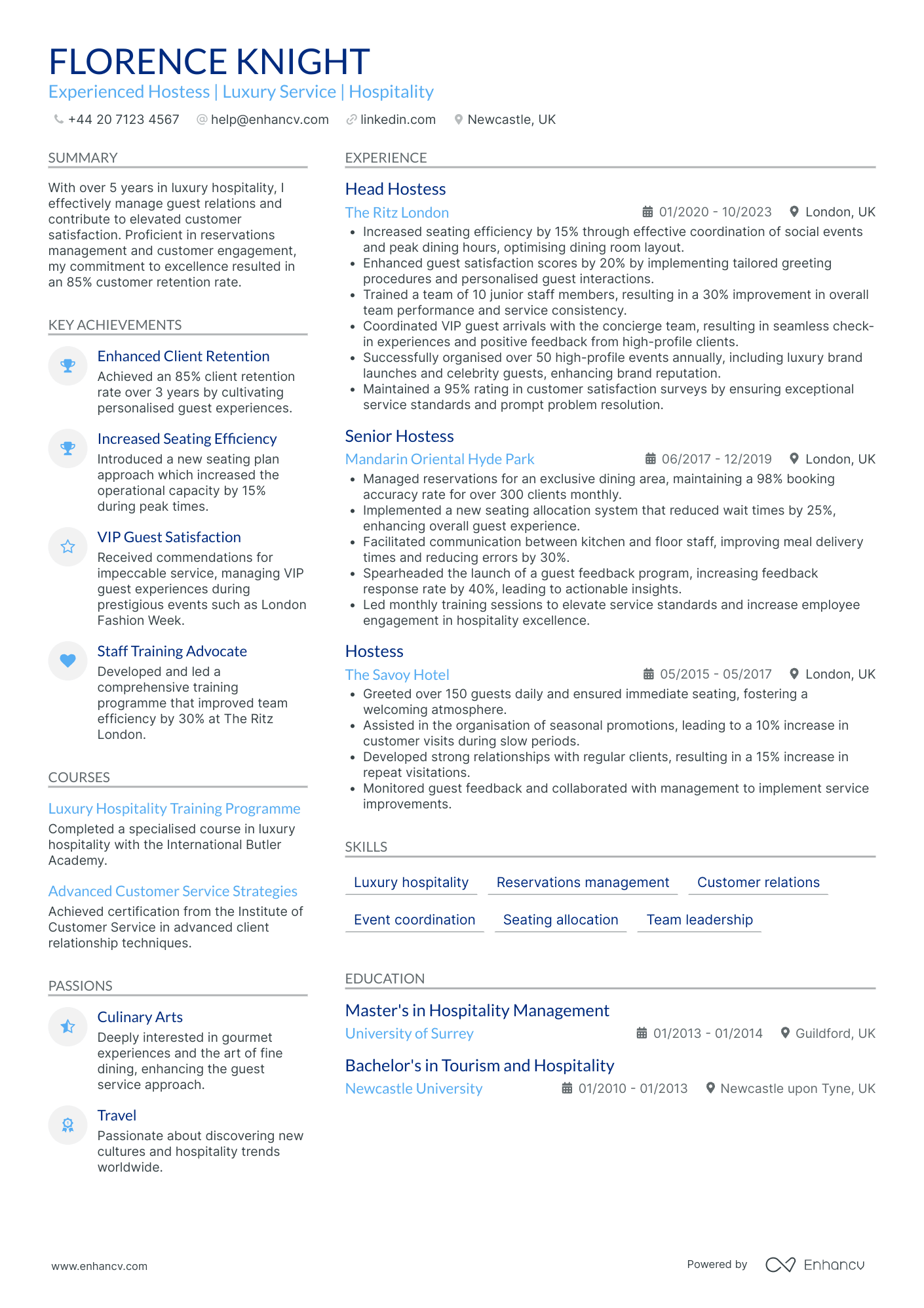
A hostess CV is read fast, often on a phone, by a manager between services. Make that easy. Keep it to one page while your experience is short, and let it grow to two only once you have real front-of-house roles behind you.
If you want the fundamentals behind all of this, start with how to write a CV. The rest of this section is what changes for a hostess.
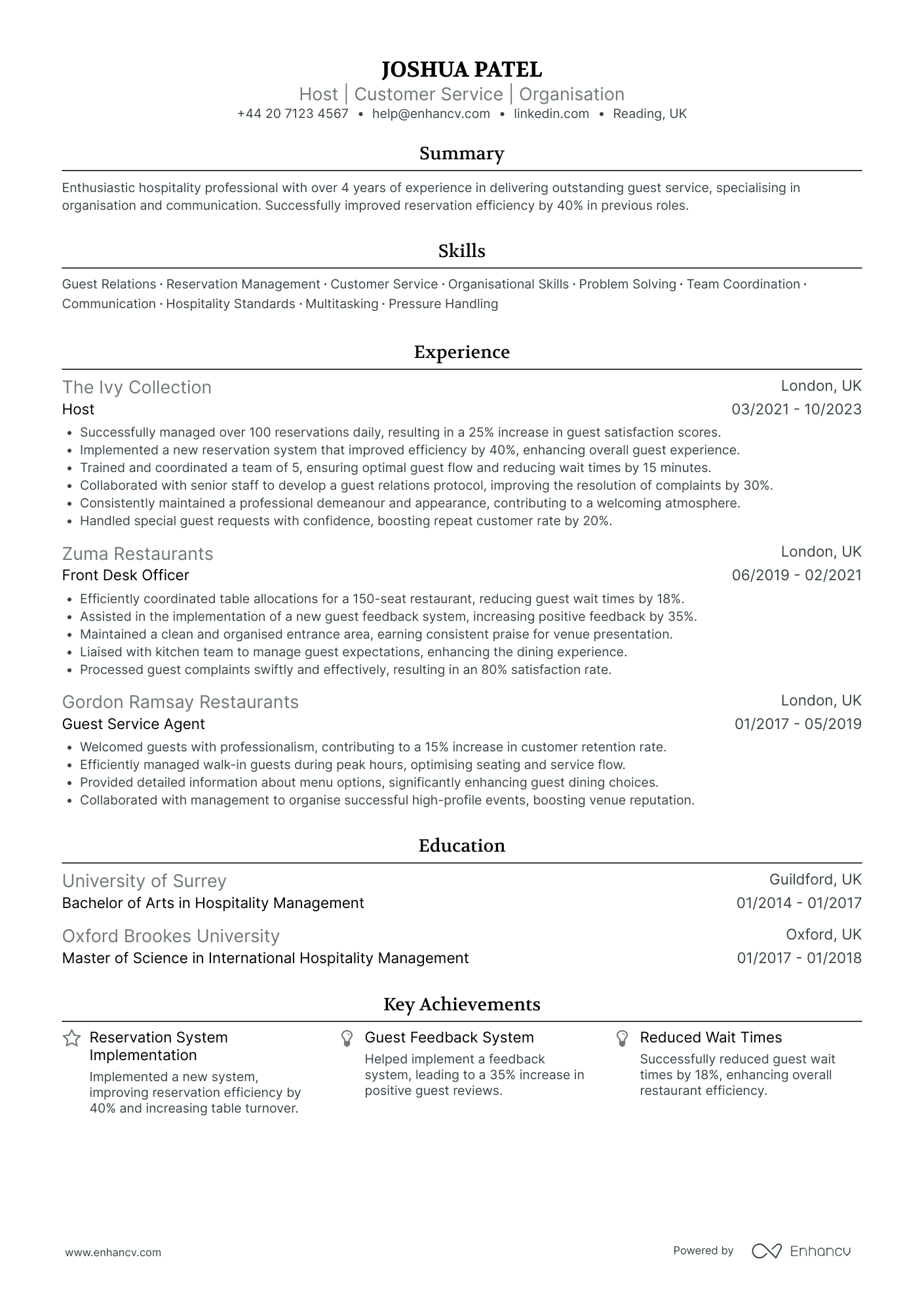
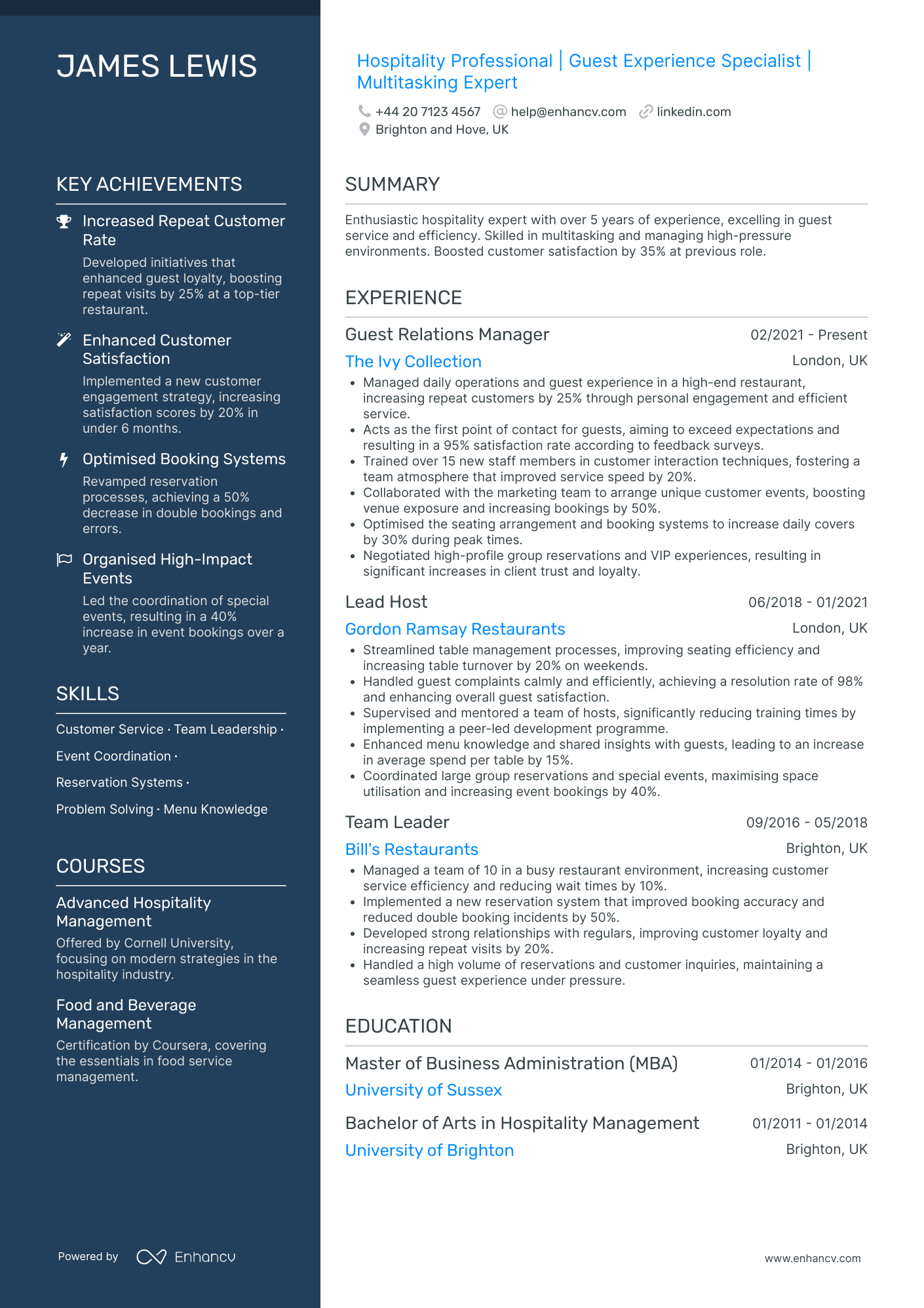
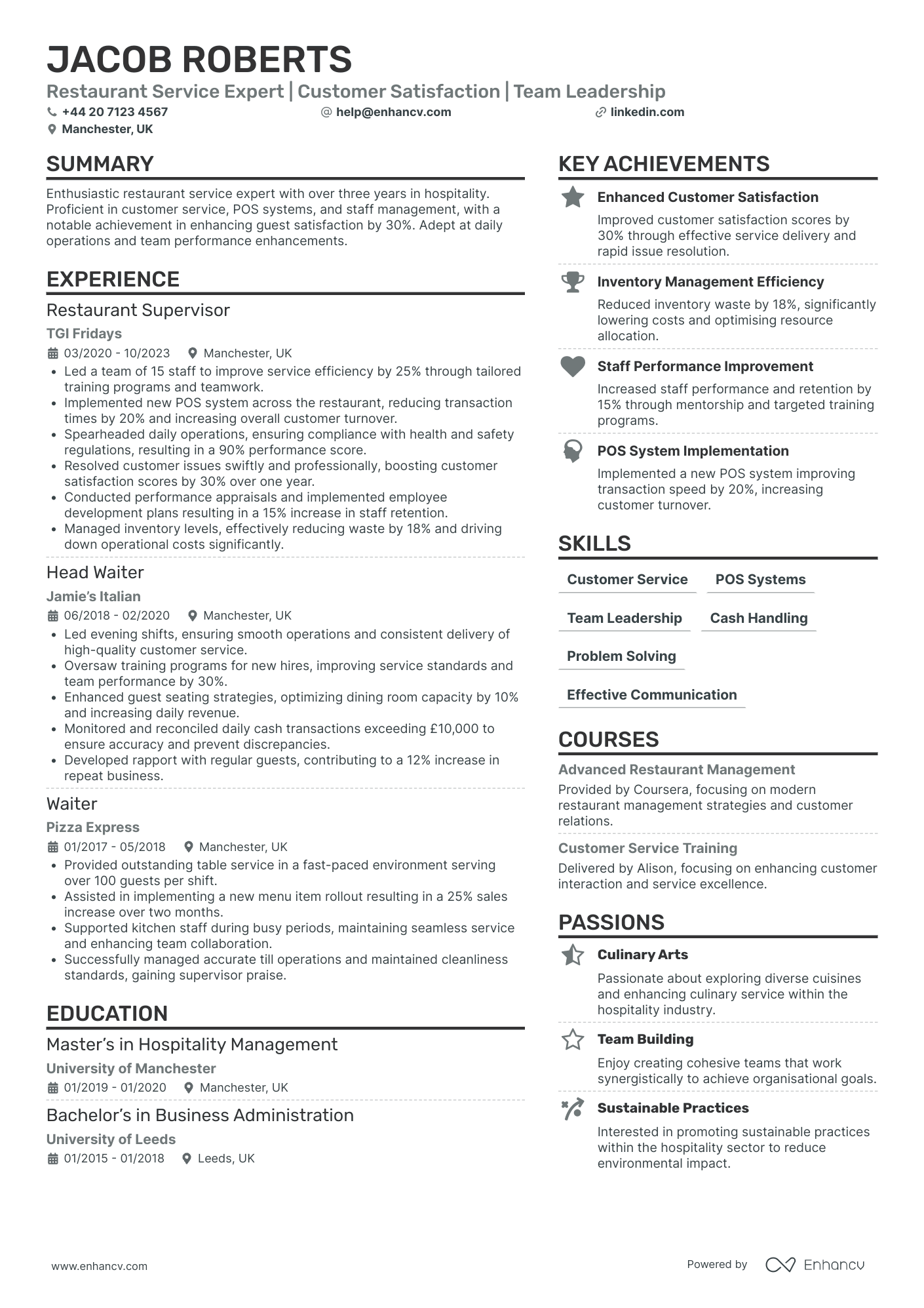
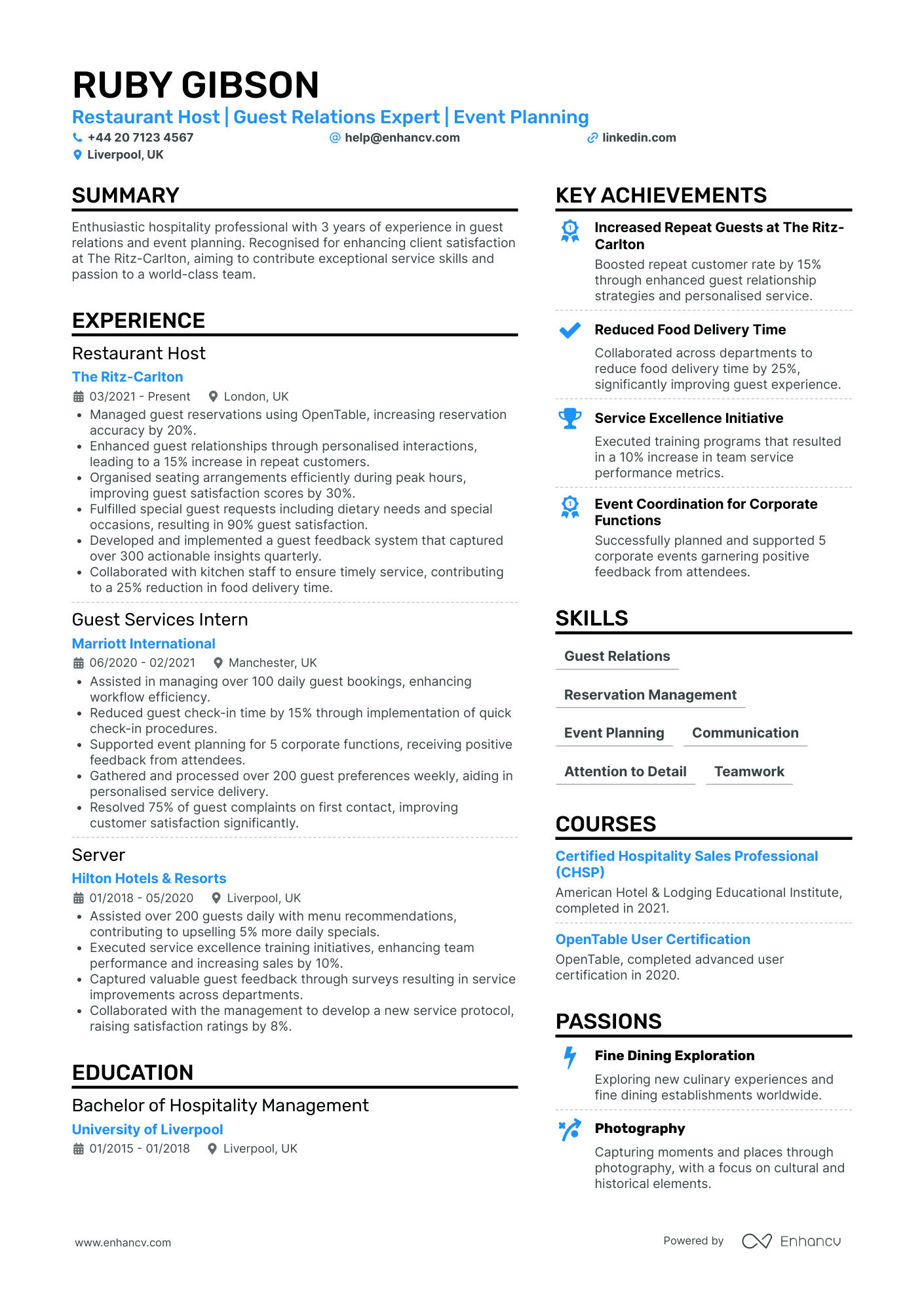
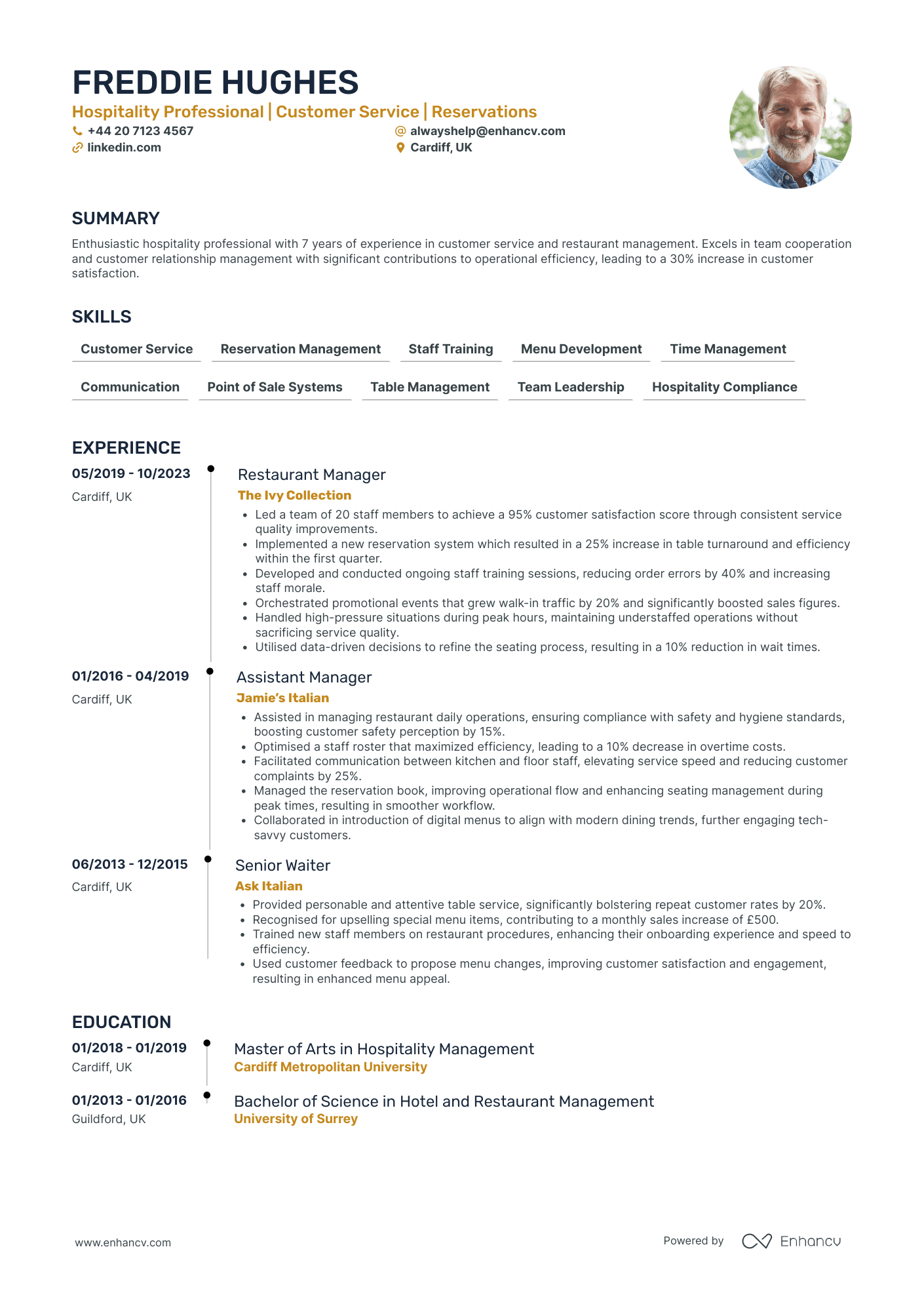
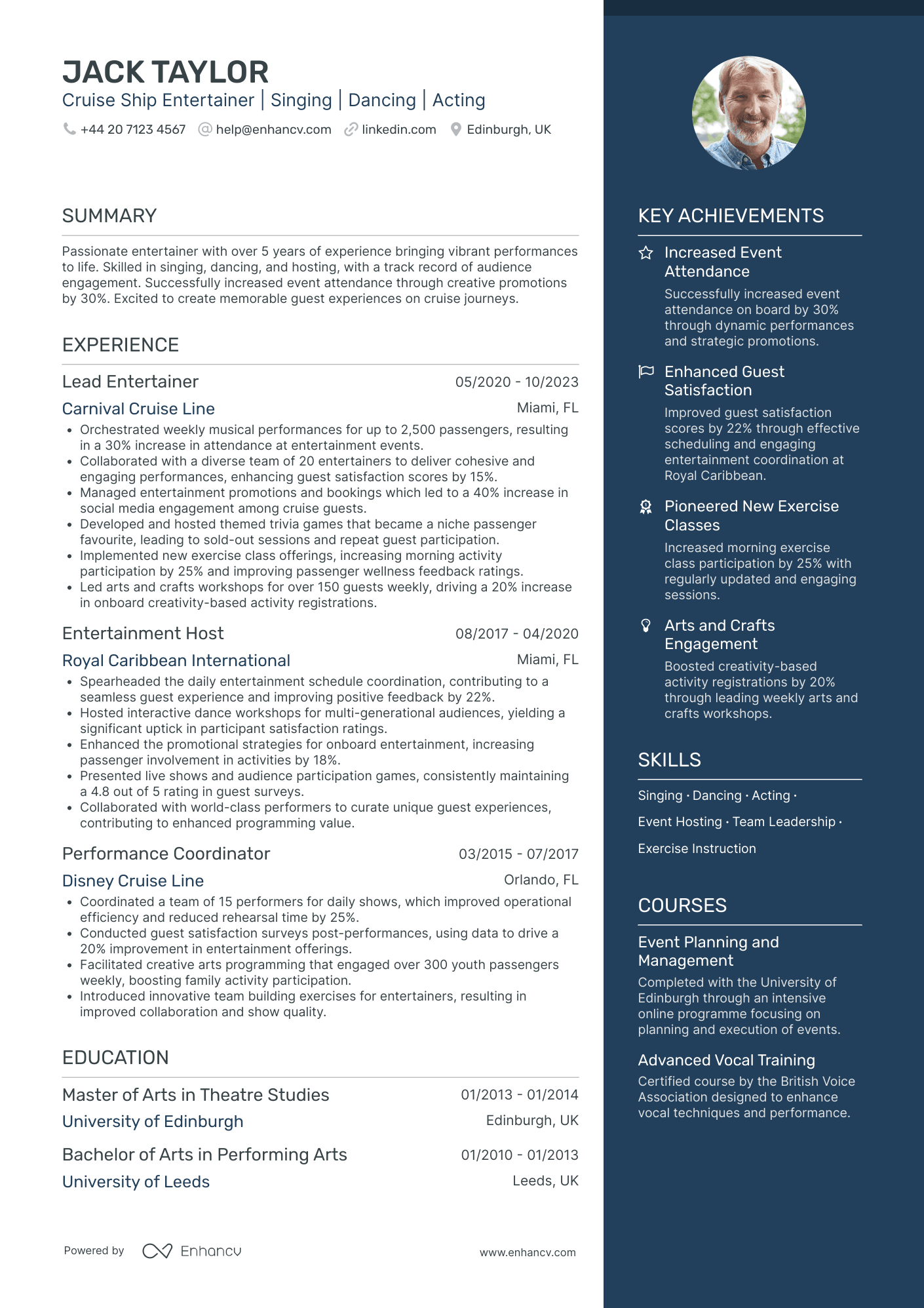
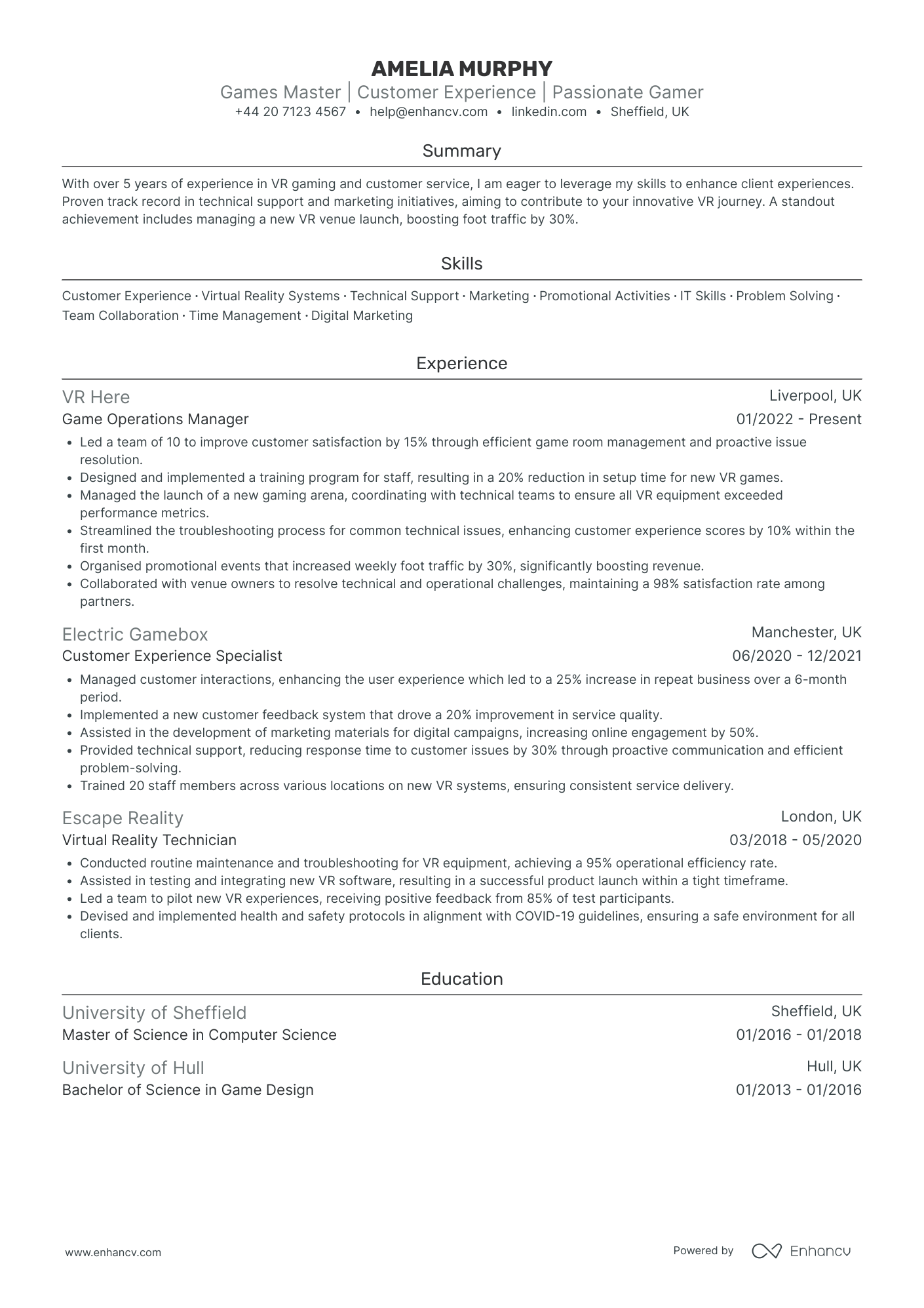
Use one column, standard headings, and a clean, readable font. Fancy layouts and colour blocks slow a skim reader down and confuse the tracking software many chains use, so aim for an ATS-friendly CV with a simple structure.
Order it in reverse chronological style once you have hospitality roles to show. With little experience, a skills-led order works better, and there is more on that below. Whichever you choose, the same CV format rules apply.
On length, most hostesses need only one page, so do not pad it to look busy. If you are wondering how long a CV should be, the honest answer for this role is that one strong page beats two thin ones.
Your header carries the details a manager needs before anything else: name, phone number, email, and the town or area you can work in. Add your availability here too. If you can cover evenings, weekends, and bank holidays, say so, because that is exactly the cover most venues are short of.
Leave the photo off. UK CVs do not use one, and a hostess role is no exception, so give that space to your personal statement instead.
Send it as a PDF for direct applications so the layout holds on any device. Keep a Word copy for agencies, which reformat CVs into their own template. If the advert names a file type, follow it exactly.
Name the file so it survives a busy inbox. Something like yourname-hostess-cv.pdf reads better to a manager than document1.pdf, and it is far easier to find when they come back to shortlist.
Make the page scannable. Bold your job titles and venues, keep dates in one consistent format, and use short bullets rather than paragraphs under each role. A manager should be able to find your most recent job in a second.
Build it from a tested layout rather than a blank page. Enhancv's CV templates are one-column and export to a clean PDF, which takes the formatting decisions off your plate.
Here is the CV structure that works for the role:

A hostess CV, section by section
- Header: name, phone, email, location, and availability.
- Personal statement: three or four lines built on one real service.
- Key skills: customer service, reservation systems, and food hygiene.
- Experience: paid, casual, or transferable, each with quantified bullets.
- Education and certificates: GCSEs plus food-hygiene and licensing training.
Is your CV good enough?
Drop your CV here or choose a file. PDF & DOCX only. Max 2MB file size.
What the UK hostess market looks like
Knowing what venues ask for shapes what goes on the CV. Here is what the current sample shows.
| What | UK hostess roles |
|---|---|
| Sample | 48 UK hostess postings in the last ~30 days (Enhancv's internal job feed) |
| Where the work happens | On-site, all 48 postings |
| Experience level asked for | Mostly entry level, 44 of 48 postings |
| Skills that recur most | Customer service, food hygiene, and menu presentation |
Two things there should shape your CV.
Every posting in the sample is on-site, which is no surprise for a front-of-house role. A manager needs to know you can reliably get to the venue and cover the shifts they struggle to fill, so put your location, your availability, and any late or weekend flexibility high up in your personal details on your CV.
The sample also skews heavily to entry level, 44 of the 48 postings, which is why applying with little experience is realistic rather than wishful. The demands that recur most are customer service, food hygiene, and menu presentation, so name those in the words the advert uses.
Pay is almost always hourly and swings with the venue, the city, and whether tips are shared, so treat any single average hostess salary figure you see online with caution and check the specific advert.
Writing your hostess personal statement
Three or four sentences at the top: who you are, the front-of-house strengths you bring, and one concrete moment that proves them. On a hostess CV this personal statement does the job a summary or an objective does elsewhere.
Keep it short and specific, and write it for the venue in front of you rather than as a generic paragraph you paste into every application.
Skip the adjective pile-up. Friendly, hard-working, and passionate about hospitality tells a manager nothing they can picture. See more personal statement examples if the opening line is not coming.
Lead with a specific scene instead:
Hostess personal statement example
Warm and unflappable front-of-house host with two years in a 120-cover gastropub, running the waitlist and seating flow across busy Friday and Saturday services. Confident on OpenTable, quick with walk-ins, and calm when a queue backs up at the door. Looking to bring a guest-first presence to a busy city-centre restaurant near Manchester.
Hostess personal statement example (no experience)
Reliable and personable college leaver with a year in retail, used to keeping a checkout queue calm and greeting a steady stream of customers politely. Level 2 Food Hygiene certificate in progress and happy to work evenings, weekends, and bank holidays. Looking for a first hostess role in a busy Bristol restaurant to build a front-of-house career.
Hostess personal statement to avoid
Passionate and hard-working people person seeking a hostess role where I can use my excellent communication skills and grow within a fast-paced, dynamic team environment.
When a hostess CV crosses our desk, the ones that stand out never open with passionate and friendly. They open with a scene: 120 covers on a Saturday, a queue at the door, and a waitlist kept moving without a single walkout. Name the venue size, the systems you ran, and the moment you kept your head. That is what a restaurant manager is screening for, and it is the one thing a generic CV can never fake.
The Enhancv team
Skills to put on a hostess CV
Read a stack of live hostess adverts and the same demands repeat. Customer service, food hygiene, and menu presentation come up most often in the sample, and they are practical rather than fluffy.
Those are your hard skills, listed in the words the adverts use. If a venue names OpenTable or another reservation system, name it straight back at them.
Evidence beats a list. Food hygiene means naming your Level 2 certificate, not writing the word hygienic. Menu knowledge means a line like briefed guests on specials and allergens across a 40-dish menu. Reservation systems means the actual product, OpenTable or SevenRooms, and what you did in it.
The soft skills that matter are the ones a manager can test in an interview: composure when the queue backs up, warmth with guests, and clear communication with the kitchen and the floor. These are also the customer service skills venues screen for, so prove each in a bullet rather than just claiming it.
List only what you can stand behind. If you have run a booking system, name it. If you have not, leave it off rather than bluff, because a busy trial shift exposes it in the first ten minutes.
Top skills for your hostess CV:
Customer service
OpenTable and reservation systems
Food hygiene
Menu knowledge
Waitlist and seating management
Table turning and covers management
Wine service
POS and payment handling
Communication
Composure under pressure
Guest focus
Multitasking
Teamwork
Attention to detail
Writing your hostess experience section
Whether it is bar work, retail, or a Saturday job, write each role the same way: a dated heading, then bullets that show what you did and what changed. Start every bullet with a verb, and lean on strong CV action verbs.
Hostess work is more measurable than it feels. Covers per shift, guests seated, waitlist times, tables turned, and complaints defused all count as CV achievements. For the mechanics of the section, see how to write your work experience on a CV.
Match the detail to the venue. A high-volume casual restaurant wants to see covers, speed, and turnaround. A fine-dining room wants poise, reservation accuracy, and how you handle a VIP or a complaint. Read the advert and lead with the version of yourself it is asking for.
Tailor each application: pull the duties and systems from the advert and mirror the ones that are true of you. Enhancv's CV tailoring feature reads the ad and suggests the matching edits, which saves rewriting from scratch every time.
Here is what a strong entry reads like, with a transferable role underneath to show the same treatment when the work happened outside hospitality:
- Manage the waitlist and seating flow for a 140-cover restaurant across Friday and Saturday services, keeping average waits under 15 minutes
- Greet and seat up to 200 guests a shift, coordinating with servers to turn tables without rushing diners
- Handle reservations and walk-ins on OpenTable, cutting double-bookings to almost zero over six months
- Calm and re-seat unhappy guests at peak service, praised by the manager for defusing complaints before they reached the floor
- Greeted and directed up to 150 customers a day on the shop floor, the same first-impression role a host plays at the door
- Kept the checkout queue moving during Saturday peaks, handling payments and refunds calmly under pressure
- Resolved customer complaints on the spot, escalating only when needed and keeping the interaction polite
- Trained two new starters on till and customer-service basics during a busy Christmas period

PRO TIP
Hostess adverts name their tools. If the ad says OpenTable or SevenRooms, write it exactly that way, not booking software. A manager scanning for the system their venue runs wants to see the exact name they typed.
Hostess CV with no experience
Hospitality is one of the easiest fields to enter without a track record, because venues hire on attitude and train the floor. Most of the sample is pitched at entry level, so this is a realistic route.
Lead with a skills-led structure: personal statement, then customer-facing skills, then education, with any work history lower down. It is the right shape for a first CV.
Mine your life for front-of-house evidence. It is almost always there:
- Retail or a Saturday job: handling queues, tills, and awkward customers politely.
- Events, clubs, or society roles: greeting people, managing lists, and keeping a room moving.
- Volunteering at a charity shop, festival, or community event.
- School or college roles that put you in front of the public or on a rota.
Write those in hospitality language. Kept a coffee-shop queue moving through the lunch rush is a hostess bullet that happened somewhere else.
One line lifts a no-experience CV to the top of the pile: a current Level 2 Food Hygiene certificate, even marked as in progress, shows you are already on the path.
Two more things help a first CV. A character reference from a teacher, coach, or volunteer lead vouches for the reliability a manager cannot yet read in a work history. And a clear note that you want weekend or evening shifts tells the venue you fit the rota they are trying to fill.
Education and certifications on a hostess CV
You rarely need formal qualifications to work as a hostess. What helps is anything that signals reliability and food-safety awareness, so keep your education section short and let the useful items stand out.
List your GCSEs or equivalent briefly, then give more room to the certificates a venue values: a Level 2 Food Hygiene certificate, an alcohol-awareness or personal-licence qualification, or a first aid course.
Short courses count here too. A barista, wine-service, or customer-service course shows initiative and gives a manager one more reason to trust you on the floor.
If you are still studying, say so and add your expected finish date. For this role, reliability and availability carry more weight than the grades themselves.
Conclusion
Get the format right first, then prove you keep a busy front-of-house calm. That order is what turns a hostess CV into an interview.
Name the systems and the food-safety training venues actually list, quantify the room you have run, and lead every section with the specific over the generic. One real service beats a paragraph of adjectives every time.
Pair the CV with a short cover letter that says why this venue, and you give a manager a reason to book you in for a trial shift.
Author's take - The Enhancv team
When a hostess CV crosses our desk, the ones that stand out never open with passionate and friendly. They open with a scene: 120 covers on a Saturday, a queue at the door, and a waitlist kept moving without a single walkout. Name the venue size, the systems you ran, and the moment you kept your head. That is what a restaurant manager is screening for, and it is the one thing a generic CV can never fake.