



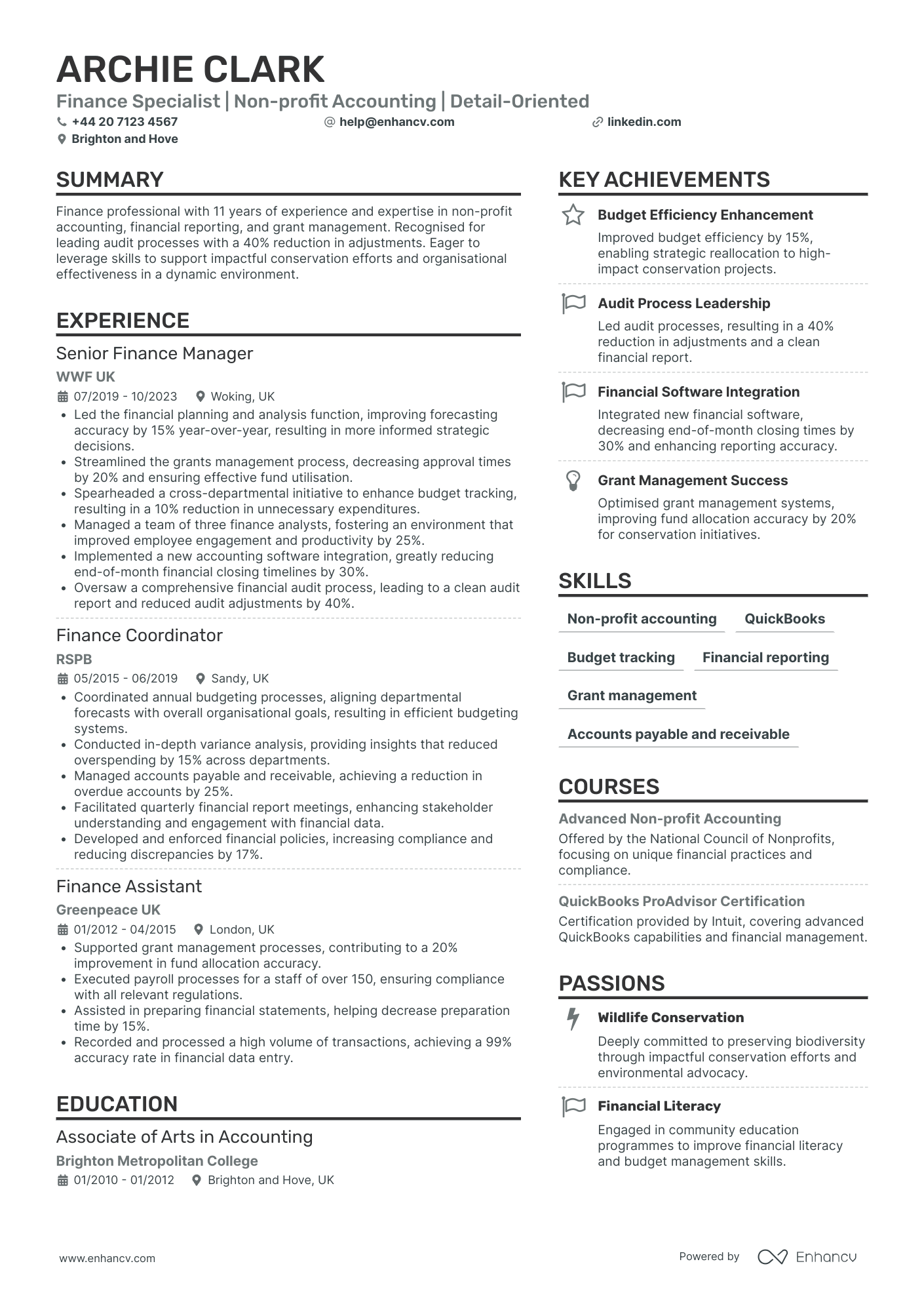
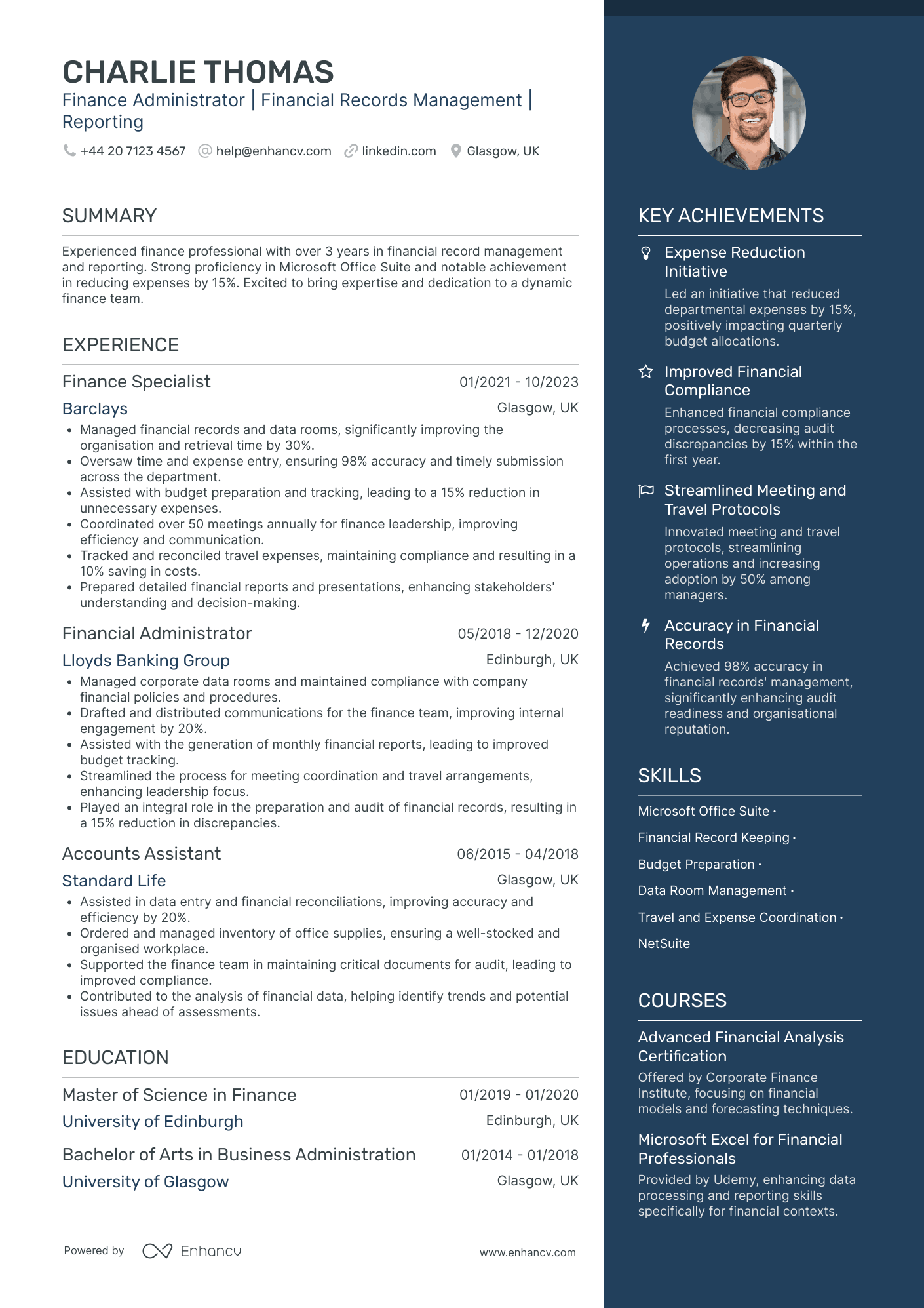
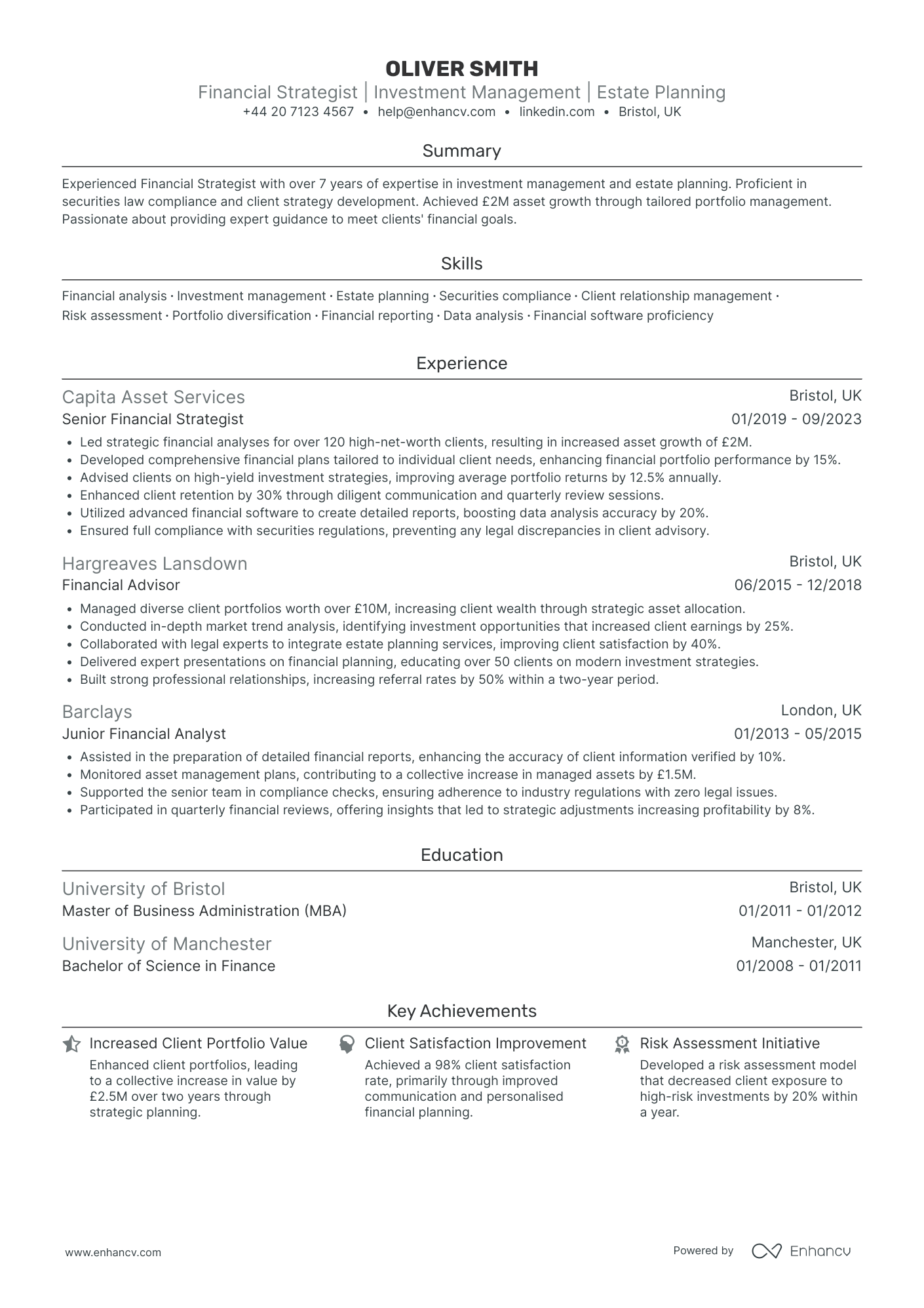
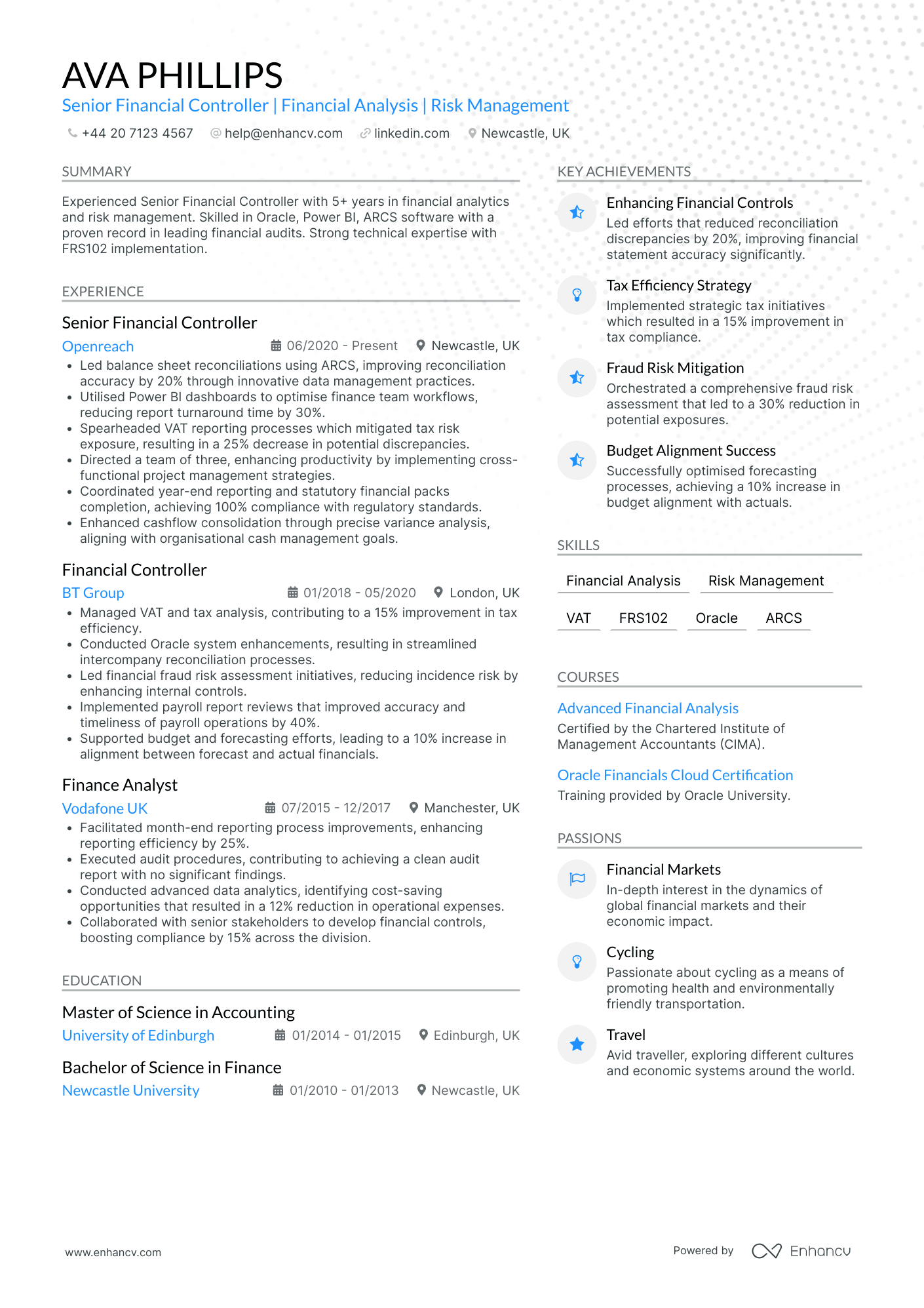
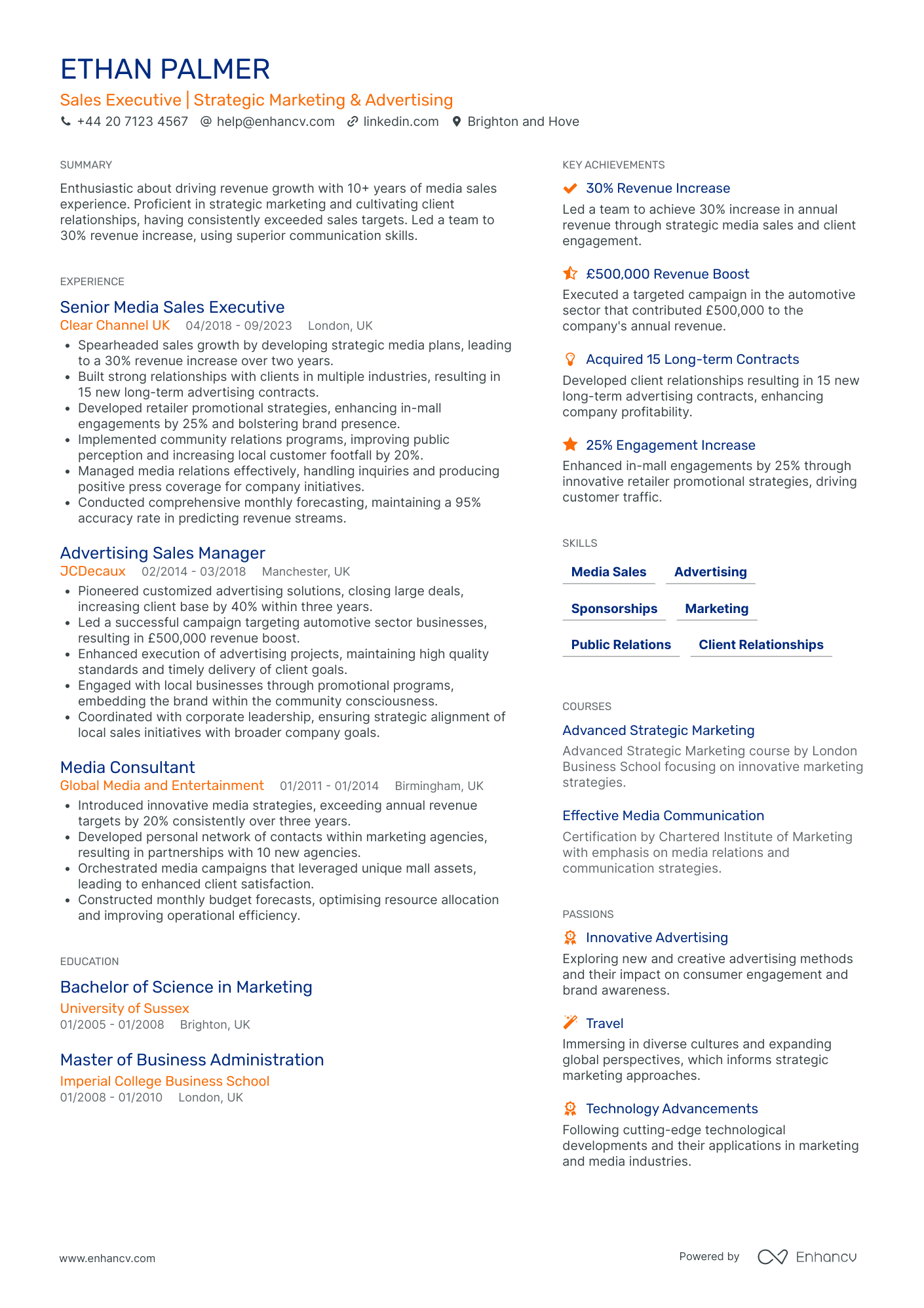
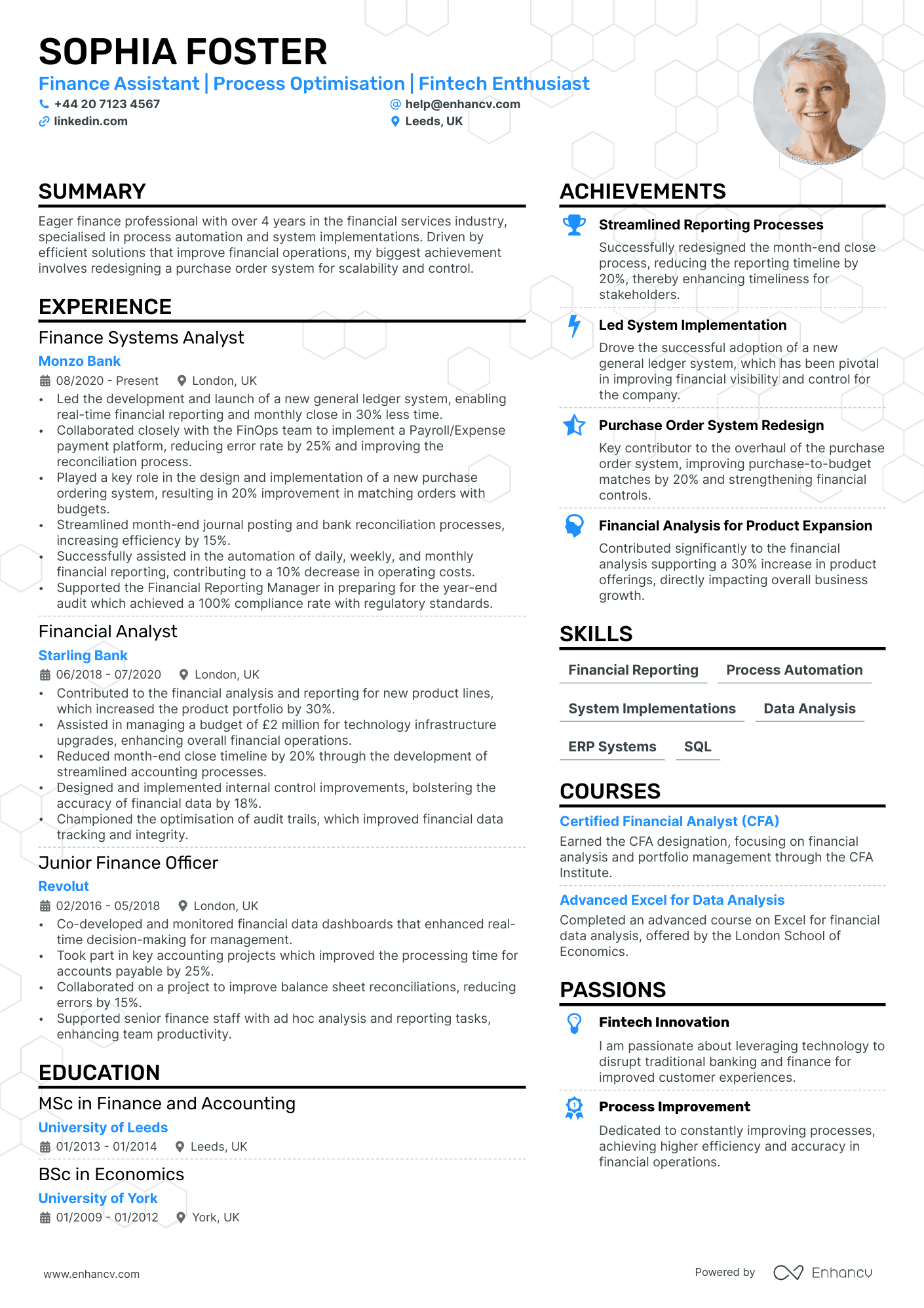
Most finance CVs look the part and say nothing. A clean template, tidy columns, then six bullets that would fit any accountant, analyst, or controller in Britain.
Format is the quiet advantage. A finance manager skims a stack of near-identical CVs, so the one laid out for fast reading, sized right, and sent in the correct file type is the one whose numbers actually get read. If you want the fundamentals first, see how to write a CV.

Key takeaways
- Lead with format. A recruiter-ready template, two pages, and a PDF beat a clever layout every time.
- Put your qualification where it shows fast. ACA, ACCA, CIMA, or CFA belong near the top, part-qualified included.
- Quantify everything. Budgets managed, variances cut, and reporting cycles shortened carry a finance CV.
- Mirror the advert's language: financial reporting, budgeting, forecasting, and the systems the posting names.
- Most UK finance roles are hybrid or on-site, so a clear location and named systems like Excel and SAP matter.
- Open with a four-line personal statement built on sector, scope, and one hard result.
Formatting your finance CV
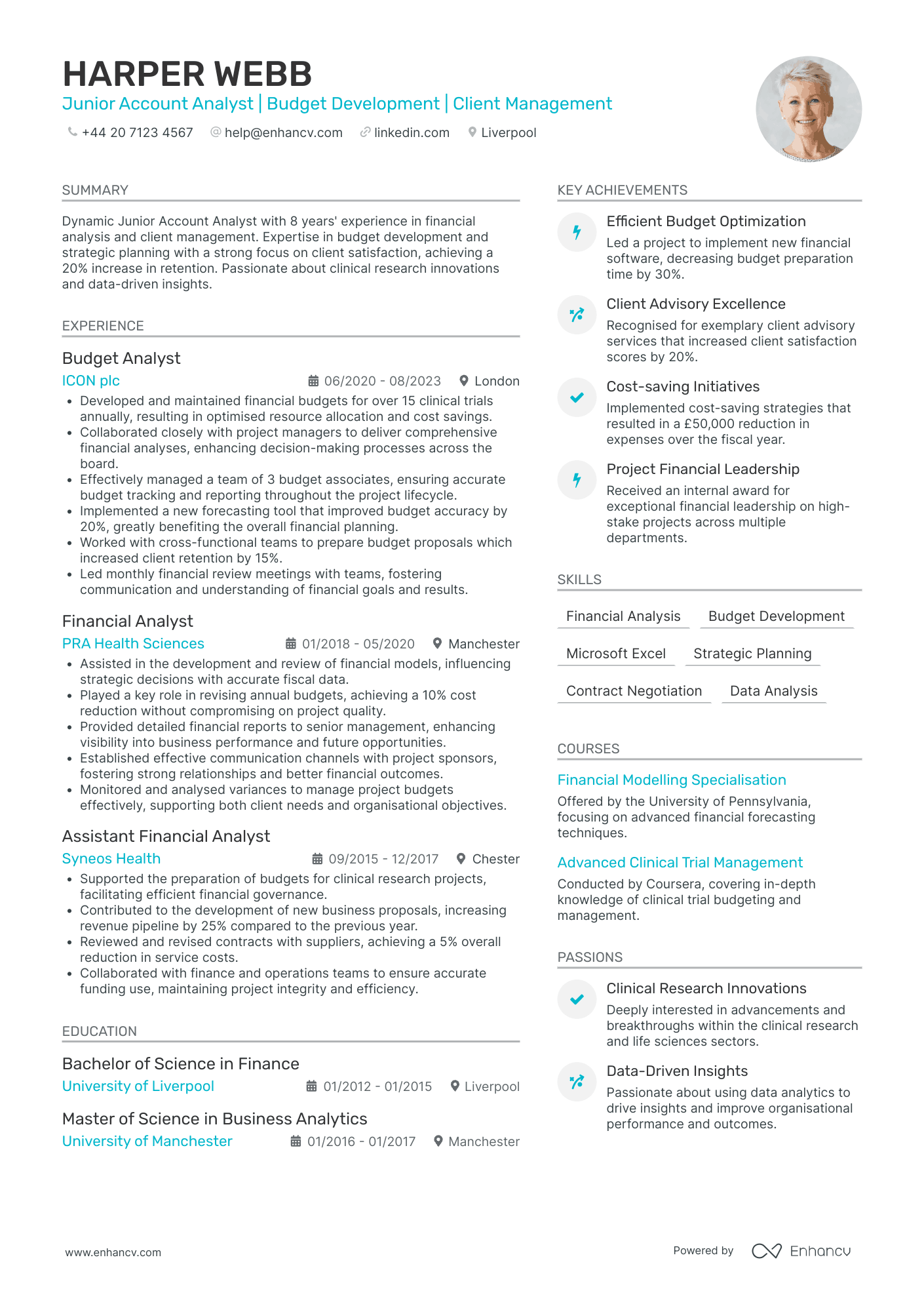
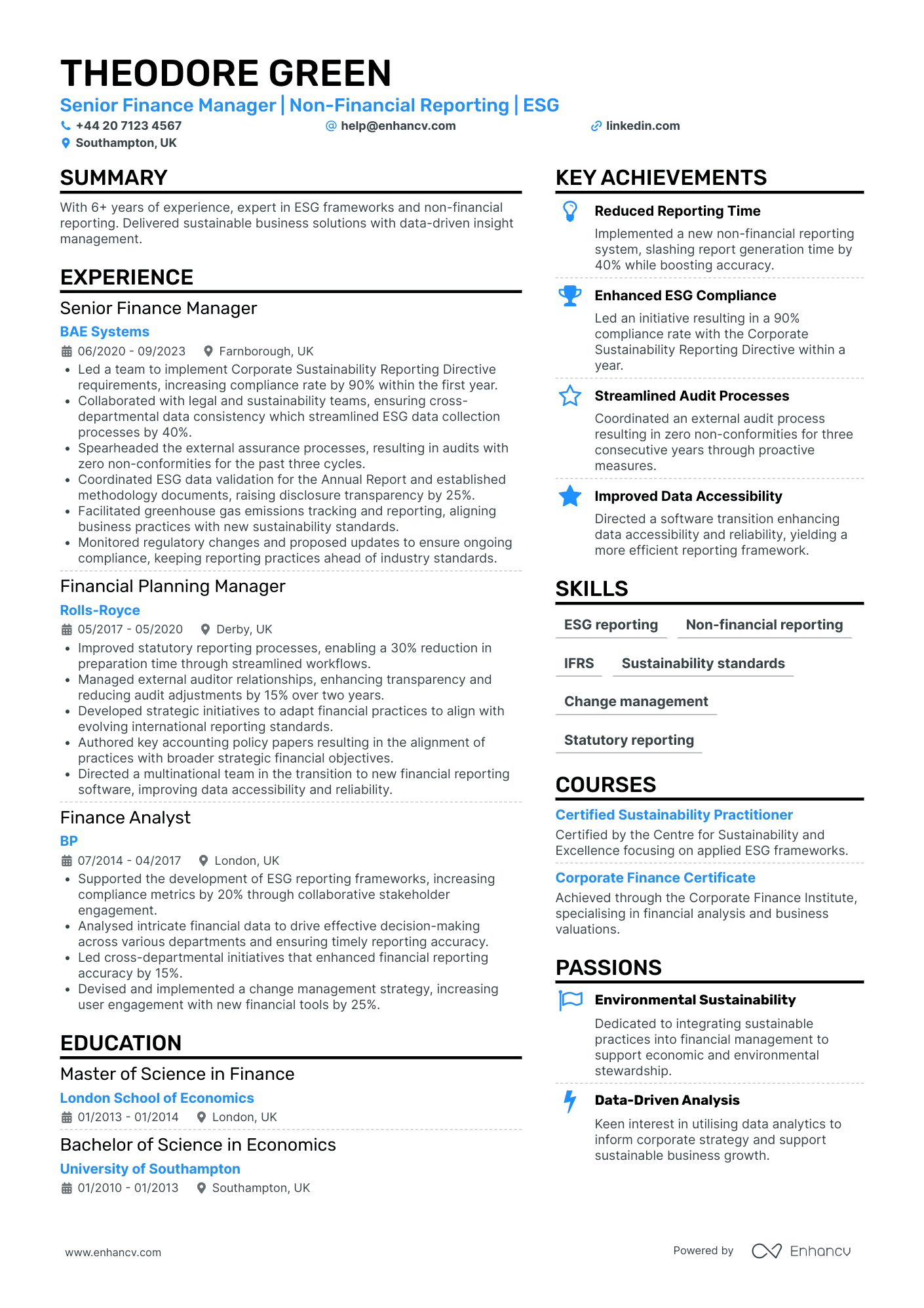
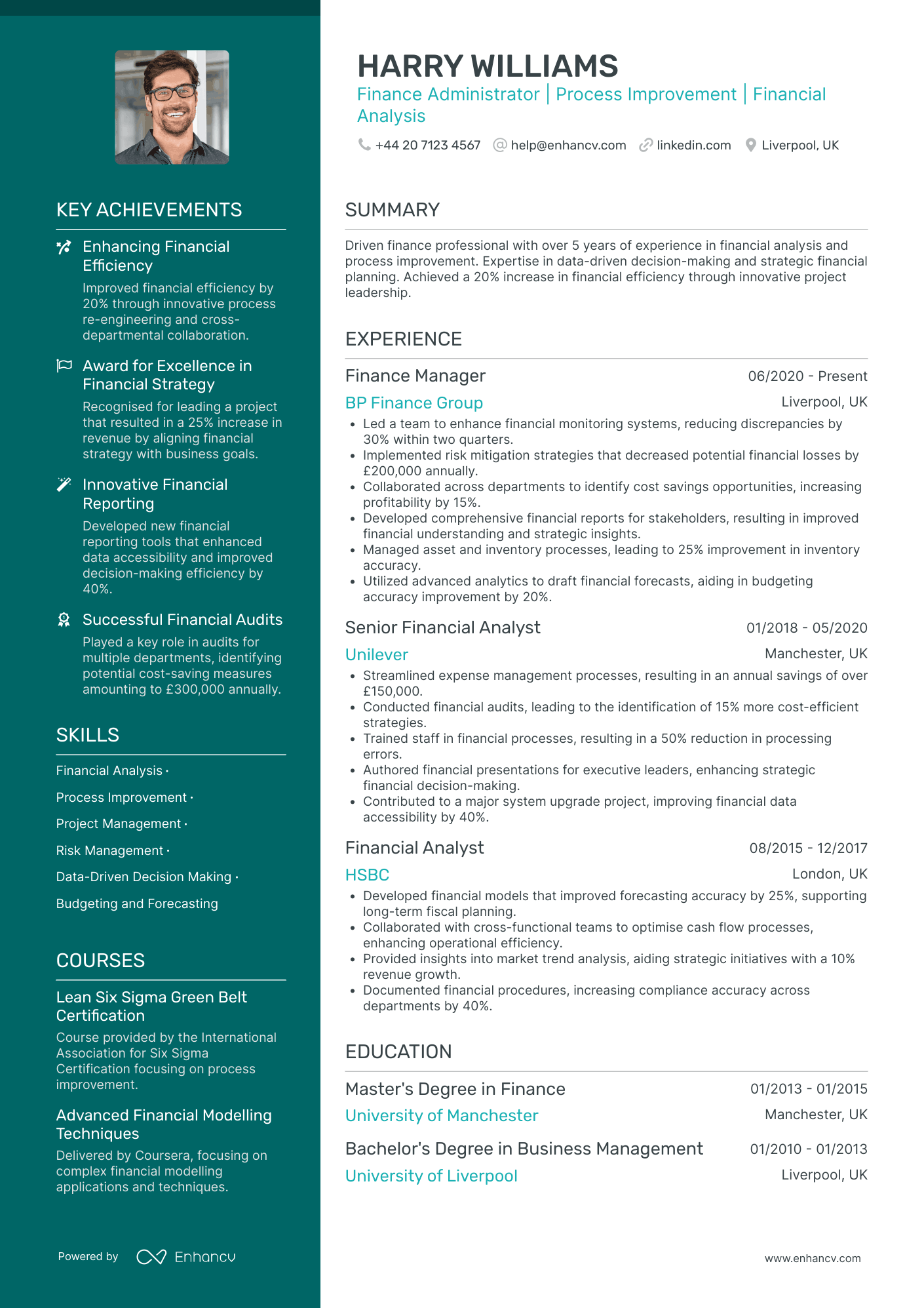
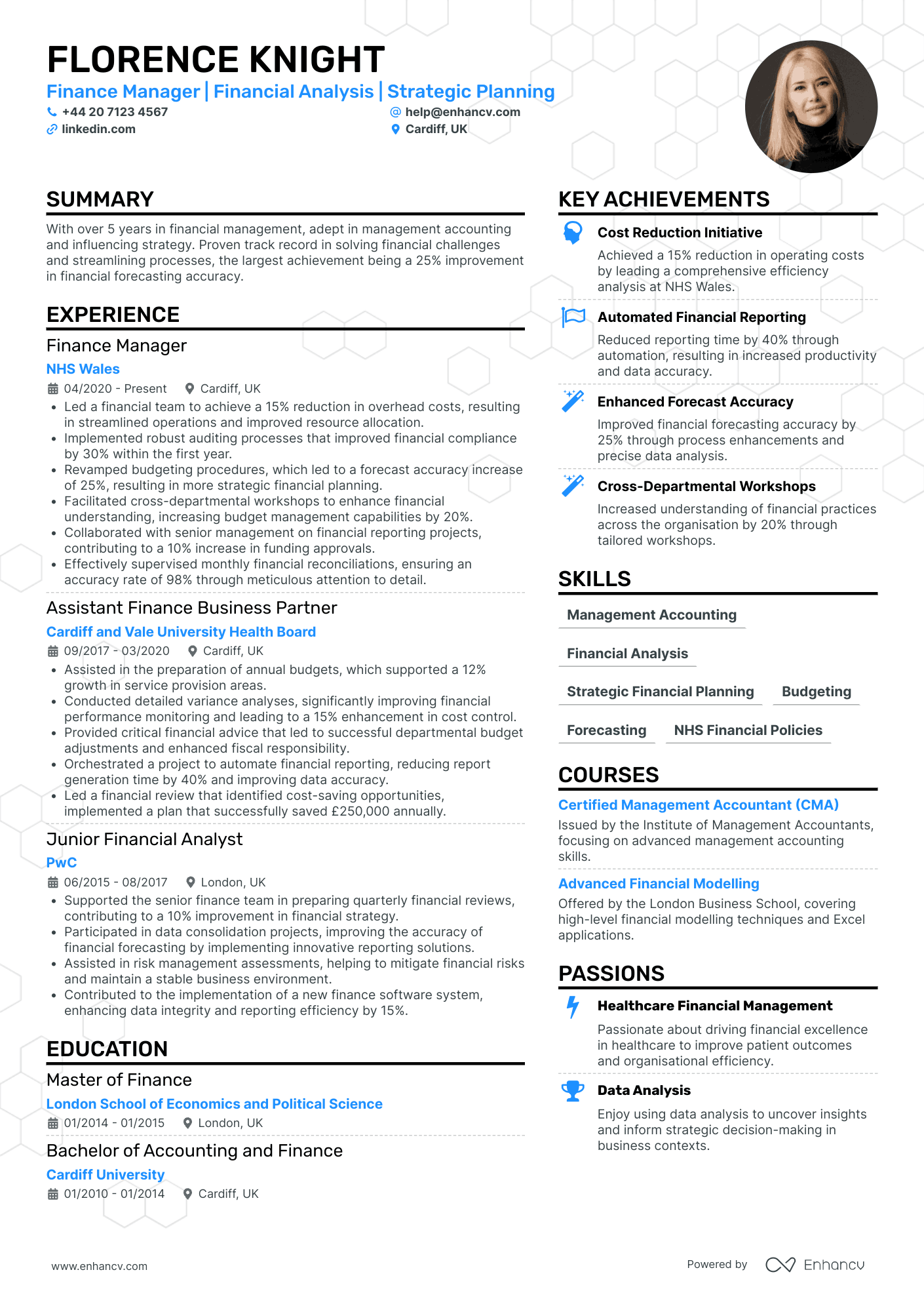
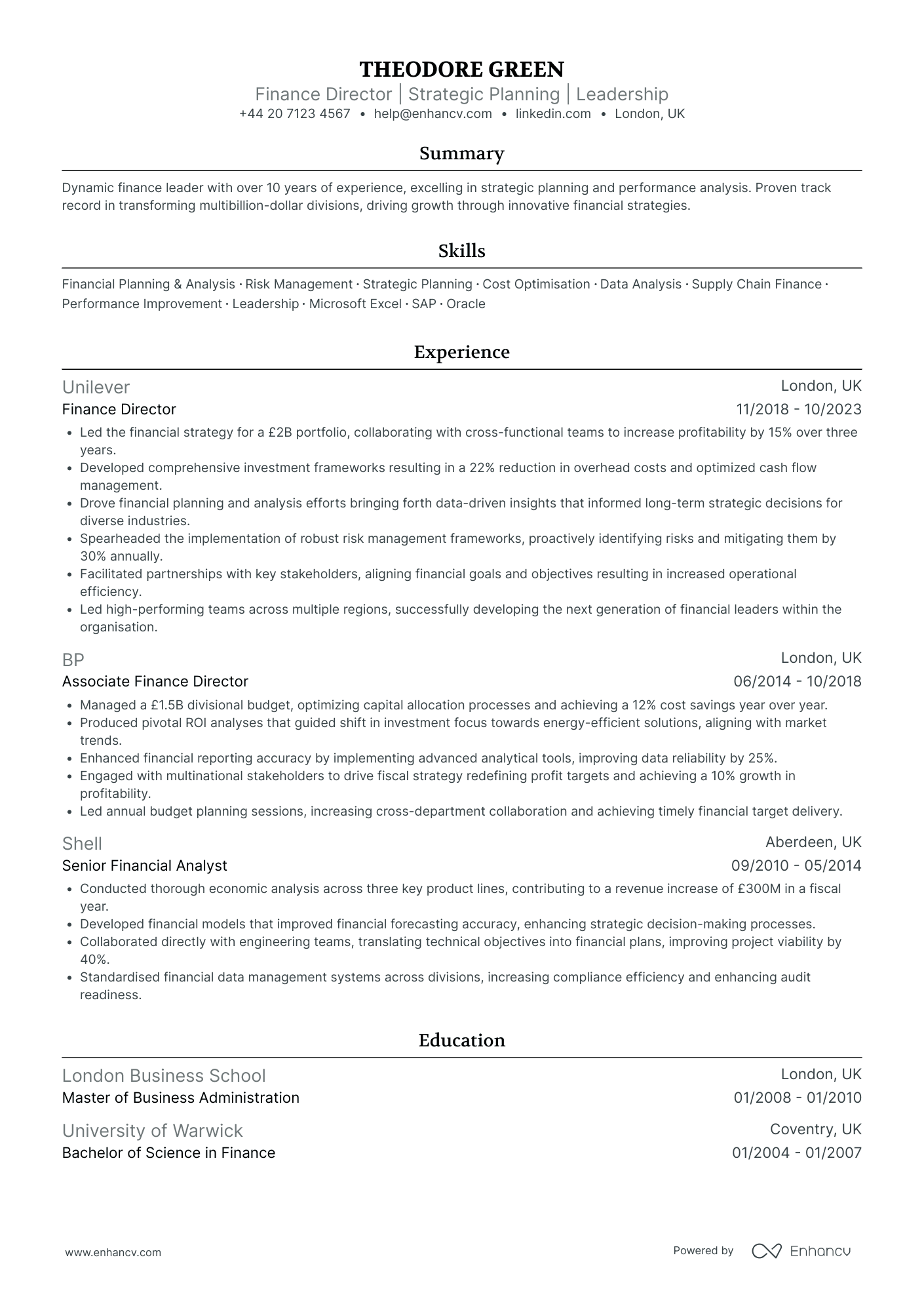
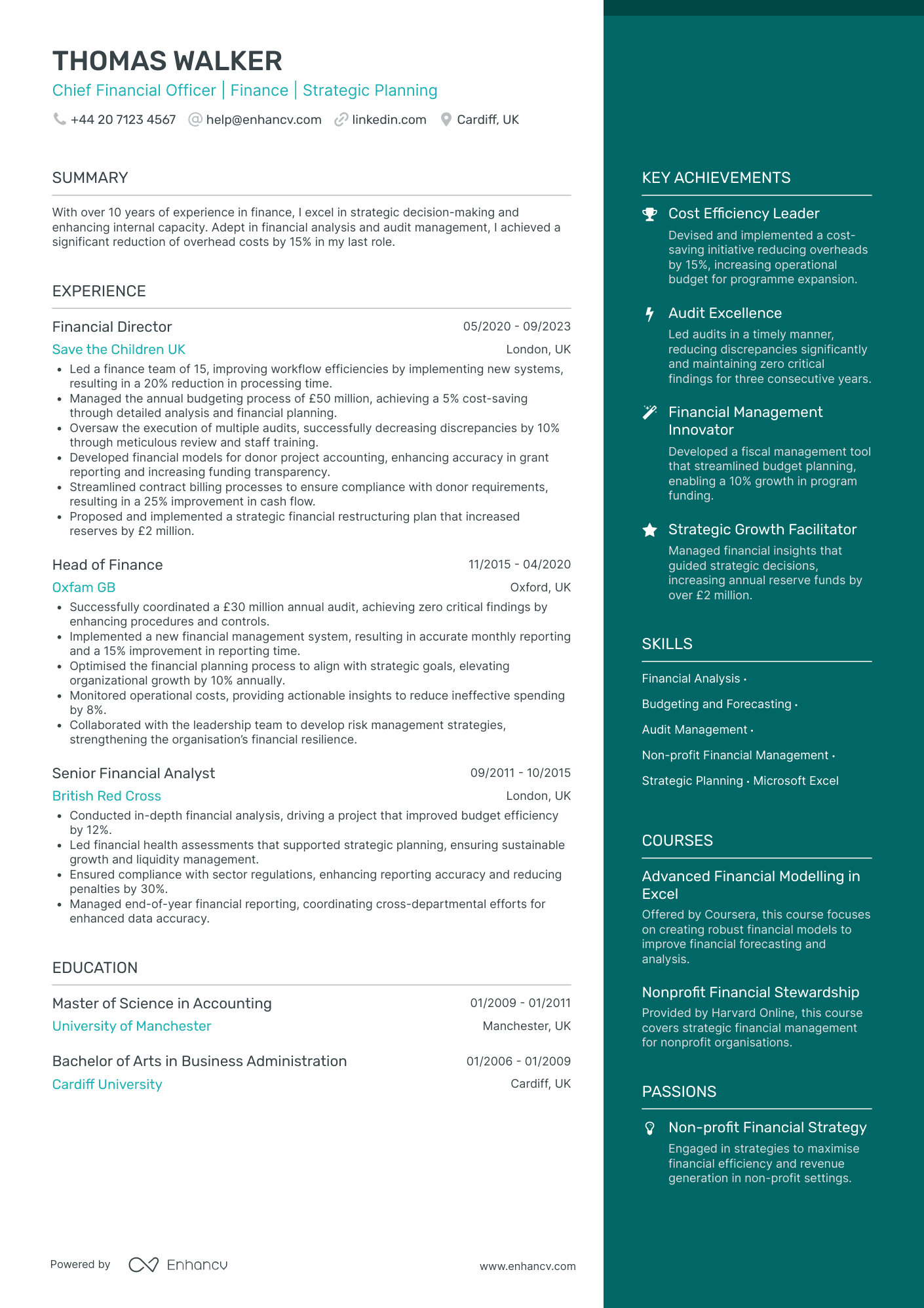
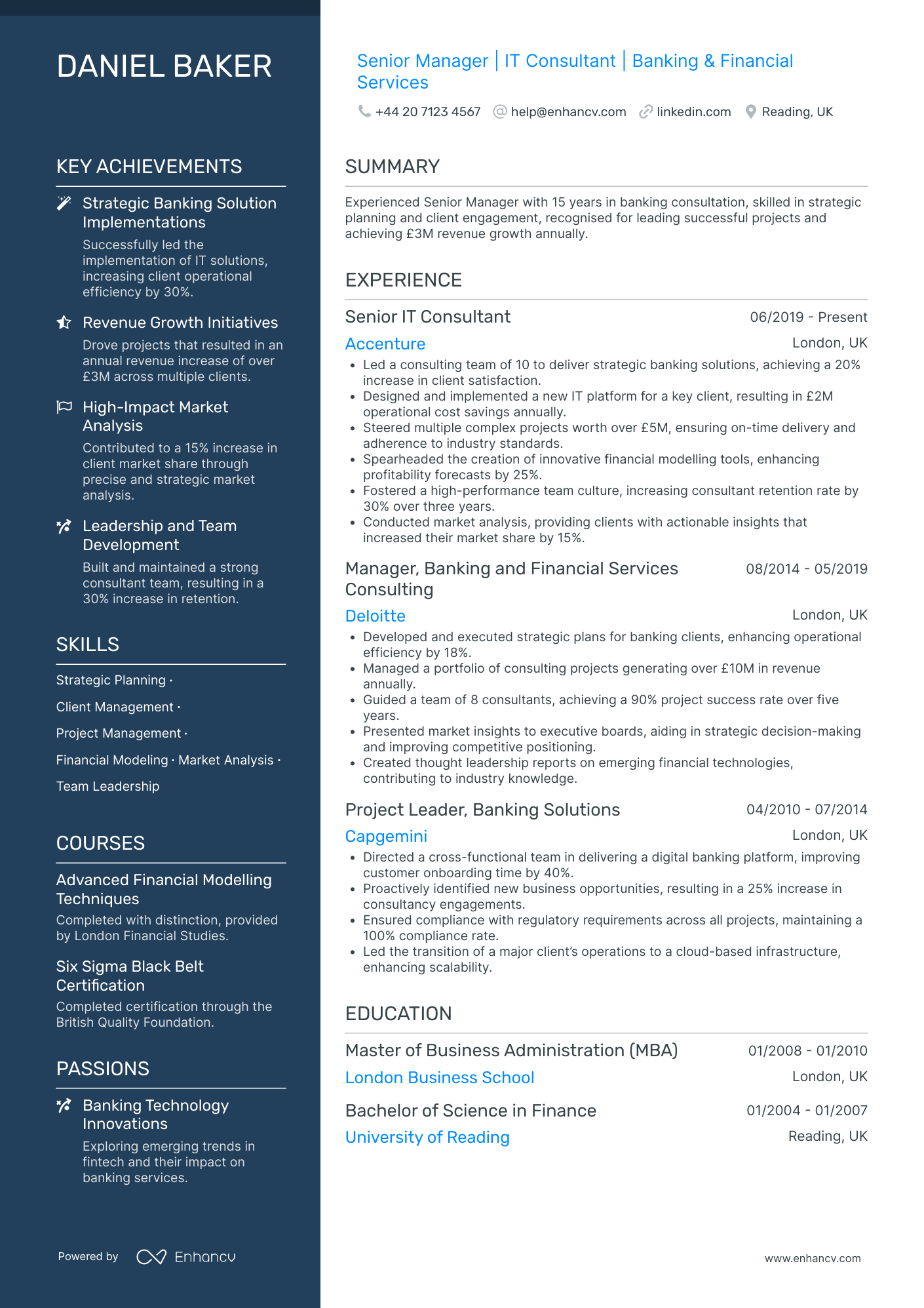
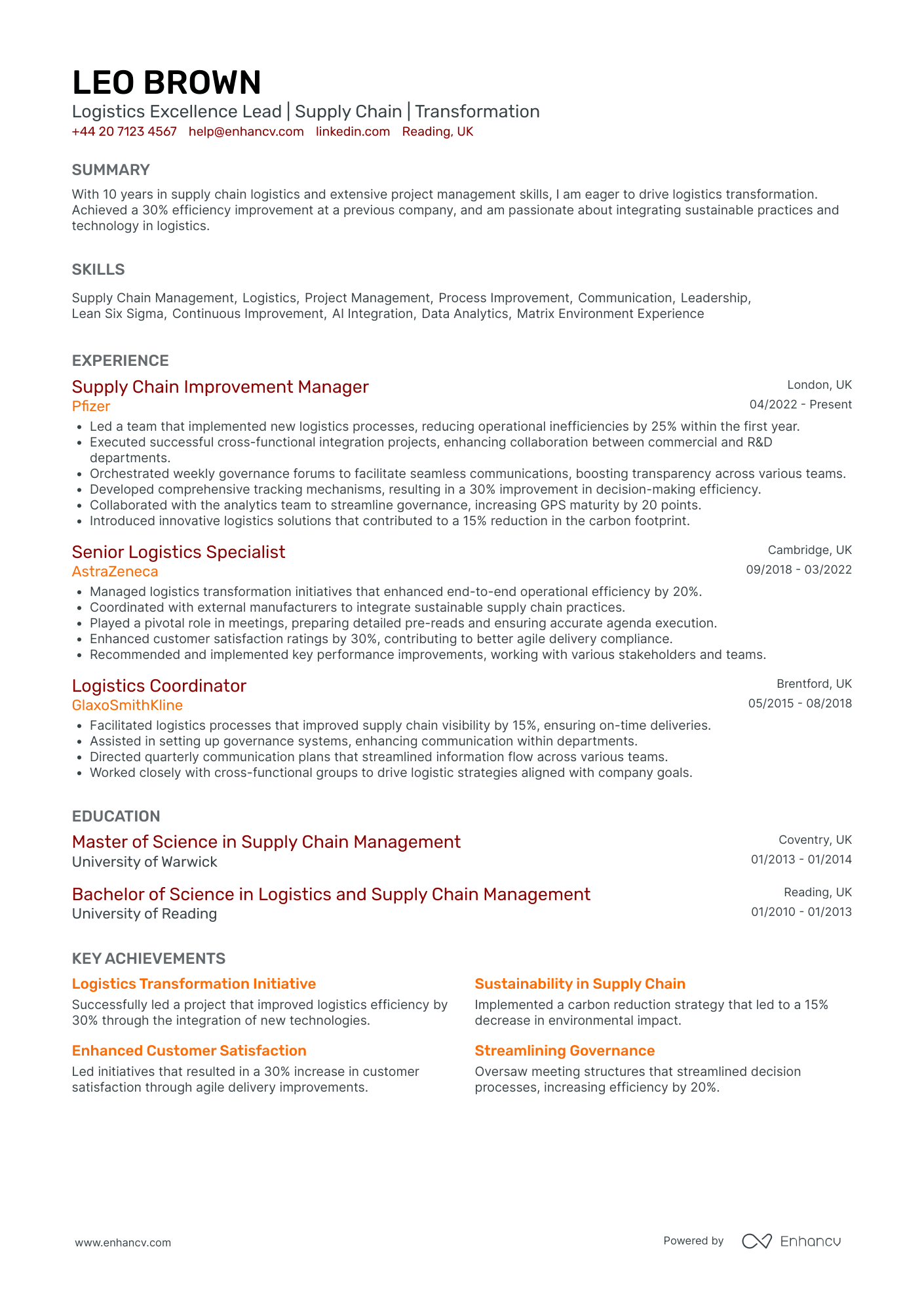
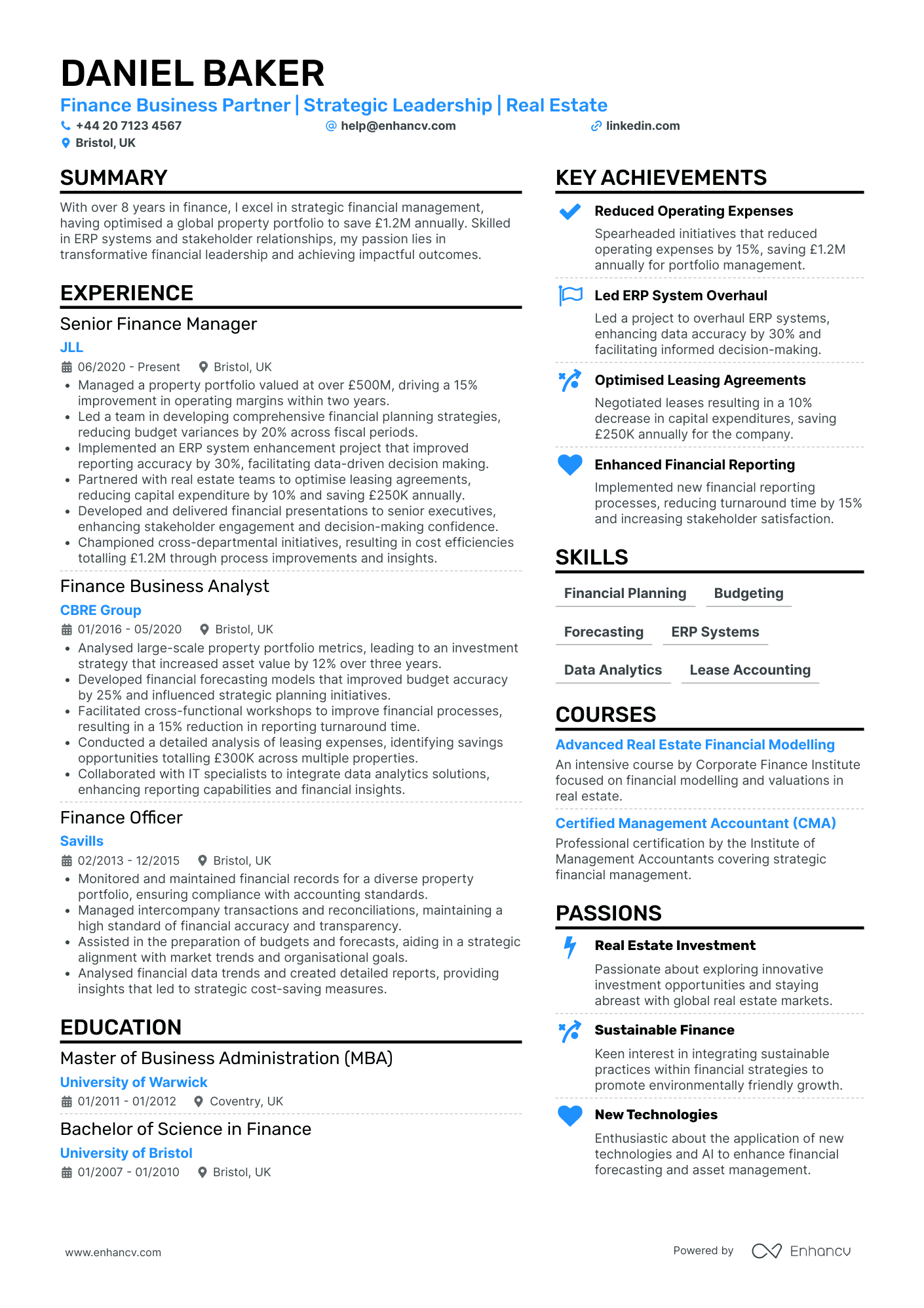
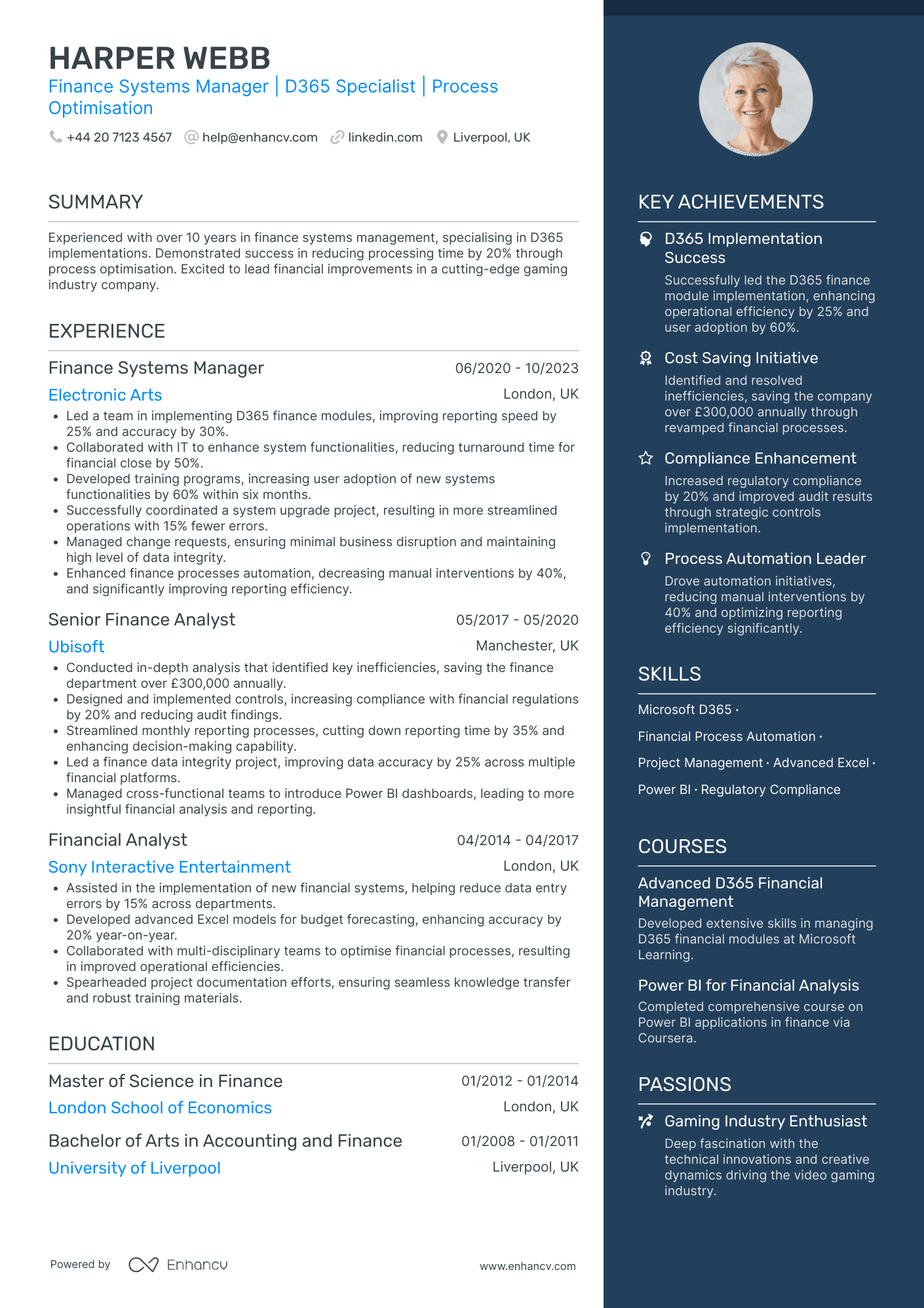
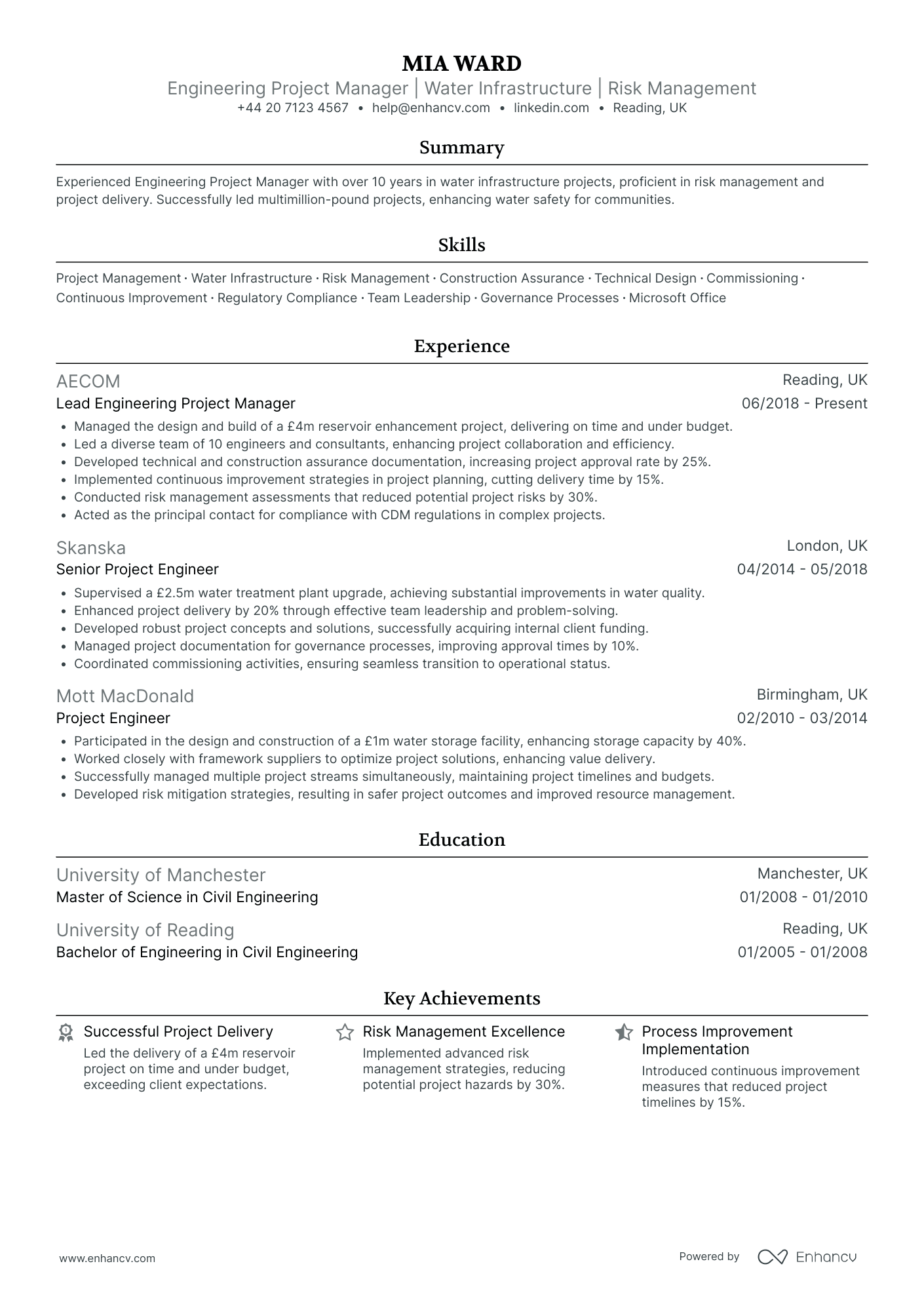
A finance CV is a conservative document, and the layout should signal that discipline. Use a clean, single-column CV template in a standard serif or sans font at 10 to 12 point. Save the icons, colour blocks, and sidebars for creative fields.
Two pages is the UK standard for an experienced finance professional. One page is fine if you are early career, but a third page reads as an inability to prioritise, which is a poor look in a numbers role. See how long a CV should be when you are trimming.
Order it reverse chronological. Finance hiring trusts a visible, recent track record, so your current role, its scope, and its results sit first. A skills-based CV or combination CV only earns its place when you are switching sector and need transferable finance skills to lead.
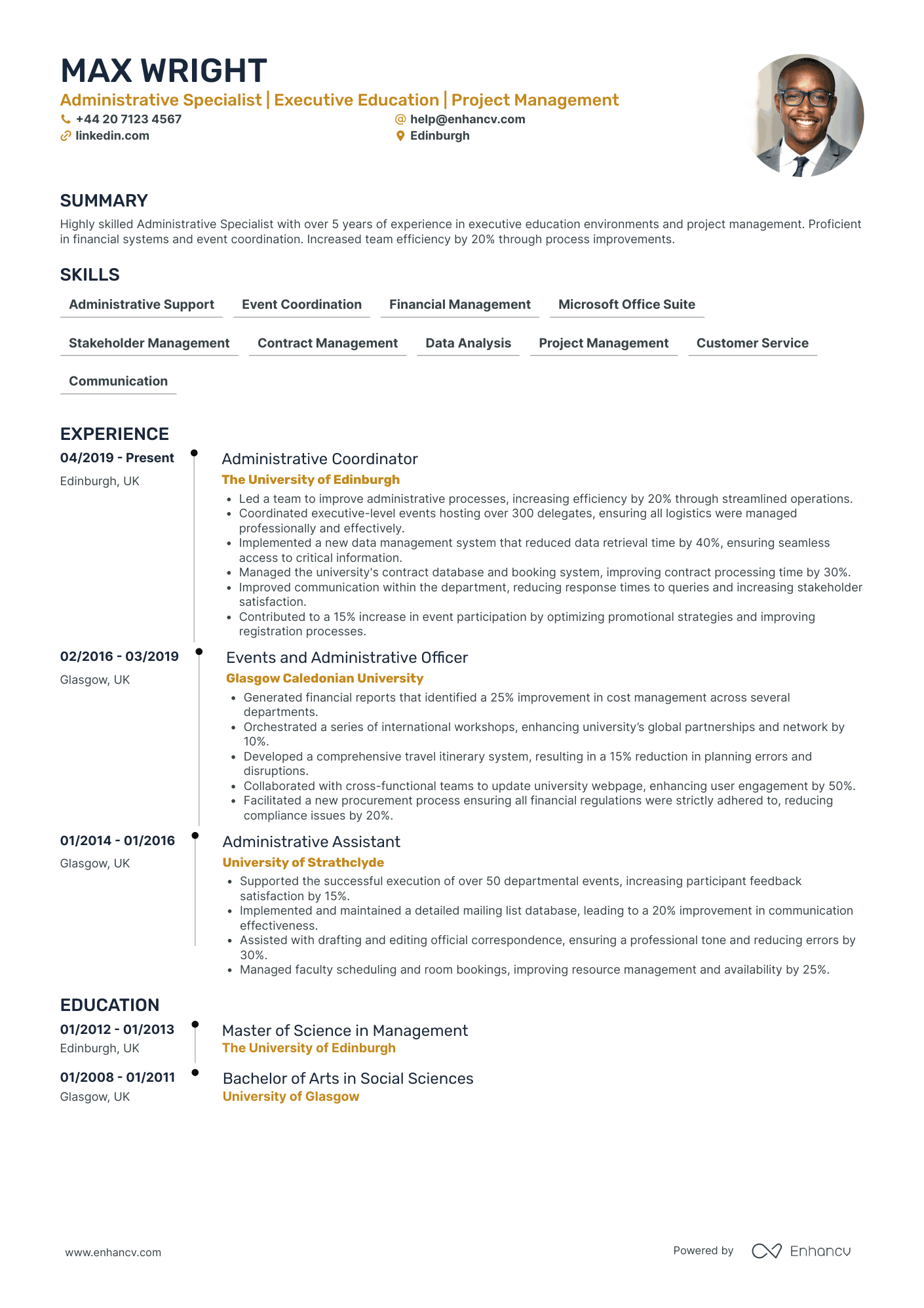
Keep the header lean: name, one line of location and contact, and your headline qualification. UK CVs carry no photo, no date of birth, and no personal details like marital status, so do not waste space on them.
Set sensible margins and pick a readable font, then stick to standard headings a scanner recognises: personal statement, experience, skills, education. See sections in a CV for the full running order.
Send a PDF for direct applications so the layout holds on any screen. Keep a Word copy for recruitment agencies, which place a large share of finance roles and reformat CVs into their own template. If the advert names a file type, follow it.
Finance applications almost always pass through tracking software, so keep the structure clean for an ATS-friendly CV. Build from a tested layout rather than a blank page: Enhancv's CV templates export to a clean PDF that a parser reads without choking.
One more thing on length. Finance careers accumulate detail fast, so the second page should hold your earlier roles in tighter form, not a full account of every reconciliation you have ever run. Two or three bullets per older role is plenty once it is more than five years back.

What a finance CV header should contain
- Name and headline qualification, for example 'Priya Shah, ACCA' or 'James Reid, CIMA (part-qualified)'.
- Location as town and region, so a hybrid or on-site employer can place your commute.
- One line of contact: a professional email and a phone number, nothing more.
- A LinkedIn URL if it is current and matches the CV.

PRO TIP
Finance CVs live and die on the numbers, so never trap them in a two-column layout. Many ATS parsers read the left column then the right column and scramble a figure away from its context. One column keeps 'held a £4m budget within 2%' next to the role it belongs to.
What the UK finance market looks like
Knowing the market shapes the CV. Here is where the work happens and what employers ask for most.
| What | UK finance roles |
|---|---|
| Where the work happens | Hybrid 54%, on-site 45%, remote just 1% (613, 519, and 10 of 1,142 UK finance postings in the last ~30 days, Enhancv's internal job feed) |
| Experience level asked for | Lead 39% · mid 31% · entry 14% · senior 10% · executive 6% |
| Most-listed skills | Excel, financial reporting, budgeting, stakeholder management, financial analysis, forecasting |
| Systems that recur | Excel and SAP show up most often across the postings |
Two things in that table should shape your CV.
Most postings are pitched at lead or mid level, at 39% and 31% of the sample. A finance CV that reads as junior gets filtered fast, so show scope early: team size, budget owned, and the entities or regions you cover.
The work is overwhelmingly hybrid or on-site, with remote roles at just 1%, so a clear UK location near the top saves a recruiter the guesswork. Name your systems too, because Excel and SAP recur across the postings and screeners search for them by name.
The mix of specialisms behind those skills is worth noting too. Financial reporting, budgeting, and forecasting sit at the core of most roles, so a CV built only around bookkeeping or transactional work will read as narrow against the field.
There was no reliable UK salary benchmark behind these postings, so treat any figure you see online as a rough starting point. Anchor your own expectations to the role's scope, sector, and your qualification rather than a headline number.
Top skills for your finance CV
Read a run of live finance adverts and the same demands repeat. Excel, financial reporting, and budgeting come up most often, followed by forecasting, financial analysis, and stakeholder management. Those are your hard skills, written in the words the adverts use.
Name the systems you actually operate, and be specific. 'Advanced Excel, including three-statement modelling' beats 'good with spreadsheets', and any ERP such as SAP, Oracle, or NetSuite should be named because screeners search for them. Vague 'strong IT skills' wastes the line.
The soft skills that matter in finance are the checkable ones: stakeholder management, clear communication with non-finance teams, and attention to detail under a reporting deadline. Prove each in a bullet rather than claiming it in a list.
Group the skills so a scanner reads them fast. A short technical block for systems and reporting, a second for analysis and modelling, and a line or two of the softer skills you can evidence in your experience section. A wall of thirty keywords helps no one.
List only what you can defend in an interview. If you have touched a system once, say so honestly rather than dressing it up as expertise, because a finance interview will find the gap. See key skills for a CV for how to structure the section.
Top skills for your finance CV:
Advanced Excel (modelling, pivot tables)
Financial reporting
Budgeting
Forecasting
Financial analysis
Data analysis
SAP and ERP systems
Month-end close
Variance analysis
Stakeholder management
Communication
Attention to detail
Commercial awareness
Problem-solving
Writing your finance personal statement
Four sentences at the top: who you are, your sector and scope, the qualification you hold or are sitting, and one hard result. Keep it concrete. See more personal statement examples if the opening line will not come.
Skip the adjective soup. 'Detail-oriented, proactive finance professional' tells a hiring manager nothing they can check.
Pitch it at the role you want. For a business partner or controller role, lead with the budget you own and the decisions your reporting has shaped. For a financial or management accountant role, lead with the qualification, the reporting cycle, and the accuracy you hold. The first line should place you at the right level before a reader reaches your experience.
Name the sector as well as the number. 'Seven years in FMCG' or 'four years in financial services' tells a hiring manager you understand their pressures, their reporting calendar, and their regulators, which a bare job title never does.
Lead with evidence instead:
Finance CV personal statement example
ACCA-qualified management accountant with seven years in FMCG, owning a £30m cost base across three UK sites. Cut month-end close from ten days to six and built the rolling forecast the board now runs on. Looking to bring reporting discipline and commercial insight to a finance business partner role in a growing consumer brand.
Finance personal statement to avoid
Hard-working and motivated finance professional with excellent communication skills and a genuine passion for numbers. A team player who thrives in fast-paced environments and is keen to progress within a reputable company.
The finance CVs that get shortlisted are boring in the best way. They open with a qualification and a number, not a personality. When I see 'ACA, reduced the reporting cycle by four days, managed a £30m budget' in the first three lines, I know within seconds this person operates at the level we need. Save the adjectives, and let the scope and the results do the talking.
The Enhancv team
Writing your finance experience section
Every entry follows the same shape: a dated heading, one line on the scope of the role, then bullets that pair an action with a number. Lead each bullet with a verb. For the mechanics, see work experience on a CV.
Finance work is measurable by definition, so this is where the CV is won or lost. Budgets owned, variances explained, month-end days saved, cash released, audits passed clean. Those are your CV achievements, and they outrank any list of responsibilities.
Quantify honestly with strong action verbs. 'Responsible for budgeting' is filler. 'Owned a £12m opex budget across four cost centres and held spend within 2% of plan' is a finance bullet a manager can trust.
Give context to the scale. A £30m budget at a three-site manufacturer means more than a bare figure, so name the sites, entities, or regions you cover. Scope is what tells a reader you operate at lead or mid level.
Match the achievement to the level you are applying for. A finance business partner role wants influence and commercial impact, so foreground the decisions your numbers shaped. A financial accountant role wants control and accuracy, so foreground clean audits, reconciliations, and reporting on time.
Tailor each application to the advert. Pull the systems and responsibilities it names and mirror them where they are true of you. Enhancv's CV tailoring feature reads the advert and suggests the matching edits, which saves rewriting the CV from scratch each time.
Turn a duty into an achievement
- Before: 'Responsible for preparing monthly management accounts.'
- After: 'Prepared monthly management accounts for a £45m turnover business, delivered to a five-day timetable across two years with no restatements.'
- Own the £30m cost base across three UK manufacturing sites, reporting monthly to the operations director and board
- Cut month-end close from ten working days to six by rebuilding the reconciliation process and automating three Excel reports
- Built the rolling 18-month forecast now used for board planning, improving forecast accuracy to within 4% of actuals
- Identified £1.1m of annual savings through a supplier spend review and tracked delivery through to sign-off
Qualifications and certifications for a finance CV
Finance is a credentialled field, so your qualifications earn a place near the top of the CV, not buried at the end. State them plainly and honestly, part-qualified included.
Name the body and the stage: ACA (ICAEW), ACCA, CIMA, or CFA, and whether you are fully qualified, part-qualified, or actively sitting exams. 'ACCA, two exams remaining' is a real signal of momentum, not a gap to hide.
Add your degree and classification where it helps, such as a 2:1 in Accounting and Finance, and any certificates that match the role, from advanced Excel to a data-analysis or systems certificate. Keep them in a tidy education block near your professional body membership.
For a chartered or regulated role, put the designation next to your name in the header as well. A hiring manager scanning for 'ACA' or 'CFA' should find it in the first two seconds, before they reach the qualifications section at all.
Continuing professional development belongs here too, briefly. A recent course in IFRS updates, financial modelling, or a data tool signals you keep current, which matters in a field where the rules and the systems move every year.
Early in your career, this section carries more weight. List the exams passed, your expected qualification date, and any relevant modules, so a thin work history is offset by clear progress toward chartered status. A finance internship or a placement year sits well here as well, tied to the skills it gave you rather than the tasks you were handed.
Conclusion
Get the format right first: a clean template, two pages, reverse chronological, and a PDF that survives the ATS. Then lead with the qualification and the numbers that prove your level.
Pair the CV with a short cover letter that says why this employer, and you turn a tidy document into a shortlisted one.
Author's take - the Enhancv team
The finance CVs that get shortlisted are boring in the best way. They open with a qualification and a number, not a personality. When I see 'ACA, reduced the reporting cycle by four days, managed a £30m budget' in the first three lines, I know within seconds this person operates at the level we need. Save the adjectives, and let the scope and the results do the talking.