



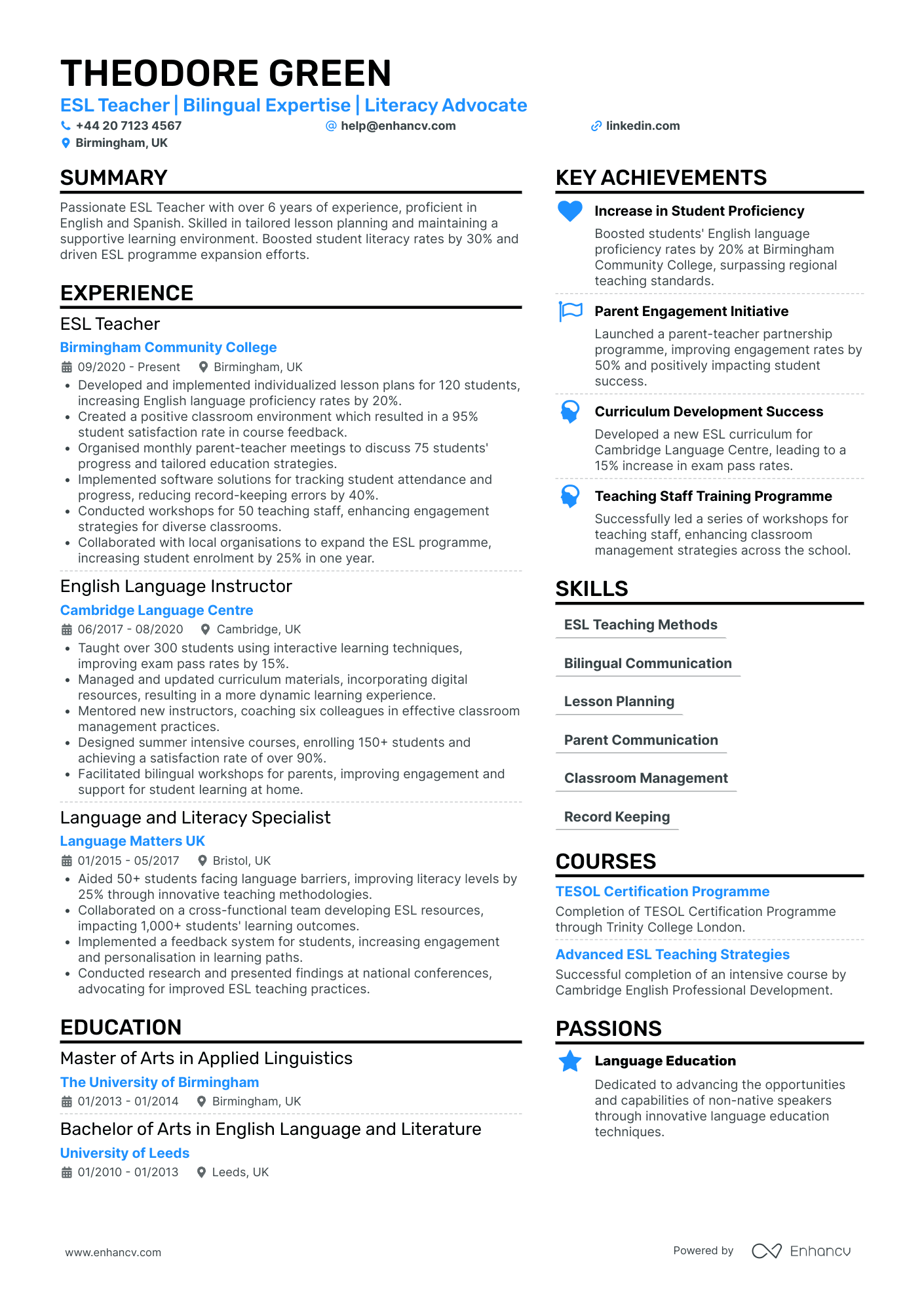
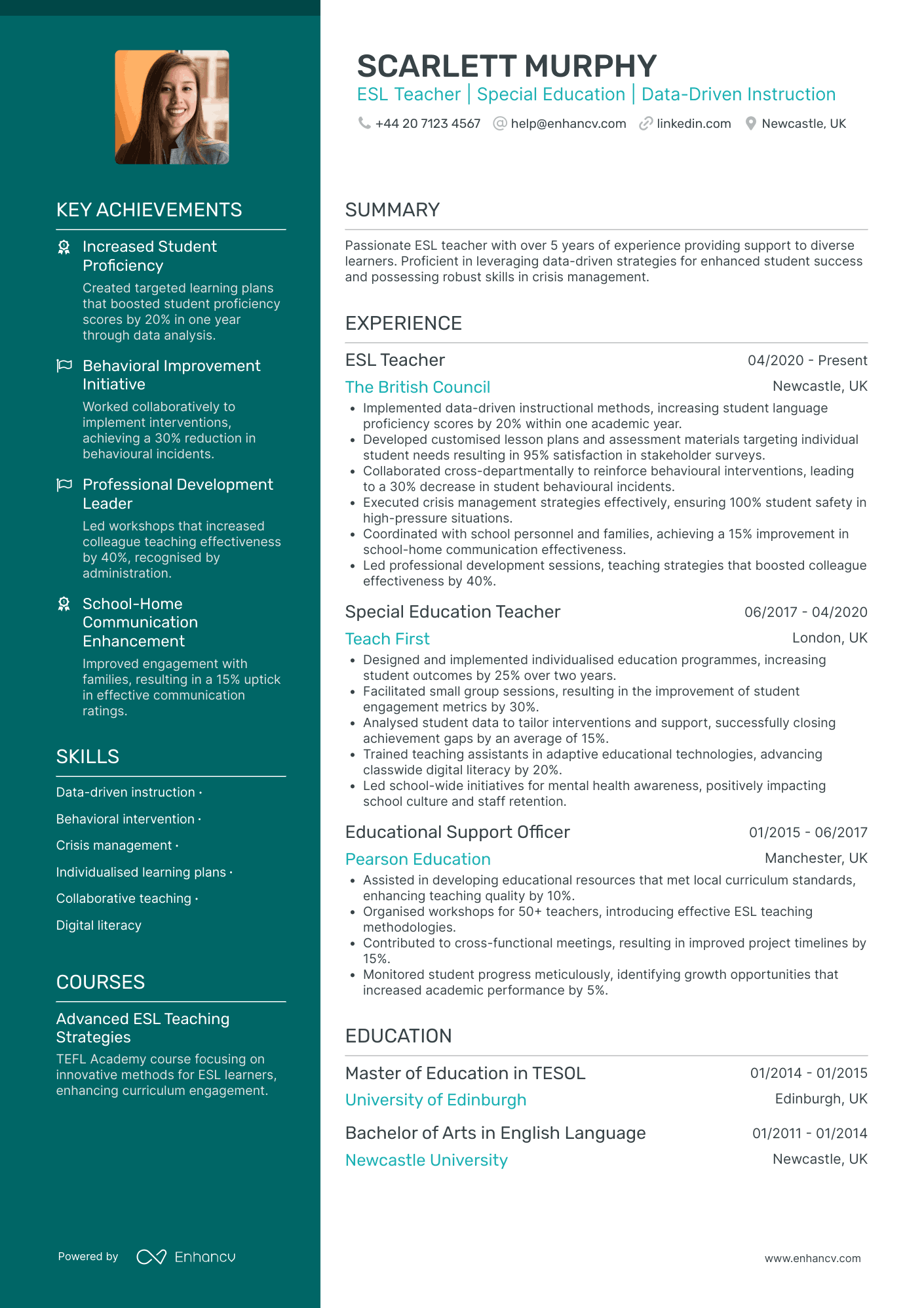
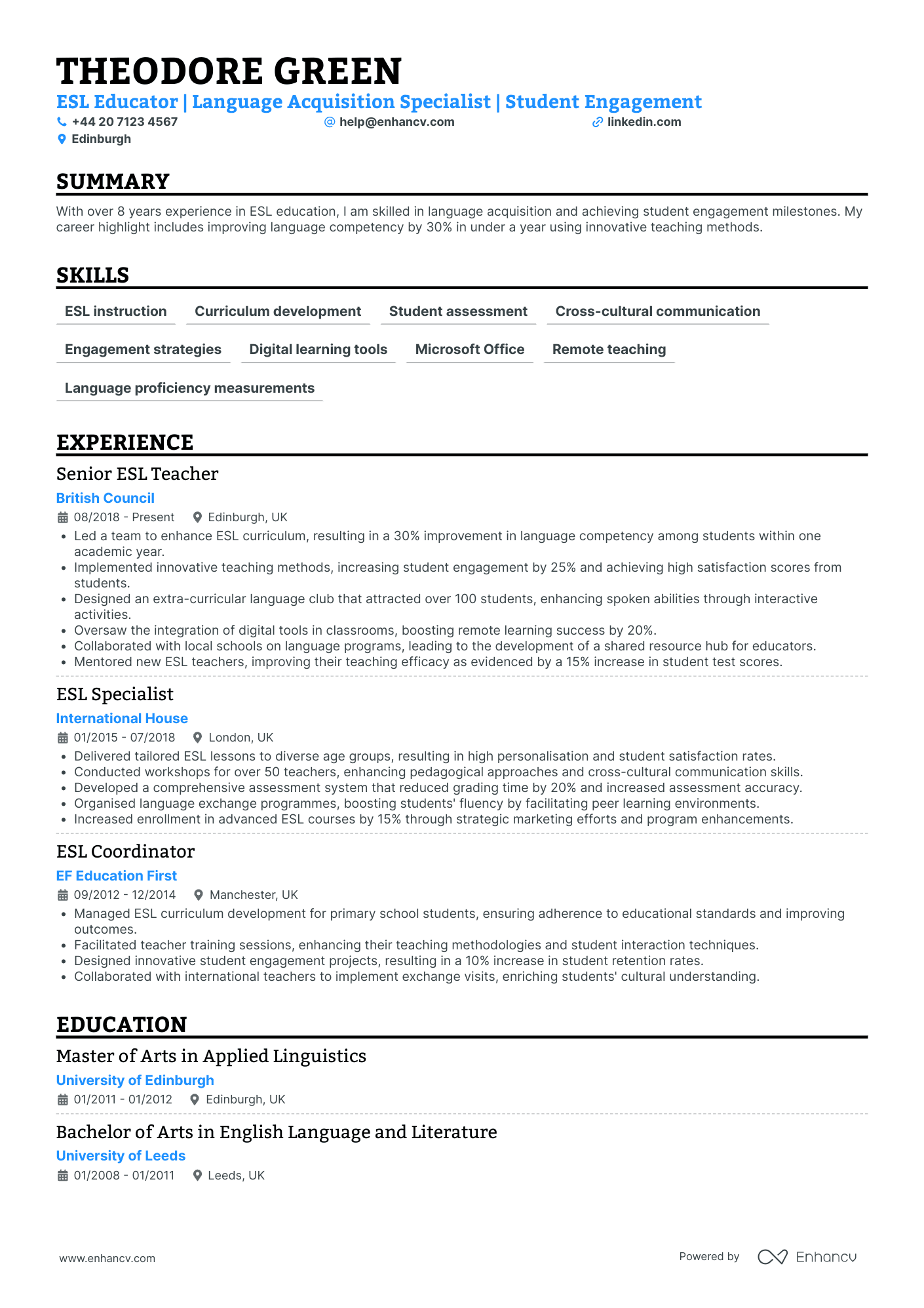
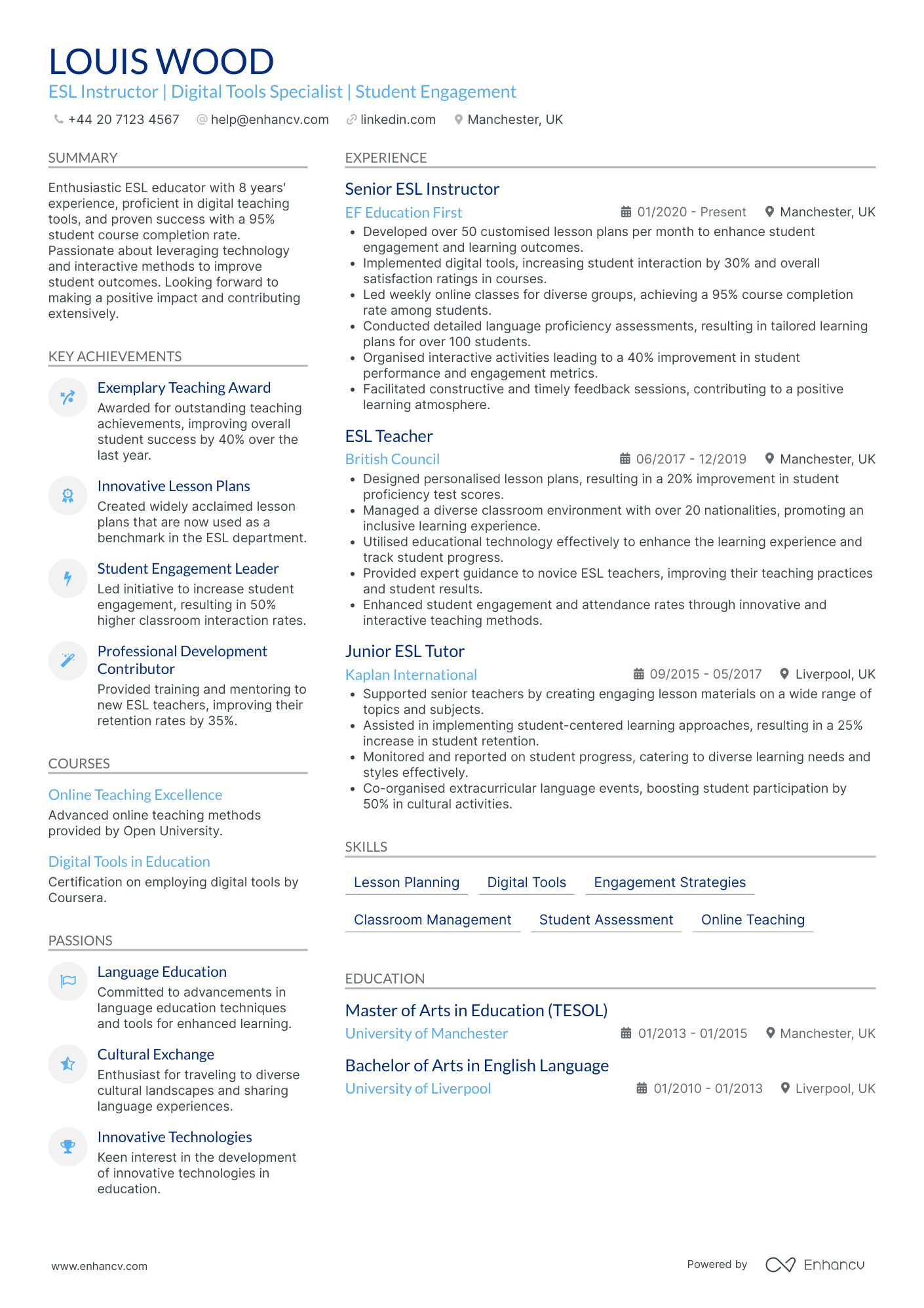
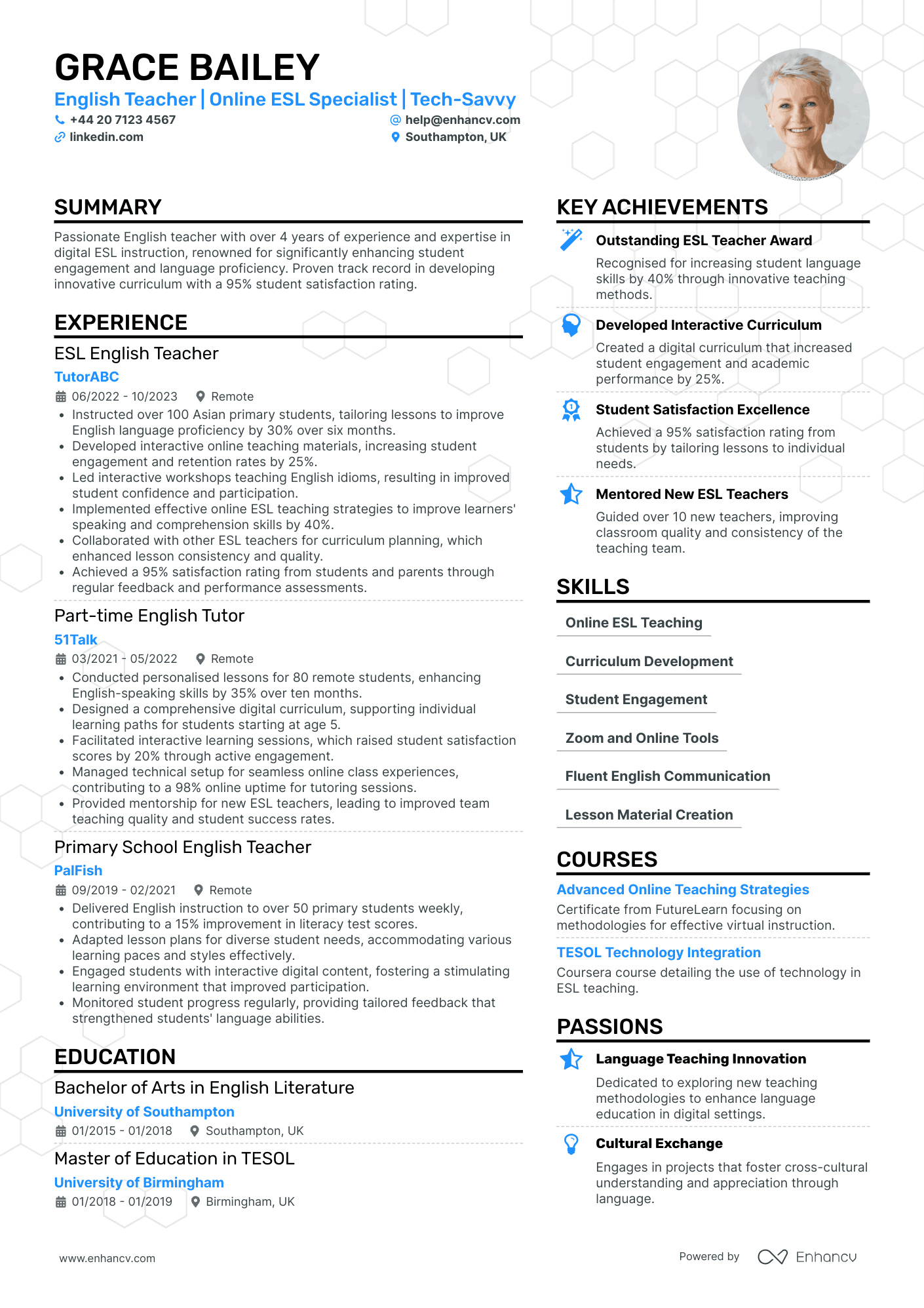
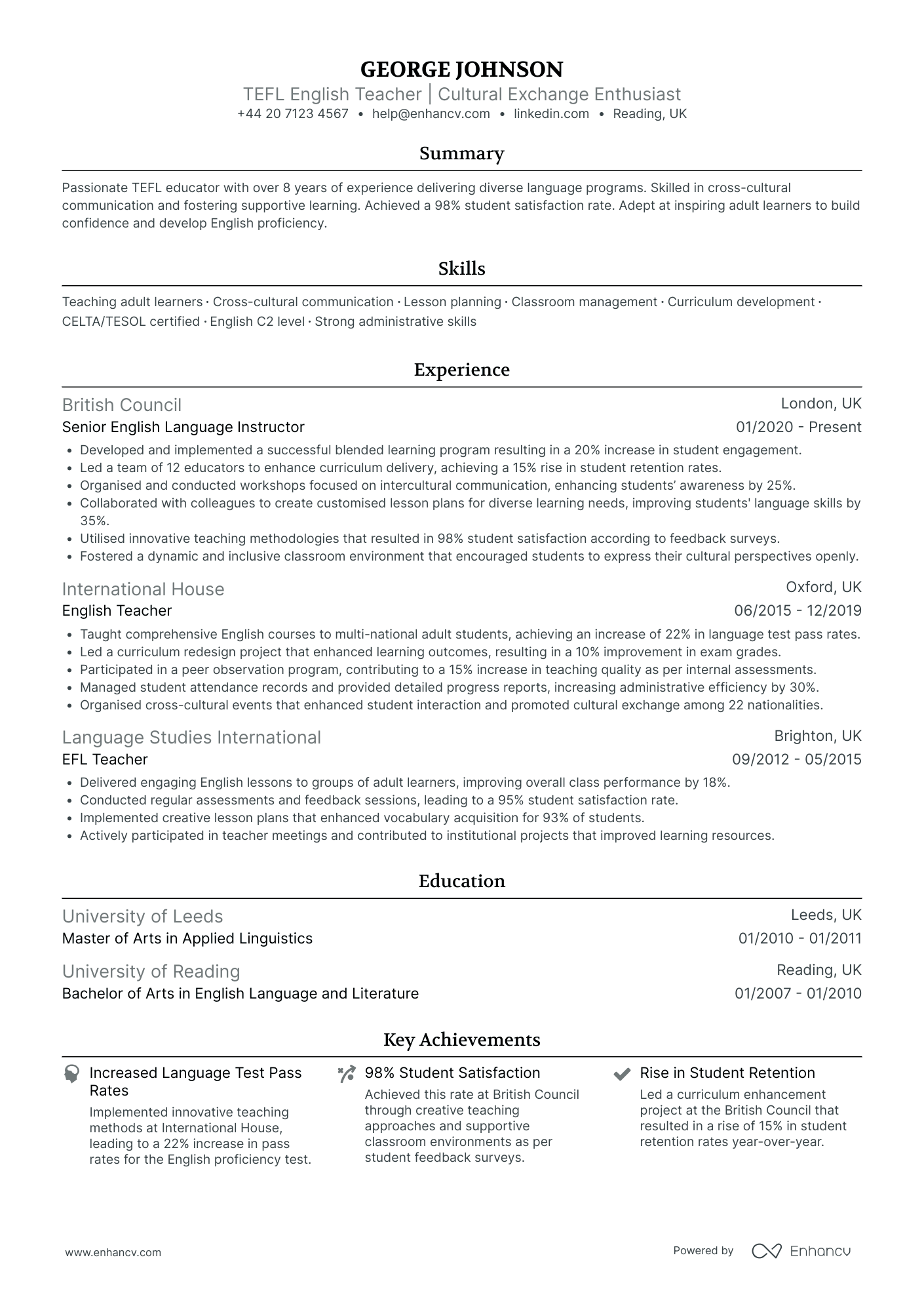
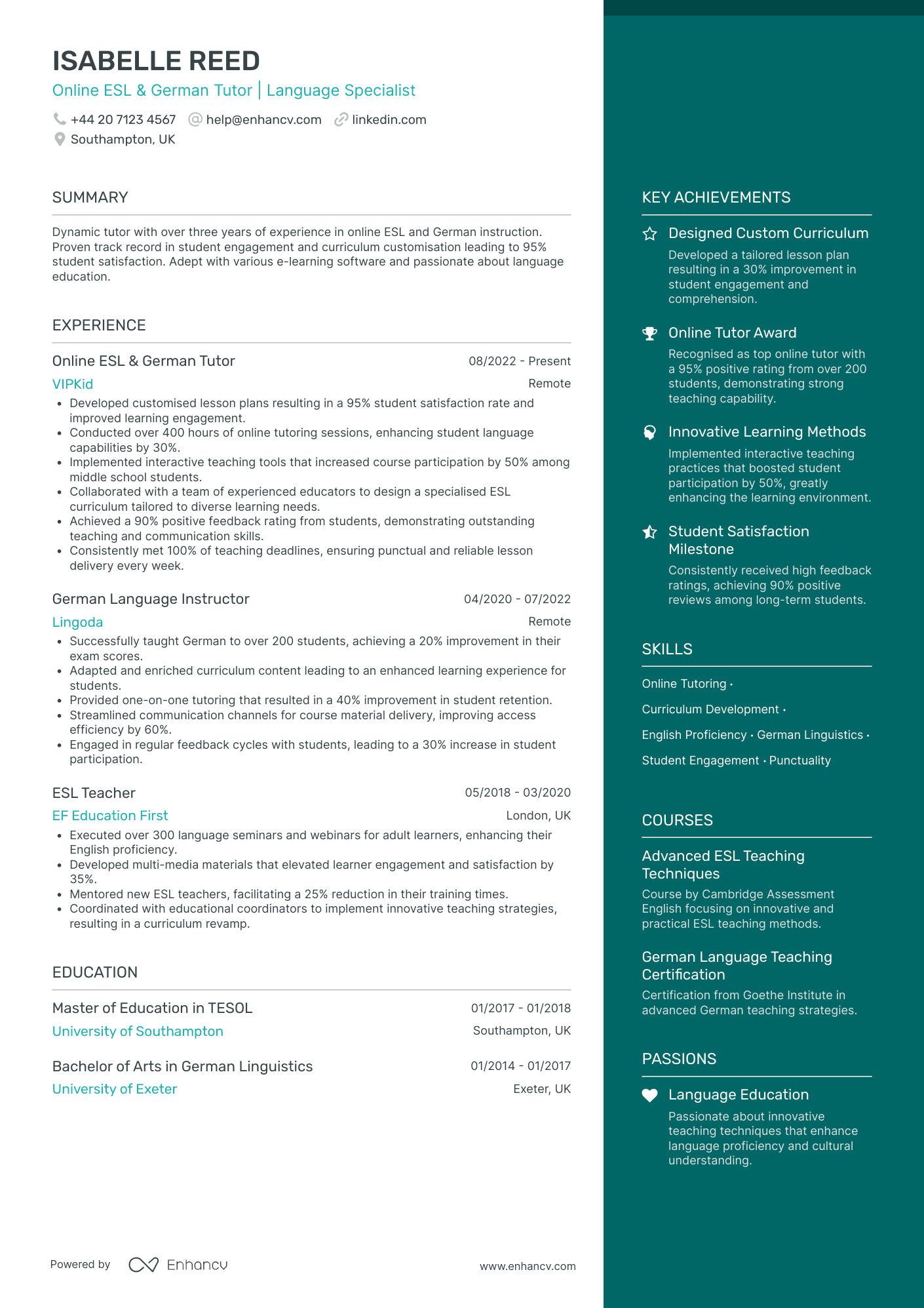
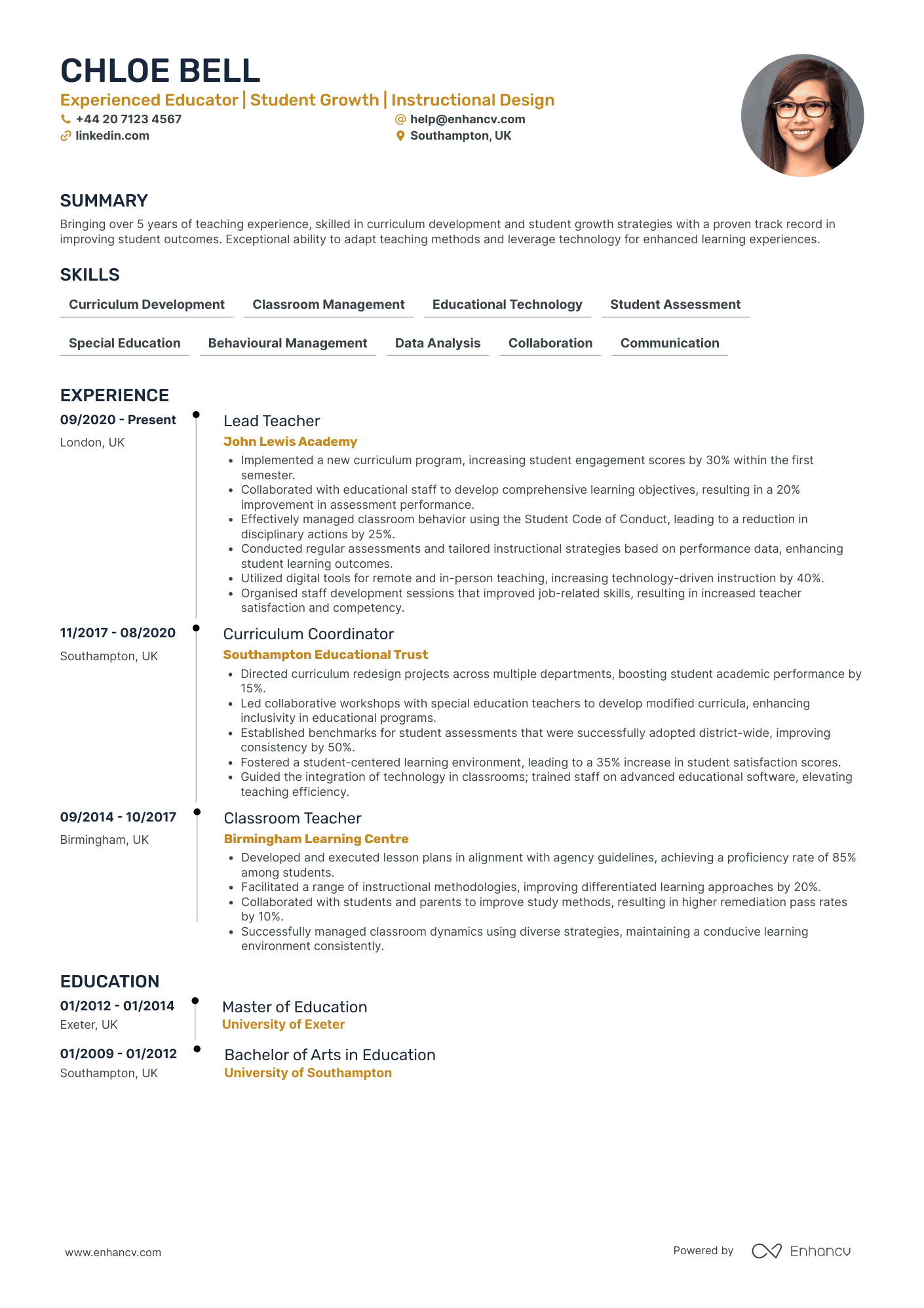
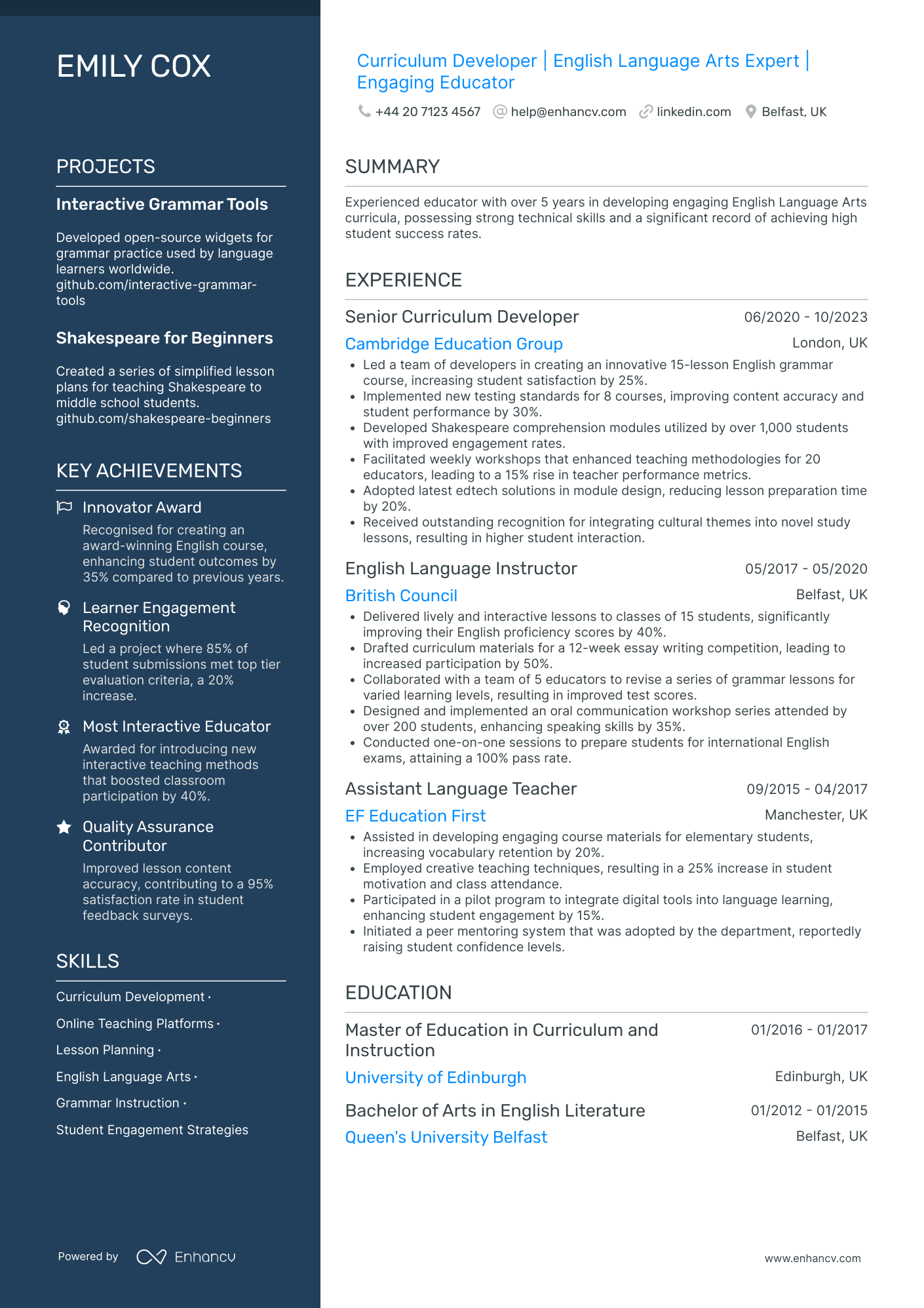
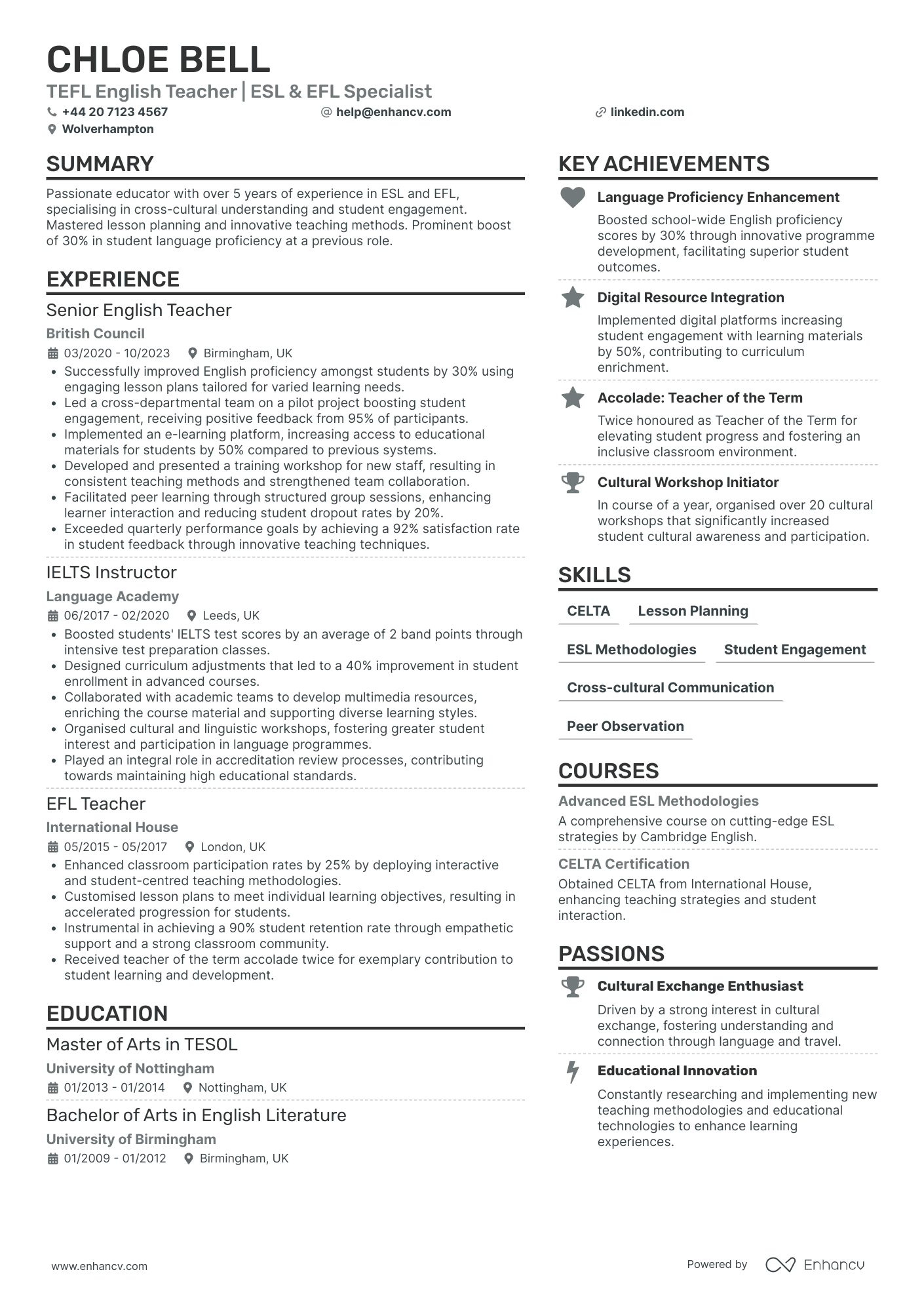
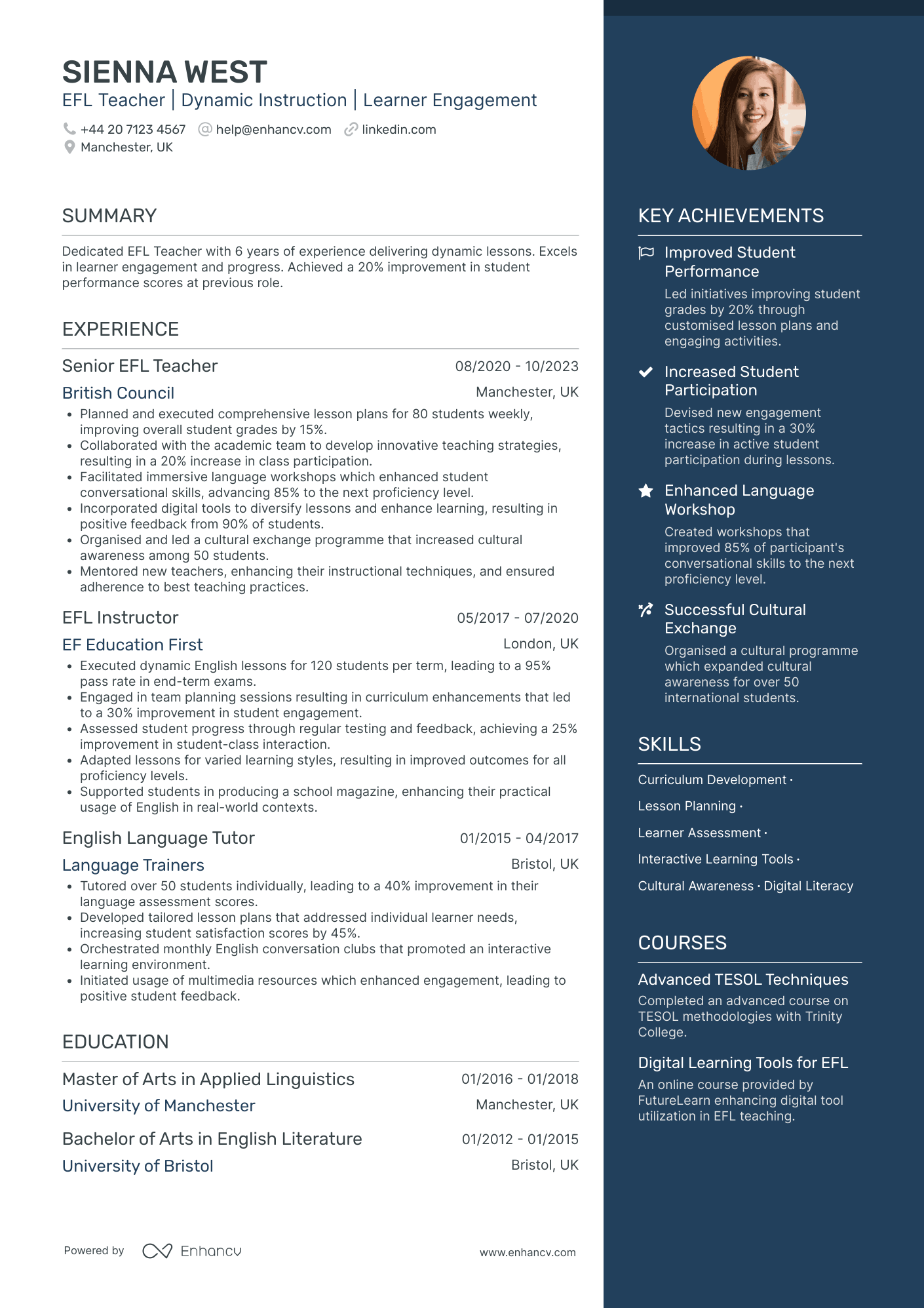
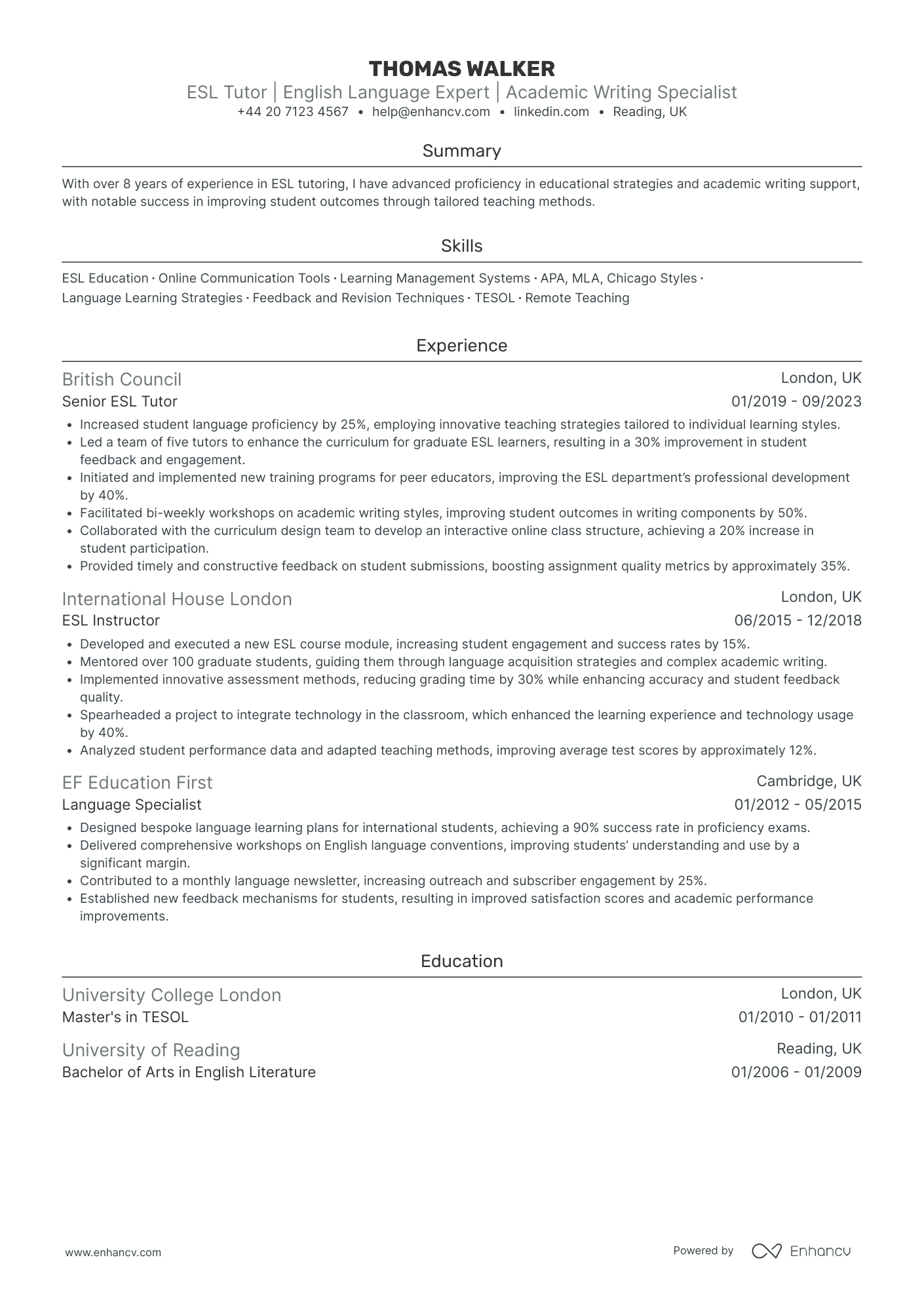
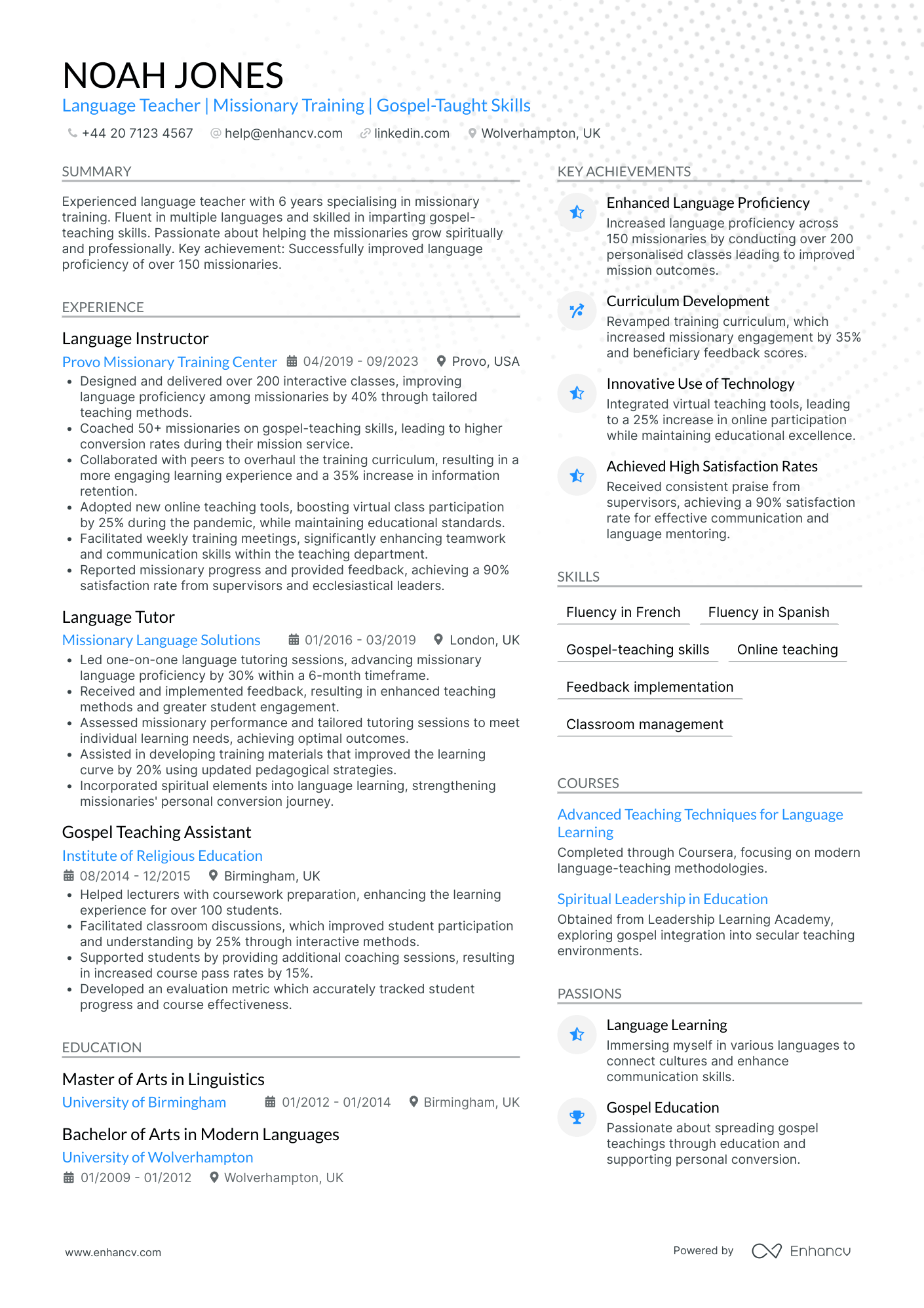
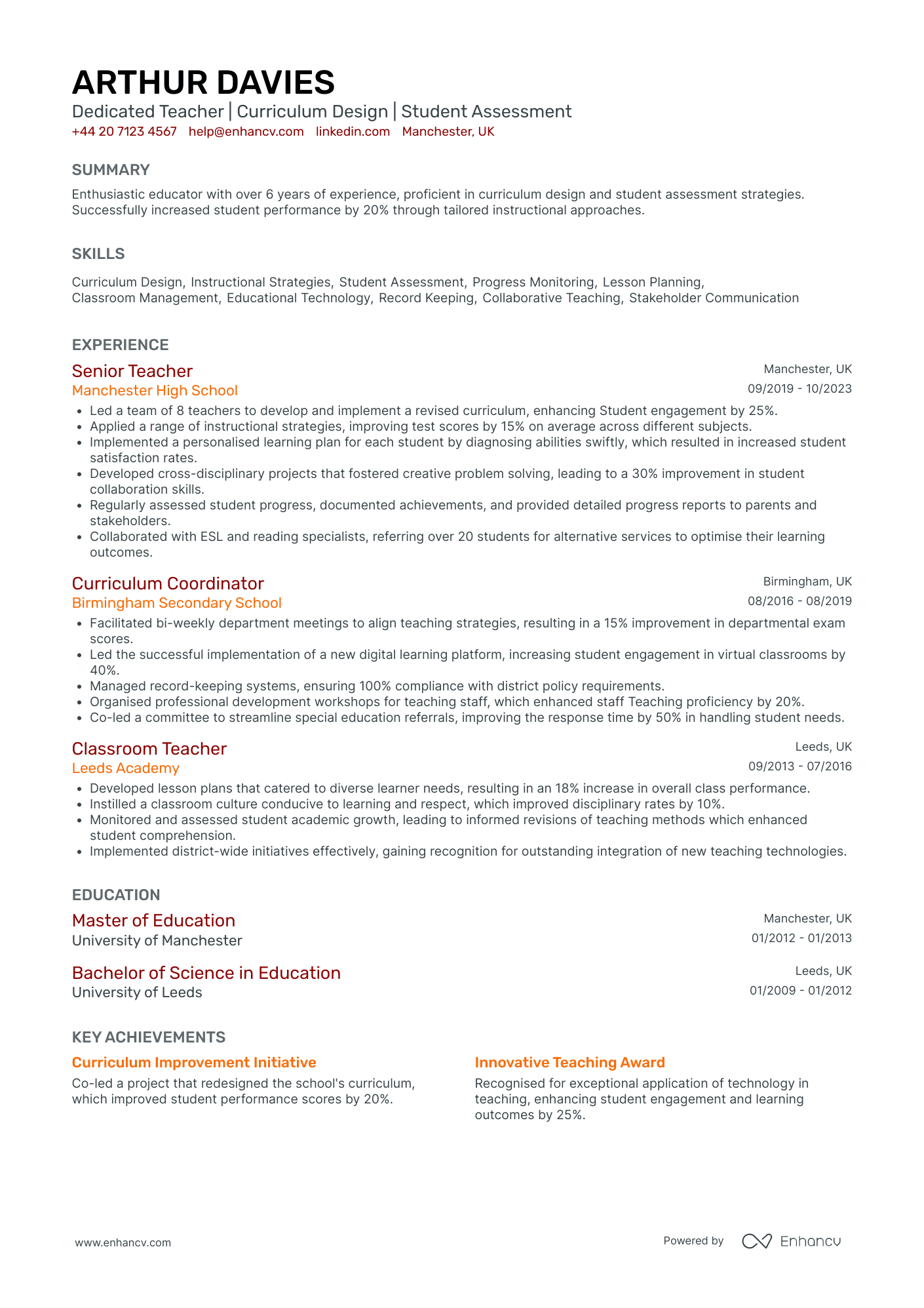
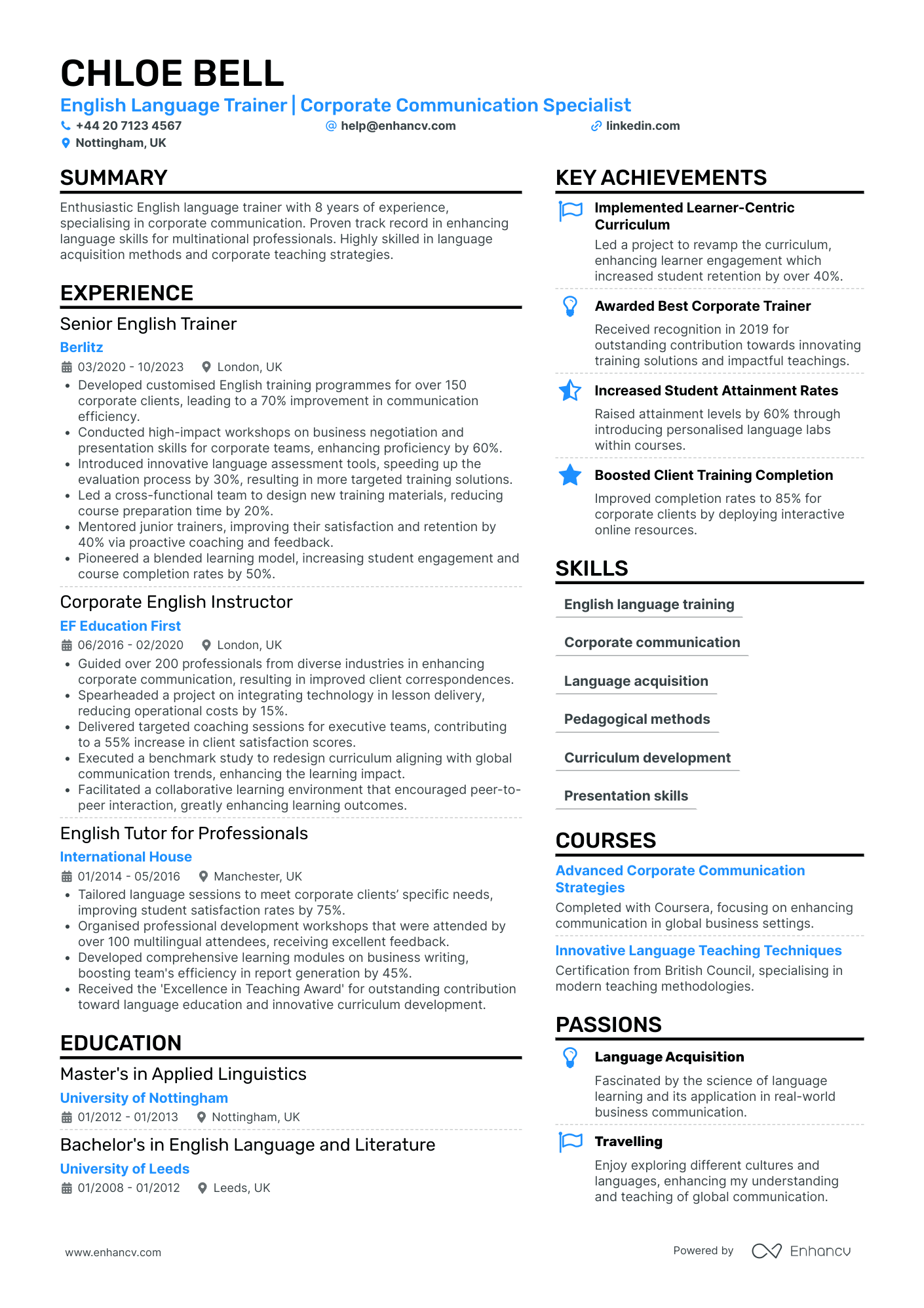
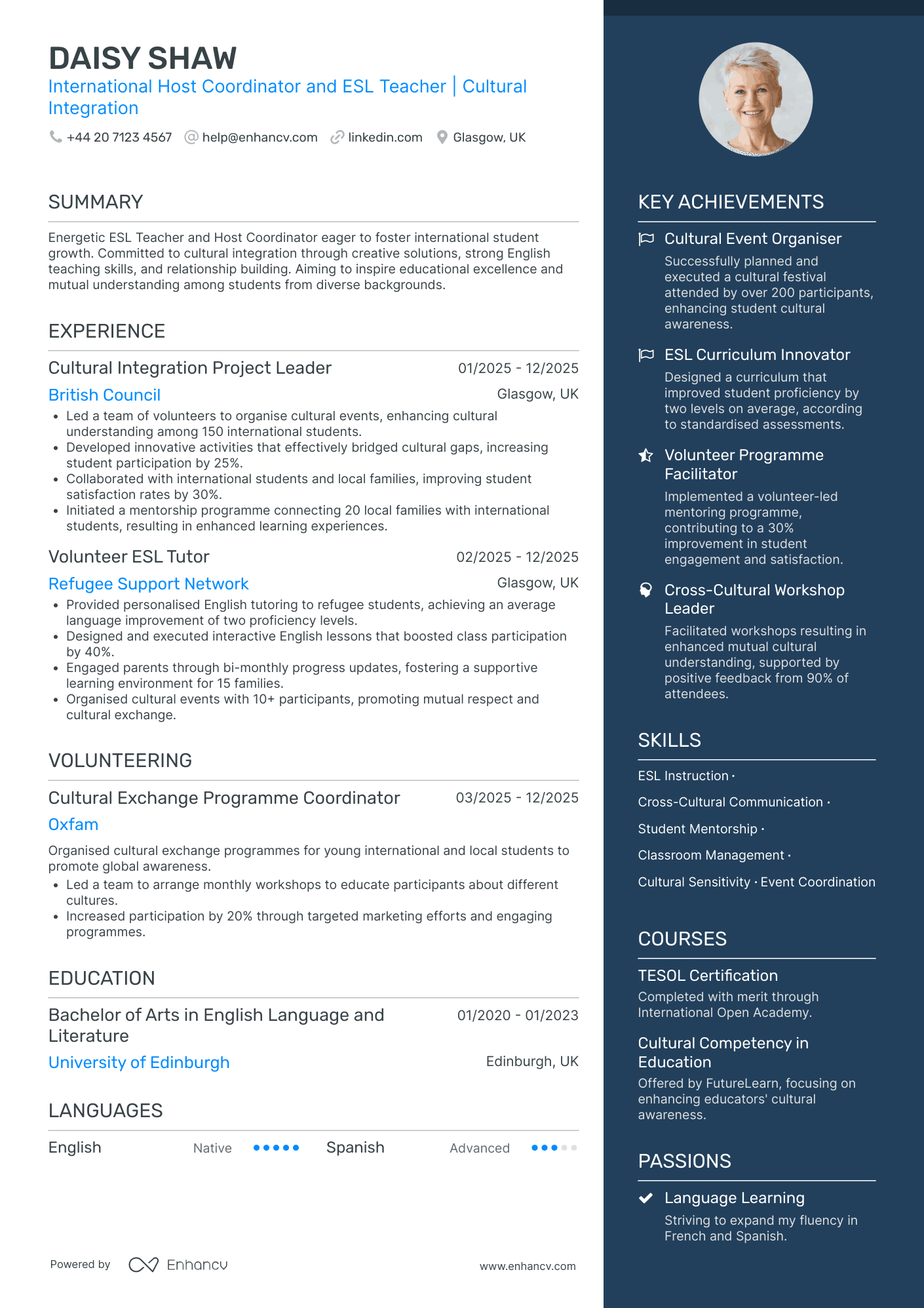
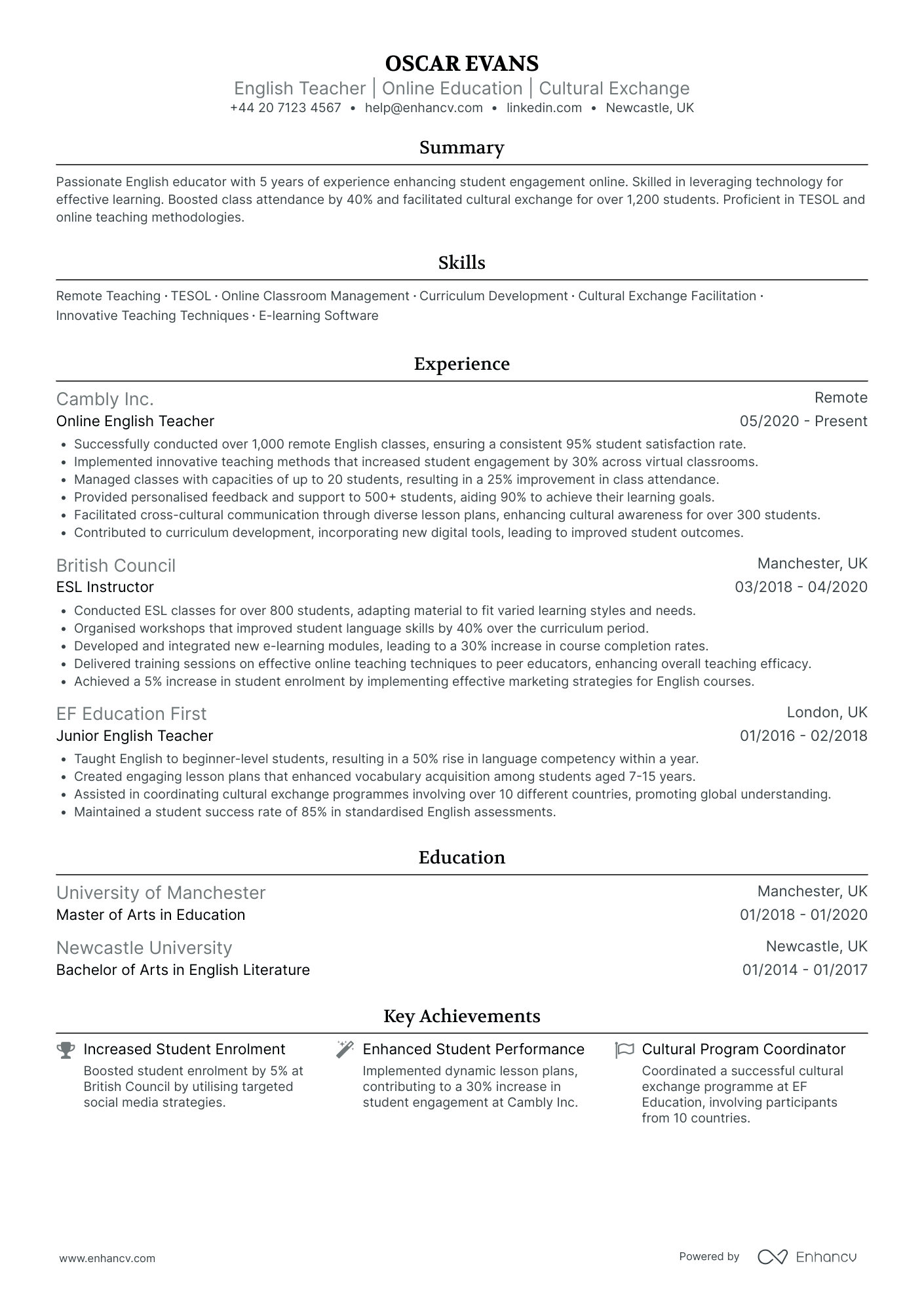
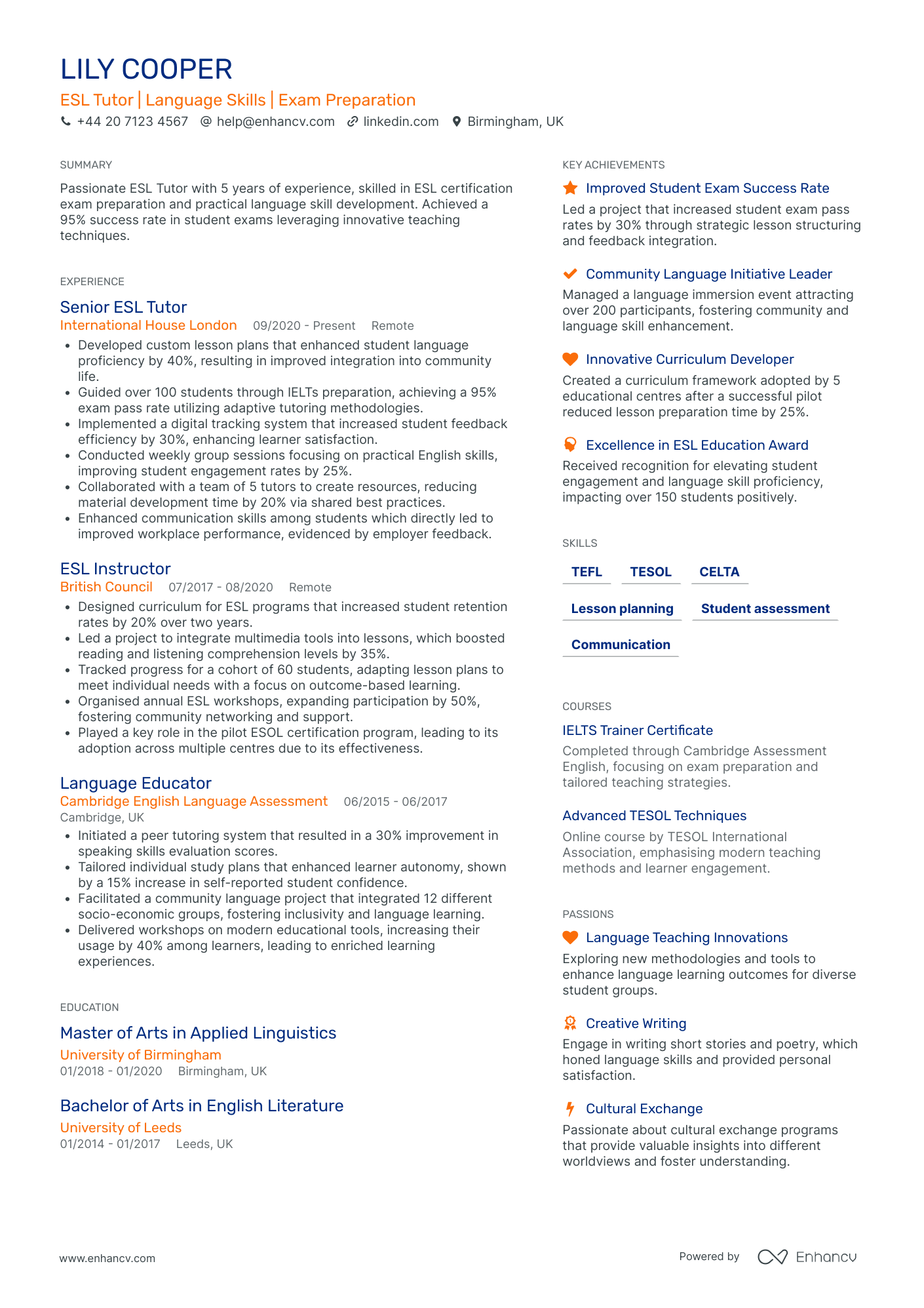
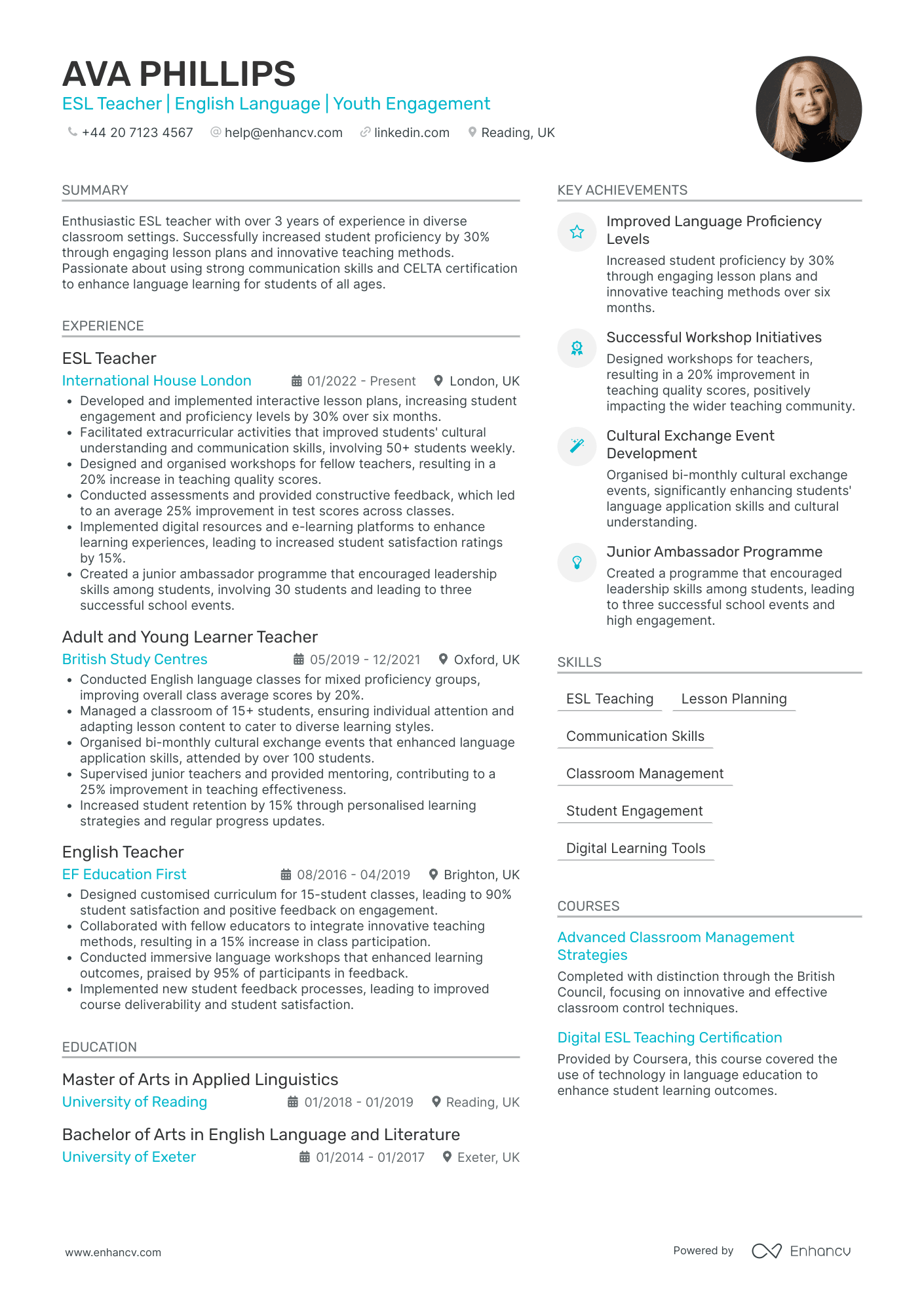
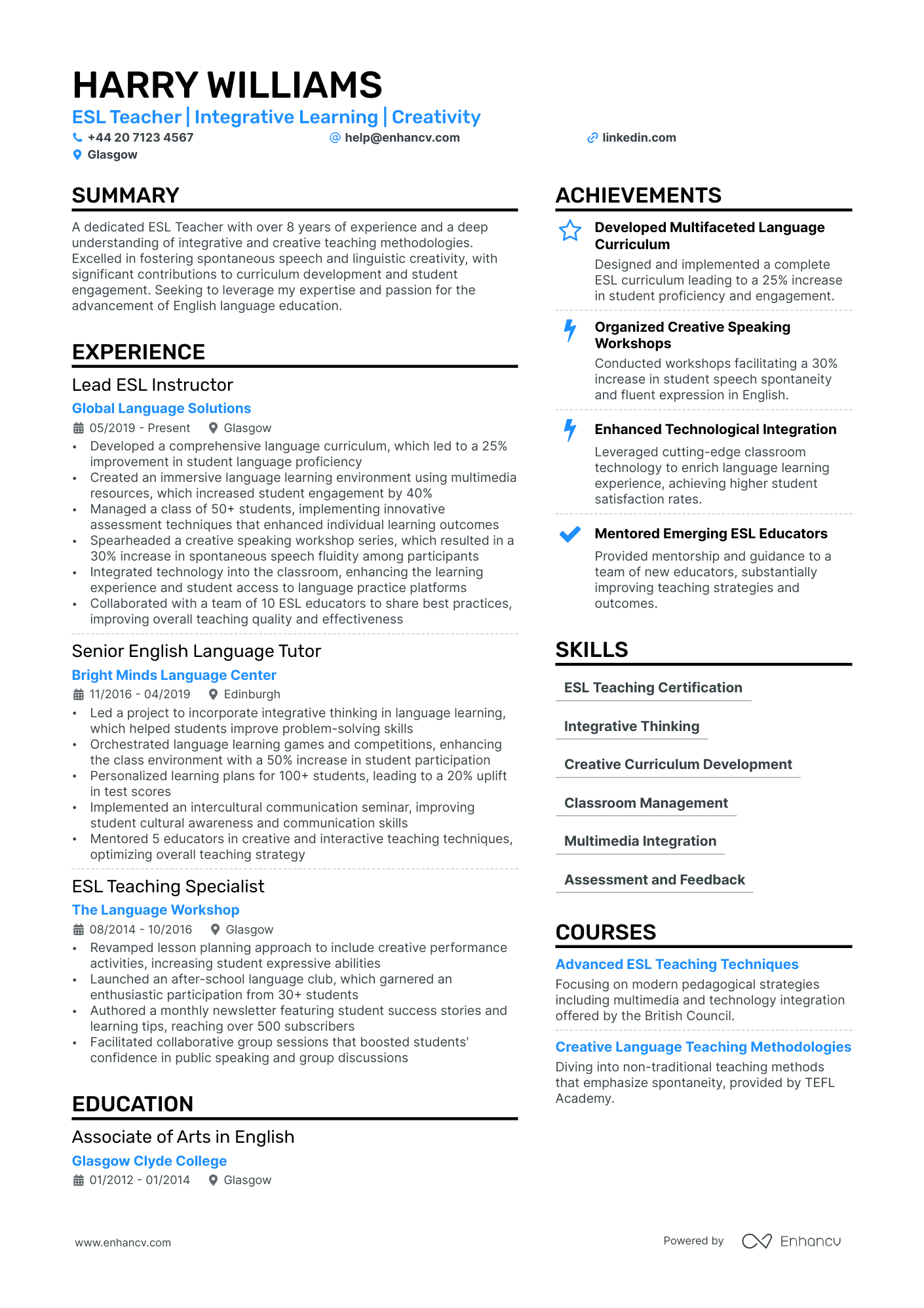
The ESL teacher CVs that get shortlisted abroad answer a recruiter's first three questions before they ask them: can you legally work here, can you actually teach, and will you see out the contract.
Teaching English overseas is a hiring decision made largely on paper, often from another continent and sometimes without an interview in the same time zone. Your CV carries more weight than it would for a job down the road, so it has to prove the specifics a school checks against a visa and a syllabus. If you want the fundamentals first, see how to write a CV.

Key takeaways
- Lead with the three things an overseas school screens for first: your right to work there, a recognised teaching certificate, and proof you can hold a classroom.
- Put your nationality, your TEFL, TESOL, or CELTA certificate, and your degree near the top, because visa eligibility often hangs on them.
- Name the ages and levels you have taught, from young learners to adult Business English and exam preparation, rather than writing "all levels".
- Open with a short personal statement built on where you have taught, what you are certified in, and the contract you are looking for.
- Quantify the classroom. Class sizes, student numbers, and pass rates stand in for the lesson a recruiter overseas will never watch.
- Send a two-page PDF, and add a professional photo only where the destination country's applications expect one.
Writing an ESL teacher CV to teach abroad
Teaching abroad is a paper-first hiring process. The person reading your CV is often screening it against a government visa rule and a school timetable at the same time, so make both easy to satisfy.
Open with a compact eligibility block, high on page one: your nationality, your teaching certificate with its hours and awarding body, your degree, and a criminal record check. Those four lines decide whether the rest of the CV gets read.
Many countries tie a work visa to a degree plus an accredited certificate, and a 120-hour TEFL, TESOL, or CELTA course is the usual benchmark. Name the hours. "TEFL certificate" is vague, while "120-hour TEFL, Level 5, accredited" clears a visa checklist.
Say where you want to teach and match the CV to it. A school in the Gulf, a language centre in Spain, and a public programme in East Asia weigh experience, age groups, and paperwork differently, so a skills-led structure helps when you are pivoting between regions.
Signal that you travel well. Time spent living abroad, working with people from other cultures, or adapting to an unfamiliar system tells a head of English you will not fly home after a fortnight.
Have the supporting documents ready and hint at them on the CV. Recruiters overseas move fast when a candidate can produce a degree certificate, a certificate of good conduct, and contactable referees on request, so a short line noting they are available on request removes a reason to pass you over.

PRO TIP
Recruiters abroad often shortlist by nationality and certificate before they read a single bullet, because a visa depends on them. Put both in your header or a one-line eligibility summary, not buried in an education section on page two.
What ESL employers abroad look for
Strip away the local differences and the same requirements repeat across overseas ESL adverts. Here is what a school checks, and where each item belongs on your CV.
| What schools check | How to show it on your CV |
|---|---|
| Right to work | Your nationality and visa eligibility, stated plainly in the header rather than left for the recruiter to guess |
| A teaching certificate | TEFL, TESOL, CELTA, or Trinity CertTESOL with the hours and the awarding body, for example 120-hour, Level 5, Cambridge |
| A degree | Your degree, subject, and classification, since many work visas will not be issued without one |
| Proof you can teach | Quantified classroom bullets: class sizes, student numbers, levels taught, and exam pass rates |
| The levels you cover | Named age groups and levels, from young learners and teens to adult Business English and IELTS preparation |
| Safeguarding | An enhanced DBS or the destination country's criminal record check, plus any child protection training |
Two of those rows decide most overseas applications: your right to work and your certificate. Keep them in the top third of page one, where a recruiter skimming forty CVs will see them without scrolling.
The rest of the table is where you separate yourself from the field. Anyone can claim to teach, so the candidates who get called back are the ones who name the levels, the exams, and the results, then back the safeguarding line with an actual check. Treat each row as a promise you can evidence, not a box to tick.
Formatting your ESL teacher CV
Use reverse chronological order once you have teaching roles behind you, so your most recent classroom sits first. If you are newly certified, lead with skills and your teaching practice instead.
Keep it to two pages, one column, standard headings, and a readable font. A director of studies triaging a stack of applications will skim, not study.
Send it as a PDF so the layout holds on a screen in another country, and keep a Word copy for recruitment agencies that reformat CVs into their own template. If the advert names a file type, follow it.
The photo question depends on the destination. Much of Asia, the Gulf, and parts of continental Europe expect a CV photo, while the UK and many other markets prefer none. Match the country you are applying to.
International agencies run applications through tracking software, so keep the headings standard and the layout clean for an ATS-friendly CV. Build it from a tested layout rather than a blank page. Enhancv's CV templates export to a clean PDF that survives the trip through a recruiter's system.
Writing your ESL teacher personal statement
Four sentences at the top: who you are, what you are certified in, where and who you have taught, and the role you want next. Keep every clause concrete. If the opening line stalls, borrow structure from these personal statement examples.
Skip the adjective soup that opens most ESL CVs. "Passionate, enthusiastic language lover" tells a recruiter nothing they can check against a classroom.
Anchor the statement to the destination too. A school in Seoul and a bilingual academy in Madrid are reading for different things, so a line that names the country, the level, and the contract length you want reads as intent rather than a scattergun application.
Lead with evidence instead.
ESL teacher CV personal statement example (teaching abroad)
CELTA-certified English teacher (120 hours, Cambridge) with three years teaching young learners and teen exam classes at a language centre in Vietnam. Raised a Cambridge B2 First cohort's pass rate from 74% to 91% across two intakes and mentored two trainee teachers. British passport holder seeking a two-year contract teaching secondary ESL in the UAE.
Then compare it with the version that gets skimmed and set aside.
What to avoid
I am a passionate and enthusiastic teacher who loves languages and travelling. I am a hard-working team player looking for an exciting opportunity to grow, experience new cultures, and help students achieve their dreams.
When we read an ESL CV for an overseas role, the first thing we look for is whether the person can legally be hired, and the second is whether they can prove a classroom result. A line like "raised a Cambridge exam cohort from 74% to 91%" does more than a paragraph about a love of languages. Name your certificate and its hours, name the levels you have taught, and give one number a recruiter on another continent can trust. Eligibility plus evidence beats enthusiasm every time.
The Enhancv team
Writing your ESL teacher experience section
Write every teaching role the same way: a dated heading with the school, the city, and the country, then verb-led bullets that show what you taught and what changed. For the mechanics, see work experience on a CV.
ESL work is more measurable than it feels. Class sizes, student numbers, exam pass rates, level progression, and contract renewals are all CV achievements a recruiter overseas can weigh without watching you teach.
Name the syllabus and the exams. "Prepared 15 students for IELTS" beats "taught exam classes", because it tells a school exactly which timetable you can walk into.
Show progression as well as duties. A recruiter reads more into "moved a beginner class two CEFR levels in a year" or "took on timetabling for six teachers" than into another line that starts with "responsible for". Growth on the page suggests you will grow into the role you are applying for.
Tailor each application to the advert, mirroring the levels, age groups, and exam boards it lists where they are true of you. Enhancv's CV tailoring feature reads the ad and suggests the matching edits, which saves rewriting from scratch for every country.
- Teach 18 contact hours a week across young learner, teen, and adult classes, with group sizes of 12 to 16 students
- Prepared 40 students for Cambridge B2 First and IELTS, lifting the pass rate from 74% to 91% over two intakes
- Designed a phonics and speaking scheme of work now used by four other teachers at the centre
- Achieved a 95% course renewal rate through regular parent updates and clear progress reporting
PRO TIP
Overseas schools recruit against a syllabus. Name the exams and frameworks you have taught to, for example Cambridge B1 Preliminary, IELTS, TOEFL, or the CEFR levels, exactly as the advert writes them. A recruiter matching you to a timetable wants to see the same words back.
Skills to put on an ESL teacher CV
The skills that carry an ESL CV are the ones a head of English can picture in a classroom, not a generic soft-skill cloud. List your teaching methods, the exams you prepare students for, and the tools you plan and assess with as your hard skills, in the words a syllabus would use.
The soft skills that matter here are real and checkable: cultural adaptability, patience, clear communication, and the knack for building rapport with a class in a language they are still learning. Prove each one in a bullet rather than claiming it.
If you teach online as well as in person, say so, and name the platforms and the one-to-one or group formats you have run. Fluency in another language belongs here too. Add your language skills with an honest level, because they help you understand what your students are struggling with.
List only what you can stand behind in an interview or a demo lesson. Everything in your skills section is fair game for a follow-up question.
Top skills for your ESL teacher CV:
Lesson planning
Classroom management
TEFL/TESOL methodology
Exam preparation (IELTS, TOEFL, Cambridge)
Phonics and pronunciation
Curriculum and scheme-of-work design
CEFR level assessment
Marking and progress reporting
Online teaching tools
Cultural adaptability
Clear communication
Patience
Rapport building
Organisation
Qualifications and certifications for ESL teachers
For teaching abroad, your certificate is the qualification a visa officer and a school both read first. List it prominently with the hours, the level, and the awarding body, because "TEFL certified" without detail invites a follow-up email you do not want.
The common route is a 120-hour TEFL or TESOL course, a Cambridge CELTA, or a Trinity CertTESOL. A DELTA or a Diploma marks you out for senior and teacher-training roles. Put these where a recruiter looks first, and treat your qualifications as headline items, not footnotes.
A degree in any subject often satisfies a work visa, though English, education, or linguistics helps. International schools may also ask for qualified teacher status, so name QTS or its equivalent if you hold it.
Keep the paperwork honest and current. List any certificates you hold, including safeguarding and first aid, and mark anything in progress as such rather than implying it is finished.
ESL teacher CV with no classroom experience
Plenty of strong ESL applications come from people who have never held a paid teaching post: new graduates, career changers, and anyone who has just finished a certificate. The CV simply carries its weight differently.
Lead with the certificate and the teaching practice built into it. A CELTA or an in-person TEFL course includes observed, assessed lessons, so give that practicum a dated entry with the levels you taught and the feedback you earned. It is real classroom time.
Then mine transferable experience for anything that looks like teaching: private tutoring, mentoring, coaching, running workshops, presenting, or supporting international colleagues and students. Write it in teaching language. Volunteering that involved explaining, correcting, or leading a group counts here, not as filler.
One honest line lifts a first ESL CV: "120-hour TEFL completed, six observed teaching hours, available to relocate from September". It tells a school you are certified, tested, and ready, which is most of what an entry-level advert asks for.
Use a skills-led order so your certificate, methods, and teaching practice come before a thin work history. For the wider structure, borrow from these first job CV examples.
Conclusion
Lead with the things a school abroad screens for first, your right to work and your certificate, then prove the classroom with numbers a recruiter can trust from a distance.
Format it for a reader on another continent, keep it to two honest pages, and pair it with a short cover letter that says why this country and this school. That combination turns a stack of similar CVs into a shortlist with your name on it.

Author's take - The Enhancv team
When we read an ESL CV for an overseas role, the first thing we look for is whether the person can legally be hired, and the second is whether they can prove a classroom result. A line like "raised a Cambridge exam cohort from 74% to 91%" does more than a paragraph about a love of languages. Name your certificate and its hours, name the levels you have taught, and give one number a recruiter on another continent can trust. Eligibility plus evidence beats enthusiasm every time.