



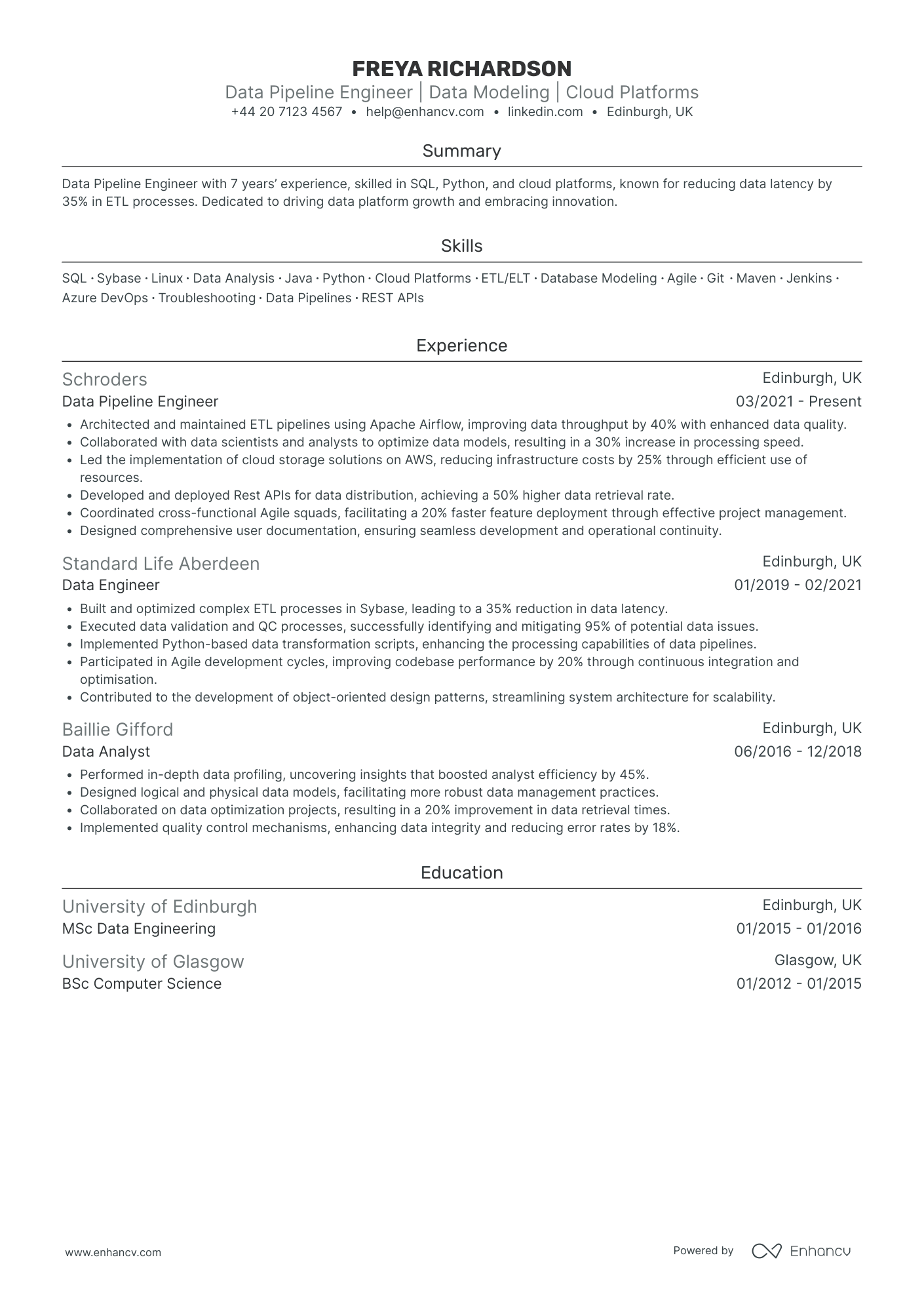
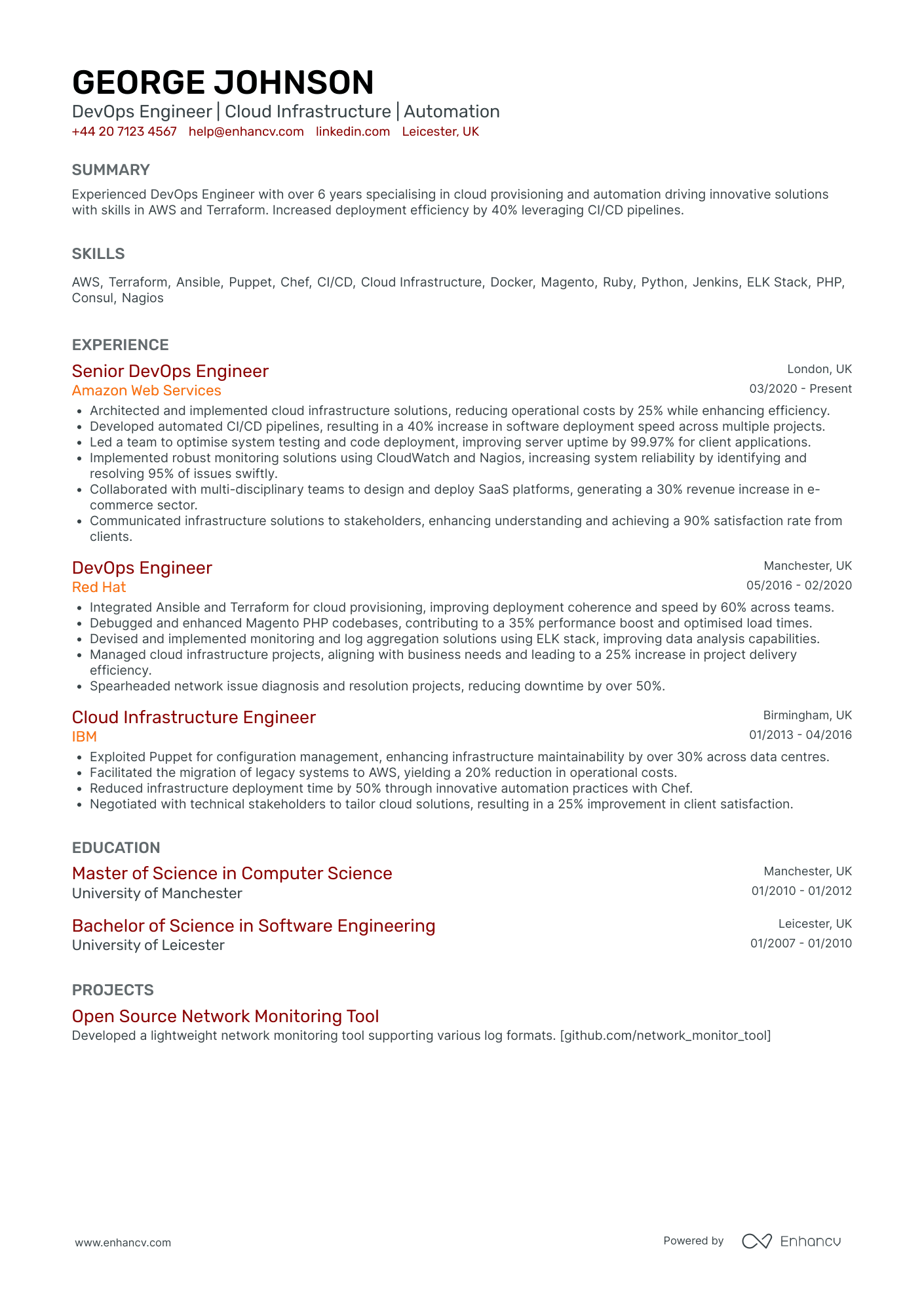
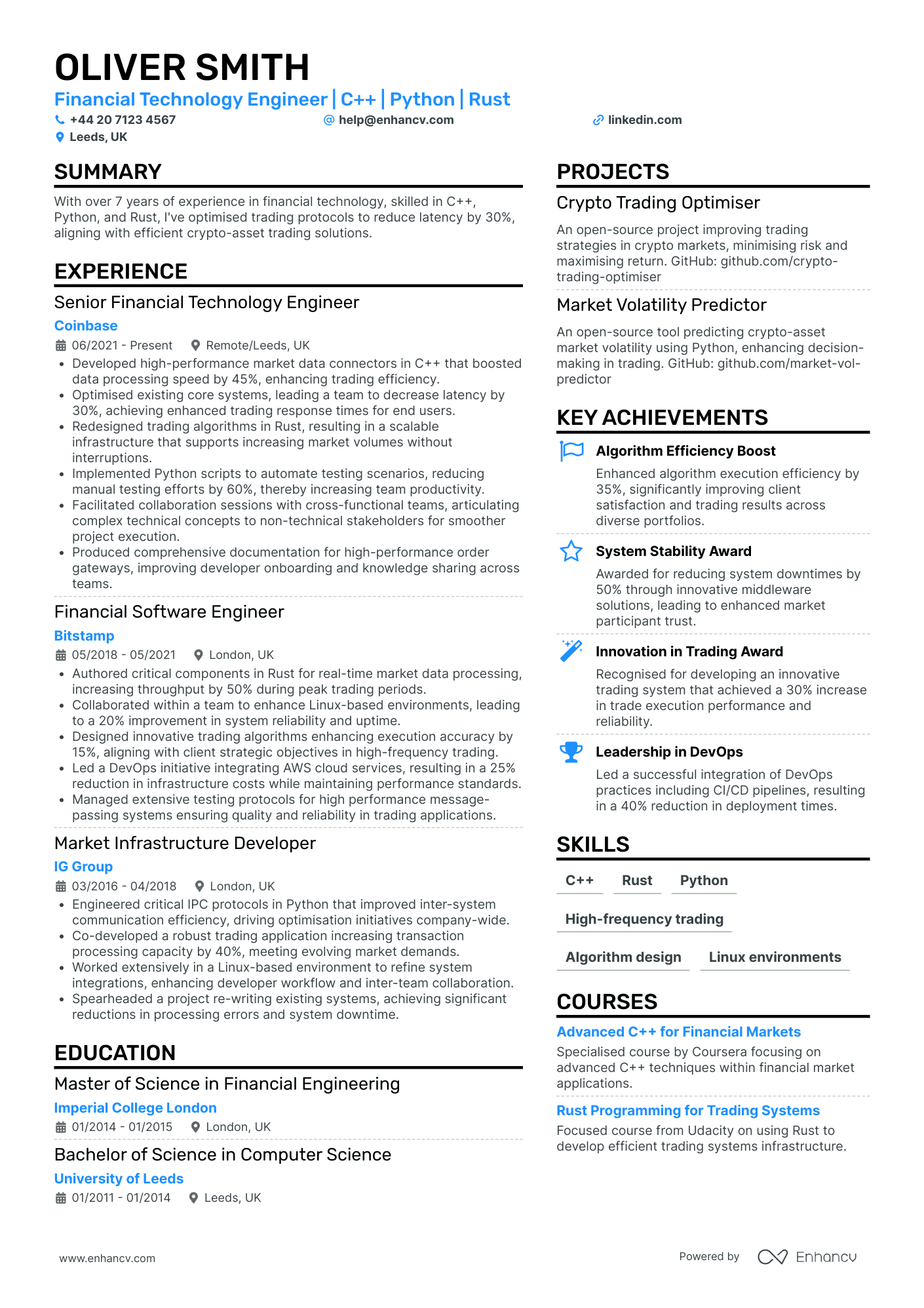
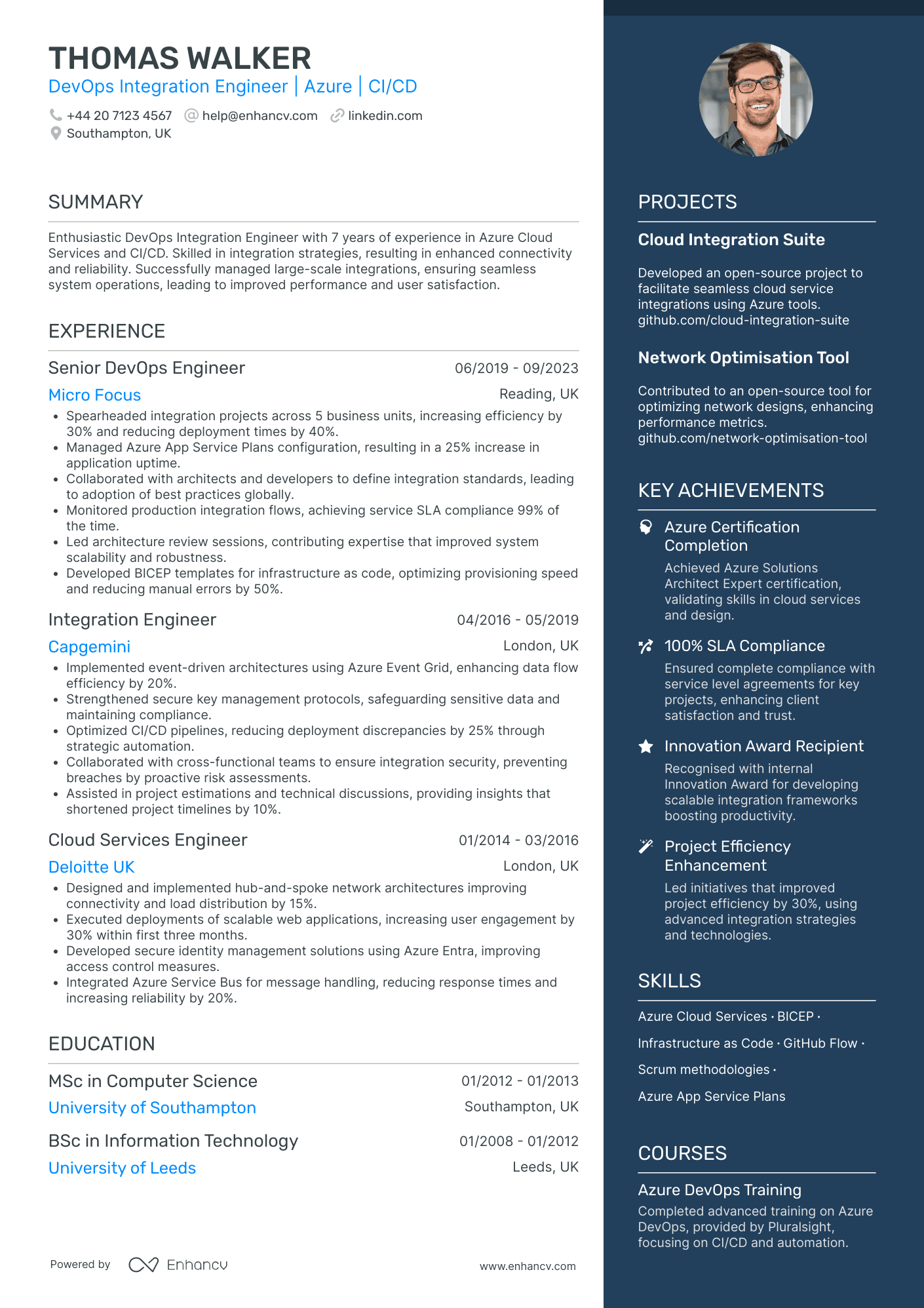
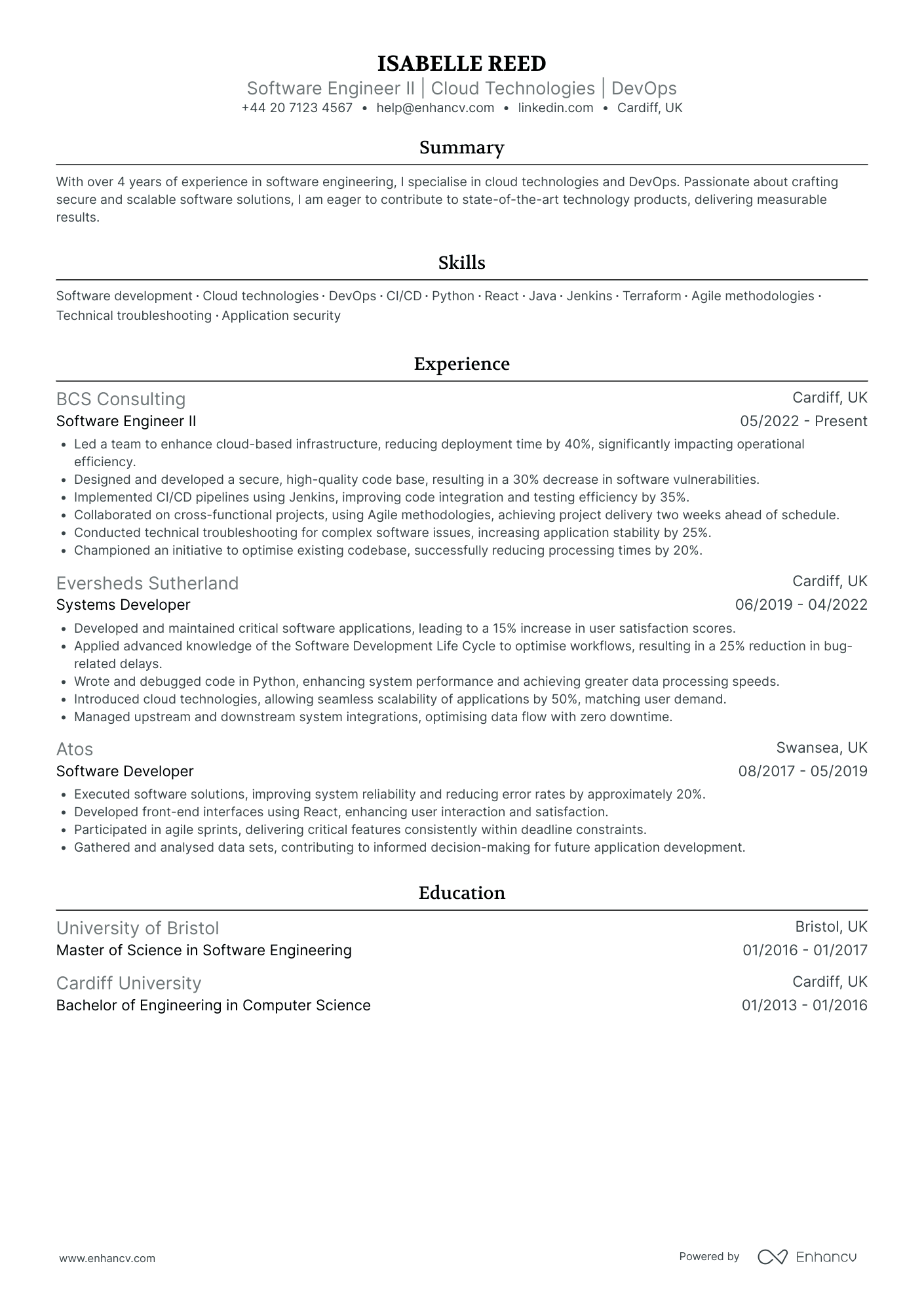
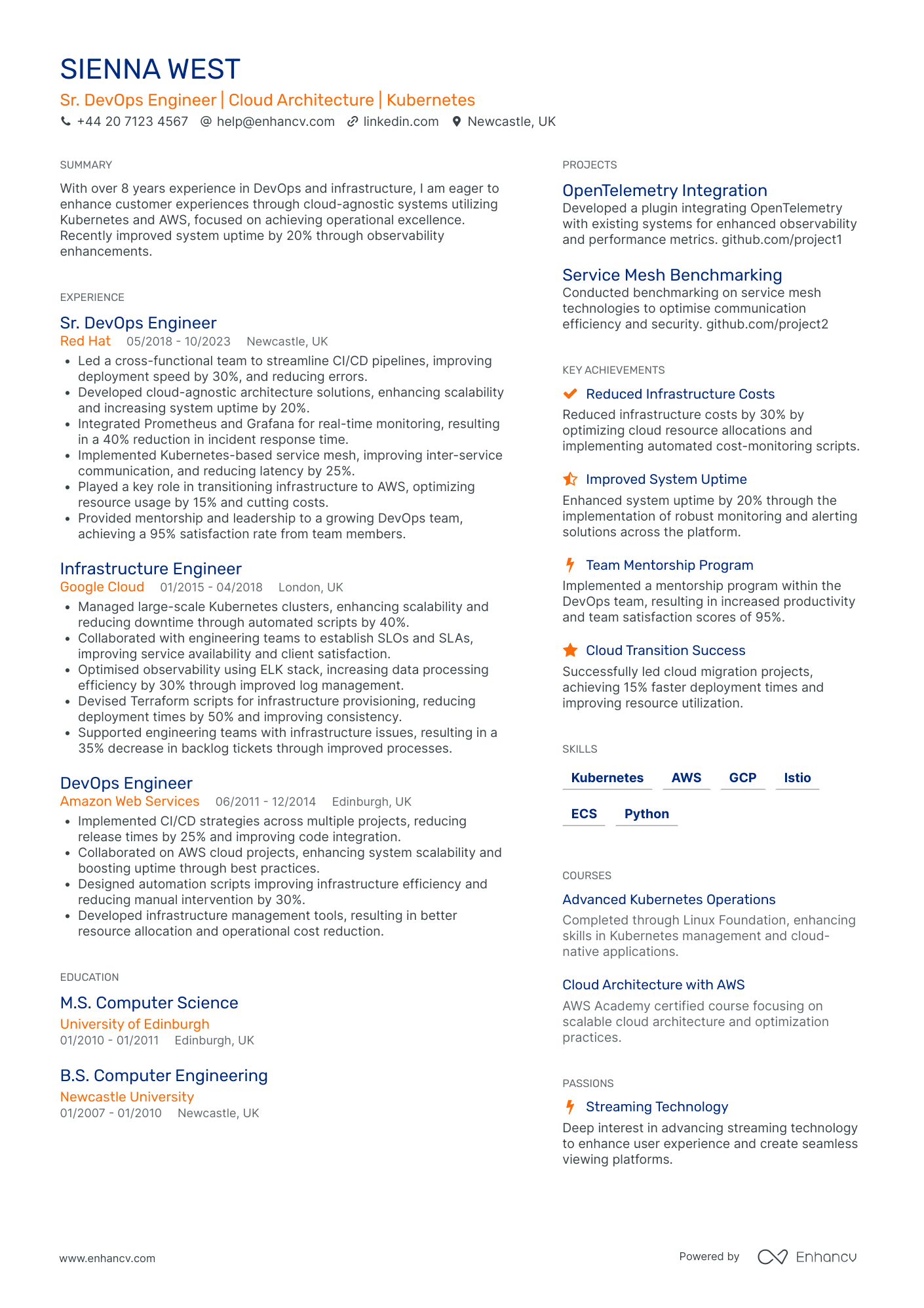
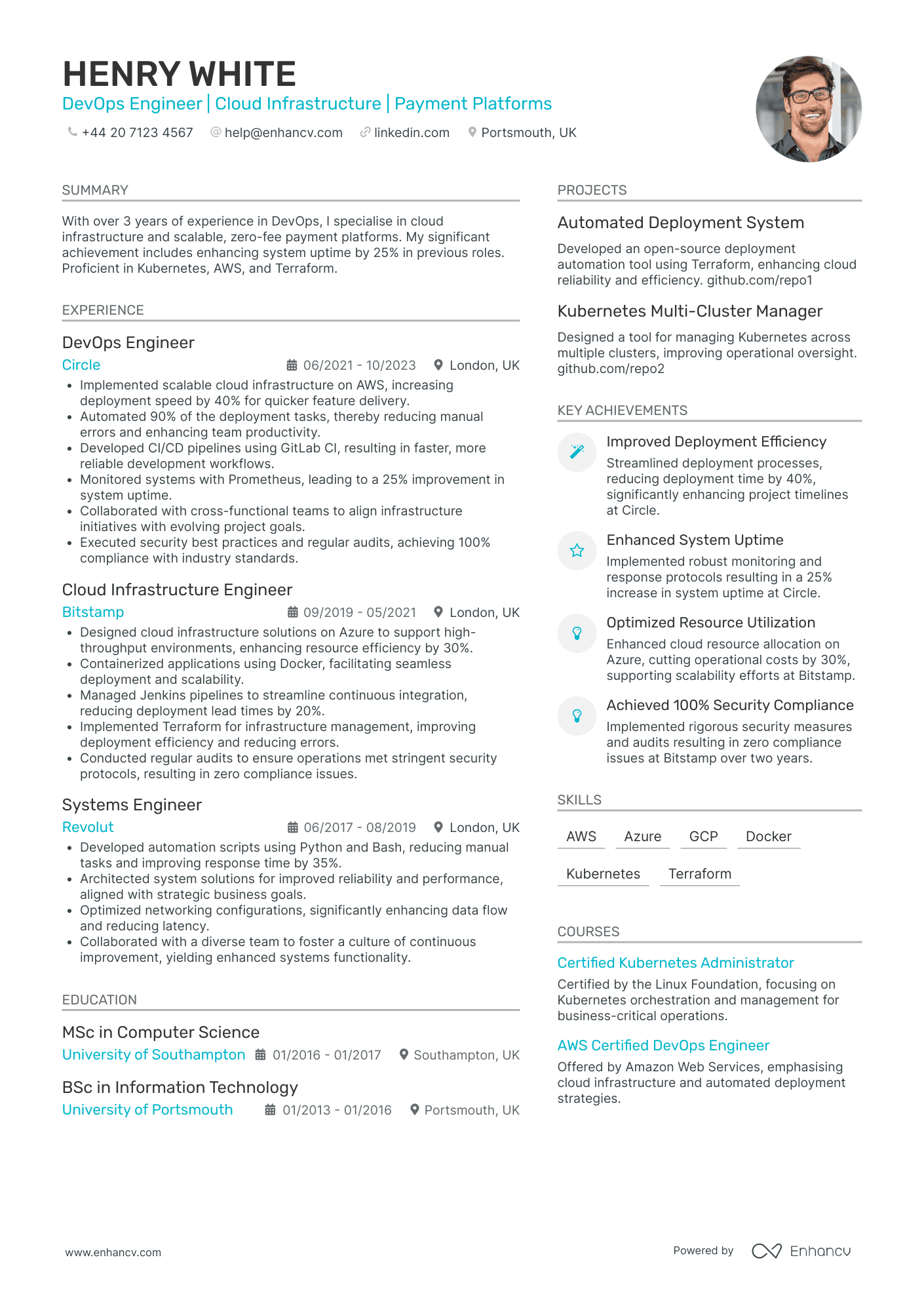
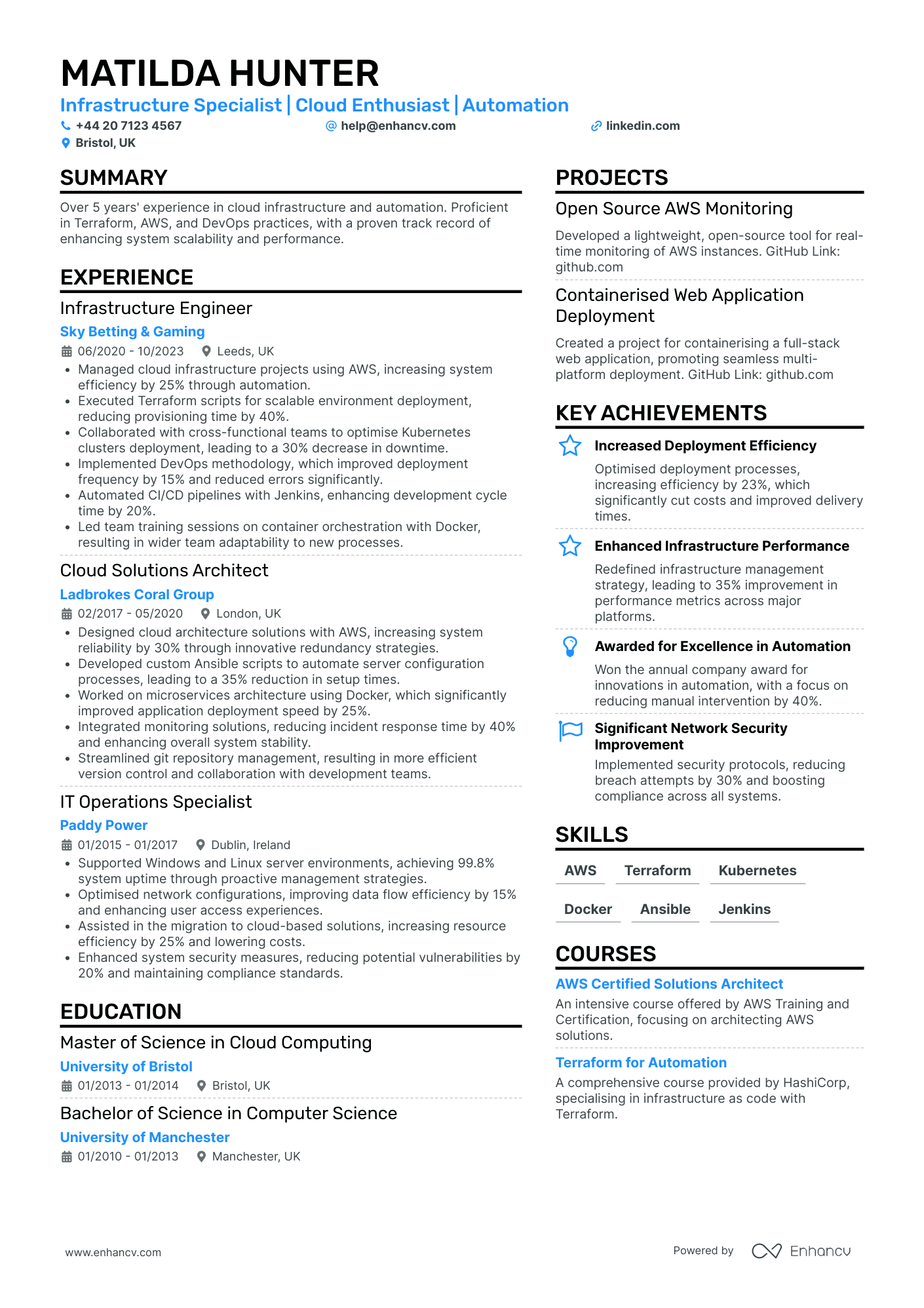
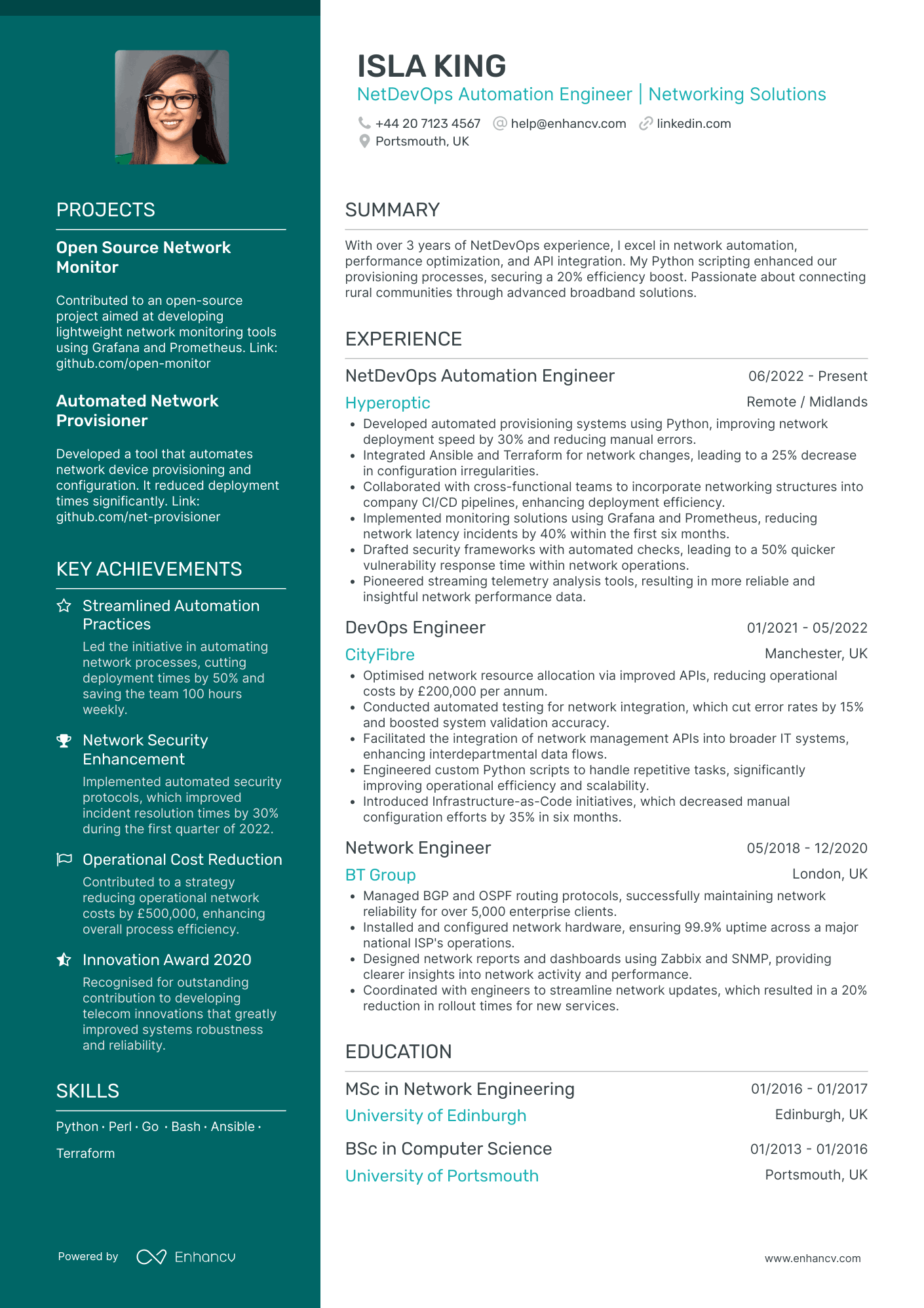
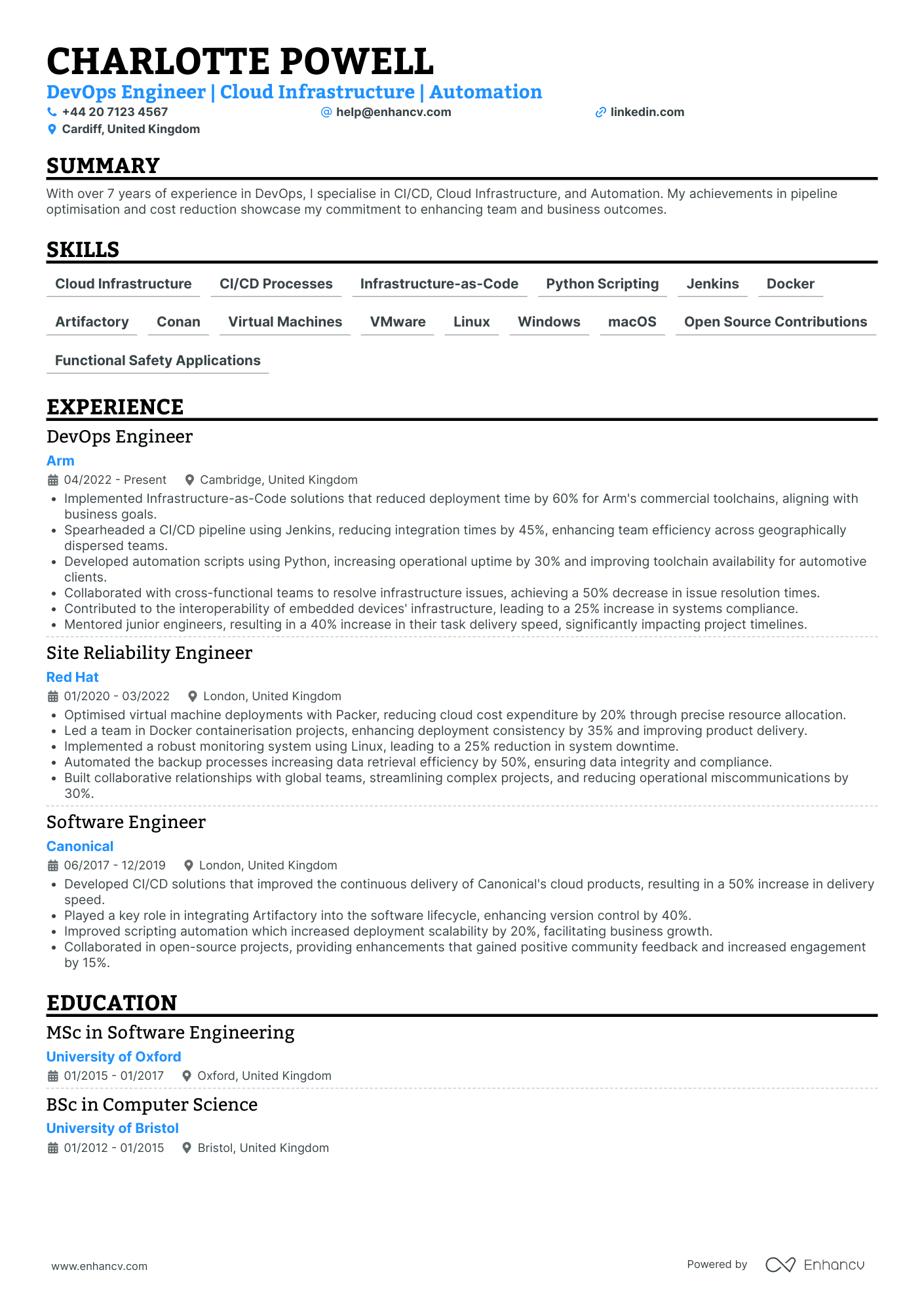
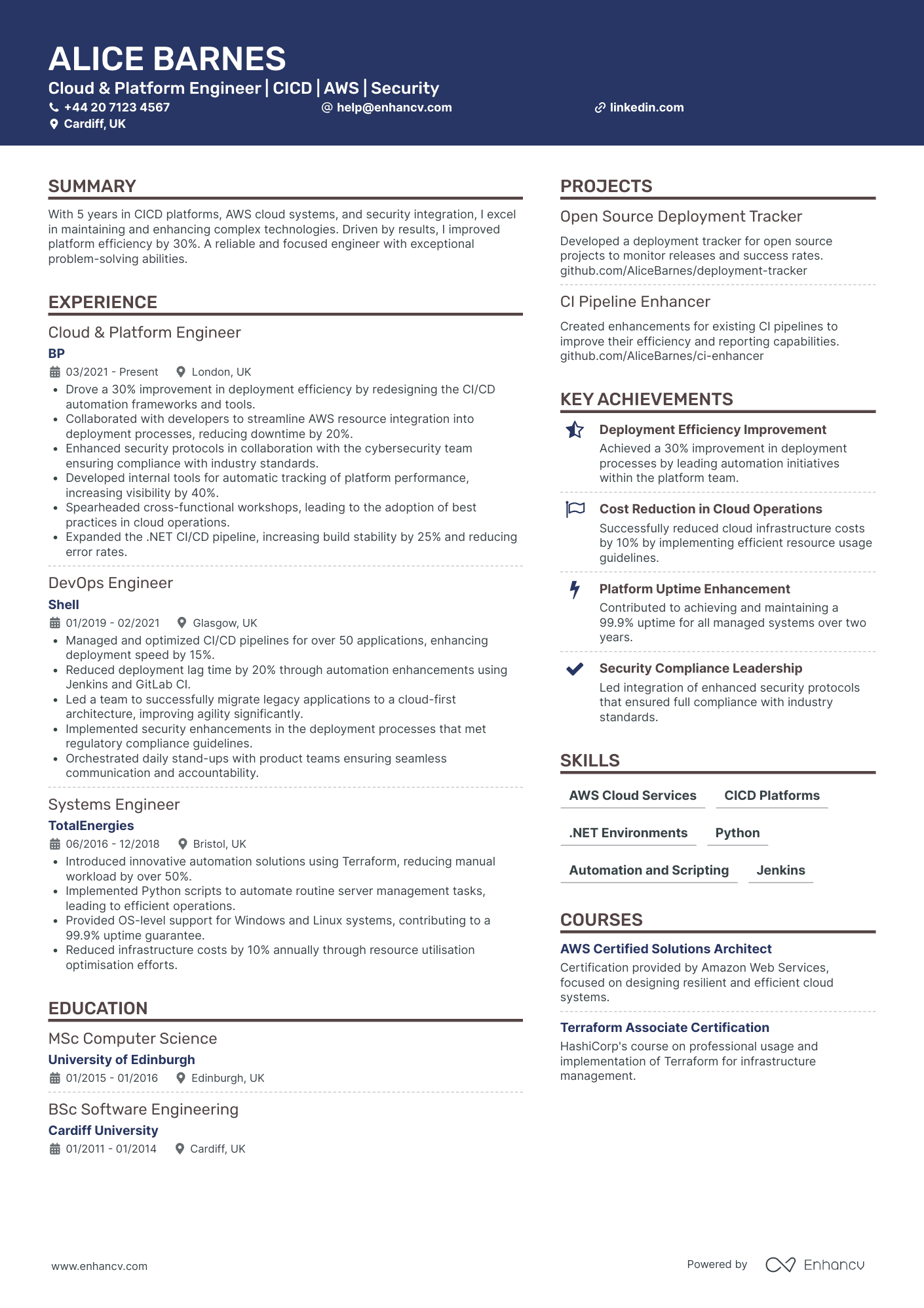
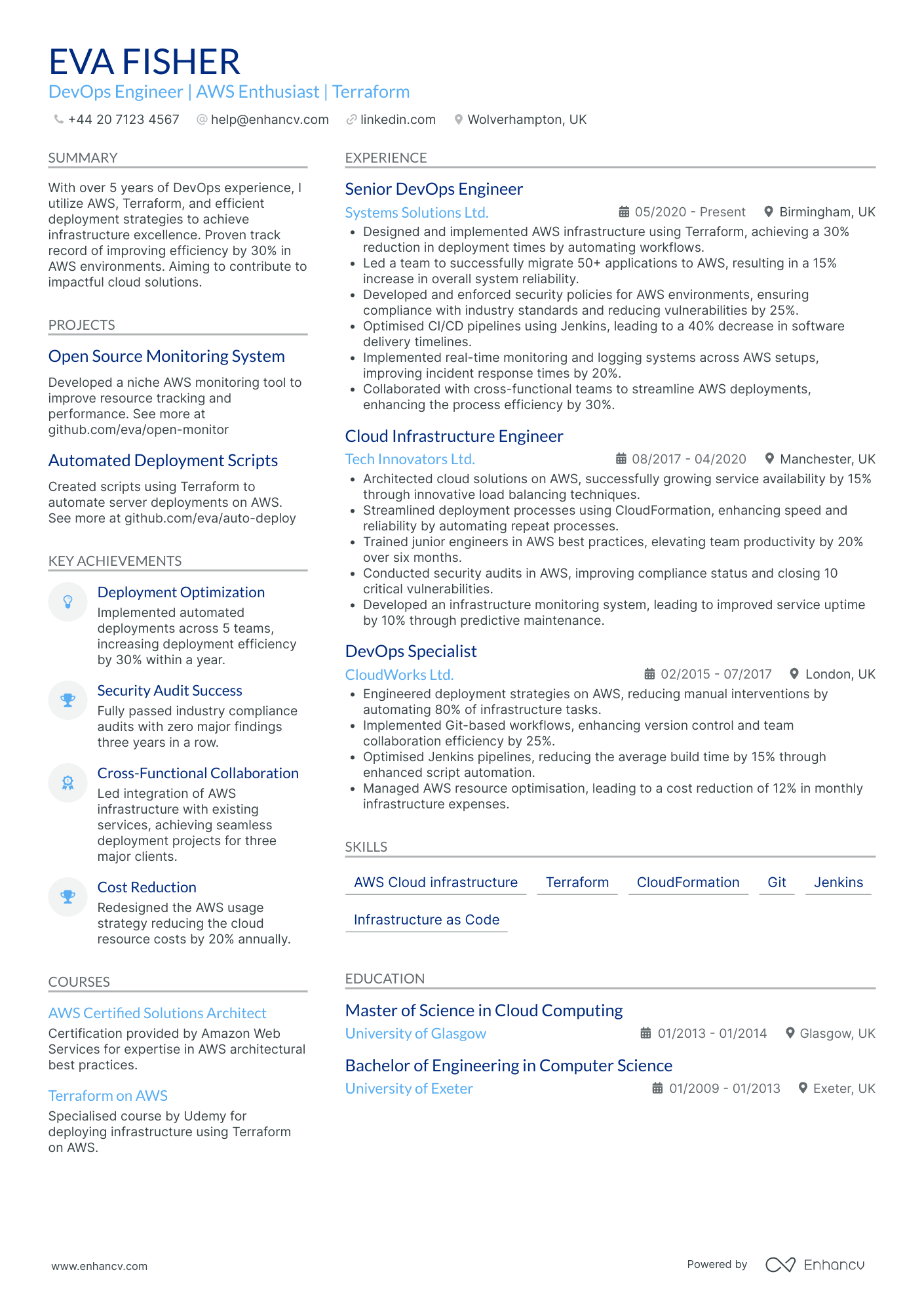
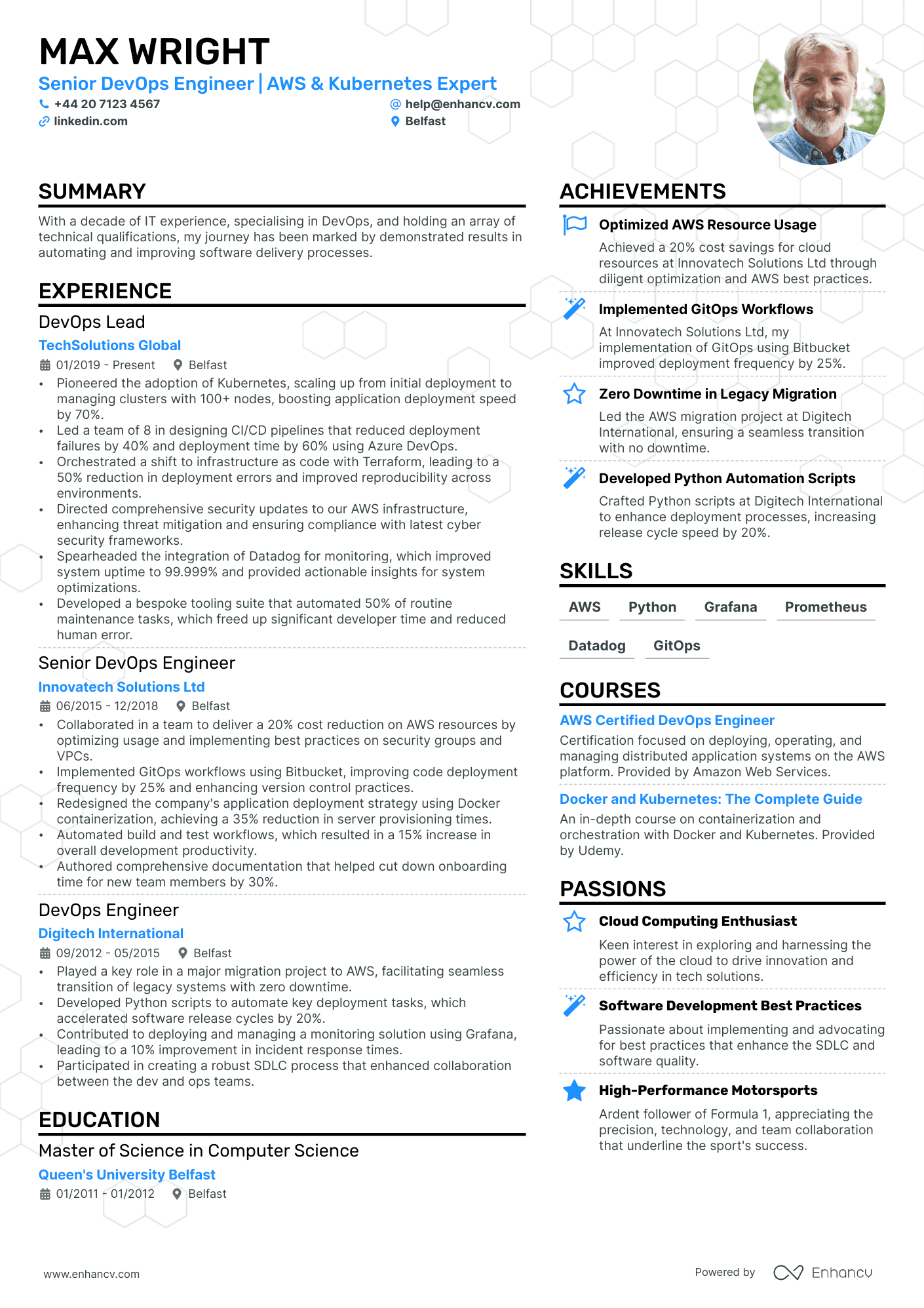
Most DevOps engineer CVs read like a tool inventory. Every technology the candidate has ever touched, stacked into a wall of logos, with nothing to show what any of it actually delivered.
The CVs that get interviews do the opposite. They lead with the handful of tools the reader asked for, then prove each one with a pipeline that got faster, a cloud bill that got smaller, or an outage that stopped happening. Kubernetes, Terraform, and AWS are the three that recur most in UK adverts right now, so those are the ones your CV has to evidence first.

Key takeaways
- Lead with the tools the advert names. Kubernetes, Terraform, and AWS recur most in UK DevOps postings, so put the ones you can prove at the top.
- Evidence every tool with an outcome: a faster pipeline, a smaller cloud bill, a shorter recovery time.
- Most UK DevOps roles are hybrid or on-site, so state your location and how you work near the top.
- Keep it to two pages, reverse chronological, sent as a PDF unless the advert asks for a Word file.
- Mirror the advert's exact tooling words so both the ATS and the hiring engineer see the match.
- Certifications like AWS, the CKA, and Terraform Associate settle the "can they actually run this" question fast.
Top skills for your DevOps engineer CV
The fastest way to answer the top skills question is to read the advert, because DevOps hiring is unusually literal. If it names Kubernetes, Terraform, and AWS, those three belong at the top of your CV in the same words.
Across 101 UK DevOps engineer postings in the last ~30 days on Enhancv's internal job feed, Kubernetes, Terraform, and AWS are the tools tagged most often, followed by CI/CD and Docker. Python, Jenkins, and Bash sit just behind. That order is your priority list.
List them as hard skills, but never as a bare cloud of logos. Each tool needs a bullet somewhere in your experience that proves you ran it, ideally with a number attached.
Kubernetes: name the scale, not the word. "Ran 40 microservices on EKS across three environments" says far more than "Kubernetes" on its own.
Terraform: show the estate you managed as code and the manual work it removed. "Provisioned staging in 20 minutes with reusable Terraform modules" beats a logo.
AWS: name the services you used (EKS, EC2, S3, RDS, CloudWatch) and one cost or reliability number they moved.
CI/CD: state the pipeline tool and the release frequency before and after. A jump from weekly releases to daily is the kind of line an engineer stops to read.
Docker: pair it with what you shipped, such as a base image you standardised across teams or a build you shrank from gigabytes to megabytes.
Python and Bash: these are the glue, so evidence them with the toil they removed. "Automated certificate rotation with a Python job, ending a monthly manual task" reads as a real skill rather than a checkbox.
The soft skills that matter here are checkable on the job. Clear written communication for runbooks and post-incident reviews, calm ownership during an outage, and the collaboration to work across development and operations without a wall between them. Prove each in a bullet rather than listing adjectives.
List only what you can defend in an interview. A senior engineer will ask you to walk through the Terraform you claim, so put anything shaky under a learning line rather than your core skills.
Top skills for your DevOps engineer CV:
Kubernetes
Terraform
AWS
CI/CD pipelines
Docker
Python
Bash scripting
Jenkins
Linux
Ansible
Git
Monitoring (Prometheus, Grafana)
Written communication
Collaboration across dev and ops
Problem solving
Ownership under pressure
Documentation
What the UK DevOps engineer market looks like
Knowing what UK employers ask for shapes what goes at the top of the CV. Here is what the current adverts show.
| What | UK DevOps engineer roles |
|---|---|
| Where the work happens | Mostly hybrid (55%) and on-site (36%), with a small remote share (56 and 36 of 101 UK postings in the last ~30 days, Enhancv's internal job feed) |
| Experience level asked for | Senior 48% · mid 42% · lead 11% (of 101 UK postings, Enhancv's internal job feed, last ~30 days) |
| Tools listed most often | Kubernetes, Terraform, AWS, CI/CD, and Docker (tagged in 85, 82, 72, 70, and 65 of 101 postings) |
| Also frequently listed | Python, Jenkins, and Bash (tagged in 55, 48, and 43 of 101 postings) |
Two things follow for your CV.
Most of this work is hybrid or on-site, so a recruiter needs to see where you are based and how you split your week. Put your location and working preference in the header.
And the roles skew senior and mid, not entry. If you are aiming at those, the CV has to show ownership of systems in production, not coursework or a home lab. If you are earlier in your career, the junior route further down is the realistic one.
Formatting your DevOps engineer CV and passing the ATS
Use a reverse chronological layout once you have production experience, and a skills-led one only if you are moving into DevOps from another role.
Keep it to two pages, one column, standard headings, and a readable font. A hiring engineer skims for tools and outcomes before they read a word of prose.
Send a PDF for direct applications so the layout holds, and keep a Word copy for agencies that reformat CVs into their own template. If the advert names a file type, follow it.
DevOps applications almost always pass through an ATS-friendly filter first. The parser reads plain text, so drop the skills-as-a-graphic trick and write tool names as words. "AWS", "Kubernetes", and "CI/CD" as text will always beat a rating bar the parser cannot see.
Mirror the advert's exact spelling. If it says "CI/CD" write that, not "continuous integration". If it says "IaC" spell out Infrastructure as Code once, then use the acronym. Matching the keywords the advert uses is how both the filter and the engineer find you.
Order the sections for a skim reader. A tight personal statement, then skills, then experience, then certifications and education. A recruiter who fills DevOps roles wants the stack and the seniority in the first ten seconds, so do not make them scroll for it.
Cut the noise that pads most technical CVs. An objective from 2004, a full address, a photo, and a list of every version number you have used add length without adding signal. Keep the tools current and the outcomes recent.
Build it from a tested layout rather than a blank page. Enhancv's CV templates export to a clean, parsable PDF. If you want to see what a parser pulls out of your current draft, upload it and check.
Is your CV good enough?
Drop your CV here or choose a file. PDF & DOCX only. Max 2MB file size.
Writing your DevOps engineer personal statement
Three or four sentences at the top: who you are, your strongest tools, one result you are proud of, and the kind of team you want to join. Keep it concrete. See more personal statement examples if the opening line is not coming.
Skip the adjective soup. "Passionate, driven engineer with a can-do attitude" tells a reader nothing they can check, and it reads the same as the hundred CVs behind yours.
Anchor the opening in one system you ran and one number it moved. A recruiter forwards the statement that names a real stack and a real result, because it gives them something to repeat to the hiring engineer.
Lead with evidence instead:
DevOps engineer CV personal statement example
DevOps engineer with five years building and running cloud infrastructure on AWS. Cut deployment time from 45 minutes to under 10 by rebuilding CI/CD in GitHub Actions, and trimmed monthly cloud spend by 22% through right-sizing and spot instances. Comfortable owning Kubernetes and Terraform in production, and calm on call. Looking to bring reliability engineering discipline to a hybrid infrastructure team in Manchester.
When I read a DevOps CV, I skim past the tool list and look for one production number: a pipeline that got faster, a bill that got smaller, an incident that stopped repeating. That single result tells me you have run this in anger, not just followed a tutorial. Name the tool, then the outcome, in the same line. Ten of those beat a page of logos every time.
The Enhancv team
Writing your DevOps engineer experience section
Lead every bullet with a verb and end it with a result. Work experience for this role is measured in time saved, money saved, and incidents avoided, so put the number where the reader will see it.
Use the tool, then the outcome, in one line. "Migrated 40 services to Kubernetes" is a task. "Migrated 40 services to Kubernetes, cutting deploy time from 45 minutes to 8" is an achievement.
Tailor each application to the advert in front of you. Pull the tools and responsibilities it lists, and mirror the ones that are true of you. Enhancv's CV tailoring feature reads the advert and suggests the matching edits, which saves rewriting from scratch each time.
Start bullets with strong action verbs: migrated, automated, provisioned, reduced, hardened, scaled.
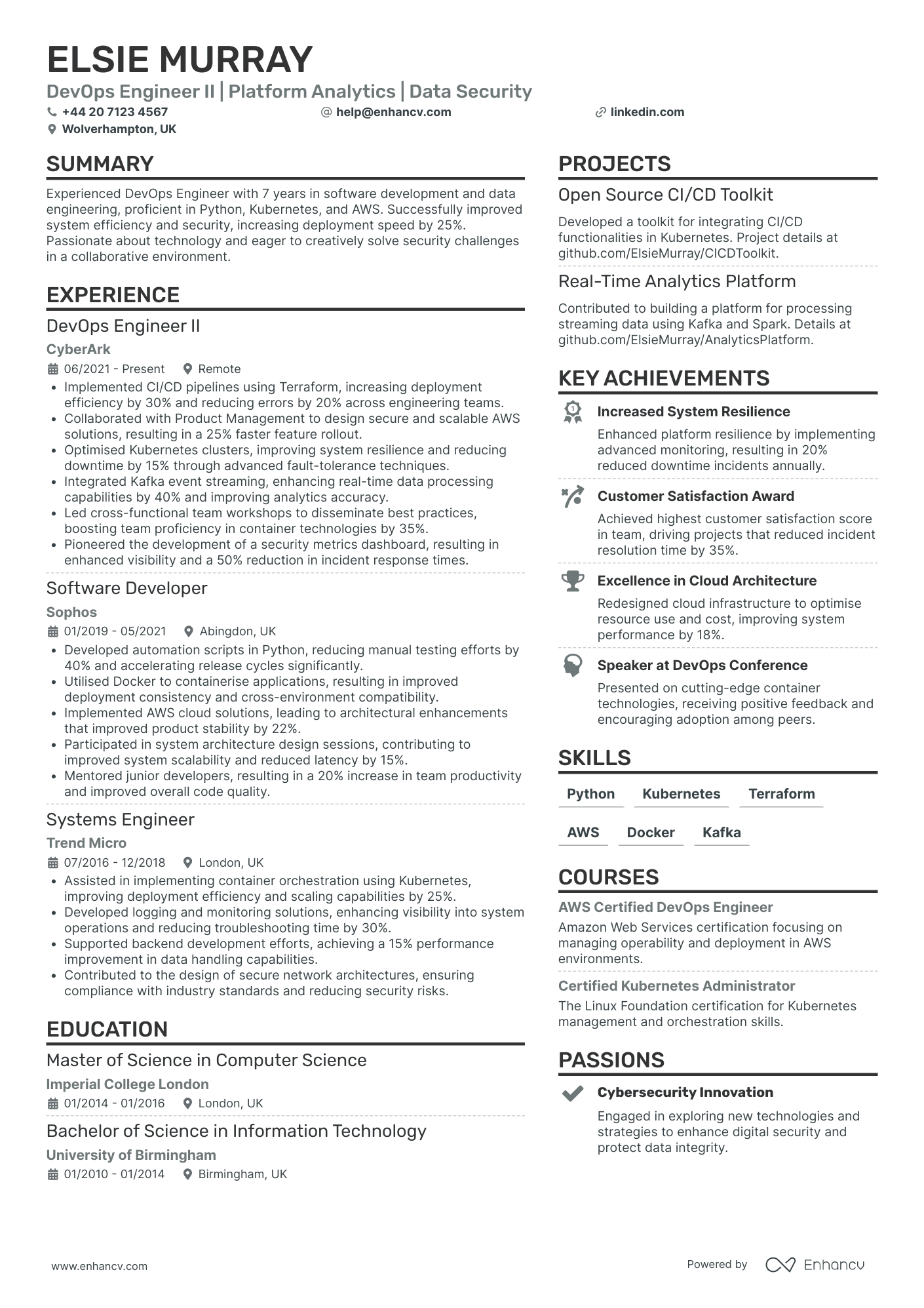
- Migrated 40 microservices to Kubernetes on AWS EKS across three environments, cutting deployment time from 45 minutes to under 8
- Built reusable Terraform modules that turned a two-day manual environment setup into a 20-minute repeatable provision
- Rebuilt the CI/CD pipeline in GitHub Actions, raising release frequency from weekly to more than 30 deploys a week with automated rollback
- Reduced mean time to recovery from 90 minutes to 15 by adding Prometheus alerting, Grafana dashboards, and on-call runbooks
- Cut monthly cloud spend by 22% by right-sizing EC2 and moving non-critical workloads to spot instances

PRO TIP
DevOps adverts list named tools, not vague competencies. Mirror the exact ones you can defend: "Terraform", "EKS", "ArgoCD", "Prometheus", "GitHub Actions". If you have run it in production, name it the way the advert does. If you have only tried it at home, keep it honest and put it under a learning line.

The mistake that sinks most DevOps CVs
Listing responsibilities instead of results. "Responsible for maintaining CI/CD pipelines" describes a job title, not an engineer. Rewrite it as what changed on your watch: "Kept the release pipeline green at 30 deploys a week and cut failed builds by half." The reader is hiring for the second line, so lead with it.
DevOps CV with five years of experience (and the junior version)
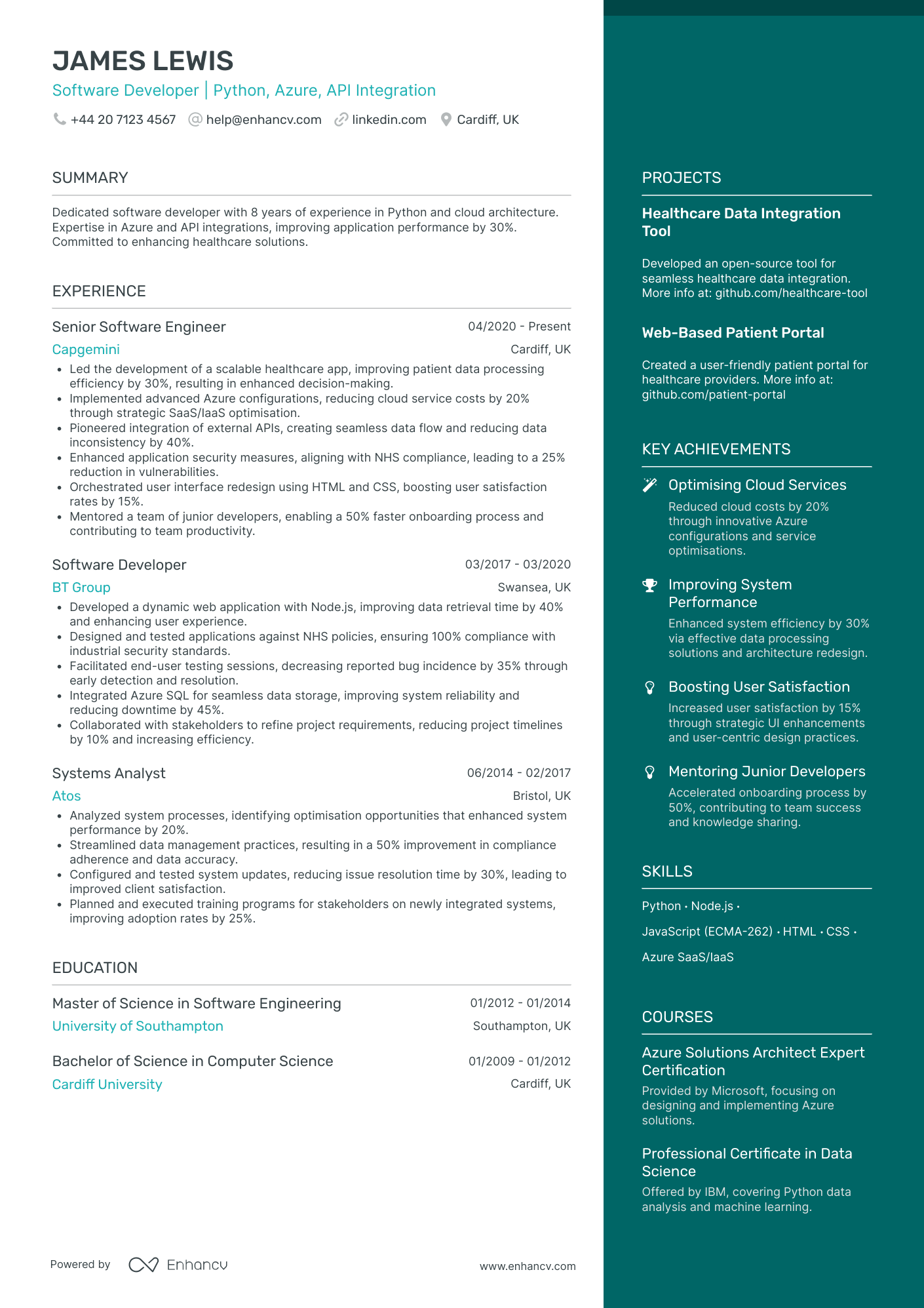
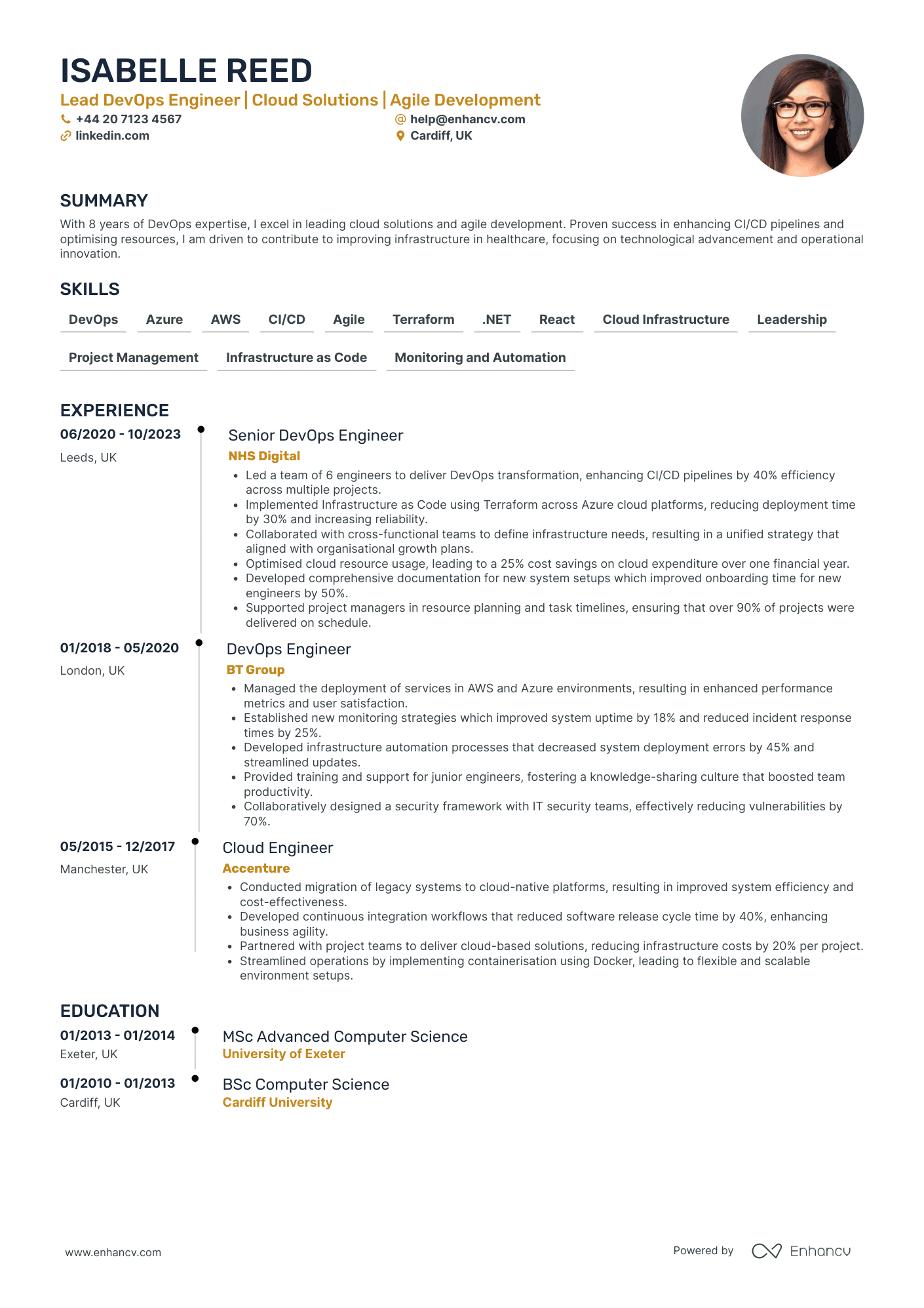
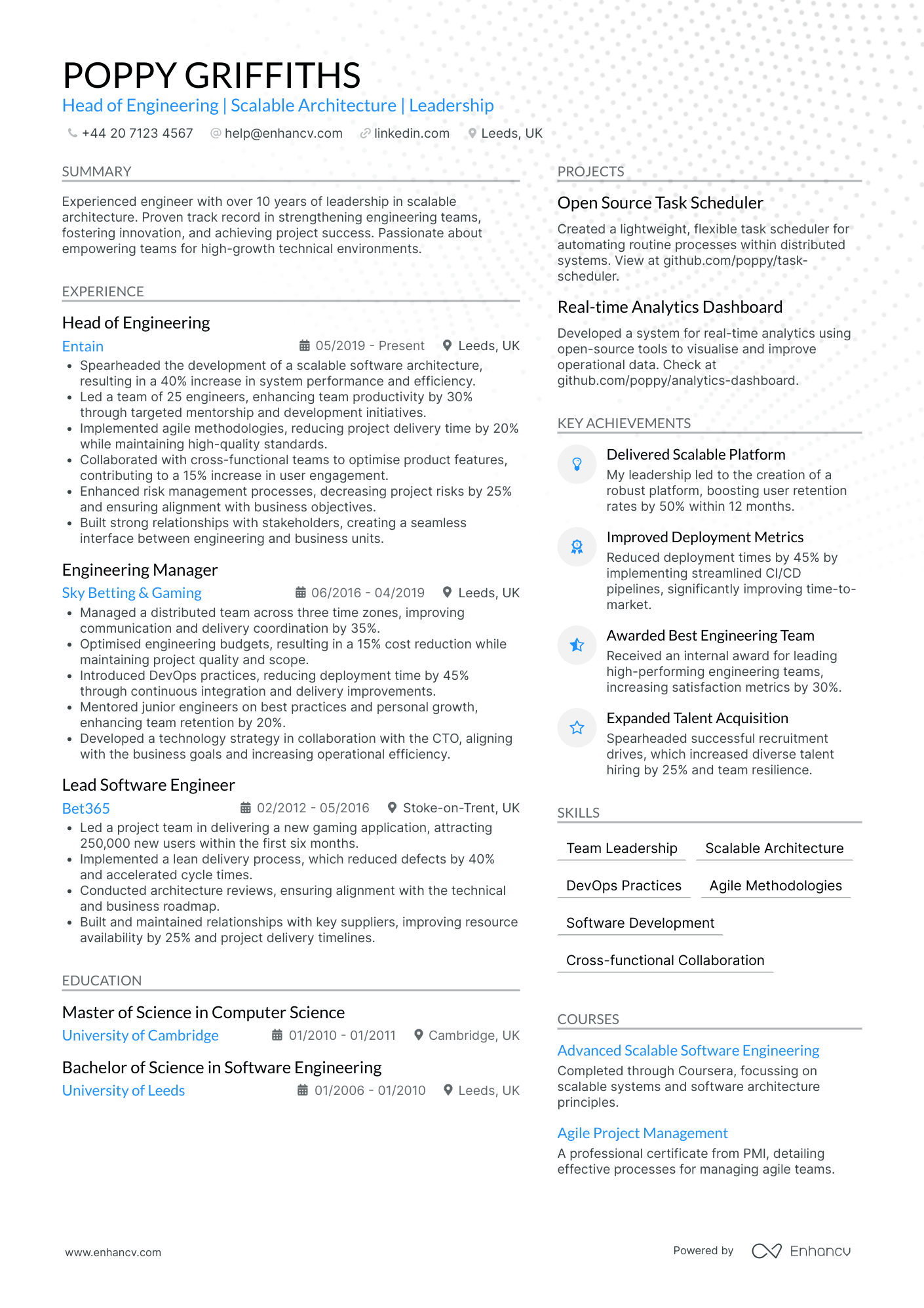
At five years and up, the CV is about scope and ownership. Show the size of the estate you ran, the incidents you owned, and the cost or reliability you moved. Senior and mid roles make up most of the UK market, so this is where the demand sits.
Name the infrastructure decisions you led, not just the tickets you closed. "Owned the move from Jenkins to GitHub Actions across 12 teams" signals the seniority the advert is paying for.
A LinkedIn profile and a public GitHub carry real weight in DevOps hiring, so link both in the header. A tidy repository of Terraform modules or a home lab write-up does more than another paragraph of prose.
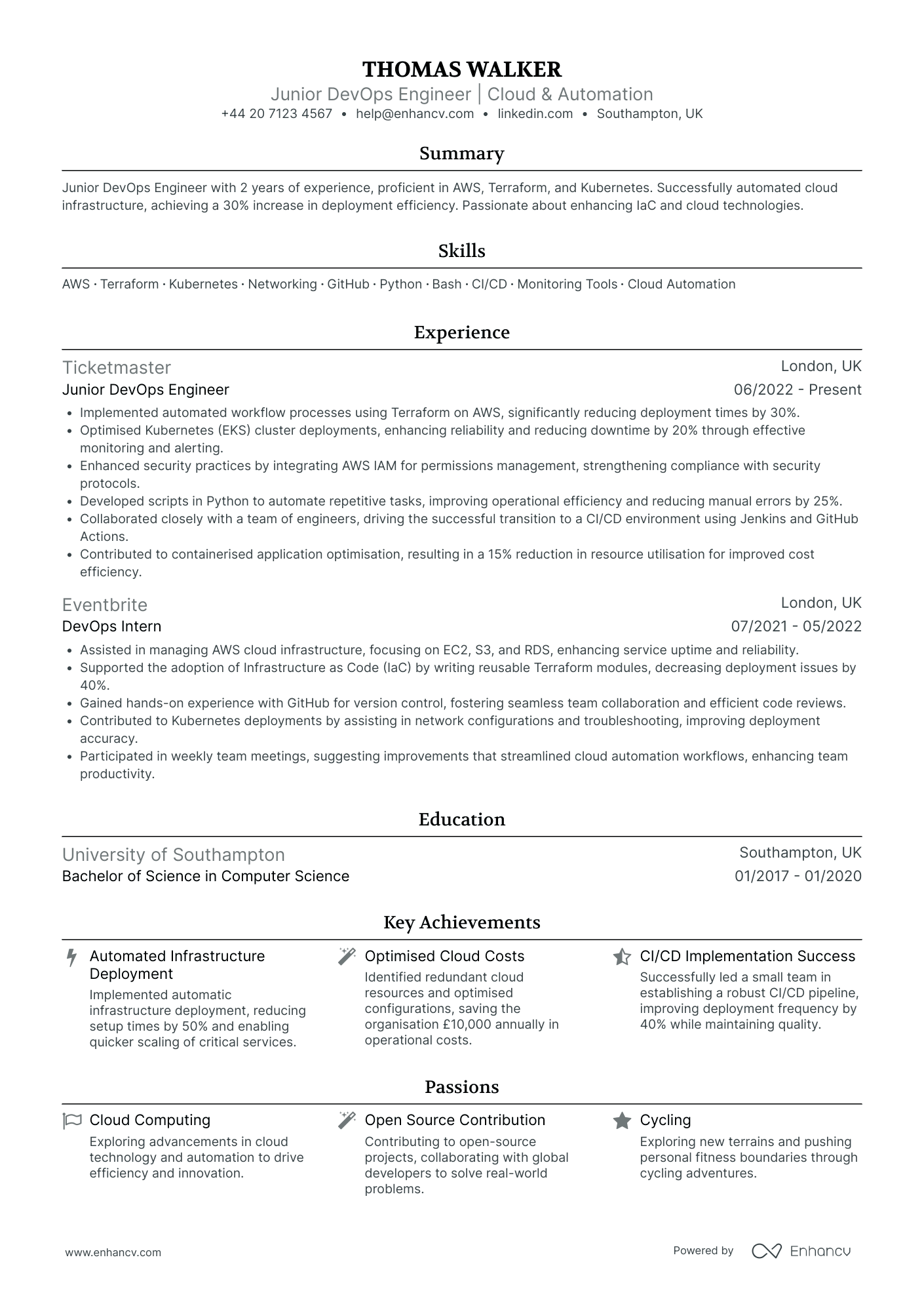
If you are early in your career, the first CV route is skills-led. Lead with a real project: a Kubernetes cluster you built, a pipeline you wrote, infrastructure you defined in Terraform. Put certifications and a GitHub link next, and keep the thin work history lower down. Employers hiring juniors are buying trajectory, so show you are already building with the stack.
Write the project up like a job. Give it a title, a short line on the problem, and two or three bullets on what you built and what it taught you. A monitoring stack you ran for a side project counts, as long as you can explain the choices you made.
One honest line about where you are heading helps too. "Studying for the AWS Solutions Architect Associate, targeting a junior DevOps role" tells a hiring manager you know the path and are already on it.
Education and certifications for a DevOps engineer CV
A degree helps but rarely decides a DevOps hire. What employers check is whether you can run the stack, and certifications are the fastest proof.
List the ones that match the tools in the advert: AWS certifications (Solutions Architect, SysOps Administrator), the Certified Kubernetes Administrator (CKA), the HashiCorp Terraform Associate, and an Azure or Google Cloud badge if that is the target environment. Put them in a dedicated certifications block near the top, not buried at the bottom.
A relevant degree in computer science or engineering goes in the education section with dates and classification. If your route in was self-taught or through a bootcamp, name the projects and certs instead, and let those carry the section.
Conclusion
Lead with the tools the advert names, prove each one with a production result, and keep the format clean enough for an ATS to read. That is the whole game for a DevOps CV.
If you are still building the structure, start from how to write a CV, then pair the finished CV with a short cover letter that names the team and the stack you want to work on.
Author's take - the Enhancv team
When I read a DevOps CV, I skim past the tool list and look for one production number: a pipeline that got faster, a bill that got smaller, an incident that stopped repeating. That single result tells me you have run this in anger, not just followed a tutorial. Name the tool, then the outcome, in the same line. Ten of those beat a page of logos every time.