



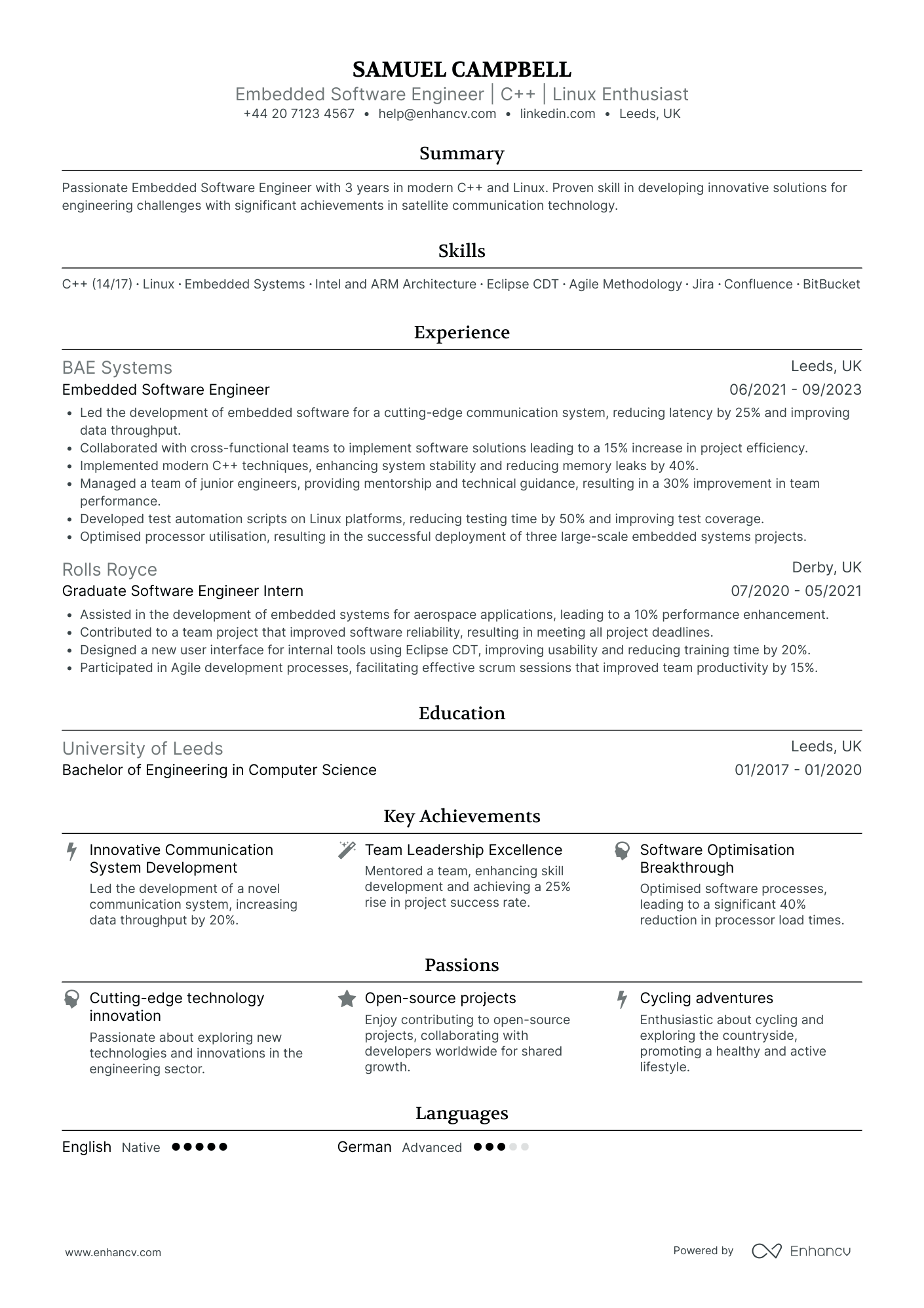
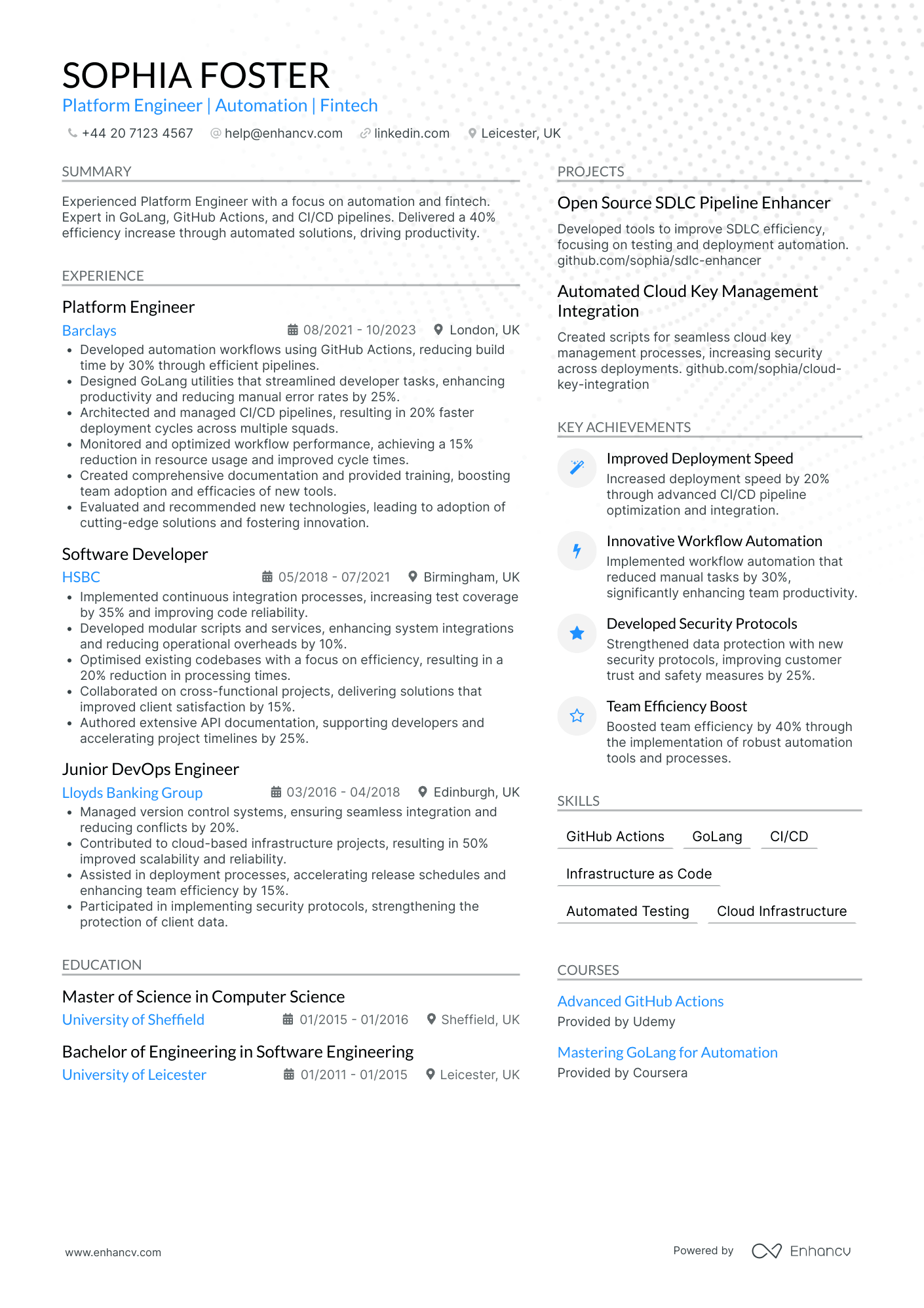
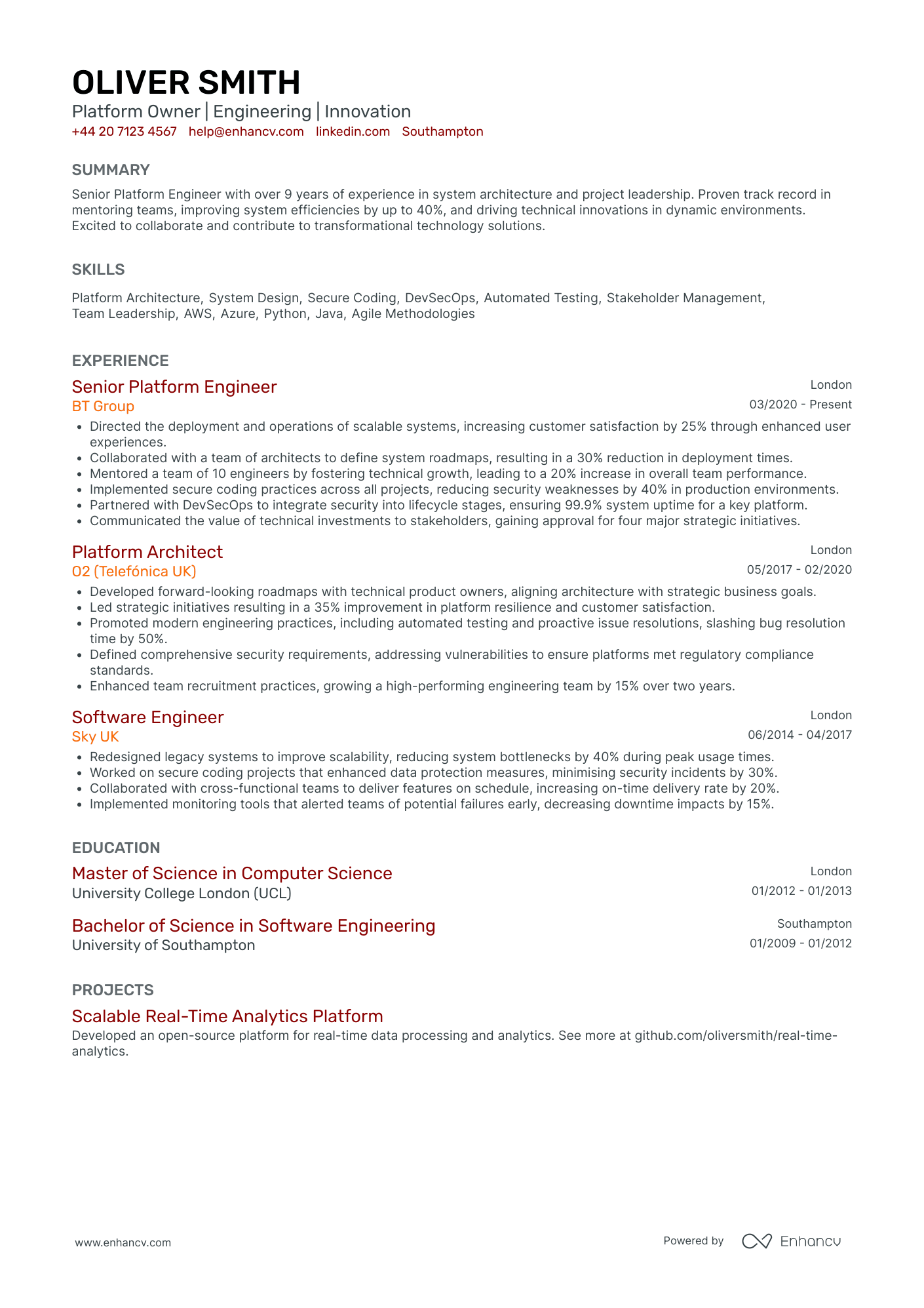
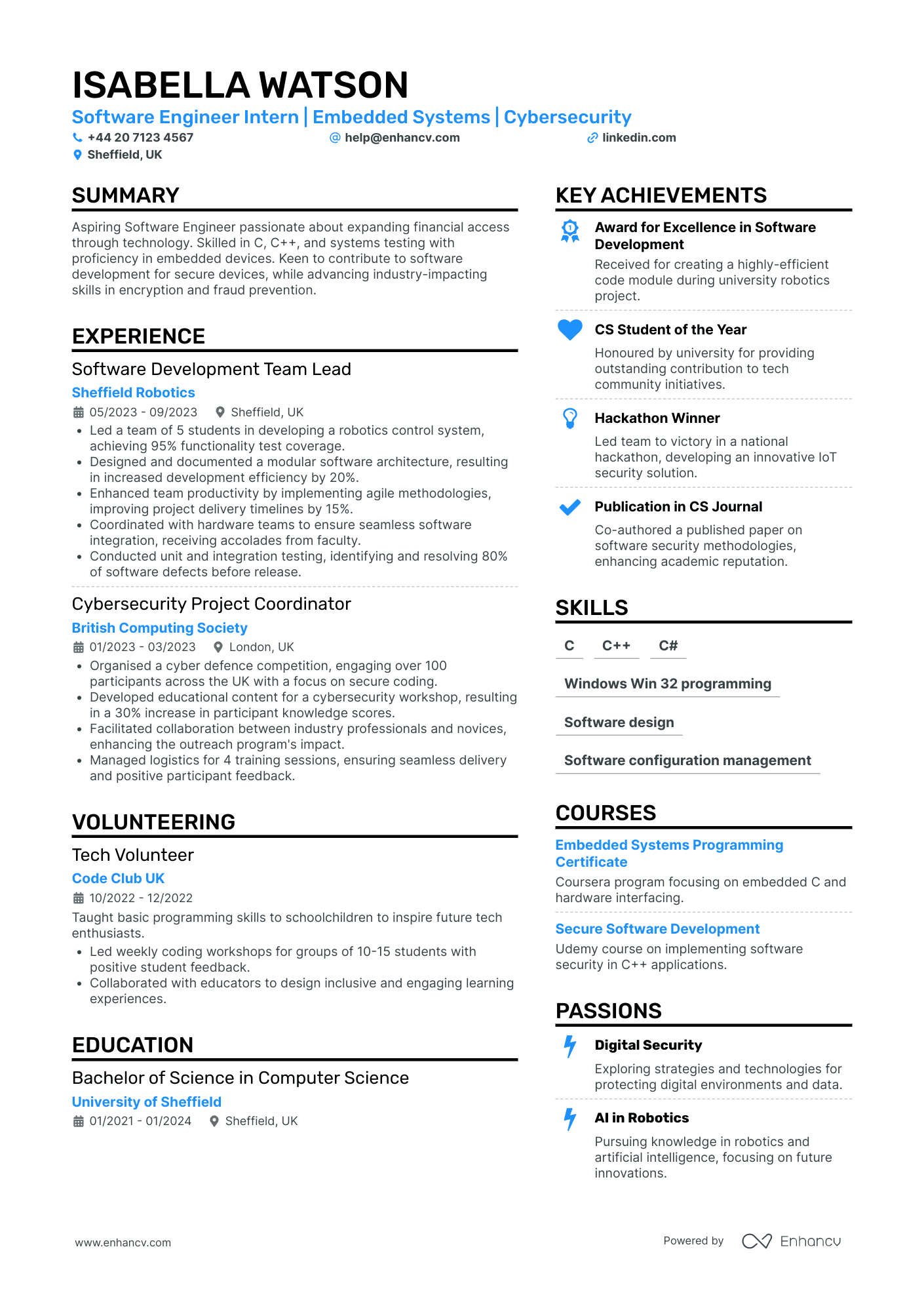
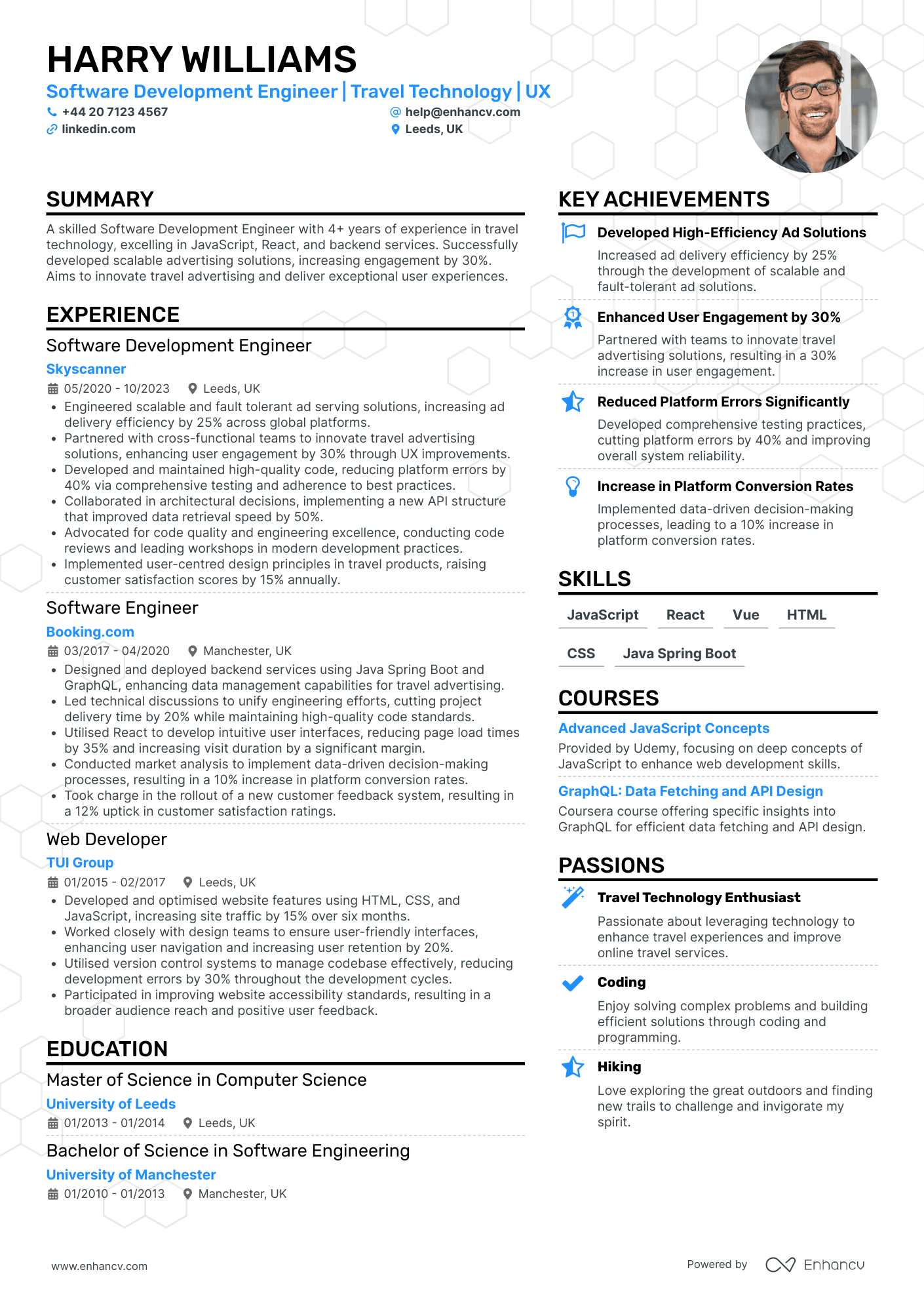
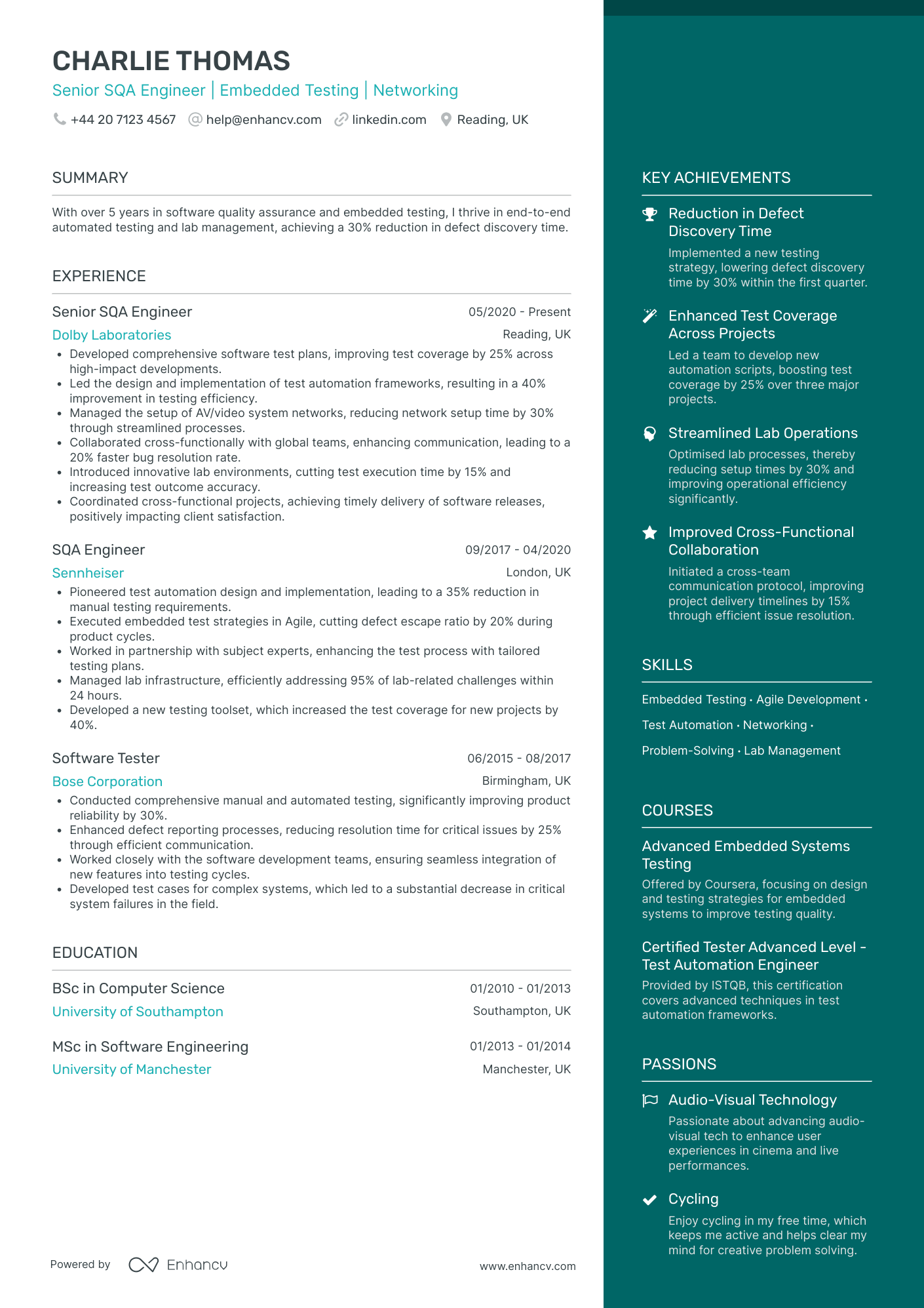
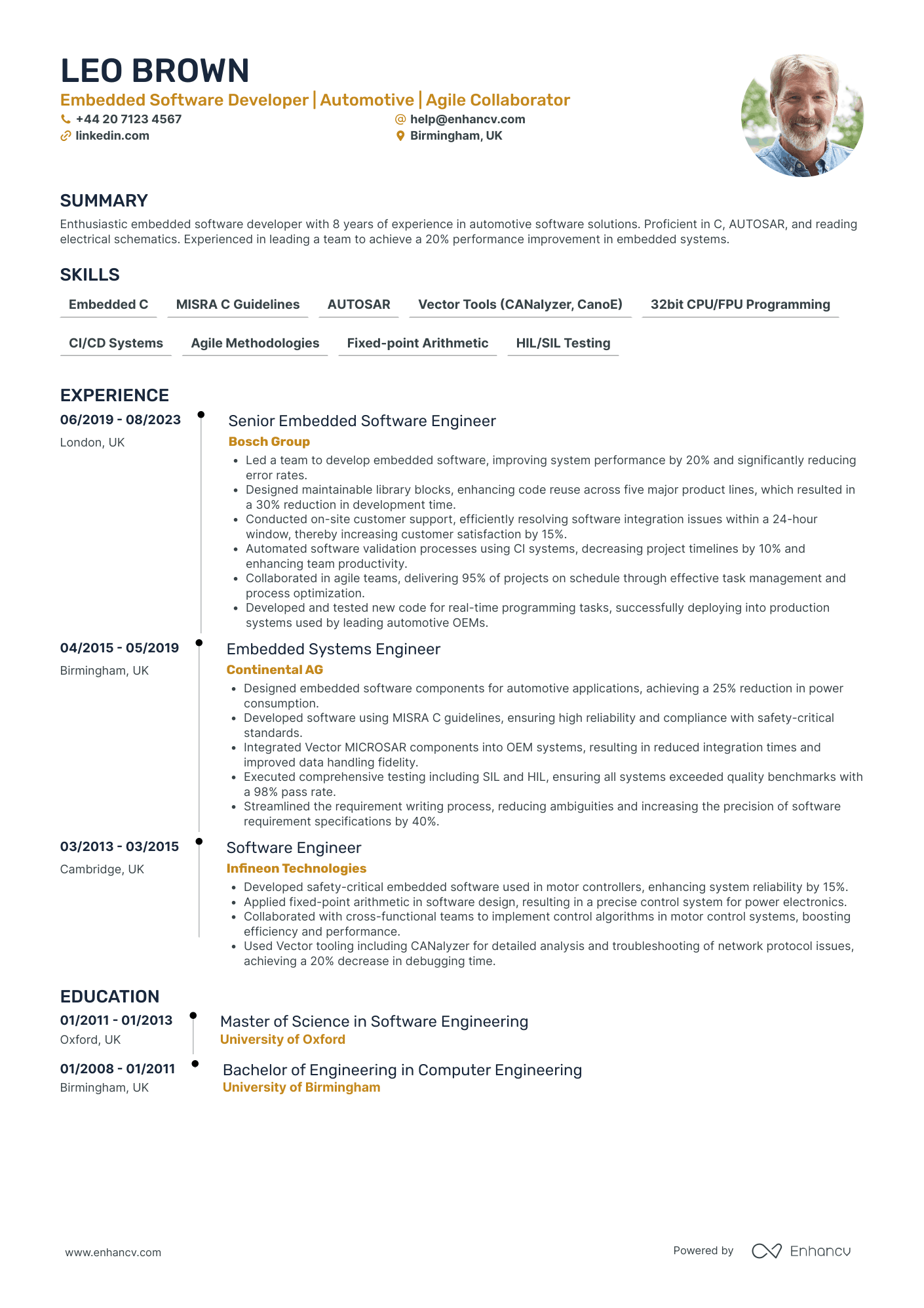
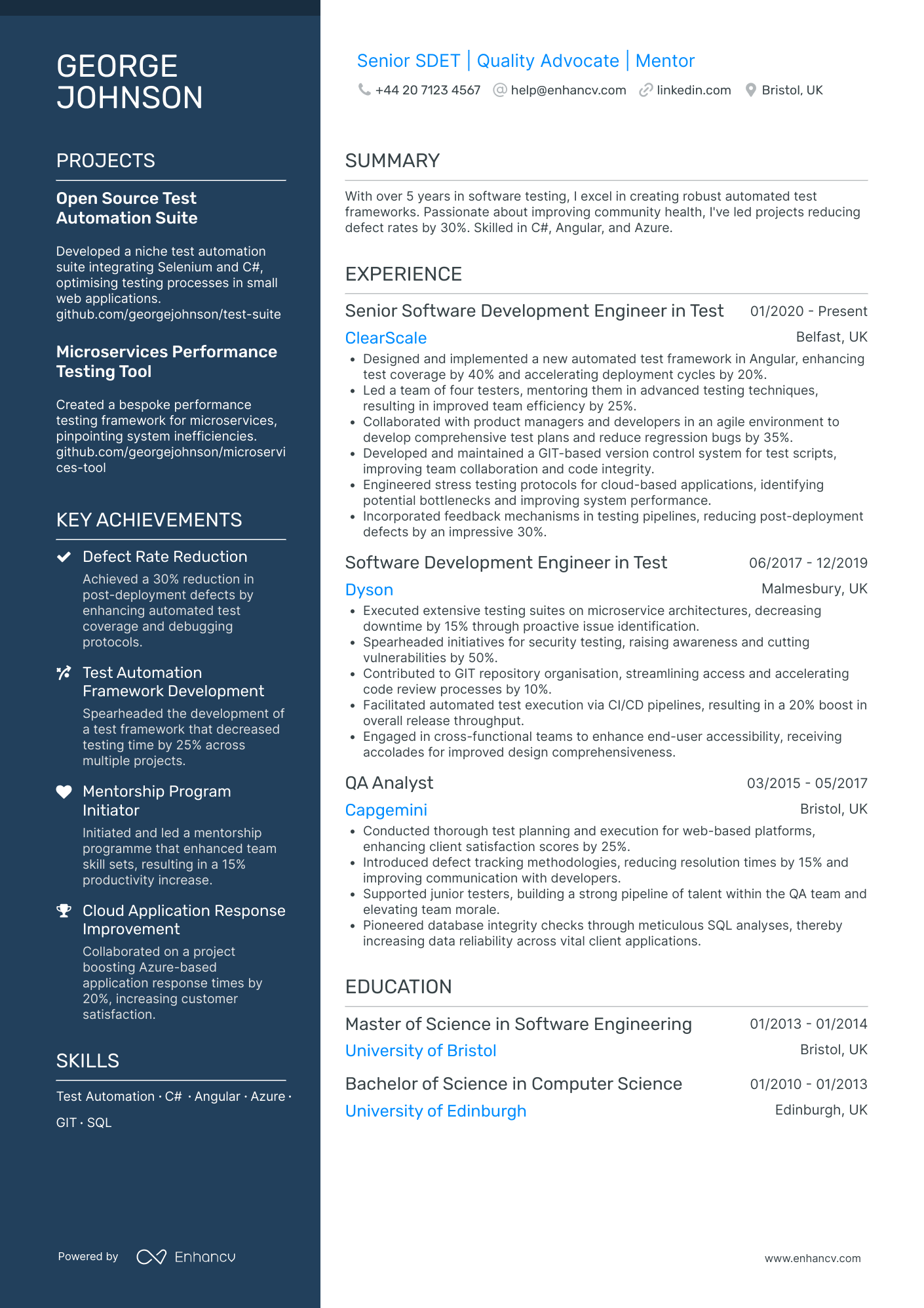
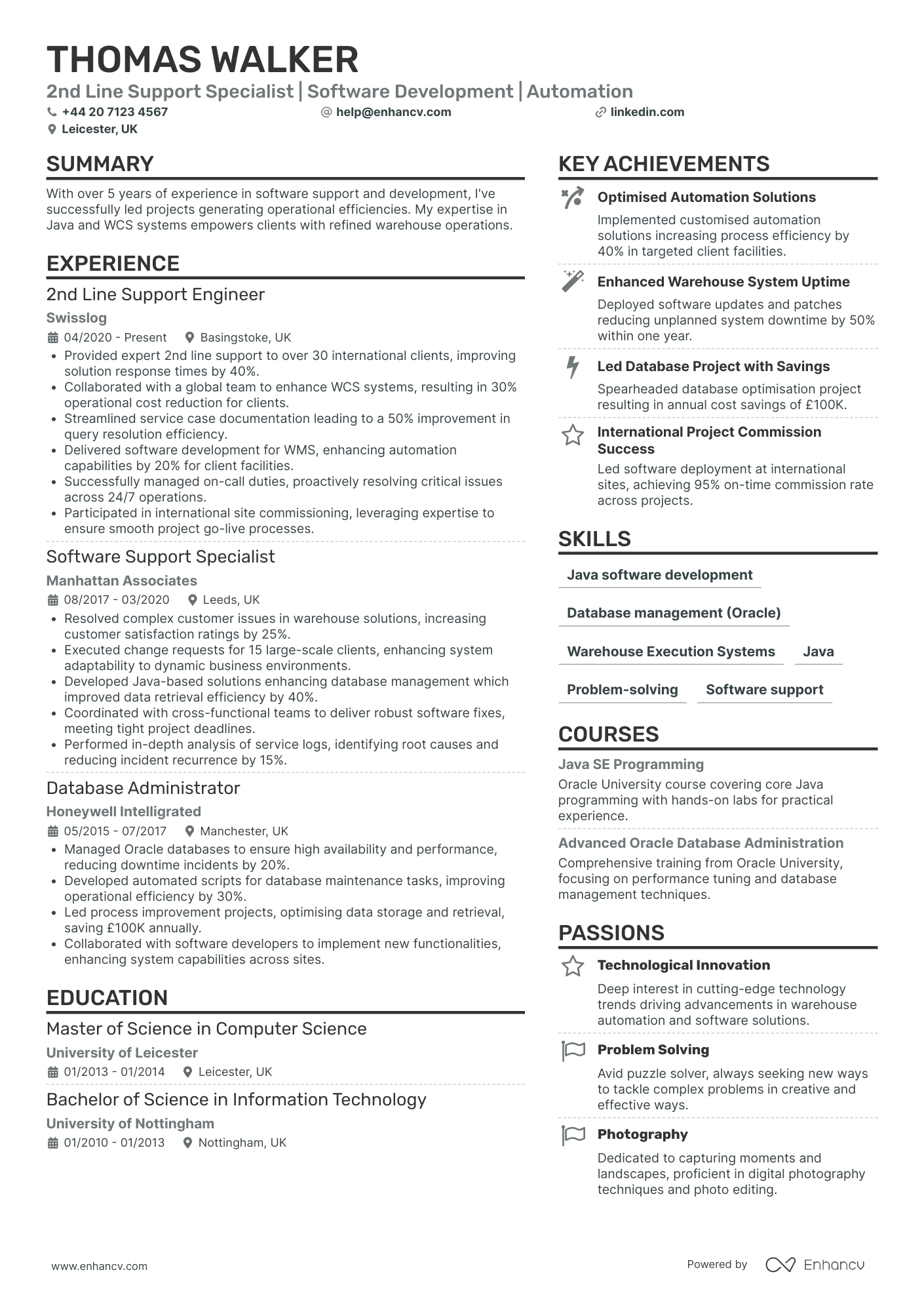
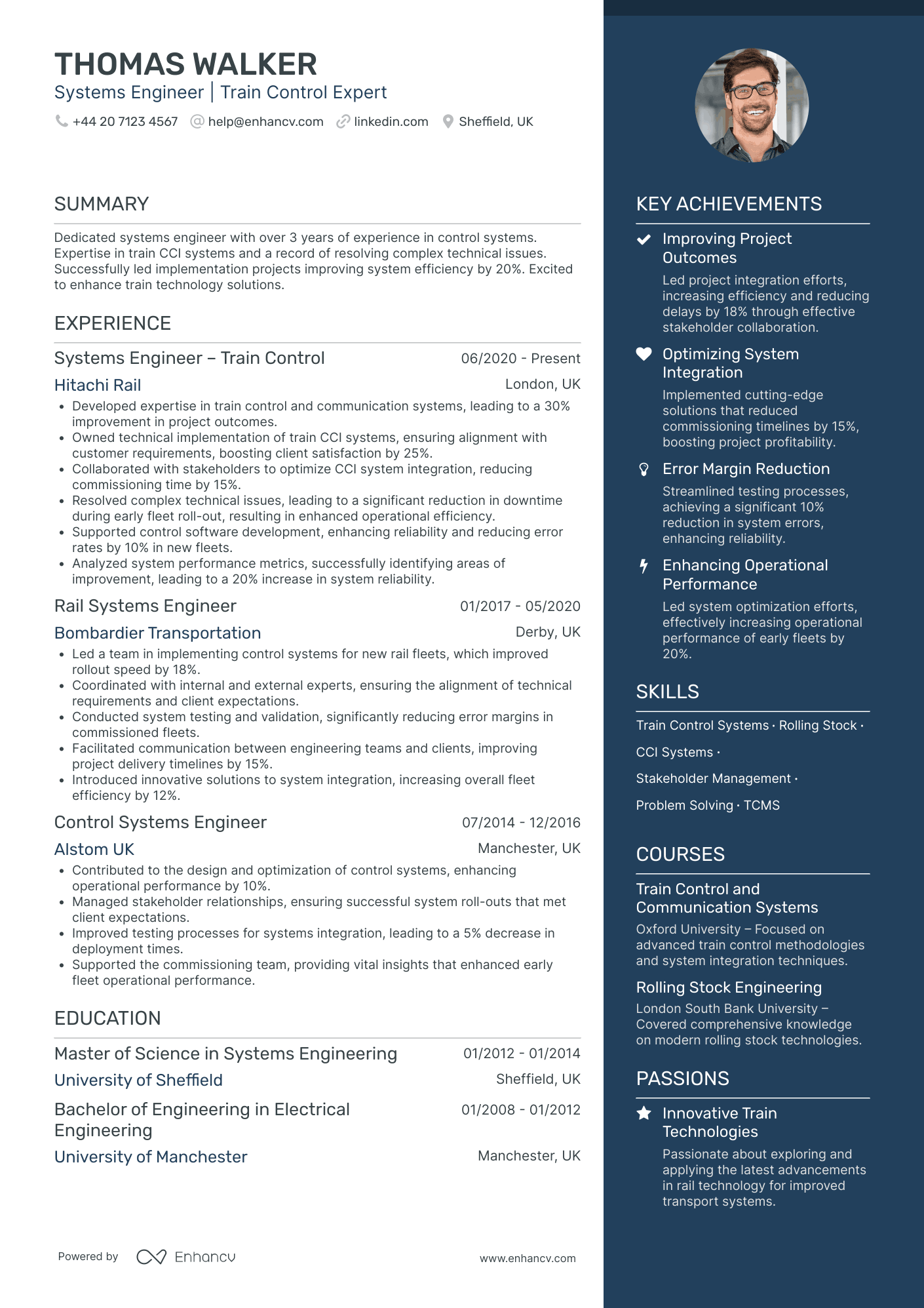
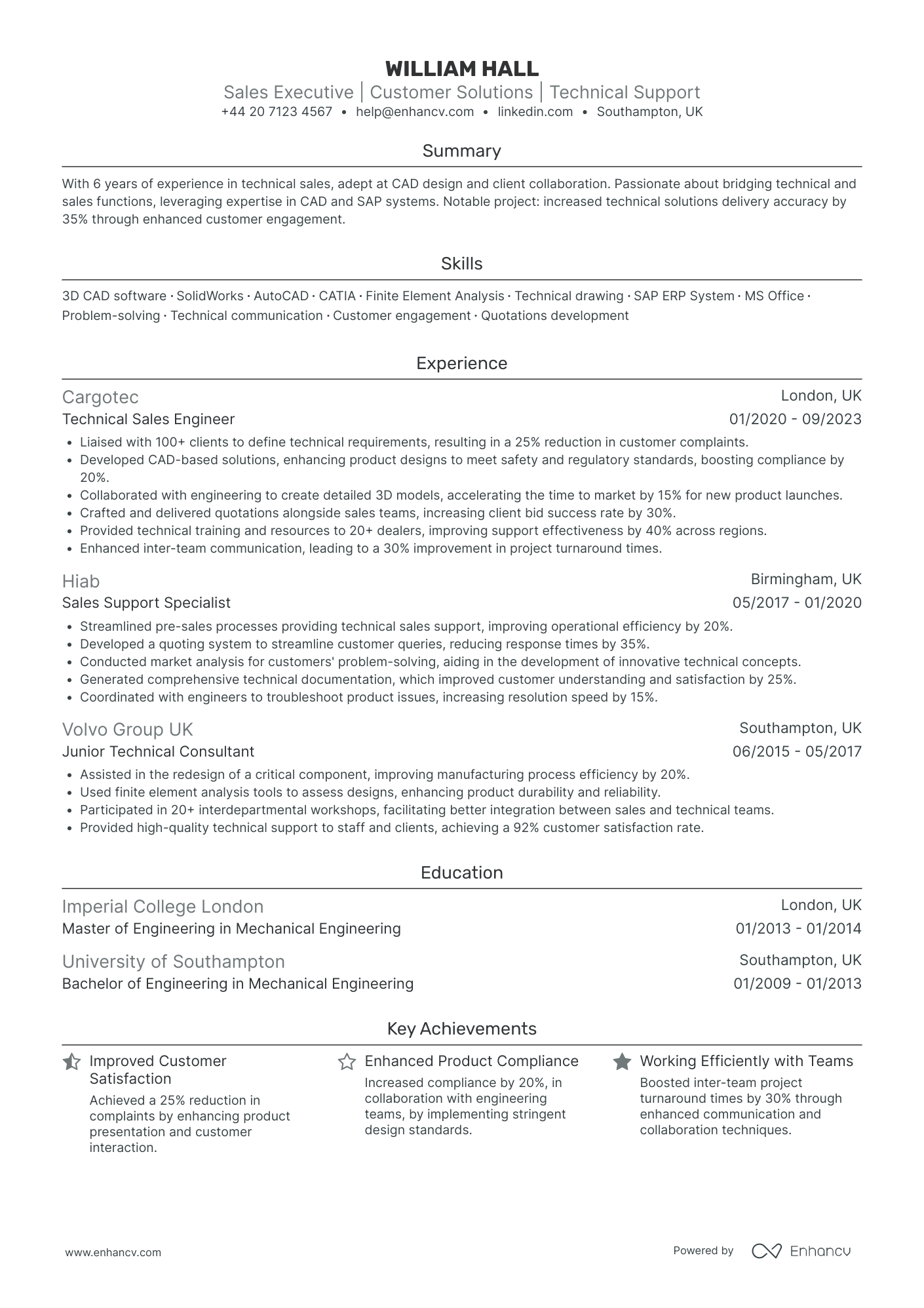
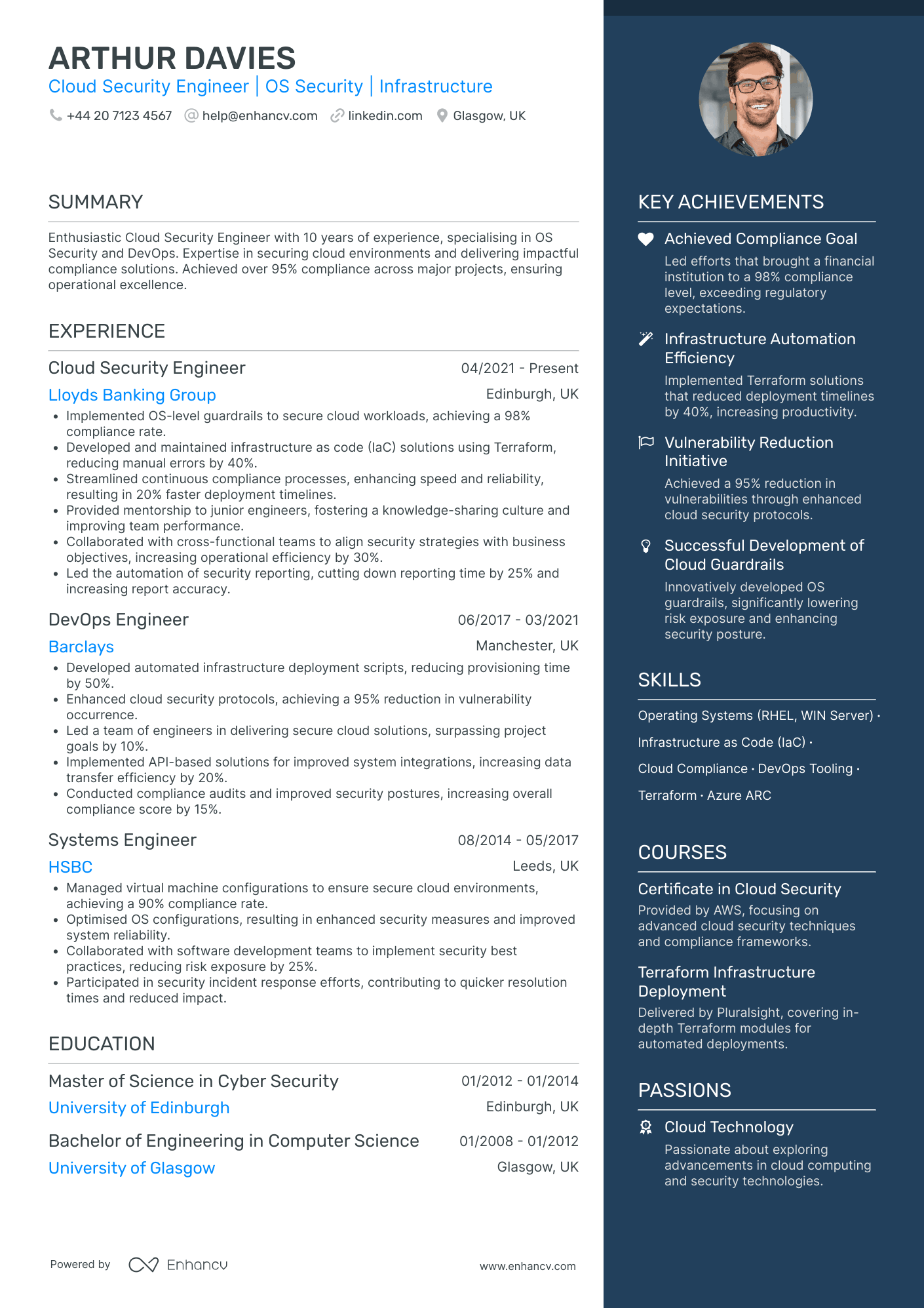
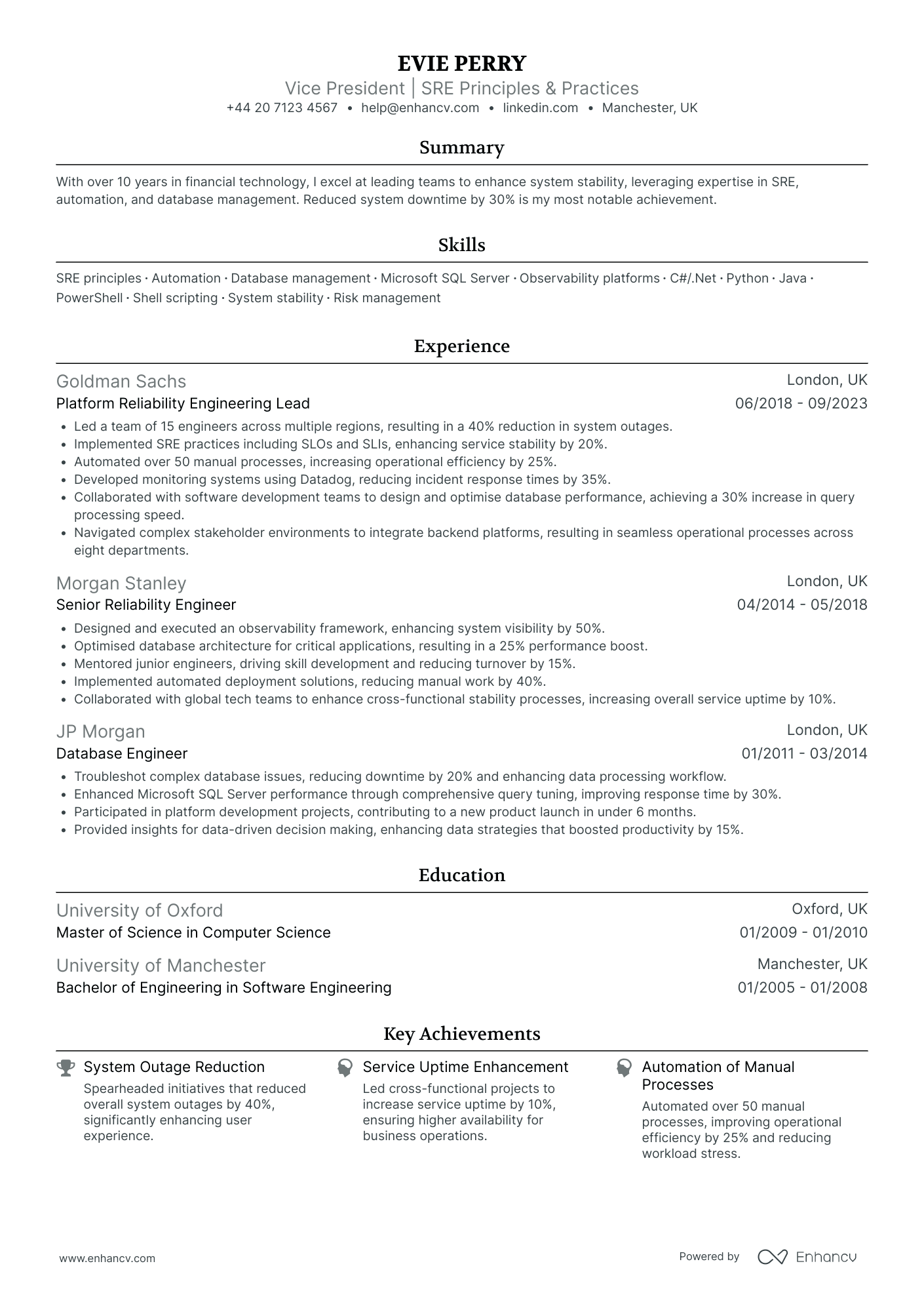
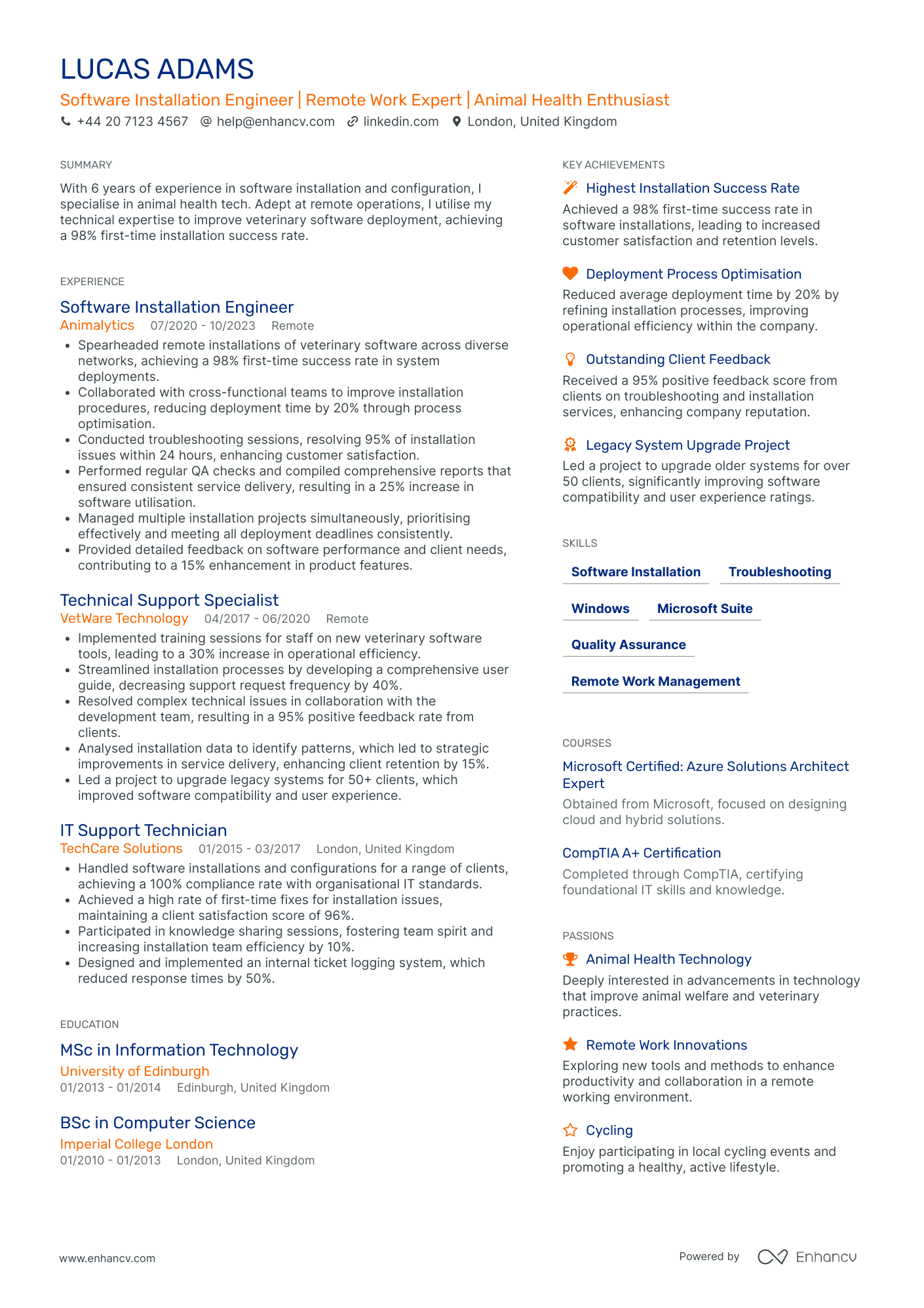
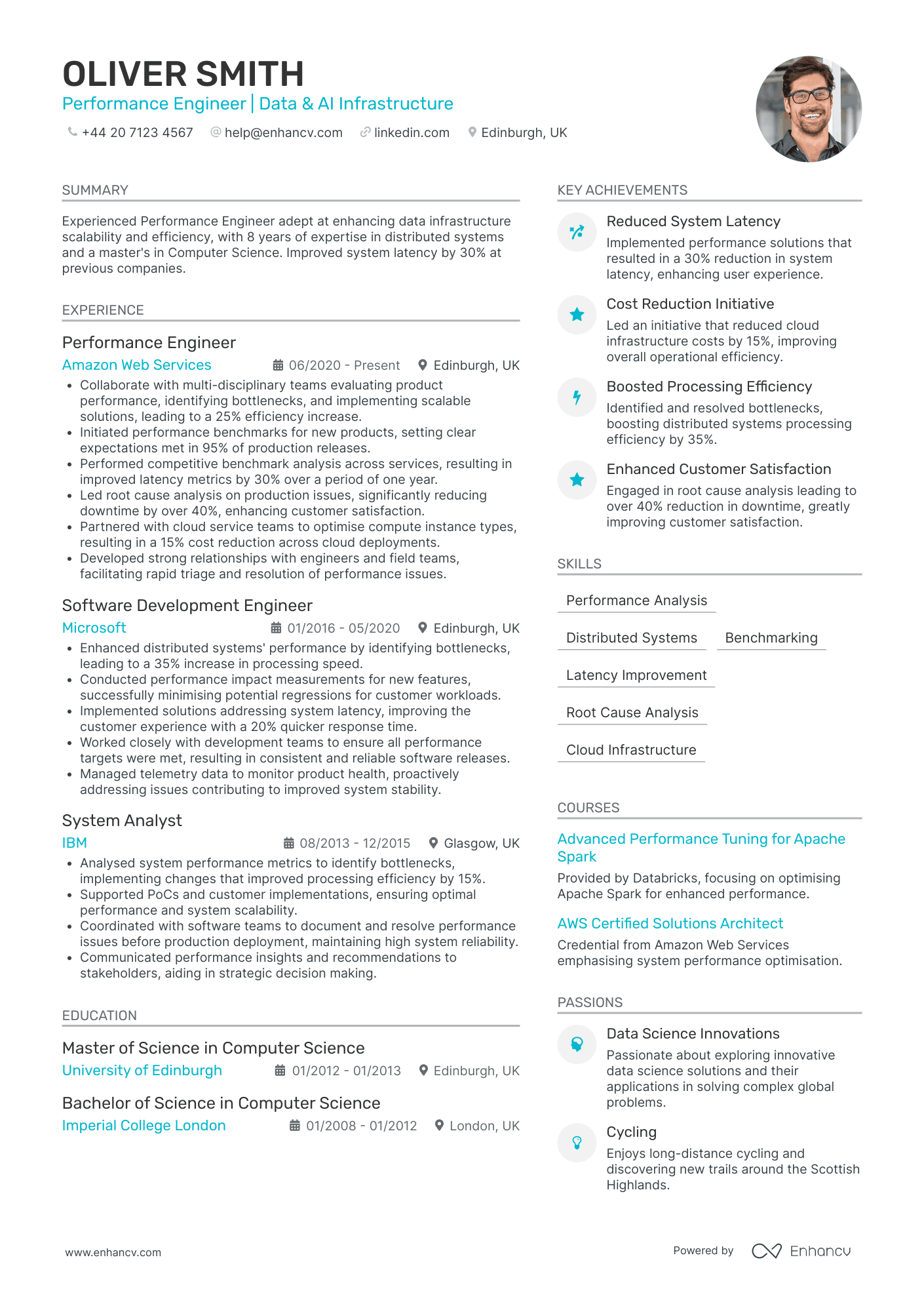
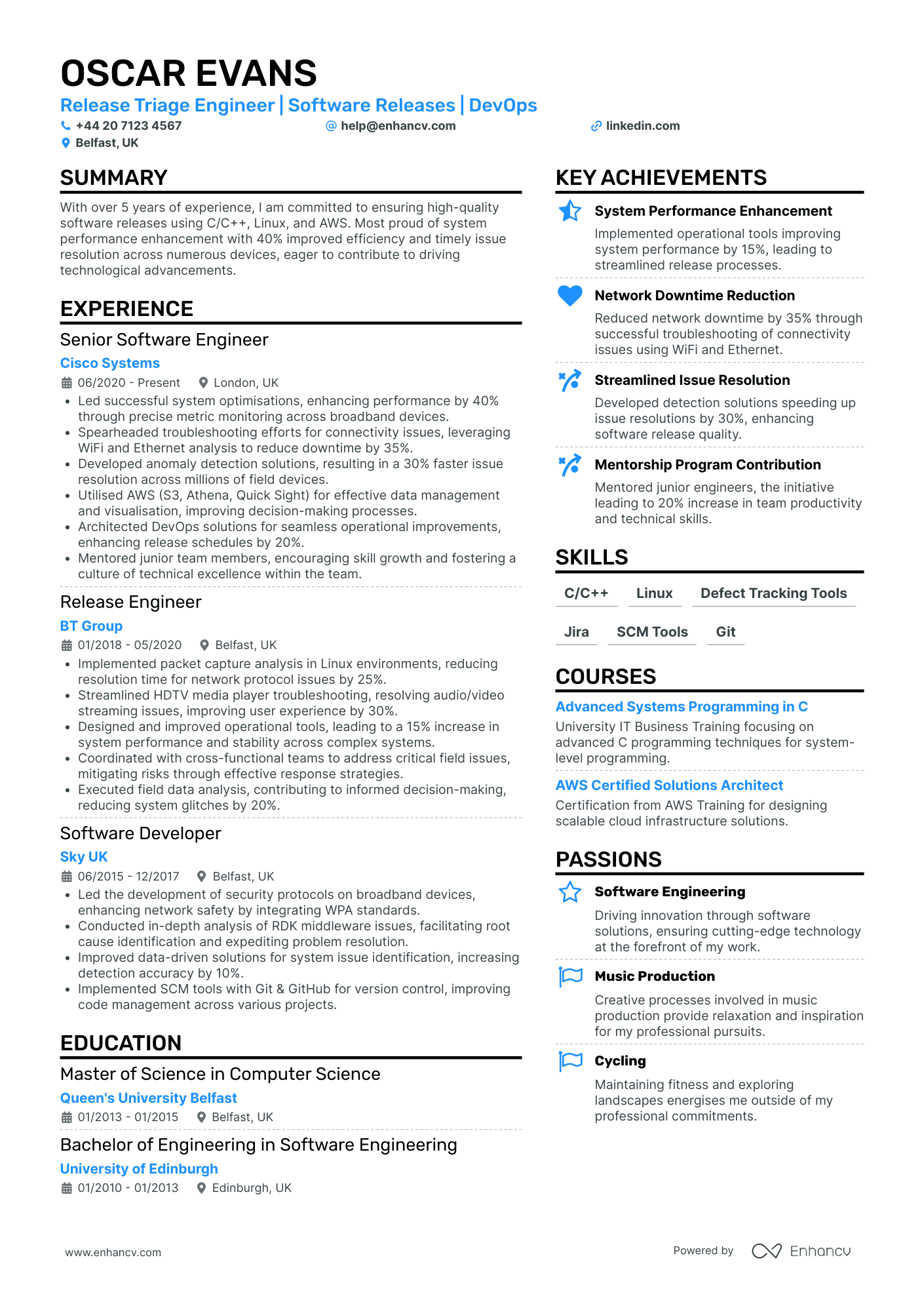
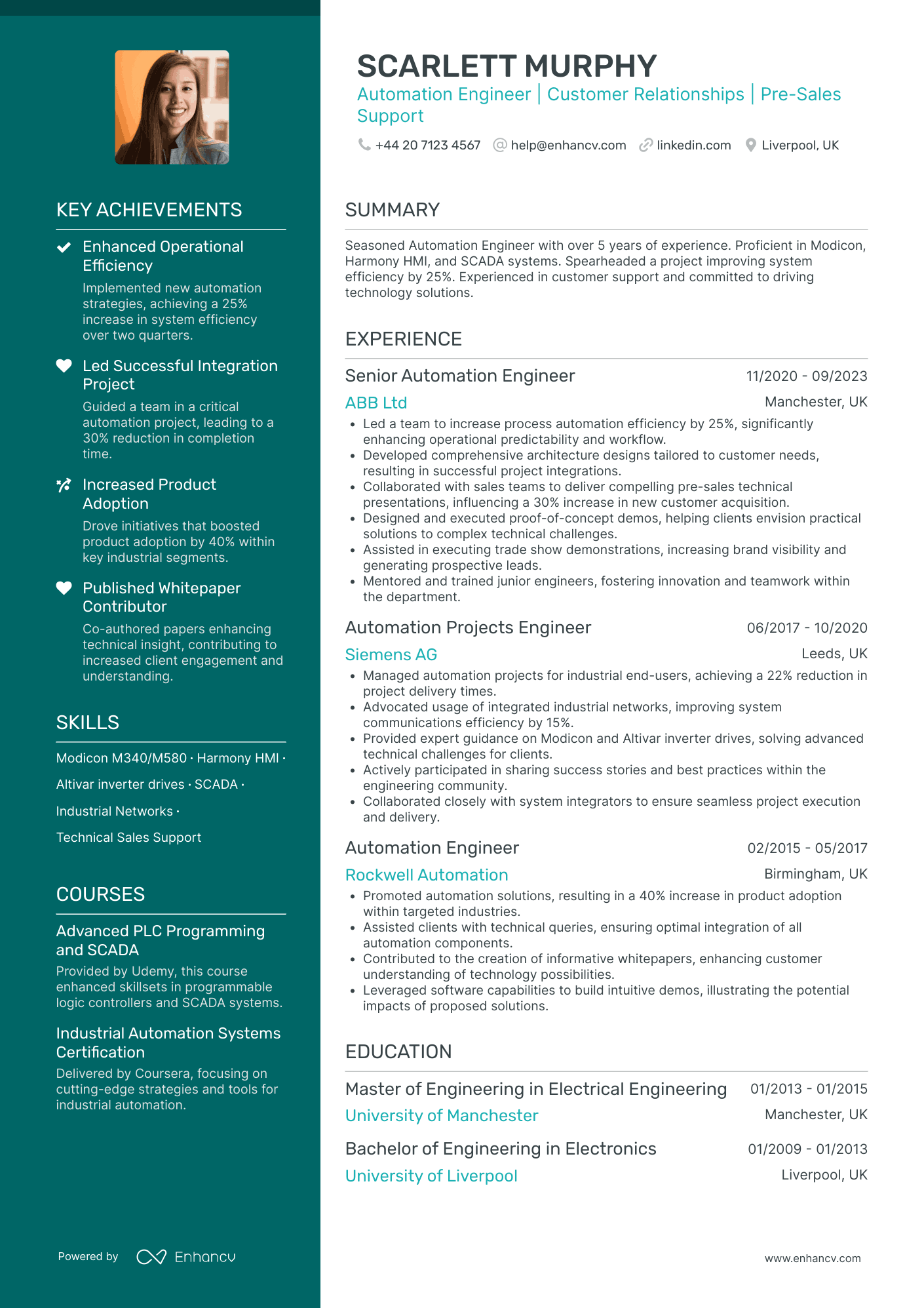
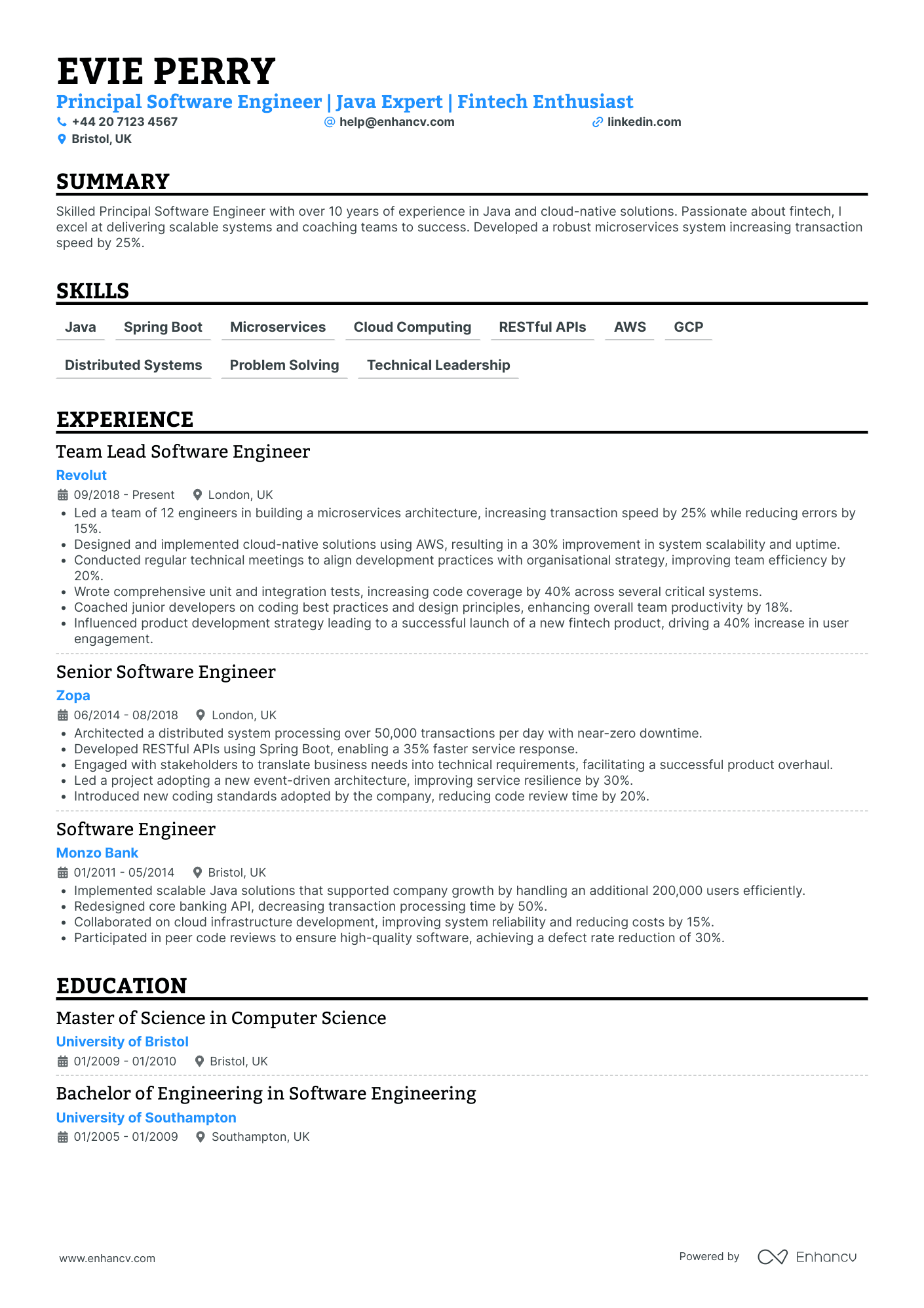
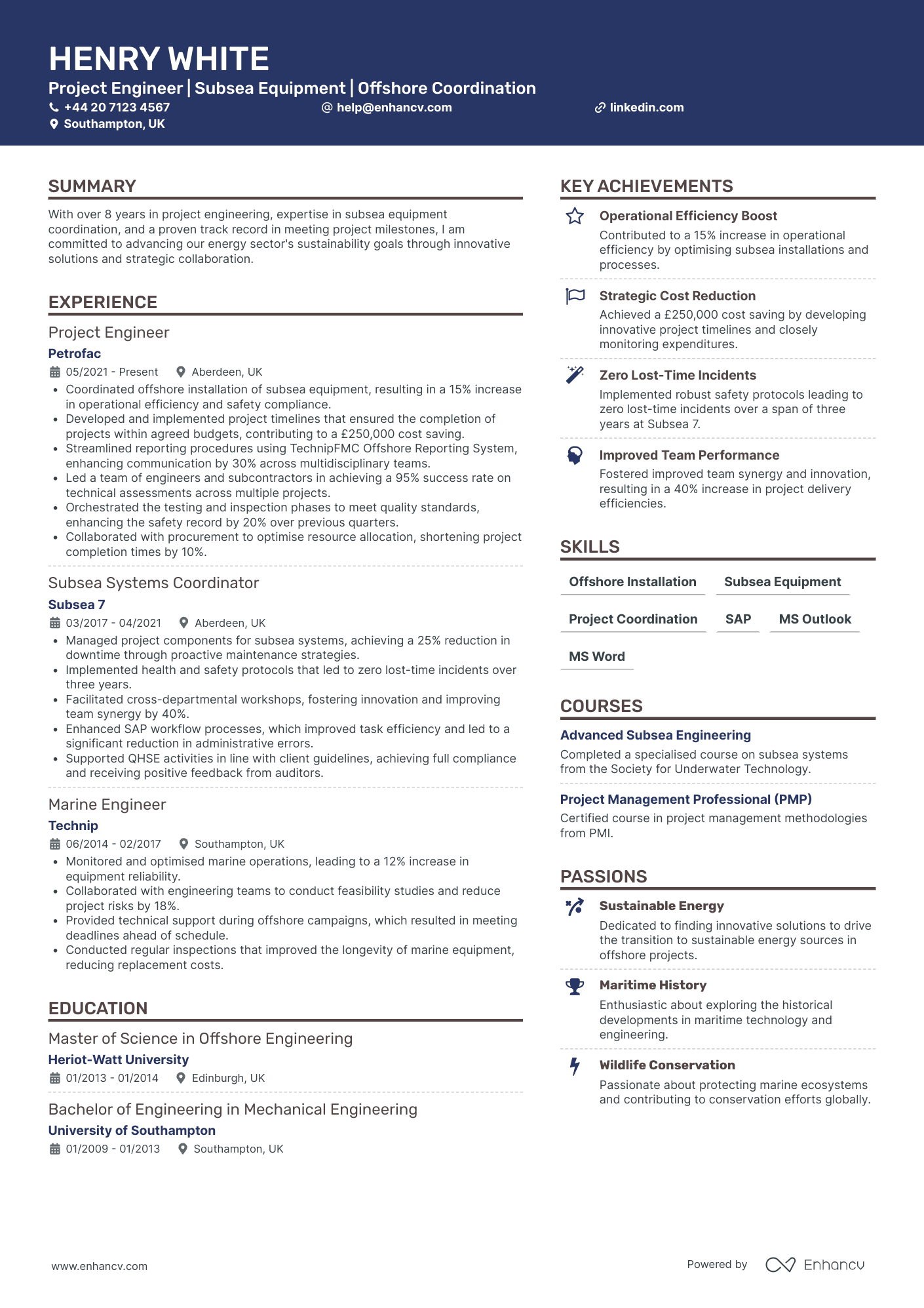
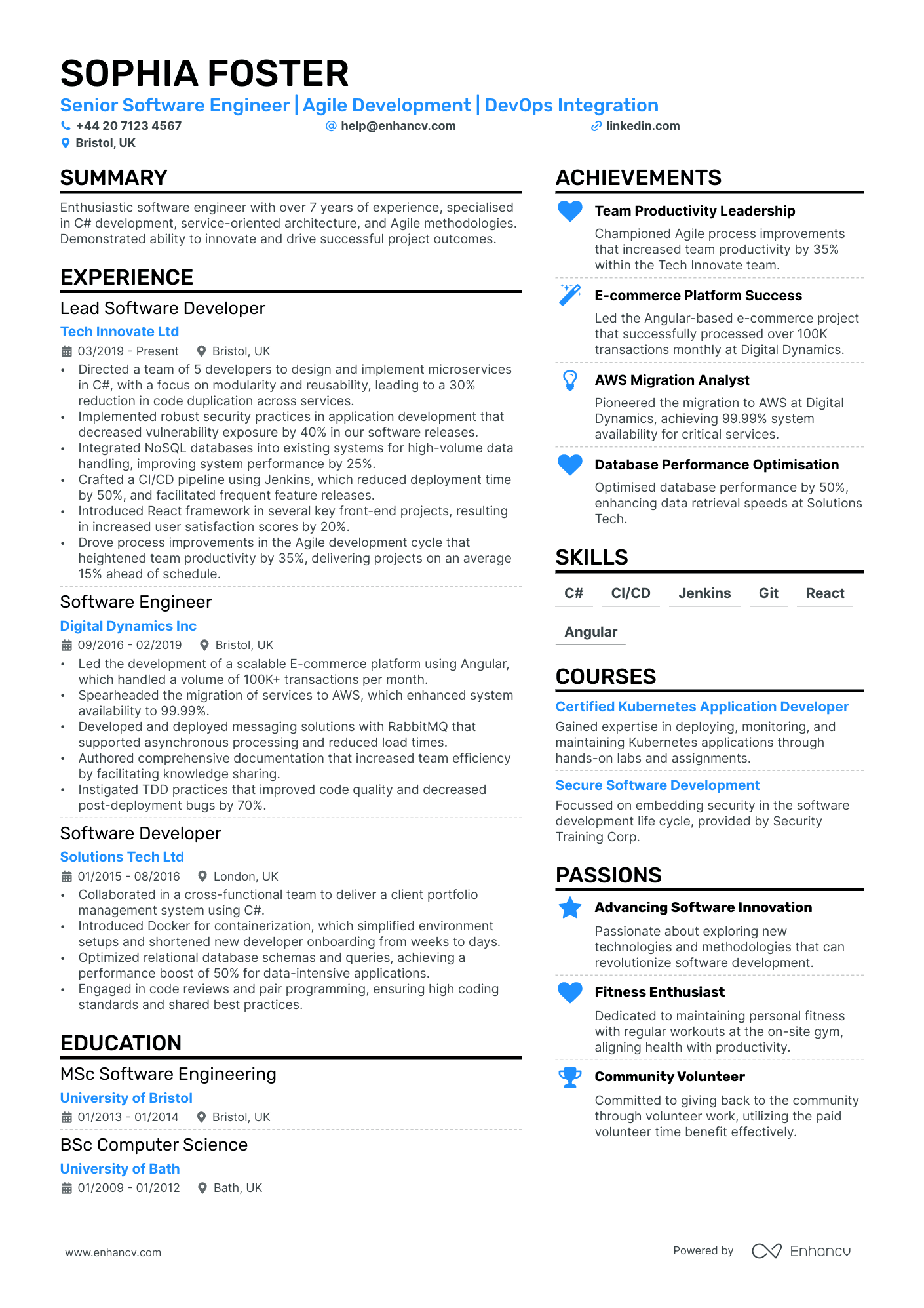
Most UK software engineer roles are pitched at senior or lead level, so the first job your CV has is to prove which rung you actually belong on. Get that wrong and a capable engineer reads as junior, or a mid-level developer gets screened out of a senior brief for claiming ground they cannot defend in an interview.
The CVs that get shortlisted pick a level and back it with evidence: systems owned, people mentored, incidents resolved, and the scope of the decisions they were trusted with. The fundamentals of how to write a CV still apply, but for engineers the seniority signal runs through every section, so that is where this starts.

Key takeaways
- Pitch your CV at one clear level. Senior and lead briefs dominate the UK market, so decide where you sit and prove it rather than leaving a recruiter to guess.
- Scope beats years. Show the systems you owned, the decisions you made, and the engineers you mentored, not just how long you have been writing code.
- Quantify what an engineer can measure: latency cut, uptime held, deployment frequency, users served, and cost saved on infrastructure.
- Name your stack exactly as the adverts do, from the language and framework to the cloud, CI/CD, and container tooling.
- Most UK roles are hybrid, so put your location and any on-site willingness near the top.
- Two pages, reverse chronological, exported as a PDF unless the advert asks for Word.
Matching your CV to your seniority level
Every large employer runs its own levelling ladder, and the labels do not line up. Google runs L3 to L7, Meta uses E3 to E7, and Amazon and Microsoft count Software Engineer I, II, and III. The same number means different things in different buildings.
So the honest answer to 'what is an L1, L2, L3, or L4 developer' is that it depends on the company. As a rough map, L1 and L2 tend to mean junior and mid-level, L3 often means senior, and L4 and above move into staff and principal territory. But at Google, L3 is the entry rung for a new graduate, which is exactly why the number alone tells a recruiter very little.
That also answers the common question of whether 'software engineer 3' is entry level. Usually it is not. At Amazon and Microsoft, a Software Engineer III is an experienced individual contributor, often the senior rung. At Google, L3 is the graduate intake. Read the responsibilities in the advert, not the roman numeral, and match your CV to the scope it describes.
In UK hiring, five practical bands cover almost everything you will see:
- Graduate and junior. You write code under review and learn the codebase. Prove your fundamentals, your degree or projects, and the languages and tools you can already use.
- Mid-level. You ship features on your own and own a component. Show that you take a task from ticket to production without hand-holding.
- Senior. You own systems and the technical decisions behind them. Show the design choices you made, the trade-offs you weighed, the incidents you resolved, and the junior engineers you brought on.
- Lead and principal. You set technical direction and are measured on other people's output. Show the standards you set, the architecture you steered, and the delivery you were accountable for.
- Staff. You solve problems that cross several teams. Show org-wide impact and influence without a management title.
Pin your CV to the band you are targeting, then make every section earn it. A senior CV that lists tasks reads as mid-level, and a mid-level CV that claims architecture it never owned falls apart in the first technical interview.
The clearest signal sits in your job titles and your CV headline. If your title lagged your actual scope, say what you really did, and use a promotion on your CV to show the trajectory. A visible climb from junior to senior is one of the strongest things a hiring manager can see.
What the UK software engineer market looks like
Knowing what employers ask for tells you what to put near the top. Here is where the work happens, the levels they hire at, and the skills the adverts repeat.
| What | UK software engineer roles |
|---|---|
| Where the work happens | Hybrid 49% and on-site 46%, remote just 5% (406 hybrid, 376 on-site, 40 remote of 822 UK postings in the last ~30 days, Enhancv's internal job feed) |
| Experience level asked for | Senior 39%, lead 34%, mid 20%, entry 5%, executive 1% (of 822 postings in the last ~30 days) |
| Most-listed skills | Agile, CI/CD, Java, Python, and AWS |
Three figures in that table should shape your CV.
The market skews senior. Senior and lead briefs together make up nearly three-quarters of postings, mid-level sits behind them, and genuine entry-level roles are scarce at around 5%. Employers are hiring for ownership, so lead with the systems you ran and the calls you made rather than the tickets you closed.
Most roles are hybrid, so a recruiter needs to see you can reach the office when the work calls for it. Put your location and any on-site willingness in the header rather than leaving it to the covering email.
And the skill demand is consistent. Agile, CI/CD, and the core languages show up again and again, so the tooling on your CV should read like the adverts you are answering.
Formatting your software engineer CV
A recruiter spends seconds on the first pass, and engineering applications almost always run through tracking software before a human sees them. A clean format is what gets your work read.
Use a single-column CV layout with standard headings, a readable font, and real white space. Two-column designs and LaTeX templates can look sharp, and the Overleaf and Pragmatic Engineer templates are popular for a reason, but check that yours exports to text a parser can read rather than an image.
Go reverse chronological once you have roles to show, most recent first. It is the strongest of the standard CV formats for an experienced engineer, because it puts your latest and most senior work in front of the reader first.
Keep it to two pages. A recent graduate can manage one, but an engineer with several projects behind them needs the room, and a third page rarely earns its place.
Whatever you send, keep it ATS-friendly. Avoid text inside images, do not build your work history in a table, and write every language, framework, and tool out in full so the parser indexes them cleanly.
Send a PDF for direct applications so the layout holds on any screen, and keep a Word copy for recruitment agencies, which reformat CVs into their own template. If the advert names a file type, follow it exactly.
If you would rather not fight the formatting, Enhancv's CV templates export to a clean, ATS-ready PDF and keep your stack machine-readable, which leaves you free to spend the time on the content that actually wins the interview.
Is your CV good enough?
Drop your CV here or choose a file. PDF & DOCX only. Max 2MB file size.
Writing your software engineer personal statement
Three or four sentences at the top: who you are, your level and specialism, one hard result, and the role you want next. Keep it concrete, and see more personal statement examples if the opening line will not come.
Skip the adjective soup. 'Passionate, hard-working developer with strong problem-solving skills' tells a hiring manager nothing they can check, and it opens half the CVs on their desk.
Lead with evidence instead, a named result and the stack behind it:
Software engineer CV personal statement example (senior)
Senior software engineer with seven years building high-traffic payment systems in Java and Go. Led the migration of a monolith to microservices on AWS and Kubernetes, cutting deployment time from two hours to nine minutes and holding 99.98% uptime through the transition. Comfortable owning a service from design through on-call, and have mentored four engineers to mid-level. Looking to bring backend depth and technical leadership to a senior role in a product team in Manchester.
The version to avoid
Passionate and hard-working software engineer with excellent problem-solving skills and a keen eye for detail. Proficient in a range of programming languages and frameworks. A motivated team player looking for an exciting opportunity to grow at a forward-thinking tech company.
The second version names no system, no number, and no technology a recruiter can search for. 'A range of programming languages' should be Java, Python, or Go by name, and every adjective in it is a claim nobody can verify.
The good example also signals its level in the first line and proves it in the second. That is the whole game for a seniority-led CV: state the band, then evidence it before a recruiter has to ask.
When we review a software engineer CV, we are reading for scope before syntax. 'Worked on the checkout service' tells us nothing. 'Owned the checkout service through Black Friday and kept it under 200ms at peak' tells us the level you operate at and the pressure you can hold. Name the stack, put a number on the outcome, and be honest about what you owned versus what you touched. Engineers who inflate their scope get found out in the first system-design round.
the Enhancv team
Writing your software engineer experience section
Write each role the same way: a dated heading with the employer, then bullets that show what you built and what changed. Lead every bullet with a verb, and treat this as the core of your work experience on a CV.
Software work is measurable, so quantify it. Latency cut, uptime held, deployment frequency, users served, and infrastructure cost saved are your CV achievements, not the fact that you attended stand-ups.
Tailor each application to the advert, pulling the languages and tools it names and mirroring the ones that are true of you. Enhancv's CV tailoring feature reads the job description and suggests the matching edits, which saves rewriting from scratch for every role. For the manual version, learn how to tailor your CV to each brief.
- Redesigned the checkout service from a monolith to Go microservices on AWS, cutting p95 latency by 40% and holding 99.98% uptime across the migration
- Introduced a CI/CD pipeline in GitHub Actions that took deployments from twice a week to more than 20 a day, with automated rollback on failed health checks
- Cut cloud spend by roughly £90,000 a year by right-sizing Kubernetes workloads and moving batch jobs to spot instances
- Owned the on-call rota for three services and reduced Sev-1 incidents by 55% over 12 months through better alerting and clearer runbooks
- Mentored four engineers to mid-level and ran the team's design-review process, raising test coverage from 61% to 88%

PRO TIP
Mirror the advert's exact terms. If it asks for 'CI/CD', write 'CI/CD', not 'automated deployments'. If it names Kubernetes, do not list 'containers' and hope. Recruiters and the ATS both search for the specific string, so match it wherever it is genuinely true of you.
Skills to put on a software engineer CV
Read a dozen live adverts and the same demands repeat. Across UK software engineer postings on Enhancv's internal job feed in the last ~30 days, Agile, CI/CD, and Java recur most often, alongside Python, AWS, Kubernetes, Git, and Docker.
Those are your hard skills, and they belong in the words the adverts use. List the languages and tools by name rather than a vague 'programming', and put the skills section of a CV where a skimming recruiter will find it fast.
The soft skills that count here are checkable: communication, collaboration in an Agile team, mentoring, and the ownership that senior roles are built on. Prove each one in an experience bullet rather than just claiming it.
List only what you can stand behind in an interview. If you have shipped production code in a language, say so. If you have only touched it in a side project, keep it honest and keep it lower down.
Top skills for your software engineer CV:
Java, Python, and Go
Agile and Scrum
CI/CD (GitHub Actions, Jenkins)
AWS and cloud architecture
Kubernetes and Docker
Git and version control
System design and microservices
Automated testing
Communication
Collaboration
Mentoring
Problem-solving
Ownership
Education and certifications for a software engineer CV
List your degree with its classification, for example a 2:1 BSc in Computer Science, and put your strongest modules or final-year project underneath if you are early in your career. This is your education section, and for a graduate it does real work.
Experience outweighs formal study once you have shipped real systems, so a senior CV can keep education to a couple of lines. Plenty of strong UK engineers are self-taught or came through a bootcamp, and that is no weakness if the work backs it up.
Certifications carry weight where they match the stack. An AWS, Azure, or Kubernetes (CKA) certificate signals verified cloud skill, so list these qualifications where they are current and relevant to the role.
Keep short courses and certificates in a tidy block below education, and drop the ones that no longer add anything. A hiring manager wants the credentials that prove current skill, not a list of every tutorial you have finished.
Software engineer CV with no experience
A career-changer or new graduate CV carries its weight differently. Lead with your projects, your degree or bootcamp, and any placement, then let a thin employment history sit lower down. These are the same moves behind any strong first job CV.
Treat real projects like jobs. A deployed side project, an open-source contribution, or a full-stack app with users all show applied engineering, so give each a dated heading with the stack, your role, and a link to the repository or the live site.
Your GitHub is your portfolio at this stage, so make it presentable and link it in the header. A recruiter would rather read clean, committed code than another paragraph of ambition.
Name the tools you learned on. A language, a framework, Git, and a cloud free tier from coursework are real skills, and an employer who will train you on the job still wants to see you can open the tools on day one.
Conclusion
Decide the level you are aiming at, then prove it in every section with the systems you owned, the decisions you made, and the numbers behind them.
Pair the CV with a short cover letter that explains why this role and this team, and a clear, evidence-led CV turns into interviews.

Author's take - the Enhancv team
When we review a software engineer CV, we are reading for scope before syntax. 'Worked on the checkout service' tells us nothing. 'Owned the checkout service through Black Friday and kept it under 200ms at peak' tells us the level you operate at and the pressure you can hold. Name the stack, put a number on the outcome, and be honest about what you owned versus what you touched. Engineers who inflate their scope get found out in the first system-design round.