



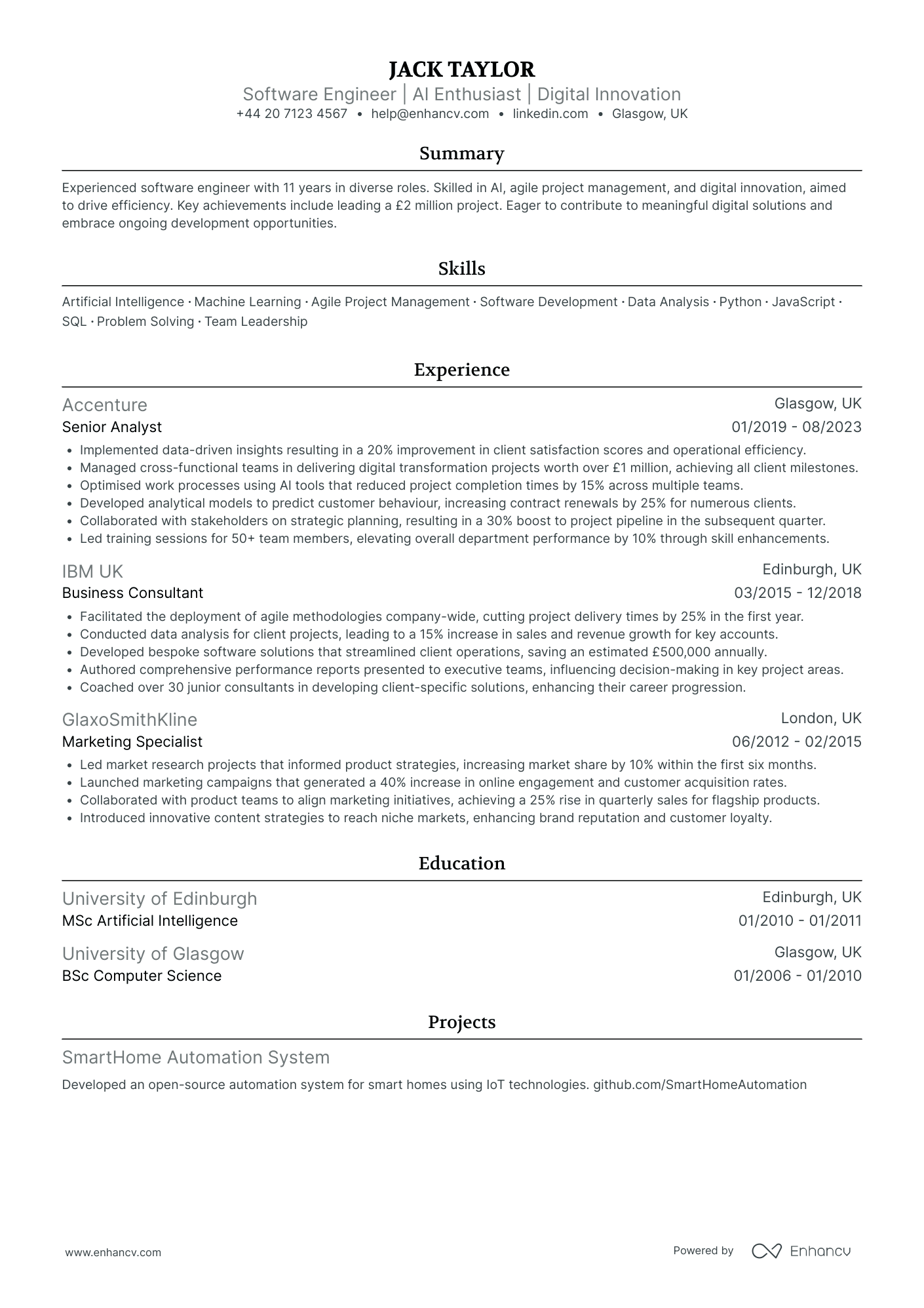
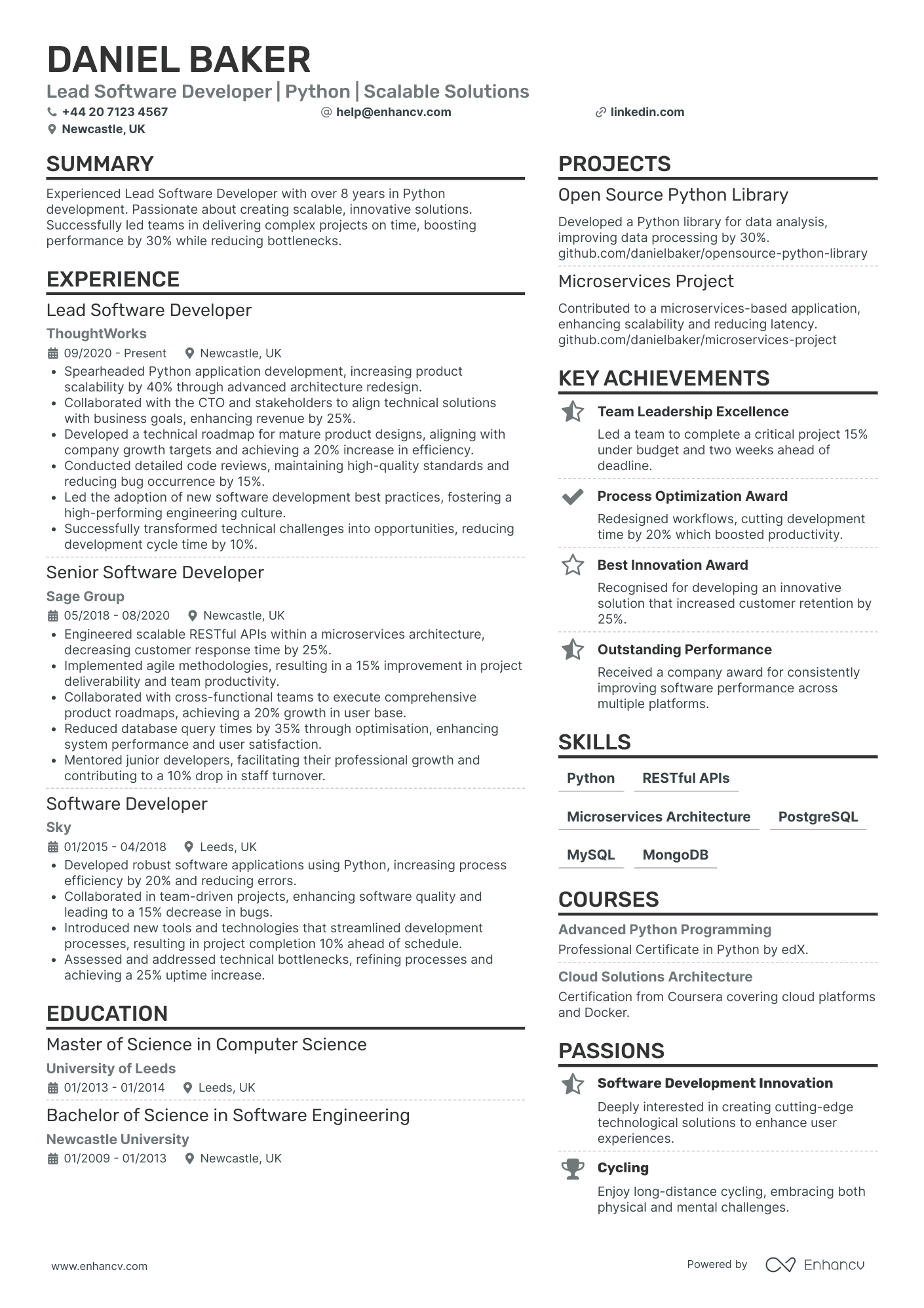
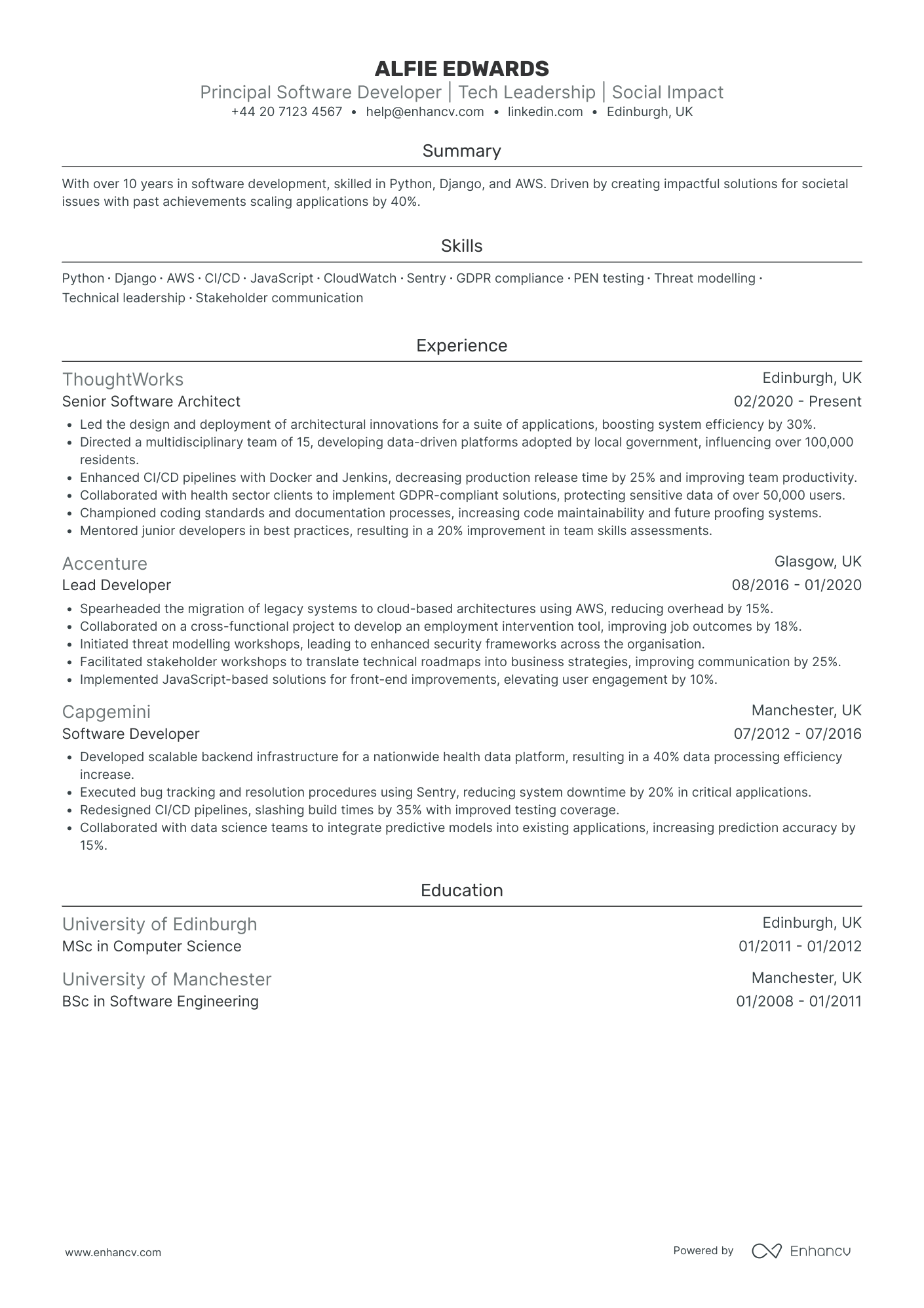
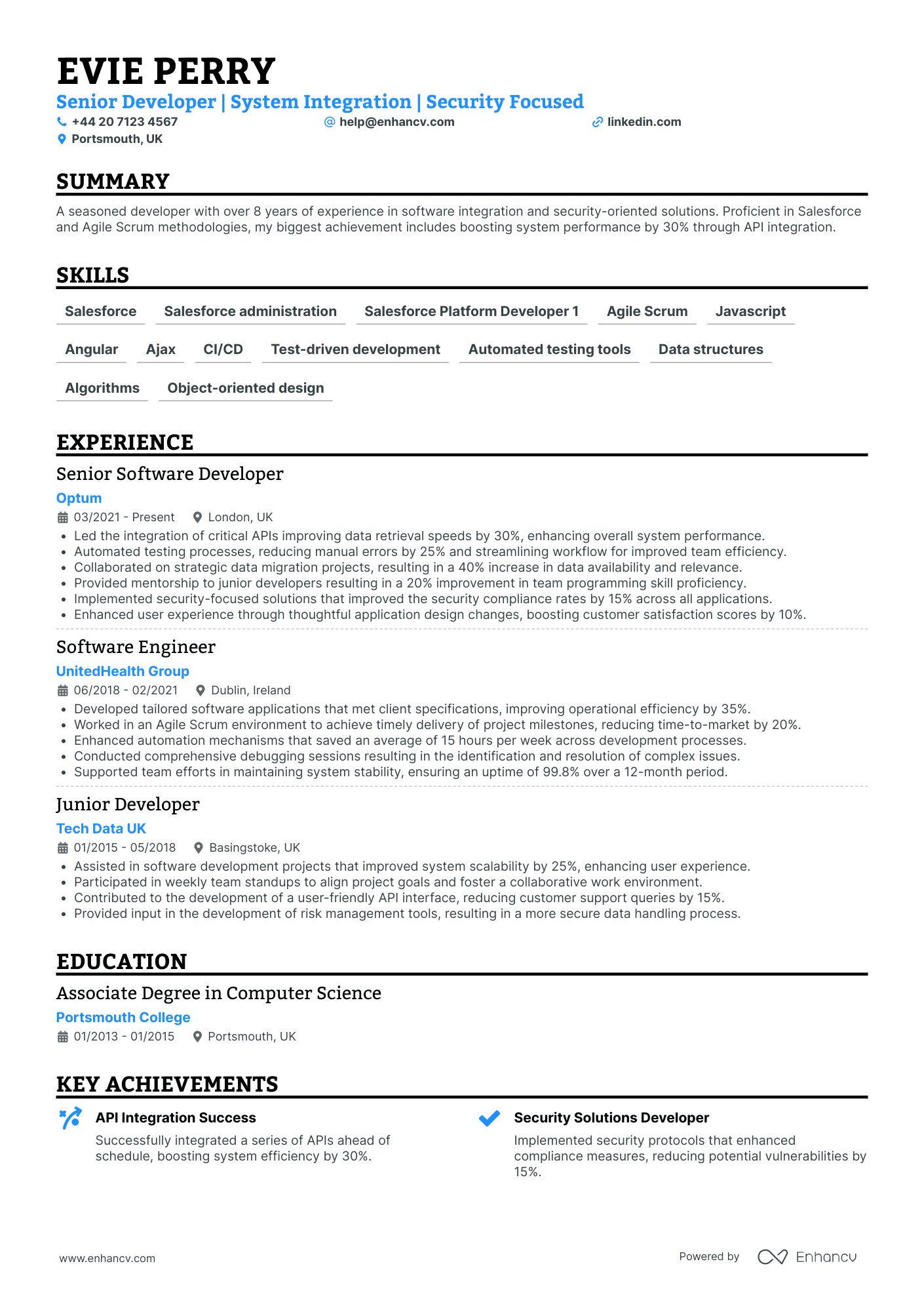
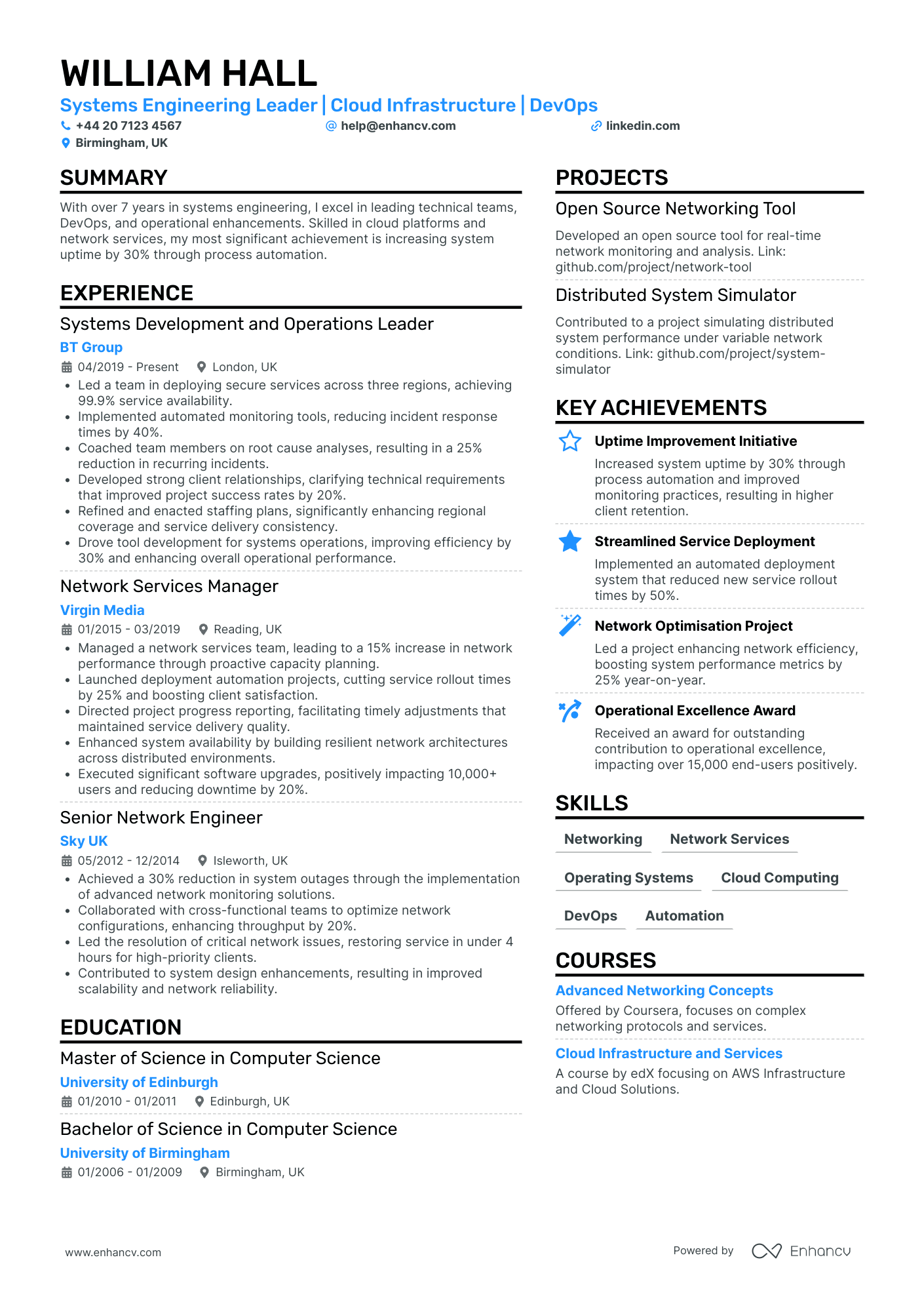
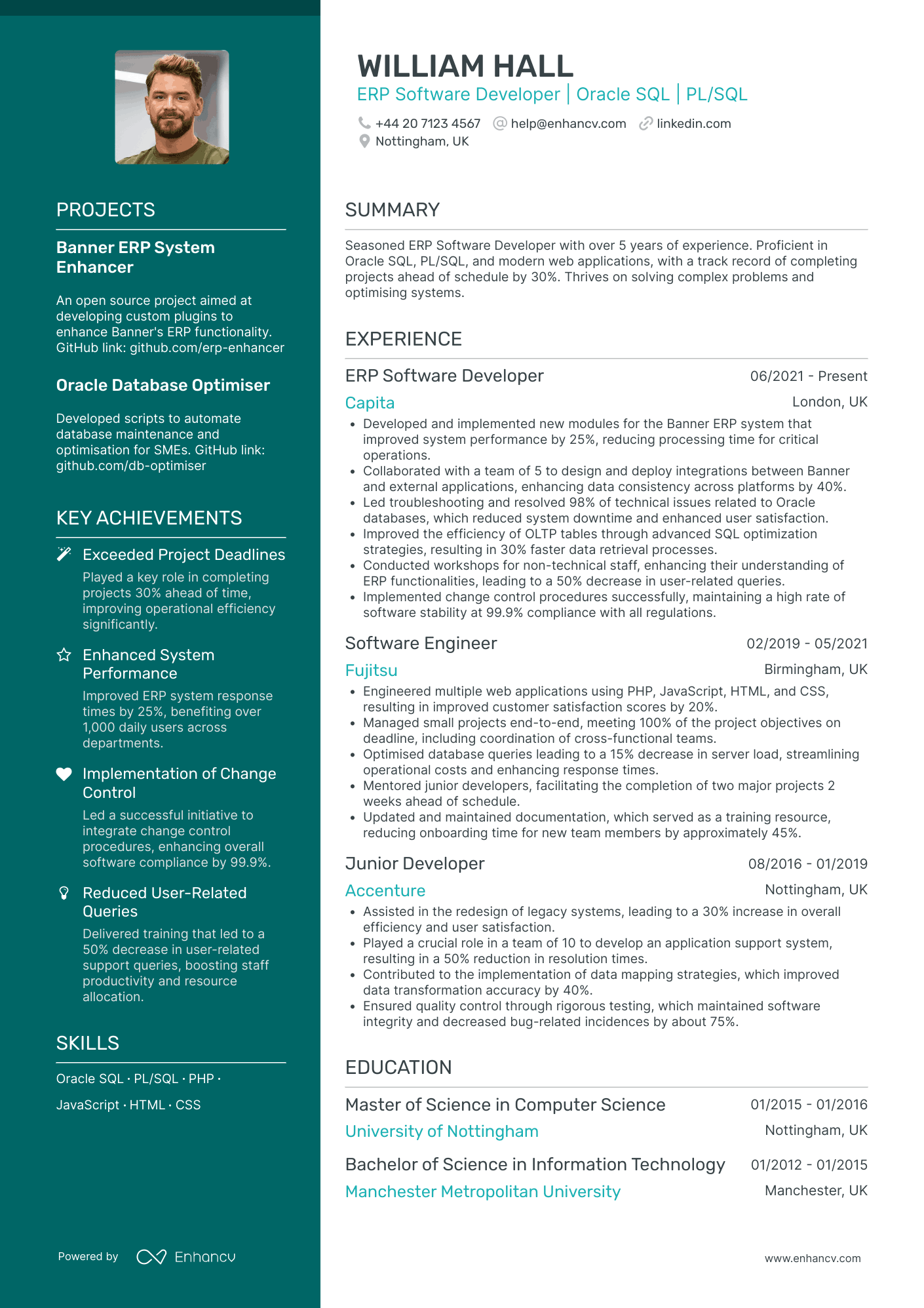
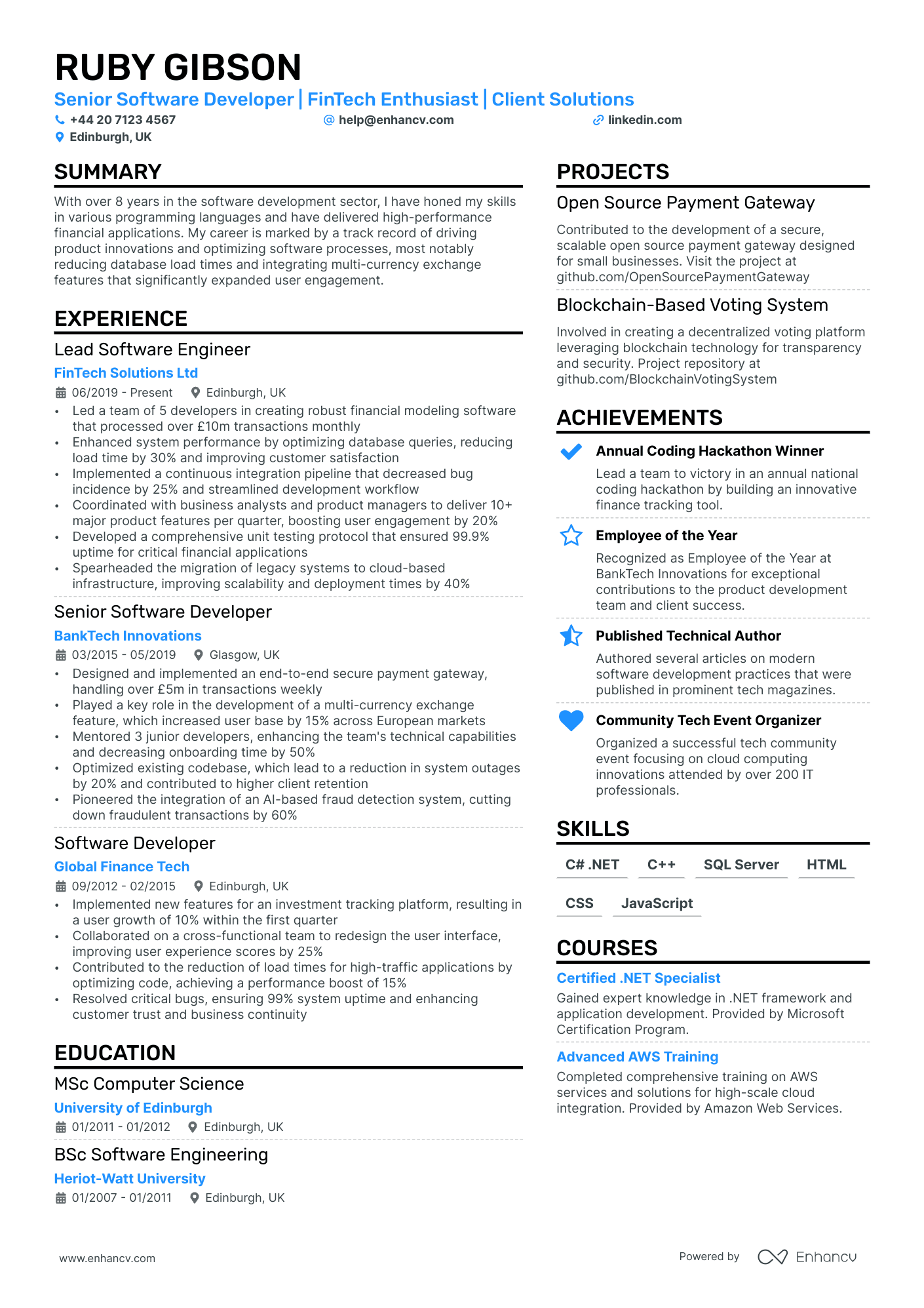
Most software developer CVs read like a tech stack with a name printed at the top. The ones that earn an interview prove what the candidate shipped, and how it held up once real users touched it.
Format does a surprising amount of that work. A clean, machine-readable layout in the right file type puts your strongest evidence where a busy engineer or recruiter will actually read it, and a strong project buried under a wall of keywords never gets seen. If you want the fundamentals first, see how to write a CV.

Key takeaways
- Lead with a clean, one-column layout and send a PDF, so your formatting survives every screen and tracking system.
- Two pages is the UK norm for an experienced developer, one page if you are early in your career.
- Put a working GitHub or portfolio link in the header, not buried at the bottom.
- Mirror the stack and methods the advert names. Agile, Python, CI/CD, Git, and SQL recur most often in UK postings.
- Quantify every bullet you can: latency cut, users served, deploys shipped, tests added.
- A personal statement built on one concrete, shipped result beats a paragraph of adjectives.
Formatting your software developer CV
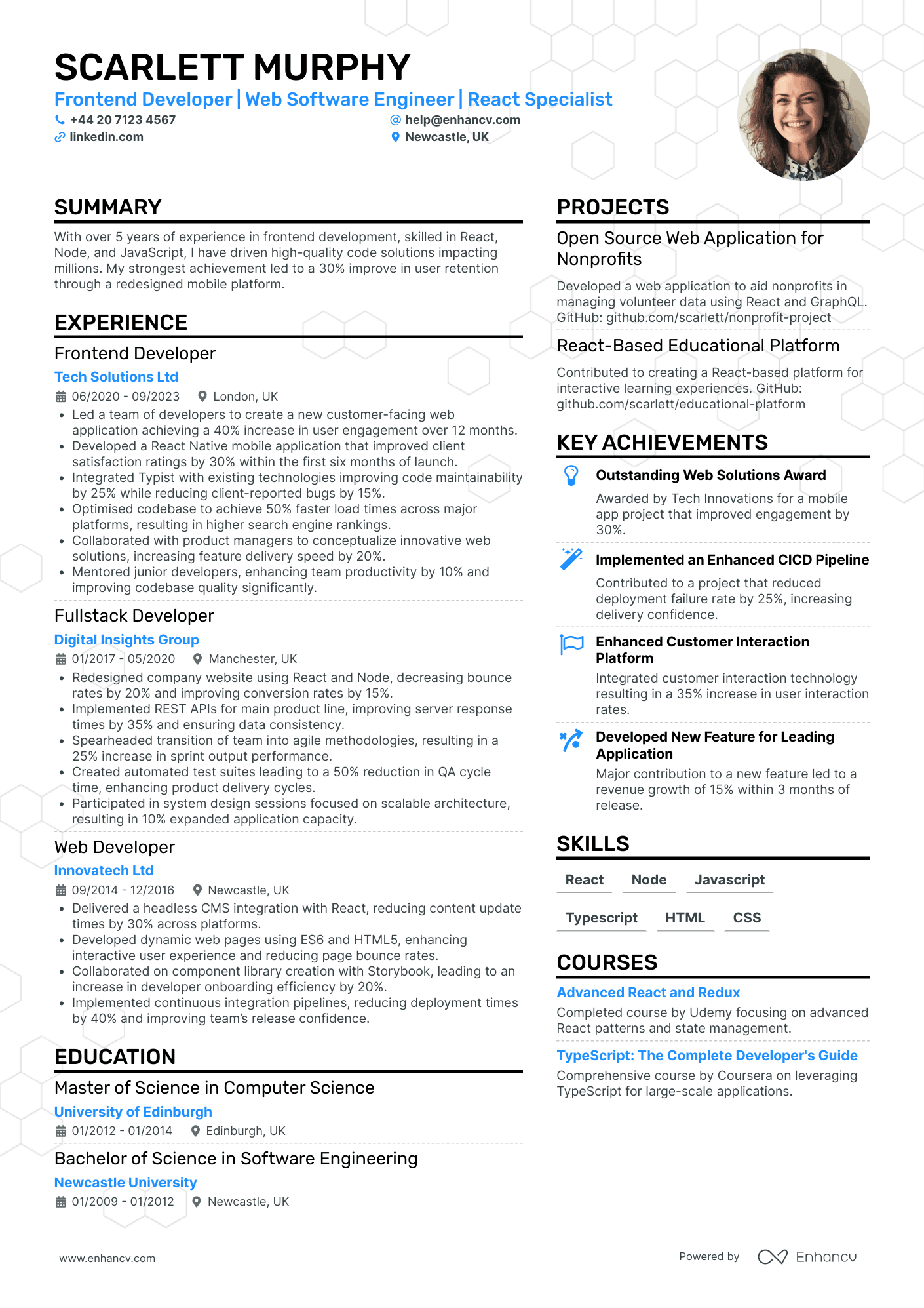
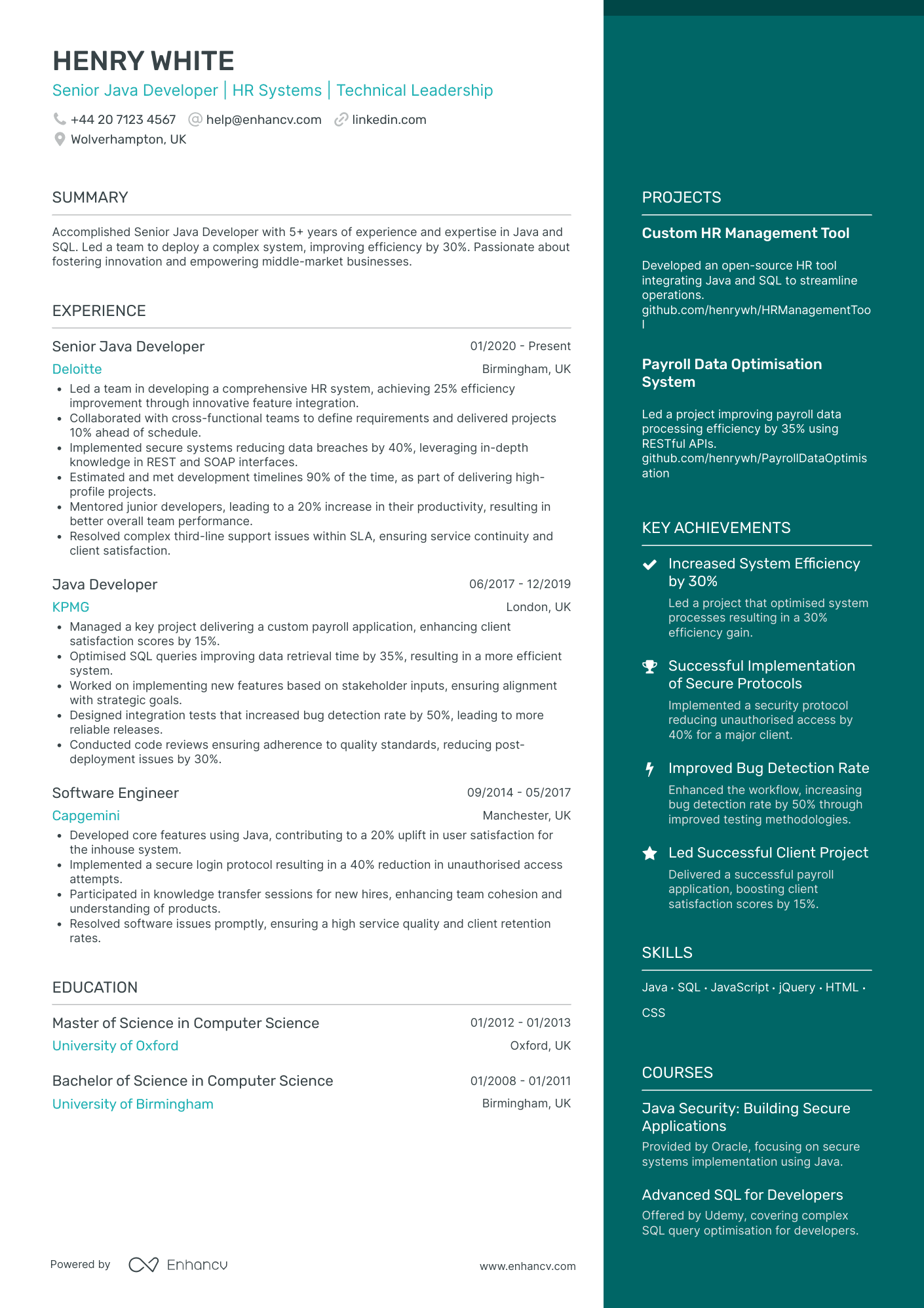
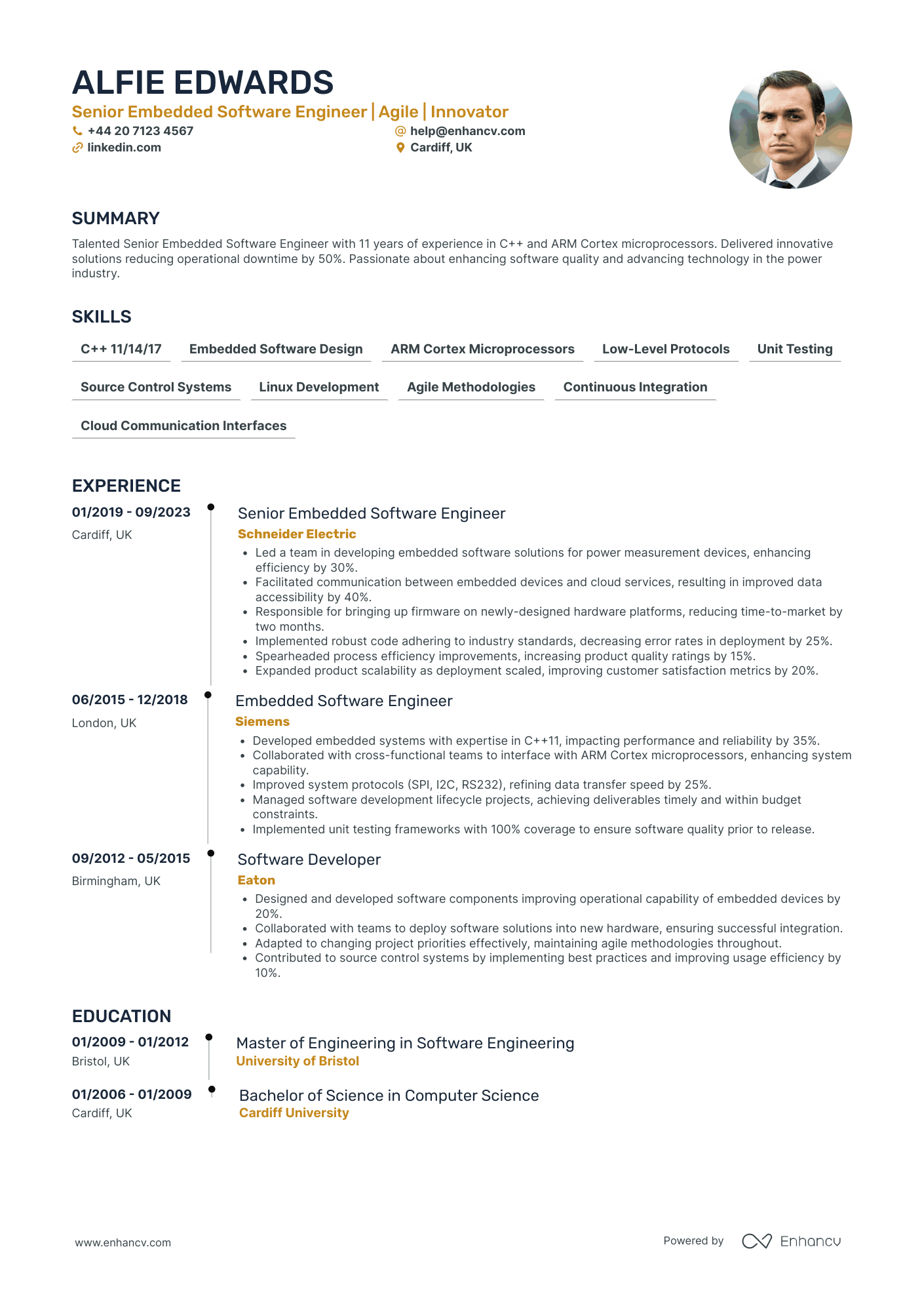
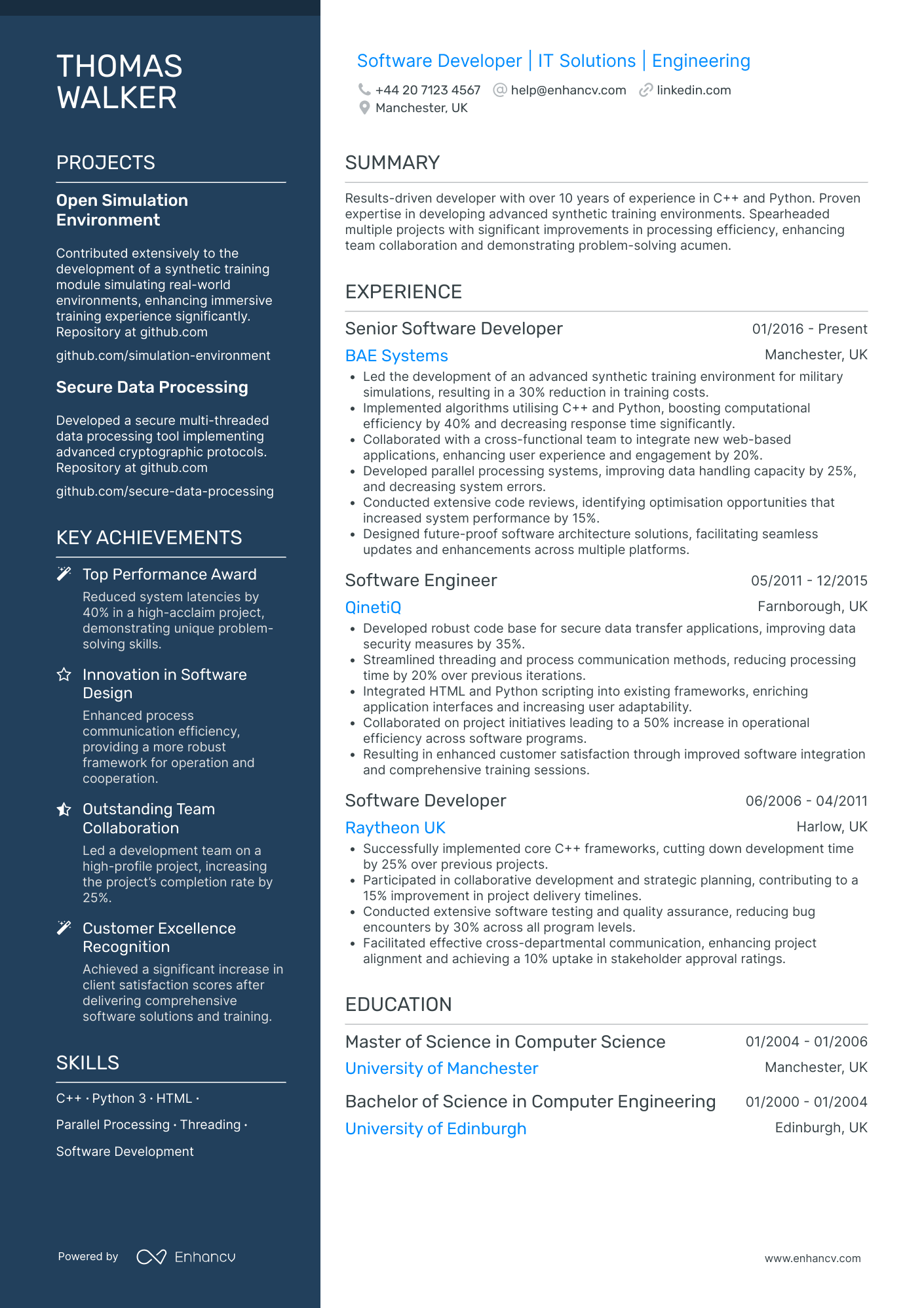
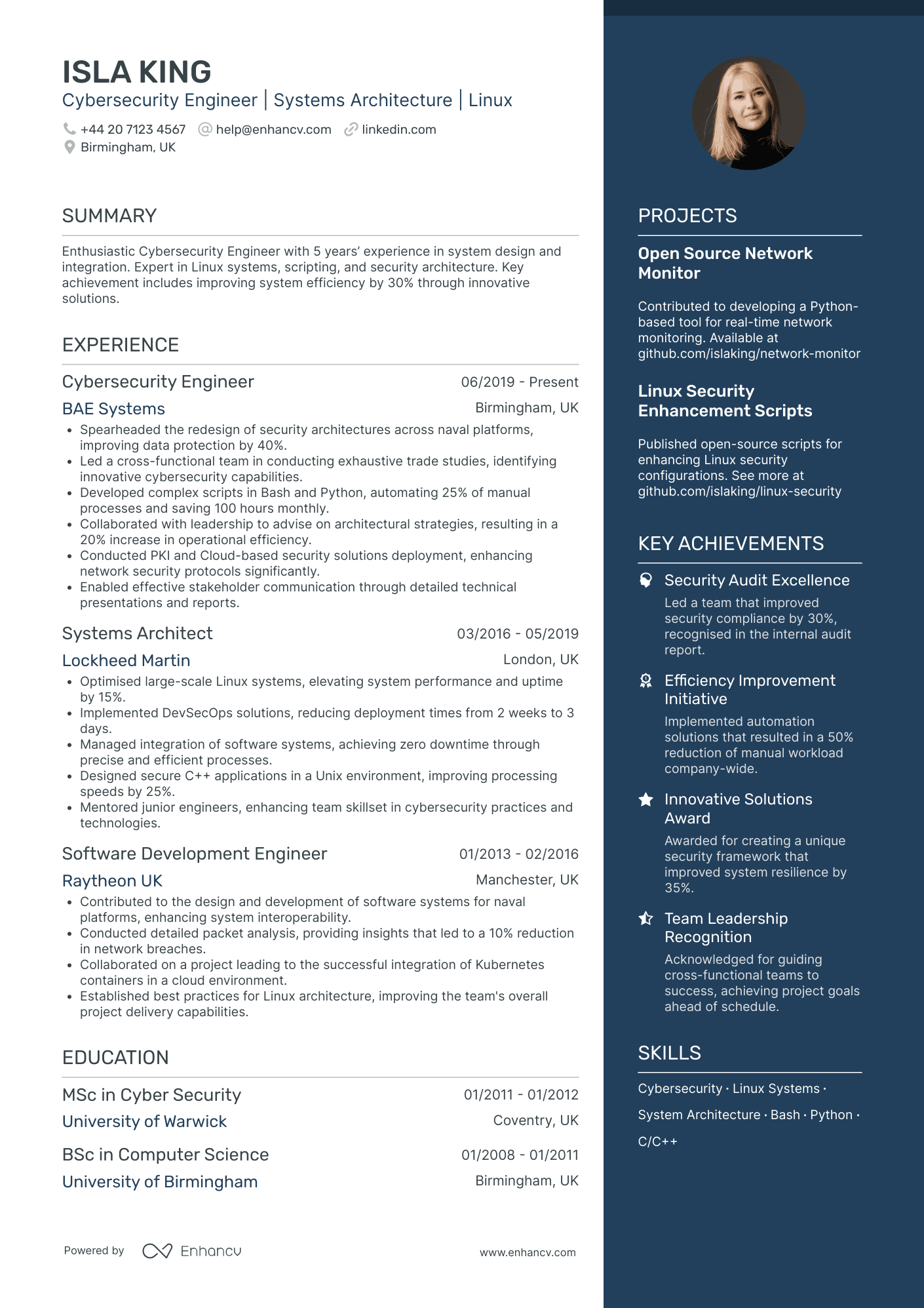
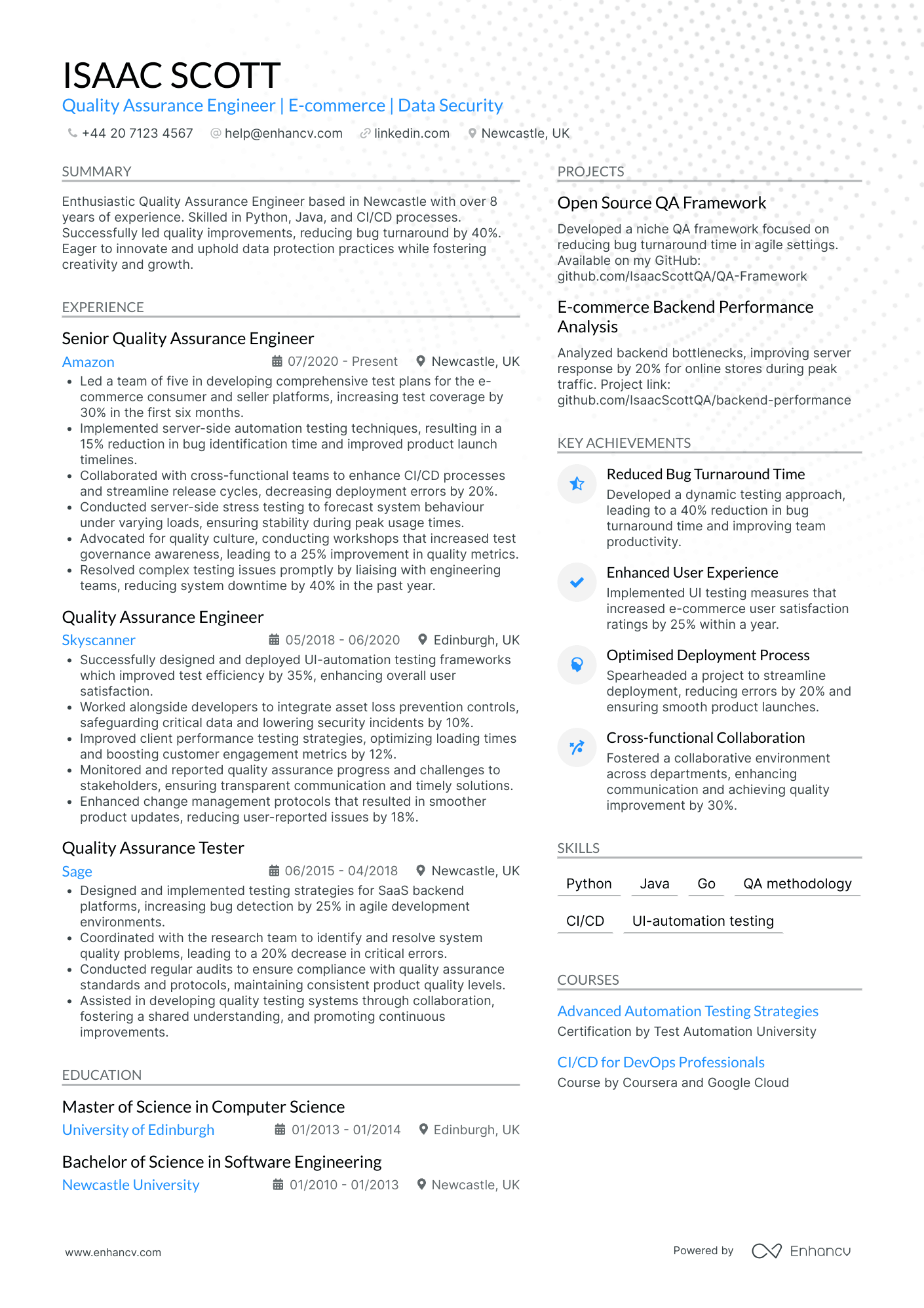
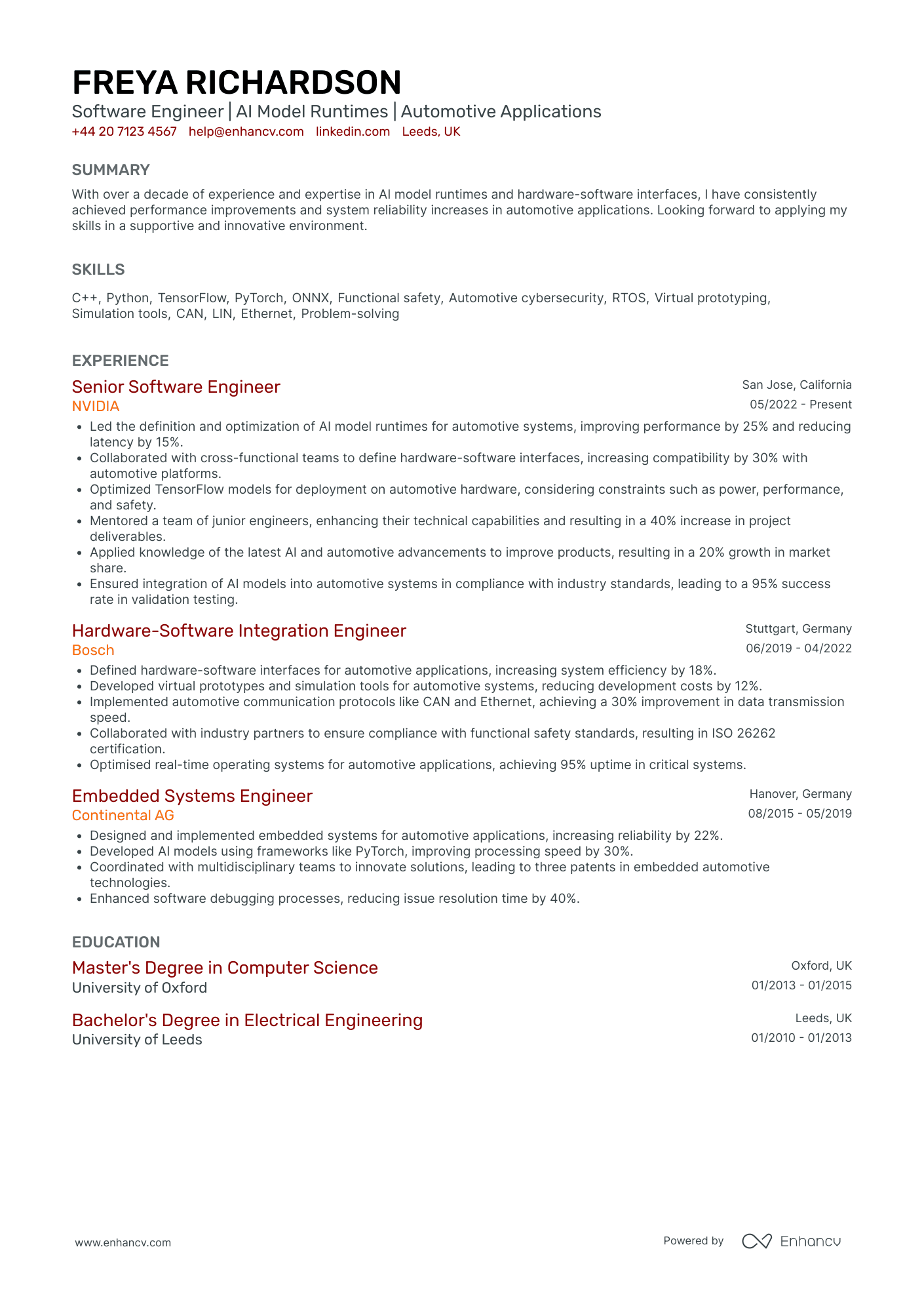
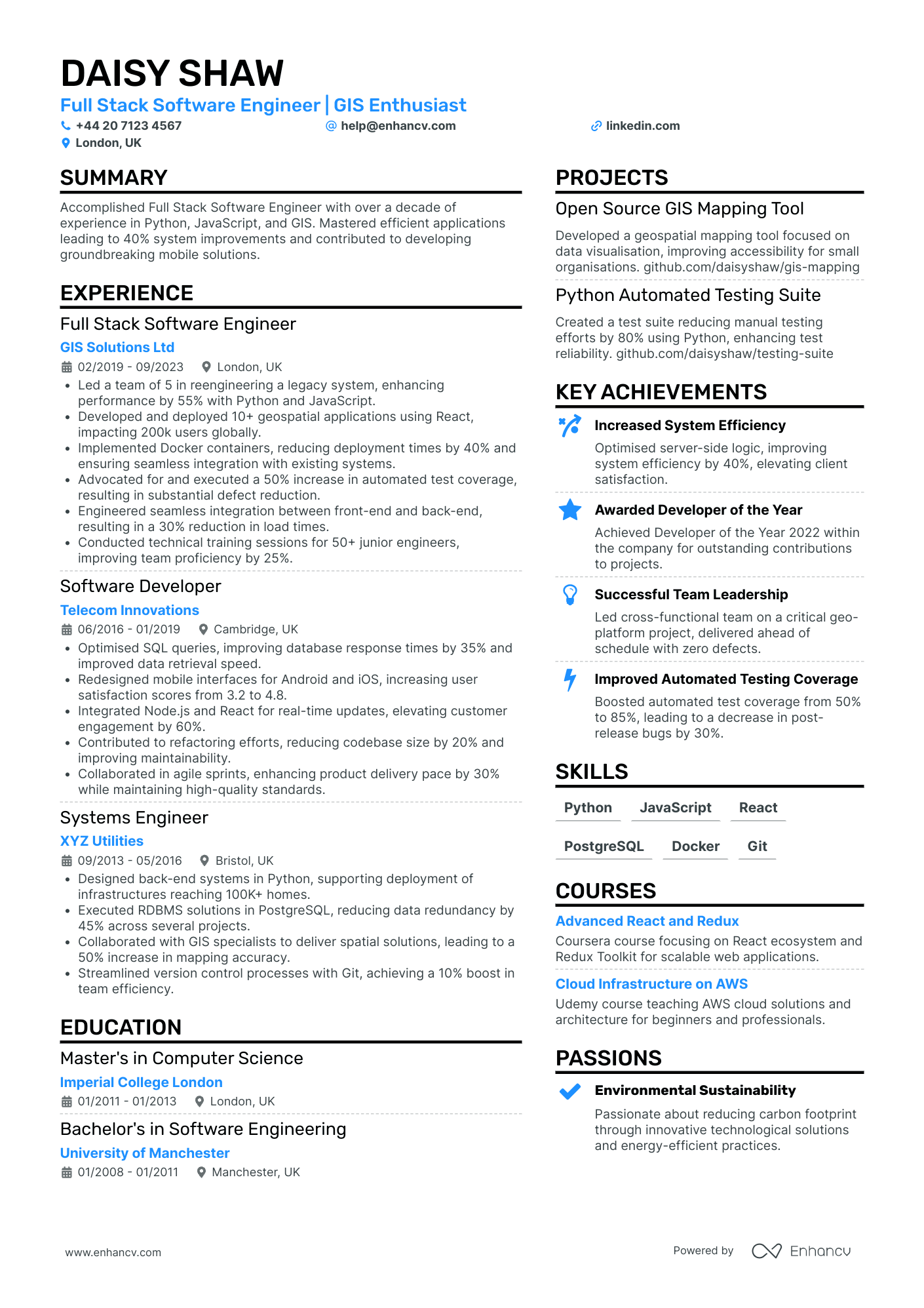
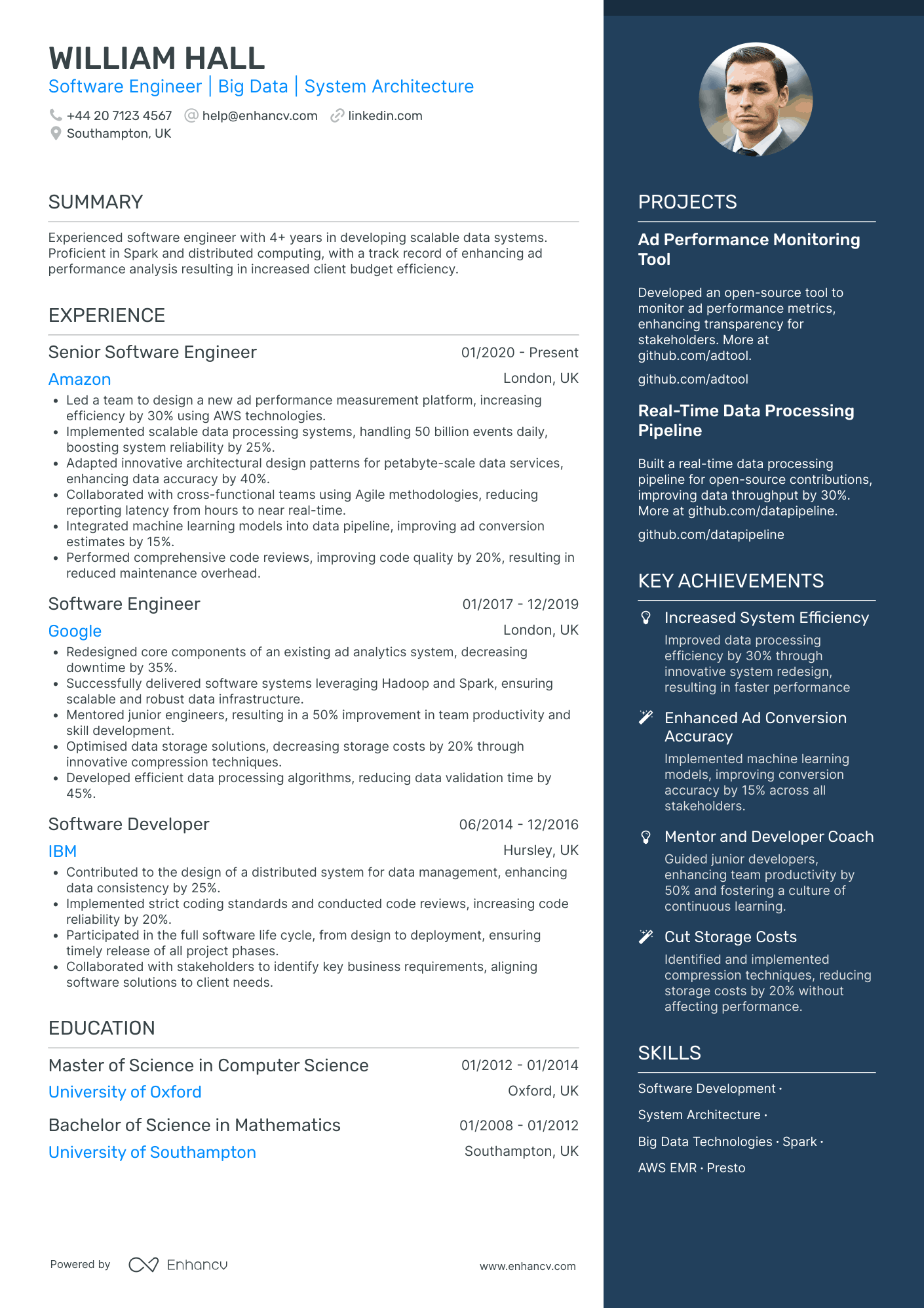
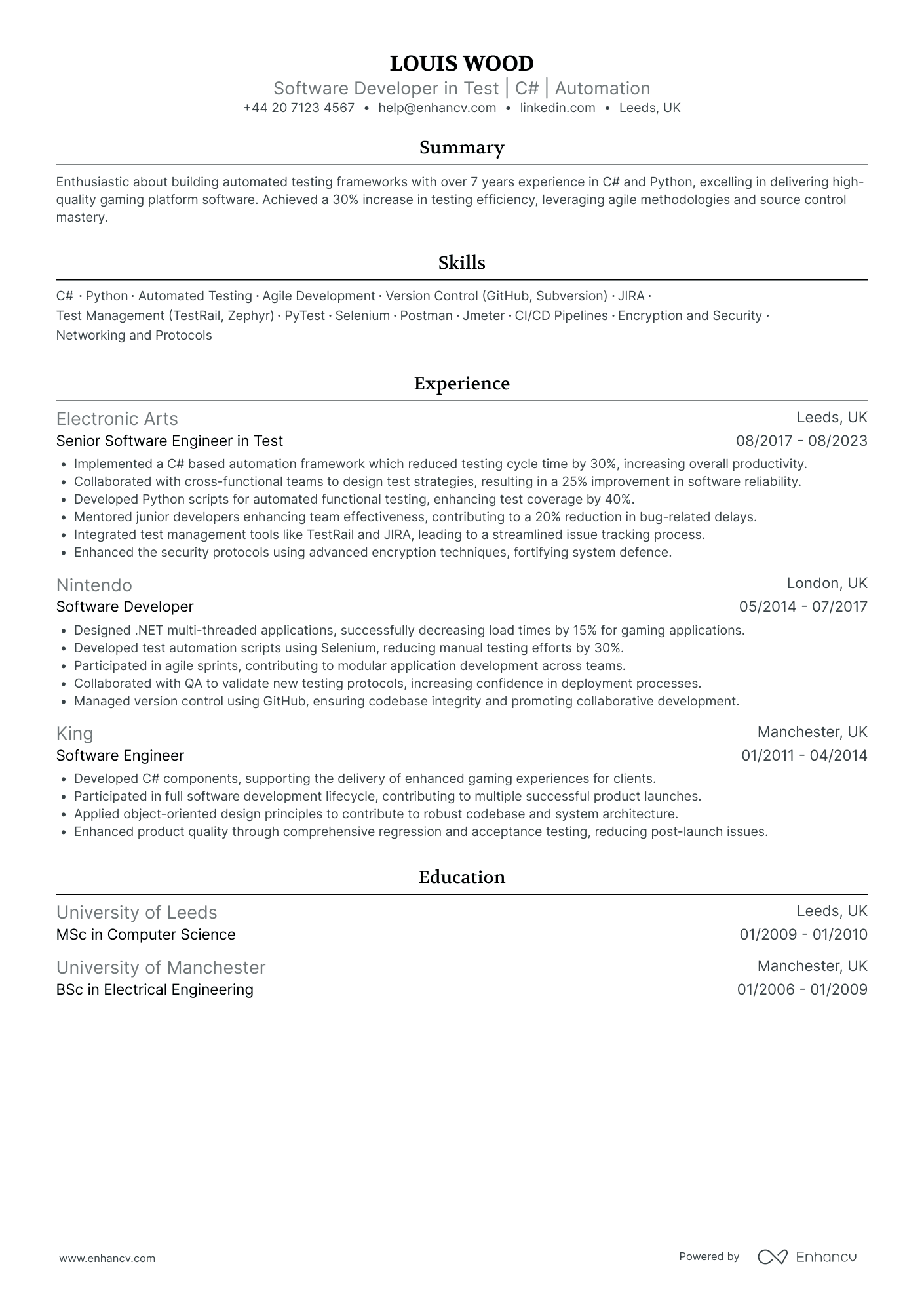
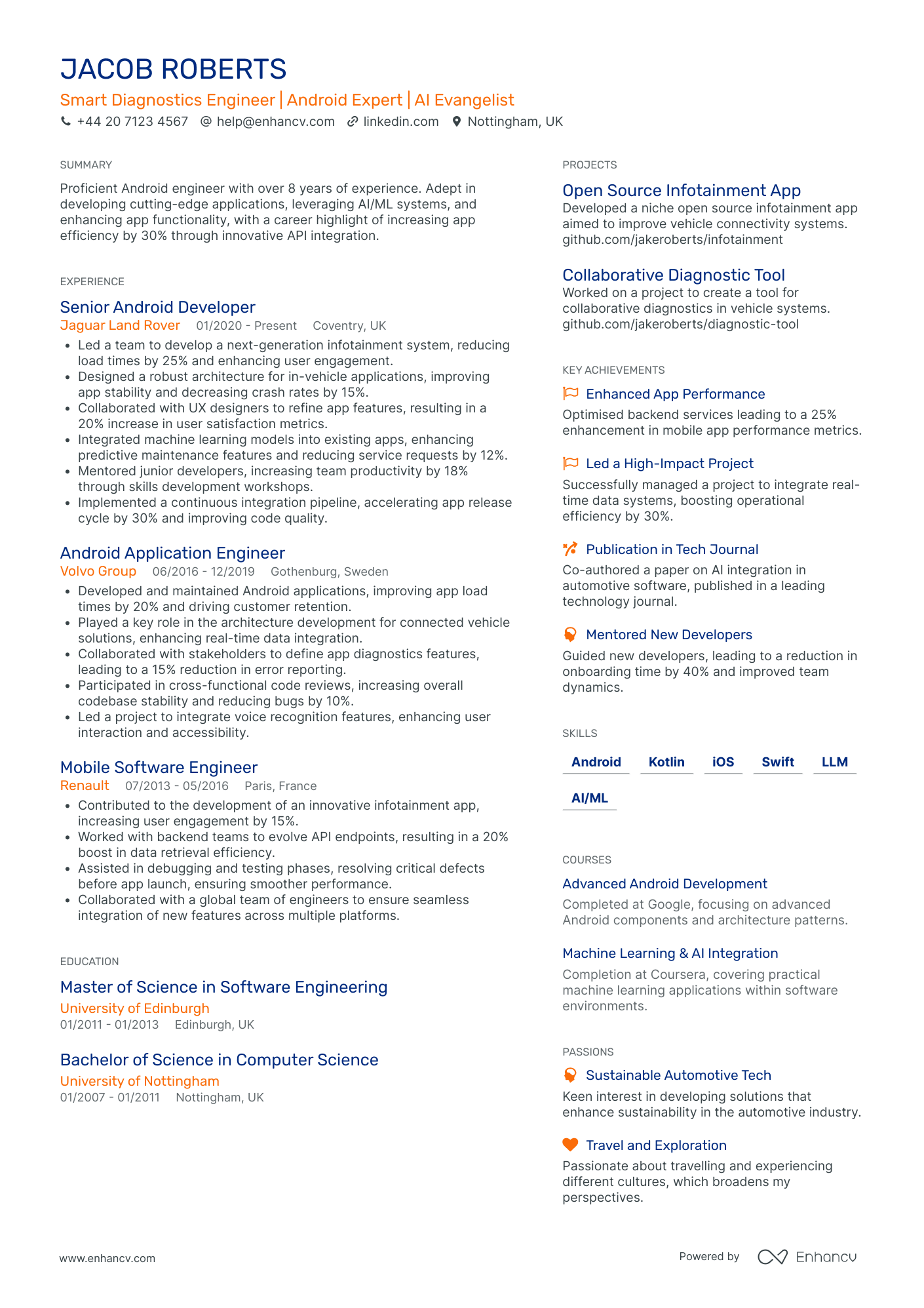
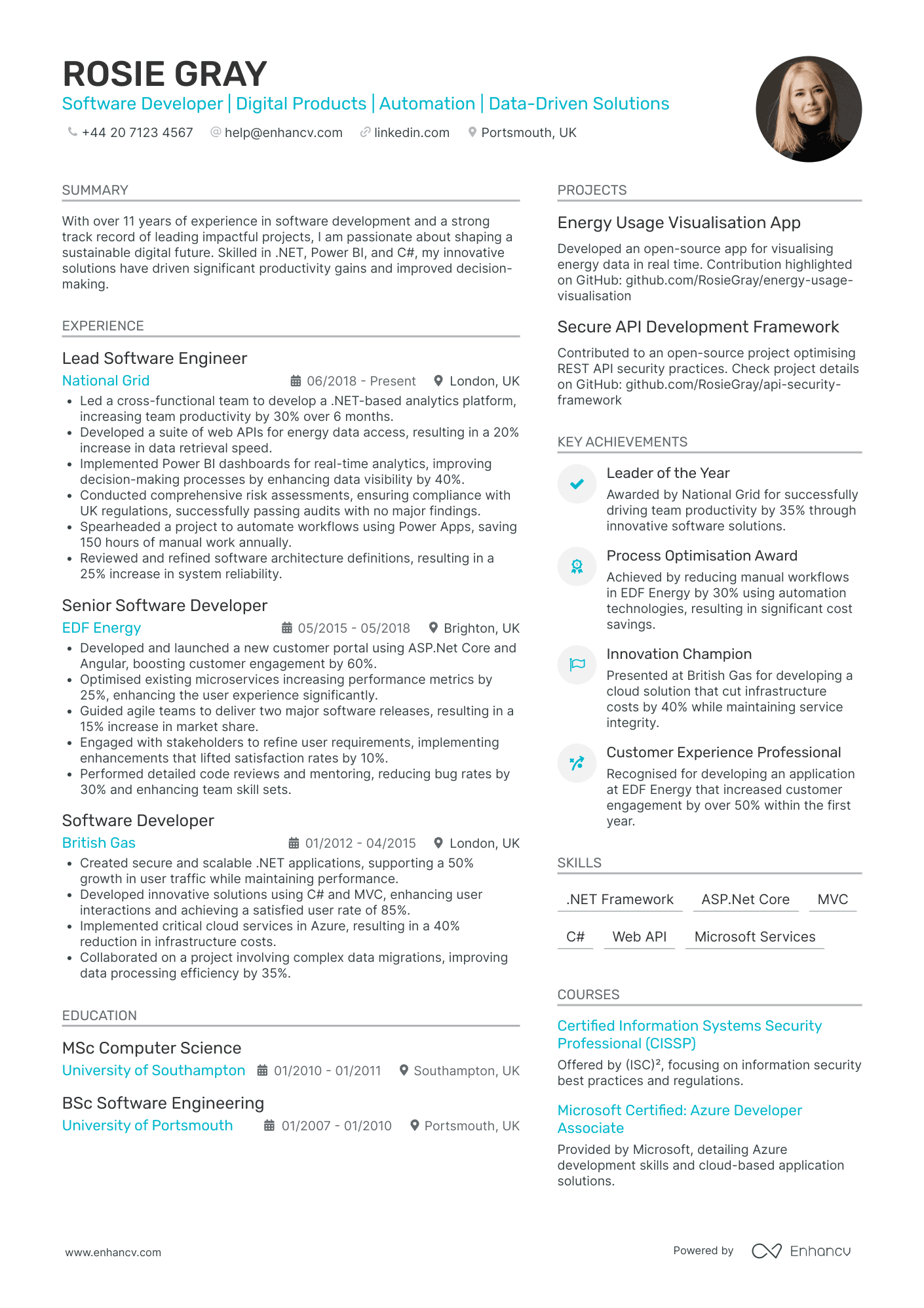
Recruiters and engineering leads skim fast. A clean layout in a single column, with standard headings and a readable font, lets them find your stack and your best project in seconds.
Keep it to two pages if you have a few roles behind you, one page if you are a junior or graduate. UK employers expect two pages for an experienced developer and rarely read a third.
Pick a plain, readable font at a sensible size and give the page room to breathe. A developer CV is judged on what it says, so let one accent colour and generous white space do the styling rather than icons, rating bars, or a photo, none of which UK employers expect.
Send a PDF for almost every application, so your spacing, monospaced code snippets, and columns hold on any machine. Keep a Word copy for the recruitment agencies that reformat CVs into their own template, and if the advert names a file type, follow it exactly.
Most applications pass through an ATS first, so keep the layout parseable. Avoid text inside images, do not build the whole CV as a table, and use real headings rather than styled text. Put your name, location, and links in the body, because some parsers drop the header-and-footer region entirely.
Use reverse chronological order once you have relevant roles, with your most recent job first. For a software developer, order and structure earn more than any decoration.

PRO TIP
Name the file like a professional: firstname-lastname-software-developer-cv.pdf. A file called cv-final-v3.pdf tells a hiring team you did not tailor it, and it is the first thing they read when it lands in the inbox.

What your CV header should carry
- Your name and the exact job title you are applying for.
- City and whether you can work hybrid, on-site, or remote.
- A professional email and phone number.
- A GitHub link with pinned, active repositories.
- A portfolio, personal site, or relevant LinkedIn profile.
Choosing a downloadable CV template (Word or PDF)
A good template saves you from fighting the margins so you can spend your time on the content. Start from a tested structure rather than a blank document or a decade-old Word file you keep patching.
Developers tend to reach for one of three routes. A plain Word or Google Docs template is quick and edits anywhere. A LaTeX template on Overleaf gives precise typographic control and has a following in engineering circles, though it is slower to update under deadline. A CV builder handles the layout and exports a clean file for you.
Match the route to the moment. Reach for Word or Google Docs when an agency wants an editable file, LaTeX when you have time and want the typography exact, and a builder when you are applying widely and need a consistent, tested layout fast.
Whichever you pick, keep it single-column and ATS-safe, and export the final version as a PDF unless the advert asks for Word. Build it from a tested layout rather than styling one from scratch: Enhancv's CV templates export to a clean, ATS-safe PDF.
Put your GitHub, portfolio, or personal site link in the header next to your email, and make sure every link resolves. A dead link, or a GitHub full of empty repositories, does more harm than no link at all.
What the UK software developer market looks like
Knowing what employers ask for shapes what belongs at the top of your CV. Here is what the role pays and what recurs across current UK postings.
| What | UK software developer roles |
|---|---|
| Typical pay | £30,000 to £75,000 a year (National Careers Service, gov.uk) |
| Where the work happens | Split between hybrid and on-site, with fully remote a small share (across 68 UK postings in the last ~30 days, Enhancv's internal job feed) |
| Skills that recur most | Agile, Python, CI/CD, Git, and SQL |
| Seniority mix | Weighted toward mid-level, with senior and entry-level both well represented |
Two things here should change your CV.
UK software developer postings are split between hybrid and on-site work, so a recruiter needs to see where you are based and whether you can reach the office. Put your city in the header, and treat a fully remote-only search as the harder path.
Agile, Python, and CI/CD are the skills that recur most often across those postings. If you genuinely use them, name them in your skills section and, better still, show them working in a bullet.
The roles skew mid-level, with plenty pitched at senior and a healthy entry-level share, so pitch your CV to the seniority band in the advert. A senior brief wants ownership and scale, an entry brief wants evidence you can learn and ship, and the same experience can be framed for either.
Top skills for your software developer CV
List the stack you can actually defend in a technical interview, in the words the advert uses. A recruiter matching keywords and an engineer reading closely both start here.
Split them the way a hiring team reads them. Your hard skills are the languages, tools, and methods you work in. Your soft skills are how you work inside a team, and they only land when a bullet proves them.
Group related tools so the section scans, and drop anything you touched once in a tutorial. Every skill on your CV is an invitation to be questioned on it.
Order the list by relevance to the advert, not alphabetically, and skip the star ratings and progress bars. A recruiter cannot verify that you are four stars at Python, and an engineer will not trust it.
Then evidence the ones that matter in your experience bullets. "SQL" in a skills list is a claim. "Cut a report query from 12 seconds to under one by rewriting the joins and adding an index" is proof of the same skill, and it is the version that gets remembered.
Top skills for your software developer CV:
Python
JavaScript
Java
C#
SQL
Git
CI/CD pipelines
Agile and Scrum
REST APIs
Unit testing and TDD
Cloud (AWS, Azure, or GCP)
Communication
Problem solving
Collaboration
Code review and feedback
Ownership
Adaptability
Writing your software developer personal statement
Three or four sentences at the top: what you build, the stack you build it in, one result you are proud of, and the kind of team you want next. See more personal statement examples if the opening line is not coming.
Skip the adjective pile every other CV opens with. "Passionate, detail-oriented developer" tells a reader nothing they can verify.
Rewrite it for each role. A statement that names the company's stack and the kind of problem the team is hiring to solve reads as though you actually want this job, not just any job. That single edit is often the difference between a callback and silence.
Lead with a shipped result instead:
Software developer personal statement example
Backend developer with five years building payment services in Python and Go, most recently cutting checkout latency by 40% for a fintech handling two million transactions a month. Comfortable owning a service from design through on-call support, and happiest on a small team that ships weekly. Looking for a mid-to-senior backend role in a hybrid London team.
Here is the version a reader skims straight past:
What to avoid
Passionate and hardworking software developer seeking a challenging role in a dynamic company where I can utilise my skills and grow. A dedicated team player with excellent communication skills and a strong work ethic.
When I read a developer's personal statement, I skip the adjectives and look for one line I could not have written about anyone else. "Cut build times from 20 minutes to four" tells me how you think. "Passionate about clean code" tells me you filled the space. Name the system, the change you made, and the number that proves it, then stop. Four honest sentences beat a polished paragraph that could belong to any of the other 200 applicants.
Writing your software developer experience section
Each role gets a dated heading, then bullets that lead with a verb and end with an outcome. For the mechanics, see work experience on a CV.
Developer work is measurable, so quantify it: latency, throughput, error rates, build times, users served, deploys per week, incidents avoided. A number is the fastest way to prove achievements a reader can trust.
Show the impact, not just the ticket. "Migrated the auth service to OAuth 2.0" is a task. "Migrated the auth service to OAuth 2.0, cutting login failures by 30%" is a result. Start each line with a strong action verb.
Go back about ten years or three or four roles, whichever is shorter, and give the most recent job the most lines. Older or unrelated positions can shrink to a single line, because the reader cares most about what you shipped lately.
Tailor every application to the advert and mirror the stack it names where it is true of you. Enhancv's CV tailoring feature reads the advert and suggests the matching edits, which saves rewriting from scratch each time.
- Build and maintain payment microservices in Python and Go, serving two million transactions a month at 99.95% uptime
- Cut median checkout latency from 900ms to 540ms by profiling hot paths and adding a Redis cache layer
- Introduced a CI/CD pipeline in GitHub Actions that dropped deploy time from 25 minutes to six and enabled daily releases
- Raised integration test coverage from 48% to 82%, reducing production incidents by roughly a third
- Mentor two junior developers through code review and paired debugging
PRO TIP
Pair a metric with the method. "Reduced API errors by 30%" is good, but "Reduced API errors by 30% by adding request validation and retries" tells an engineer you understand why it worked. The how is what separates you from a candidate who memorised a number.
Education, certifications, and your GitHub
A degree helps but rarely decides a developer role. List your degree with its classification, then give the space to what you have built.
Bootcamp graduates and self-taught developers are common and hireable. Name the programme, the stack it covered, and a project that came out of it. Relevant certifications, an AWS or Azure associate, a Scrum or Kubernetes credential, earn their line when the advert asks for them.
Where you place education depends on your stage. A graduate or career changer puts it near the top, where it does the heavy lifting. A developer with a few roles behind them moves it below experience, where it belongs.
Your GitHub is part of the evidence, so treat it as part of this section. Pin three or four repositories with real commits and a readable README, and link the ones that show the stack you want to be hired for. An active profile does more than a certificate nobody verifies.
Writing a junior software developer CV
Entry-level and graduate roles are a real share of UK postings, so a thin work history is not a barrier when the CV is built right. Lead with skills and projects, not an empty experience section.
Your projects are your experience. A dated coursework project, a hackathon build, an open-source contribution, or a side app all count. Write each like a job: what you built, the stack, and what it does. See CV examples for a first job for the structure.
Open-source work is worth more than most juniors think. A merged pull request to a project you use, however small, shows you can read an unfamiliar codebase and work to someone else's standards, which is exactly the leap employers worry about.
One placement, internship, or freelance gig outweighs a page of adjectives. If you have none yet, a finished project with a live link and clean code does the same work.
Keep it to one page, and put your GitHub link where a reviewer sees it in the first three seconds.
Conclusion
Get the format right first: one column, two pages, a PDF, and a working GitHub link in the header. That is what puts your best work in front of a human.
Then let the evidence carry it, with the stack the advert names, quantified bullets, and a personal statement built on one real result. Pair the CV with a short cover letter and you turn a keyword list into an interview.
Author's take - The Enhancv team
When I read a developer's personal statement, I skip the adjectives and look for one line I could not have written about anyone else. "Cut build times from 20 minutes to four" tells me how you think. "Passionate about clean code" tells me you filled the space. Name the system, the change you made, and the number that proves it, then stop. Four honest sentences beat a polished paragraph that could belong to any of the other 200 applicants.