



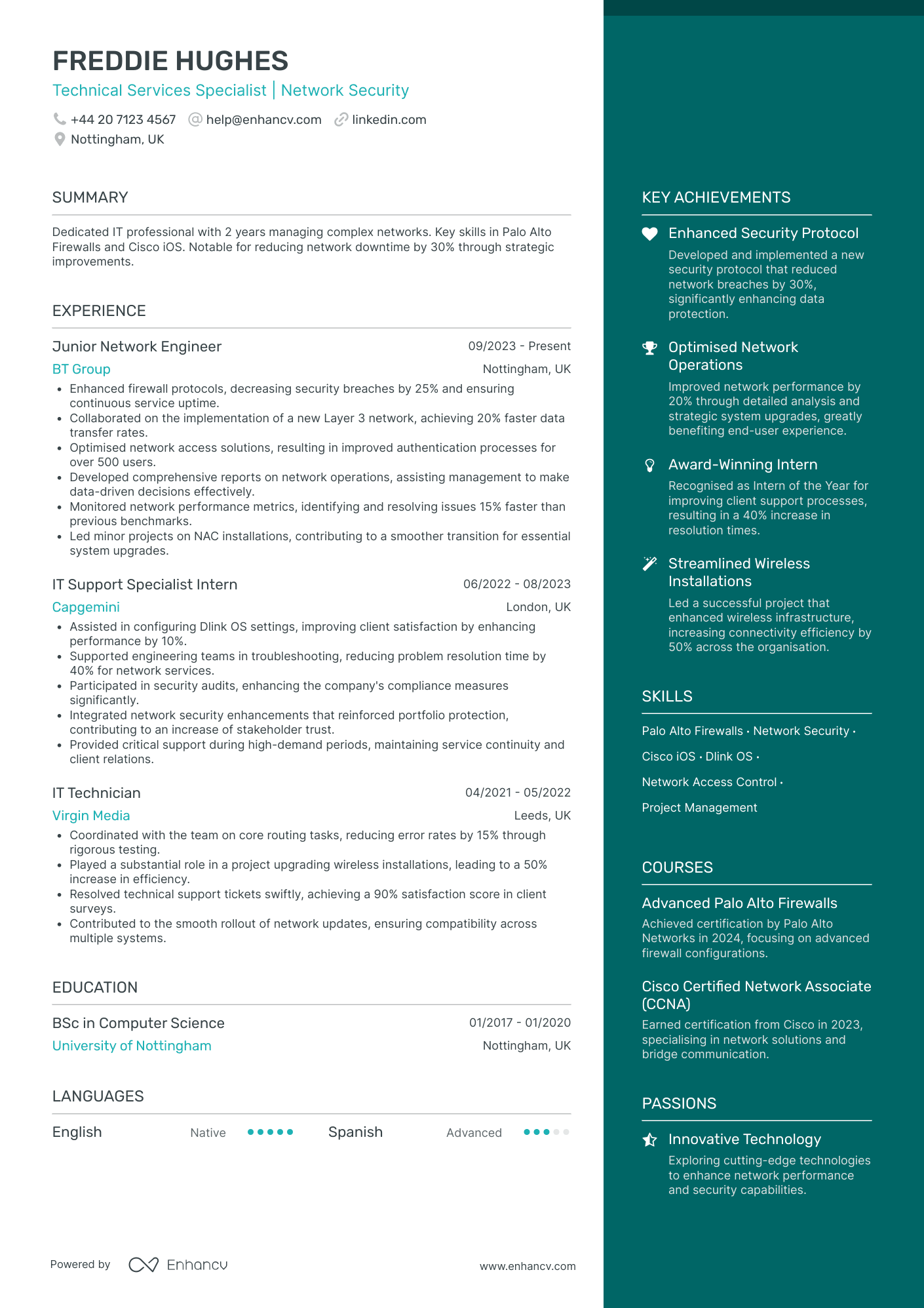
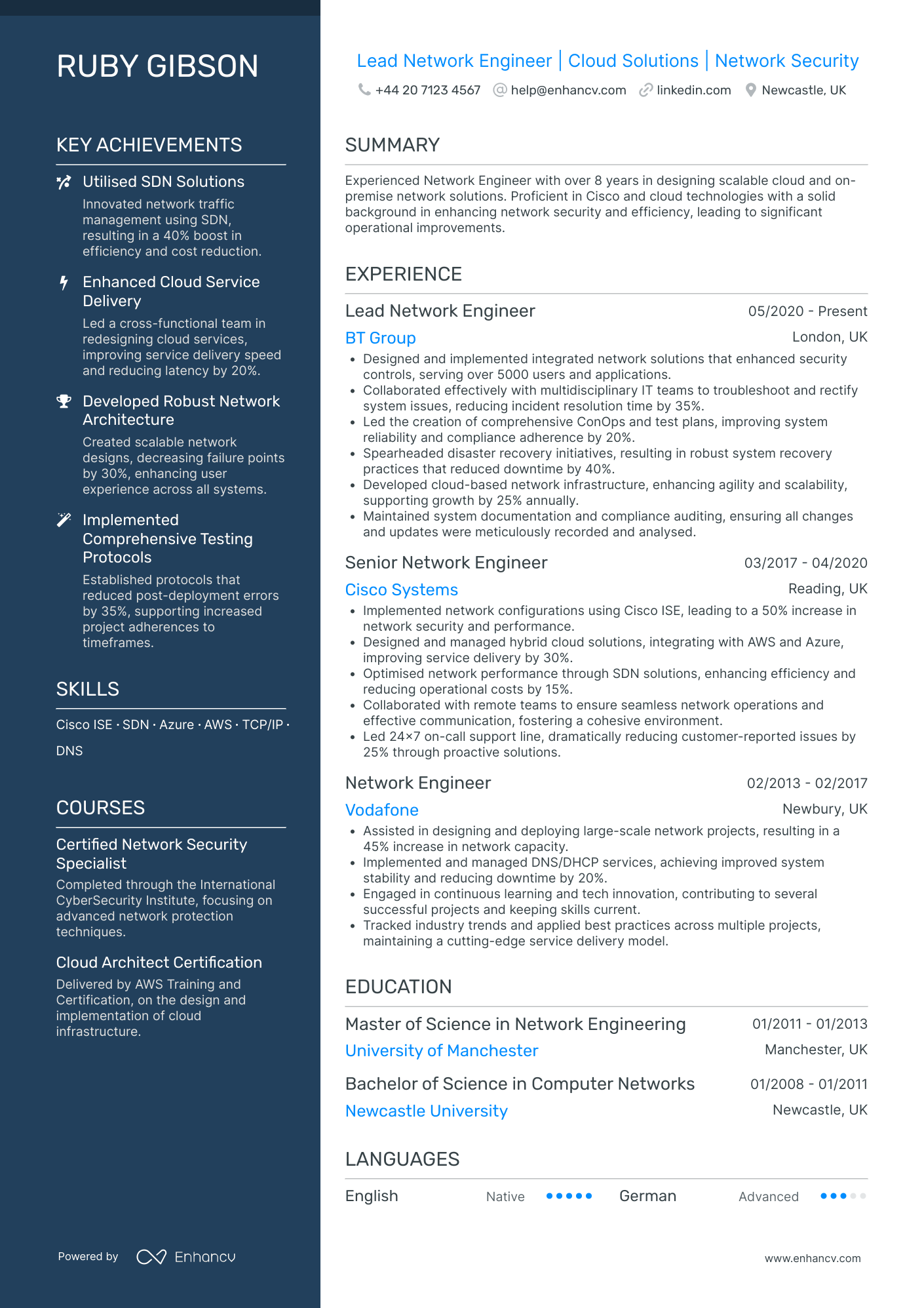
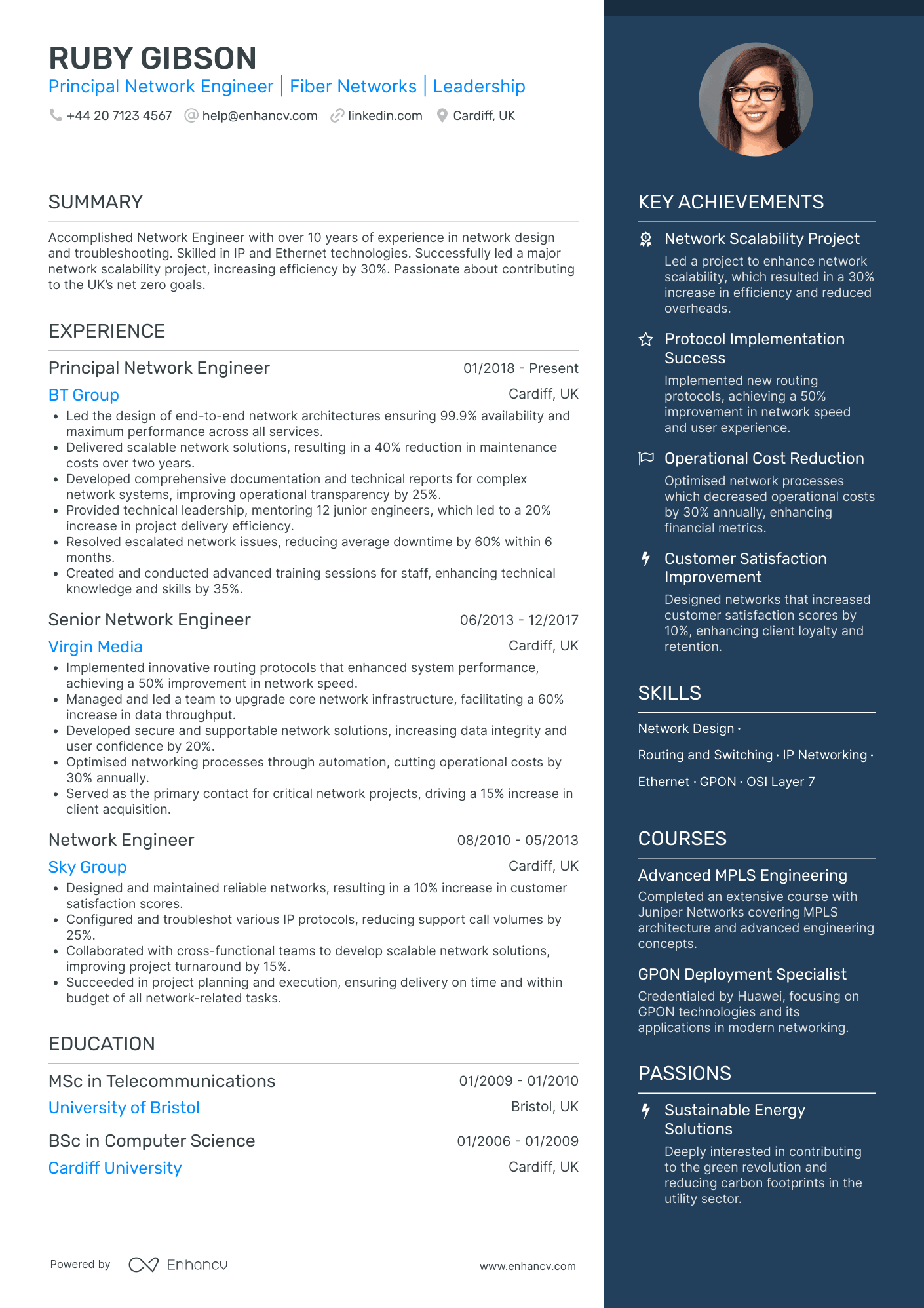
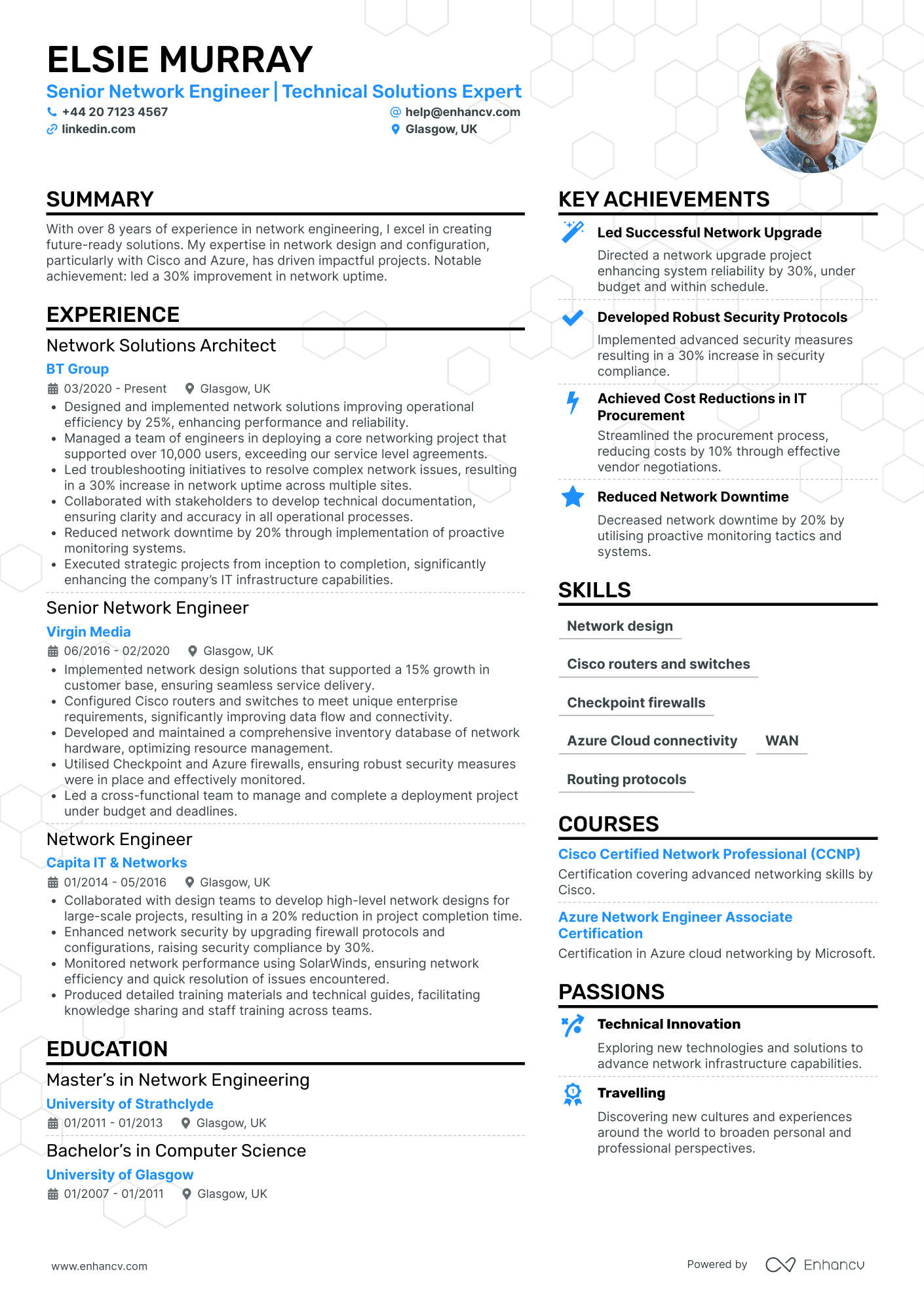
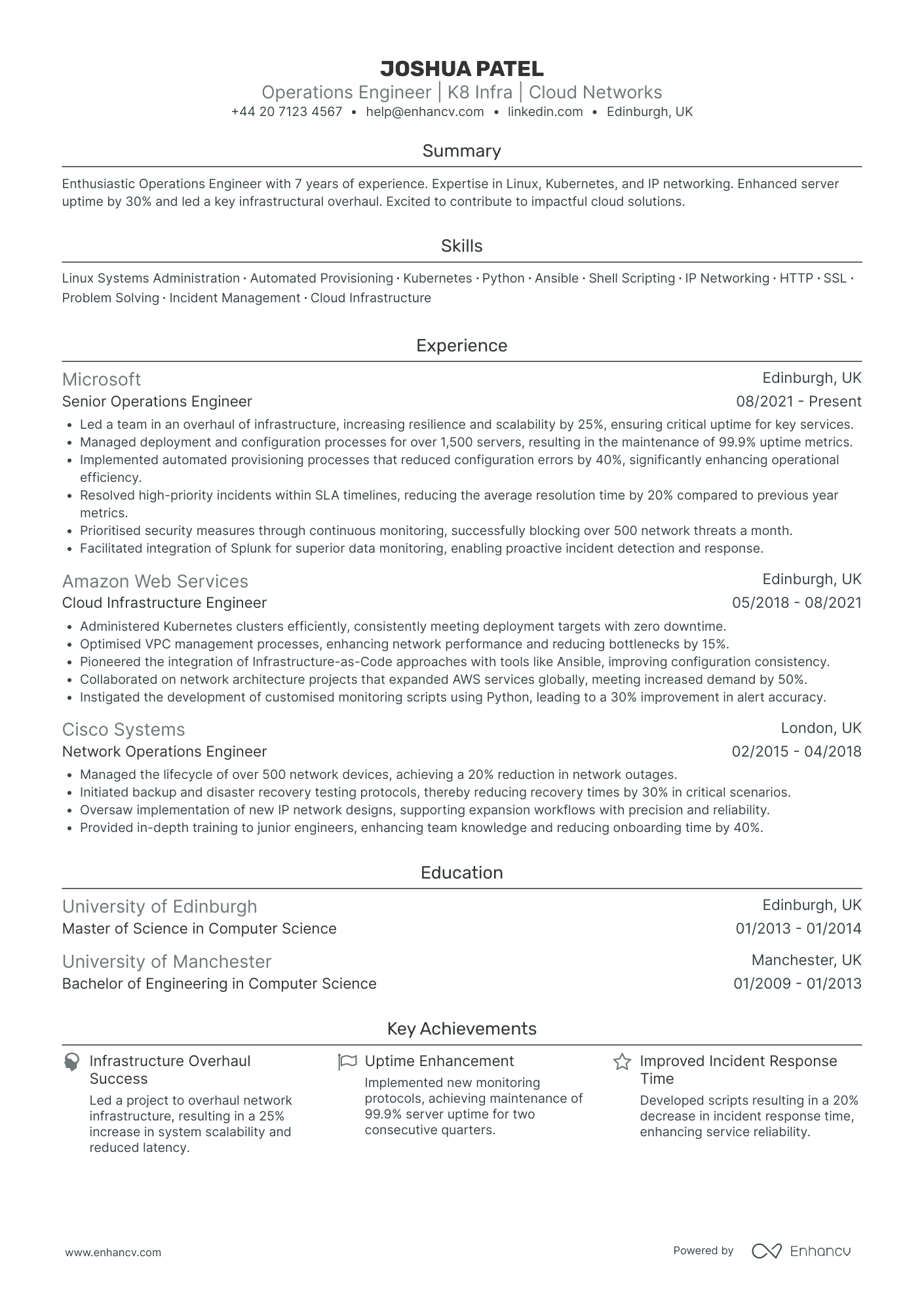
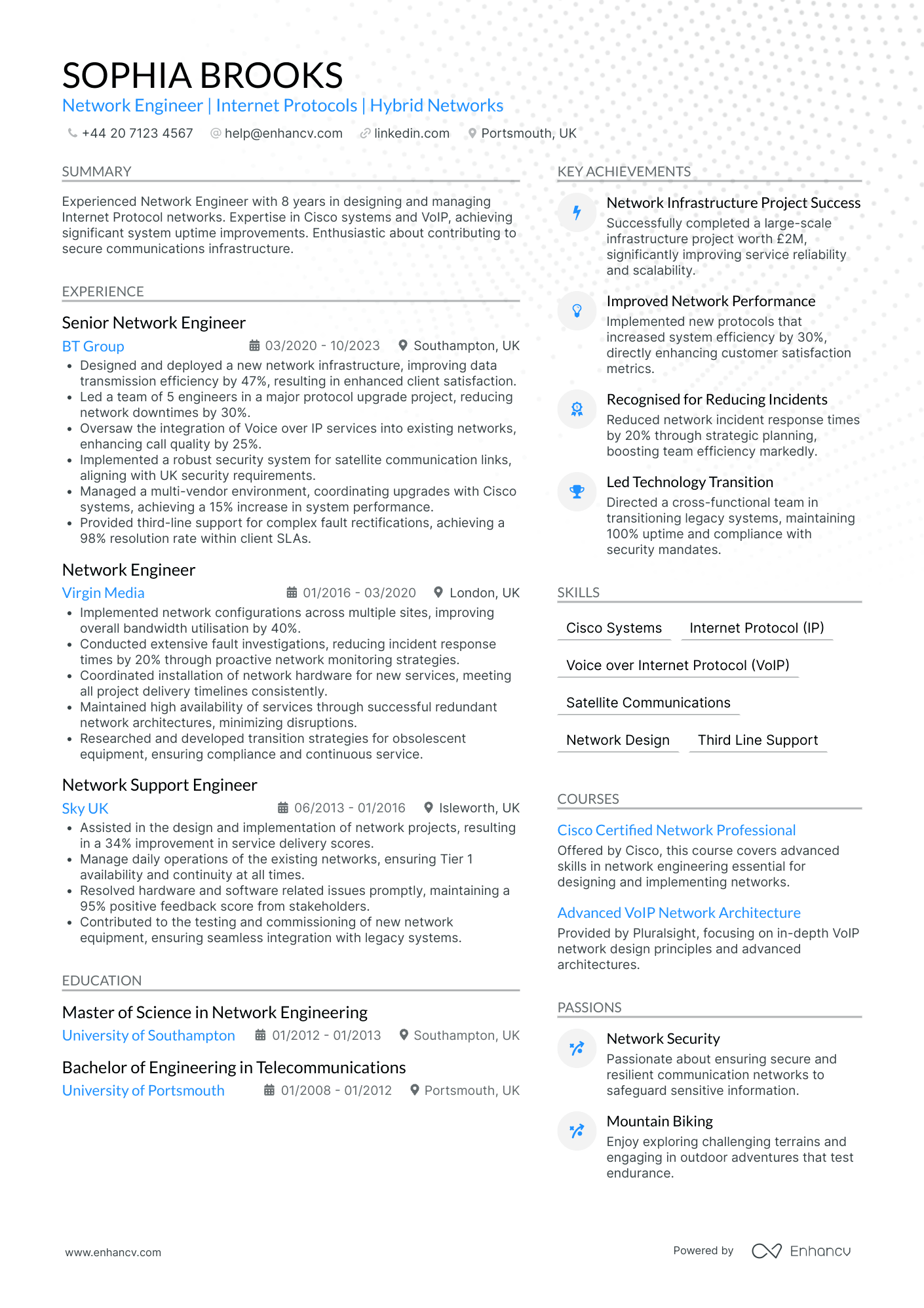
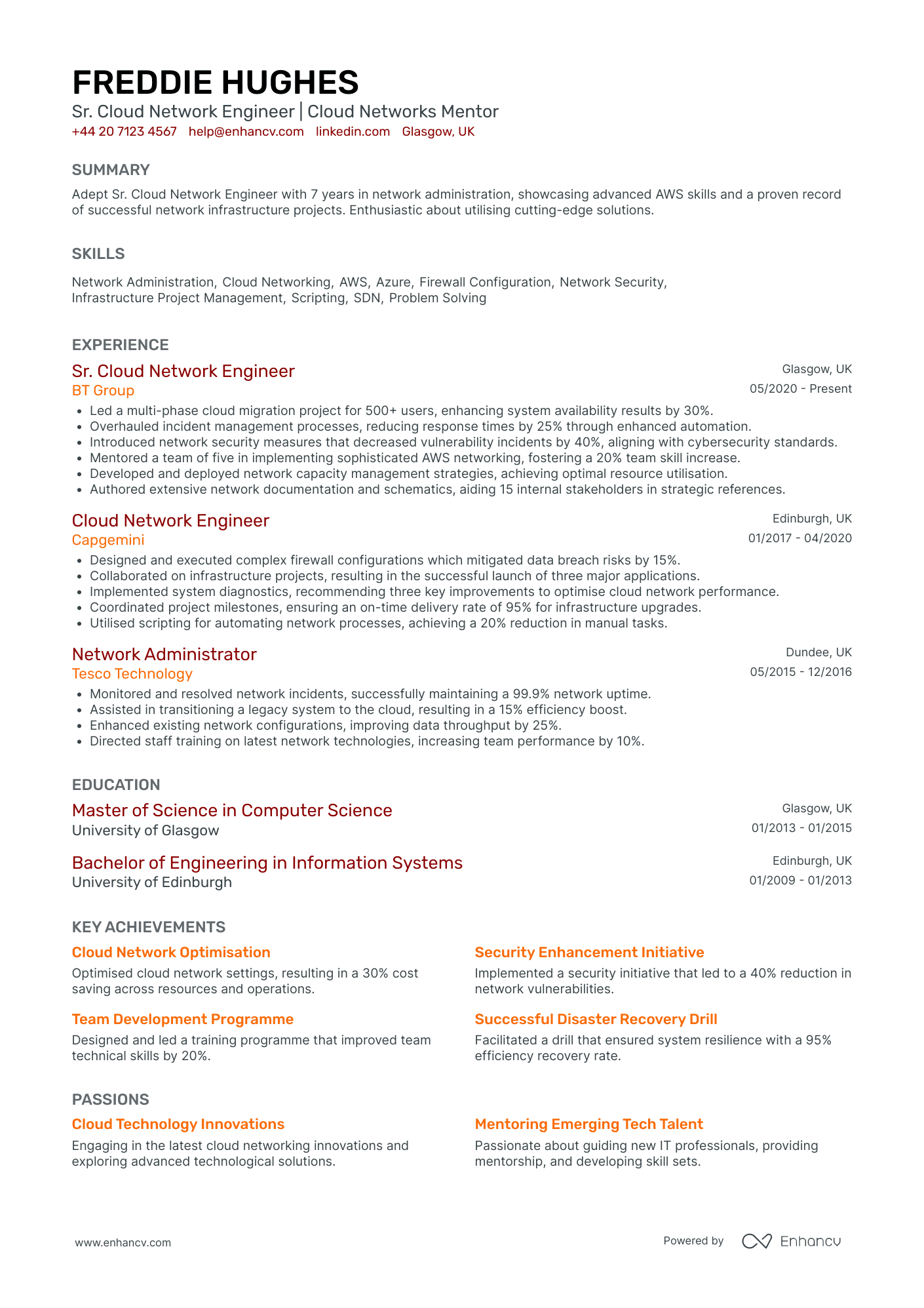
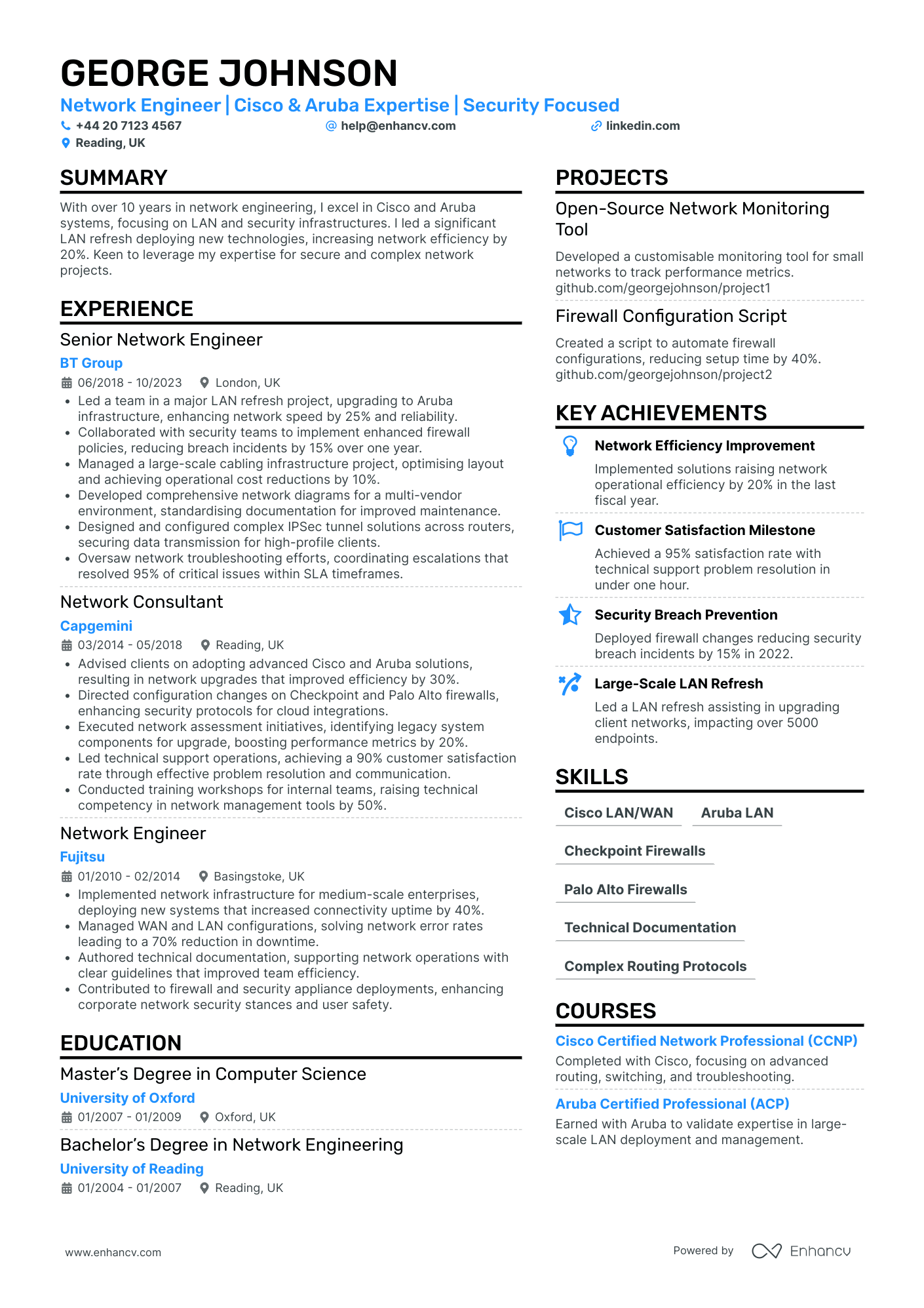
Most network engineer CVs read like a router config dump: every protocol the candidate has ever touched, in no order, with nothing that shows how well they run a live network. A hiring manager cannot tell the CCNA who has read about BGP from the engineer who has run it across 40 sites.
The CV that gets the call does two things fast. It uses a clean, ATS-safe format a recruiter can skim in ten seconds, and it leads with the vendors, protocols, and uptime numbers this role is screened on. Get the fundamentals right first with how to write a CV, then tailor every line to the network you want to run.

Key takeaways
- Lead with a clean, one-column, ATS-safe layout. Network recruiters skim for vendors and protocols before they read prose.
- Send a PDF unless the advert or agency asks for a Word file. Keep a Word copy ready, because agencies reformat CVs into their own template.
- Two pages, reverse chronological, for an experienced engineer. One page only if you are early-career.
- Name the exact stack: Cisco, BGP, OSPF, firewalls, and the vendors you run. Mirror the advert's wording.
- Put certifications like CCNA and CCNP near the top. They are the first thing this field screens for.
- Quantify the network: sites, users, uptime, and tickets closed. One real number beats a list of buzzwords.
Formatting your network engineer CV
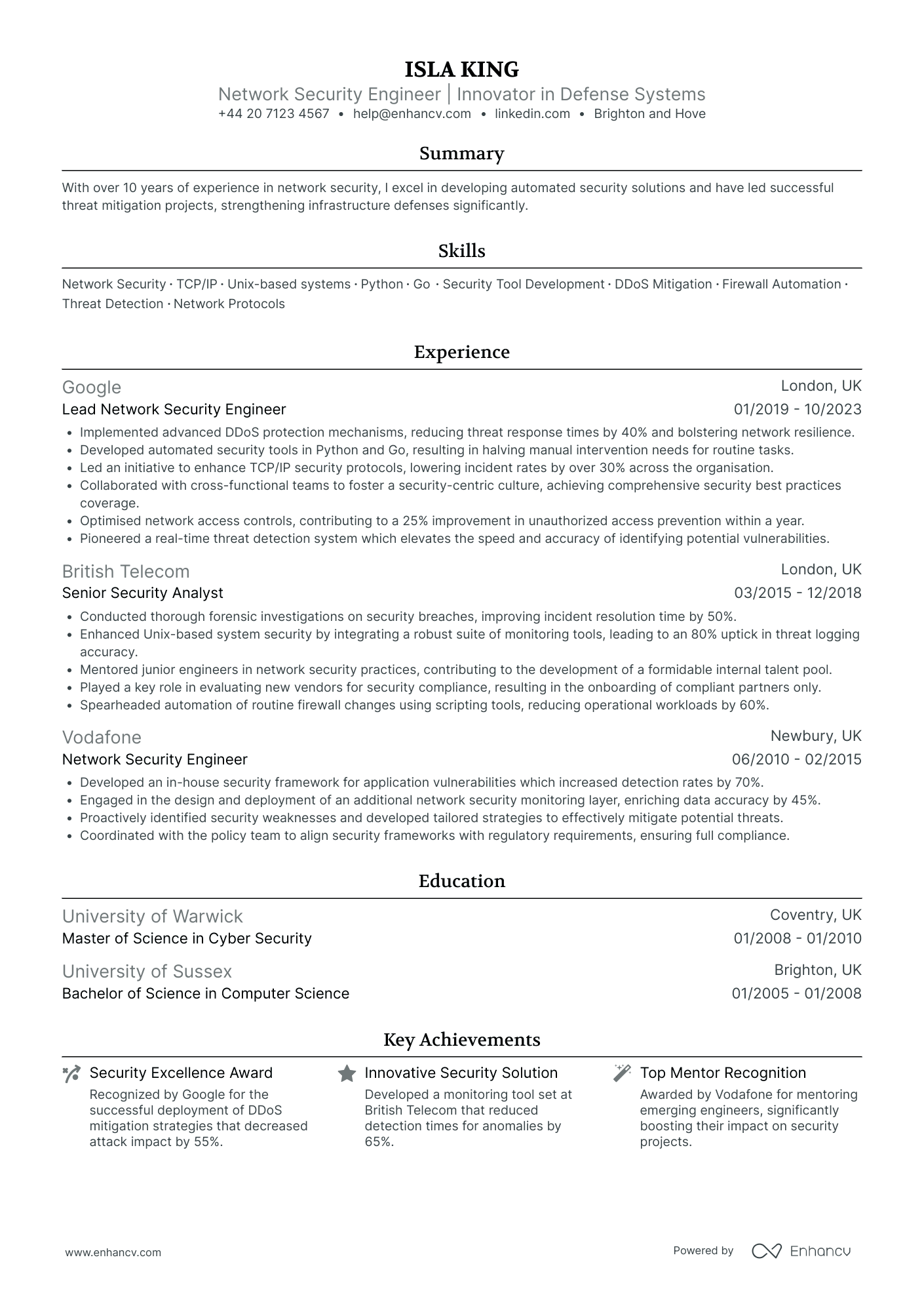
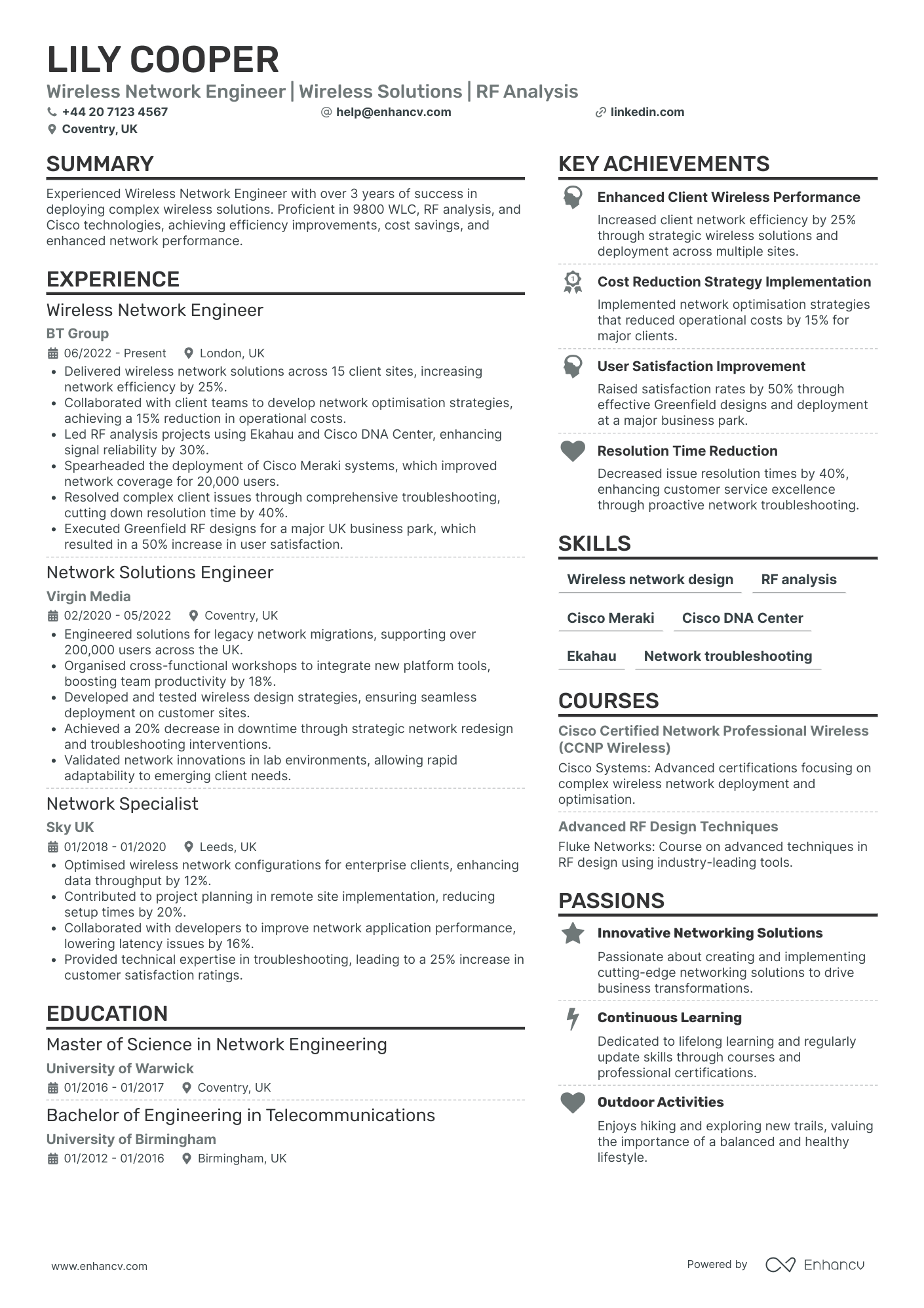
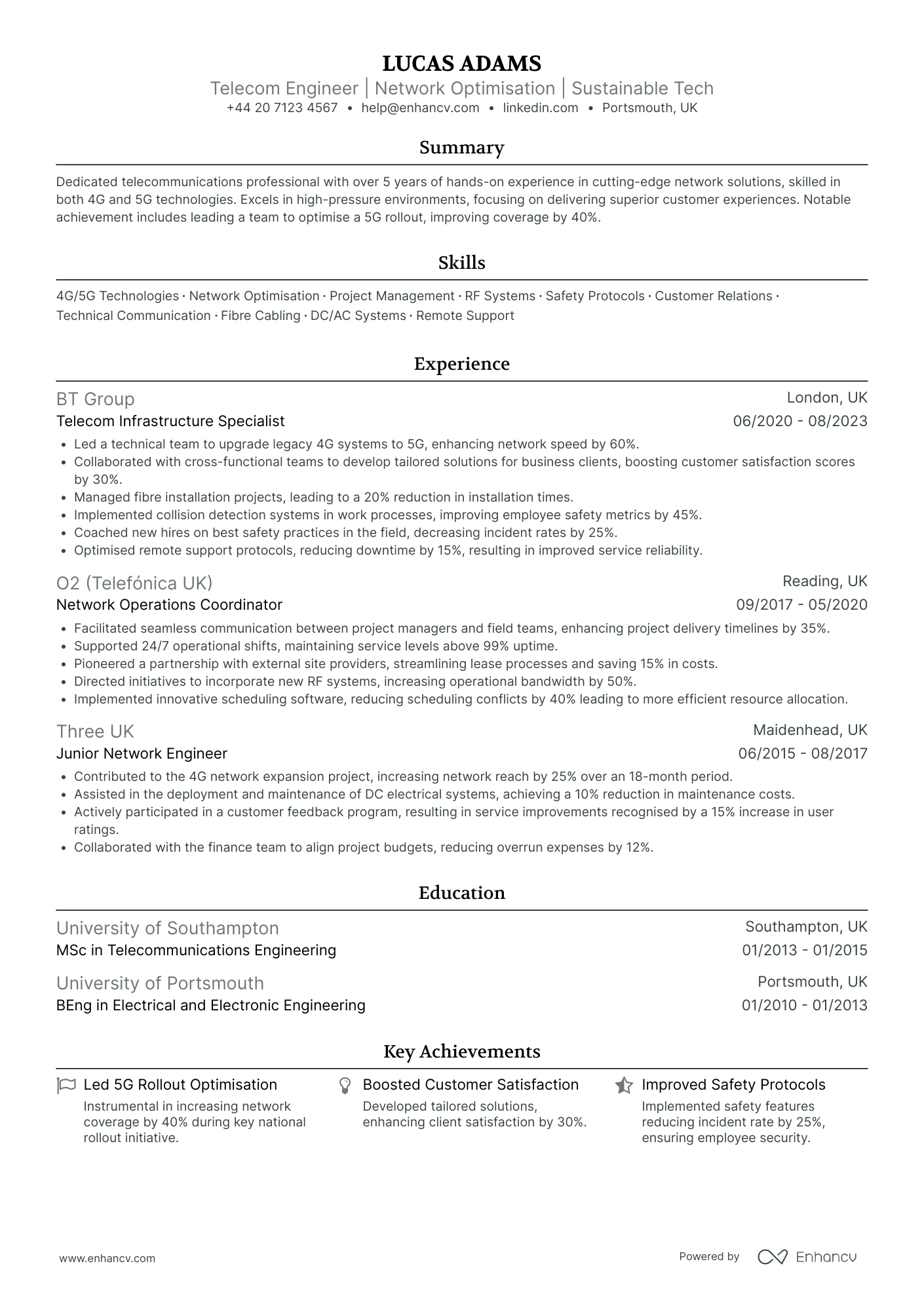
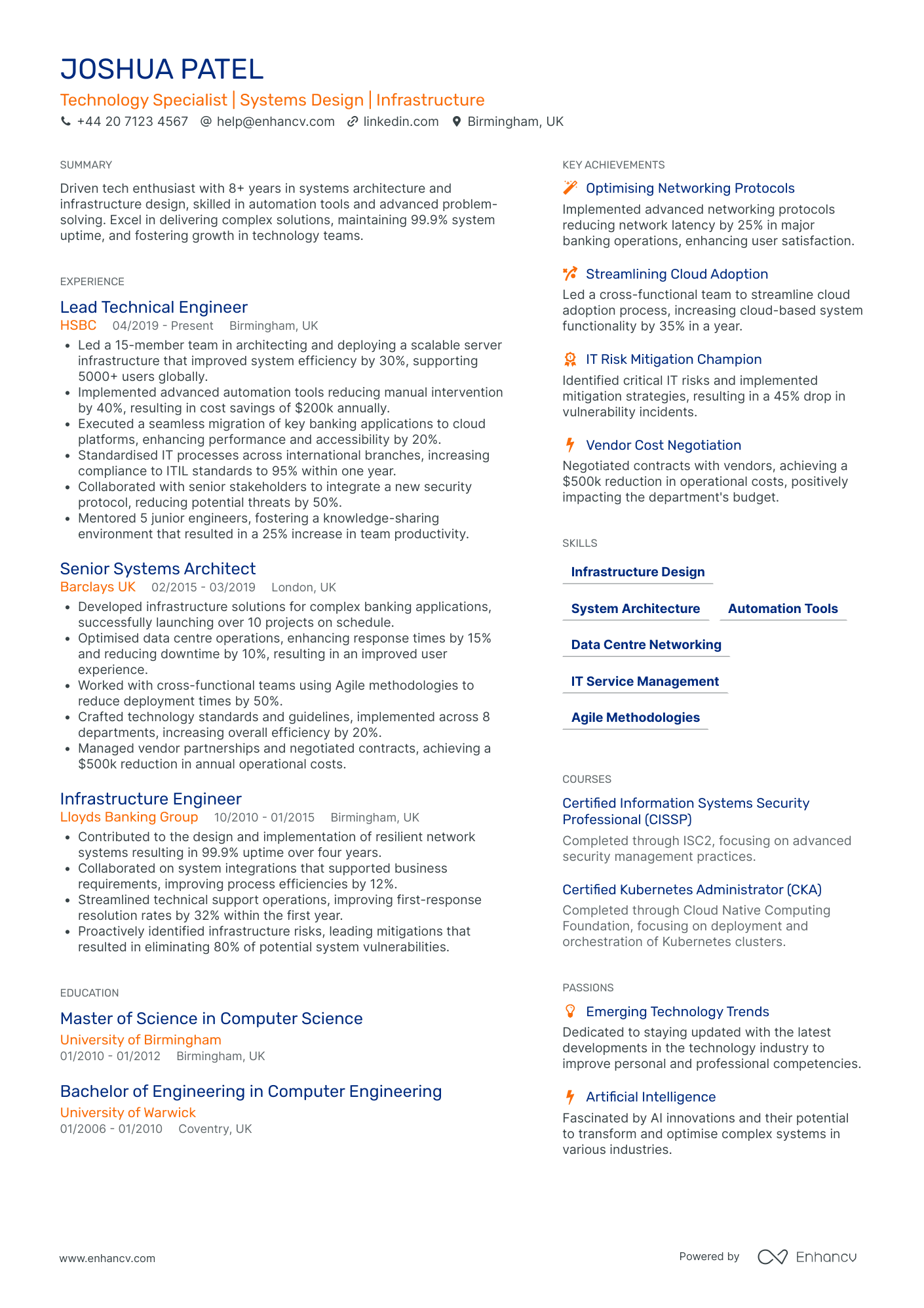
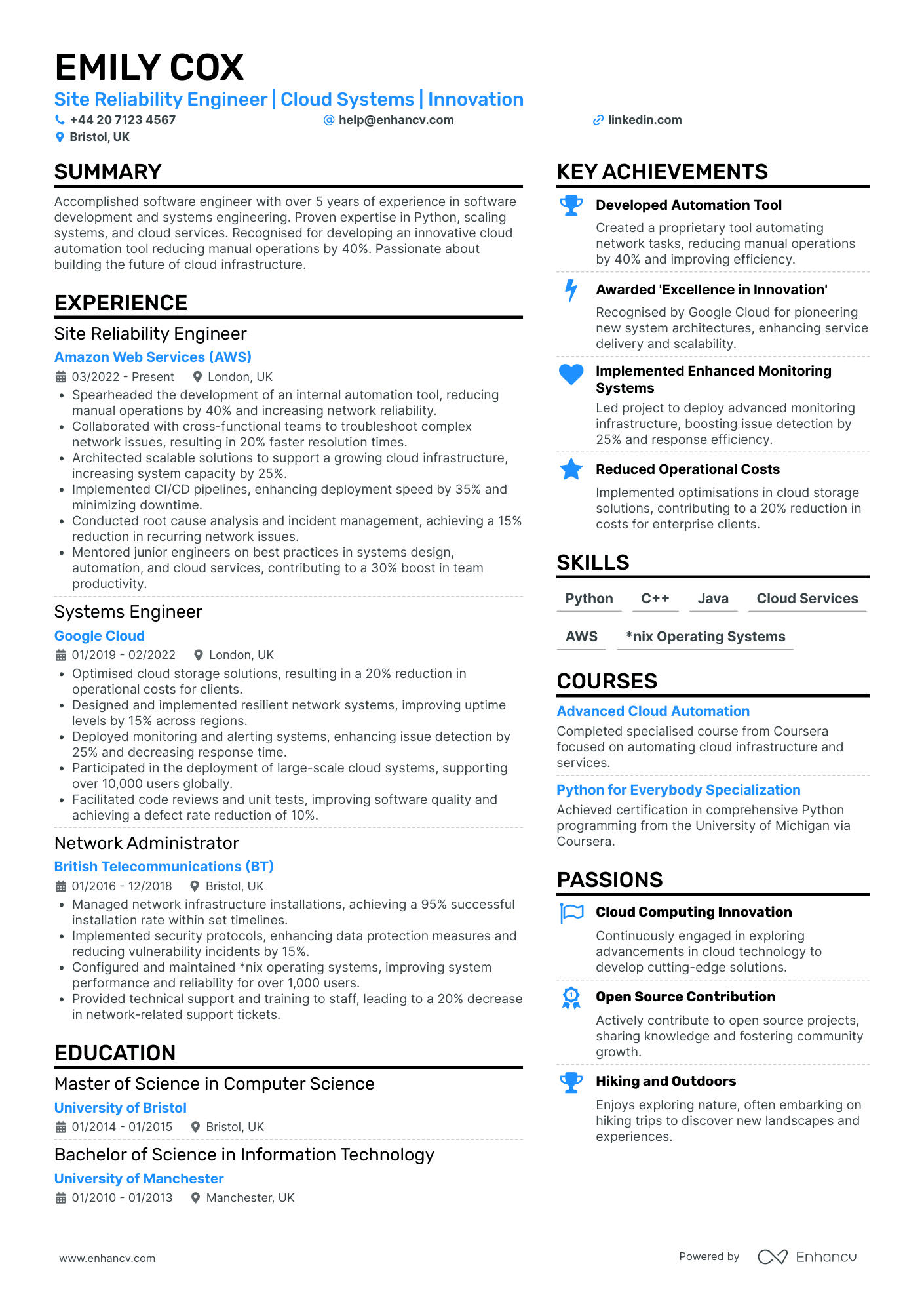
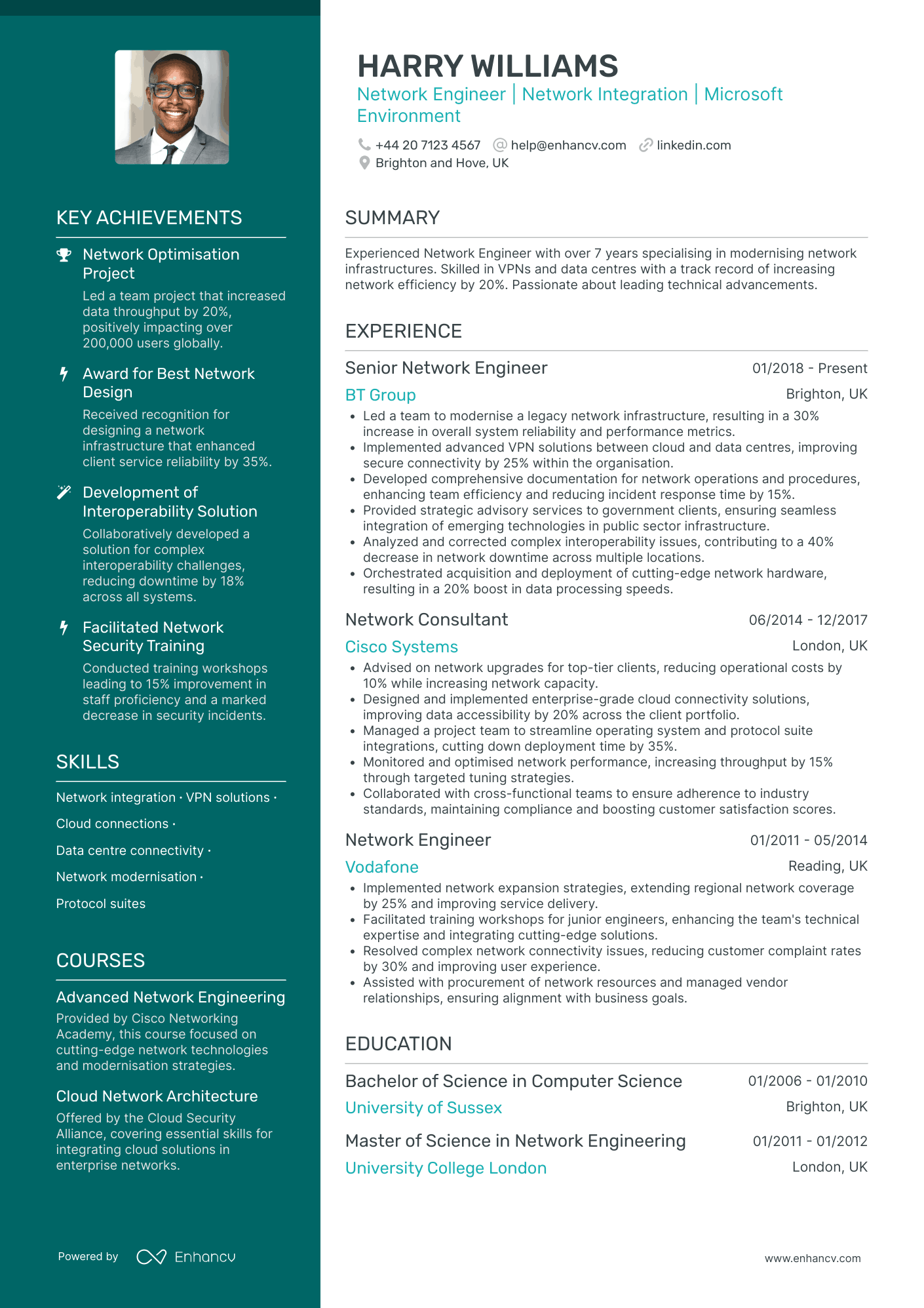
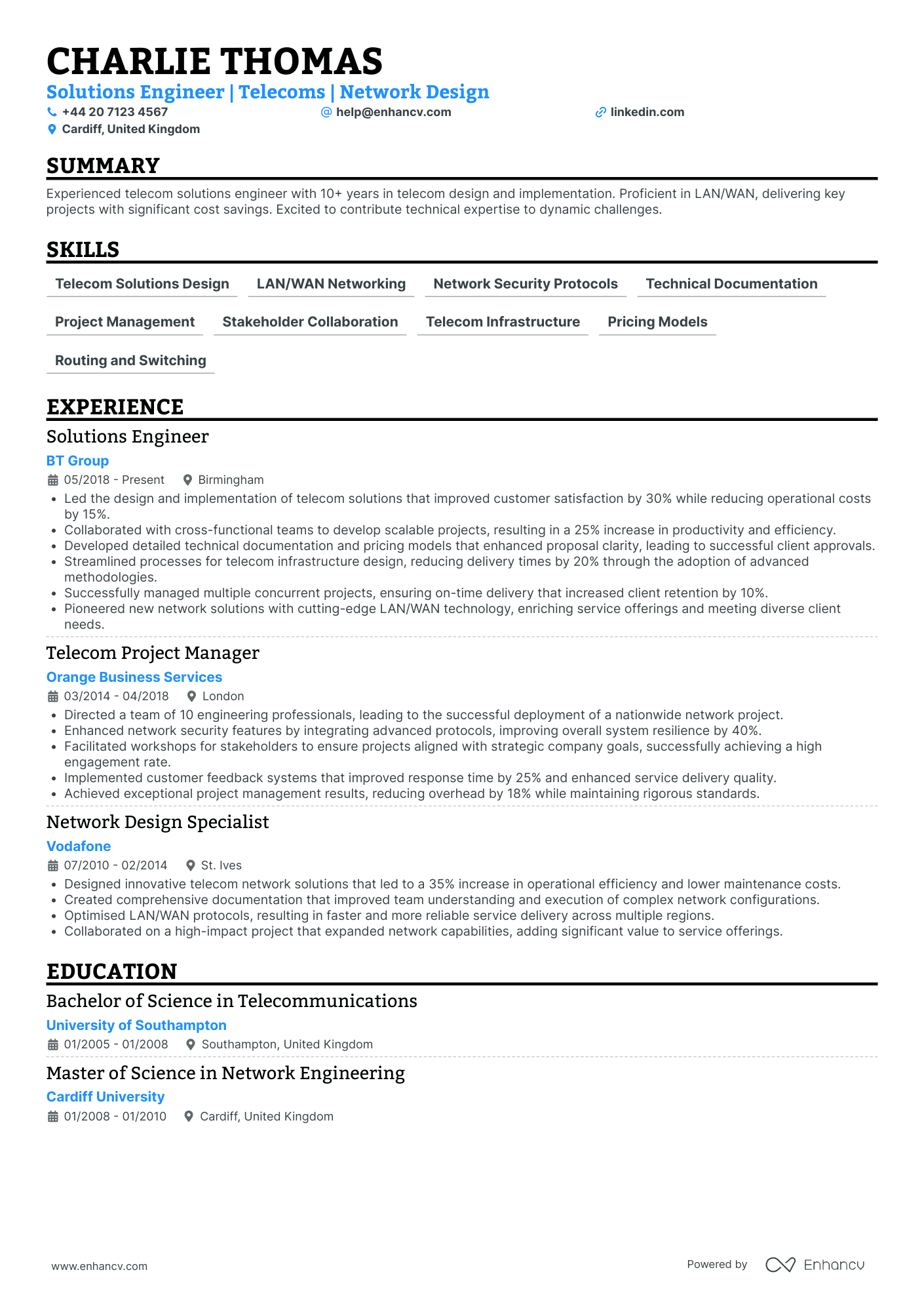
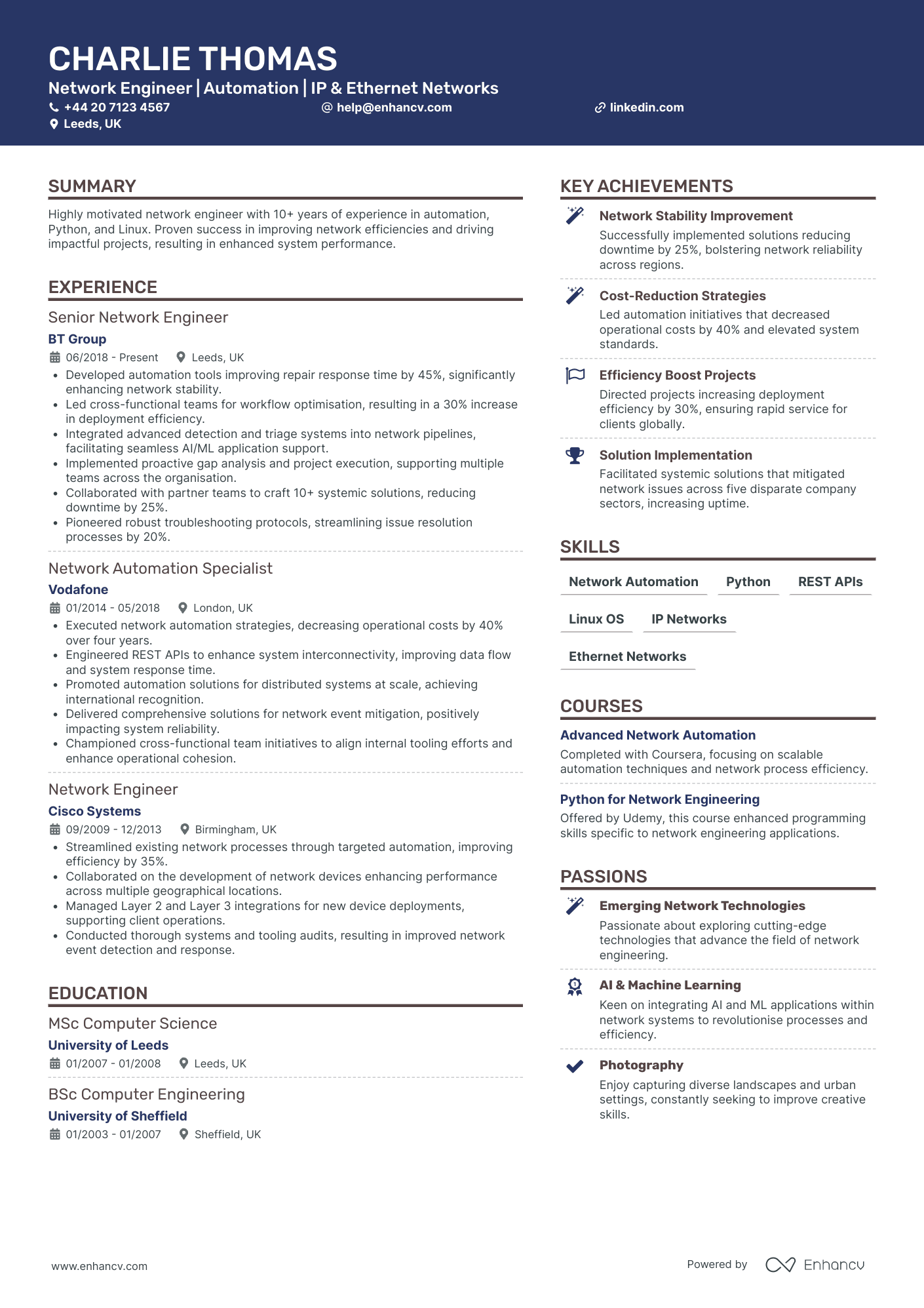
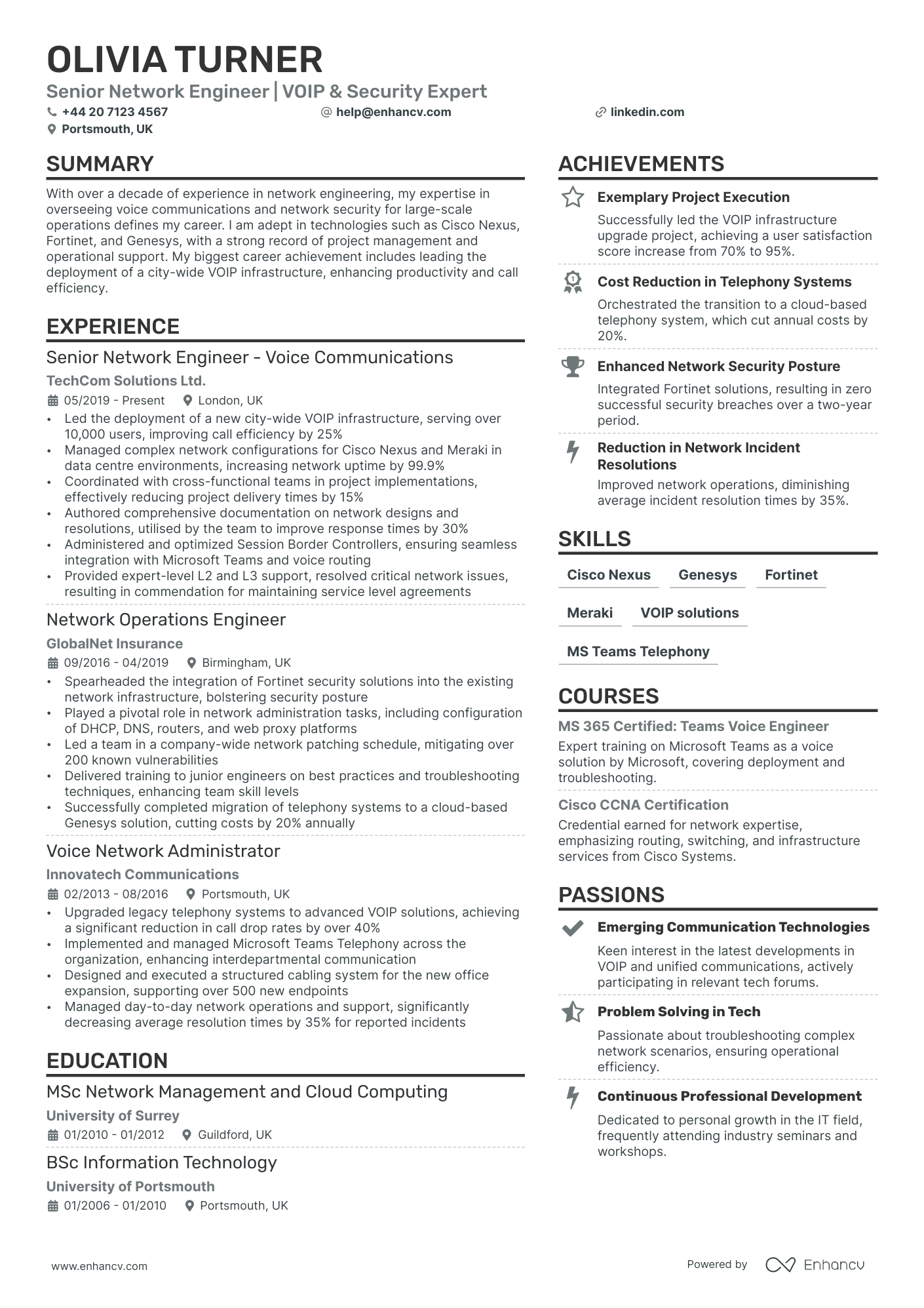
This role rewards structure over decoration. Use a single-column, reverse chronological layout with standard headings, so a recruiter and an applicant tracking system read the same clean file.
Lead with a tight header: your name, the title you are targeting, your location, and a line on hybrid or onsite availability. Network roles are tied to a site, so a recruiter wants to know you can reach it before they read further.
Then run the sections in the order this field expects.

The network engineer CV template, in order
- Header: name, target title, location, and hybrid or onsite availability.
- Personal statement: three or four lines, certification level and the networks you have run.
- Key skills: grouped by routing and switching, security and firewalls, then monitoring.
- Experience: reverse chronological, with quantified bullets.
- Certifications: level and year, anything in progress flagged.
- Education: kept short, near the foot of the CV.
Keep it to two pages once you have a few years behind you. One page suits a graduate or a first move, and a third page rarely earns its place. UK employers expect two.
Give the page room to breathe. Generous margins, one clear font, and consistent spacing let a manager scan your stack in seconds. A cramped CV that hides BGP on line 34 reads as a weaker engineer, even when the experience is strong.
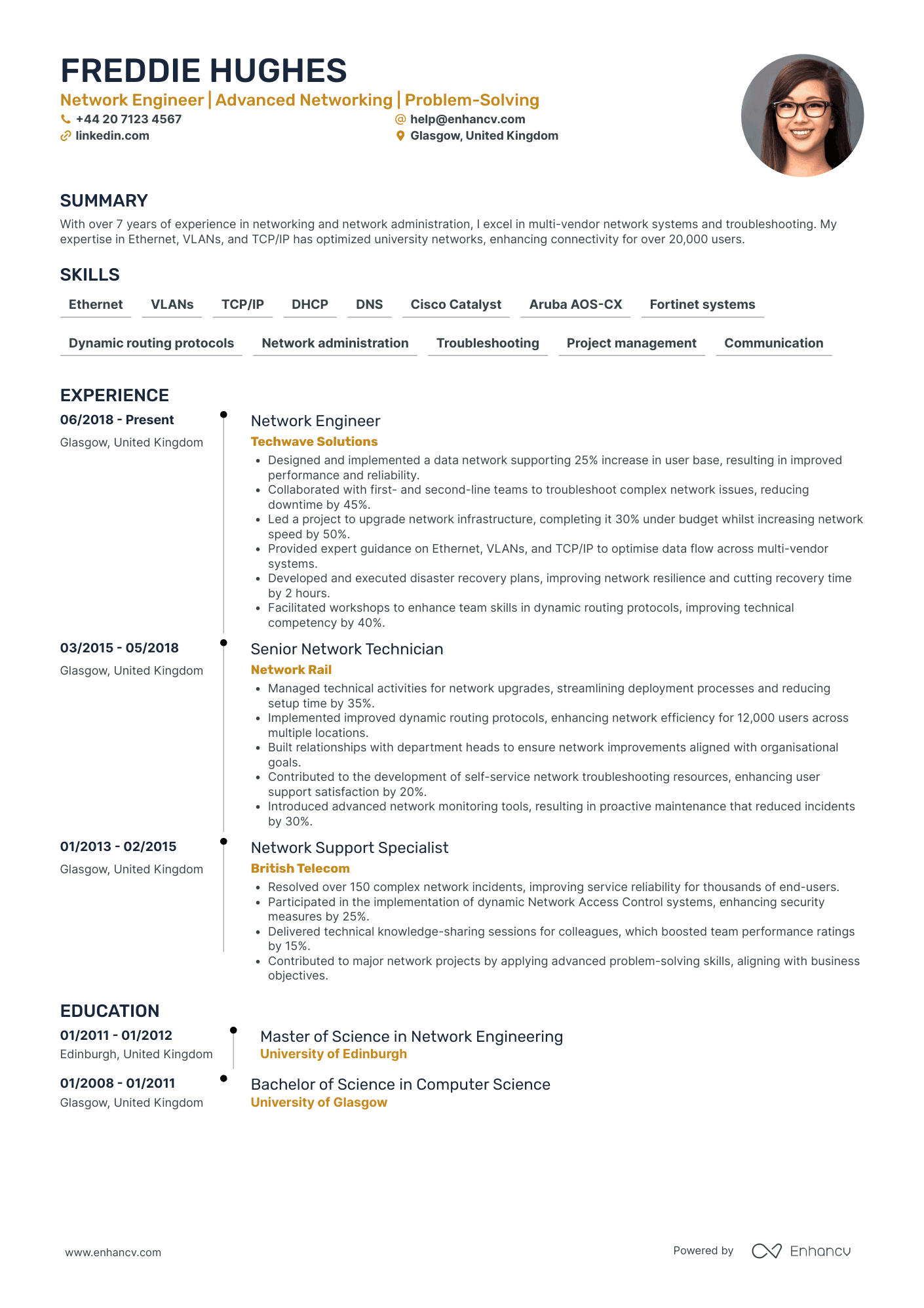
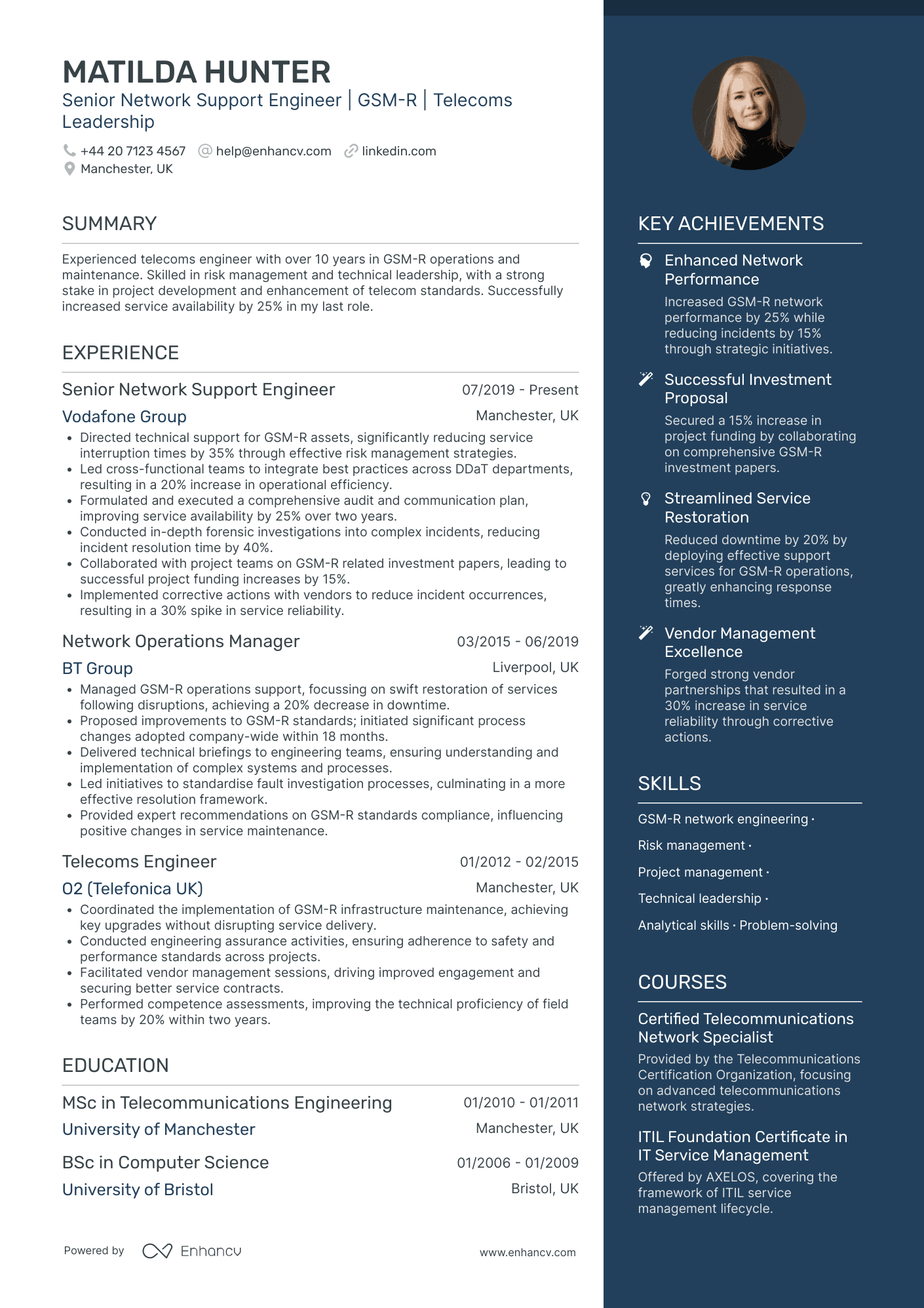
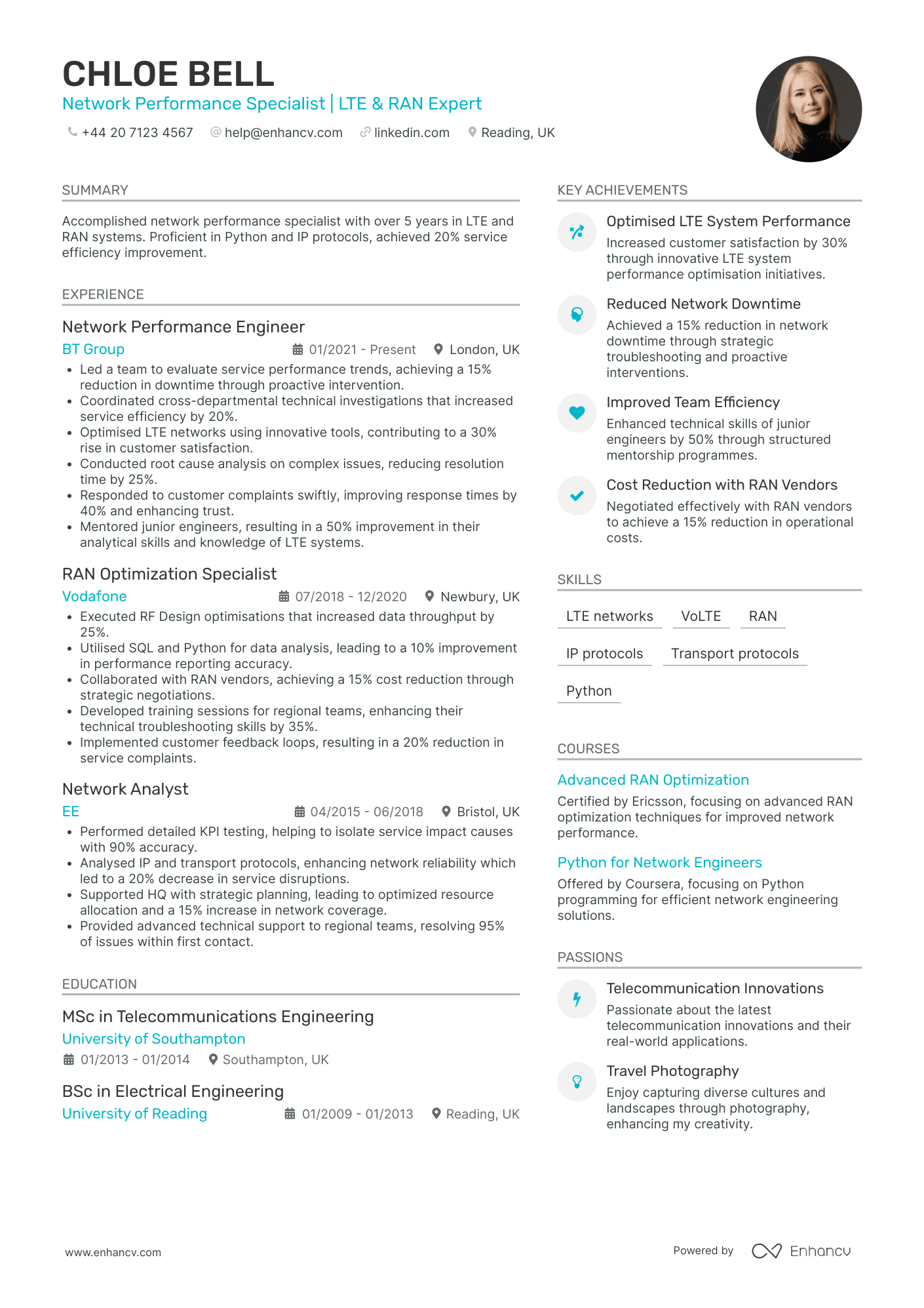
Leave off the photo, the date of birth, and the skill-percentage bars. None of them help a network hire, and the bars in particular tell a recruiter nothing that a real project bullet would not say better.
File type is the question every network engineer asks, and the answer is simple. Send a PDF for direct applications so your layout holds on any screen and any operating system.
Keep a Word version ready for recruitment agencies, which place a large share of UK network roles and reformat CVs into their own house template. A network engineer CV in Word is a routine agency request, so having both formats costs you nothing. If an advert names a file type, follow it exactly.
Name the file like a professional. "Jordan-Okafor-Network-Engineer-CV.pdf" beats "cv final v3", and it is the first small signal of the tidy engineer behind it.
Network CVs almost always pass through tracking software before a human sees them. Keep the headings standard, the layout clean, and the fonts readable, and drop the skill-bar charts, icons, and graphics that parse as noise. An ATS-friendly CV is not a plain CV, it is a structured one.
Build it from a tested layout rather than a blank page. Enhancv's CV templates export to a clean PDF and keep the structure ATS-safe, so you spend your time on the content, not the margins.
Is your resume good enough?
Drop your CV here or choose a file. PDF & DOCX only. Max 2MB file size.
What the UK network engineer market looks like
Before you format a single line, know what this market screens for. Here is what UK network engineer roles pay and ask for right now.
| What | UK network engineer roles |
|---|---|
| Typical pay | £25,500 to £52,000 a year (National Careers Service) |
| Where the work happens | Split between hybrid and onsite, with fully remote rare (64 UK postings in the last ~30 days, Enhancv's internal job feed) |
| Experience level asked for | Mostly mid to senior level |
| Most-listed skills | Cisco, BGP, OSPF, network security, routing, switching, Palo Alto, and firewalls |
Two numbers in that table should shape your CV.
The work splits between hybrid and onsite, with fully remote roles rare, so a recruiter needs to see you can reach the data centre or the office. Put your town and a note on hybrid availability in the header, and mention a driving licence if the role covers multiple sites.
The technical demands repeat with striking consistency. Cisco, BGP, and OSPF are the skills that recur most often across these postings, followed closely by network security, routing, switching, Palo Alto, and firewalls. Mirror those exact terms where they are true of you, in the words the adverts use.
Most roles are pitched at mid to senior level, so employers expect real depth on a named stack rather than a broad tour of every protocol you have read about. The pay rises with the vendors and certifications you can prove.
Read the demand as a tailoring instruction. If a posting leans on security and Palo Alto, move your firewall work up the page for that application. If it leans on service provider routing, lead with BGP and MPLS. The stack the advert lists is the stack your CV should echo first.
Top skills for your network engineer CV
Read a dozen live network engineer adverts and the same stack repeats. List your hard skills in the vendors' and protocols' own words, because that is exactly what recruiters and ATS filters search for.
Top skills for your network engineer CV:
Routing and switching
Cisco IOS and NX-OS
BGP and OSPF
Network security
Firewalls (Palo Alto, Cisco ASA)
VLANs and LAN/WAN
VPN and remote access
Network monitoring (SolarWinds, Wireshark)
TCP/IP and subnetting
Python and Ansible automation
Troubleshooting
Documentation
Communication
Attention to detail
Working under pressure
Group them so a skimming reader sees the shape of your experience. Routing and switching first, then security and firewalls, then monitoring and automation. Put the strongest and most-requested items at the front of each group.
Do not list a skill you cannot defend in an interview. "BGP" on the page invites a whiteboard question about route reflectors and path selection, so keep the line honest. If you have configured it in a lab but not in production, say so in the project entry rather than the top skills block.
The soft skills that matter here are the checkable ones: troubleshooting under pressure, clear documentation, and calm communication during an outage. Each belongs in an experience bullet that proves it, not in a list of adjectives a manager cannot test.
Automation is the fastest-growing line on a modern network CV. If you have scripted with Python or Ansible, name it. It signals you can manage a network at scale, not just device by device.
Writing your network engineer personal statement
Three or four sentences at the top: your certification level, the networks you have run, the protocols you own, and the role you want next. Keep it concrete. See more personal statement examples if the opening line is hard to start.
Skip the adjective soup. "Hard-working, detail-oriented team player" tells a network manager nothing they can test.
Lead with evidence instead:
Network engineer CV personal statement example
CCNP-certified network engineer with seven years across managed services and in-house infrastructure, running multi-site Cisco and Palo Alto networks for up to 5,000 users. Comfortable owning BGP and OSPF routing, firewall policy, and 24/7 incident response, with a recent migration that cut core failover time to under five seconds. Looking to bring hands-on routing, switching, and network security to a senior network engineer role in a hybrid team near Manchester.
Network engineer personal statement to avoid
Passionate and hard-working IT professional with strong knowledge of networking and a keen eye for detail. A great team player who thrives under pressure and is always looking to learn new technologies and take on new challenges in a fast-paced environment.
The weak version names no vendor, no protocol, and no number. It could belong to any applicant in any IT role, which is exactly why a network manager skips it.
When we screen a network engineer CV, the header and first two lines decide it. Put your certifications, the vendors you actually run, and one hard number like uptime or sites managed right at the top. Bury that under a paragraph about being a team player and a skimming hiring manager moves on. The engineers who get called first make their routing, switching, and security experience impossible to miss in ten seconds.
Writing your network engineer experience section
Give each role a dated heading, then bullets that show the network you ran and what changed because of you. Lead every bullet with a verb, and pin it to a number where you can. For the mechanics, see work experience on a CV.
Network work is measurable even when it feels like plumbing: sites managed, users supported, uptime held, incidents cut, and failover time reduced. Those are your CV achievements, and they separate you from a list of duties.
Order bullets by impact, not by chronology within the role. A failover time cut or an uptime figure belongs above a routine maintenance line.
Give context a manager can weigh. "Managed the network" says little, while "managed a 40-site Cisco and Palo Alto estate for 5,000 users" says exactly how big the job was. Scale, vendor, and outcome in one line is the pattern to repeat.
Tailor every application. Pull the protocols, vendors, and certifications from the advert and mirror the ones true of you. Enhancv's CV tailoring feature reads the job ad and suggests the matching edits, which saves rewriting from scratch each time.
- Run a multi-site Cisco and Palo Alto network for 40 client sites, holding uptime at 99.98% across the year
- Migrated core routing from OSPF to BGP for a 12-site client, cutting failover time from 45 seconds to under 5
- Segmented the network into VLANs and tightened firewall policy, closing 30 open ports flagged in a security audit
- Cut priority incidents by 35% by rebuilding monitoring in SolarWinds and setting proactive alerts
- Documented the estate and wrote runbooks that cut new-starter onboarding from three weeks to one

PRO TIP
Mirror the advert's exact tech stack. If it says "BGP, MPLS, and Palo Alto", use those precise terms where they are true of you, not "various routing protocols and firewalls". Recruiters and ATS filters both search for the specific product and protocol names.
Certifications for a network engineer CV
Certifications carry real weight in this field, so give them their own section near the top rather than the footer. List each with the level and the year, and flag anything in progress.
The certifications UK employers screen for cluster around the vendors: Cisco's CCNA and CCNP, Juniper's JNCIA, and increasingly a security track such as Palo Alto PCNSA or CompTIA Security+. Name the exact certificate, not "various networking qualifications".
Pair them with a short education line. A degree in computer science or networking helps, but a strong certification stack and hands-on experience carry a network engineer CV further than the degree alone.
Keep the wording precise. "CCNP Enterprise, 2024" is a fact a recruiter can verify, while "Cisco certified" is vague enough to raise a question you do not want asked. If a certification has lapsed, either renew it or mark the year honestly rather than leaving it open.
If you hold a security clearance, or you are eligible for one, say so plainly. A number of UK network roles, especially in the public sector and defence, screen for it early, and an existing SC or DV clearance can move you to the top of the shortlist on its own.
Early-career and graduate network engineer CVs
A first network role is won on proof you can run kit, not on years of service. Lead with your certifications, your home lab, and any hands-on exposure, then let a thin work history sit lower down, the way a good first-job CV does.
A home lab is the strongest signal a junior can send. Describe what you built: a GNS3 or Packet Tracer topology, a small BGP or OSPF setup, a firewall you configured and broke and fixed. Give it a dated entry like a project, with the protocols named.
Pull real evidence from adjacent work too. A help desk role that touched VLAN changes, cabling, or first-line network tickets is network experience, so write it in the vendors' and protocols' words. One line about a CCNA in progress moves a graduate CV up the pile, because it shows you are already on the path.
Frame the lab like production. Instead of "built a home network", write "configured OSPF across four virtual routers and a Layer 3 switch, then documented the failover test". The vocabulary is what tells a hiring manager you will fit their environment, even before your first paid role.
Conclusion
Lead with a clean, ATS-safe format, name the vendors and protocols this role screens for, and back every claim with a number from the network you ran.
Pair the CV with a short cover letter that says why this team and this stack, and you turn a solid CV into an interview.
Author's take - The Enhancv team
When we screen a network engineer CV, the header and first two lines decide it. Put your certifications, the vendors you actually run, and one hard number like uptime or sites managed right at the top. Bury that under a paragraph about being a team player and a skimming hiring manager moves on. The engineers who get called first make their routing, switching, and security experience impossible to miss in ten seconds.