



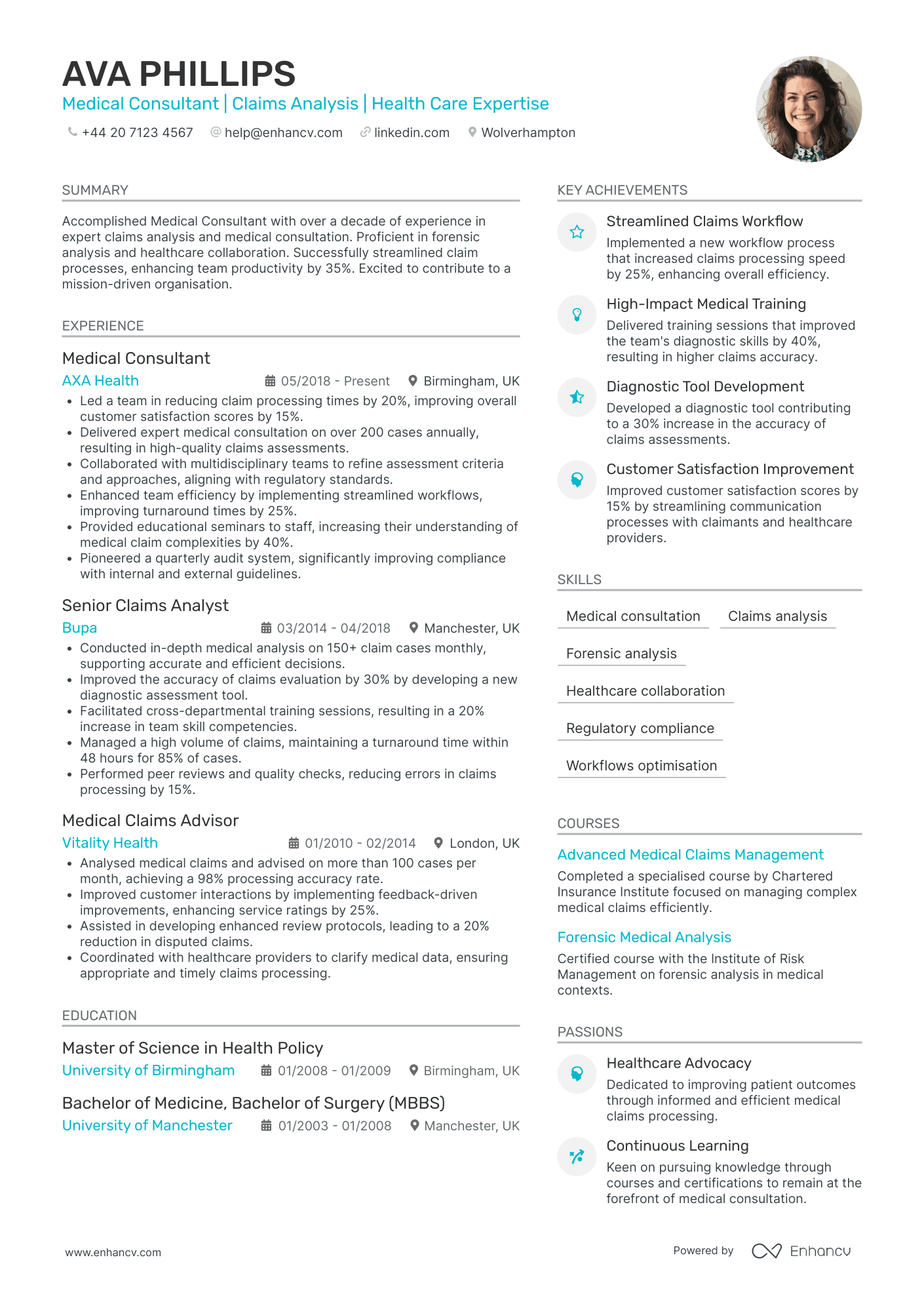
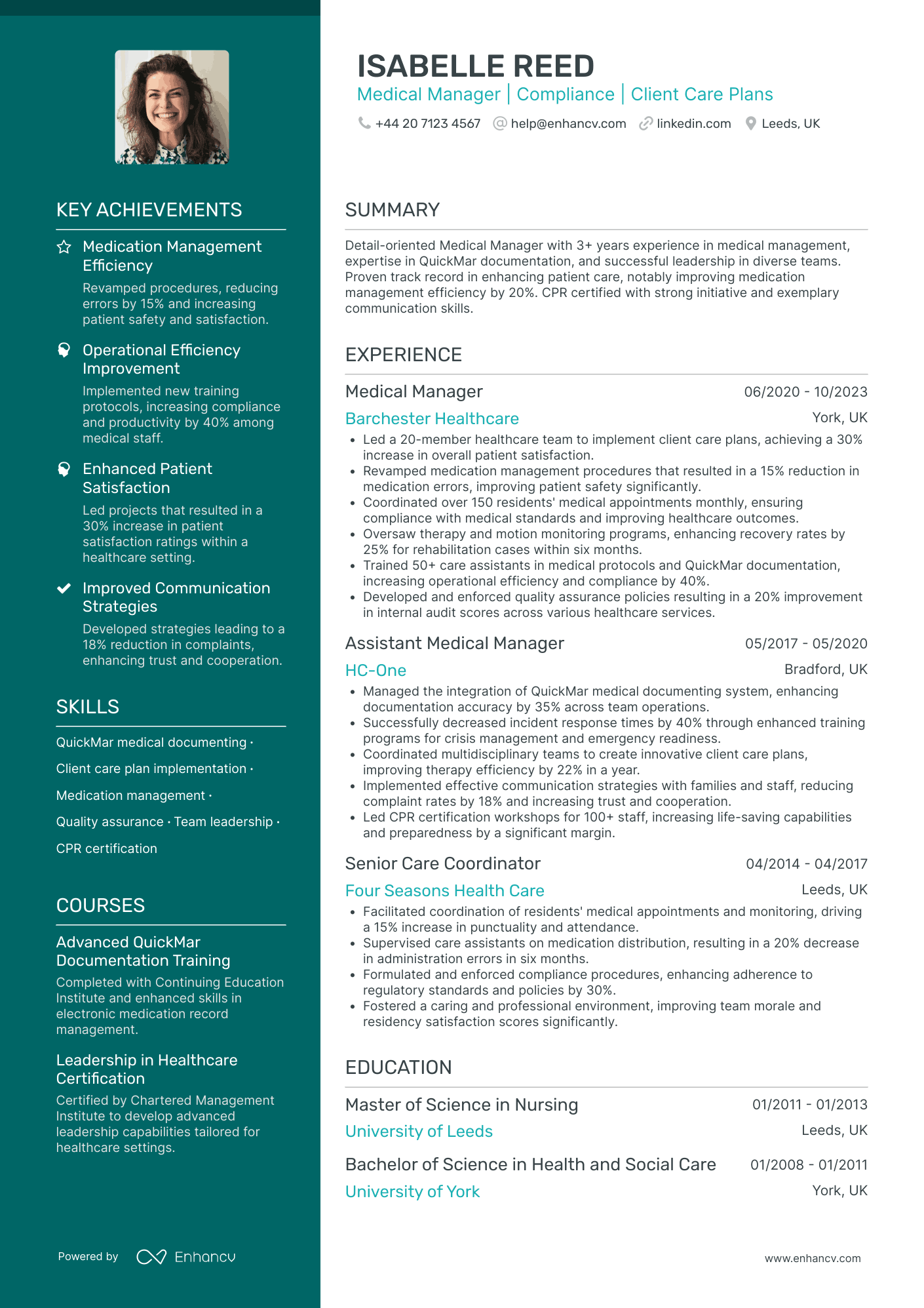
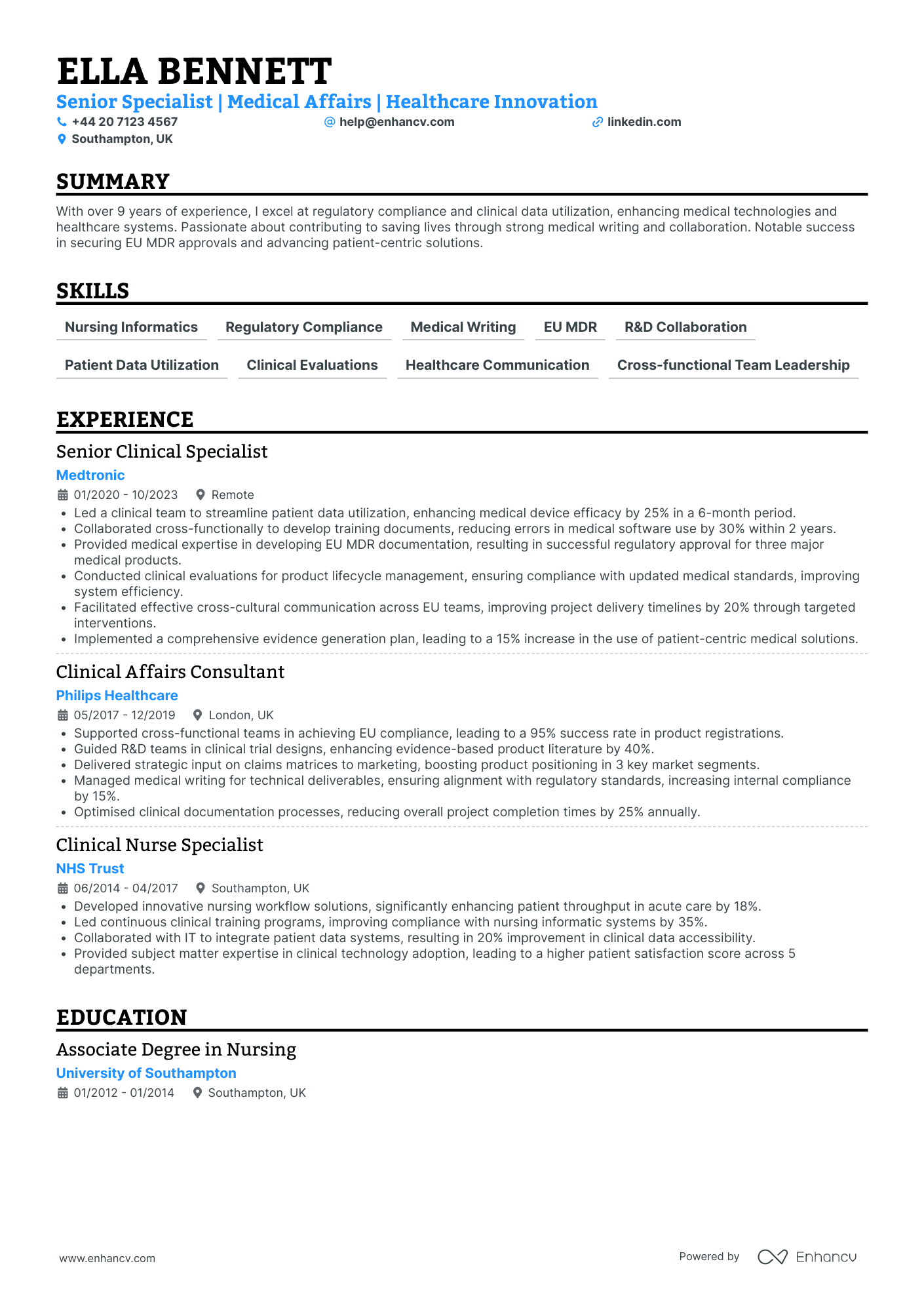
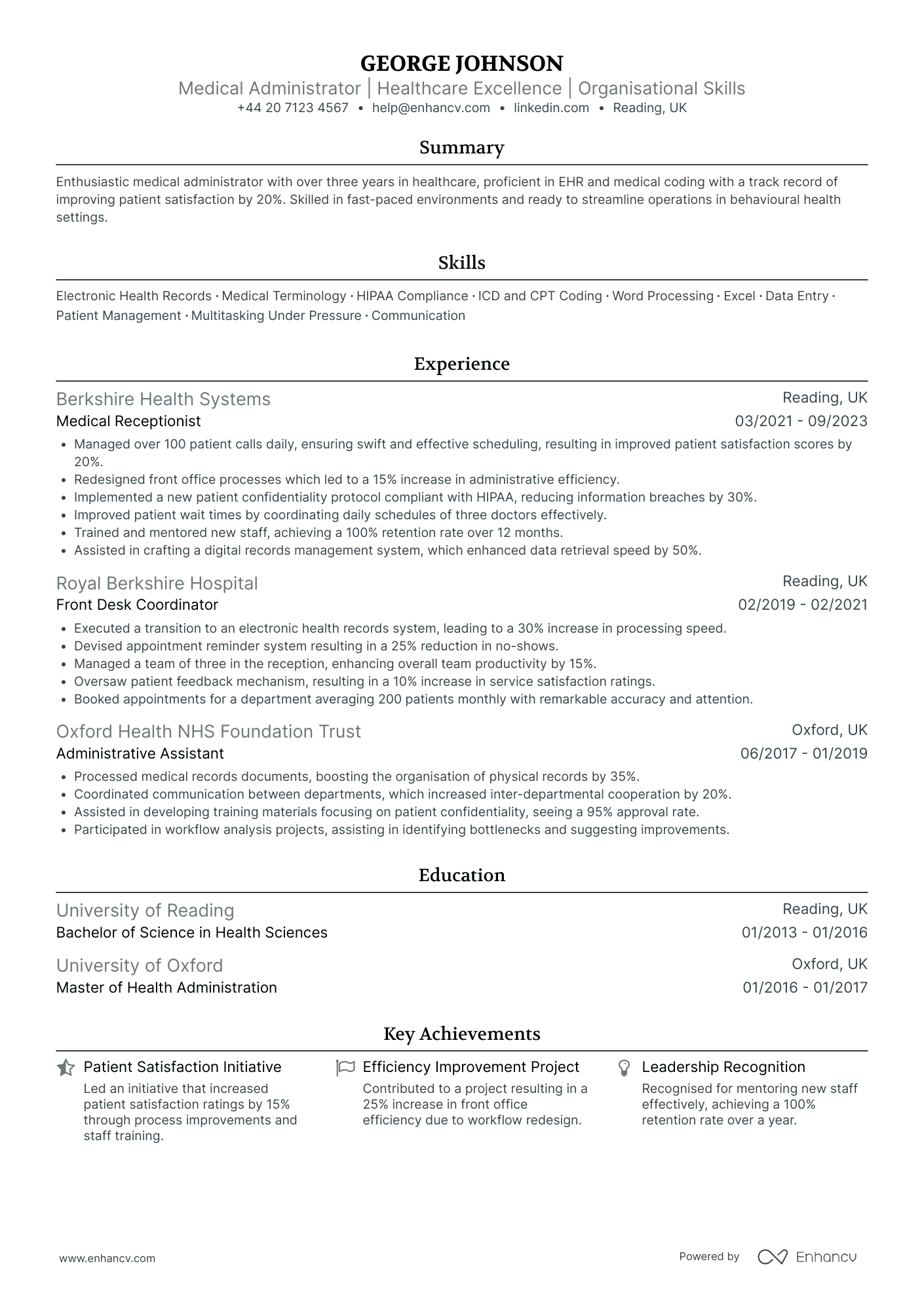
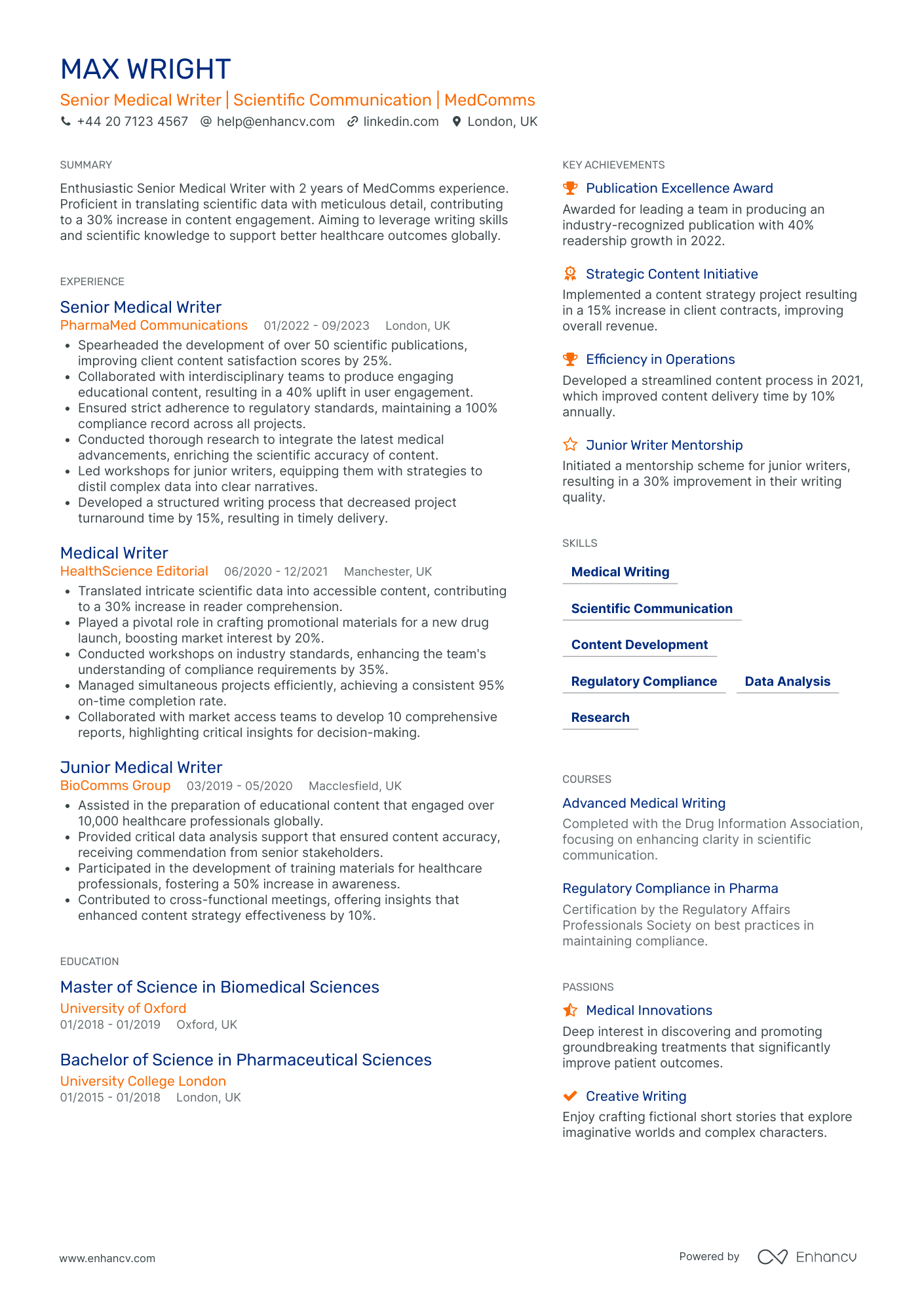
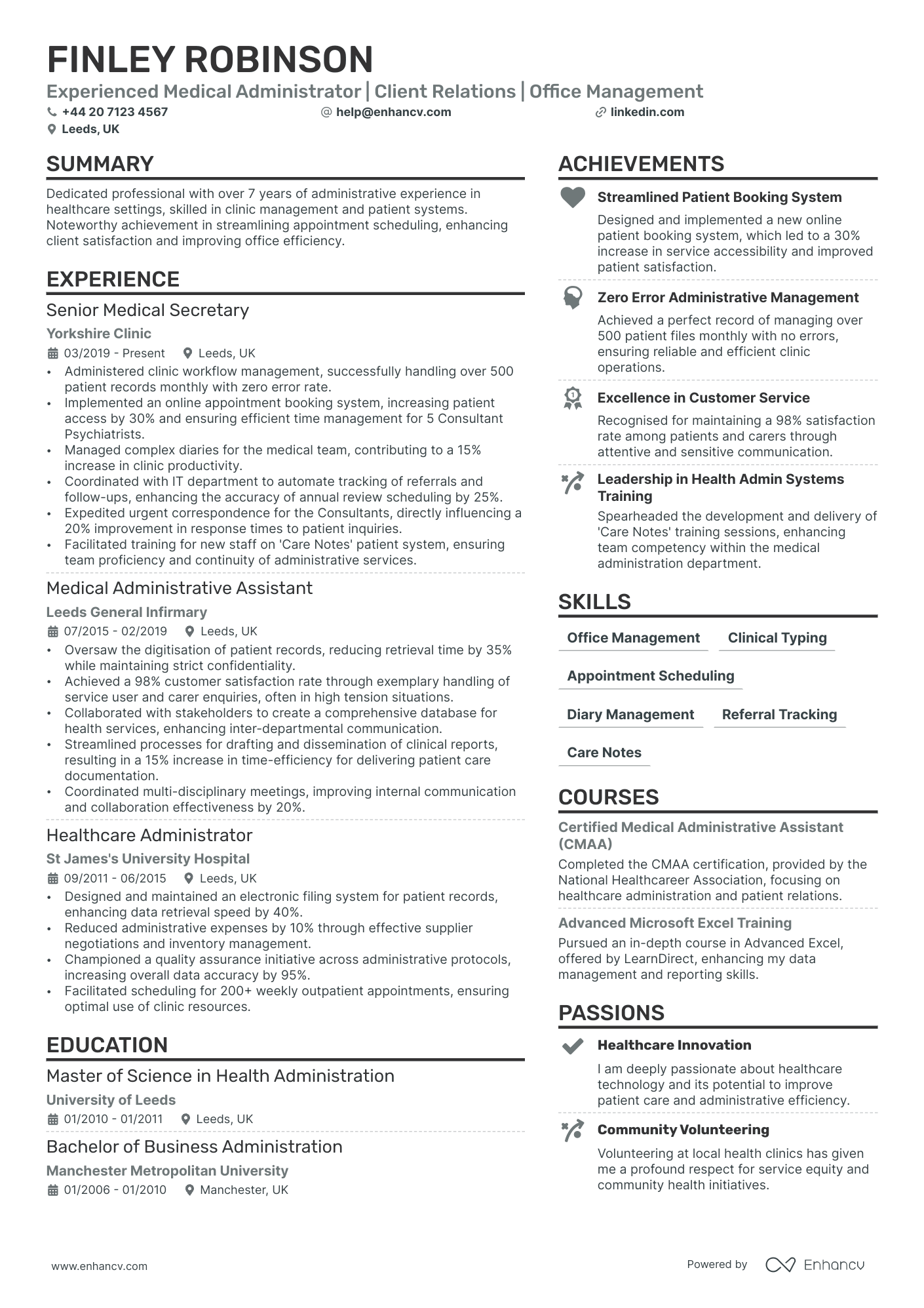
A medical CV is not the two-page CV the rest of the internet is teaching you to write. It is a structured, multi-page record of your training, clinical posts, audits, teaching, and publications, and NHS panels read it against a fixed set of headings.
Get the structure or the order wrong and a strong doctor reads as a disorganised one. Get both right and an ordinary run of posts reads as a clear, promotable career. If you want the fundamentals of a standard CV first, see how to write a CV.

Key takeaways
- A medical CV follows fixed NHS conventions and runs longer than a standard CV. Completeness beats brevity.
- Lead with your GMC registration and licence to practise. A panel checks them before anything else.
- Group your evidence under the standard headings: clinical posts, audit and quality improvement, teaching, publications, and courses.
- Quantify clinical work: admissions clerked, audit cycles closed, teaching sessions delivered, procedures logged.
- Send it as a PDF so the layout holds, unless the advert or portal asks for Word.
- Keep one full master CV and tailor a shorter version to each person specification.
Formatting your medical CV
Start with the length, because it is the first thing that trips doctors up. A medical CV runs longer than a standard CV, and that is expected. You fill the pages with evidence rather than padding, and the document grows with your career.
Do not compress it to two pages to hit a general CV length rule. A foundation doctor might fill three or four pages. A consultant applicant will run to eight or more once publications and audits are in.
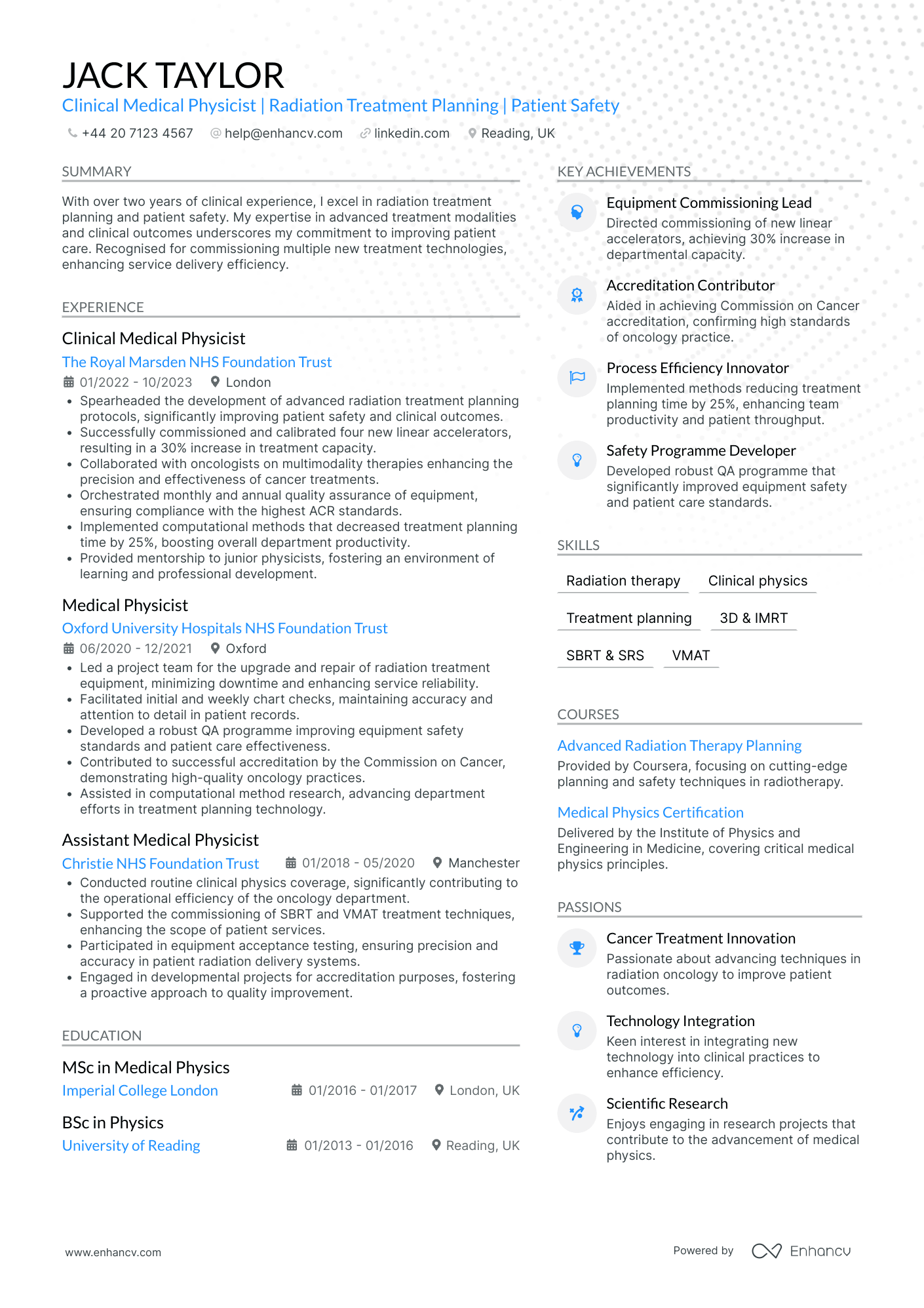
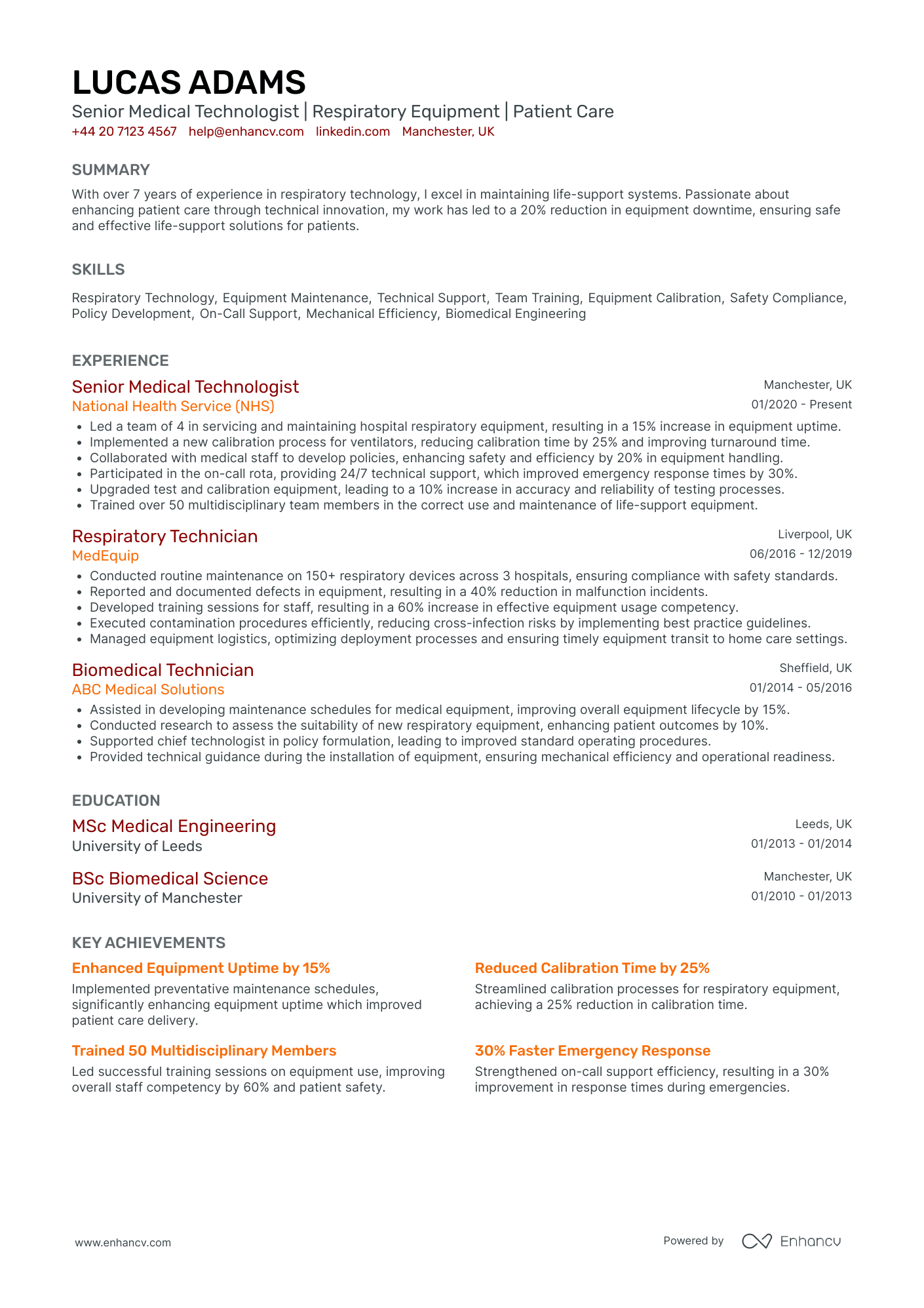
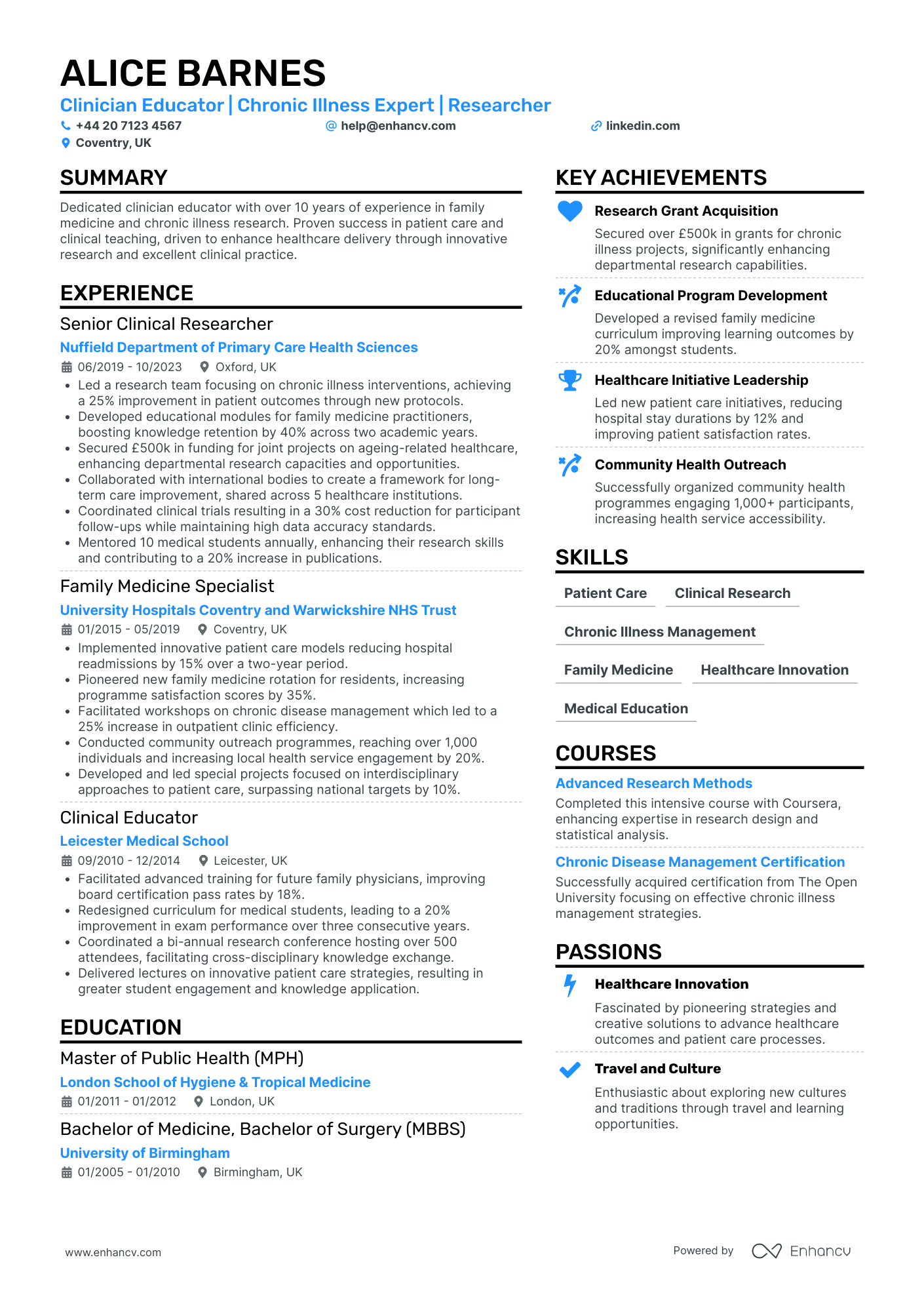
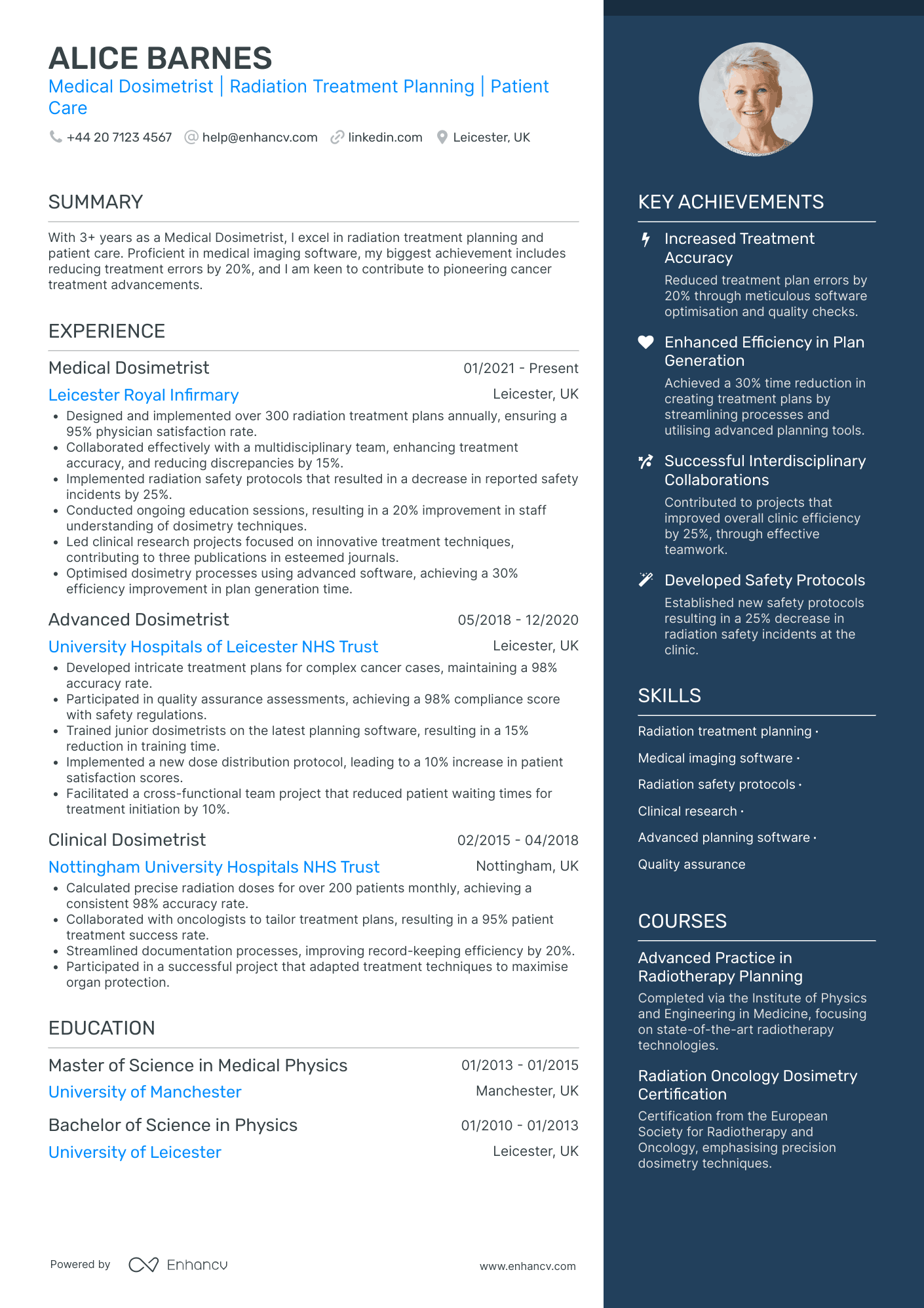
Order the document the way a panel reads it: personal details and GMC registration first, then qualifications, then your clinical posts in reverse chronological order, then the evidence sections. A consistent order lets a reviewer find each item without hunting.
The BMA publishes a widely used medical CV example, and most NHS posts are built around a person specification. Mirror those headings exactly, so a reviewer working down the spec finds each item where they expect it.
Send it as a PDF for direct applications, locum agencies, and consultant or private posts, so the layout holds on every screen. Keep a Word copy for any portal or agency that asks you to paste or reformat. If the advert names a file type, follow it.
Keep the layout plain: one column, standard headings, a readable font, consistent date formatting, and your name plus a page number in the footer since the document runs long. Avoid tables, columns, and text boxes for the body content. They look tidy on your screen and break the moment someone opens the file in a different application.
Structured NHS forms do the filtering for many training posts, so you often paste evidence into set fields rather than upload a document. Even then, a clean, ATS-friendly CV earns its keep for locum, private, and academic roles that read the document directly, and it doubles as the master file you copy those fields from.
Build it from a tested layout rather than a blank page. Enhancv's CV templates export to a clean PDF that keeps its formatting when a busy clinical lead opens it between clinics.

PRO TIP
Read the person specification line by line before you touch the CV. NHS panels score against it, so use its exact wording for essential criteria such as 'GMC registration with a licence to practise', 'ALS provider', or 'evidence of audit'. Put each one where the reviewer expects to tick it off.
The sections a UK medical CV needs
A medical CV is judged on completeness. Every heading a training or consultant panel expects should be present, even if a section is short early in your career.
Think of it as a portfolio in document form. The prose matters less than whether a reviewer can find each piece of evidence under the heading they expect, in the order they read.
Work through these CV sections in this order:
- Personal details: name, contact details, and your GMC reference number with your registration status and licence to practise.
- Personal statement: three or four lines on your grade, current post, exam progress, and the training you are applying for.
- Qualifications and education: your primary medical degree with dates, any intercalated BSc, and postgraduate exams such as MRCP, MRCS, or MRCGP with pass dates.
- Career history: every clinical post in reverse chronological order, with grade, specialty, dates, and hospital.
- Clinical skills and procedures: the practical competencies you can evidence, logged on your e-portfolio.
- Audit and quality improvement: each project, your role, the change you made, and the measured result.
- Teaching experience: sessions delivered, who to, and any feedback scores or teaching qualifications.
- Publications and presentations: full references in one consistent style, plus posters and oral presentations at named meetings.
- Research: projects, methods, and outputs, including any higher degree such as an MD or PhD.
- Courses and certifications: ALS, ATLS, and other valid provider courses with expiry dates.
- Management, leadership, and memberships: rota coordination, committee roles, and bodies such as the BMA or a royal college.
- Referees: usually your current clinical or educational supervisor, listed with their permission.
Keep the reference style consistent across the whole document. Use one format for every publication and presentation, list them in reverse chronological order, and mark your own name in bold so a reviewer can see your contribution at a glance.
The audit, teaching, and publications sections are where training numbers are won or lost. Two doctors with identical rotations look very different once one has laid out three completed audit cycles and a first-author poster and the other has left those pages blank.
If a heading is genuinely empty, leave it out rather than writing "none to date". A short, honest CV reads better than one padded with empty labels, and the evidence sections will fill in as you rotate.

What a panel checks first
Before the prose, a panel scans for three things: your GMC registration and licence, your postgraduate exam progress, and evidence you meet the essential criteria. Make all three visible on the first page so nobody has to search for them.
What the UK medical job market looks like
Knowing where the roles sit helps you pitch the CV. Here is what UK postings with 'medical' in the title show right now, drawn from Enhancv's internal job feed over the last ~30 days.
| What | UK medical roles |
|---|---|
| Sample | 362 UK postings with 'medical' in the title in the last ~30 days (Enhancv's internal job feed) |
| Where the work happens | On-site 63%, hybrid 28%, remote 9% |
| Experience level asked for | Entry 28% · mid 27% · lead 27% · senior 14% · executive 4% |
| Skills that recur most | Project management, Microsoft Office, Excel, cross-functional collaboration, medical affairs |
| Pay | Banded by NHS grade and out-of-hours supplement, so there is no single market rate to quote |
Two things in that table should shape your CV.
Nearly two-thirds of these roles are on-site, which fits clinical work. Put your location, and for locum or rotational posts your willingness to travel between sites, near the top of the CV.
The seniority split is spread almost evenly across entry, mid, and lead roles, so there is a route in at every stage of training. Pitch the CV at the exact grade in the advert rather than a generic "doctor", and let the evidence sections carry the weight the grade implies.
The net here spans clinical NHS posts and industry roles such as medical affairs and pharmacovigilance, which is why generic tools top the skills list rather than clinical procedures. For a doctor's CV, ignore that list and evidence the competencies named in your person specification instead. Build your skills section from the spec, not from a generic template.
Writing your medical CV personal statement
Three or four sentences at the top: your grade, your current post, your exam progress, and the training or specialty you are applying for. Keep it factual. See more personal statement examples if the opening line stalls you.
Skip the adjective soup. "Hard-working, passionate, and caring" tells a panel nothing it can score.
Rewrite it for each post. A statement aimed at core surgical training should read differently from one aimed at GP or acute medicine, because the specialty and the person specification change what counts as your strongest evidence.
Lead with evidence a reviewer can check:
Medical CV personal statement example (foundation doctor)
Foundation Year 2 doctor with full GMC registration and eight months of acute medical experience across respiratory and cardiology, currently sitting MRCP Part 1. Led a two-cycle audit on VTE prophylaxis that raised compliance from 71% to 94% across two wards. Applying for Internal Medicine Training in the North West, with a longer-term interest in respiratory medicine.
Now compare that with the version panels see far too often:
What to avoid
A hard-working, passionate, and dedicated doctor with excellent communication skills and a caring nature, seeking a challenging and rewarding role in a reputable hospital to further my career and develop my skills.
The medical CVs that get shortlisted are not the ones with the fanciest layout. They are the ones where a tired panel can find the GMC number, the exam progress, and one completed audit cycle in under thirty seconds. Write for the person scoring you against a spec at the end of a long day, and put your strongest evidence where they look first.
Writing your clinical experience section
List every post in reverse chronological order with grade, specialty, hospital, and dates. Under each, use bullets that show what you did and the result, not a copy of the job description. For the mechanics, see work experience on a CV.
Clinical work is more measurable than it feels. Admissions clerked, audit cycles closed, teaching sessions delivered, and procedures logged are your CV achievements.
Open each bullet with a verb and close it with an outcome. "Managed the acute take" is a duty. "Ran the acute take overnight for a 900-bed hospital, clerking 15 patients and escalating four to critical care" is evidence a panel can picture.
Foundation rotations move fast, so you can group short placements under one training programme heading and give each rotation a line or two. Save the detailed bullets for the posts that show the specialty you are applying into.
- Clerk and manage up to 15 acute admissions per on-call shift, prioritising by NEWS2 and escalating deteriorating patients to the medical registrar
- Closed a two-cycle audit on sepsis six delivery, raising one-hour bundle compliance from 68% to 91% across the acute medical unit
- Deliver weekly bedside teaching to medical students and foundation doctors, rated 4.8 out of 5 across the placement
- Perform core procedures independently, including cannulation, arterial blood gases, lumbar puncture, and ascitic drains, all logged on the e-portfolio
Tailor every application to the person specification, mirroring its wording where it is true of you. Enhancv's CV tailoring feature reads the spec and suggests the matching edits, which saves rewriting each rotation from scratch. Done well, a tailored CV is what moves you from longlist to interview.
Education, qualifications, and GMC registration
Your GMC registration number and licence to practise are non-negotiable, so keep them near the top rather than buried in your education section. A panel checks them before anything else.
List your primary medical degree with dates, any intercalated BSc, and your postgraduate qualifications in order: membership exams such as MRCP or MRCS, then any higher degree. Give pass dates and the awarding college.
Keep a live list of certificates with expiry dates: ALS, ATLS, safeguarding, and any specialty provider courses. An expired resuscitation certificate on a CV reads worse than a missing one, so keep every date current.
If you trained or qualified outside the UK, state your GMC route and English language evidence plainly. A panel wants to see that you are cleared to work, not to guess at it, so make your registration status unambiguous on the first page.
Writing a medical CV as a student or foundation doctor
Early on, the clinical experience section is thin, so the evidence sections carry the CV. That is normal, and panels know it. See more CV examples for a first job if you are starting from scratch.
Fill the pages with what you do have: your elective, student-selected components, any audit or quality improvement you contributed to, teaching you have delivered to junior students, and posters or prizes.
An intercalated degree, a first-author abstract, or a completed audit cycle all count as real evidence at this stage. So does volunteering with a clinical or community link, written up with dates and what you actually did.
Frame each entry the way you would a job: what you did, over what period, and what came of it. "Presented a case report at the regional teaching day" beats a bare line on your timetable, and "co-authored a departmental guideline on discharge summaries" shows initiative a rota cannot.
One completed audit and one teaching session, laid out properly, put a student CV ahead of a longer one that lists modules and hobbies.
Conclusion
A medical CV rewards structure over brevity. Lead with your GMC registration and exam progress, group your evidence under the headings a panel expects, and quantify the clinical work behind each one.
Keep one full master version and cut it down to the person specification each time, rather than starting fresh. The structure stays the same. Only the emphasis moves.
Pair it with a short cover letter aimed at the specific post, and your application reads as a clear case rather than a pile of pages.
Author's take - the Enhancv team
The medical CVs that get shortlisted are not the ones with the fanciest layout. They are the ones where a tired panel can find the GMC number, the exam progress, and one completed audit cycle in under thirty seconds. Write for the person scoring you against a spec at the end of a long day, and put your strongest evidence where they look first.