



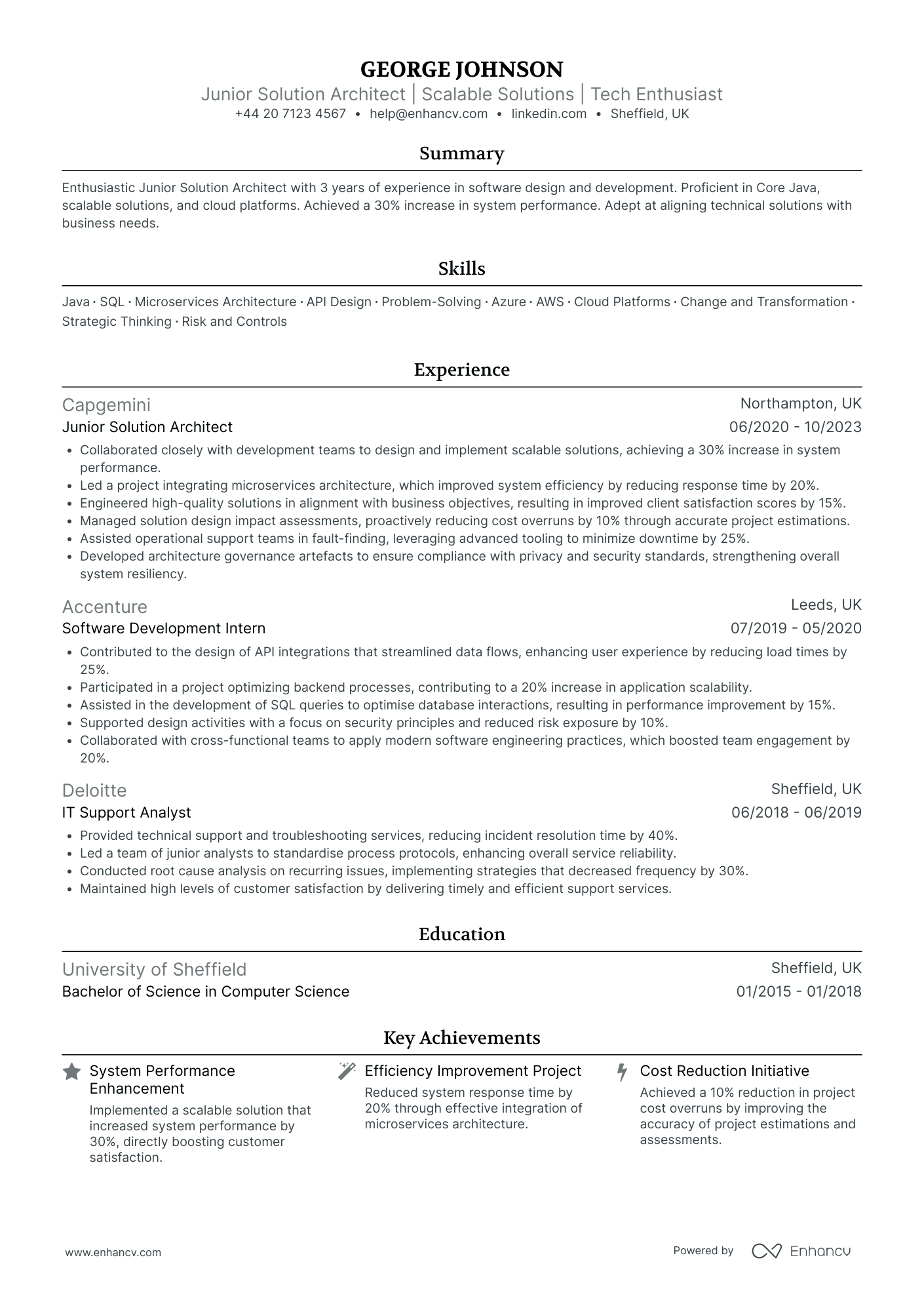
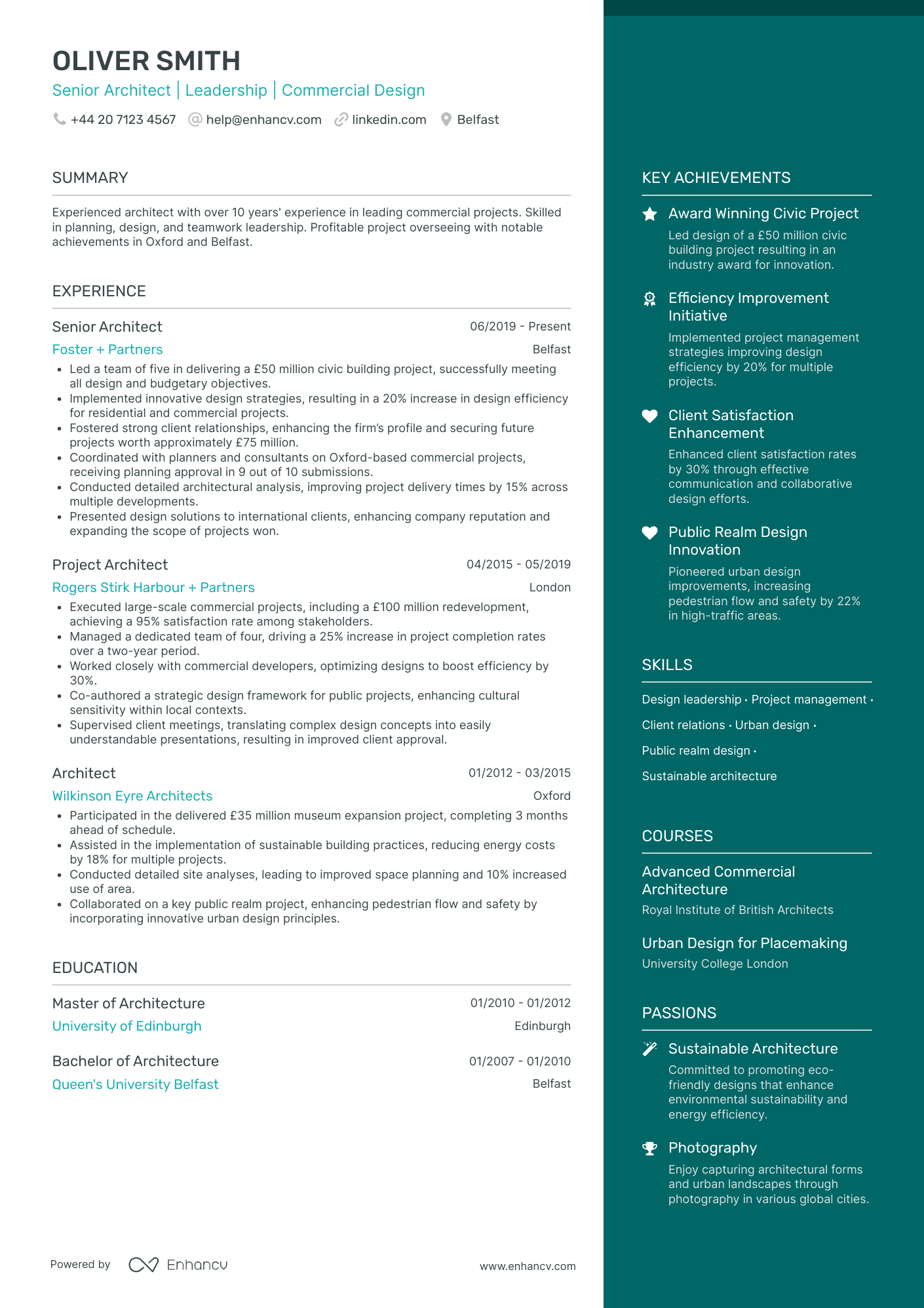
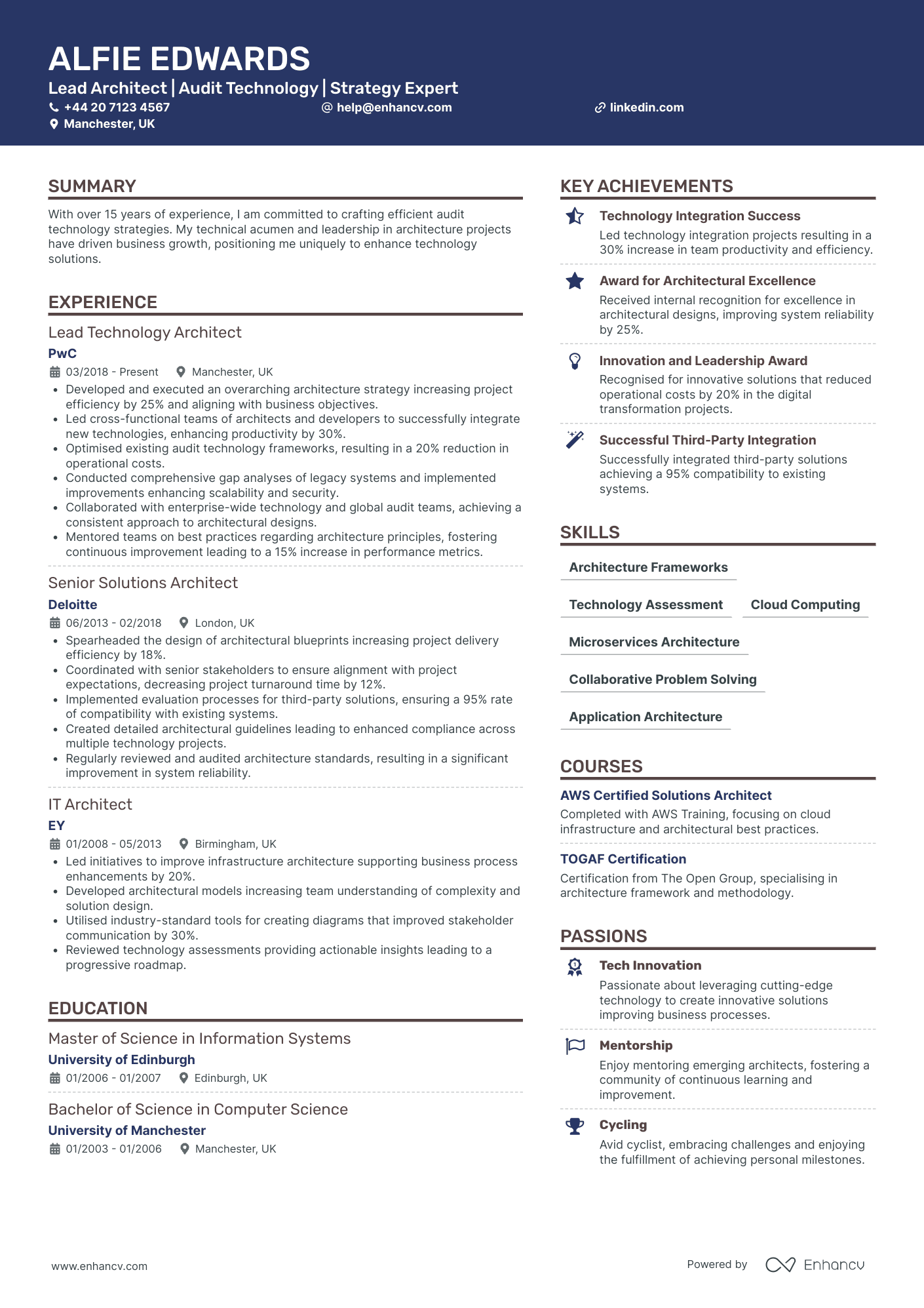
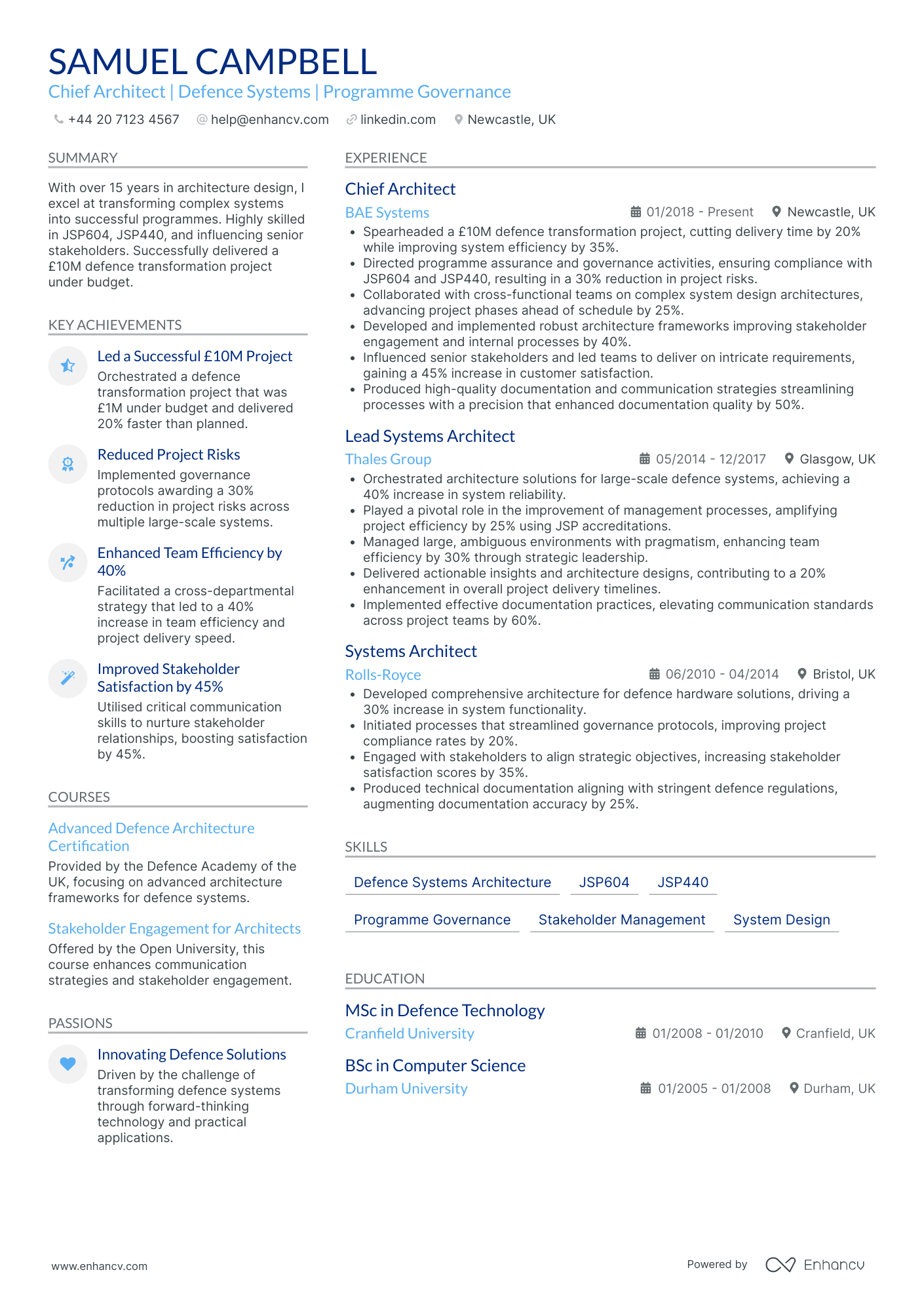
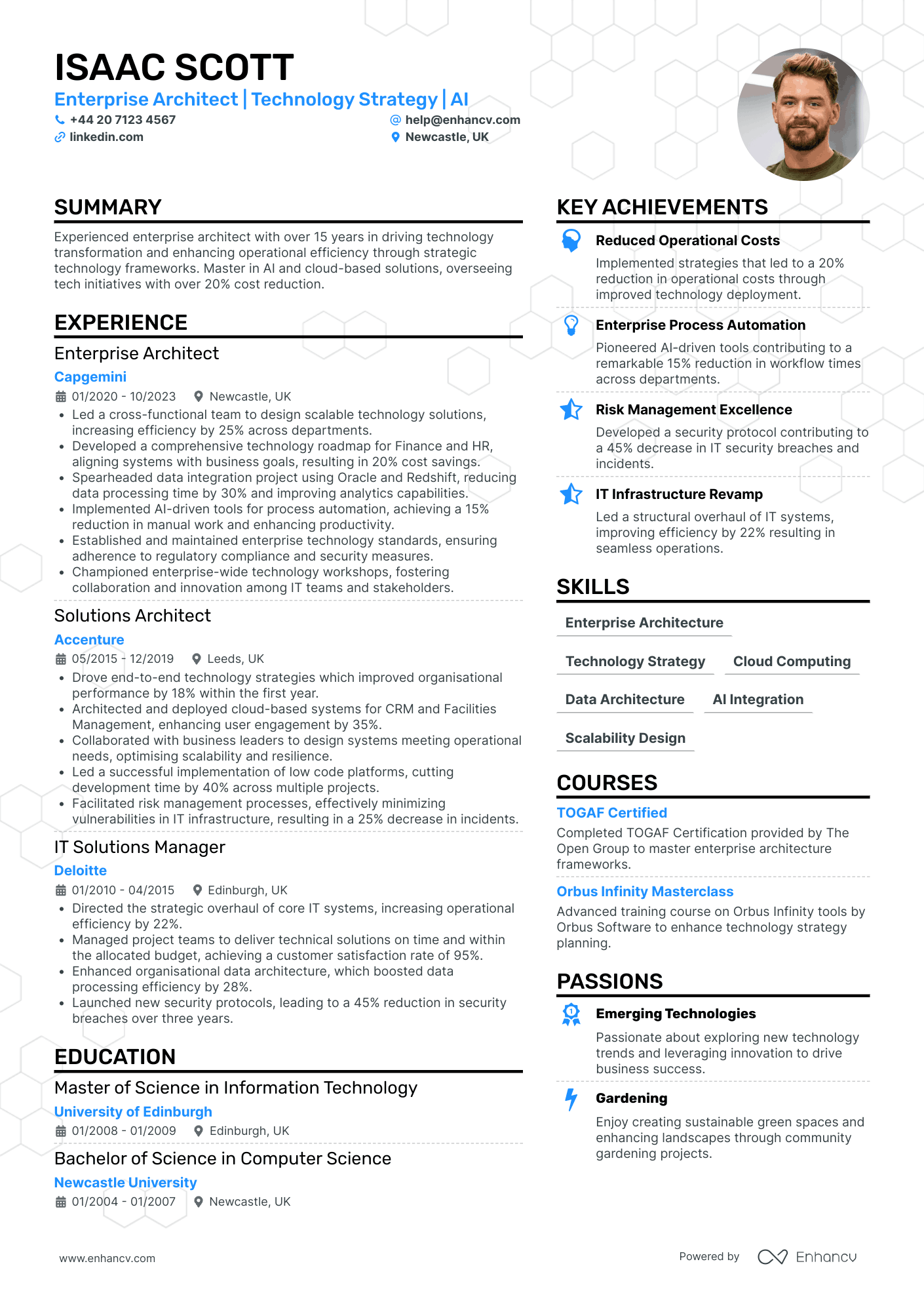
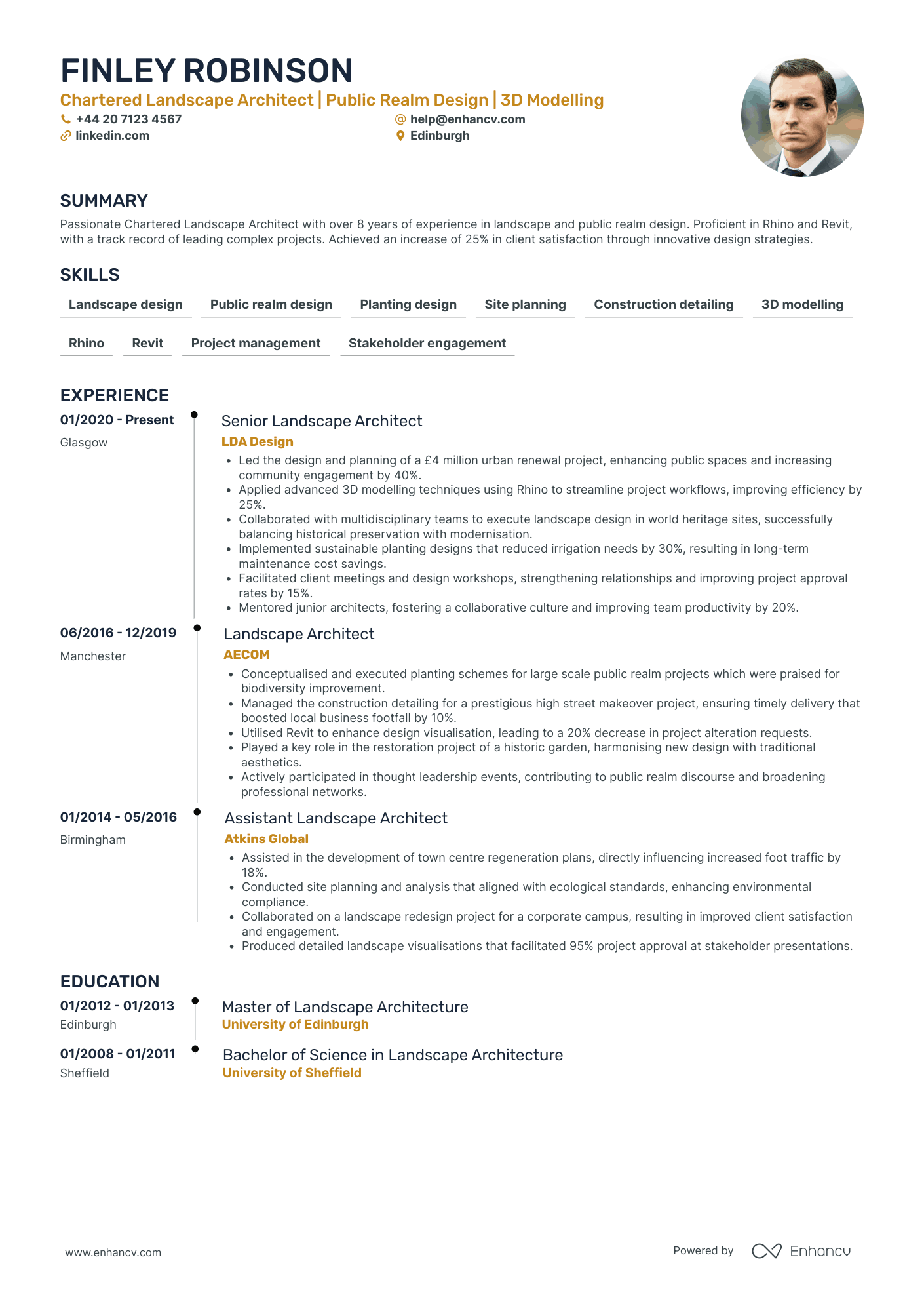
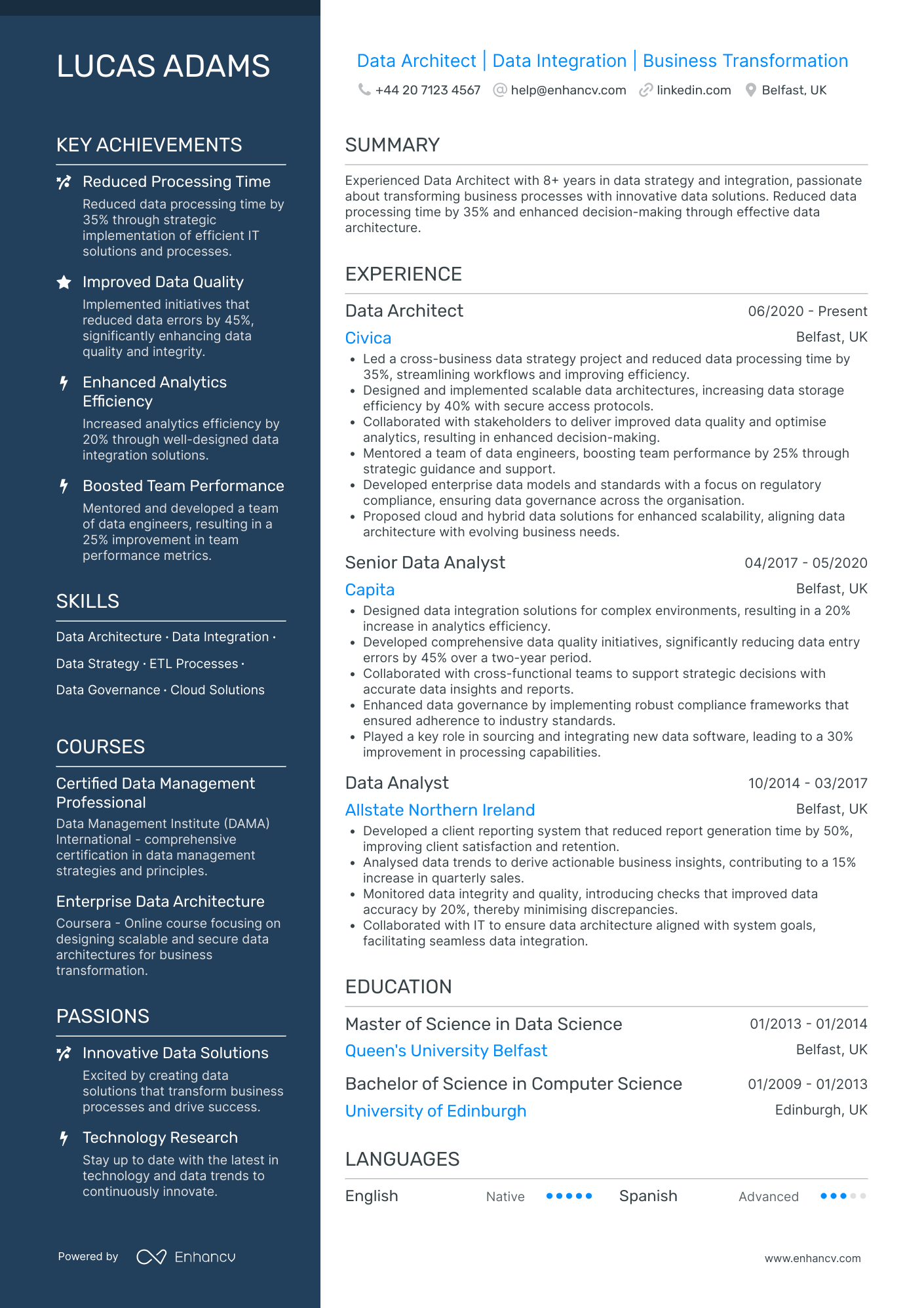
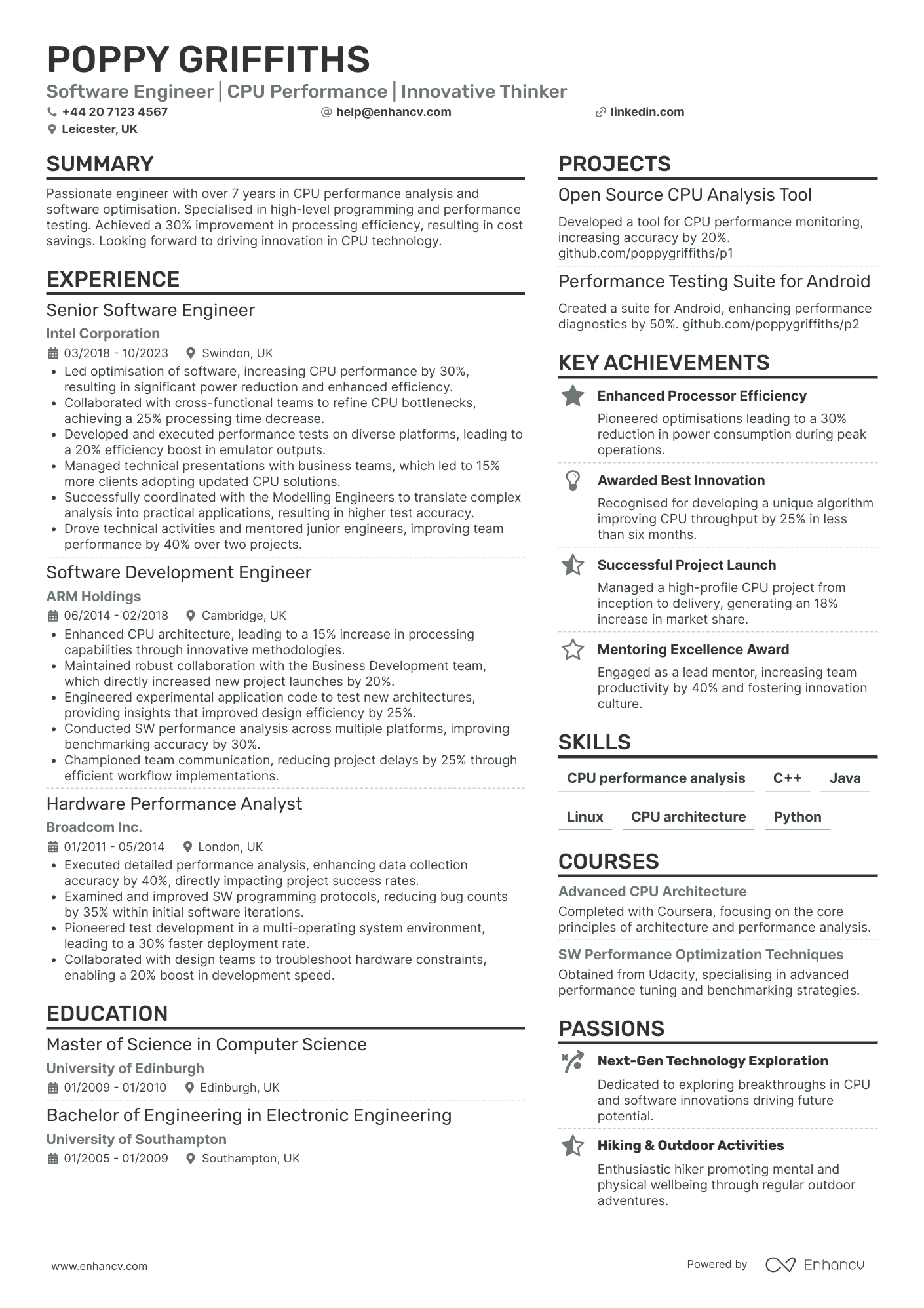
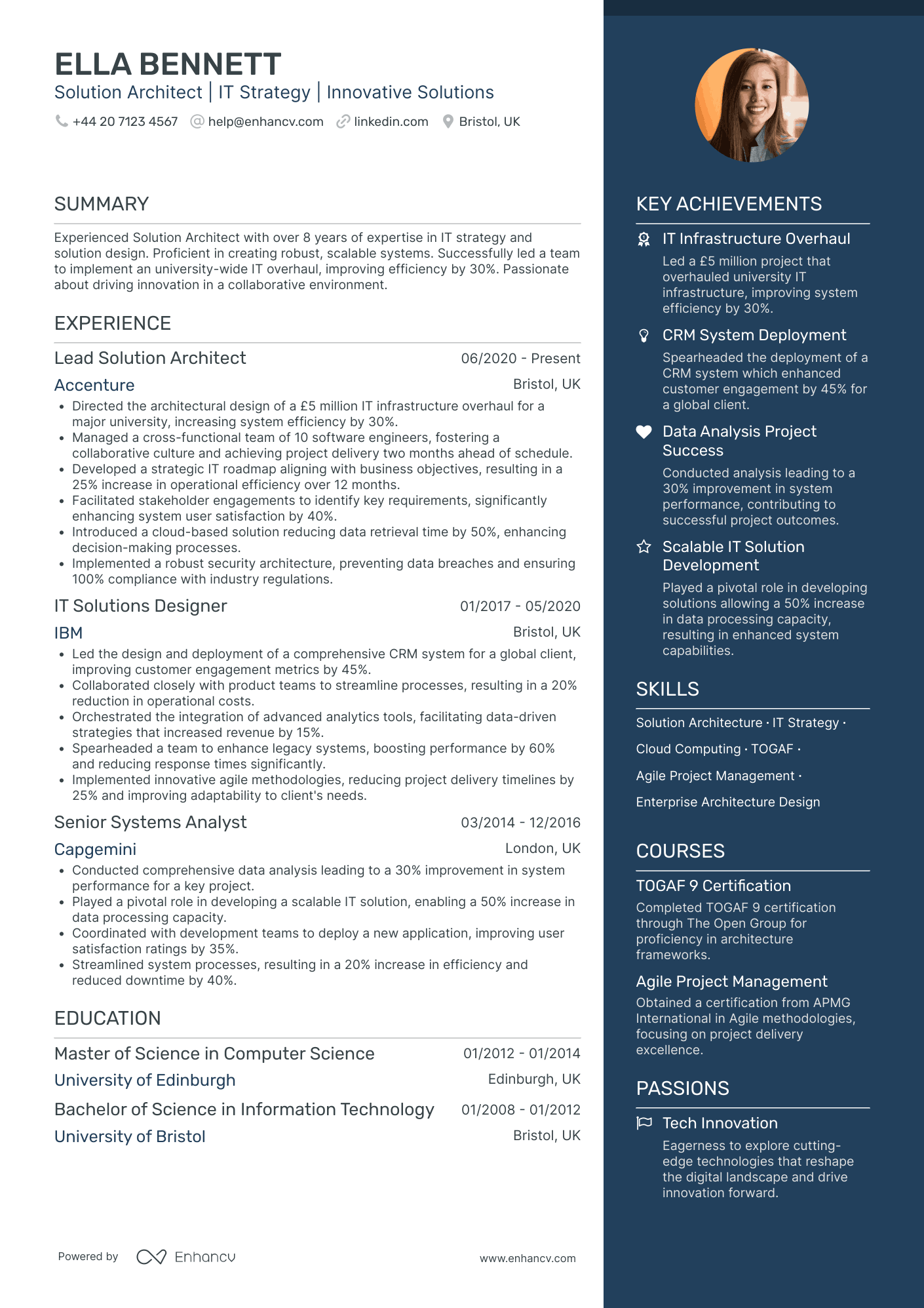
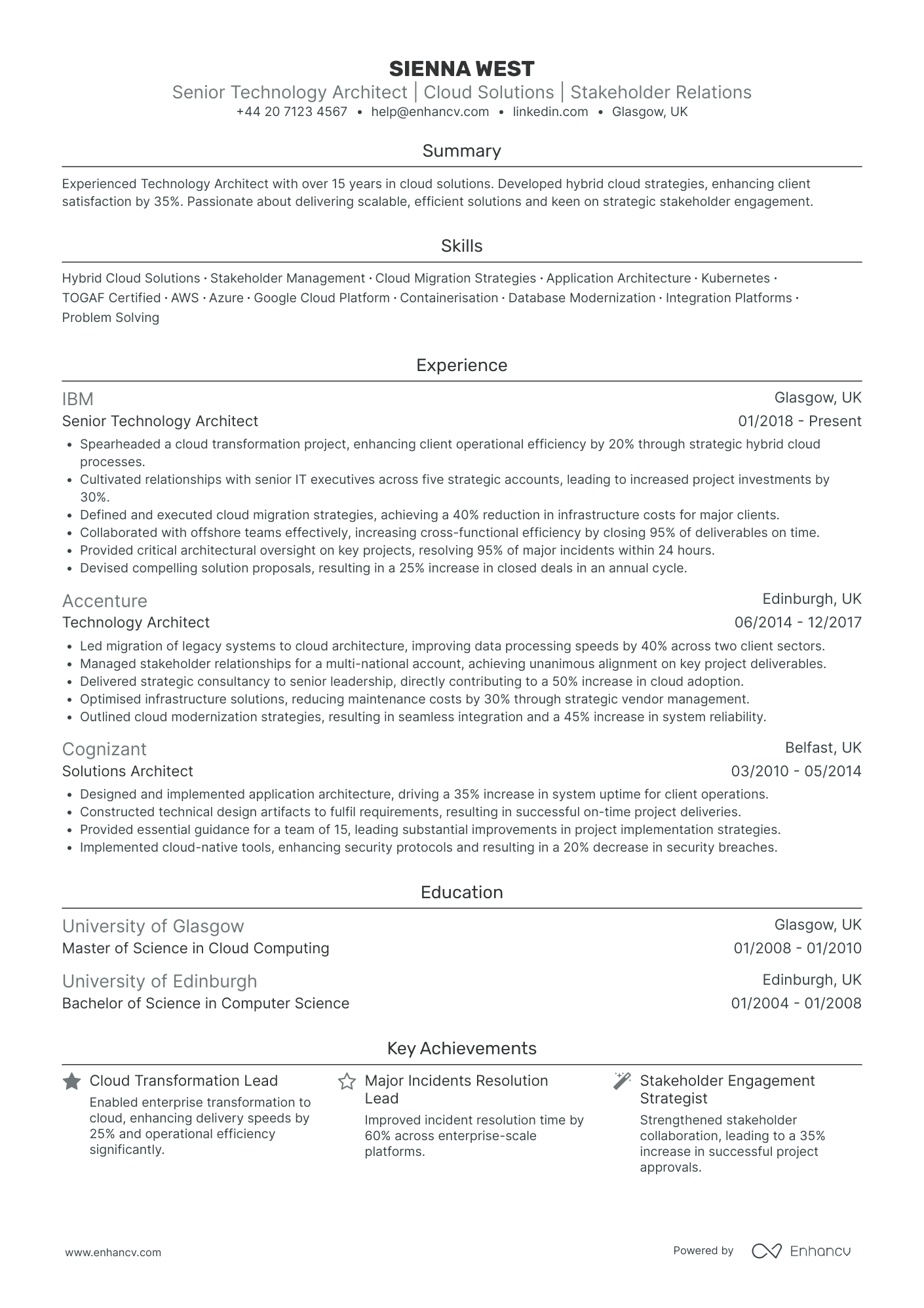
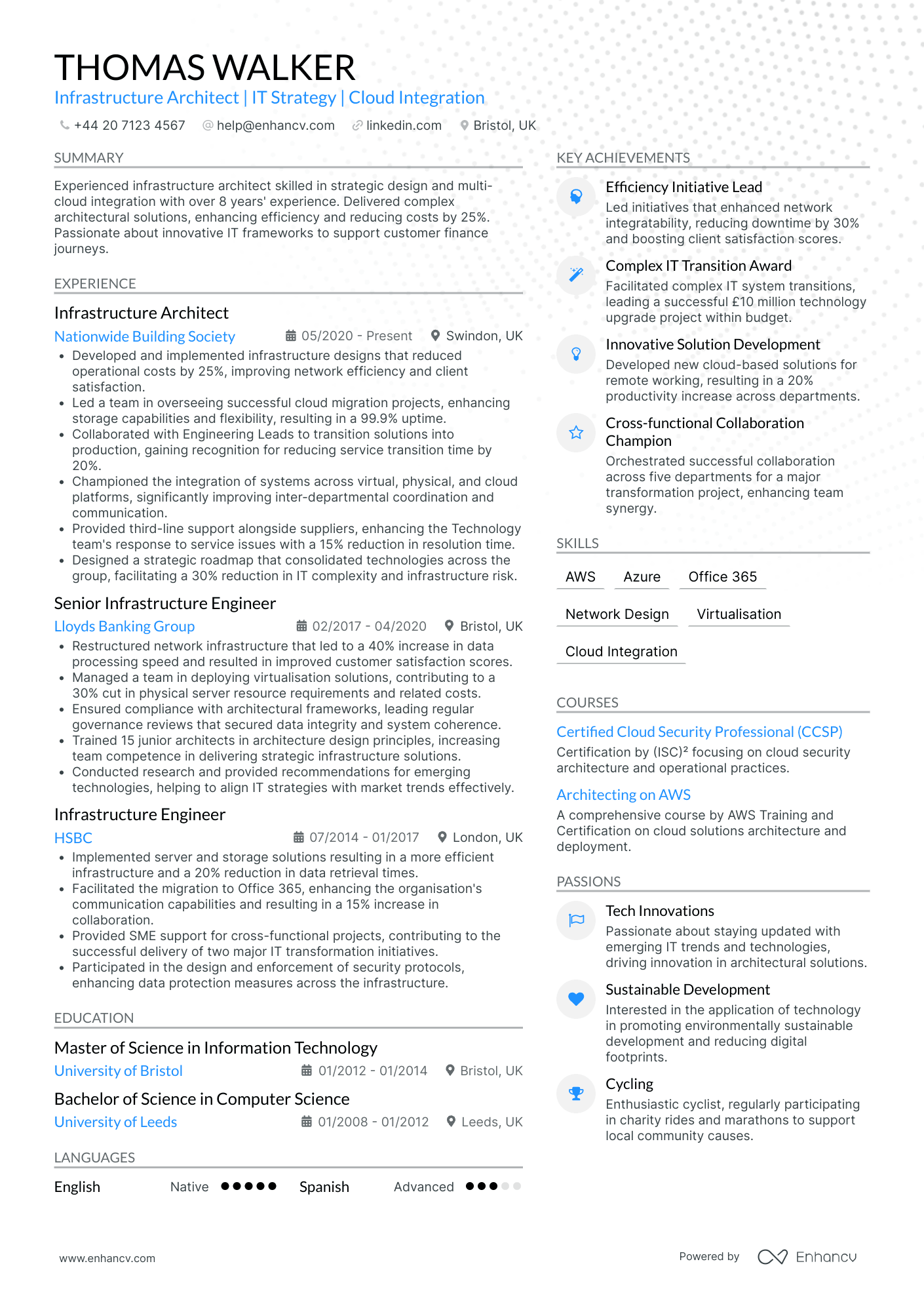
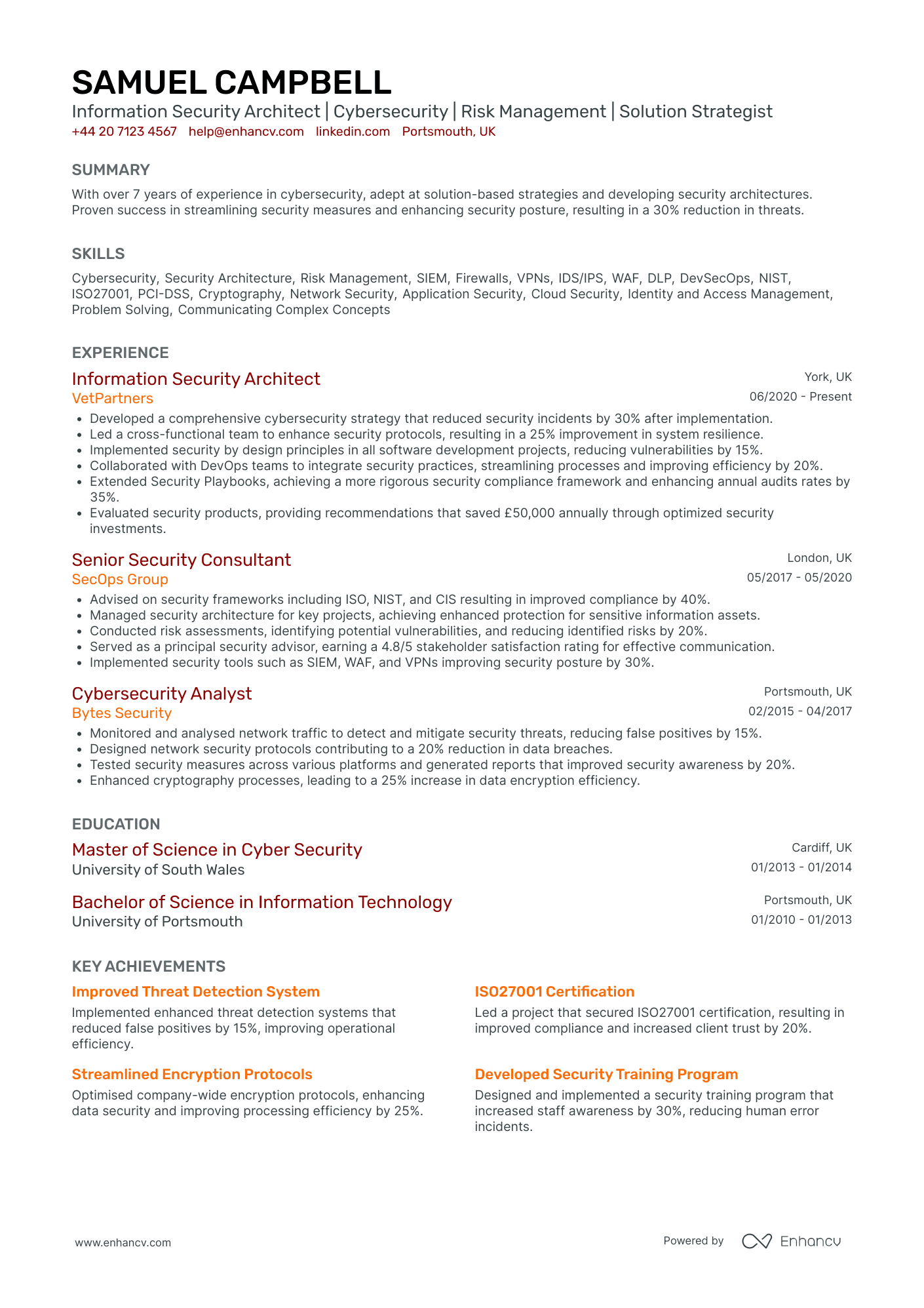
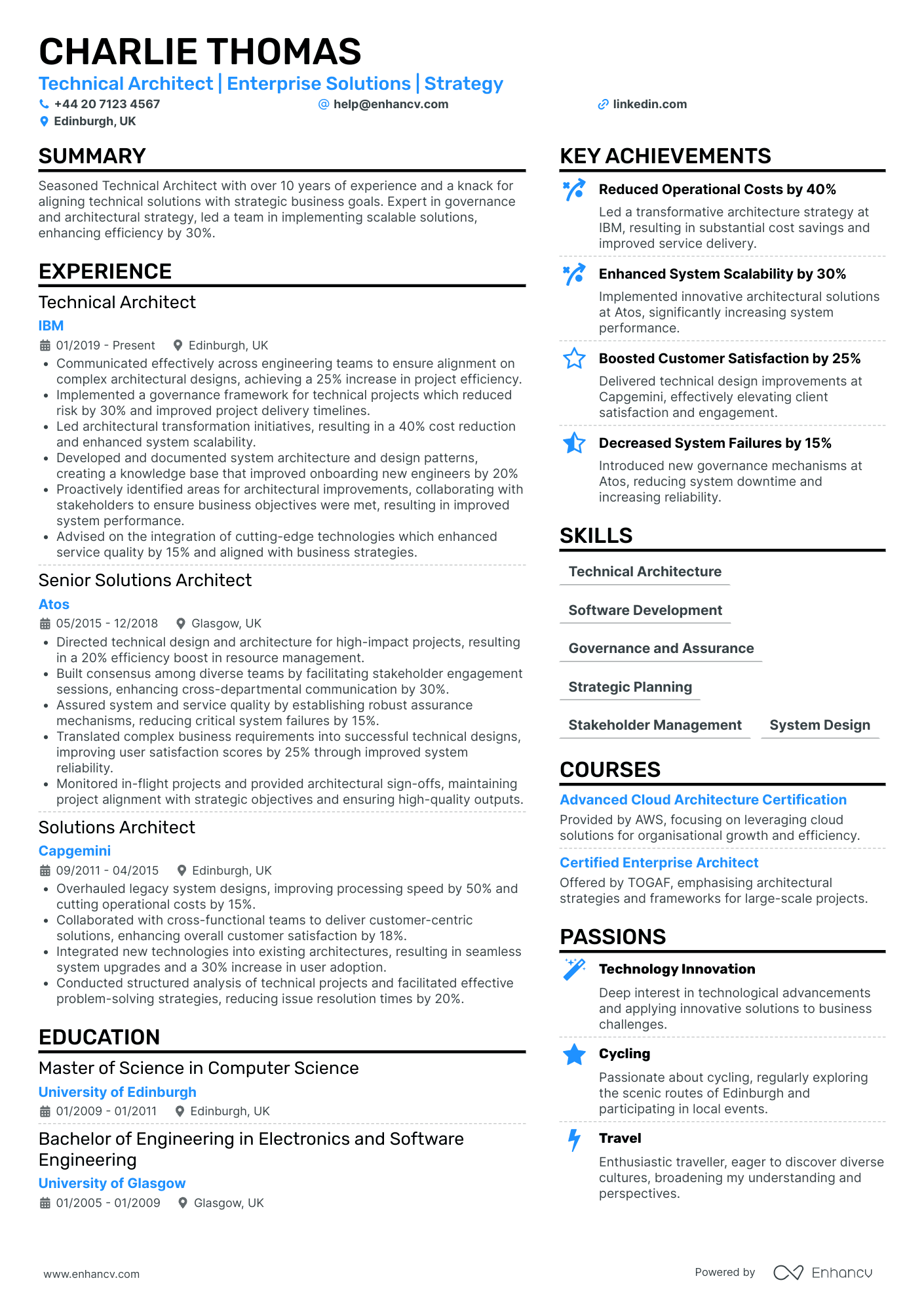
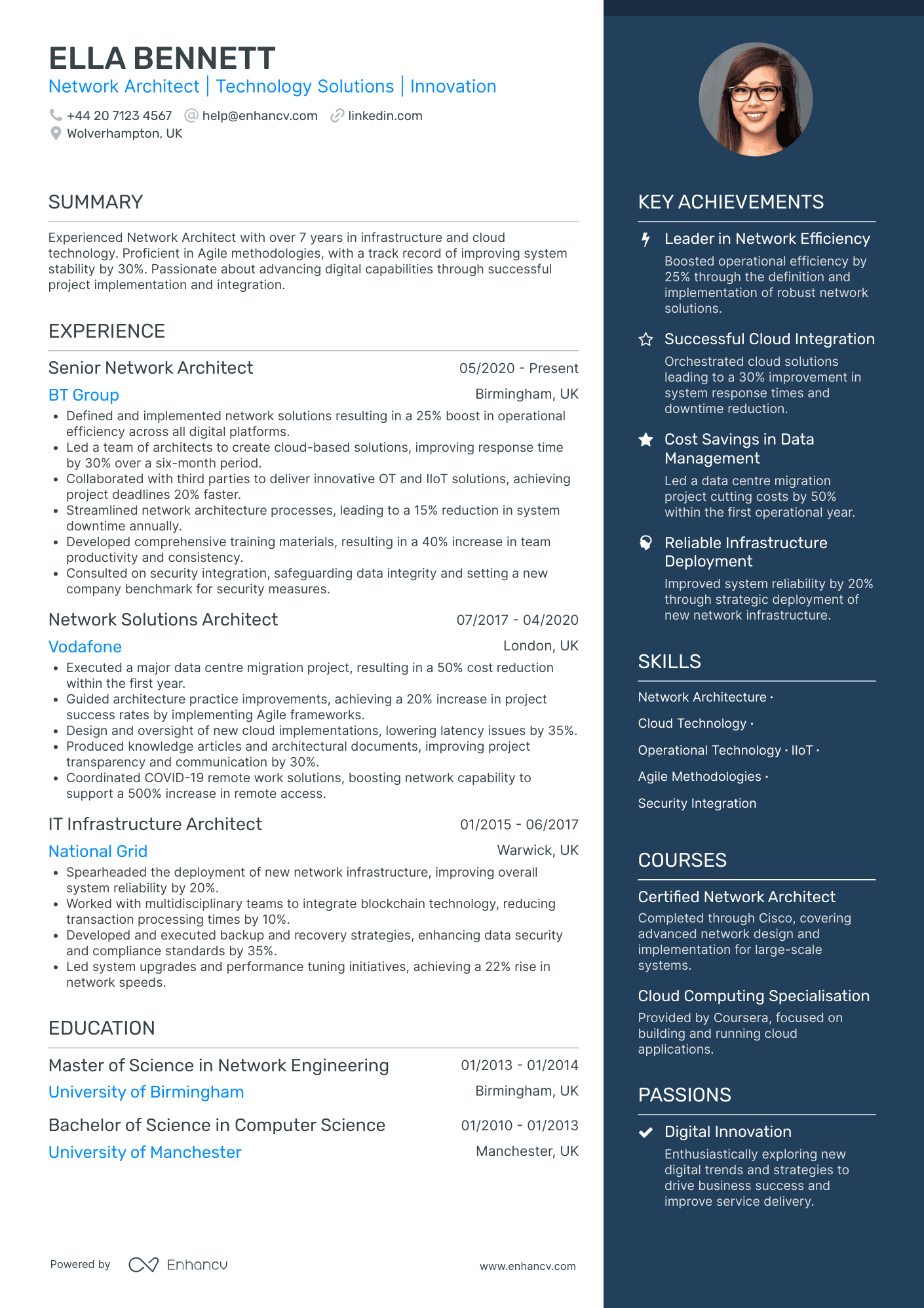
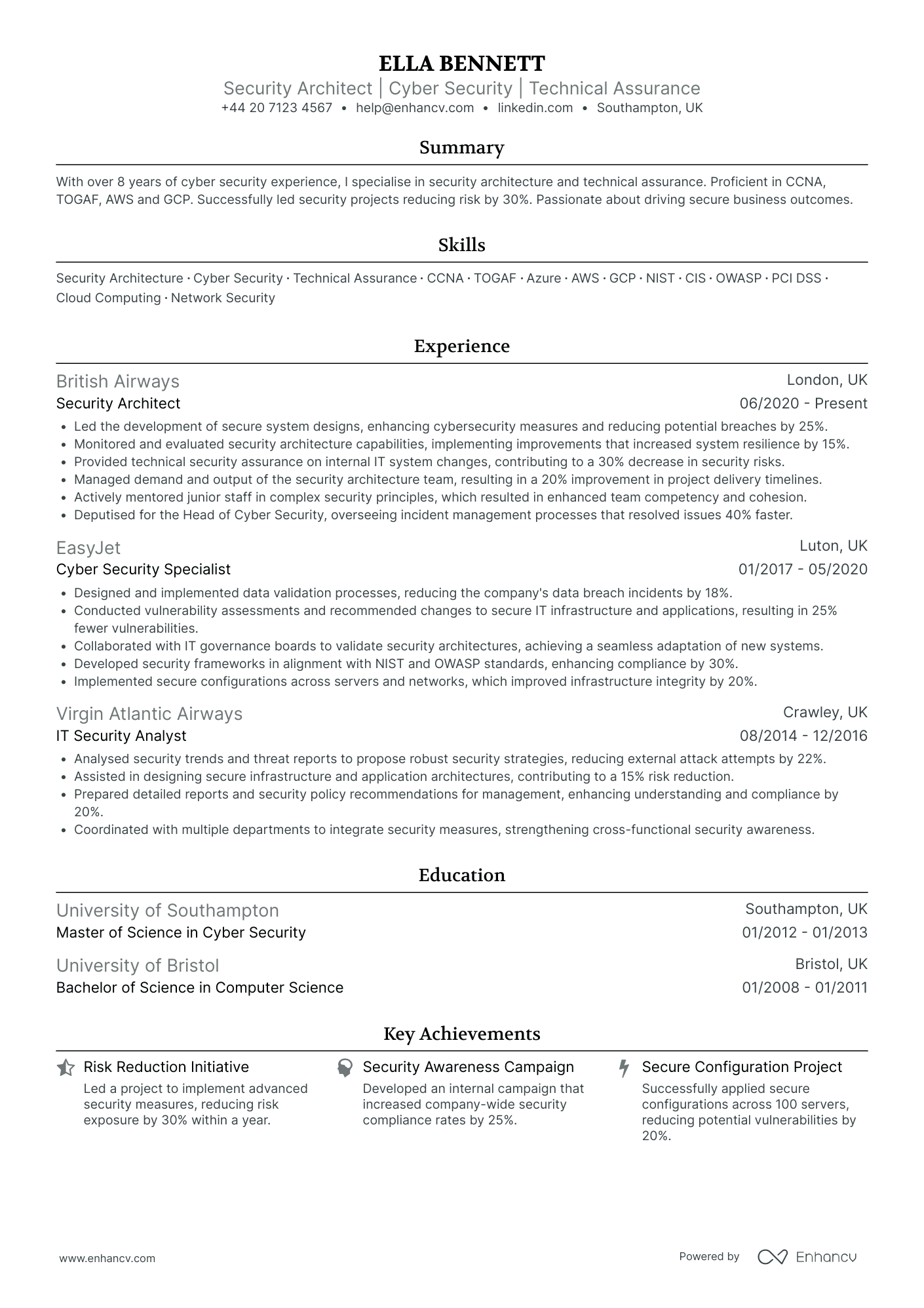
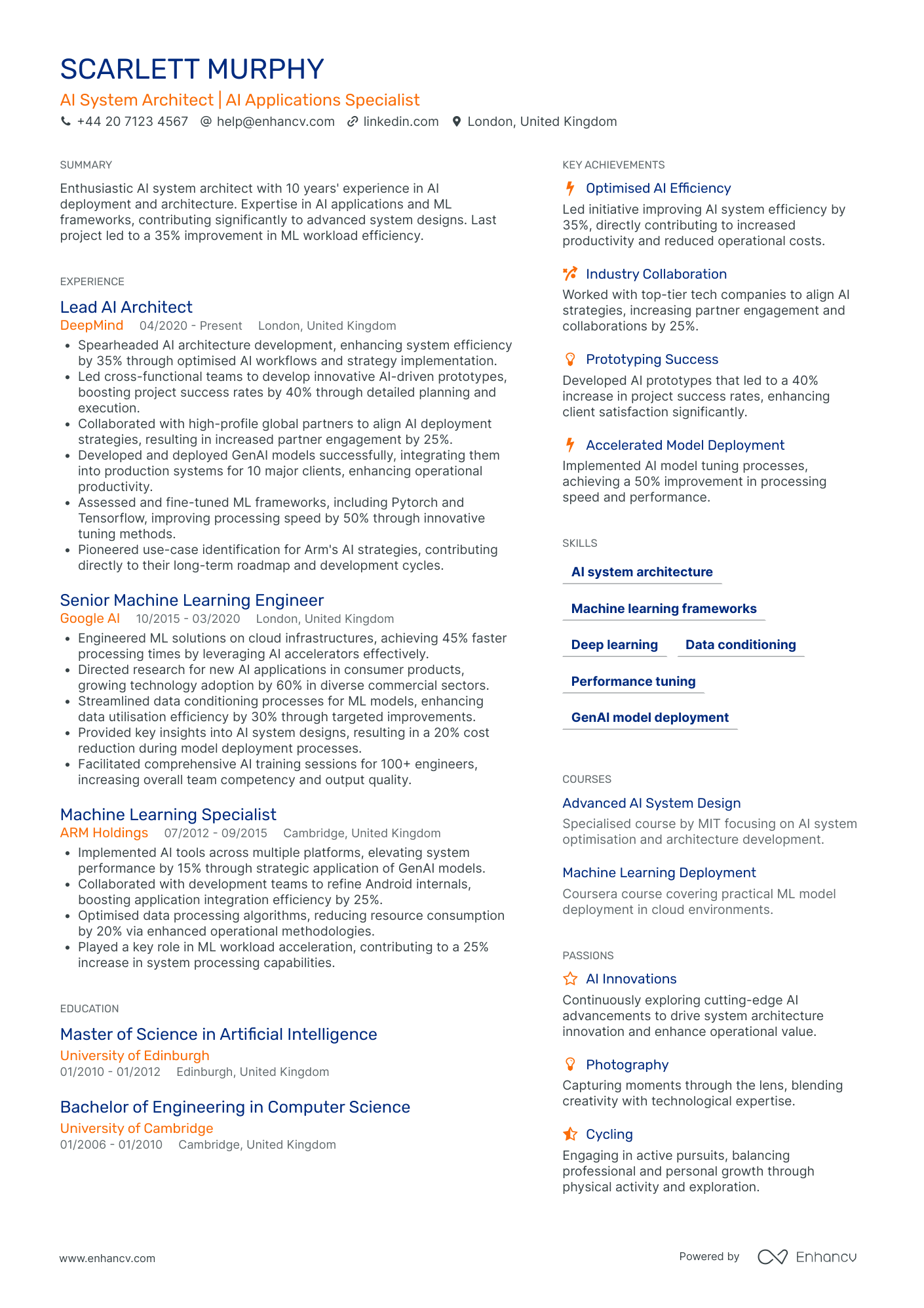
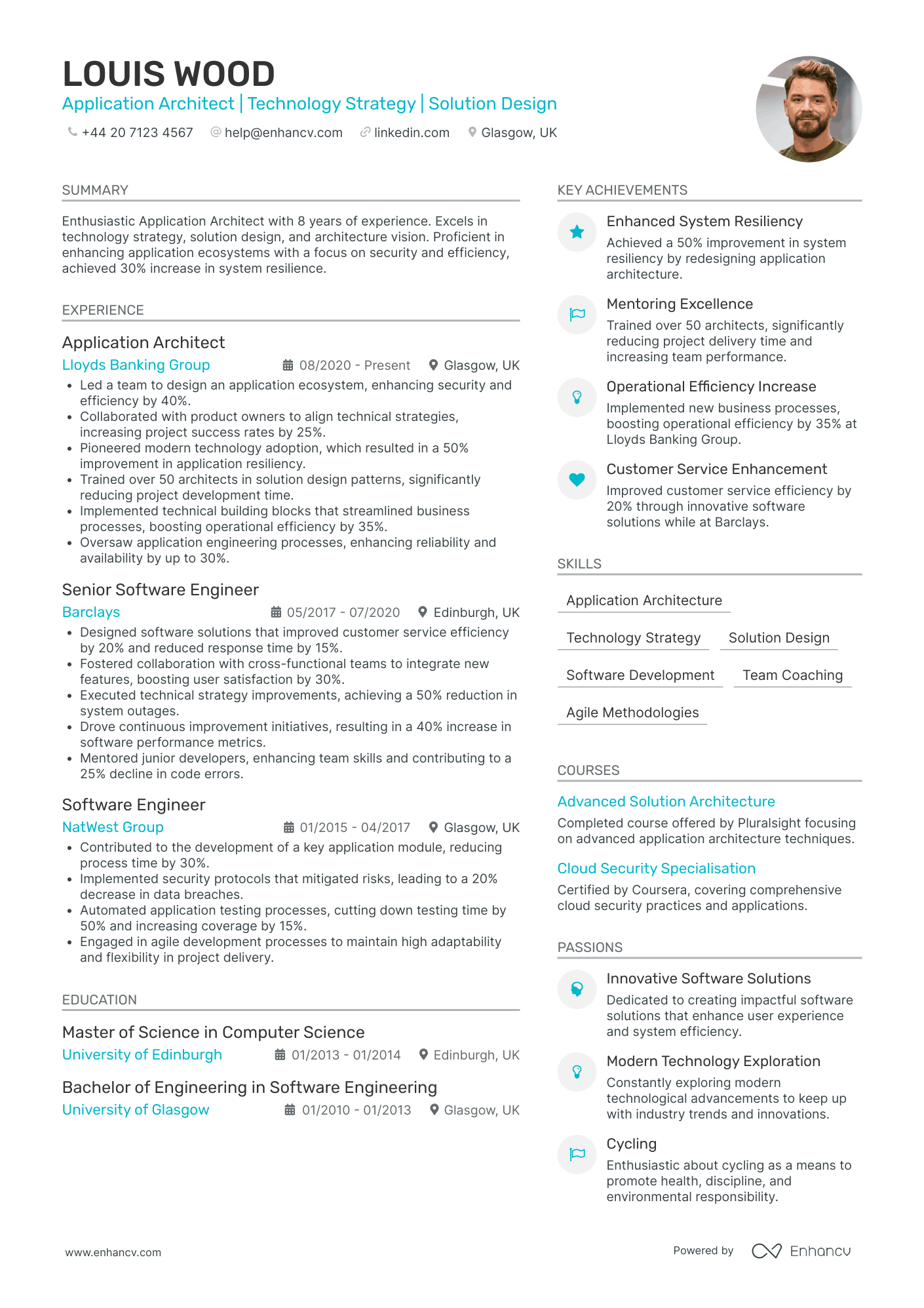
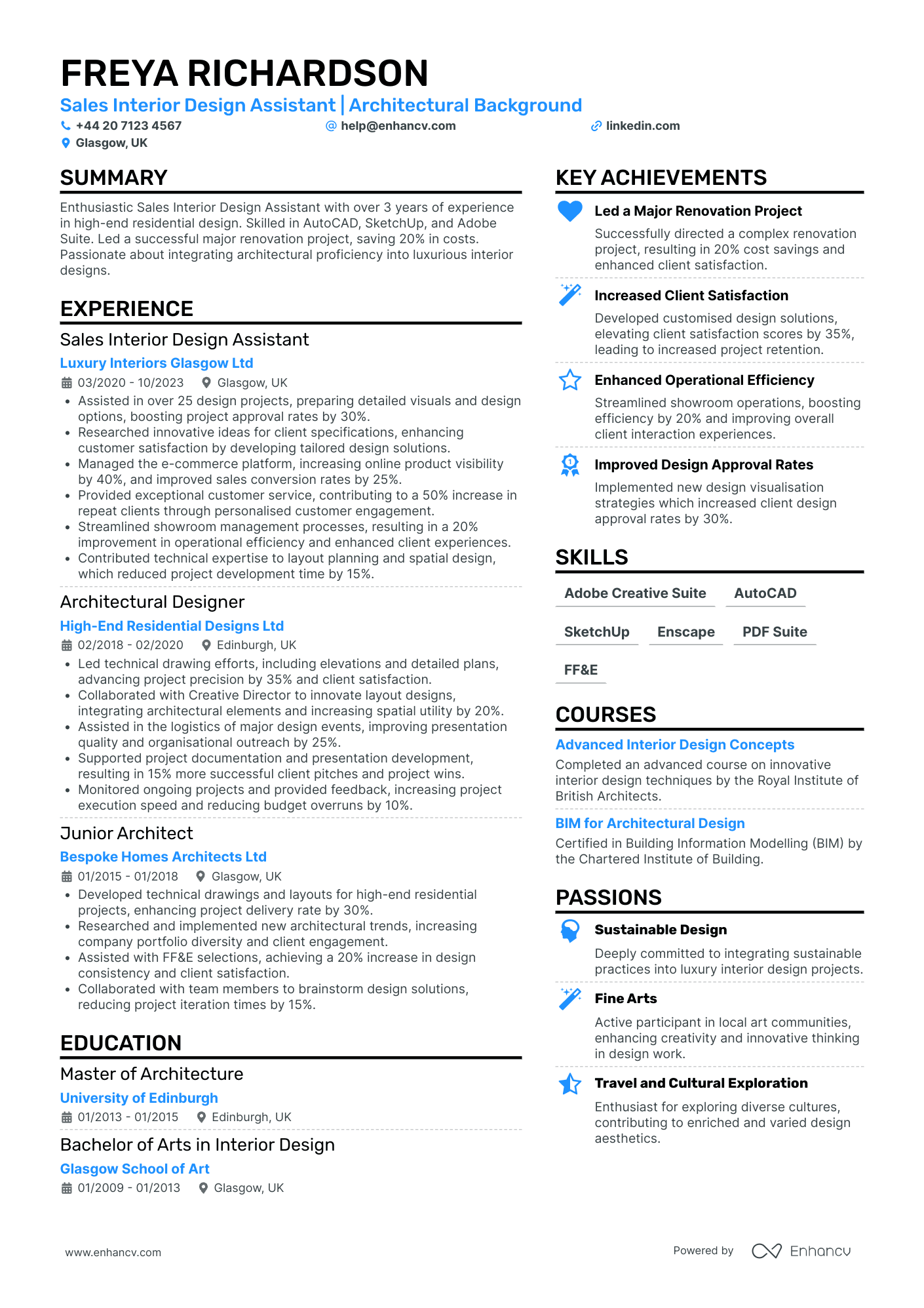
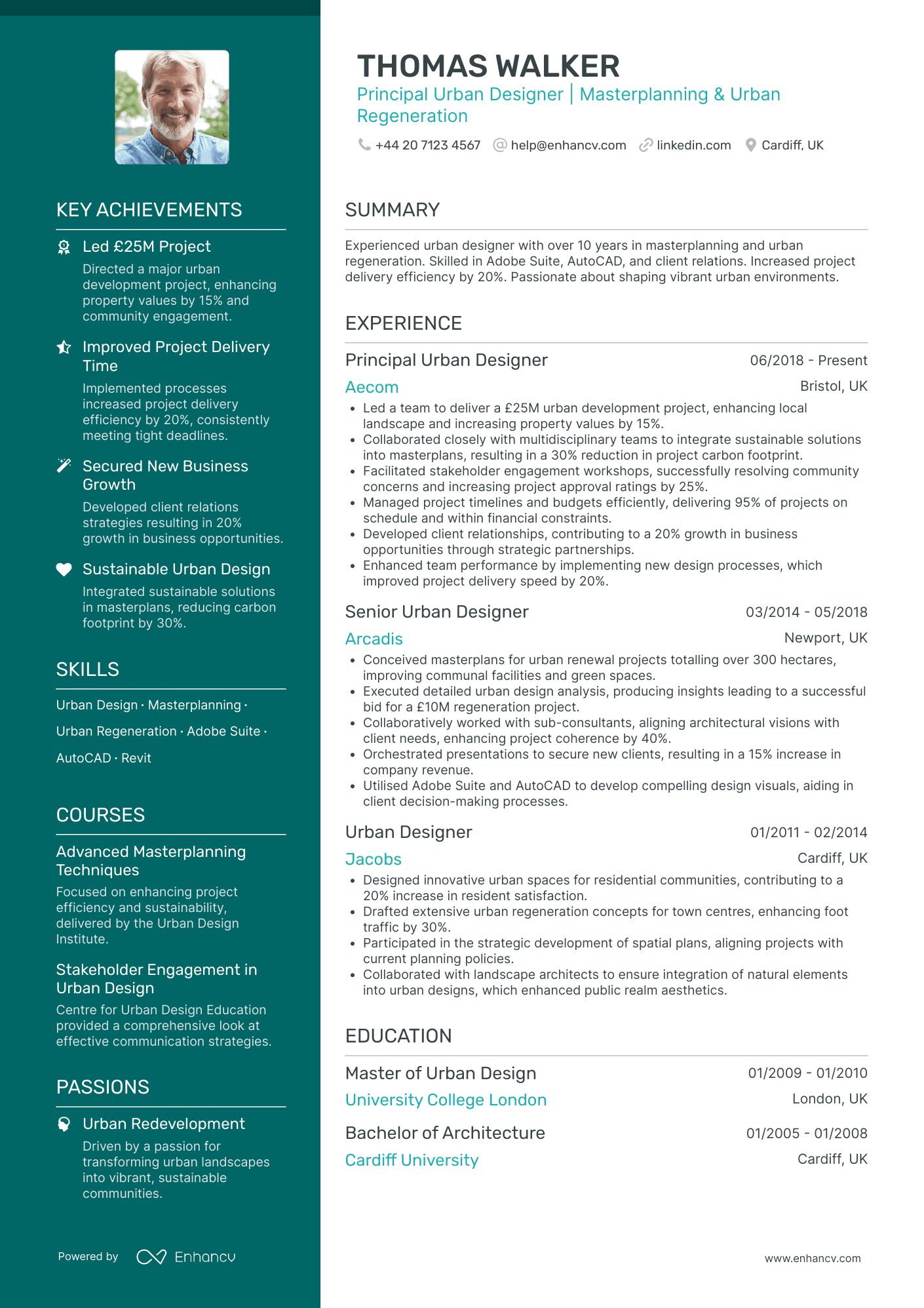
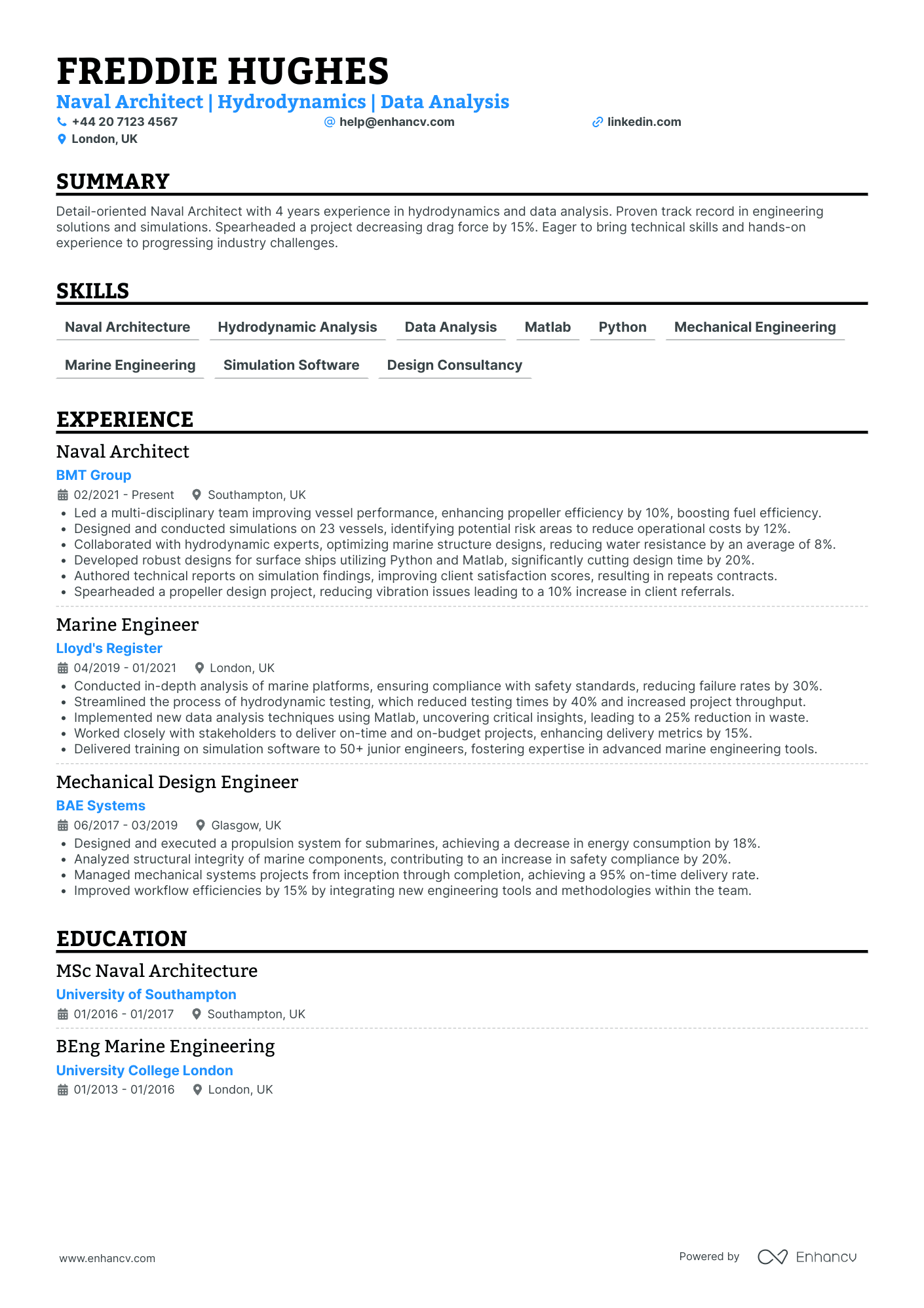
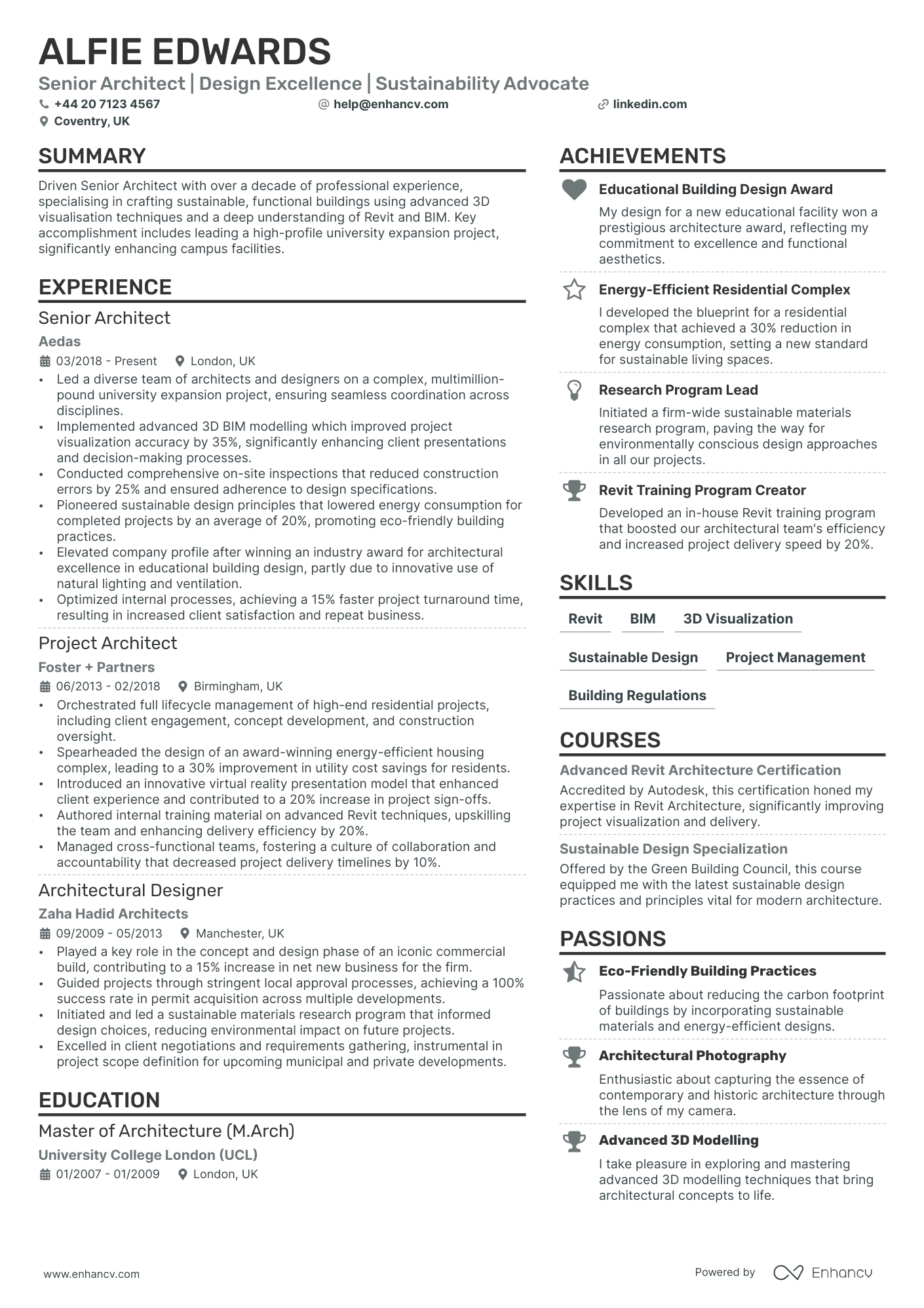
For an architect, the CV and the portfolio are read together, and the portfolio is usually what wins the interview. The CV's real job is to get a practice to open the portfolio and know exactly what they are about to see.
Most architect CVs bury the projects under a wall of software logos and a personal statement full of adjectives. The strong ones name the buildings, the RIBA stages worked, and the part the candidate actually played. If you want the fundamentals first, see how to write a CV.

Key takeaways
- Lead with the portfolio. The CV exists to get a practice to open it, so put a clean link and a two-line project summary near the top.
- Name the RIBA work stages you have delivered, from stage 0 to stage 7, not just the software you can open.
- 'Architect' is a protected title in the UK. If you are ARB-registered, say so. If you are Part 1 or Part 2, say that instead.
- Architecture work is hybrid or on-site, so keep your location and right to work easy to find in the header.
- Two pages, reverse chronological once you have projects behind you, sent as a PDF so the layout holds.
- Tie every project to your role, the stages, and one measurable outcome: budget, floor area, programme, or approval.
Building your architecture portfolio and CV together
Your CV and portfolio are one application, not two documents. The CV routes the reader to the portfolio and tells them what to look for once they get there.
So the portfolio link belongs near your name, in the header, as one clean URL. A personal site, a hosted PDF, or an Issuu link all work, as long as it opens in one click and does not ask the reader to hunt.
On the CV itself, do not paste renders and drawings. Summarise your headline projects in two lines each: the project name and type, your role, the RIBA stage you worked, and one outcome. That is what makes a hiring architect click through.
Inside the portfolio, curate hard. Three to five resolved projects beat a sixty-page dump of everything you have ever touched. Show a mix of concept and technical detail so a practice can see you carry a project from a sketch to something that gets built.
Reviewers read a portfolio in a particular order, and you can use that. They want the concept in a sentence, then the plans and sections that prove the idea works, then one or two details or a construction photo that shows it can actually be built. A page that jumps from a glossy render straight to the next project leaves them wondering whether you ever resolved anything.
Make your own role explicit on every project. 'Concept and stage 3 design, individual work' and 'stage 4 package, part of a team of four' tell a reviewer very different things, and vagueness reads as a candidate hiding how little they did.
Order the projects to match the practice you are applying to. A residential studio wants your housing schemes first, a conservation practice wants the listed-building work up top. The same portfolio, reordered, becomes a tailored application.
Keep a one-page sample sheet as well, a single well-composed project you can attach directly to an email or drop into the CV's second page. It gives a busy reviewer something to look at before they decide to open the full document.
If the portfolio is hosted privately, put the link and the password straight on the CV. A reviewer who hits a login wall usually moves on to the next candidate.

PRO TIP
Keep the portfolio link live and the emailed file under about 10MB so it opens on any inbox. Name it FirstnameLastname_Portfolio.pdf, and put the same link in your CV header, your email signature, and your personal statement, so it is never more than one click away.
What the UK architecture job market looks like
Knowing the market shapes the CV. Here is what the role pays and how the work is set up.
| What | UK architect roles |
|---|---|
| Typical pay | £31,000 to £58,000 a year (National Careers Service, gov.uk) |
| Where the work happens | Hybrid or on-site, rarely remote. Hybrid 54% and on-site 44%, remote just 2% (across 895 UK architect postings in the last ~30 days, Enhancv's internal job feed) |
| The title | 'Architect' is protected in UK law. You need ARB registration to use it. |
| What wins the interview | A curated portfolio that shows design thinking and technical delivery, not a longer list of software. |
Two things in that table should shape your CV.
Architecture is hybrid or on-site work and almost never fully remote, so a practice needs to see where you are based and that you can reach the studio and the site. Put your city and your right to work in the header.
And the title is protected, so your registration status is not a detail to leave to the bottom of page two. State it clearly and state it early.
The pay range is wide for a reason. It stretches from a newly qualified architect to an experienced one running projects and teams, so where you sit on that scale should be obvious from the stages and the responsibility your CV describes, not just from the years on the page.
Formatting your architect CV
Once you have projects behind you, use a reverse chronological structure so your most recent work leads. If you are a Part 1 assistant or a recent graduate with a thin work history, a skills-led structure lets your education and portfolio carry the CV.
Keep it to two pages, one column, standard headings, and a readable font. The portfolio does the visual work, so the CV should stay clean and scannable rather than over-designed.
Send it as a PDF for direct applications so the layout holds on any screen. If a practice or a recruiter asks for a Word file, follow the advert.
Larger practices and recruiters often run applications through tracking software, so keep the layout simple and the headings conventional for an ATS-friendly CV. Build it from a tested layout rather than a blank page: Enhancv's CV templates export to a clean PDF that a parser can read.
Resist the urge to make the CV a design piece. Coloured columns, custom icons, and hand-set typography are exactly what a parser mangles and what a reviewer has already seen a hundred times. Let the portfolio show your eye, and let the CV be the document that gets read in twenty seconds without a single formatting surprise.
Writing your architect personal statement
Three or four sentences at the top: who you are, your registration status, your strongest project, and the kind of work you want next. Keep it concrete. See more personal statement examples if you are stuck on the opening line.
Lead with evidence a practice can check, a named scheme and a stage, rather than the adjective soup every other CV opens with.
Match the statement to the studio in front of you. A practice known for housing wants your residential delivery in the first sentence, a conservation specialist wants the heritage work, and a concept-led studio wants the design thinking. Three or four sentences leave no room for a generic paragraph that could sit at the top of any architect's CV.
Architect CV personal statement example (registered)
ARB-registered architect with six years across residential and mixed-use schemes, from RIBA stage 2 through to stage 5 on site. Led the technical package for a £4.2m housing scheme in Bristol delivered on programme, and ran planning submissions for three approved projects. Fluent in Revit and the RIBA Plan of Work, looking to bring detailing and delivery experience to a practice focused on sustainable urban housing.
The version to avoid
Passionate and creative architect with excellent design skills and strong attention to detail. Proficient in AutoCAD, Revit, and Photoshop. A team player looking for an exciting opportunity to grow within a forward-thinking practice.
The second version names no project, no stage, and no registration, and every adjective in it is a claim a recruiter cannot verify. Software belongs in the skills section, not in the line meant to sell you.
If you are a Part 1 or a recent graduate, the same rule holds, you just draw the evidence from your studio work and any live experience. 'Part 1 architectural assistant with a distinction from the Bartlett, whose final-year housing project was shortlisted in a national student competition, six months of stage 2 to 3 experience at a residential practice' beats a paragraph of ambition every time.
When we read an architect's CV, we are really deciding whether to open the portfolio. The ones that get opened name the project, the RIBA stage, and the candidate's own role in a single line, so we know what we are about to look at. 'Assisted on various projects' tells us nothing. 'Ran the stage 4 package for a 40-unit scheme' tells us everything. Say what you drew, what you resolved, and what got built.
Writing your architect experience section
Write each role the same way: a dated heading with the practice, then bullets that name the project, the RIBA stages you worked, and what your contribution changed. Lead each bullet with a verb. For the mechanics, see work experience on a CV.
Architecture is more measurable than most architects give it credit for. Unit counts, floor area, budget, programme, planning approvals, and RFIs resolved are all CV achievements a hiring practice understands at a glance.
Tailor each application to the practice's sector, pulling the project types and terms from the advert and mirroring the ones that are true of you. Enhancv's CV tailoring feature reads the ad and suggests the matching edits, which saves rewriting the CV from scratch for every studio.
If your history is thin, treat university projects, competitions, and any work placements as experience and write them the same way, with a dated heading and bullets that name the stage and the tools. A well-run academic project described in delivery language reads far better than a real job summarised as 'various duties'. Lead each line with a strong verb, and see CV action verbs if your bullets are starting to sound the same.
- Led the RIBA stage 4 technical design for a 48-unit residential scheme (£6.1m), coordinating structural and services consultants and issuing the tender package on programme
- Ran planning submissions for five projects and secured approval on four, including a listed-building consent in a conservation area
- Produced the Revit model and construction detailing for a 2,400 sq m commercial fit-out, resolving more than 60 RFIs during the build
- Mentored two Part 1 assistants and built the studio's Revit template library, cutting drawing setup time by roughly a day per project
PRO TIP
Hiring architects skim for scope and stage. Every strong bullet answers three things fast: what the project was, which RIBA stages you worked, and what your specific contribution changed. 'Coordinated the design' is weaker than 'issued the stage 4 tender package on programme'.
Skills to put on an architect CV
Name the tools and the stages in the words practices actually use. Software matters, but a studio hires for what you can resolve, not the length of your logo list, so put the packages you genuinely work in alongside the parts of the RIBA Plan of Work you have delivered. Those are your hard skills.
The soft skills that count here are real and checkable: communicating a design, managing a client, coordinating consultants. Prove each one in a project bullet rather than just claiming it.
List only what you can stand behind in an interview. If you have run a stage on a live project, say so. If you have only used a tool at university, keep it honest and keep it lower down.
BIM is worth calling out precisely rather than lumping under 'software'. A practice that runs projects in Revit wants to know whether you model, coordinate, and manage a shared model, or whether you have only produced sheets from someone else's file. Name the level you actually work at.
Top skills for your architect CV:
Revit and BIM
AutoCAD
SketchUp
Adobe InDesign and Photoshop
RIBA Plan of Work (stages 0 to 7)
Technical detailing and specification
Building Regulations and planning applications
Construction administration
Design communication
Client and stakeholder management
Consultant coordination
Problem-solving
Attention to detail
Education, ARB registration, and the RIBA parts
The UK route runs through three stages: Part 1 (an undergraduate degree), Part 2 (a Masters or diploma), and Part 3 (the professional practice exam), followed by ARB registration and, if you choose, RIBA chartership. Say clearly where you are on that route.
List your qualifications with the institution and, where relevant, the classification, in your education section. A practice reads Part 1, Part 2, and Part 3 as shorthand for exactly what you can be trusted to run, so name the parts you have completed as clearly as you name the qualifications themselves.
Be precise with the title, because it is protected in law. You are a registered architect, a Part 2 architectural assistant, or a Part 1, and calling yourself an architect before you are registered is the kind of thing a hiring practice notices immediately.
Any relevant certificates, such as conservation accreditation, sustainability credentials, or software training, belong in a short block below education where they add to the picture.
If you are between Part 2 and Part 3, name the practice work that is counting towards your logged experience and the exam sitting you are working towards. It tells a studio you are on a clear path to registration, which is exactly what they are weighing up when they hire at that level.
Conclusion
Lead with the portfolio and route the reader straight to it. Name the projects, the stages, and your own role, be precise about registration, and keep the format to two clean pages.
Pair the CV with a short cover letter that names the practice's work you admire, and you turn a document into an interview.

Author's take - the Enhancv team
When we read an architect's CV, we are really deciding whether to open the portfolio. The ones that get opened name the project, the RIBA stage, and the candidate's own role in a single line, so we know what we are about to look at. 'Assisted on various projects' tells us nothing. 'Ran the stage 4 package for a 40-unit scheme' tells us everything. Say what you drew, what you resolved, and what got built.