



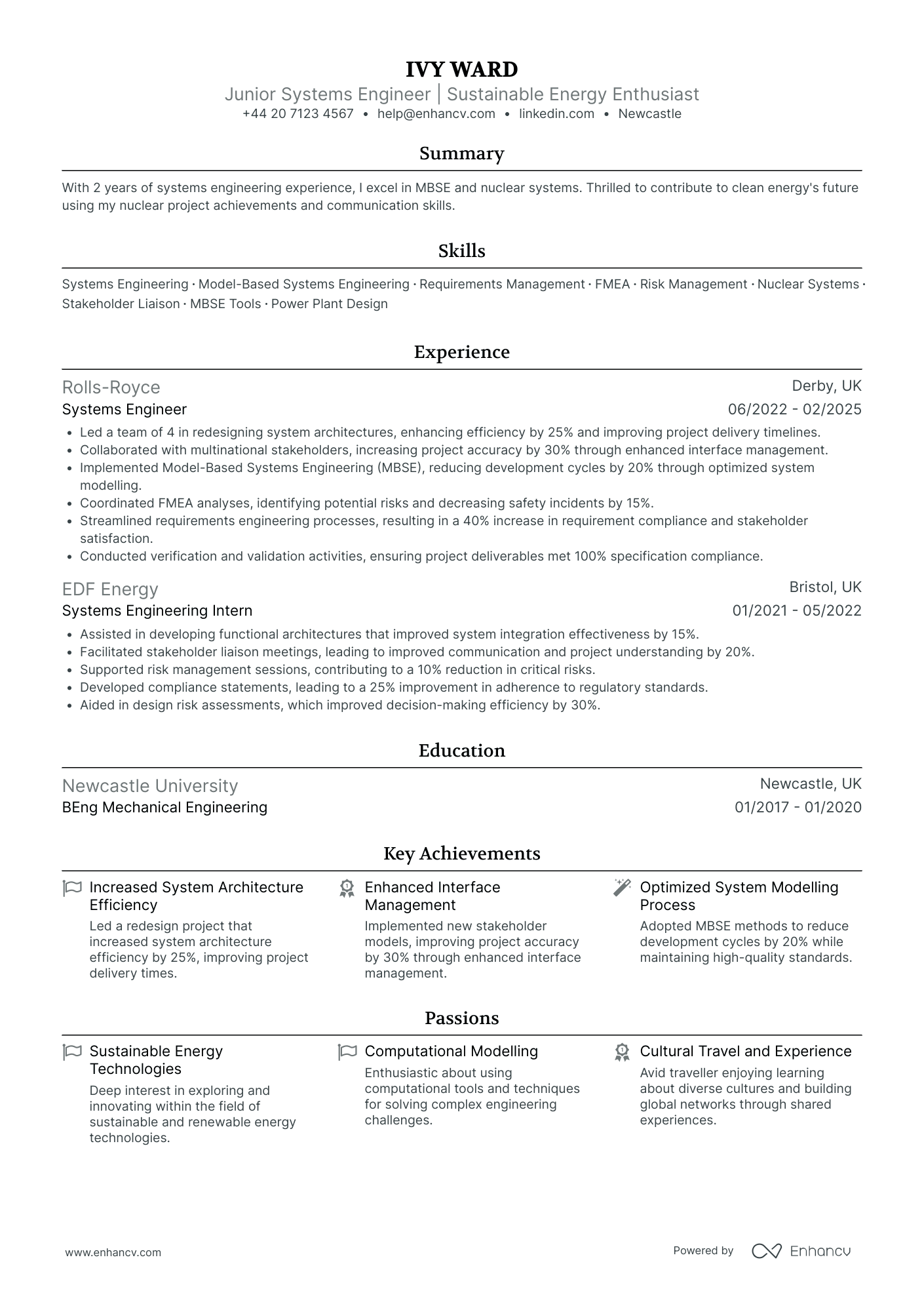
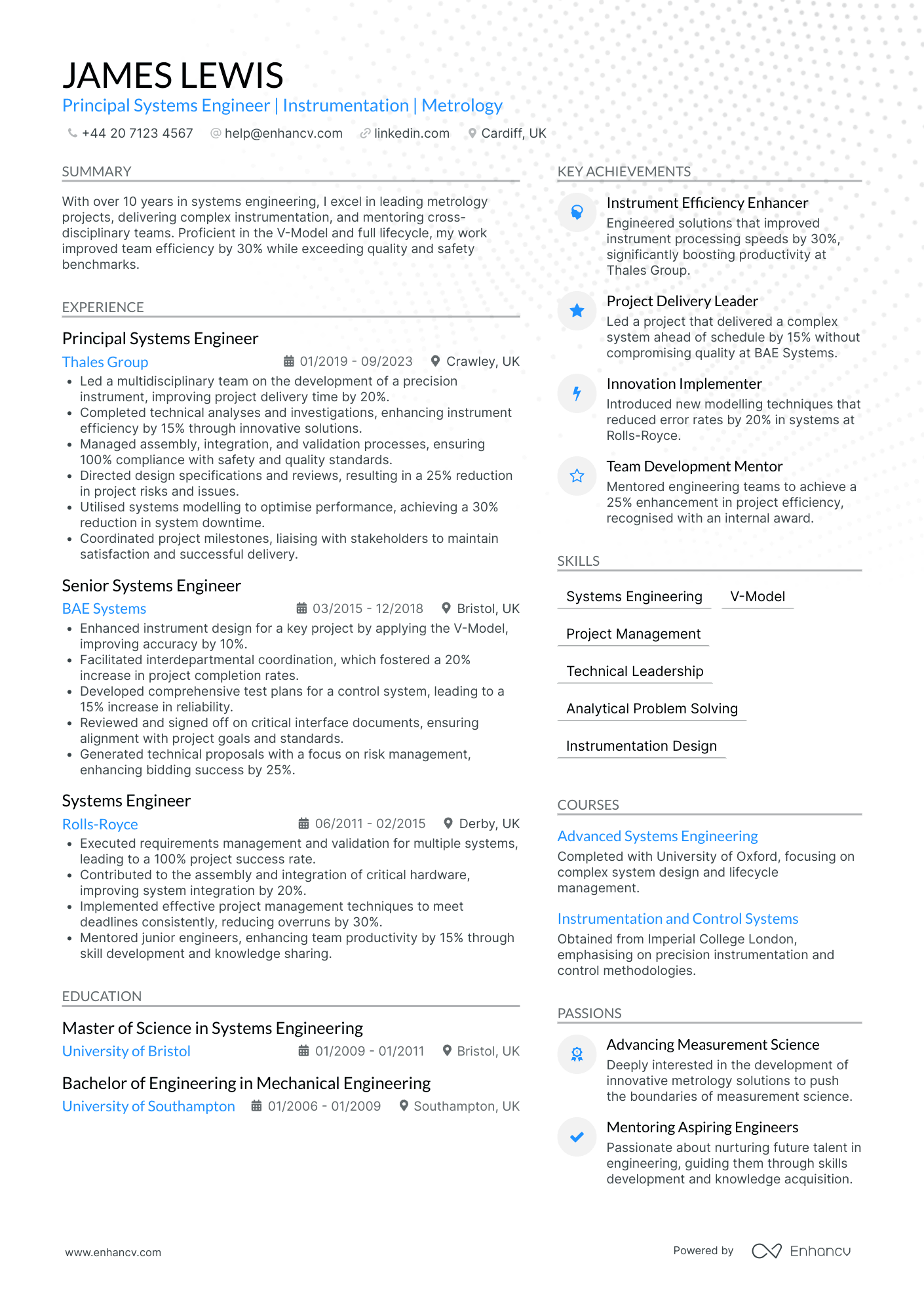
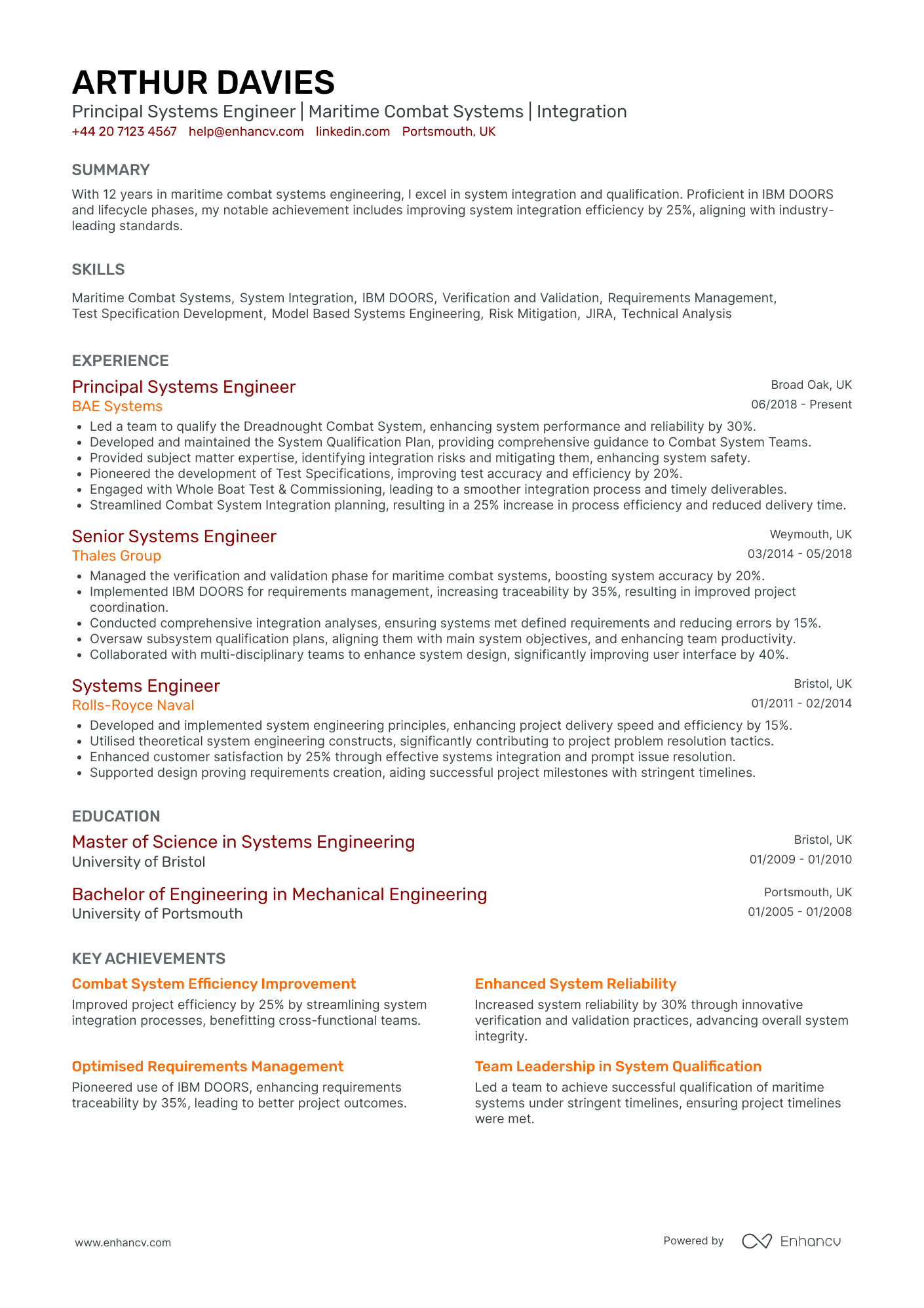
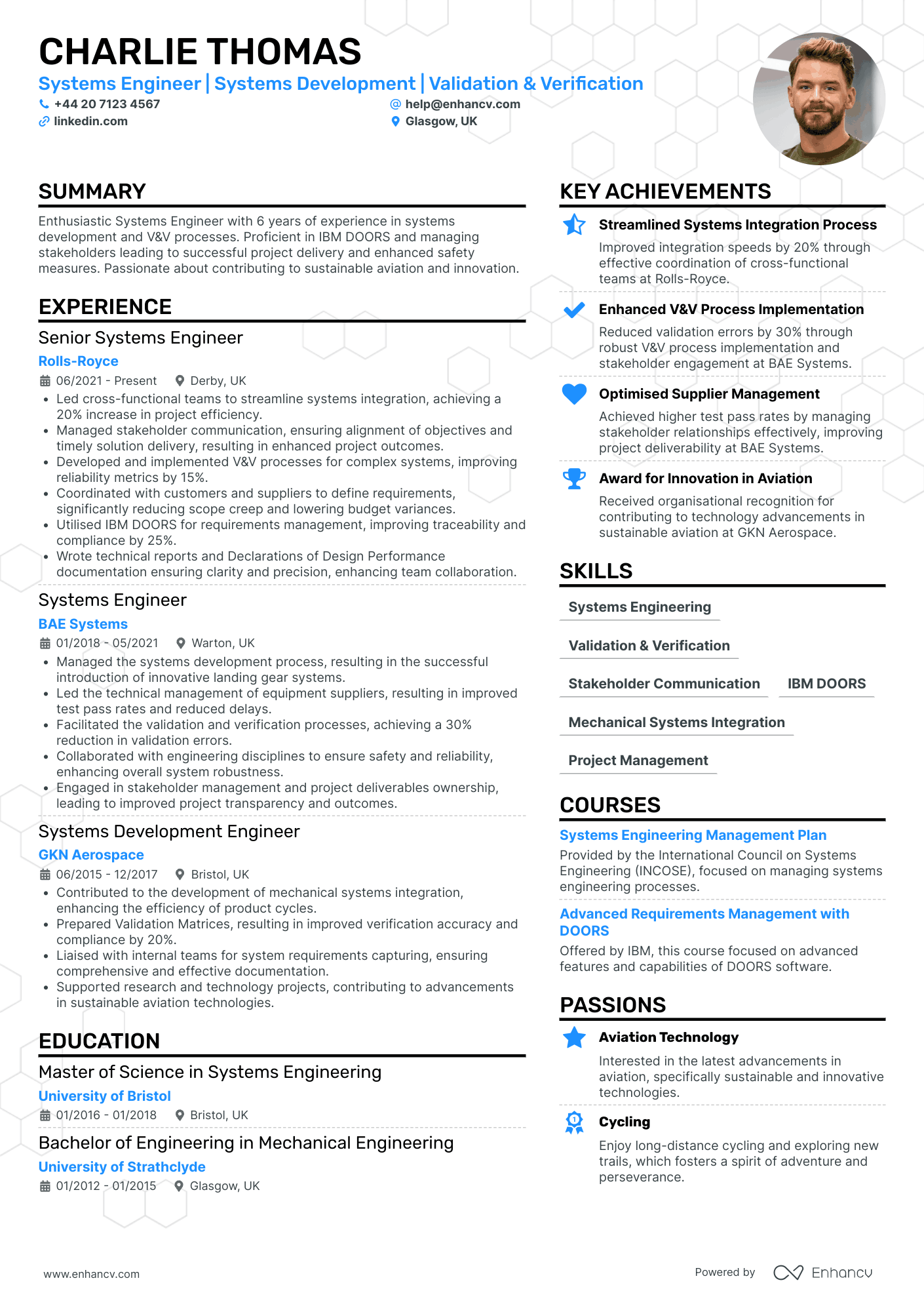
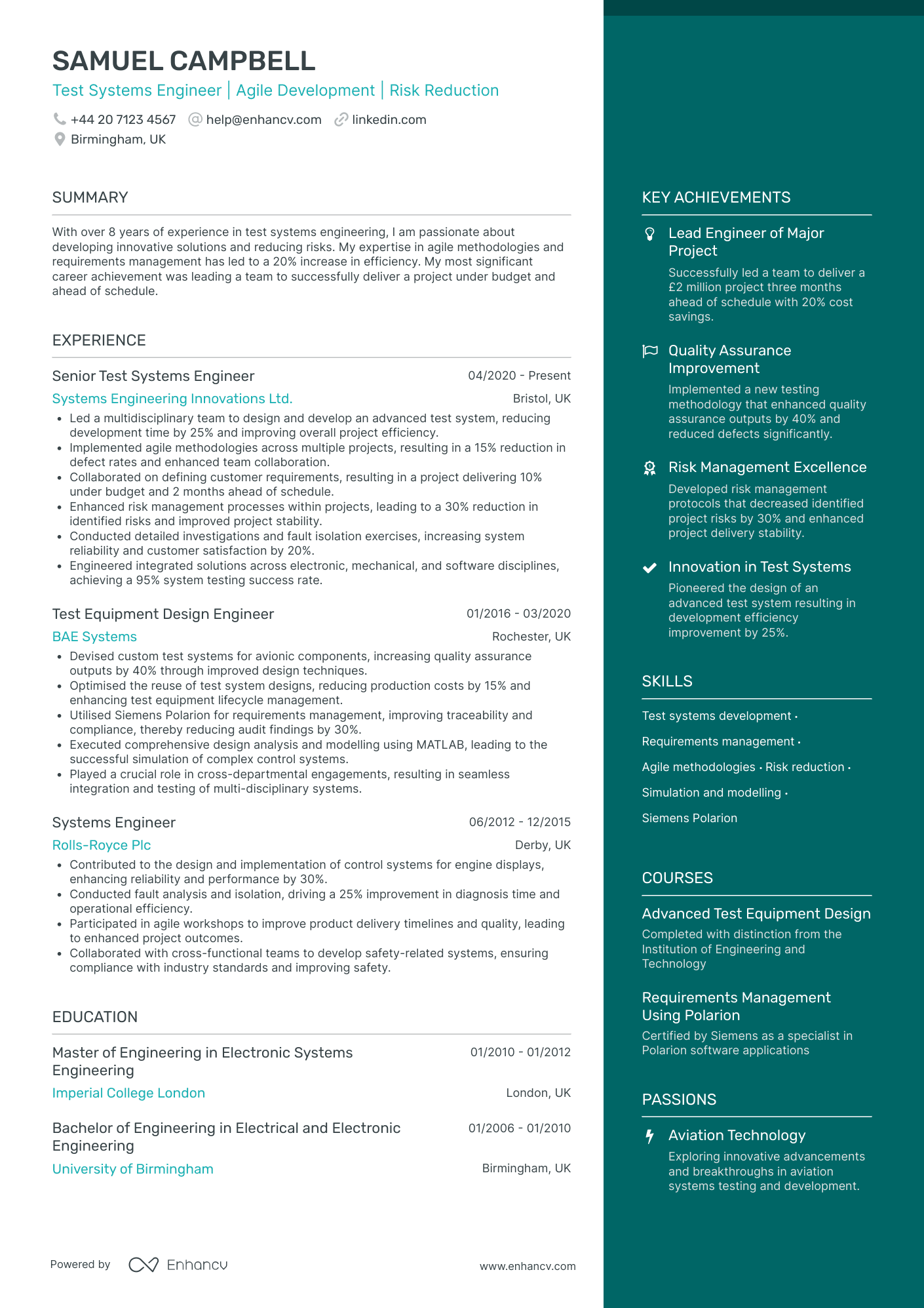
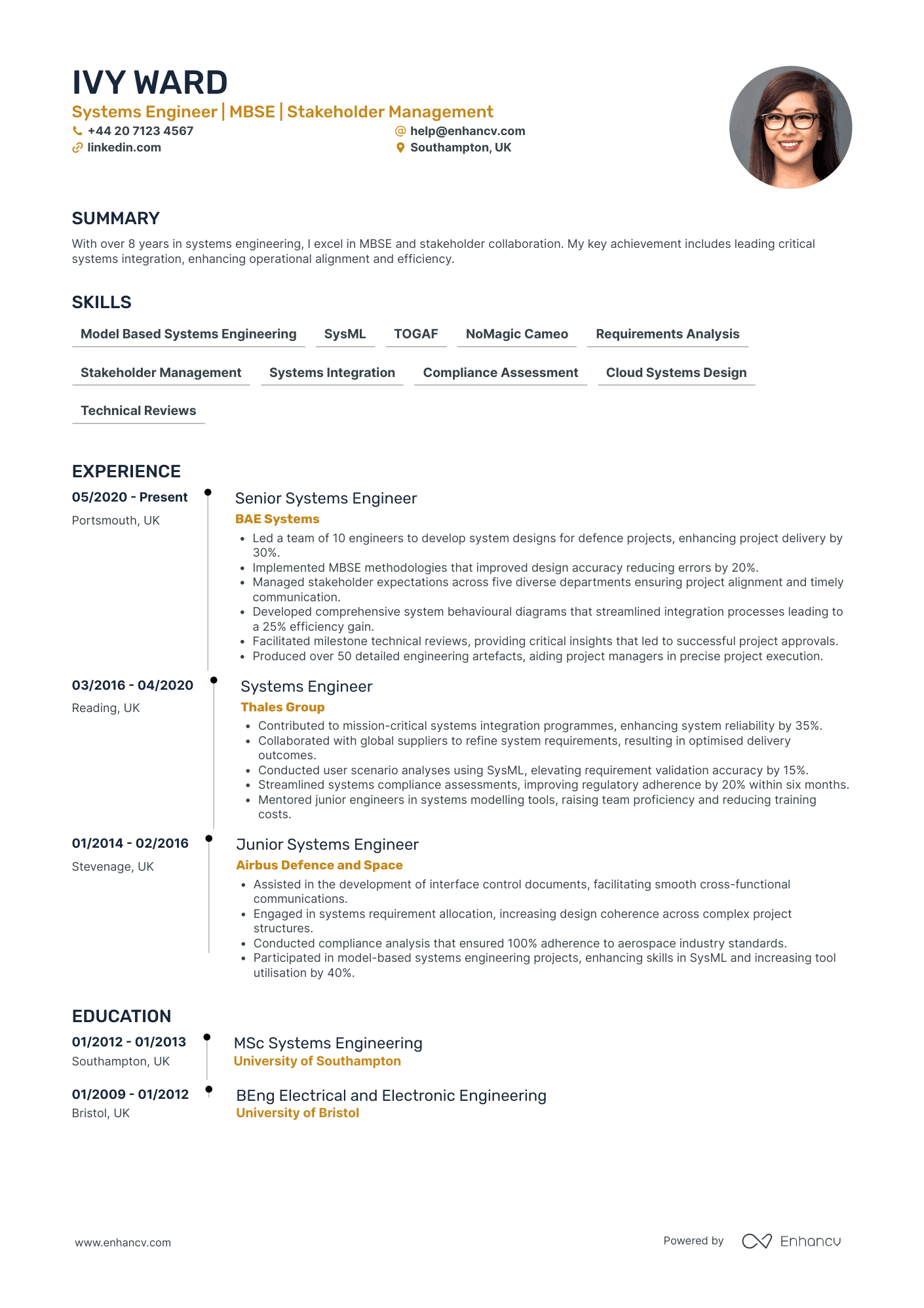
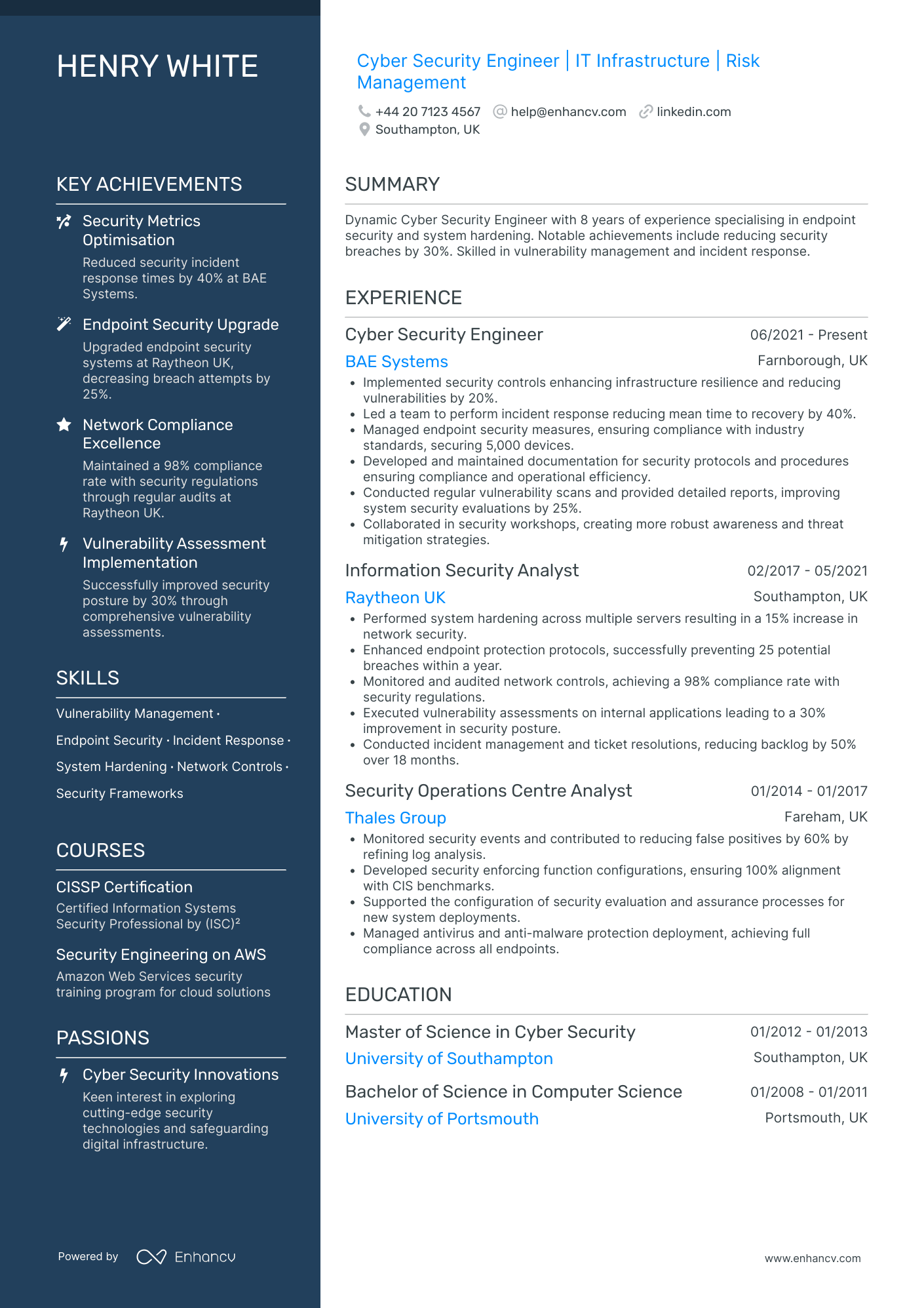
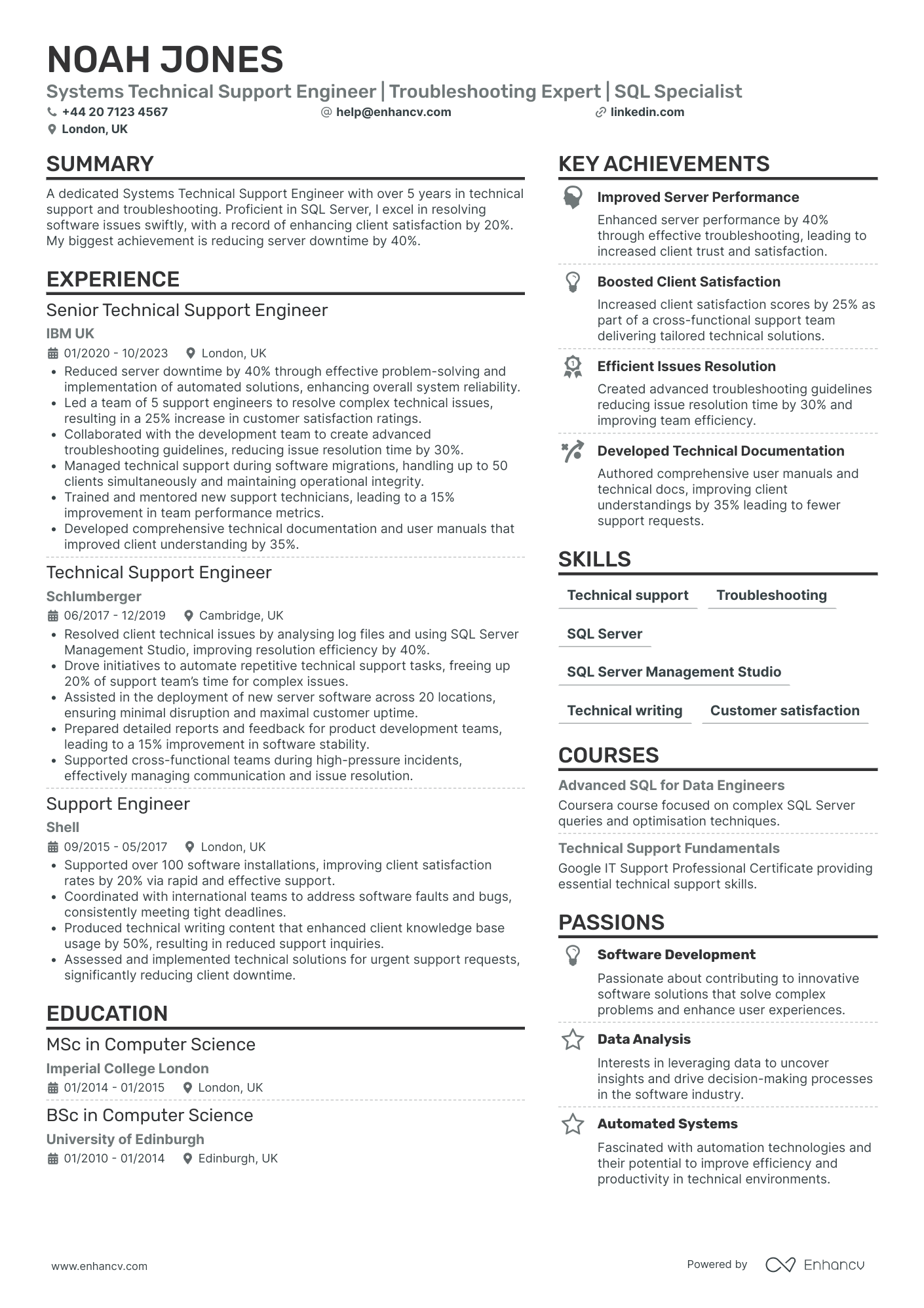
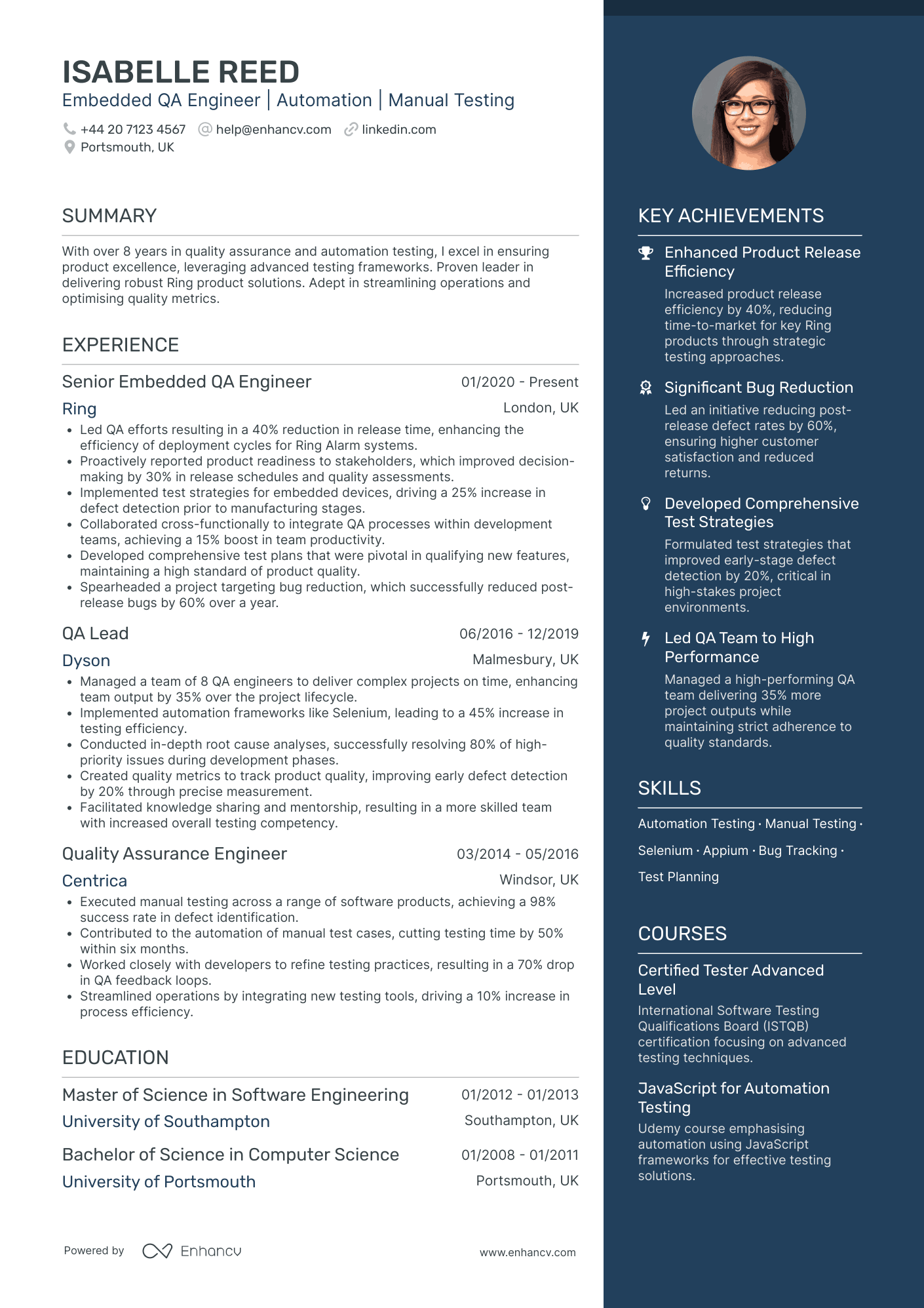
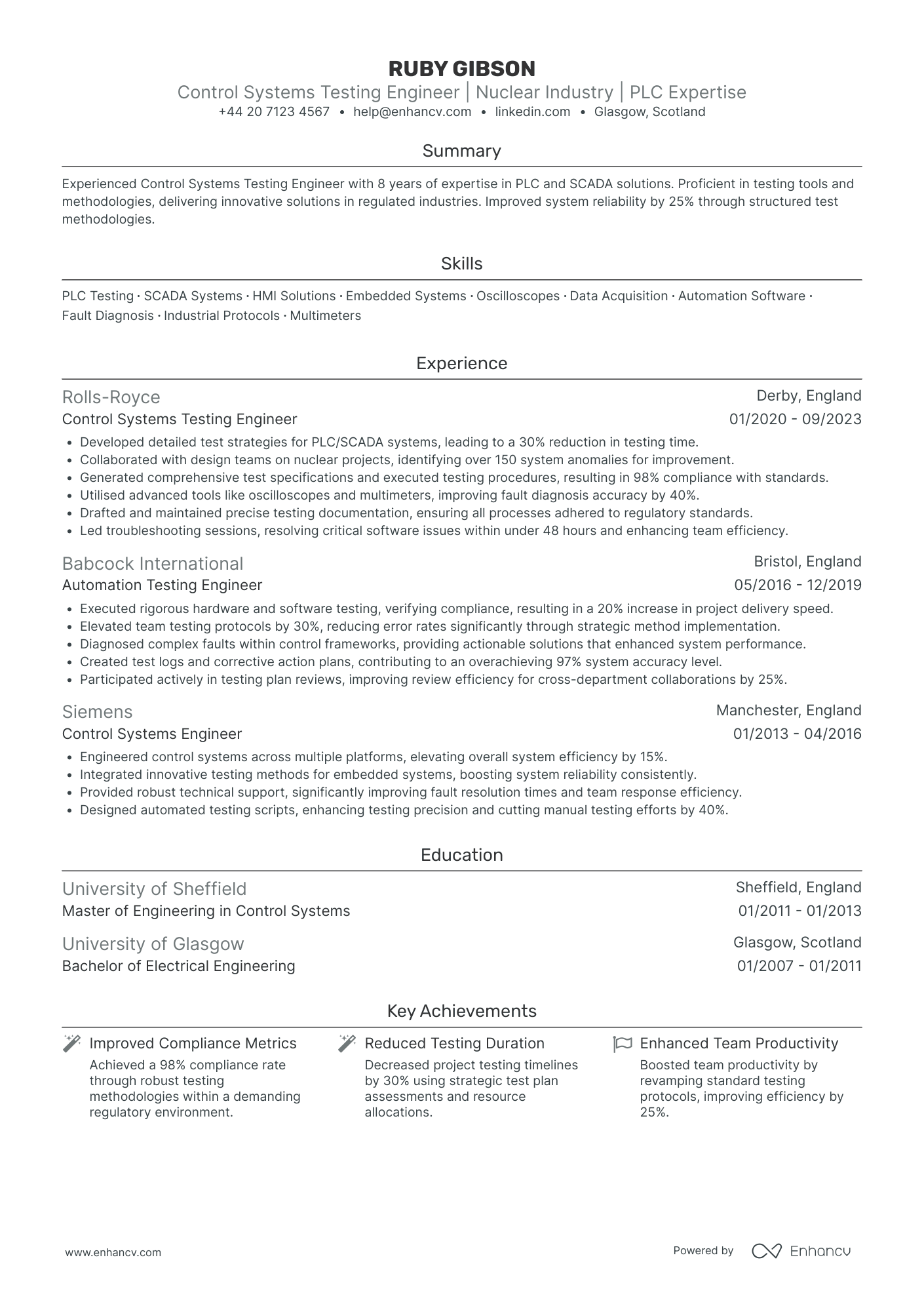
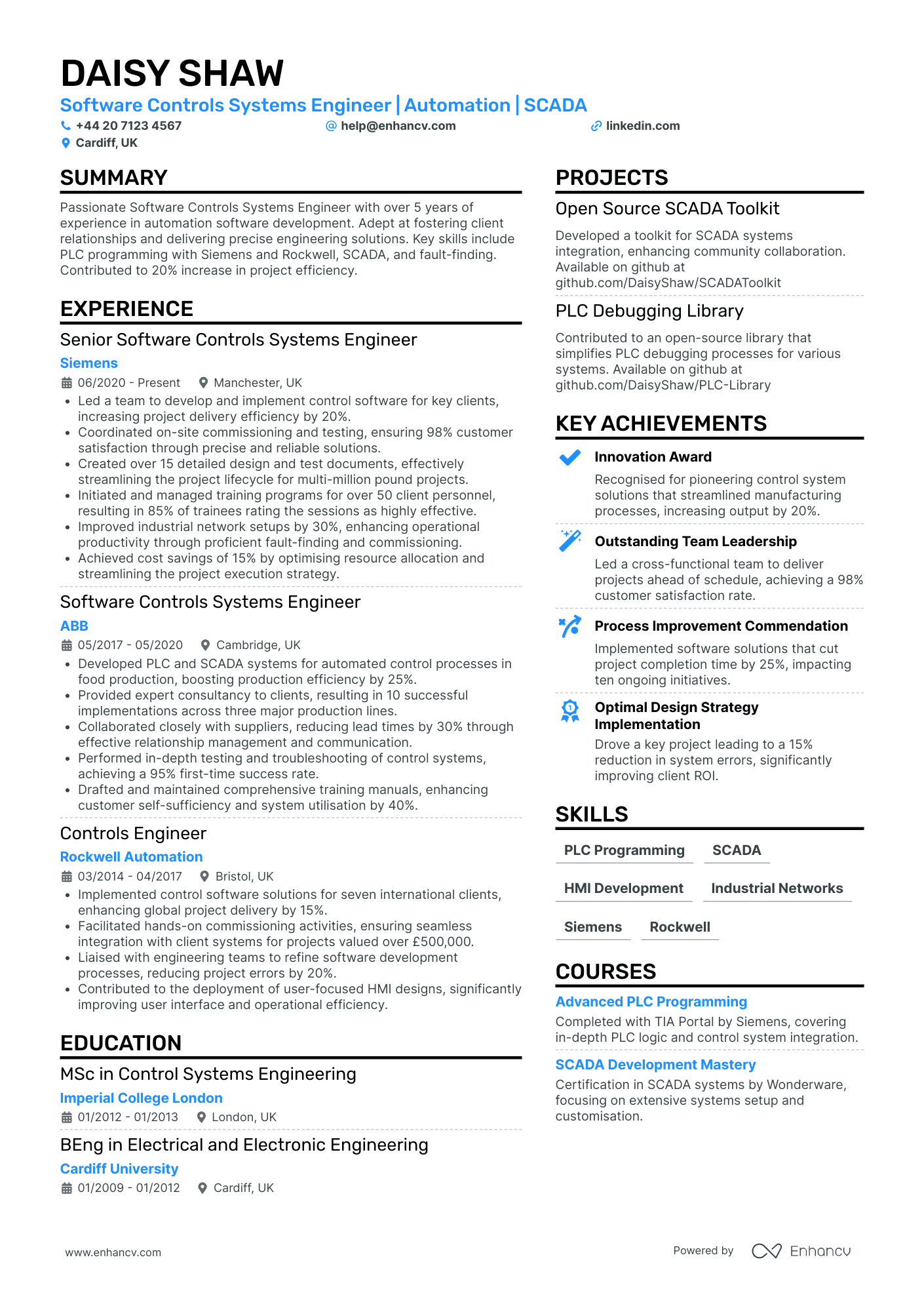
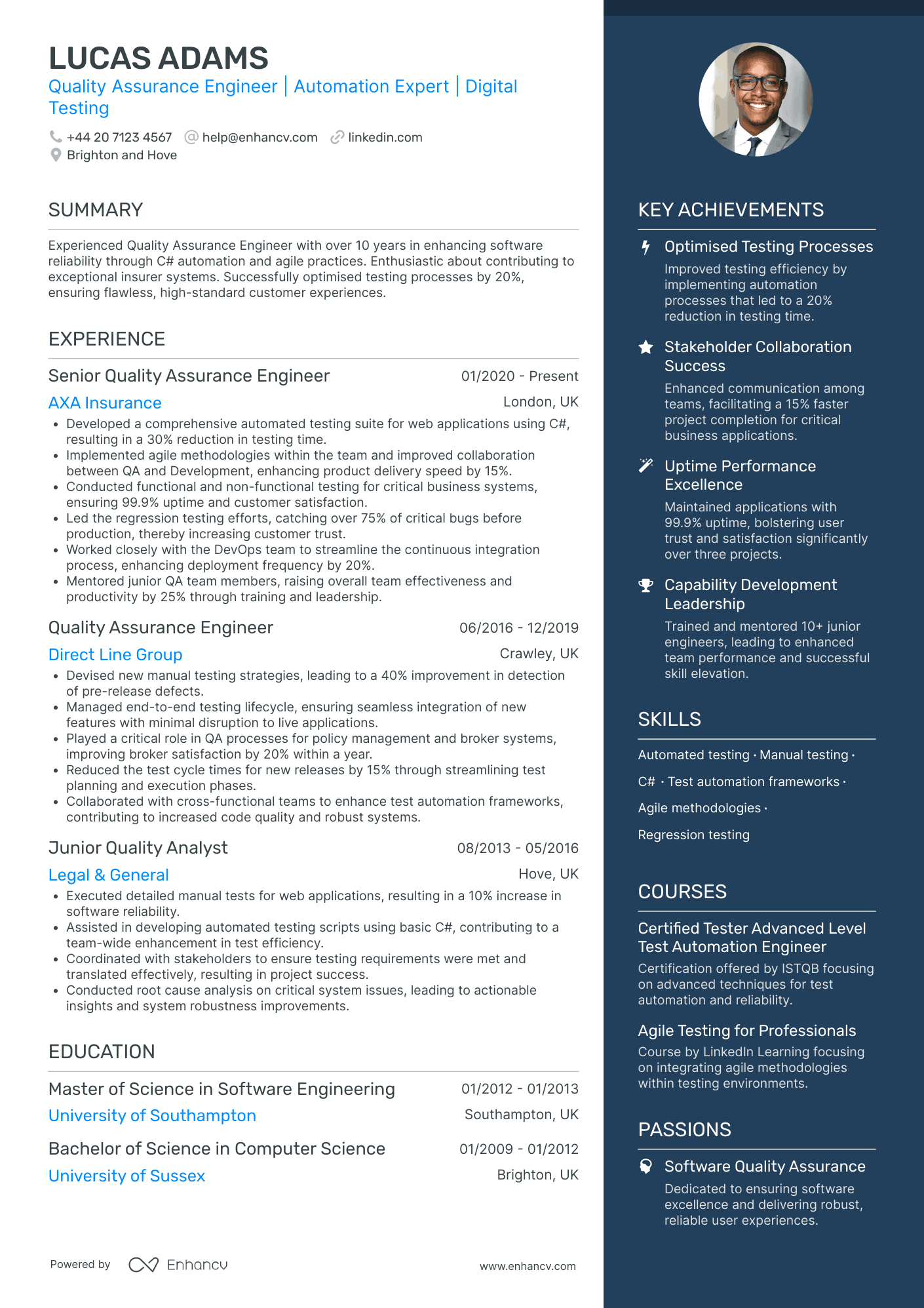
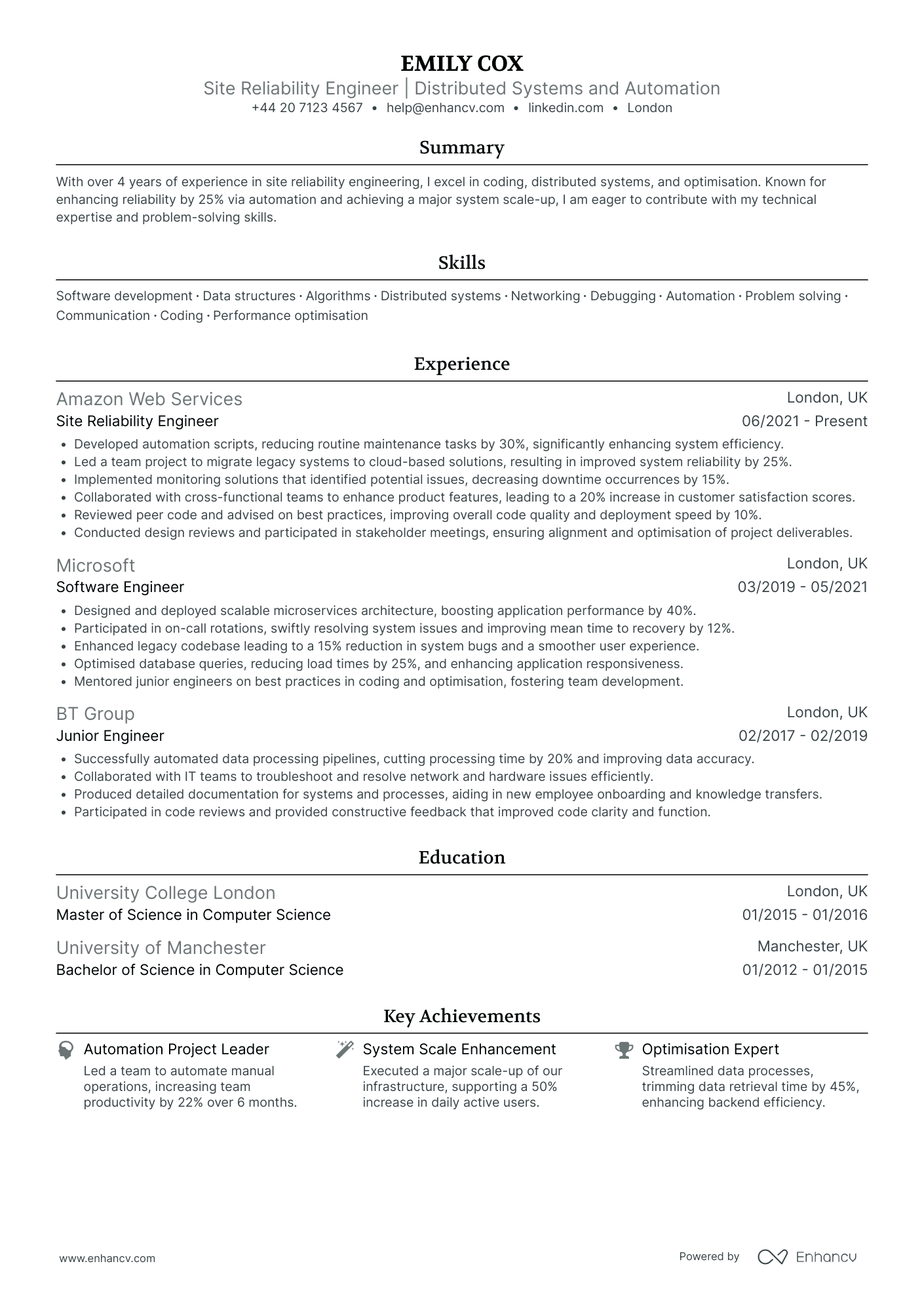
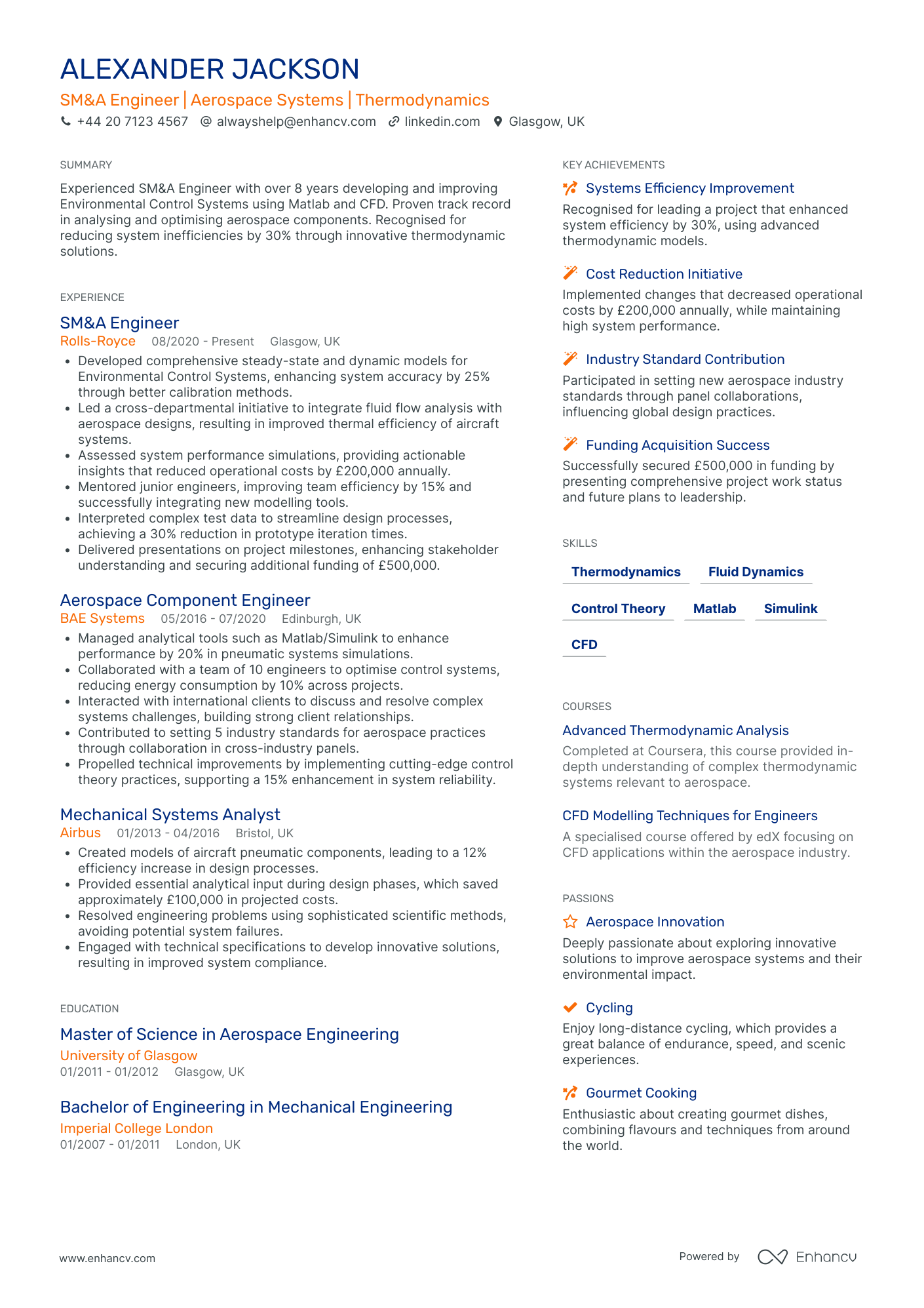
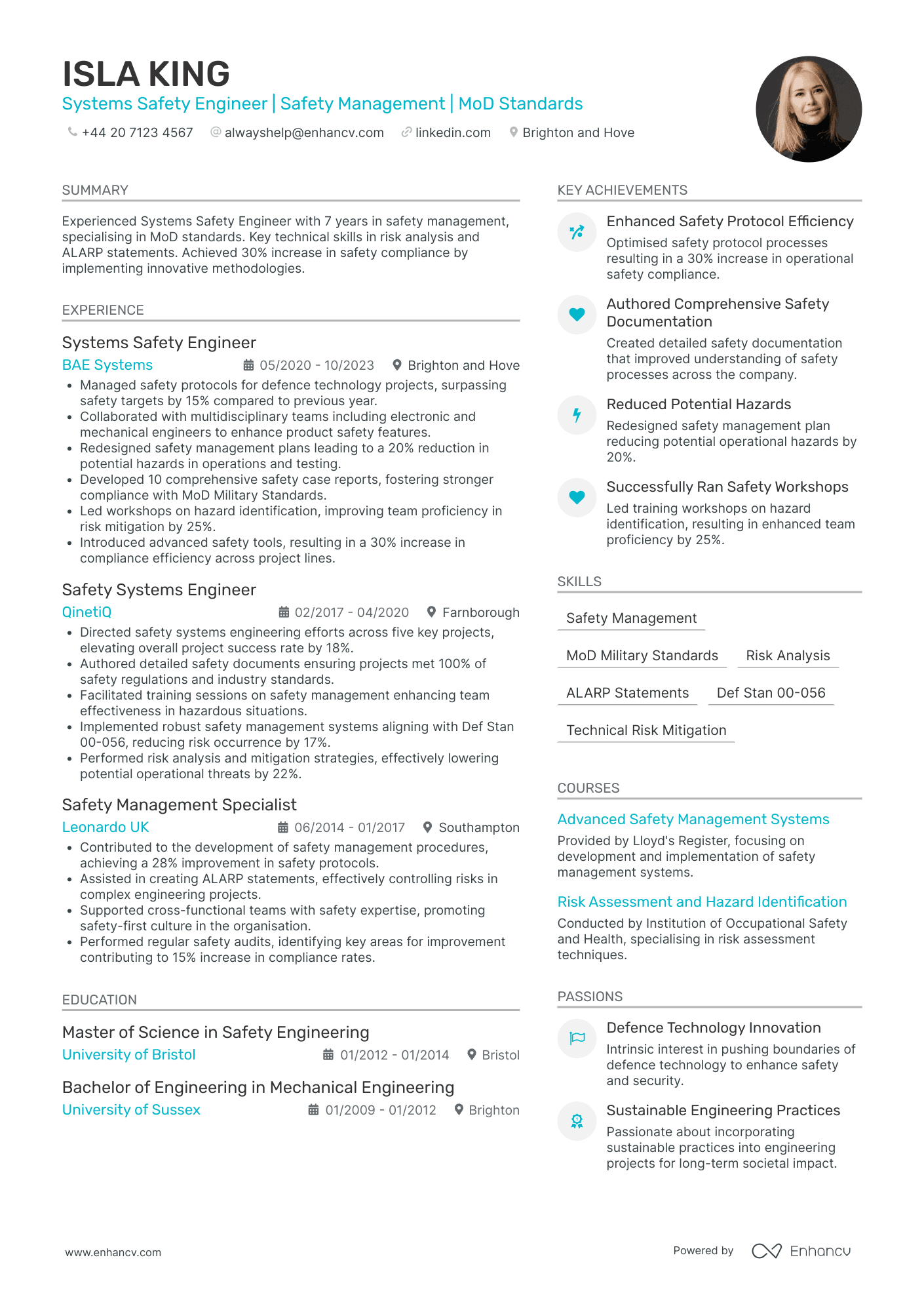
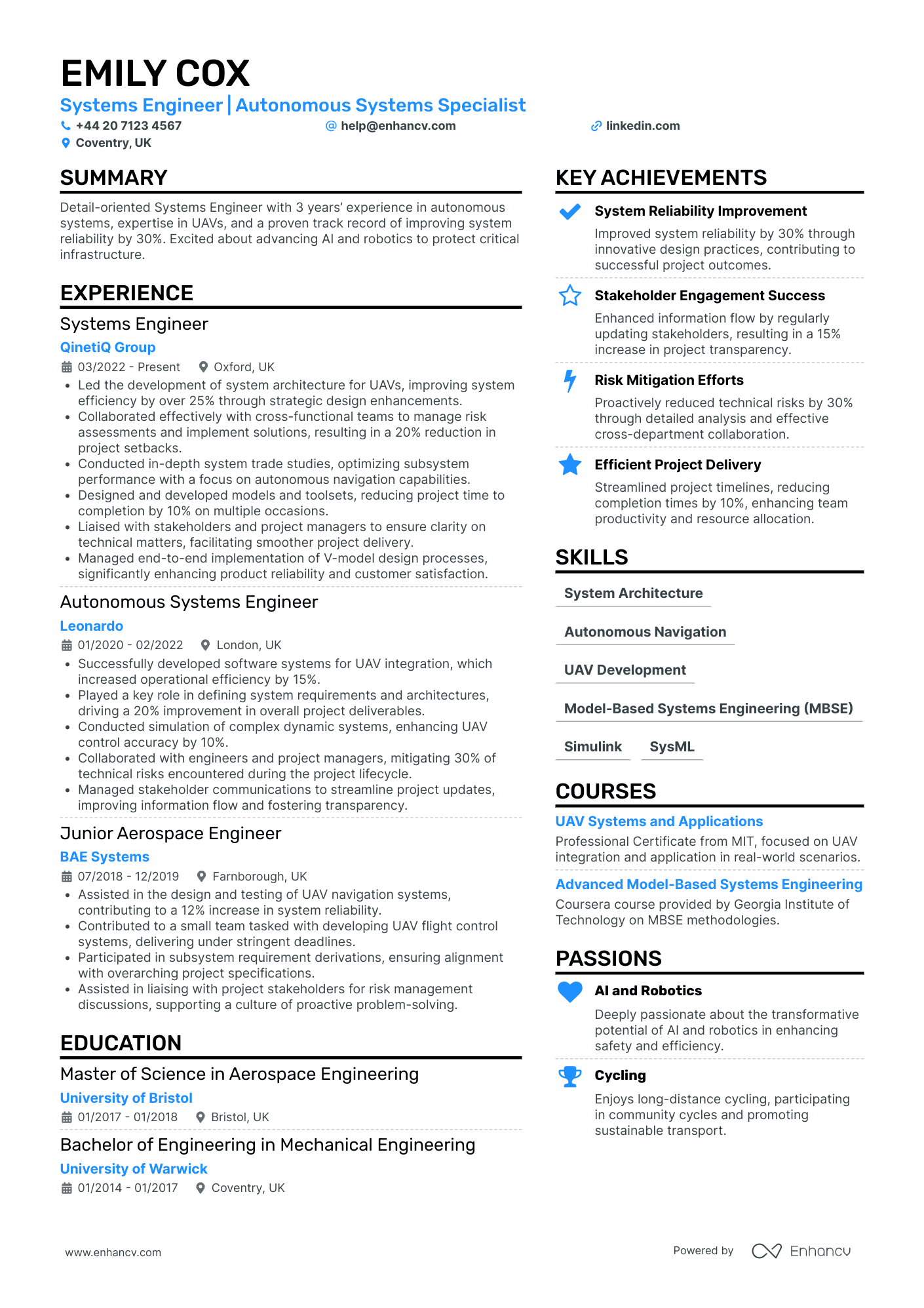
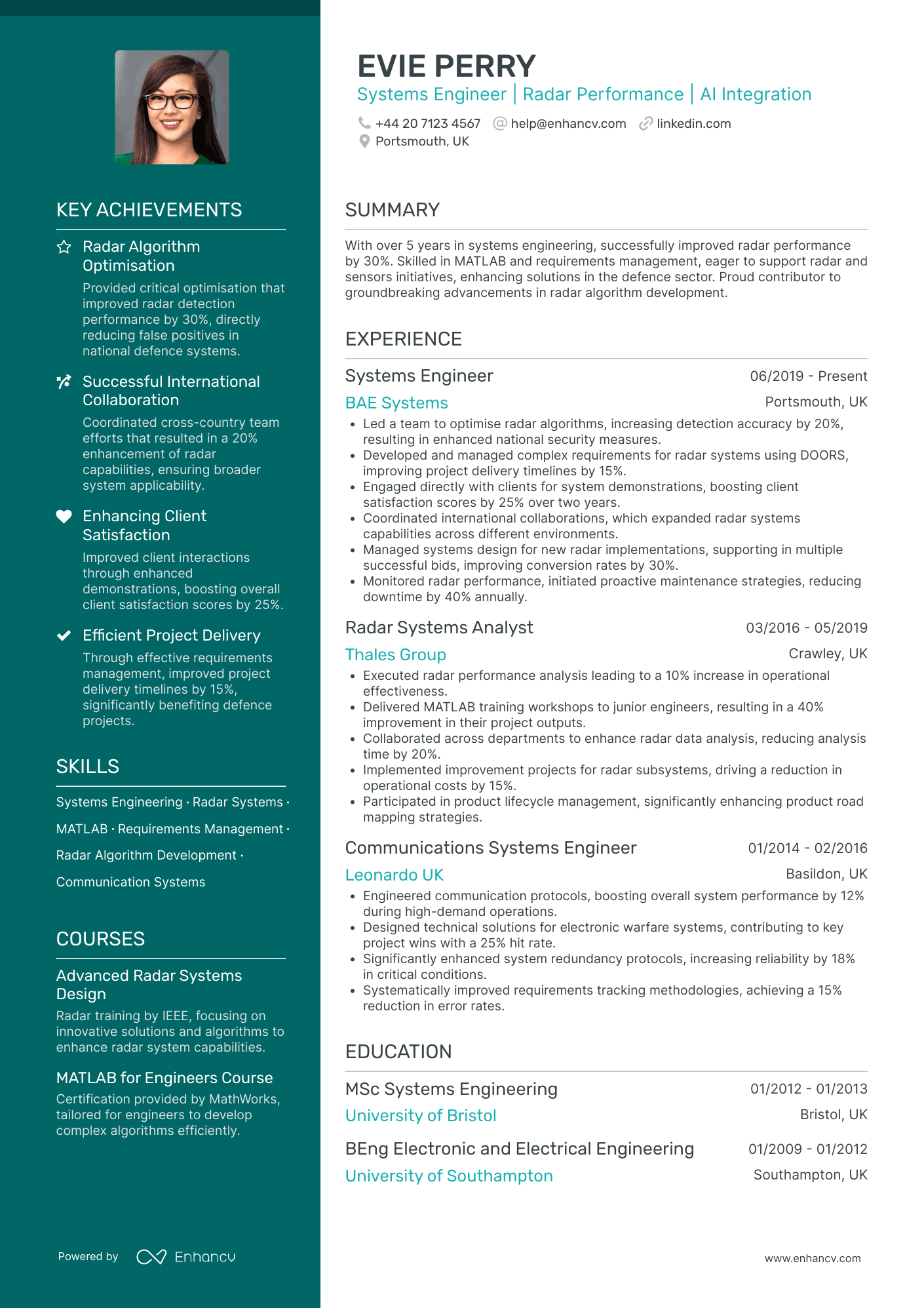
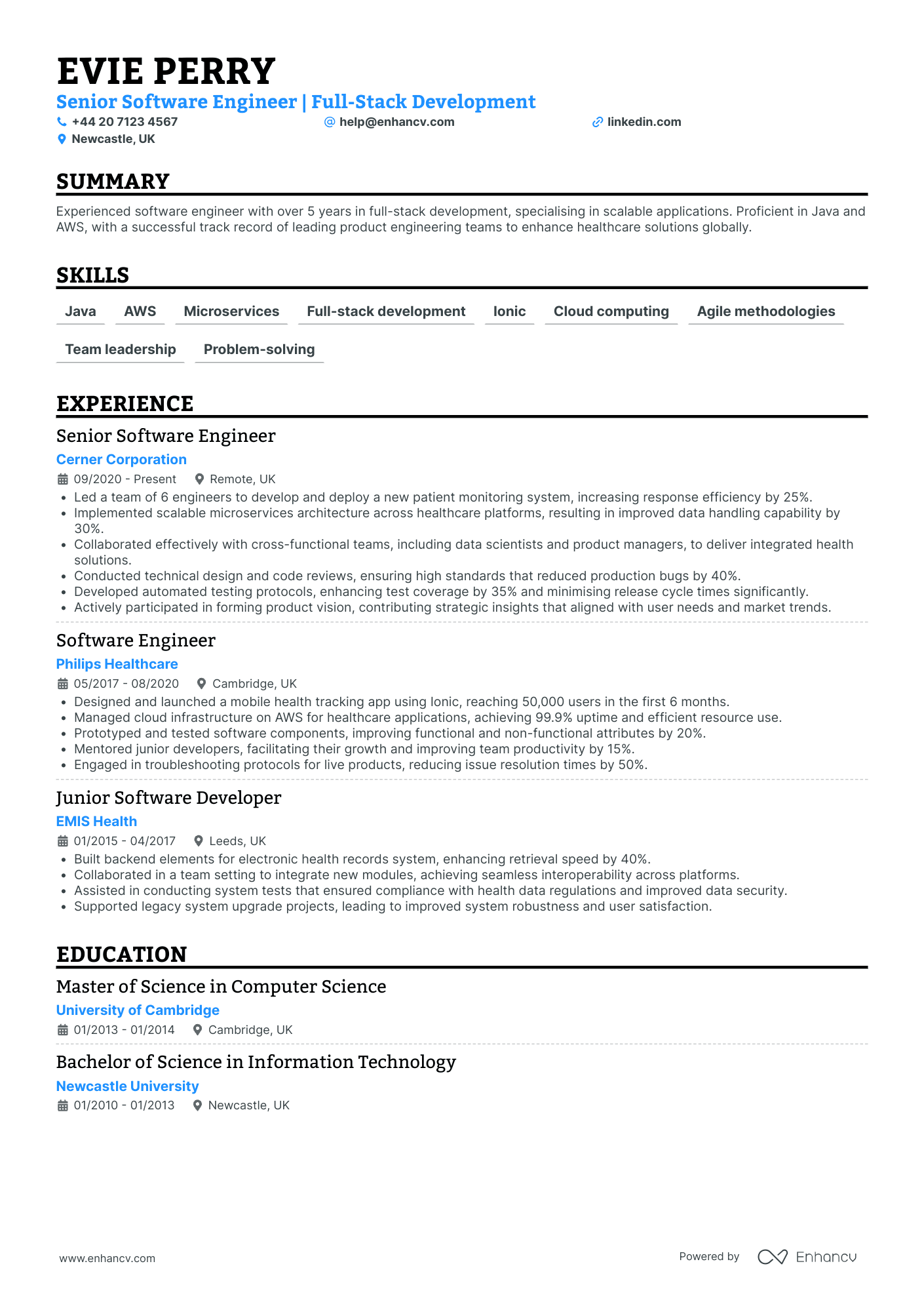
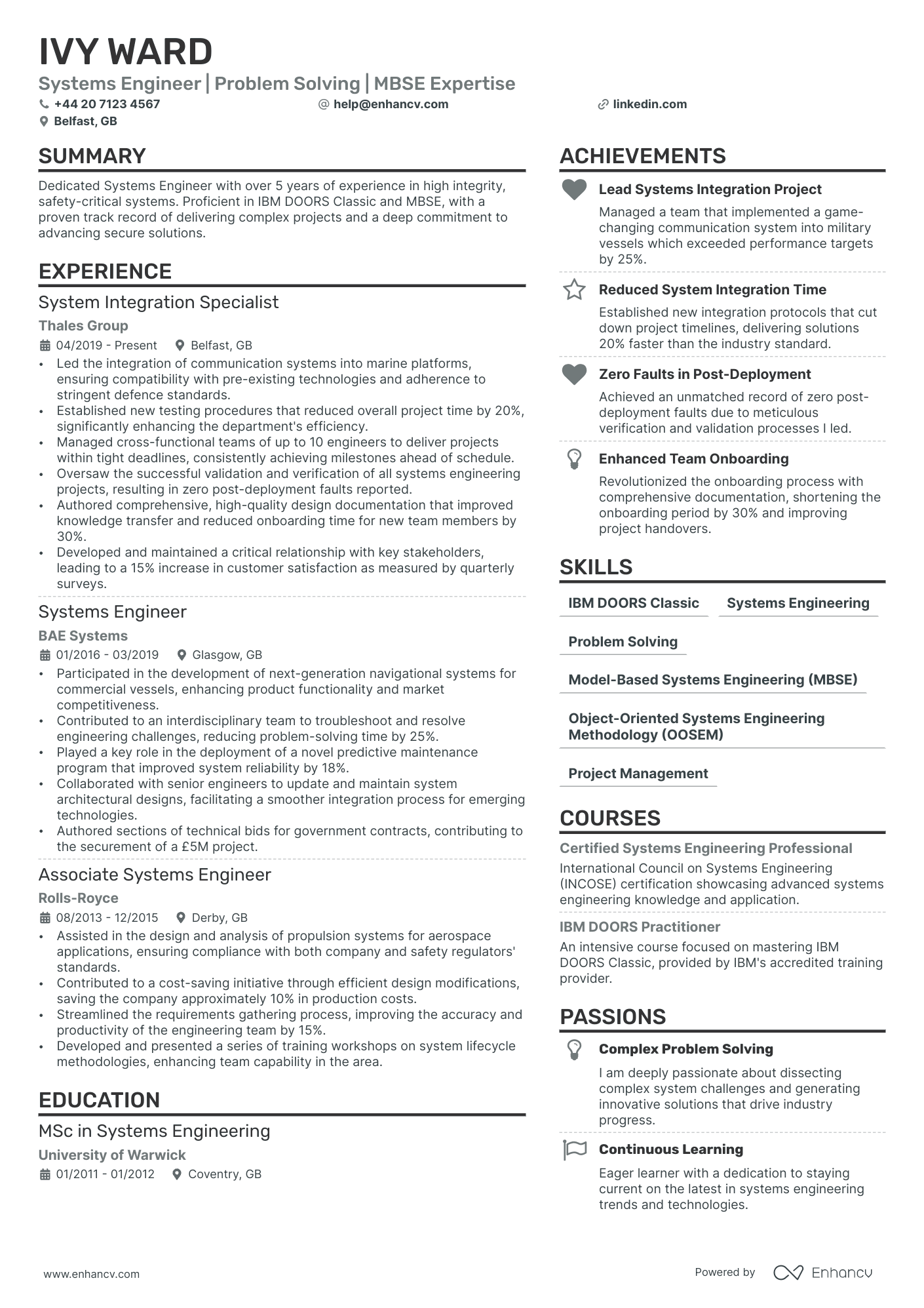
"Systems engineer" is one of the most overloaded job titles in UK engineering. On one advert it means keeping servers, networks, and infrastructure alive. On the next it means owning the requirements, architecture, and integration of a physical product that has to fly, drive, or survive a test rig.
A recruiter spends about six seconds deciding which of those you are. Get it wrong and a strong mechanical or aerospace systems engineer reads like a mismatched IT hire. Lead with the discipline and the domain, then prove it with the requirements, modelling, and integration work that only a systems engineer does. If you want the fundamentals first, here is how to write a CV.

Key takeaways
- Say which systems engineer you are in the first line. Name the domain (mechanical, aerospace, defence, rail, or automotive) and the life-cycle stage you own.
- Lead with the systems engineering spine: requirements, architecture, integration, and verification and validation. Name the V-model where your work sits on it.
- List your tools exactly as the adverts write them: DOORS, MBSE, SysML, and Python. Recruiters and the ATS both search on those terms.
- UK systems roles split between hybrid and on-site, so put your location and any security clearance near the top.
- Quantify against systems outcomes: requirements traced, interfaces closed, defects caught before test, and schedule protected.
- Two pages, reverse chronological, sent as a PDF unless the advert asks for a Word file.
Positioning your systems engineering specialisation
Systems engineering is the discipline of making the whole thing work, not any single part of it. You own the requirements, the architecture, the interfaces, and the verification that proves the finished system does what it was specified to do.
In the mechanical systems niche, that whole thing is physical. Think aerospace, defence, automotive, rail, energy, or medical devices, where mechanical, electrical, and software subsystems have to integrate into one product that passes test and certification.
Your CV has to place you in that niche fast, because a hiring manager filtering for a mechanical systems engineer will not wait to find out you are not an IT infrastructure hire.
Name the domain and the life-cycle stage in your headline and your first bullet. "Systems engineer, defence, requirements through integration and V&V" tells a recruiter more in one line than a paragraph of adjectives.
Then show the spine of the discipline. Say where your work sits on the V-model, from stakeholder needs and requirements decomposition, down through design, then back up through integration, verification, and validation. Tie each phase to something you actually delivered.
Model-based systems engineering is where the field is heading, so if you have worked in SysML, Cameo, or a comparable tool, put it near the top. If your background is document-based in DOORS, name that instead. Mirror the approach the advert asks for rather than the one you wish you had.
Show the breadth without going shallow. A systems engineer sits across mechanical, electrical, and software subsystems, so a recruiter needs to see that you can coordinate all three, plus one area where you go deep. Name the subsystem you personally owned, then the wider system you integrated it into.
Scope is your other differentiator. "Supported the systems team" and "owned the requirements baseline for the landing-gear control system" describe two very different engineers. State what was yours end to end, how many suppliers or subsystems it touched, and which review gates you carried it through.
Tailor the emphasis to the reader. A rail employer cares about assurance and safety cases, a defence employer about clearance and standards, an automotive employer about functional safety and ISO 26262. Pull those signals from the advert and tailor your CV to the one in front of you.

Two jobs, one title: which systems engineer are you?
The IT systems engineer keeps infrastructure, servers, and networks running. The engineering systems engineer, including the mechanical systems niche, owns requirements, architecture, and integration for a physical product across its life cycle. They share a name and almost nothing else. Your CV has to declare which one you are in the header, the personal statement, and the first bullet, because a recruiter filtering for one will discard the other on sight.

PRO TIP
Recruiters search two completely different candidate pools under the same title. In your headline and on your LinkedIn, add the qualifier that rules you in: "mechanical systems engineer", "aerospace systems engineer", or "systems integration engineer". It costs you two words and saves you from the wrong shortlist.
Core skills for a systems engineer CV
Read a run of live UK adverts and the same demands repeat. Systems engineering, stakeholder management, and requirements management are the skills that recur most often in UK systems engineer postings, and they map cleanly onto the sections a recruiter scans first.
Your hard skills are the discipline itself and the tools that support it: requirements management in DOORS, system architecture and design, MBSE and SysML, verification and validation, and Python for the automation and analysis that increasingly sits alongside the modelling.
Write the tools exactly as the adverts do. "DOORS" and "SysML" are searched as literal strings, so a paraphrase or an unexplained abbreviation quietly drops you out of the results.
The soft skills that matter here are not decoration. Systems engineering is a coordination job, so stakeholder management, cross-functional communication, and steady problem-solving are the ones a hiring manager actually screens for. Prove each in a bullet rather than listing it as a claim.
Match the depth of the list to the level you are applying for. A mid-level CV can lead with the tools and the methods. A lead CV should show the same tools plus the judgement around them: which architecture you chose, which requirements you pushed back on, and how you kept a multi-supplier baseline coherent.
List only what you can defend in an interview. If you have used a tool once, put it under working knowledge rather than expertise. A skills section that overstates gets found out at the technical stage, where a panel of engineers will ask you to walk through exactly what you did.
Top skills for your systems engineer CV:
Systems engineering
Requirements management (DOORS)
System architecture and design
Model-based systems engineering (MBSE / SysML)
Verification and validation
Interface and configuration management
Requirements traceability
Python
Stakeholder management
Cross-functional communication
Project management
Problem-solving
Attention to detail
What the UK systems engineer market looks like
Knowing the market shapes the CV. Here is where the work sits and what employers ask for most often.
| What | UK systems engineer roles |
|---|---|
| Where the work happens | Hybrid 55%, on-site 44%, fully remote 1% (135, 107, and 3 of 245 UK postings, Enhancv's internal job feed, last ~30 days) |
| Experience level asked for | Mid 35% · lead 32% · senior 28% · entry 4% |
| Most-listed skills | Systems engineering, stakeholder management, requirements management, project management, Python |
| Sample | 245 UK systems engineer postings in the last ~30 days (Enhancv's internal job feed) |
Two of those numbers should shape your CV.
Systems engineer postings split between hybrid (55%) and on-site (44%), with almost nothing fully remote (Enhancv's internal job feed, last ~30 days). This is site-bound work in labs, integration halls, and secure facilities, so put your location and any security clearance near the top of the CV rather than burying them.
The seniority mix skews to mid and lead, not entry. Most adverts want someone who has already run requirements or owned a subsystem, so pitch your experience at that level and lead with ownership rather than a list of tasks.
Systems engineering, stakeholder management, and requirements management top the most-listed skills, which confirms what the discipline is really about. The tools matter, but the market is buying your ability to hold a complex set of requirements together across teams. Make that the through-line of the CV, not an afterthought.
Formatting your systems engineer CV
Use a reverse chronological format. This is a mid-to-senior field, and employers want to see the systems you have owned and how your responsibility has grown.
Keep it to two pages. One column, standard headings, and a clean, readable font. An engineering manager skims for the domain, the tools, and the life-cycle stages before reading a word of prose.
Send a PDF for direct applications so the layout holds its shape. Keep a Word copy for agencies, which place a large share of defence and aerospace roles and reformat CVs into their own template. If the advert names a file type, follow it.
Systems roles almost always pass through tracking software, so keep the structure clean and the tool names spelled exactly as the advert writes them for an ATS-friendly CV. DOORS, SysML, and MBSE are searched as literal strings, so an abbreviation the parser does not recognise is a missed match.
People search for a systems engineer template in Word for a reason: they want a structure that survives an agency's copy-and-paste. A simple, single-column layout with plain headings does that better than a two-column design, which parsers and reformatting tools tend to scramble.
Put a short skills or tools block near the top so DOORS, SysML, and your domain are visible on the first skim, then let reverse chronological experience carry the detail. Keep formatting to bold headings and clean bullets, and avoid tables, text boxes, and graphics for anything the ATS needs to read.
Build it from a tested layout rather than a blank page. Enhancv's CV templates export to a clean PDF that keeps its structure through an ATS, and you can save the same CV as a Word file for the agencies that ask for one.
Is your resume good enough?
Drop your CV here or choose a file. PDF & DOCX only. Max 2MB file size.
Writing your systems engineer personal statement
Three or four sentences at the top: who you are, your domain, the life-cycle stages you own, and the tools you work in. Keep it concrete. For more openings, see these CV personal statement examples.
Rewrite the statement for each domain you apply into. The same career can read as an aerospace hire, an automotive hire, or a rail hire depending on which programmes, standards, and outcomes you put first. Lead with the ones that match the advert.
Avoid the adjective soup every other CV opens with. "Driven, detail-oriented engineer passionate about innovation" tells a recruiter nothing they can check.
Lead with the domain, the scope, and one hard number instead:
Systems engineer CV personal statement example (mechanical systems)
Chartered mechanical systems engineer with eight years in defence and aerospace, owning requirements through integration and verification on airborne subsystems. Managed a 1,200-line DOORS baseline across four suppliers and cut interface defects found at test by 30% through earlier V&V planning. INCOSE CSEP and active SC clearance. Looking to lead systems integration on a complex platform programme in the South West.
What to avoid
Hard-working and motivated systems engineer with strong communication skills and a passion for problem-solving. A team player who thrives in fast-paced environments and is keen to contribute to exciting projects and grow within a forward-thinking company.
When we look at a systems engineer CV, the first thing we check is whether we can tell, in one line, which kind of systems engineer wrote it. The strong ones name the domain and put a requirements or integration number in the first three lines. "Cut interface defects found at test by 30%" tells us the writer understands where systems work actually pays off. The weak ones hide a genuinely technical career behind soft-skill adjectives that could describe anyone. Name the domain, name the tools, and let one hard outcome carry the opening.
Writing your systems engineer experience section
Write each role as a dated heading, then bullets that show what you owned and what it changed. Lead every bullet with a verb, and see work experience on a CV for the mechanics.
Systems work is more measurable than engineers give it credit for. Requirements traced, interfaces closed, review actions cleared, defects caught before test, and schedule or cost protected are all quantifiable achievements a hiring manager understands immediately.
Name the standards and the tools inside the bullet, not in a separate list. "Managed the requirements baseline in DOORS" carries the keyword and the evidence in one line.
Show progression across roles. A systems career usually moves from writing and verifying requirements, to owning a subsystem, to leading integration across suppliers. Order your bullets and your roles so a reader can see that arc, because the seniority the market asks for is exactly that growth in ownership.
Give each role its context in one line. The programme, the domain, and the size of the system tell a hiring manager whether your "integration" meant two boards on a bench or a full platform through certification.
Tailor each application to the advert. Pull the domain, the tools, and the standards it names, and mirror the ones that are true of you. Enhancv's CV tailoring feature reads the ad and suggests the matching edits, which saves rewriting from scratch for every programme.
- Own the requirements baseline for an airborne subsystem in DOORS, tracing 1,200+ requirements across four suppliers with full bidirectional traceability to verification
- Led the MBSE architecture in SysML, defining interfaces that cut integration defects found at test by 30% against the previous programme
- Chaired weekly cross-functional reviews with mechanical, electrical, and software leads, clearing an average of 25 review actions per sprint
- Planned and ran verification and validation against the V-model, closing 98% of test cases before the design certification review
- Automated requirements reporting in Python, cutting a two-day manual status task to under an hour
PRO TIP
Every systems bullet can carry a number if you look for it: requirements owned, interfaces closed, actions cleared, defects caught before test, or weeks of schedule protected. One traced number beats five lines describing how thorough you are.
Education and certifications for a systems engineer CV
Most UK systems roles expect a degree in an engineering discipline, so list it plainly in your education section: mechanical, aerospace, electrical, or general engineering, with the classification and the university.
Chartered status carries real weight. If you hold or are working towards CEng or IEng through the IMechE or the IET, put it in your headline as well as your education section. "Working towards CEng" is worth stating even before it lands.
The certifications recruiters recognise in this field are the INCOSE credentials, ASEP and CSEP, alongside tool training in DOORS or a model-based toolset, and functional-safety standards such as ISO 26262 where your domain uses them.
Keep the section tight. List the qualification, the awarding body, and the year, and leave the detail for the interview. A short line of relevant continuing professional development, such as a SysML or safety-standards course, is worth more than a paragraph about a degree you finished a decade ago.
Security clearance belongs here too, or higher up. SC or DV clearance is a hard filter for many defence and aerospace roles, so state your level and whether it is current rather than leaving an employer to ask. If yours has lapsed, say so plainly, since it is quicker to reinstate than to grant from scratch and employers know it.
Conclusion
Lead with the discipline and the domain, prove the systems engineering spine with traced numbers, and name your tools exactly as the adverts do.
Pair the CV with a short cover letter that says why this programme and this domain, and you turn a strong technical record into a shortlist place.
Author's take - The Enhancv team
When we look at a systems engineer CV, the first thing we check is whether we can tell, in one line, which kind of systems engineer wrote it. The strong ones name the domain and put a requirements or integration number in the first three lines. "Cut interface defects found at test by 30%" tells us the writer understands where systems work actually pays off. The weak ones hide a genuinely technical career behind soft-skill adjectives that could describe anyone. Name the domain, name the tools, and let one hard outcome carry the opening.